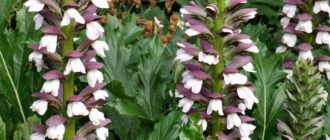
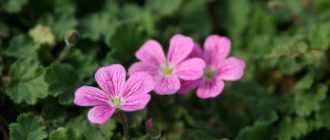
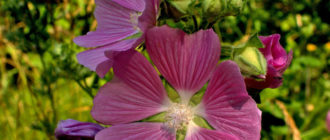
Saxifrage is a pretty ornamental plant that will decorate any flowerbed or rock garden.
Content
- 1 Where does saxifrage grow, in what natural zone?
- 2 Description of saxifrage
- 3 Saxifraga: 14 species with photos and names + varieties
- 3.1 Saxifraga arendsii
- 3.2 Saxifraga urbium
- 3.3 Saxifraga paniculata
- 3.4 Saxifraga cespitosa
- 3.5 Marsh saxifrage (Saxifraga hirculus)
- 3.6 Juniper-leaved saxifrage (Saxifraga juniperifolia)
- 3.7 Snow saxifrage (Saxifraga nivalis)
- 3.8 Saxifraga wahlenbergii
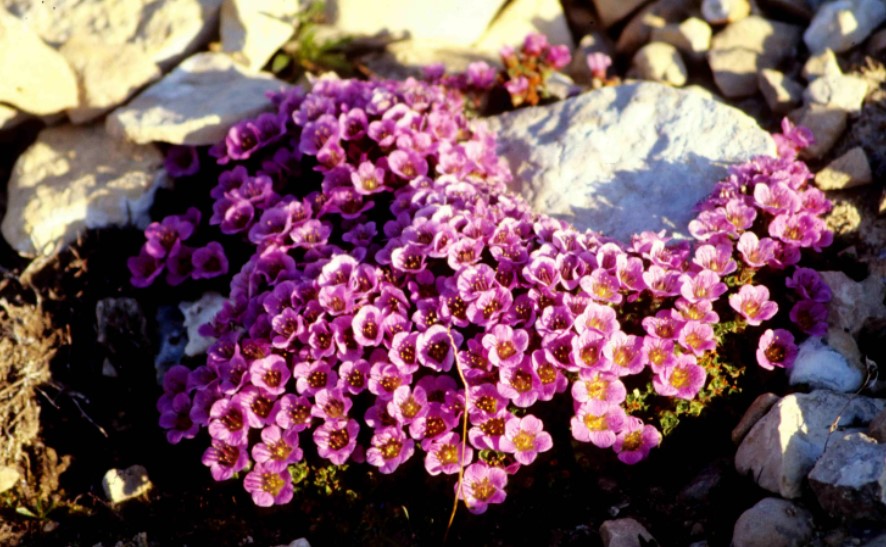
- 3.9 Saxifraga oppositifolia
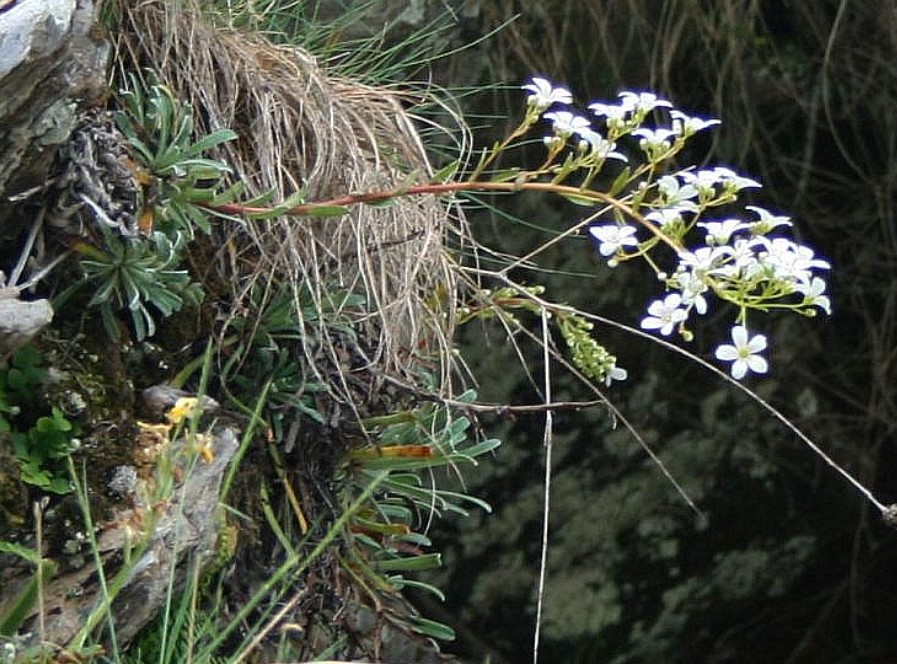
- 3.10 Saxifraga lingulata or Saxifraga callosa
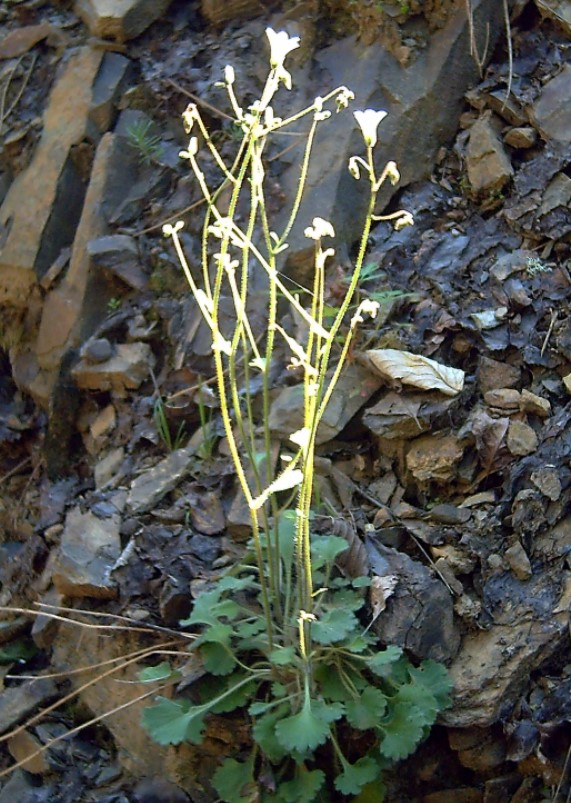
- 3.11 Saxifraga granulata
- 3.12 Indoor saxifrage
- 4 How to Propagate Saxifraga: 3 Methods
- 5 Growing saxifrage from seeds
- 6 Planting saxifrage seedlings in open ground
- 7 Growing and caring for saxifrage in open ground
- 8 Saxifraga indoor plant care at home: 5 important steps
- 9 Diseases and pests of saxifrage
- 10 Saxifraga, a perennial garden flower, is featured in landscape design. Many photos are available.
- 11 Medicinal properties of saxifrage, contraindications
Where does saxifrage grow, in what natural zone?
In Russia, saxifrage can be found in virtually every corner, from the tundra to the Caucasus Mountains. Abroad, saxifrage grows in Africa, Japan, and China.
Description of saxifrage
Saxifraga is a herbaceous perennial, rarely an annual or biennial. It's actually a genus of grasses belonging to the Saxifragaceae family. It includes 440 species, but we won't list them all in this article. Instead, we'll highlight the most interesting and beautiful.
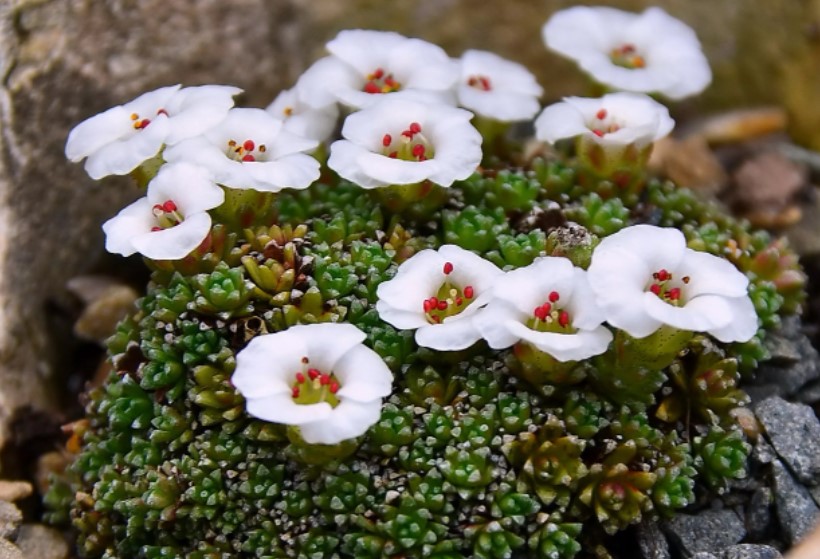
Saxifraga stems range in height from 5 to 70 cm, depending on the species. The rhizomes are robust, and the basal rosettes of leaves quickly spread laterally, forming tussocks. These tussocks are typically hemispherical in shape and can be very dense or loose.
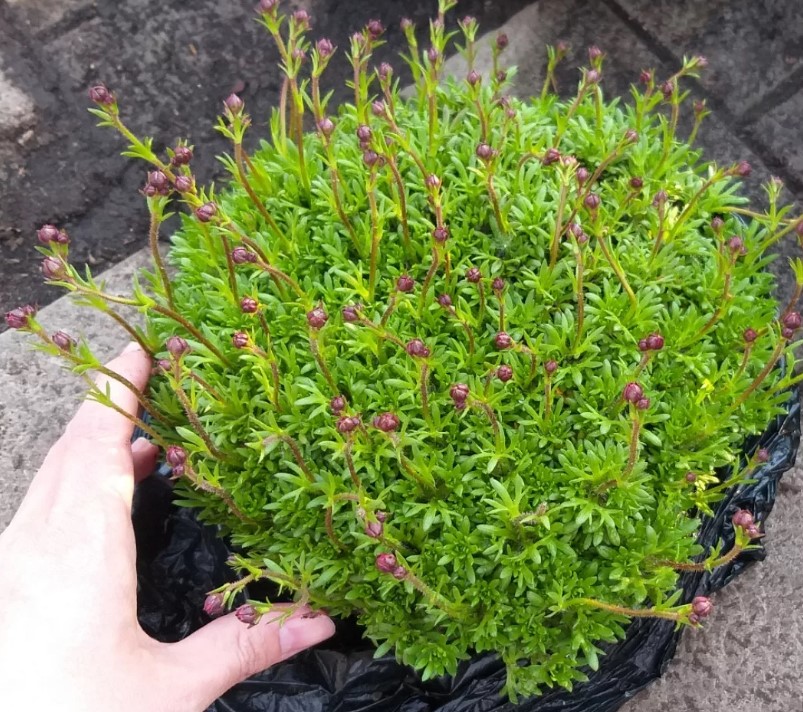
Saxifraga leaves come in a variety of shapes and textures. Their color can be bluish, silvery, dark green, or glaucous. A chalky coating secreted by the leaves can sometimes be present on the surface.
The plant got its name due to its ability to grow in rocky areas and make its way to the light among the stones, breaking them down with its powerful roots.
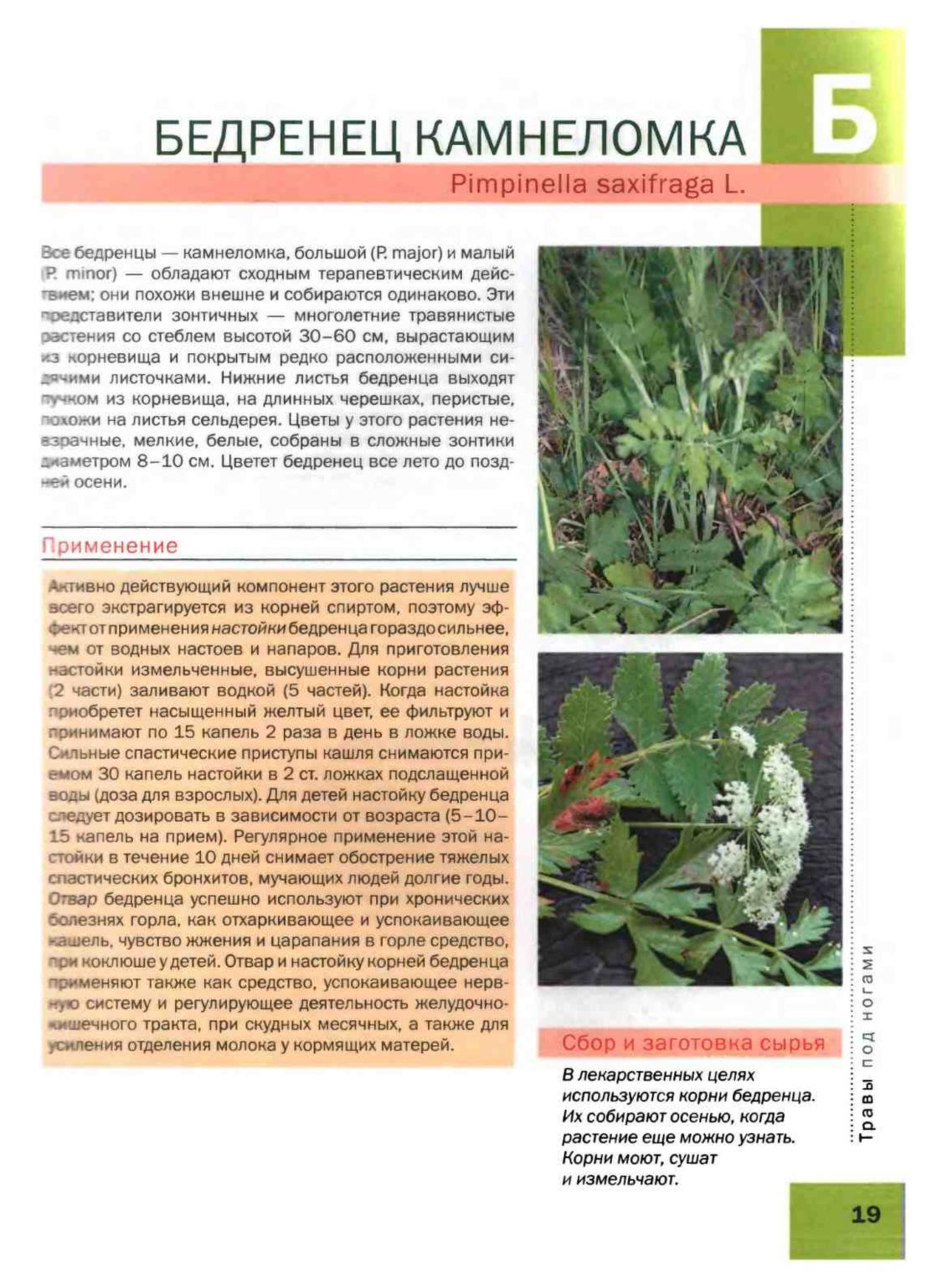
By the way, please note that many people confuse saxifrage and femoral saxifrageLet's clarify this issue. There is the genus Saxifraga in the family Saxifragaceae, which we will discuss in this article. And there is the genus Pimpinella in the family Apiaceae, and within this genus there is the species Pimpinella saxifrage. As you can see, the Latin names are the same. So be careful. Below is an excerpt from the Great Illustrated Encyclopedia of Medicinal Plants, which describes Pimpinella saxifrage (click on the photo to enlarge). You can also read about this plant and its medicinal properties in a separate article on our website.
Saxifraga: 14 species with photos and names + varieties
Saxifraga has a huge number of varieties, with 80 currently cultivated in our country. These include both indoor and garden plants.
Saxifraga arendsii
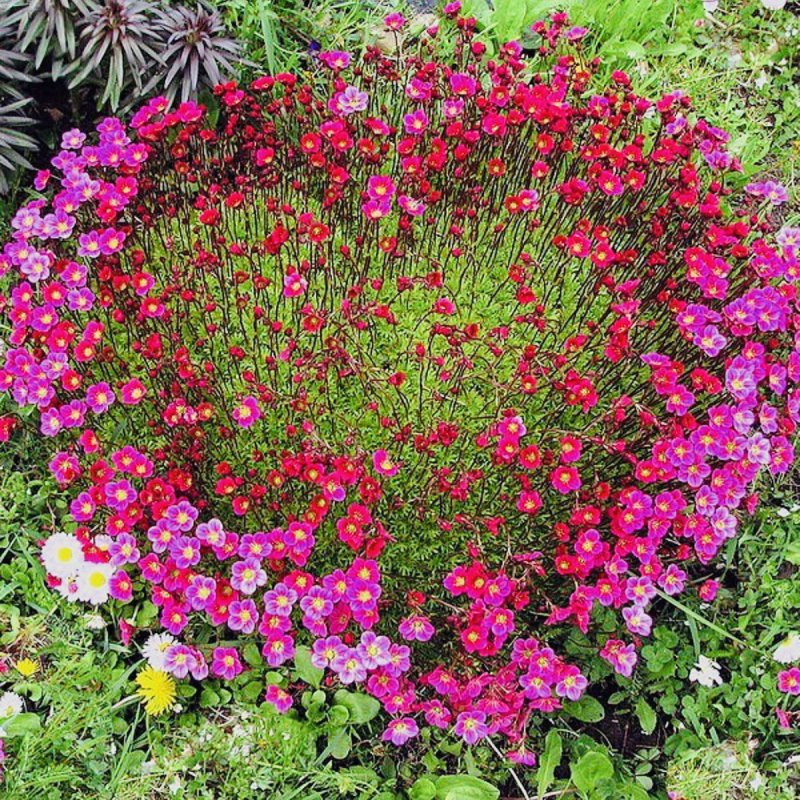
An evergreen perennial hybrid from which most saxifrage varieties originate. The flower owes its name to the German scientist who first bred this variety and gave it his surname, Arends. The stem is 10-20 cm tall. The leaf blades can be lobed or divided. They are gathered together in a rosette. The color of the buds depends on the variety. The most common colors are white, red, pink, and purple. They begin to bloom in late May and fade by mid-July.
The most popular varieties of Arends are:
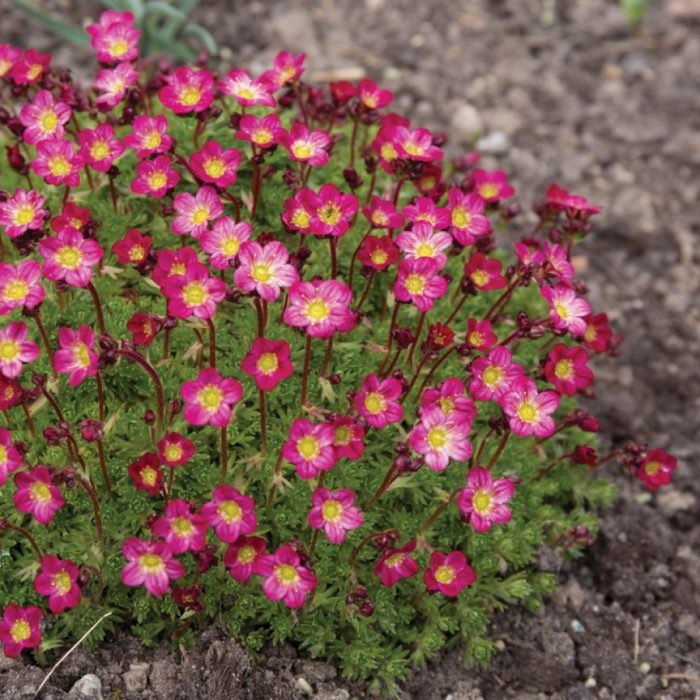
- Purple Mantle (Purpurmantel) is a shrub up to 25 cm tall with vibrant purple flowers up to 1.2 cm in diameter, making it an ideal addition to rock gardens. This variety is considered drought-tolerant, but requires moisture for lush blooms. (Seeds are also available under the name Purple Carpet.)
- White carpet (Schneeteppich) is a light-loving plant with a green stalk up to 7 cm tall. The leaves are lacy, and the snow-white flowers grow up to 15 cm. It is used to frame borders, alpine slides, and the lower tiers of complex flowerbeds.
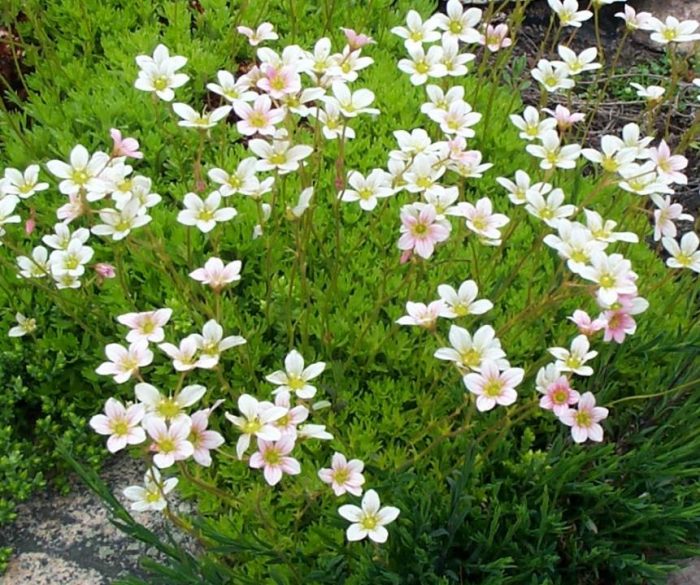
- Floral Carpet is a plant with flower stalks up to 20 cm tall. It grows in a dense carpet, blooms with multicolored white and pink flowers, and is frost-resistant.
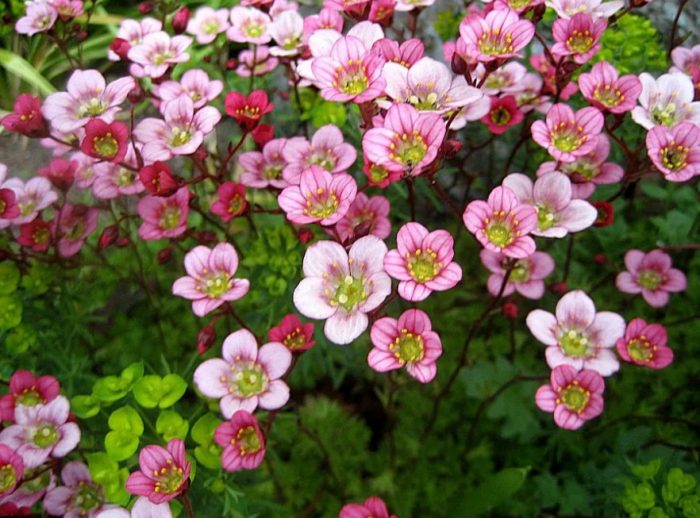
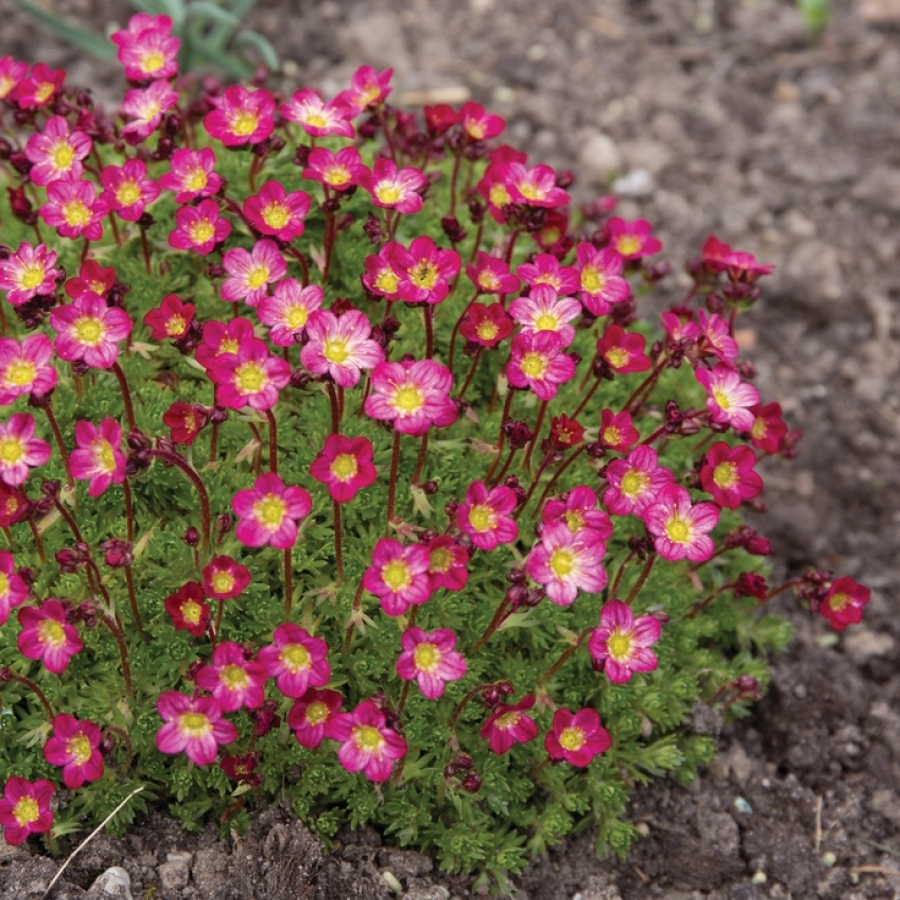
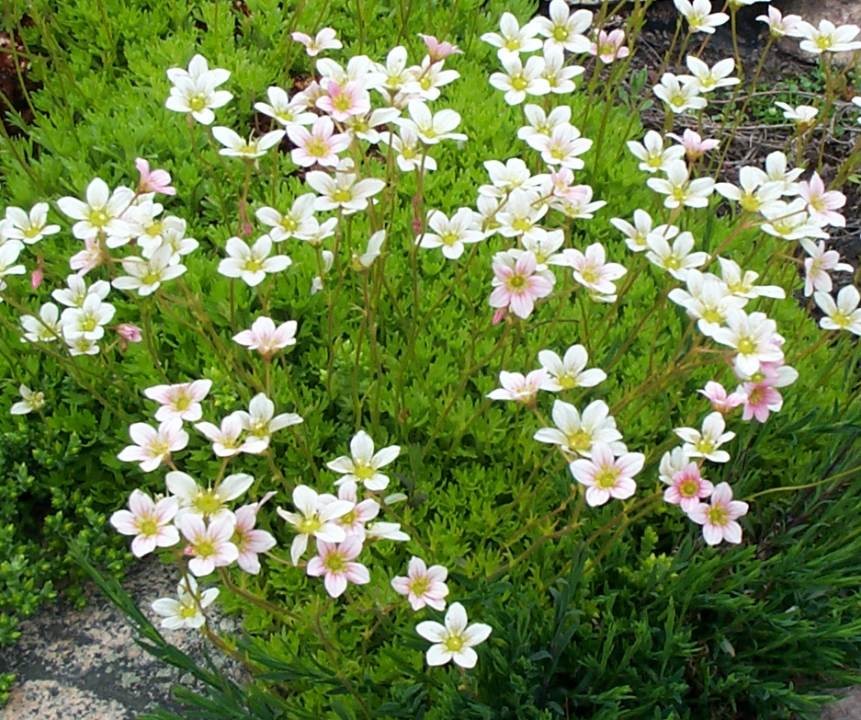
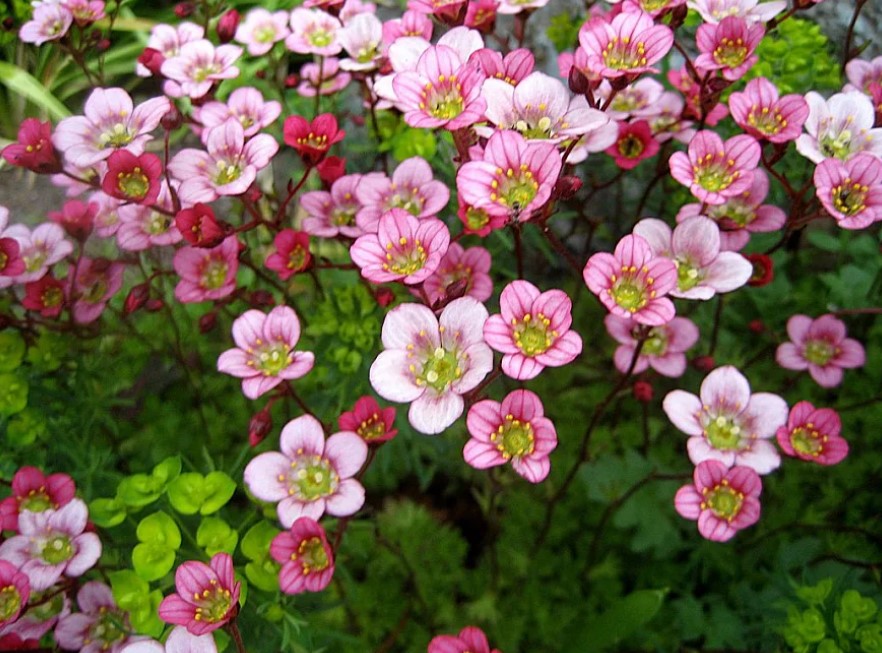
About other varieties and more details about Saxifraga Arends Read on our website.
Saxifraga urbium
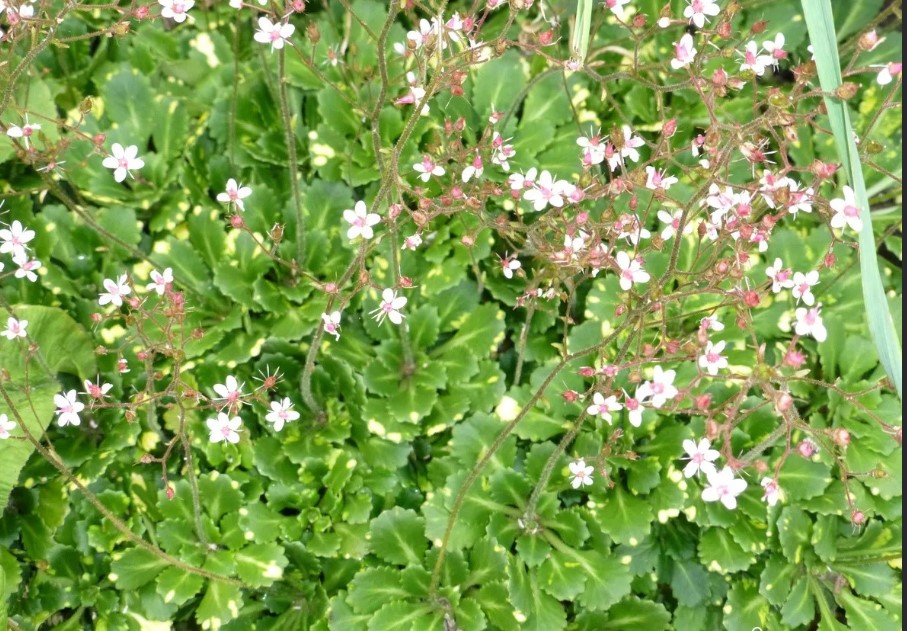
The plant is highly tolerant of low light and cold temperatures. The shoots grow to just 8 cm in height, forming a dense, dark green carpet of rosettes. The leaves are hairy, dense, and up to 5 cm long. The inflorescences are borne on peduncles that are twice as long as the stem. The buds are white.
Saxifraga paniculata
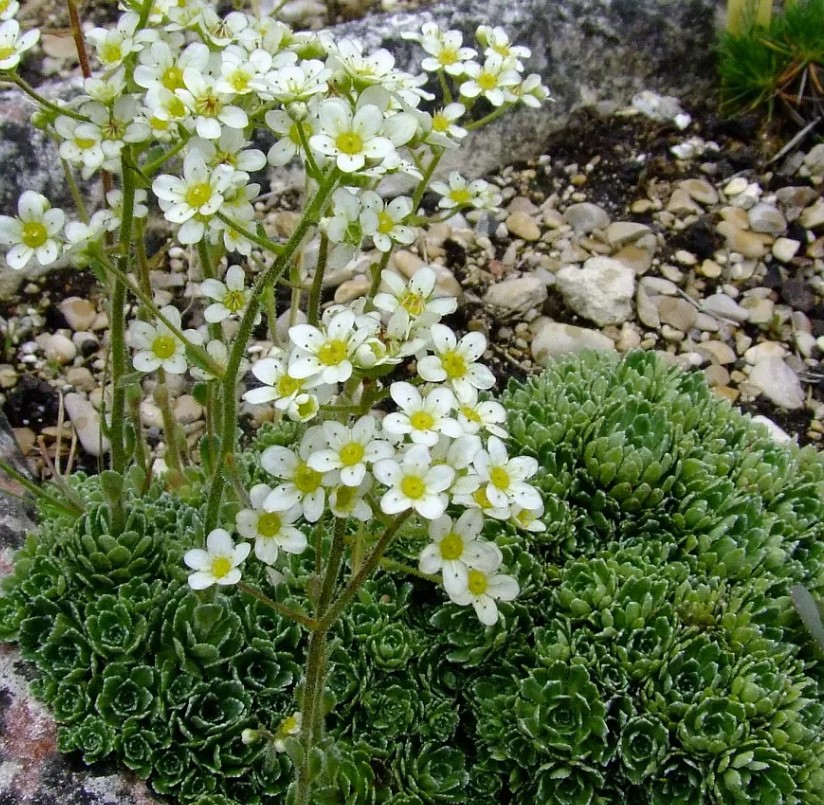
An evergreen plant that tolerates cold and drought well, Saxifraga paniculata is also called "tenacious" due to its ability to thrive in any, even the harshest, conditions. The plant grows from 4 to 8 cm tall and is most often used for borders. The flowers are white, gathered in a paniculate inflorescence. The root system is complex, with leaves spreading from the base. They have a dense structure and form a lush rosette.
Saxifraga cespitosa
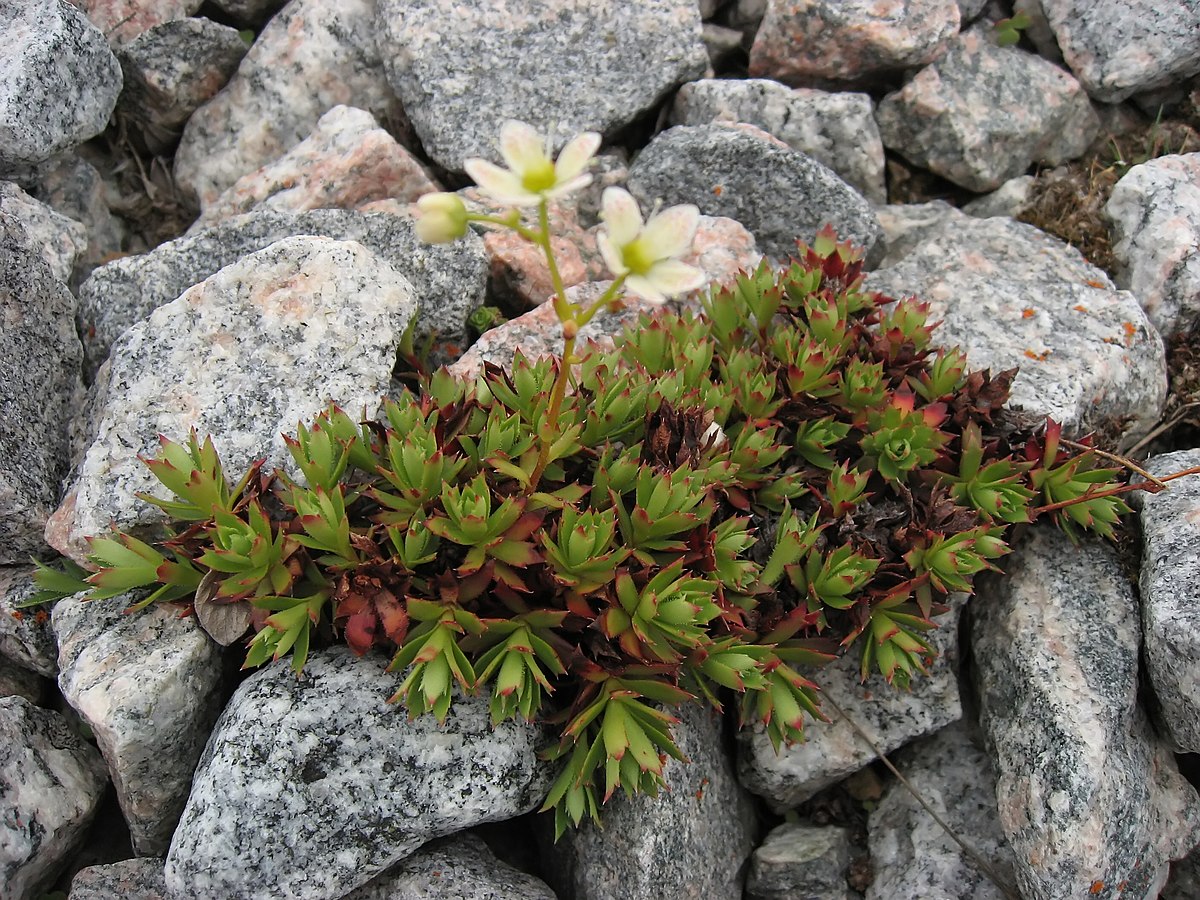
A perennial plant growing up to 20 cm tall, the buds are white in the wild, but can be pink or red in bred varieties. It tolerates harsh climates and acidic soils well.
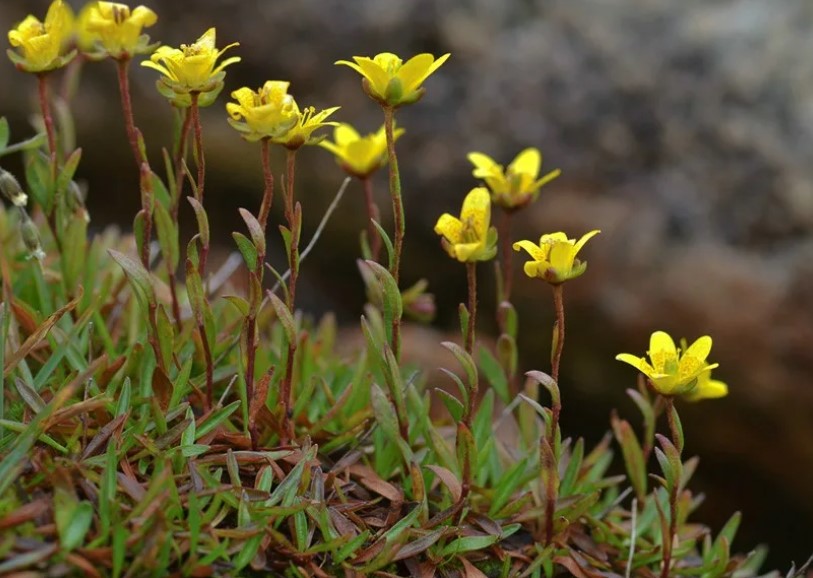
Marsh saxifrage (Saxifraga hirculus)
It prefers to grow in waterlogged soil along rivers, swamps, and lakes. The stems are erect, with leaves no more than 3 cm long. These leaves have petioles at the base and form a lush basal rosette. The flowers are bright yellow and bloom late, towards the end of summer.
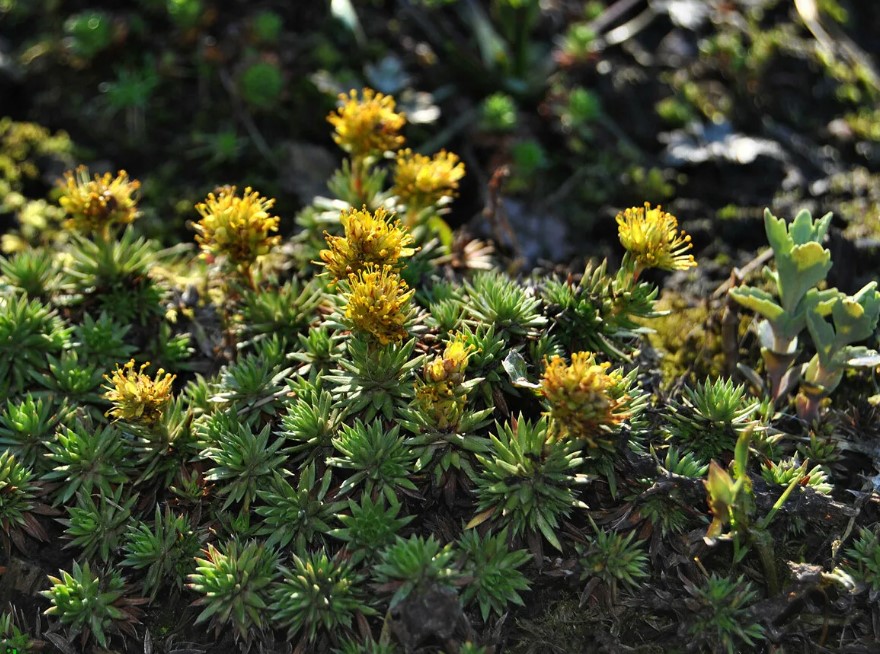
Juniper-leaved saxifrage (Saxifraga juniperifolia)
It is most commonly found on the peaks of the Caucasus Mountains. It tolerates cold temperatures well. The leaves are stiff, prickly, dark green, and glossy. The plant grows to a height of approximately 15 cm. The flowers are yellow and begin to bloom as early as June.
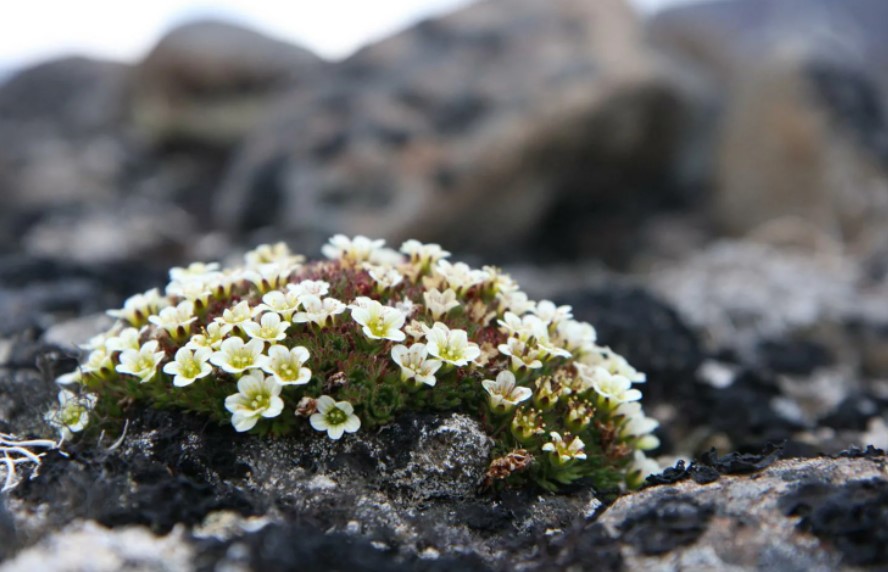
Snow saxifrage (Saxifraga nivalis)
It prefers snow-covered regions; individual specimens can even be found in arctic deserts. Its roots are very strong and thick, its stems up to 20 cm tall, and it has no leaves. The flowers are white. The plant itself is completely covered with fine hairs.
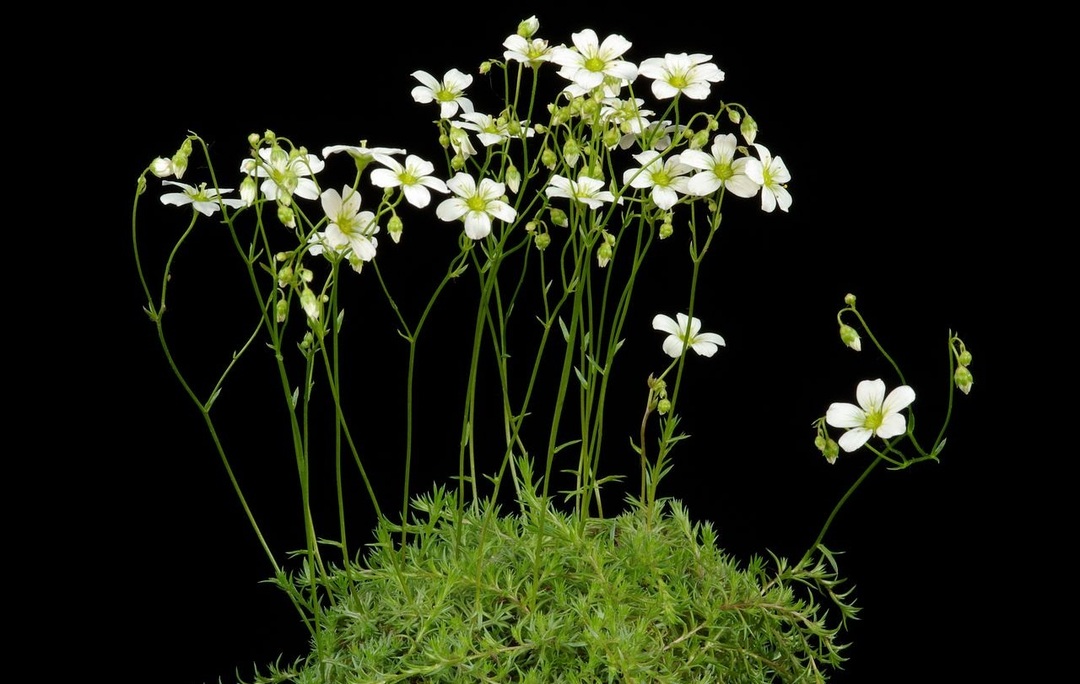
Saxifraga wahlenbergii
Saxifraga resembles moss in appearance, growing only 3-6 cm tall. The leaves are very small, measuring just 1 mm wide and no more than 7 mm long. The flowers are white, and saxifrage tolerates winter well. It is recommended to remove faded flower buds to prevent self-seeding.
Saxifraga oppositifolia
An evergreen plant with profuse blooms that can last until late summer. The stem reaches 7 cm in height, reaching 15 cm with the peduncle. The flowers are red, but by the end of the season they turn purple. This species is found in regions with harsh climates.
Saxifraga lingulata or Saxifraga callosa
A spectacular perennial growing up to 35 cm tall. The green leaves are edged with white and form a basal rosette at the base. The flowers are white and peak in July.
Saxifraga granulata
The plant has several other common names, including sheep nuts, field mice, and ground berries. It is listed in the Red Data Books of the Pskov and Leningrad regions, and is protected in several countries. It is most often used in folk medicine to treat jaundice; it is rarely seen in flowerbeds. The erect stem ranges from 15 to 40 cm in height, and the flowers are white.
Indoor saxifrage
Several types of saxifrage are grown indoors: saxifrage, saxifrage, cotyledon or blunt-leaved saxifrage (cotyledon).
Different varieties produce flowers in shades of white, pink, red, and yellow. Saxifraga is very easy to grow, easily tolerating drought and temperature fluctuations.
Saxifraga stolonifera
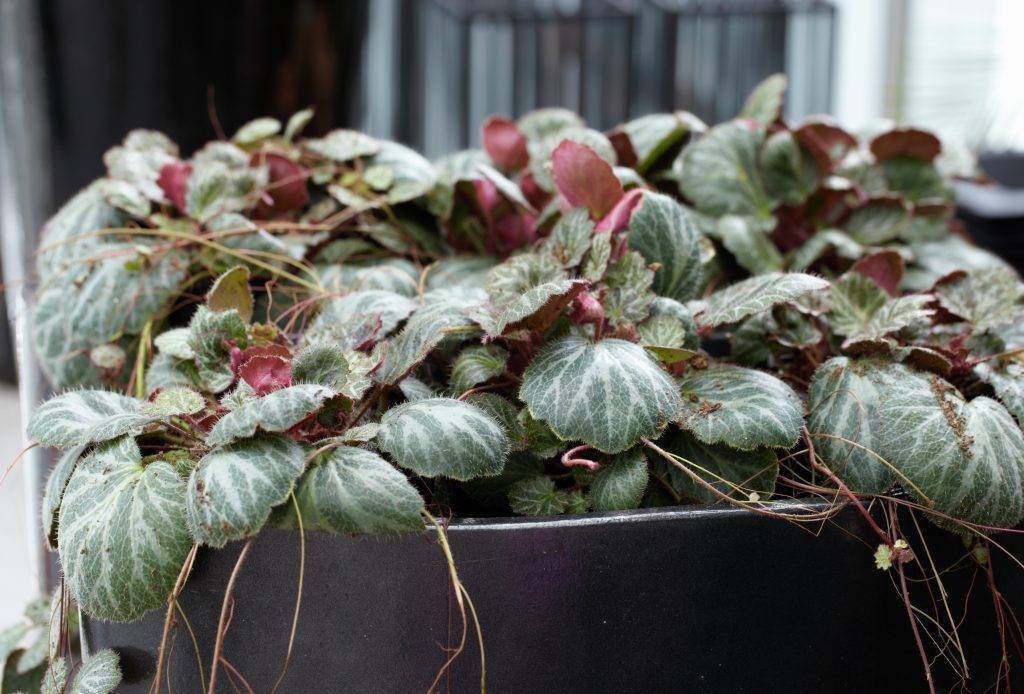
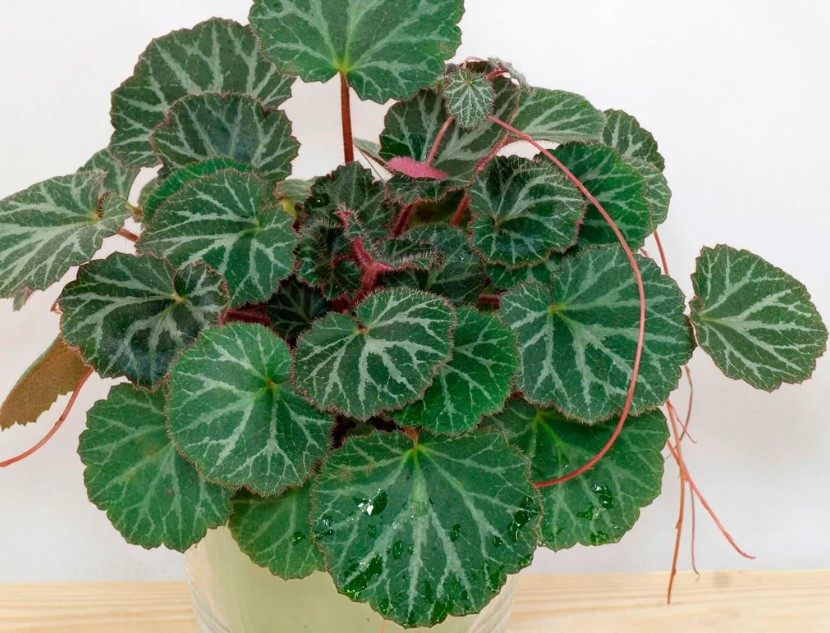
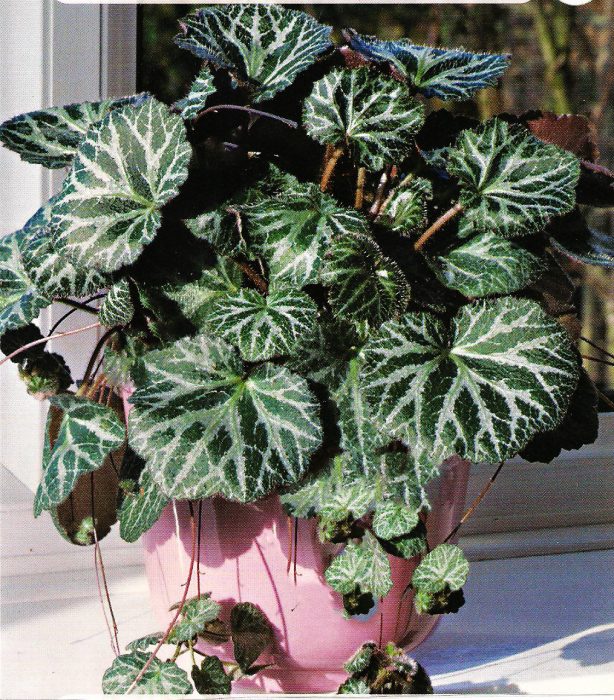
In the south of the country, it grows outdoors; in other regions, it's grown as a houseplant. The leaves are round, green, with white stripes and a pubescent surface. The stems are quite long, and when planted in a hanging basket, they droop gracefully.
Saxifraga aizoides
Saxifraga sternifolia has a creeping stem and oval or linear, rather stiff leaves (hence, presumably, the name), with serrated edges. The flowers are yellow with red spots, but so tiny they are almost invisible. Flowering occurs from mid-June to July.
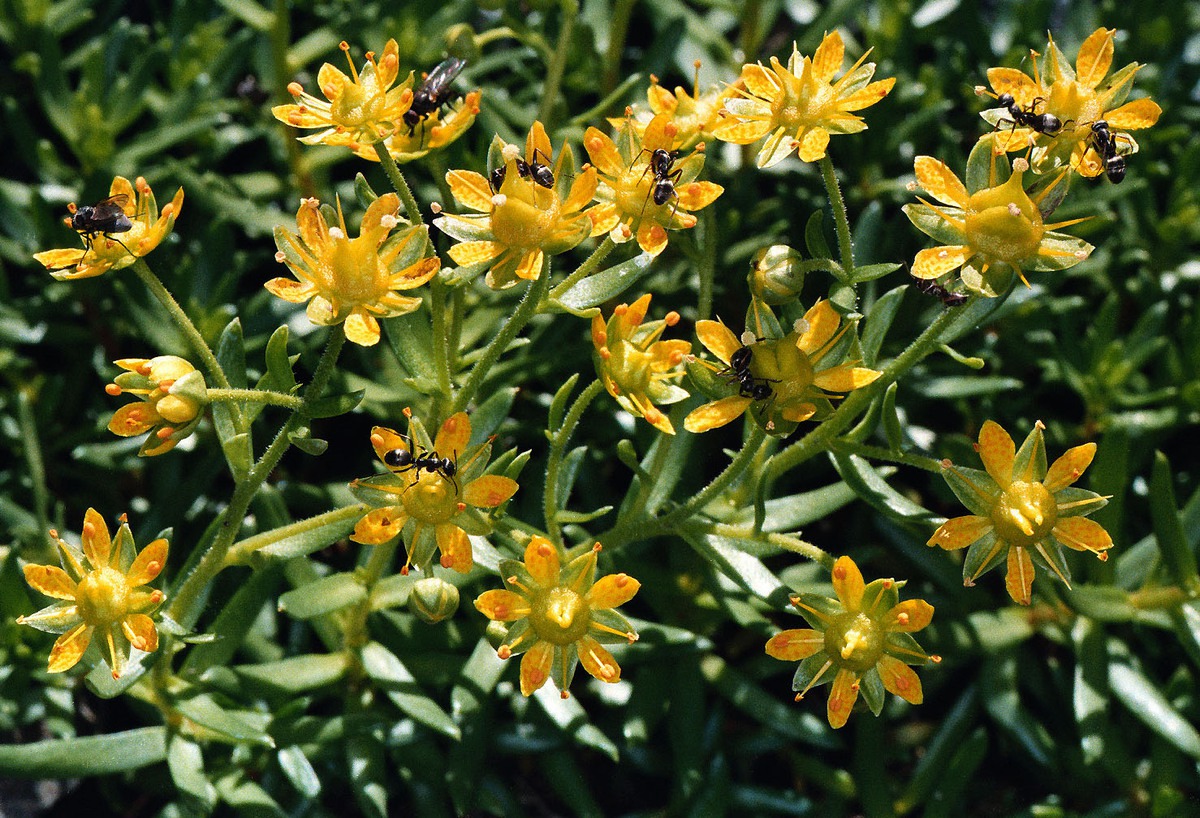
Hard-leaved saxifrage is easy to grow and winter-hardy. However, it requires fairly moist, calcium-rich soil. This species is suitable for outdoor planting, but gardeners prefer indoor conditions, which is why we've included this saxifrage in our list for indoor growing.
Saxifraga cotyledon or Saxifraga cotyledon
This species prefers sunny locations but does not tolerate direct sunlight. It produces numerous white flowers, rarely with a red spot at the base. The leaves are evergreen, stiff, and glaucous.
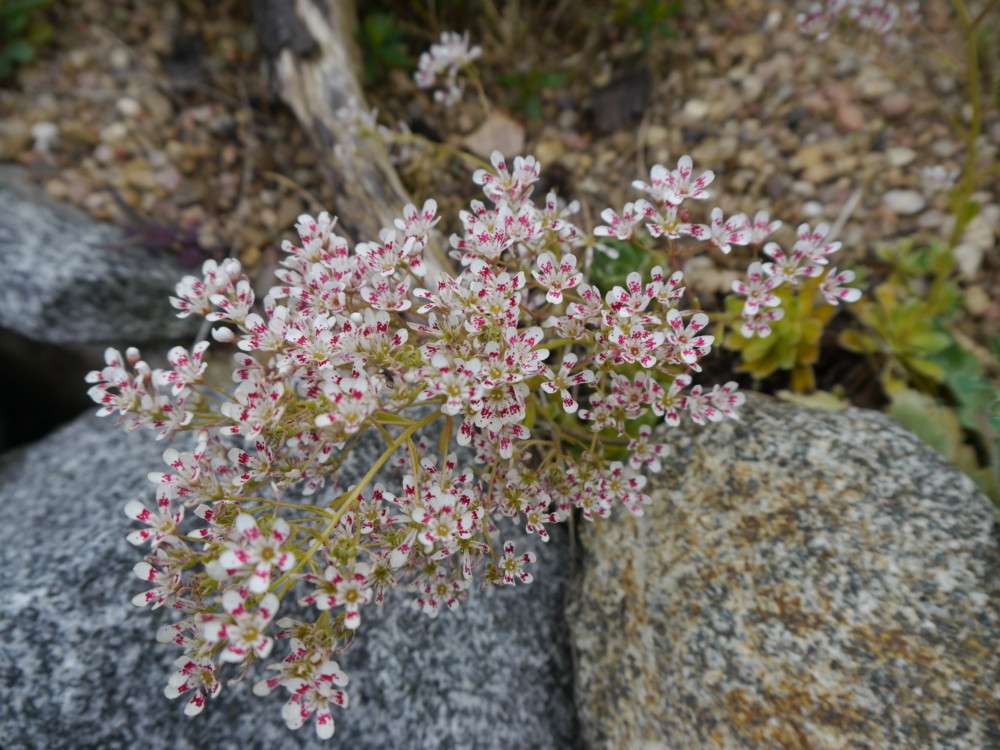
This species is suitable for rock gardens and container growing, making it a popular choice for indoor use.
How to Propagate Saxifraga: 3 Methods
Saxifraga has several reliable propagation methods. We'll discuss each in more detail below.
Cuttings
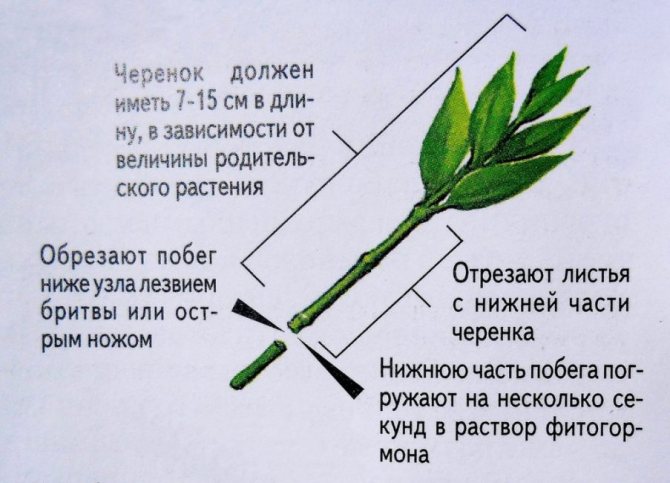
To propagate the plant, a cutting is taken from the shoot. This is done after flowering has finished, and the height of the cutting will depend on the size of the parent plant. Typically, it ranges from 7 to 15 cm. The cutting is cut below a node with a sharp knife or blade. The end is dipped in any stimulating solution for a few seconds and then planted in a pre-prepared container filled with damp sand.
The plants remain there until early fall. By this time, they've usually already taken root. If desired, they can be left in this condition over the winter, postponing planting until spring.
Dividing the bush
Dividing a bush is considered the most popular method for obtaining a new plant. It's best done in the spring before flowering. The bush is dug out of the ground, roots included. A smaller section is cut off with a sharp knife, and the cut areas are treated with crushed ash. After this, the plant can be dipped in a stimulating solution and planted in its permanent location.

Layers
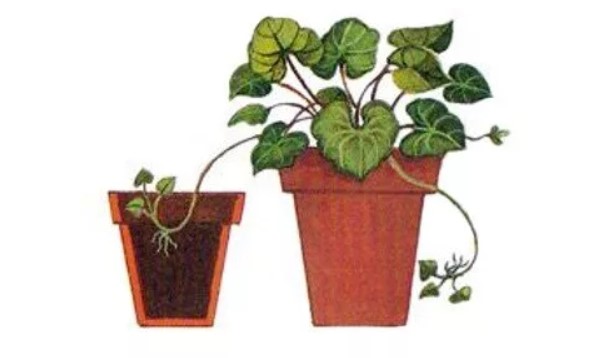
The easiest way to get an additional bush is to form cuttings. All mature plants have them. Choose the healthiest one, dig a small hole for it, and water it. Then, carefully place the cutting in this hole and cover it with soil. It will root in the fall, but it's not recommended to disturb it yet. In the spring, separate the young bush from the parent plant, roots included, and sprinkle the cut ends with ash.
The climbing species of saxifrage has rosettes that can be used to produce new plants.
Growing saxifrage from seeds
Saxifrage can be easily grown from seeds if you follow simple rules.
Sowing saxifrage seeds for seedlings
Saxifraga seedlings can be grown 40-50 days before planting them in a permanent location.
It's recommended to harden the seeds 2-3 weeks before planting. To do this, mix the seeds with sand and place them on the top shelf of the refrigerator. After this, you can begin sowing.
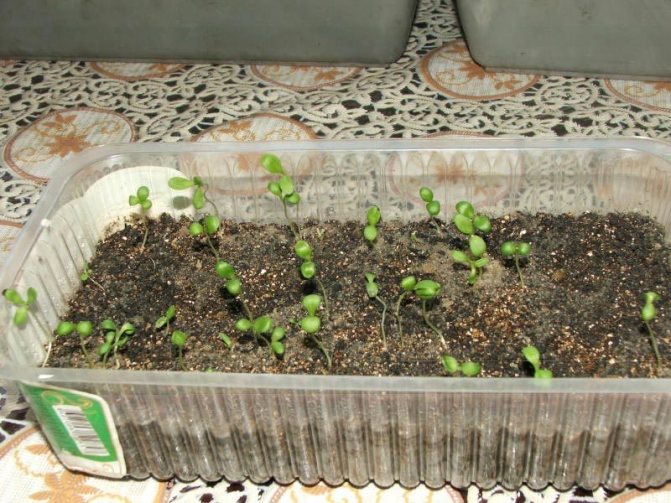
Fill the container with nutrient-rich soil, carefully pour the seeds in a straight line, pressing them lightly into the soil. Next, water using a spray bottle. Finally, cover the container with glass or a plastic bag to create greenhouse-like conditions.
The first shoots will appear in approximately 7-10 days, at which point the cover can be removed. To speed up the growth process, seedlings are pricked out when they have four true leaves.
After planting the stonecrop, its flowering can only be expected the following season.
Sowing in the ground
Saxifraga can be grown not only from seedlings but also by direct sowing of seeds into the ground. This can be done in early spring or before winter.
Furrows up to 15 mm deep are made in the garden bed. Seeds mixed with sand are placed in these furrows and covered with soil.
The time for seedlings to emerge increases to 28 days. If after this time no seedlings have appeared in the spring, then you can safely plant other plants in the flowerbed; the saxifrage will no longer sprout.
Planting saxifrage seedlings in open ground
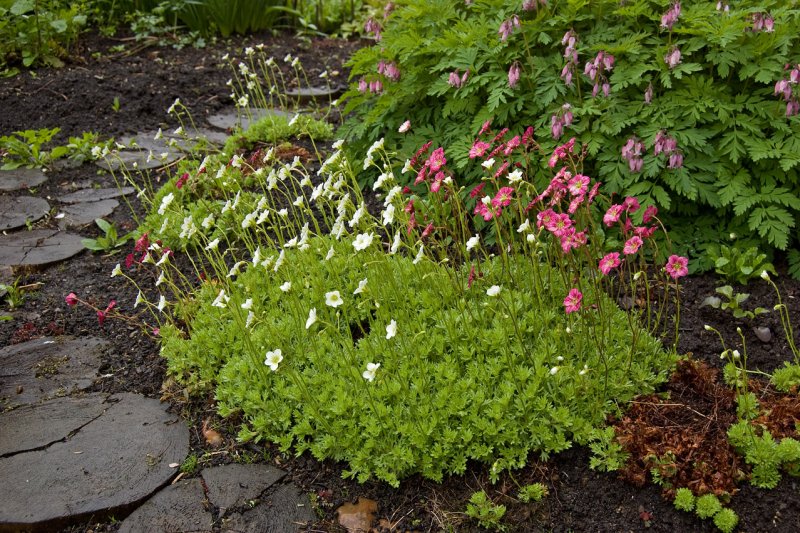
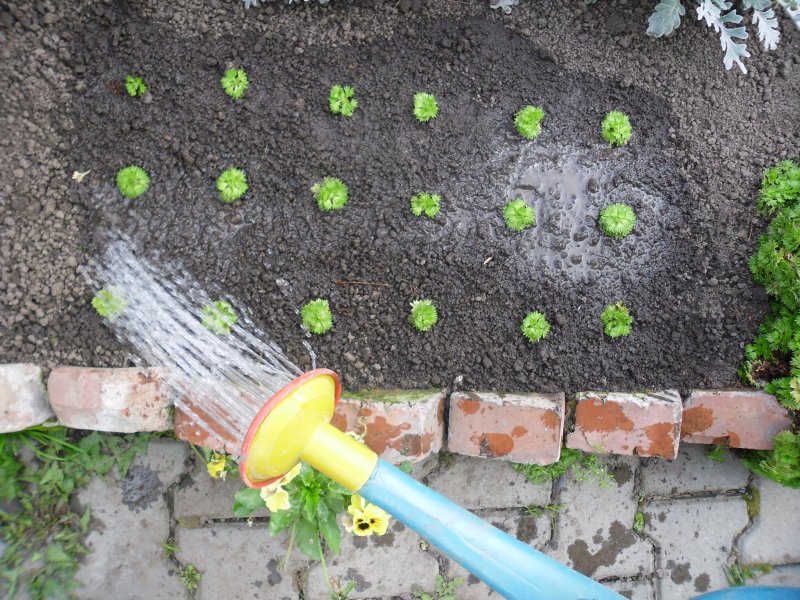
The seedlings can be moved into open ground when the soil has warmed up sufficiently and the threat of recurrent frosts has passed.
Dig holes in the flowerbed using a 20x20 pattern, and place the pre-watered plant into the holes along with the soil ball. Compact the soil, and do not water the seedlings further for the next 10 days.
Growing and caring for saxifrage in open ground
Saxifraga is considered an easy-to-grow plant, easy to grow outdoors. The key is choosing the right location and providing proper care.
Selecting a location and soil
Saxifraga grows well in both shaded and sunny areas of the garden. However, if exposed to direct sunlight for long periods, brown spots (scorch) may appear on the leaves.
The eastern and western parts of the garden are well suited for growing the flower.
Saxifraga prefers rocky, lime-rich soil, which is very difficult to replicate in a garden plot. Therefore, it is recommended to add sand to the garden soil to make it looser.
Regarding acidity, only the Saxifraga obtusifolia prefers acidic soil. All other varieties prefer a neutral or slightly alkaline environment.
Fertilizing and watering
Saxifrage does not like abundant watering, but it also has a hard time withstanding prolonged drought, unlike other mountain plants.
It's best to water in the morning as the top layer of soil dries. It's important not to overwater the rosette, as this increases the risk of rot and fungus.
Saxifraga does not require additional feeding; its roots are strong enough to extract all the necessary nutrients from the soil.
Preparing saxifrage for winter
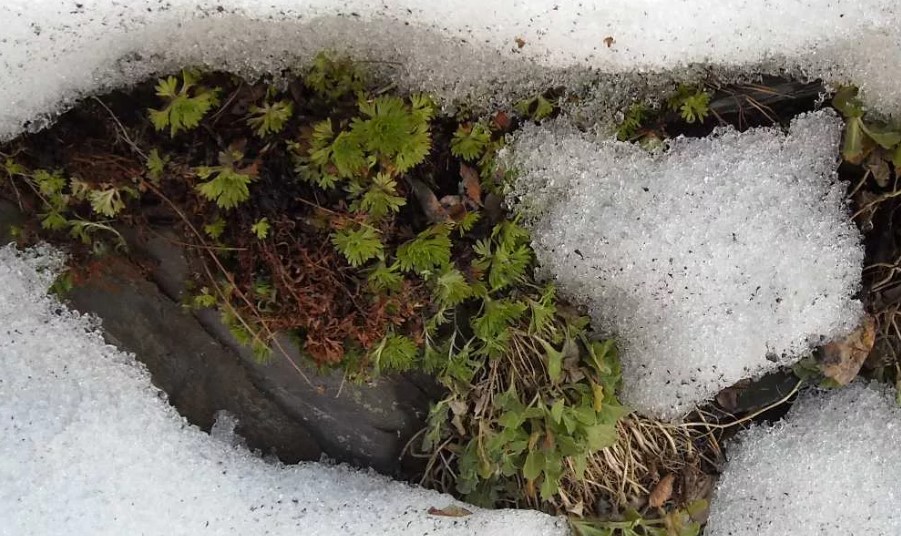
Saxifrage is a cold-hardy plant that survives winter well. However, some ornamental varieties require additional protection.
The shoots are cut with sharp scissors, and the cut sites are disinfected with a weak solution of potassium permanganate or ash. The saxifrage is covered with spruce branches or dry leaves.
If the winter is cold but there is little snow, it is additionally recommended to sprinkle snow on the plants.
Saxifraga indoor plant care at home: 5 important steps
Caring for saxifrage at home is quite simple; it boils down to watering, maintaining humidity levels, and periodic fertilizing.
Temperature
Saxifrage tolerates cool temperatures well and prefers lower air temperatures, when the thermometer does not rise above 20 degrees in summer.
If the temperature is higher, you will have to water the plant more often and increase the air humidity.
Variegated saxifrages are more heat-loving. Their optimal temperature is considered to be 20-25 degrees Celsius. In winter, it should be slightly lower, around 15 degrees Celsius.
Lighting
Saxifrage loves light; it can easily tolerate direct morning and evening sunlight. Therefore, it's best grown in an east- or west-facing window.
The more variegated the leaves, the more light the plant needs.
In winter, when light levels are insufficient, shoots may stretch and become thinner. This may indicate a lack of light. Special phytolamps, which can be turned on in the evening, can help remedy this.
Watering and fertilizing
Saxifraga tolerates drought quite well, but standing water at the roots can be fatal. When watering, use settled, room-temperature water and be careful not to let it splash onto the rosette, as this will cause rot.
The optimal method is considered to be bottom watering, when the flower pot is placed in a tray of water for some time.
In winter, watering should be minimal; the rest of the time, it is carried out as the top layer of the soil dries out.
For fertilizing, it's best to use a complete fertilizer for succulents. It's diluted to half the recommended dose and added once a month in spring and summer. Apply the fertilizer only after a thorough watering to avoid burning the roots.
Humidity
If the room temperature doesn't rise above 18-20 degrees Celsius, additional humidification is not necessary. Saxifrages should only be misted during high temperatures to prevent stress and drying out.
The procedure is carried out in the morning using a spray bottle and room-temperature water. Avoid getting any moisture on the flowers.
Diseases and pests of saxifrage
The most common disease among saxifrage plants is rot. It occurs due to overwatering and improper watering. Fungal diseases attack the stems and leaves, eventually killing the plant. To prevent this, remove the infected parts and treat the remaining parts with specialized products. Then, adjust the watering schedule and avoid excessive humidity.
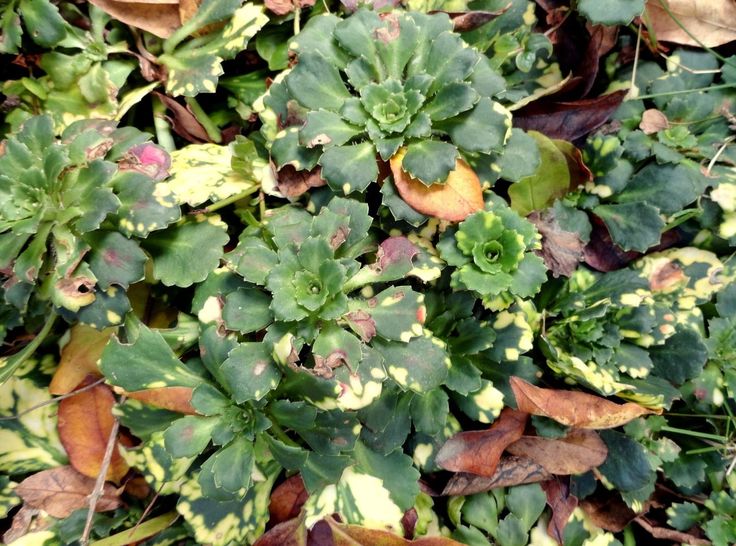
Poor drainage can lead to root rot. This usually leads to the death of the plant and is virtually impossible to treat, as the disease is usually only noticed in its advanced stages.
Among insect pests, the most common are:
- Mealybugs. A white coating appears on leaves and stems. Treatment with a soapy solution or using specialized products will help.
- Spider mites. A fine web appears between the leaves, which begin to yellow and fall off. A thorough cleaning of the flowers and treatment with chemicals (Actellic, Fitoverm, etc.) will help.
- Aphids. Colonies of small insects can be seen on the underside of leaves, leaving sticky residue. For small infestations, wipe the leaves with a solution of wormwood, dandelion, or tobacco mixed with soap. Specialized aphid control products such as Fitoverm, Actellic, and Decis are effective.
Saxifraga, a perennial garden flower, is featured in landscape design. Many photos are available.
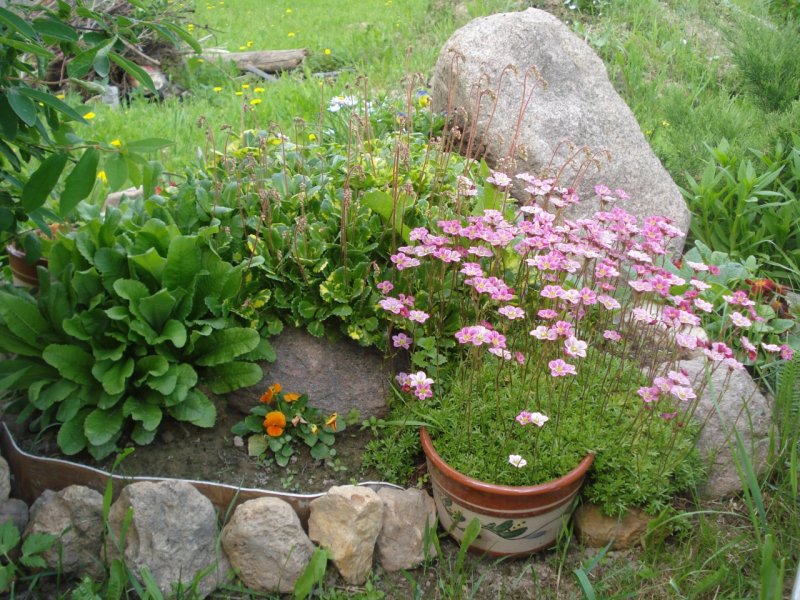
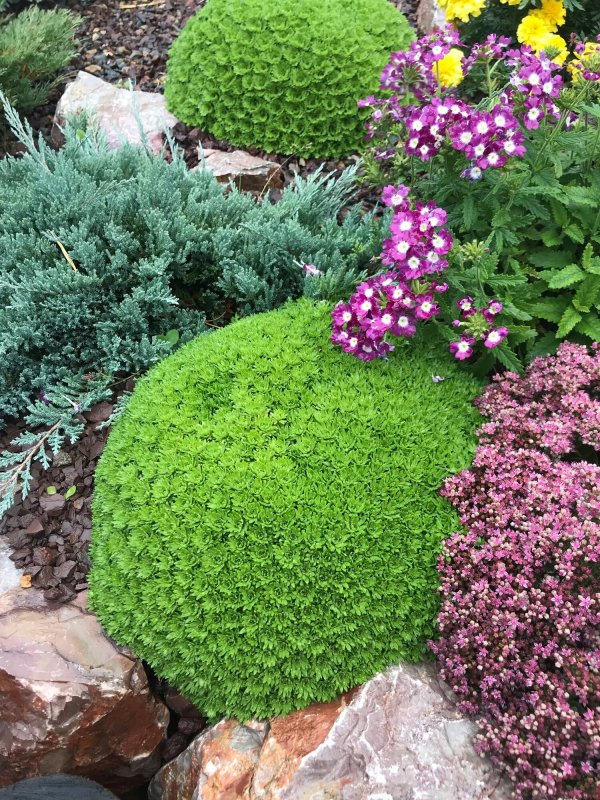
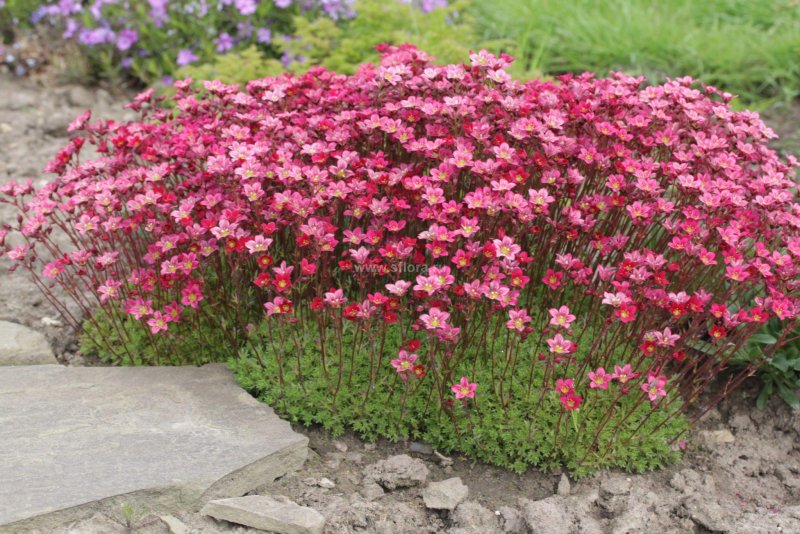
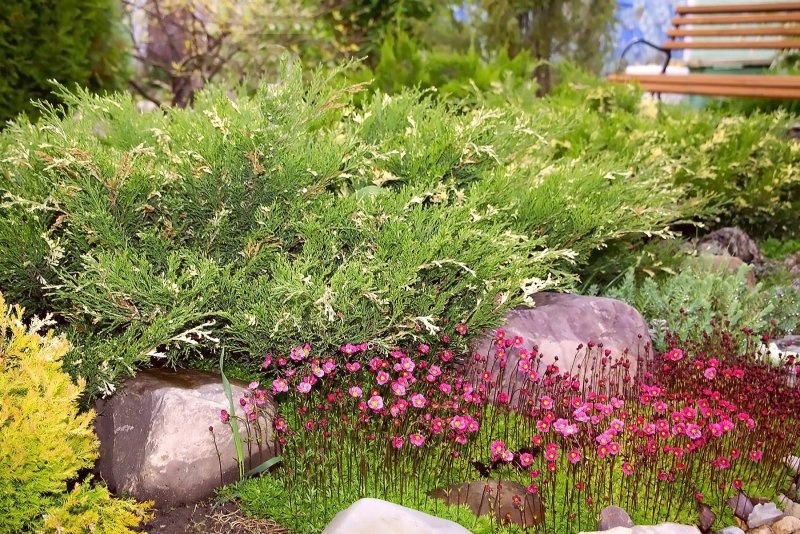
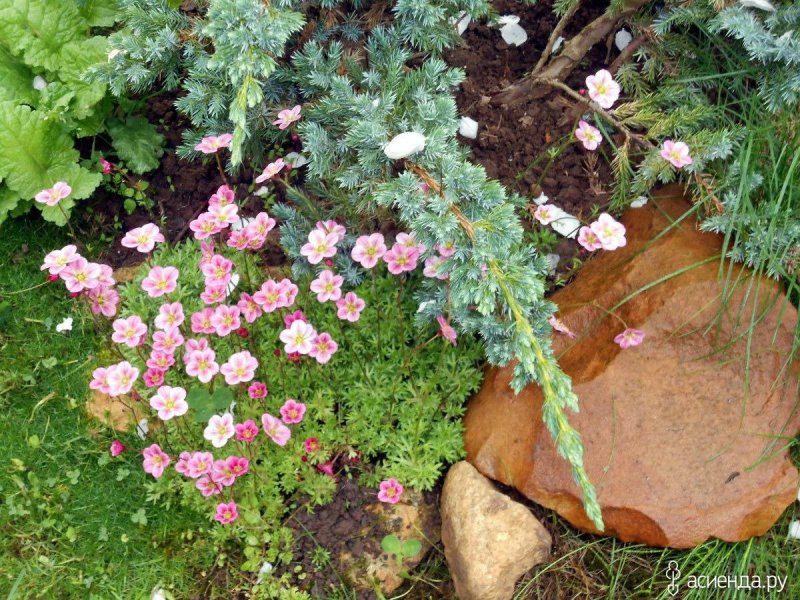
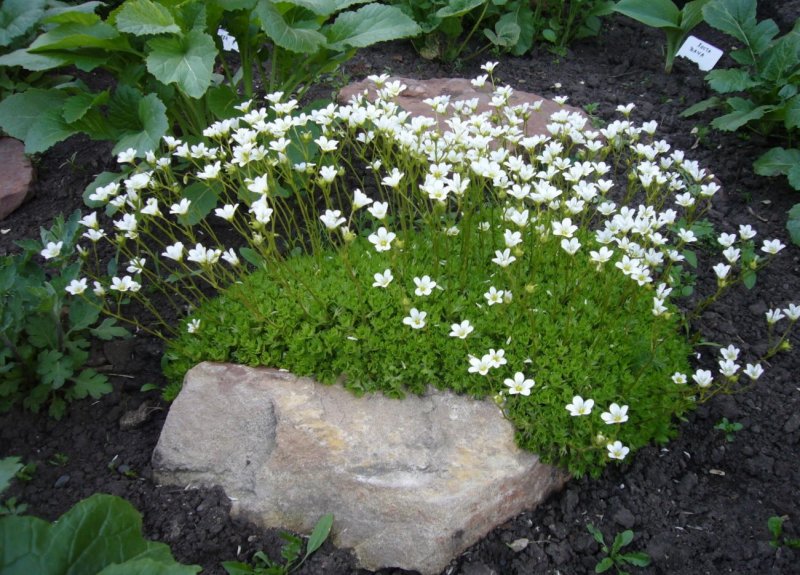
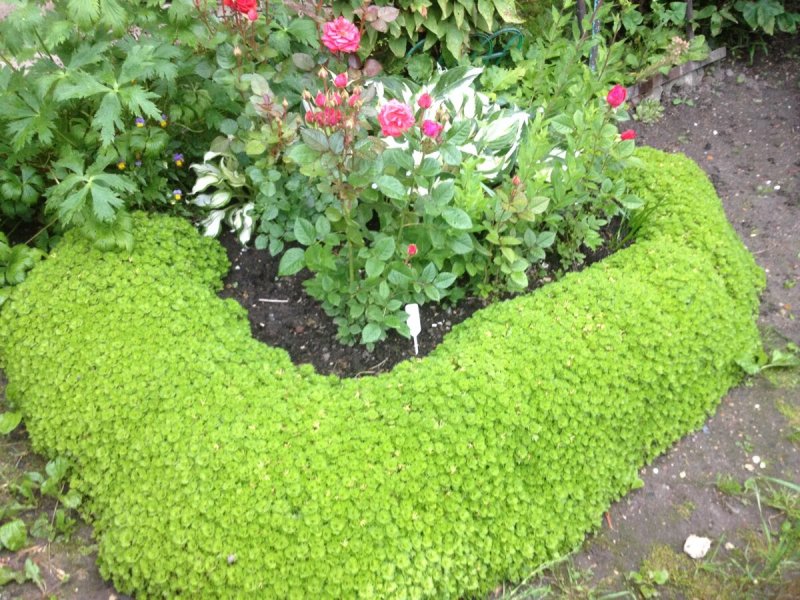
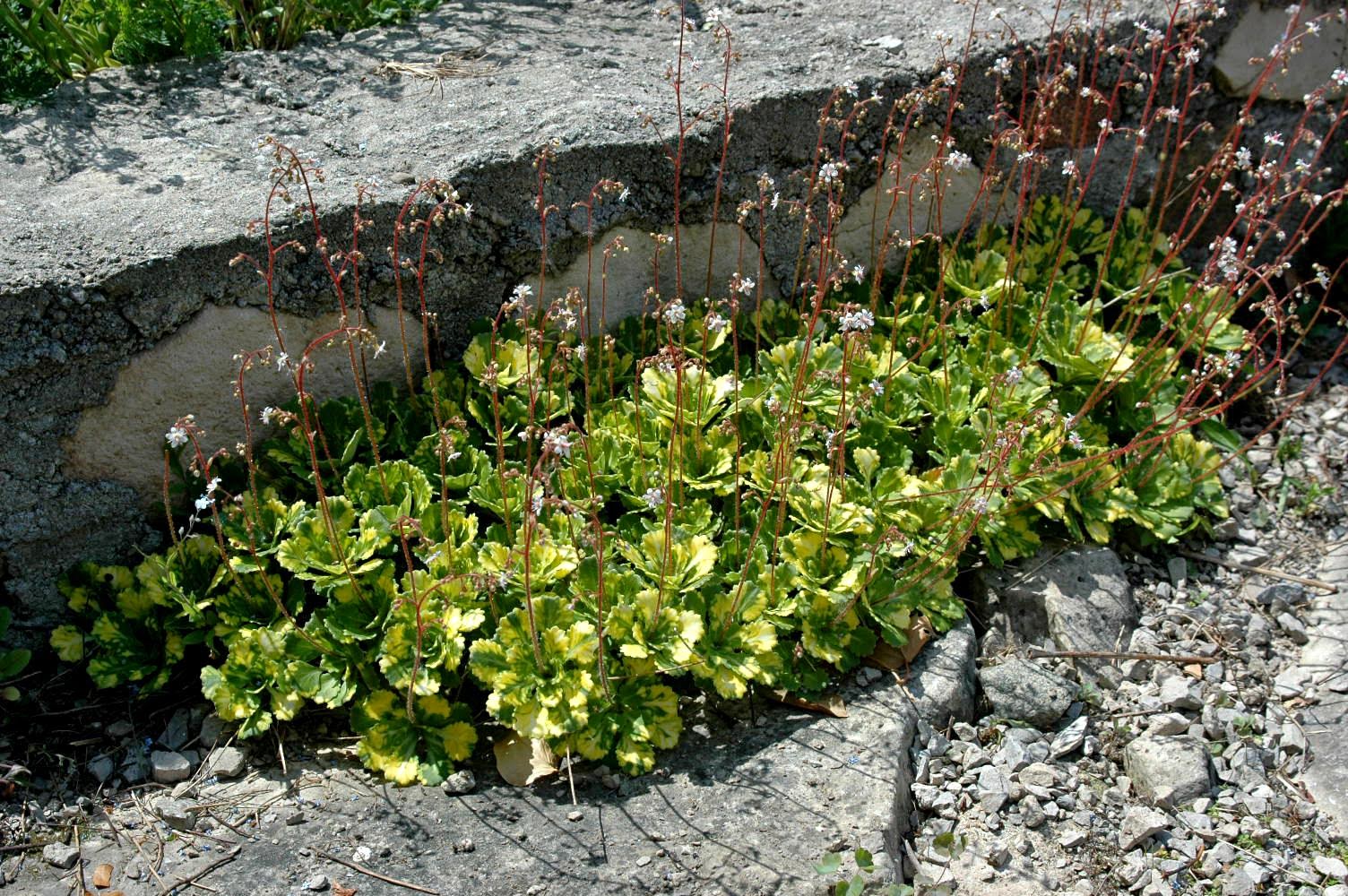
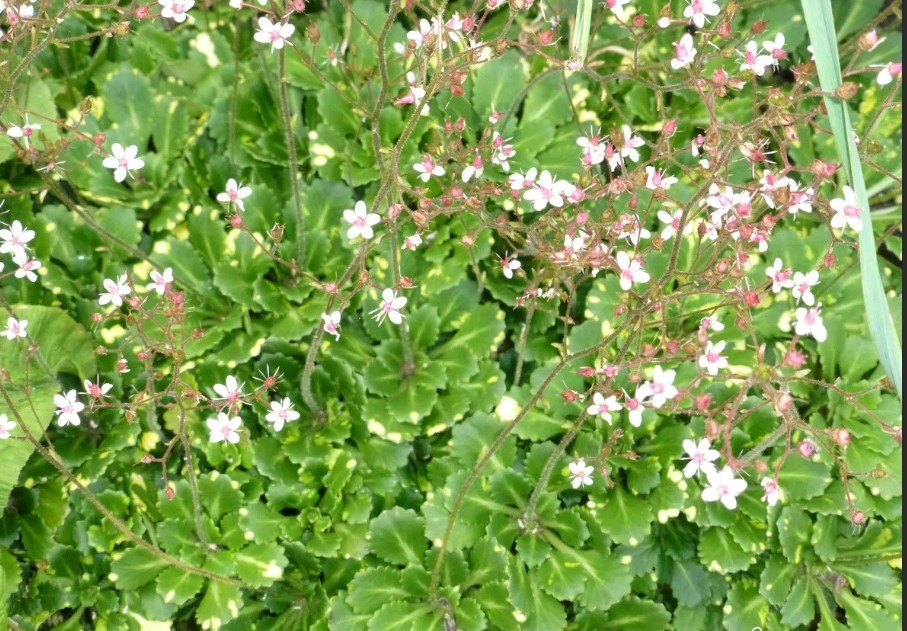
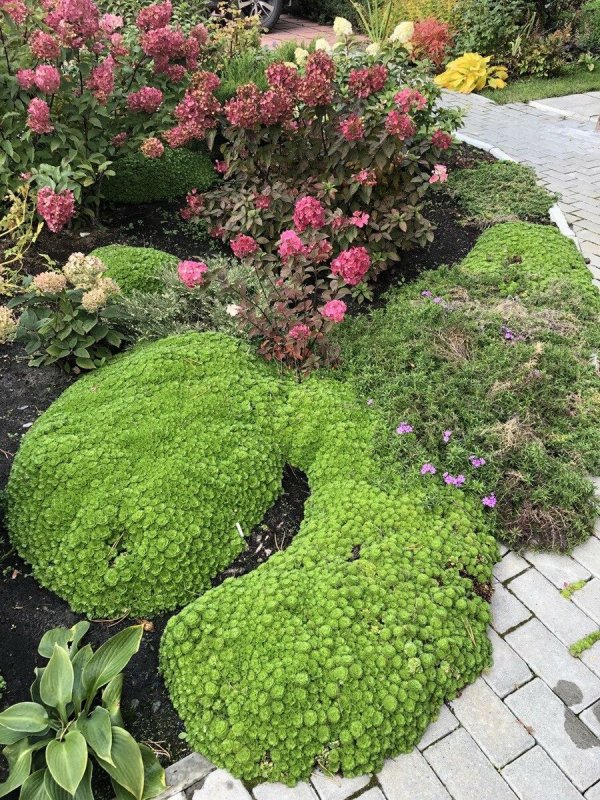
Saxifraga is used as a groundcover plant to fill gaps in large flower beds.
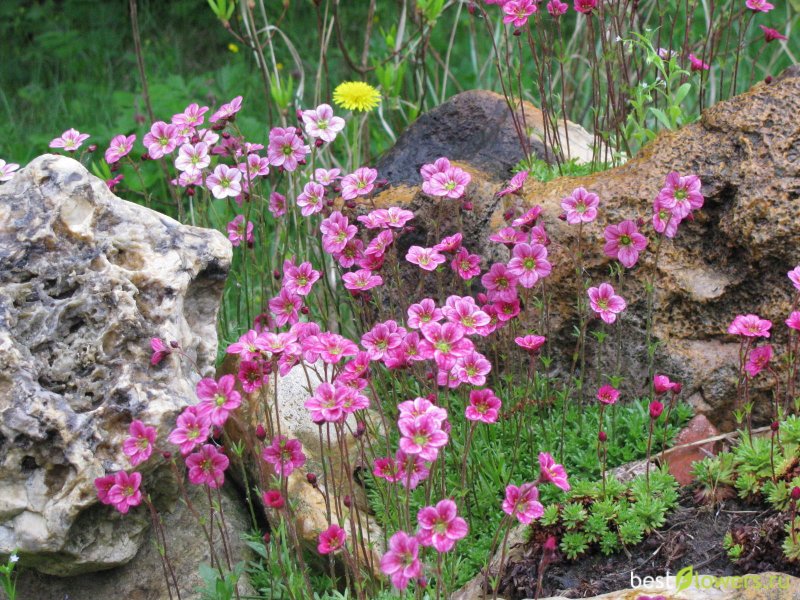
They look great in hanging baskets that decorate terraces and balconies. They are often used to decorate borders and paths.
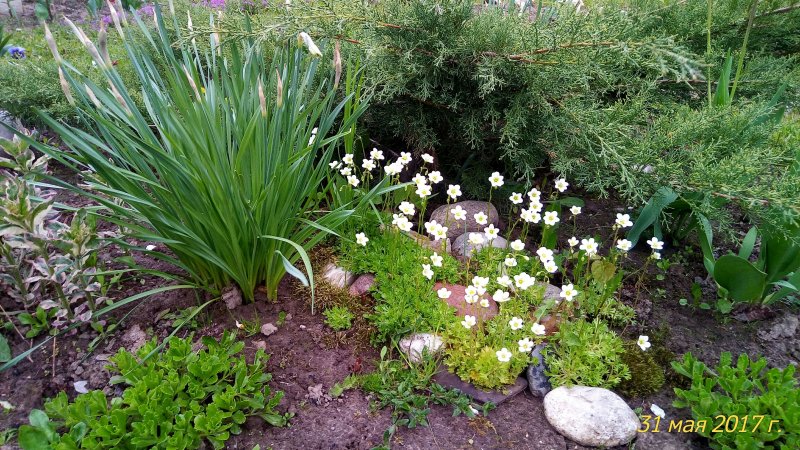
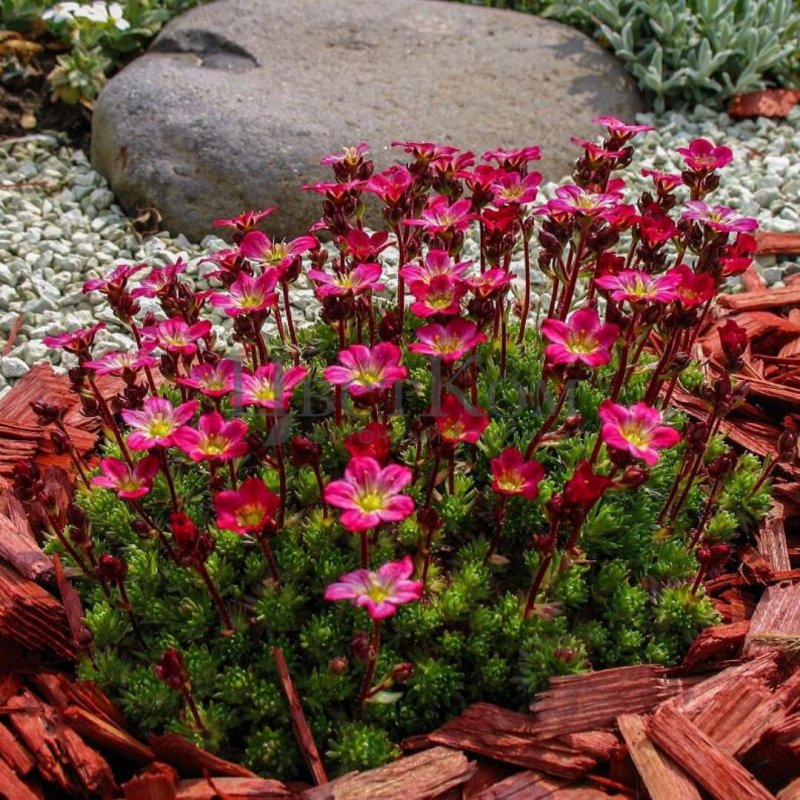
Saxifraga grows well in alpine gardens.
In landscape design, it is often used to cover gaps and plant bases in compositions.
Medicinal properties of saxifrage, contraindications
Not all species of saxifrage have medicinal properties. Saxifraga nigra and Saxifraga saphenosa are particularly beneficial. They contain a large number of beneficial substances, organic acids, flavonoids, coumarin, and alkaloids.
Tinctures and decoctions are prepared from the rhizomes and aerial parts. They have antiseptic, anti-inflammatory, analgesic, bactericidal, and antitumor properties.
A decoction is prepared from 15 g of crushed roots and 500 ml of boiling water. It should be steeped in a water bath for 15 minutes, then strained and taken 100 ml three times daily.
A decoction of 1 teaspoon of crushed leaves and stems, poured into a glass of boiling water, helps treat stomach and ENT conditions. Drink it 3 times a day, adding 1 teaspoon of honey beforehand.