Not all mushroom pickers know that the classic porcini mushroom has a yellow cousin—the semi-porcini mushroom. It's rare, has a very pleasant taste, and looks little different from the familiar boletus.
Content
- 1 The History of the Half-White Mushroom
- 2 Semi-white mushroom: description
- 3 Photo gallery of the Semi-White Mushroom
- 4 Different names for the Half-White Mushroom
- 5 Where and when does the semi-white mushroom grow?
- 6 Edible mushrooms similar to the Half-White Mushroom
- 7 Inedible mushrooms similar to the Half-White Mushroom
- 8 Nutritional value and calorie content of the Half-White Mushroom
- 9 The benefits and harms of the semi-white mushroom
- 10 The use of the semi-white mushroom in folk medicine, recipes
- 11 Culinary uses of the semi-white mushroom, recipes
- 12 Growing the Half-White Mushroom at Home
- 13 Interesting facts about the Semi-White Mushroom
- 14 Reviews of semi-porcini mushrooms and their preparation
The History of the Half-White Mushroom
The semi-white mushroom was first discovered and described in the 19th century by scientist Elias Magnus Fries. However, his work contained inaccuracies, which were corrected by Czech mycologist Josef Šutara. He revised the genus Boletaceae and, in 2008, changed the classification of the fruiting body.
Semi-white mushroom: description
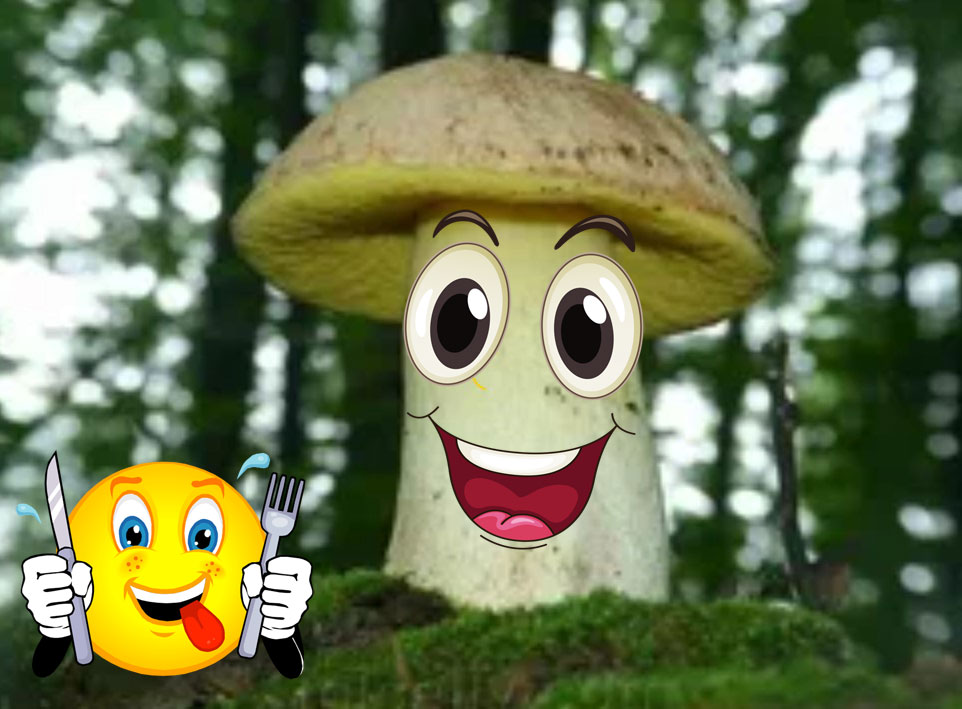
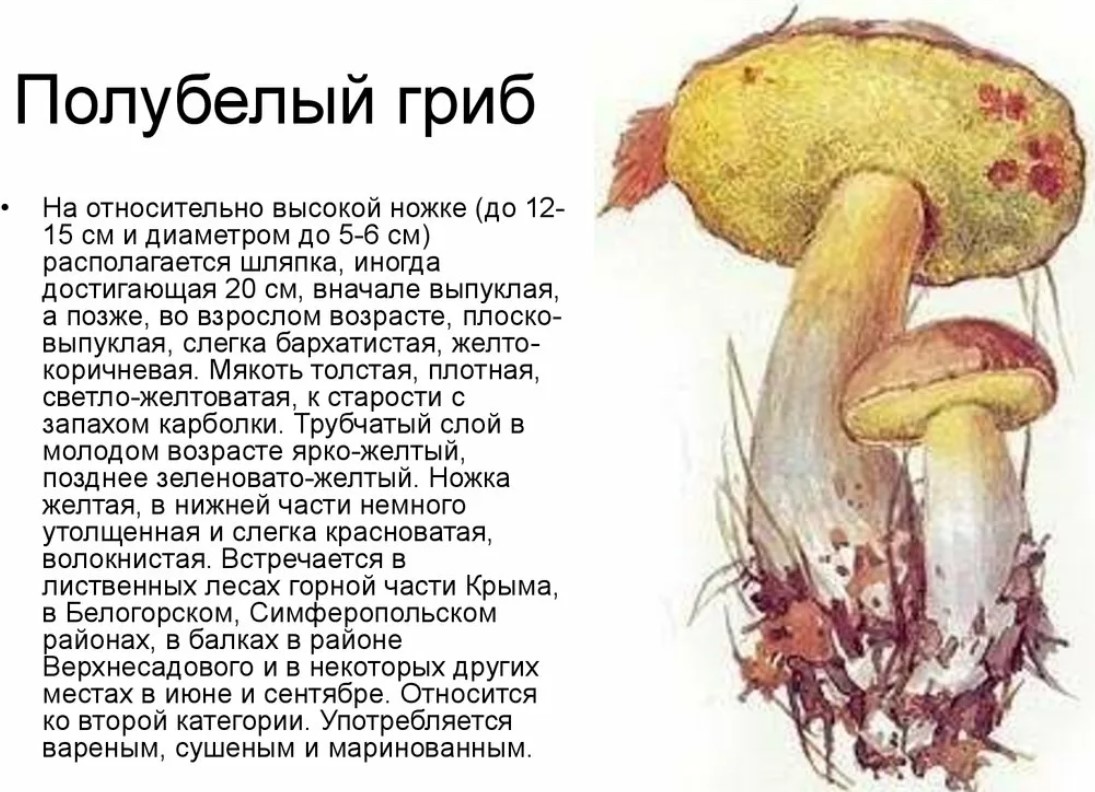
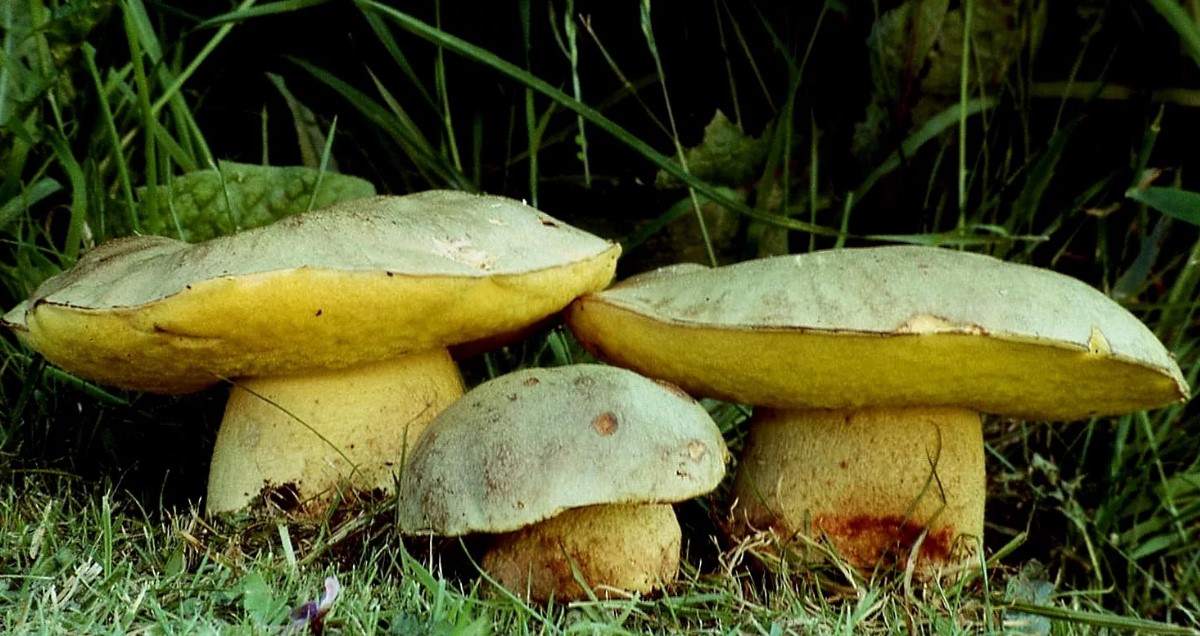
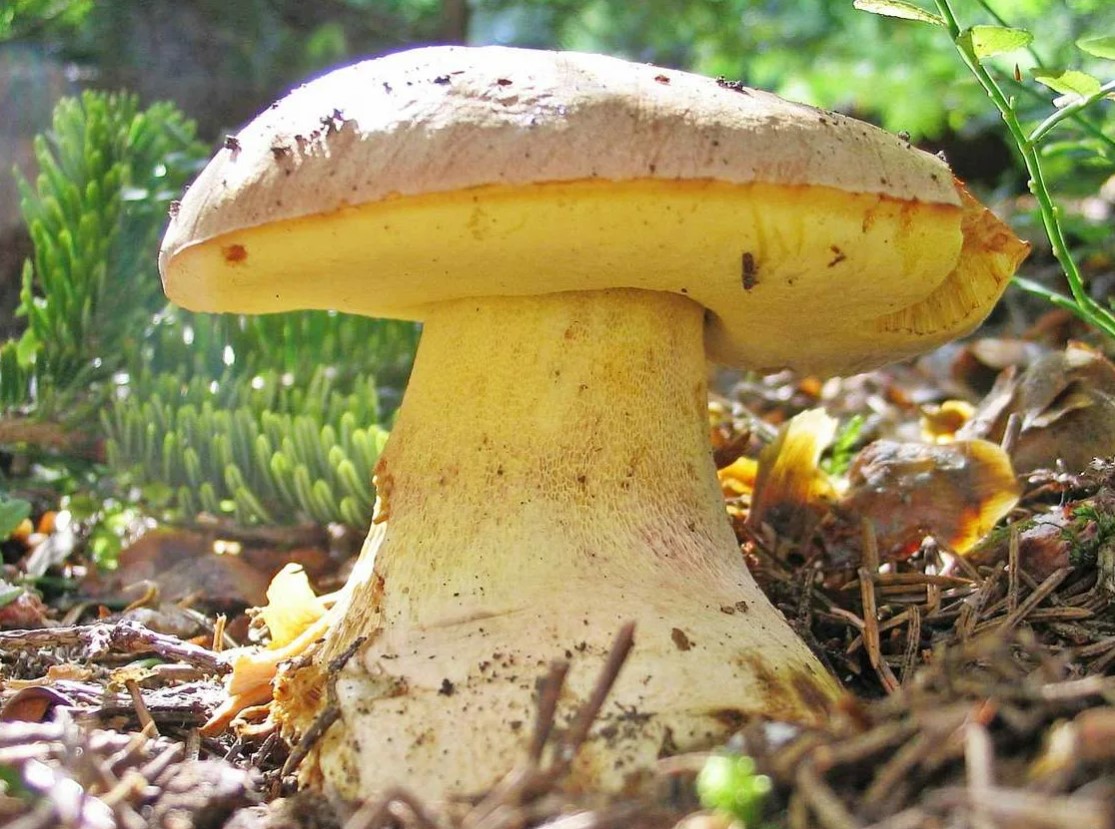
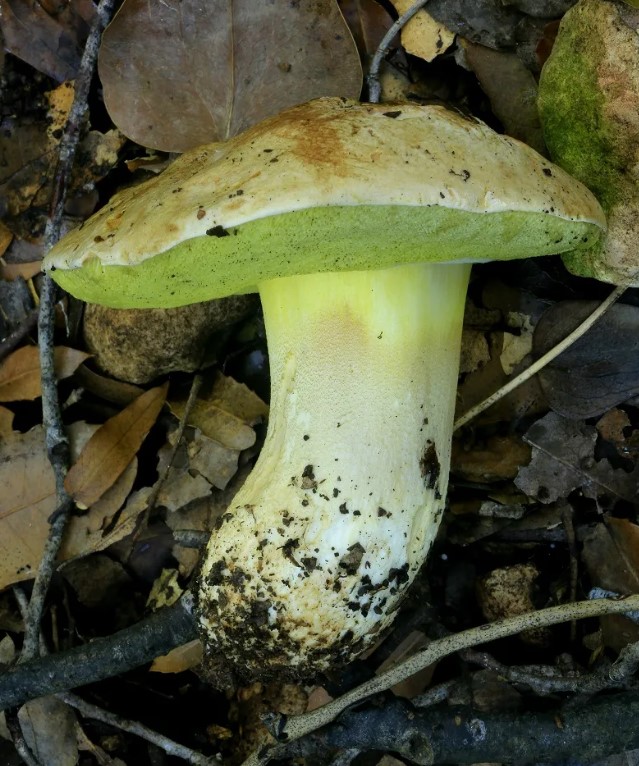
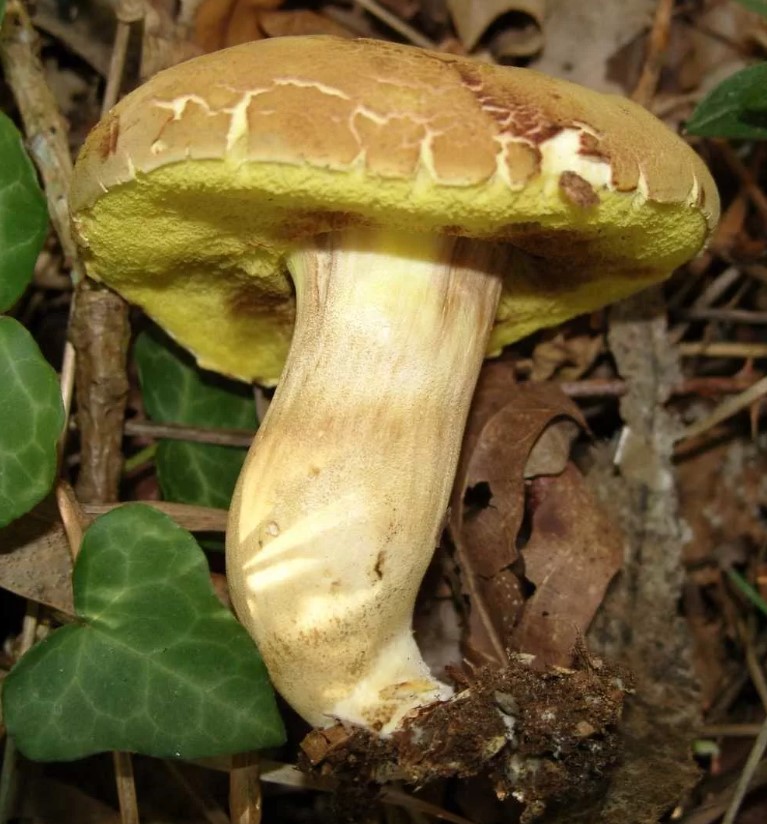
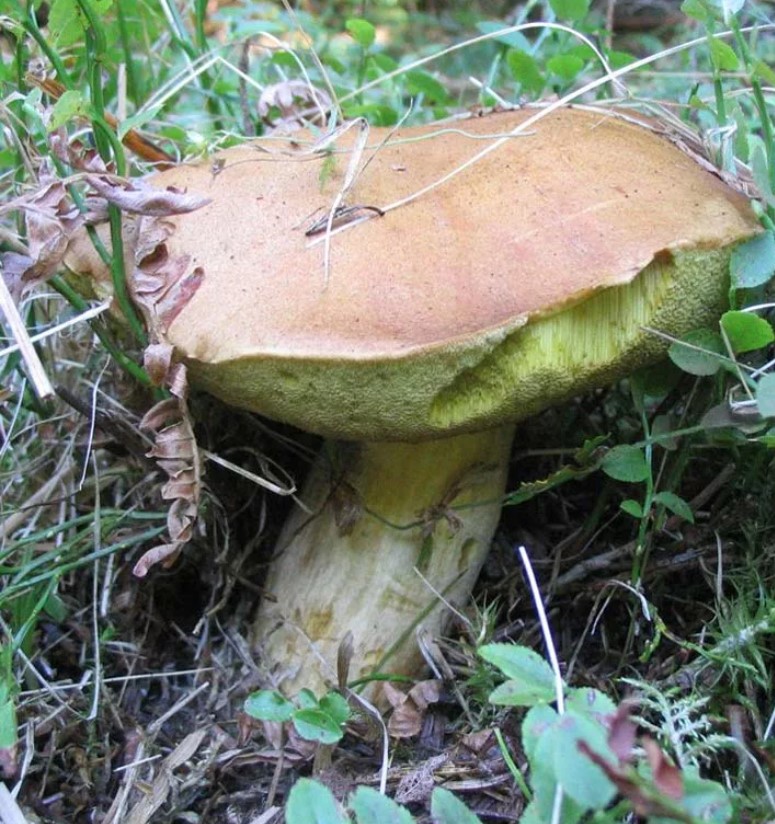
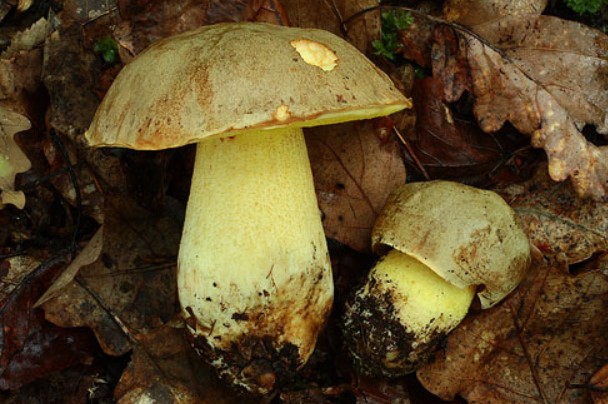
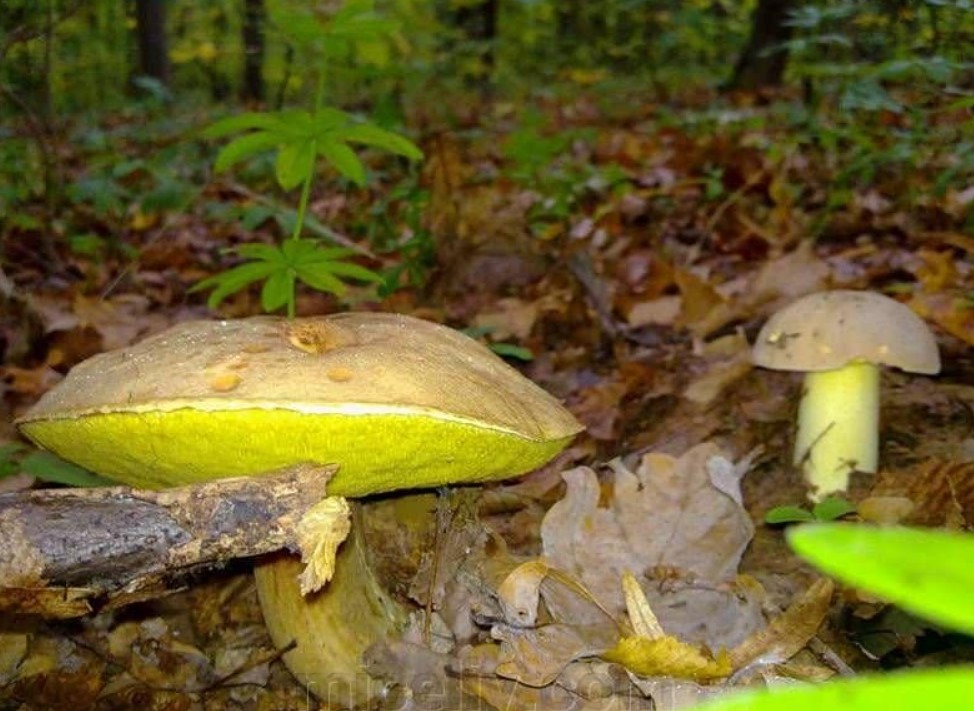
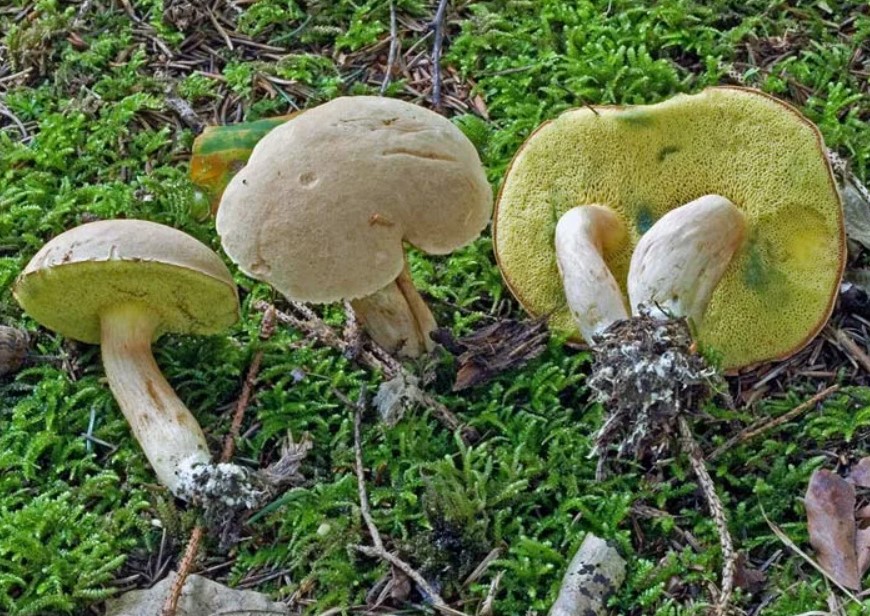
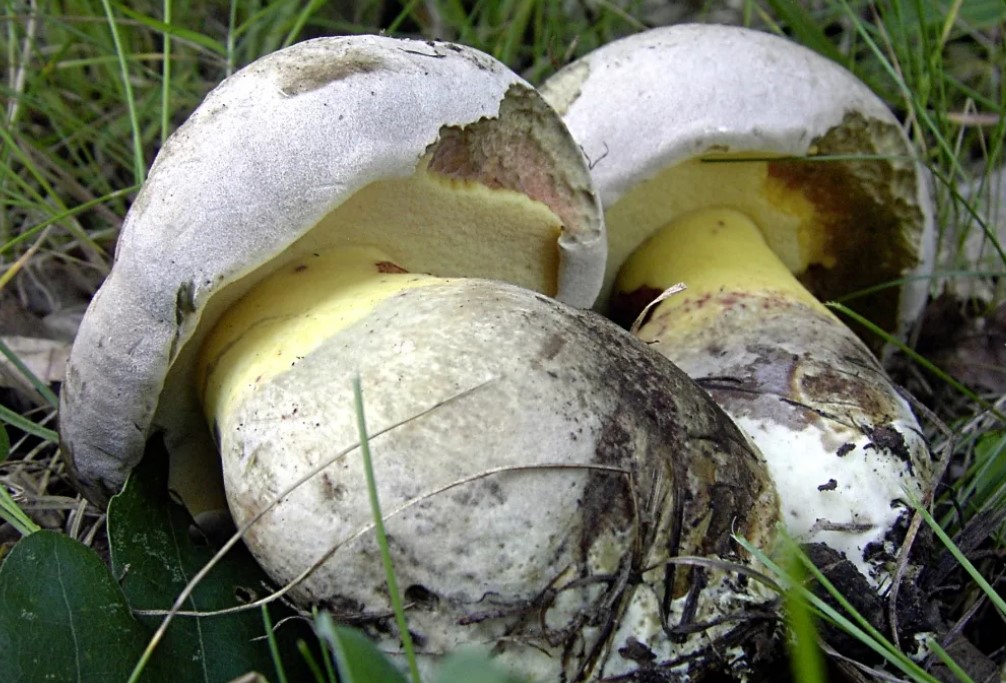
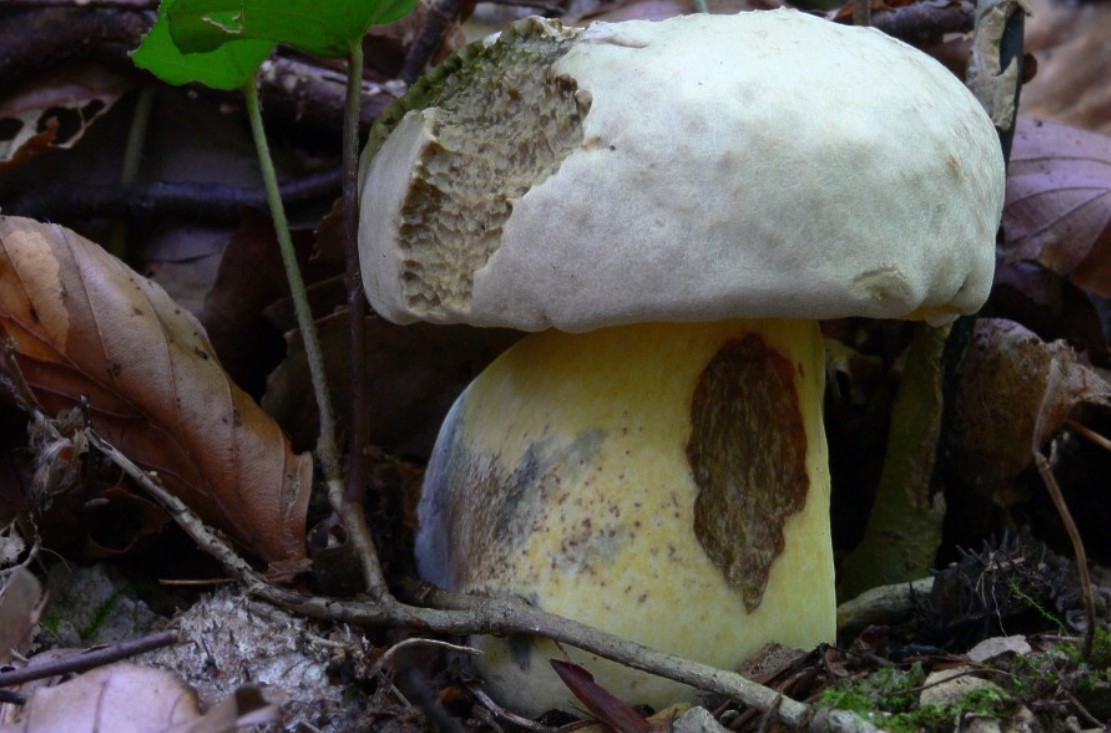
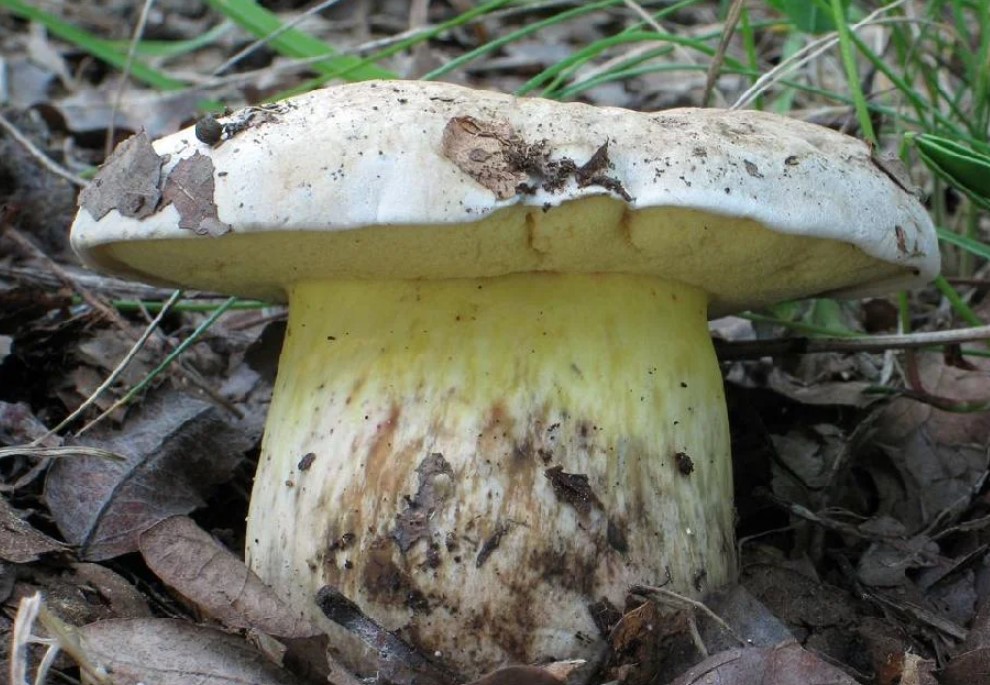
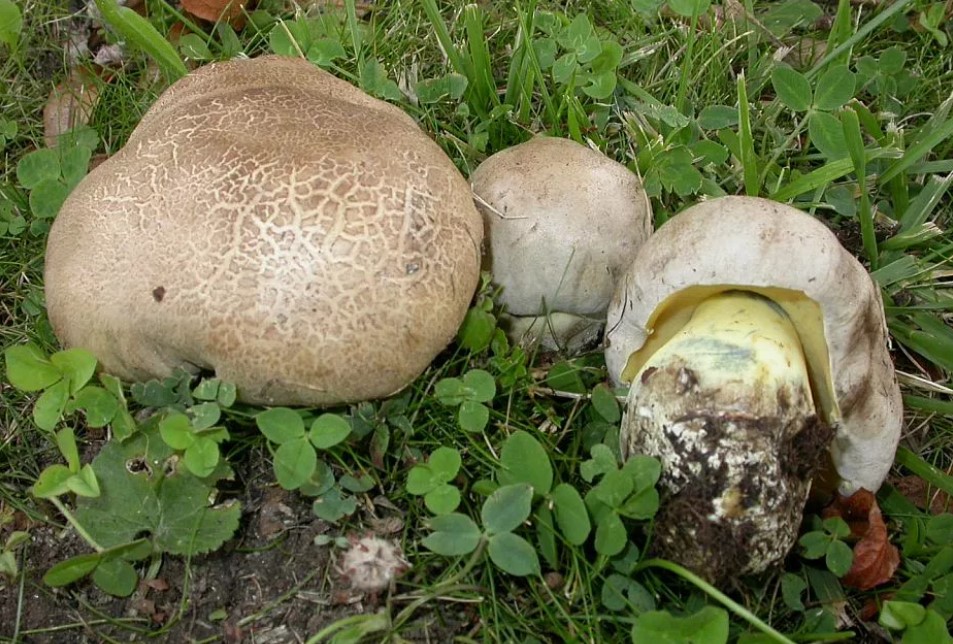
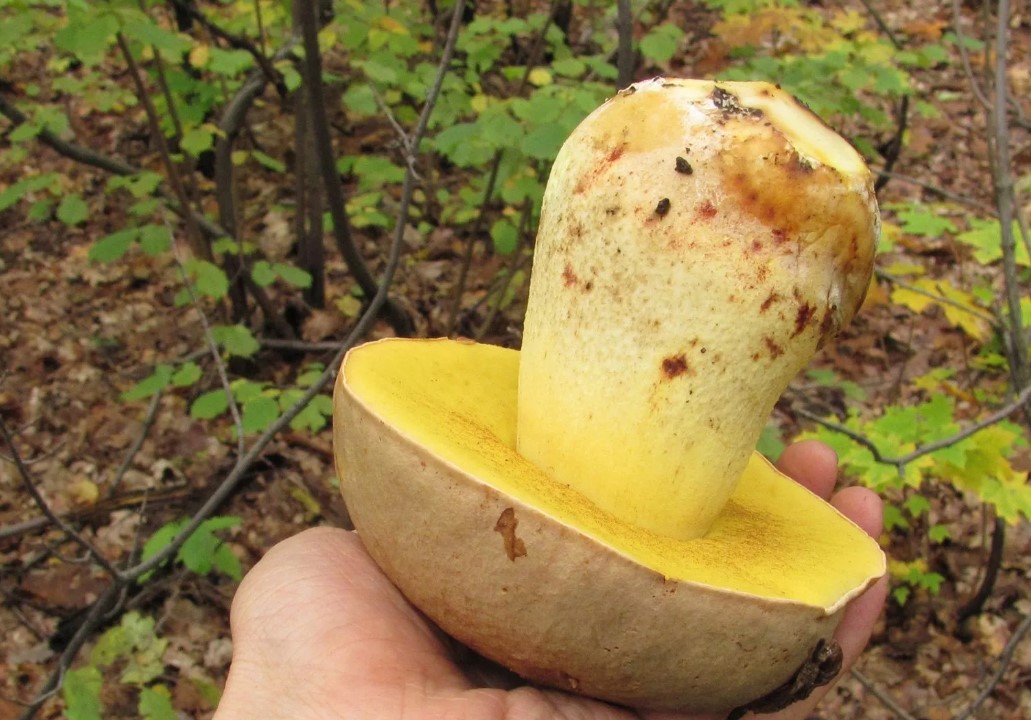
The semi-white mushroom is very difficult to distinguish from the boletus in appearance. The cap reaches 15 cm in diameter, initially convex, then flattens out. The skin is smooth, sometimes wrinkled. The matte surface becomes slimy in rainy weather. The color ranges from beige to dark brown.
The hymenophore is characteristically yellow, acquiring an olive tint with age. The tubes are loosely arranged and 3 mm deep.
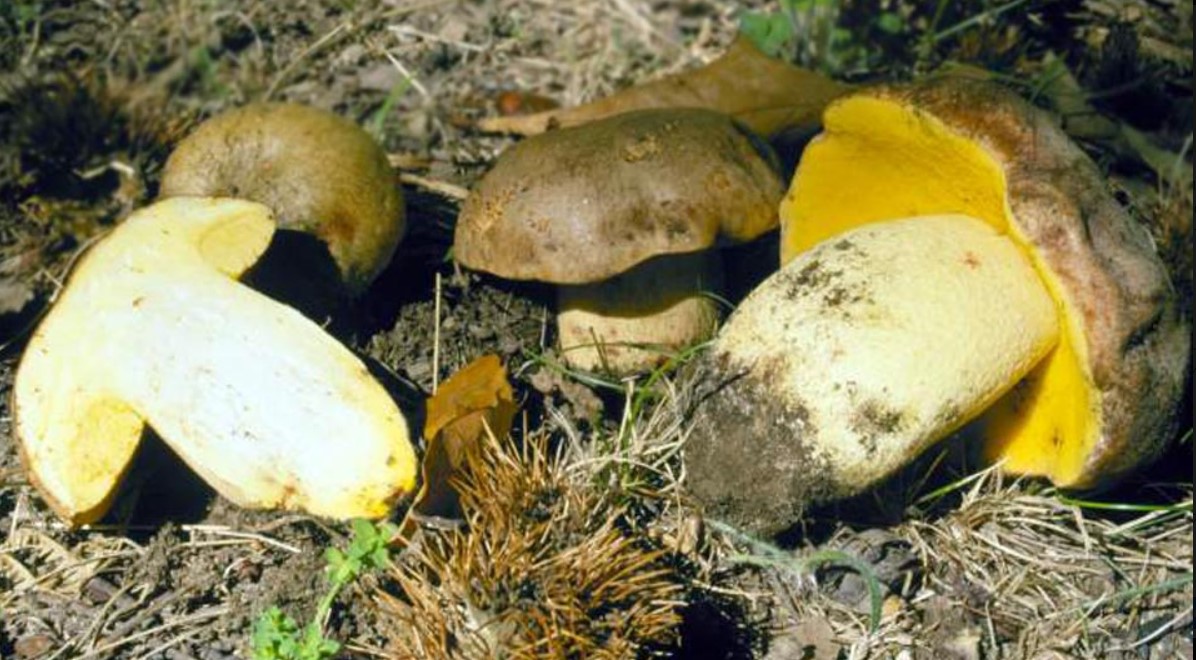
The pulp is very dense; when cut, it does not change color, remaining lemon or white.
The stem is 6-10 cm tall and can reach 6 cm in diameter. Early growth is tuberous, later becoming cylindrical. The structure is fibrous, yellowish in color, and a spotless reddish mesh may be visible underneath.
The mushroom has a distinctive aroma, most noticeable at the base. Mushroom pickers say it smells like carbolic acid or iodoform.
Photo gallery of the Semi-White Mushroom
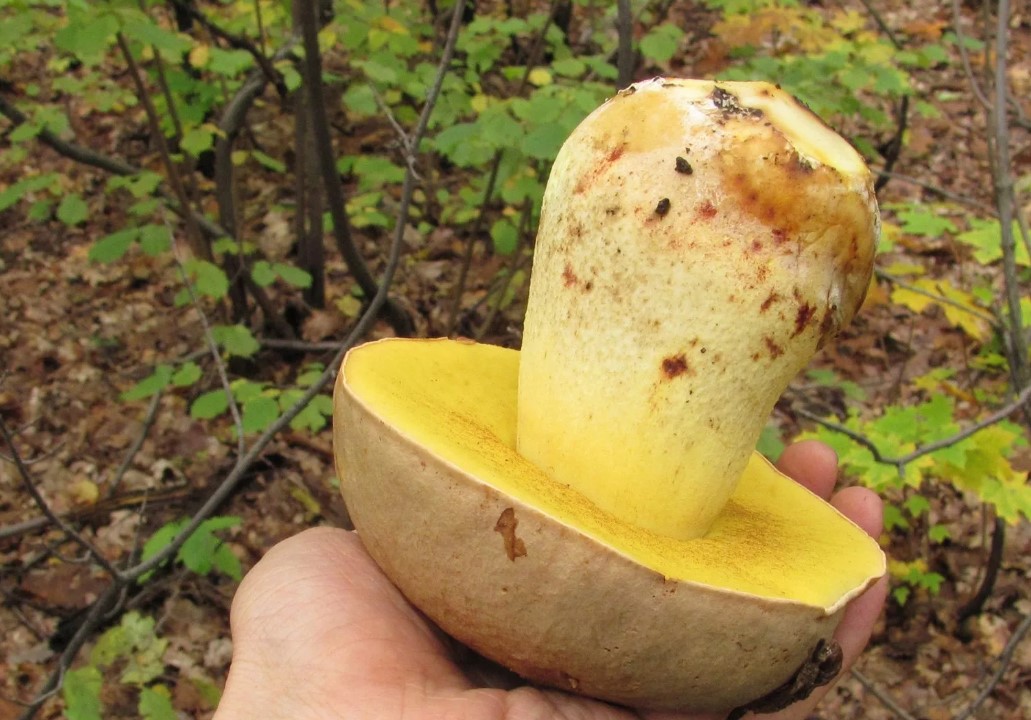
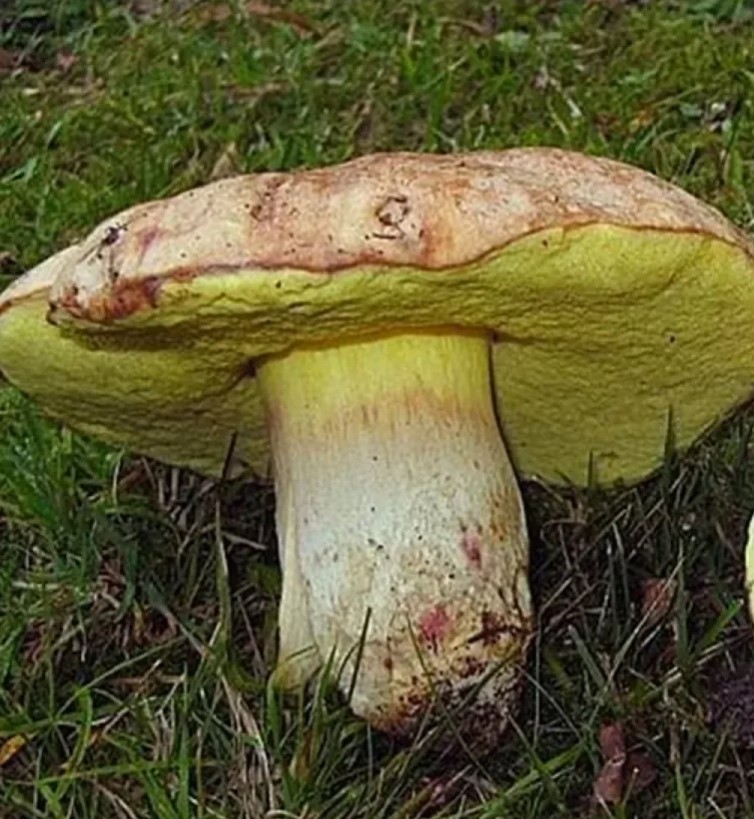
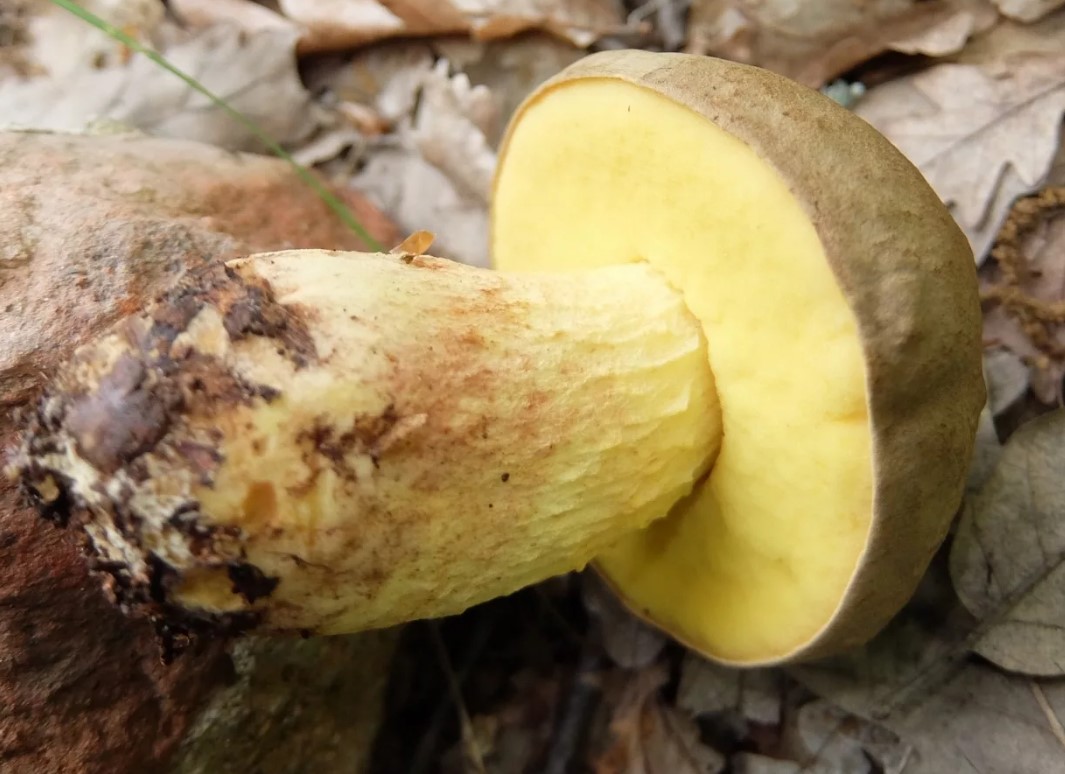
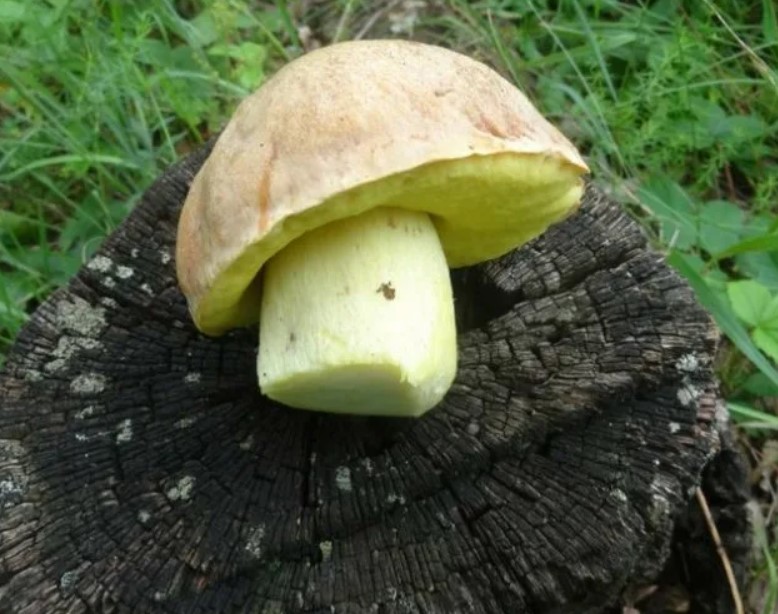
Different names for the Half-White Mushroom
The semi-white mushroom is also known by other names:
- Yellow boletus.
- Boletus semi-white.
- Semi-white mushroom.
- Boletus impolitus.
Where and when does the semi-white mushroom grow?
Porcini mushrooms are rarely found in forests. They prefer warm climates and good weather, and thrive in calcareous soil. Fruiting lasts from May to September-October. The mushroom grows near oaks, beeches, dogwoods, and conifers. The mycelium doesn't produce a harvest every year.
Edible mushrooms similar to the Half-White Mushroom
The Semi-White Mushroom has edible lookalikes that can be distinguished by knowing their characteristics.
Boletus appendiculatus
| Name | Description, differences | Distribution, season | Use |
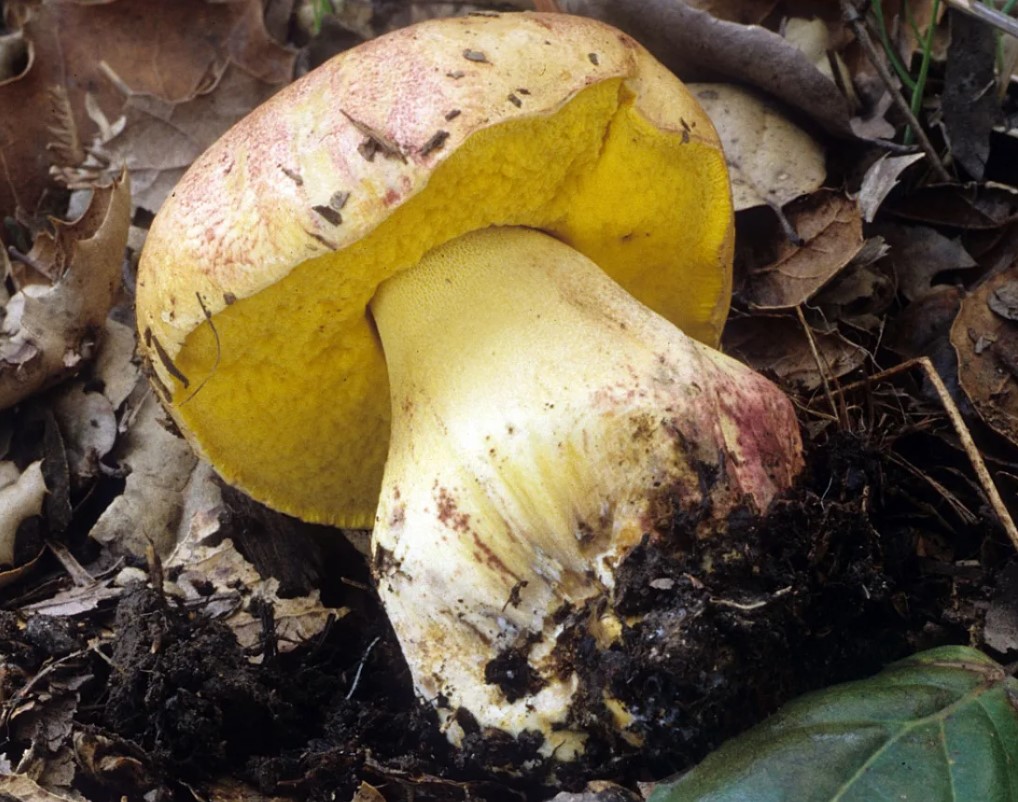
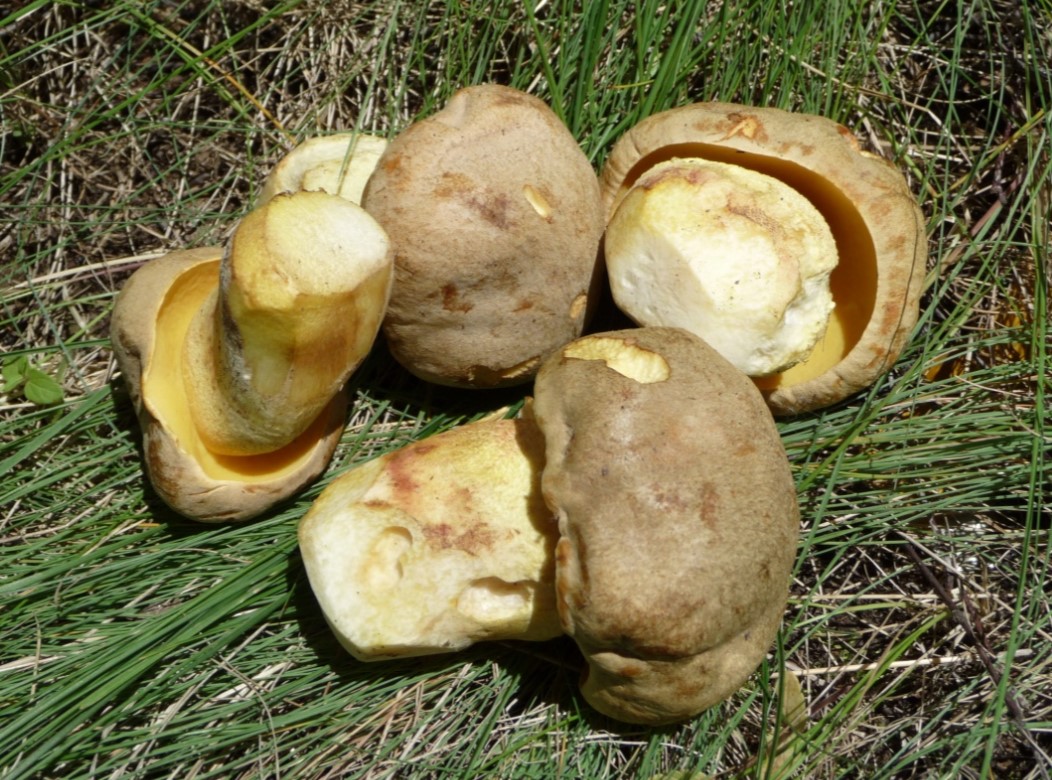
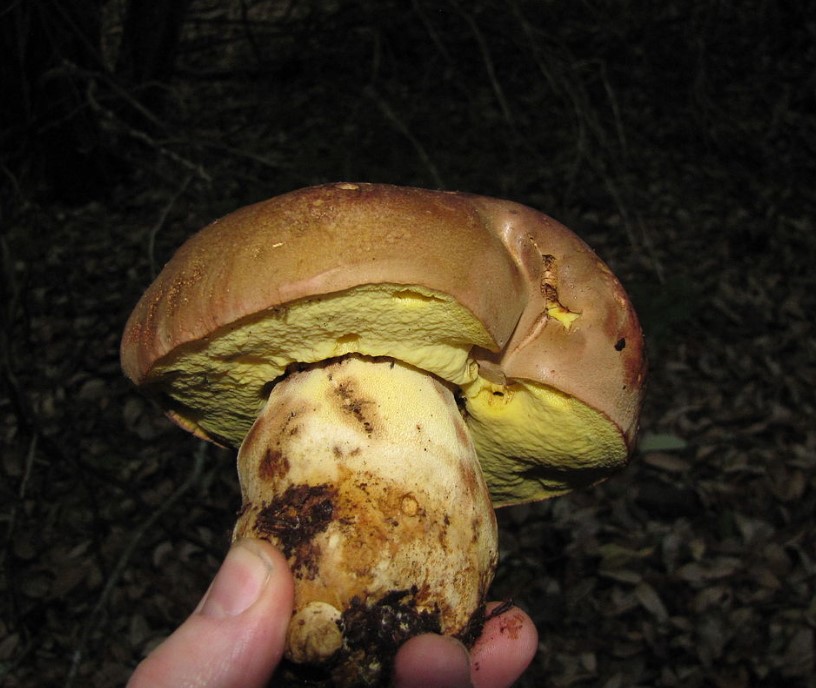
| Boletus appendiculatus (Boletus appendiculatus) | The cap is convex, brownish in color, up to 20 cm in diameter, and has a dry skin. The stem is up to 12 cm in height, up to 3 cm in diameter, and greenish-yellow, turning red at the base and blue when damaged. The flesh is yellow, becoming bluish after cutting, which distinguishes the mushroom from the semi-white one.. | This rare mushroom thrives in warm weather, preferring deciduous forests and calcareous soil. It bears fruit all summer until early fall. | Used for preparing various dishes, does not require soaking. |
Photo gallery of the boletus maidenhair
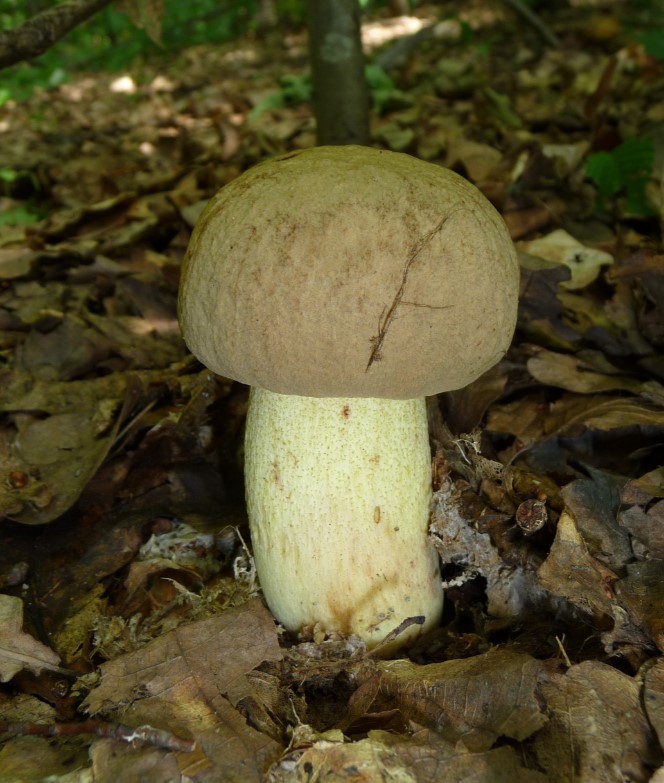
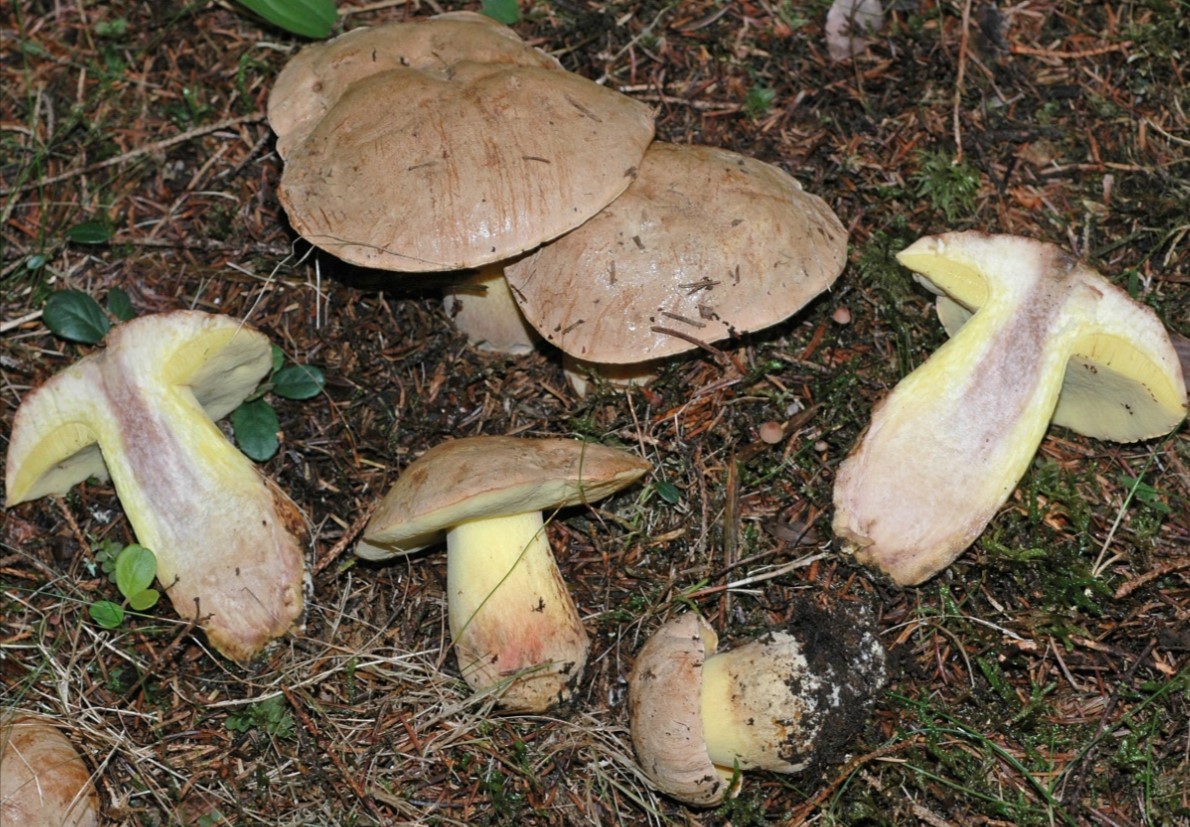
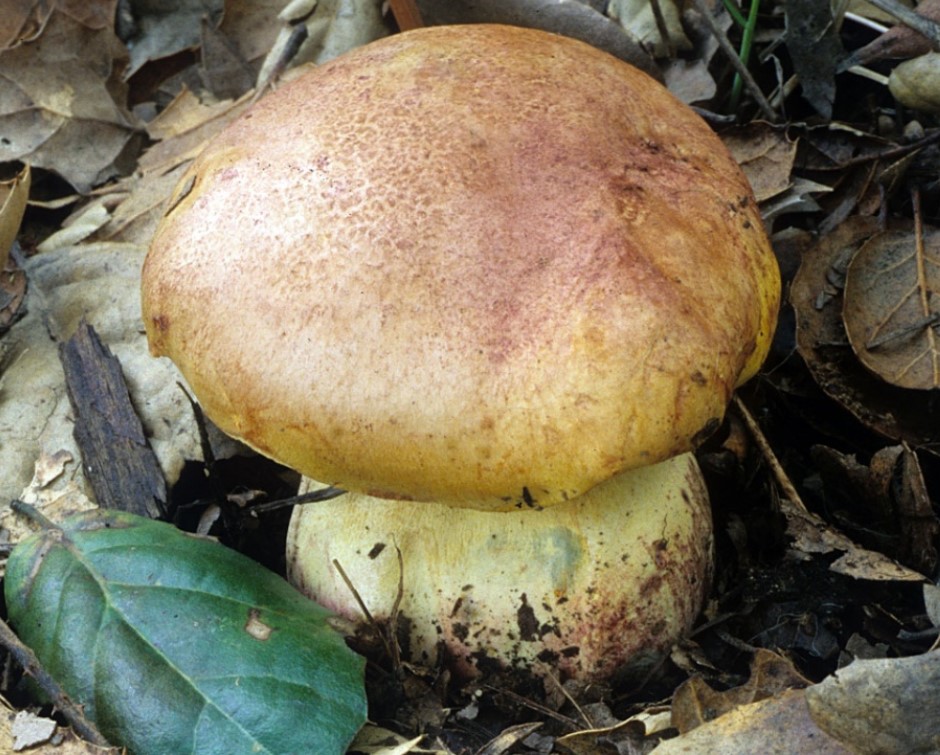
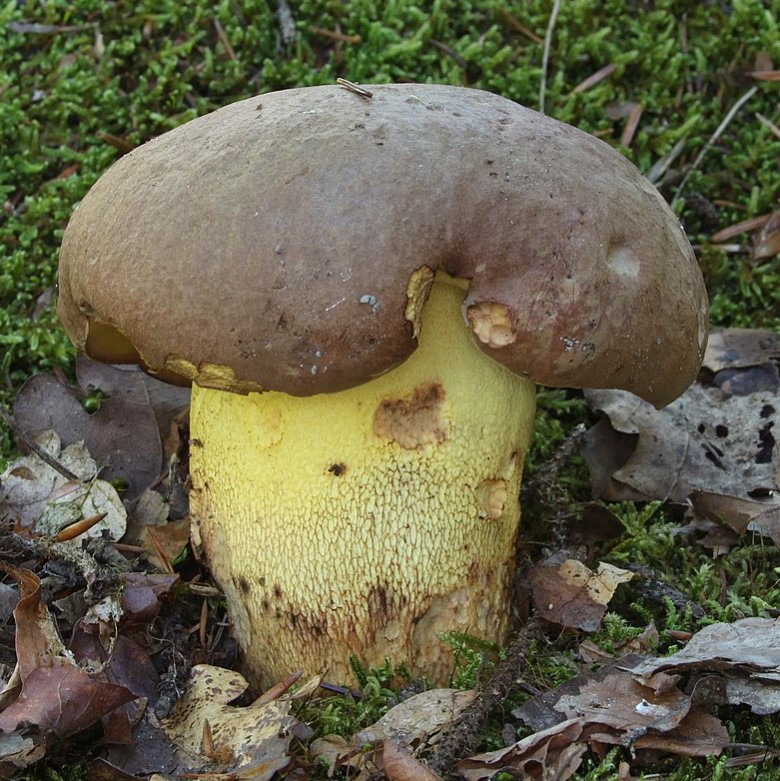
Did you know that there are many different varieties of porcini mushrooms that turn blue when cut, and are edible and tasty.
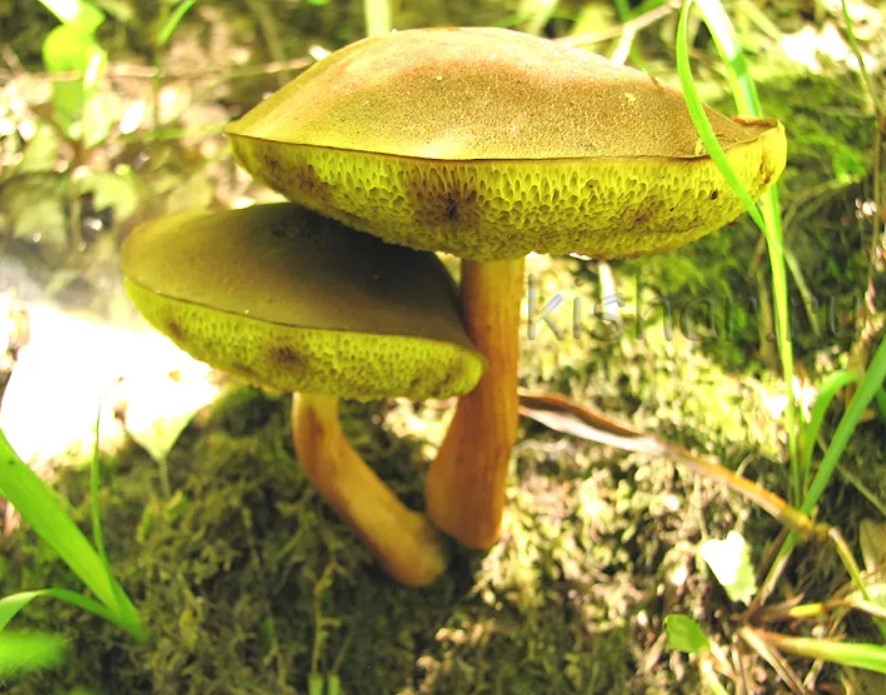
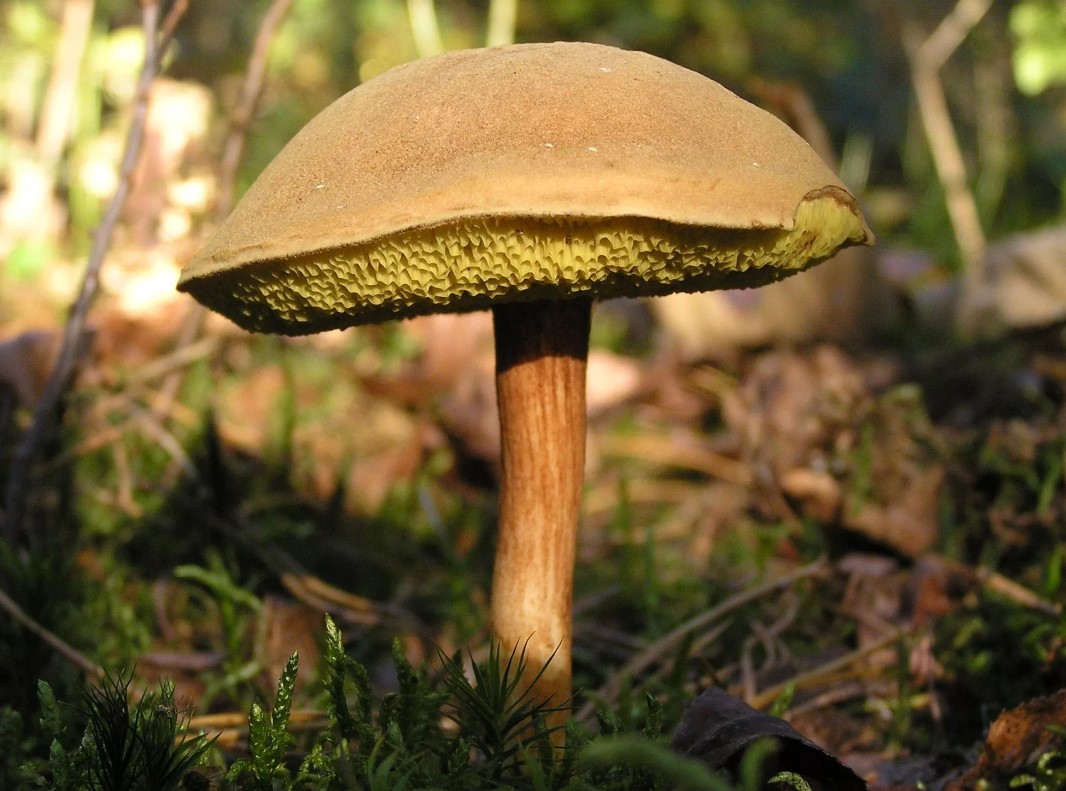
Green boletus (Xerocomus subtomentosus)
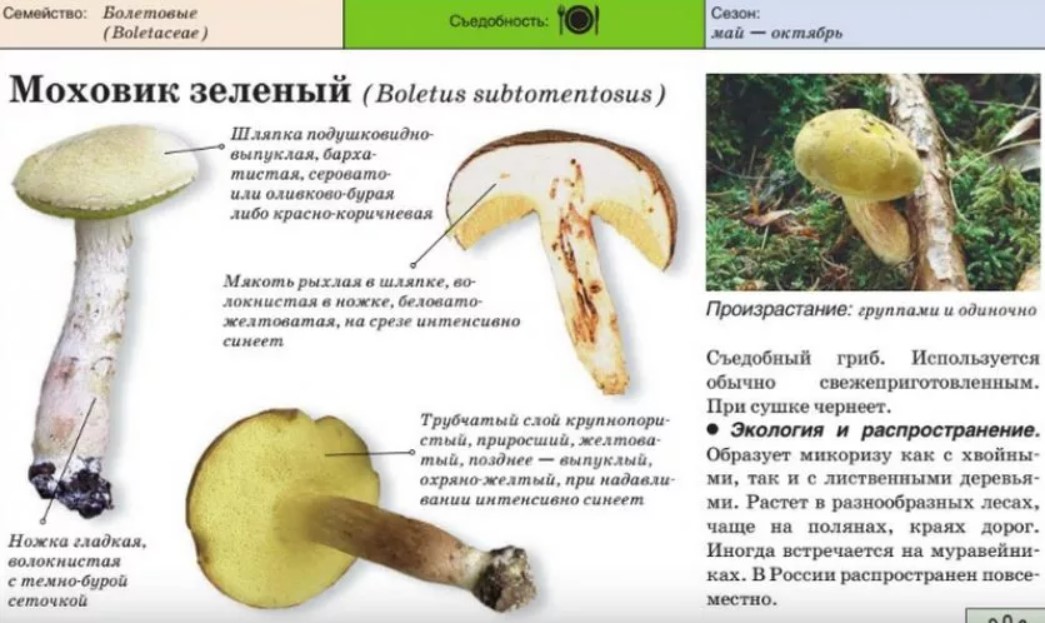
| Name | Description, differences | Distribution, season | Use |
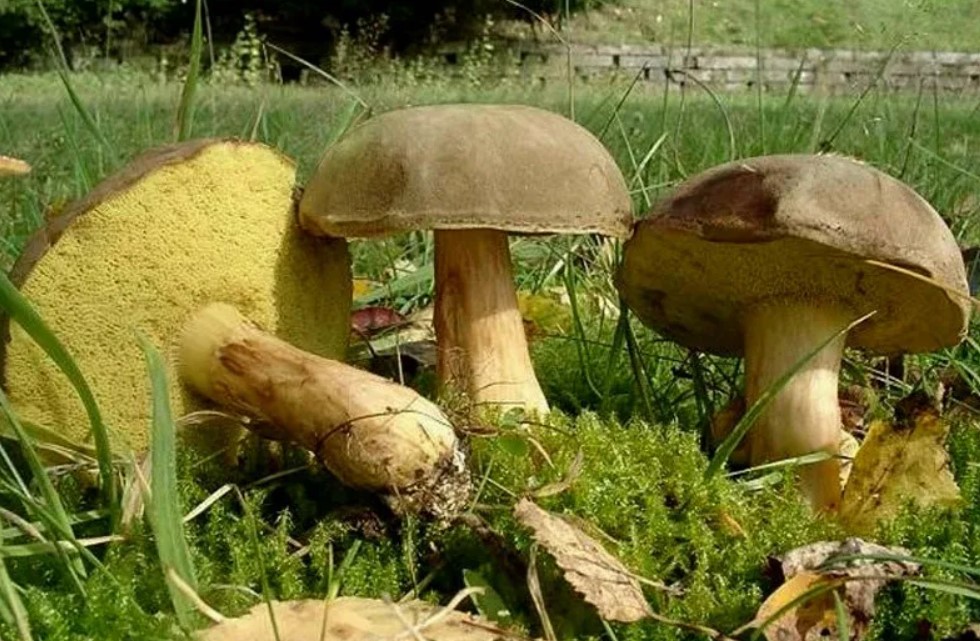
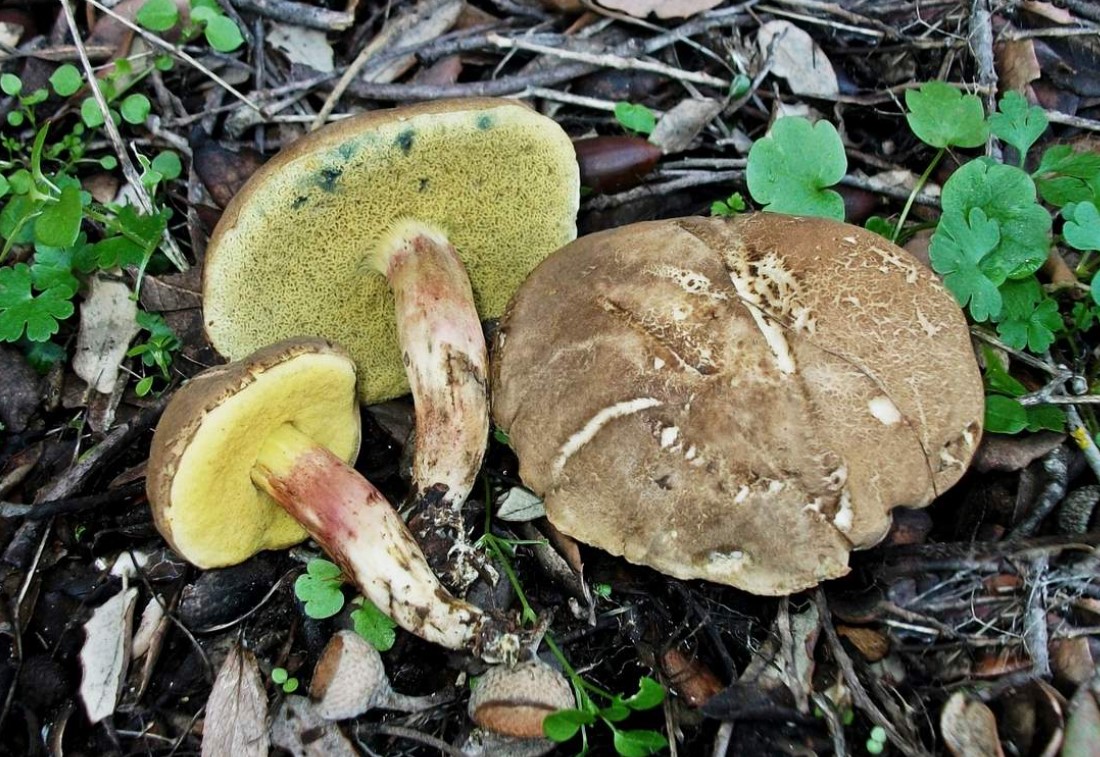
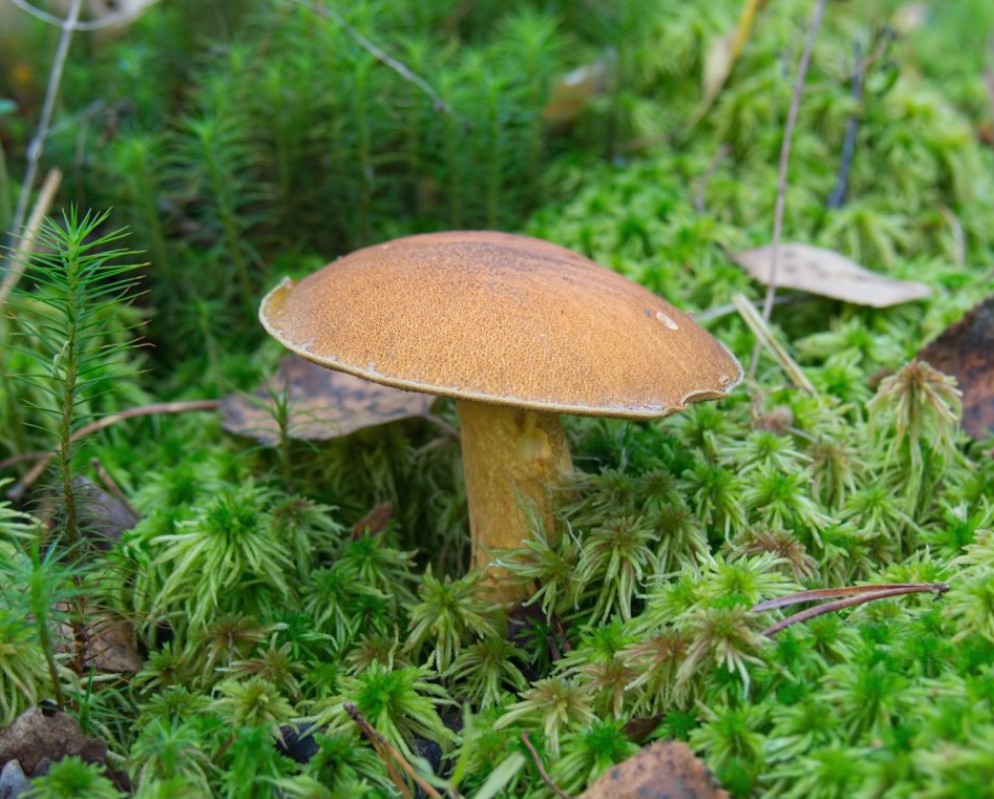
| Green boletus (Xerocomus subtomentosus) | The cap is 3-10 cm in diameter and convex in shape. The skin is velvety, grayish or olive-brown in color. The flesh is white, sometimes tinged blue at the cut edges. The stem is narrow and long, up to 10 cm. It is distinguished by its thin stem and lack of a distinct aroma. | It is found in various types of forests, clearings, and along roadsides. It has even been spotted growing on anthills. Fruiting lasts from May to October. The mushroom is considered a cosmopolitan. | After drying it turns black, so it is most often used in salted and freshly prepared forms. |
Photo gallery of green flywheel
Inedible mushrooms similar to the Half-White Mushroom
The semi-white mushroom has not only harmless lookalikes, but also inedible ones, which you need to be able to distinguish in the forest.
Inedible boletus (Boletus calopus)
| Name | Description, differences | Distribution, season | Toxicity |
| Inedible boletus (Boletus calopus) | The cap diameter ranges from 5 to 15 cm, is convex, and the edges can curl or hang down in a wavy margin. The color ranges from light brown, brown, or grayish-brown. The flesh is light-colored, turning blue when cut. The stem is up to 15 cm tall, and the color changes from lemon-colored at the top to brownish-red at the base. It is distinguished by its bitter flesh and brighter stem. | It grows in southern Russia, in the Kaliningrad region, and can be found in both coniferous and broadleaf forests. It bears fruit from July to October. | It has a bitter taste and is therefore considered inedible. |
Photo gallery of the inedible boletus
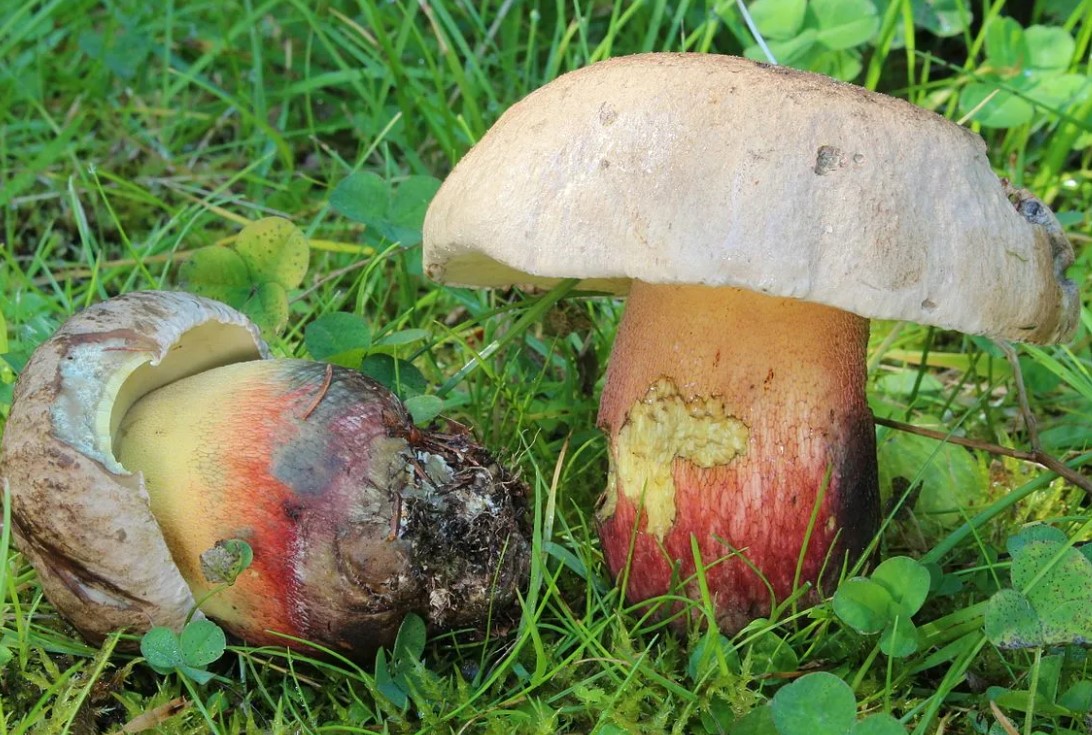
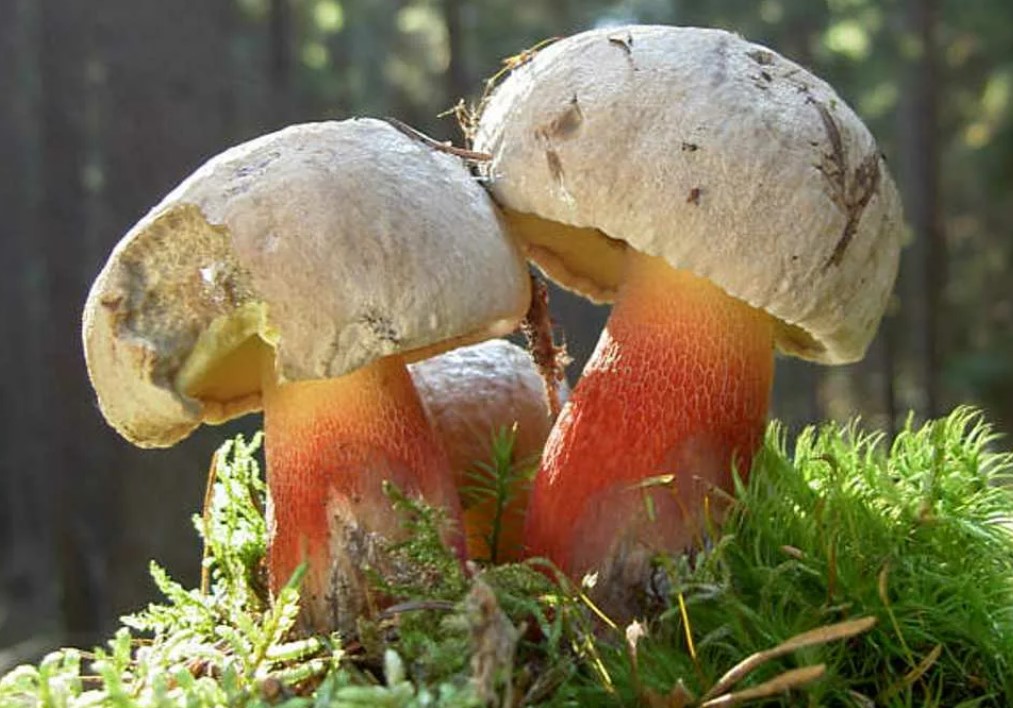
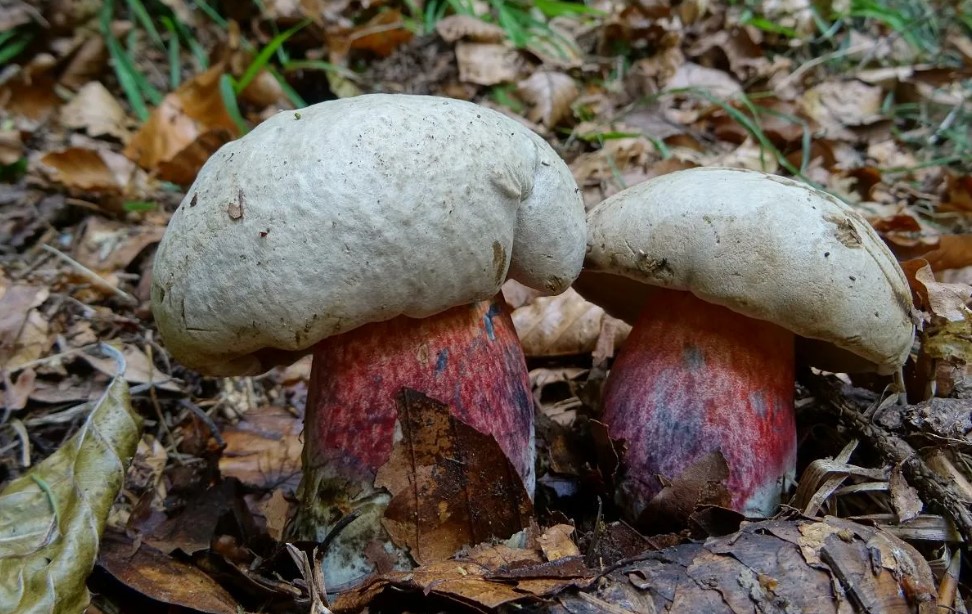
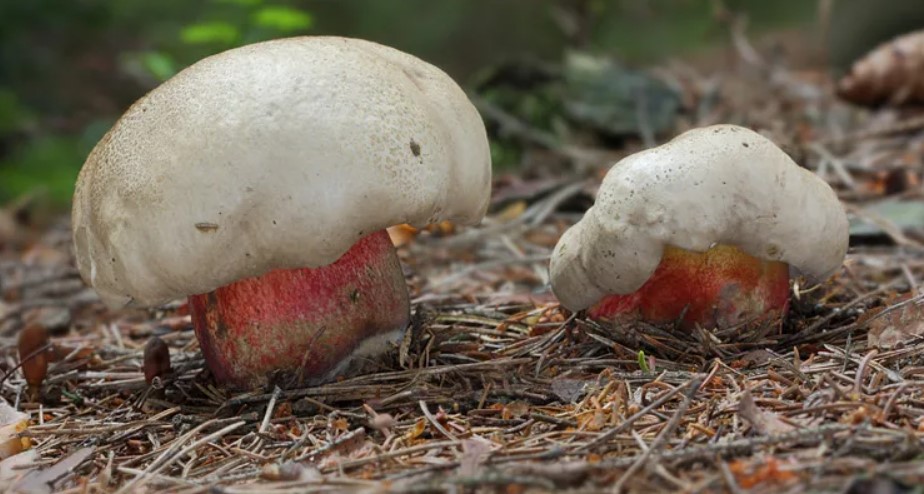
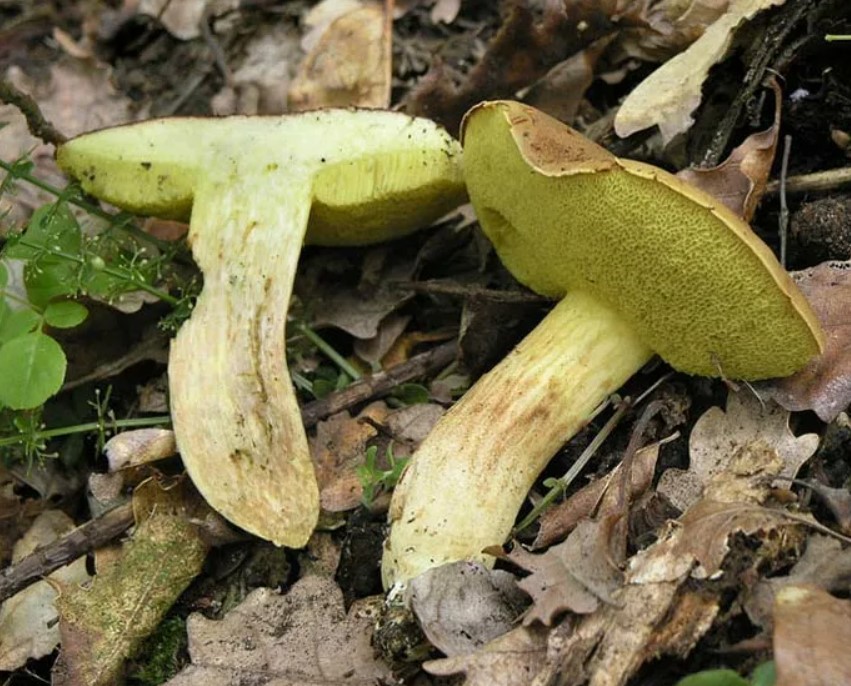
Boletus radicans
| Name | Description, differences | Distribution, season | Toxicity |
| Boletus radicans, or bitter spongy mushroom | The cap ranges from 6 to 30 cm in diameter, is convex, and has protruding margins. The color is grayish or brownish-gray. The skin is slightly fuzzy and may crack over time. The stem is up to 12 cm tall, initially swollen and then cylindrical. The base is tuberous, and the color changes from yellowish to brownish-olive. The flesh is lemon-yellow, slightly lighter than that of the semi-white mushroom. The main difference is the color change when cut. |
A heat-loving mushroom, it prefers dry, calcareous or neutral soils and is most often found in deciduous forests. It bears fruit from July to October. | The mushroom is non-toxic, but can cause indigestion if eaten. It is recognized by its bitter taste. |
Photo gallery of stocky boletus
More about false whites Read about mushrooms and their varieties on our website Top.tomathouse.com.
Nutritional value and calorie content of the Half-White Mushroom
The porcini mushroom isn't considered a dietary food; it's considered quite high in calories. 100 grams of fresh mushroom contains 300 kcal. Therefore, it's best to eat it in the first half of the day for better digestion.
The semi-white contains many useful amino acids, vitamins and minerals that support all body systems and have a beneficial effect on them.
The benefits and harms of the semi-white mushroom
The semi-white mushroom has a distinctive odor that not everyone finds appealing. However, after boiling, the aroma is almost completely lost, making the mushroom safe to eat. Besides its pleasant taste, it offers a host of health benefits:
- strengthens the immune system;
- removes waste and toxins;
- reduces the risk of tumor development;
- normalizes blood pressure;
- supports thyroid function.
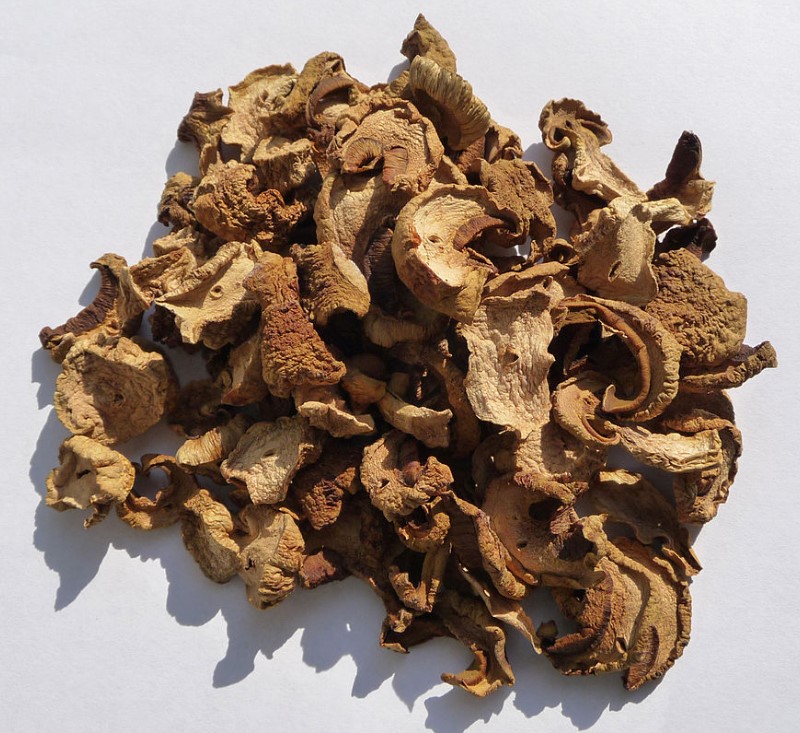
Dried porcini mushrooms are widely used in folk medicine. They are used to make tinctures and powders that help speed up the skin regeneration process after damage.
However, the semi-white mushroom has contraindications. It should not be consumed by the following categories of people:
- suffering from chronic gastrointestinal diseases;
- pregnant and lactating women;
- children under 7 years old;
- older people.
The use of the semi-white mushroom in folk medicine, recipes
In folk medicine, the semi-porcini mushroom is most often used in dried form. It is ground into a powder and used to make a tincture:
- 2 tbsp powder;
- 250 ml of vodka or alcohol.
Store the tincture in the refrigerator and it's ready to use within 24 hours. It's recommended to take one teaspoon twice daily, 30 minutes before meals. Compresses made from this solution can help relieve symptoms of varicose veins and thrombophlebitis.
In dry form, the powder can be applied to purulent wounds; it has an excellent healing effect.
You can also make a tincture from fresh mushrooms. To do this, slice them, stack them in a jar to the very top, and fill with alcohol. The mushrooms are infused for about two days and used externally.
Culinary uses of the semi-white mushroom, recipes
Porcini mushrooms are widely used in cooking for a variety of dishes. Below, we'll discuss the specifics of their preparation.
Primary processing
The semi-porcini mushroom has a distinctive aroma and can impart a slight bitterness. Therefore, it is essential to soak it in cold salted water for an hour before cooking.
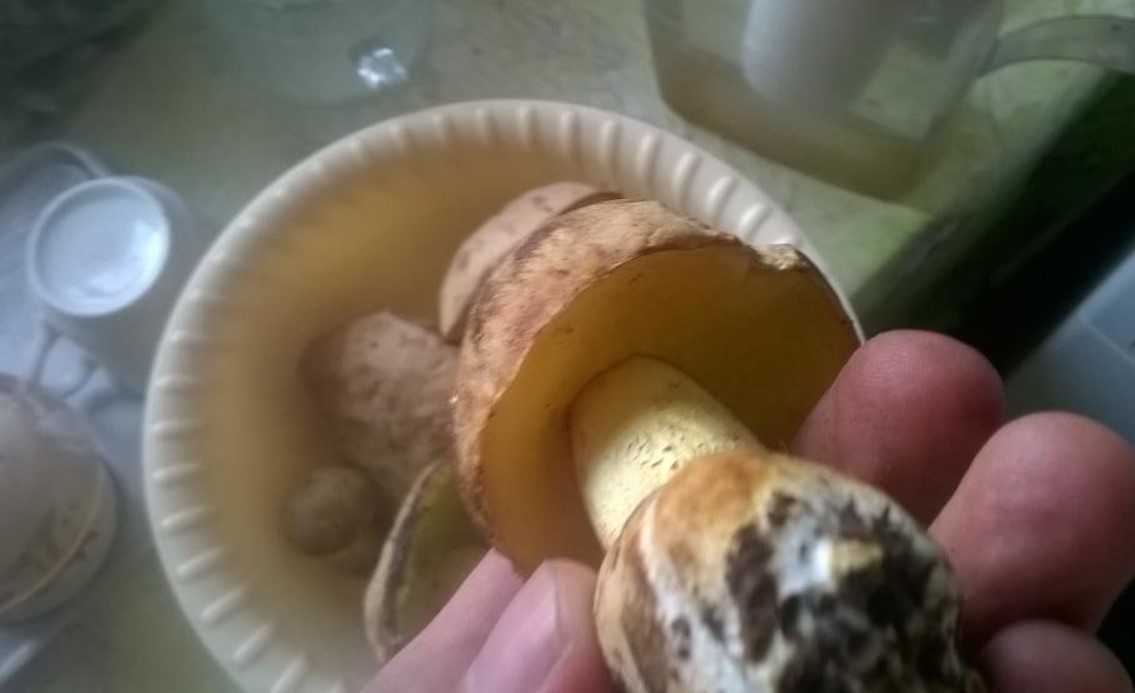
Before this, the semi-white mushrooms are cleared of forest debris, washed, and any damaged areas are removed. Wormy mushrooms should be discarded immediately.
Processing must be done within 24 hours after picking the mushrooms.
How to boil a semi-porcini mushroom
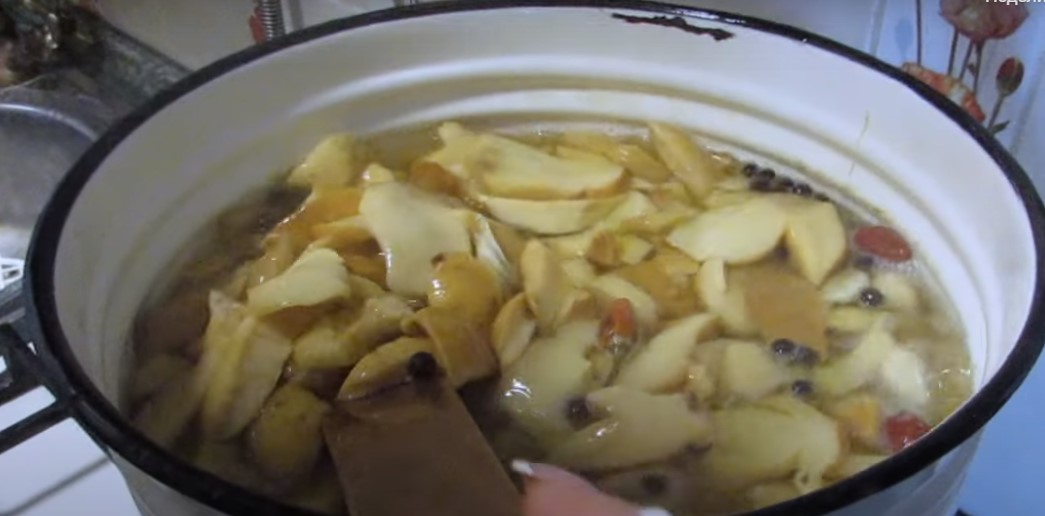
To boil, cut the prepared semi-porcini mushrooms into pieces, cover with water, add salt, and cook over medium heat for 30 minutes. They can then be frozen, stewed, or fried.
Lots of recipes about cooking porcini mushrooms, about them marinating You can find out more on our website Top.tomathouse.com.
How to properly fry a semi-porcini mushroom
For frying, it's best to use pre-cooked mushrooms. First, add the onion to a preheated pan and fry until golden brown. Then add the mushrooms and fry for another 15 minutes, seasoning with salt. Serve with boiled potatoes, sour cream, and herbs.
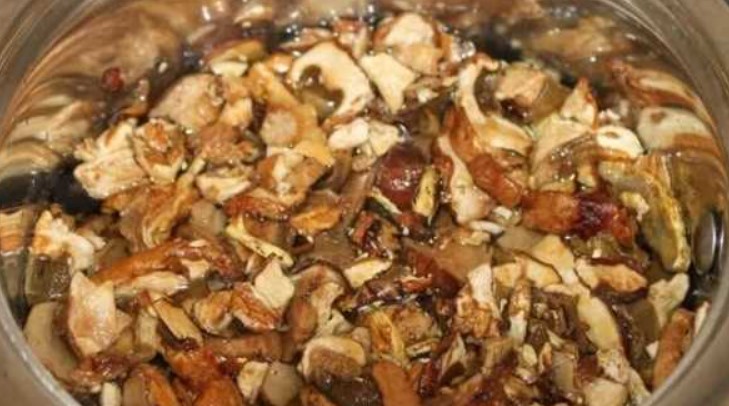
Pickling the half-white mushroom
Marinated semi-porcini mushrooms make a wonderful winter delicacy. The secret lies in the right marinade. For 1 kg of mushrooms, you'll need:
- water – 1 l;
- vinegar 9% - 2.5 tbsp;
- peppercorns – 6 pcs.;
- bay leaf – 3 leaves;
- cloves – 2 pcs.;
- currants – 4 leaves (optional);
- dill – 1 umbrella;
- garlic – 3 cloves.
Place a pot of water on the stove, add the mushrooms once it boils, and simmer for 20 minutes. Pour the water into a colander, rinse, and add more water. Return to the stove, adding all the ingredients except the vinegar. After 10 minutes of boiling, add the vinegar, and simmer for another 10 minutes.
Place chopped garlic in the bottom of sterilized jars, then add the mushrooms to the top and pour the marinade over them. After sealing, turn the jars upside down and wrap them in a blanket. They're ready in 4 weeks.
Pickling
To pickle 1 kg of semi-white mushrooms you will need:
- Garlic – 10 cloves;
- Pepper – 5 peas;
- Dill umbrella – 5 pcs.;
- Horseradish leaves – 2 pcs.;
- Salt – 200 g;
- Vegetable oil – 1 tbsp.
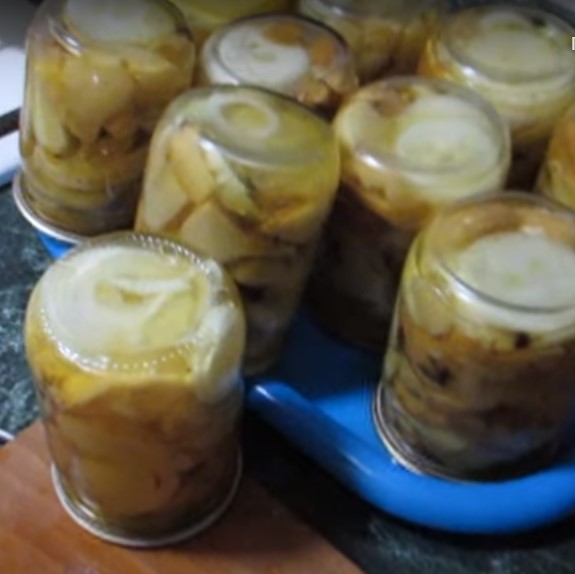
Method of preparation:
Cut the mushrooms into pieces. Line the bottom of the jar with a horseradish leaf, add half of the spices, and a little salt. Arrange the mushrooms in layers, sprinkling each new layer with salt. Place the remaining garlic, dill, and pepper in the center of the jar, then continue alternating. Cover the top layer with a horseradish leaf, pour in oil, and seal the jar with a lid. Store the mushrooms in a cool place; they will be ready in about two weeks.
Drying
The easiest way to dry porcini mushrooms is in the oven. To do this, clean them of any debris, cut them into equal-sized pieces, and place them on a baking sheet, 1 cm apart. Preheat the oven to 50 degrees Celsius (122 degrees Fahrenheit). Place the mushrooms in the oven with the door open. They're ready when they're done: they shouldn't crumble into dust, but they should remain pliable.
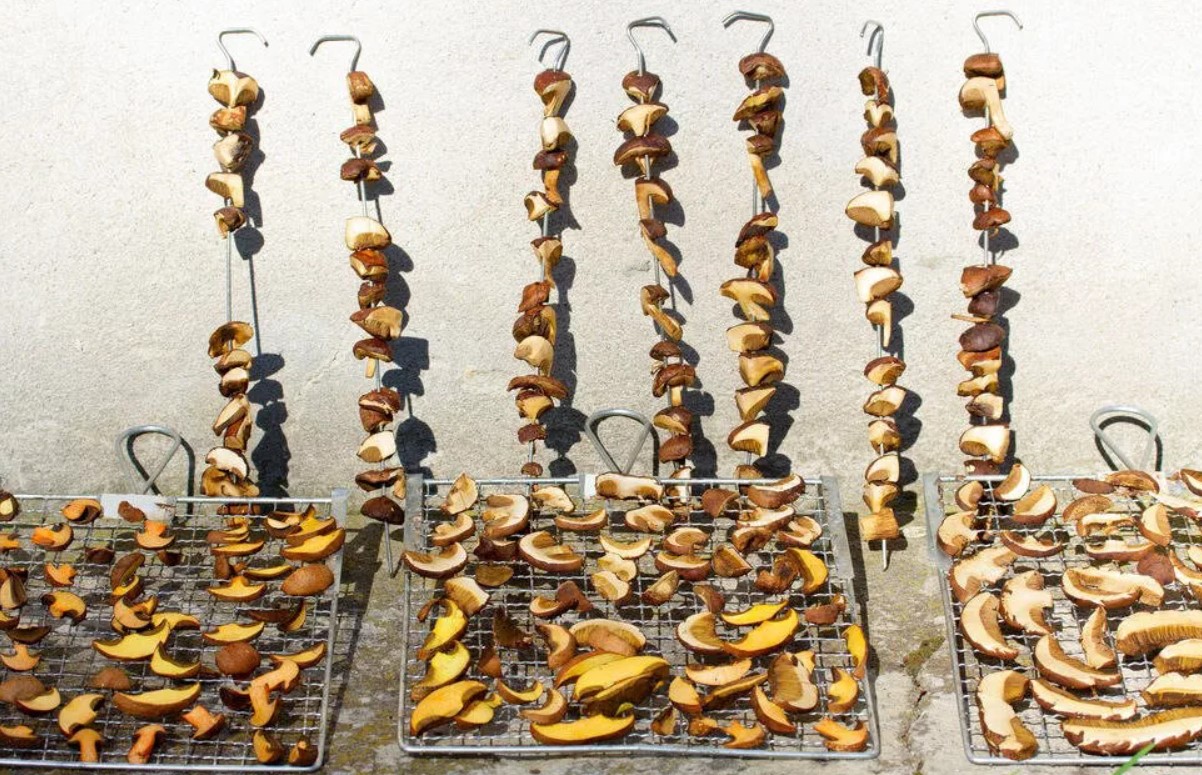
If it's dry and sunny outside, the mushrooms can be strung on a thread or fishing line and hung to dry in the attic or any other dry and warm place.
Drying porcini mushrooms presented in various ways on the website Top.tomathouse.com.
Growing the Half-White Mushroom at Home
Growing the semi-white mushroom is only possible in conditions as close to natural as possible. Therefore, if you have trees in your garden that yellow boletus prefers, you can try your luck and plant some yourself.
There are two ways you can try to do this:
- Take the prepared mycelium from the forest and plant it in a tree identical to the one from which it was taken. The difficulty lies in digging the mycelium to a depth of 15 cm and a radius of 30 cm. This soil can't be thrown into a bucket; ideally, it should be placed on a sheet of plywood and transported to the site in its original state using a car or cart. Then, all that's left to do is dig a hole of the same size under the tree, place the mycelium there, water it, and cover it with rotted leaves.
- Select the desired tree and lightly dig up its roots at the base. Remove the stems from mature porcini mushrooms, cut the caps in half, and soak them in water for 24 hours. Pour the resulting solution under the tree and mulch.
If you are interested in growing whites, chanterelles, oyster mushrooms, as amateurs and even businesses, can be found on our website Top.tomathouse.com.
Interesting facts about the Semi-White Mushroom
- The semi-white mushroom is extremely rare; if it weren't so well hidden, it would have to be listed in the Red Book.
- The shelf life of frozen mushrooms is only 6 months, and they must be placed in the freezer no later than 24 hours after picking.
- Some semi-white specimens reach a weight of 500 g.
- Many people feel the specific smell of the mushroom even after boiling it.
Reviews of semi-porcini mushrooms and their preparation
Greetings! We picked up some white and semi-white ones yesterday.
This was the first time I encountered semi-white mushrooms; I lived further north and there are no such mushrooms there.
I looked online for advice on what to do with it to get rid of the smell. I soaked it for an hour, boiled it for 15 minutes in one water, and then boiled it for another half hour in another. Then I fried it. The smell remained. Neither my husband nor I ate it. Too bad.
Dear mushroom pickers, please share how you process semi-white mushrooms to remove the smell?
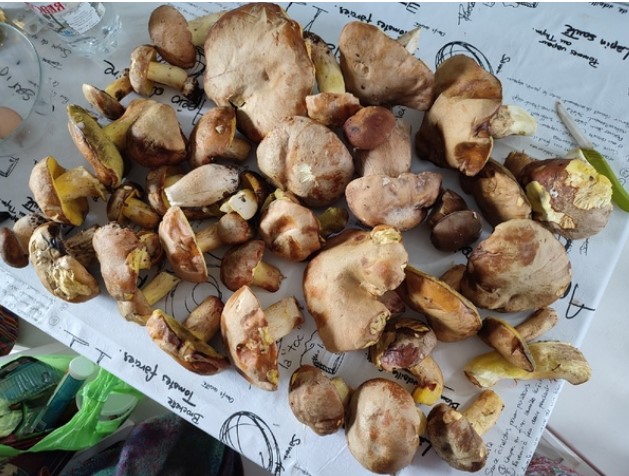
I have a simple approach: I avoid mature mushrooms entirely—their aroma doesn't fade. Young mushrooms, with half-open caps, lose their aroma after just 10-15 minutes of cooking. The younger the mushroom, the weaker the aroma.
All semi-white mushrooms have a scent, sometimes stronger, sometimes completely imperceptible, depending on many growing factors. The similar boletus maidenhair mushroom has no scent, but it turns blue when pressed.
We dried semi-white ones picked in Bashkiria. They had no smell at all and turned out just as good as white ones.
I marinated them, and the smell went away. Everyone who tried them liked them marinated.
How to cook semi-porcini mushrooms
You will need: semi-porcini mushrooms, water for soaking, water for cooking1. Sort out the semi-white mushrooms, rinse them under running water, and cut off any dark spots.
2. Place the mushrooms in a small container and soak them in water for half an hour to remove any remaining dirt and debris.
3. Drain the water, cut the semi-porcini mushrooms into 2x2 cm pieces; small mushrooms can be cut in half for cooking.
4. Fill the saucepan with clean water, add 1 teaspoon of salt. Bring the water to a boil over medium heat.
5. When it starts boiling, add the prepared semi-white mushrooms to the pan.
6. Cook for 15 minutes, skimming off any foam from the surface periodically. Drain the liquid, add clean water, and return the pan to the stove.
7. Bring the water to a boil again, then cook the semi-porcini mushrooms for another 30 minutes.How to marinate semi-porcini mushrooms
Products
Semi-white mushrooms - 1.5 kilograms
Water - 1 liter
Salt - 2 tablespoons
Granulated sugar - 1 tablespoon
Bay leaf - 3 leaves
Allspice - 7 peas
Vinegar essence 70% - 1 teaspoon
Ground cloves - 1/2 teaspoonHow to marinate semi-porcini mushrooms
1. Carefully sort the mushrooms, clean them of dirt and wormholes, and separate the stems from the caps (only the mushroom caps are needed for pickling).
2. Rinse the mushroom caps under running water, chop the large ones.
3. Boil water to sterilize the jars. Before sterilizing, rinse the jars thoroughly, sterilize with boiling water for 5 minutes, pour boiling water over the lids, and leave them to soak until the jars are sealed.
4. Cover the porcini mushrooms with cold water, add salt, and bring to a boil. Cook for 15 minutes, stirring occasionally.
5. To prepare the marinade, dissolve 2 tablespoons of salt and 1 tablespoon of sugar in a liter of water, then add 3 bay leaves, 7 peppercorns, and half a teaspoon of cloves. Place the marinade over medium heat and simmer for 15 minutes after boiling.
6. Add one teaspoon of vinegar essence to the prepared marinade.
7. Using a slotted spoon, transfer the boiled mushrooms to the jars and pour the spicy marinade over them. Seal the jars tightly.
8. Turn the jars of marinated porcini mushrooms upside down and wrap them in a blanket for a couple of hours. Then, let the mushrooms sit for 14 days, after which they will be fully prepared.Tasty facts
— The caloric content of semi-white mushrooms is 34 kcal/100 grams.— Semi-white mushrooms can be found in oak, hornbeam, and beech groves; in other words, these mushrooms thrive in the moist soil of southern deciduous forests. Semi-white mushrooms are common in the forests of the Carpathian and Polesia regions, as well as in the forests of the southern regions of European Russia.
— Semi-white mushrooms are collected from August to September.The semi-white mushroom, also known as the yellow boletus, is very similar to porcini mushrooms and boletus, hence its name. Semi-white mushrooms differ only in their light gray body color with a faint olive tint. Other similar edible mushrooms include the green boletus and the maiden boletus. Similar inedible mushrooms include the rooted boletus and the inedible boletus. The similarities are evident not only in appearance but also in the mushrooms' structure and nutrient concentration.
— The semi-white mushroom belongs to the second category of mushrooms in terms of vitamin and nutrient content. It is recognized as a high-quality mushroom with high nutritional value. When raw, the semi-white mushroom has a carbolic acid odor, but this unpleasant aroma completely disappears when cooked. Semi-white mushrooms have a pleasant, slightly sweet flavor.
— Raw semi-white mushrooms can be stored for 2 days in the vegetable compartment of the refrigerator; cooked mushrooms can be stored in broth for 2-3 days.