Hydrangea is a flowering plant native to South Asia and North America. This member of the Hydrangeaceae family was brought to Europe from China in 1789 by Joseph Banks and became a popular ornamental flower among gardeners.
Content
- 1 Description
- 2 Panicle, tree, large-leaved and oakleaf hydrangea
- 3 Growing from seeds
- 4 Hydrangea seedlings
- 5 Timing for planting hydrangeas in open ground
- 6 Planting hydrangeas in open ground
- 7 Caring for hydrangea in open ground
- 8 Hydrangea after flowering
- 9 Overwintering hydrangeas
- 10 Propagation by cuttings
- 11 Garden hydrangea reviews from gardeners
Description
Hydrangeas most often grow as shrubs up to 3 meters tall. Large vines, capable of growing up to 20 meters, and small trees with characteristic shrub-like features, such as extensive branching, are also common.
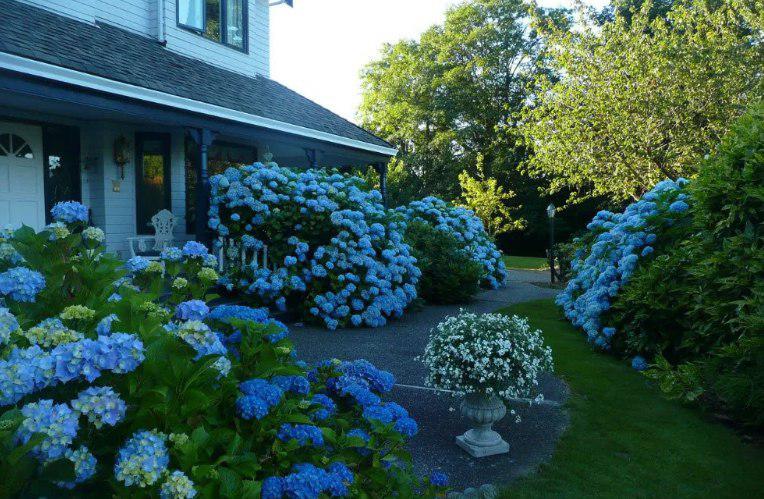
Most species are deciduous plants, but there are also evergreen representatives grown in the southern zone.
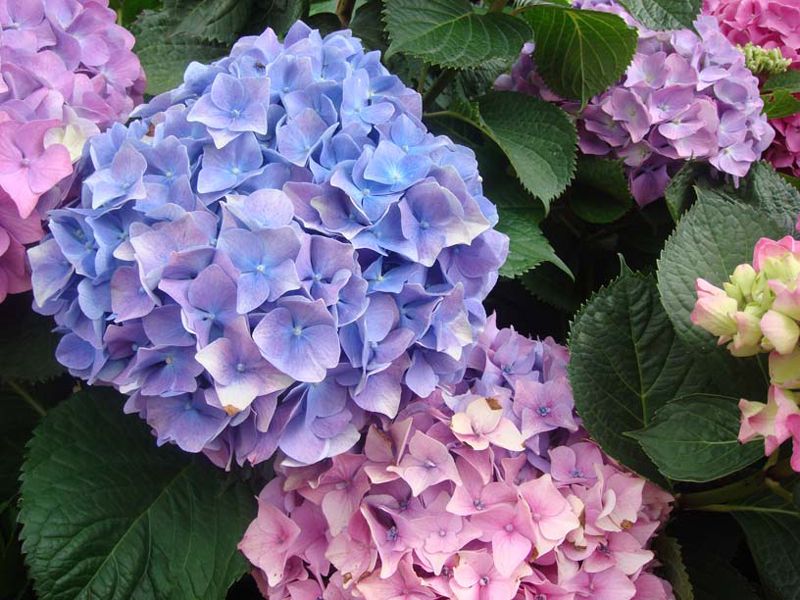
Hydrangea blooms from spring to autumn, producing large, rounded inflorescences—panicles, corymbs with two types of buds: small in the center and larger at the edges. A vibrant dome forms, which, with proper care, lasts until late September. Almost all species have snow-white petals, but pink, blue, red, and purple are also found. The leaves are heart-shaped, slightly elongated toward the tip, pointed, and a rich dark green with prominent veins. The edges of the leaf blade are serrated, and the surface is rough. The fruit is a capsule containing numerous small black seeds.
Panicle, tree, large-leaved and oakleaf hydrangea
Hydrangea is very popular among breeders, so several species and varieties of the shrub have been developed to date.
| View | Description | Inflorescences | Varieties |
| Tree-like
|
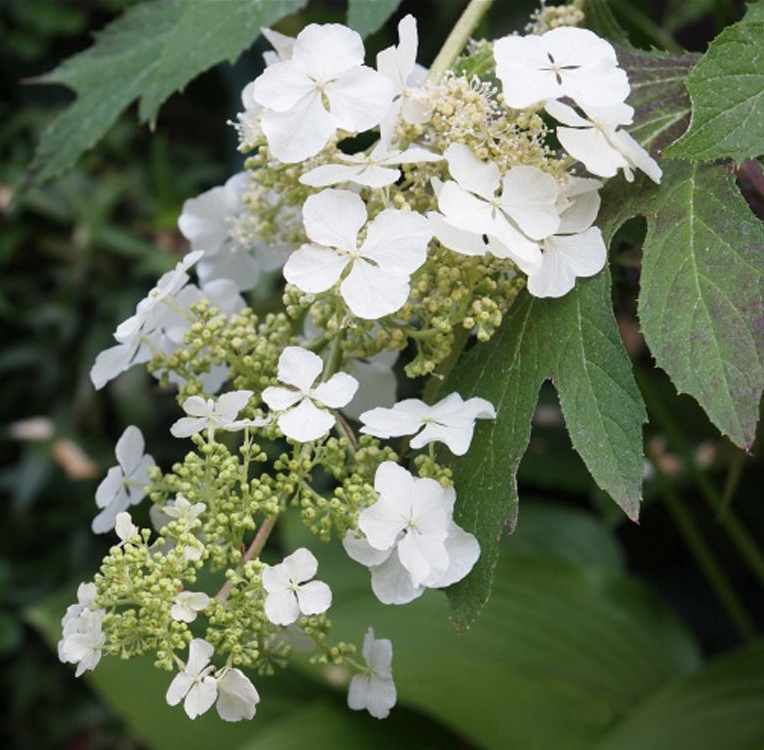
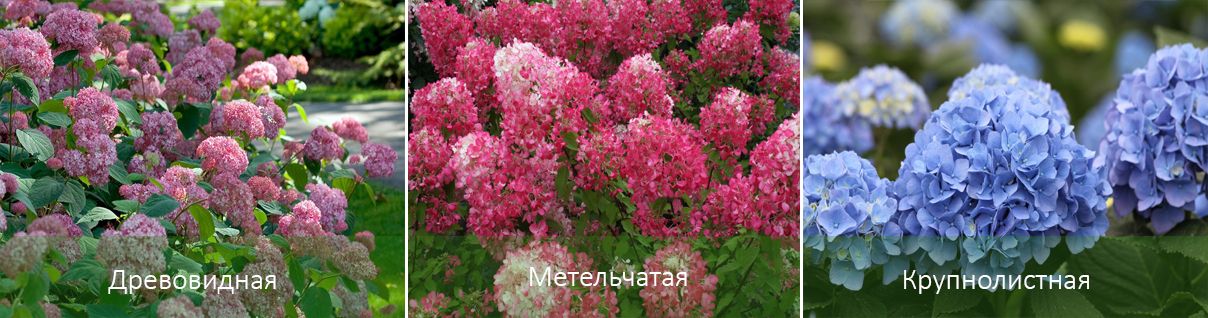
A compact shrub reaching 300 cm. The stems are straight and strong. The leaves are wide, rounded, light green, with serrated edges and a pointed tip, slightly drooping. The root system is well developed, so the plant is characterized by vegetative propagation. This species is often used as a hedge. | Small flowers, 1.5-2 cm in length, form a rounded dome at the top of the stem. The panicle reaches about 15 cm in diameter. The petals are glossy and ovoid. The color is white or beige. | Invisible Spirit, Sterilis, Annabelle, Grandiflora. |
| Paniculata
|
A branching tree, growing up to 10,000 cm tall in the wild or a compact shrub 500 cm tall in a garden. It is common in China, Japan, and southern Sakhalin. The leaves are opposite, elliptical, about 12 cm long, and pointed. The root system is shallow. It is most often propagated by layering. Many varieties (for example, Unique) can withstand severe frosts, down to -34°C. | Paniculate, 20-25 cm, with a characteristic pyramidal shape. Flowers are of two types: small ones are white or grayish; large ones (up to 2.5 cm) are sterile, with four pink or beige petals. | Brussels Lace, Dart's Little Dot, Limelig, Mathilda, Kyushu, Vanille Fraise, and Unique. For the Moscow region, the best varieties are Bobo, Vanilla Fraise, Phantom, Limelight, Pinky Winky, Daruma, and Wims Red. |
| Large-leaved
|
A shrub about 400 cm tall, often planted in parks and squares or used as a houseplant. The bright green leaves are slightly elongated, veined, rough, and bright green. The branches are fragile, bending under the weight of the inflorescences. The roots are sufficiently developed for vegetation. Low frost resistance: down to -18°C. | It is distinguished by its abundant flowering. The corymbs are approximately 10-15 cm in diameter. The flowers are large, 3 cm, snow-white in the center, with a pink tint at the edges. | Endless Summer, Renata Steinger, Romance, Expression, Nikko Blue. |
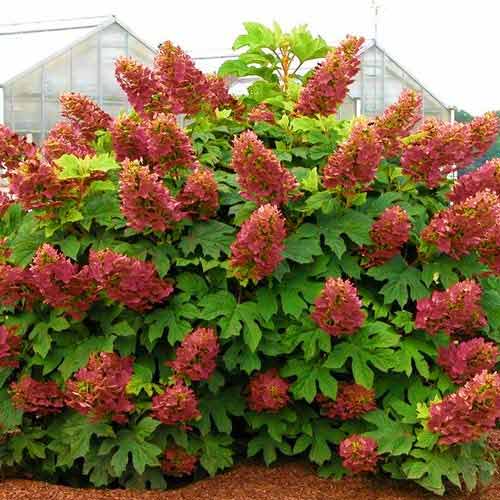
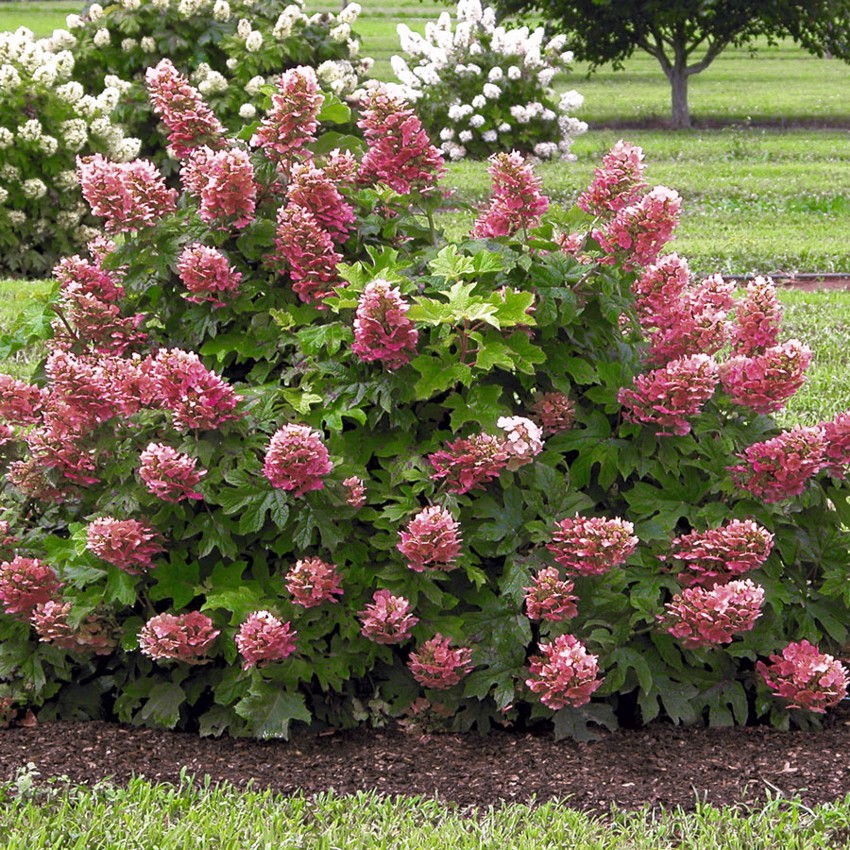
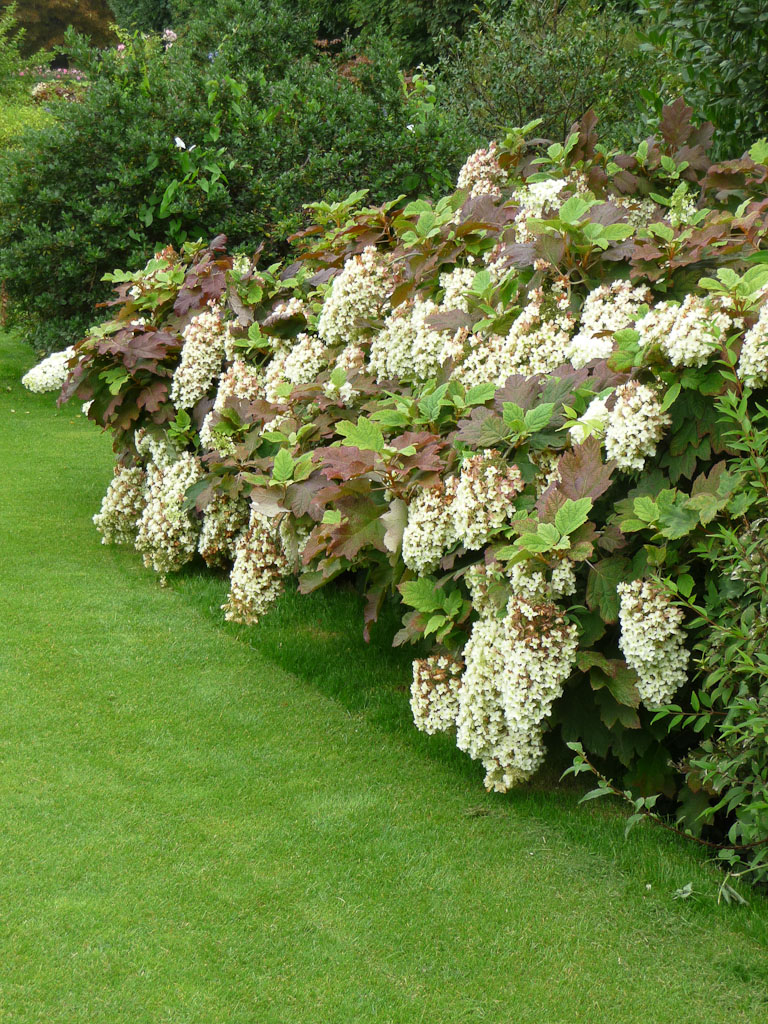
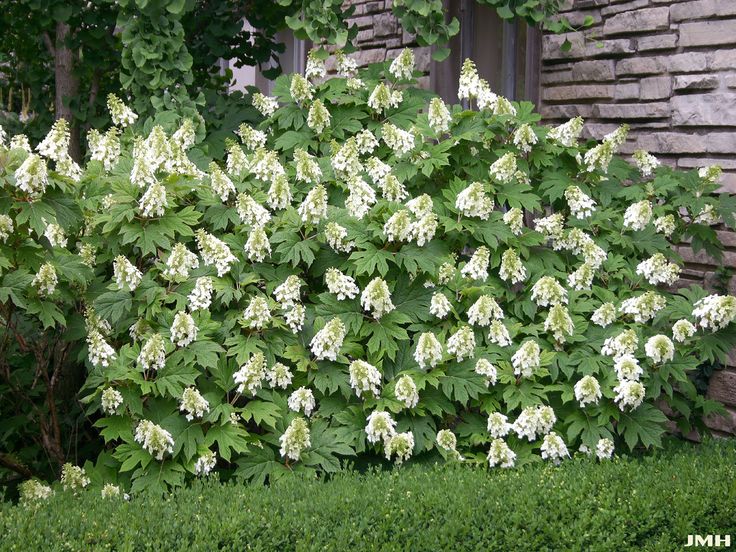
| Oakleaf
|
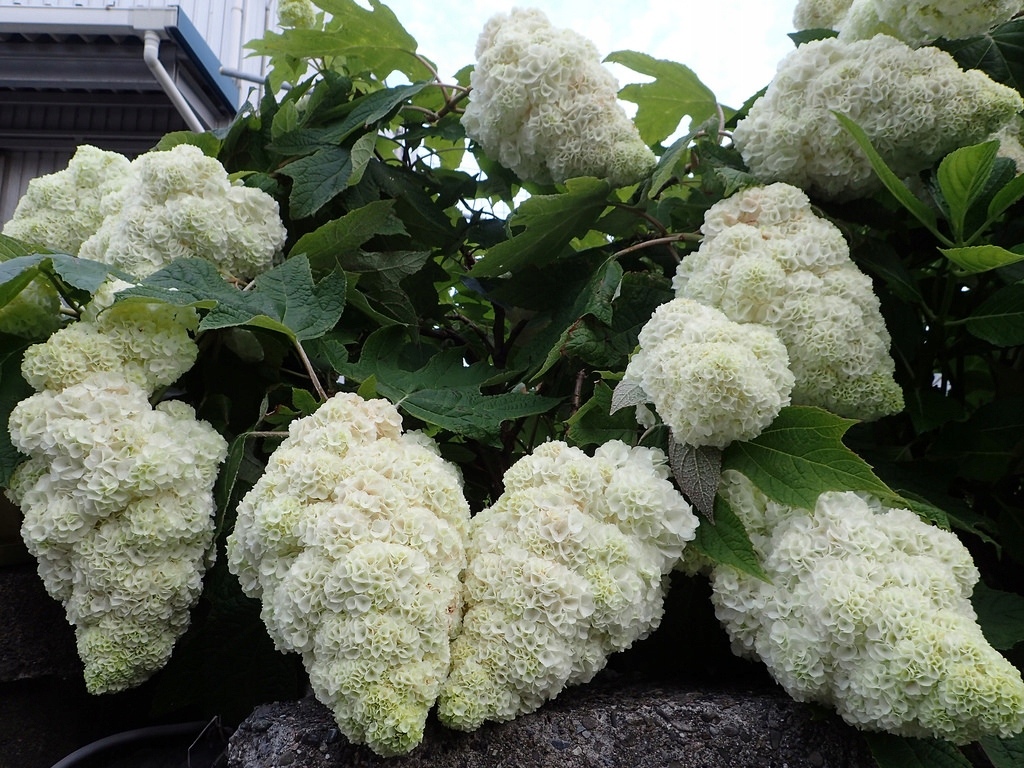
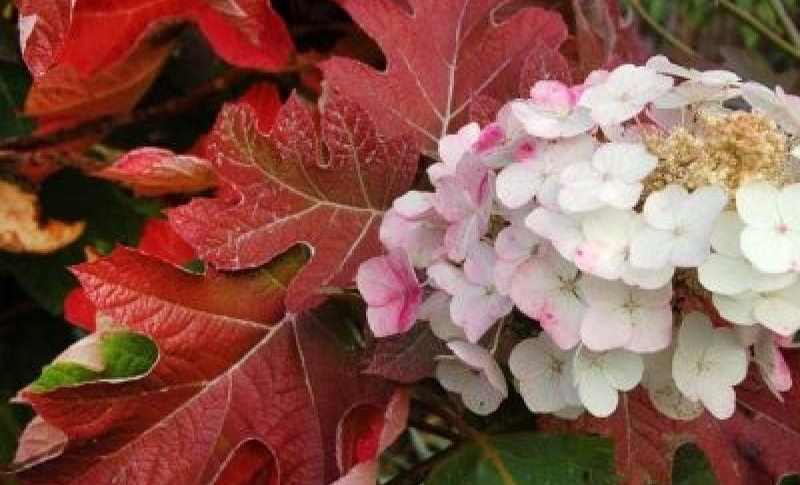
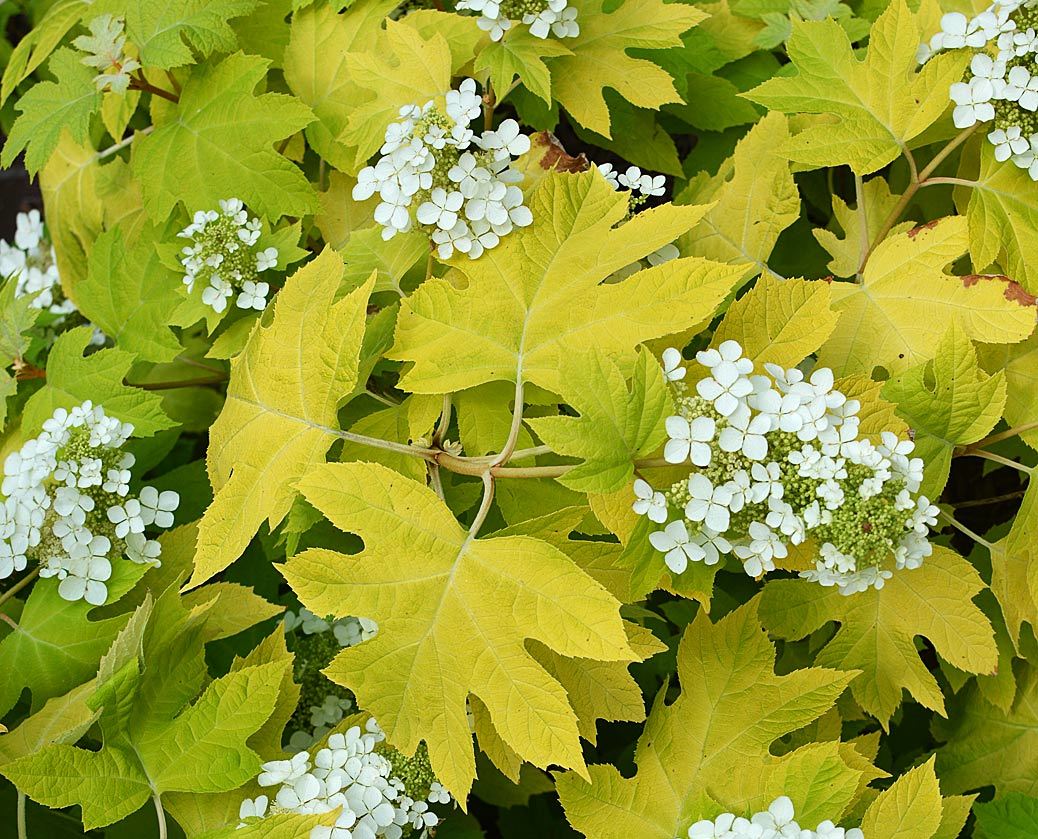
Reaches 300 cm in height, with branching stems, elastic, and woody at the base. The leaves have a distinctive shape with large, serrated edges, reminiscent of oak, rough, and a rich green color. It is not winter-hardy and can die even with light frosts. It reproduces by all methods, including seed. | Long panicles with small white flowers 1.5-2 cm. The fruiting buds in the center have a beige tint, and the edges are white with a pinkish tint. | Floribunda, Pink Diamond, Tardiva, Ргаесох. |
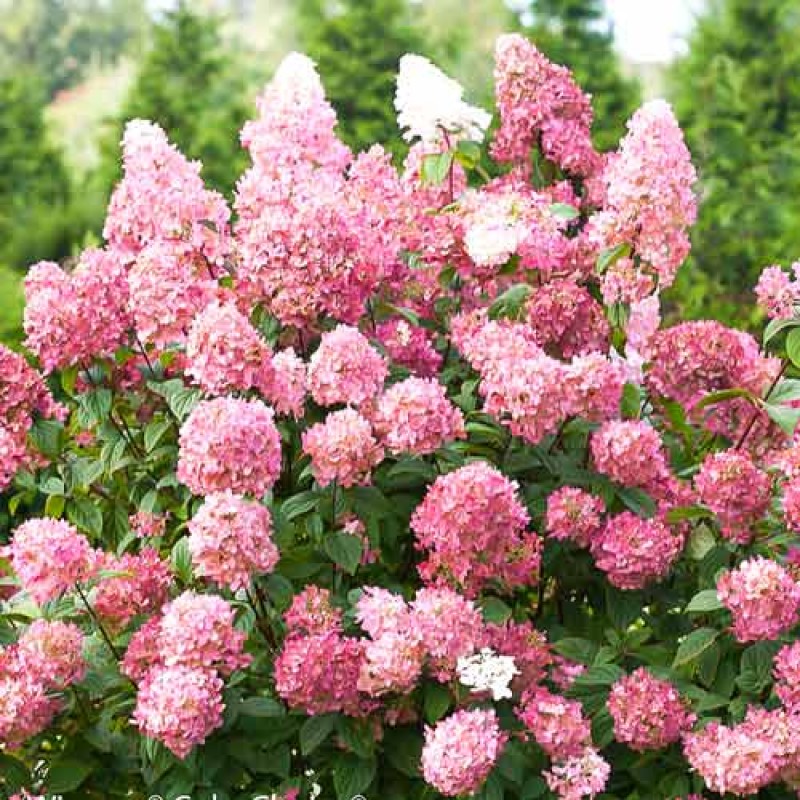
Photo gallery of tree hydrangea varieties
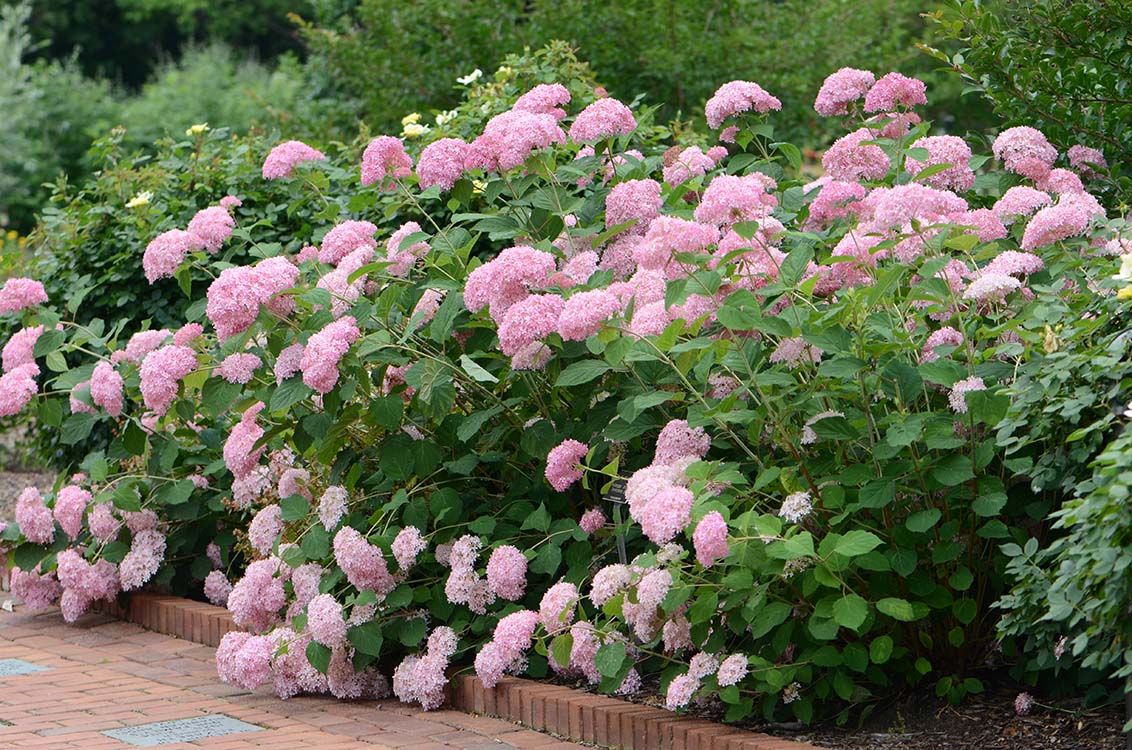
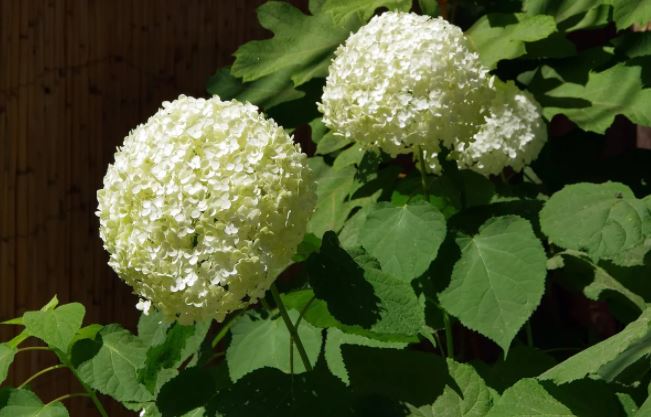
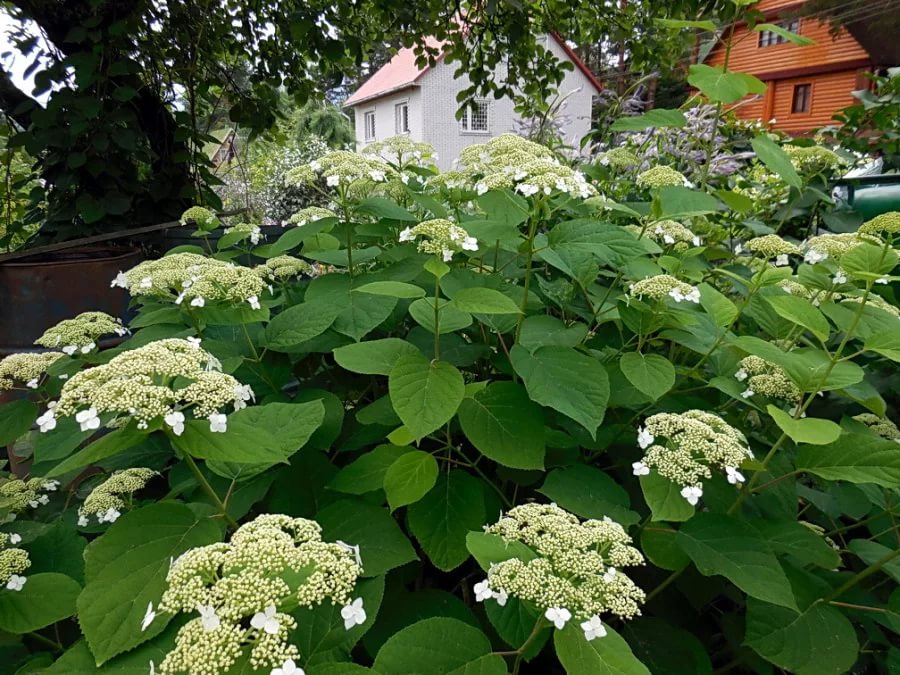
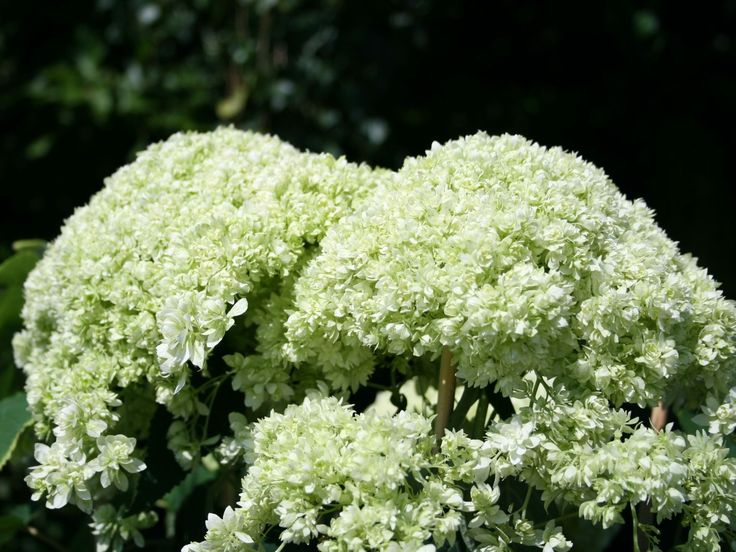
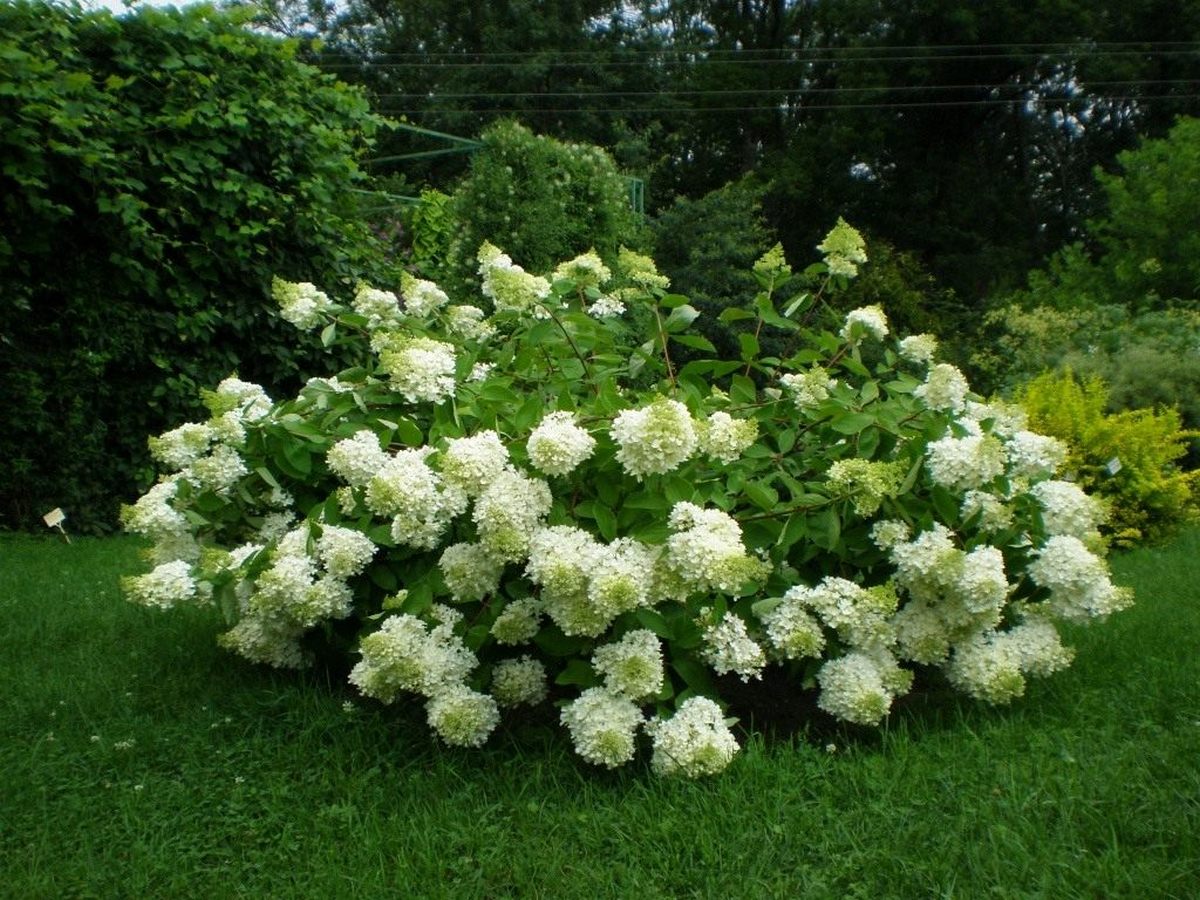
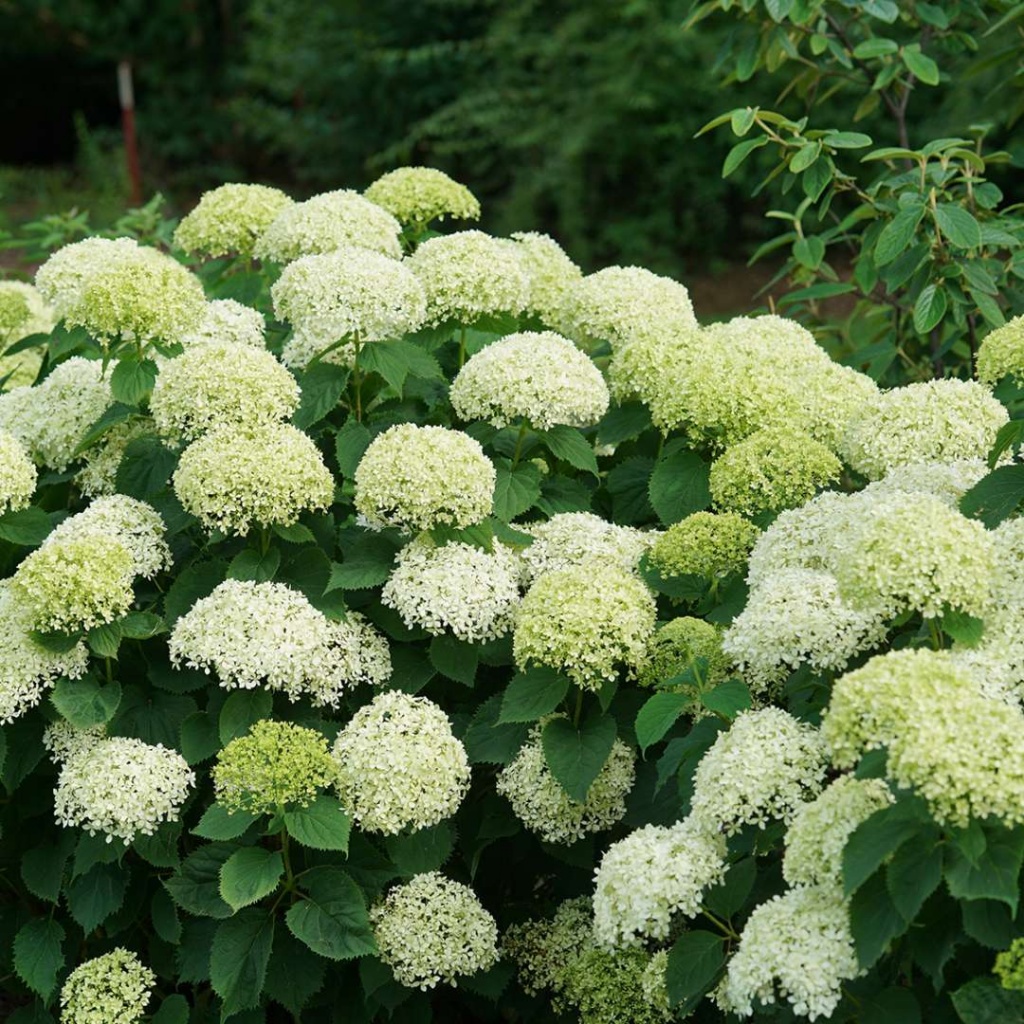
Photo gallery of panicle hydrangea varieties
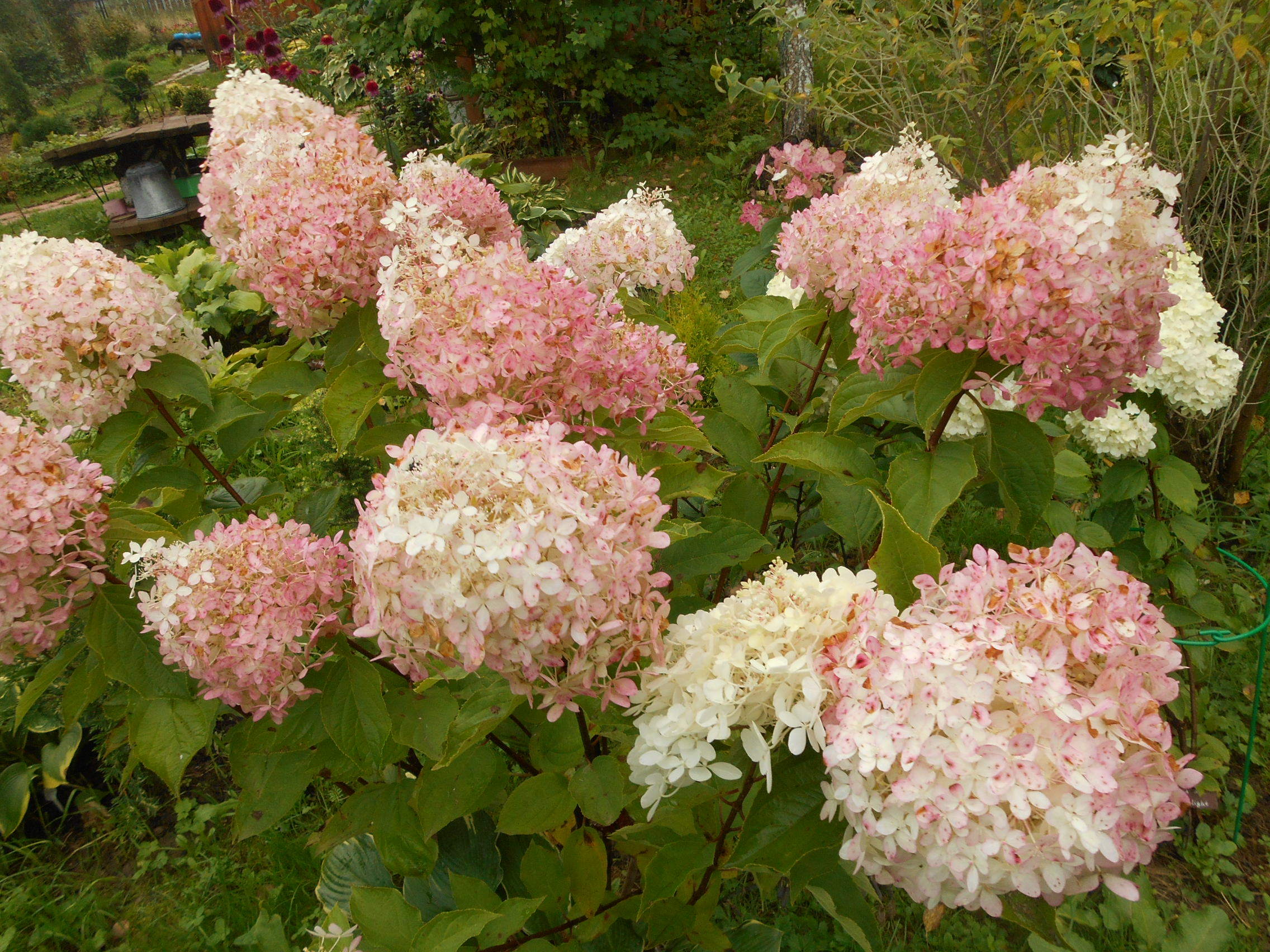
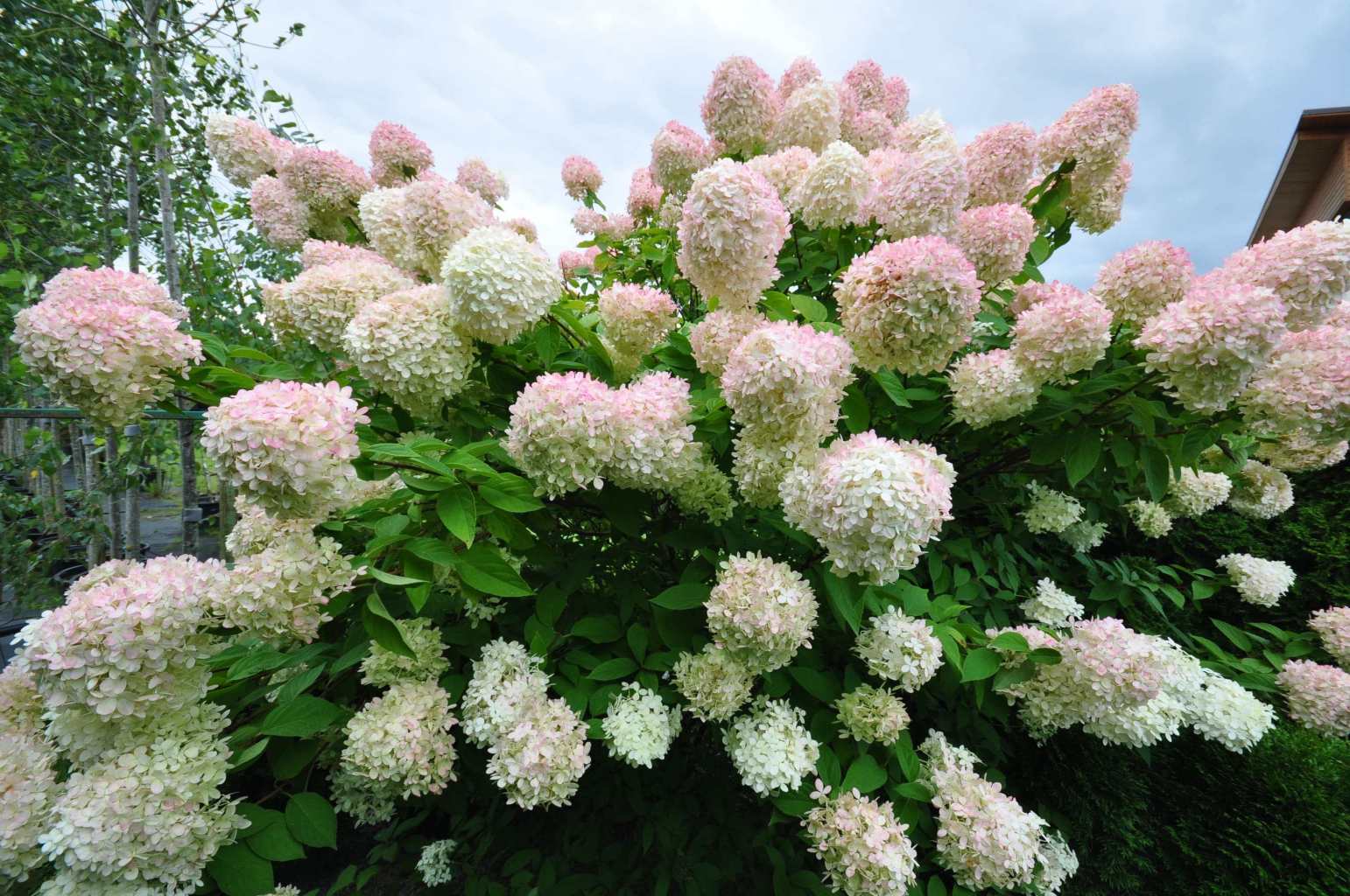
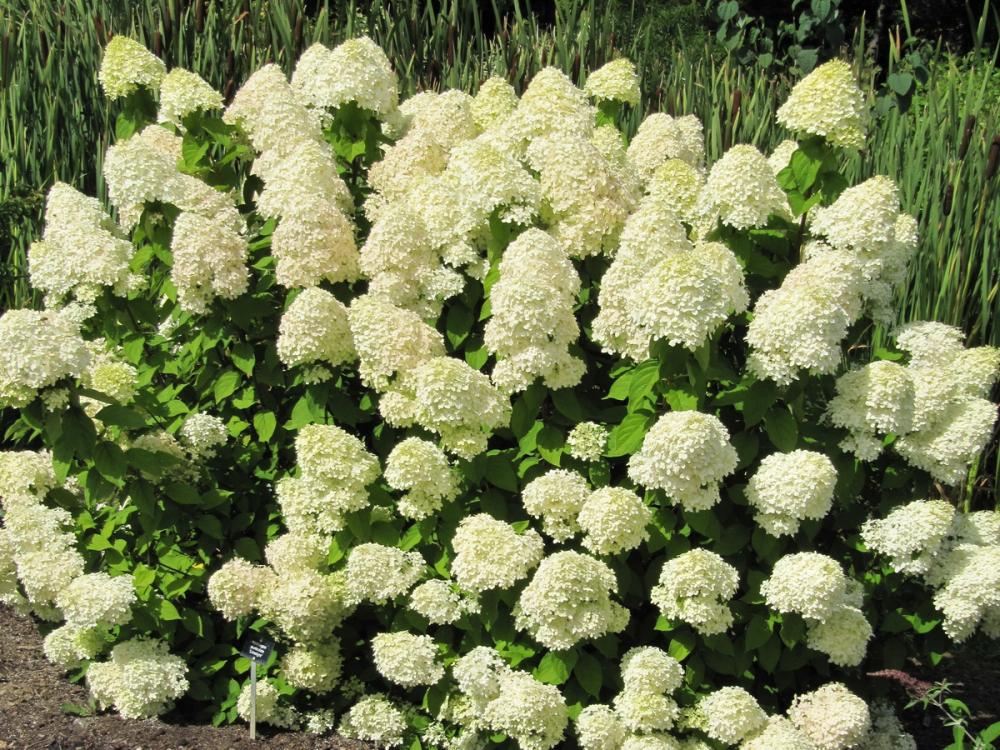
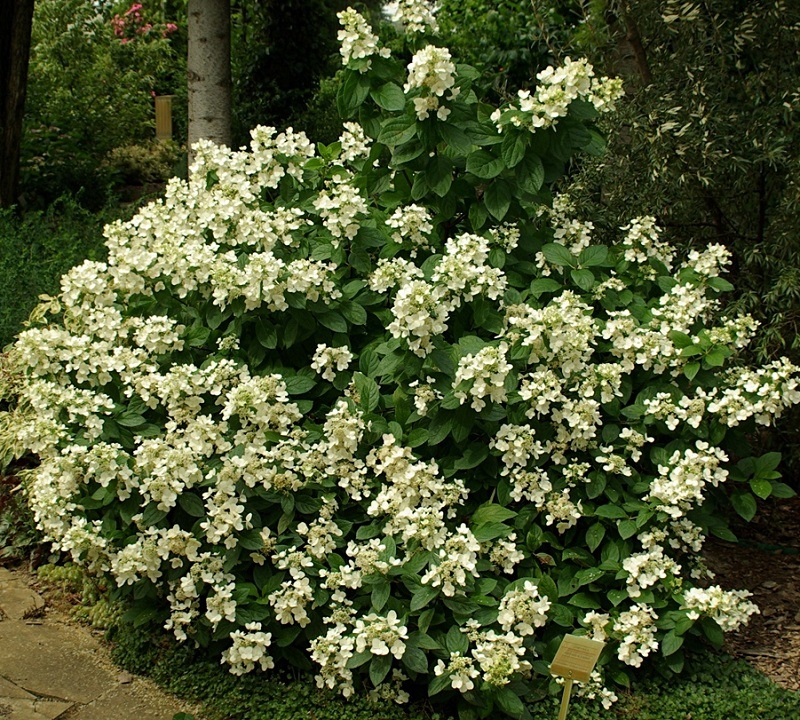
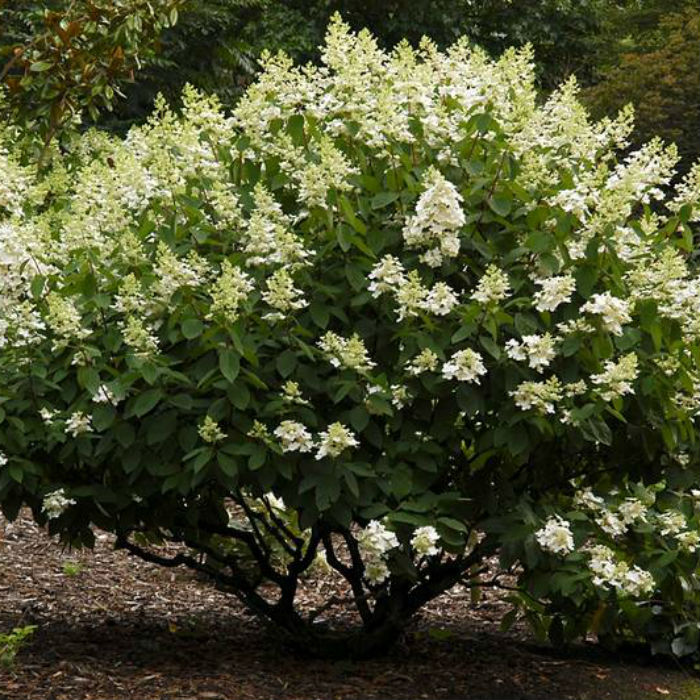
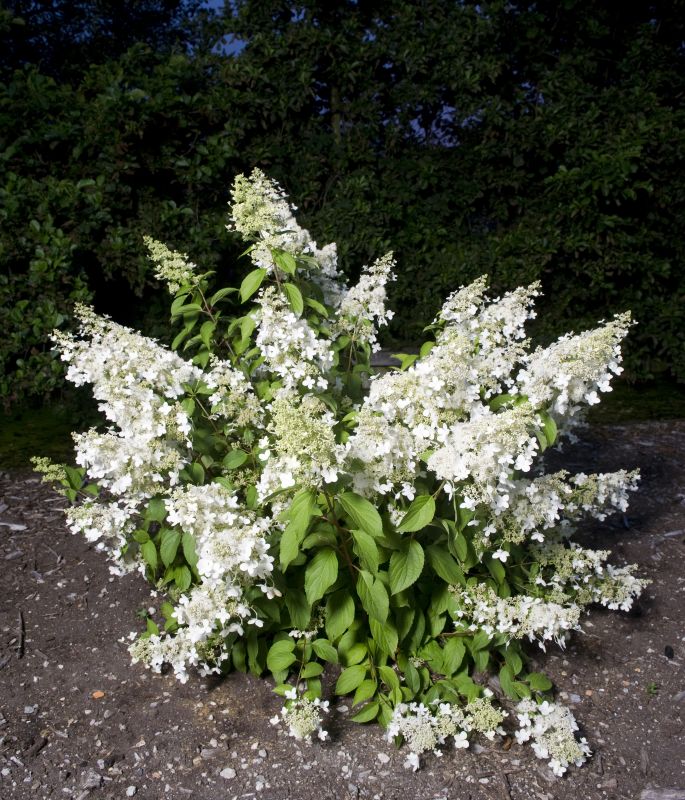
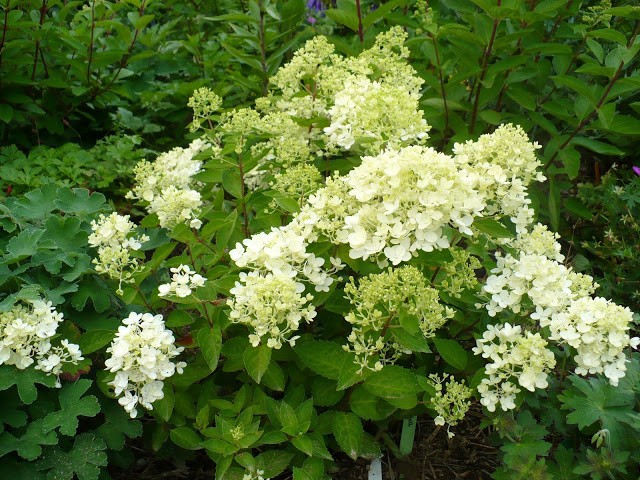
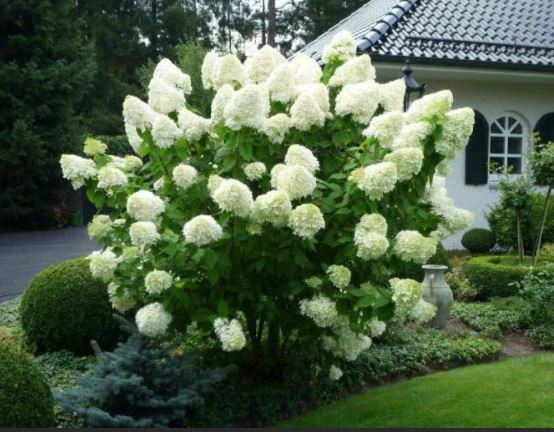
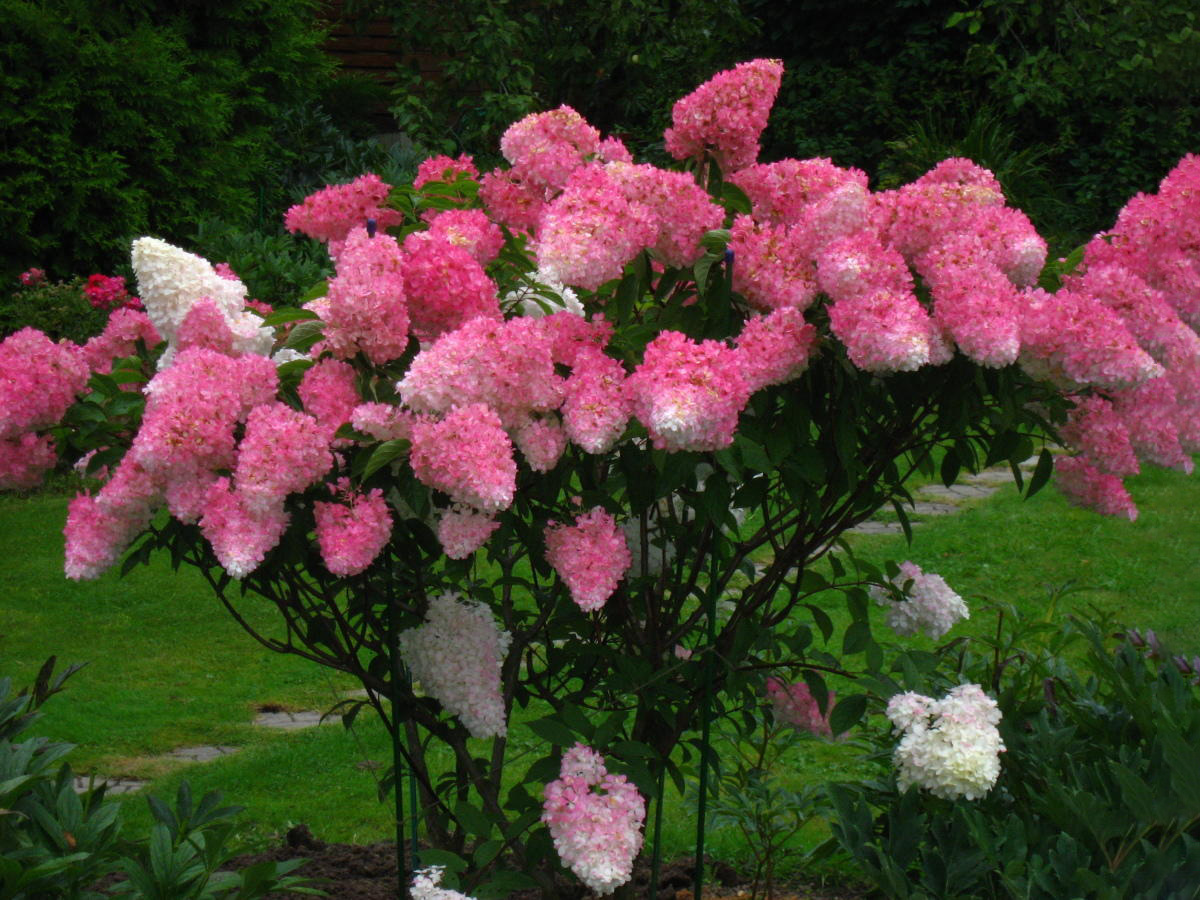
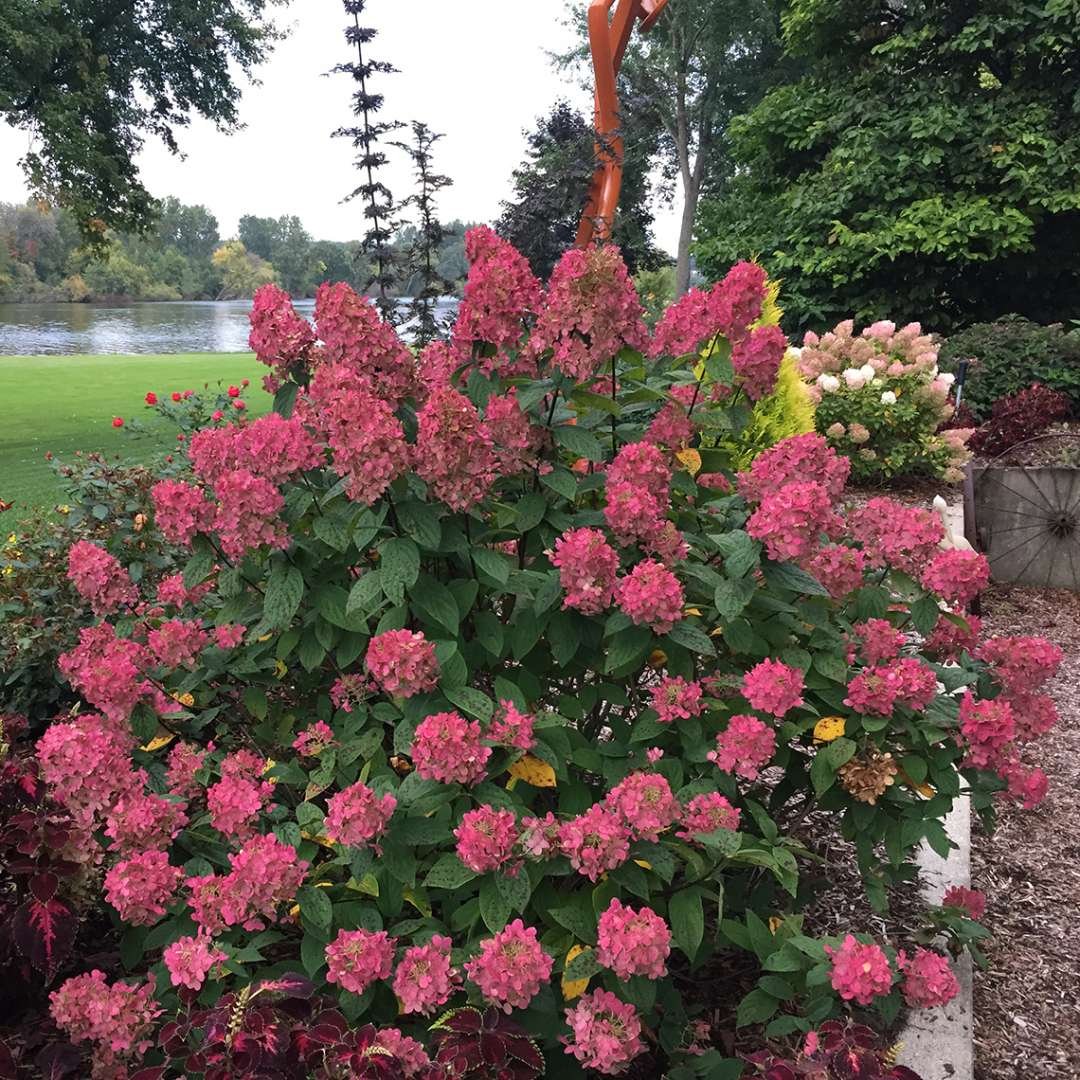
Photo gallery of large-leaved hydrangea varieties
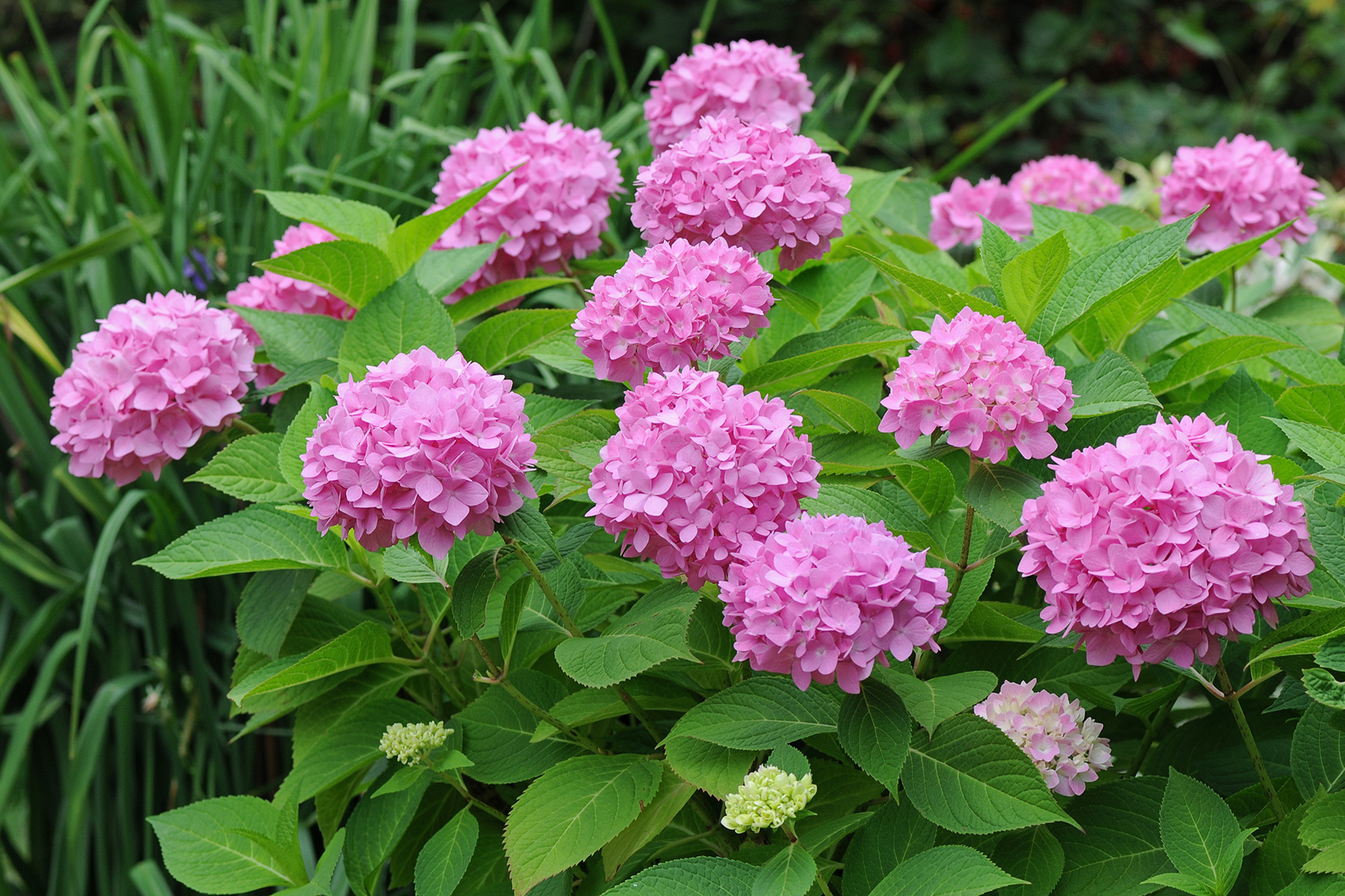
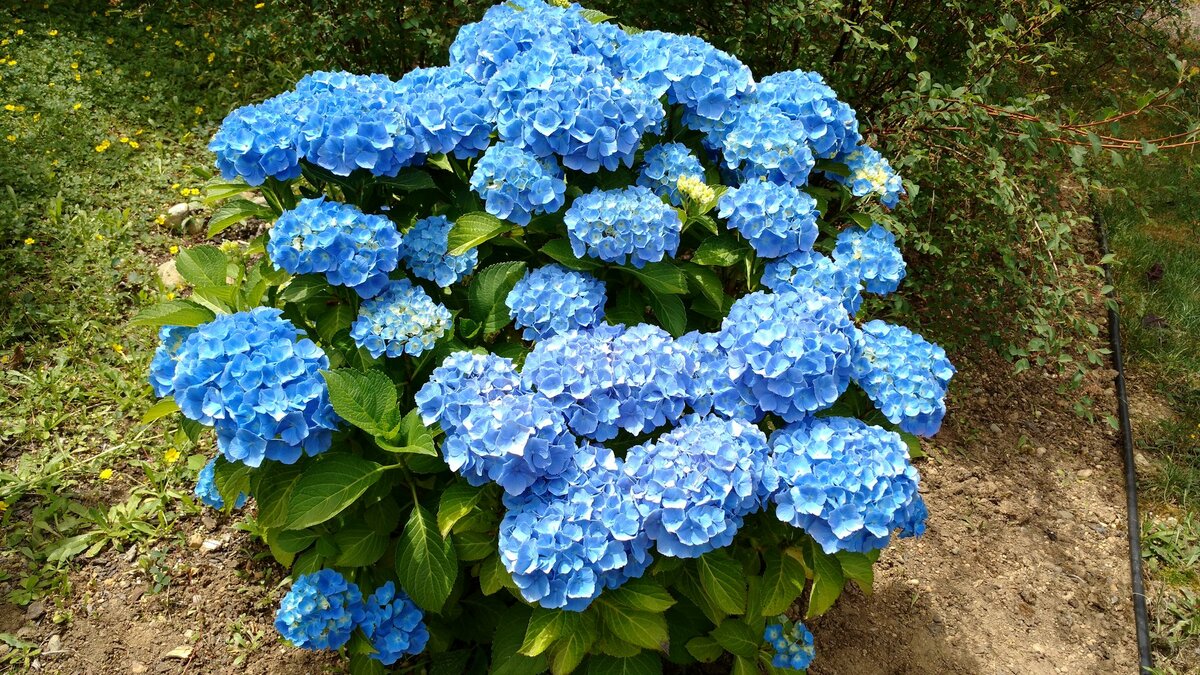
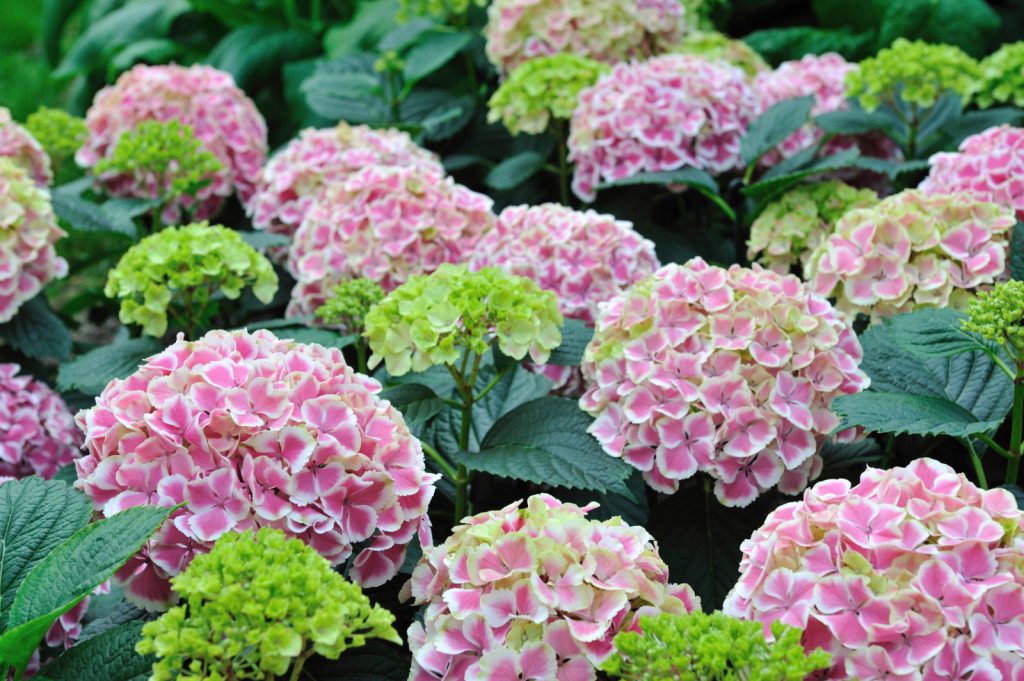
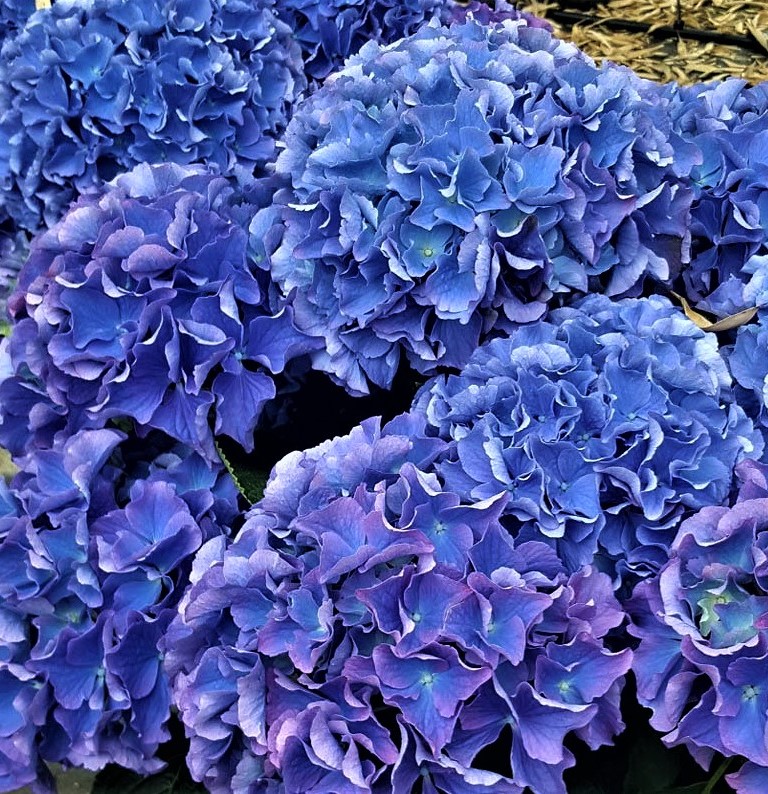
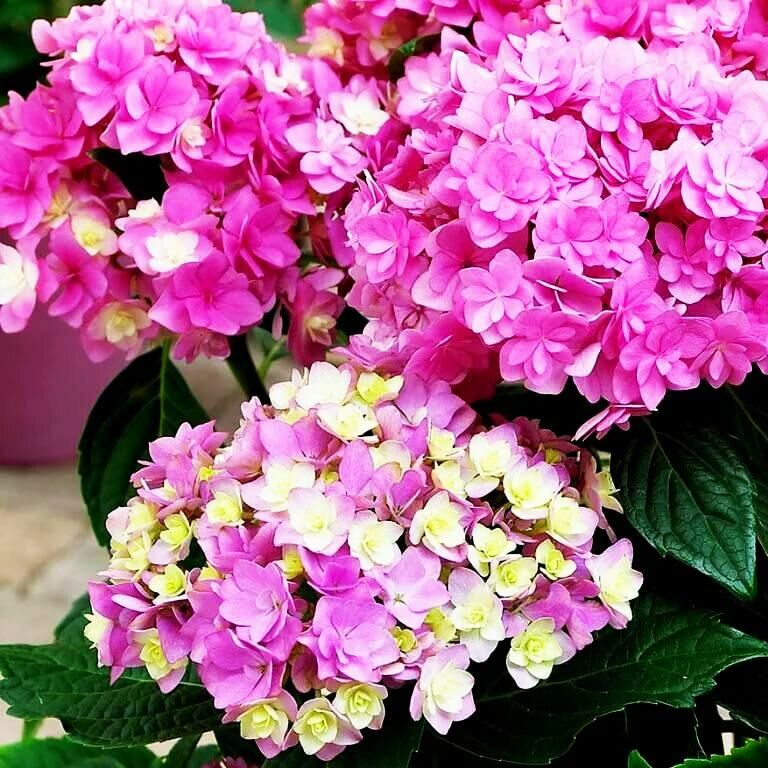
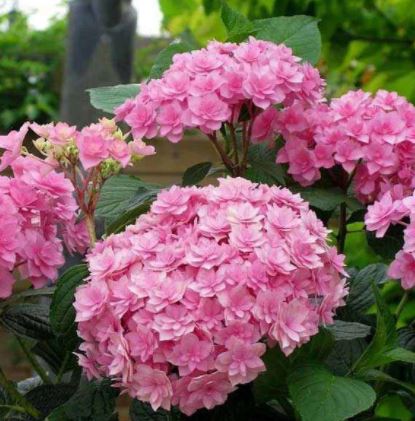
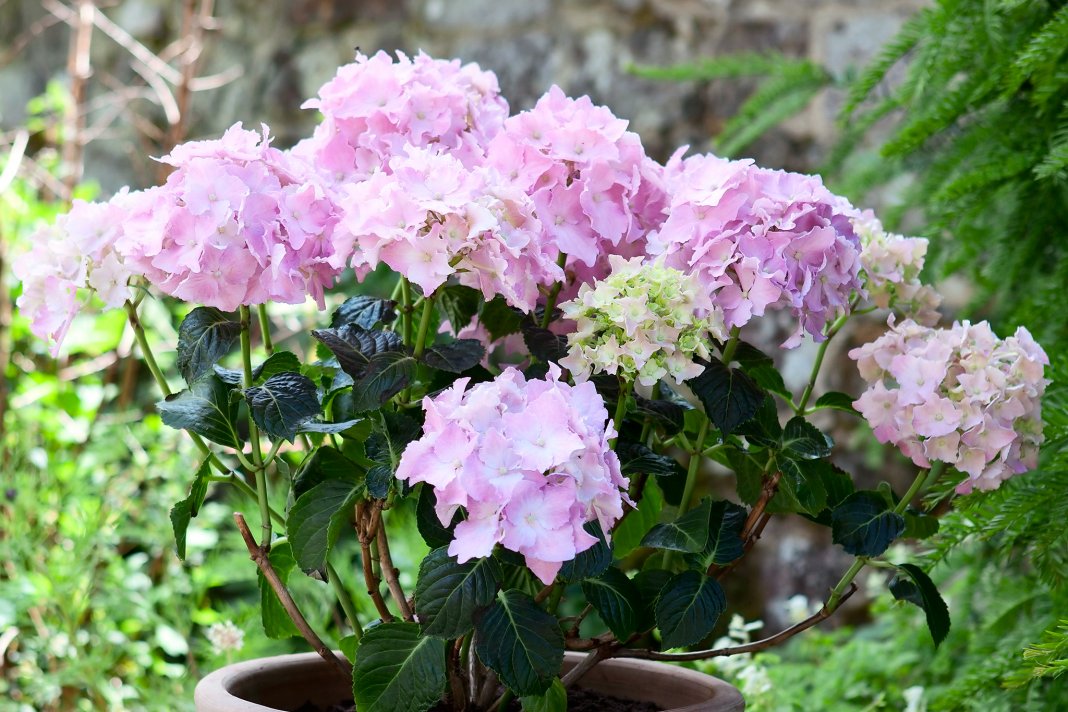
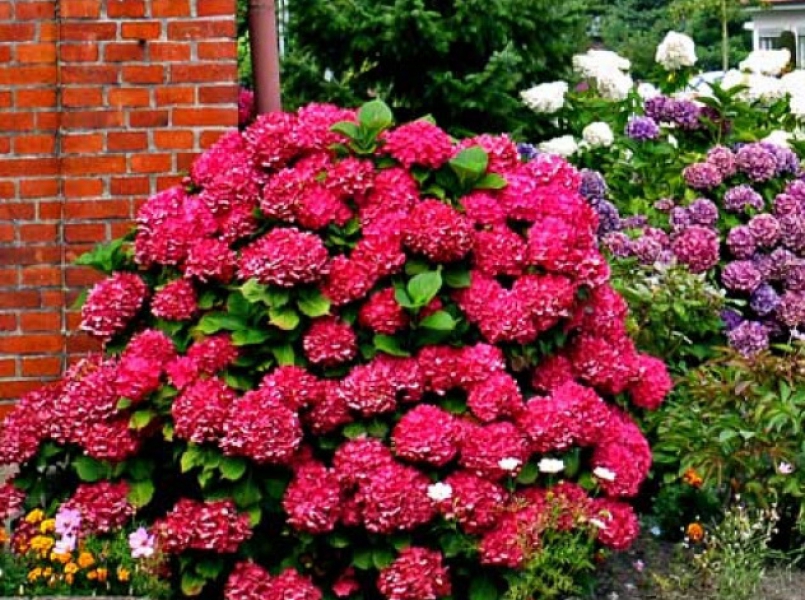
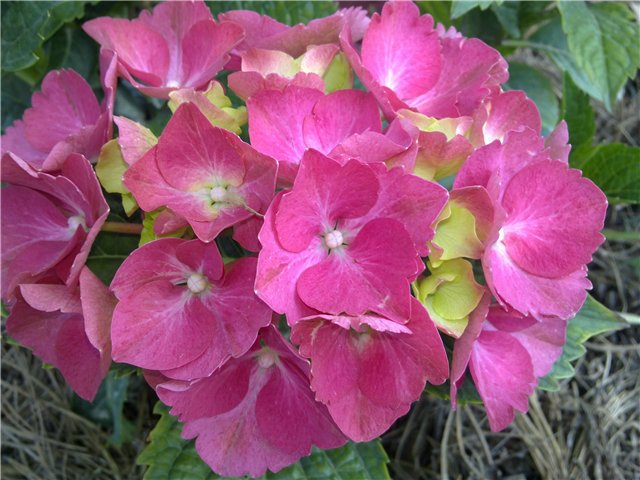
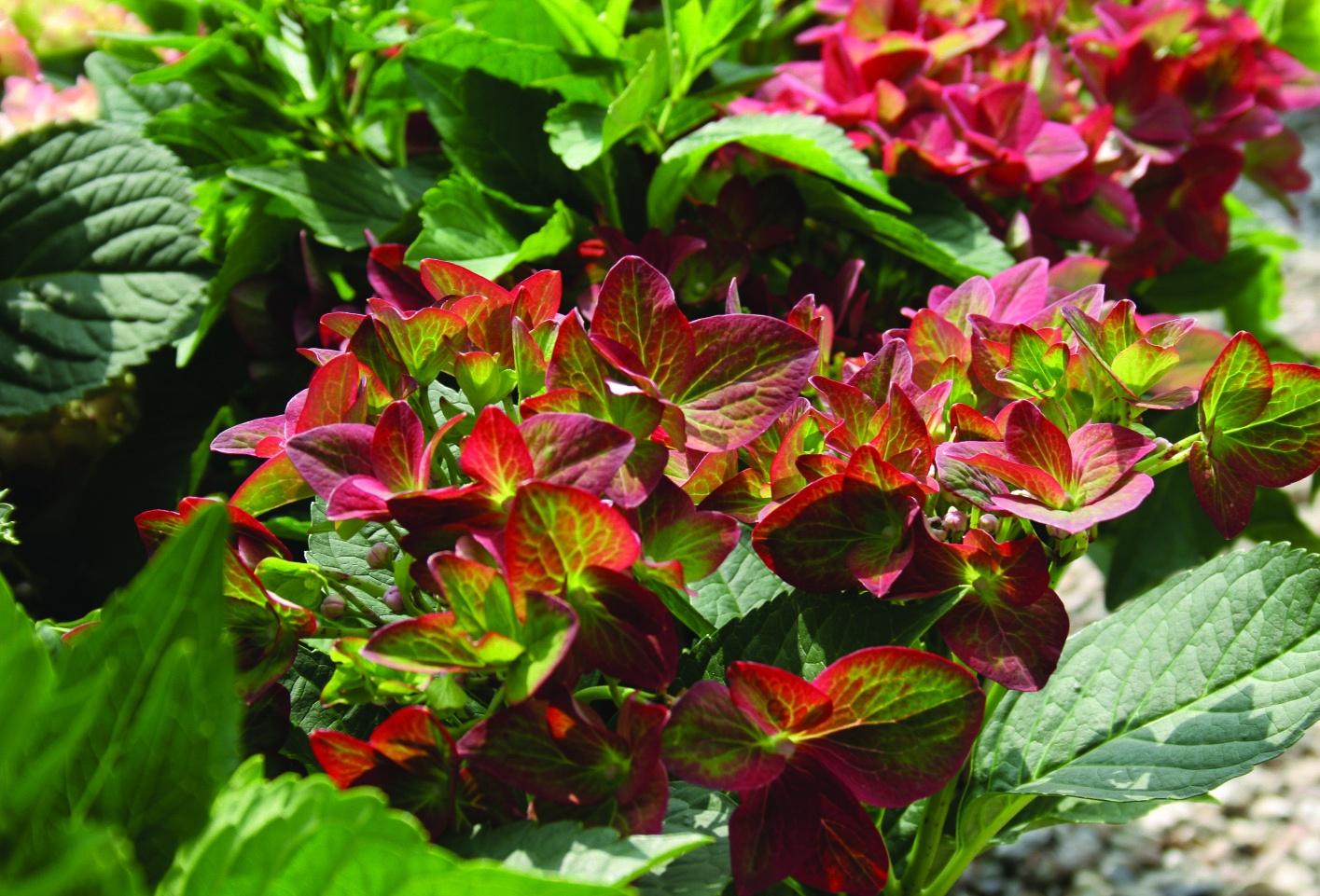
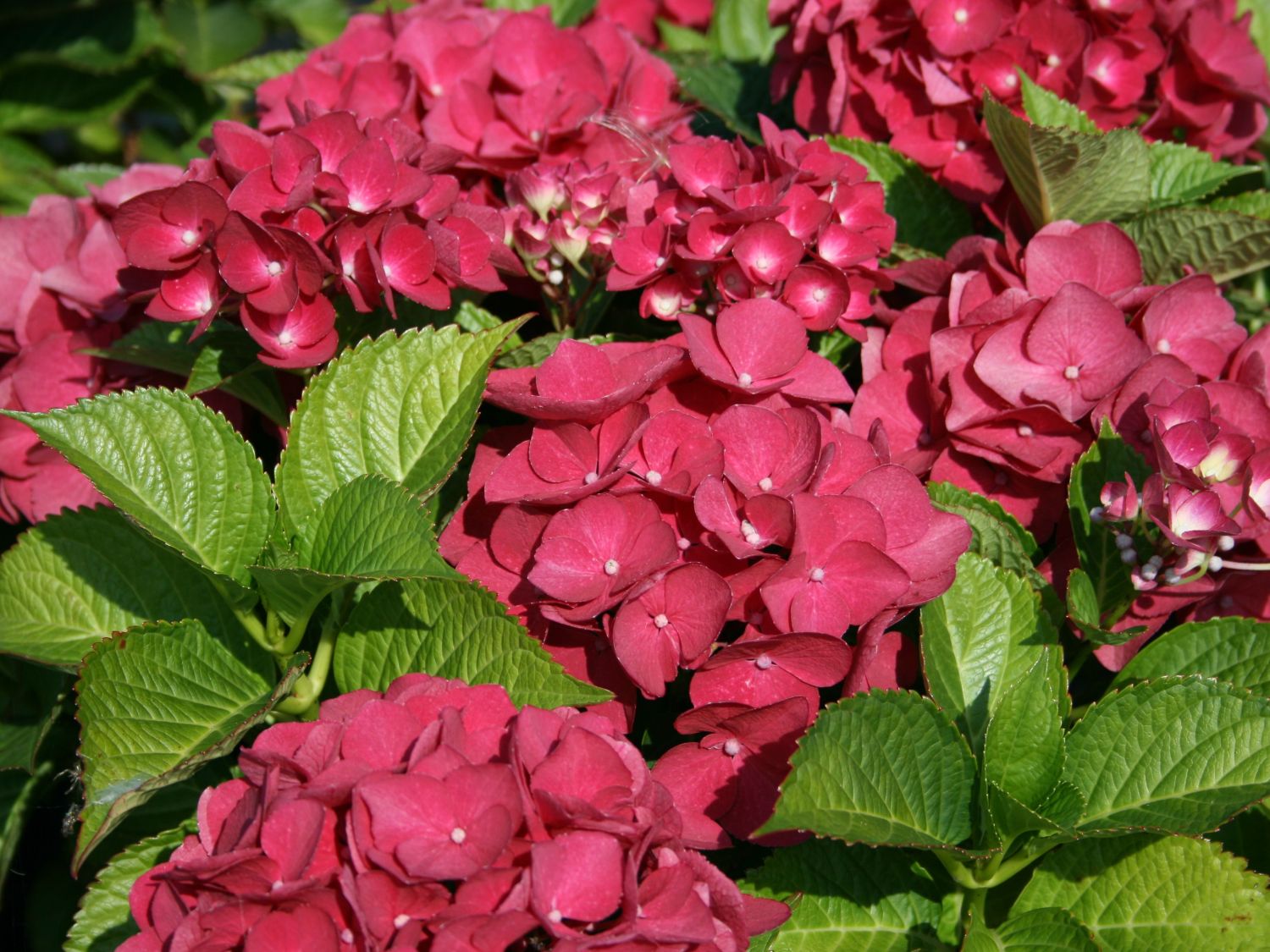
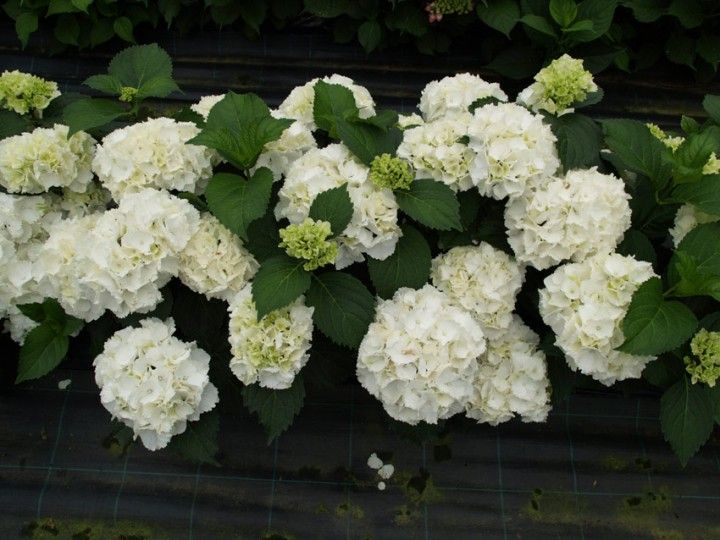
Photo gallery of oakleaf hydrangea varieties
Growing from seeds
This is a relatively easy and accessible propagation method, typically used by breeders when developing new varieties, but it can be easily done at home. However, this method is quite time-consuming.
- Prepare a container or separate containers with drainage holes.
- Prepare a substrate from peat, leaf mold, and sand in a ratio of 2:4:1. You can add organic matter, such as humus, pine needles, and sawdust.
- Sowing should be done in autumn.
- Do not plant the seeds deep, but simply sprinkle a thin layer of soil on top.
- Moisten the soil thoroughly. It's recommended to spray rather than water to avoid washing away the seeds.
- Cover the container with plastic film or glass, which must be removed several times a day for ventilation.
- Place containers in a well-lit, warm place with temperatures of +14..+22 °C.
- Moisten the substrate as it dries.
- When the first shoots appear, the cover must be removed.
- Picking should be done about 2 times: during the development of cotyledon lobes and at the beginning of spring.
- In this case, hydrangea can be transplanted into standard individual pots (about 7 cm in diameter).
- The plant needs to be hardened off by moving it outdoors in the summer to a location protected from direct sunlight and bad weather.
- In the evening the pots need to be brought back.
- Hydrangea should be grown indoors for about 2 years until it is fully mature.
- Emerging buds must be carefully removed so that they do not interfere with development.
Hydrangea seedlings
After two years, the seedlings should be planted outdoors. This is best done in spring or fall, before severe frosts set in. Place the hydrangea in a well-lit area with direct sunlight.
Some species (such as the arborescens) can grow in shaded areas. It's easy to tell if a seedling is ready for planting: just make sure the stem has several branching shoots and healthy leaves.
It's also important to inspect the plant for infections, as infected bushes can spread the disease to other plants. Weak seedlings are most vulnerable to pests. If insect pests are detected, the stems and leaves should be sprayed with insecticides. To ensure proper development, young hydrangeas should be fertilized with mineral fertilizers (phosphorus or potassium) in the spring, and the air temperature should be lowered slightly in winter, to approximately 12–18°C.
Timing for planting hydrangeas in open ground
Hydrangeas are very capricious when they're just starting to establish themselves in a new location. They need ample time to do so. Therefore, planting timing is crucial, especially in the central and northern regions.
Hydrangea planting dates by region
For southern regions, autumn planting is preferable. For northern regions, spring planting is preferable.
- Middle zone (Moscow region): mid-May or early September.
- Siberia, Leningrad region and the Urals: end of May, end of August – beginning of September.
- South: in spring: in spring: April; autumn: throughout October.
According to the lunar calendar of 2023
| Month | Favorable days | Unfavorable, prohibited days |
| April | 7 (from 09:29 a.m.)-9 (until 15:57 p.m.), 11 (from 20:33 p.m.)-13, 16-17, 21 (from 7:13 a.m.)-22 (until 13:11 p.m.), 24 (from 21:58 p.m.)-27 (until 9:00 a.m.) 29m.), 29 (from 21.59m.)-30 | 1, 2 (until 13:58), 5 (from 7:34), 6, 7 (up to 7h 34m),19 (from 7:13 a.m.),20 |
| May | 1-4 (until 17:31), 7-8, 9-10, 13 (from 07:39 a.m.)-15 (until 10:56 a.m.), 17 (from 15:26)-19 (until 21:46), 22-24 (until 17:34), 29 (from 17:50)-31 | 5, 6, 11, 12, 15 (from 10:56 a.m.)-17 (until 15:26 p.m.), 19, 20 |
| August | 3-4, 7 (from 09:24)-9 (until 16:05), 12-14 (until 13:35), 17 (until 12:38)-21, 26 (from 14:04)-28 (until 17:31) | 1,2, 15 (from 12:38 p.m.), 16, 17 (up to 12:38 p.m.), 30,31 |
| September | 3 (from 18:00)-5 (until 23:05), 8 (from 07:59)-10 (until 19:35), 13, 16-20 (until 17:06), 23, 24 | 1 (from 16:25)-3 (until 18:00), 14, 15, 25-26, 28 (from 12:58 p.m.), 29, 30 |
| October | 1-3 (until 08:02), 5 (from 15:32)-7, 10 (from 15:02)-13 (until 20:55), 15 (from 14:04)-17 (until 22:36), 20-22 (until 09:06), 24-26 | 14,15,28,29. |
For more information on planting hydrangeas in autumn or spring, read the articlePlanting Hydrangeas in Fall and Spring: 2023 Lunar Calendar Dates, Step-by-Step Instructions + 57 Varieties
Planting hydrangeas in open ground
Planting hydrangeas in a plot is not difficult, but you should follow a certain order of performing the relevant activities:
- To begin with, the soil must be thoroughly weeded and loosened so that it becomes loose.
- The acidity should be neutral.
- The planting hole must be dug so that it is 2 times larger than the length of the root of the sprout, taking into account the root ball.
- There should be gaps of about 100 cm between the holes.
- It is not recommended to place any trees or shrubs with external roots near hydrangeas, otherwise the nutrients will be distributed unevenly and one of the plants will die.
- You need to add organic matter to the hole: peat, compost, humus, wood shavings, pine needles, ash and mineral fertilizers.
- Provide drainage at the bottom of the hole by placing foam plastic, broken bricks or eggshells there.
- Before planting, it is necessary to shake off excess soil from the seedling and level the root system.
- Carefully lower it into the hole, gently shaking the hydrangea to fill the cavities.
- Add some compost and humus on top as well.
- Water thoroughly and compact the substrate.
- Cover the flowerbed with mulch, pine needles or ash.
- After successful planting of the seedling, it must be protected from sunlight for 2-3 days so that the plant takes root faster.
Caring for hydrangea in open ground
Hydrangea requires proper care and constant attention from the gardener, so certain rules should be followed when growing it.
| Factor | Condition |
| Location/lighting | Hydrangea beds should be positioned on the southern or southwestern side of the plot, ensuring direct sunlight reaches the shrubs. Some species thrive under a canopy or in greenhouses. Young hydrangeas are quite sensitive to drafts, strong winds, and precipitation (hail, heavy rain), so they should be covered with a mat during inclement weather. |
| Soil | Avoid planting this shrub in clay soil or highly acidic soil. The soil should be prepared, thoroughly loosened, and cleared of unwanted weeds and root debris from other plants. The soil in the flowerbed can also be mixed with sand, ash, or peat for greater nutritional value and richness. If the hydrogen content is neutral, the hydrangea flowers will be beige or white, while in acidic soil, blue or light blue buds will bloom. |
| Watering | Hydrangeas are moisture-loving and demanding. Up to 50 liters twice a week is ideal for hydrangeas. However, too frequent watering and stagnant soil can lead to rot or fungal diseases, so it's important to always monitor the soil's water level. Insufficient moisture is manifested by yellowing and dying young shoots and leaves. |
| Fertilizer | The minimum number of fertilizing sessions is two (before and after flowering). The first should be done in the spring, in April-May, with a urea solution: 20 g per bucket of running water. Each mature bush requires about three such buckets. The second should be done after flowering has finished, in September-October. Complex fertilizers containing minerals, such as nitrogen or phosphorus, are well suited for this purpose. In summer, you can also fertilize the substrate with slurry, compost, or humus. However, it's important to remember that too frequent fertilizing can negatively affect hydrangeas: branches may break due to the heavy blooms. |
| Trimming | This is done only 3-4 years after planting. In early spring, before buds open and new shoots form, arborescens hydrangea is pruned first. Three to four buds are left on the stems, and the removed parts are used as cuttings for propagation. Another species, panicle hydrangea, is pruned by a third, as it takes longer to recover and is more sensitive to environmental conditions. With the large-leaved variety, only every fourth shoot is removed. Avoid pruning too early, when buds are just beginning to form, otherwise the shrub may not survive. Late pruning also has a negative effect: the plant will bleed sap and die. |
Hydrangea after flowering
After the end of the active flowering period, a number of measures are taken to prepare the bush for winter:
- Seedlings grown in pots are brought into an insulated room.
- The bushes on the site are carefully pruned, removing dried branches, shoots and inflorescences.
- Then, the hydrangea is well hilled and the flowerbed is covered with mulch to protect the root system from severe frosts.
- The bush is covered with a mat or film, and the soil around it is also lined with dry leaves and a thick layer of pine needles.
Some species, such as paniculata, survive the winter well without additional cover. However, in cold climates with extreme temperature fluctuations, such as Siberia, the shrub should still be provided with a covering. In southern regions, arborescens hydrangea can also survive the winter without cover.
Overwintering hydrangeas
Hydrangeas should be covered for the winter immediately after the first frost, no later than October. If the bush is young, it should be completely covered with dry soil. Mature plants should be carefully bent toward the ground and covered with roofing felt, lutrasil, or ordinary plastic film, pressing down the edges. If the hydrangea is large enough to be bent to the ground, the shoots should be tied together and wrapped in spunbond to protect them from snow.
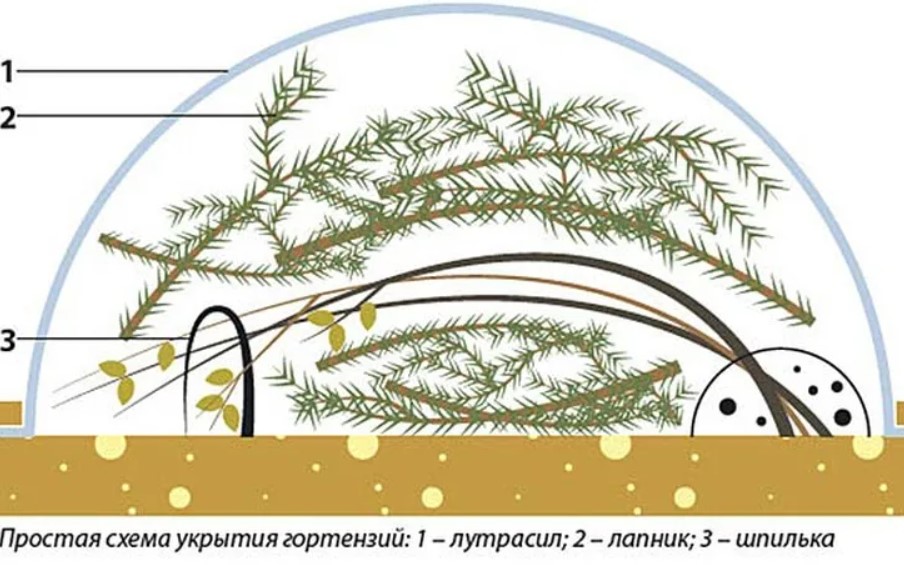
A frame made of metal wire or mesh should be placed around the bush so that it extends at least 10 cm above the hydrangea. The space between the bush and the frame should be filled with dry leaves, straw, and humus.
This structure will provide the hydrangeas with a warm winter and preserve them until spring. In April-May, after the snow melts, the netting should be removed, and the covering should only be removed once stable warm weather sets in. Proper wintering will positively impact flowering and the formation of new shoots.
Ah, you know that Can hydrangea be grown at home?
Propagation by cuttings
This method has many advantages: firstly, the material is collected during pruning of the plant, which facilitates the subsequent adaptation of the hydrangea, and secondly, almost all cuttings quickly take root and begin to develop.
- It is necessary to leave at least 2 nodes on each branch.
- It is important that the top cut is straight and the bottom cut is oblique.
- The container must be prepared in advance by making drainage holes.
- You can prepare the soil mixture yourself: mix peat, sand and universal soil.
- The cutting should be planted no more than 3-4 cm deep.
- Water thoroughly and compact the substrate; you can add sawdust, tree bark or pine needles on top.
- The container must be covered with plastic film or glass on top, providing the hydrangea with greenhouse conditions.
- The soil should always be kept moist, preferably by spraying it with a spray bottle.
- Also, the containers should be ventilated daily and placed in a well-lit, warm place.
- When the root system is fully formed, the cuttings can be planted in the area.
- This needs to be done in the spring so that the young hydrangea has time to adapt and take root by winter.
Garden hydrangea reviews from gardeners
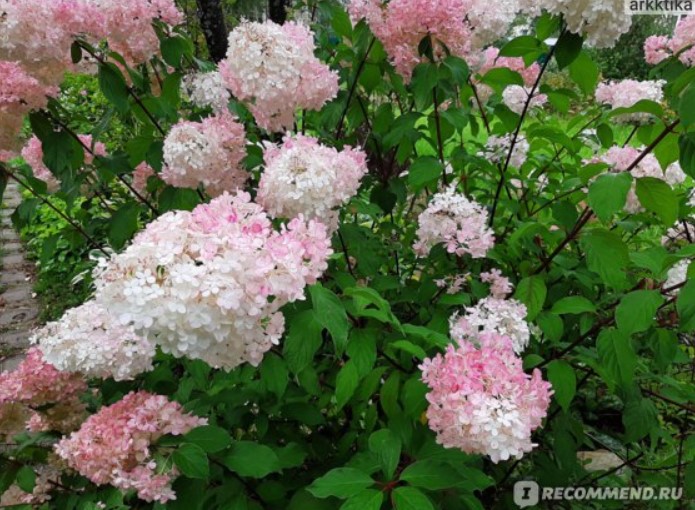
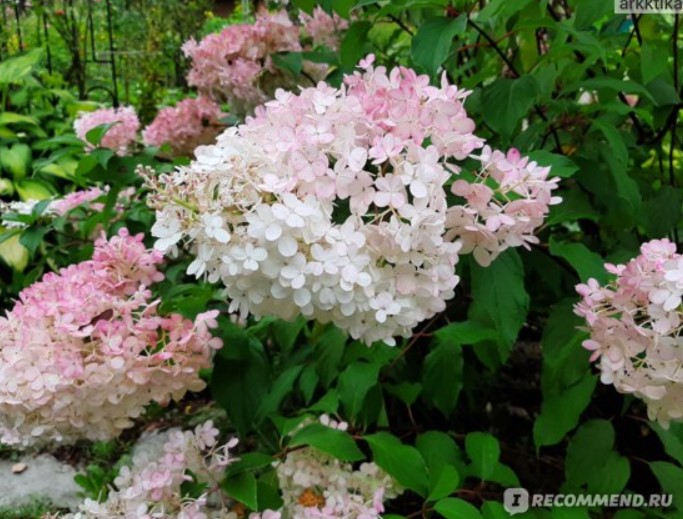
The best panicle hydrangea variety! Luxurious blooms and easy care. Vanilla Fraise has been in my garden for 12 years: from a small seedling to a lush bush.
Professional gardeners believe that trees and shrubs are the foundation of a garden design, with flowers merely complementing it. Panicle hydrangea bushes can serve as such a fundamental design element. One of the most beautiful representatives of this species is the Vanille Fraise variety.It appeared in our garden by accident, thanks to a mismatched variety. Back in 2010, we purchased two Pinky Winky specimens from a nursery (600 rubles each), but they turned out to be a completely different variety.
The flowering showed the change in quality for the better. Instead of Pinky Winky, we were sold Vanille Fraise, a French-bred variety that's popular, beautiful, and has won awards at professional shows.
I liked this hydrangea variety so much that in the spring of 2014, I bought two more (from a different nursery). They cost 250 rubles each.Both the first and second times the seedlings were with a closed root system, in containers.
Agricultural technology
Landing
It's best to choose a semi-shaded location for hydrangeas. Hydrangeas grow in a variety of locations, but they thrive in areas with midday shade and morning and/or evening sun.When planted in a sunny location, hydrangeas require more care, in particular watering, and do not develop as powerful bushes as in partial shade.
Planting took place in the fall (September), immediately after purchasing the seedlings.
When planting, dig fairly large holes, approximately 60 x 60 cm. Fill them with a nutrient mixture containing primarily acidic peat and humus, adding complex fertilizers. You can also add spruce litter. However, ash should not be used, as it alkalizes the soil, and hydrangeas prefer acidic soil.
Since the purchased specimens had closed root systems, after thoroughly watering the planting site, the plants were placed in soil without burying the root collar. After re-watering with a watering can, the area around the trunk was mulched with either peat or spruce litter, again to acidify the soil.
Shelter for the winter
Paniculata hydrangeas in general, and the Vanille Fraise variety in particular, don't require winter protection, as they can withstand temperatures down to -30 to -35 degrees Celsius. In my region (northeast of Moscow), such frosts, although rare, do occur. When we visit our dacha in winter, we try to cover the hydrangeas with snow. Hydrangeas survive frosts without damage, and their branches don't freeze, although they can break under the weight of snow or freezing rain.
Pruning a bush
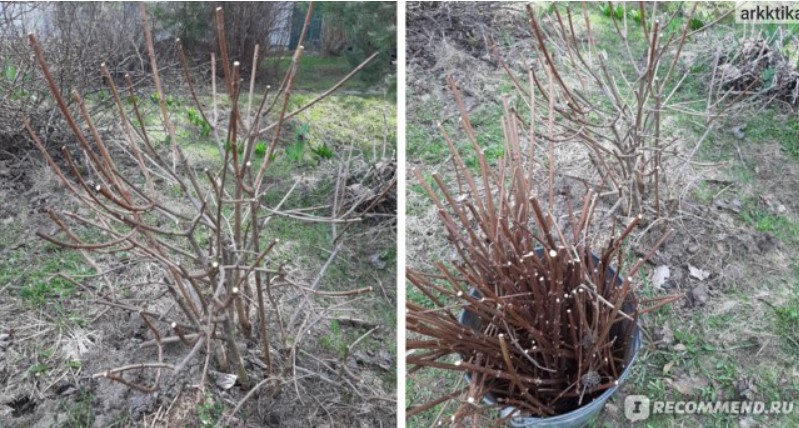
Hydrangeas don't awaken immediately. Leaves may not begin to unfurl until late May, but before then, the bush needs to be pruned back by at least 1/3 of its length.
In gardening literature, experts claim that the more severe the pruning, the larger the hydrangea blooms will be. And practical experience confirms this.
Spring pruning
There's no need to worry about pruning, as panicle hydrangea forms blooms on the current year's shoots. If you don't prune the hydrangea in the spring, you'll have many shoots, but they'll be small.Care
In spring, I usually feed the bushes with nitrogen fertilizers.
The last two years, the delay in leaf emergence has been a cause for concern, apparently due to weather conditions and a cold spring. But the hydrangeas have subsequently made up for lost time, producing vigorous new shoots and large flower clusters.
Hydrangeas are easy to care for. They are low-maintenance plants.In summer, especially in hot weather, hydrangea bushes need to be watered generously. After a hot day, the leaves on the bush may lose their turgor, firmness, and droop. We don't go to the dacha every weekend, so each time we visit, we have to pour 2-3 buckets of water under each bush.
During the summer season, I feed the hydrangea 1-2 times with a complex or herbal fertilizer, and closer to autumn, with potassium fertilizer diluted in water.
Bloom
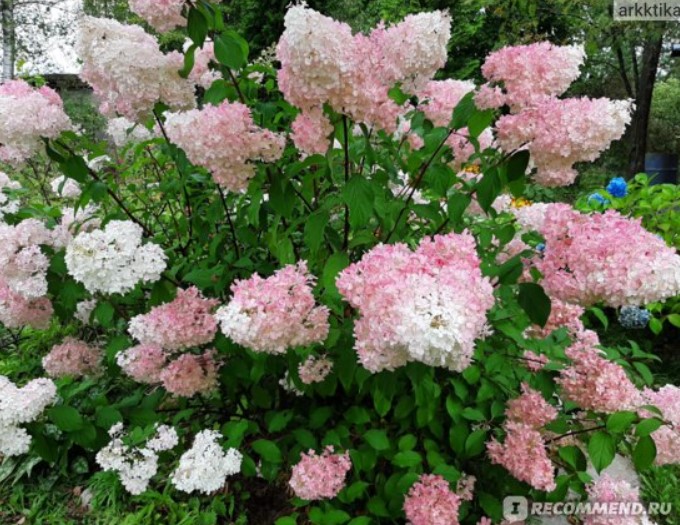
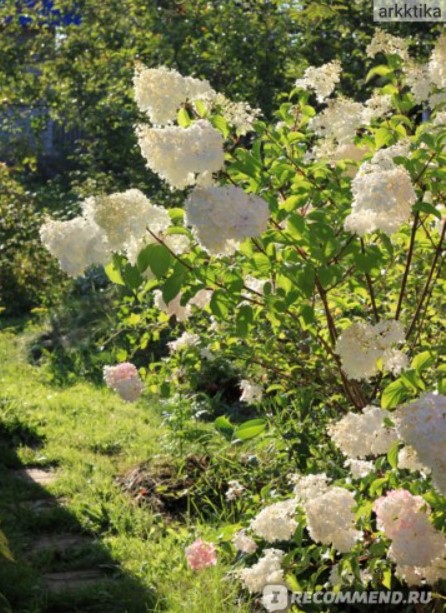
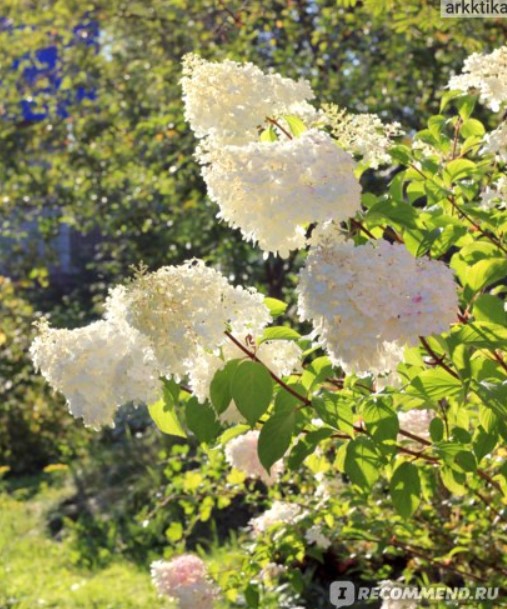
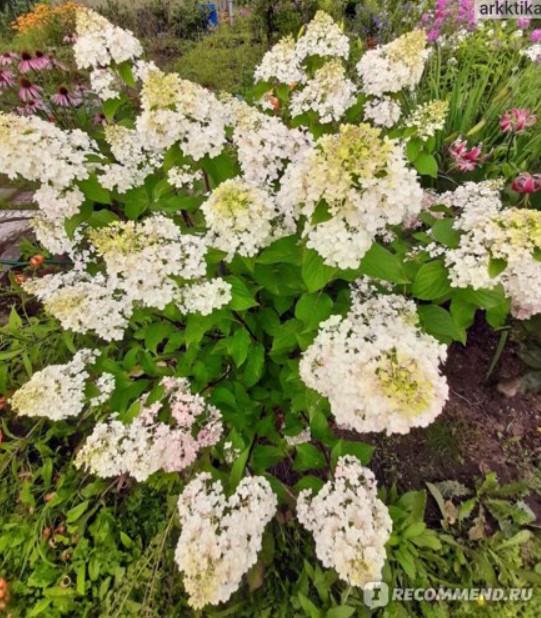
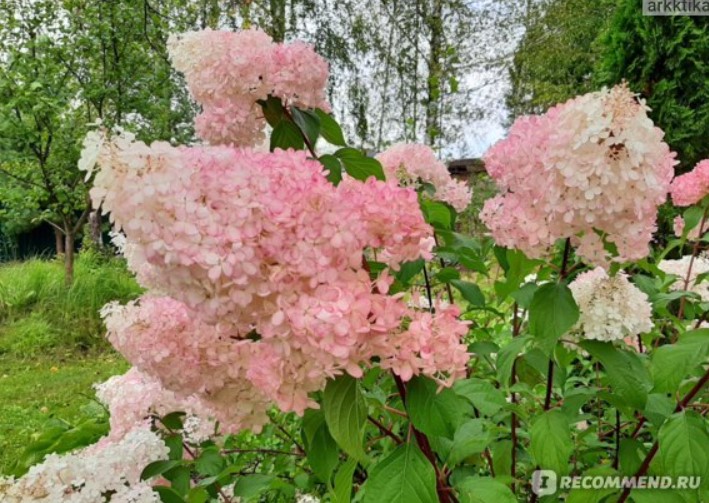
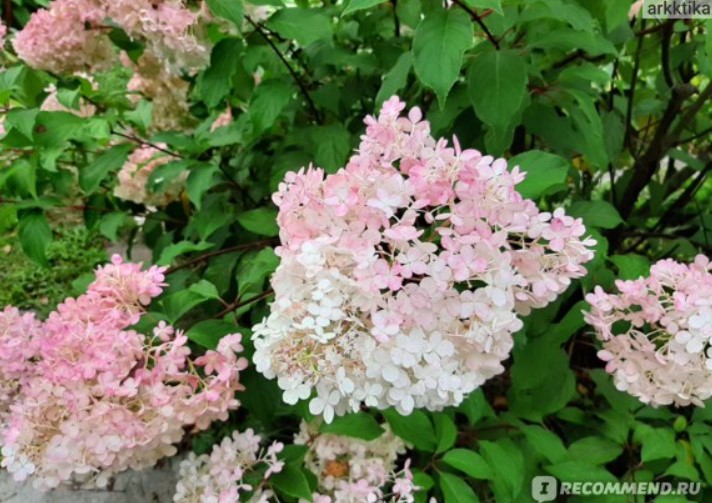
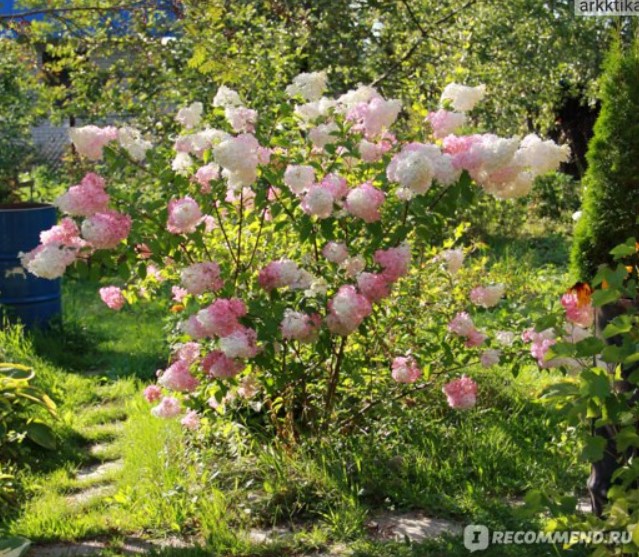
Hydrangea blooms in mid-July. Large, conical inflorescences with numerous small flowers appear on its shoots. They are beautiful and lush, but not loose like some other hydrangea varieties.
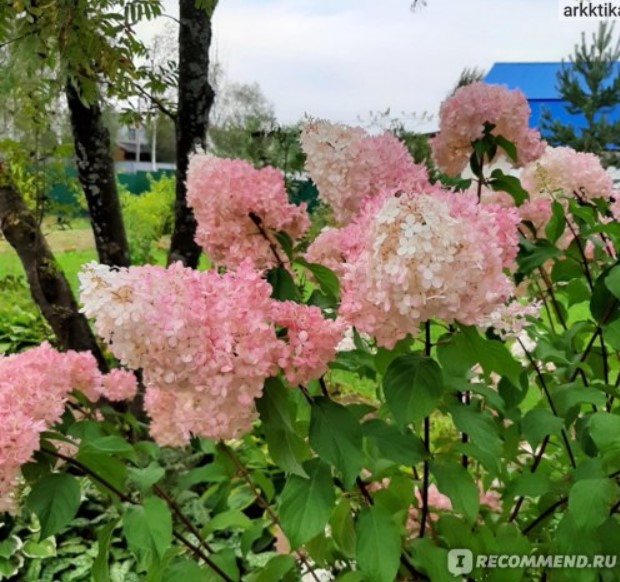
At first the flowers are completely white, clean, without any specks.But gradually, starting from the lower parts of the inflorescences, the color changes to pink, which becomes more and more saturated over time.
The combination of pink and white gives hydrangea bushes an incredibly attractive appearance, making them incredibly beautiful and delicate.
By autumn, the coloration develops to raspberry tones and the bush becomes almost red, which is also beautiful.
But still, the most spectacular is the white-pink flowering stage.
In autumn (closer to October), the inflorescences lose their decorative appeal. Beige streaks initially appear on the petals, then they completely turn brownish and gradually dry out, first individual flowers, and then entire clusters.Fruits do not form in place of hydrangea flowers due to the sterility of the flowers.
At the end of October, I remove faded blossoms to prevent branches from breaking off during the winter due to snow accumulation. And in early spring, the bushes look neater with the brown blossoms removed. I trim the blossoms with pruning shears.
To prevent the bushes from breaking under the weight of snow, you can tie them together with twine. We tried this for a couple of seasons, but the bushes eventually grew too large to hold them together. Not tying them together had no negative impact on the shape of the hydrangea bushes, so we abandoned this practice entirely.
Reproduction
Panicle hydrangeas are very flexible; young shoots don't become woody. Hydrangeas are easily propagated by cuttings. I take cuttings 15 cm long and plant the bottom bud deep in the soil. Within two months, the cuttings will root in damp sand and peat in a "greenhouse" (I cover the cuttings with a five-liter plastic bottle). For the winter, these cuttings can be buried in the ground and covered with leaves or spruce branches. In the spring, when the plant begins to grow, they can be transplanted to a permanent location.
In this way, we have already reproduced several copies and distributed them to our neighbors.
At the time of purchasing the first seedling (September 2010), it was small in size, about 45 cm in height.
After wintering, in the spring of 2011 it looked like this, literally two epics.
May 23, 2011
And this is the same bush, but four years later. It has grown well and is covered with a whole cap of flower clusters.
August 22, 2015
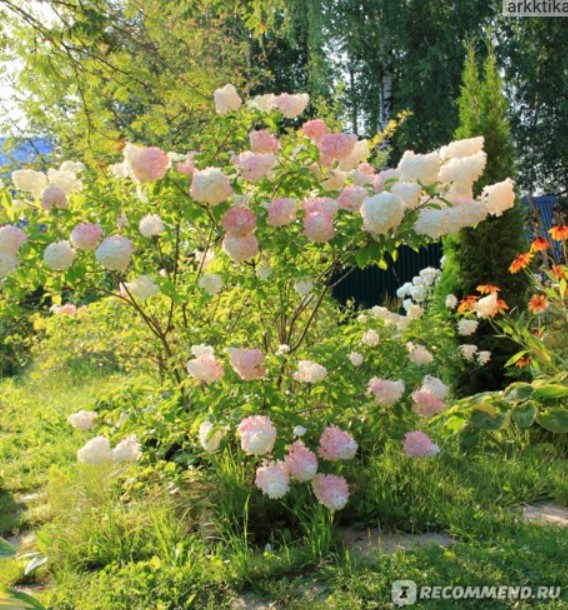
And with each passing year, the bush only grows more beautiful. The hydrangea reaches over 1.5 meters in diameter and about 1.7 meters in height. As a mature bush, these dimensions are maintained.The Vanille Fraise panicle hydrangea is a magnificent variety of unrivaled beauty. It will make a wonderful addition to any garden. Cut flowers are also perfect for bouquets.
This variety is unpretentious and reliable, withstands winter cold without shelter, requires little care, and blooms profusely, abundantly, and for a long time every year. I recommend it to all gardeners!
My blue dream crumbled… against our harsh winters
Experience of use: six months or more
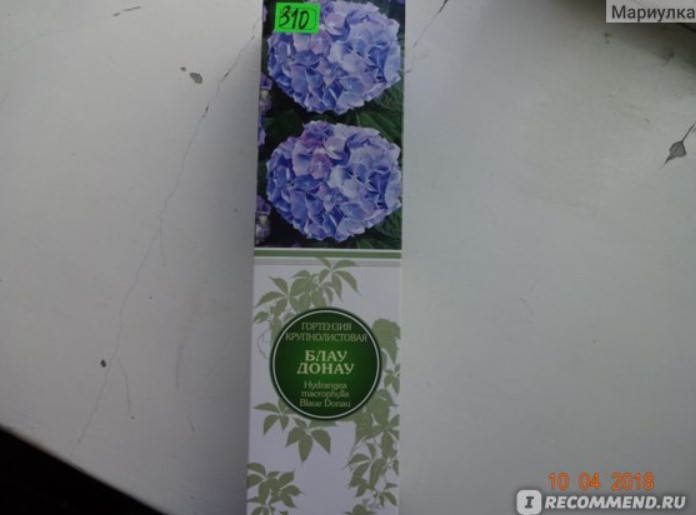
Price: 310 rubles.
I've always dreamed of having my own house with a garden. And it's full of flowers and beautiful flowering plants. I now have a house, a garden, and a vegetable patch, but all I needed to be completely happy was some permanent residents of the botanical kind. But no, the miracle didn't happen again...
The hydrangea was bought 2 years ago in a store with seeds and other paraphernalia for flora lovers.
Cost at the time of purchase (2018): 310 rubles.
Type: large-leaved hydrangea
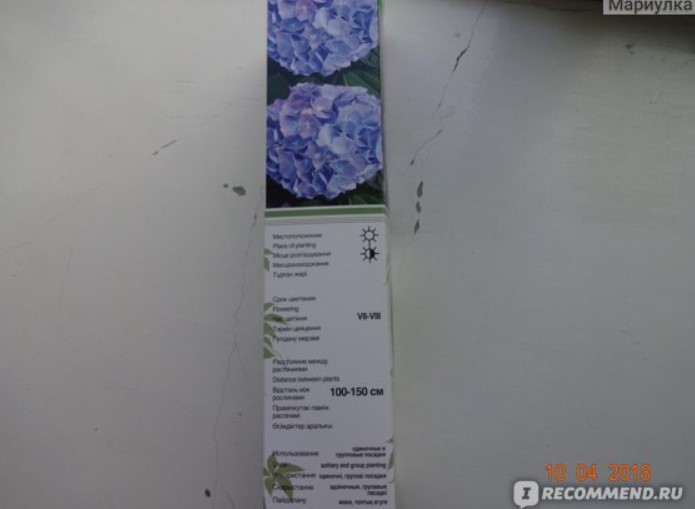
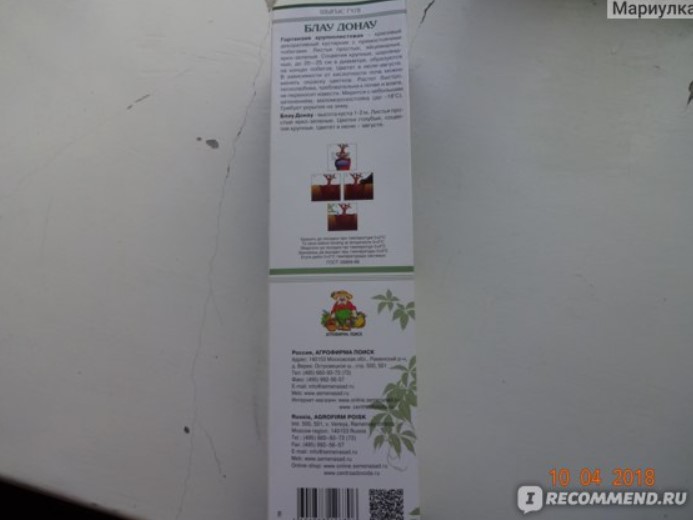
Variety: Blau Donau
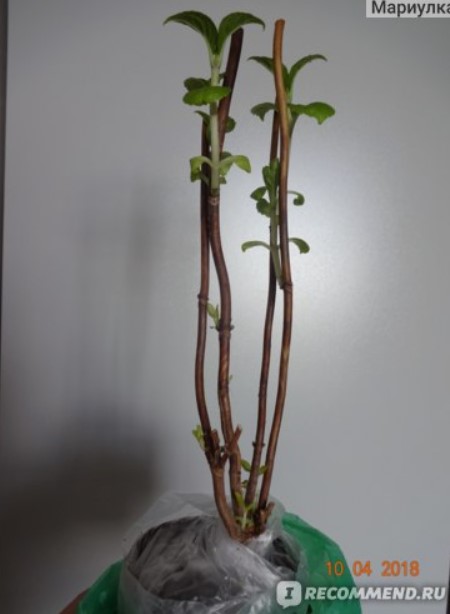
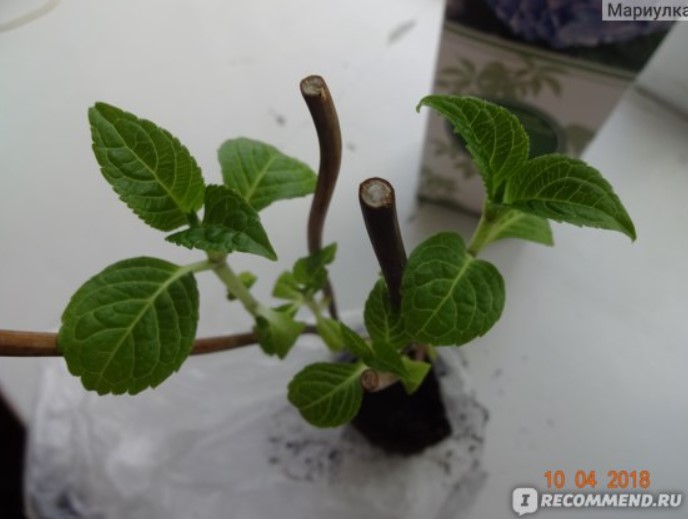
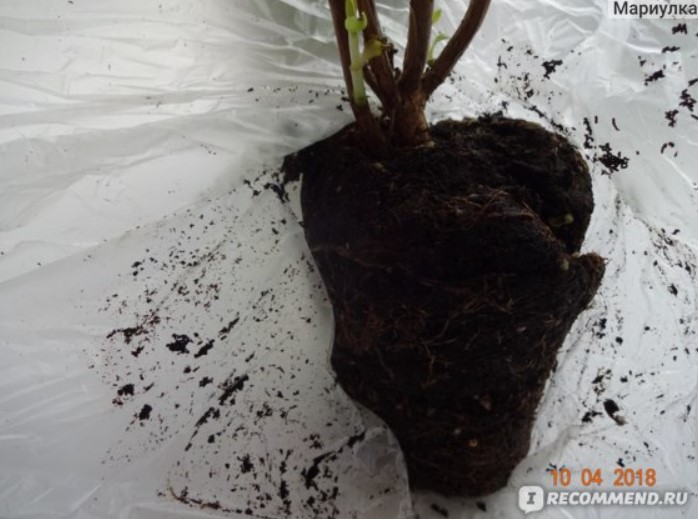
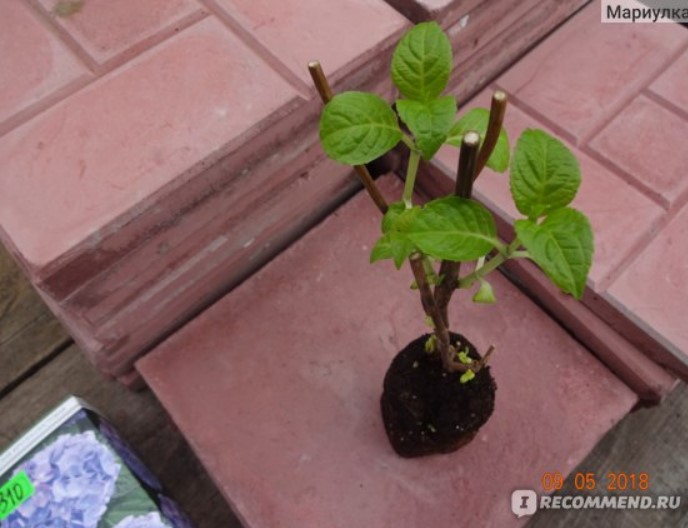
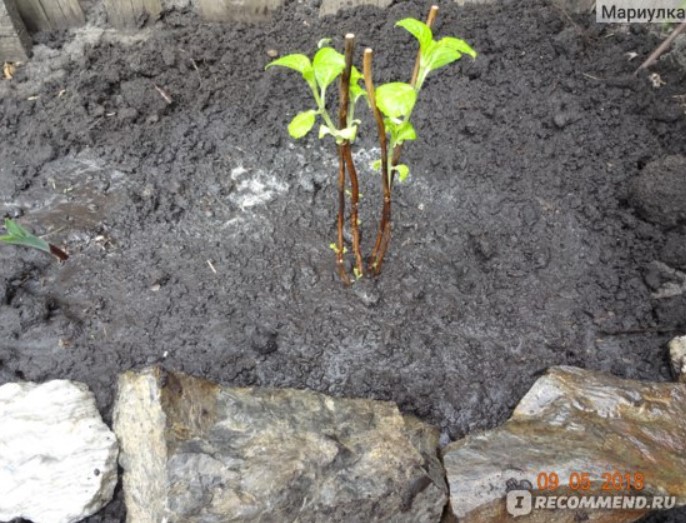
The root system was tightly packed in cellophane. It was purchased in April and planted in its permanent location in May.
Before planting, it was stored in the bottom drawer of the refrigerator, the root ball was kept under control and slightly moistened.
The planting was in partial shade, in good, fertile soil. We followed the feng shui instructions.
They dug a hole large enough, placed the future inhabitant there, straightened the roots, filled it with soil, compacted it and watered it.
We sat down to wait for the flowering.
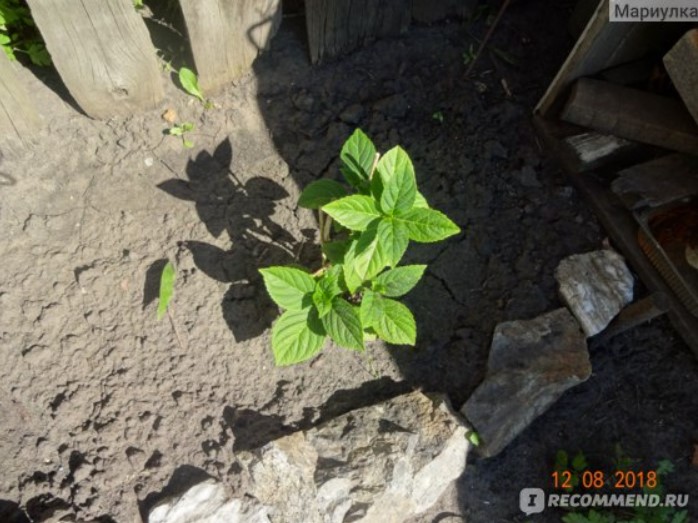
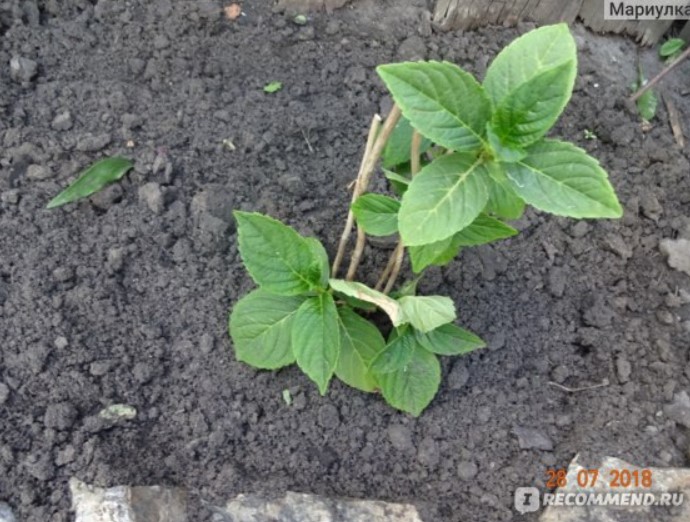
It took root well, the leaves started to grow... But... That's where it stopped. Nothing new happened. When it was time for it to go into winter dormancy, I covered it up. I surrounded it with spent plants and wrapped it in a dress made of non-woven gardening material.
Of course, the box says it's not cold-hardy and can withstand temperatures down to -18°C. But that winter we had much harsher frosts, so there wasn't much hope. But hope springs eternal.
But no... My blue beauty didn't come back to life the following season. She didn't want to live with me, well, apparently it wasn't meant to be.
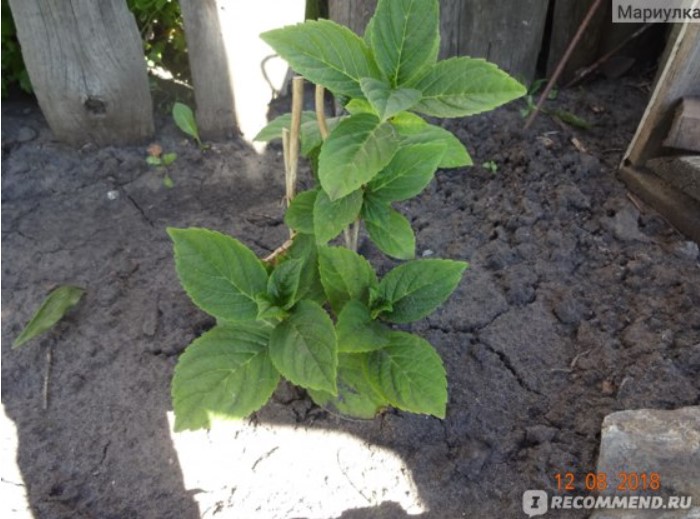
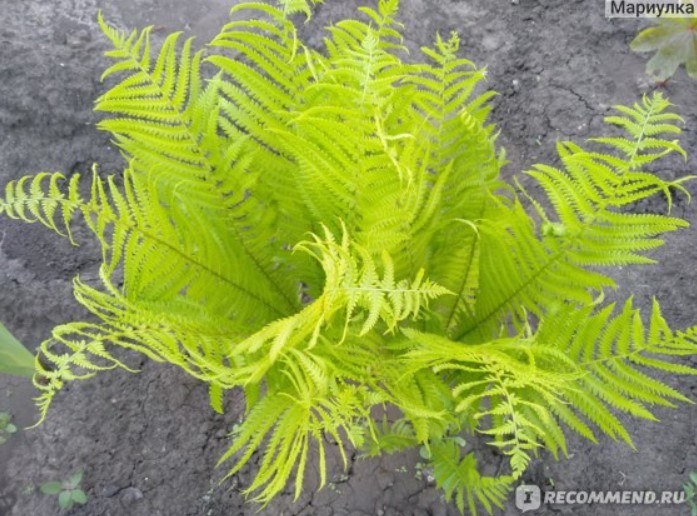
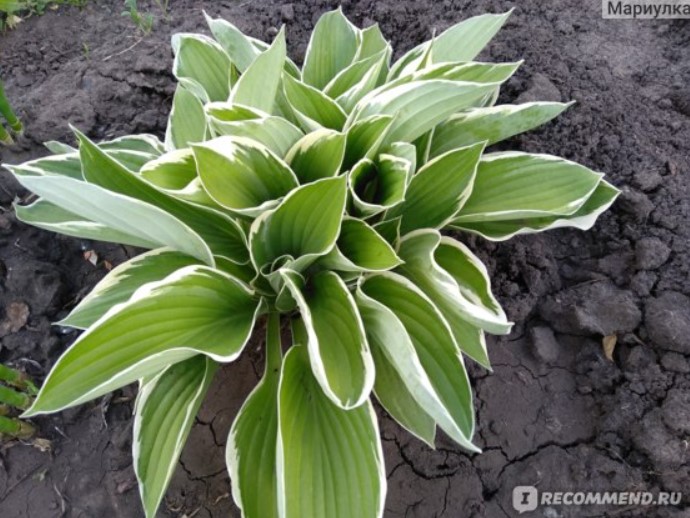
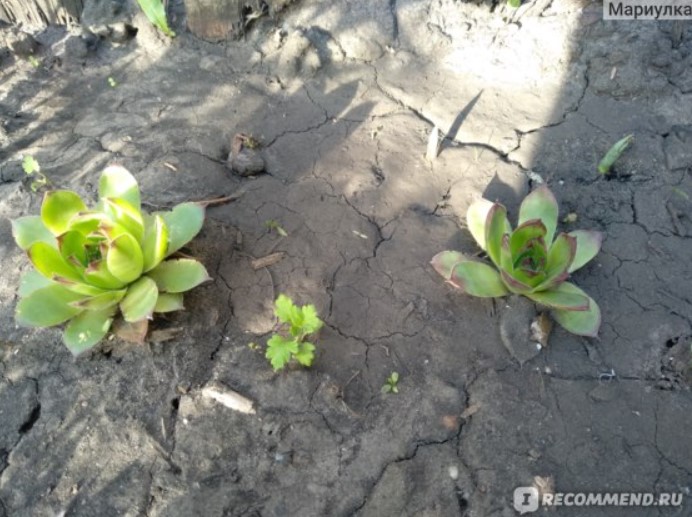
I don't recommend this hydrangea variety for areas with harsh climates. Don't make the mistake, even if you really want to. I live beyond the Urals, and our winters can be very cold, sometimes down to -35°C, and often down to -30°C. I silently envy those who live in a non-risky farming zone like ours and grow flowers of such fabulous beauty. And we'll go admire our ferns.
Yes, hostas with stone roses.
Beauty and HEALTH to all!

Review: Garden shrub Hydrangea - Beautiful and long-lasting blooms
ADVANTAGES:
It blooms for a long time
FLAWS:
Morzlyachok
Good afternoon, dear friends, guests, and authors of the Otzovik online community.
Today I'm reviewing the flowering garden shrub Hydrangea.Hydrangea comes in a huge variety of species and colors. White-green hydrangeas are very common in central Russia. However, there are also southern varieties that boast a wide variety of colors.
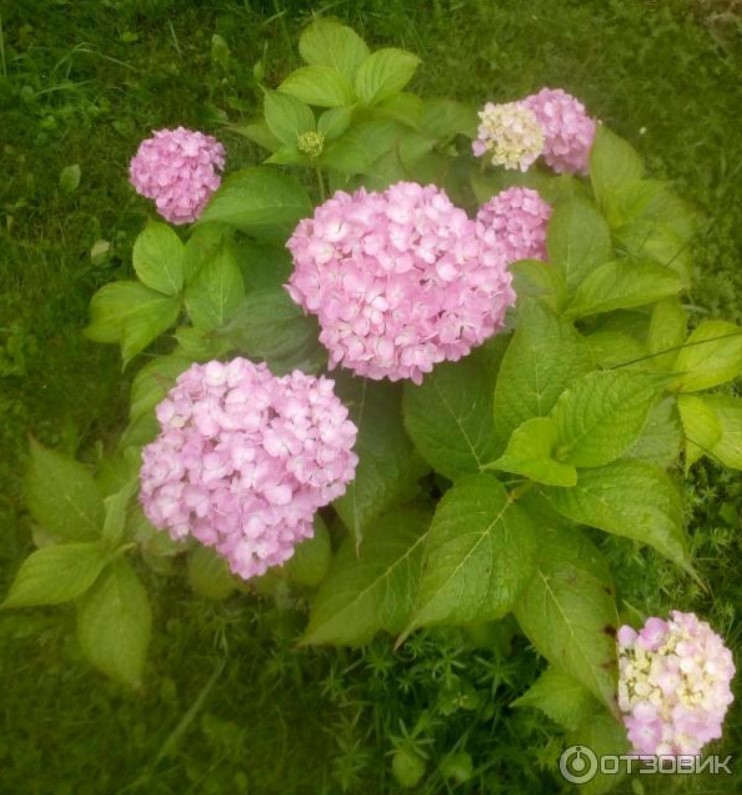
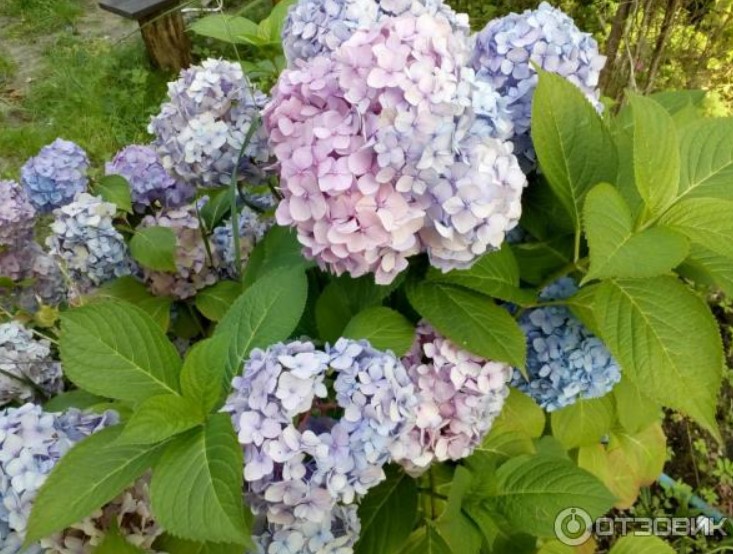
At my mother's dacha, on peat soil, Hydrangea blooms with blue flowers, and a shoot from the same bush, at my dacha, on loam, blooms with pink flowers.
There are also special fertilizers for Hydrangea that give the flowers different colors.
I waited a long time for the cutting I took from my mother to finally bloom. I either unknowingly pruned the bush in the fall, and the hydrangea bloomed on second-year shoots, or my husband's grandmother uncovered it in the spring, and there was a frost, freezing the buds.
And so, this year I waited!
This type of hydrangea definitely needs to be covered for the winter. I cover it with mulch and pine branches. And don't rush to uncover the bush in the spring.
The hydrangea is blooming with huge caps of inflorescences. The flowers don't fall off, but rather fade over time. It's already the end of August, and I still have inflorescences with buds, so it will delight me with its beauty well into the fall.
I recommend Hydrangea. It's a very beautiful, long-blooming shrub.
Thank you for your attention and see you again.
Usage time: Several years
Price: 2015 ₽
Year of manufacture/purchase: 2015
Overall impression: Beautiful and long-lasting blooms
My rating:
Recommend to friends: YES