Asarina (Maurandia) came to Russia from sunny countries (Mexico, Spain, France). There, this vine grows naturally year-round, reproducing by self-seeding. However, asarina doesn't survive Russian winters, so gardeners in our country grow it as an annual.
Content
- 1 Botanical description of azarina
- 2 Table of conditions for keeping and caring for azarina
- 3 Types and varieties of azarina: description and photos
- 4 Growing Asarina climbans from seeds
- 5 Planting climbing azarina in open ground
- 6 Caring for Azaryna in the open ground
- 7 Pests and diseases of azarina (seedlings and in open ground)
- 8 Winter storage of azarina
- 9 Azarina in landscape design
- 10 Real reviews from gardeners about growing azarina
Botanical description of azarina
Asarina or Maurandia is a genus of climbing plants that belongs to the Scrophulariaceae family.
The stems of the azarina are branched and grow from 3 to 7 meters in length. They are covered with thin petioles, which allow the shoots to cling to nearby support.
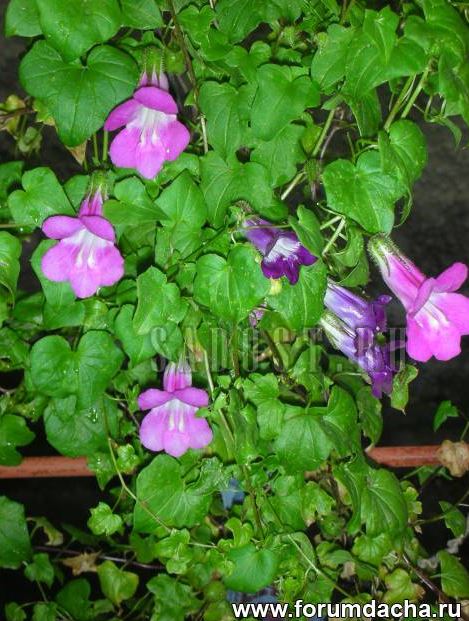
The leaves are relatively small and bright green. Depending on the species, their surface may be smooth or covered with fine hairs, creating a velvety effect. The leaves are heart-shaped, with a wide base and a pointed tip.
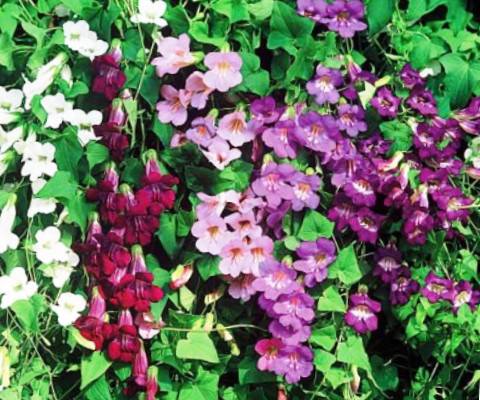
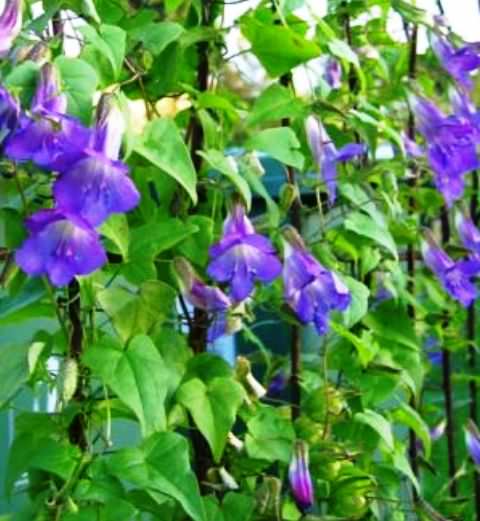
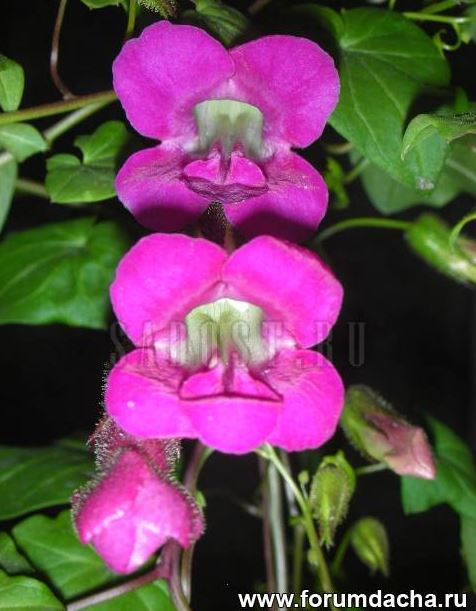
The flowers are large, tubular, and come in a variety of colors: pink, violet, and purple. Bicolored buds are very rare. The flowers are arranged along the entire stem, starting from the very base.
The vine blooms in late June, and the buds fade only in September with the arrival of autumn. In their place, a two-celled seed capsule forms, containing many small seeds.
Table of conditions for keeping and caring for azarina
The table below shows the main features of growing azarina.
| Parameter | Description |
| Landing | In February-April, you can sow seeds for seedlings, and in the second half of May you can begin planting seedlings in flower beds. |
| Air temperature | +18…+24 °C (+18…+20 °C for seedlings) |
| Lighting | Prefers a well-lit location, but it should be protected from direct sunlight. |
| Watering | Water abundantly and regularly, without overwatering the soil. In hot weather, water twice a day (morning and evening). |
| Trimming | To form new shoots, pruning is recommended. |
| Growing specifics | Due to the impressive length of the shoots, it is recommended to place the plant near a support and plan for vertical cultivation. To ensure lush flowering, faded buds are pruned before the seed pods form. |
| Priming | The soil should be well-drained. Loose, fertile soil is recommended for planting. |
| Top dressing | To ensure lush flowering, it is necessary to periodically add complex fertilizers for flowering plants to the soil. |
| Reproduction | The easiest and most popular method of propagation is growing from seeds. Another method is stem cuttings. |
| Bloom | It lasts almost 2 months, starting at the end of June and ending at the beginning of September. |
| Pests and diseases | Most often affected by black leg, rot (seedlings) and aphids (in open ground). |
| Wintering | In our region, azarina is grown as an annual and resown from seed the following year. The only exception is in the southern regions, if the winter there is very warm. In other regions, the plant can be repotted and brought indoors to overwinter. This is done in early October. Read more in the relevant section of the article. |
Types and varieties of azarina: description and photos
The genus Asarina comprises 16 species. Three of them are most commonly used in our gardens: Asarina cascarina, Asarina cascarina, and Asarina cascarina.
Climbing aragon (Asarina scandens or semperflorens)
This species gets its name from its long, very tenacious shoots, which prefer to grow horizontally. The stems typically reach 2-3 meters in height, although in the wild they can reach up to 7 meters.
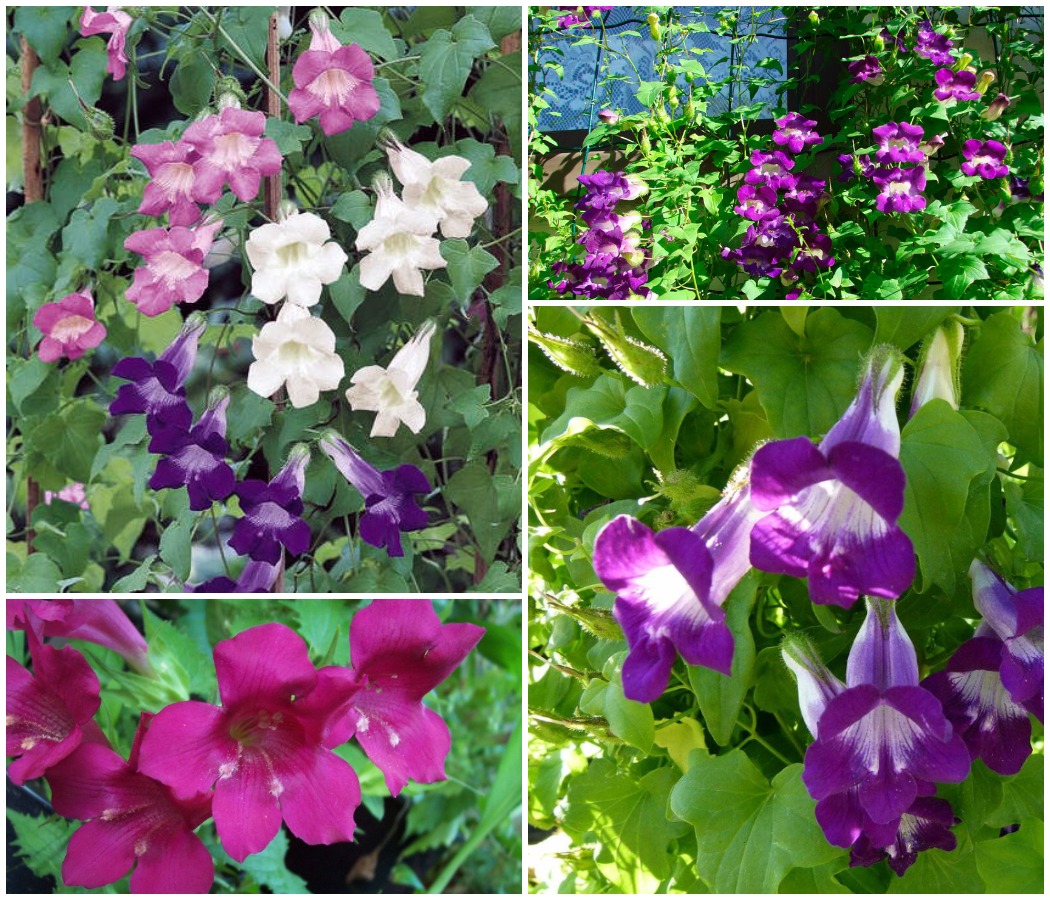
The color of the flowers depends on the variety:
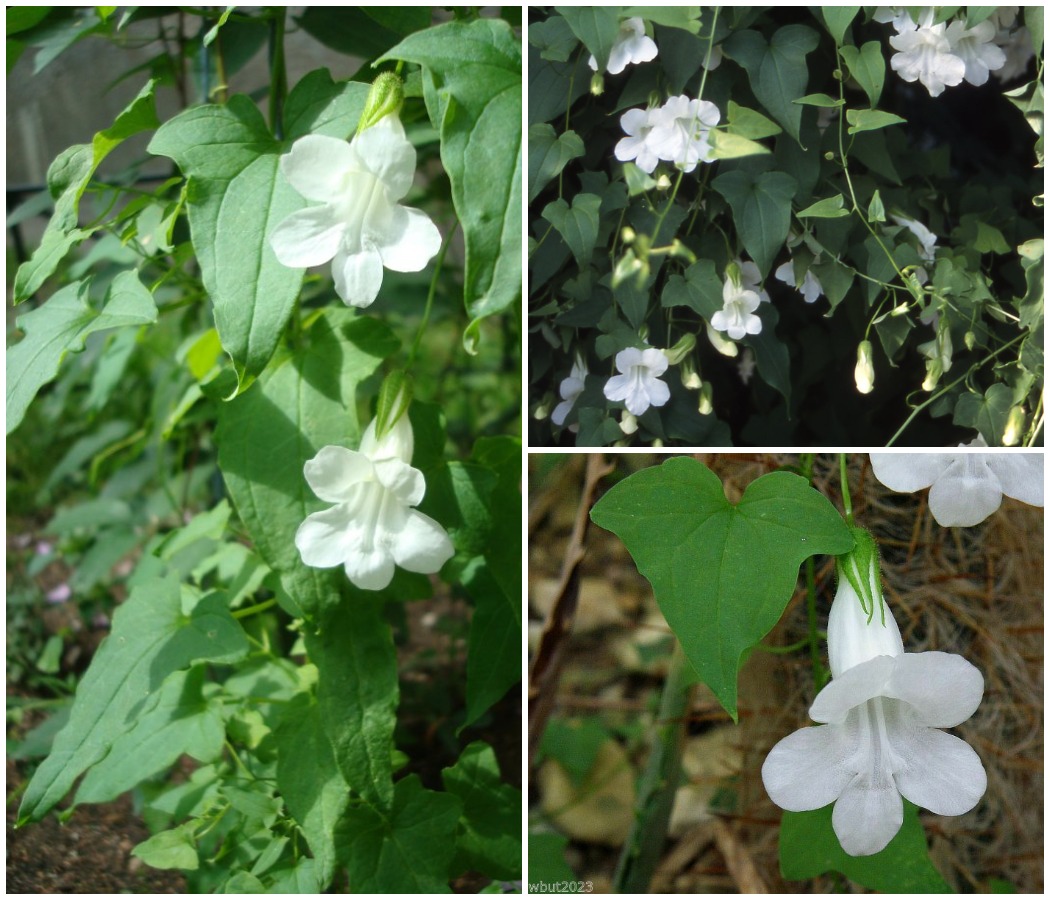
- Bridge's white: white.
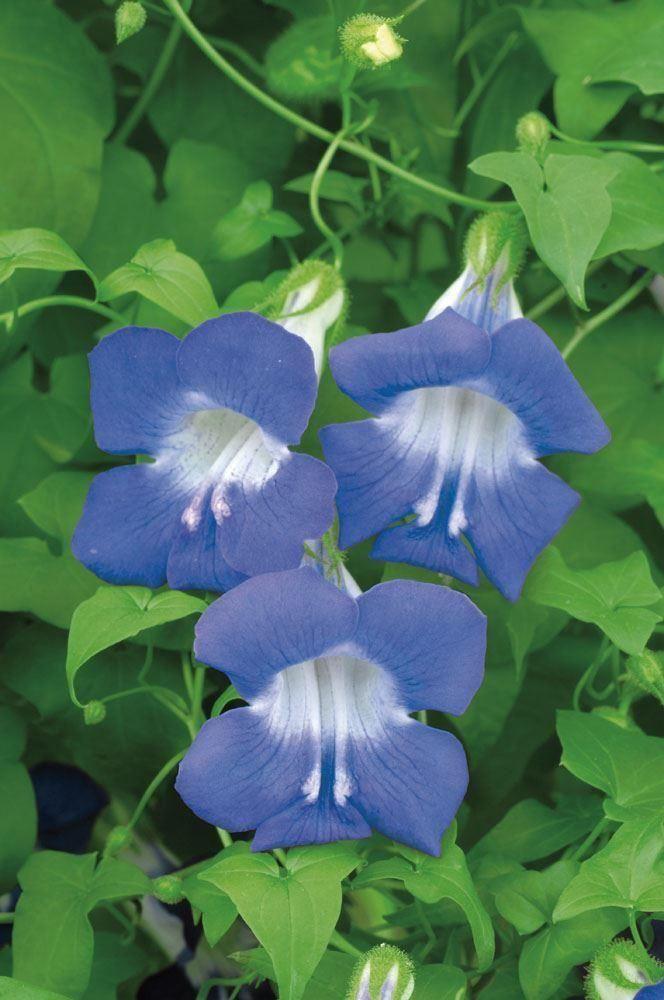
- Sky Blue: blue.
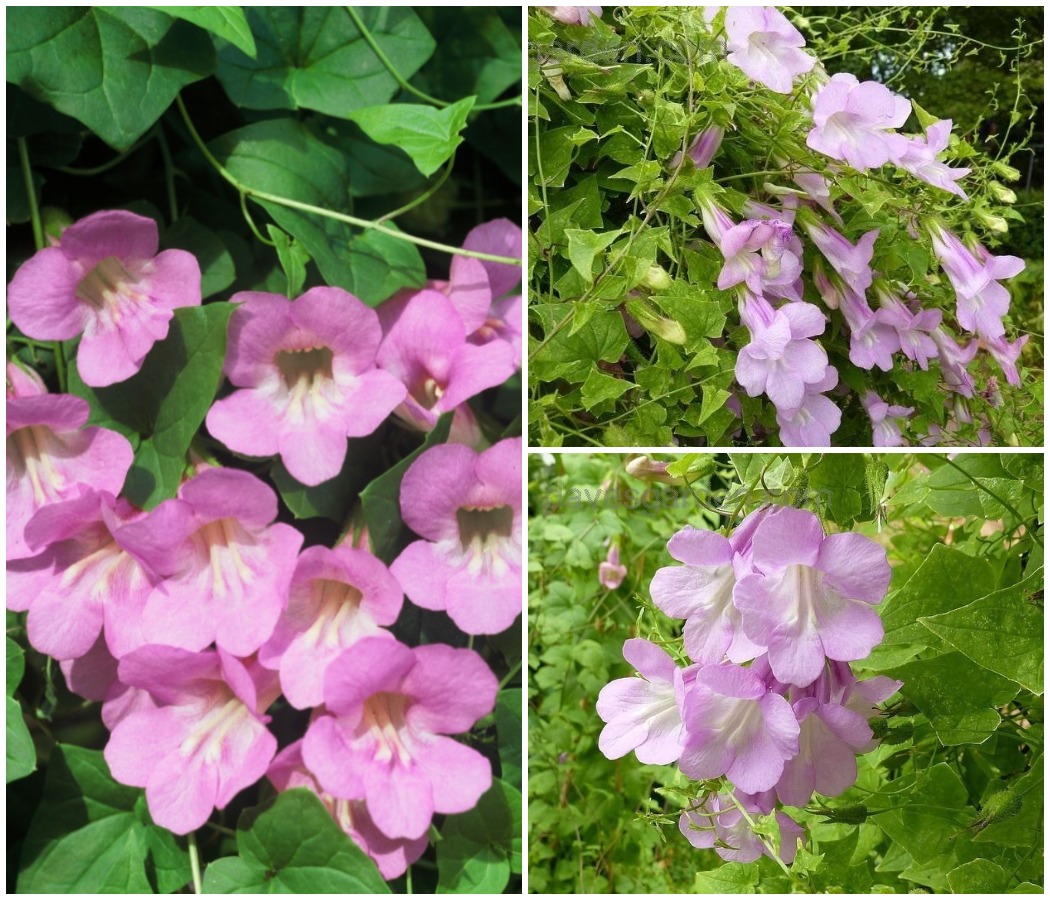
- Mystic Rose: pink.
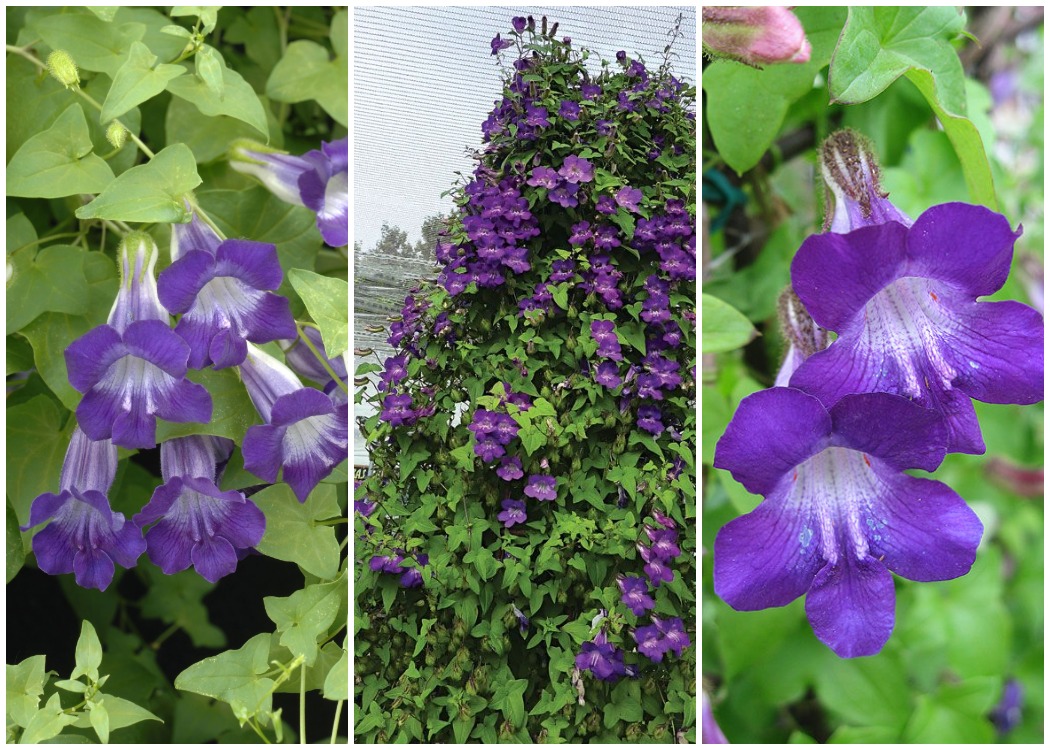
- Joan Loraine: purple.
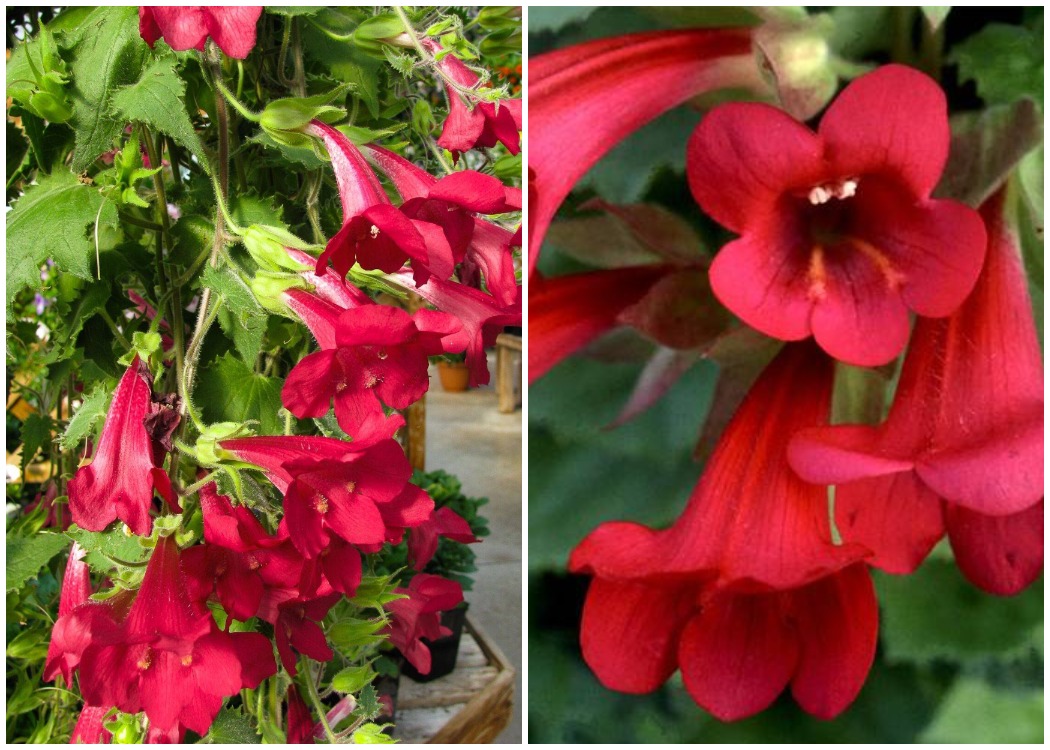
- Magic Dragon: red.
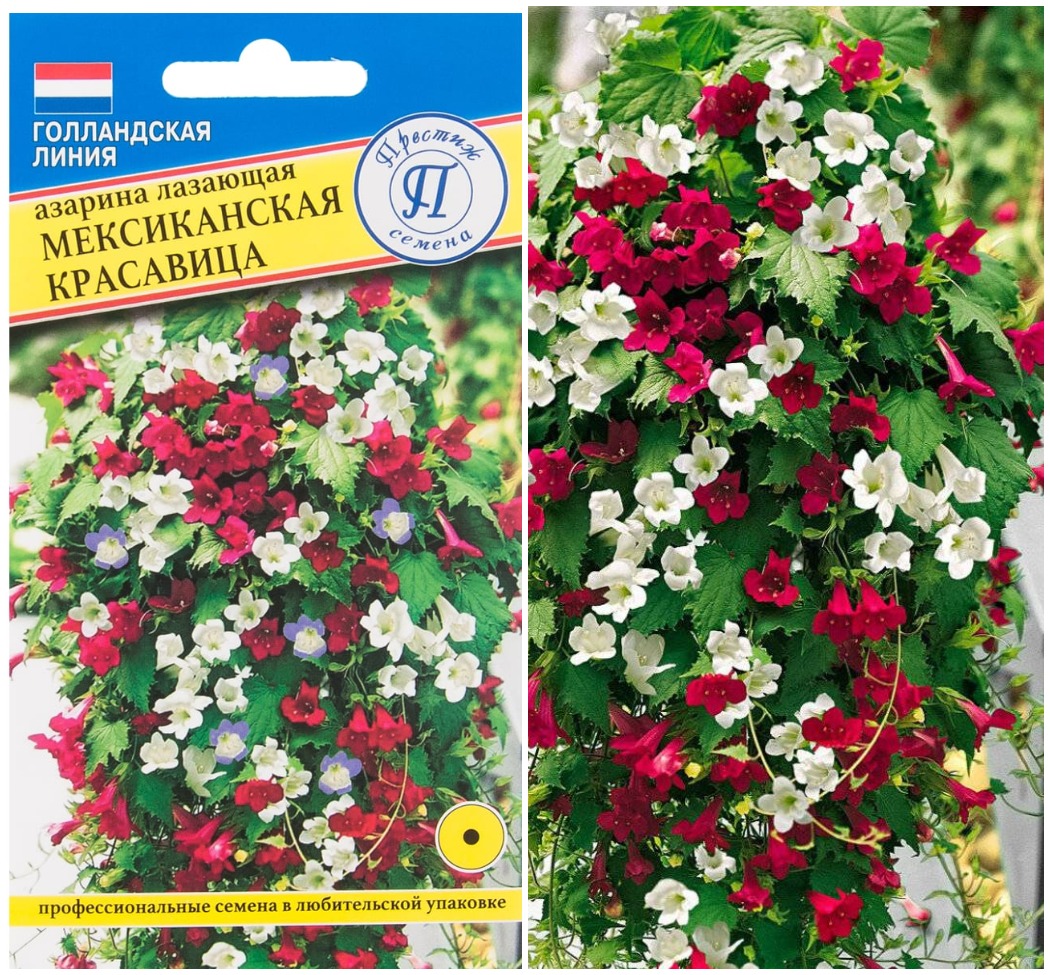
- Mexican beauty, a mix of colors: white and red.
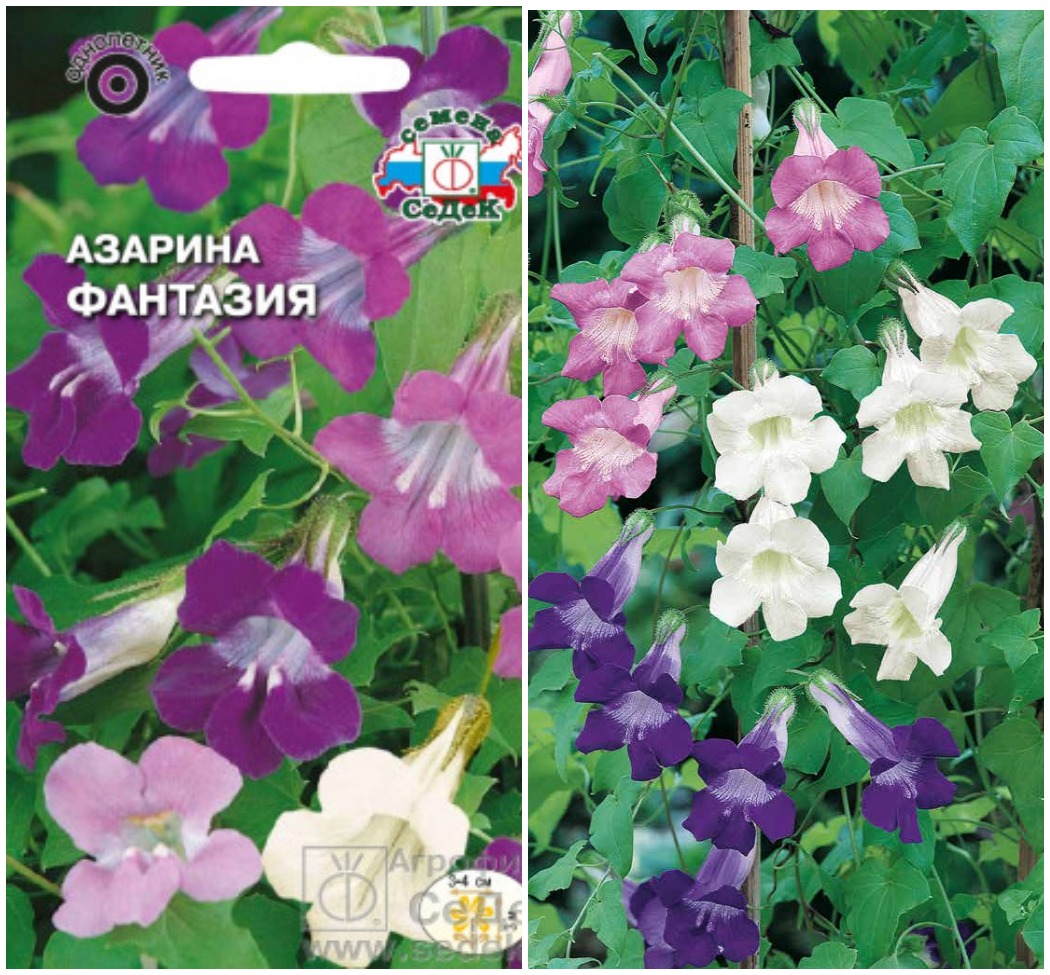
- Fantasy, mix: white, pink and purple.
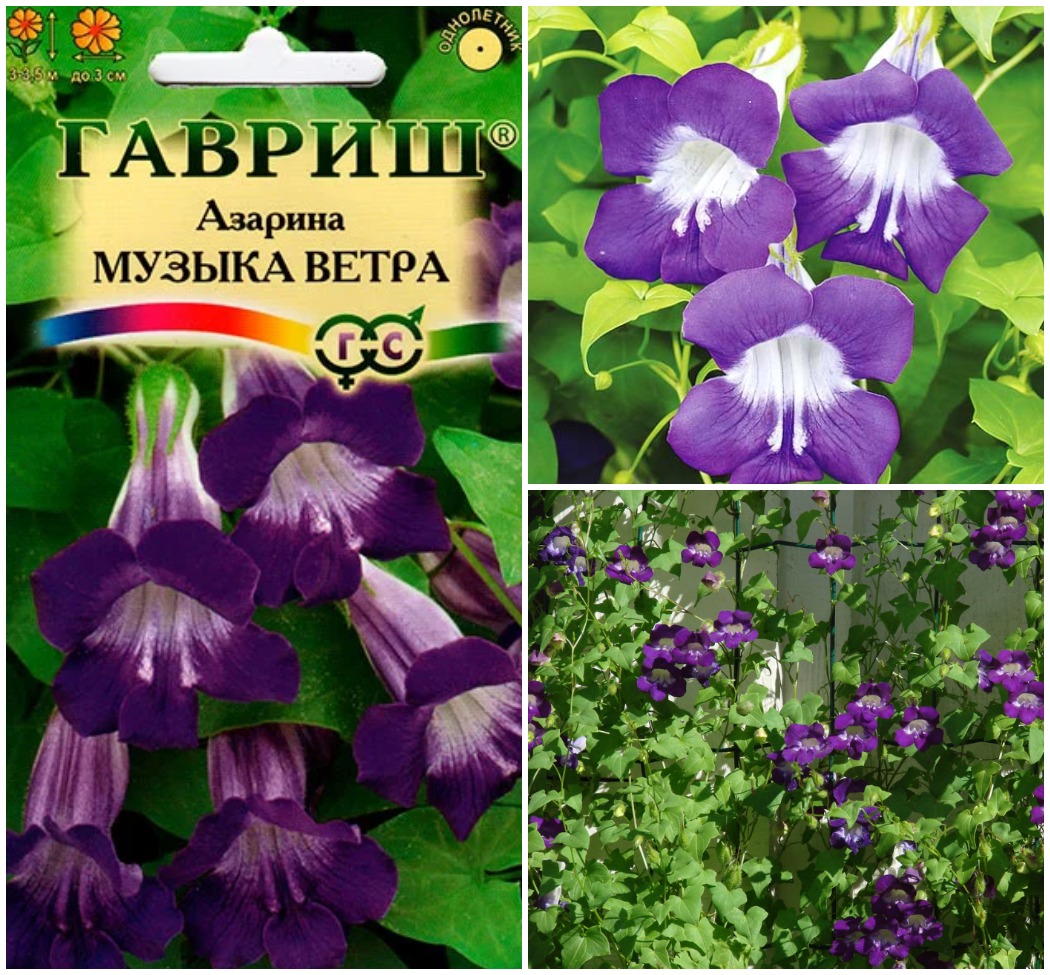
- Wind chime: purple.
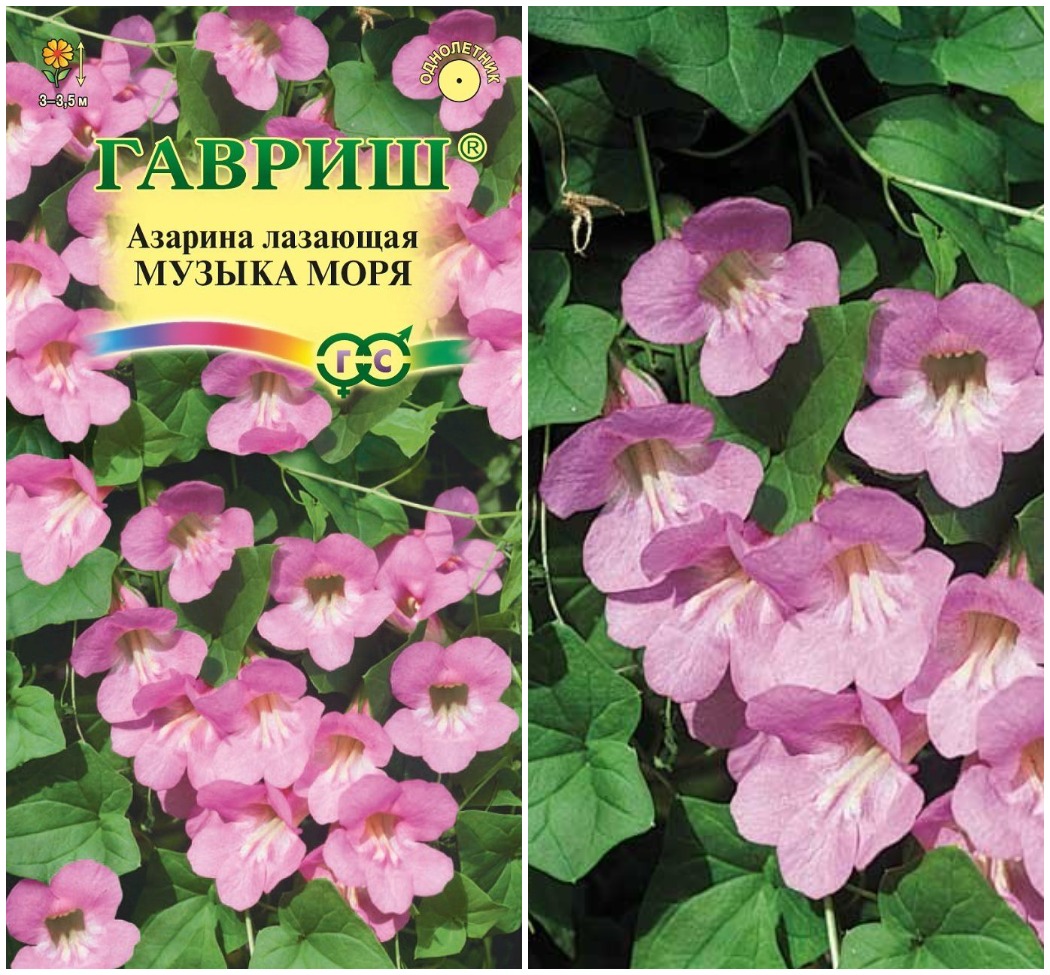
- Music of the sea: pink.
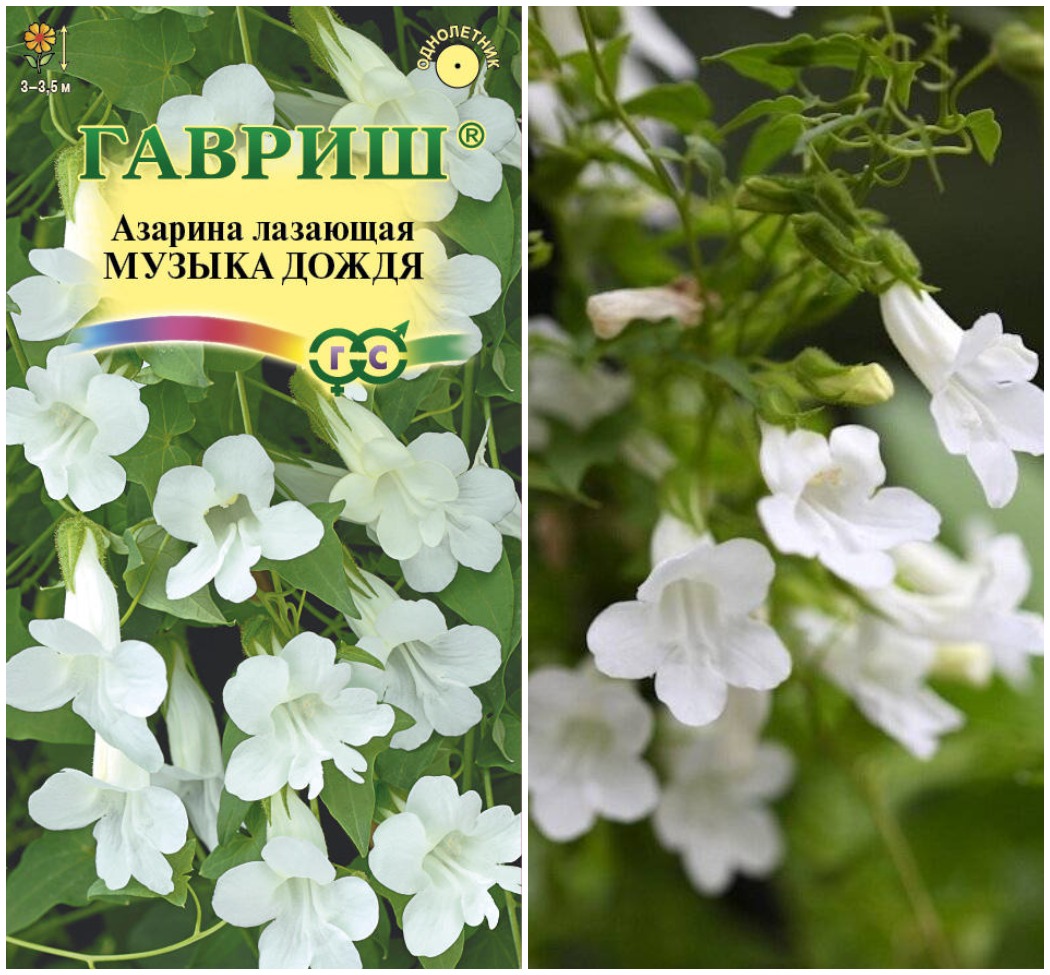
- Rain music: white.
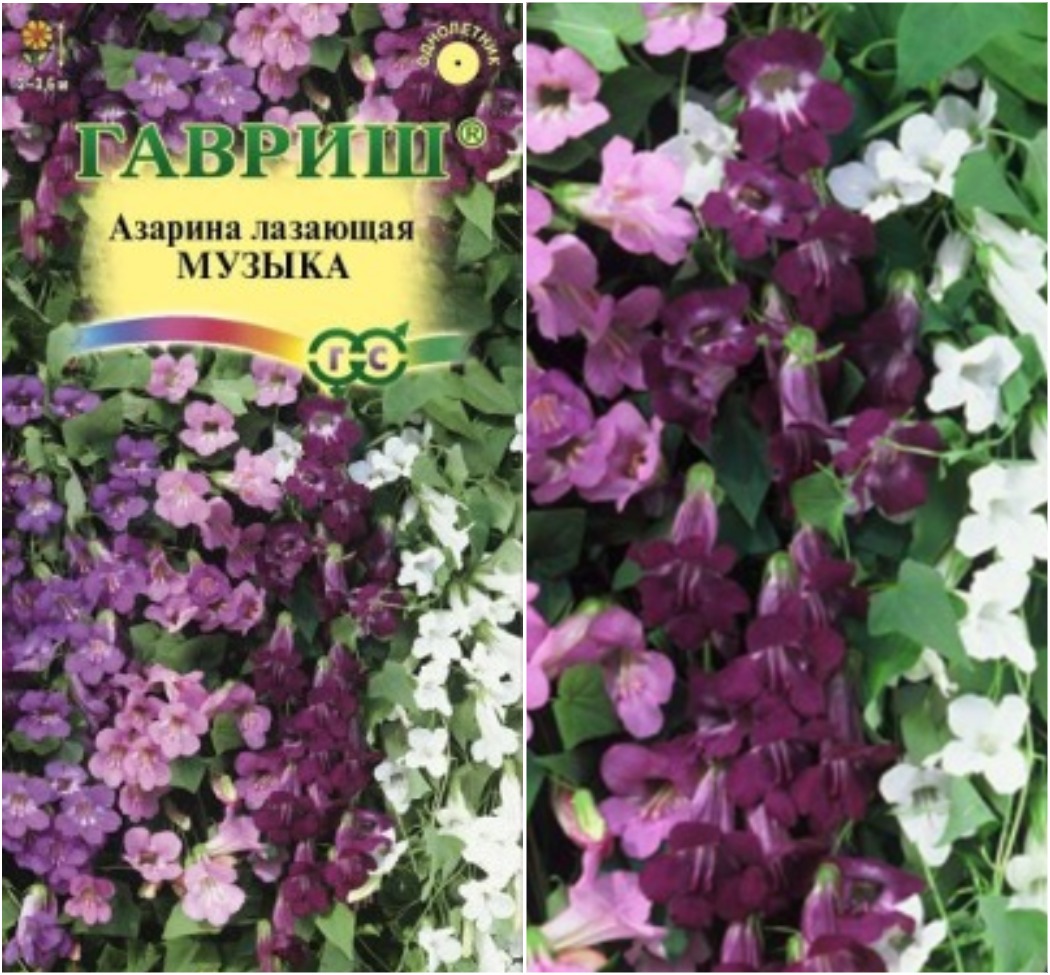
- Music, a mixture of colors: pink, burgundy, lilac, white.
Asarina antirrhiniflora
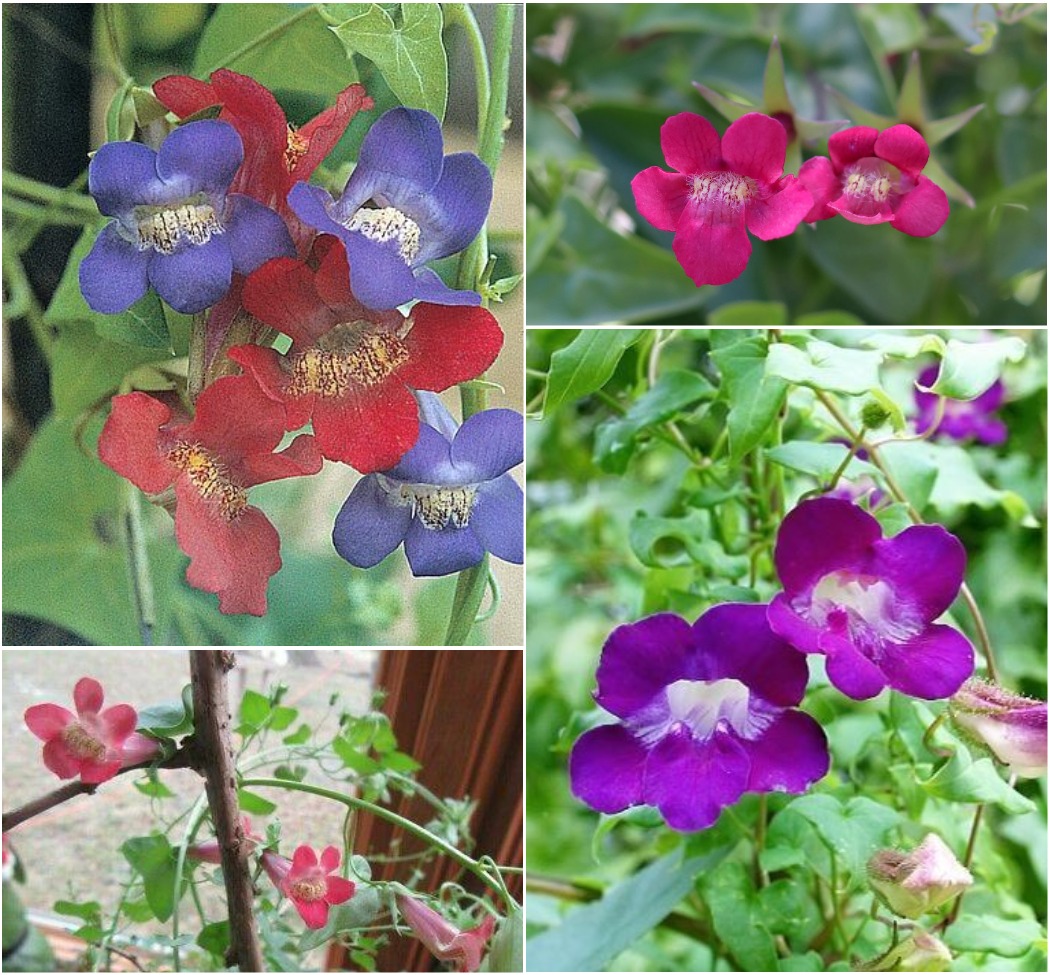
The shoots reach 1.5-2.5 meters in height, the leaves are heart-shaped, and the elongated tubular flowers resemble bells. They are not particularly large, measuring only 3 cm. The flowers can be red, blue, purple, or white. But they all share a spotted throat. The buds open in early July and fall only with the onset of cold weather.
Asarina barclaiana
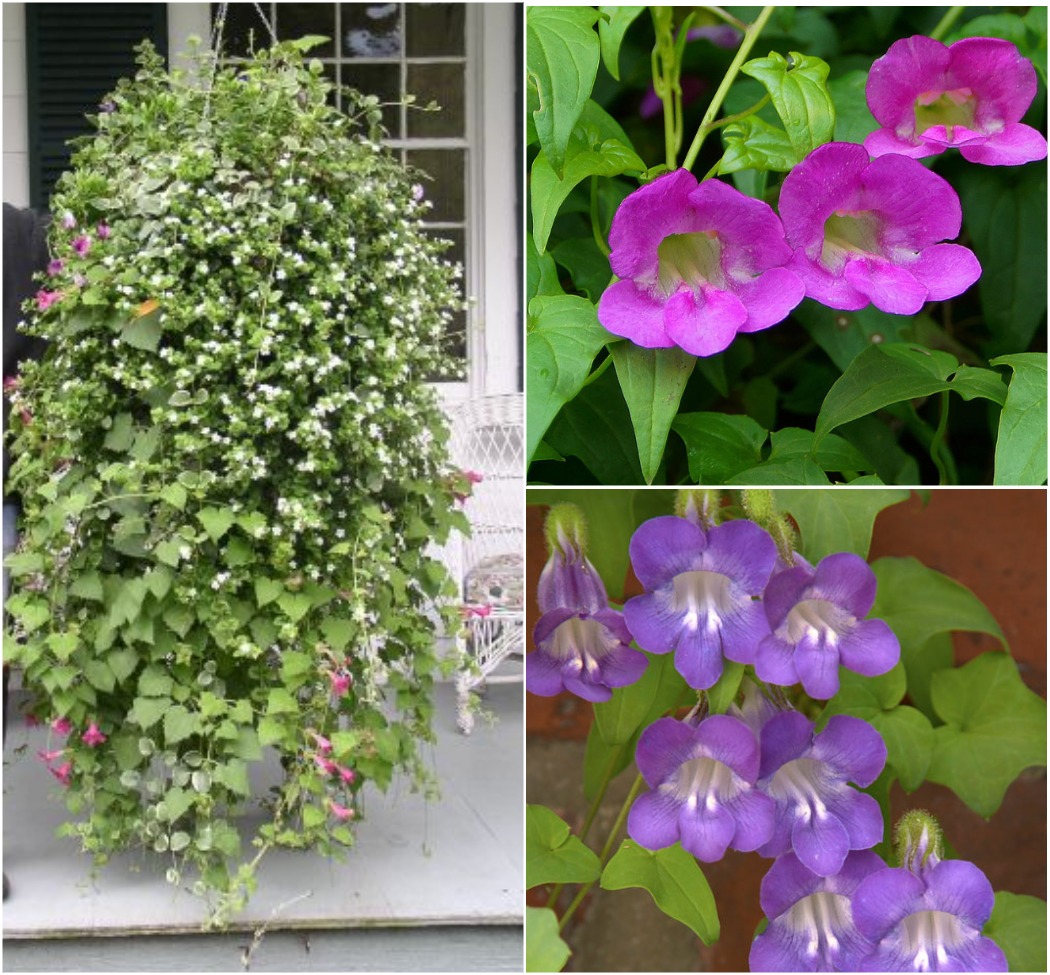
The species is native to Mexico. The shoots are vine-like, up to 3.5 m long. The leaves are heart-shaped, with the same pointed tip and wide, rounded base. The flowers are large, up to 7 cm, with petals ranging in color from crimson to purple, pink, and white. However, this doesn't affect the color of the throat, which always remains light.
Asarina procumbens
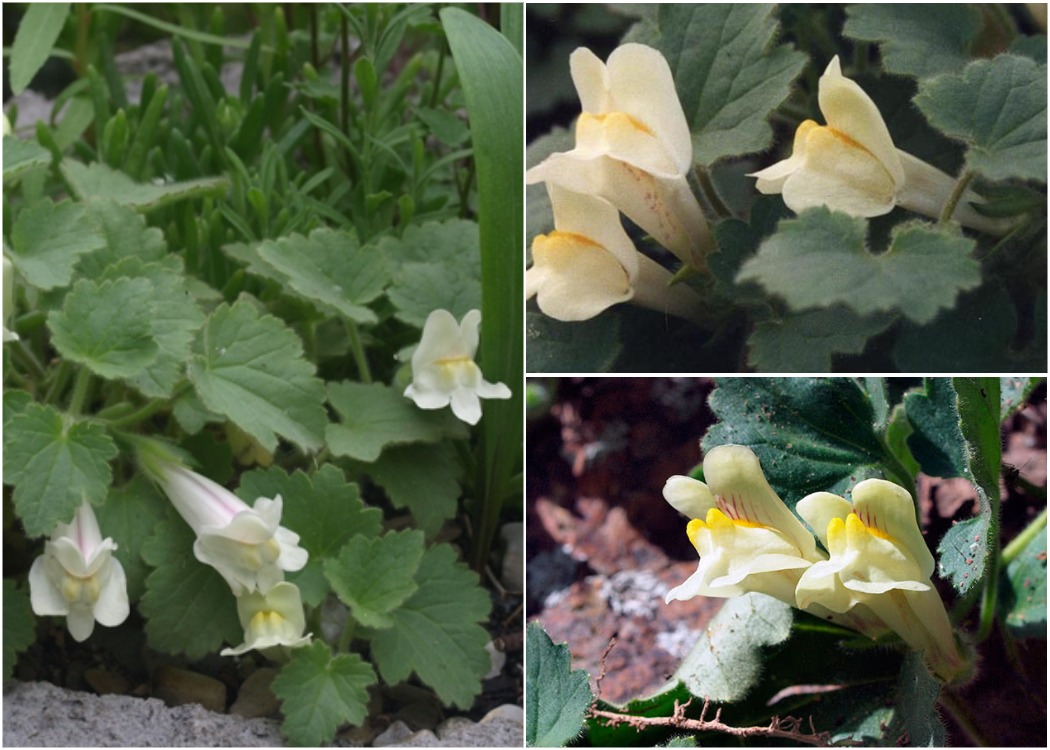
This species is widespread in southern France and northeastern Spain. Its distinctive feature is that its shoots trail along the ground, creating a carpet of leaves and flowers in the flowerbed. The most popular variety is 'Sierra Nevada.' Its main characteristic is its resistance to short-term frosts down to -15°C. The shoots are hairy, and the leaves are light green and attached to the stem by long, pubescent petioles. The pastel-yellow, tubular flowers are 4 cm in size.
Photo of the Sierra Nevada variety:
Asarina erubescens
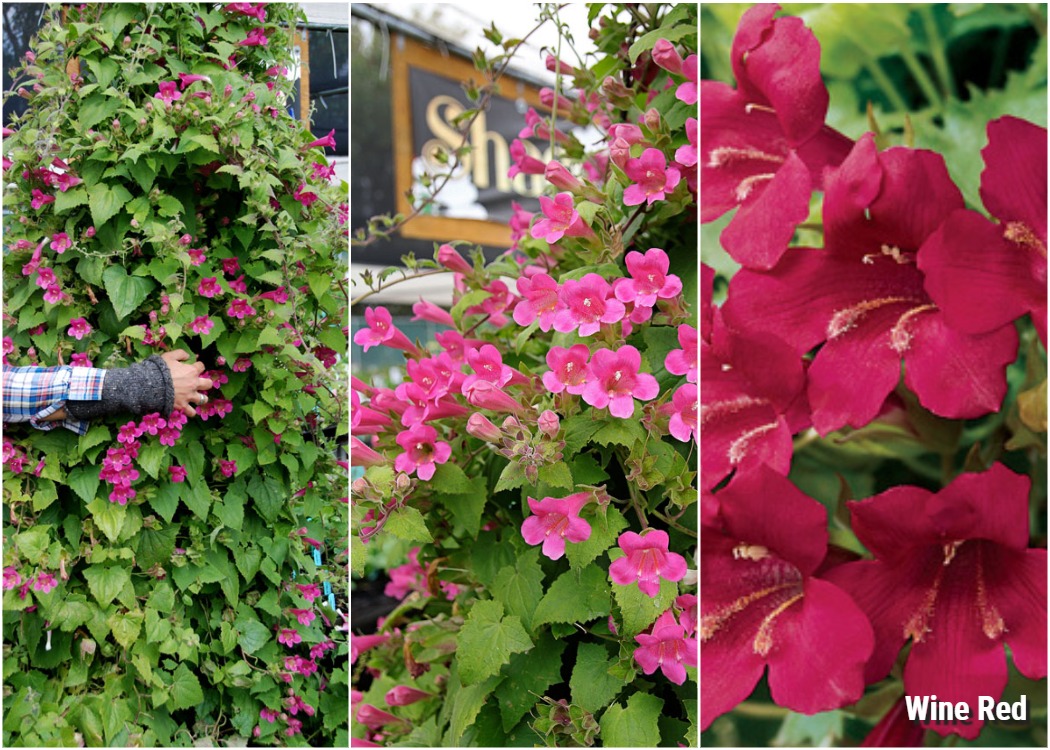
Long, creeping shoots reach 3.5 m. When grown vertically, the stem reaches a height of about 1.2 m. The heart-shaped leaf blade is up to 8 cm in size. Its surface is densely covered with fine hairs, giving the leaves a velvety appearance. The flowers are large, up to 7 cm. The five petals are predominantly a rich pink. The throat is white with small speckles. A well-known cultivar is 'Wine Red' or 'Red Wine'.
Asarina purpusii
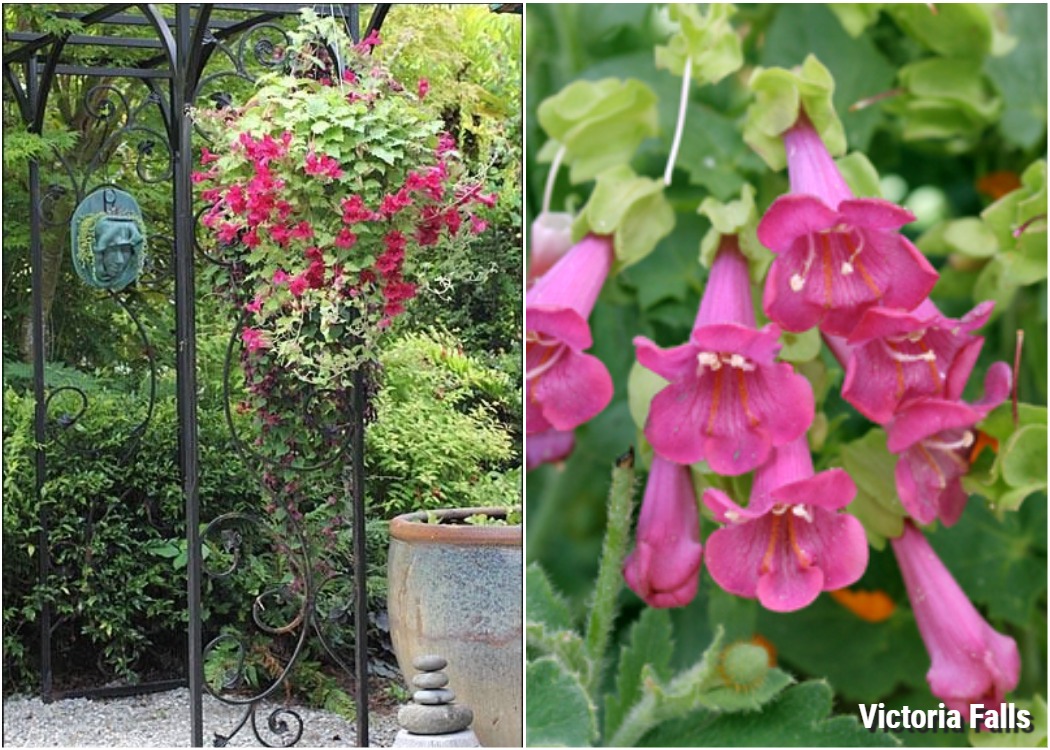
A low-growing but very spreading plant with numerous shoots no more than 40 cm tall. The leaves are small and heart-shaped. The flowers are more like a funnel with a stalk than a bell, as in other Asarina species. They are not very large, only 5 cm. The petals are carmine or light purple. The Victoria Falls cultivar with bright pink flowers is well-known.
Asarina wislizenii
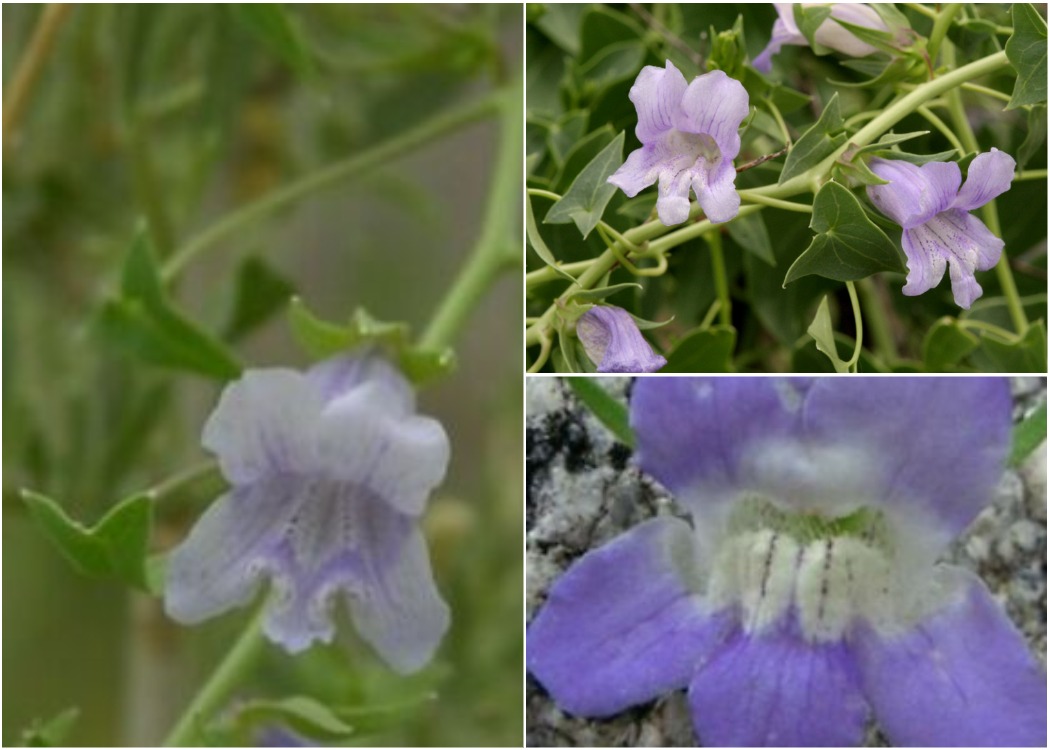
Characterized by large flowers that look beautiful against the green leaves. The petals are most often light purple or bluish. However, the Red Dragon variety boasts bright red inflorescences.
Growing Asarina climbans from seeds
Due to harsh winters, asarina can't survive the period from November to May in our country, although it grows successfully year-round in its native land. Our compatriots, however, can grow it themselves from seed. The process is not too complicated and is almost always successful.
Planting can begin in February or April, depending on the variety and region. Water the soil in a prepared container, then sprinkle the seeds on top. Press them lightly with your hand and cover with a thin layer (up to 1 cm) of soil. Cover the seedlings with plastic wrap and place them in a warm location with a temperature of at least 24°C. Remove the covering once the seedlings begin to emerge from the soil, which occurs approximately one month after sowing. During this time, water the soil periodically using a spray bottle to prevent the seedlings from being washed away.
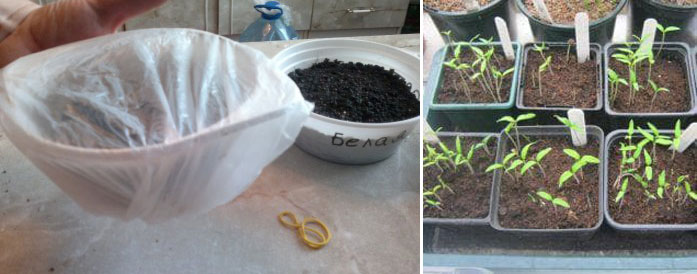
When three full leaves appear, transplant the seedlings by pinching the central root and pushing it deeper into the soil to build up root mass. After 10-14 days, it is recommended to feed the seedlings with a complex fertilizer.
Read more in the article about growing climbing azarina from seeds.
Planting climbing azarina in open ground
Asarina thrives in the garden if all planting requirements are met.
Landing dates
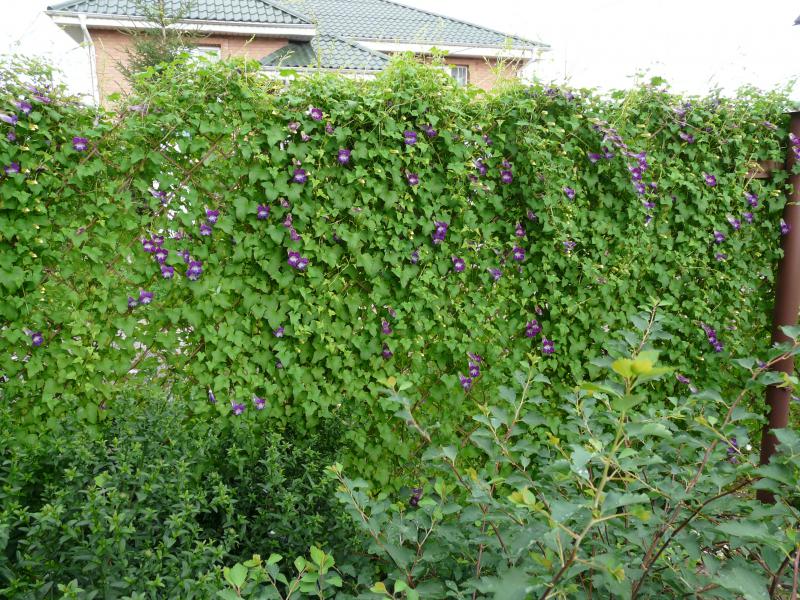
Asarina is a heat-loving plant. Only a few varieties can survive short-term cold spells or night frosts if planted ahead of schedule. In temperate climates, the soil warms up sufficiently only by mid-May. By this time, there are generally no longer any sudden temperature fluctuations. Therefore, it is recommended to plant asarina at this time. In southern regions, where warming occurs much earlier, this time shifts, and planting is done several weeks earlier.
Landing rules
Azaria requires a well-lit location away from cold winds and drafts. However, if the region experiences hot summers, the plant should be provided with additional shade to prevent sunburn.
Asarina grows quite quickly and widely, so plantings should be spaced 60 cm apart. It's important to provide support for the shoots to climb up. Wire or mesh is ideal for this purpose. Initially, the stems will need to be tied to the support; later, they will grow naturally. If you plan to use mesh, you'll need to guide the stems and pull them through the mesh.
Caring for Azaryna in the open ground
Azarina does not require specific agricultural practices for cultivation; simple care is sufficient.
Like any flowering plant, azarina requires adequate moisture. To retain it in the soil, you can mulch the flowerbed. Water as the soil dries, and in hot weather, water twice a day—early morning and evening after the sun's rays have subsided. Avoid allowing water to stagnate at the base of the stem, as this increases the risk of fungal diseases. On very hot days, it is recommended to mist azarina with boiled water at room temperature.
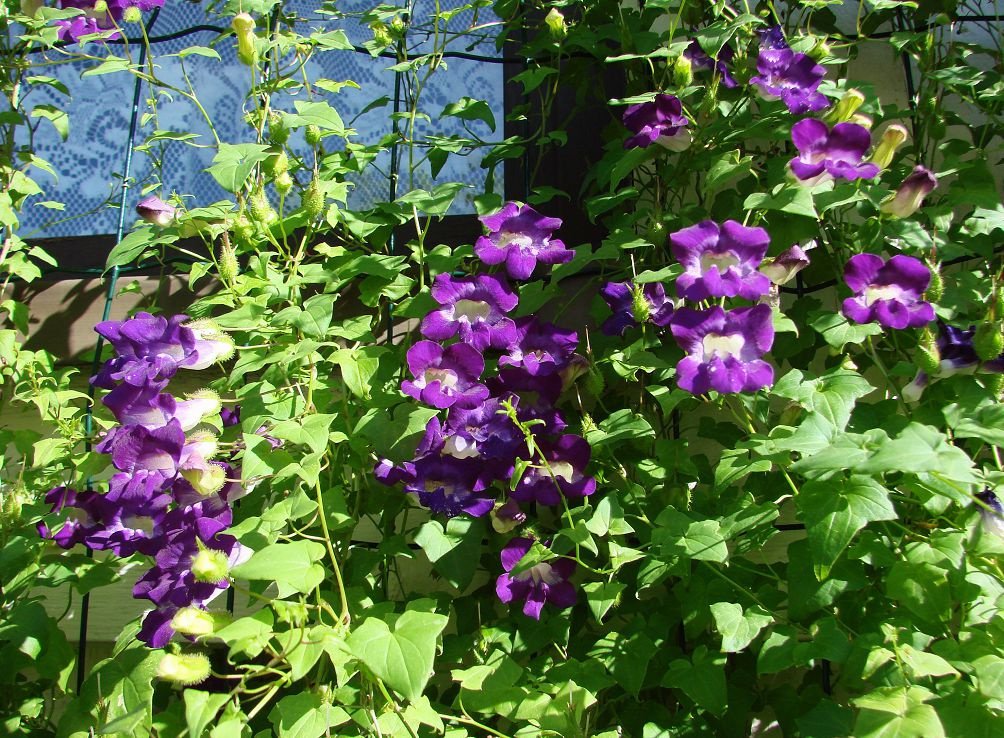
The soil around the plantings should be loosened periodically to allow oxygen to penetrate. It's also important to weed and remove weeds, which compete with the plant for water and nutrients and attract insect pests.
Pests and diseases of azarina (seedlings and in open ground)
The most common diseases of seedlings are – blackleg and rot. The critical period for disease development is considered to be the period from the emergence of the first shoots until the appearance of three leaves. It is during this time that seedlings are most vulnerable to various fungi and viruses.
Blackleg is characterized by a darkening of the base of the shoot, hence its name. This area then becomes soft, and the shoot droops and dies. The disease is contagious to neighboring plantings, so healthy plants should be immediately replanted and the entire soil disinfected with Baktofit, Fitosporin, or Maxim. Treatment instructions are provided in the instructions.
After planting in the ground, Azarina often becomes a tasty prey for aphidsThese voracious pests settle in colonies and suck the sap from leaves, shoots, and buds. The plant begins to sicken, the stems wilt, and the leaf blades become deformed and curl. The aphids leave behind excretions that become a breeding ground for sooty mold. Specialized pest control products (Akarin, Actellic, Bankol, Karbofos, Fufanon, Prestige) are used to control the pest. Treatment is carried out with a solution diluted according to the instructions, and repeated after 7-10 days.
Winter storage of azarina
In our climate, Asarina doesn't overwinter, so it's usually resown each year. However, you can preserve the plant by moving it indoors for the winter. This is easy to do; the main thing is to prepare a suitably sized pot or other container.
Repotting takes place in early October, unless cold weather is forecast earlier. All weak shoots are removed, and the remaining shoots are cut back to a height of 60 cm. After this, the Asarina is carefully dug up along with the soil ball and repotted. The roots are then covered with additional soil, and watered.
The flower pot is placed in a warm and well-lit room, and in May the Asarina can be returned back to the flowerbed.
Azarina in landscape design
Despite their flexible and rather long plants, some species and varieties of azarina are perfectly suited to growing without support, and maurandia is sometimes grown in pots to decorate balconies and gazebos (for example, the Barclay variety). However, this plant is most often used to decorate vertical surfaces, as it has the ability to cling to support.
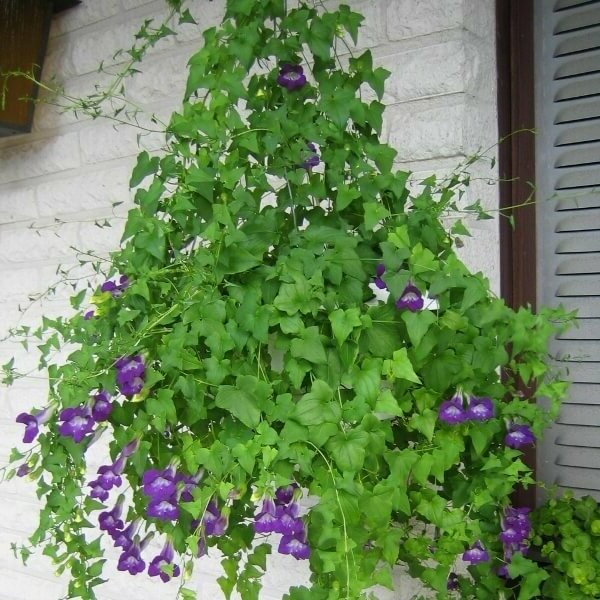
Red-throated azarina and Barclay's arbor can cover a large area of a shed or gazebo wall. They can grow very quickly and produce an abundance of vegetative mass and buds.
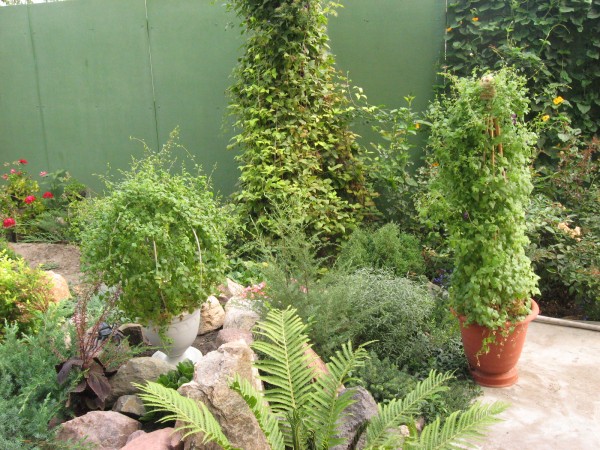
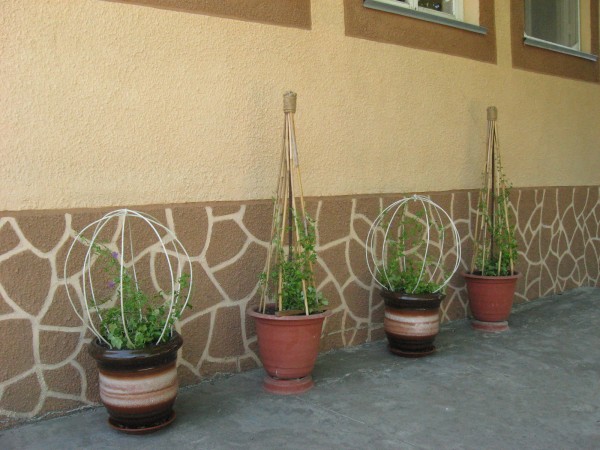
Azaria looks very beautiful when twined around an arch or various garden structures. Spheres, pyramids, and cubes are constructed from thin wire wrapped with fishing line. Eventually, shoots grow over these structures, creating a three-dimensional green feature. Two plants are sufficient for one pot. In good light, blooms will be abundant; in shade, buds may not form at all.
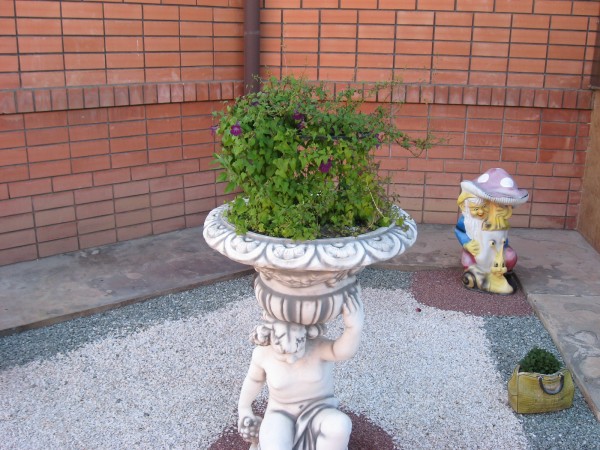
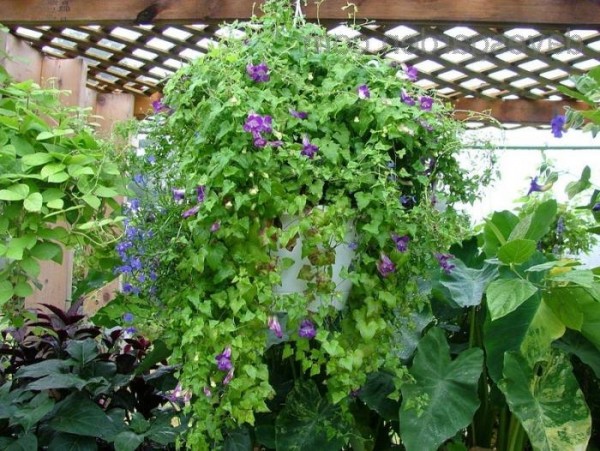
Azaria will also look beautiful in any garden pot, including hanging ones. In this case, the shoots will hang down and don't require support. Keep in mind that with limited soil space in pots, plants require special watering and additional fertilizing.
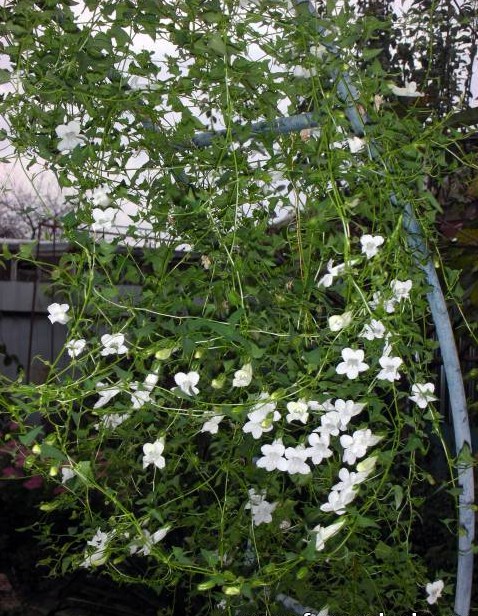
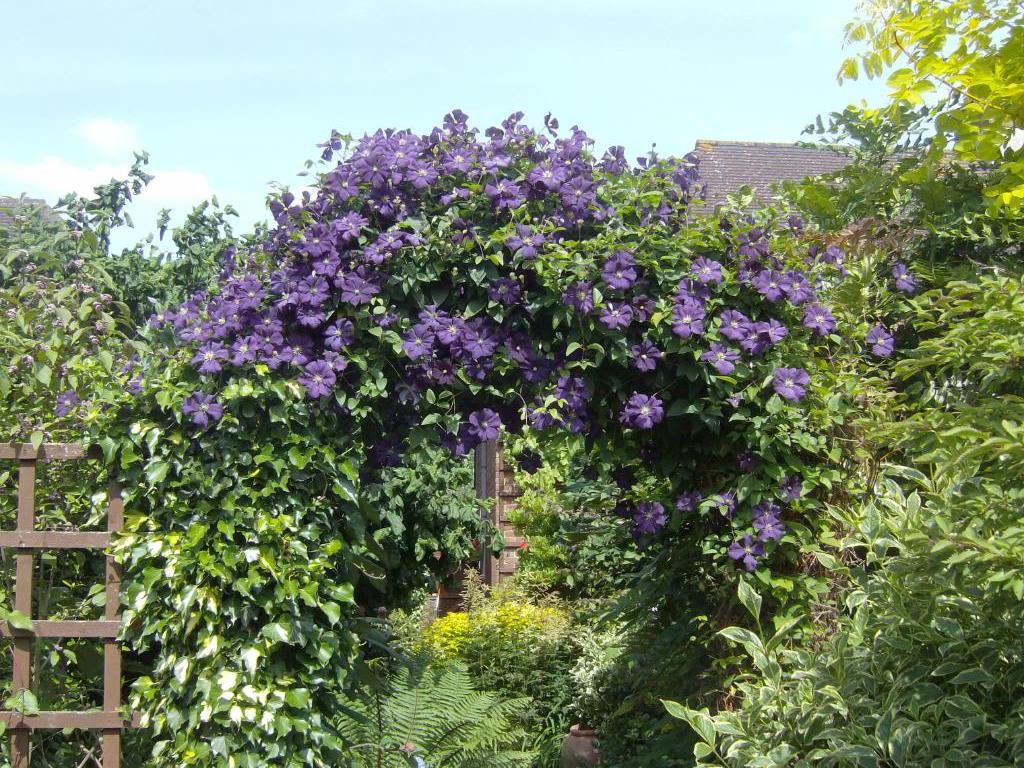
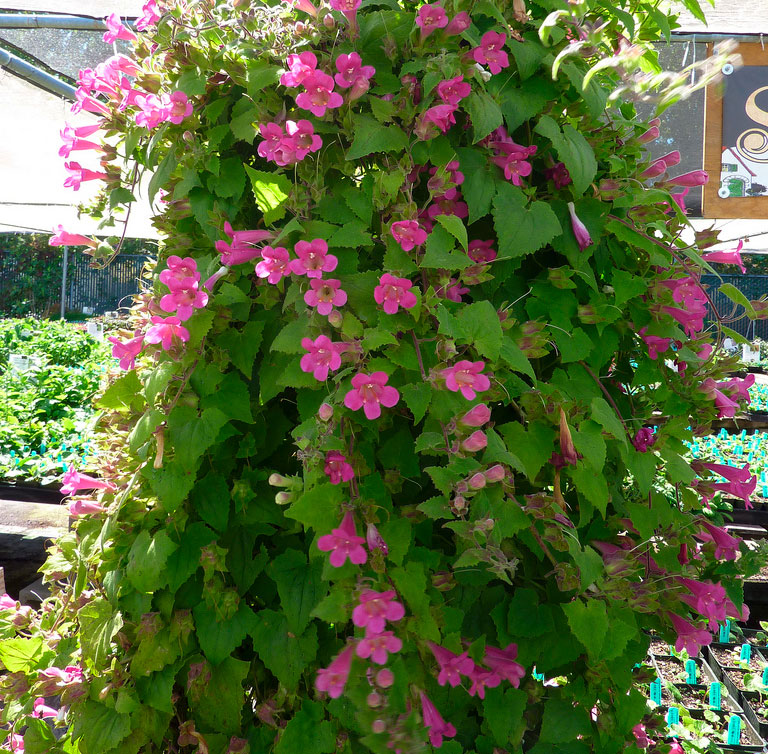
Photo gallery of the use of azarina in landscape design (12 photos):
Real reviews from gardeners about growing azarina
User Undina29, Russia, Nizhny, February 18, 2020
Hello dear friends who have looked at my review!
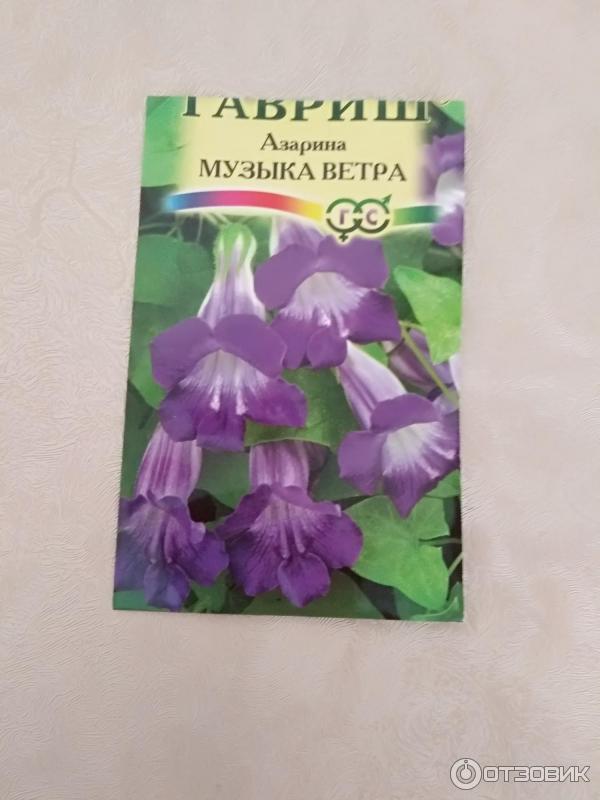
Spring is coming, and it's time to plant seedlings. I'll soon be sowing the azarina "Music of the Wind" from Gavrish, but I still haven't mentioned it, even though I've been preparing for it since last year. This vine-like flower grows from seed.
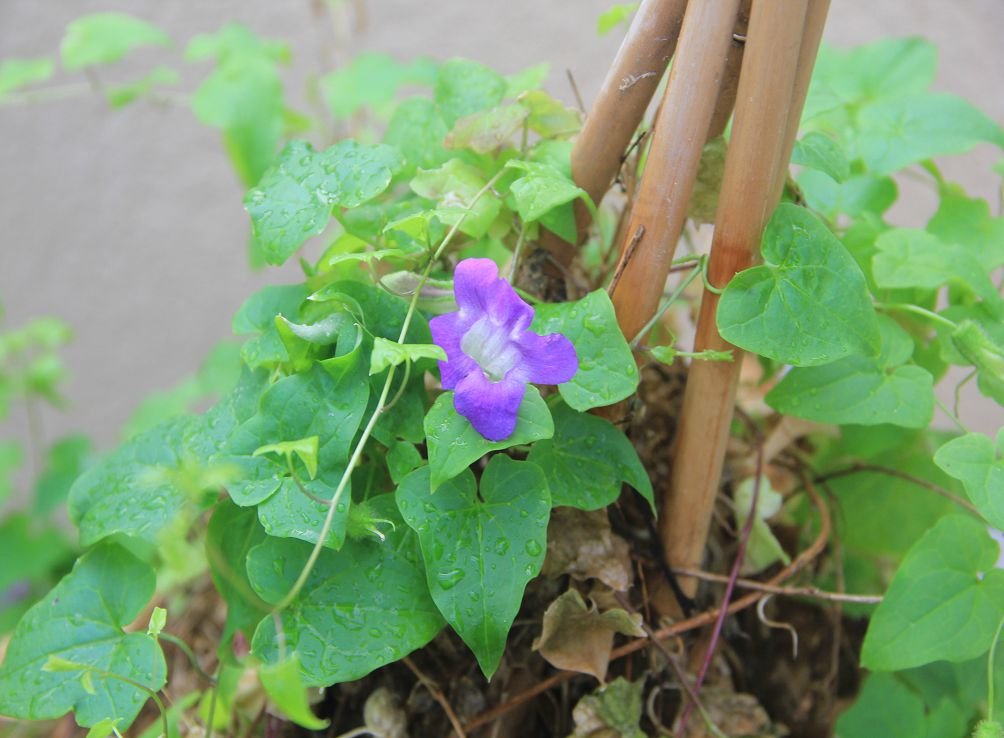
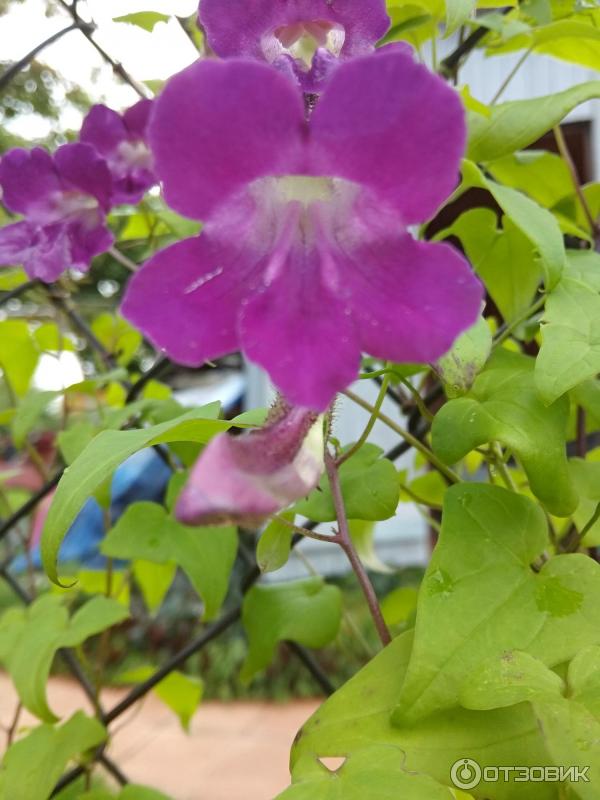
In the photo, the azarina bud appears large, but this is not the case.
The buds are small, but under favorable conditions there are many of them and they appear on the branches until late autumn.
I buy seeds from the Gavrish company.
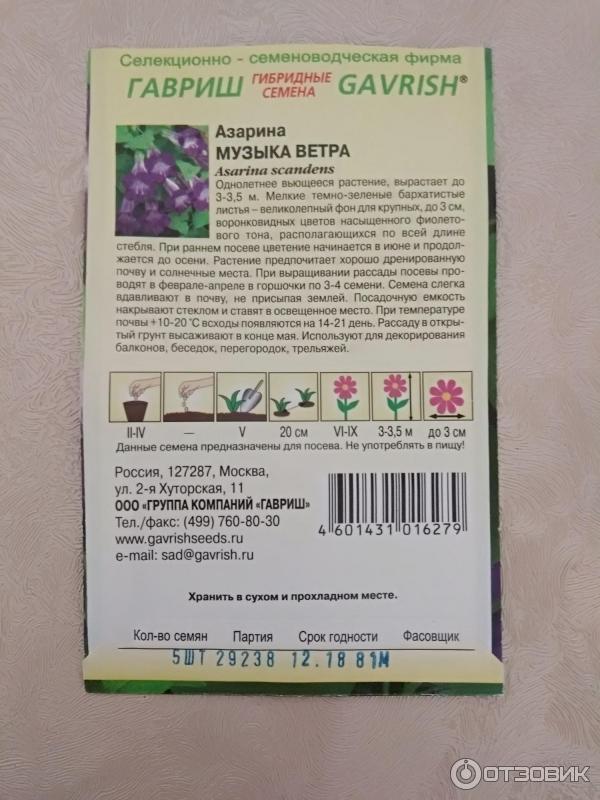
The package contains detailed instructions on how to sow, plant, and care for the flowers.Azaria seeds are very small, and growing seedlings from them is quite problematic. But I've somehow gotten the hang of these microscopic seeds, and it seems to be working.
Now I look at the packaging with great surprise and think - was it really true that there were only 5 seeds in the pack, which can only be seen under a microscope.
You've already realized that I grew my own seeds. Azarina Wind Music is not a hybrid.
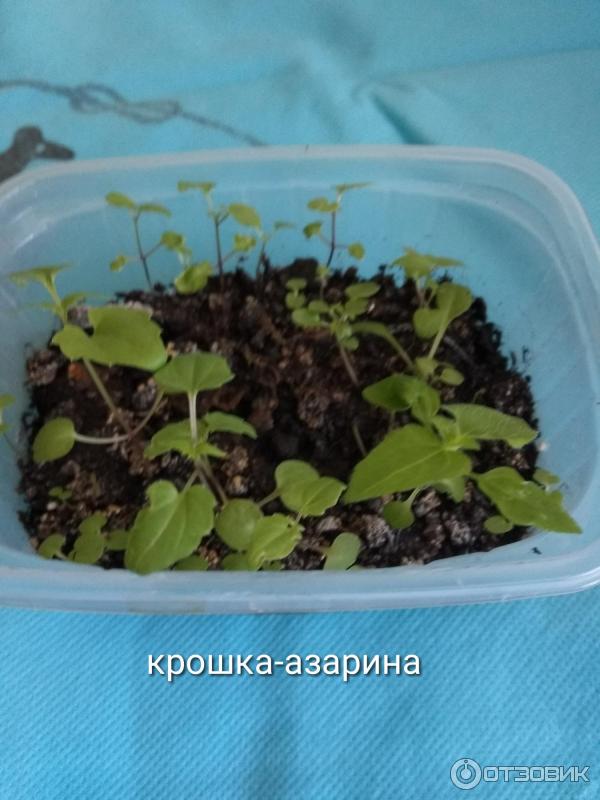
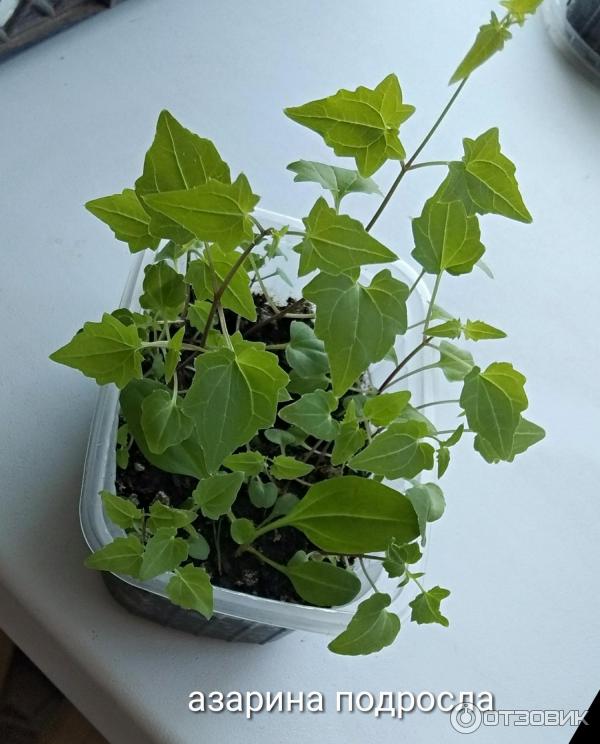
The first shoots were dense. While the asarina is still small, it needs to be pricked out, although botanists say this flower doesn't tolerate transplanting.Practice shows that this is not the case.
Once the pair has grown, place them in a separate pot. The pot should be filled with peat and soil.
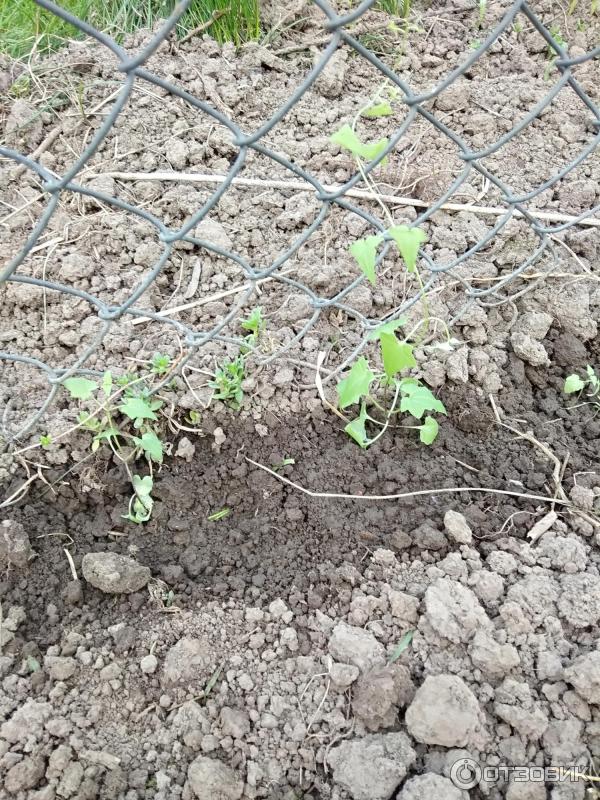
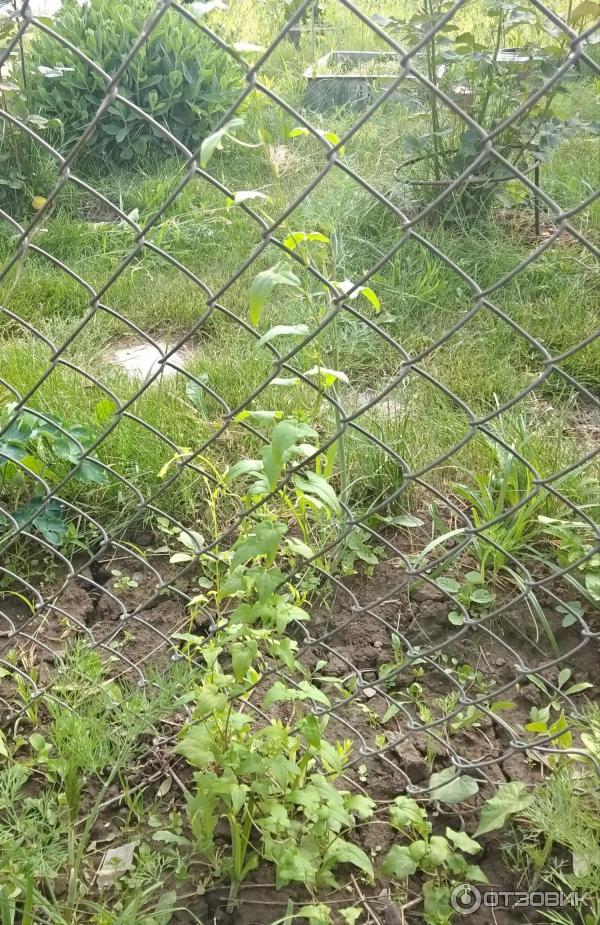
We plant the peat pots in the ground once the threat of frost has passed. What's the big deal? With our extreme weather, anything is possible. There's no frost in winter, but expect it in summer.
So the azarina grows little by little, clinging to the support.
I once managed to grow white azarina, but now I only grow purple ones.
As with many flowers, some buds of the azarina fade and others bloom. And so it goes until autumn.
And later in the fall, you can collect seeds from these little capsules. There are thousands of them.You can provide yourself with seeds for future seasons.
In the meantime, thanks to Gavrish for the source material. Gavrish's "Azarina Wind Music" seeds have a good germination rate, so they're available for purchase.
Thank you for your attention and may you see beautiful flowers before your eyes.
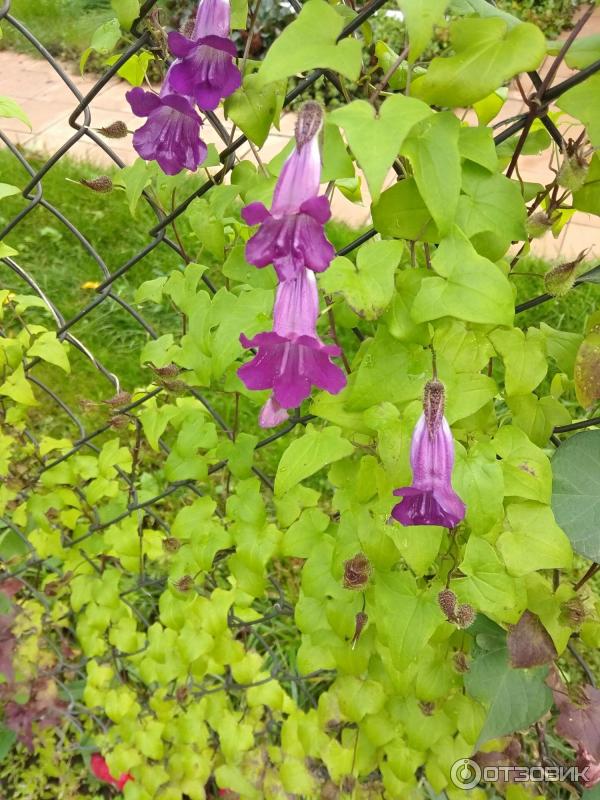
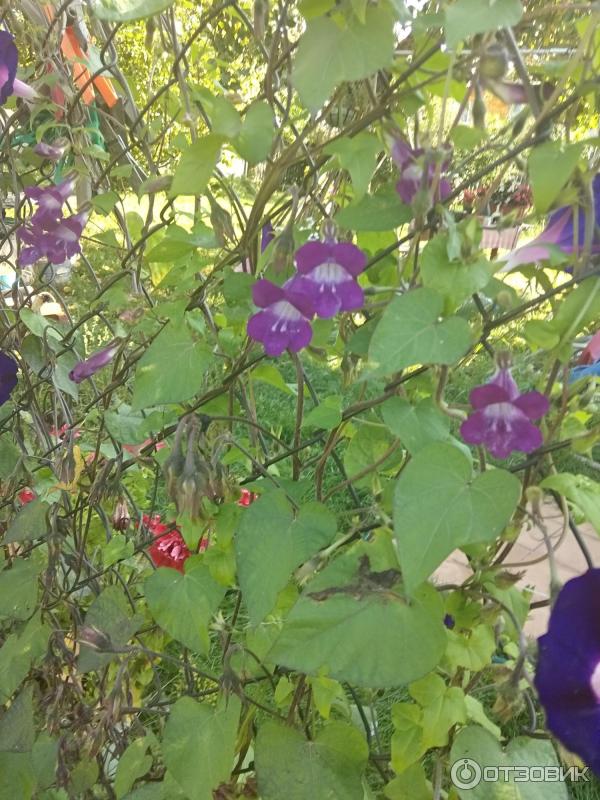
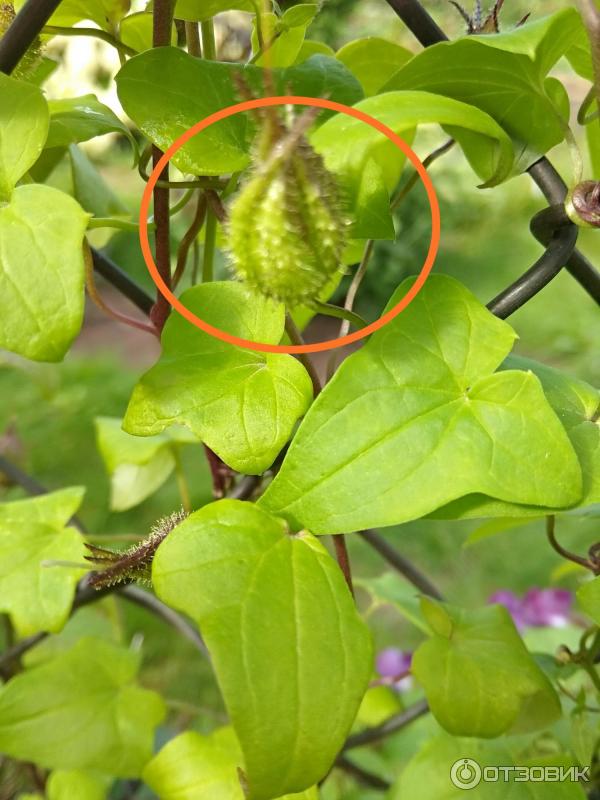
http://otzovik.com/review_9506124.html
User FARDO88, Russia, Usolye-Sibirskoye, January 28, 2017 An unusually beautiful liana with thin, whiskerless shoots with many different colored flowers. There were difficulties during the seedling period. The seeds are very small and the seedlings don't tolerate transplanting well. It's better to plant several at a time in pots. It grows quickly and blooms even as a seedling. It dislikes windy and cold locations, as well as very sunny ones. This causes the flowers to fade, and the flowering time is shortened. In my greenhouse it only reached a height of 3 meters; in the ground it was no higher than 1.5 meters. It grows very well indoors. It blooms for quite a long time if you pick off the fruit, which it produces in abundance. I've been really enjoying this plant for many years, using my own seeds and trying new ones. This vine isn't as robust and strong as cobea, cardiospermum, or mina lobata. It won't climb a fence taller than 3 meters and looks lost among other vines. It's great for solo arrangements with other perennials and annuals. It's cold-hardy and disease-resistant.
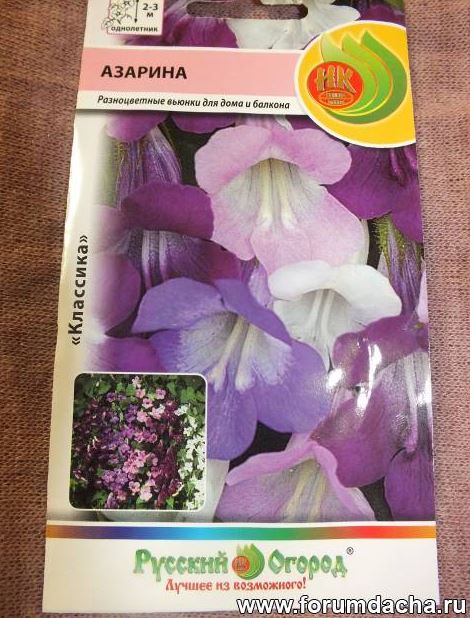
User Sanovna, Stavropol Krai, 1August 9, 2013 Out of curiosity, I bought some azarina seeds, and I was also given several prefabricated arches that needed filling. The seed packet featured beautiful, funnel-shaped blue flowers, quite attractive. I'd like to say that growing azarina wasn't particularly difficult. As usual, I prepared the soil for sowing the seeds, mixing soil from the field with store-bought soil and sand, and filled the pots I'd prepared for sowing azarina seeds with this mixture. Then, I watered the soil with a potassium permanganate solution to disinfect it, as I'd read that azarina can be susceptible to blackleg. I placed the seeds on moist soil, two per pot. According to the instructions, I didn't cover them with soil, but only lightly pressed them in and sprinkled a thin layer of sand on top, which I'd baked in the oven and cooled beforehand. It's recommended to sow azarina seeds in February or early March, as this will result in earlier flowering, and azarina flowers from June until late fall. I covered the pots with glass and placed them on the windowsill, where it was bright and warm from the radiator—just what the azarina seeds needed to germinate. At the beginning of the third week, the first sprouts appeared. The pots were quite spacious, and I'd sprinkled crushed eggshells in the bottom of each, so I didn't transplant them, only watering them weekly with houseplant fertilizer. When the stems started growing, I inserted special plastic ladders into the pots so the azarina could climb them. The spring was cold, and fearing that my new plant would be killed by spring frosts, I planted the azarina in the ground almost at the end of May. Since it loves light, I chose a sunny spot, protected from the wind. The nearby apple tree casts only a slight, delicate shadow, and I can see now that this only benefits the azarina. The soil for planting azarina should be loose and well-drained, as standing water can kill the plant. So, I dug larger planting holes for it, added composted sand, peat moss, and half a tablespoon of mineral fertilizer to the soil I'd removed. I mixed everything well, poured it back into the holes, and then carefully shook the azarina out of the pot with a lump of soil, planted it in the hole, and watered it. I didn't separate the plants into pairs, and after replanting them, my azarinas didn't get sick. A week after transplanting, I fed it with nitrogen fertilizers, and then watered it with mullein once every two weeks; when flowering began, I added potassium-phosphorus fertilizers. The summer has been quite dry, so we've had to give it extra water, but it delights us with its stunning flowers. I saw photos in a magazine of azarinas with white, pink, lilac, and purple flowers. I'll look for some online and order one; I really like it. January 19, 2015 I bought a mix of azarina seeds. The packet contained flowers of various colors, and I got white and purple ones. I must say that the white azarina is clearly more resilient than the purple one. It grew much faster and covered the entire arch, despite the drought and, like the purple one, it rarely received water. December 11, 2016 The seeds germinated well, but almost all the seedlings were killed by hail. Only a couple of bushes remained, and they delighted us with their blooms all summer and fall. In the summer heat, the flowers were a dull pink and pink. But when the weather cooled in the fall, they became more vibrant.
User anna-schum, Russia, Saint Petersburg, May 1, 2015 Last year, I decided to thoroughly decorate my balcony. I planted marigolds in the center boxes and morning glory in the side boxes. It's a vine that grows up to three meters tall and blooms with purple bells. I started thinking about what else I could do to enhance my balcony.
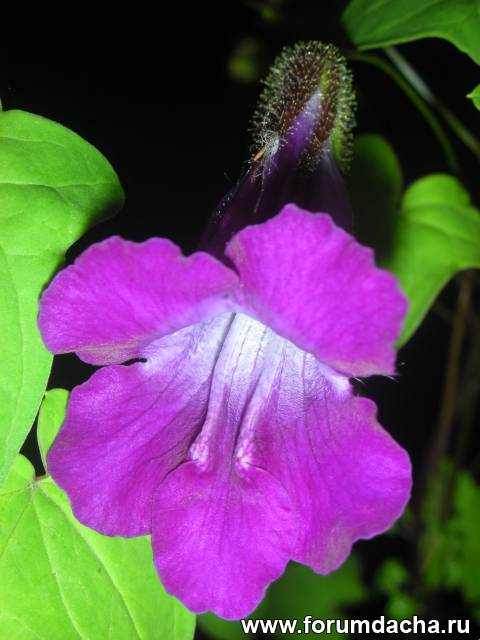
Azarina climbs very well and clings so firmly that at the beginning I only had to direct the first young shoots towards the arch, and then it itself rushed up the support.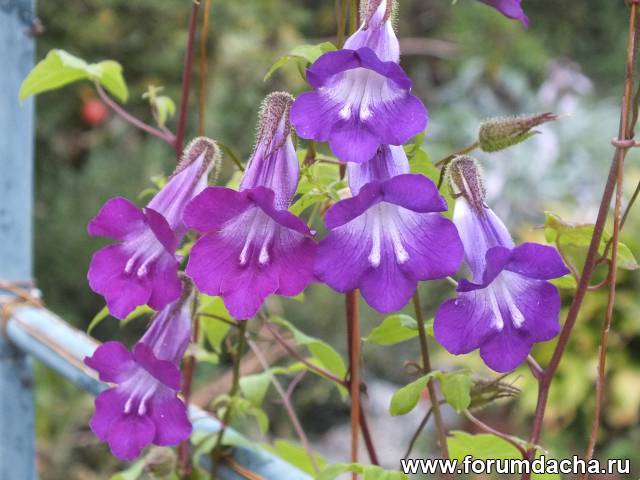
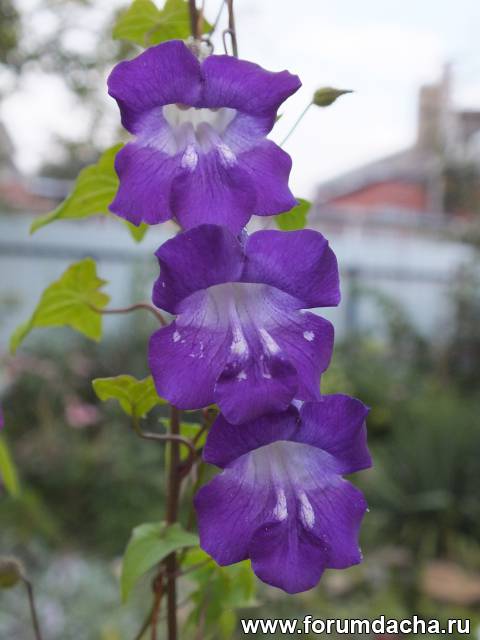
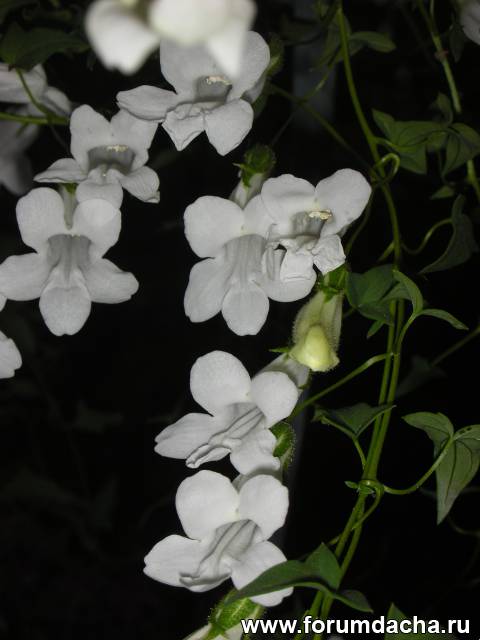
It's best to plant azarina in March-April. Then, in May, transplant the grown seedlings into pots or open ground. Getting azarina to sprout requires a little effort.
http://otzovik.com/review_2053384.html
User tutsa, Russia, Moscow, January 26, 2016 I always find a place for flowers in my garden. Last year, I bought Gavrish seeds for "Azarina Wind Music." I'd never heard of this plant. I bought a packet of seeds and was amazed by the beauty of this flower. One packet contained 0.5 grams of small seeds. They cost 25 rubles.
The plant produces large, funnel-shaped flower stalks. They are dark purple and evenly distributed along the entire stem. Asarina seeds can be sown as seedlings or directly into the ground.
If propagating the plant by seeds, they should be sown indoors in late March. Seeds are sown outdoors in mid-May. When growing asarina from seedlings, the first flowers will bloom in early June and continue until November.
Azarina likes to grow in loose soils, in sunny places.
I water the plant regularly, loosening the soil to prevent crusting. After watering, I sprinkle the soil around the plant with sifted compost. Asarin is used to decorate balconies and garden buildings. It looks great in group plantings. I planted some of the plants in a flowerbed, and others in pots and planters and hung them on the veranda. It turned out to be a very original decoration.