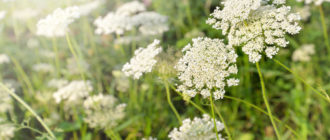
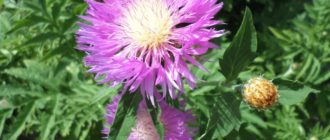
There are many colorful and amazing plants, each with its own unique beauty and symbolism. Among them, chrysanthemums occupy a special place – they are among the most popular and graceful flowers on the planet. Many varieties and cultivars of these plants have been developed. This article presents common types of chrysanthemums, along with photos and names of these flowers.
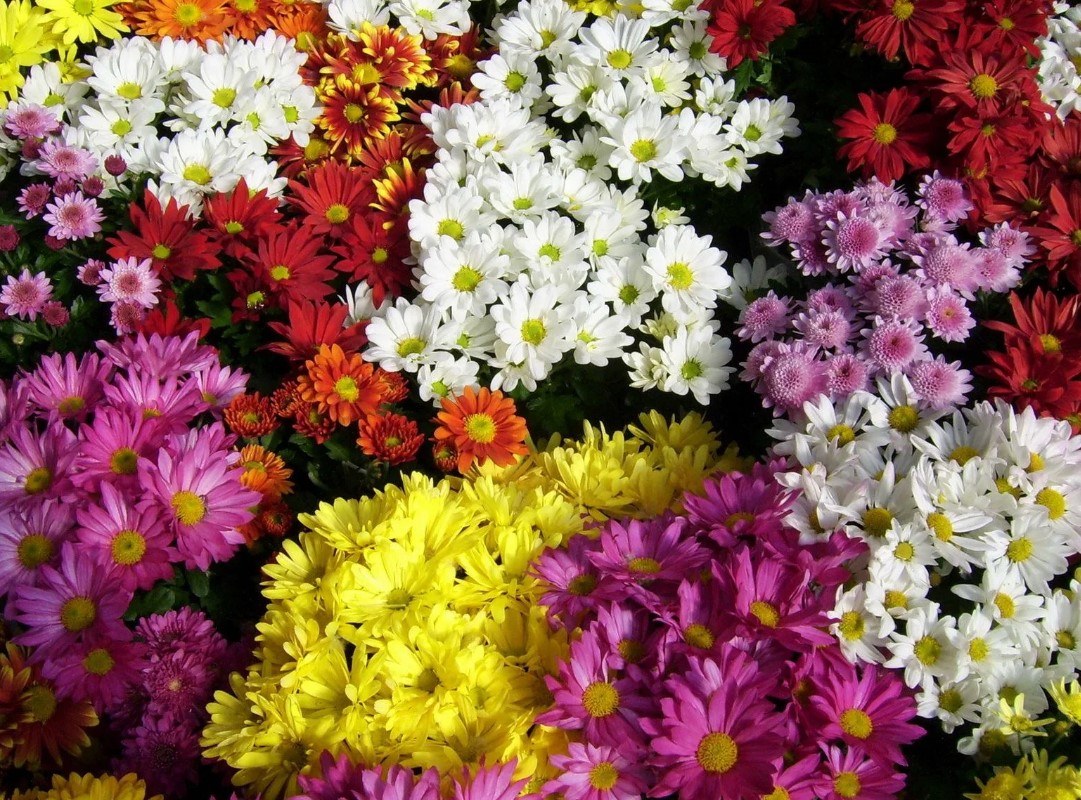
Content
- 1 Classification of chrysanthemums
- 2 Dividing chrysanthemums by life cycle
- 3
- 4 Classification of chrysanthemums by flowering time
- 5 Dividing chrysanthemums by bush size
- 6 Separating chrysanthemums by bud size
- 7 Separation of chrysanthemums by inflorescence type
- 8 Classification of chrysanthemums by frost resistance
- 9 5 species and 30 varieties of annual chrysanthemums
- 10 2 species and 9 varieties of conditionally annual chrysanthemums
- 11 11 species and 95 varieties of perennial chrysanthemums
- 12 Gardener reviews of chrysanthemums
Classification of chrysanthemums
All types of chrysanthemums are divided into several categories:
- by life expectancy - perennial and annual;
- by bush size - miniature, medium-sized and tall;
- by flowering period - early, middle and late;
- by type of inflorescence - simple, semi-double and double, etc.;
- by bud size - large-flowered, medium-sized and small-flowered;
- according to the degree of resistance to low temperatures - winter-hardy and heat-loving.
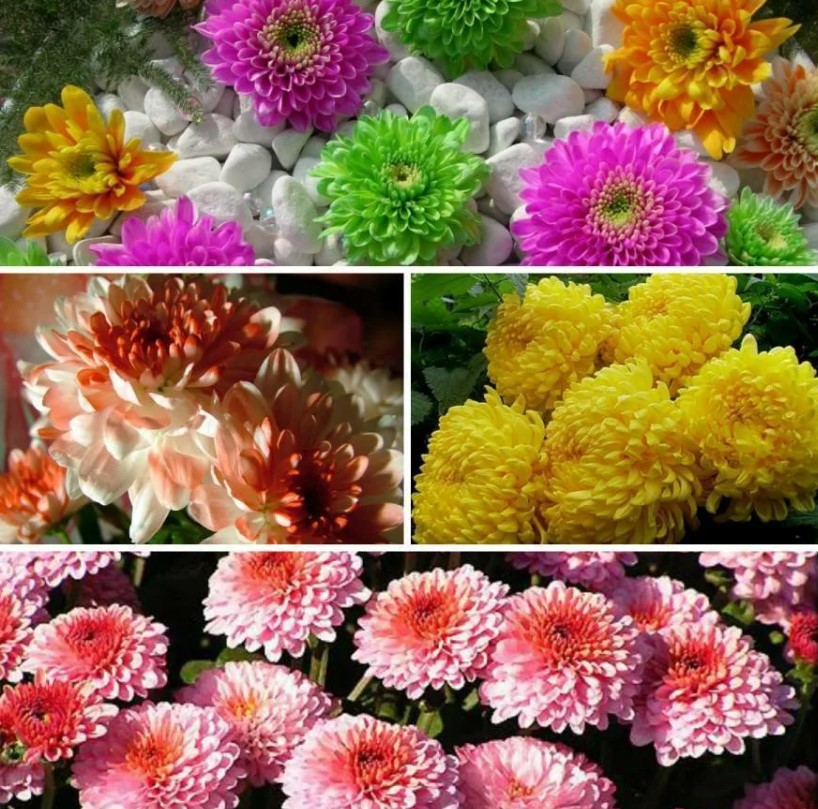
Dividing chrysanthemums by life cycle
There are 2 varieties of chrysanthemums in this category:
- Perennials – the majority of this group consists of greenhouse and Korean flowers. They are distinguished by abundant and luxurious blooms and resistance to various weather conditions.
- Annual chrysanthemums—species in this subgroup are characterized by their high adaptability to any conditions, frost resistance, and, in addition, ease of cultivation. They typically continue blooming until frost.
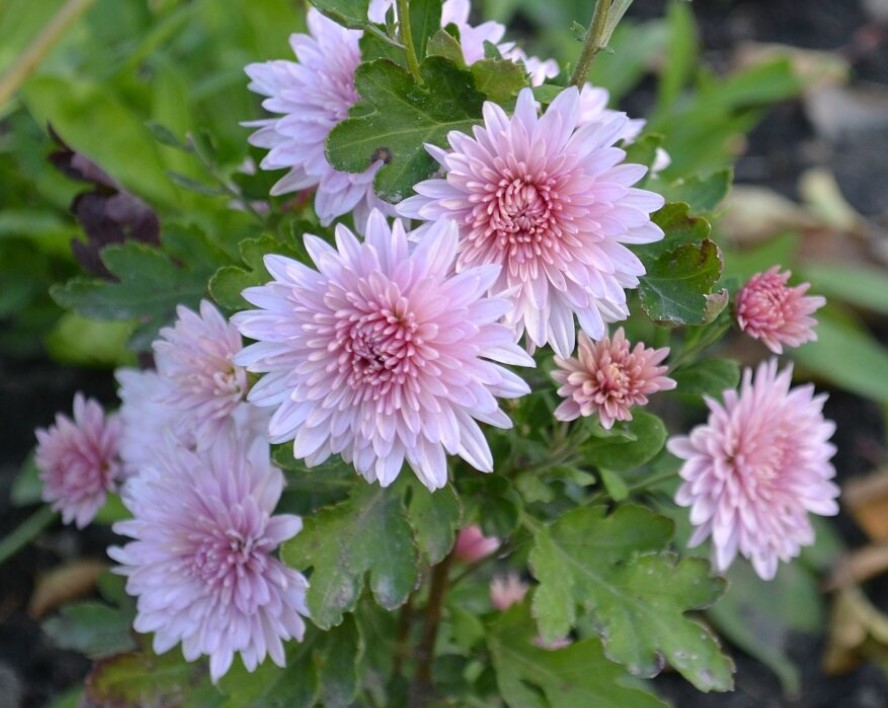
Classification of chrysanthemums by flowering time
There are the following types of chrysanthemums according to this classification:
- late – flowering occurs in November.
- medium – bloom in October.
- early – flowering occurs in September.
Dividing chrysanthemums by bush size
According to the size of the bush, chrysanthemums are divided into the following types:
- Miniature chrysanthemums, no more than 30 cm tall, are ideal for planting along paths or in small pots and containers. This group is characterized not only by their low-growing bushes but also by their early flowering. Most of them belong to the shrub or multiflora chrysanthemum family.
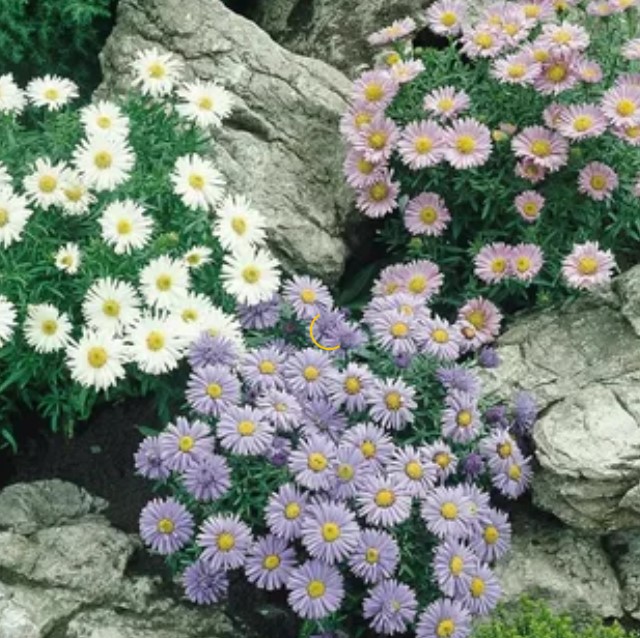
- Medium-sized, with bushes ranging from 30 to 50 cm in height, they come in a wide range of colors and bloom with double, semi-double, and single inflorescences. The bushes spread well and form a good basal shoot in a single season. Flowering occurs primarily from August to October.
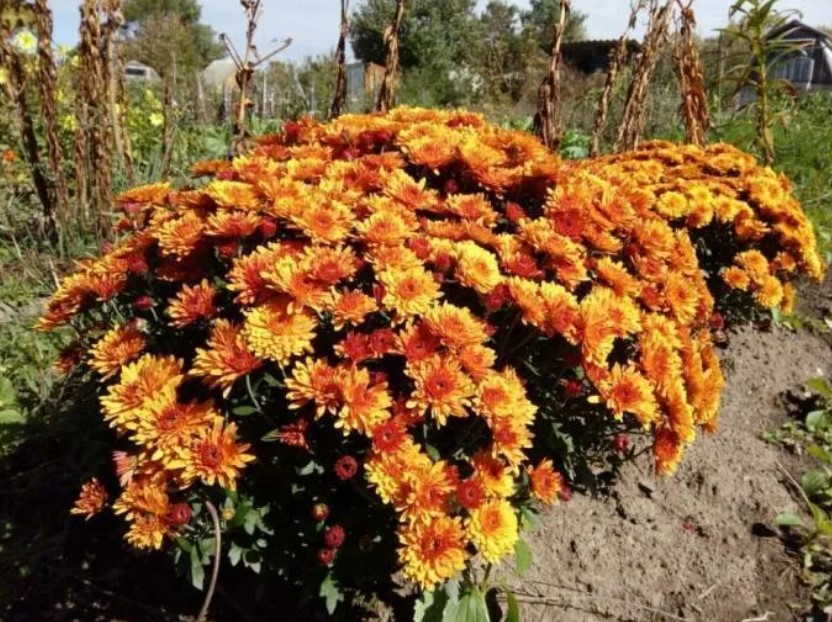
- Tall-growing, reaching heights of 1 to 1.2 m, these varieties are distinguished by strong, thick stems capable of supporting large flowers. Tall-growing varieties are most often grown in greenhouses or outdoors in southern regions.
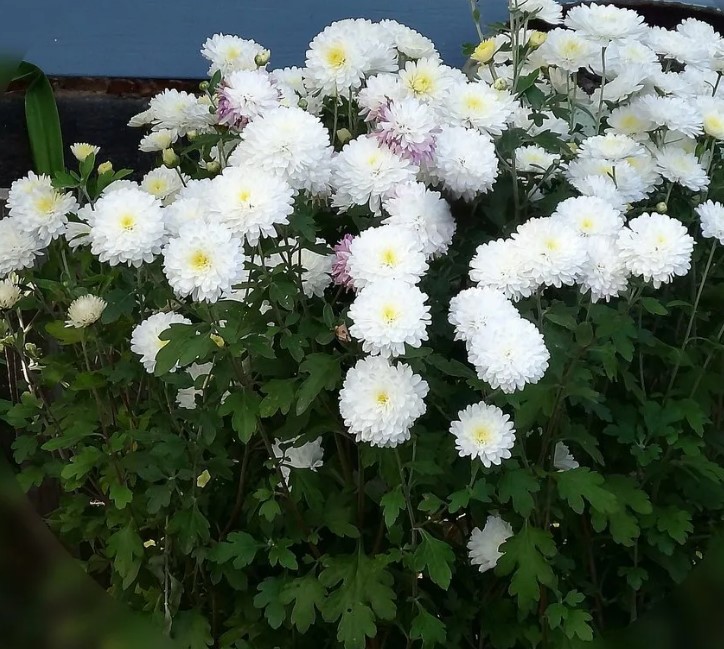
Separating chrysanthemums by bud size
They are divided as follows:
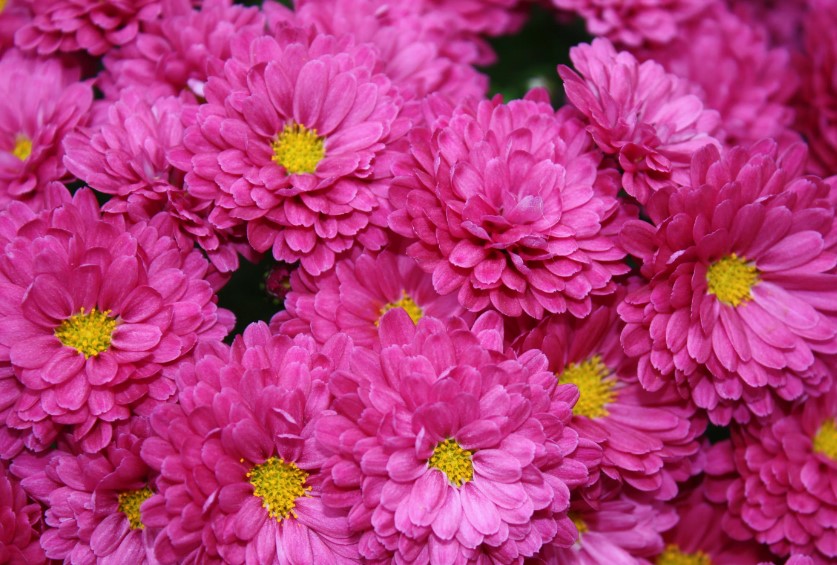
- Medium-flowered. Due to their versatility, they can be grown outdoors or indoors. The inflorescences reach 10 cm in diameter.
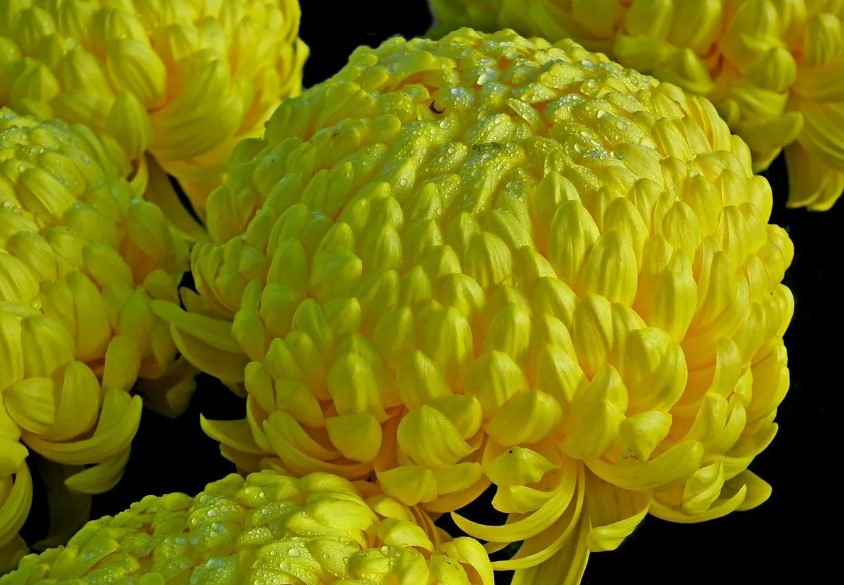
- Large-flowered. These are distinguished by their large inflorescences—up to 25 cm. These varieties are often used for bouquets.
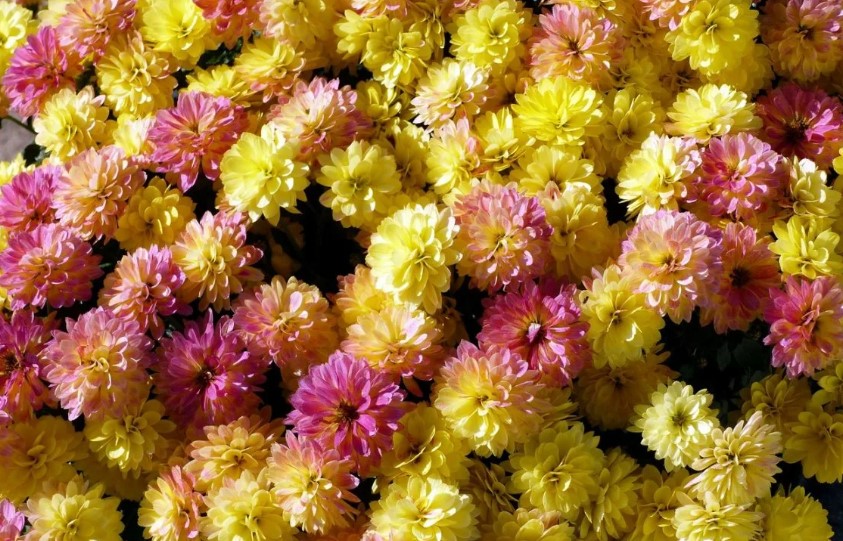
- Small-flowered. This species is characterized by its small size and the smallest flower diameter (up to 10 cm).
Separation of chrysanthemums by inflorescence type
The following varieties are distinguished:
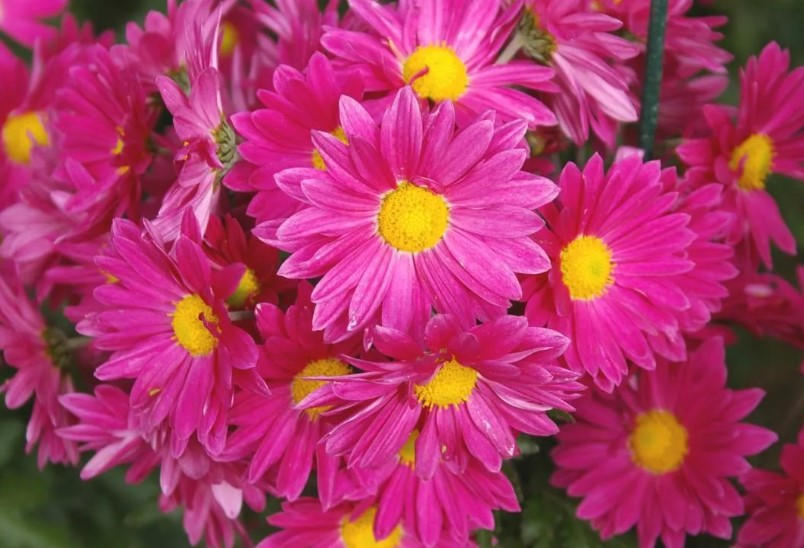
- Simple (non-double). Inflorescences consisting of 1-2 rows of ray florets.
- Semi-double. Inflorescences with 3-5 rows of ray florets, with a clearly visible disk.
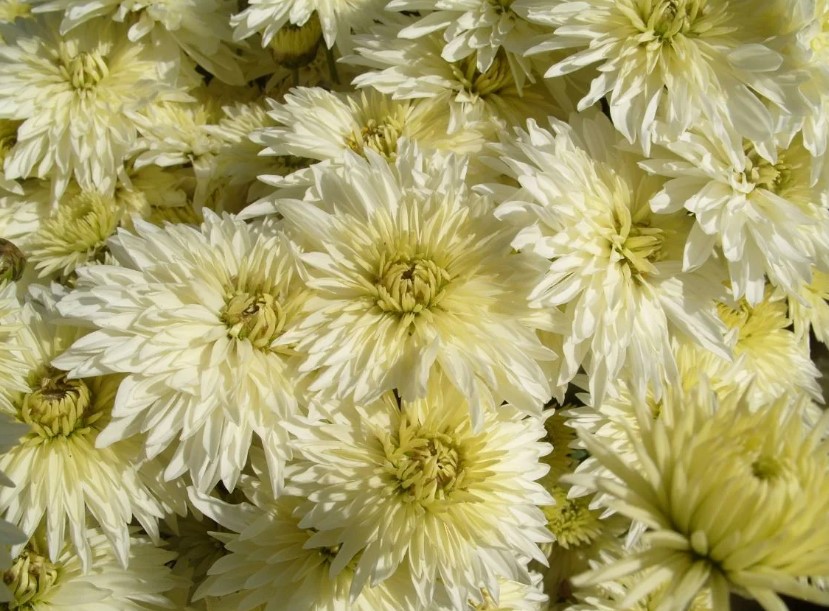
- Anemone-like flowers. They consist of 1-3 rows of long, ray-shaped flowers at the edges of the inflorescence and large tubular flowers, often different in color from the others, located in the center of the convex disk.
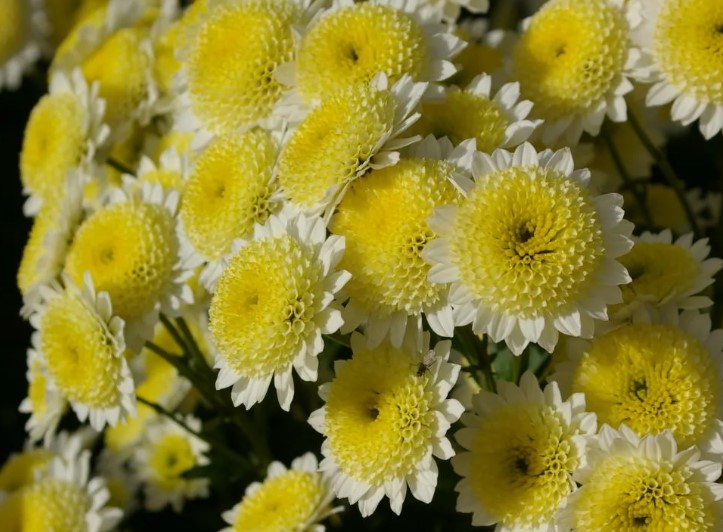
- Double. They have recurved, pendulous marginal ray florets with a typical "recurve" shape.
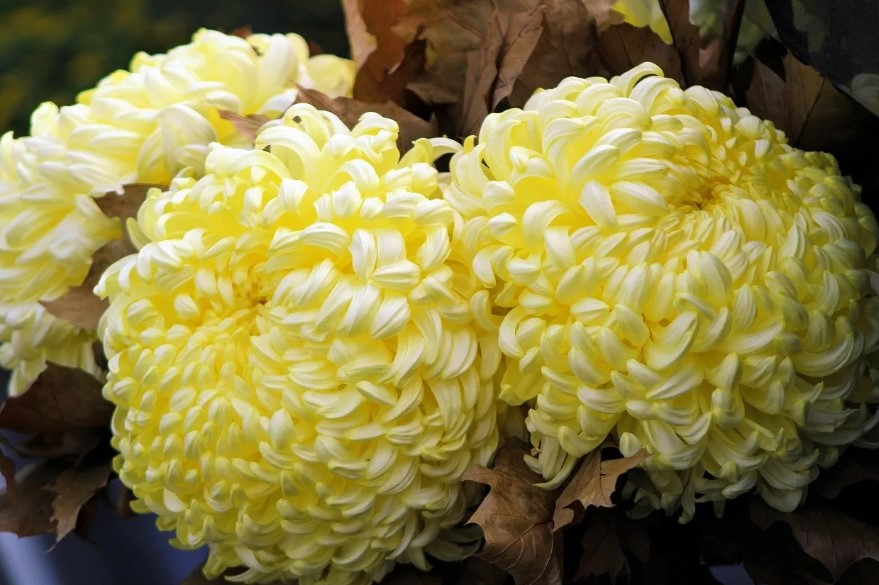
- Flat. Double flowers in which all the ray petals are located symmetrically in a single plane.
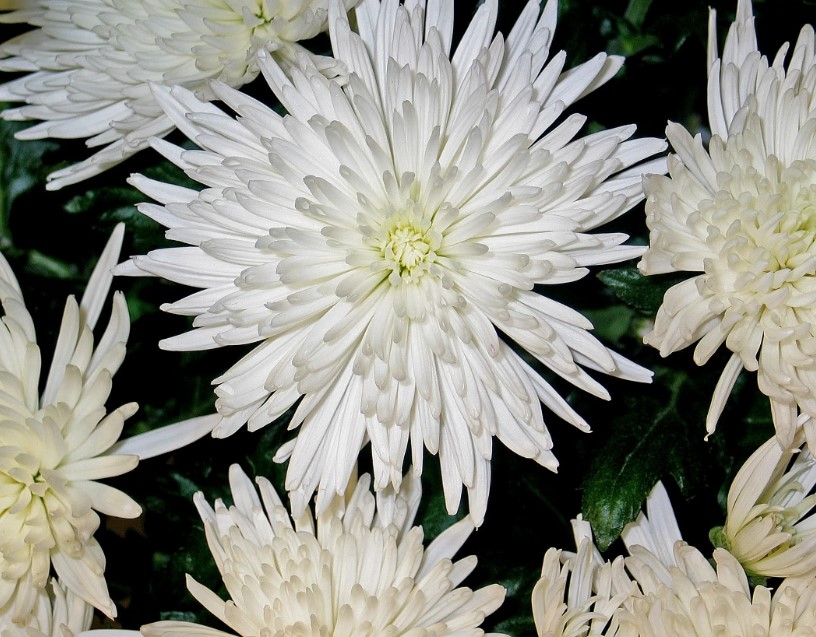
- Hemispherical. Double flowers with ray petals tightly arranged and curved toward the center of the inflorescence, creating a typical "incurve" shape.
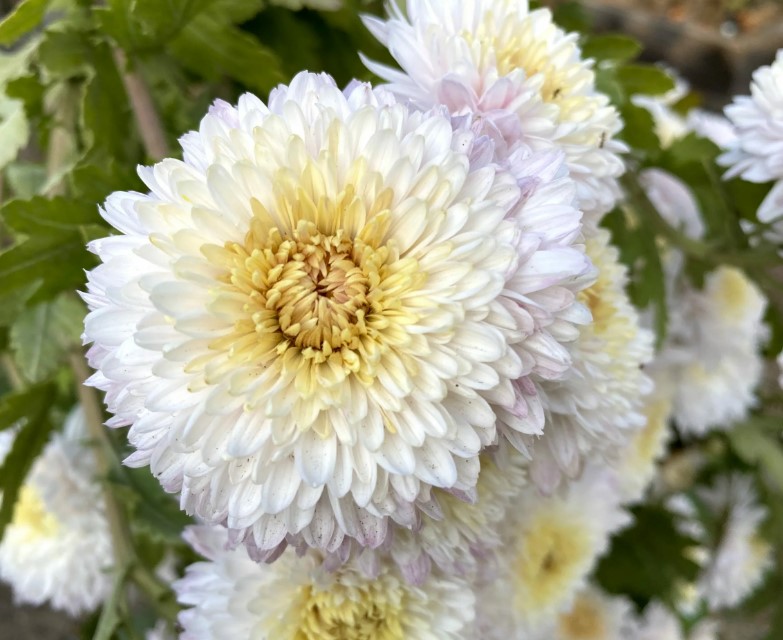
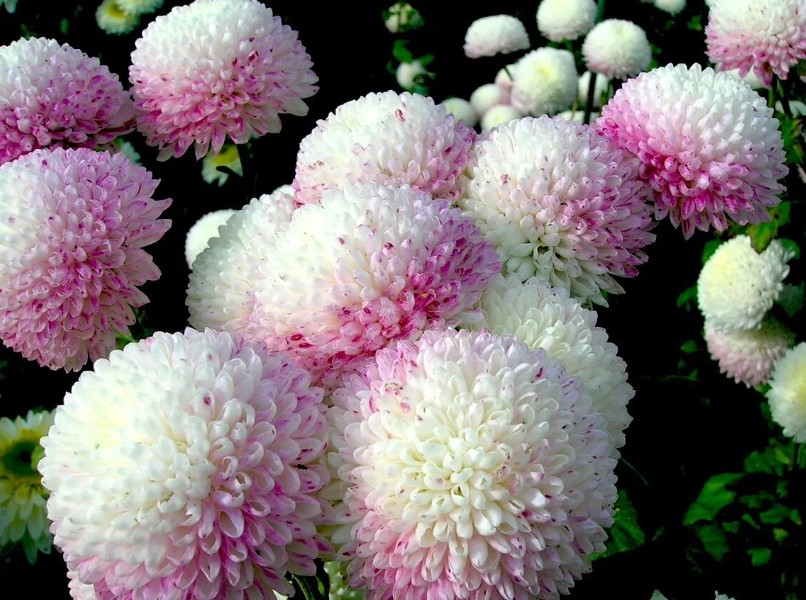
- Spherical. Double inflorescences with ray petals that are longer than those of the previous varieties and curve upward, giving the inflorescence a spherical shape known as "incurve."
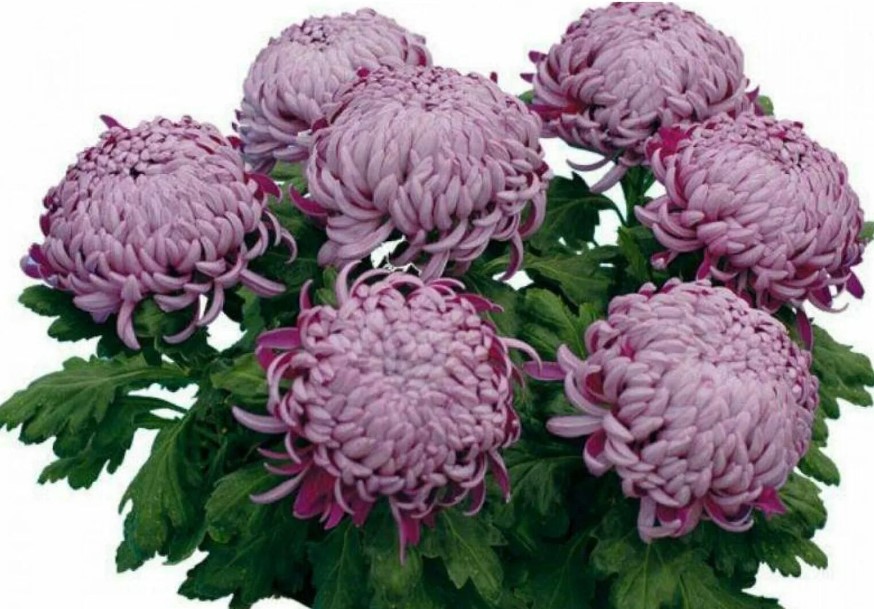
- Curly. Spherical inflorescences in which the outer ray florets hang down, while the inner ones are curved toward the center.
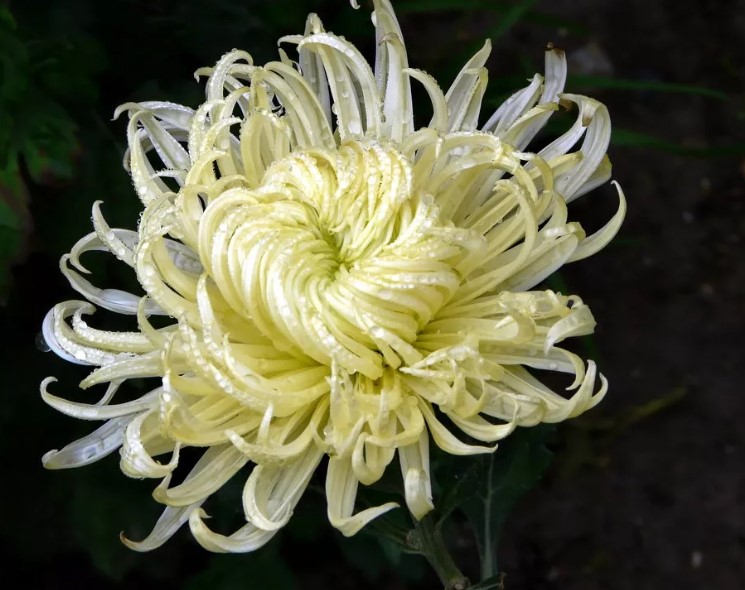
- Ray-shaped. They have ray florets that curl into a tube and point away from the core.
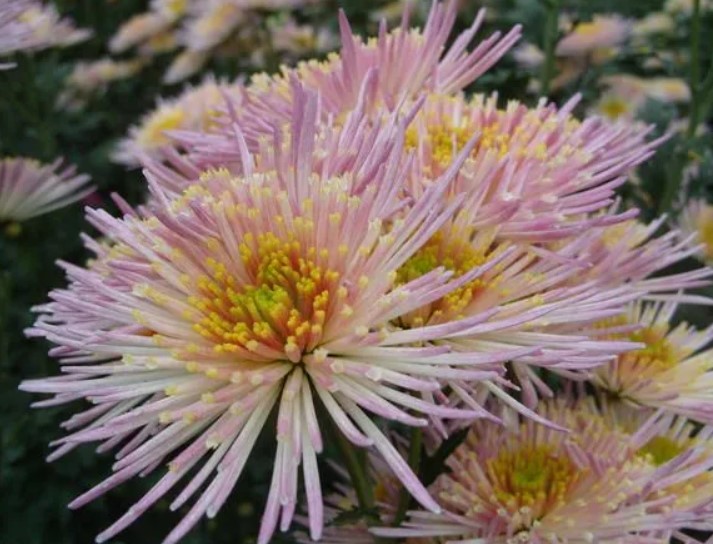
- Pompon. The ray flowers of this type are quite wide and shortened, almost the same length. They are densely arranged and directed laterally and upward.
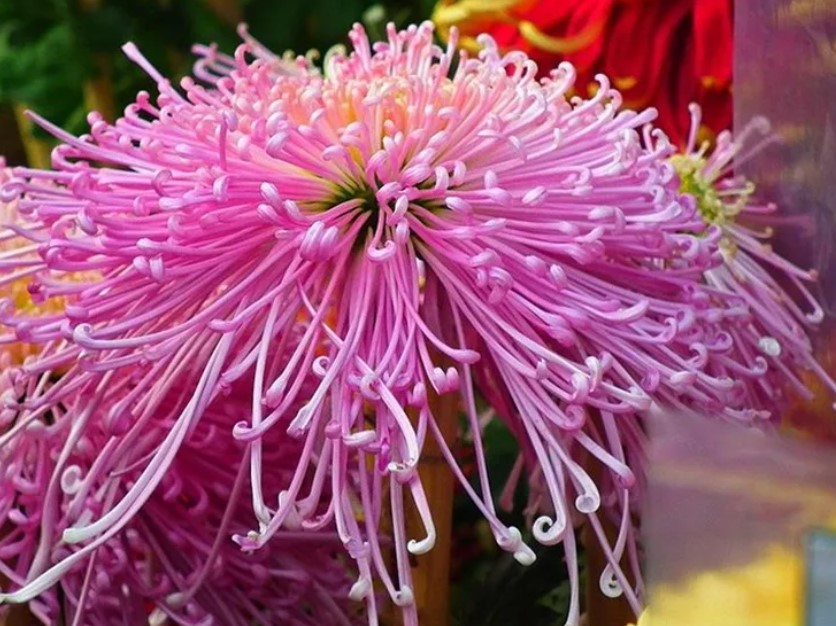
- Spider-like. The tubular flowers of this type are curved in different directions.
Classification of chrysanthemums by frost resistance
Due to differences in climatic conditions in different regions where chrysanthemums are grown, they can be divided into two groups:
- The first group includes plants with high frost resistance, easily tolerating low temperatures and even the first snow. Low-growing double chrysanthemums are considered particularly long-lived, able to survive even the harshest winter conditions.
- The second group consists of plants that are recommended for growing only in southern and warmer climates, as well as indoors. This is because these chrysanthemums bloom in late autumn and do not tolerate low temperatures.
5 species and 30 varieties of annual chrysanthemums
Let's take a closer look at the most popular types and varieties of these chrysanthemums.
Keeled
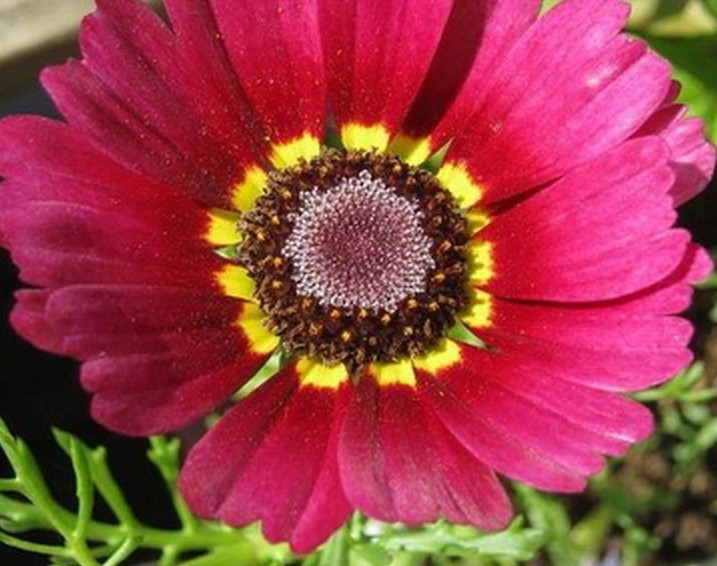
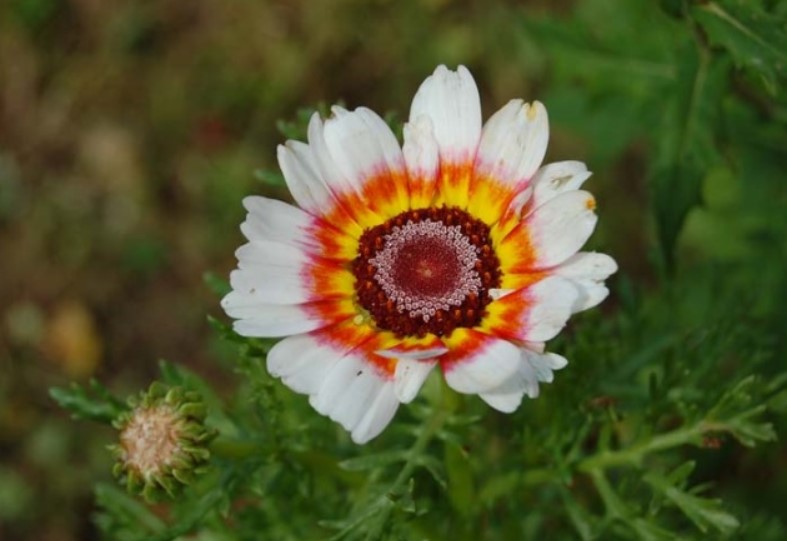
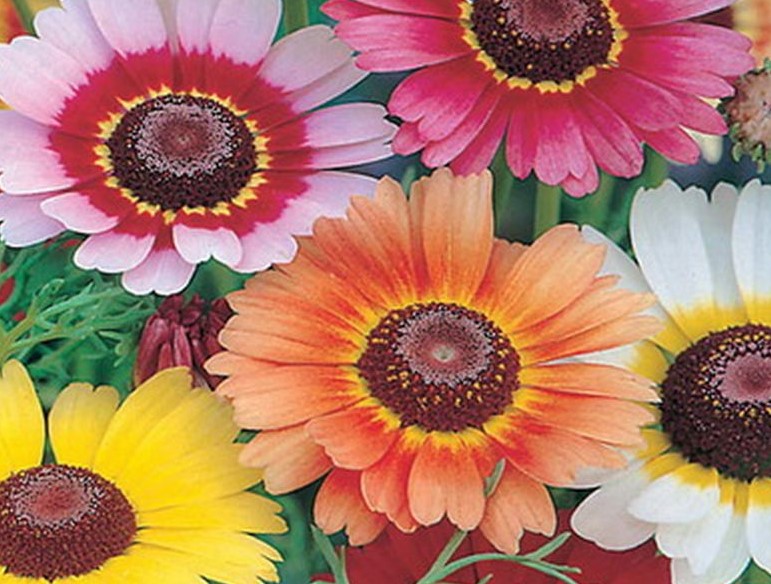
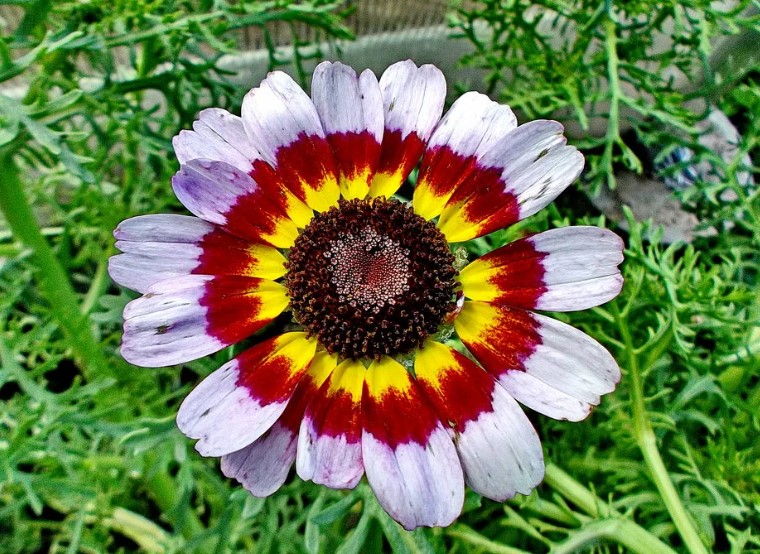
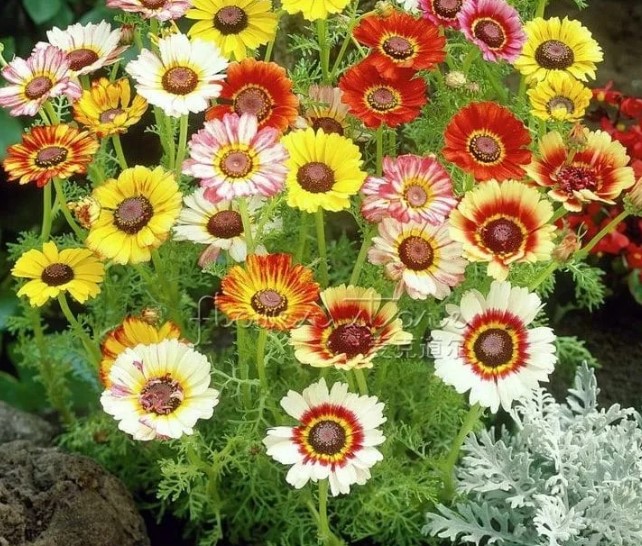
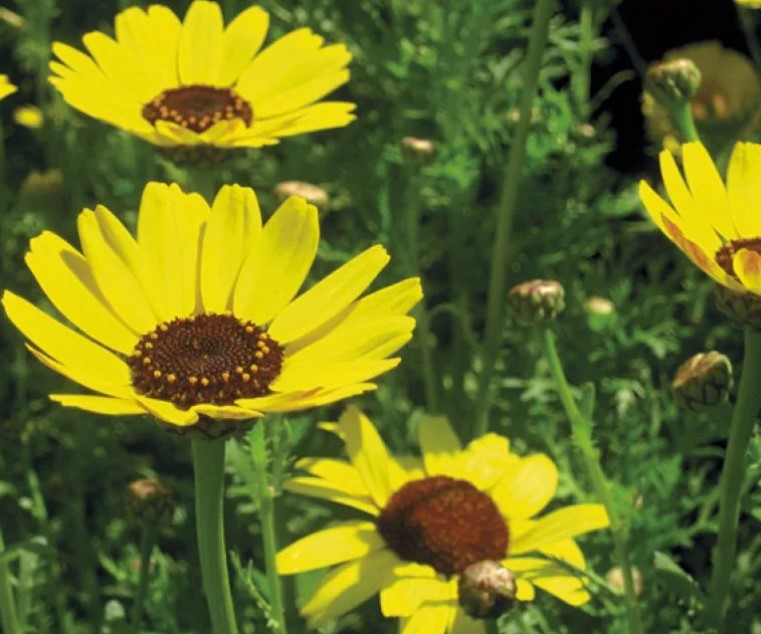
It grows from 20 to 70 cm in height. The stem is solid, and the leaves are divided into two parts by petioles. The inflorescences are basket-shaped and can be double, semi-double, or single, with a diameter of 50 to 70 mm. This chrysanthemum produces two-color flowers: the tubular ones are dark red, and the ligulate ones are white or yellow with a pale red edge.
| Variety | Description | Size, color, shape of inflorescence | |
| Atrocoenium
|
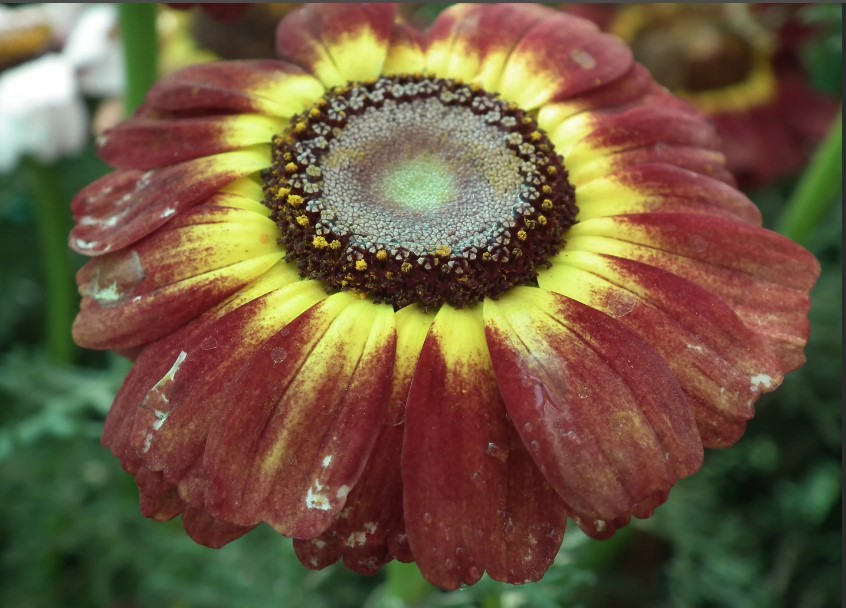
A striking variety with vibrantly colored flower heads. Prefers sunny locations; light application is acceptable. | 50-70 mm, brown core and rich red tongues with a bright yellow ring closer to the center, simple | |
| Dunetti
|
This is a seed mixture, so the buds come in a variety of shades. Planting in a location protected from the wind is recommended. | Up to 70 mm, various colors (pale pink, yellow, white or crimson-red at the edges, the color of the center of the buds is dark burgundy), double | |
| Cockade
|
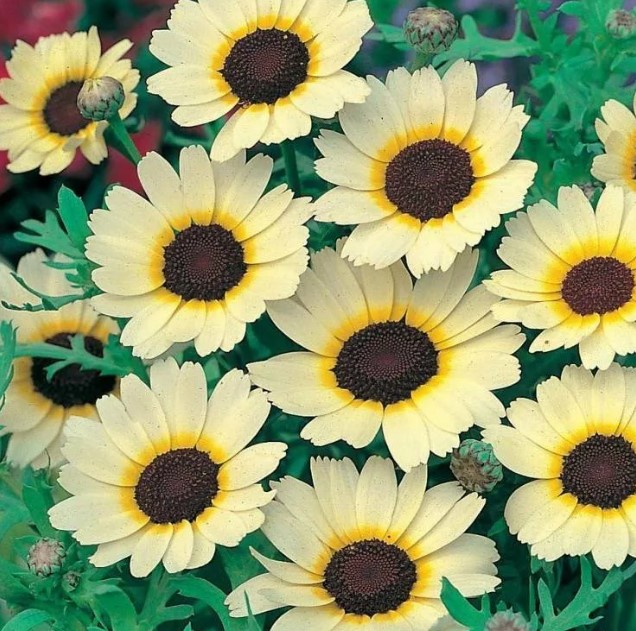
An annual variety that blooms in early June. | Up to 60 mm, with snow-white baskets and rings of yellow, red and brown color, simple | |
| Nordstern
|
A delicate variety that prefers areas with bright sun. | Up to 50-70, with white ray flowers and a bright yellow core, simple. | |
| Rainbow
|
This is a mixture, so the buds' shades may vary. They are usually planted to form a separate flowerbed. | Up to 50-70, different colors (red, orange, burgundy and white), simple. | |
| Flammenstahl
|
The variety blooms from July to October. | Up to 50-70, red-brown petals and brown-yellow center, simple. | |
| Bright eye
|
A variety with spectacular flowers. | Up to 50-70, white with iridescent red-yellow center, simple. | |
| A fun mix
|
Up to 70 cm tall, with erect stems. Blooms in midsummer. | Up to 50-70, various shades with contrasting rings, simple. | |
Sowing (field)
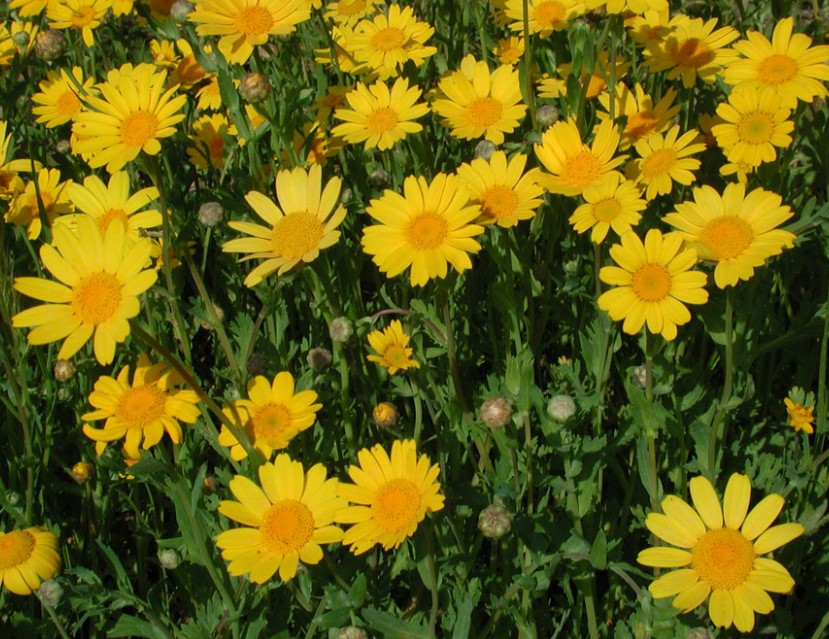
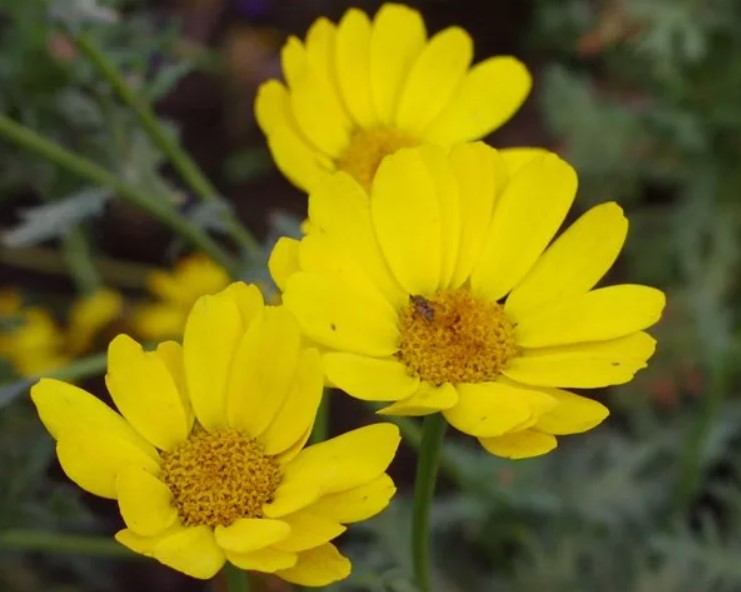
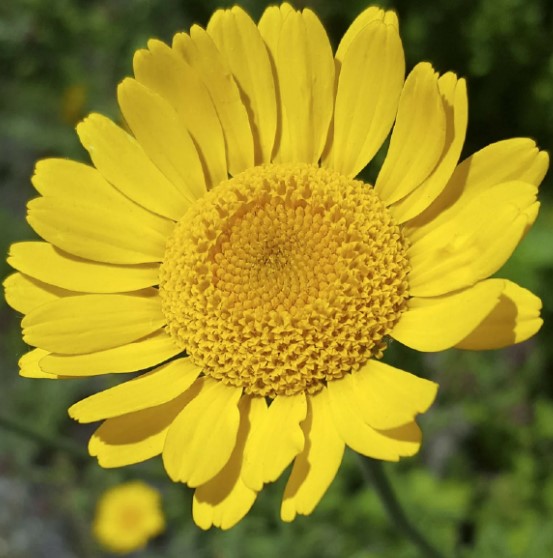
The common chrysanthemum is characterized by its highly branched bushes, which can reach a height of 30 to 60 cm. The leaves of this plant are characterized by a pinnate shape on the lower blades and serrated on the upper ones. The flowers of the common chrysanthemum resemble daisies, but are distinguished by their white coloring with a yellow center. They are typically 30-50 mm in diameter.
| Variety | Description | Size, color, shape of inflorescence | |
| German flag
|
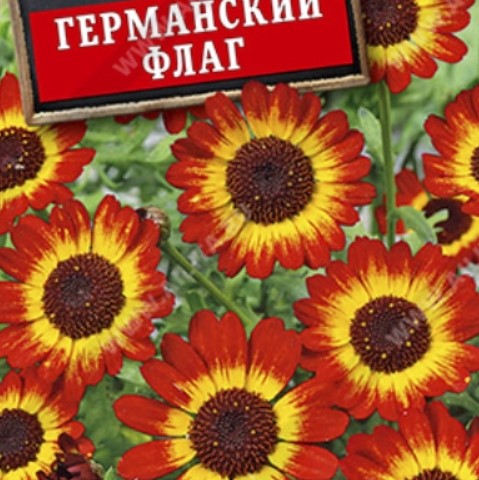
A cultivar with a strongly branched bush and upright shoots. The leaves are oblong with entirely serrated edges. | Up to 40 mm, red with a bright yellow ring and brown core, simple. | |
| Gloria
|
The stems are erect and well-branched. The leaves are oblong and deeply dissected along the edges. | 30-50 mm, golden yellow with dark yellow center, single. | |
| Star of the East
|
Up to 80 cm tall, with a highly branched stem. Reminiscent of a wild chamomile. | 30-50 mm, combines chocolate and soft yellow shades, simple. | |
| Zebra
|
A variety of daisy-shaped chrysanthemum. Up to 60 cm in height. | 50-60 mm, reddish-yellow, double. | |
| Tetrawise
|
Blooms from mid-June to September. | 30-40 mm, white with a delicate golden-yellow hue, semi-double. | |
| Helios
|
Height 30-50 cm. Bush is highly branched. | 100 mm, yellow-golden, terry. | |
| El Dorado
|
The variety is perfect for decorating flowerbeds, borders and mixborders. | 70-80 mm, with bright yellow petals and a dark brown center, single | |
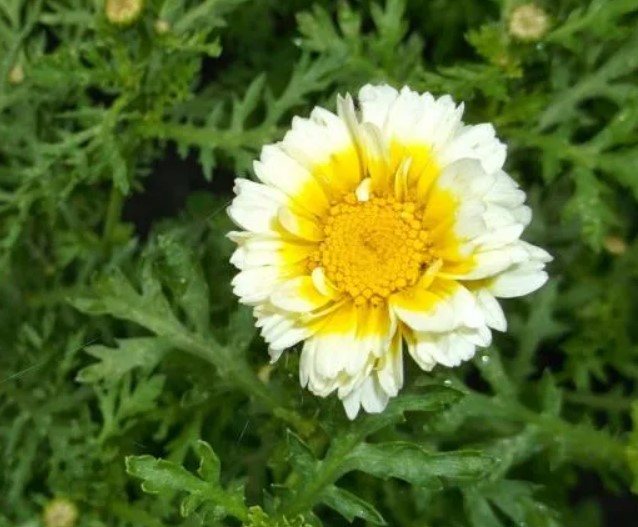
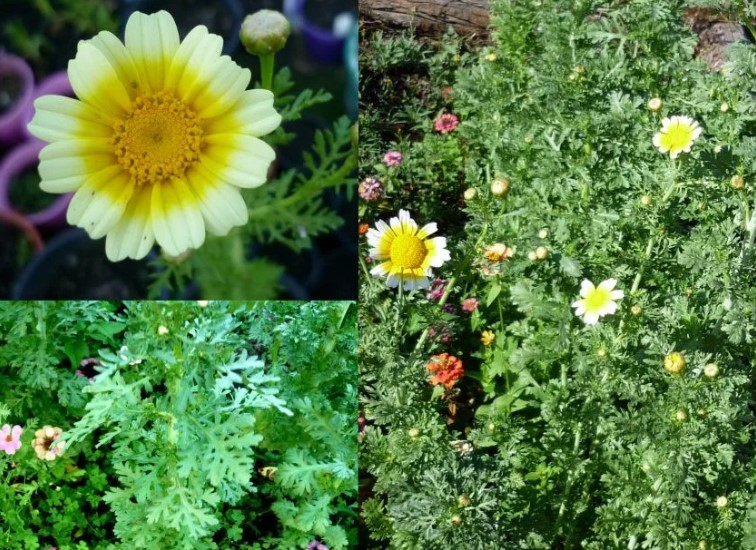
Topped (vegetable)
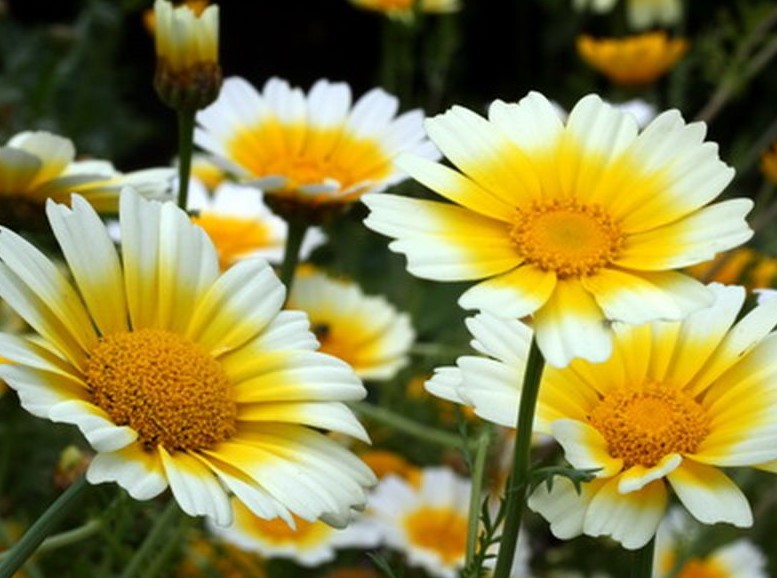
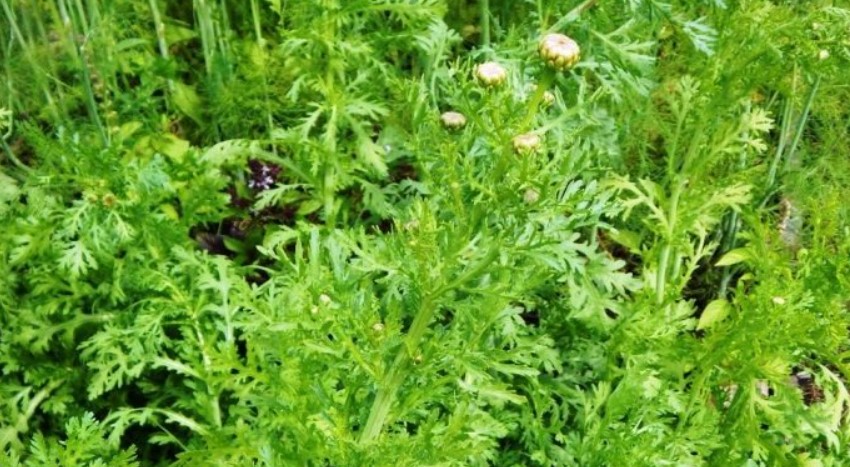
The crowned chrysanthemum is the only variety used for culinary purposes. The plant is rich in nutrients, which also impart a unique flavor and aroma. Both the leaves and young shoots are edible. Their flavor is reminiscent of celery. However, it is most often used as a garnish.
| Variety | Description | Flowers and leaves | Benefits and Applications |
| Golden
|
It is distinguished by its long flowering period and ease of care. | Semi-double ochre flowers (60-80 mm) retain their beauty until frost sets in. The leaves resemble exquisite lace. |
The shoots, leaves, and buds are edible and taste similar to celery or lovage. The leaves are used in meat dishes and salads. Young leaves are used to garnish dishes and added to soups and omelets. They are also stewed and fried fresh. The inflorescences are used in confectionery. They are also used to make marinades and pickles. Because the petals have a bitter taste, they are first soaked in vinegar or sugar syrup. The dried inflorescences are brewed into tea. Chrysanthemum is used to prepare infusions for migraine treatment and appetite stimulation. It also has a mild laxative effect and improves cardiovascular health. Thanks to its high content of natural antioxidants, the plant protects the body from negative environmental factors and strengthens the immune system. Chrysanthemum drinks are excellent for toning and energizing. |
| Debut
|
This variety has stylish foliage and reaches 70 cm in height. It is highly productive, yielding up to 4 kg per square meter. | The leaves are pinnately dissected and green. The inflorescences are lemon-colored, with flowers 30-35 mm in diameter. | |
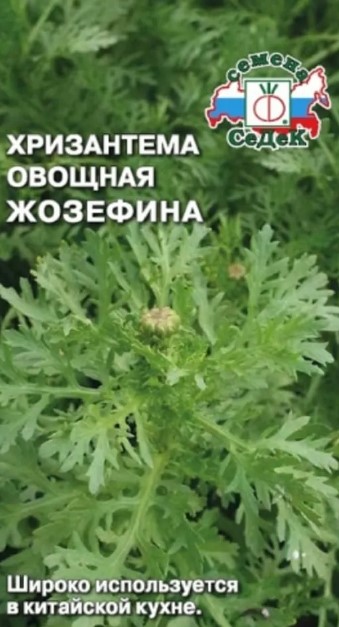
| Josephine
|
It is distinguished by its early ripening period and tolerates low temperatures well. | The leaves are dissected and emerald green. The semi-double flowers are bicolored—bright yellow tubular petals inside and white ray petals around the outside, 40-50 mm in size. | |
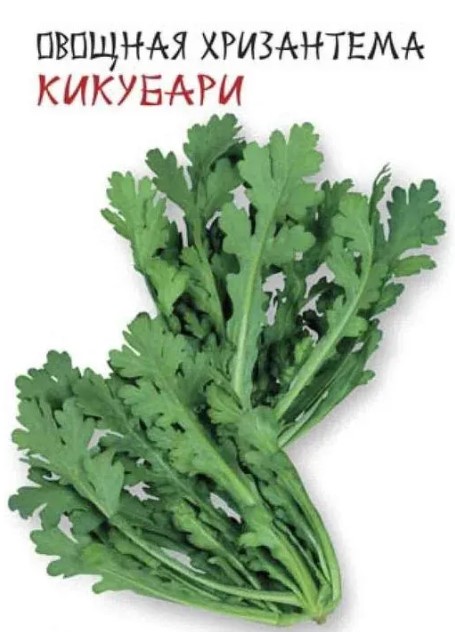
| Kikubari
|
It has good cold resistance and a fleshy stem. | A variety with dark green foliage. The leaves are dissected, approximately 20 cm long and 5 cm wide. Semi-double inflorescences up to 120 mm. | |
| Mirage
|
It has resistance to cold. | The leaves are dissected and green. The double flowers have a yellow center and white petals along the edges. The diameter is 150-200 mm. | |
| Nivea
|
Up to 70 cm in height. Stems are fleshy. | With white semi-double flowers and a center, 50-70 mm in diameter. The leaves are dissected. | |
| Pimrose Gem
|
A high yielding variety. | Semi-double yellow inflorescences with a bright yellow center, up to 50 mm. Large leaves. | |
| Orion
|
With fleshy, erect stems reaching 70 cm. | Large, semi-double, single flowers are bright yellow, 40-50 mm in diameter. The leaf blades are dissected. | |
| Patterned
|
The stems grow up to 45 cm. The harvest can be collected 35-50 days after the first shoots appear. | Semi-double, lemon-colored inflorescences measure 170-200 mm in circumference. The leaves are elongated, sessile, and light green, with a delicate aroma. | It has a subtle and delicate flavor. Contains vitamins, calcium, phosphorus, and iron. It is ideal for salads. |
| Amber
|
High-yielding variety. | Double orange inflorescences reaching 140-150 mm. | Contains a large amount of nutrients. It is used in first and second courses, salads, desserts, and various beverages. |
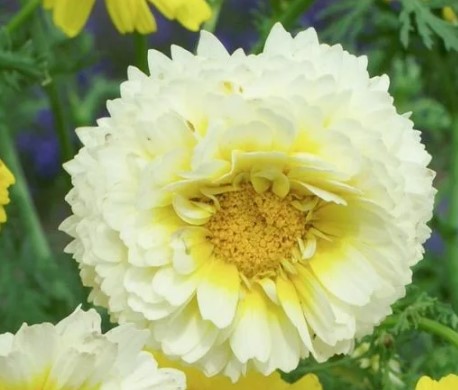
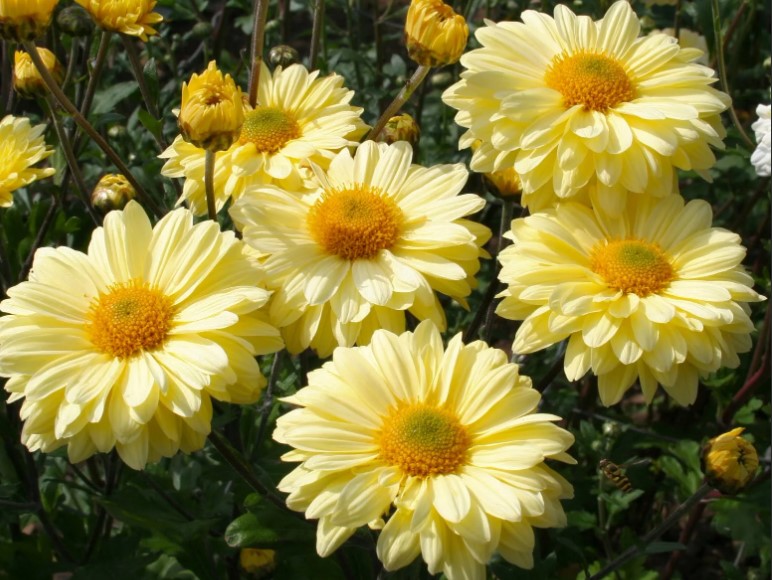
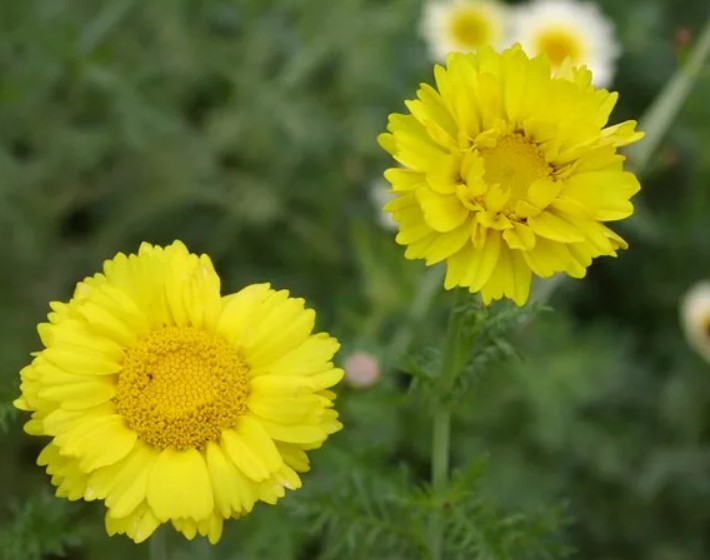
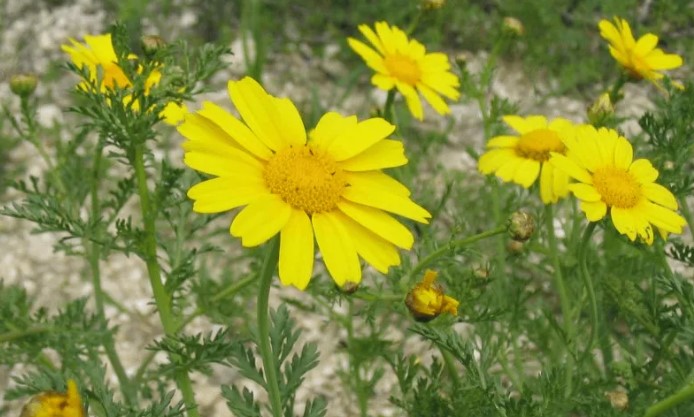
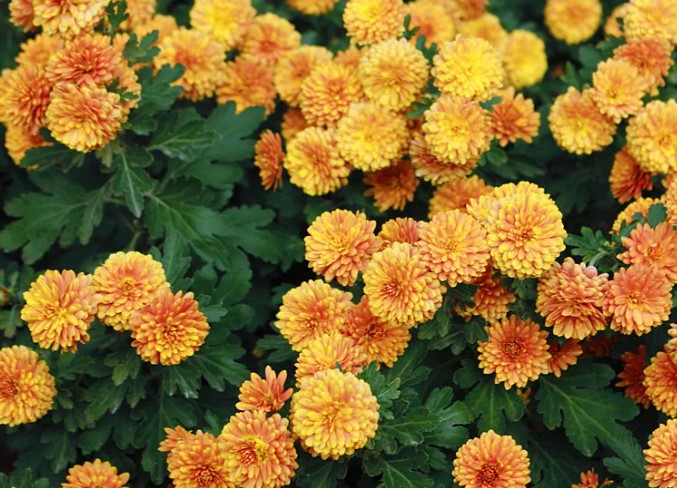
Odorless
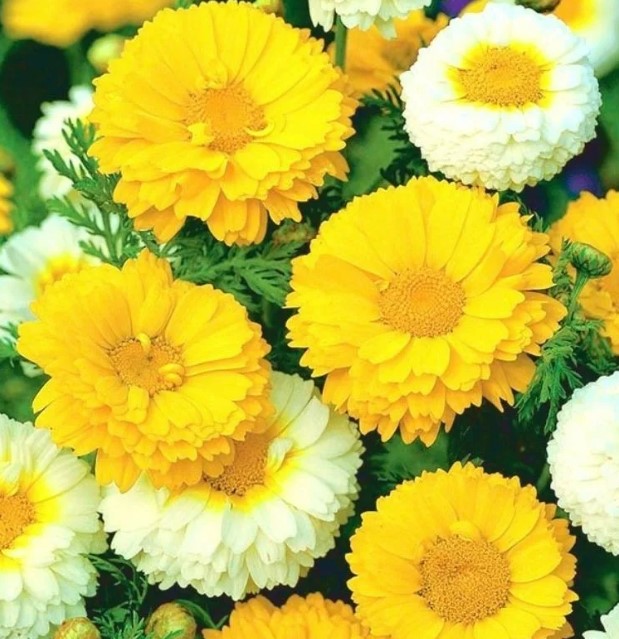
The scentless chrysanthemum impresses with its unique charm and variety of shapes and colors. Its versatility and durability make it one of the most sought-after flowers for wedding bouquets.
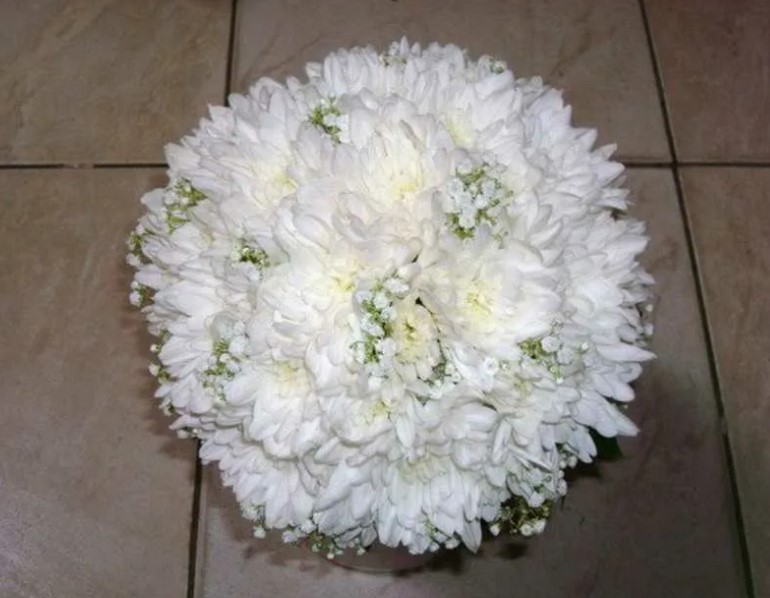
The wide variety of varieties is one of its main advantages. Thanks to this wide selection, viewing photos of the varieties will allow you to choose flowers that will perfectly complement your wedding attire and the theme of the ceremony.
The scentless chrysanthemum tolerates both high and low temperatures well, making it an excellent choice even in the most adverse weather conditions.
New varieties of scentless chrysanthemums:
| Variety | Description | Photo | |
| The bride's dress | This variety of chrysanthemum stands out with its feathery foliage and double, snow-white buds. Such grace and beauty can transform a bride's wedding bouquet. | 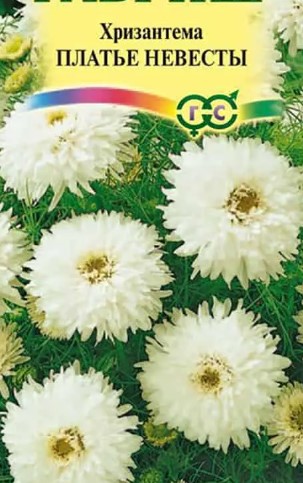 |
|
| White lace
|
The ruffled white petals create a unique lace effect, making this variety an ideal choice for wedding arrangements. It pairs beautifully with other flowers, allowing for elegant and sophisticated bouquets. | 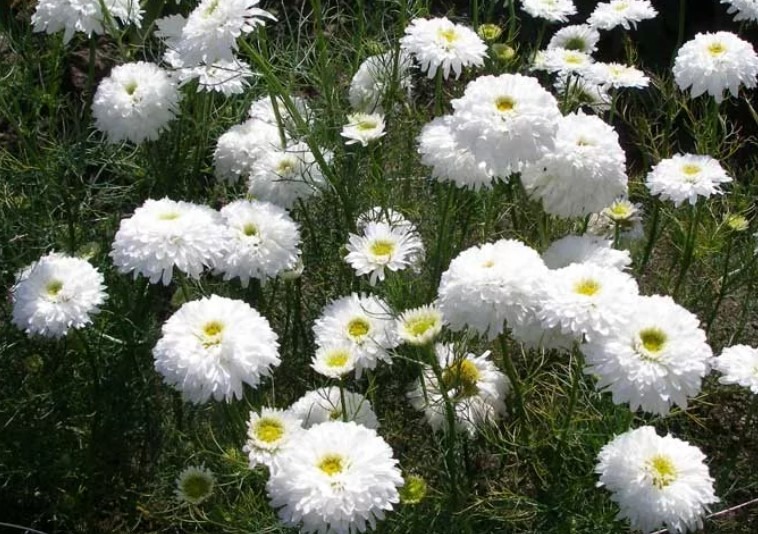 |
|
| Lemon yellow | To add a touch of freshness and spring to your wedding bouquet, consider a lemon-yellow chrysanthemum. Its bright, vibrant hue will give the bridal bouquet a unique look and will also add a vibrant touch if the ceremony is held outdoors or in a Provençal style. | 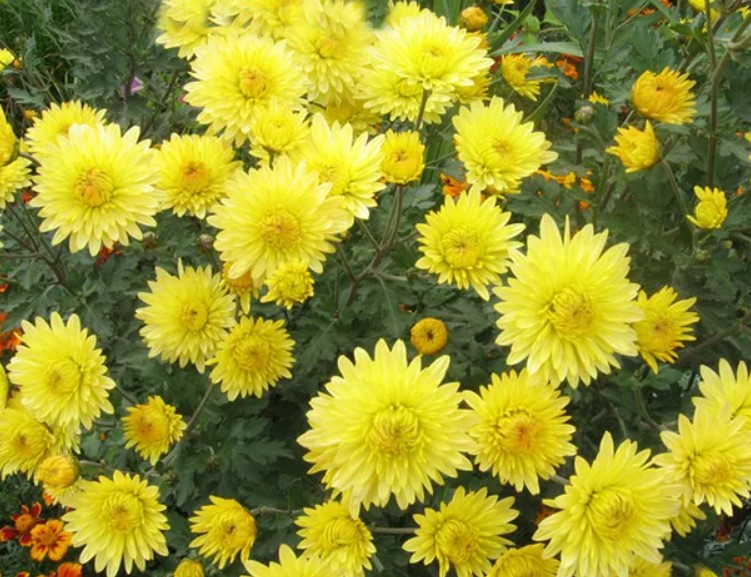 |
|
Prominent (inverted)
The Chrysanthemum spectabile is distinguished by its robust bushes and height. They can grow up to 1.2 m, with a diameter of up to 70 cm. The beauty of these magnificent flowers lies in their numerous large heads, up to 10 cm in diameter. They open beginning in July and enchant with their beauty until the first frost.
Popular varieties:
| Variety | Description | Photo | |
| Annette | This variety has beautiful double inflorescences. | 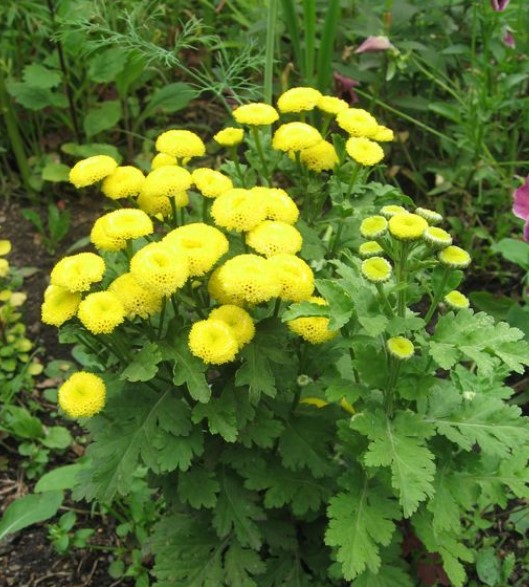 |
|
| Cecilia | The yellow base of the white ligulate petals is characteristic. | 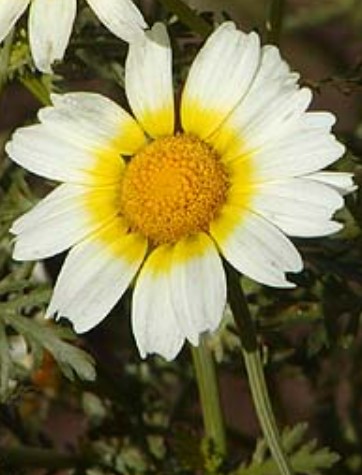 |
|
2 species and 9 varieties of conditionally annual chrysanthemums
Let's take a closer look at the most common types.
Maiden
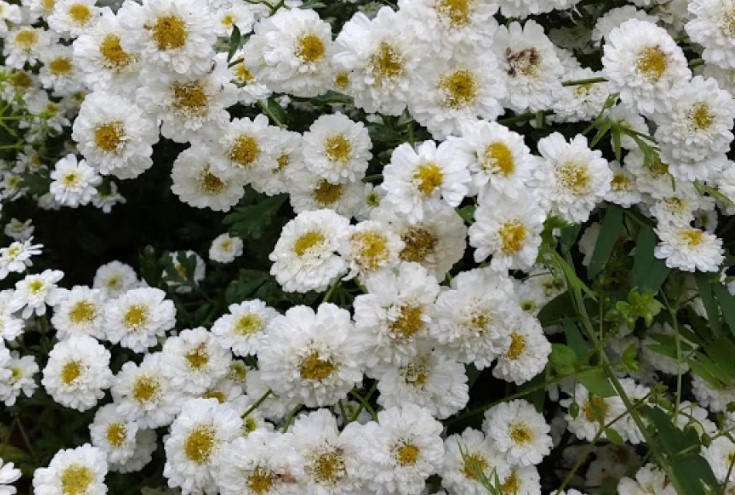
The maiden chrysanthemum is classified as a conditionally annual plant. In reality, this variety is perennial. However, it is often grown in gardens as an annual. The flower is a compact bush with fluffy, dissected, light green leaves. The inflorescences are double, with petals in shades of yellow or white.
Common varieties:
| Variety | Description | Photo | |
| White stars | A low-growing, bushy plant with compact, highly branched stems covered with numerous small, double flowers 1.5-2 cm in diameter. They resemble snowflakes with creamy centers. The leaves are beautiful and delicate. This fast-growing plant boasts abundant and long-lasting blooms. | 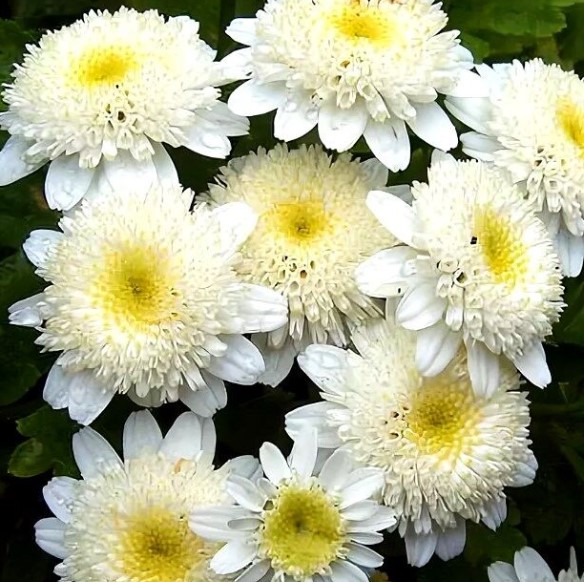 |
|
| Virgo | It's considered a tall plant. Its stems can reach 80 cm. Virgo produces small, double white flowers, up to 1.5 cm in diameter. | 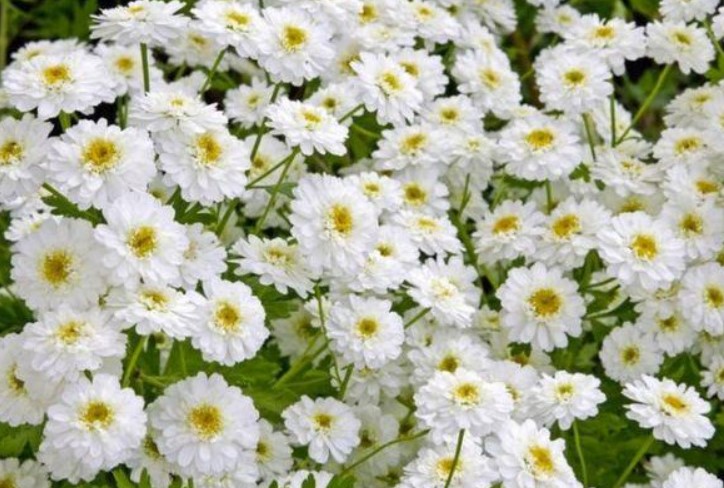 |
|
| Goldball | This variety is a low-growing plant (up to 35 cm). Its small, spherical bushes produce double flowers 2.5 cm in diameter. | 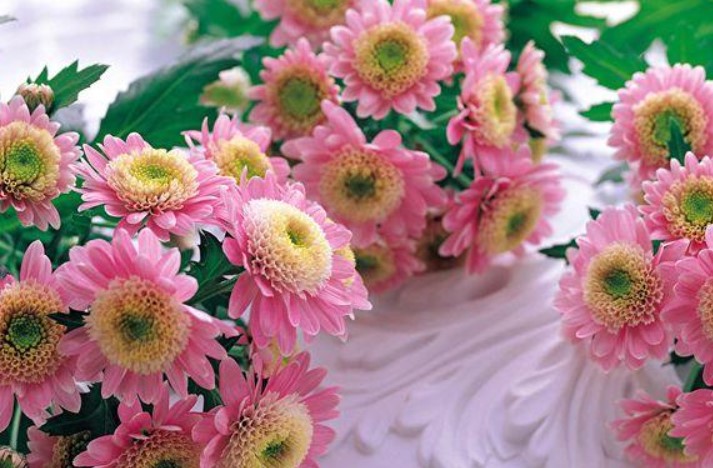 |
|
| Golden Ball | This variety thrives in challenging climates and is perfect for gardens of various styles. The bushes grow up to 25 cm. The leaves are pinnately dissected and light green. During flowering, small flowers up to 2 cm in diameter open. The flowers are bright yellow and double. | 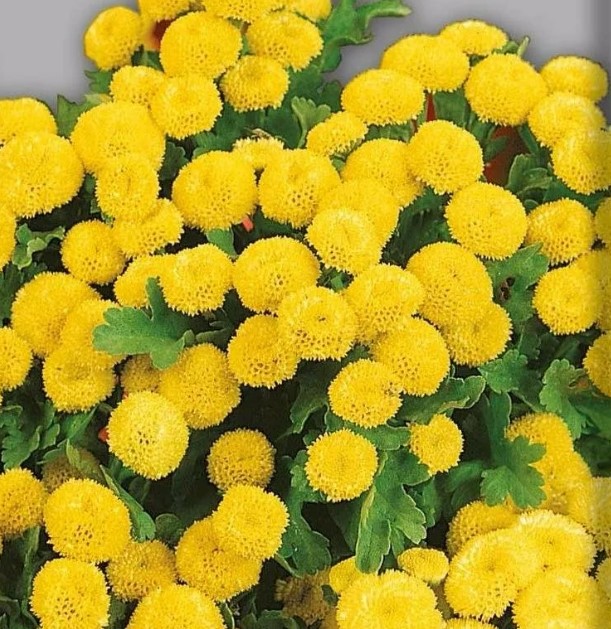 |
|
| Double White | A bushy plant with small, button-shaped white flowers. It grows to a height of no more than 25 cm. | 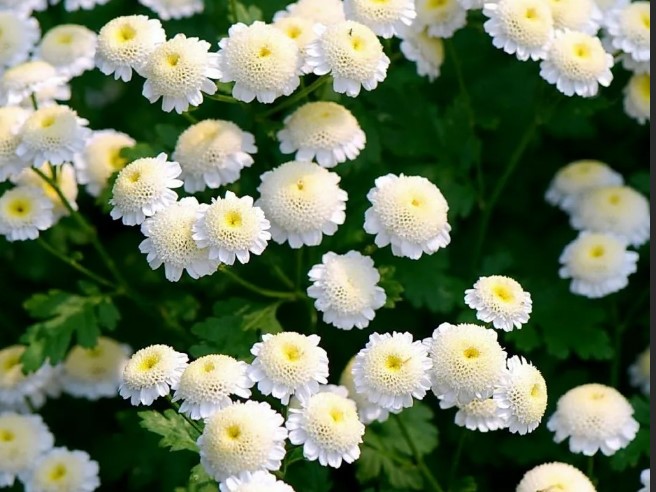 |
|
| Zilbeoteppich | Chrysanthemums of this variety attract with their small double white inflorescences. | 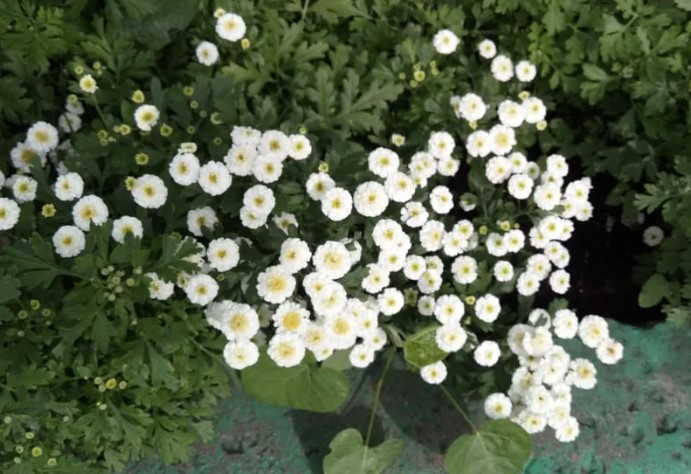 |
|
| Snow Ball | It is a small plant with a branching stem and numerous small inflorescences. The flower buds resemble snowflakes, are double, and are gathered in corymbs. The main color of the flowers is white, and the fragrance is pleasant and rich. The bushes reach a height of up to 80 cm, and the foliage is light green. It is an early variety, so the first flowers can be seen as early as early summer. | 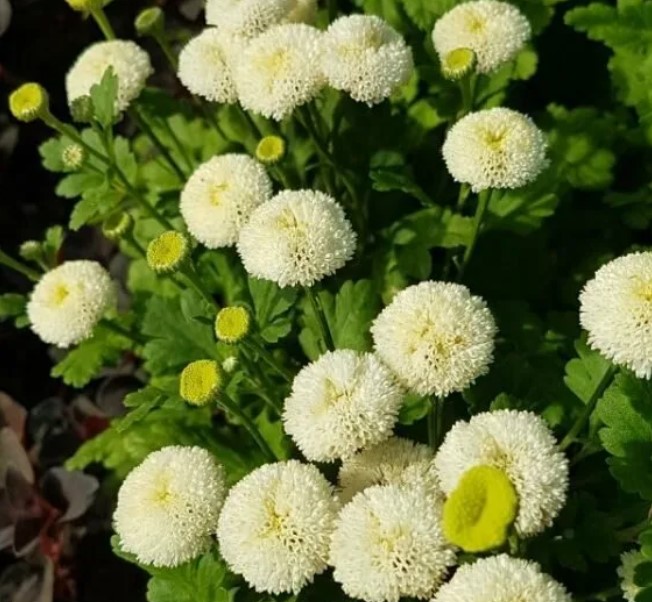 |
|
| Schneebal | This is a low-growing variety, reaching up to 20 cm in height. It has double flowers of white or yellow with a green center. The bush is spherical in shape, up to 25 cm in diameter. | 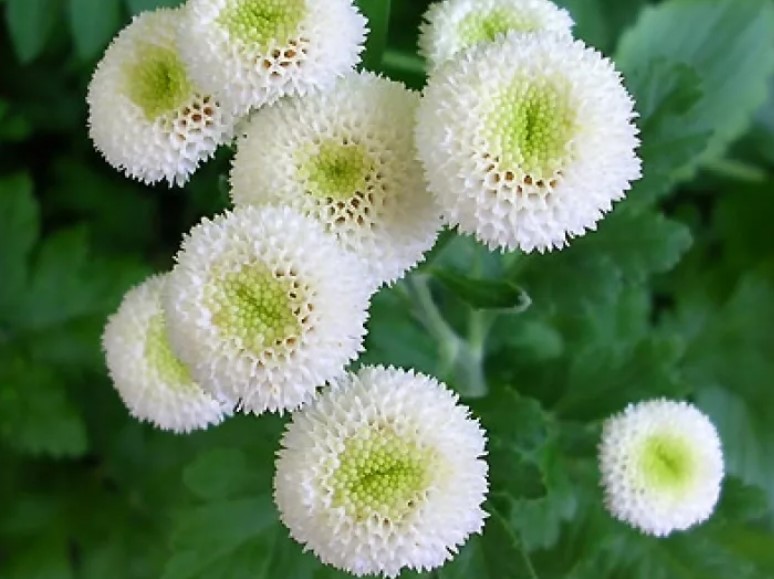 |
|
Swamp
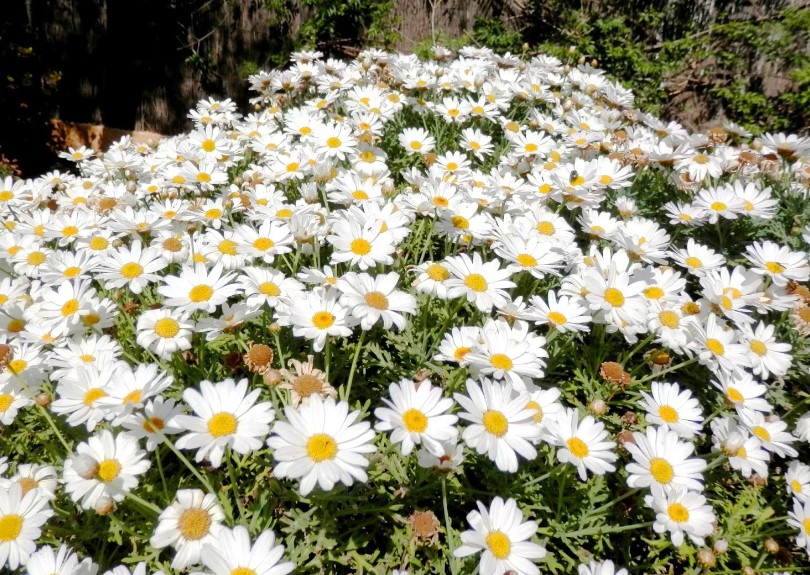
The marsh chrysanthemum is a small plant, 20-25 cm tall. Its characteristic feature is its vigorous growth habit: it forms numerous straight or sloping stems intertwined with one another. Its leaves are arranged alternately, have serrated edges, and are a beautiful bright green. The marsh chrysanthemum produces a profusion of inflorescences, consisting of numerous heads with white ray flowers along the edges and large yellow tubular flowers in the center, resembling daisies. Flowering begins in late June and continues until the onset of cold weather.
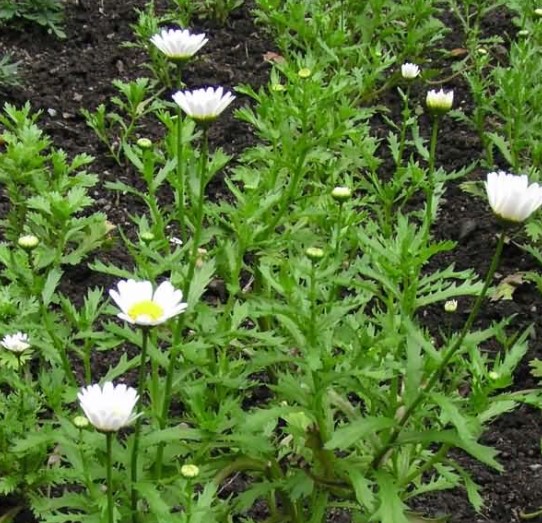
One of the most popular varieties is Snowland. It's a compact plant with straight or sloping stems. It blooms profusely. By late June, small flowers cover the entire surface of the plant, delighting the eye until the autumn frosts.
11 species and 95 varieties of perennial chrysanthemums
Let's consider each species and its varieties in detail.
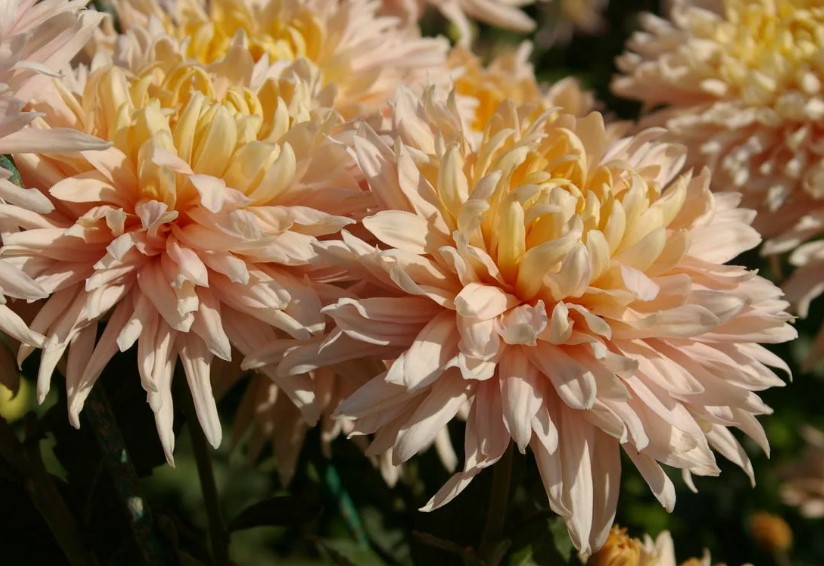
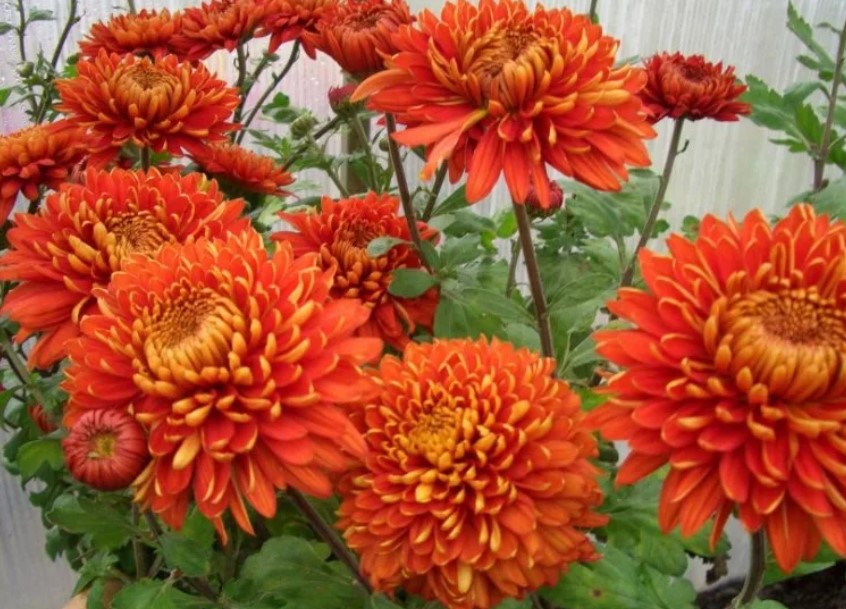
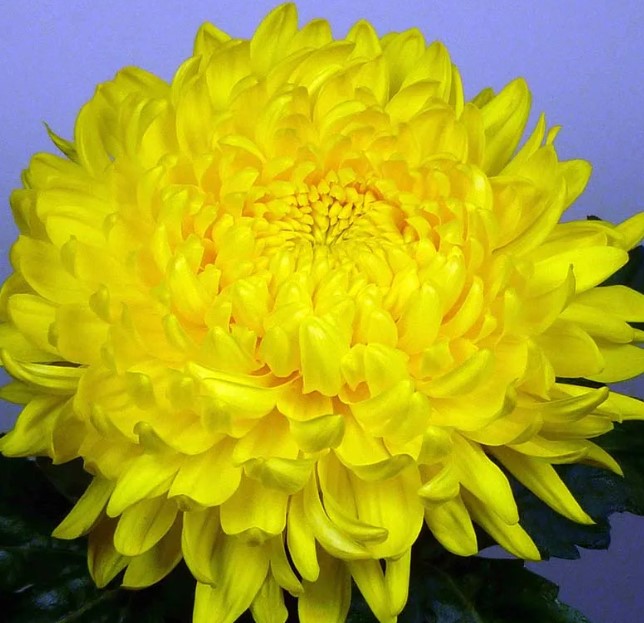
Large-flowered
This type of chrysanthemum is the most attractive of all. The diameter of its flowers ranges from 10 to 25 cm. It's important to note that most varieties of large-flowered chrysanthemums require special care, as they are easily susceptible to freezing temperatures, which can have a negative impact on them. However, there are rare frost-resistant varieties that can easily survive cold winters in open ground. They are mainly grown for cut flowers used in luxurious bouquets.
| Variety | Description | Size, color and shape of the inflorescence | Flowering period | Frost resistance |
| Avignon
|
Up to 70 cm in height, up to 15 cm in diameter. The inflorescences consist of two rows of petals, which gives the variety depth and volume. | About 150 mm, pink petals and yellow center, double. | Mid-autumn. | Up to -29°C |
| Aurora
|
A compact variety, reaching a height of 40-50 cm. The inflorescences are bright and lush. | 70-80 mm, orange-red (the underside of the petals is lighter), double. | August-September. | From -34°C to -29°C. |
| Alec Bedser
|
A variety with a strong stem and large inflorescences. Bushes reach 60-70 cm in height, with dense foliage. | 100-140 mm, yellow, terry. | August-October. | Up to -18°C. |
| Ariel
|
A variety with lush bushes and straight stems, reaching a height of 70-80 cm. | 100-120 mm, with snow-white petals and a yellow core, semi-double. | July-September. | From -1°C to +4°C. |
| Valentina Tereshkova
|
Requires support due to its long but fragile stem. The leaves are large. The inflorescences have serrated petals of varying lengths. | 100 mm, red-raspberry, terry. | September. | -23°C. |
| Gazelle
|
Requires staking and support. Reaches a height of 100-110 cm. | 120-140 mm, bright yellow, double. | From August until the first frost. | Weak, requires winter shelter. |
| Diplomat
|
Petals with wavy edges and drooping petals. Suitable for creating floral arrangements. | 200 mm, burgundy-red, terry. | From September until the first frost. | Average. |
| Zembla
|
A variety with a varied color palette and large heads, juicy green pinnately dissected leaves. | 130-140 mm, various colors, terry. | The beginning of September – the first frosts. | From -1°C to +4°C. |
| Cassandra Pink
|
Forms a dense bush with strong stems, reaching a height of up to 80 cm. | 150 mm, pink, terry. | Mid-September – first frosts. | From -34°C to -29°C. |
|
Creamist Yellow
|
A variety with large flowers and straight stems. | 180 mm, creamy yellow, terry. | September-November. | From -23°C to -17°C. |
| Olina
|
A variety of chrysanthemum with large flowers with a yellow center, shaped like a needle. | 80-100 mm, pink, terry. | August-September. | From -34°C to -29°C. |
| The Gray-Haired Lady
|
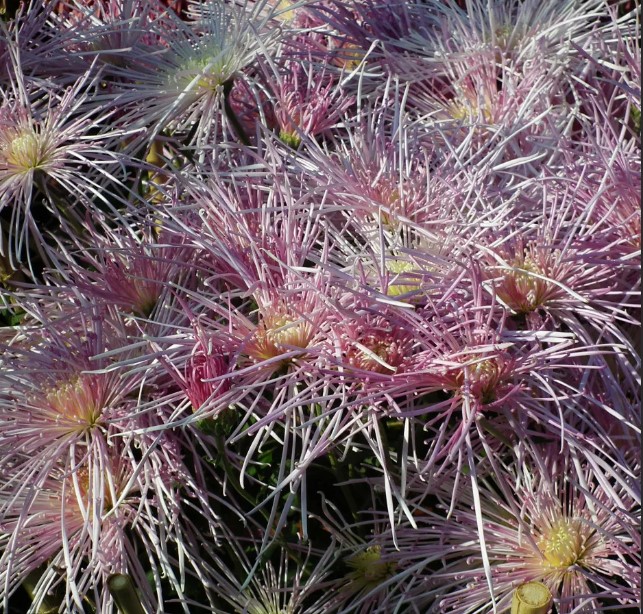
A large-flowered variety with strong stems reaching 80 cm. Foliage is a vibrant green shade. | 120 mm, pinkish with a silvery tint, terry. | Late September-November. | From -34°C to -29°C. |
| Spinder Pink
|
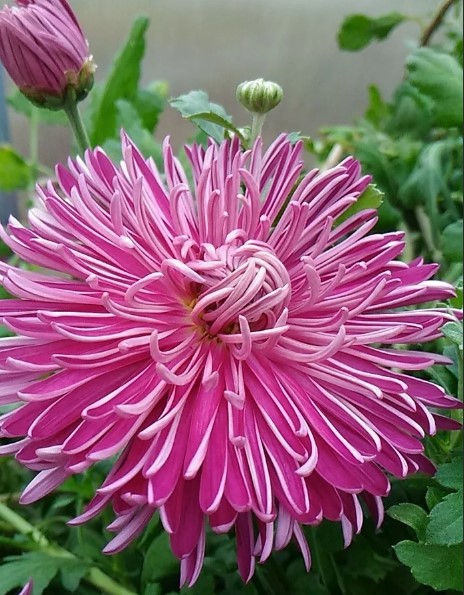
A variety with an unusual petal shape, reminiscent of a spider, and large, bright flowers. | 150 mm, pink with light petal tips, spider-like. | September-October. | From -23°C to -18°C. |
| Tom Pearce
|
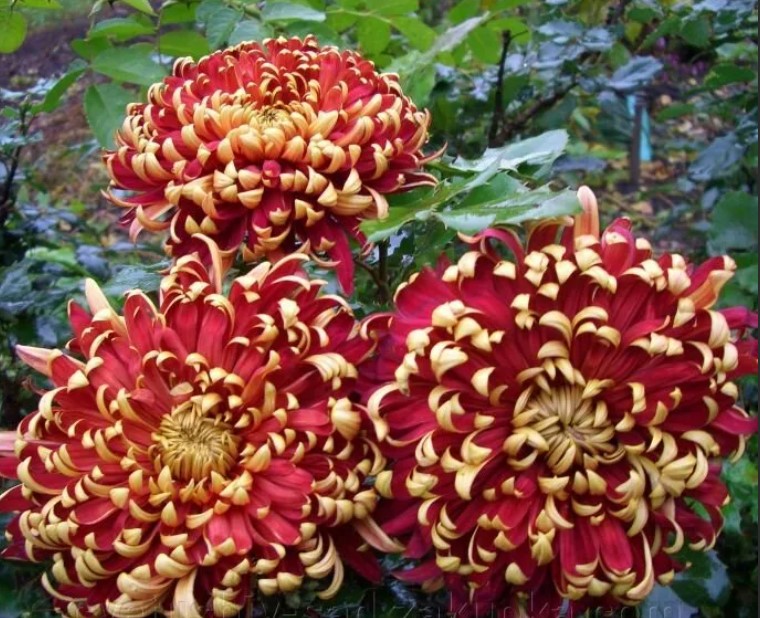
Forms lush bushes reaching 40-60 cm. Perfect for cutting. | 220 mm, yellow-red, terry. | From September until the first frost. | From -28°C to -23°C. |
| Shamrock
|
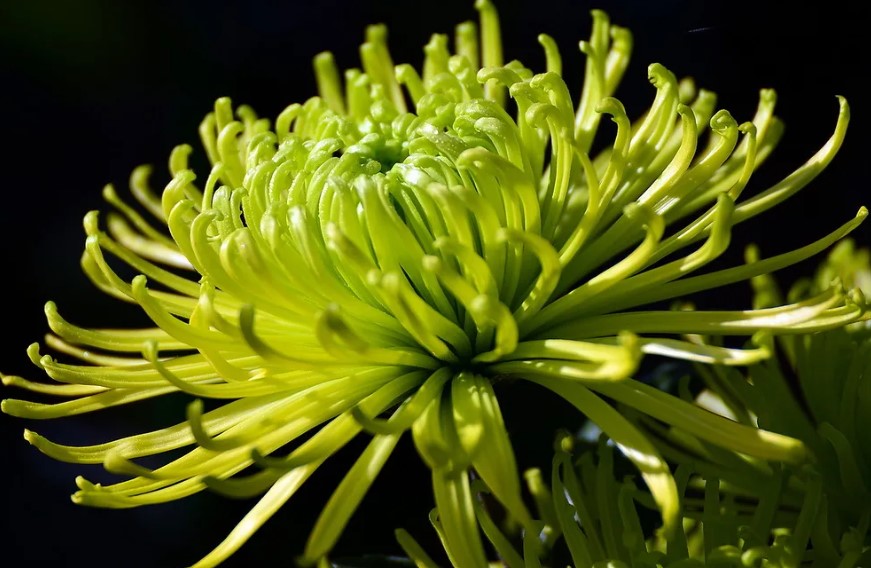
A variety with lush, flower-shaped inflorescences and long, thin petals. The foliage is fleshy and alternately arranged. | 120 mm, light green, terry. | October. | From -34°C to -29°C. |
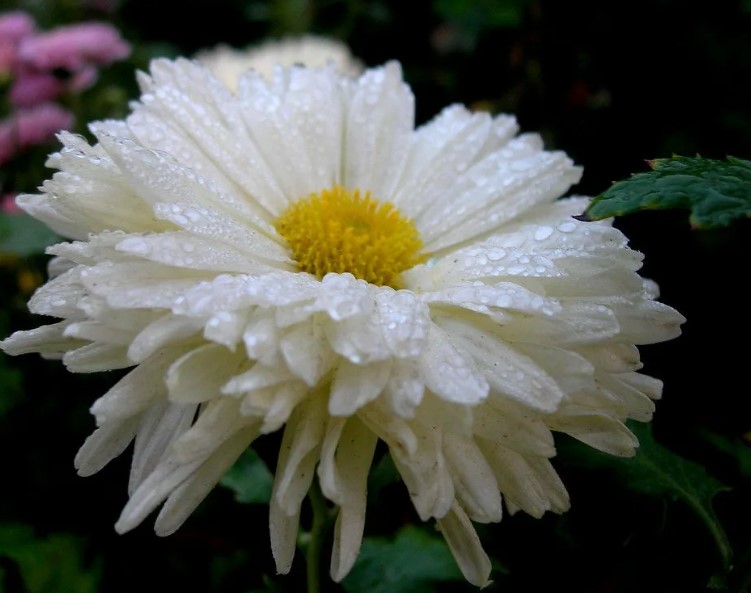
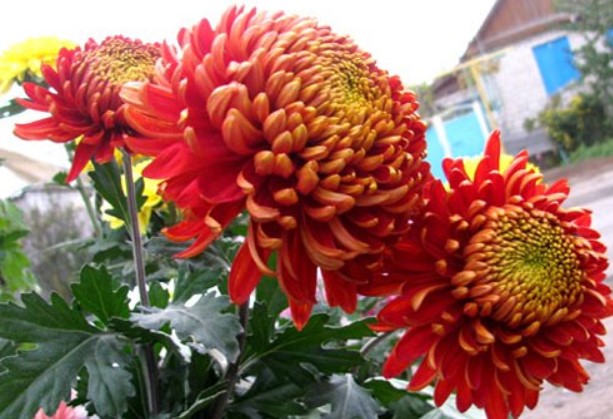
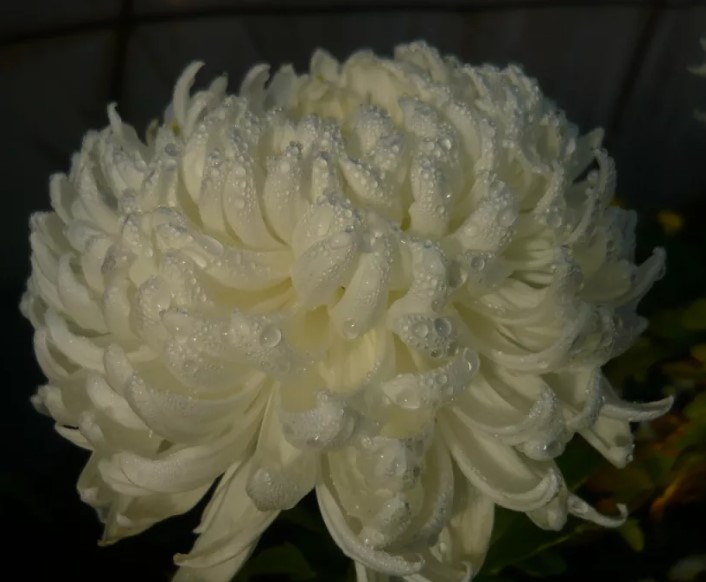
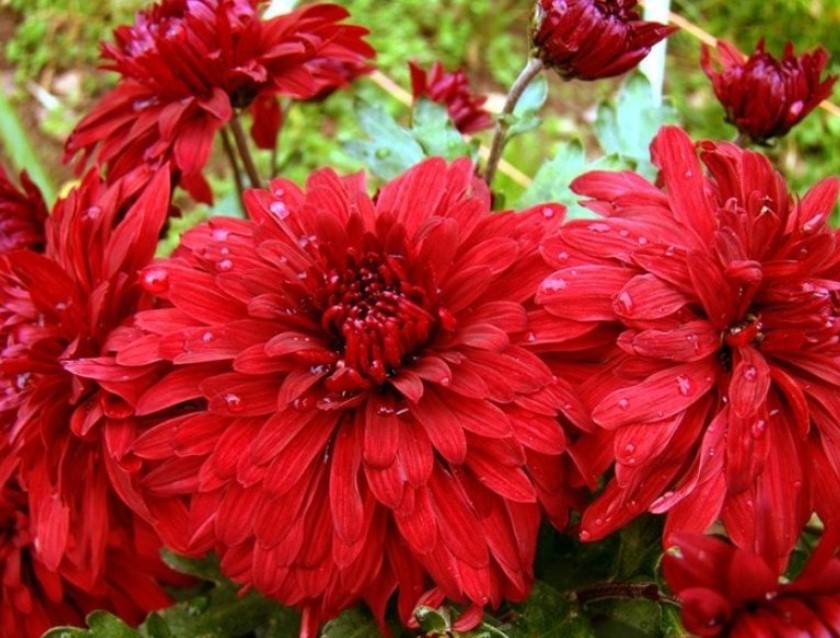
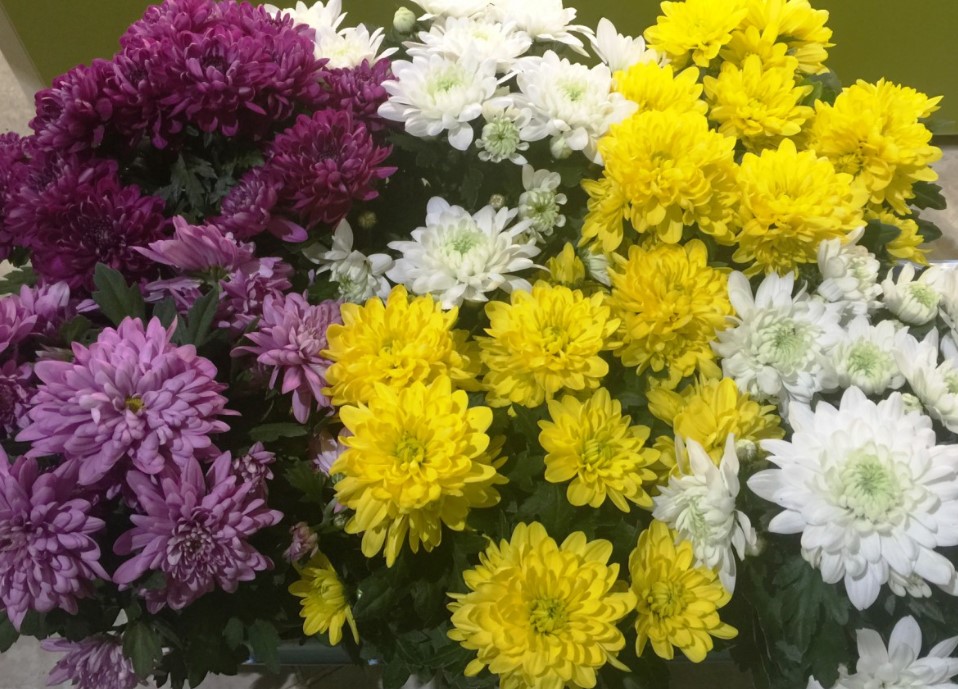
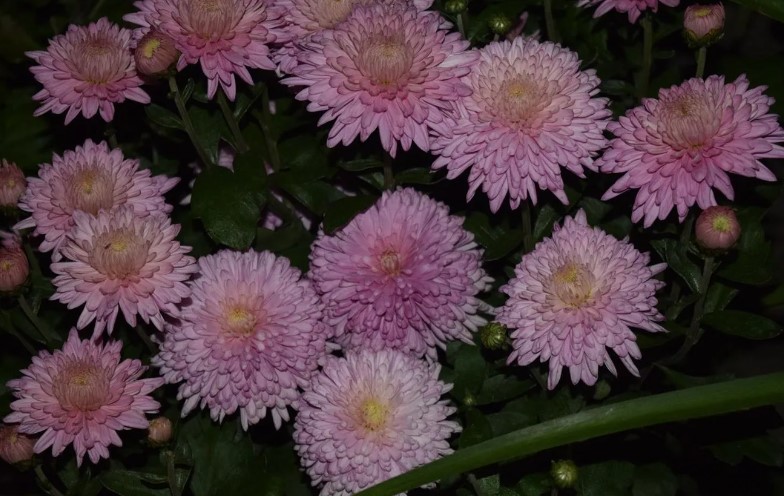
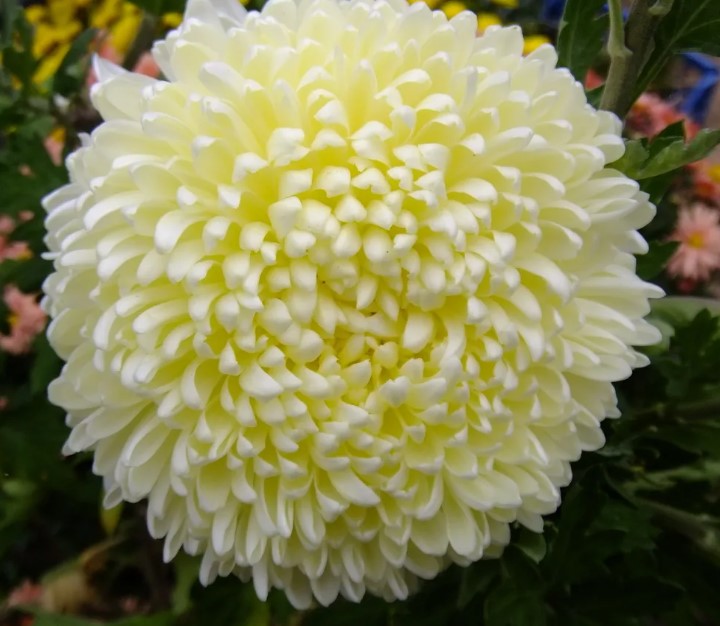
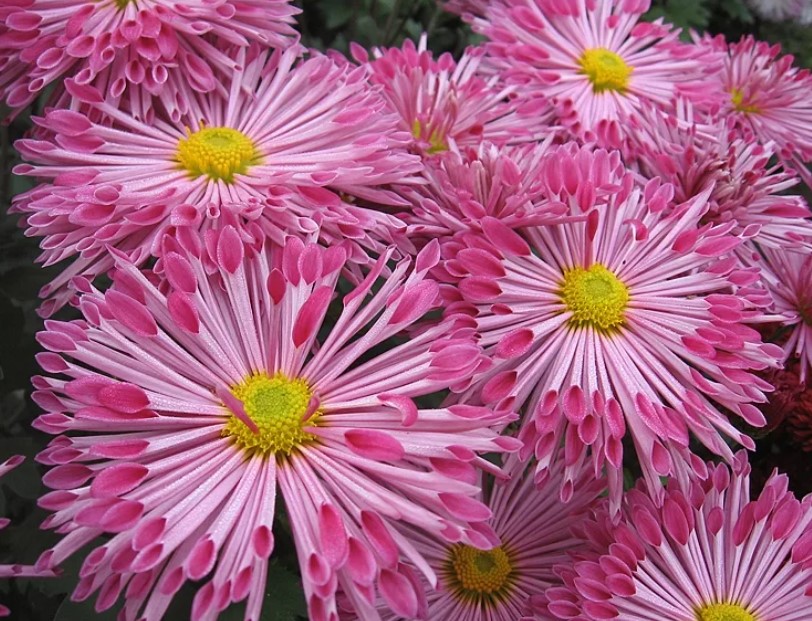
Mid-flowered
They include many interesting varieties with flowers over 25 mm and under 100 mm in diameter. The table shows the most popular ones.
| Variety | Description | Size, color and shape of the inflorescence | Flowering period | Frost resistance |
| Alice
|
A compact cultivar with densely spaced branches and green foliage. | 40-50 mm, bright orange, spherical. | July-August. | From -34°C to -29°C. |
| Bolte
|
A variety with upright shoots and dark green, ribbed foliage. It smells of wormwood. | 70 mm, hot pink with white border, simple. | September-November. |
From -23°C to -18°C. From -18°C to -12°C. |
| Champagne splashes
|
The petals resemble champagne splashes, hence the name. | 80-100 mm, soft pink or white, spherical. | From early autumn to winter. | Up to -30°C. |
| Grand Pink
|
A variety with dark green foliage and large chamomile flowers. | 70-75 mm, lilac, simple. | Blooms in mid-August. | From -12°C to -7°C. |
| Deco
|
The variety is used for planting on borders, country-style flower beds, and also for cutting. | 50-70 mm, with orange petals and a yellow center, double. | August-September. | From -34°C to -29°C. |
| Stars of the Galaxy
|
This variety is suitable for growing in containers and outdoor flower beds. The bushes are upright, and the flowers resemble baskets. | 60-70 mm, various colors, terry. | From August to November. | From -1°C to +4°C. |
| Lelia
|
Maximum height: 50 cm. Looks impressive both in the landscape and as a cut flower. | 30-40 mm, dark crimson, terry. | June-September. | From -34°C to -29°C. |
| Autumn's Smile
|
The bushes of this variety are spherical. The foliage is bright green, and the flowers are contrasting in two shades. | 60-70 mm, snow-white-pink, double. | August-September. | From -34°C to -29°C. |
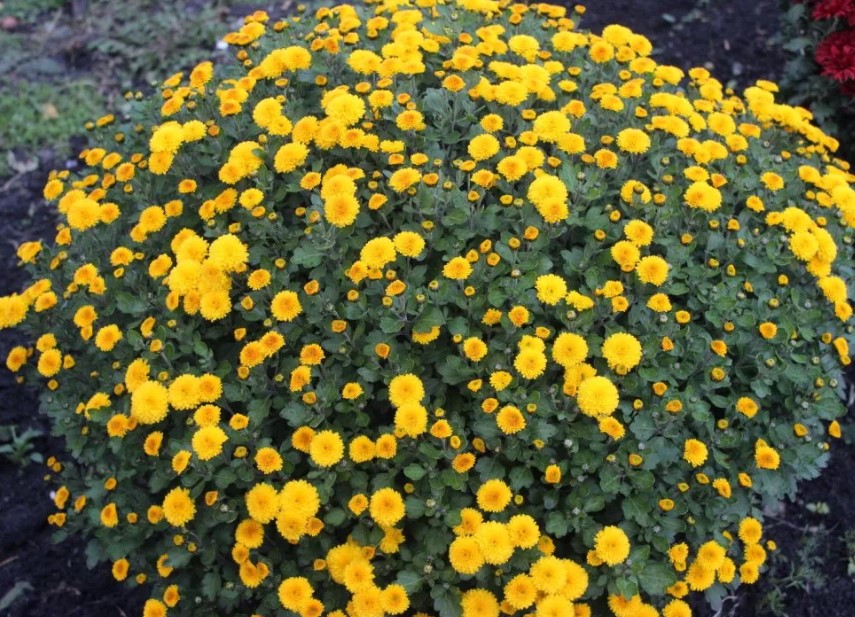
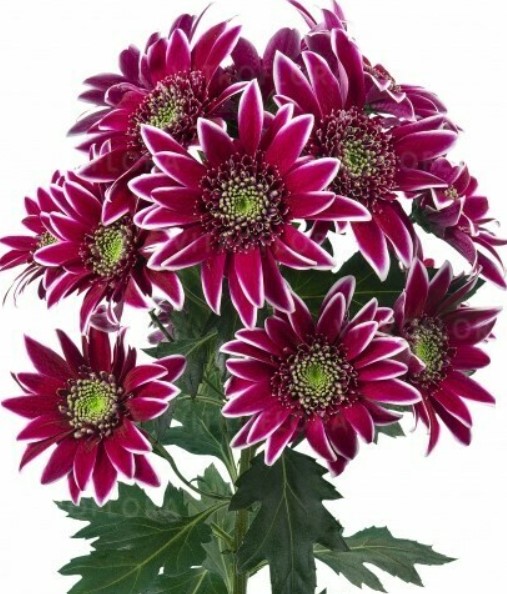
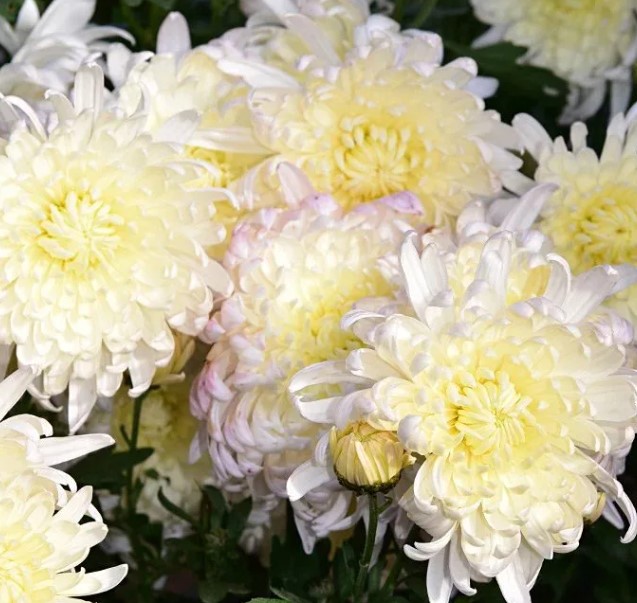
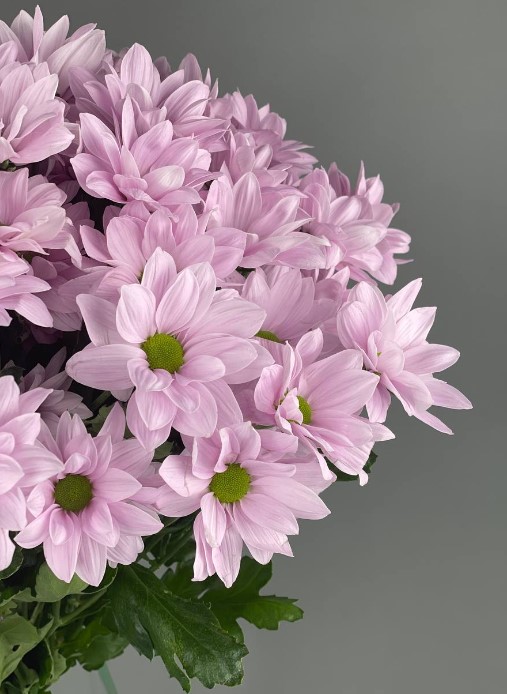
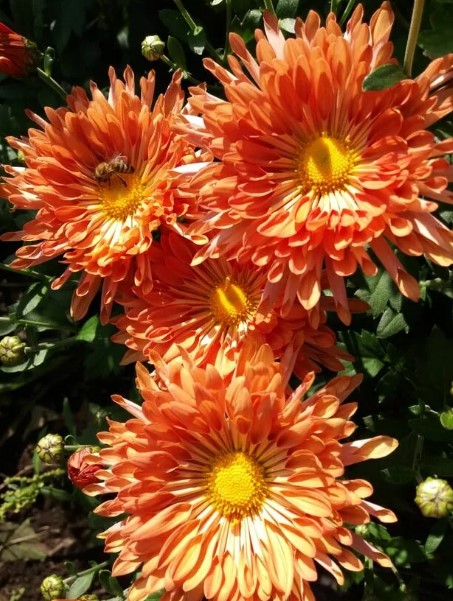
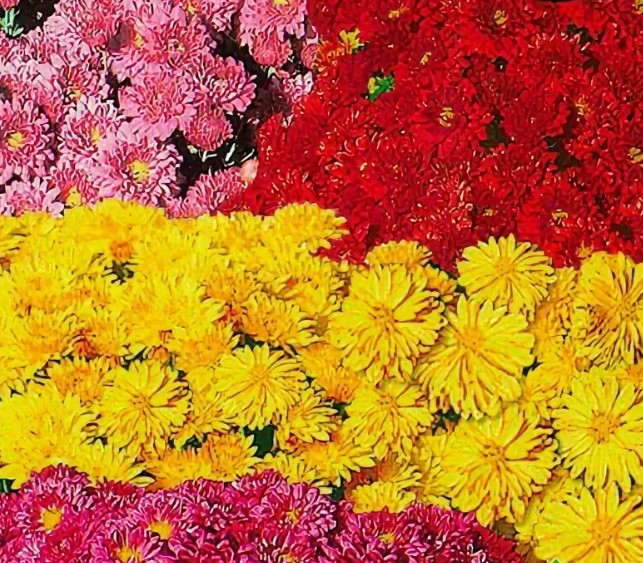
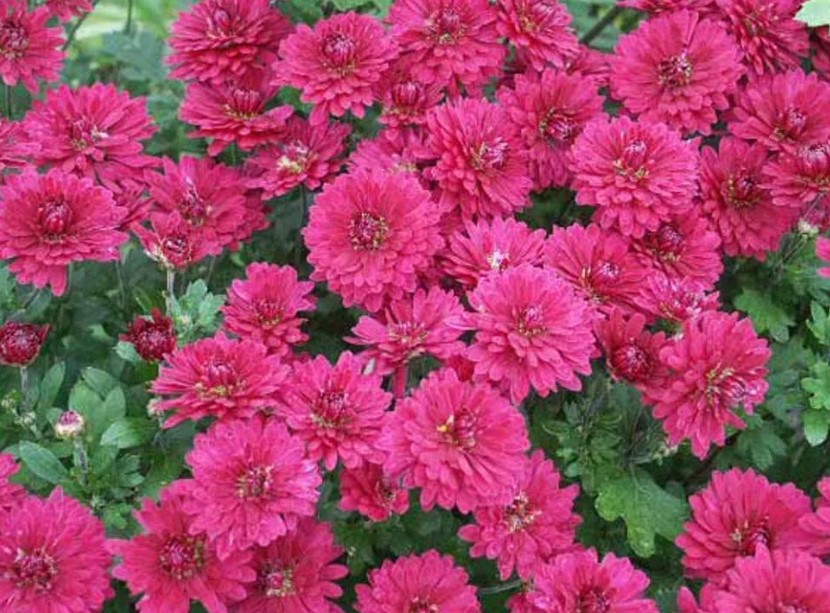
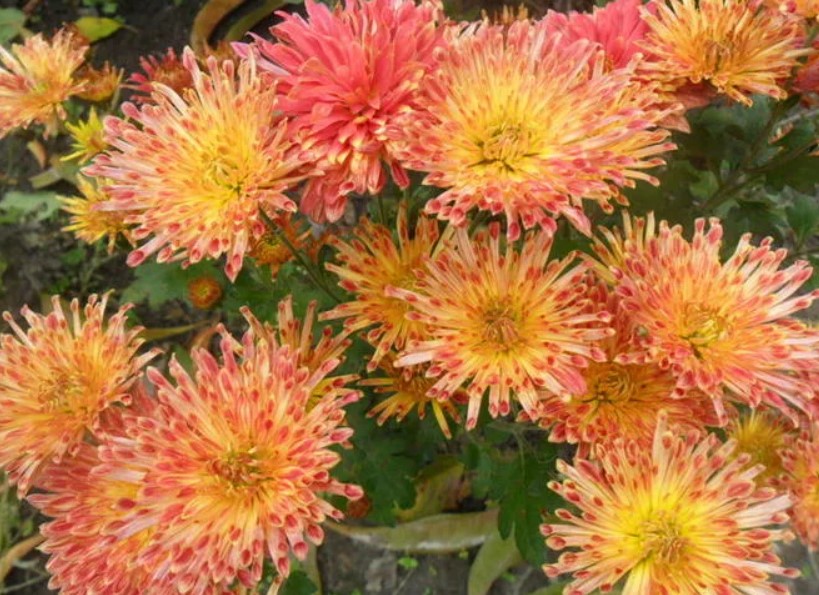
Korean
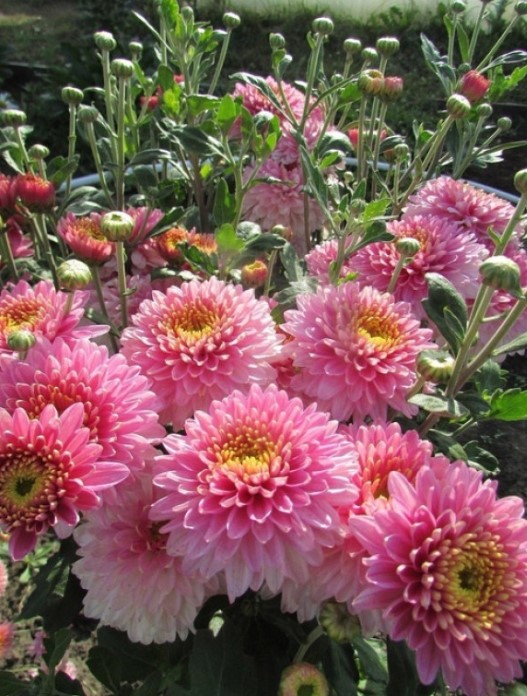
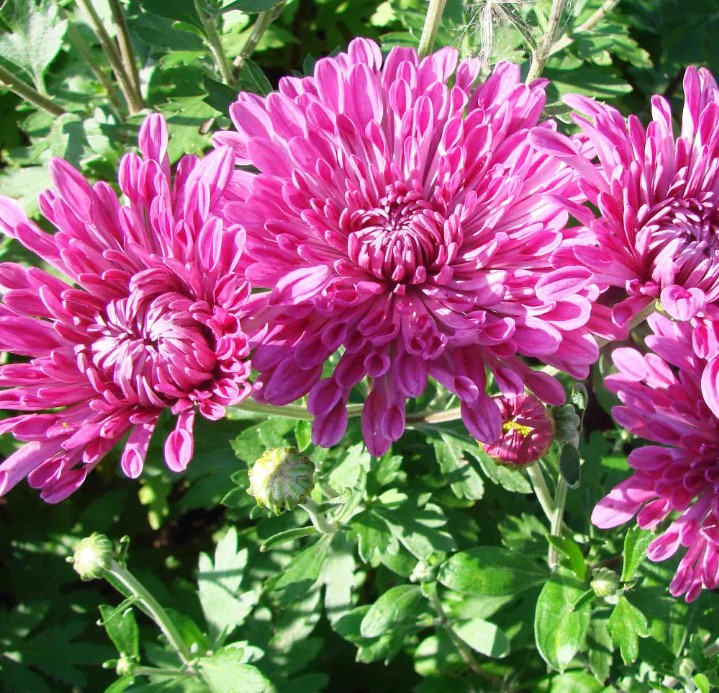
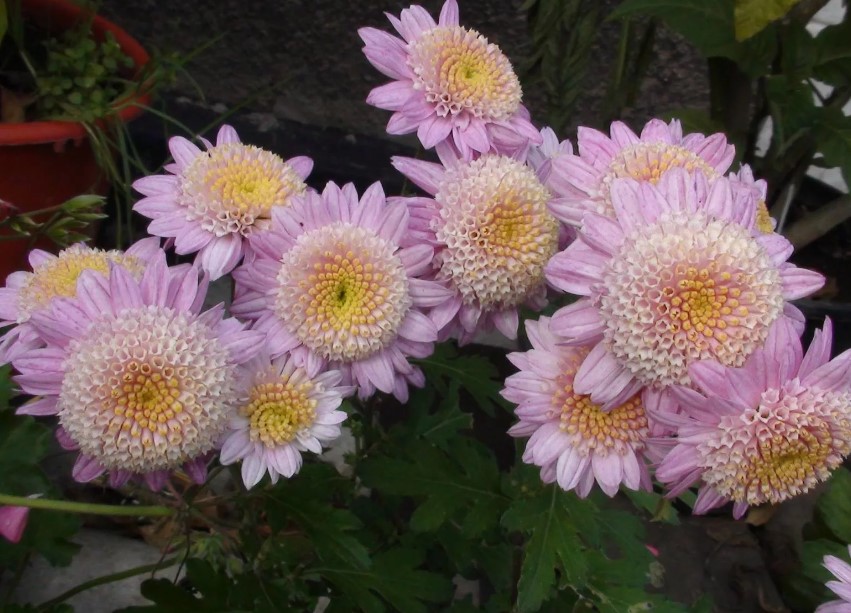
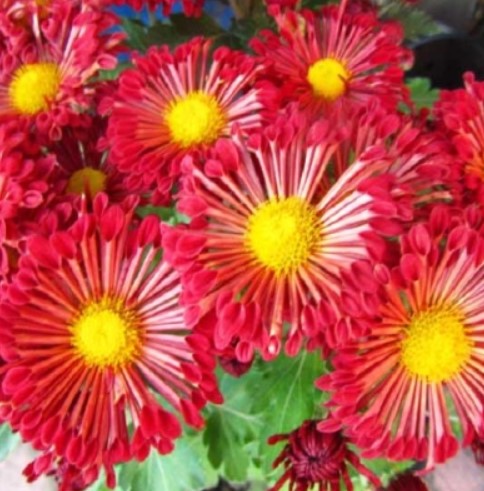
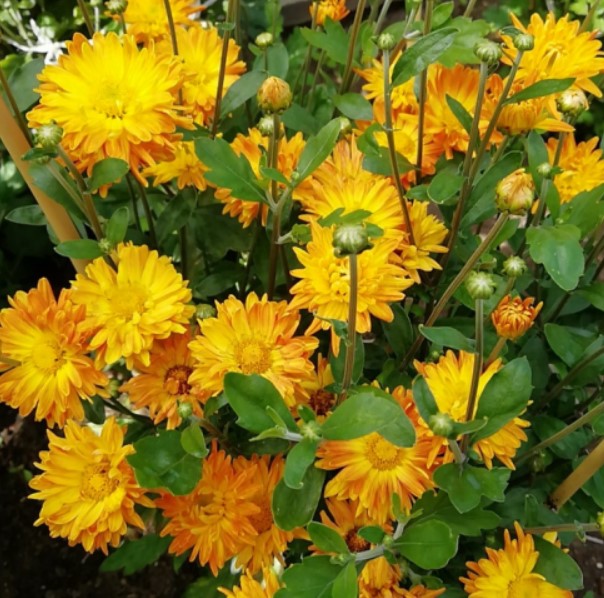
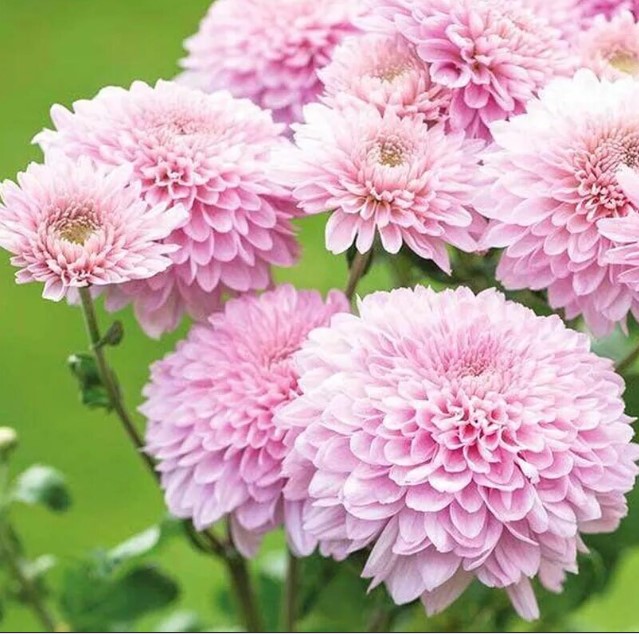
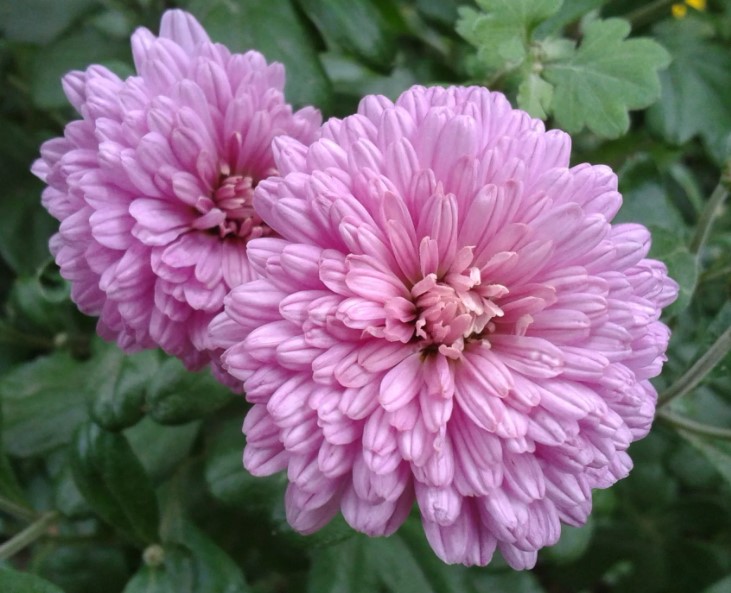
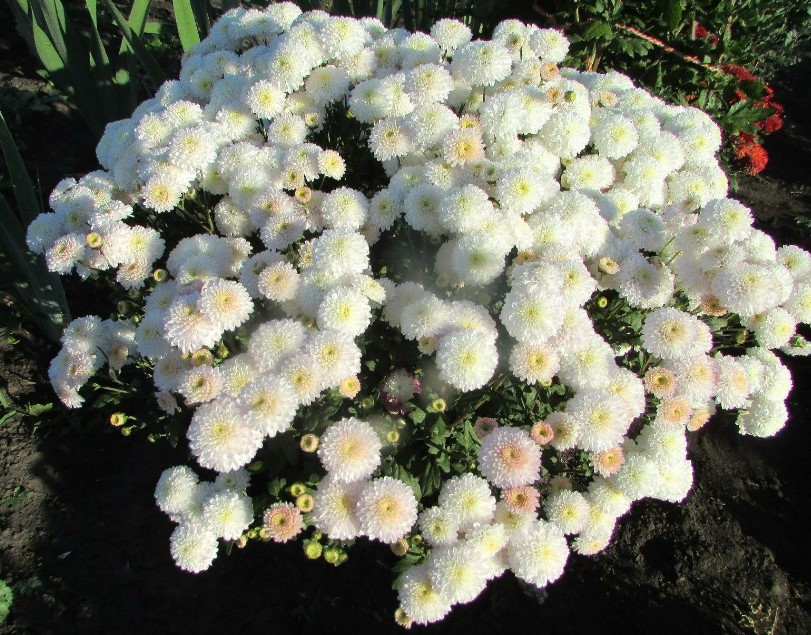
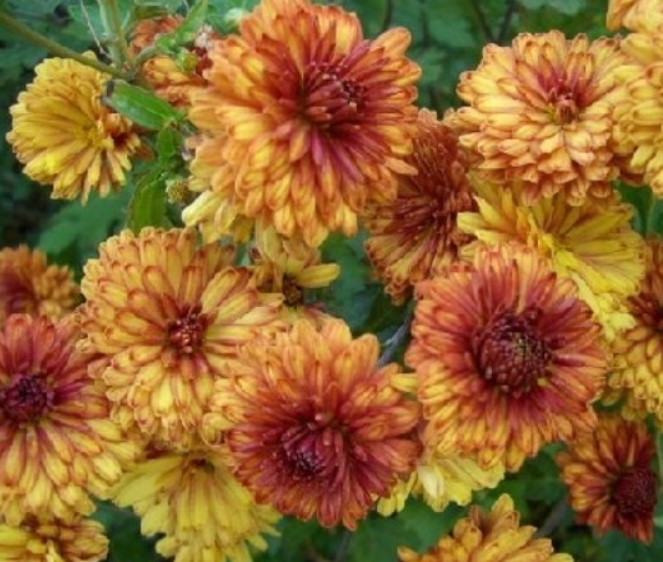
Korean chrysanthemums are characterized by compact or spreading bushes. The stems of this variety are straight, and the foliage is smooth or pubescent, dull green. The inflorescences have a variety of vibrant colors. This species is frost-hardy. The Korean chrysanthemum "Golden Autumn" is often planted in Russian gardens. The varieties listed in the table are also popular.
| Variety | Description | Size, color and shape of the inflorescence | Flowering period | Frost resistance |
| Alenka
|
The bushes of this variety are spreading and lush. The stems are fleshy and grow upright. Large leaves with serrated edges densely cover the shoots. | 90 mm, pink, simple. | August-September. | From -34°C to -29°C. |
| Anna Yaroslavna
|
A variety with erect shoots, 50-70 cm in height. | 80-100 mm, dark purple, double. | August-September. | From -34°C to -29°C. |
| Vanilla
|
Forms compact bushes, no more than 40-60 cm in height. | 30-60 mm, dark purple, simple. | September-October. | From -34°C to -29°C. |
| Heather beads
|
A compact chrysanthemum variety with an oval-spherical crown. The foliage is dark green and has an unusual, spoon-shaped form. | 50-60 mm, burgundy-red, semi-double. | From August until frost. | From -34°C to -29°C. |
| Evening lights
|
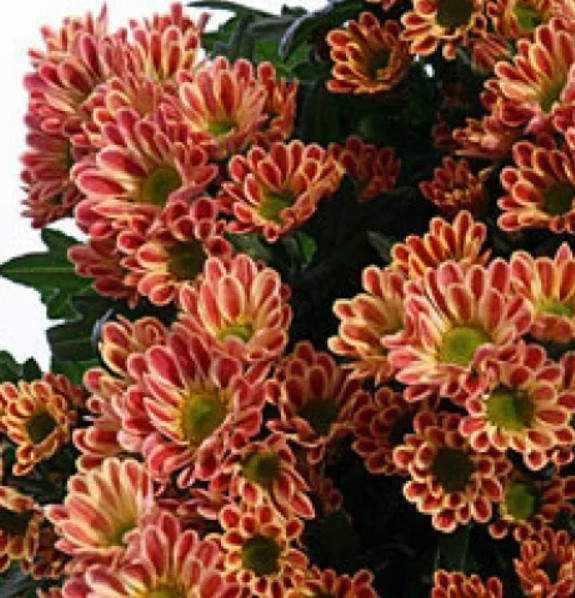
A winter-hardy variety that does not require garter. | 50-60 mm, yellow with red tips of petals, semi-double. | From the second half of August to October. | From -34°C to -29°C. |
| Gompi Pink
|
A variety with abundant flowering that is easy to grow in different regions. | 80-90 mm, pink, terry. | August-September. | From -34°C to -29°C. |
| Marshmallow
|
The bushes of this variety are spherical in shape, approximately 100 cm tall and 40 cm wide. | 40 mm, pink, terry. | August-September. | From -34°C to -29°C. |
| Pearl
|
Height 50-60 cm. Grows best in sunny areas. | 50 mm, silver-white, terry. | August-September. | From -34°C to -29°C. |
| Lipstick
|
A plant with straight shoots and a low, sturdy bush. Its shape is oval-spherical. | 60-70 mm, dark red, terry. | Since mid-September. | From -34°C to -29°C. |
| Margarita
|
Forms spherical bushes. | 50 mm, silvery white petals, turning pink, double. | July-November. | From -29°C to -23°C. |
| Michelle
|
The plant is compact, with erect, strong branches and moderately green foliage. | 40-50 mm, bright yellow, double. | July-November. | From -29°C to -23°C. |
| Stranger
|
A variety with greenish-brown stems, dense branches, and small, dark emerald leaves. They have a fleshy texture and a slightly shiny surface. | 50-60 mm, white, plain. | August-September. | From -34°C to -29°C. |
| Reagan
|
A medium-sized spherical bush reaching 50-60 cm. | 70 mm, bright yellow, spherical. | August-September. | From -34°C to -29°C. |
| Sun
|
The variety is unpretentious and frost-resistant. | 70-100 mm, rich yellow, double. | Mid-August - end of September. | From -25°C to -30°C. |
| Umka
|
A variety with upright stems. The plant's flowers are large and pom-pom-like in appearance. | 70 mm, various colours (snow-white, lilac, lingonberry), terry. | End of summer - frosts. | From -29°C to -23°C. |
| Helen White
|
The variety is characterized by strong branches that grow vertically upward and have rich green foliage. | 80 mm, white, terry. | July-August. | From -18°C to -12°C. |
| Amber
|
This variety of chrysanthemum grows well and can be easily propagated through root suckers. | 70-80 mm, bright yellow, double. | August-September. | -23°C. |
Short stature
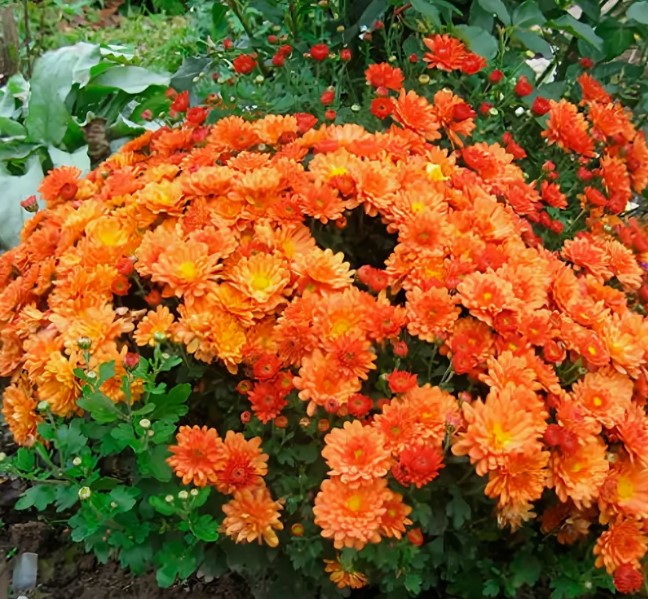
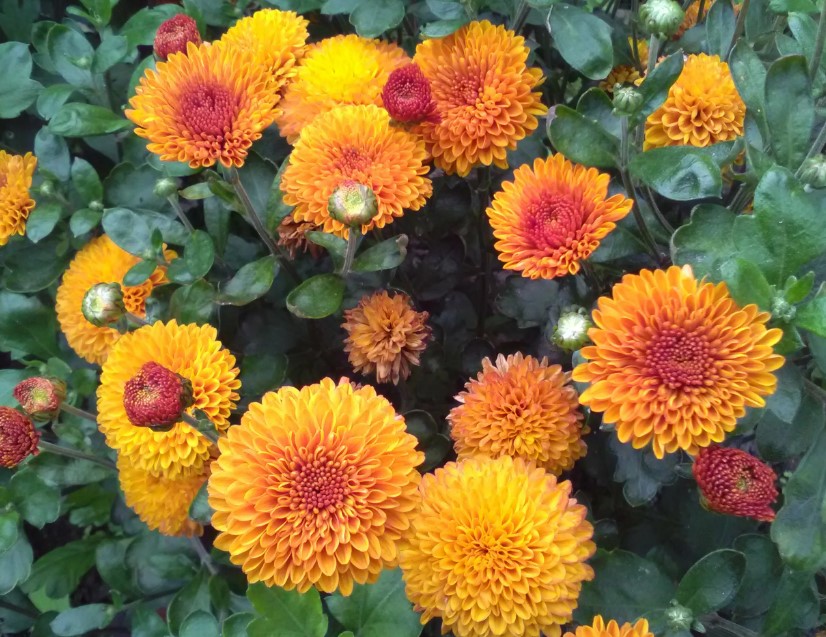
Small plants are lush and bright, used to create alpine slides, low flower beds, and border decoration.
| Variety | Description | Size, color and shape of the inflorescence | Flowering period | Frost resistance |
| Alpine
|
Up to 15 cm in height. The leaves are silvery-green, collected in basal rosettes. | 20-40 mm, white, plain. | July-September. | -18°C. |
| Branbeach Orange
|
Forms lush bushes reaching 40-50 cm. | 30-40 mm, orange, terry. | From the second half of August. | From -18°C to -12°C. |
| Gir Ghar
|
The variety is suitable for creating low flower beds. | 30-40 mm, yellow-orange, terry. | July-September. | From -34°C to -29°C. |
| Boy-Kibalchish
|
Forms bushes up to 28-35 cm, with sparse foliage, but with abundant flowering. | 50-60 mm, bright red or lilac-pink, simple. | End of August - beginning of October. | From -28°C to -23°C. |
| Saba
|
A small-flowered variety of chrysanthemum, up to 30 cm in height. | No more than 50 mm, raspberry petals with white edging, simple. | From the second half of August. | From -7°C to -1°C. |
| Snow Ball
|
This variety's bushes have branching stems and numerous small inflorescences reminiscent of snowflakes. The leaves are light green with entire margins. | 40 mm, snow-white, pompom. | All summer. | From -1°C to +4°C. |
| White Elf
|
A variety of chrysanthemum with lush, spherical bushes, 25 cm in height. | 30 mm, white, terry. | July-August. | From -18°C to -12°C. |
Simple
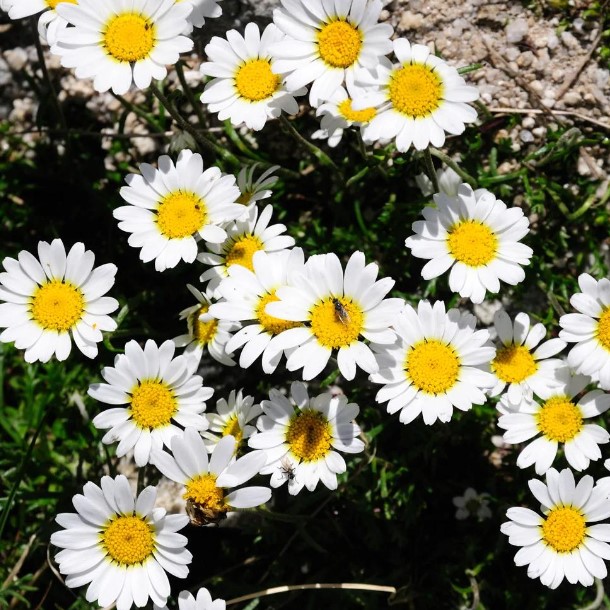
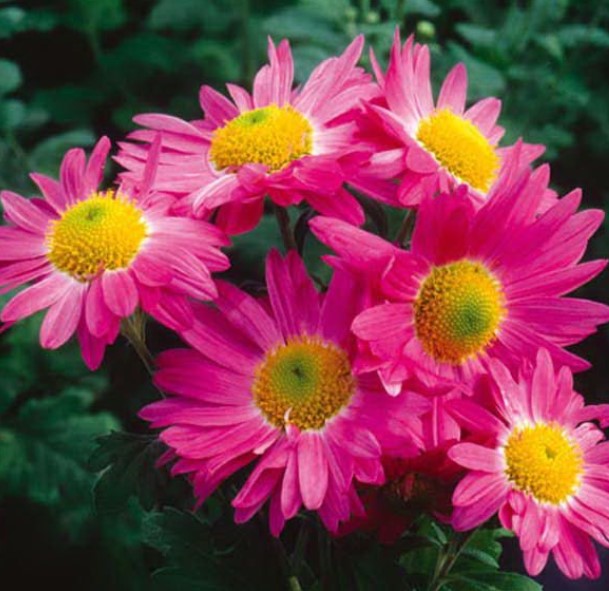
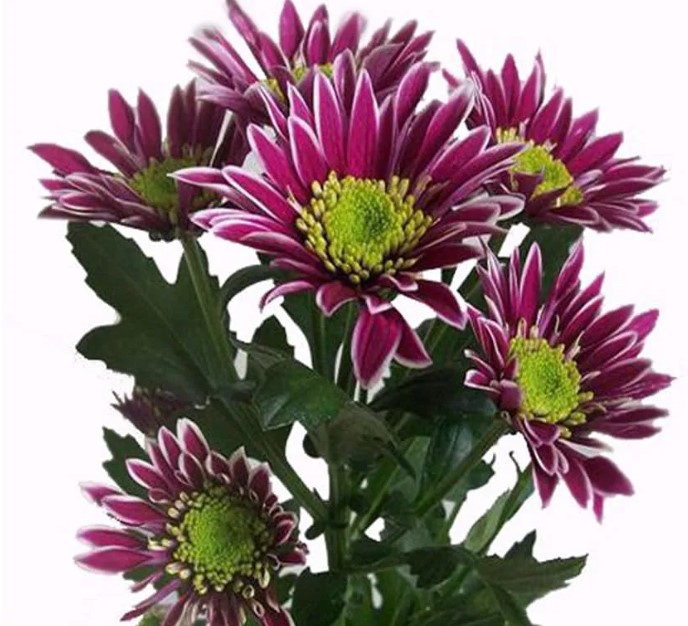
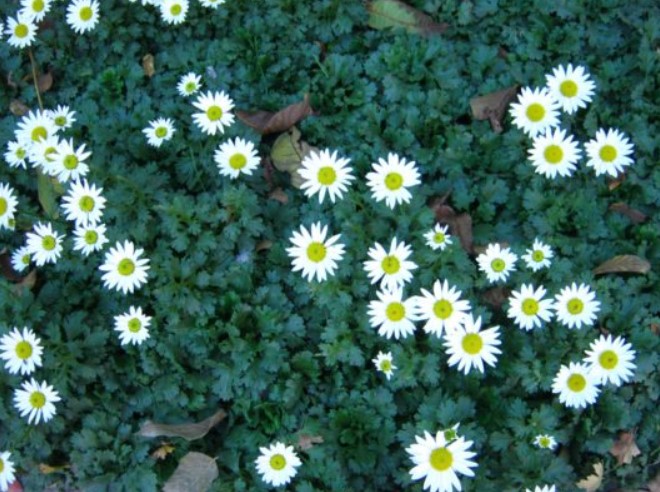
They resemble daisies in appearance, but have their own distinctive features. The flower's center is completely open, and the straight petals are arranged in several rows. Chrysanthemums also come in a wide variety of colors, unlike daisies, which are most often white.
| Variety | Description | Size, color and shape of the inflorescence | Flowering period | Frost resistance |
| Arctic
|
This variety is characterized by creeping stems with green foliage. The chrysanthemum is very easy to grow and tolerates low temperatures. | 50 mm, white, plain. | August-November. | High. |
| Bacardi
|
A variety with strong and flexible stems. The leaves are dark green, divided into several sections. Bacardi flowers are daisy-shaped, with a yellow or greenish center surrounded by dense petals arranged in a single row. | 65 mm, color varies depending on the subspecies, simple. | July-September. | Average. |
| Evening lights
|
The inflorescence is single-row, daisy-shaped. The bushes are compact and hemispherical. | 50-60 mm, bright red with a yellow core, single. | From the second half of August to October. | -23°C. |
| Hebe
|
It is distinguished by its unpretentiousness in care. | 50 mm, bright crimson, simple. | June-September. | -23°C. |
Terry
Chrysanthemums with unusual inflorescences, round and fluffy, with petals twisted downwards or towards the middle.
| Variety | Description | Size, color and shape of the inflorescence | Flowering period | Frost resistance |
|
Barge
|
This is a medium-sized variety (up to 70 cm). The shoots are strong, upright, and well-branched. The bushes are densely foliated, with bright green leaves. | 70 mm, purple, terry. | Since the end of September | From -1°C to +4°C. |
|
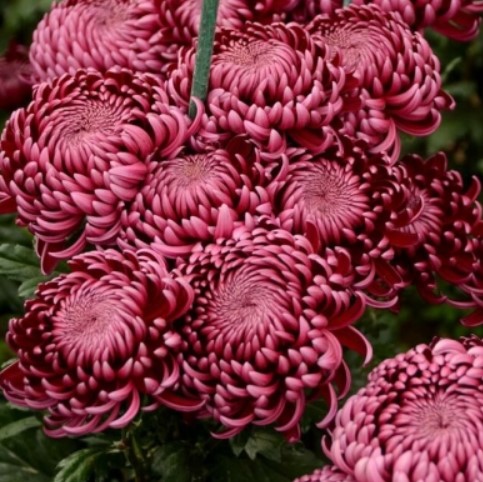
Curlers Ash
|
The bushes reach a height of 90-100 cm and are distinguished by their strong stems and root system. The inflorescences contain only one large flower. | 100-110 mm, burgundy, terry. | End of August - beginning of September. | From -29°C to -23°C. |
|
Branbeach Lilac
|
The bushes are spherical in shape, up to half a meter in height. The stems are straight, with green leaves. | 30-50 mm, lilac, terry. | Since August. | From -18°C to -12°C. |
| Opal
|
A bushy variety of Korean origin. It is primarily used to decorate borders, flowerbeds, and flower beds, as well as for flower arrangements. The bushes reach a height of up to 50 cm. The leaves are carved and dark emerald. | 90-120 mm, yellow, terry. | From the 2nd half of August. | From -34°C to -29°C. |
| Pina Colada
|
These are fairly tall bushes, reaching a height of about 70 cm. They have strong, upright stems and rich green foliage. | 75-80 mm, white, terry. | All summer. | From -18°C to -12°C. |
| Rosalind
|
This tall chrysanthemum grows up to 0.6 m in height and is considered a tall variety. The flowers are large. This Korean variety thrives in group plantings and high borders. | 100 mm, pink, terry. | August-September. | From -34°C to -29°C. |
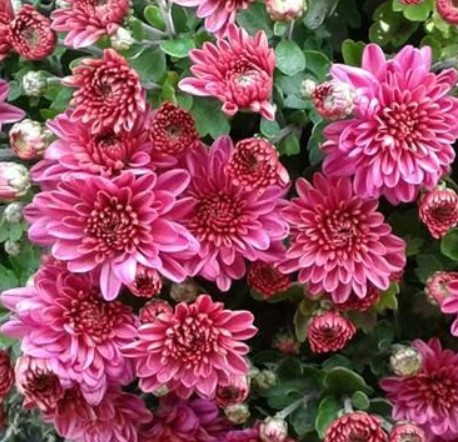
| Pink flamingo
|
The bush is spherical, reaching 65 cm in height. The shoots are strong and do not break in the wind. The foliage is medium-dense, small, and unribbed. The maximum number of flowers on a bush is 106. The petals are arranged in several tiers, with those closer to the middle being shorter. The inflorescence is a flat, medium-density corymb. | 80 mm, pink, terry. | Late September-November. | From -34°C to -29°C. |
| Foggy morning
|
This perennial plant is a beautiful medium-sized shrub with numerous branches. It reaches a height of 55-75 cm. Large, delicate flowers are located along the stems. They emit a subtle, medium-intensity fragrance. | 80-100 mm, pink, terry. | September-October. | From -29°C to -23°C. |
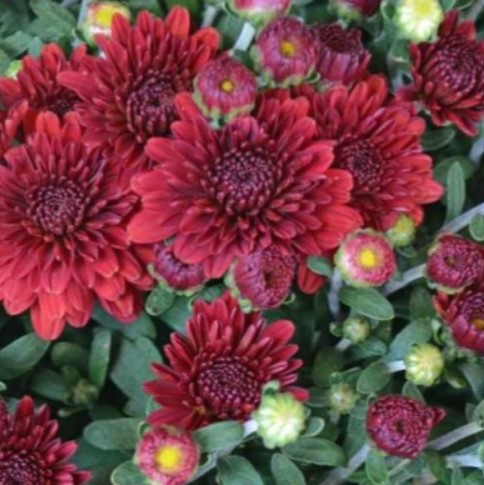
| Monomakh's Cap
|
This variety is known for its vigorous growth habit, reaching a height of 70 cm. It is winter-hardy, making it suitable for growing in all regions of Russia, even in the northern ones. The plant produces large flowers with velvety petals. | 80-90 mm, bright red, terry. | Since mid-August. | From -34°C to -29°C. |
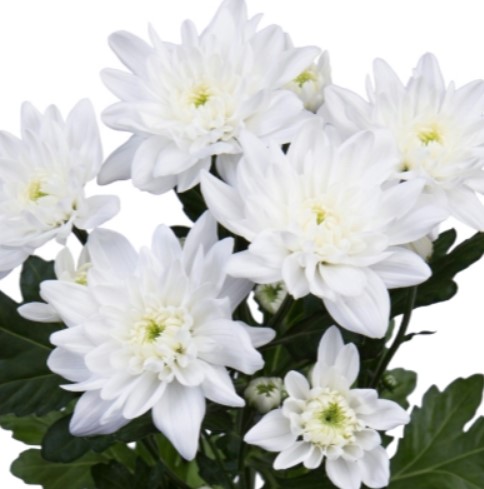
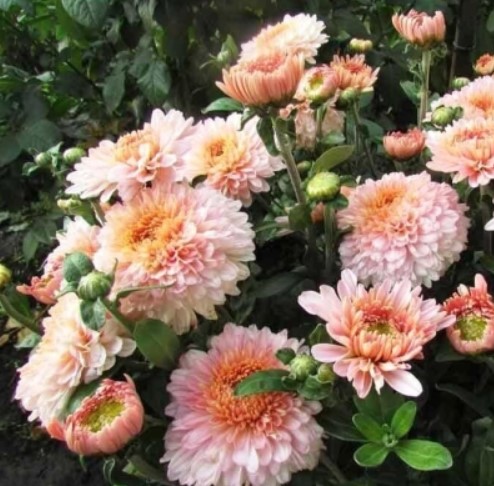
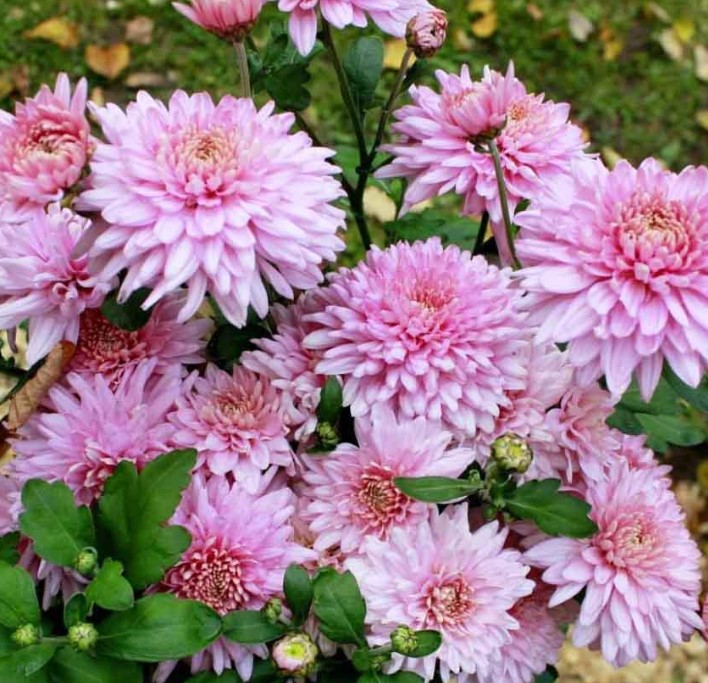
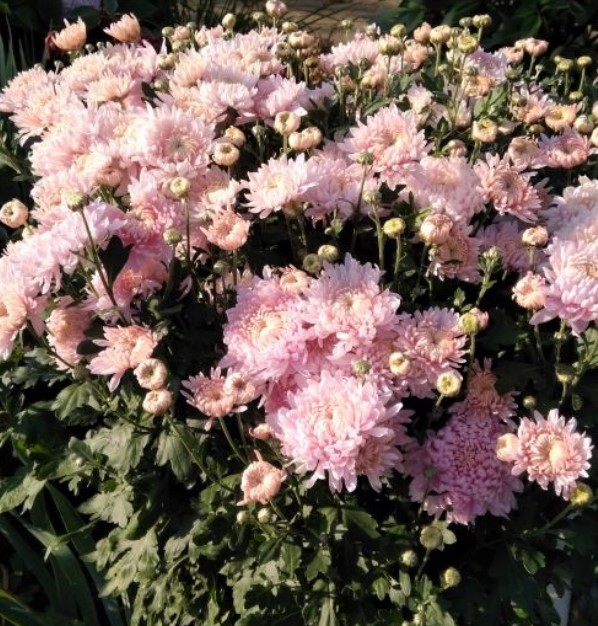
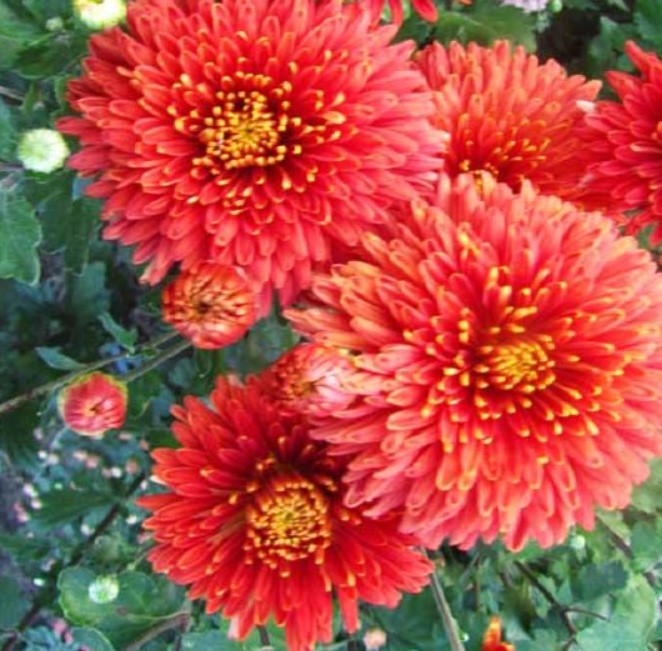
Frost-resistant
Chrysanthemum varieties that are easy to grow outdoors in central Russia and can even be grown under cover in Siberia.
| Variety | Description | Size, color and shape of the inflorescence | Flowering period | Frost resistance |
| Altgold
|
Up to 60 cm in height. | 65 mm. At the very beginning of flowering, the petals are bright red, then turn yellow. A crimson border remains around the perimeter. Double. | September-October. | From -34°C to -29°C. |
| Baltic
|
A medium-sized shrub growing up to 70 cm tall. It has strong, upright, and dense stems with trifoliate, notched leaves of a rich, dark green. The upper surface of the leaves is slightly hairy, while the underside is smooth. The petals of the inflorescence resemble smooth tongues of varying lengths. They are gathered into a dense head. | 80-150 mm, has several colors: white, yellow, pink, greenish, all varieties are double. | August-October. | From -34°C to -29°C. |
| Polar bear
|
Height 70-90 cm.
A very unpretentious variety with strong immunity. |
160, initially lemon, but then becomes white, terry. | Second half of August - mid-November. | From -34°C to -29°C. |
| Vologda lace
|
The bushes grow up to 60 cm. | 70 mm. Petals are snow-white at the tips, and yellowish closer to the middle. Double. | Since September. | up to -35ºC. |
| Sorceress
|
A mid-early variety with abundant foliage. The bush grows up to 80 cm tall, with a sturdy stem and leathery gray-green leaves. Each plant can produce up to 150 inflorescences. The flowers have a light, barely noticeable fragrance. It takes 150 days to reach maturity. | 60-70 mm, yellow-white, terry. | Second half of October. | High. |
| Golden autumn
|
Up to 50 cm in height and width. | 75-80 mm, yellow, terry. | From the 2nd half of August. | Up to -30ºC without shelter |
| Carnival
|
It grows tall rather than wide, reaching 100-105 cm. The main stem is strong, straight, and woody. Additional shoots are flexible and easily support the weight of the inflorescences. | 45 mm. The ligulate flowers are yellow and red at the base, while the tubular flowers are yellow and look pink. The inflorescence is semi-double. | From the end of July to September | From -34°C to -29°C. |
| Stranger
|
A low bush up to 40 cm with medium foliage. | 75 mm, cream, terry. | All summer and autumn. | High. |
| Pink chamomile
|
Forms compact bushes no more than 1 m in height. The leaves are small and carved. | 50-60 mm, bright pink, simple. | From September until frost. | High. |
| Lilac fog
|
Up to 60 cm in height. Distinguished by early flowering. | 65-70 mm, lilac, terry. | Since August. | -35°C. |
| Suzanne
|
Up to 45 cm in height. Can overwinter in open ground even in northern regions. | 70 mm, has several varieties of different colors: pink, orange and others, terry. | August-September. | High. |
| Everest
|
Belongs to tall varieties. | 80 mm, snow-white, terry. | From late summer to sub-zero temperatures. | From -25°C to -30°C. |
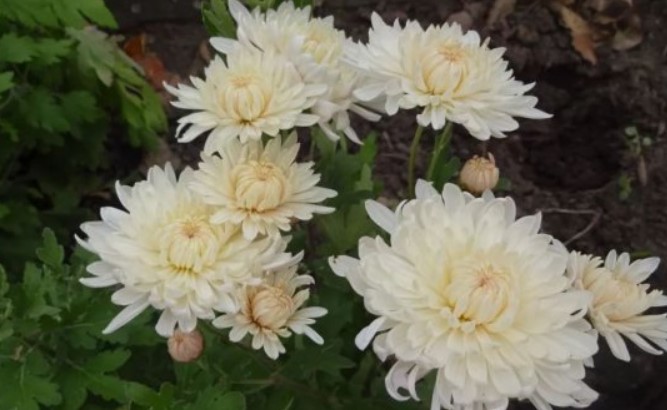
| Apple blossom
|
It consists of two varieties (No. 1 and No. 2). They differ in height and inflorescence size. The bushes reach 50-70 cm. | 70-100 mm, white, terry. | Since mid-August. | Up to -30°C |
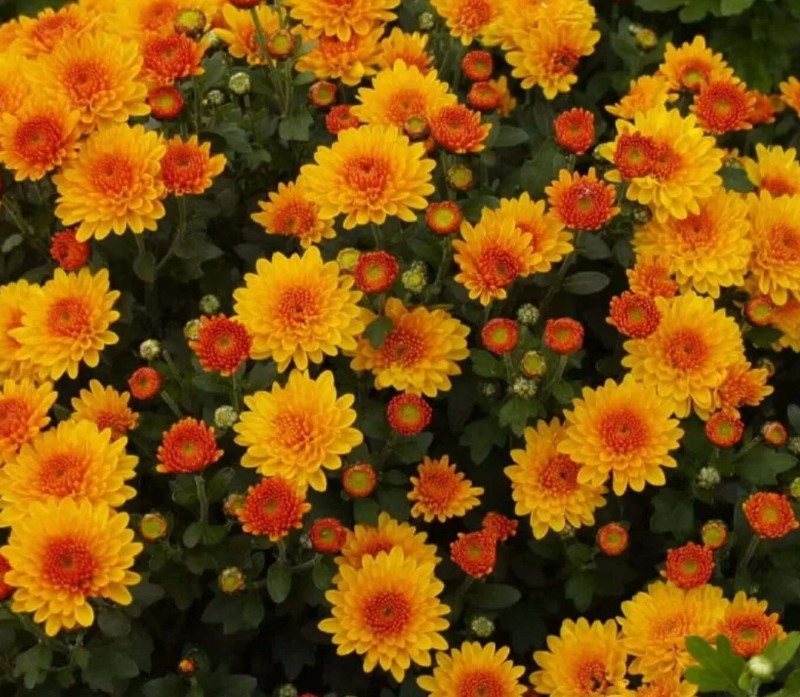
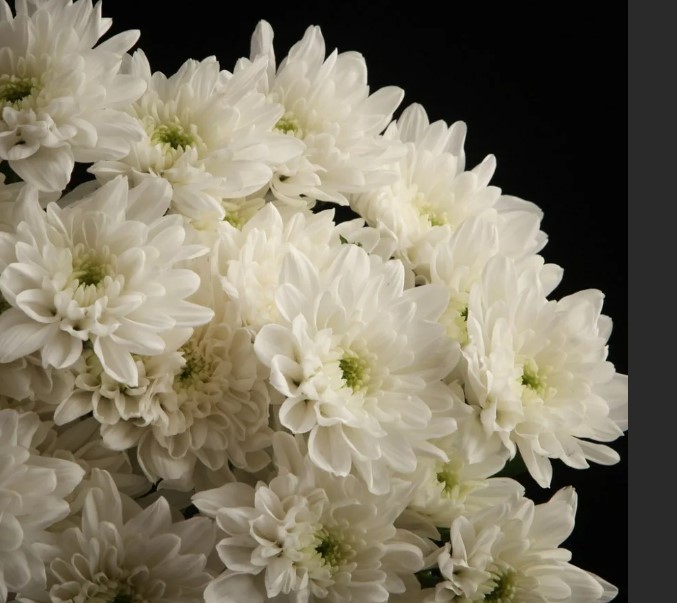
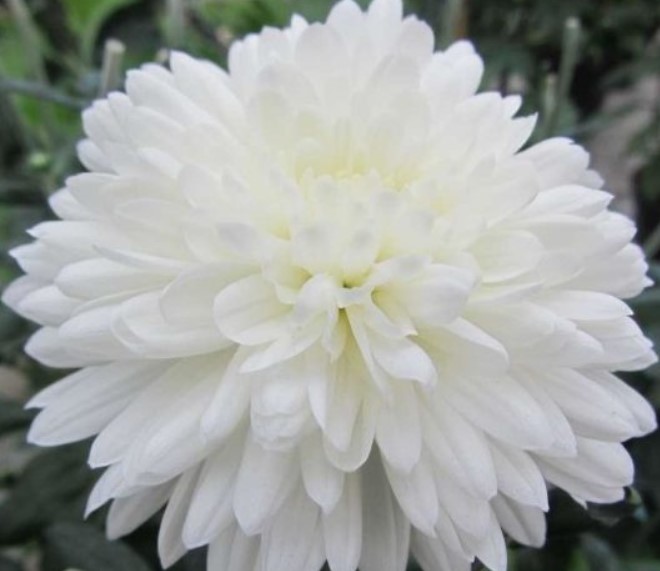
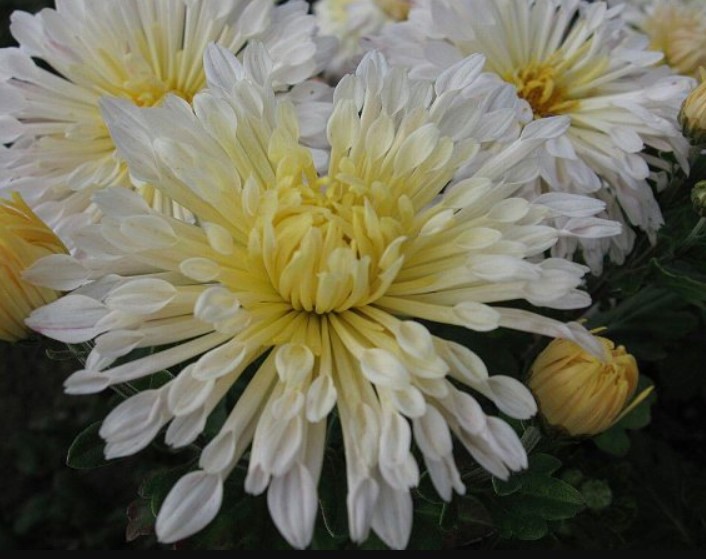
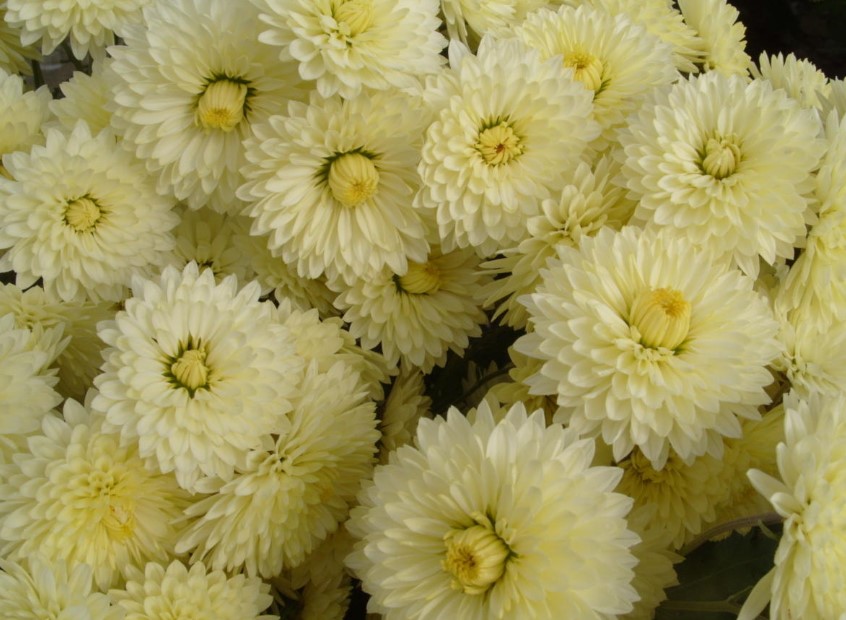
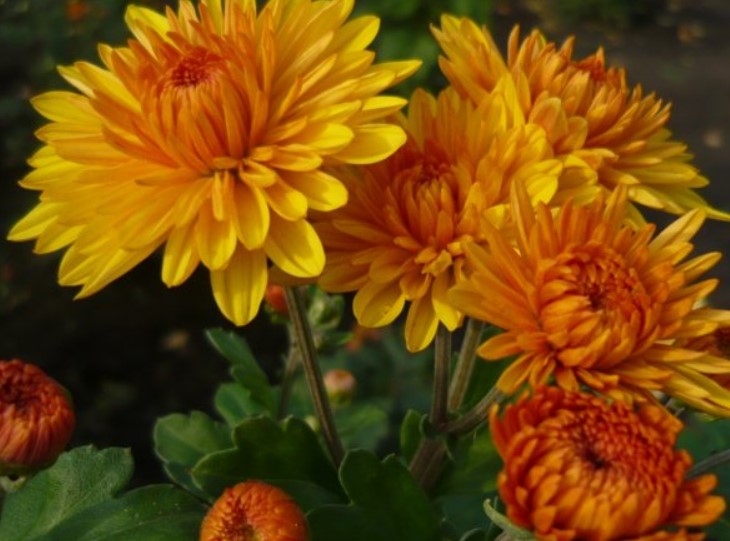
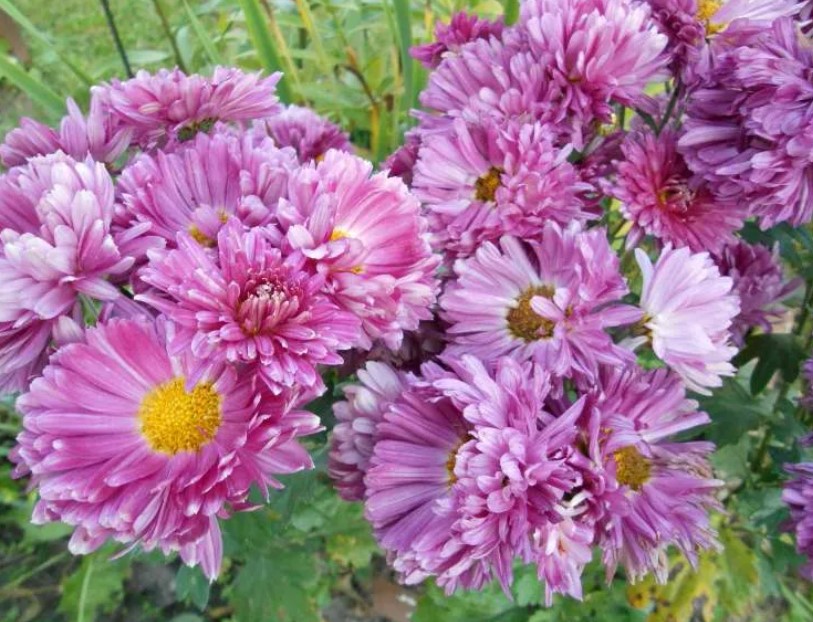
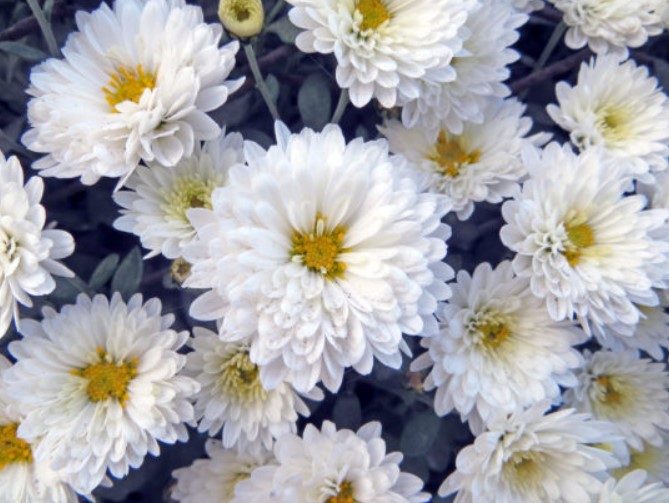
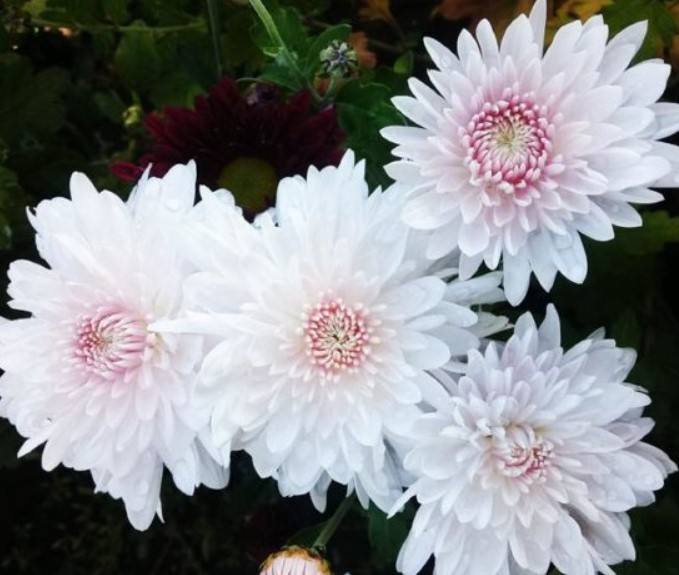
Heat-loving
Varieties for growing in warm climates or indoors.
| Variety | Description | Size, color and shape of the inflorescence | Flowering period | Frost resistance |
| White Zembla
|
A low-growing shrub reaching a maximum height of 30 cm. The plant's leaves are a rich green. The upper surface is covered with fine, velvety hairs, while the underside is very smooth and slippery. | 250, white, terry. | From early autumn until frost. | From -1°C to +4°C. |
| Rossano
|
An annual variety. The bushes are low – up to 40 cm. The stem is branched, with numerous buds. | 100-120 mm, pink, terry. | September-November. | From -1°C to +4°C. |
| Filin Green
|
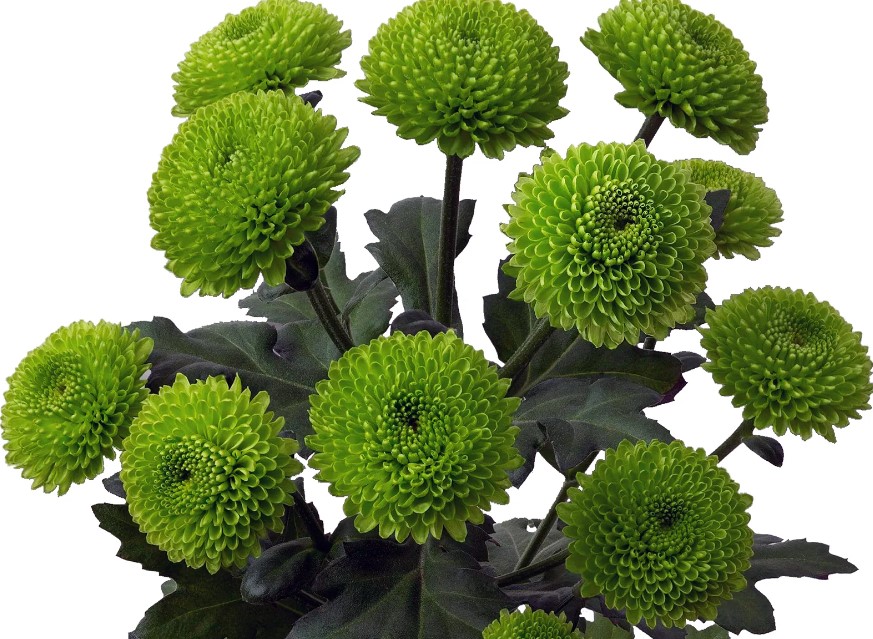
It grows to a height of 60-70 cm. The compact bush is covered with dense, bright green foliage and neat, pom-pom-like flower heads. The broad leaves have a lobed shape. The petals are brightly colored, arranged in several rows, pressed together to form a spherical shape. | 50-60 mm, green, terry. | Midsummer. | From -1°C to +4°C. |
| Fantasy
|
A miniature variety, no more than 40 cm in height. | 50 mm, lilac-pink, double. | From late summer to early autumn. | From -1°C to +4°C. |
| Chervona Kalina
|
It forms medium-sized bushes, typically no more than 40 cm in height. As they grow taller, they become brittle. | 60 mm, dark red, terry. | Since mid-September. | From -1°C to +4°C. |
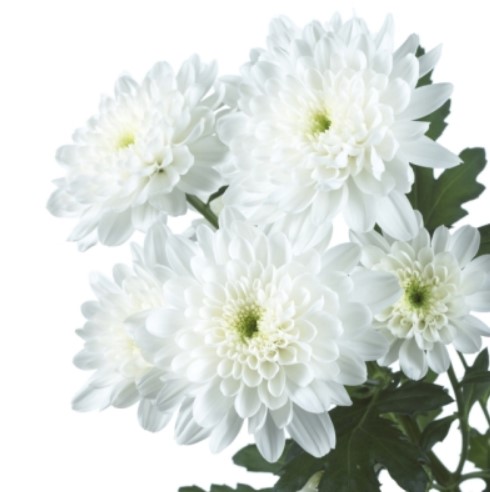
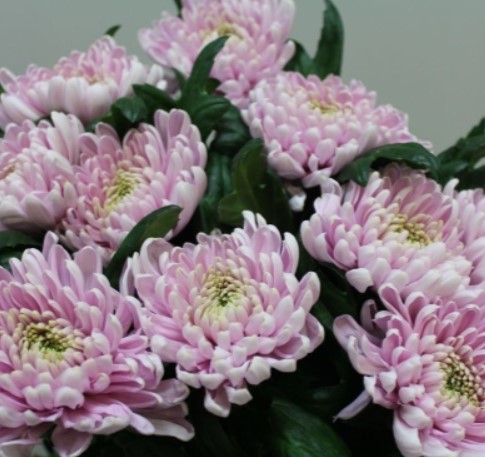
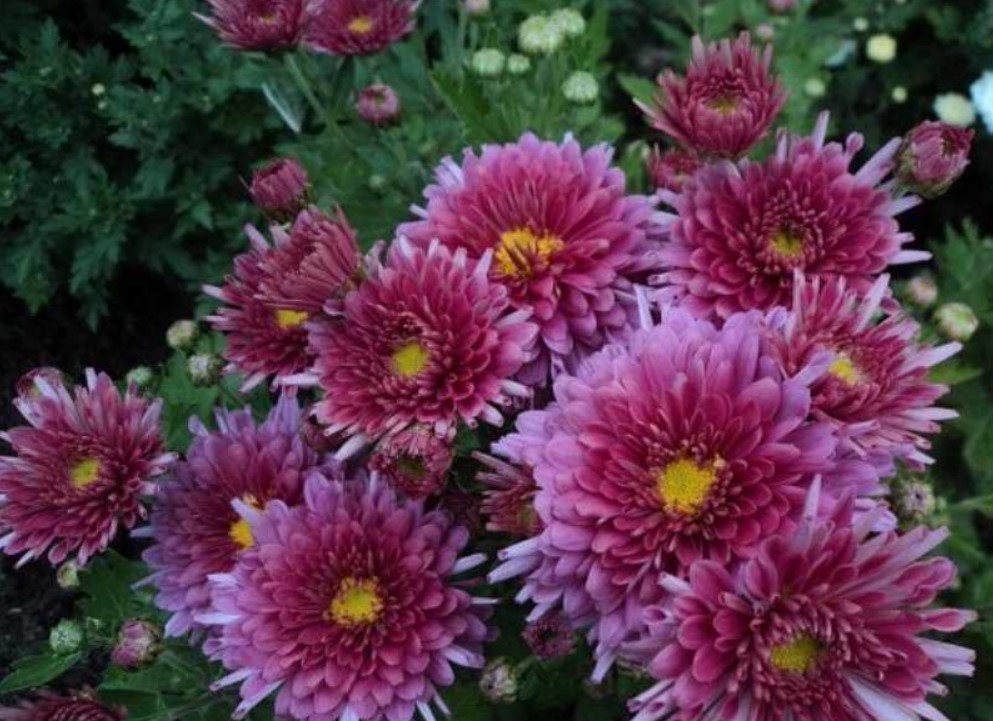
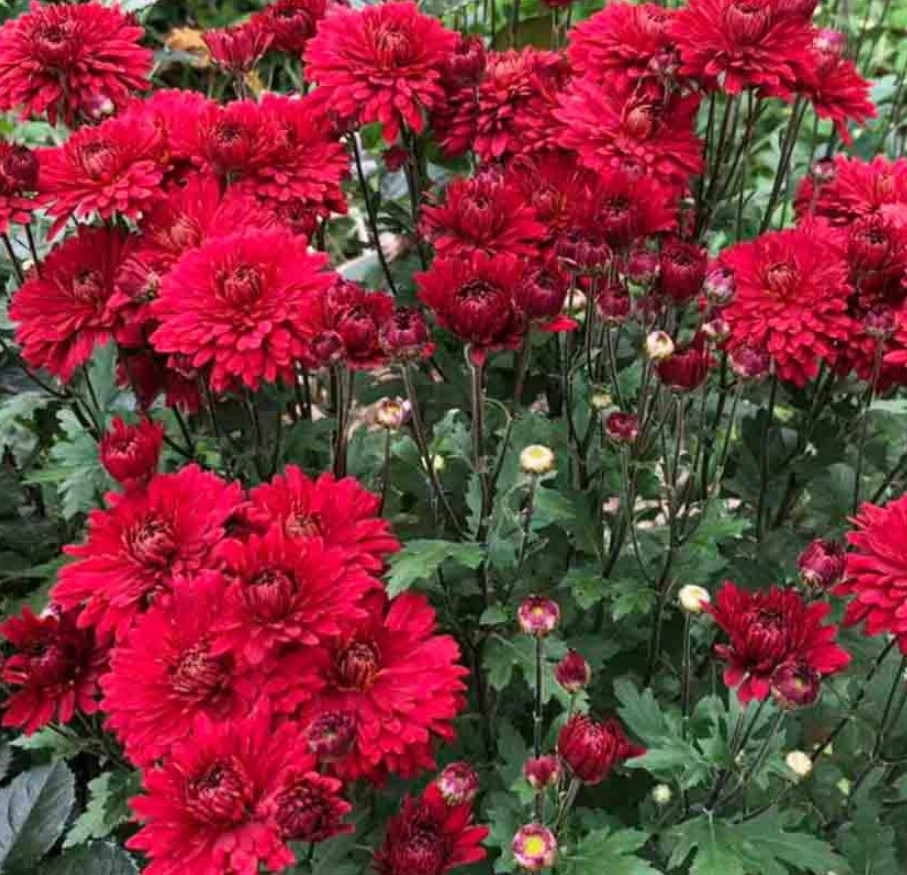
Early (flowering in September)
| Variety | Description | Size, color and shape of the inflorescence | Flowering period | Frost resistance |
| Orange (Golden Orange)
|
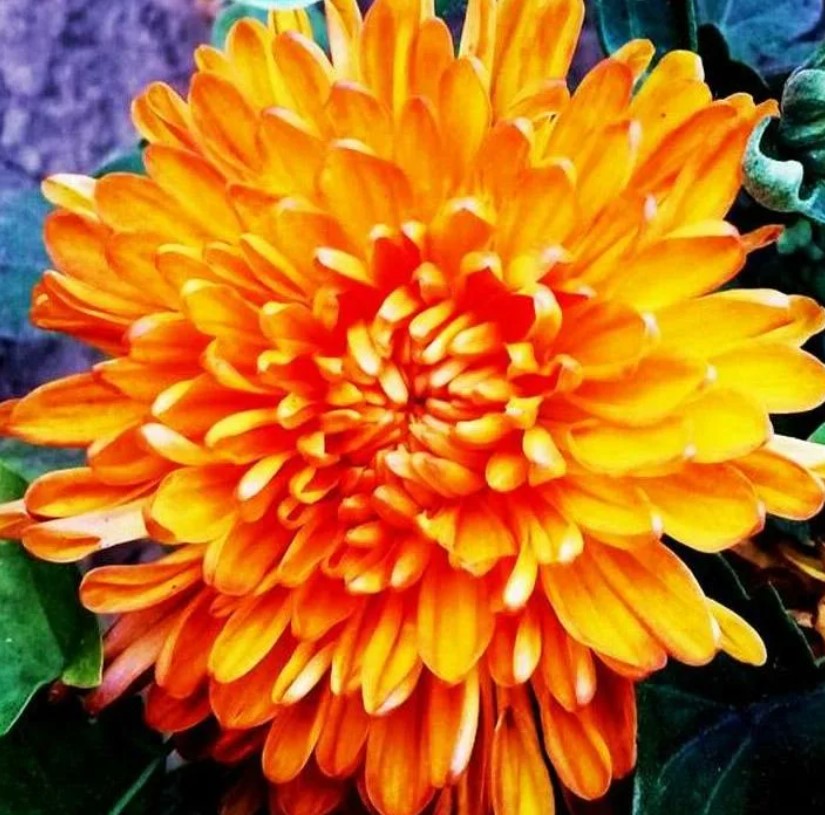
An early-flowering bush variety. Height: 50-60 cm. | 60-80 mm, orange, terry. | From August to September. | Up to -29°C. |
| Ares
|
It blooms early and reaches a height and width of about 30-40 cm. | 50-70 mm, soft pink, double. | From the second half of August to the end of September. | Up to -30ºC. |
| White Night
|
A perennial that reaches 40-50 cm in height and width. | 100 mm, snow-white, light cream or light yellow (depending on climatic conditions), terry. | From August to September inclusive. | From -25°C…-30ºC. |
| Branbeach Orange
|
About 30 cm in height. The bushes are densely covered with flowers, through which the foliage is not even visible. | 30-40 mm, orange, terry. | From the end of August to September. | From -18°C…-23ºC. |
| Brankin Sunny
|
A low-growing variety typically grown in containers on balconies or windowsills. It is also suitable for planting in open ground. It is commonly used in group plantings or for borders. It reaches a height of no more than 30 cm. | 40-70 mm, yellow, terry. | From the second half of August to October. | Low. |
| Branchill Red
|
The bushes are no more than 30-40 cm. The crown is formed in the shape of a ball. | 35-40 mm, red, terry. | From mid-August to October. | Up to -34ºC. |
| Deliana
|
Flower baskets with long, narrowed petals that always look vertically upwards. | 160 mm, white with yellow core, semi-double needle-like. | September. | Up to -34°C. |
| Destino Pink
|
Suitable for growing outdoors, in pots, and in greenhouses. It tolerates low temperatures well, making this variety suitable even for northern regions. A mature bush reaches a height of 35-40 cm. | 40 mm, purple-pink, double. | From mid-August to the end of September. | From -18°C to -12°C. |
| Uranus
|
Low-growing shrubs are typically planted in tiered flowerbeds or against a green lawn. They form a rounded crown up to 40 cm in height and width. | 80 mm, hot pink and dark burgundy, terry. | From the second half of August. | Low. |
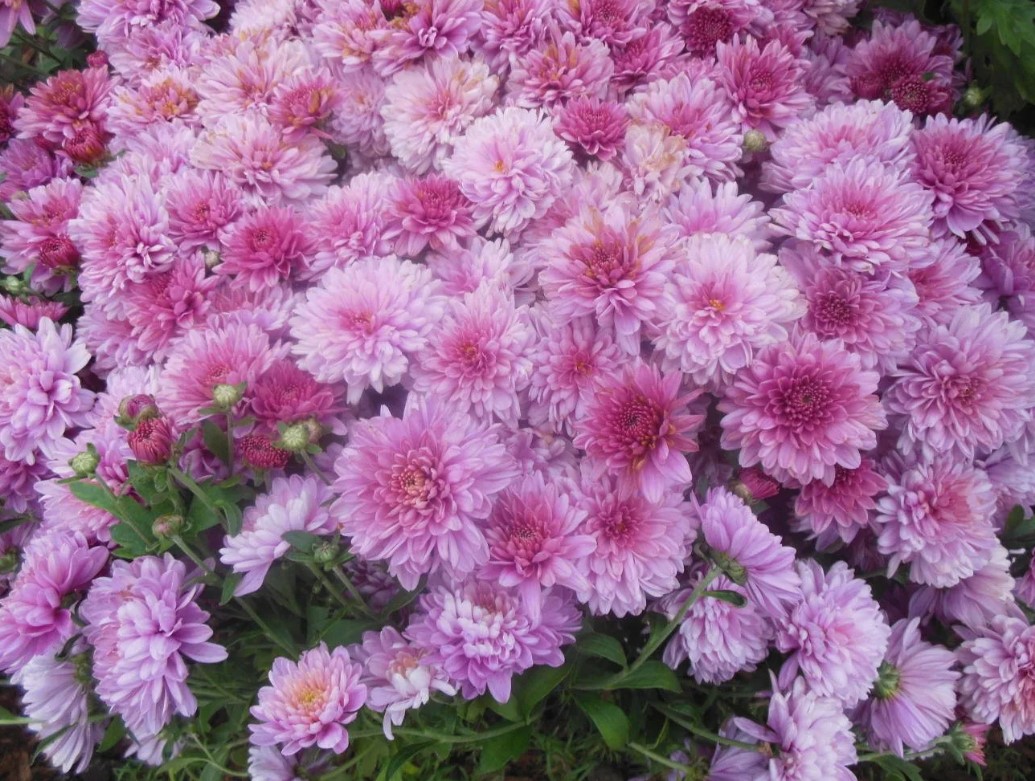
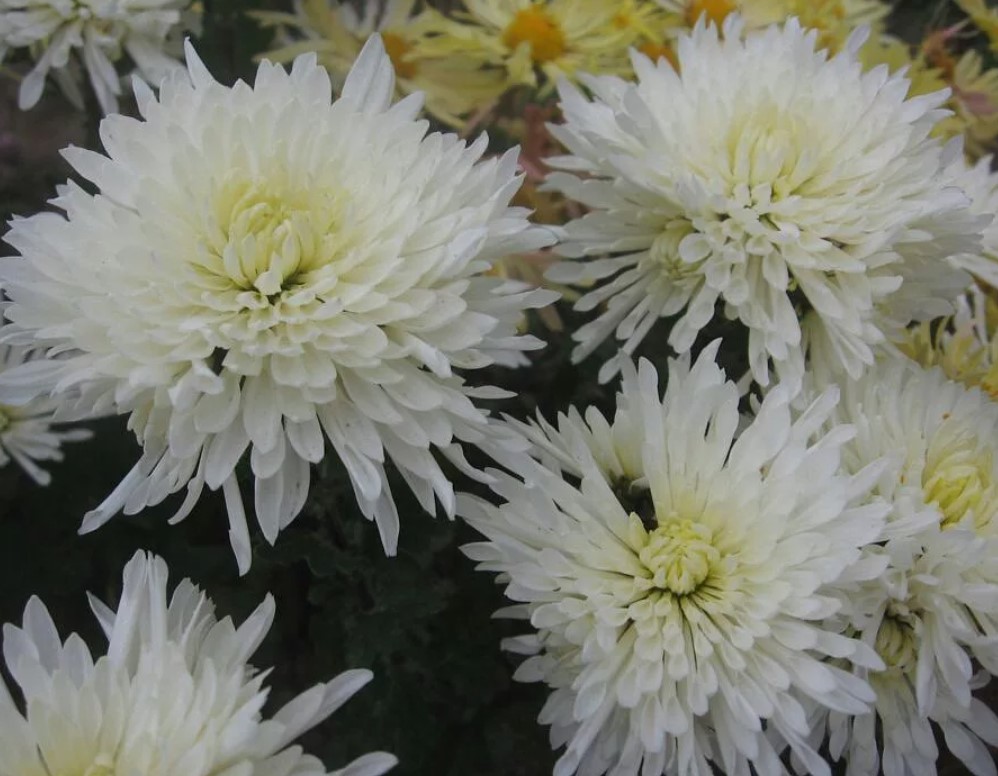
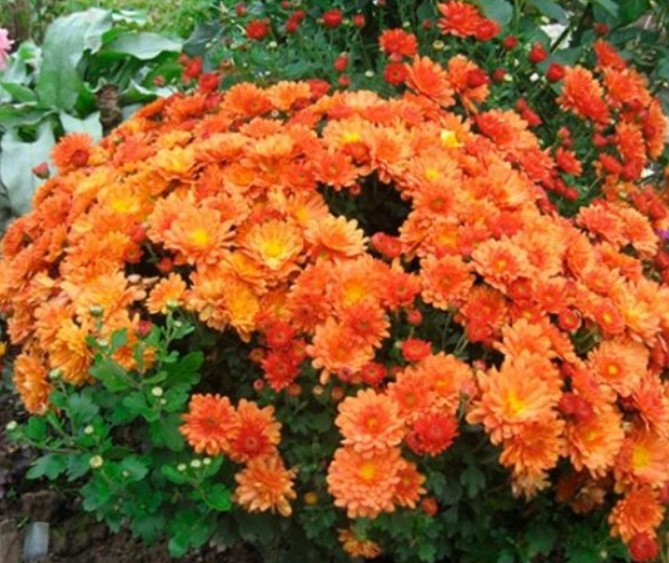
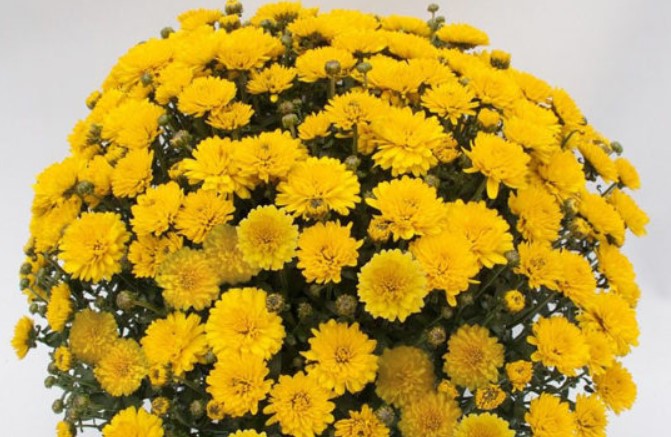
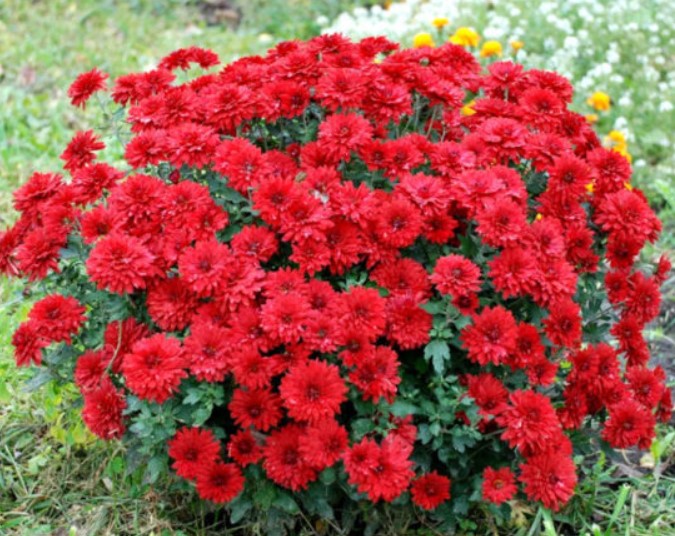
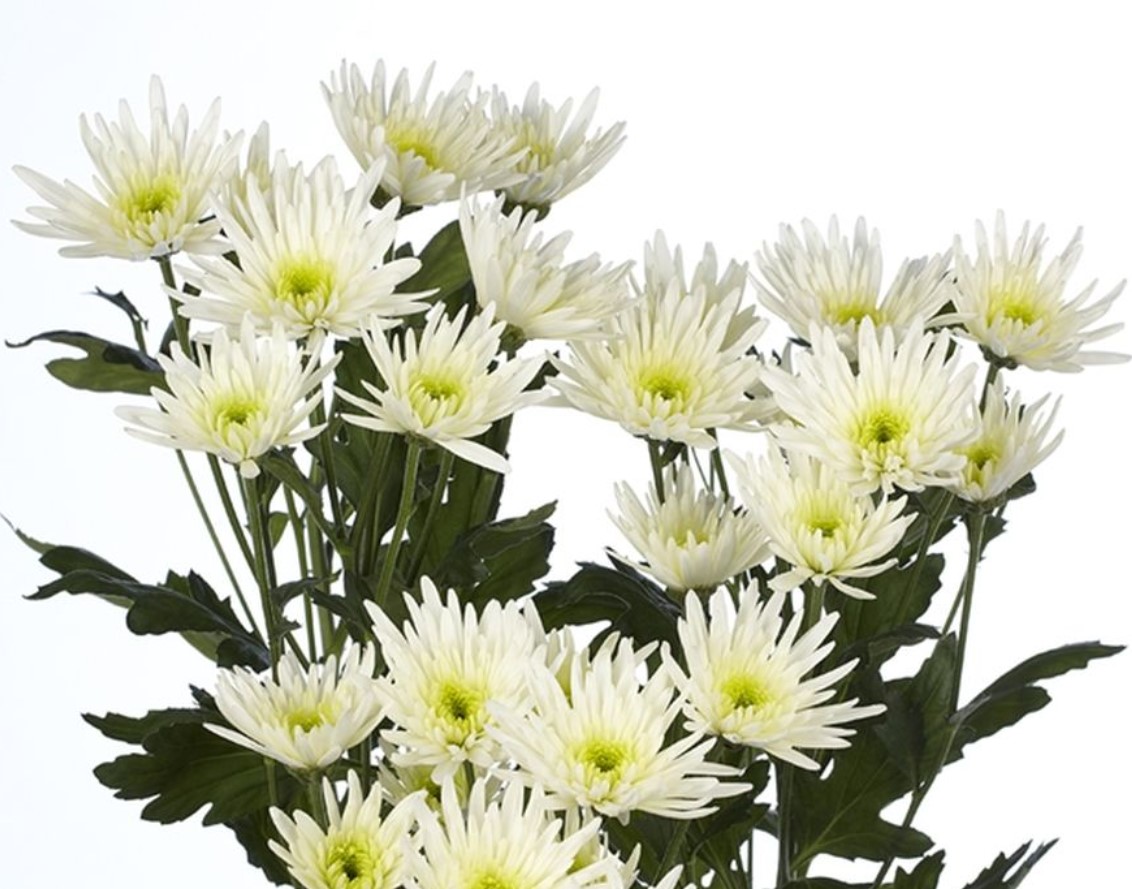
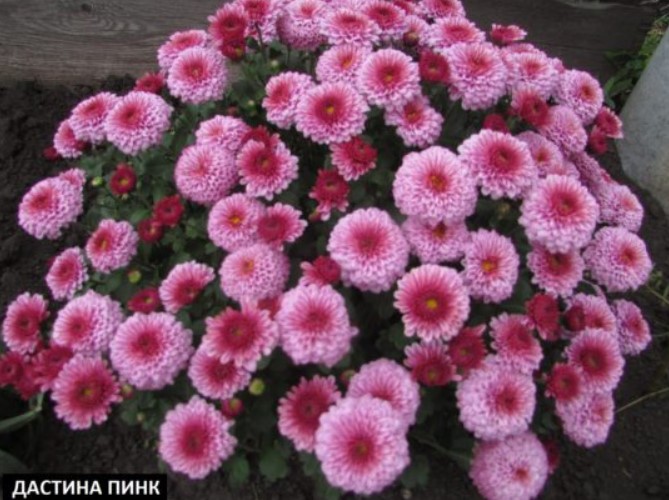
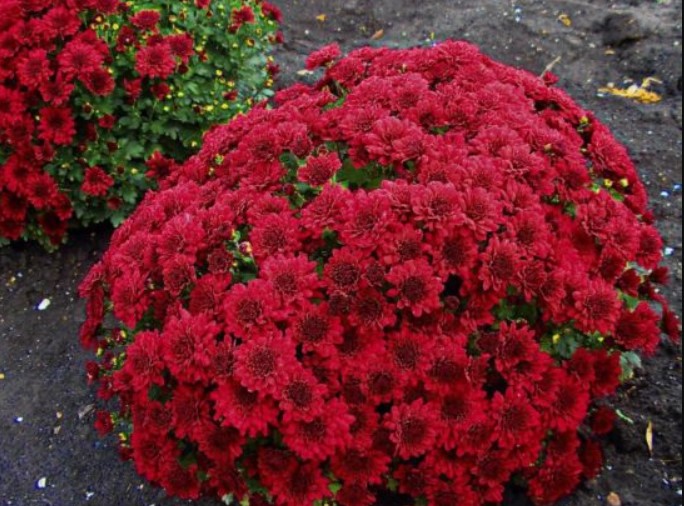
Medium (blooms in October)
| Variety | Description | Size, color and shape of the inflorescence | Flowering period | Frost resistance |
| Jacqueline Peach
|
It stands out with its bright flowers, combining two shades at once. | 30-40 mm, yellow-pink and yellow-purple, double. | From the second ten days of September until the end of November. | High. |
| Popcorn
|
This small-flowered chrysanthemum variety was developed relatively recently and is the result of extensive breeding. It forms hemispherical bushes, which requires no pruning. During the first season after planting, it grows to 35-40 cm and begins to bloom. | 30-40 mm, yellow, non-double. | From mid-September until the first frost. | Low. |
| Typhoon
|
Bushes with medium foliage, up to 80 cm in height. | 90 mm, pinkish-lilac, non-double. | Beginning of October. | High. |
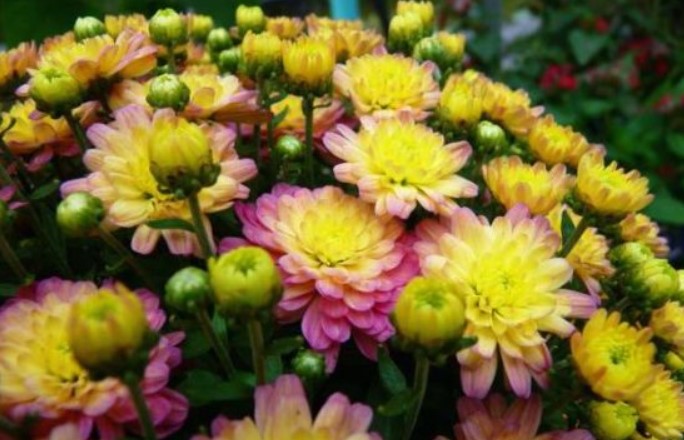
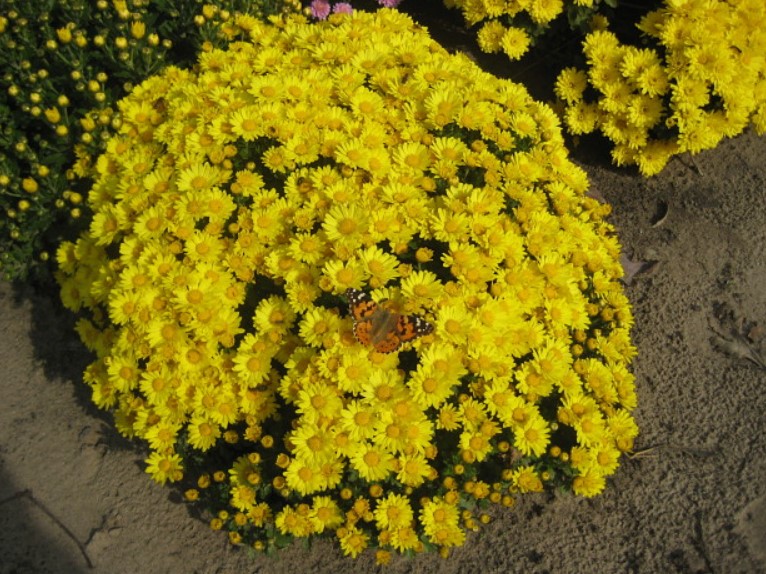
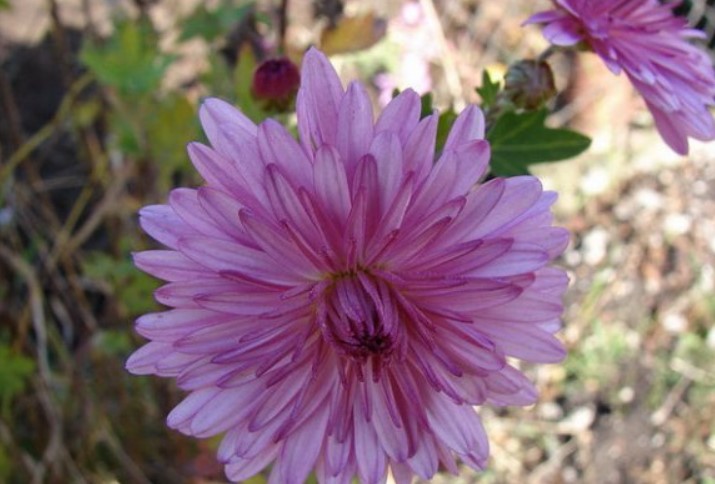
Late (flowering in November)
| Variety | Description | Size, color and shape of the inflorescence | Flowering period | Frost resistance |
| Avignon Pink
|
The inflorescences are very lush and remain on the bushes for a long time. | 120 mm, peach, densely double. | October-November. | Up to -29°C. |
| The Golden Fleece
|
An ideal cut flower variety, it features perfectly straight stems and dense, dark emerald, shaped leaves. | 80-100 mm, bright yellow, double. | November. | Up to -18°C…-23ºC. |
| Princess Amgard Red
|
They look especially impressive under the sun's rays. | 90 mm, red, terry. | October-November. | High. |
| Rivardi
|
Forms dense bushes with straight shoots and dark green leaves, reaching a height of up to 100 cm. | 140 mm, pale lemon, terry. | Before the frost. | High. |
| Tatiana's Day
|
The shoots are strong, upright, and densely foliated. They reach a height of up to 100 cm. The leaf blades are leathery and a rich green hue. Up to 200 flowers can bloom simultaneously on a single bush. | 90-100 mm, pink-lilac, terry. | November. | High. |
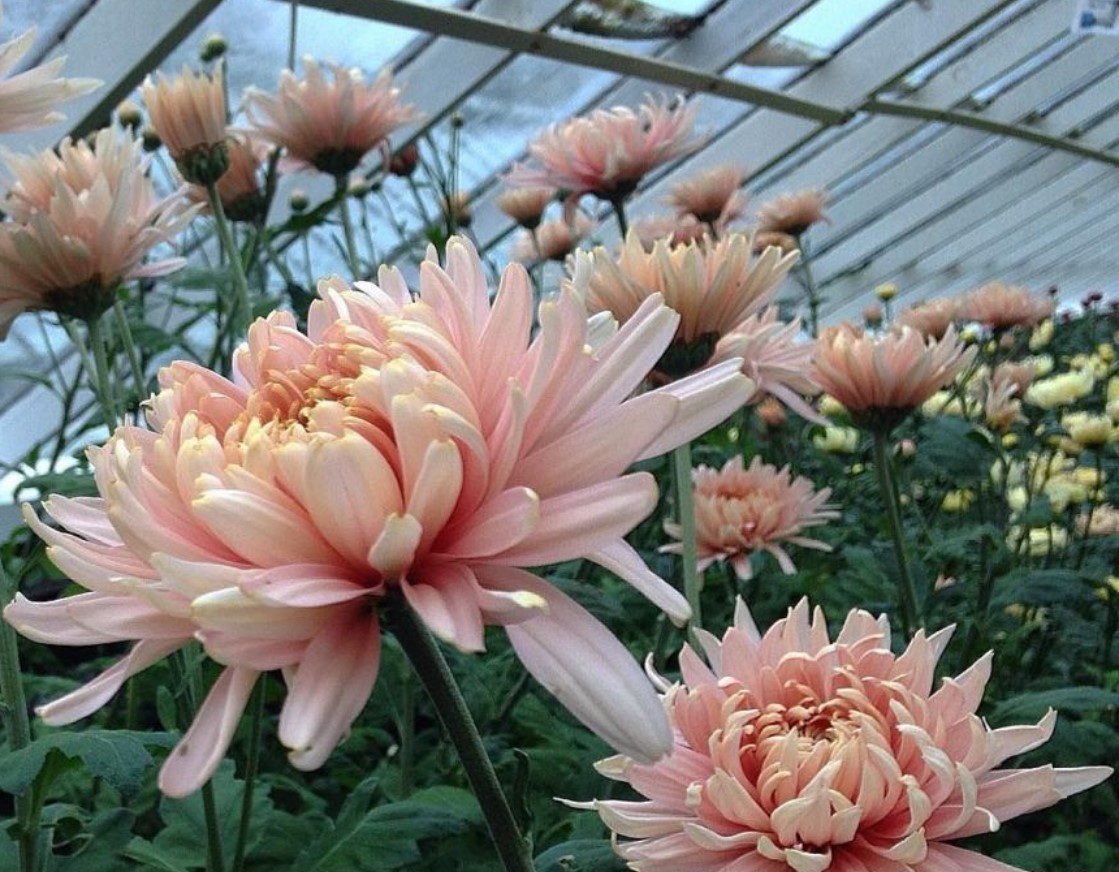
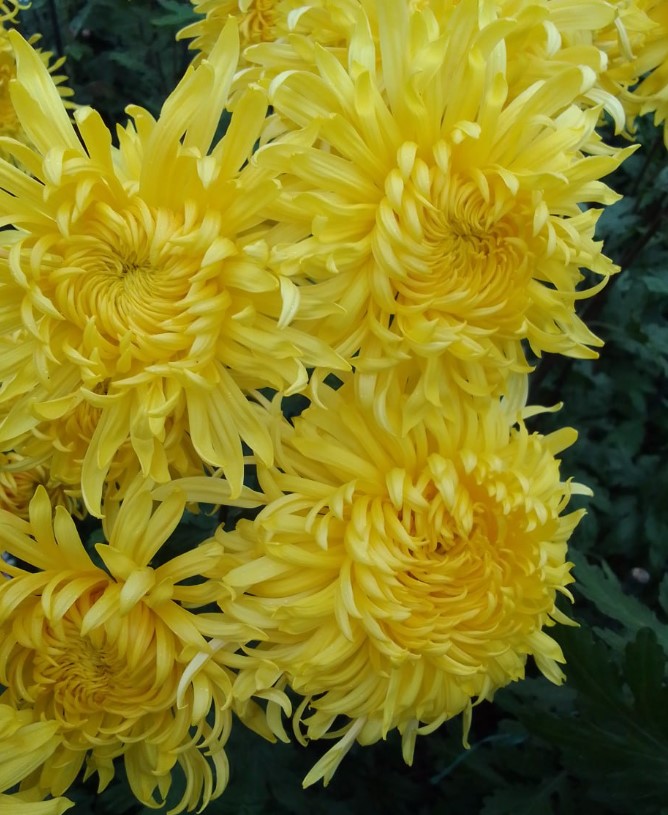
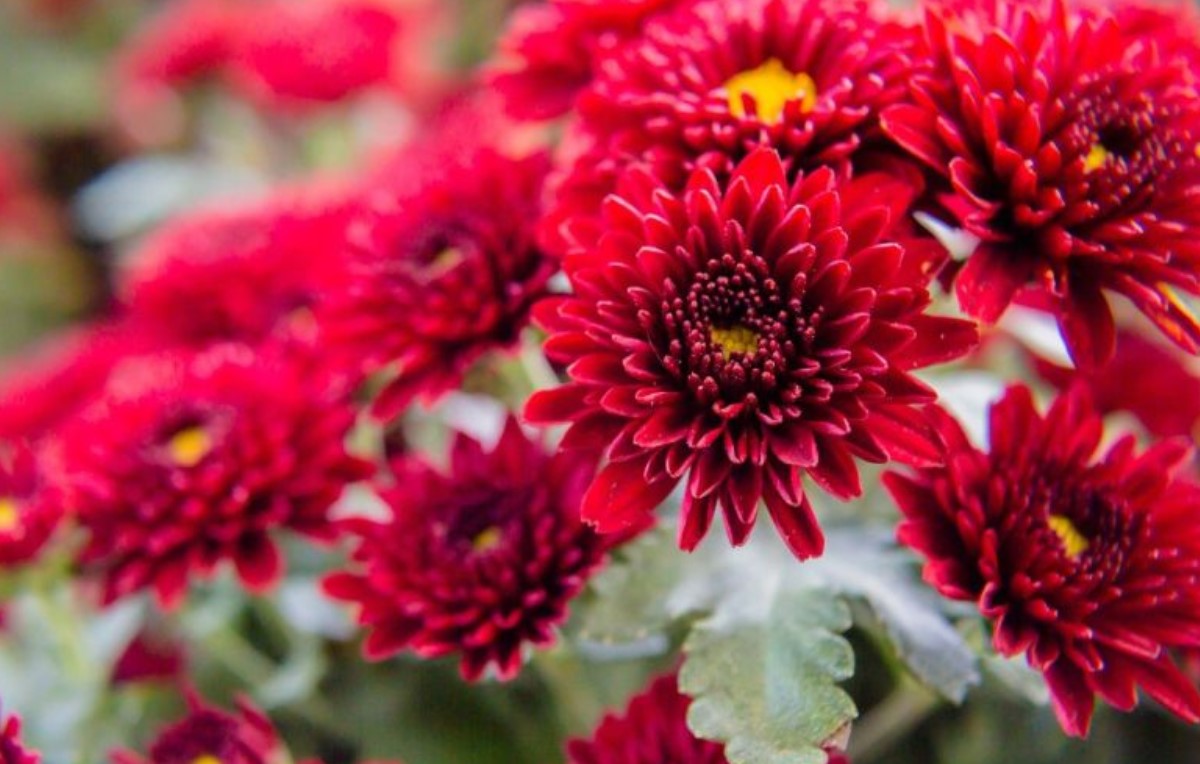
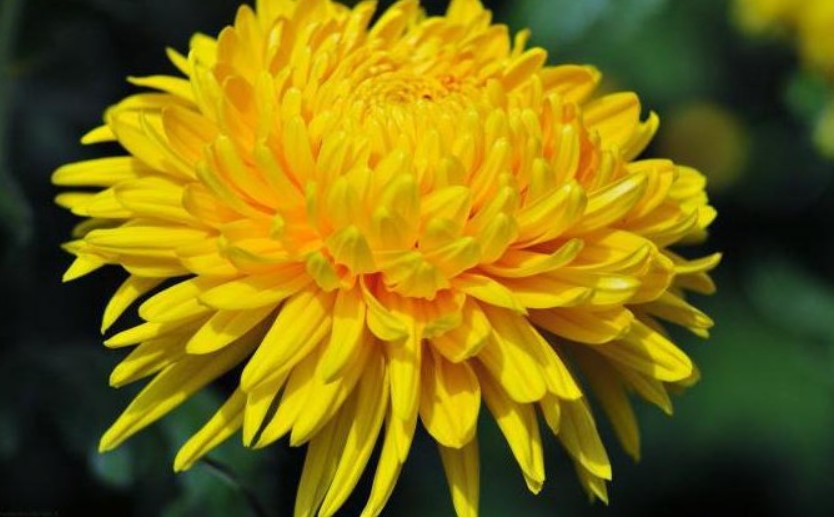
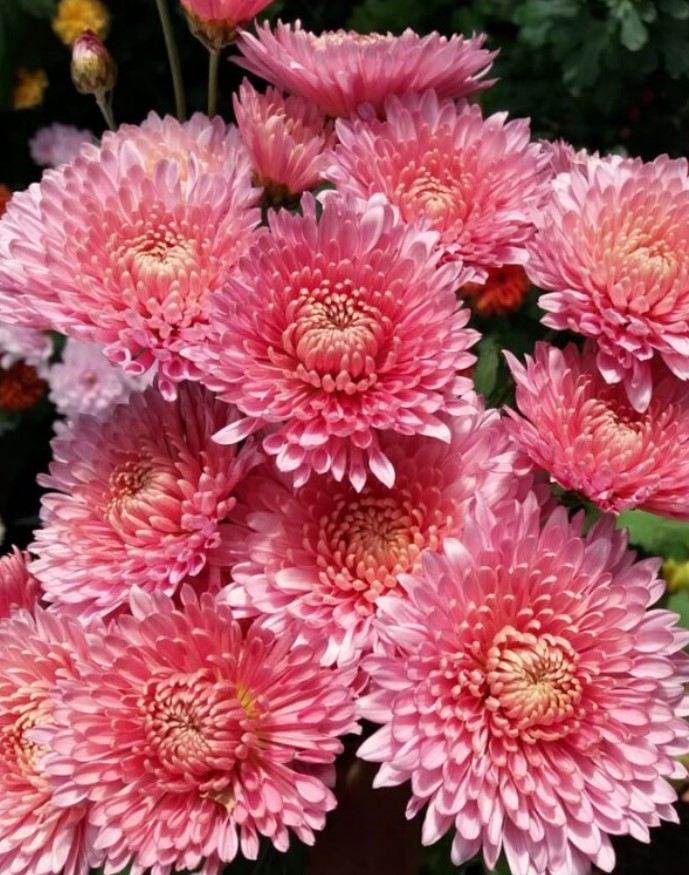
In this article, we've presented common chrysanthemum species, varieties, and photos of the flowers. This plant amazes with its diversity and beauty. You can choose varieties for your garden so they bloom in succession until the first snow.
How plant, grow and care for chrysanthemums in the garden And Houses on our website top.tomathouse.com.
Gardener reviews of chrysanthemums
Easy-to-grow chrysanthemums for a beautiful autumn garden right up until the frosts.
Hello!I decided to tell you about chrysanthemums.
Chrysanthemums are perennial garden plants, which is a plus. Once planted, they grow on their own every year.
They emerge in April/May.
They grow slowly and delight us with their blooms in the autumn.
They bloom somewhere in September-October, depending on the species.
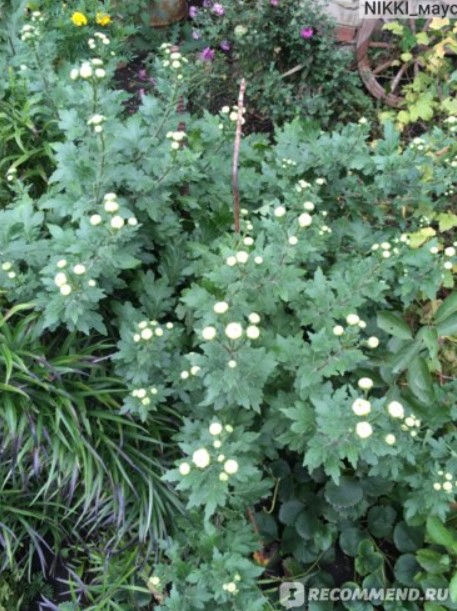
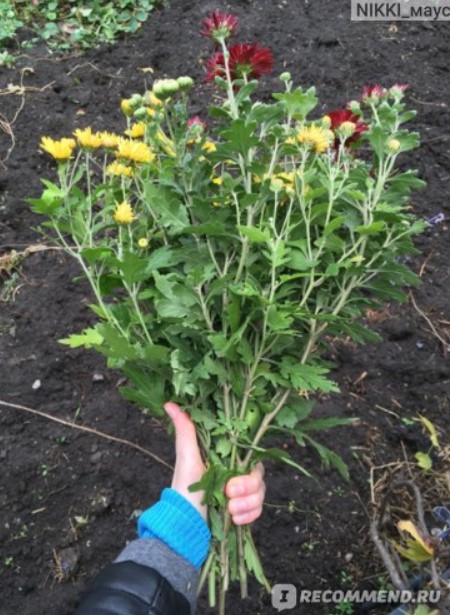
Chrysanthemums are easy to care for. They grow in both sunny and shady areas. But in the shade, they tend to bush out more, and the flowers are smaller, also reaching for the sun. Although even in the sun, they can grow quite tall, as tall as me.
As for watering, they thrive quite well if watered only on weekends. Of course, if there's little rain during this time, the chrysanthemums will shrink, but they'll still bloom.
Chrysanthemums actively bush out and a couple of years after planting they can already be transplanted to new locations, or the clump will continue to grow in one place.
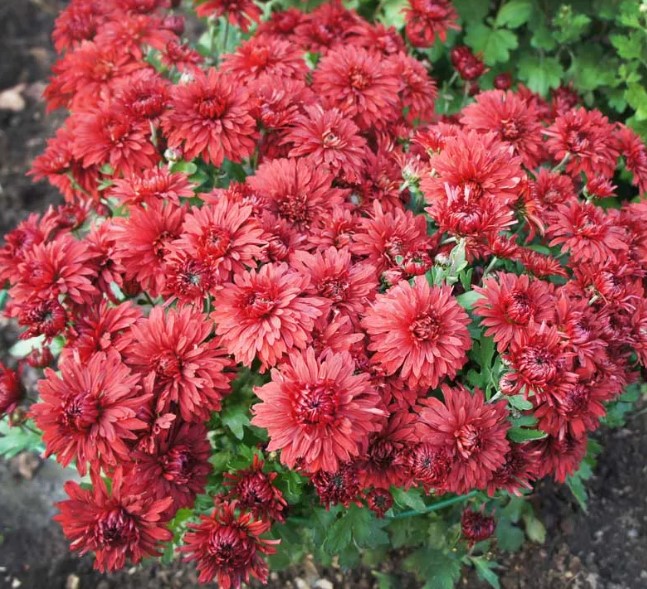
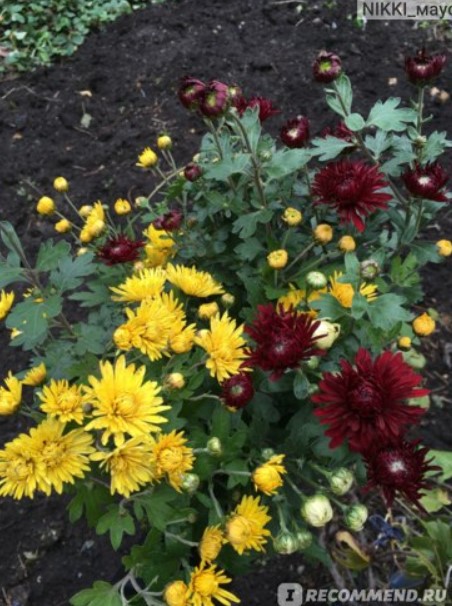
Speaking of soil, we have decent soil at our dacha, but near the house, it's clay and soil. Even in such poor soil, the chrysanthemums thrive and grow, bloom, and bush out quite well.Chrysanthemums come in many varieties and colors. We have a variety of colors, but they're all about the same size, with the white one being larger. Some bloom in clusters at the same time, while others bloom individually.
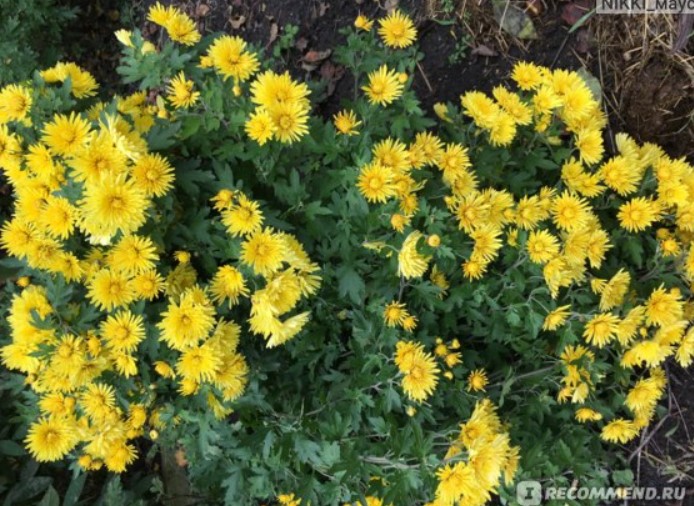
Look at these beauties.
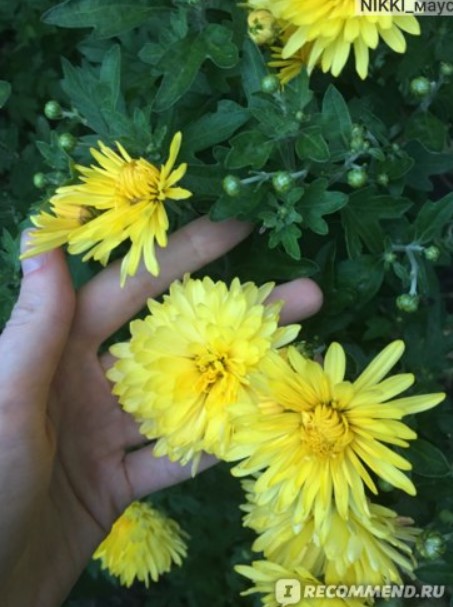
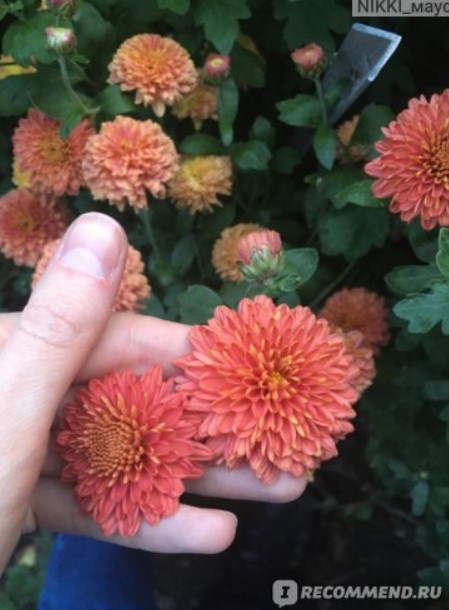
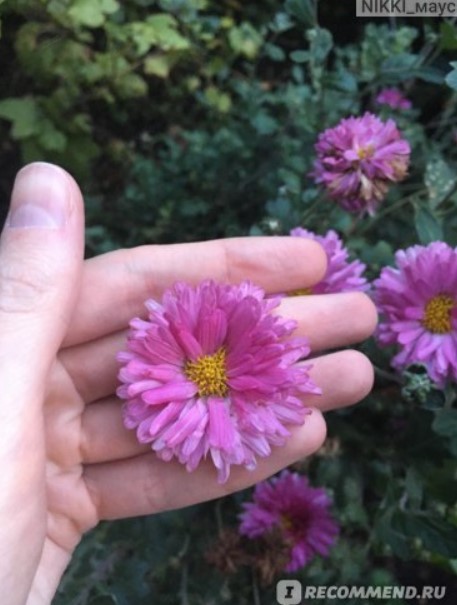
Chrysanthemums bloom until the first frost. All the flowers have faded, but the chrysanthemum still brings joy. Chrysanthemums can easily survive light frosts and the first snow.
I cut some of the flowers and put them in a vase at home. They delight me for a week, and then I refresh the bouquet. The unopened flowers open.
✅ Pros
beautiful
different colors
easy to care for
reproduce quickly and easily
bloom until the frost
the bouquet lasts a long time⛔️ Cons
No
❏ Do I recommend it?
I recommend chrysanthemums.
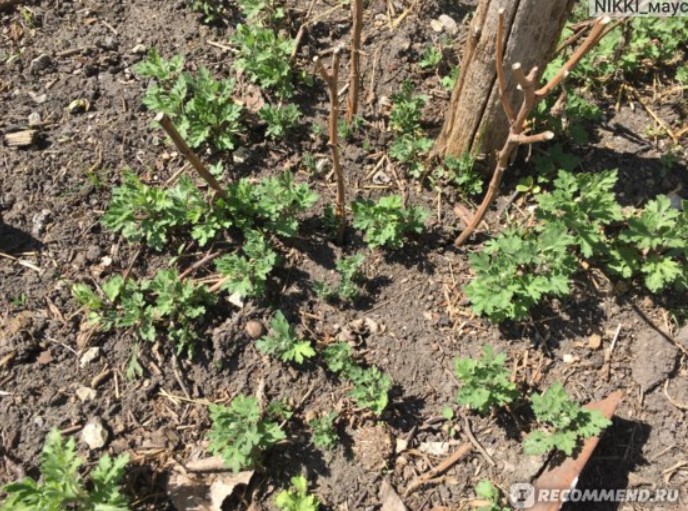
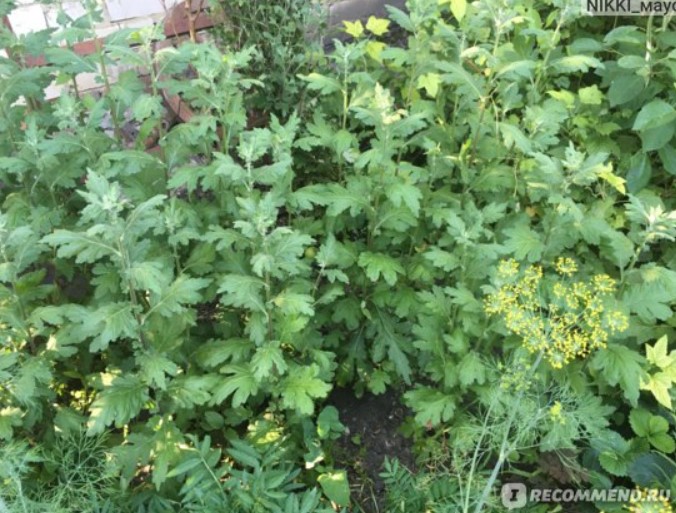
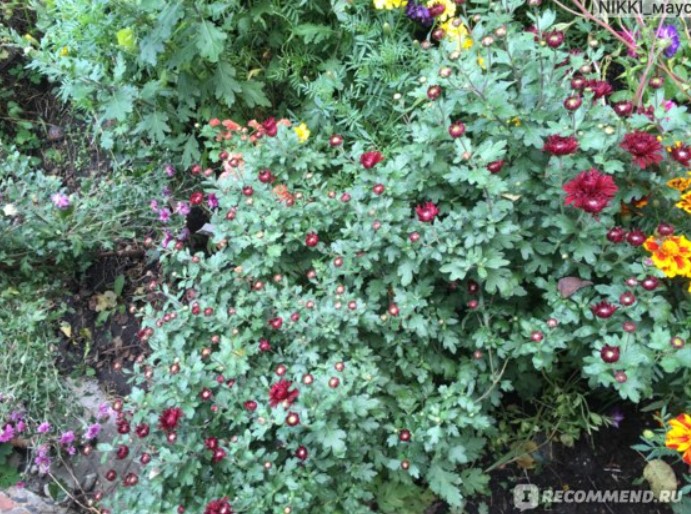
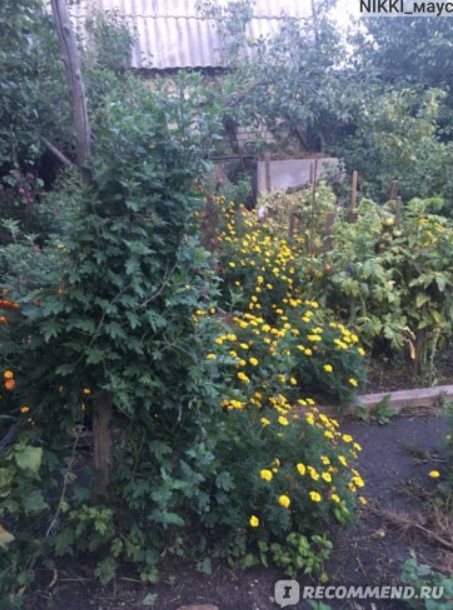
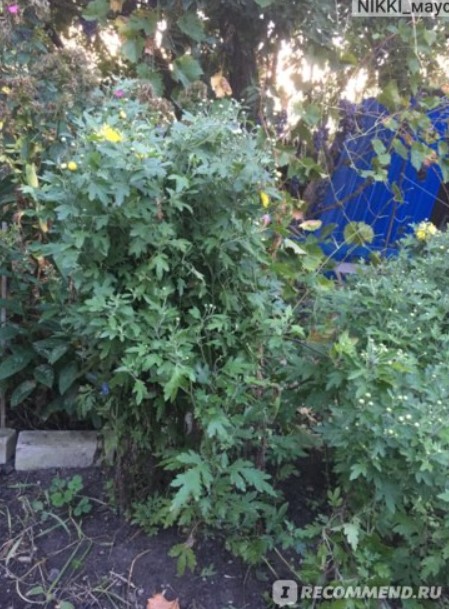
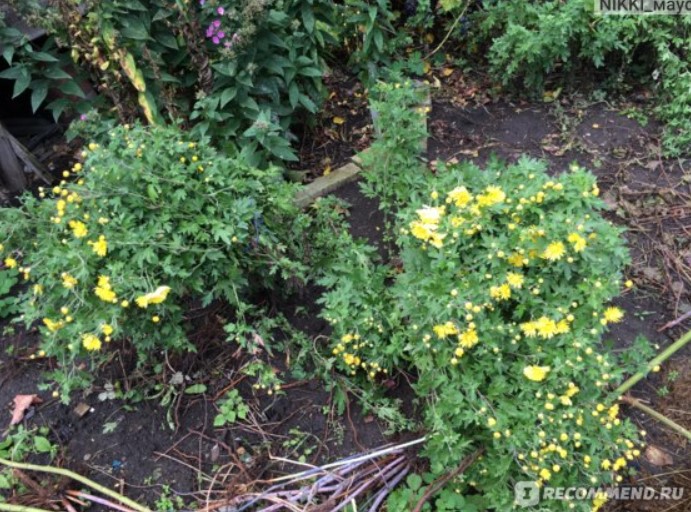
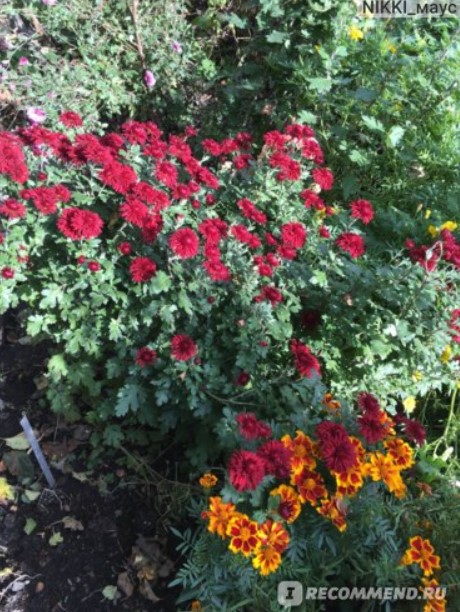
Bring vibrant colors to your flowerbeds even on cloudy late autumn days! Easy care for these rainbow beauties!
Hello!Autumn has arrived, the trees are ablaze with vibrant foliage. But October is coming, the leaves are falling, gray days follow one another, rain… And I long for warmth and fragrant flowers! So I chose chrysanthemums. Bright, beautiful, with a unique fragrance, they will delight until the first frost!
I planted the first bushes about five years ago. And now I replant them every year. They're completely low-maintenance.
I plant them in the spring, in a sunny, wind-free spot, as they bloom very sparsely in the shade. The soil in my garden is heavy, so I add sand to lighten it and improve drainage. I water them well, but make sure the soil dries out later, as chrysanthemums don't like moisture.
Sometimes I fertilize with organic fertilizer. And at the beginning of the season, when the plants start to look lush, I treat them with any antifungal.
Chrysanthemums bloom from late July until late autumn, when the first frosts arrive. How beautiful are their flowers, so bright and iridescent, they instantly lift your spirits!
After flowering, I trim the shoots, leaving 10-15 cm above the soil. I do this to ensure abundant blooms in the spring. After pruning, in late fall, I lightly cover the bushes with soil. Incidentally, in the spring, if the shoots are very tall (before buds form), you can trim them back a little; this will make the bush more voluminous and bushy, as many side shoots will appear.
Over time, the bushes age, so every 2-3 years I dig them up and divide them with a shovel, planting them in new areas.
I highly recommend them! Caring for chrysanthemums is easy. And you'll have beautiful flowerbeds even late into autumn!
This might be interesting:
Caring for bearded iris
Visit MY PROFILE!
Advantages
Beautiful flowers
Low maintenance
Long flowering period
Flaws
No
AnitaLa
recommends
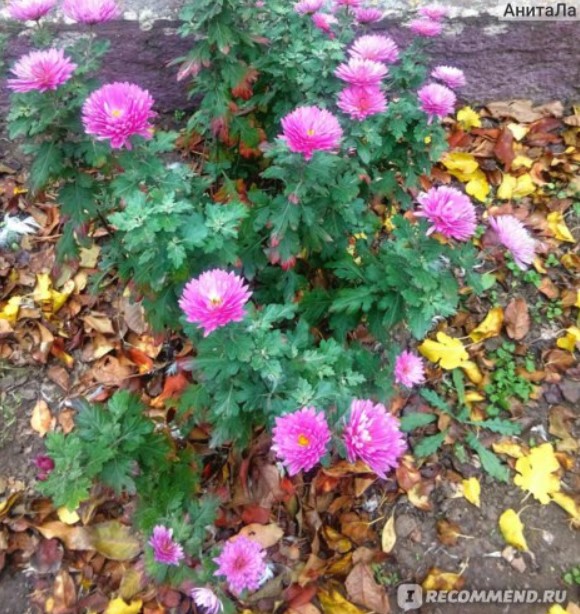
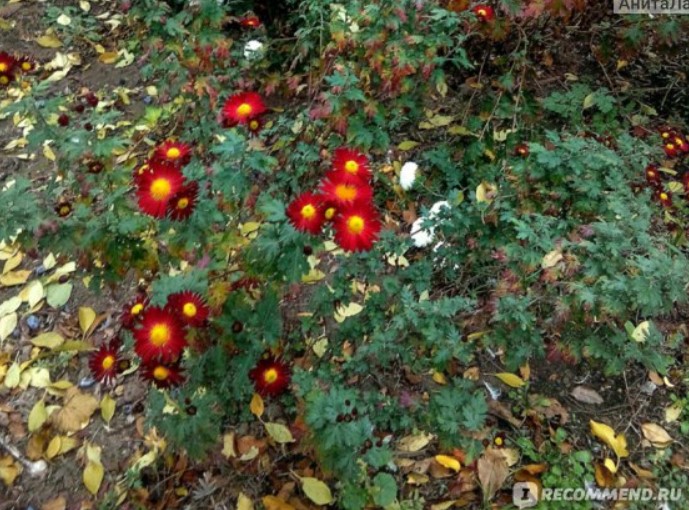
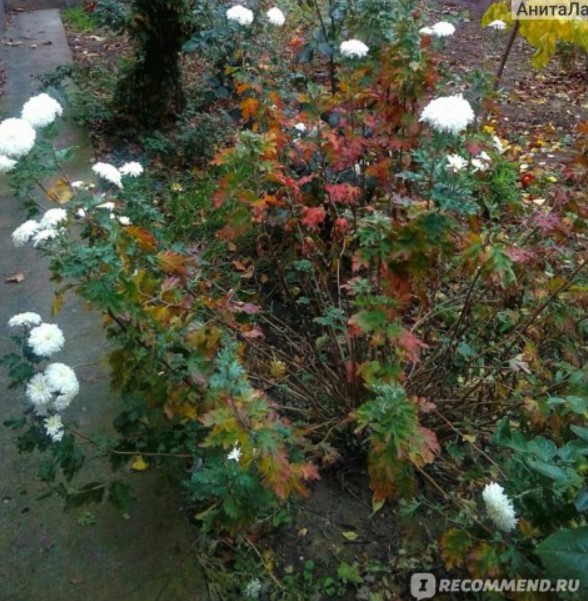
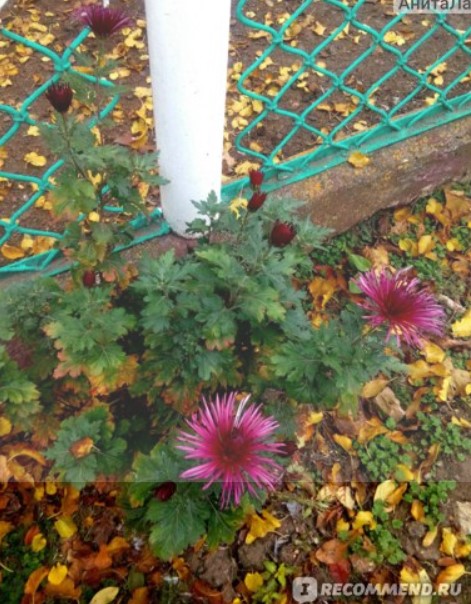
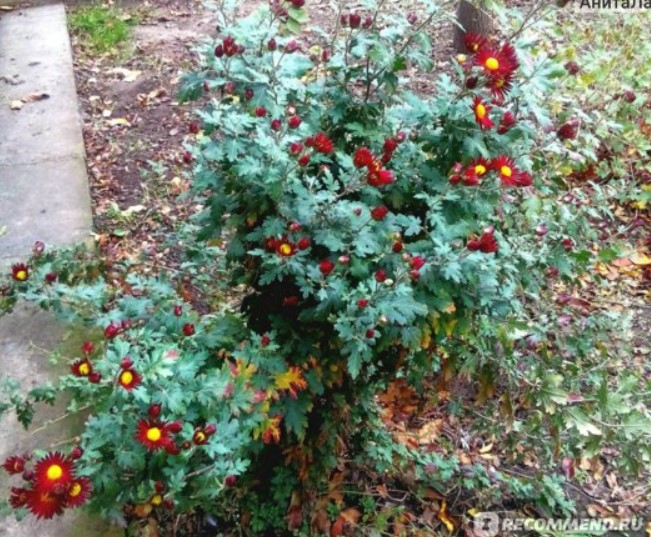
Review: Garden Chrysanthemums - Autumn Beauties
ADVANTAGES:
Blooms profusely until frost. Beautiful, bright flowers. Interesting foliage.
FLAWS:
I'm not picky
Hello, my dear readers.I'm continuing my gardening reviews with a floral theme. I'll tell you a little about garden chrysanthemums. The review, which is blue again, doesn't contribute to profit sharing; apparently, almost no one is interested in these beautiful autumn chrysanthemums.
They'll bloom endlessly all autumn. Buds, flowers, buds, flowers, and so on endlessly until the frost sets in. Oh, it's a shame we don't live at the dacha anymore and can't see such beauty.
The only downside of these flowers is that they are autumn flowers and bloom in September.
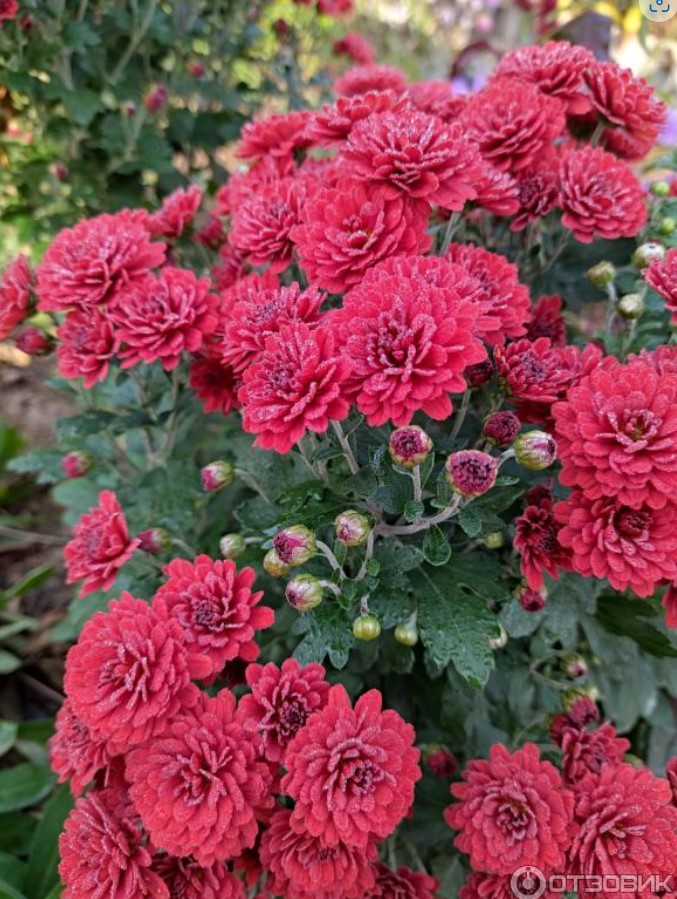
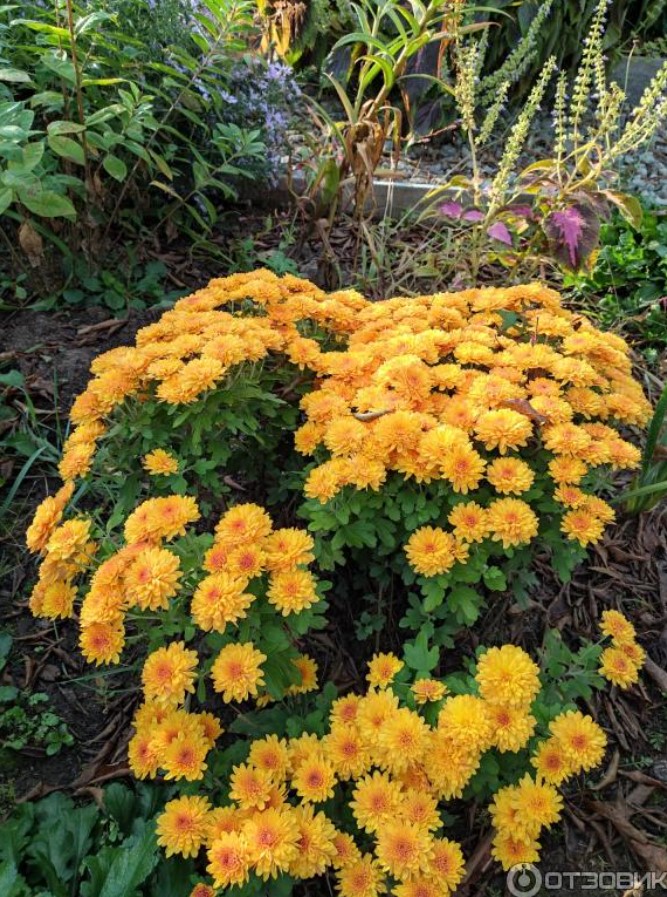
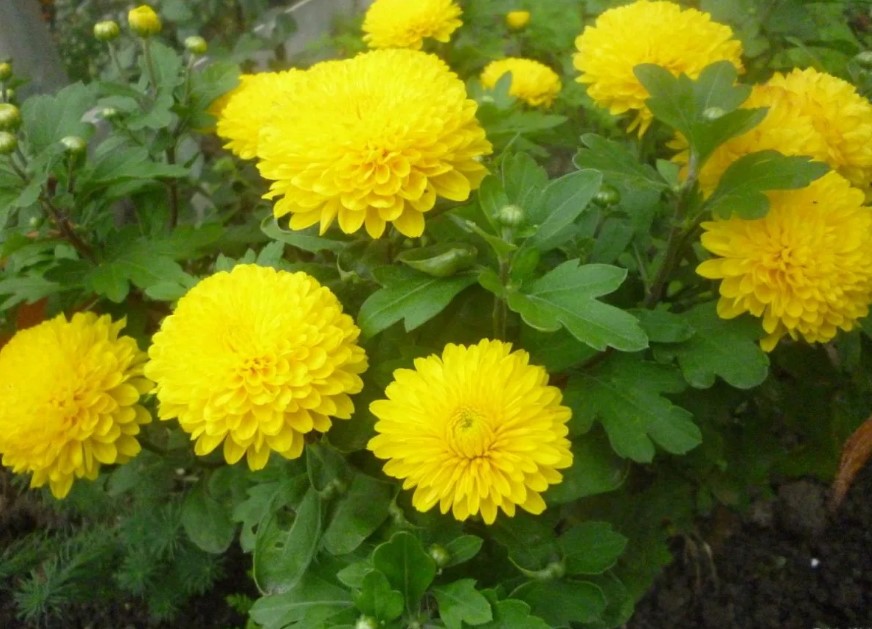
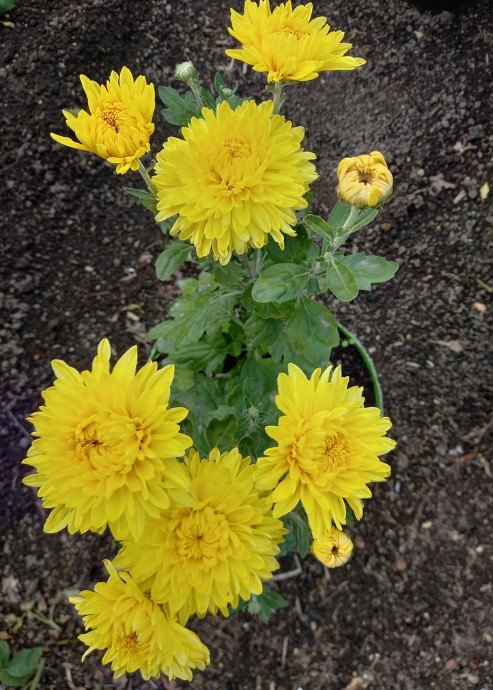
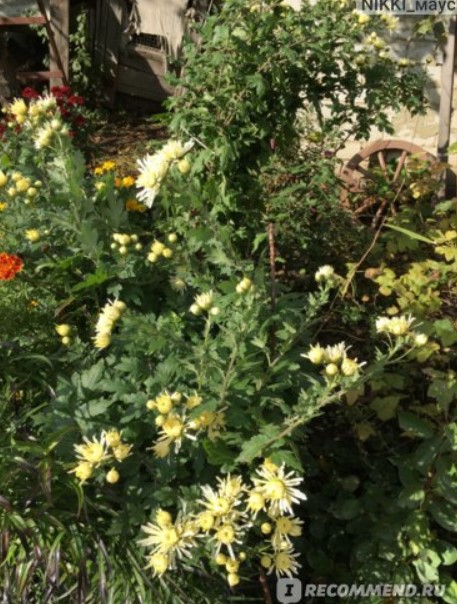
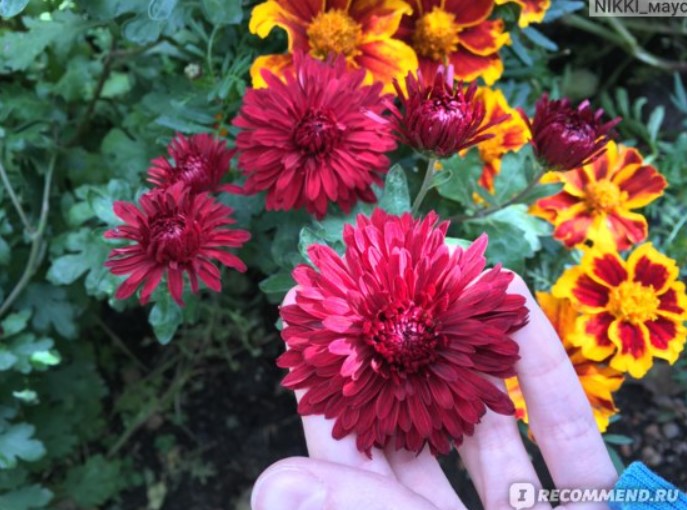
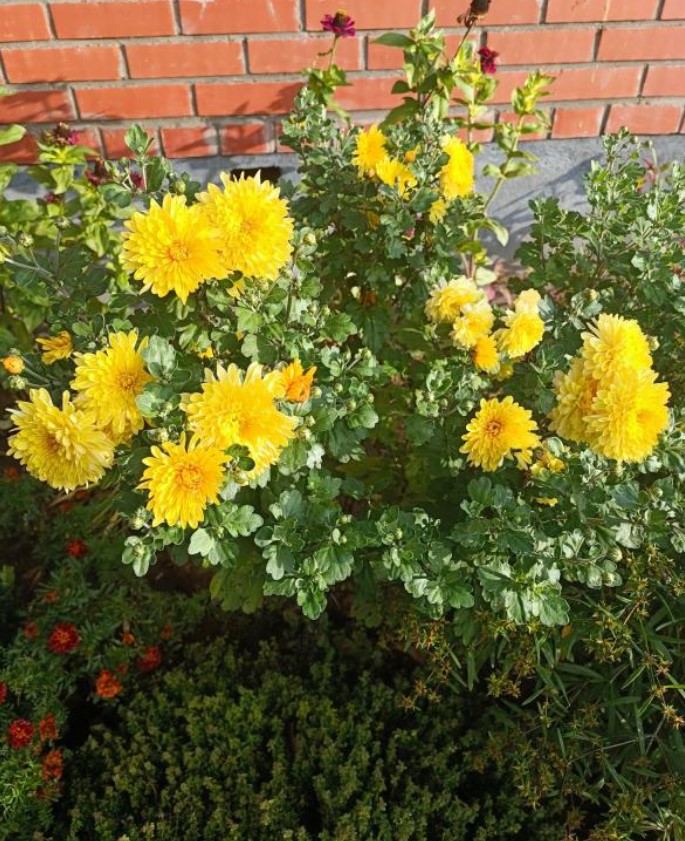
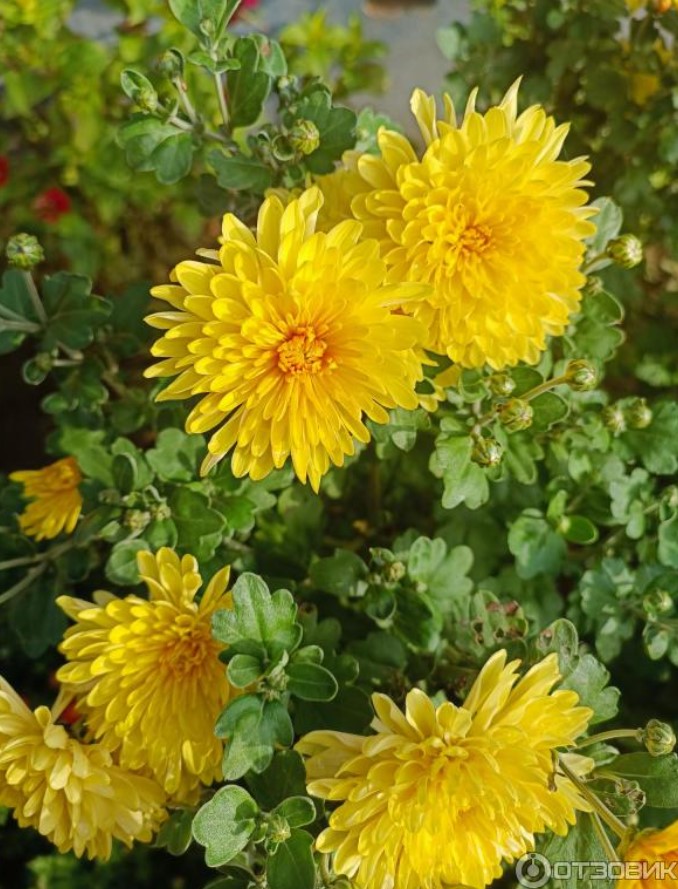
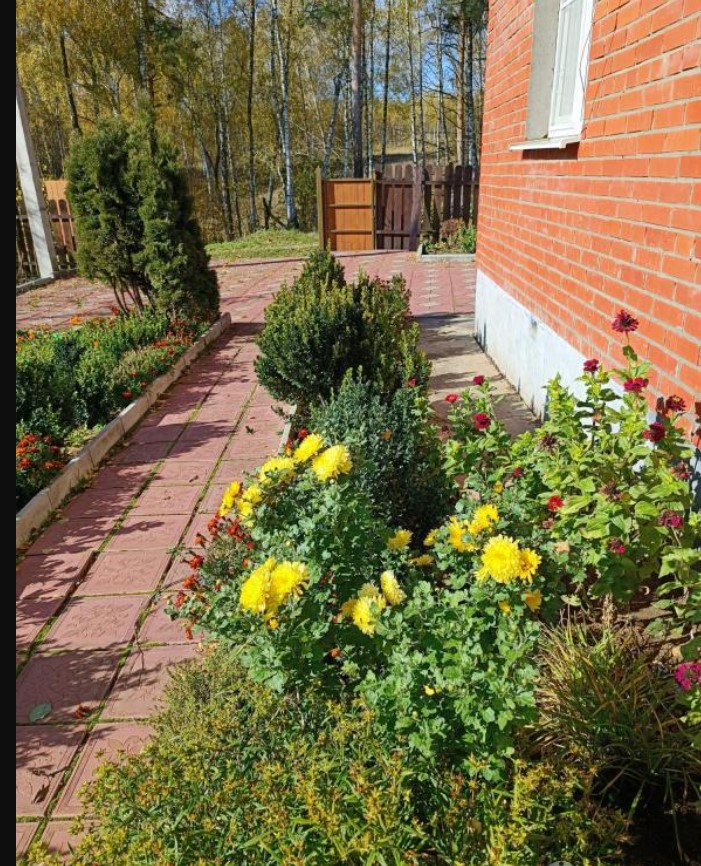
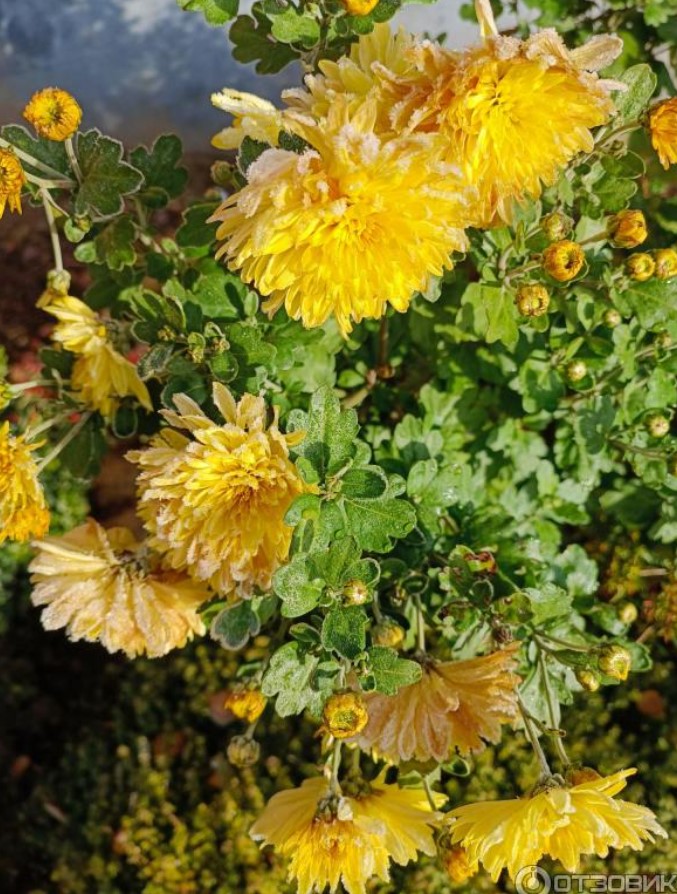
And I also noticed that they also love sunny, windless spots. For several years, my chrysanthemums grew on the east side of the house, where they got sun until noon, then shade and coolness, and they almost died. I kept scolding them: "What bad flowers, they don't grow, they don't bloom, they're wasting away." But when I transplanted them to the south side, where there's always sun and warmth, the chrysanthemums came alive, stretched out toward the sun, and began to delight with a riot of colors.Yellow beauties. This year, we planted burgundy chrysanthemums next to the yellow ones. The main thing is that they take root…
Chrysanthemums are generally easy to care for. Even when they don't bloom in summer, they produce lush foliage, with delicate, beautiful leaves along the edges.
Chrysanthemums have a unique, sharp aroma, but I like it.
And don't forget to plant a surefire option - marigolds - you're guaranteed a carpet of flowers.
Updated October 26, 2022
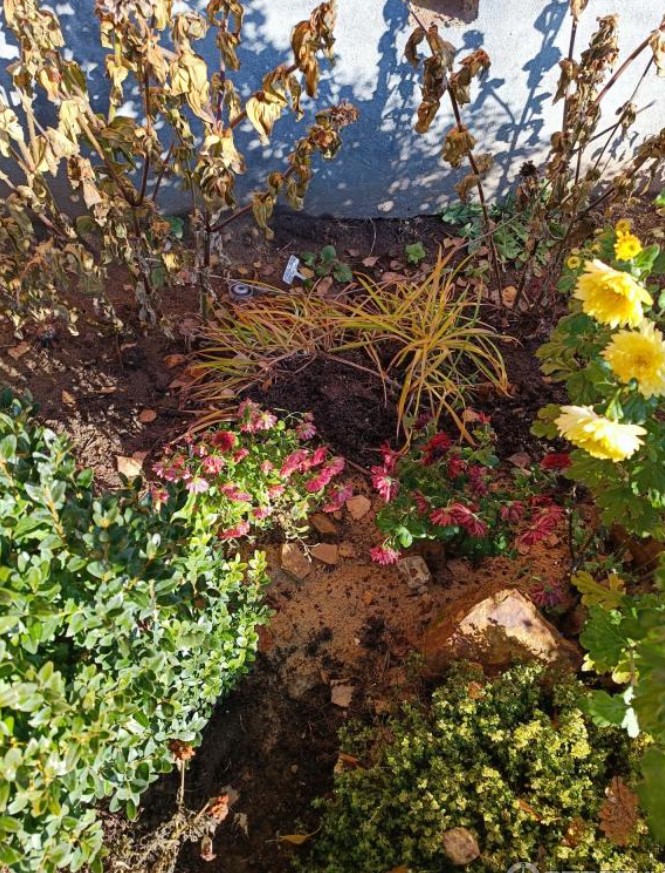
There were frosts overnight, dropping to -3 to -5 degrees. The chrysanthemums are still holding up, though they're clearly frost-bitten. In the entire dreary, gray, dirty garden, these are the only flowers blooming and still bearing buds.
I recommend adding these bright, beautiful chrysanthemums to your flowerbed.
ADVANTAGES:
Unpretentiousness, beauty.
FLAWS:
No
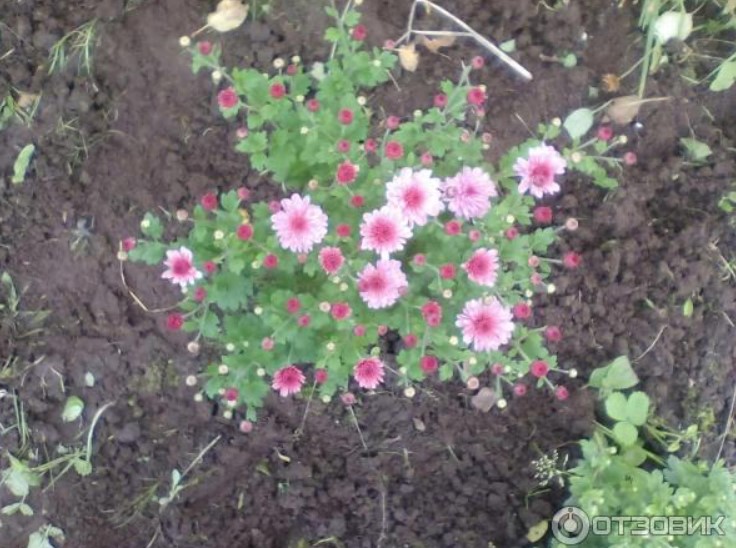
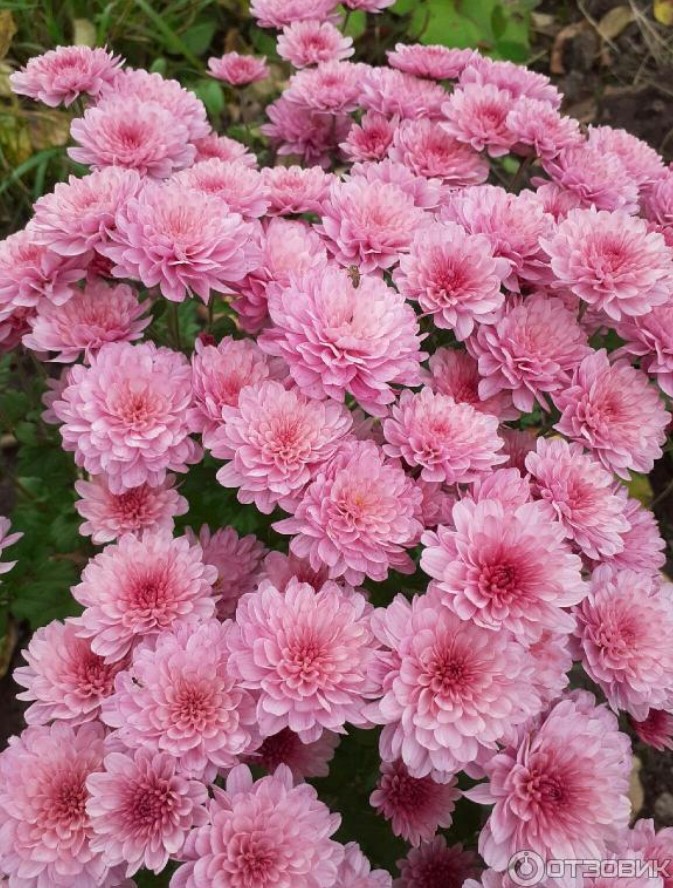
I wouldn't say I'm a flower fanatic. But it's so gratifying when beauty is born through your efforts. One such wonder in my garden is a garden chrysanthemum:
The plant is easy to care for. Of the four bushes I bought this spring, all have taken root. The bushes are low-growing and spherical. But that's just me, as there are tons of chrysanthemum varieties. The only thing is that my plot is low-lying, so I made the flower bed higher. It's in a relatively dry spot.
In the future, I plan to buy and plant more chrysanthemums in the garden, because in the cold autumn, these flowers personally remind me of summer and sunny warmth. A kind of greeting from summer.
So, my answer is "yes".
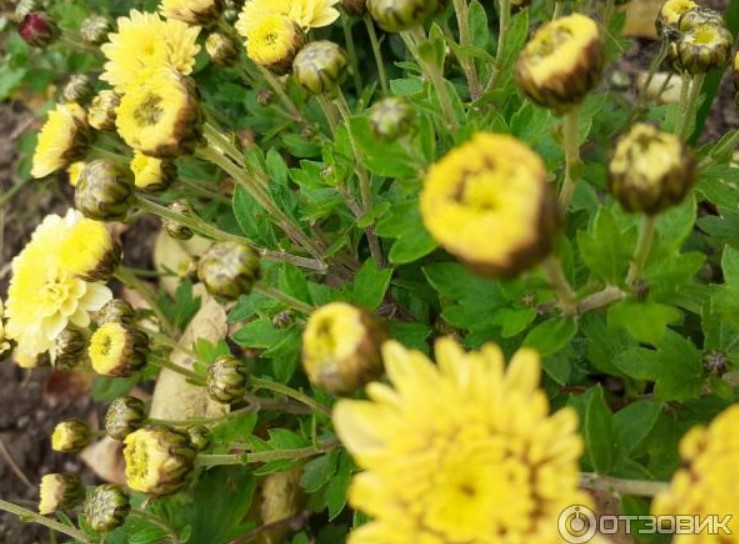
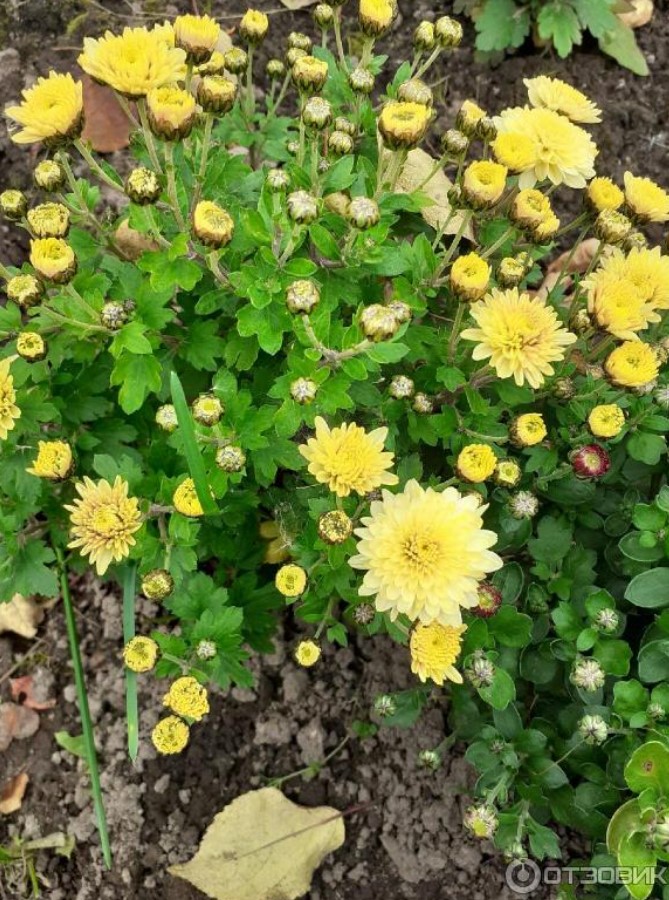
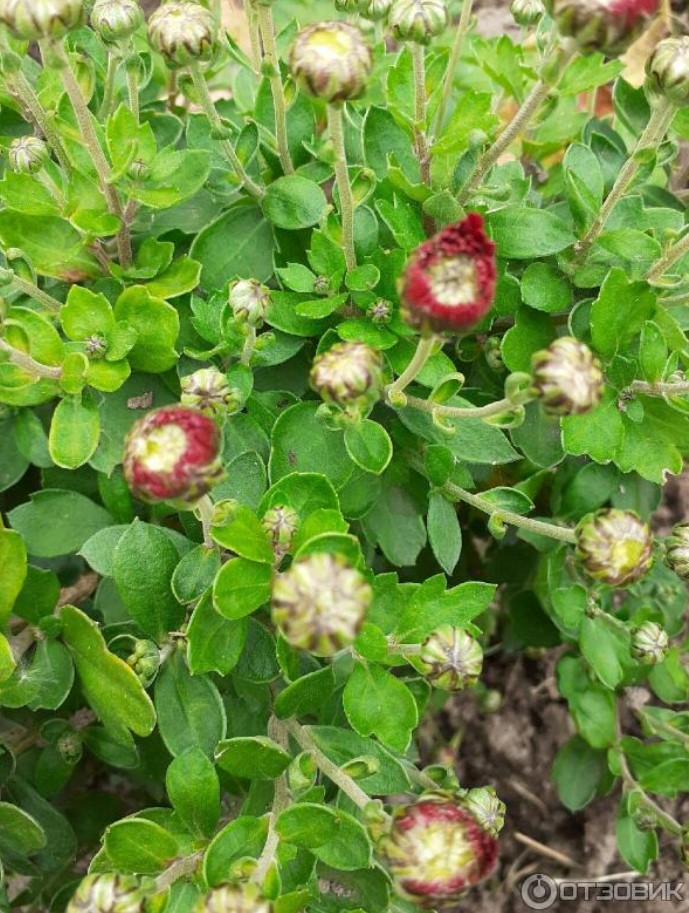
ADVANTAGES:
Beautiful, winters well, unpretentious.
FLAWS:
No
I adore chrysanthemums in the garden for their bright and abundant blooms in the fall. Korean perennial chrysanthemums are the most suitable for our climate (Primorsky Krai). Of course, if you want, you can plant multiflora chrysanthemums, but they don't overwinter here; they need to be dug up for the winter, stored in a cellar, and replanted in the flowerbed in the spring. Korean chrysanthemums are very winter-hardy, but even they sometimes freeze. Chrysanthemums bloom from late summer to mid-fall. Chrysanthemums are divided by height into dwarf (up to 30 cm), medium (40-60 cm), and tall (over 70 cm). Dwarf varieties have the neatest appearance, and most importantly, they don't need staking. Flower size also depends on the variety: there are small ones up to 2-3 cm and large ones around 10 cm.