Having a lawn in your garden is the dream of many gardeners. A finished lawn will not only enhance the garden, provide a place for relaxation, and serve as a playground, but will also prevent soil erosion, stabilize temperatures, and improve air circulation.

Advantages and disadvantages of spring lawn seeding
Lawn seeding is done in April-May. The exact timing is determined based on the climate of your region. Grass will grow well if the soil has warmed up, the air temperature is above freezing, and the lawn is watered regularly.
You can plant a lawn not only in spring but also in fall. The advantages of spring planting:
- the grass will have time to get stronger before the first autumn frosts;
- if necessary, it will be possible to carry out redevelopment and reseeding;
- the soil is saturated with melt water, thanks to which the seeds will quickly sprout.
We must also not forget about the length of daylight hours, the supply of nutrients in the soil, and high seed germination.
Planting a lawn before winter requires precise planning. Otherwise, the seedlings will be killed by sudden temperature fluctuations. The risk of frost damage increases if the winter is low in snow, excessively harsh, or extremely warm.
When planting a lawn in the summer, be wary of drought. Avoiding over-watering will require excessive watering, which can, in turn, wash away the seedlings and seeds. Therefore, it's best to avoid planting a lawn in the summer (except in cold climates).
The disadvantages of spring planting include recurrent frosts and a large number of weeds.
Therefore, in regions with harsh climates, it is recommended to postpone sowing grass mixtures on the lawn until summer, and to cultivate the soil.
Lawn planting dates by region and according to the lunar calendar in spring 2023
The lawn should be seeded only after the snow melts. The soil should remain moist during this time. Seeding times vary by region.
For example, in the south lawn planting falls on beginning or end of March.
IN middle zone, it is recommended to start planting the grass mixture in April.
IN Siberia and on Urals sowing is carried out in late April-early May.
IN northwestern regionsthe lawn is planted in May.
Many summer residents use the lunar calendar as a guide when determining a suitable date.
Favorable days for sowing a lawn in the spring of 2023 (you need to focus on your region and weather):
- March: 1-3 (until 6:16 p.m.), 8 (from 3:39 p.m.)-13 (until 10:21 a.m.), 15 (from 3:05 p.m.)-17 (until 5:24 p.m.), 19 (from 6:12 p.m.)-20 (until 8:21 p.m.), 28 (from 13h 21m)-30;
- April: 2 (from 13:58)-5 (up to 7h 34m), 7 (from 07:34 a.m.)-9 (until 15:57 p.m.), 11 (from 20:33 p.m.)-13 (until 23:42 p.m.), 21 (from 7:13 a.m.)-22 (until 1:11 p.m.), 24 (from 21:58 p.m.)-27 (until 9:29 a.m.), 29 (from 21:59 p.m.)-30;
- May: 1-4 (up to 20:34), 9-10, 13 (from 07:39)-15 (up to 10:56), 17 (from 15:26)-18 (up to 18:52), 22-24 (up to 17:34), 27-31.
Unfavorable and prohibited Days for planting a lawn according to the lunar calendar:
- March: 3 (from 18:16) - 5, 6 (from 15:39), 7,8 (until 15:39), 17 (from 17:24)-19 (until 18:12), 20 (from 8:21 p.m.),21,22, 23 (until 21:41);
- April: 1-2 (up to 13:58), 5 (from 7:34 a.m.), 6, 7 (up to 7:34 a.m.), 14-15, 18, 19 (from 7:13 a.m.), 20, 21 (until 7:13 a.m.), 27 (from 9:29 a.m.) - 29 (until 9:59 p.m.);
- May: 4 (from 20:34), 5, 6 (up to 20:34), 11-13 (until 07:39), 15 (from 10:56)-17 (until 15:26), 18 (from 18:52), 19, 20 (until 18:52), 24 (from 17:34) - 26.
On other days, sowing the lawn is generally possible, but supporters of the Lunar calendar recommend doing this only on favorable days.
Step-by-step guide to sowing your lawn in spring
Seeding a lawn yourself in the spring is quite a labor-intensive undertaking. In addition to the physical effort and time spent, a lawn requires a financial investment. If done correctly, a carpet of grass will grow in front of your house soon after planting, free of bare spots, holes, ridges, and other defects.
Selection of seed material
At this stage, it is worth paying attention to the nature of the soil (clay, sandy), climatic conditions, and the expected load.
If you're worried about doing something wrong, we recommend not searching for information online, but simply reading everything in one place, where everything about grass mixtures, planting, and subsequent lawn care is explained clearly and, as they say, "in a nutshell." Our editorial team has published a book, "DIY LAWN," which is written in simple language. If you're interested, read on. read more>>>
Grass mixtures most often include meadow bluegrass, perennial ryegrass, creeping bentgrass, and red fescue.
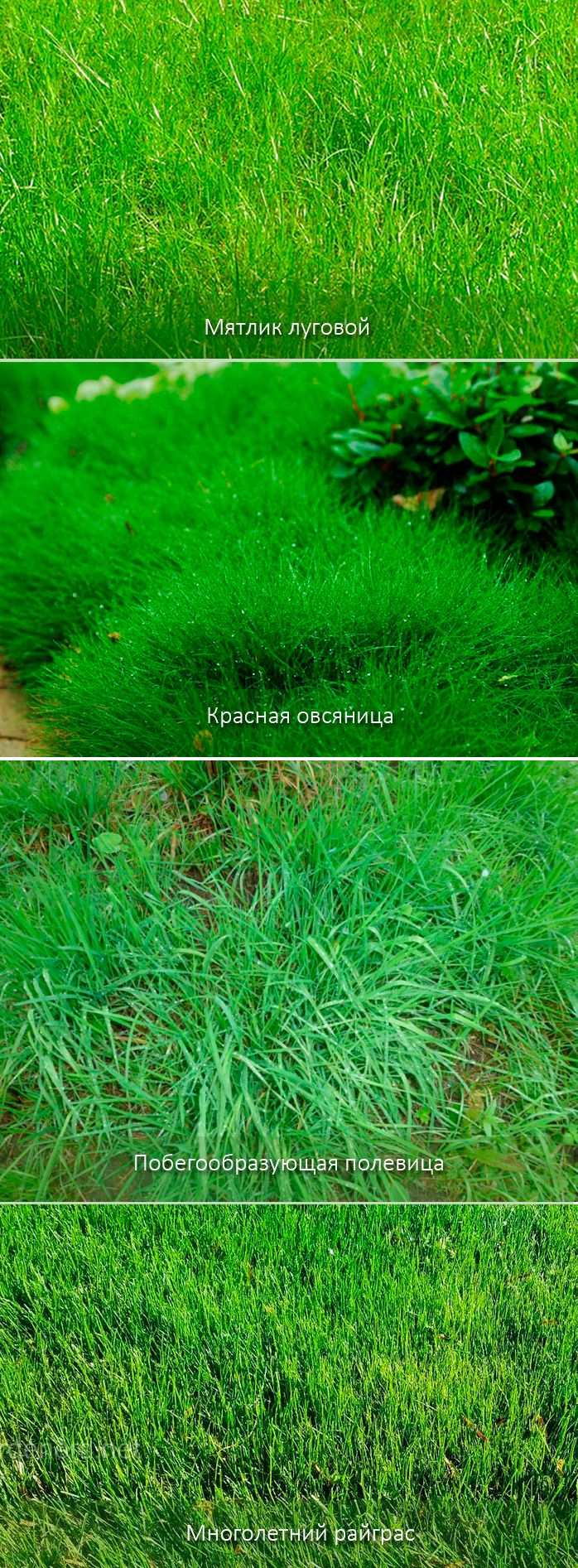
Bluegrass It is popular among gardeners living in northern regions. This is due to its low maintenance and resistance to sudden temperature fluctuations. Peak growth occurs 3-4 years after planting.
Bentgrass has a strong root system. The plant can reach a height of 15 cm. A well-maintained lawn will produce a dark green color. Bentgrass requires light and ample watering. It is fairly resistant to trampling.
Red fescue It quickly covers the area allocated for lawn. This quality is highly prized by landscape designers. The plant tolerates low humidity, partial shade, and low temperatures well.
Perennial ryegrass Often called "ryegrass," the crop is known for its survivability, resistance to external influences, and undemanding nature. It requires minimal care.
Tools
You'll need a shovel, a sod remover, a grass seeder, a fan rake, a garden roller, and a sprayer for a garden hose (for watering; a regular watering can won't produce the desired effect). In addition to seeds, you'll need vermicompost or a ready-made lawn fertilizer mix.

Choosing a site for a lawn
The surface of the selected area should be free of holes, potholes, and bumps. These could cause serious problems later.
If a flat, horizontal surface isn't available, a gentle slope is preferable. Otherwise, you'll have to find a creative solution. For example, turning imperfections into decorative elements.
Before preparing the soil, you need to draw a plan of the future lawn. It should include all existing structures, fences, curbs, pipes, and utilities. To avoid problems during mowing, leave a certain distance between the fence and the lawn.
Preparing the area
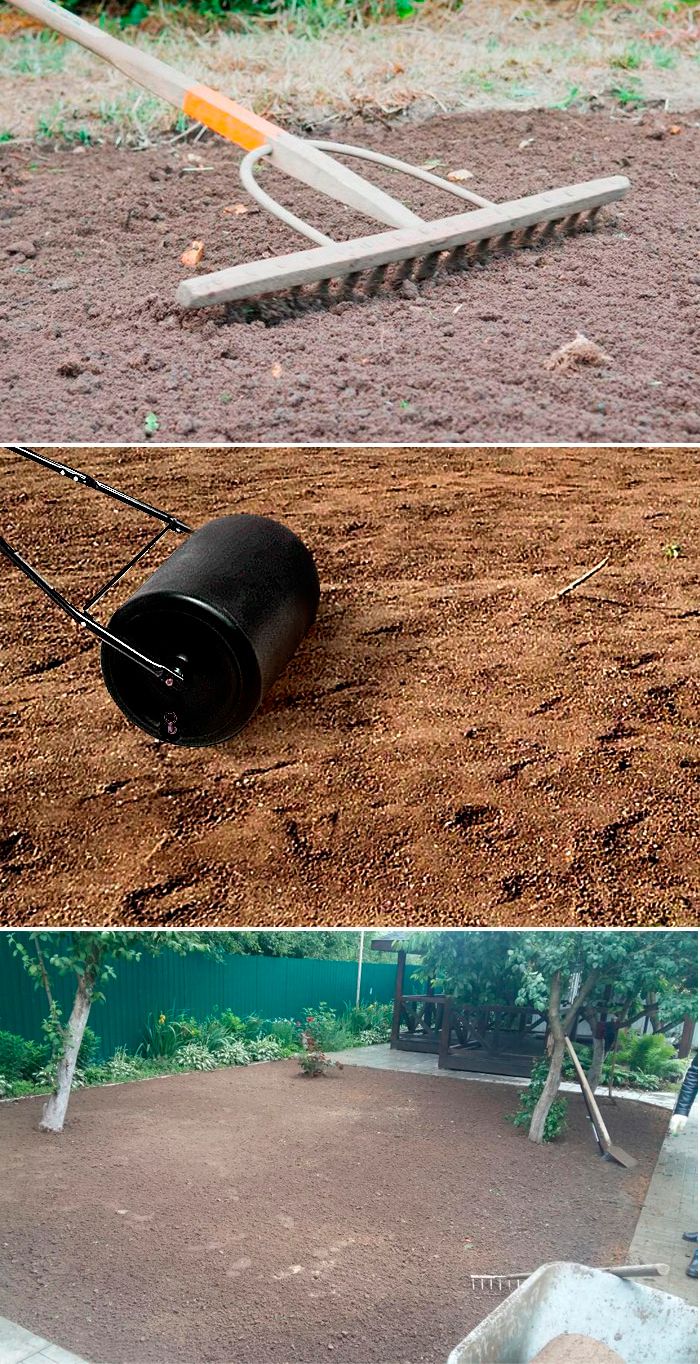
Preparatory work should be carried out in stages. The order of actions is as follows:
- The area is cleared of debris and dry leaves.
- The stumps are uprooted, the resulting holes are filled in, and the mounds are “cut off”.
- The turf is removed (the width of the layer is no more than 10 cm).
- They fill its place with soil, apply herbicides and complex fertilizers. The latter are selected based on the soil type. Drainage is provided if necessary.
- Compact the area using a garden roller. Alternatively, you can use a metal pipe or treated log.
Planting a lawn in spring
Before sowing, thoroughly mix the grass mixture. The application rate per square meter is indicated on the packaging. Then follow the fairly simple instructions:
- Make shallow furrows with a fan rake.
- Distribute the planting material evenly.
- Go over the "field" with a rake.
- Roll the treated area using a roller or other suitable tools.
- Carefully water and cover the future lawn.
Seeding should be done in warm, dry weather. The same applies to laying turf. This option is considered the simplest, but also the most expensive. The key is to properly prepare the soil and fit the strips tightly together. Otherwise, bare spots will inevitably appear.
Planting a lawn in spring is not a task for the lazy. To ensure the results meet expectations, it's essential to strictly follow the recommendations.