The Honey Spas tomato has become a favorite among gardeners thanks to its excellent yield and low maintenance. With proper care, it grows and produces fruit well, even in harsh climates.
Content
- 1 Table of characteristics of the Honey Savior tomato variety
- 2 The history of the Honey Savior tomato variety
- 3 A detailed description of the Honey Savior tomato variety
- 4 Advantages and disadvantages of the Honey Savior tomato variety
- 5 Growing the Honey Savior tomato variety
- 6 Resistance of the Honey Spas tomato variety to diseases and pests
- 7 Harvesting, using, and storing the Honey Savior tomato variety
- 8 Comparison of the Honey Spas tomato variety with other varieties in the table
- 9 Gardeners' reviews of the Honey Spas tomato variety
Table of characteristics of the Honey Savior tomato variety
| Characteristic | Description |
| Description | An indeterminate tomato variety with a mid-season ripening period. Can be grown in greenhouses and open ground. |
| Ripening period | 110-120 days |
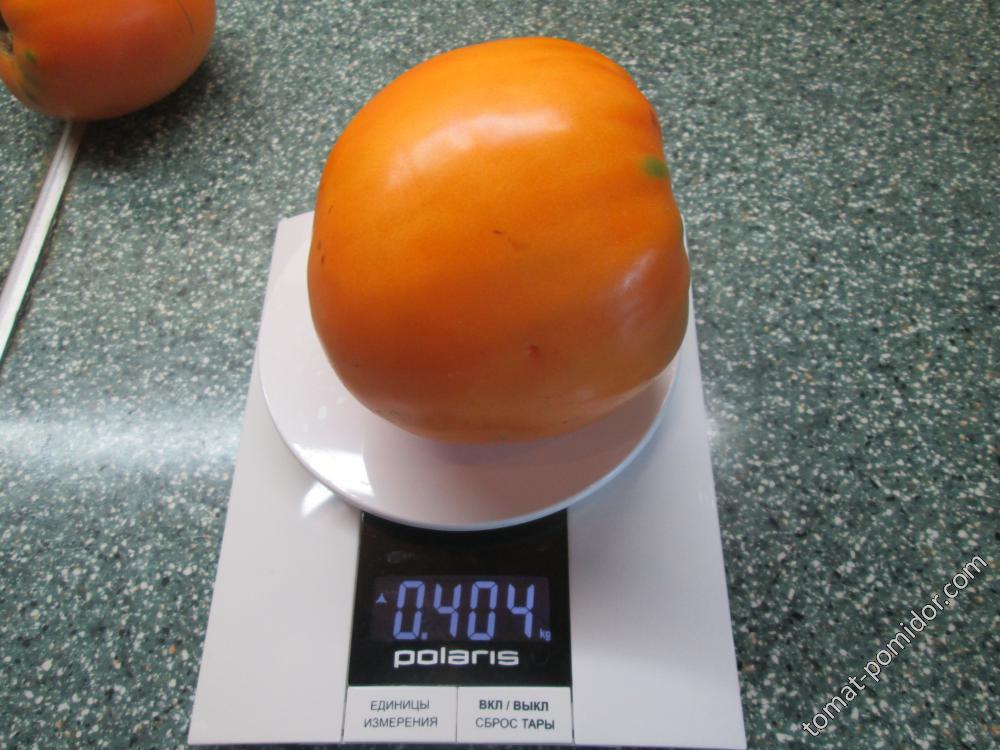
| Fruit weight | 160-218 g |
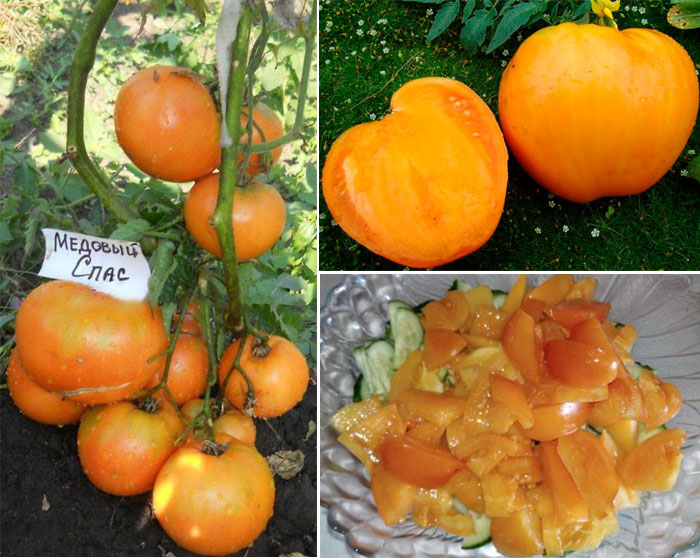
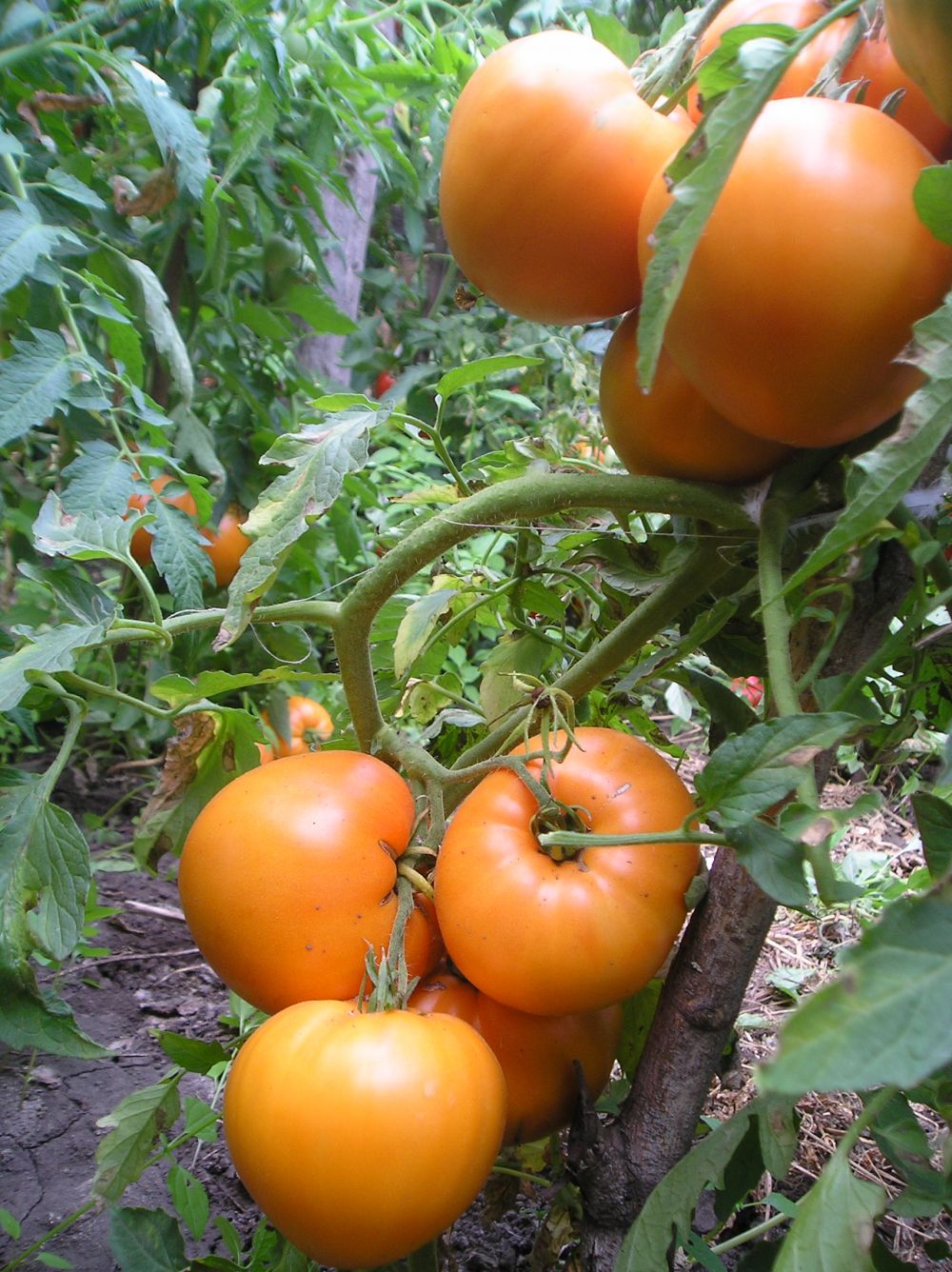
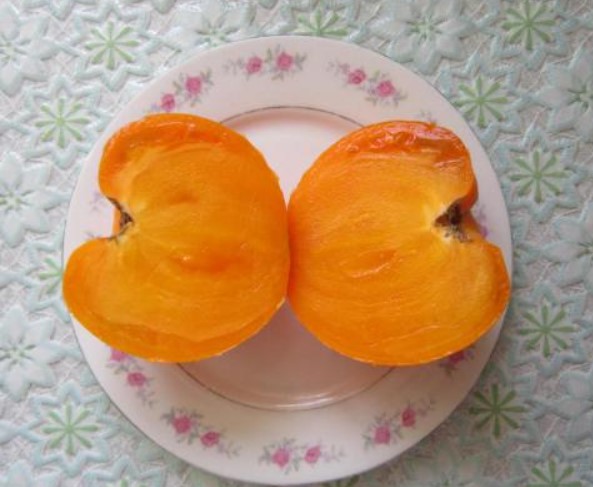
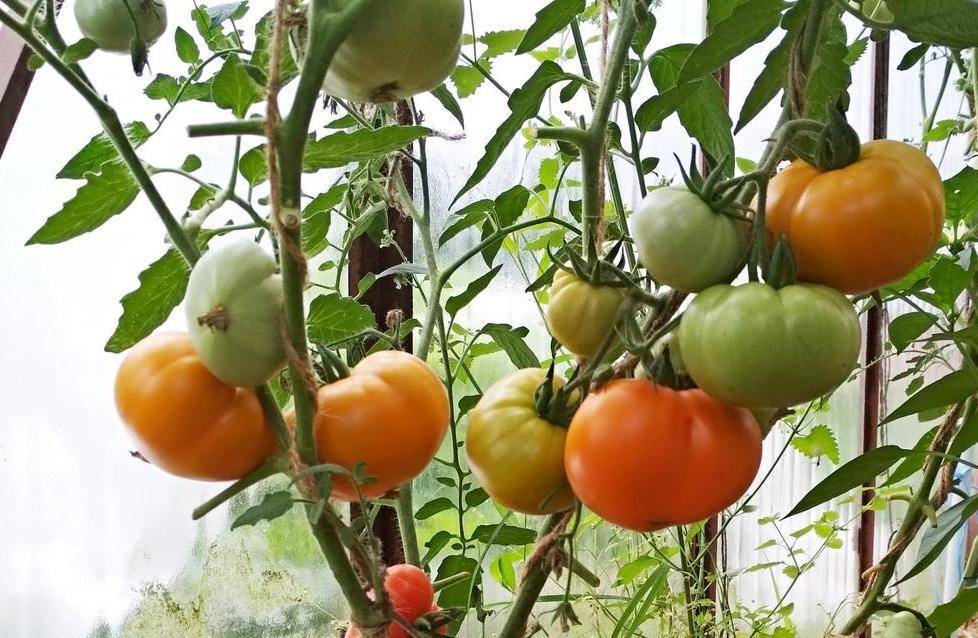
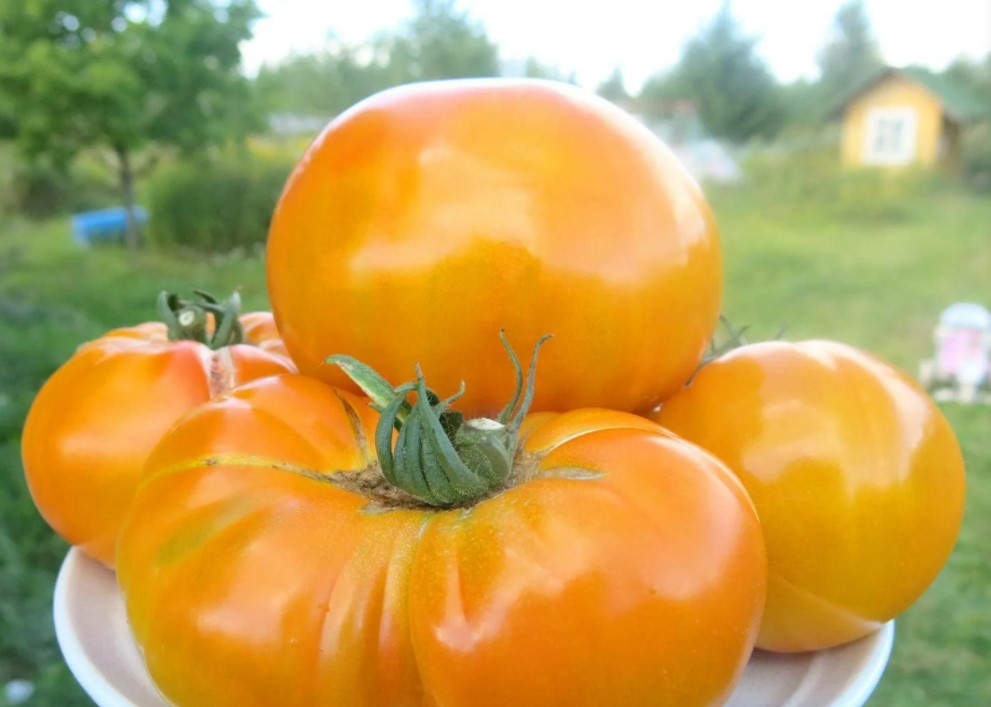
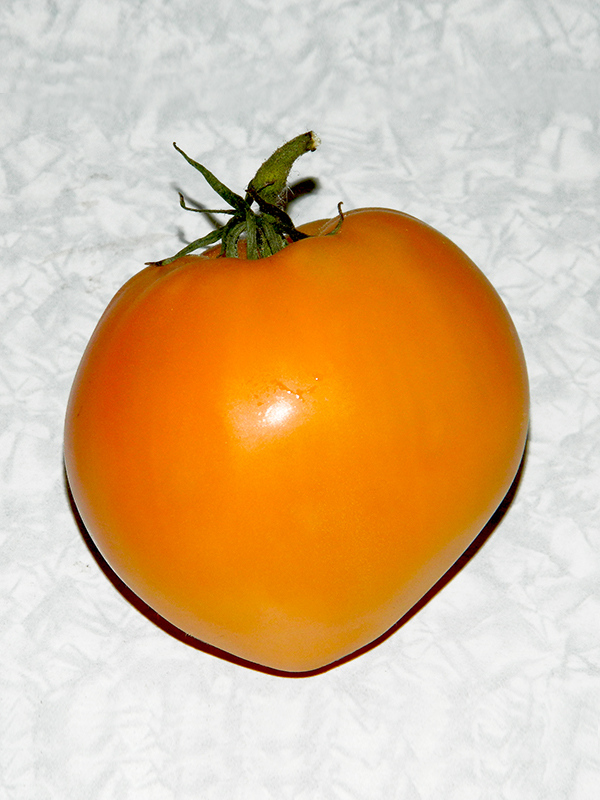
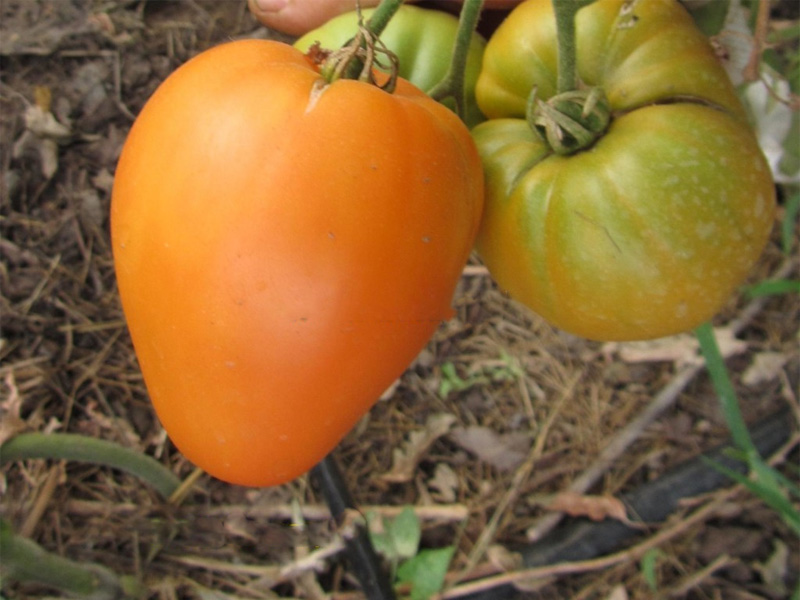
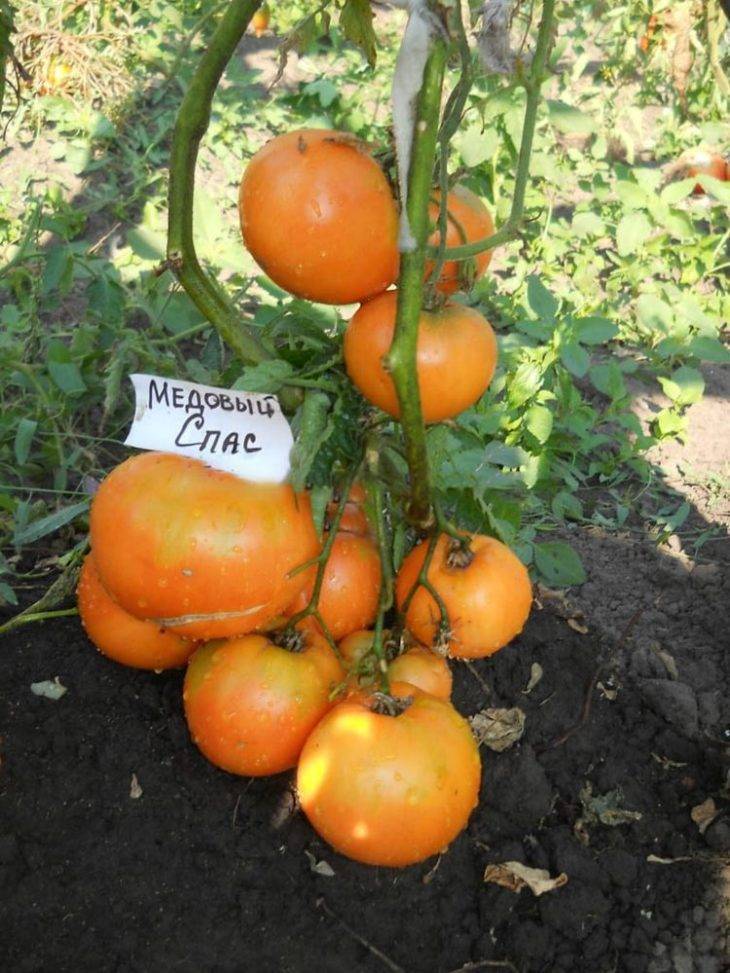
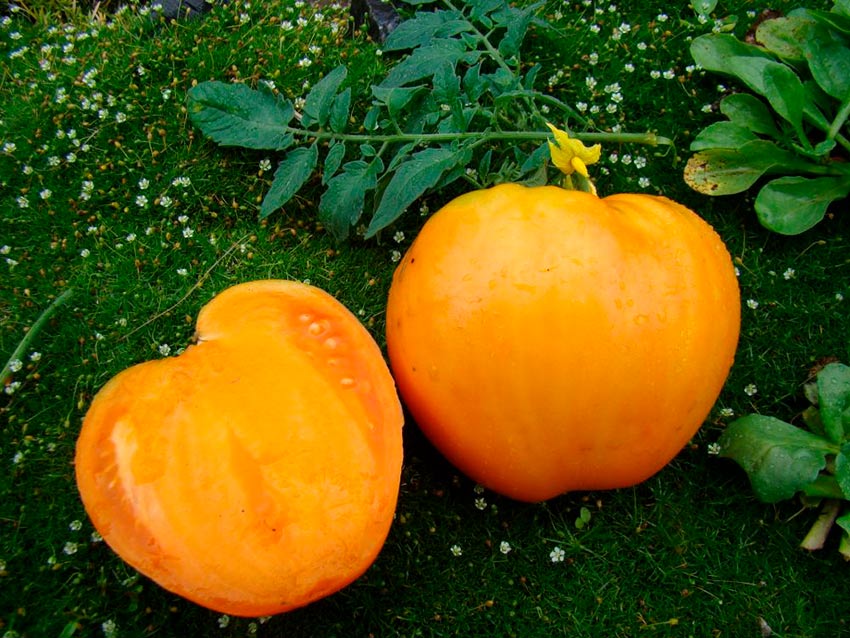
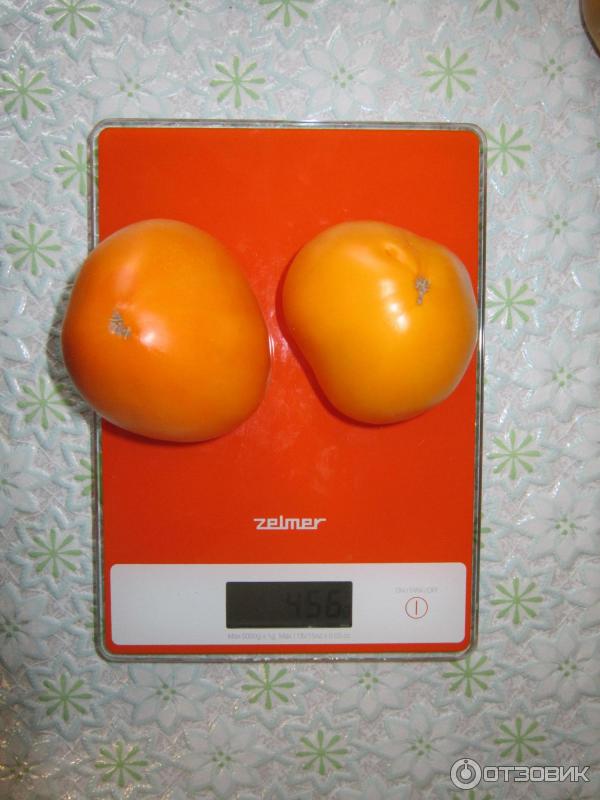
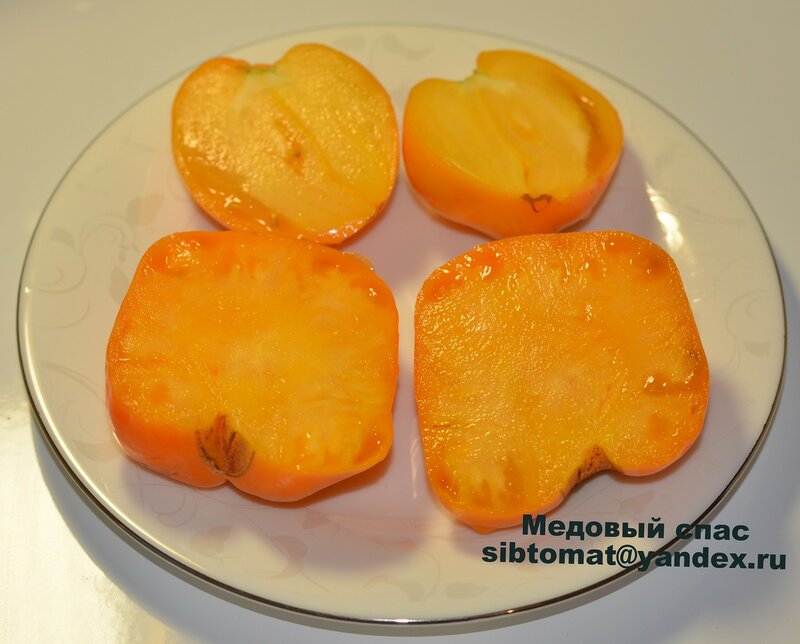
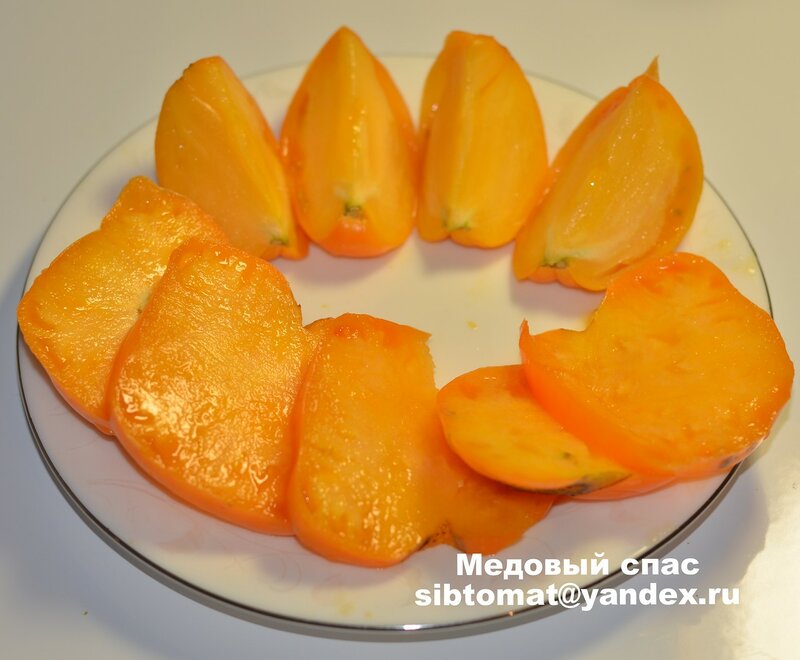
| Description of the fruit | Round-oval fruits with smooth skin. The shape may vary depending on the quality of the seeds and the producer. The color is orange, the flesh is dense, juicy, and sweet. There are very few seeds. |
| Productivity | Up to 5.6 kg per square meter; in a greenhouse, the yield can increase by 2.5 times. |
| Usage | The fruits are eaten fresh and processed into tomato products. |
| Preferred growing regions | Suitable for all regions. |
| Disease resistance | Rarely susceptible to disease, has a strong immune system, and moderate resistance to blossom-end rot. |
| Agricultural technology | The bushes are tied up, formed into 1-3 shoots, and side shoots are removed. In the south, they can be grown directly in open ground. |
| 2006 | |
| Originator | Dederko V.N., Postnikova O.V. |
Photo gallery of the Honey Savior tomato variety
The history of the Honey Savior tomato variety
The Honey Spas tomato was developed by Vladimir Nikolaevich Dederko, a renowned breeder from Novosibirsk. His efforts have led to the development of many worthy vegetable crops. In 2004, an application was submitted to the register for inclusion of the variety in the list of recognized crops, and the tomato received official recognition in 2006.
A detailed description of the Honey Savior tomato variety
The Honey Spas tomato is distinguished by its rich harvest of delicious bright orange tomatoes.
Characteristics of the bush
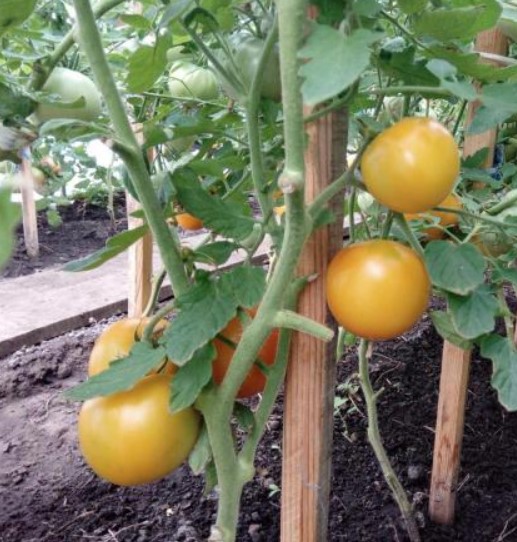
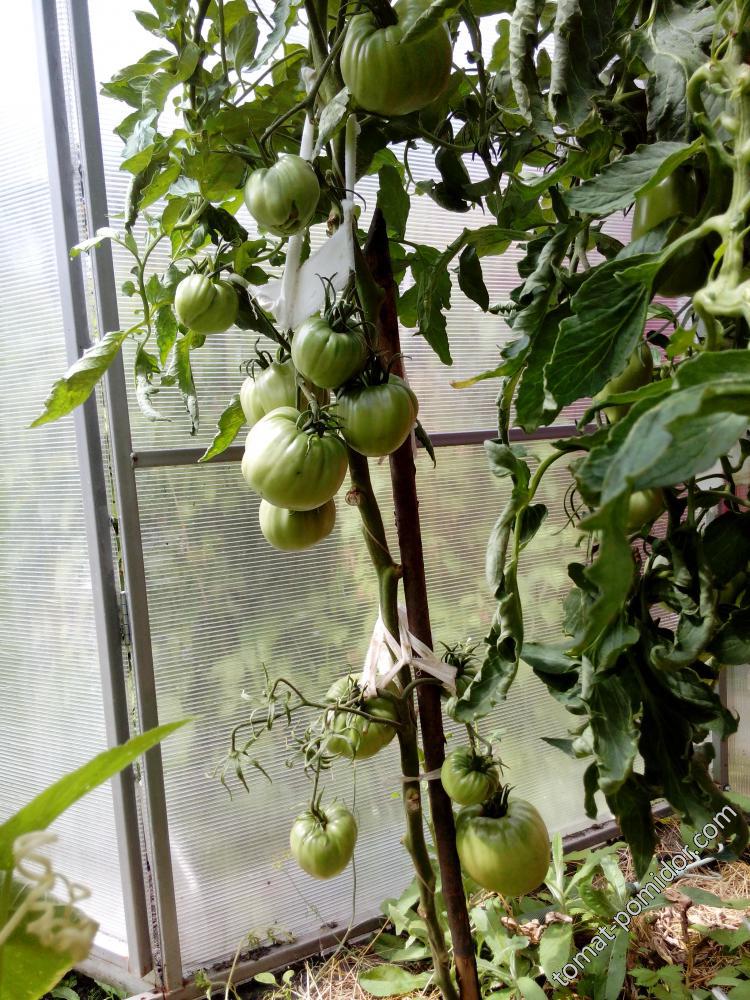
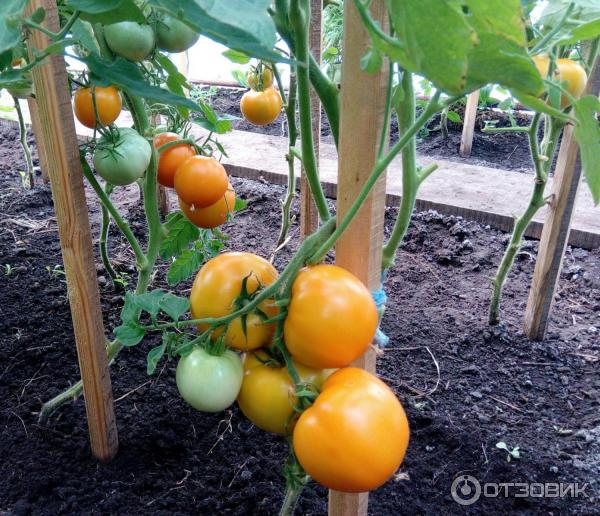
The bushes are indeterminate, with shoots reaching 160 cm in height in the open ground and 250 cm in a greenhouse. The stems are relatively brittle and require staking and removal of side shoots. The leaves are small, slightly wavy at the edges, and dark green. To prevent them from robbing the plant of nutrients, they are gradually removed from the lower parts of the bush.
Fruit characteristics
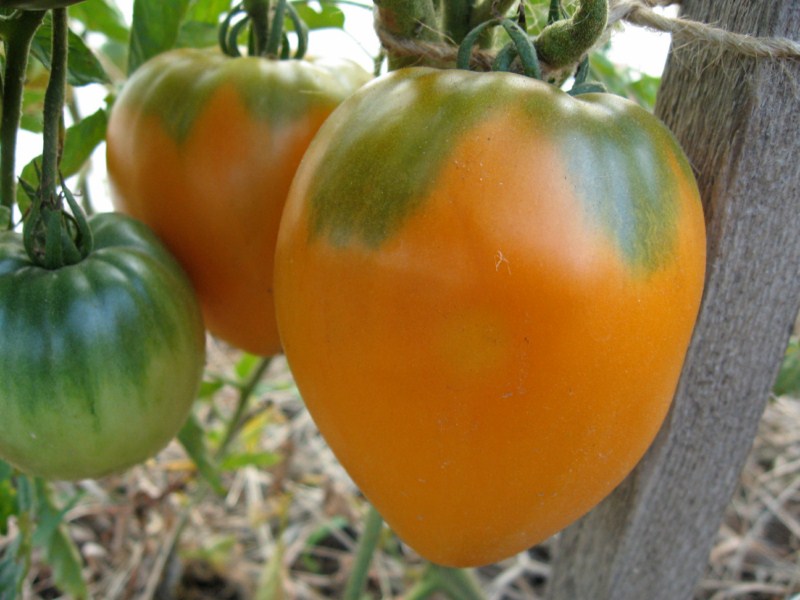
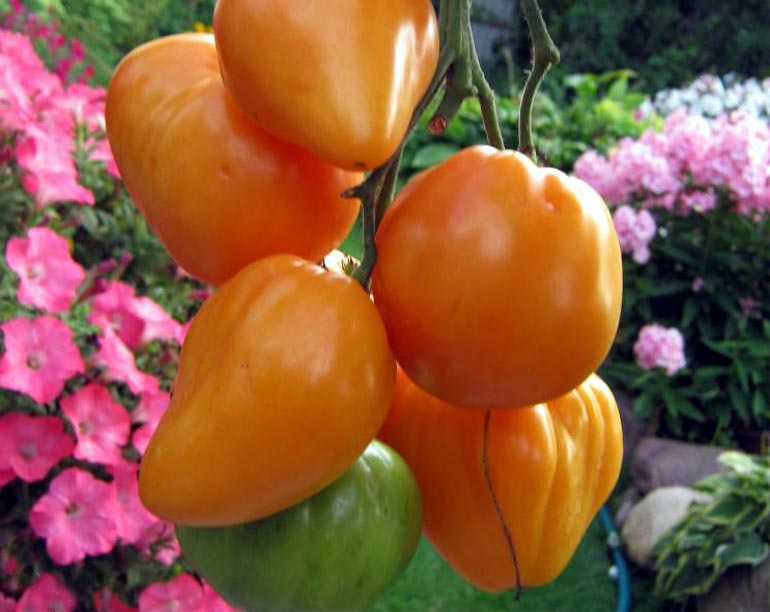
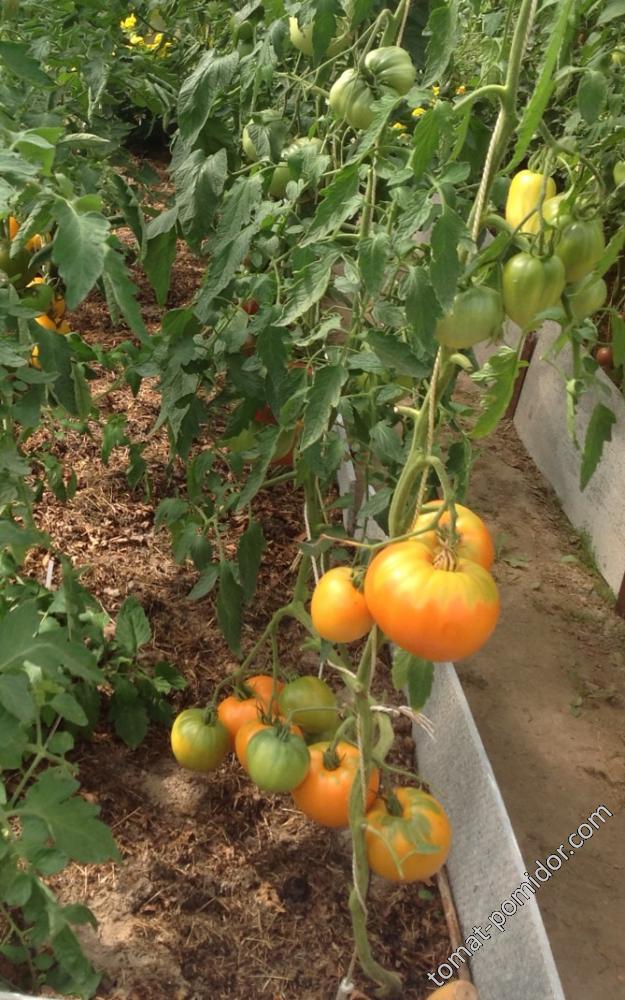
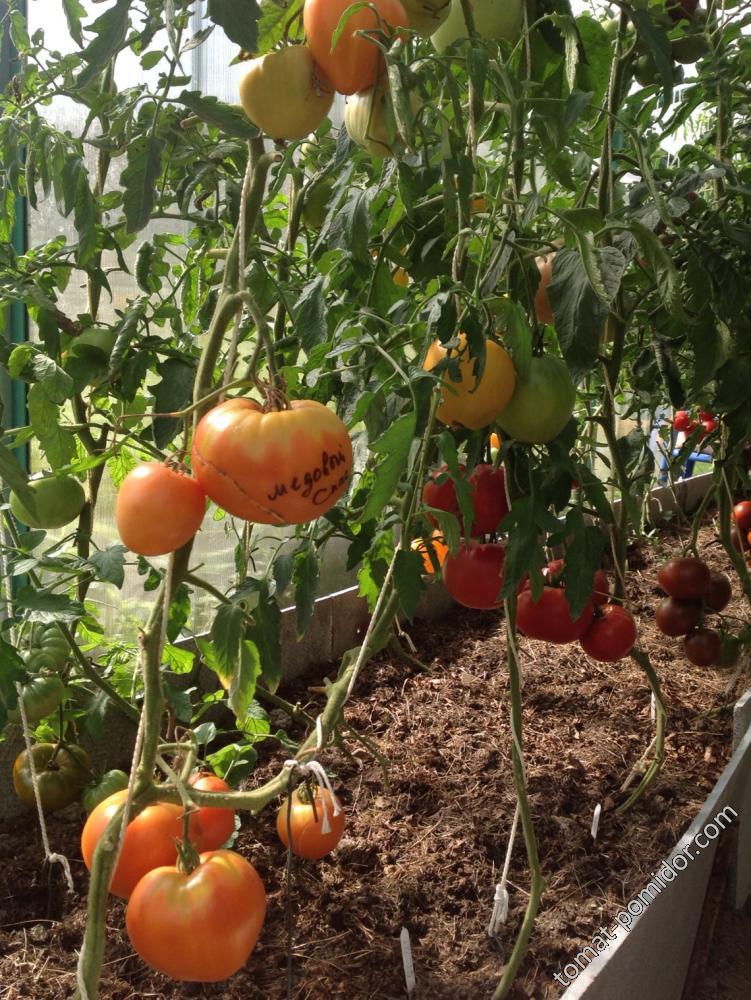
Tomatoes have a round shape. Sometimes it can be round-oval or even flattened with pronounced ribbing.
The tomatoes are bright yellow in color, often with green shoulders.
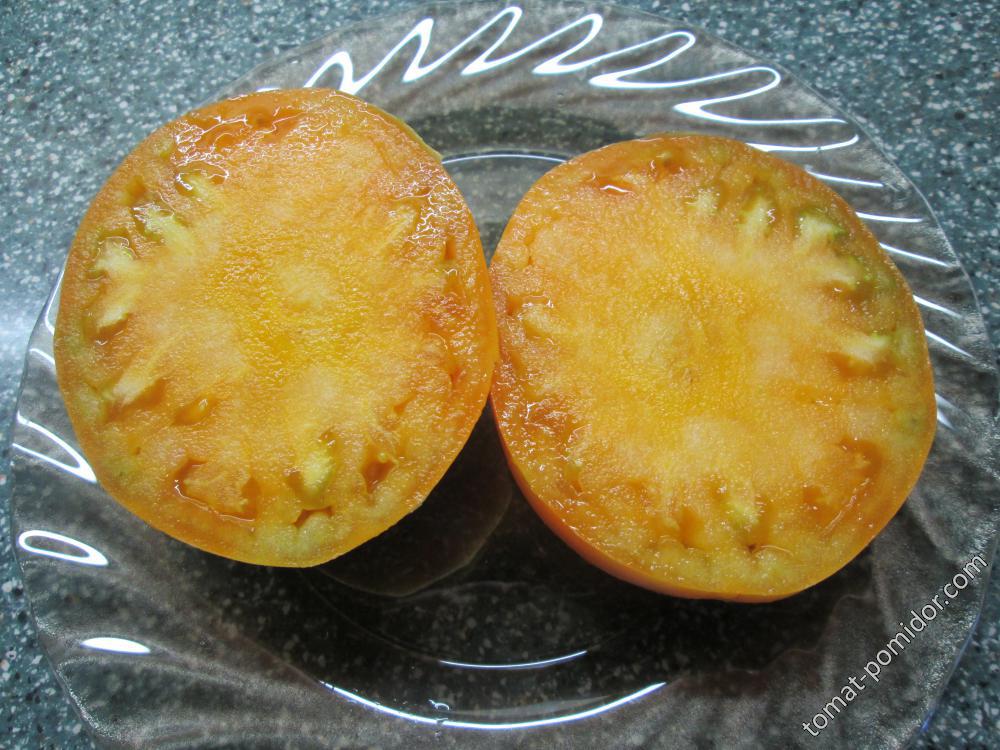
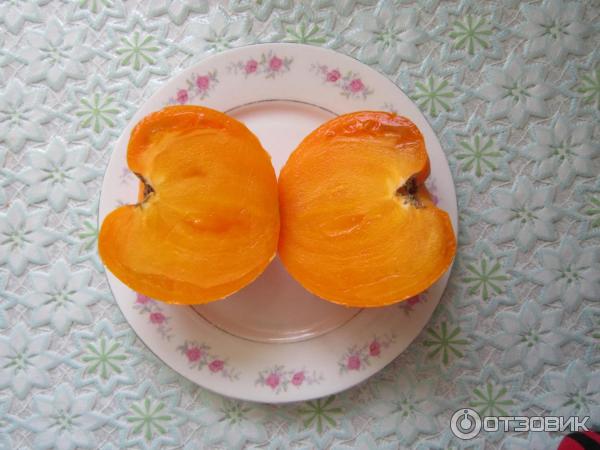
There are very few seed chambers inside, they are small, with a minimal number of small seeds.
The pulp is dense, juicy and sugary.
Tomatoes are distinguished by excellent shelf life and transportability.
Like all orange tomatoes, Honey Spas is suitable for dietary menus and can be eaten by people with allergies.
Ripening time
Tomatoes ripen 110-120 days after emergence.
Productivity
The yield of the Honey Spas tomato depends directly on the cultivation method. In open ground, it ranges from 4.5 to 5.6 kg per square meter. In greenhouse conditions, gardeners can harvest up to 20 kg from the same area.
Advantages and disadvantages of the Honey Savior tomato variety
The Honey Spas tomato has a number of advantages and disadvantages, which are listed in the table below.
| Advantages | Flaws |
|
|
Growing the Honey Savior tomato variety
The Honey Spas tomato is easy to grow and tolerates various natural disasters such as drought or heat.
Sowing seeds and growing seedlings
It's best to purchase seeds for seedlings from reputable producers. They'll already have undergone the necessary preparation.
If you collect the seeds yourself, you will need to prepare them for planting as follows:
- Disinfect in a 2% solution of manganese for 20 minutes.
- Carry out the hardening procedure, alternating the placement of the seeds: overnight in the refrigerator, during the day in the room, and so on twice.
- Soak in a stimulating solution.
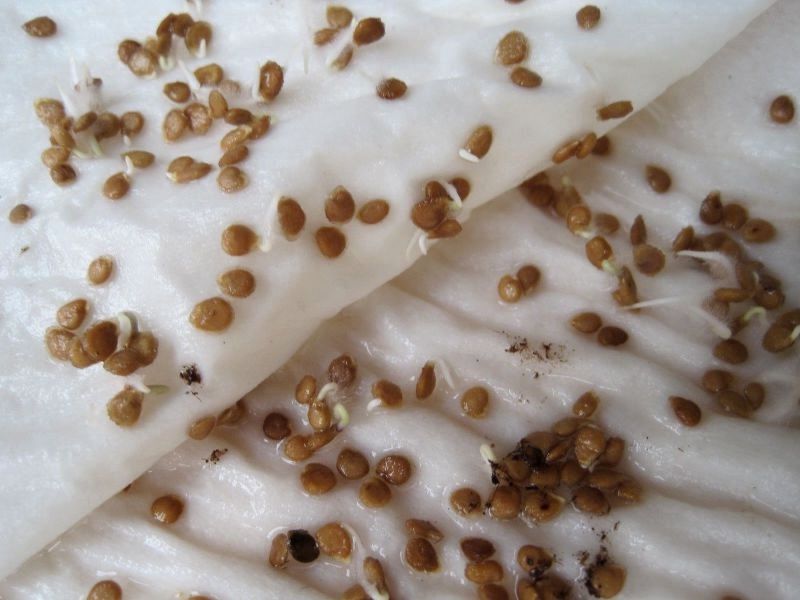
Experienced gardeners recommend planting only sprouted seeds. This will improve germination, immunity, and survival in the new location.
It's best to buy planting soil from a store, but if that's not possible and you have your own garden, you can mix it yourself. To do this, combine equal parts humus, peat moss, soil, and sand.
Fill the selected container 2/3 full with potting soil, then make 10 mm-deep furrows in the top. Place the seeds in these furrows at 2.5 cm intervals and cover with soil.
Next, watering is carried out using a spray bottle, and the container is covered with glass or film.
The seedling box is placed in a warm place until the seedlings emerge. Once they sprout, the cover is removed. Until then, it's important to monitor the soil moisture, water it regularly, and ventilate the seedlings to remove any condensation that may have accumulated on the lid.
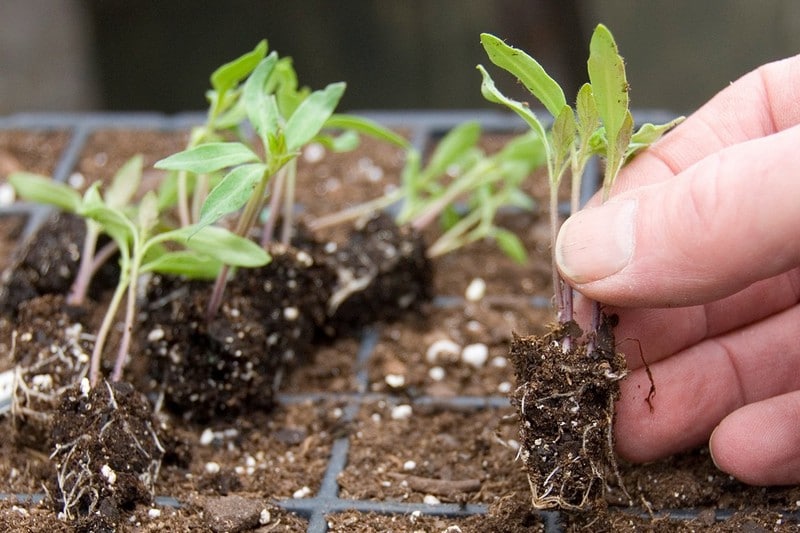
After two leaves appear, the tomatoes are transplanted into individual containers. Peat pots are the most convenient, and the tomatoes can be planted in a hole in the permanent garden bed.
Planting in the ground
It's recommended to plant the seeds 60 days after sowing. Experienced gardeners recommend hardening off the seedlings, beginning two weeks before transplanting them to their permanent beds. Place the seedlings outside for a few hours, gradually increasing the time to 8-10 hours.
The soil is prepared in the fall. It is tilled with organic or specialized fertilizers. In the spring, the soil is tilled again.
It's not advisable to use the same bed where tomatoes were grown last season. Furthermore, tomatoes won't like soil that has been planted in the following areas:
- potato;
- eggplants;
- peppers;
- tobacco.
Good predecessors would be:
- legumes;
- onion;
- beet;
- carrot;
- cucumbers;
- cabbage.
Plant the seedlings in holes 25 cm deep, spaced 50 cm apart. If the soil is poor, you can add a couple of tablespoons of potassium-phosphorus fertilizer to the bottom of the hole and mix it with the soil.
Together with a lump of earth, the tomatoes are transferred into the hole and buried up to the lower leaves.
After this, watering is carried out with water that has settled in the sun at the rate of 3-5 liters per bush, and the surface of the bed is mulched.
Care
First of all, when planting the Honey Spas tomato, it's important to consider a staking system. The bushes won't grow properly without support.
The first watering should be done only two weeks after repotting. The water shouldn't be ice-cold; it's best to warm it in the sun first, if possible.
Honey Savior doesn't like overwatering, but it's susceptible to late blight and rot. Therefore, it's important not to overwater. Water tomatoes approximately once every seven days. However, if the weather is extremely hot, increase the frequency.
To increase yield, you can apply fertilizer after moistening the soil. Weed infusion, mullein, or a complete tomato fertilizer will work. Just avoid using nitrogen, as it will stimulate foliar growth rather than fruit development.
Periodically, it is necessary to loosen and weed the plantings to prevent the appearance of pests and improve aeration at the roots.
Resistance of the Honey Spas tomato variety to diseases and pests
The Honey Spas tomato has excellent immunity, allowing it to easily withstand drought, heat, and pest and disease attacks. Some gardeners note that tomatoes are resistant to late blight, but blossom-end rot is sometimes encountered.
To prevent disease, it is recommended to treat plantings with a solution of Fitosporin or Bordeaux mixture. For advanced disease, specialized store-bought products are most effective.
Harvesting, using, and storing the Honey Savior tomato variety
In the southern regions, the first fruits can be enjoyed as early as mid-July. In the central zone, harvesting occurs in the second ten days of July, while in the north, this period shifts forward by two weeks.
The harvest ripens within 110-120 days from germination. The tomatoes can be harvested at the technical maturity stage; they ripen perfectly at home. They can be stored for long periods without loss of quality and are suitable for long-distance transport.
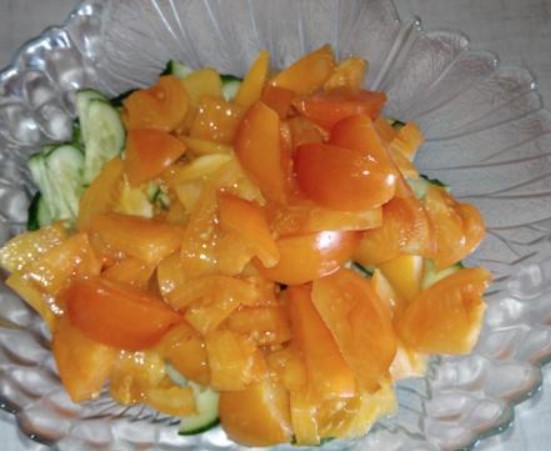
Tomatoes are versatile. They can be sliced into salads, eaten fresh, canned, or processed into paste. It's important to remember that processing requires adding more preservatives, as tomatoes themselves are virtually acid-free.
Comparison of the Honey Spas tomato variety with other varieties in the table
| Variety | Ripening period (number of days from full germination to ripening)
Yield of commercial fruits |
Brief description | Fetus |
| Honey Savior | 110-115 days
560 c/ha (open ground), 1400 c/ha (greenhouse and under film) |
A mid-season indeterminate variety for open ground and greenhouses. Requires staking and shaping. Suitable for salads. Marketability is 98%, and the yield of ripe marketable fruits is 74% (Novosibirsk Region). Tolerant of adverse growing conditions, heat-resistant, and easy to transport. | Round, smooth, orange, 160-218 g. Excellent flavor. Fruit stores well. |
| Honey Giant | 110-115 days
750-800 c/ha (greenhouse and under film) |
An early-ripening indeterminate variety for open ground and greenhouses. Requires staking and shaping. Suitable for salads. | Flat-round, ribbed, medium density, orange, 250-300 g. Good taste. |
| Honey salute | 116-120 days
690 c/ha |
A mid-season indeterminate variety for greenhouses. Requires staking and shaping. Suitable for salads. | Flat-round, very large, ribbed, medium density, yellow, 320-450 g. Excellent taste. |
| Wonder of the World | 120 days 550-620 c/ha |
A late-ripening indeterminate variety for open ground. Requires staking and shaping. Suitable for salads and pickling. | Obovate, slightly ribbed, yellow, 80 g. Good taste. |
| Lemon giant | 110-120 days
610-670 c/ha |
A mid-season indeterminate variety for open ground and greenhouses. Requires staking and shaping. Suitable for salads. | Flat-round, medium-ribbed, fleshy, yellow, 350-380 g. Good taste. |
| De Barao yellow | 110-120 days
1200 c/ha |
An indeterminate plant with a bush up to 200 cm tall. Recommended for growing under plastic cover. The bushes are formed into two shoots and require staking. This versatile tomato is well-suited for whole-fruit canning and can be used in dietary menus. | The fruits are round-oval with a smooth surface and a slight indentation at the base. Ripe fruits are bright yellow or golden in color, weighing 80-90 g. The flavor is excellent. |
| King of the Giants | 120 days
800-1400 c/ha depending on the region |
A mid-late indeterminate variety for open ground and greenhouses. Suitable for salads, appetizers, and processing into tomato products. | Flat-round, slightly ribbed near the stem, red, rarely yellow and pink, 400 g (up to 800 g). Good to excellent flavor. |
| Malachite box | 110-120 days
430 c/ha (open ground), 1510 c/ha (greenhouse and under film) |
A mid-season indeterminate variety for open ground and greenhouses. Requires staking and training. Suitable for salads. Marketability is 97%, and the yield of ripe marketable fruits is 75%. | Flat-round, smooth, thin skin, yellow, 250-300 g. Good to excellent taste. |
| Mikado Yellow (Gold) | 110-120 days
600-800 c/ha |
A mid-early standard indeterminate variety for greenhouses. Suitable for salads and juice. | Round, flattened, slightly ribbed, yellow, 500 g. Good taste. |
| Mikado Orange | 85-100 days
600-700 c/ha |
An early indeterminate variety. Outdoor cultivation is acceptable in warmer regions. In central Russia, greenhouse planting is recommended. Suitable for salads. | Round, ribbed, orange, up to 300 g. Excellent taste. |
| Orange giant | 110-115 days
630-660 c/ha |
A mid-season indeterminate variety for open ground. Requires staking and shaping. Suitable for salads. | Flat-round to round, strongly ribbed, orange, 350 g. Excellent taste. |
| Orange elephant | 100-110 days
690 c/ha |
A mid-early determinate variety for greenhouses. Suitable for salads. | Round, smooth, medium-dense, orange, 130-160 g. Excellent taste. |
| Persimmon | 90-105 days
580 c/ha |
A mid-season determinate variety for open ground and greenhouses. Suitable for salads. | Flat-round, medium-ribbed, orange, 240 g. Excellent taste. |
Gardeners' reviews of the Honey Spas tomato variety
Gardeners note that tomatoes often crack on the bushes and often have a pronounced sour taste.
This is how my Honey Savior grew. Seeds from SibSad.
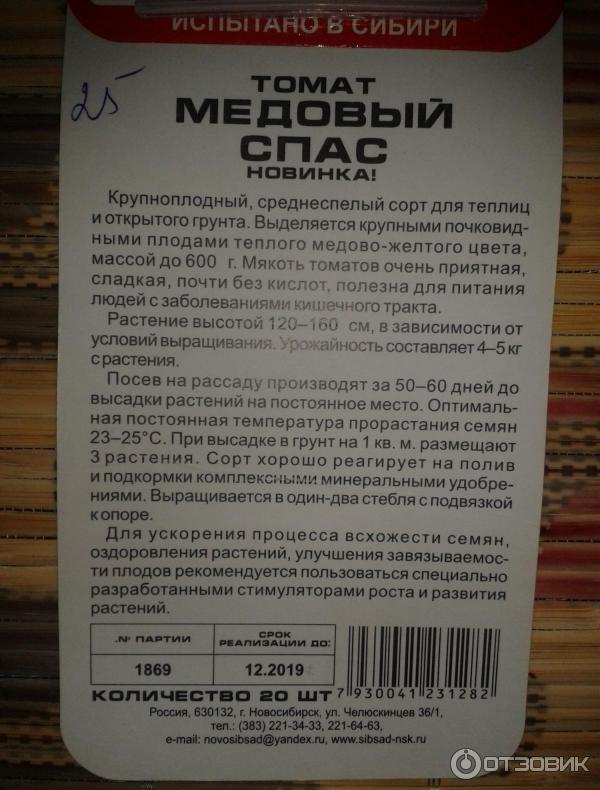
Description from the manufacturer: A large-fruited, mid-season variety for greenhouses and open ground. Distinguished by its large, kidney-shaped fruits, a warm honey-yellow color. The tomato flesh is very pleasant, sweet, and almost acid-free.
I have it growing in my greenhouse, it’s tall, I really liked the taste, sweet and juicy.
The yield is below average compared to others (not just mine, but also the owner of the seeds, who's been planting it for several years). Like a northern-type tomato, it has thin leaves and doesn't like heat. Like Vkusnyashka, it's fussy in cold weather, too. I only got 2-3 on a cluster and grew medium-sized ones. But the taste is truly honey-like!!! :niam: Grow it as a delicacy, not for quantity. It turned out even sweeter than Serdtsa Ashgabat, but it started ripening later.
I dream of finding a Yellow-Orange variety: early - like CA, sweet-sweet - like MS, productive - like Amana Orange and with high resistance to all kinds (to cracking and diseases) - like the Orange German strawberry.
The season for testing new tomato varieties is coming to an end. This year, I had 42 of them, mostly varieties whose seeds I acquired from collectors. But I couldn't pass up the varieties from the Siberian Garden. Today, I'll write about my impressions of the "Honey Spas" variety. I'll say right away – IMPRESSED! As always, I grew the seedlings myself at home. I planted one bush in a polycarbonate greenhouse. I described in detail how I arrange the tomato bushes in the greenhouse in my review of the "Siebenburgen Giant" variety. If you're interested, you can check it out. The "Honey Spas" tomato is an indeterminate variety, with a tall bush; mine reached the ceiling of the greenhouse. At the same time, the bush is very compact, with small, not splayed-out leaves. I trained it into two trunks, like most tall tomatoes. This variety didn't ripen early. I picked the first ripe tomato on July 20th.
And what a beautiful color these tomatoes have! I'd call it the color of a ripe persimmon. The tomatoes are heart-shaped, and some of the smaller ones look very much like persimmons. My tomatoes ripened very unevenly. The first one was on the bottom cluster, the next ones on the second, and then on the third, even though the tomatoes on the bottom clusters weren't ripe yet. Three of my clusters set well, but the next ones had gaps. Fruit set is highly dependent on the temperature in the greenhouse. When the heat started, it stopped setting. Large and medium-sized tomatoes weigh over 200 grams.
We used them in salads and preserves, but only sliced. The tomatoes have a thick skin, but not hard. They store very well and don't get soft. Since this is a variety, not a hybrid, I made my own seeds. I don't know if this is good or bad, but there are almost no seeds, just pulp.
If you like sweet tomatoes without the acidity, this is the variety for you. There are tomatoes without acidity and some that are bland. But these aren't like that; they're very tasty, truly honey-like. The "Honey Giant" tomato is similar, but not as sweet. I give this variety a solid A. If you haven't tried it yet, I recommend planting it. I'll definitely be growing it again in the future.This year I also planted yellow tomatoes such as “Orange Elephant” from the Gavrish company, “Banana Legs,” and “Orange Strawberry.”
Good day, dear readers of my review!
I've decided to dedicate this review to the tomato seeds with the sweet name "Honey Spas." The producer is the Russian company "Sibirsky Sad," whose seeds I've been buying for several years now.
The topic of gardening is very interesting, because I myself enjoy growing various vegetables on my plot and learning something new from more experienced gardeners.
One of my favorite vegetables is the tomato. Everyone in my family loves fresh tomatoes because they're so healthy. They contain a large amount of vitamins, minerals, and organic acids. Thanks to the antioxidant lycopene, they protect the body's cells and help prevent cancer.
I also make various preserves for the winter from fresh tomatoes, so I try to plant as many as possible every year.
Among the various tomato varieties planted this year, the yellow tomatoes "Honey Savior" took a worthy place.
This mid-season variety is suitable for growing in greenhouses and open ground. It is recommended to plant one or two stems, tied to a support, and requires pinching.
I sowed the seeds at the end of March, and in mid-May I planted the seedlings in the greenhouse.
The first tomatoes began to be picked in mid-July.
The fruits are medium-sized, almost identical in size, and have a round shape.
I liked this variety because the pulp of these fruits tastes very sweet, without any acidity.
We use it mainly for food, fresh.
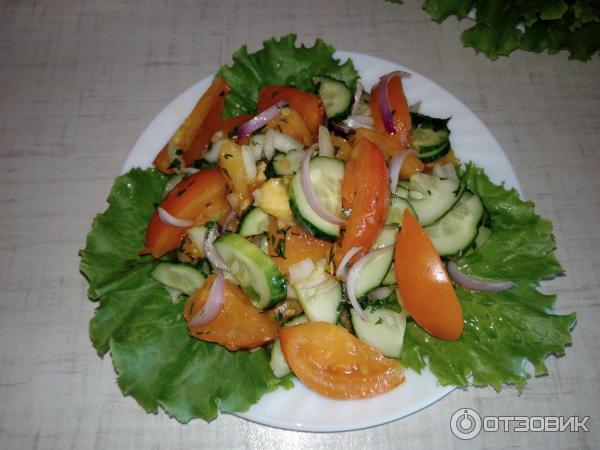
I make healthy summer salads from tomatoes of this variety.
Honey-yellow tomato slices look beautiful in salads.
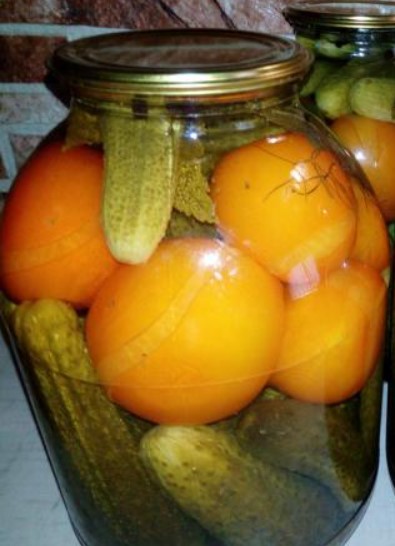
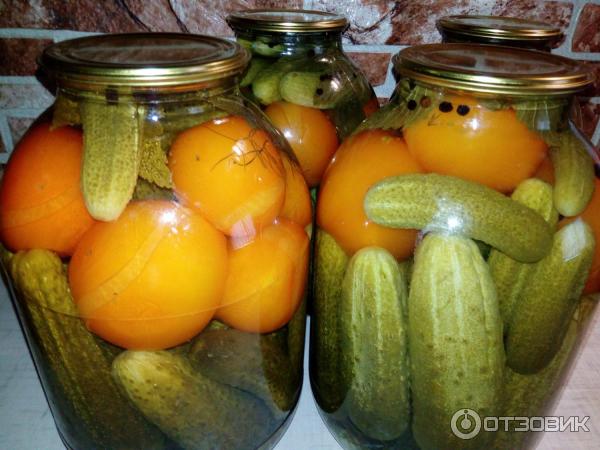
This variety is a salad type and is not intended for canning, but I still decided to use them in pickling.
I made several jars of assorted vegetables along with cucumbers.
The skin is thin and not dense enough, so when poured with boiling brine, it cracks.
Therefore, it is better to give preference to other varieties intended specifically for canning.
It is much healthier to eat these tomatoes fresh, especially for people suffering from gastrointestinal diseases.
Be healthy!

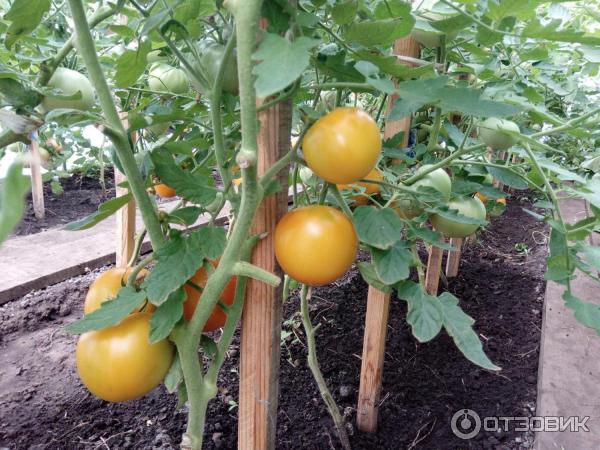
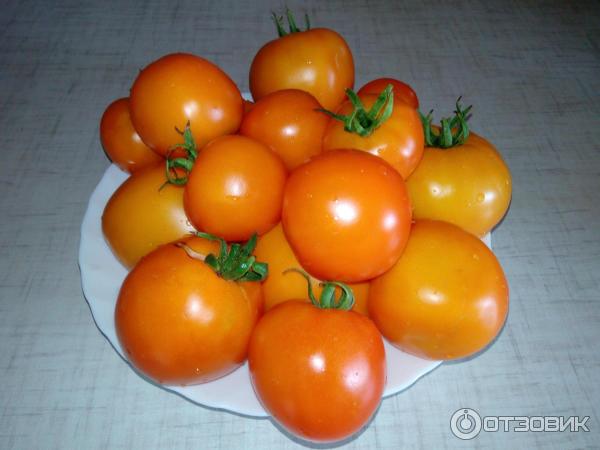
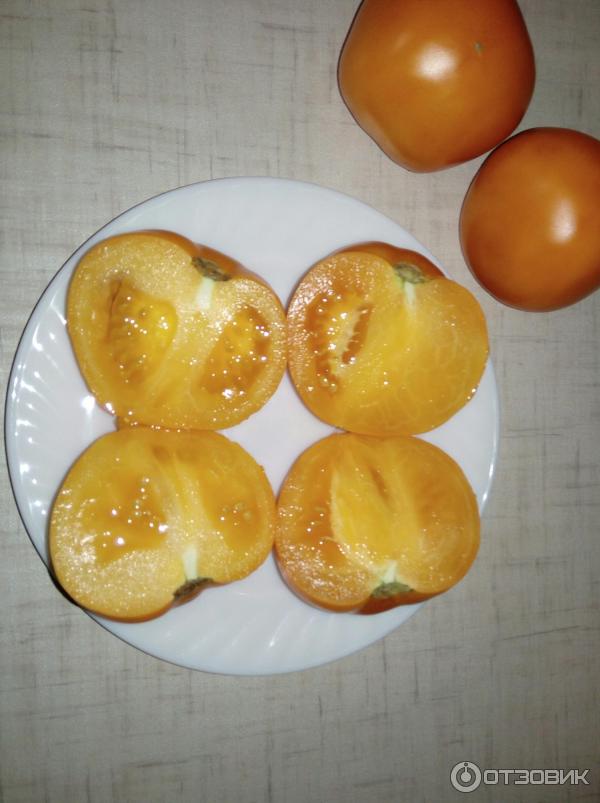
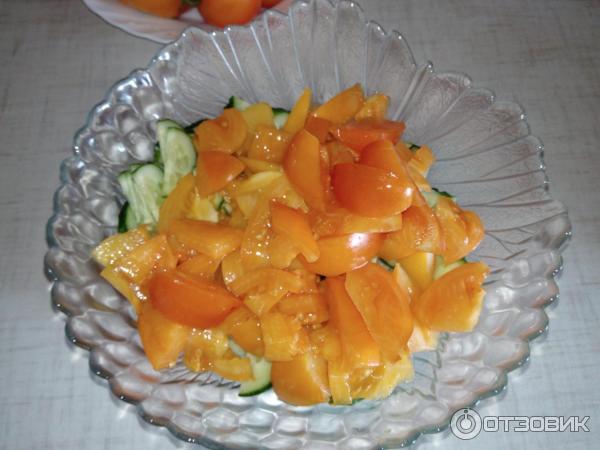
I planted Honey Spas for the first time this year. I got the seeds from Sib.S. The yield wasn't very impressive. The second and third clusters developed blossom-end rot. The clusters above were fine, and the pods were larger. At first, I decided not to plant them again. But when I tried the tomatoes I'd picked and left for about two weeks, I absolutely loved them. They were tastier than freshly picked, ripe fruit. I'll be planting them next year for that taste.
Quote by Zulfiya
The yield is below average compared to others (not only mine, but also the owner, who has been planting it for several years). It's a northern-type tomato—thin-leaved, doesn't like heat. Like Vkusnyashka, it's fussy in cold weather, too. I only got 2-3 per cluster and grew medium-sized ones. But the taste is truly honey-like!!! :niam: Grow it as a delicacy, not for quantity. It turned out even sweeter than the Heart of Ashgabat, but it started ripening later.
I dream of finding a Yellow-Orange variety: early - like CA, sweet-sweet - like MS, productive - like Amana Orange and with high resistance to all kinds (to cracking and diseases) - like the Orange German strawberry.
I agree with the author that the variety behaves differently in different regions. And it didn't start producing fruit the first year, but in the second, apparently acclimating to my conditions. Not all varieties have performed well for me either, as they don't respond well to it. But we're not used to giving up... Personally, I think the Honey Spas turned out well for me. But everyone has their own opinion :-[ I apologize for the author's rudeness.
I'm in the Honey Savior fans club)))
I agree with those who think that Honey Spas is fleshy, tasty, with few seeds, and no acidity!
Yes, the yield isn't incredible, but the taste can be forgiven. I also increased the yield in the second year, just like the girls. I'll keep planting.
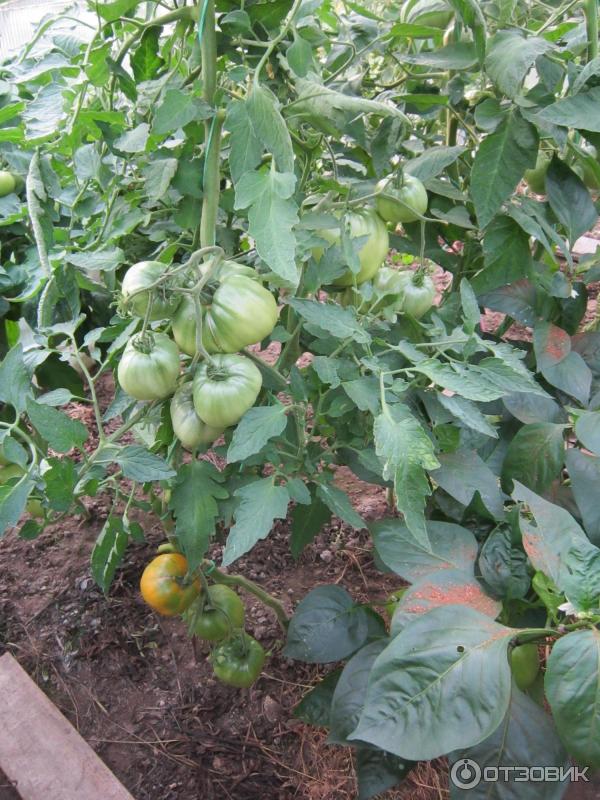
I planted Honey Spas for the first time in 2014, and I'm very pleased with the variety! It doesn't grow sprawling, and the fruits are tasty, fleshy, and beautiful. If you manage the number of fruits, they'll grow large; if you don't, you'll get a bunch of small, but no less delicious, fruits.
I planted it in a greenhouse, trained it into two trunks, and brought it to biological maturity on the bush. There was no blossom-end rot, everything was neat and tidy. In the fall, during the rainy season, some of the fruits cracked, but almost all my varieties have cracked, so I don't consider this a flaw.
My conclusion: it is necessary to plant!

I always take a lot of red, raspberry and yellow tomato seeds.
Last year, one of the yellow tomatoes was the "Honey Spas" Siberian Garden tomato.
I didn’t sow all the seeds at once, as there were many other varieties.
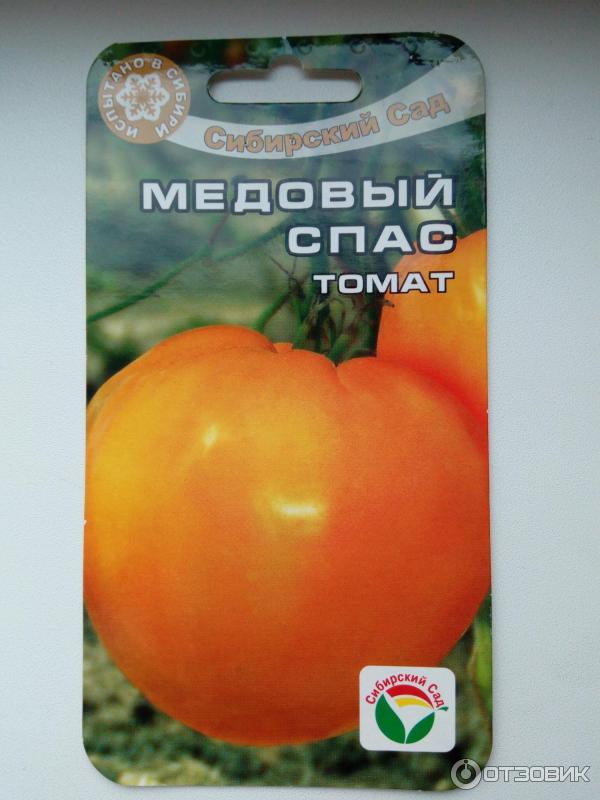
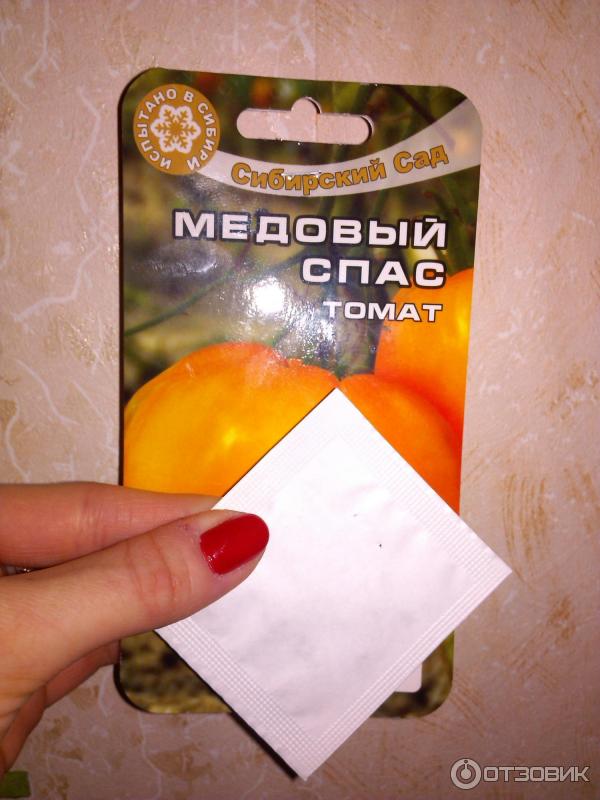
The packet contains 20 seeds, which can be seen through the transparent packet, and is also indicated on the packaging.
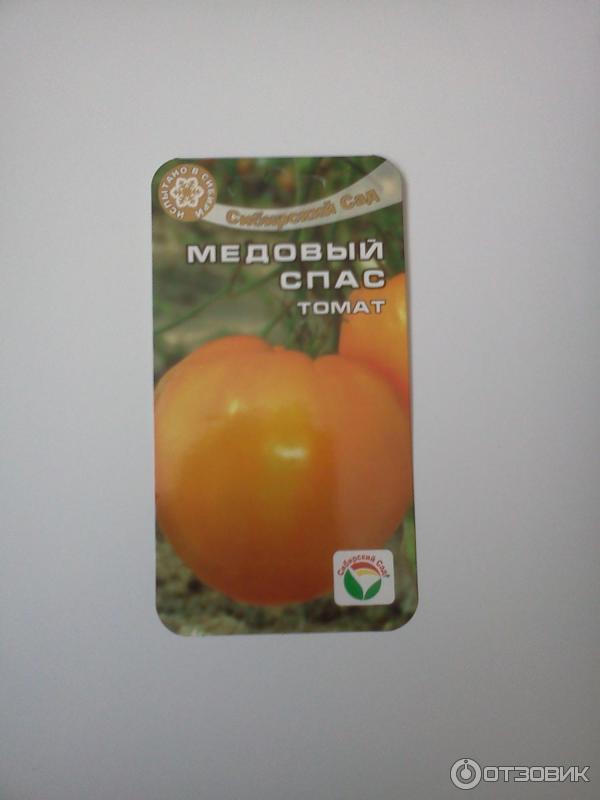
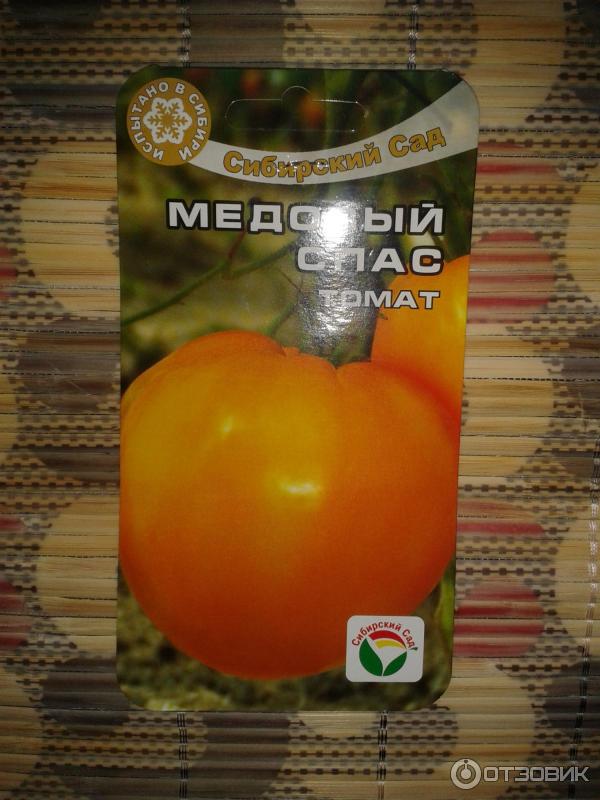
The package shows an attractive yellow tomato, which I really wanted to end up with.
There is additional information on the back side.
The seedlings appeared quickly and harmoniously.But as they grew, I began to notice that the trunk was becoming covered with some kind of growths.
I decided to remove the infected plants because I was concerned about the rest.
This year I didn’t dare plant the remaining seeds of this variety from the package, I’m afraid.
Maybe I was just unlucky or there's something wrong with the soil, but keep that in mind.
One season, I think it was 2013, we came across some Siberian Garden "Honey Spas" seeds. There was only one packet, and we only got a few shoots of this tomato.
What's worth noting is the very good quality of the seeds themselves. They all sprouted and grew evenly, rather than the usual pattern of some seedlings being strong and others quite weak.The tomatoes themselves are quite tall, which is inconvenient without a high greenhouse. The bushes truly exude "Siberian health." However, we had few ovaries, and many of them fell off once they had set. It's unclear whether this is a fault of this particular variety, but other nearby varieties were doing fine.
The tomato harvest wasn't very impressive, and they ripened in boxes at home. But I have to say, the size was a delight—they were truly gigantic. The fruit's aroma was strong, but the flavor, I'd say, was average—they lacked the sun and warmth of the northern European regions.
I recommend this variety, but at least for those further south, like Ryazan. I have no complaints about the manufacturer; the seeds are excellent.
Greetings to all readers of this review. Good day. I'd like to share my impressions of the tomato seeds with the pleasant name "Honey Spas" from the Russian producer "Siberian Garden." This is the second time I've purchased this variety. Last year, I was delighted with the tomato harvest from these seeds, so this year I decided not to reinvent the wheel, so to speak, and instead planted again what I've already proven to be a hit.
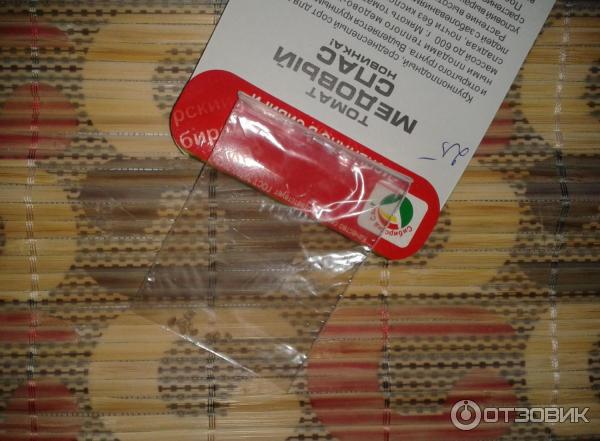
The seeds are packaged in a small packet with a large label. The packet's appearance is shown in the following photo.
More accurately, it was a label, and a packet of tomato seeds was attached to it on the back.
I was also pleased with the seed germination. I planted the seedlings both in open ground and in a greenhouse. The yield was quite satisfactory in both cases. The fruits are large, and the tomatoes are quite sweet. The color (light yellow) adds a pop of color to salads. A real highlight. I'd give these seeds five stars. I definitely recommend them. I'm looking forward to another good harvest this year.
Thank you for reading this review. I wish everyone peace, kindness, and good cheer!
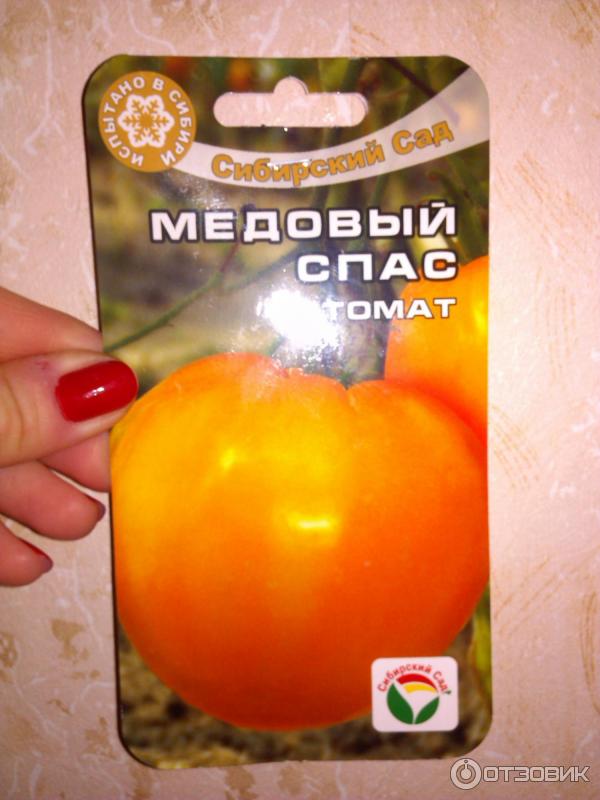
I've been buying Siberian Garden "Honey Spas" tomato seeds for almost five years now. I really love their flavor. The tomatoes are sweet and mild. This is a mid-season, tall variety. The plants average 1.5 meters in height. They're planted outdoors, but they can also be grown in greenhouses.
The variety has large, round fruits. The tomatoes average 300 grams. Some were 400-450 grams. I never achieved the manufacturer's stated weight of up to 600 grams. The fruits are orange.
Each packet contains 20 seeds. Sometimes there are a few more. One packet costs about 20 rubles.
Germination is good. However, this year, for some reason, several of them failed to sprout. So, unfortunately, I can't give these seeds more than a four-star rating at this point. However, I still recommend checking out "Honey Spas." They do produce delicious tomatoes.