Spring feeding is essential for peonies. It determines how quickly the plants recover from the winter cold and the number of buds they produce.
Typically, garden plots don't allow for changing the location of peonies annually, so the soil in the same spot becomes poor over time, and the plants begin to experience nutrient deficiencies, which reduces the quality of their blooms. Therefore, it's crucial to regularly apply fertilizer, especially in the spring. The more fertilizing and balanced the fertilizer, the more profuse the blooms will be throughout the season. This type of feeding is sufficient once every 2-3 years, resulting in strong, fleshy shoots and abundant, full-bodied blooms. Furthermore, healthy peonies are less susceptible to disease and insect attacks.
Content
- 1 Activities before fertilizing peonies in spring
- 2 Age-related features of peony fertilizing
- 3 Rules for fertilizing peonies in spring
- 4 Peony fertilizing schedule (table)
- 5 When to apply the first fertilizer
- 6 How to feed peonies in early spring
- 7 When and how to apply the second spring feeding
- 8 Types of fertilizers for feeding peonies
- 9 Fertilizing tree peony
- 10 Tips for fertilizing peonies from gardeners
Activities before fertilizing peonies in spring
Before spring fertilizing of peonies, it is necessary to carry out a number of preparatory measures:
- When the threat of night frosts has passed, the covering is removed from the peonies.
- If necessary, water the soil if the snowmelt water is insufficient.
- As soon as the shoots emerge above the ground, loosen the soil. The main thing is not to damage the young growth.
- After wintering, the soil is disinfected with a solution of manganese (2 g per 10 l).
- The soil around the bush is mulched. If necessary, soil is added to the roots.
Age-related features of peony fertilizing
The specifics of peony feeding depend on the age of the bush.
- If the bush is young, the emphasis is on feeding the root system.
- Mature plants require support to strengthen shoots and encourage bud formation. The older the plant, the more nutritious the fertilizer should be.
Fertilizing young peonies
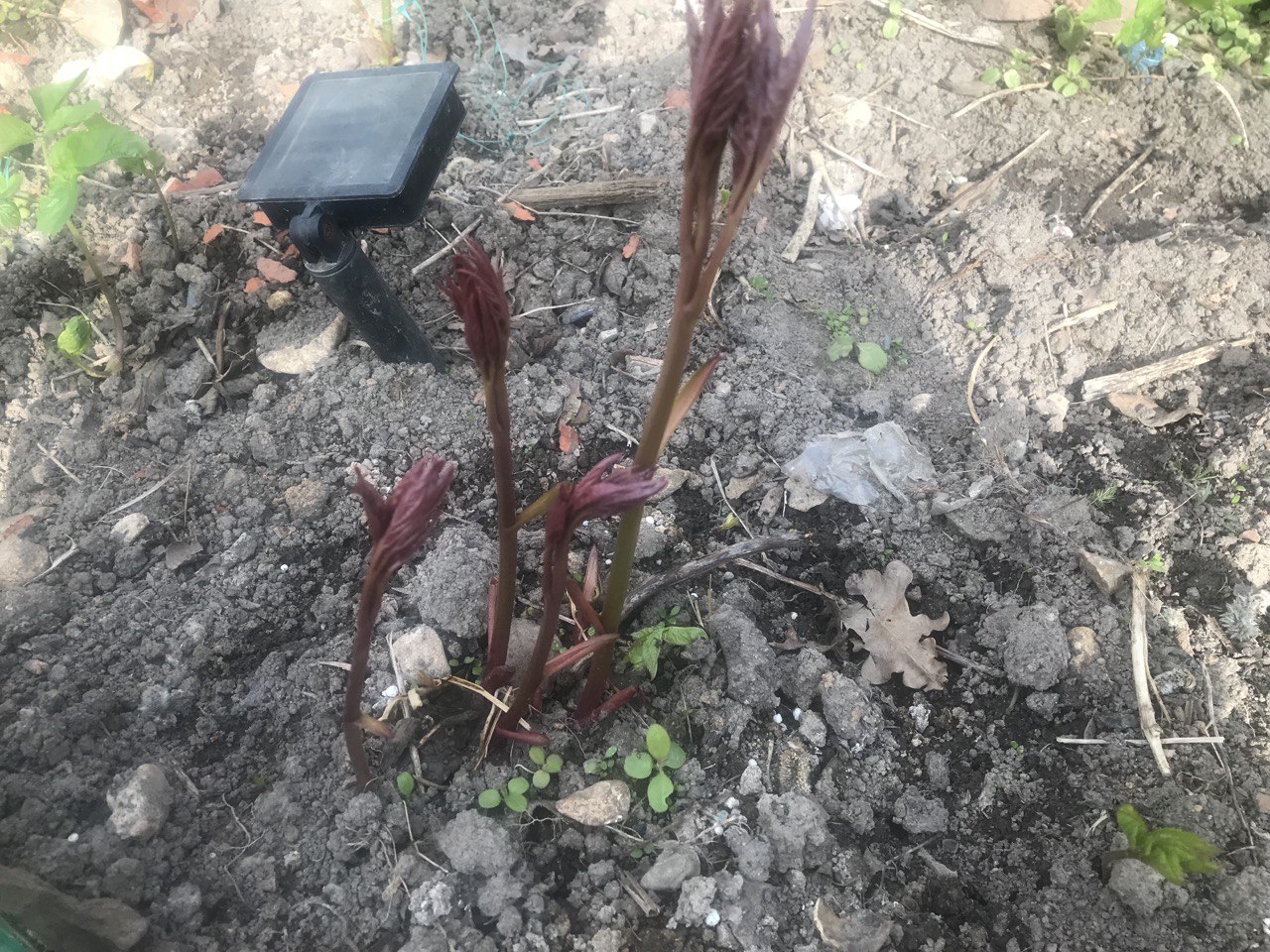
For young peonies, foliar feeding with a weak urea solution (50 g per 10 l) is best. Apply this after sufficiently tall shoots emerge early in the season, at 14-day intervals. After the second feeding, you can spray with a weak solution of any mineral fertilizer for garden plants, and fertilize the soil with a sodium humate solution (5 g per 10 l).
Fertilizing peonies older than 3 years
After three years, peonies begin to delight gardeners with lush buds. By this time, each bush typically has about 12 strong shoots.
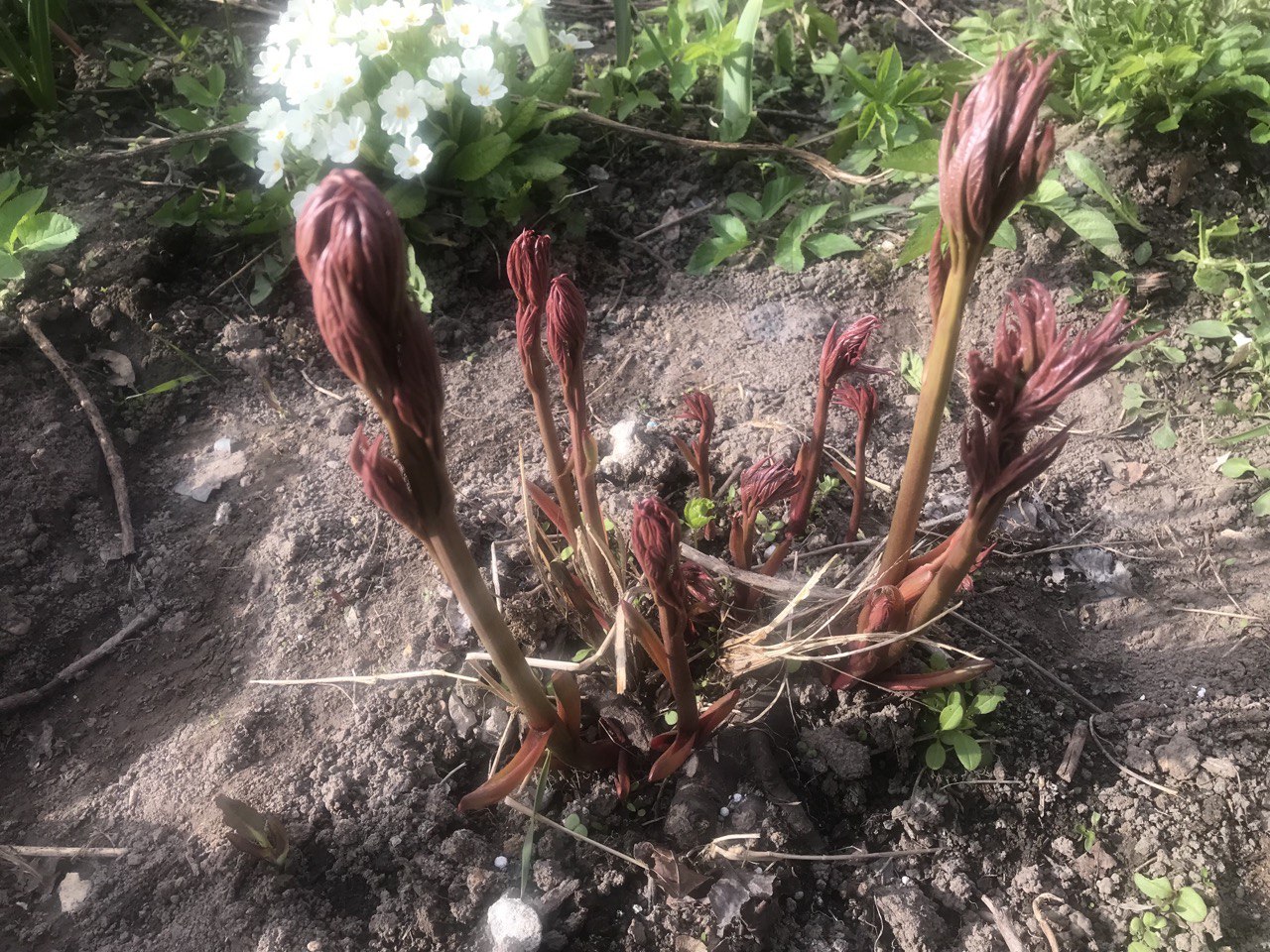
To ensure lush and abundant flowering and a healthy plant, several fertilizing sessions are carried out throughout the season:
- When the snow has melted and the first shoots have emerged, the soil is sprinkled with a mixture of 10 g of urea powder and 15 g of potassium sulfate, followed by shallow loosening. Organic fertilizers such as vermicompost or composted manure can be used.
- When buds appear, the soil is fertilized with a mixture of 15 g of potassium sulfate and 20 g of superphosphate.
Important! Apply all root nutrients to the soil only after watering to avoid burning the roots.
- Before flowering, you can spray the bushes with the stimulant “Bud” (1 g per 1 liter of water).
Fertilizing peonies aged 8 years and older
Mature peonies have a high need for nutrients, so in the spring the soil is fertilized with a more concentrated solution of bird droppings or manure.
- Chicken manure must be diluted in a ratio of 1:12.
- When diluting mullein, the proportion should be 1:7.
The concentrate should not be poured directly under the roots. Instead, dig a shallow circular trench 50 cm from the bush, pour the solution into it, and cover it with mown grass. Over a long period, the nutrient mixture will gradually saturate the peony roots, thereby supporting flowering and healthy shoots.
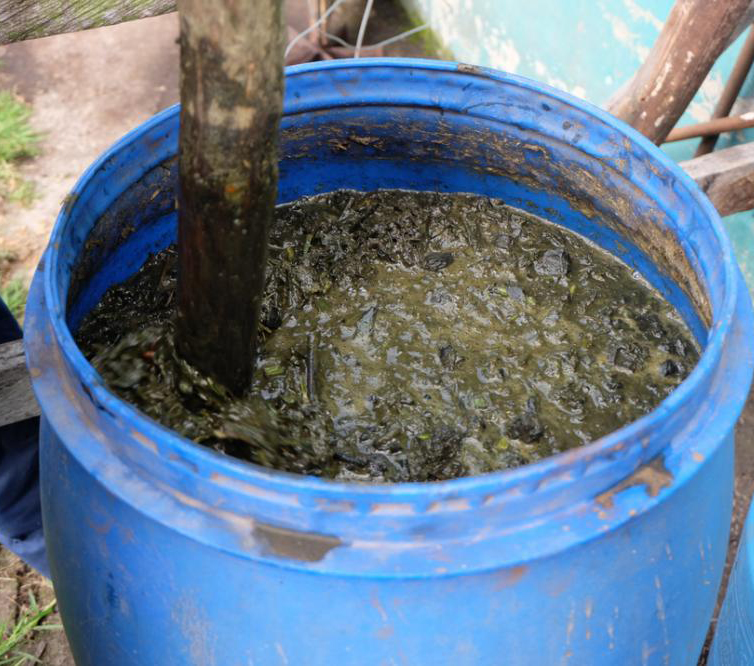
Plants respond very well to horse manure, which can be purchased in small quantities at a specialty gardening store. It's diluted at a ratio of 1:10.
Can you plant a peony in the spring? Here's a step-by-step guide..
Rules for fertilizing peonies in spring
There are two main methods of applying fertilizer: root and foliar. Each has its own specific application requirements.

Root feeding of peonies step by step
Root feeding is the application of fertilizers directly into the soil, from where the nutrients enter the plants through the root system.
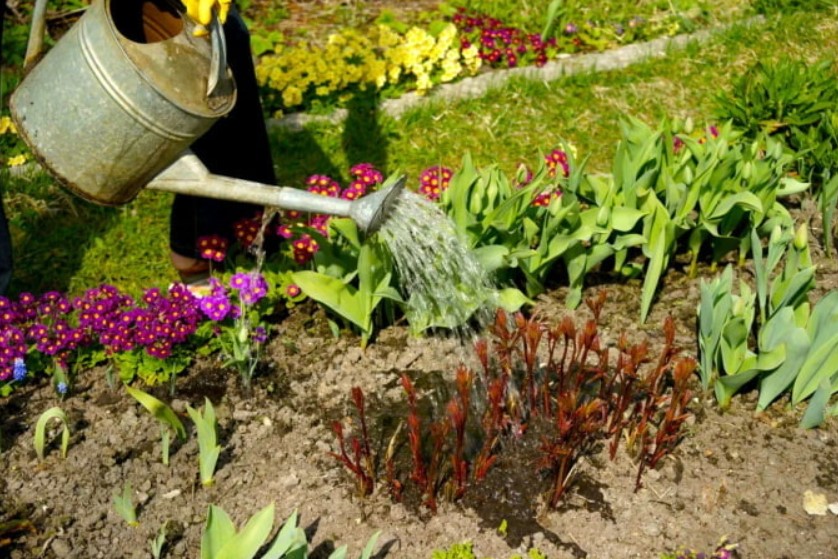
Rules of the event:
- Do not apply fertilizer to dry soil; always do so only after watering.
- Dry granules are loosened and embedded into the soil to a depth of 3-5 cm.
- At the end of the procedure, the surface of the bed is mulched.
Step-by-step foliar feeding of peonies
Foliar feeding involves spraying plants.
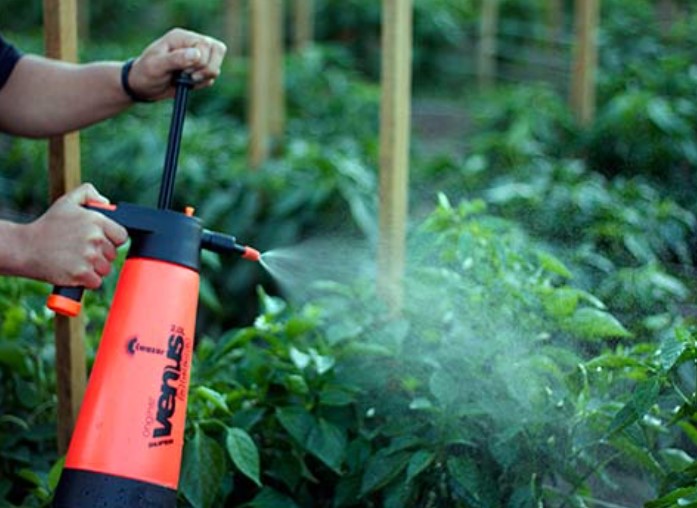
It is carried out according to the following rules:
- Do not exceed the fertilizer concentration; always follow the instructions.
- Fertilizing is carried out only in the evening or in the absence of sunlight to avoid leaf burns.
- Fertilizer should not come into contact with flowers and buds.
Peony fertilizing schedule (table)
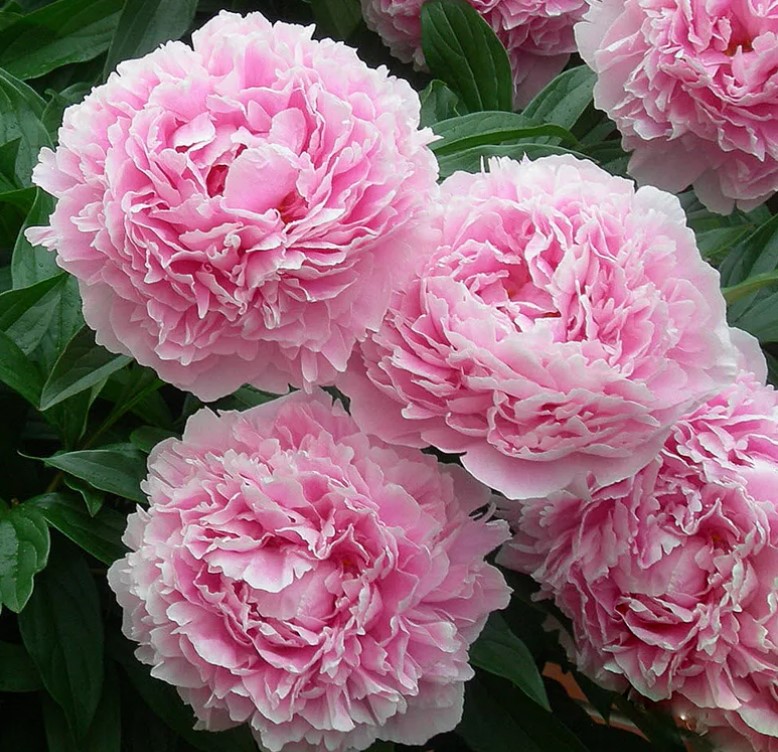
The table below provides a step-by-step plan for feeding peonies for the entire season.
| Period | Top dressing |
| The first shoots appear after the snow melts. | Root feeding. Apply to moist soil. Per bush:
Organic replacement: 0.5 buckets of vermicompost or the same amount of humus not less than 2-3 years old. |
| Formation of buds. | Root feeding. Apply to moist soil by loosening the soil. Per plant:
|
| A few days before flowering begins. | Foliar feeding. Use a flowering stimulator, such as "Bud," at a rate of 1 g per 1 liter of water. |
| 15-20 days after flowering. | Root feeding with potassium-phosphorus fertilizer (see point 1). |
Let's take a closer look at when, how and what to feed peonies with.
When to apply the first fertilizer
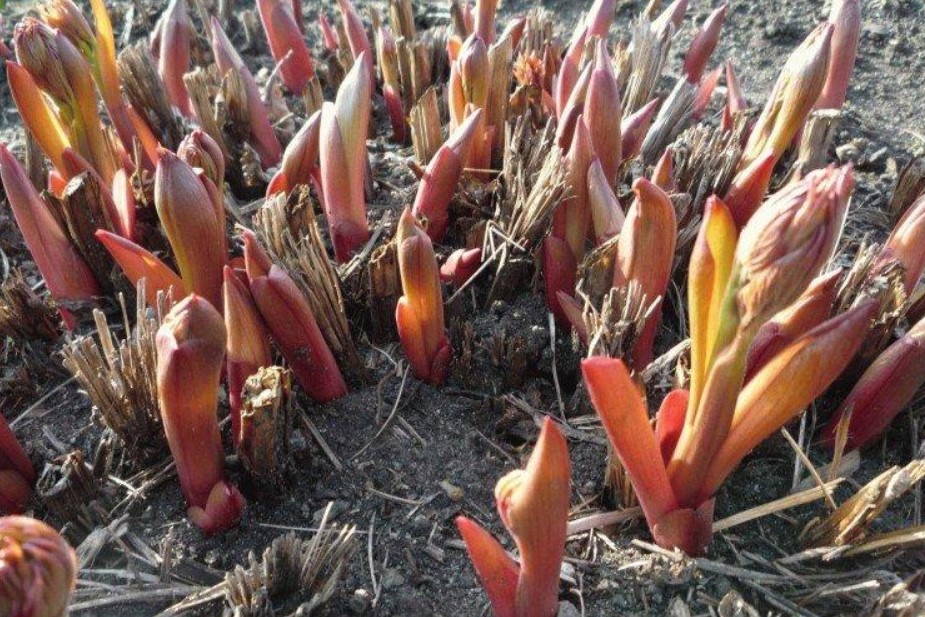
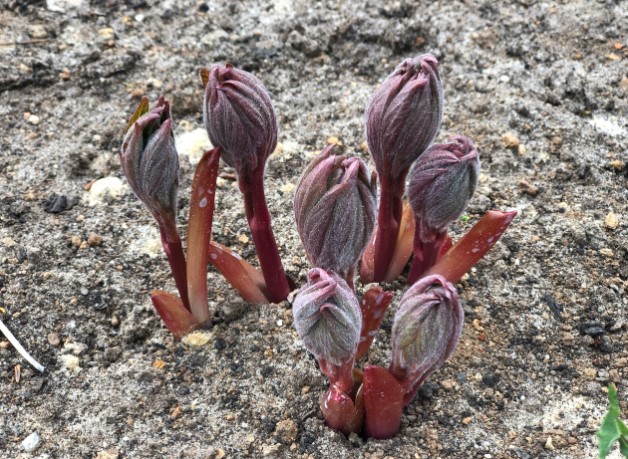
As early as April, when the snow melts, the reddish tips of peony shoots appear on the ground, and the first feeding can begin. Experienced gardeners call this "feeding on the ice crust."
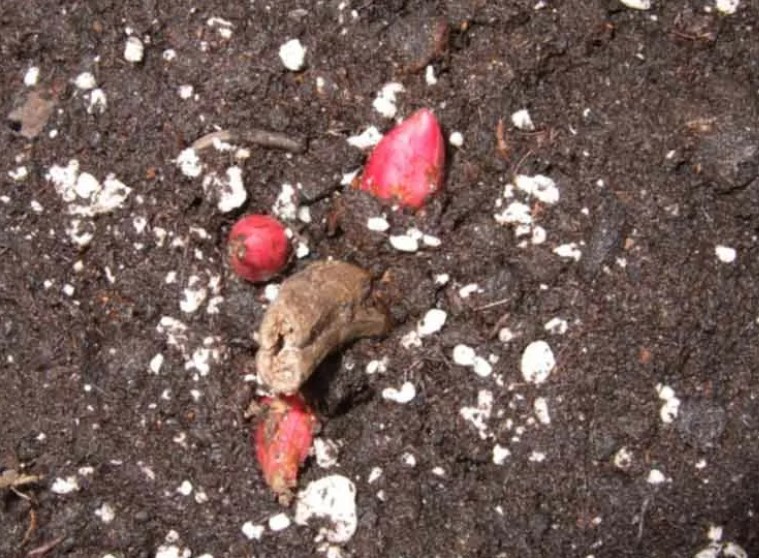
During this period, it is best to use nitrogen-containing fertilizers, the action of which is aimed at obtaining vegetative mass and developing the root system.
The main thing is not to overdo it with the quantity; one or two times will be quite enough, otherwise there is a risk of being left without buds, but with a lush green bush.
How to feed peonies in early spring
After the threat of recurrent frosts has passed, it is recommended to add 20 g of urea granules or powder under the bush.
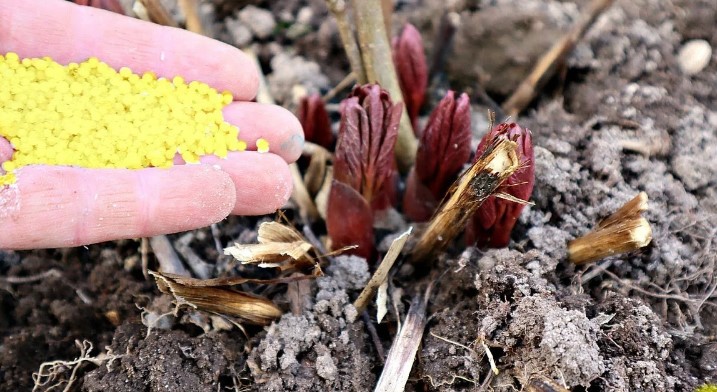
Organic enthusiasts can use a manure solution. The mother liquor is prepared in the following proportions:
- Mullein – 1:7.
- Horse manure – 1:10
- Bird droppings – 1:12.
Next, the solution is either diluted with water in a ratio of 1:3 for root feeding, or in a ratio of 1:5 for spraying plantings.
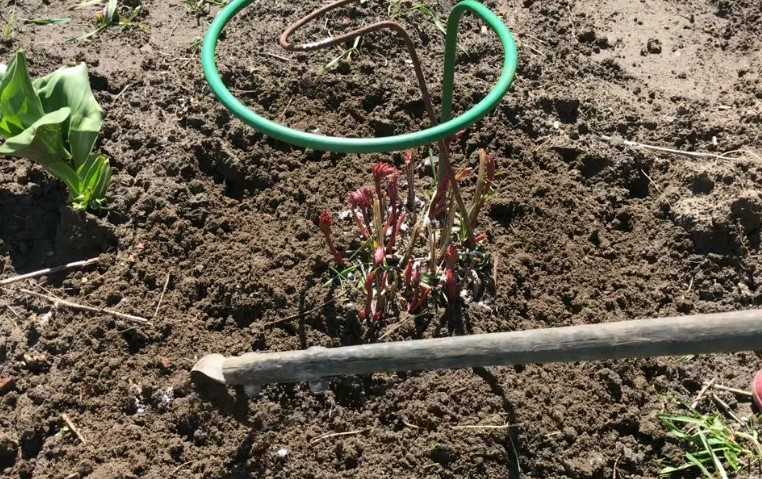
You cannot treat peonies with the mother solution, but you can add it to the root circle dug at a distance of 50 cm from the bush.
You can also use the following fertilizers:
- Urea: 10 g of the product is used per 10 liters of water. It has a high nitrogen content (45%).
- Ammonium nitrate is diluted in the amount of 15 g per 10 liters of water.
Important! In early spring, peonies only need one of the above fertilizers.
When and how to apply the second spring feeding
After 10 days have passed since applying organic fertilizer, you can apply ash fertilizer. This helps deoxidize the soil and enrich it with phosphorus, potassium, and calcium, which are essential for bud formation.
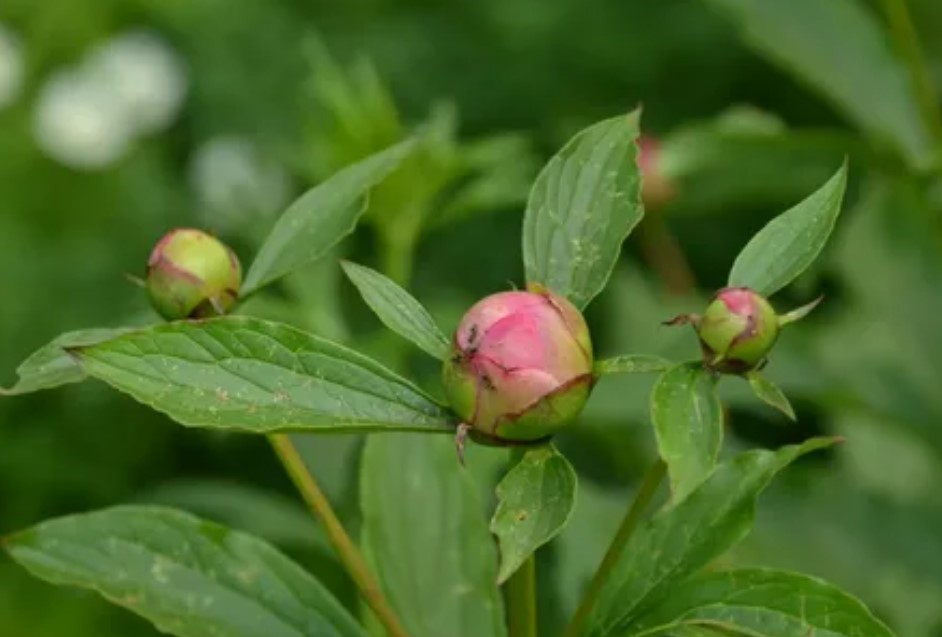
In late spring and early summer, when buds are about to begin forming, it is important to support peonies with a specialized fertilizer, such as nitroammophoska.
You can also use other fertilizers:
- Superphosphate – 10 g per 10 l of water.
- Potassium magnesium - the proportions are indicated by the manufacturer on the packaging.
- Potassium sulfate – 10 g per 10 liters of water.
More details about caring for peonies in spring and autumn Read on our website.
Types of fertilizers for feeding peonies
Peonies respond gratefully to any fertilizer, if it is applied in moderation and in a timely manner.
Nitrogen
Nitrogen fertilizers are used in early spring during the first stages of shoot growth. Most commonly, this is ammonium nitrate or urea.

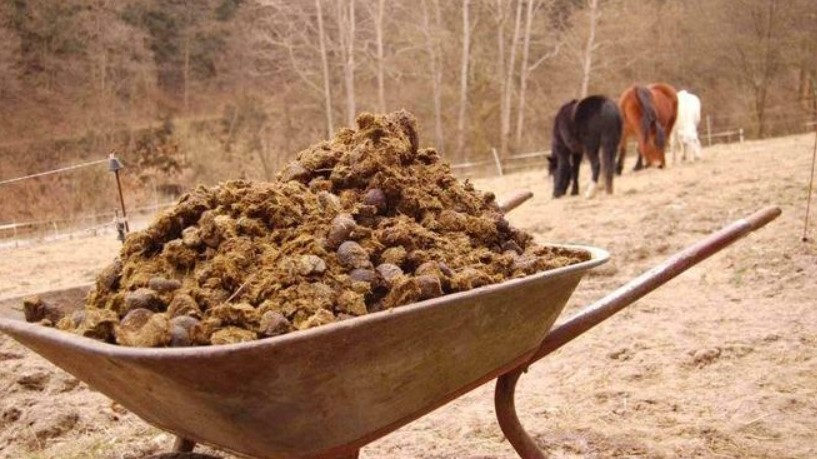
Chicken manure and cow dung are renowned for their high nitrogen content among organic fertilizers. However, peonies respond best to horse manure due to its rich composition and gentle action.
Minerals
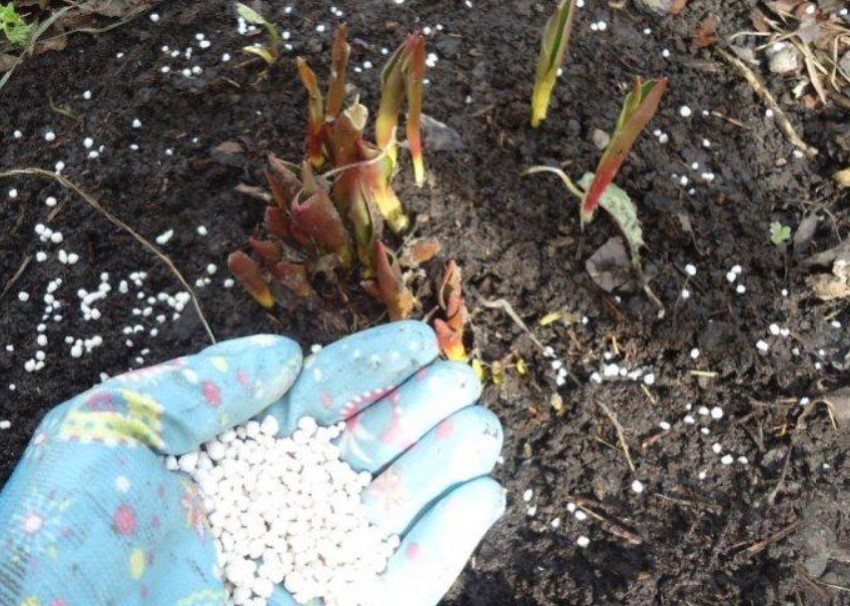
Mineral fertilizers are typically used before bud formation. There are a variety of specialized fertilizers for peonies to suit every taste and budget: Fertika Lux, Agricola, Ideal, Kemira, and others.
Folk
Fertilizing with folk remedies is very popular among gardeners. They can also be used for peonies.
The effectiveness of such fertilizers has been proven by many generations of gardeners.
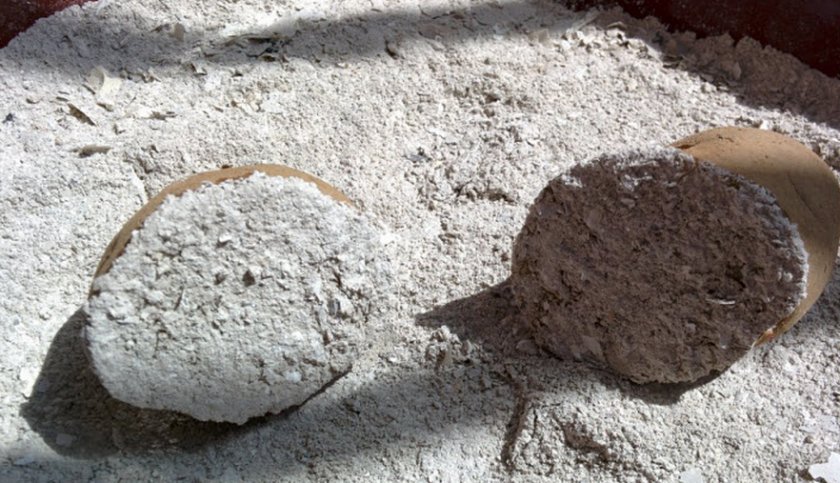
- Ash solution. Prepared from 1.5 cups of sifted wood ash and 10 liters of water. Used for root feeding, it enriches the soil with potassium and phosphorus and has a disinfecting effect.
- Yeast. Mix 10 g of dry yeast with 60 g of granulated sugar. Add warm water and let it ferment for a couple of hours. Before use, dilute the solution 1:3 and apply it to watering. It helps absorb nutrients from the soil and promotes lush flowering.
- Potassium permanganate. Use no more than 3 grams of potassium permanganate per 10 liters of water. The solution is used for watering; a weaker concentration can be used for foliar feeding. It helps disinfect the soil, has antibacterial and antifungal properties, provides potassium for peonies, and prevents blackleg, rot, and powdery mildew.
- Herbal infusion. Weeds can be harmful to gardeners, but they can also be beneficial to crops. Place the weeds in a bucket, filling it about a quarter full. Fill the remaining space with water, let the mixture steep for a couple of days, and then strain it.
- Rye bread. Place a loaf of bread in a saucepan and add warm water until completely covered. Let it sit for 12 hours, then stir and use it to water the peonies.
Fertilizing tree peony
The tree peony is considered a more capricious plant, so its care is a little more difficult than for herbaceous peonies.
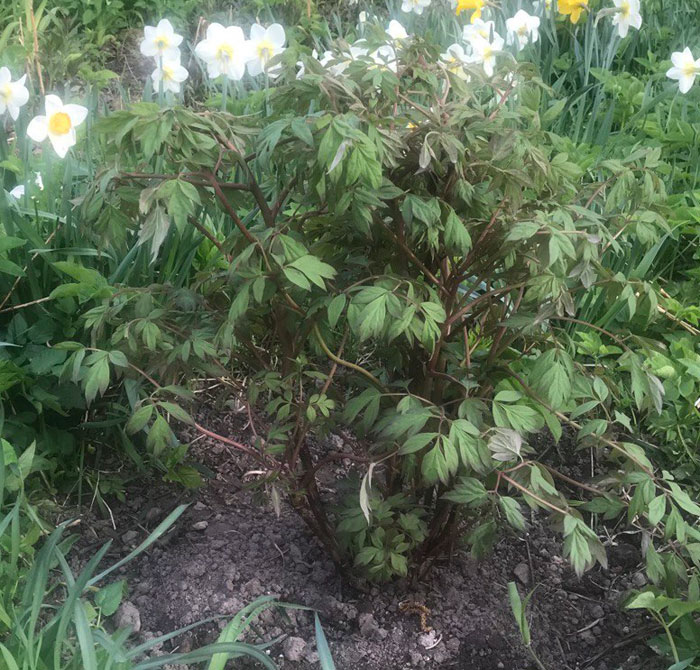
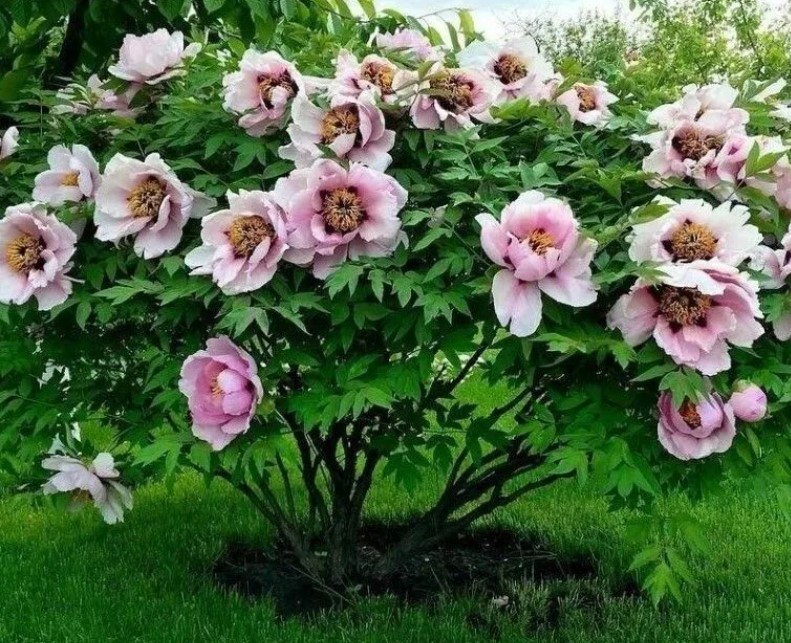
But all costs are fully compensated by lush, large flowers.
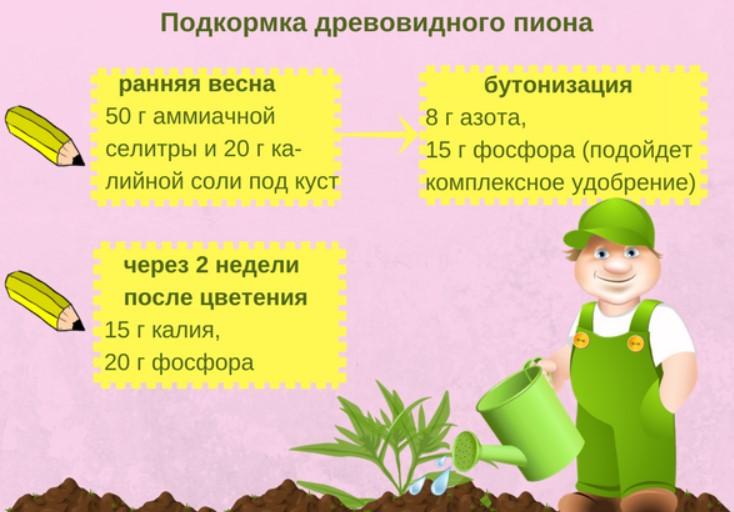
Find out all about tree peony, and also about herbaceous.
Fertilizing begins in early spring, when the peonies are removed from their winter cover.
During this period, you can feed peonies in any of the following ways:
- Sprinkle a glass of ash.
- Add 20 g of potassium sulfate to the soil.
- Add 50 g of ammonium nitrate to the soil.
- Fertilize with rotted manure (0.5 bucket per bush).
Important! Do not add any of the above ingredients directly to the plant. They should be scattered on the ground, at least 50 cm away from the shoots.
The following fertilizers are applied during the budding period. At this point, peonies require nitrogen, potassium, phosphorus, and micronutrients.
- The first time, the soil is watered with a solution of 30 g of urea and 15 g of potassium sulfate, diluted in 10 liters of water. Another fertilizing option is to sprinkle 15 g of superphosphate over the soil surface.
- After 7 days, the peonies are sprayed with specialized products, for example, Fertika, Agricola, Magbor, Terrasol and others.
After flowering, plants need to replenish their energy. Therefore, apply superphosphate to the soil as a root fertilizer at a rate of 50 g per plant.
Tips for fertilizing peonies from gardeners
I want to talk about spring fertilizing peonies. When we plant peonies, we fill the planting holes. That's understandable. But many people have been growing peonies for a long time. There's no more planting fertilizer left. I'll say right away that peonies in my garden grew for a long time without any fertilizer. And they bloomed fine. But a few years ago, when I got carried away with roses, I thought, what a sneer I am to my favorites. I feed the roses, but what about the peonies? So I fed them with Pokon for roses. You should have seen the blooms, and the overall growth of the peonies that year. I'll just say that almost all of them were about 10 centimeters taller than usual. And the flowers were larger and brighter. I think I overdid it with the Pokon))). And now I feed peonies all the time. In the spring, during the "red columns" stage, I make a hole from the base of the bush, dig a hole, and add any complex fertilizer. 1-2-3 tablespoons, depending on the age of the peony. I add water to the hole, little by little, in several stages, so that the fertilizer reaches the roots.
I've had outbreaks of botrys on my peonies. Treatments have helped. I already mentioned using Skor. However, I've noticed it's been less effective lately. This year I plan to use Switch (I'll be treating the peonies, roses, and lilies at once).
Regarding Glyocladin. I've tried it as a preventative measure many times, but I haven't seen any results. Last season, I put three Glyocladin tablets under each rose bush (I didn't have any more). That's why the peonies didn't get any. But the roses loved it. They were clean, with just one treatment, the very first one after opening. But it started raining in July. And in August. I plan to add Glyocladin to the peonies this year, too. Especially to the ones that suffer from Botrytis the most.
Just thinking out loud. For years, I've been trying to write down everything I do in the garden. But I didn't write it down this time. ))). The thing is, in the fall, I fertilize everything in the garden with phosphorus fertilizers and slaked lime. I ran out of superphosphate. I had to order more. And now the fertilizer is sitting on the veranda. I could apply it now, given the weather. But I can't remember who didn't get it. )))
FIRST FEEDING OF PEONIES🍼
I was wondering: why not call this series of posts about fertilizing "Peonies Like in Peony Paradise"? Is that okay with you? If not, that's part 2.
What does a baby bottle made of smiley faces have to do with it? It's just that we give the peonies their first feeding when they've just emerged, and they're still very young.
Those who read the previous post (and we agreed on a series of posts about fertilizing) will remember that at Peony Paradise I use mineral fertilizers for my peonies. I choose those that can be used dry and sprinkle them around the bush. This is convenient for me: it saves time and protects my back.
The main rules for fertilizing this way: ✅sprinkle fertilizer on moist soil. Ideally, during rainy weather. 🌧
✅ DO NOT EXCEED the dose. And in general, DO NOT OVERFEED – that's the main rule.
✅We do not feed first-year plants at the roots if fertilizer was added to the hole when planting.
✅ Sprinkle around the bush, 15-20 cm from the stems.
✅ The less nitrogen, the better. We don't use nitrogen fertilizers at all."What do you mean, we don't use nitrogen? Absolutely??" you ask. Well, yes. Nitrogen is needed to build up green mass. Believe me, peonies will grow it without nitrogen. And we grow them for flowers, not for silage. After all, the soil already contains nitrogen, especially if it's amended with organic matter. And it's also prone to diseases. But more on that in the next post ☝
For the first feeding of peonies, I use complex fertilizers with more potassium and less nitrogen, and in particular, one of the following options:
✅Fertika Universal-2 Summer.
✅Fertika Lawn Summer.
✅Fertika for potatoes.
The dosage for an adult bush is a table boat without a top.
✅Potassium nitrate is also suitable. It has little nitrogen (12%), butThere is a lot of potassium.
I don't use complex flower fertilizers for this very reason - the NPK ratio there is usually in favor of nitrogen.
So, did I surprise you? Or was this more or less what you expected? Let me know in the comments—do you agree or disagree? What do you fertilize your peonies with?
I once mentioned a method for feeding peonies that my grandmother passed down to me... I don't claim to be original or to provide a complete nutritional guide for modern varieties. But I still remember my grandmother's instructions, and people from all over flocked to her peony blooms.
We soak some bread, the blackest and cheapest kind. Then, crumbling it into small pieces, we loosen it slightly.
Well then, I'll write about my feeding method: After flowering, I constantly pour old tea leaves from a teapot under the peony bushes. The green mass lasts until the first snow. Lush, lush, and green, without any signs of wilting. That's it.
Feeding peonies with bread or tea leaves isn't enough. Just like humans, plants need a balanced diet. In fact, peonies don't need to be fed at all—they won't die. The key is the right approach to caring for the plants (it's a matter of personal preference).
It's no surprise that peonies stay green until frost. It's not the tea leaves that make them this way, but their physiology. The stems of hybrid varieties can even withstand frosts down to -5°C (tested), but the stems of lactiflora varieties are more delicate. At such temperatures, they begin to crack and fall over. There's no need to cut the stems too early, as they carry nutrients to the roots, which improves bud maturation. They should be cut after a heavy frost.
I feed my peonies after flowering with rotted manure mixed with bone meal (placed away from the stems) and watered with Kemera Universal. I always sprinkle some ash on top. Then I feed them foliarly.
In spring I water it with Kemera and sprinkle it with ash.