Bentgrass is a common grass found throughout North America, Eurasia, and Australia. It most often grows in floodplains, coastal areas, and floodplains.
Content
- 1 Description of bentgrass
- 2 5 types and varieties of bentgrass with photos and descriptions
- 3 Types of bentgrass for lawns
- 4 Sowing bentgrass in open ground
- 5 Mistakes when sowing bentgrass
- 6 Caring for bent grass
- 7 Seasonal care for bentgrass (table)
- 8 Pros and cons of bentgrass
- 9 Use of bentgrass in landscape design
- 10 Reviews of bentgrass, advice
Description of bentgrass
Bentgrass is considered a perennial grass, but some species are annuals. It belongs to the genus Poaceae or Poaceae. There are approximately 200 species of this plant. Most are weeds, while some have high forage value and are used in hayfields.
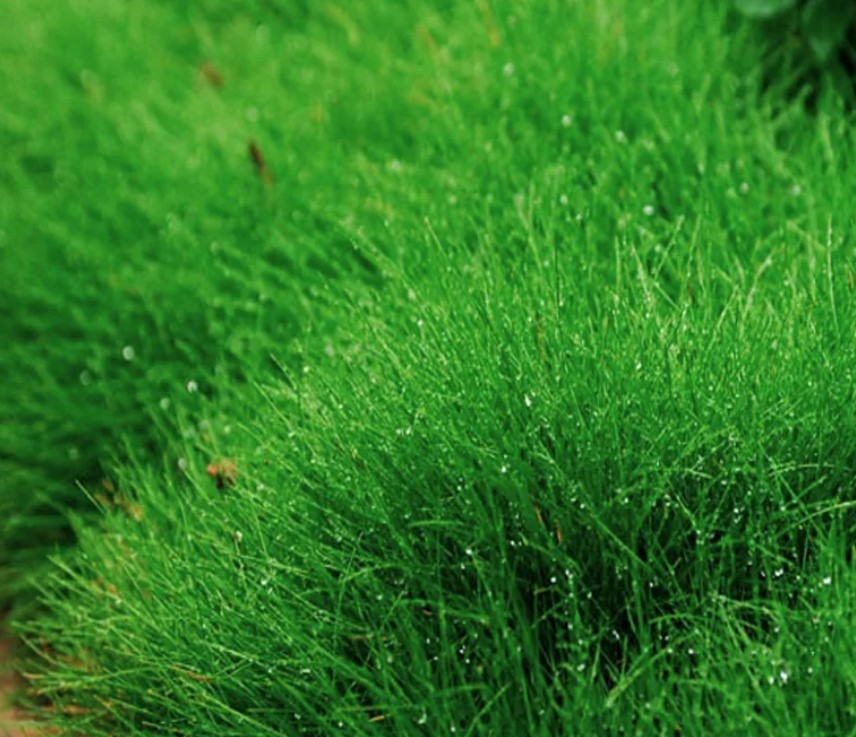
The shoots range in height from 10 to 120 cm, are erect and rigid. The roots are long and branched, forming a dense turf in the upper soil layer.
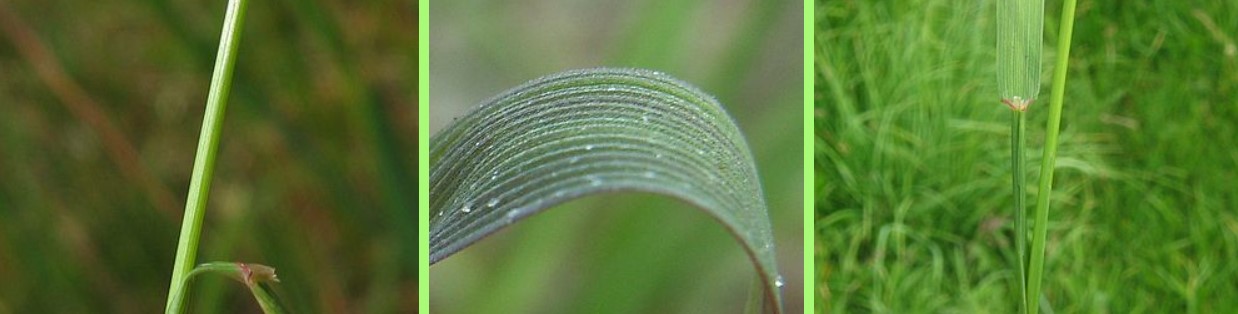
The leaves are lanceolate, up to 8 mm wide, with a pointed tip and a rough surface. The color is grayish, bluish, or light green with a purple or yellowish tint at the base.
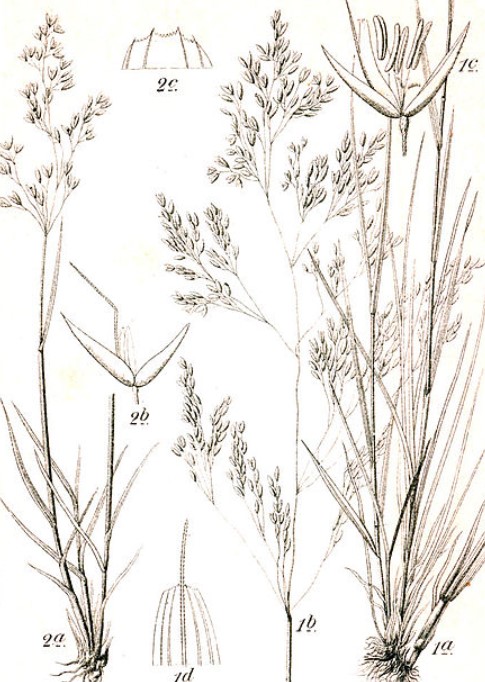
The inflorescence is a spreading panicle of green spikelets. Flowering begins in June and continues for a month, until the end of July.
At the end of flowering, fruits appear - grains about 2 mm in size, which are hidden under a thin shell.
5 types and varieties of bentgrass with photos and descriptions
There are several ornamental varieties of bentgrass that are used in landscape design due to their resistance to trampling, unpretentiousness, winter hardiness, and strong immunity.
Giant white bentgrass (Agrostis gigantea)
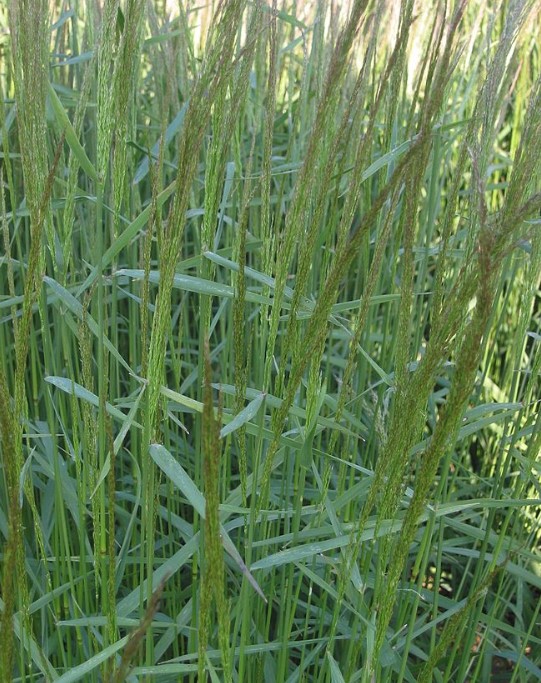
A perennial plant with erect shoots up to 150 cm tall. The leaves are dark green, pointed at the tips, up to 20 cm long and up to 8 mm wide. The panicle reaches 25 cm in height and consists of greenish or purple spikelets up to 3 mm long. In Russia, the plant is found everywhere except in the highlands and the Arctic.
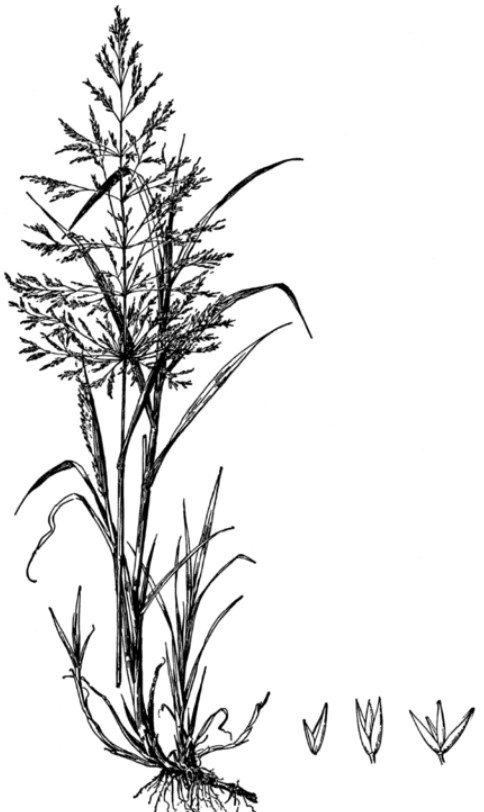
Propagated by seeds or division, it is considered one of the best pasture grasses.
Dog's bentgrass (Agrostis canina)
A perennial plant with numerous shoots. At the beginning of summer, the stems are erect, but towards the end of the season, trailing shoots appear. The leaves are up to 8 mm long, with rough edges and surfaces.
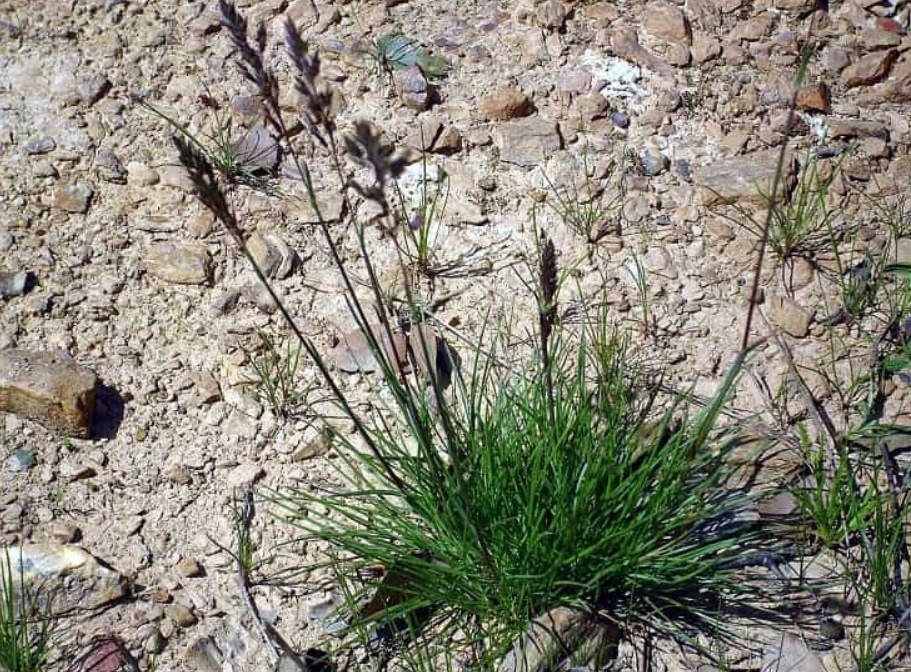
The panicles are moderately spreading, up to 11 cm long and up to 5 cm wide. The scales are brownish-straw or dark purple. Flowering begins in June, and the fruits form in July. The dog bentgrass can be found almost anywhere in the world.
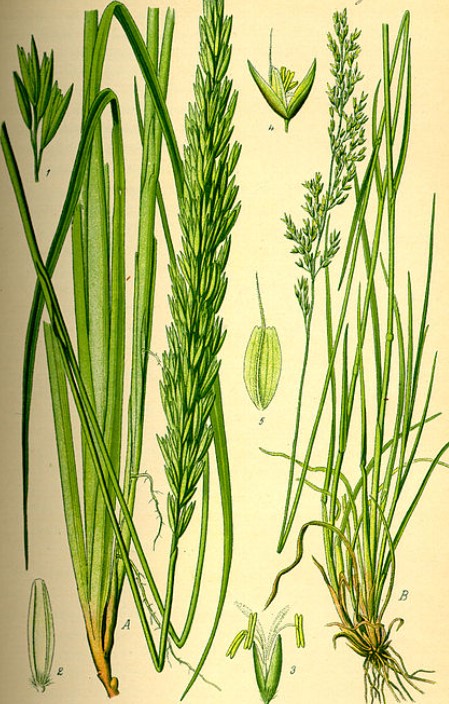
Used for harvesting hay for cattle. Suitable for landscaping lawns and meadows.
Bentgrass, thin, hairy (Agrostis capillaris)
The shoots reach 70 cm in height, are erect and slender. The roots are creeping, the leaves are elongated-lanceolate, with a wide base, and are yellowish-green in color. The panicles are up to 15 cm long and reddish-purple.
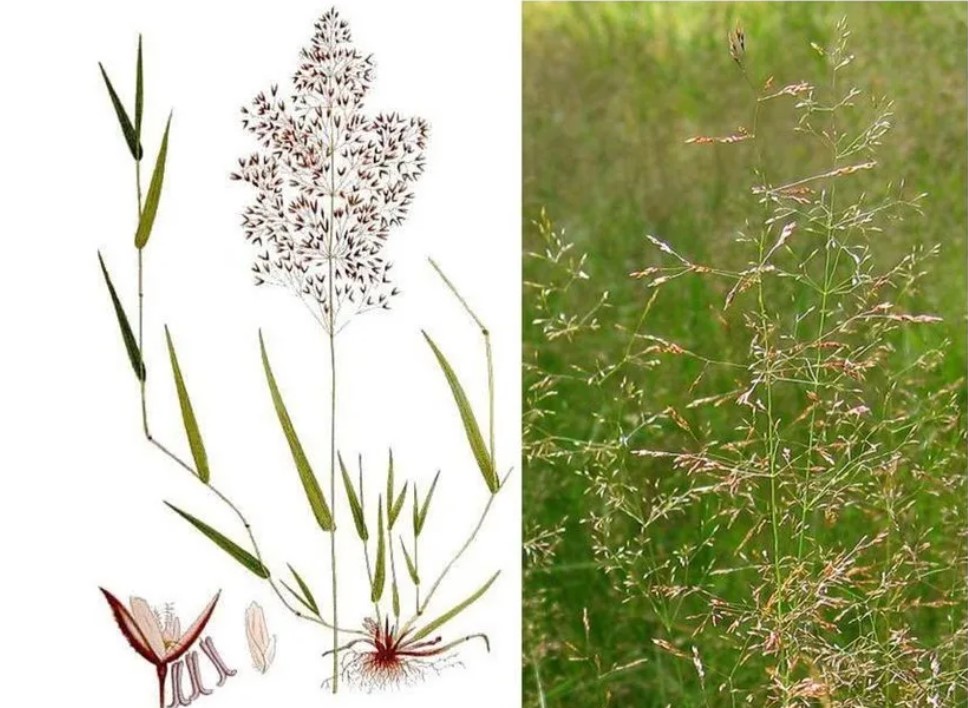
Flowering occurs in June, and fruiting begins in July-August. It forms loose turf and recovers very quickly after being grazed by animals or mown.
It's used as livestock feed and for creating lawns. It provides excellent protection from falling fruit, making it often used as a lawn mat in gardens.
Creeping bentgrass (Agrostis stolonifera)
This plant is widely used in landscape design for lawns. The stems are erect, up to 90 cm tall, and the rhizome is elongated. The leaves are soft green, sometimes with a slight bluish tint in the off-season. The tips are pointed, and the surface is rough.
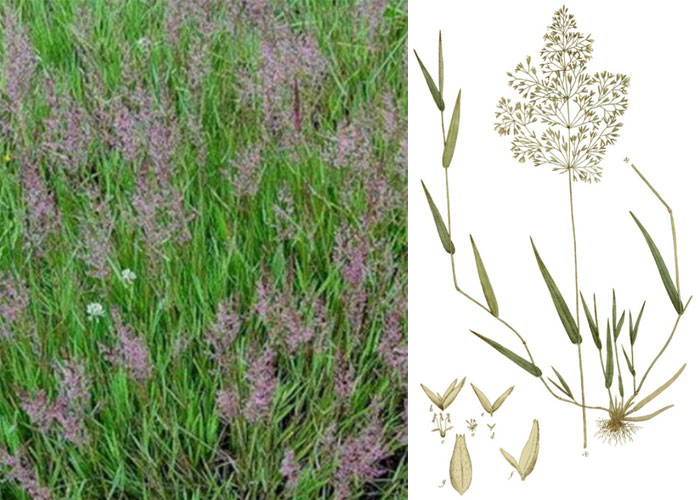
The spikelets are collected in a panicle and have a purple-greenish color.
Below is a description of the main varieties of creeping bentgrass.
| Name | Description |
| Scandi
|
A tetraploid variety with narrow, short, flag-shaped leaves. It is distinguished by excellent drought tolerance and is used for landscaping. |
| Kromi
|
A perennial plant with a short but well-developed rhizome. The leaves are dense and flat, up to 5 cm long and up to 2 mm wide. The color is rich green and juicy. The grass quickly recovers after mowing and is undemanding of soil conditions. |
| Cobra Nova
|
It is distinguished by its very thin, dense leaves. The leaves are narrow, green, and thin. The grass is resistant to trampling and is used as a turf for garden plots. |
| Alpha
|
A tetraploid variety with narrow, medium-wide leaves. Rich green color. Ideal for lawns in all regions. Highly disease resistant. Used in lawns with bluegrass. |
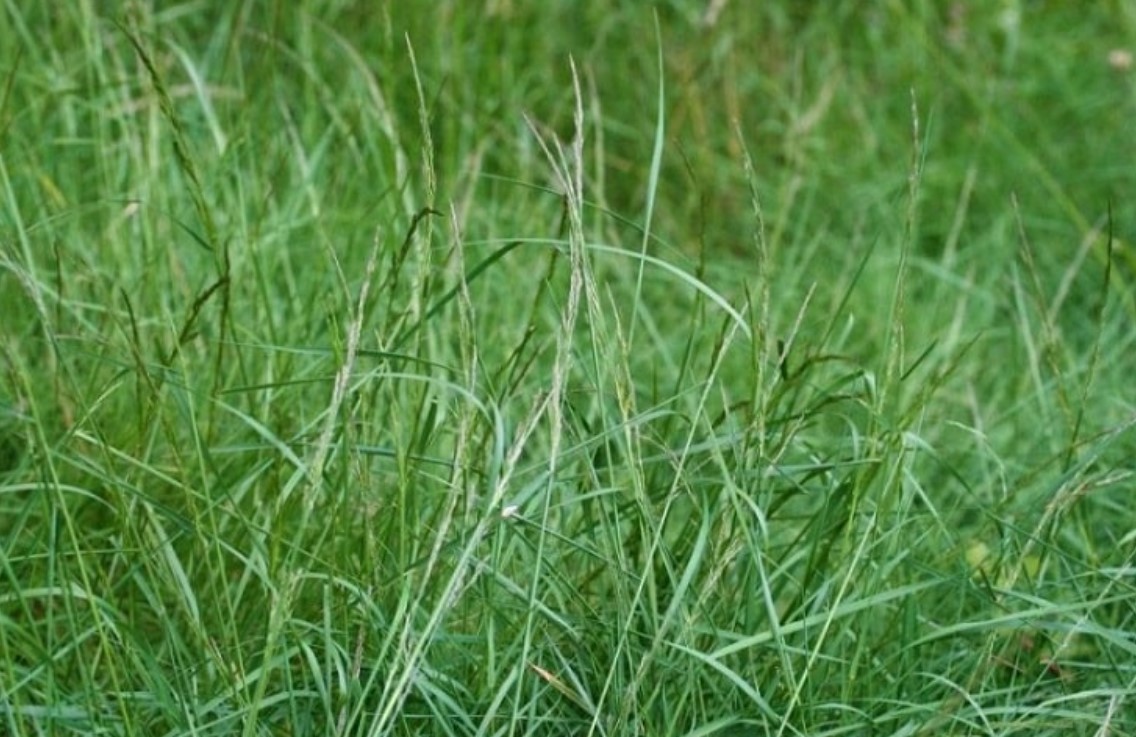
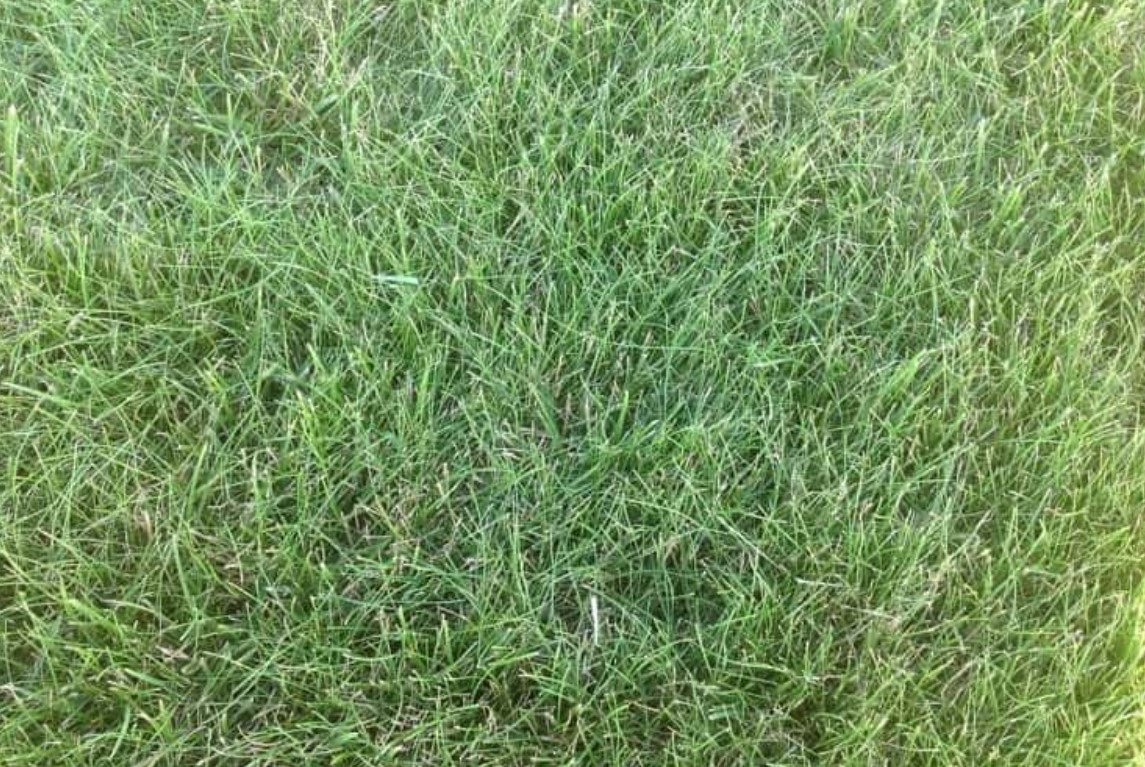
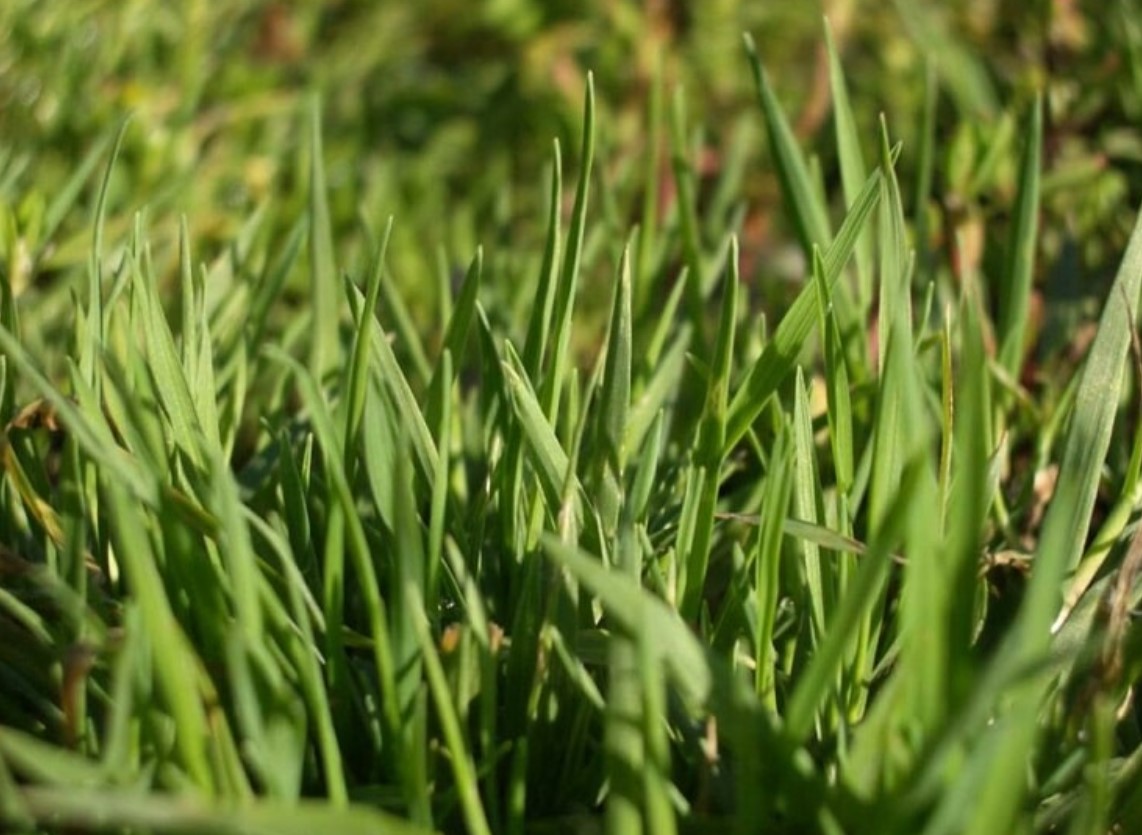
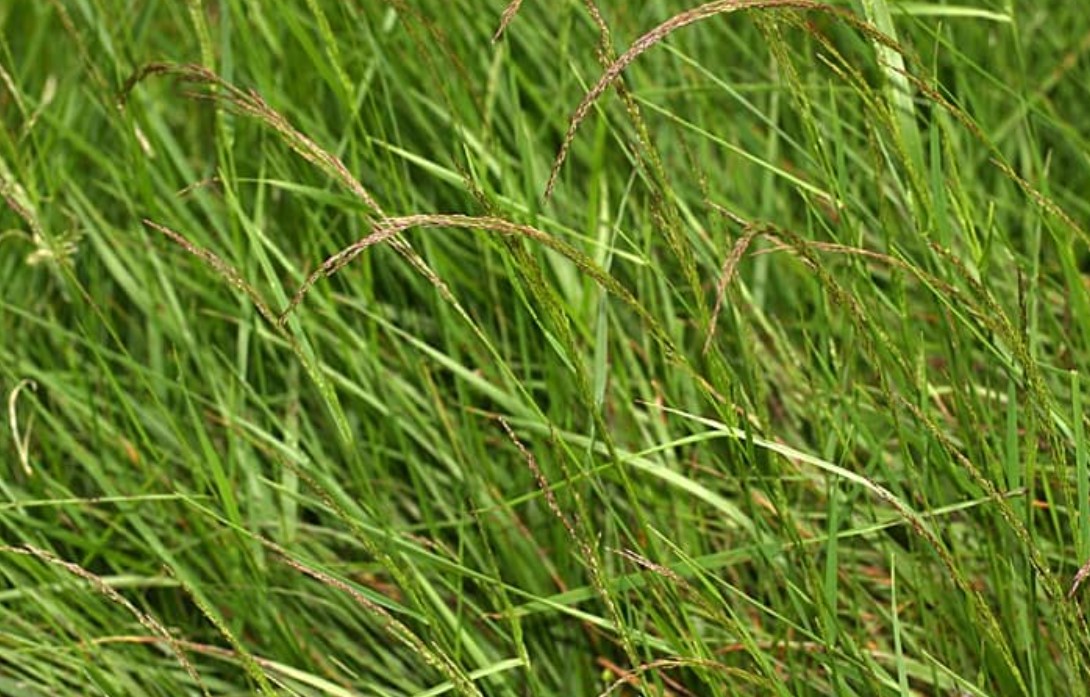
Grapevine bentgrass (Agrostis vinealis)
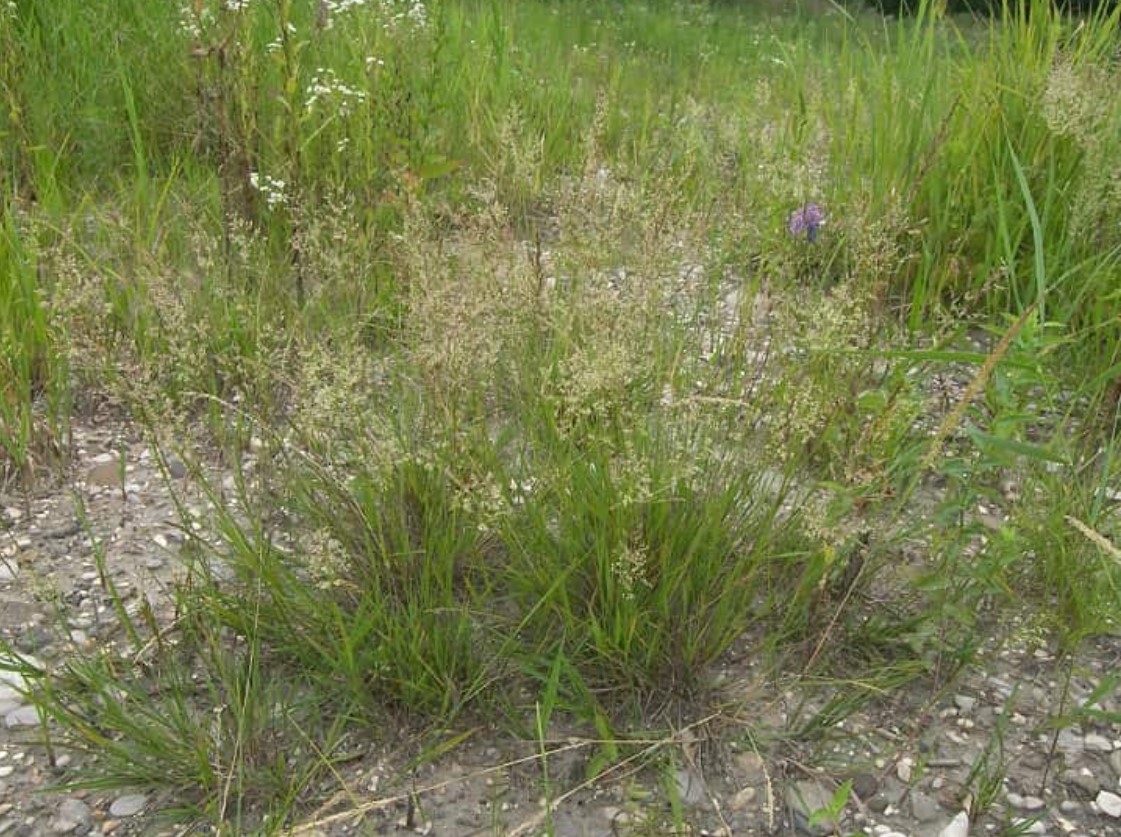
A perennial plant used to stabilize roads and slopes. It has numerous stems and few thin, pointed leaves, green or yellowish-green. The plant reaches 70 cm in height. The roots are horizontal and long. The panicles are up to 14 cm long, and the spikelets are purple, up to 2.5 mm long. It reproduces by seed or root division.
Types of bentgrass for lawns
For lawns, it's recommended to use bentgrass varieties that are less susceptible to trampling, recover quickly after mowing, and have a rich color. The following varieties are most commonly used:
- Shoot-bearing.
- Thin.
- Vineyard.
Very often bentgrass is added to lawn mix, which also includes ryegrass, meadow bluegrass, fescue.
Sowing bentgrass in open ground
With the help of bentgrass seeds, with proper planting and proper care, you can get a beautiful and neat lawn.
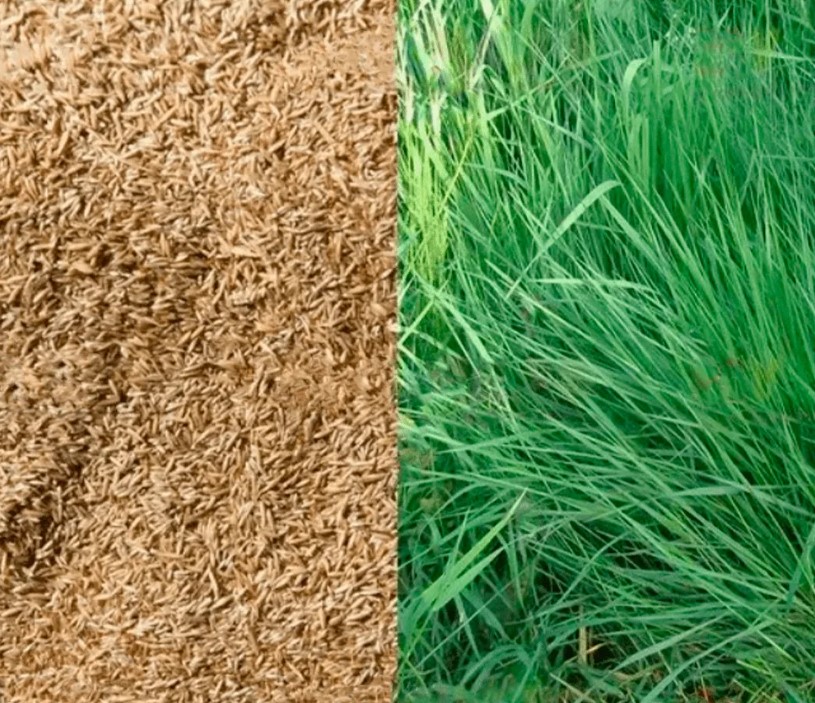
Bentgrass seeds
Bentgrass seeds remain viable for 2-3 years. They can be purchased at any specialty store, but it's important to pay attention to the harvest and packaging dates.
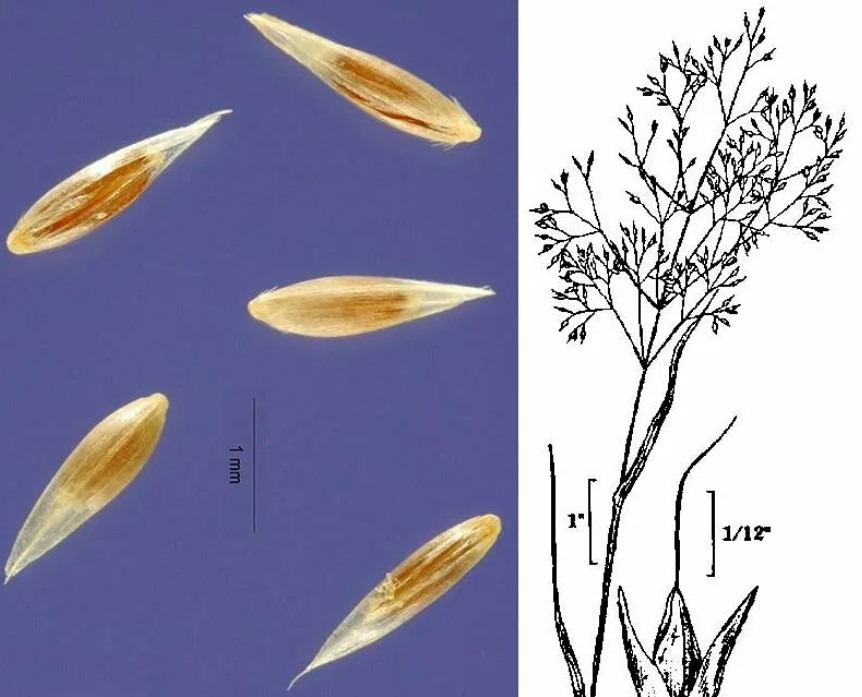
The size of the seeds is very small, no more than 2 mm.
Soil preparation
The most important step in creating a neat lawn is leveling the area. This is accomplished by digging and leveling it. A cultivator is ideal for this purpose. This removes weed roots and other natural debris to ensure the lawn is as level as possible.
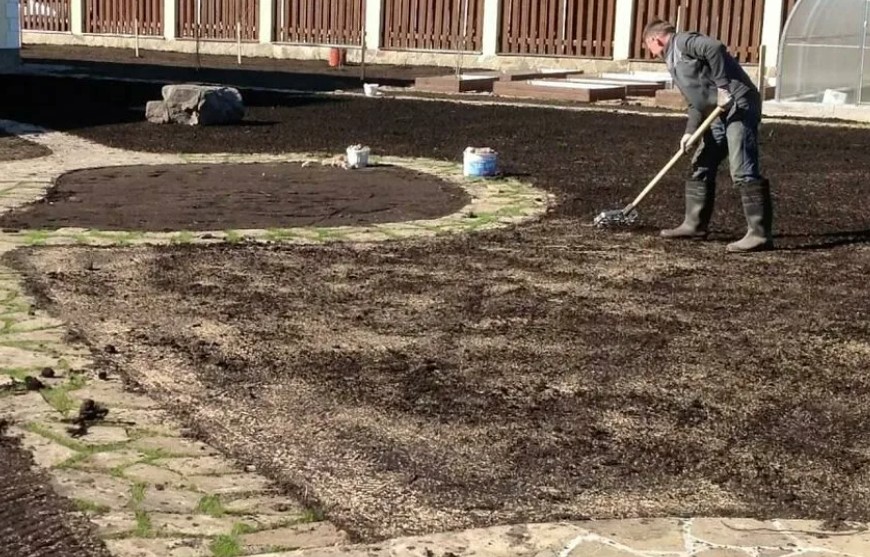
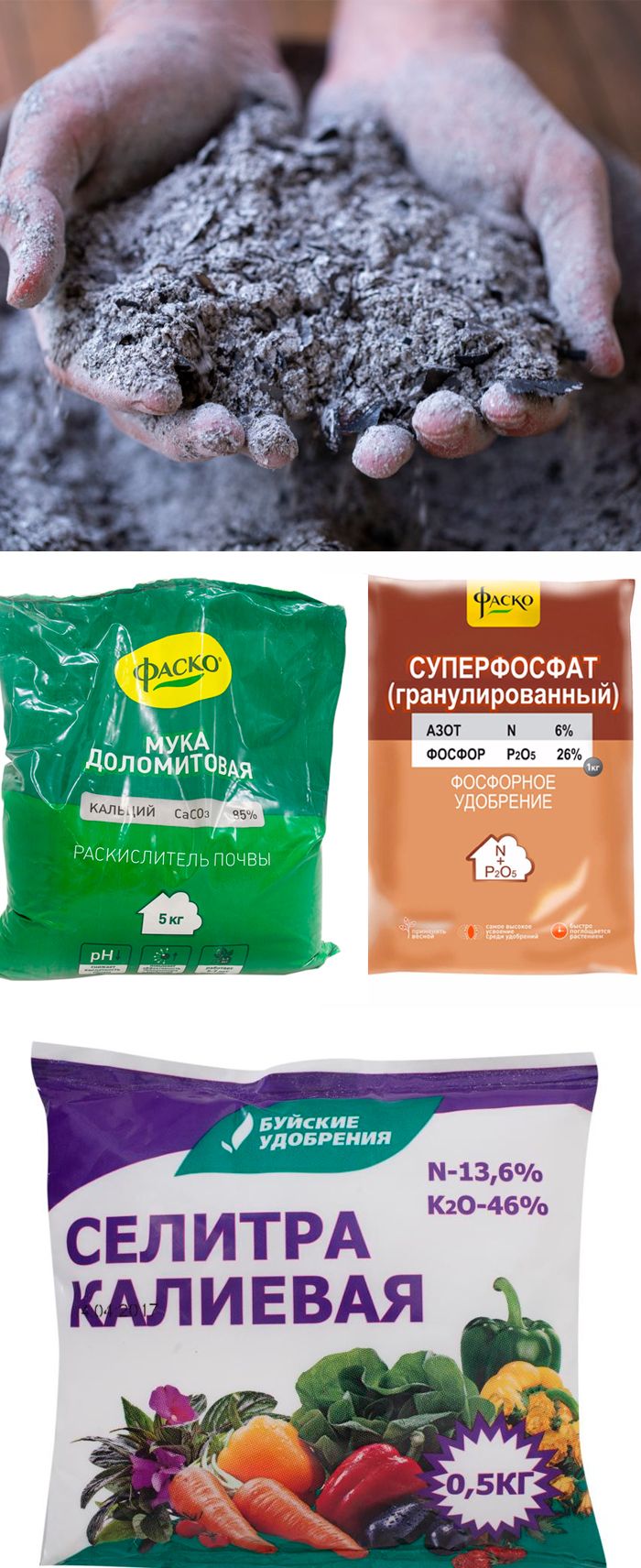
To ensure good lawn growth, the following fertilizers are added to each square meter during digging:
- 8 kg of humus or compost.
- 30-40 g of superphosphate.
- 300 g of wood ash or 20 g of potassium sulfate.
When can you sow bentgrass?
Bent grass can be sown both in spring and in autumn before winter, the result will be the same.
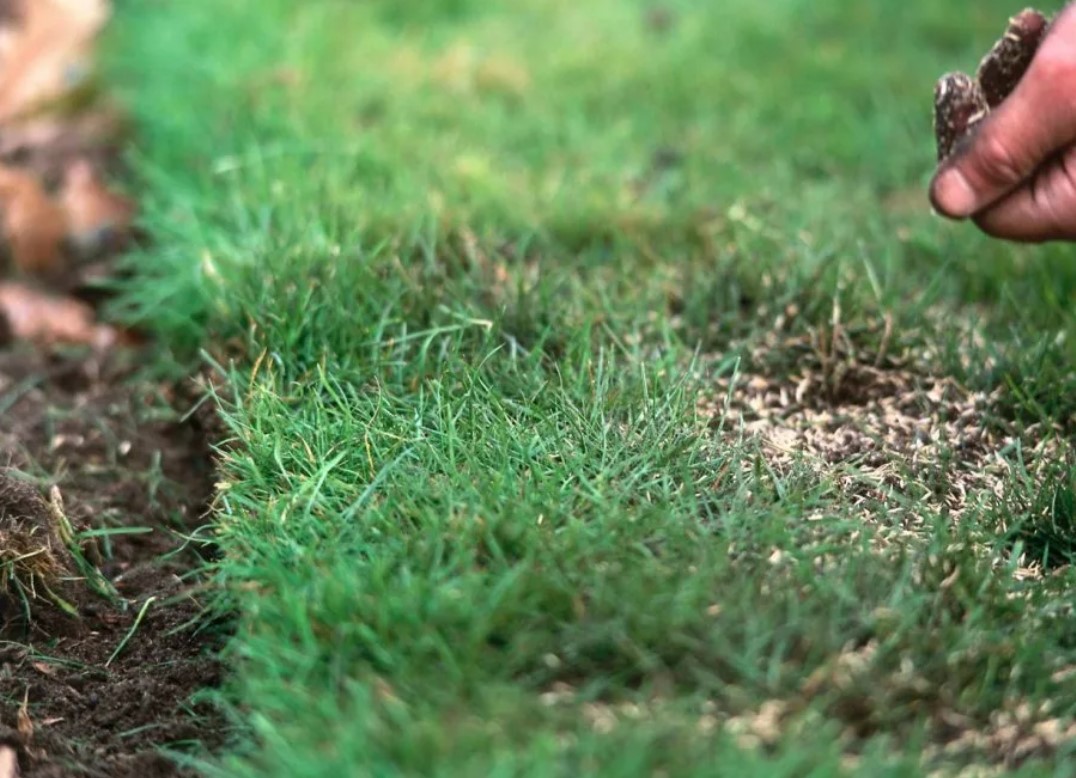
Some gardeners sow it even in summer, but the plant will require additional watering.
The sowing process
Bentgrass seeds are very small and difficult to distribute evenly by hand, so it's best to use a seeder. After sowing, they are pressed into the soil with a roller and covered with non-woven material to protect against birds. It's important to keep the soil sufficiently moist. The recommended seeding rate is 200-300 grams per 100 square meters.
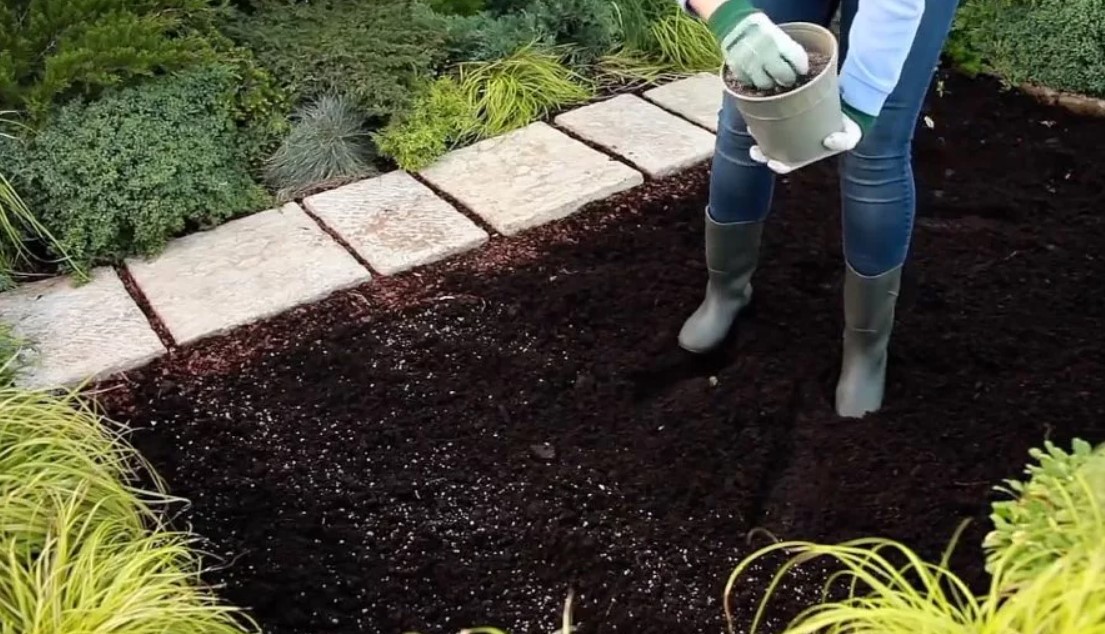
In 7-10 days, seedlings will appear and the cover can be removed.
Mistakes when sowing bentgrass
The following mistakes are most common among novice gardeners when sowing bentgrass:
- Seeding too deep.
- Uneven seed distribution due to poorly leveled area.
- Incorrect timing of sowing when the weather is still cold or the soil is already too dry.
- The soil is poorly compacted.
- Insufficient watering.
Caring for bent grass
Bentgrass is completely low-maintenance and can grow in virtually any conditions. However, to create a neat and even lawn from this grass, some effort is required.
Watering
Watering is a crucial factor in maintaining the ornamental appearance of bentgrass. The grass will only look lush and green if it doesn't suffer from moisture shortages. The plant's roots are located very close to the soil surface, so in dry weather, they are the first to suffer, causing the grass to turn yellow and dry out.
To prevent this from happening, simply follow these rules:
- The lawn is watered in the morning or in the evening to avoid burns.
- On the sunny side of the plot, plants are watered daily.
- In partial shade, it is enough to moisten the soil 2 times a week.
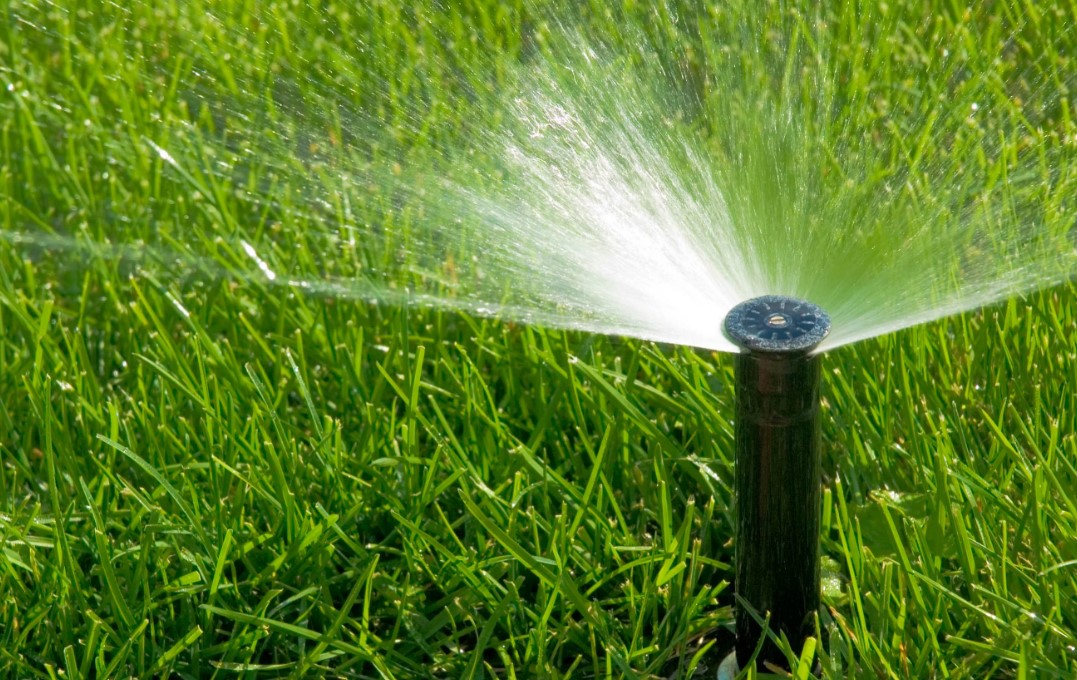
- To ensure even distribution of moisture, it is recommended to use a sprinkler.
Haircut
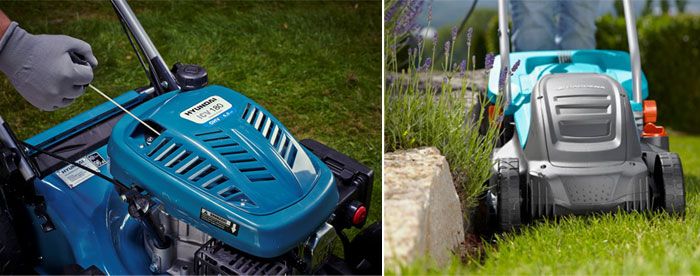
Bentgrass grows quite slowly, which saves effort when mowing the lawn. The plant's shoots are tender and soft, so mowing with a disk is unnecessary; automatic lawn mower/
Mulching
Mulching helps protect roots from the sun and prevent moisture evaporation from the soil. It is recommended to apply this treatment in the second season after seeding the lawn in late April. Mulching makes the lawn more vibrant in color and gives it a neat appearance.
You can use a mixture of peat, garden soil and sand, taken in equal quantities.
Top dressing
Lawn fertilizers are applied immediately before mulching. Fertilizers are first added in the spring after the snow has melted. It's best to use compost, spreading it in a thin layer over the surface. A second application is made in midsummer; at this stage, it's recommended to use a complex fertilizer.
Wintering
Bentgrass is a frost-hardy plant, so it doesn't require any special preparation for winter. The grass freezes in winter, but the roots continue to grow after the thaw. The only procedure that will help maintain the lawn's aesthetic appearance after winter is mowing before the cold weather sets in.
Seasonal care for bentgrass (table)
Let's look at the stages of caring for bent grass at different times of the year in more detail.
| Care | Spring | Summer | Autumn |
| Watering | It is carried out only in the first season after watering or in very dry weather. | In full sun, water daily. In shaded areas, water 2-3 times a week. | It is carried out only in warm and dry autumn conditions. |
| Fertilizer | A 1-2 cm layer of compost is scattered over the surface after the moisture has come off. | It's recommended to add fertilizer after each lawn mowing. Mineral fertilizers, such as Fertika, Fasco, and others, are recommended. | A phosphorus-potassium fertilizer consisting of 15 g of potassium sulfate and 30 g of superphosphate per 1 sq.m. is applied once. |
| Haircut | No need. Simply remove any dead grass and debris from the winter. | Mowing is carried out 4-8 times during the summer when the grass reaches a height of 5-8 cm. | It is carried out to a height of 4-6 cm before the onset of frost. |
Pros and cons of bentgrass
Bentgrass has a number of undeniable advantages:
- Not demanding to soil composition.
- It tolerates even harsh winters well.
- Resistant to trampling.
- It grows quickly.
- Forms a dense turf.
- Tolerates waterlogging well.
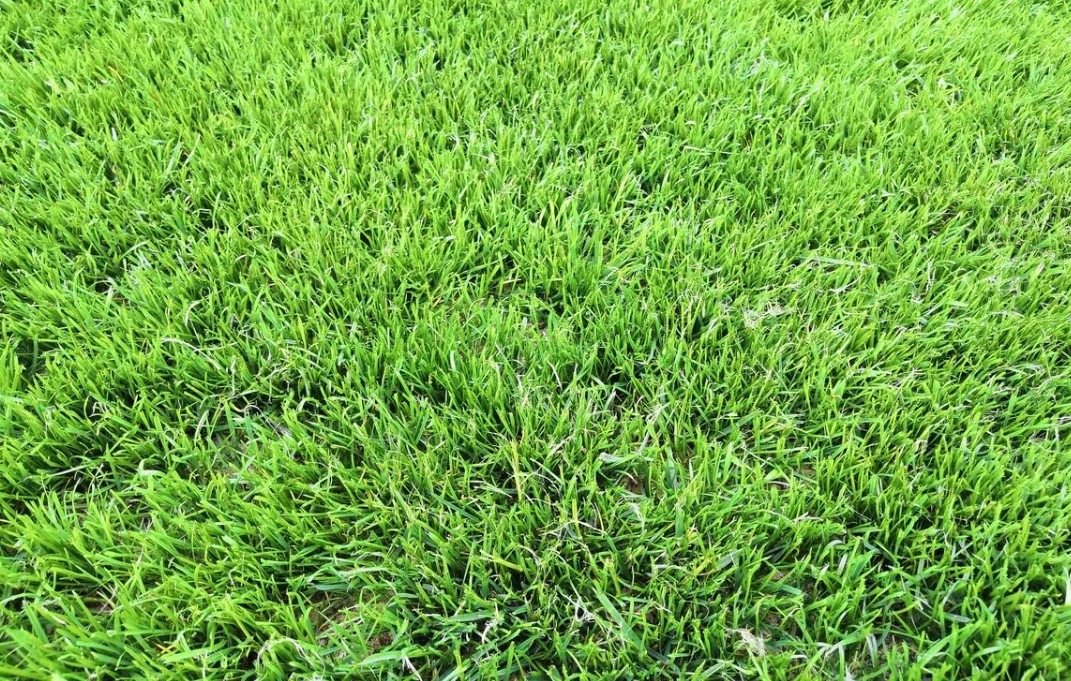
The plant's disadvantages include its high moisture requirements and relatively rapid growth. Therefore, it is crucial to border the lawn or regularly monitor and limit grass growth.
Use of bentgrass in landscape design
Bent grass is excellent for creating a beautiful lawn, but is rarely used in its pure form.
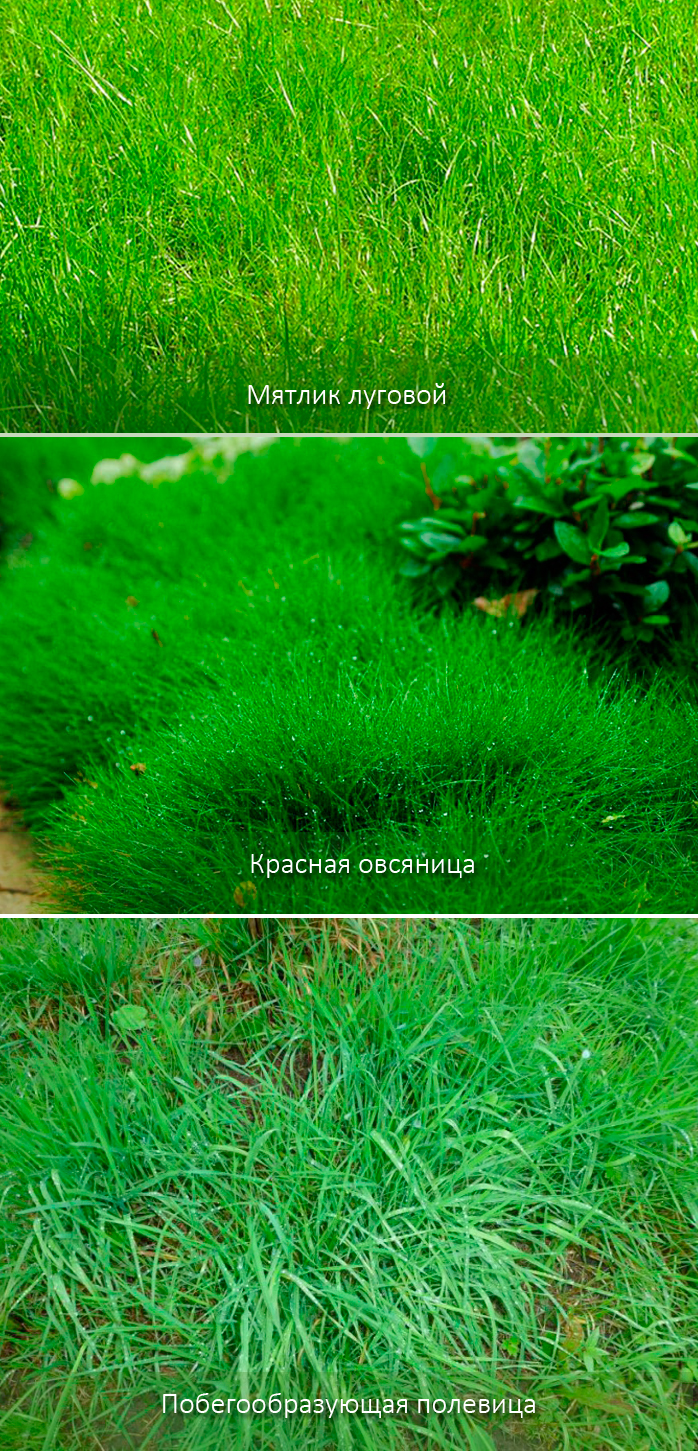
To ensure your lawn looks as neat as possible, we recommend using the following mixture:
- 1 part fine bentgrass.
- 4 parts meadow bluegrass.
- 5 parts oatmeal.
This composition will always be bright green and will not require significant maintenance or regular pruning.
Read all about lawns on our website. You were looking for lawn - (top.tomathouse.com)
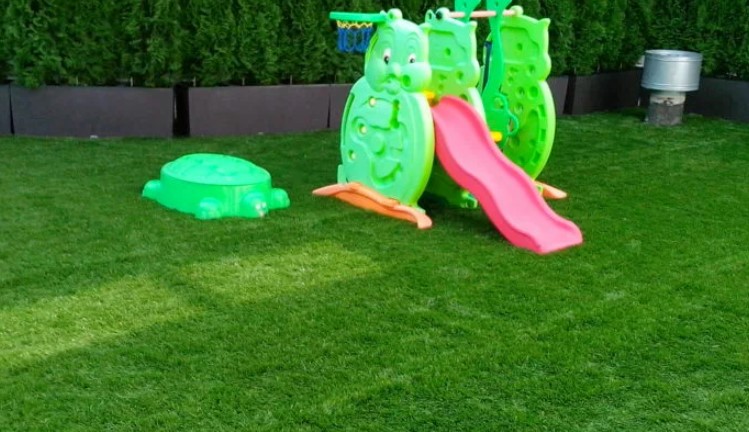
For meadow lawn lovers whose plots are heavily used by machinery, people, and animals, it's best to choose a more trampling-resistant mixture:
- 1 part creeping bentgrass.
- 2 parts of fine bent grass.
- 2 parts red fescue.
- 3 parts meadow mint.
Very often, bentgrass is used in landscape design as a fixing element for the banks of reservoirs.
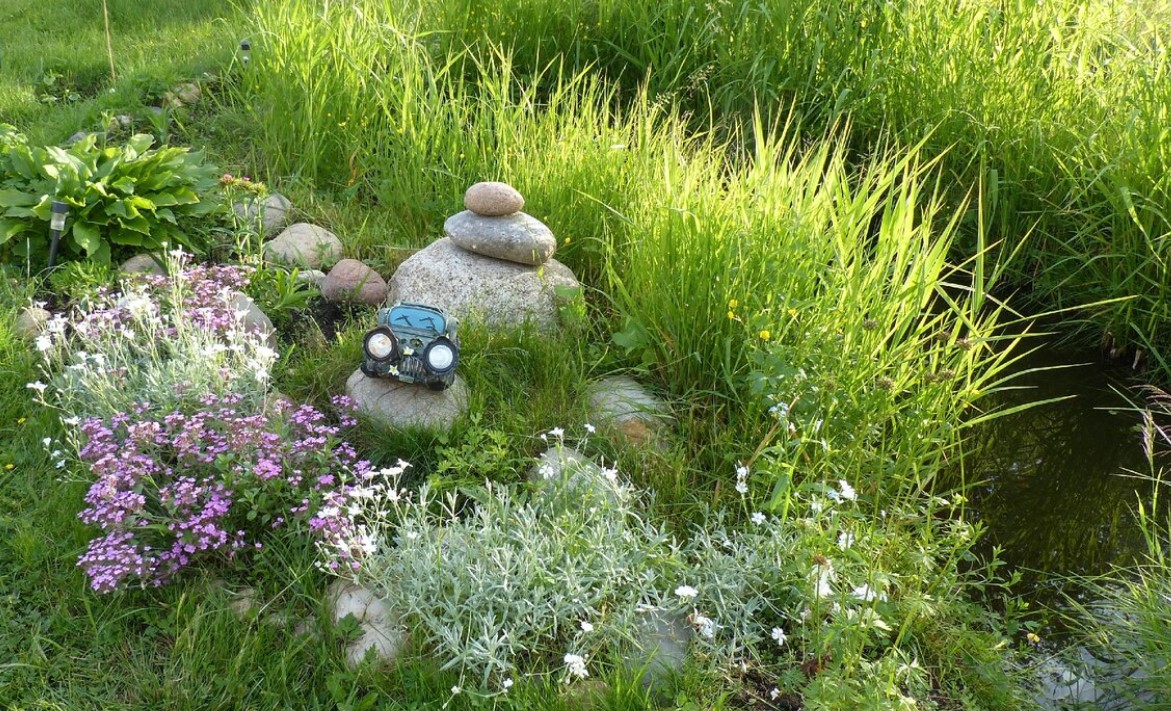
Read the article to find out what to plant near and in a pond.88 aquatic plants for ponds and pondsides: tables, 346 varieties and species with photos and descriptions, pond landscape design.
Thanks to the spreading root system, the grass intertwines with the soil, and it does not spread or settle.
Reviews of bentgrass, advice
Lawn of creeping bentgrass
Hello everyone! I'd like to gather together users of bentgrass lawns under one topic. Why separate them from all other lawn grasses? Because bentgrass requires slightly different care and use requirements, such as infrequent mowing, supplemental and sometimes regular watering, and soil aeration (puncture) to provide oxygen to the roots.
This year, I only planted bentgrass (the first plot in May – 300 square meters, and the second in August – 100 square meters). I mowed the first plot twice, the second (August) plot not yet, but it's already possible.My first observations - for the first month or two the grass is a bright, rich emerald color. After three or four months it is not as emerald as the new month's grass, but still different from the neighbors' dark green lawns. In short, I am still at the beginning of its use, but I already have questions, namely:
1). First mowing. What height should I leave it? Personally, I mowed it at 4 cm for the first time.
2). Second and subsequent mowings. What height should I choose?
We've been using bentgrass since 1991—we love it. It's easy to grow, resistant to frost, waterlogging, and trampling. It doesn't need mowing; it grows to 10-12 cm, settles down, and roots in the internodes. It reproduces through these root nodes and seeds, conquering all the space allotted to it, and quickly recovers from adverse conditions. The turf is dense but shallow—5 cm. You can cut it into mats and move it anywhere you need, or you can easily remove it because the roots are shallow and, unlike couch grass, don't creep. It's a very good grass. We use it throughout the garden and in the spaces between the vegetable beds. Photo in My World.
From personal experience:
1. Grass loves water! Water it generously at least once a week, preferably in the evening.
2. Mowing frequency: once a week. This will prevent the grass from rotting in the lower layers.
3. It should be mown to a depth of at least 6 cm. Below this are the trailing stems, which allow this variety to grow and thicken.
4. Lintur and Lontrel herbicides are excellent for weed control; they don't harm the lawn. Lintur also combats creeping Charlie.
This is the second year of the Piccha grass. This spring, I foolishly combed it out. So, until mid-summer, we treated bald spots up to 40 cm in diameter, without reseeding. Everything is overgrown!Watering - I haven't watered it for three weeks, it's starting to turn yellow. When watered regularly, this grass is simply amazing. It will grow over on its own, but it's too late to plant it now - I tried overseeding it last year, in the second half of August. I redid it in the spring - everything grew back before winter and died after. MO.
This spring, I waited a long time for everything to dry and then raked the bentgrass with a fan rake. I must say, the grass's structure is tangled due to its shoots (like the tendrils of a strawberry plant). And while combing out the felt, I raked up a lot of small roots. There's no other way (but this is a special grass! It grows from the baliin root. I had to fertilize it. Anyway, I won't rake it next year. I didn't aerate it. I'll try that next year).Well, basically, this is a report on observations)
The photos show what we have now. Let me clarify right away that I'm not a professional, and everything below is simply my personal observations and conclusions.
So, I tried mowing the bentgrass twice a week, cutting it low—4 cm. I only mow it into a grass catcher, otherwise the grass rots. I had two zones, and here's what happened to the first one:
The second zone is in the background by the fence in the photo above. Here's a close-up:
The difference is that I mowed the second zone only once a week and 2 cm higher.
There is only one problem with this whole story - irregular watering, and bentgrass really loves that (water, I mean).
In summary: where the mows are less frequent and higher, the grass recovers better and looks more attractive. In the first zone, you can see areas of difficult greenery due to my abuse.
Who knows how they mow it down to a centimeter, maybe a mixture, but definitely not mono.
Where the bent grass is diluted with ordinary grass, there are no problems with spots at all, so in the spring I will comb it down to the ground and throw bluegrass/fescue into the bald spots.
So I fully confirm the conclusions in the posts above about the good behavior of bentgrass in mixtures.
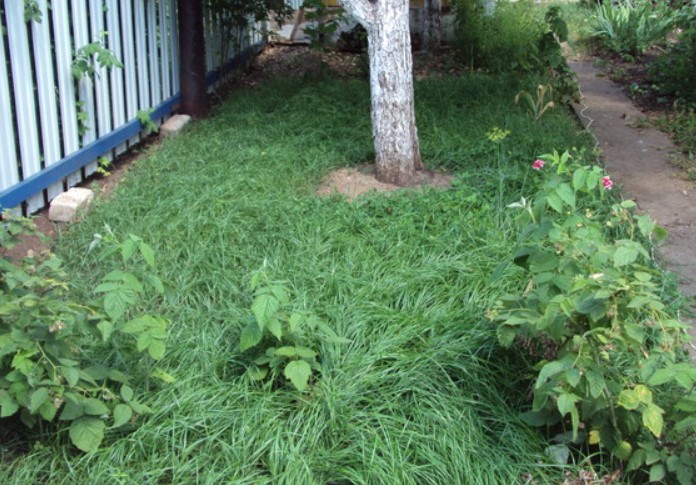
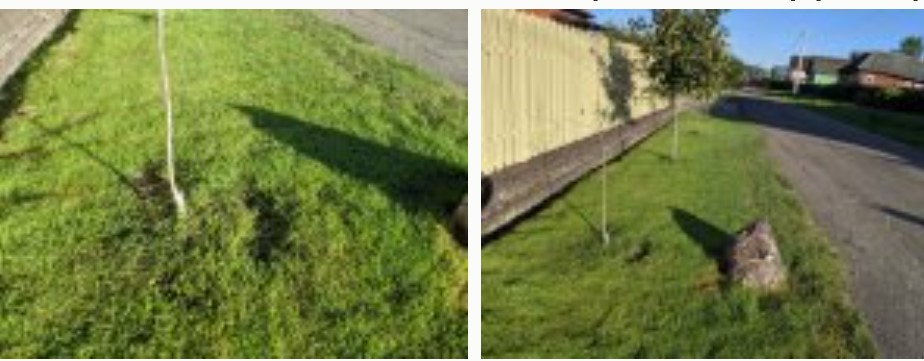
In the photos below, I tried to capture the process of overgrowing the tree's trunk circle. Bentgrass can cover large areas in a season without reseeding or anything else.
And finally, here's a photo of the bentgrass's growth in a week, with a 5cm cut. I think it's more comfortable this way, and the grass is always green:
It responds well to urea feeding and, oddly enough, to Lintur/Lontrell for weeds (the same as with feeding - the effect is really noticeable, although not as strong)
I was very cautious about bentgrass, having read Sodmaster. But in our unbearably hot summers, with poor soil, patches often fall out on the "lawn"—or rather, we call it a "meadow," since there are plenty of weeds. So, I decided to sow some bentgrass, as it quickly fills in bare spots. It's been growing for four years, and I don't regret it so far. But it does form a "felt," of course. I try to mow it in time before frost and snow, to a height of about 5 cm. I'd like it even lower.
I don't need a perfect lawn, the main thing is that there are no bald spots where weeds immediately take up residence.

I'm also interested in bentgrass lawns. Last year, when we were burying a septic tank, we dug up the entire plot (but at least we were able to sow bentgrass right away). A fairly even carpet grew, very pleasant to walk on barefoot, and weeds are very difficult to push through. Although, I haven't been observing it for long.
Feelings of last year:
The color is unreal! Especially in the morning when the dew falls. It's like a sea-green carpet, shimmering in the first rays of sunlight. Absolutely beautiful.
- Bentgrass is a rather harmful weed - it can climb into a flowerbed, and indeed anywhere, even where it was not particularly invited.
-You definitely need a scarifier - this is for combing and aeration.
-The disadvantage is the rather high cost.
Good afternoon! I'd like to add my two cents: about five years ago, I decided to sow a lawn not with pure bentgrass, of course, but with its obligatory presence. Mr. Sodmaster, of course, gently tried to dissuade me from this idea. But I was adamant; the sight of bentgrass was simply too exciting for me (and still is).
I bought some kind of grass mixture (to be honest, I don’t remember which one) and pure creeping bentgrass in the same quantity, mixed it and sowed it.
So, here are the reviews after 5 years of operation. The region is Volgograd. For those unfamiliar, it's very warm here from May to October, and in summer it rarely drops below 30°C. I have no negative feelings; I really like everything. The bentgrass has truly taken over everything and has never had any problems. It hasn't wilted like in some pictures. There is dry yellow grass underneath the emerald carpet, but unless I mow too close, it's completely invisible. I mow it in the middle position of a 3-blade mower (I don't know what height that is in cm) about once every 10 days. I comb it about twice a year; I rake up quite large tangles of dry grass. I haven't seen any hummocks yet. I water it three times a week on average, even though it's usually incredibly hot. The lawn is in the sun exactly half a day, and in the shade the other half. The soil is fairly light and sandy, but I can't say for sure because I don't know. The bentgrass lawn, in my subjective opinion, looks great, firstly because of its emerald color, and secondly because it's so dense, a solid carpet that you can't see the ground underneath. I'll definitely attach a photo in a couple of days when I go to the dacha. My lawn isn't very large; with a larger plot, it would be a pain to comb this bentgrass... And by the way, the grass is very delicate, purely for decorative purposes; it doesn't allow walking on it at all, except for mowing, and it turns yellow. Well, what can I say, I'm happy, I like it, the decision is yours.