The Alsu tomato has become a favorite among gardeners thanks to its excellent yield and ease of cultivation. With minimal effort, you can achieve stunning tomato results.
Content
- 1 Characteristics of the Alsu tomato variety in a table
- 2 The history of the Alsu tomato variety
- 3 A detailed description of the Alsu tomato variety
- 4 Advantages and disadvantages of the Alsu tomato variety
- 5 Features of growing the Alsu tomato variety
- 6 Resistance of the tomato variety Alsu to diseases and pests
- 7 Harvesting, use and storage of the Alsu tomato variety
- 8 Comparison of the Alsu tomato variety with other varieties in the table
- 9 Gardeners' reviews of the Alsu tomato variety
Characteristics of the Alsu tomato variety in a table
| Characteristic | Description |
| Description | A determinate hybrid variety with a stem up to 1 m high. |
| Ripening period (number of days from full germination to maturity) |
90-100 days |
| Fruit weight | 312 g. |
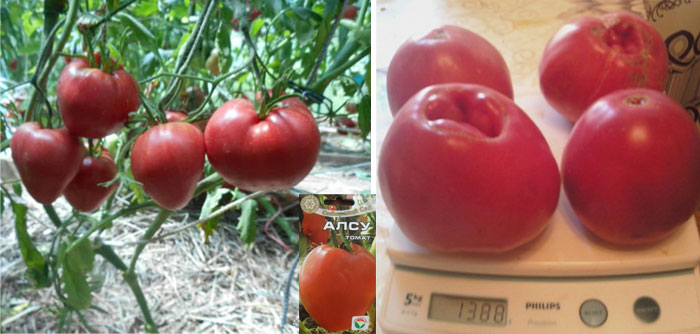
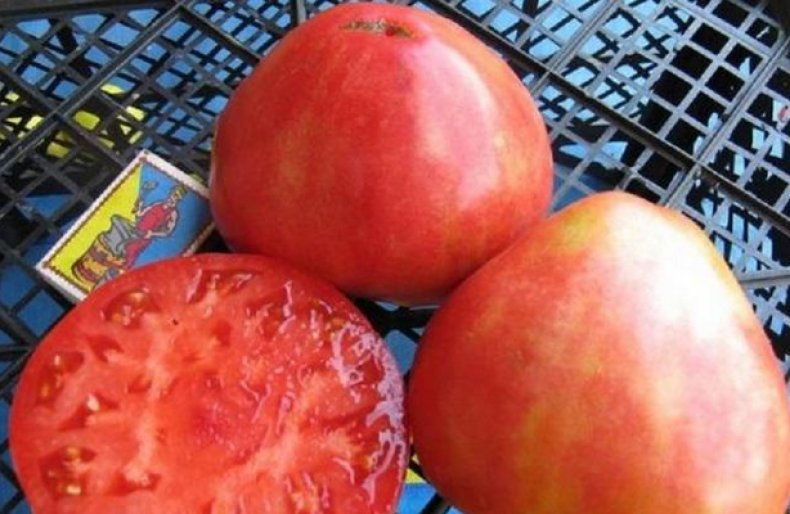
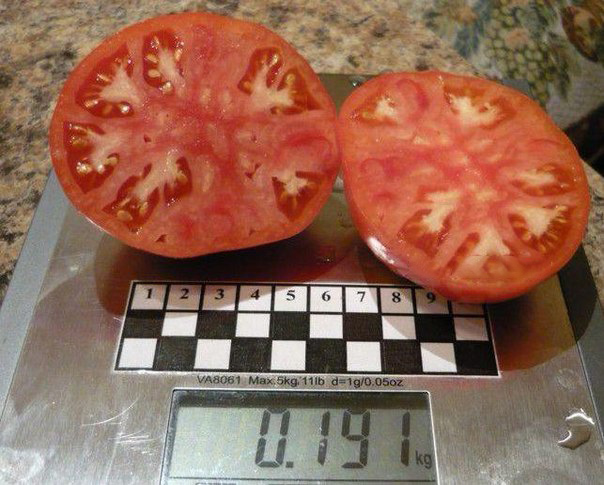
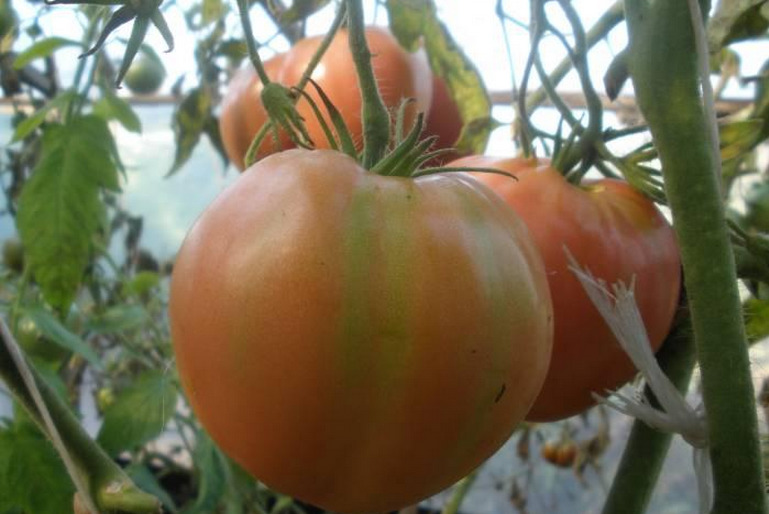
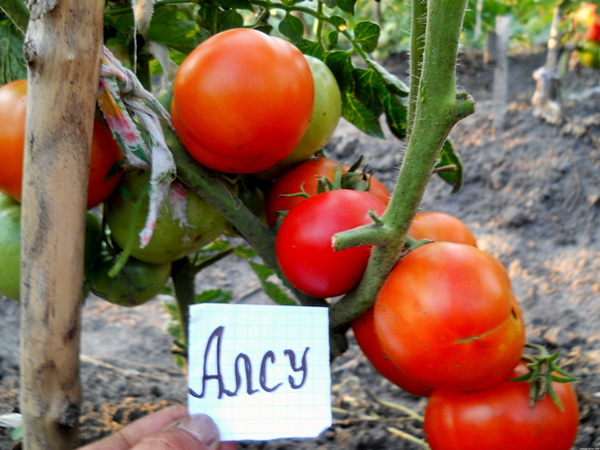
| Description of the fruit | The fruits are flattened and round, with subtle ribbing. The color is deep red. The flesh is firm, sweet, and lacks acidity. Six or more lobes are located inside. |
| Productivity | 7 kg per square meter |
| Purpose | Salad. |
| Disease resistance | Resistant to major tomato diseases. |
| Agricultural technology | Can be grown in a greenhouse or in the open ground. It requires support and tying; the bush forms into 1-3 shoots. |
| Growing regions | All regions |
| 2008 | |
| Originator | Dederko Vladimir Nikolaevich, Postnikova Tatyana Nikolaevna |
Photo gallery of the tomato variety Alsu
The history of the Alsu tomato variety
The Alsu tomato was conceived as a hardy, early-ripening variety that would grow and bear fruit equally well in various regions of the country. Its creators were the well-known breeders Tatyana Postnikova and Vladimir Dederko. In 2007, they submitted an application to the registry. A year later, in 2008, the variety received official recognition and a state registration number.
A detailed description of the Alsu tomato variety
The Alsu tomato has specific plant characteristics that must be taken into account when growing it. The yield of marketable fruits will directly depend on cultivation techniques and care.
Characteristics of the bush
The shoots are determinate, rarely growing more than 1 m tall and not forming a standard shape. The main stem is thin and not very strong, so it must be tied up. The plant is trained into 1-3 shoots. The more shoots there are, the smaller the ripe fruit will be.
The leaves are dark green and medium-sized. Very few of them form on the bushes.
Fruit characteristics
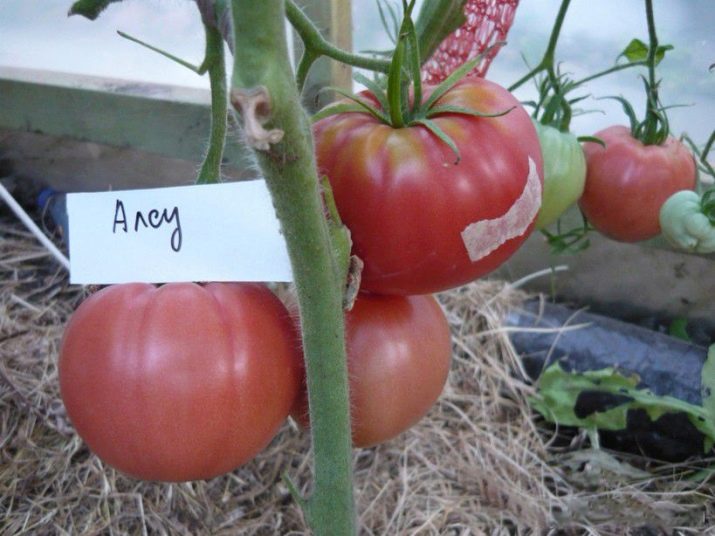
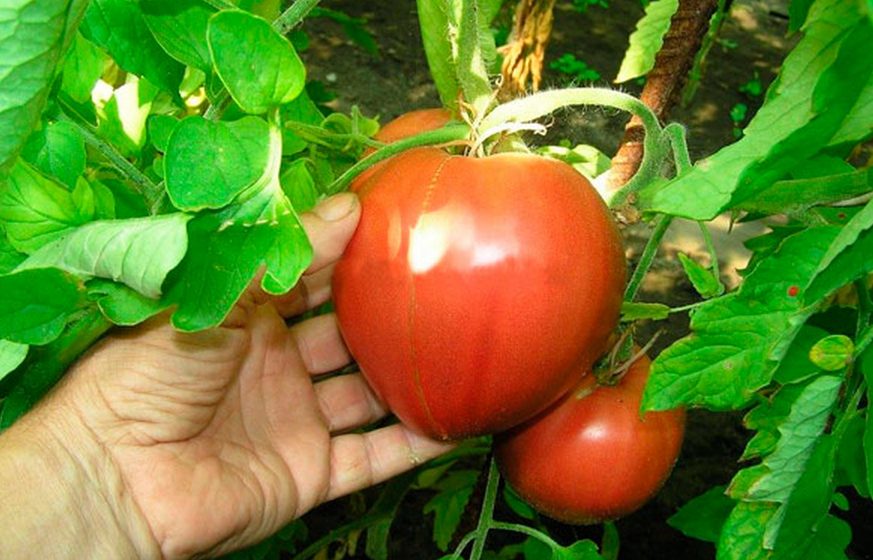
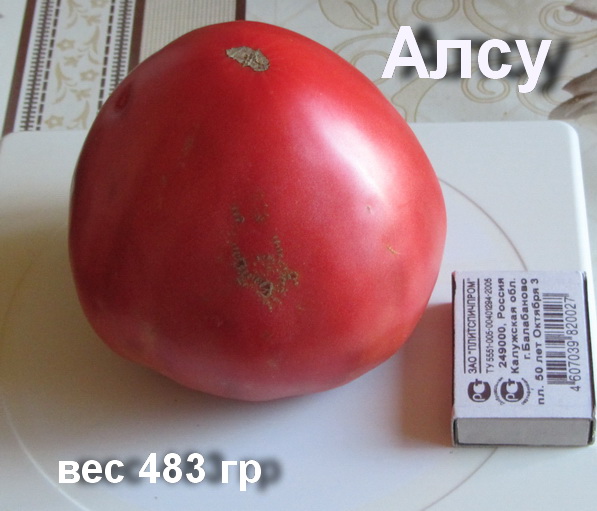
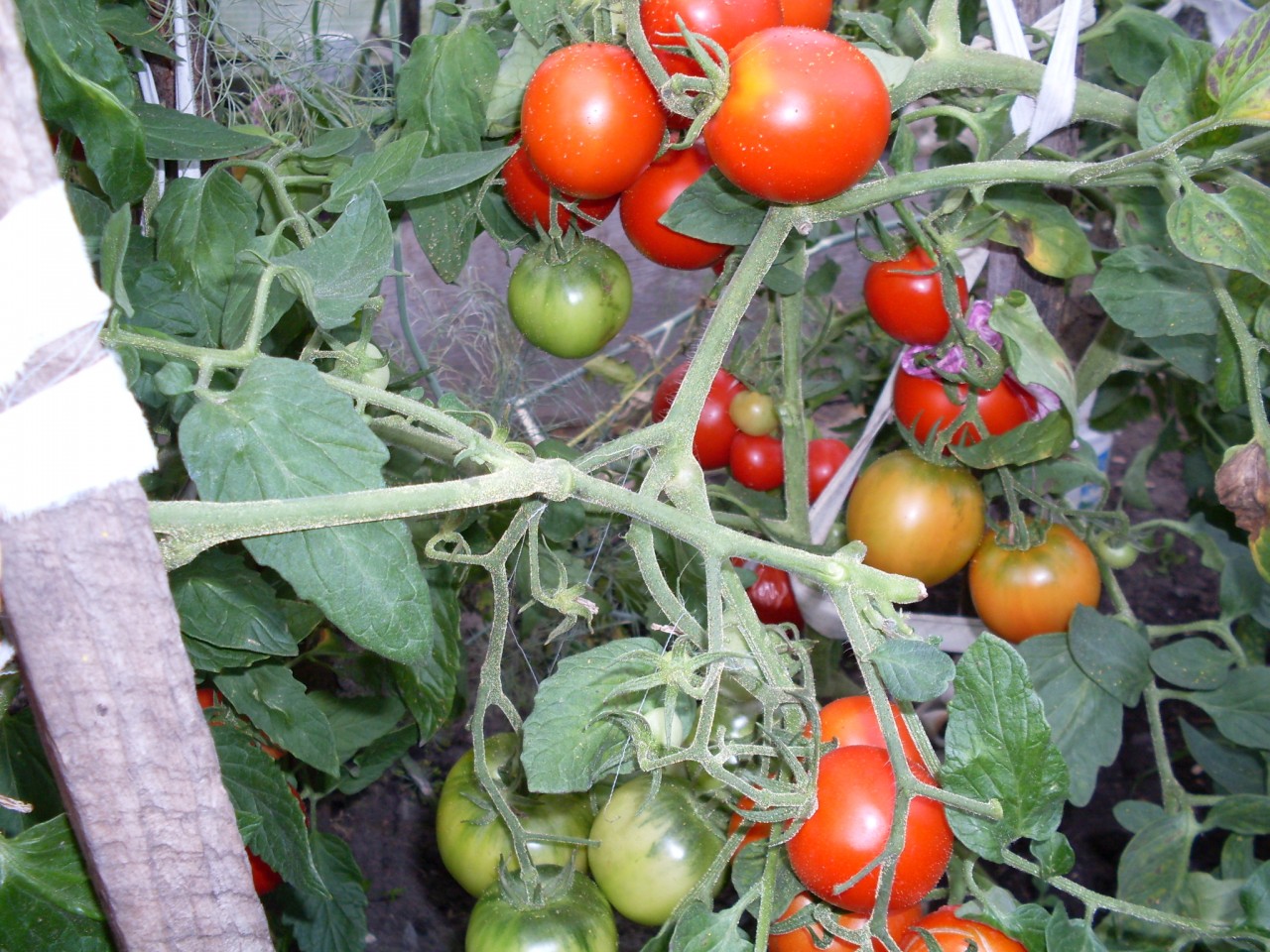
The tomatoes are characterized by a flattened, round shape. The surface is glossy and smooth, with virtually no ribbing. The color is deep red, and when ripe, there is no spot near the stem. The grower states the fruit weight as 312 g. However, gardeners' experience shows that when grown in comfortable greenhouse conditions, tomatoes can weigh up to 500-700 g.
Tomatoes are not suitable for whole-fruit canning. However, they are ideal for salads and fresh eating thanks to their sweet flavor and juicy flesh.
Ripening time
Alsu is characterized by early ripening; the harvest can be collected within 90-100 days from the moment the seedlings emerge.
Productivity
The originator estimated the yield at 7 kg per square meter. However, many gardeners note that when grown in a greenhouse and trained to form a single-stem bush, this figure increases to 10 kg per square meter.
Advantages and disadvantages of the Alsu tomato variety
Tomato Alsu has a number of advantages and disadvantages, described in the table below.
| Advantages | Flaws |
|
|
Features of growing the Alsu tomato variety
The Alsu tomato doesn't require any special cultivation techniques. It's important to select high-quality seeds, grow strong seedlings, apply fertilizer to the soil promptly, and water and weed the bed.
Sowing seeds and growing seedlings
Seeds are sown approximately 50-60 days before transplanting to the permanent garden bed. The exact timing will vary by region.
It's recommended to buy seeds from reputable producers. Many companies pre-treat them, so gardeners only need to sow the seeds in the soil.
It is not possible to collect planting material from the fruits of the Alsu variety on your own, since it is a hybrid.
If the seeds have not undergone pre-sale preparation, and there is no information about this on the packaging, then you will need to carry it out yourself in several stages.
- Warming. 10-14 days before planting, prepare the seeds and place them in a warm place. You can even place them on a radiator overnight.
- Disinfection. Pathogenic microorganisms may remain on the seed coat and inside the seed. To kill them, soak the tomato seeds in a weak solution of potassium permanganate for 20 minutes, then rinse thoroughly with water and dry.
- Stimulation. To speed up germination, soak the seeds in a specialized solution that accelerates germination, such as Epin.
- Germination. Most gardeners consider germination of seeds to be the key to their future development. Place the seeds between layers of damp cloth and store in a warm place until sprouts appear. Moisten the cloth periodically, preventing it from drying out.
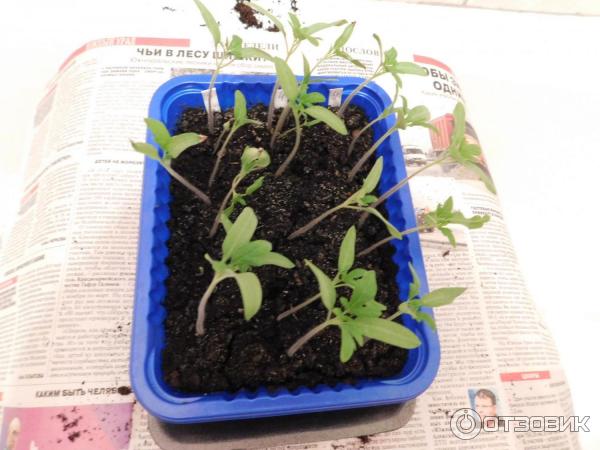
The sprouted seeds need to be slightly dried and then planted in the soil. To do this, take a suitable container and fill it 2/3 full with soil. Make furrows about 1 cm deep in the soil. Place the seeds in these furrows, spaced 2 cm apart. Then, cover them with soil and water.
The container is covered with glass or film and placed in a warm, dark place. As soon as sprouts appear on the surface, the cover is removed and the container is moved to a room with a cooler temperature.
During this period, tomatoes need to be provided with lighting so that their daylight hours are at least 12 hours long.
As the soil dries out, water the tomatoes, and after 2 leaves appear, they are transplanted into separate containers.
Planting in the ground
Hardening off the seedlings 14 days before transplanting them to their permanent beds is essential. You can place the seedlings outside or on the veranda for a few hours, increasing the interval each day. If this isn't possible, simply open a window to avoid drafts.
Seedlings are planted at 55-65 days of age. The soil in the cup is watered beforehand to make removal easier. Given the fragility of the Alsu variety's stems, this process must be done with extreme care.
The recommended planting pattern for Alsu is 40x50cm. There can be 3 to 5 plants per square meter.
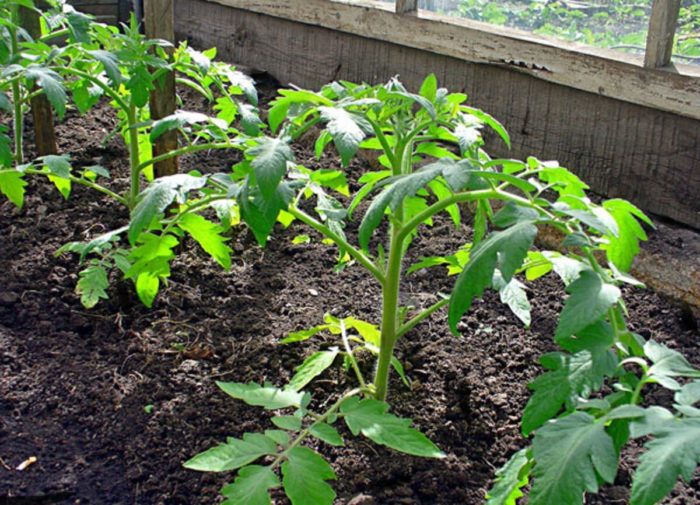
For each tomato, prepare a hole about 50 cm deep and water it with warm, settled water. The tomato, along with the soil on its roots, is moved into the hole and buried just below the first leaves.
Next, another watering is carried out, after which no manipulations are carried out with the tomatoes for the next 2 weeks.
Care
Support and tying of the stem are essential for Alsu. The fragile stem can easily break under the weight of the fruit.
It is recommended to remove all shoots that appear under the first brush.
The first watering is done 14 days after planting tomatoes. It's best to use sun-warmed water to prevent the plant from experiencing cold stress.
It is best to combine fertilizers with watering and apply them to already moistened soil so as not to burn the roots.
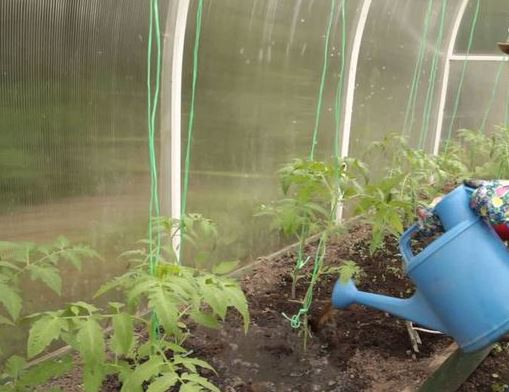
Fertilizer should be applied three times per season. Tomatoes respond well to organic fertilizers such as mullein, ash, and a weed control solution. Specialized complex fertilizers also show excellent results.
Periodic treatments against diseases and pests are necessary. Bordeaux mixture and Fitosporin are suitable for prevention. In more severe cases, fungicides will need to be used.
To reduce the number of weeds and retain moisture in the soil, the surface of the bed can be mulched with sawdust, straw or bark.
Resistance of the tomato variety Alsu to diseases and pests
The Alsu tomato is distinguished by its robust Siberian health, as it was originally conceived as a variety for regions with harsh climates. It is rarely susceptible to disease and is virtually unaffected by insect pests. Furthermore, Alsu tolerates cold snaps and temperature fluctuations.
Harvesting, use and storage of the Alsu tomato variety
Alsu tomatoes are harvested 90 days after germination. The tomatoes grow large, making them unsuitable for whole-fruit canning. However, they make a wonderful addition to any dish. Their flesh is juicy and sweet, with virtually no tartness.
The dense skin allows tomatoes to be stored for some time without loss of quality and to withstand long-distance transportation without any problems.
Comparison of the Alsu tomato variety with other varieties in the table
Please note! How can you easily convert centners/ha to kg/sq.m? Simply divide by 100! For example, the Abakansky Pink tomato yields 400 centners of marketable fruit per hectare. This equals 4 kg per square meter. It's that simple! Also, keep in mind that typically no more than 3-4 plants are planted per square meter. This way, you can calculate the yield per bush. In the case of the Abakansky Pink, it's about 1 kg.
| Variety | Ripening period (number of days from full germination to ripening)
Yield of commercial fruits |
Brief description | Fetus |
| Alsou | 105-110 days
700 c/ha |
An early-ripening, determinate variety for open ground and greenhouses. Requires staking and shaping. Suitable for salads. | Flat-round, slightly ribbed, medium density, red, 312 g. Good taste. |
| Abakan pink | 120 days or more
400 c/ha |
A late-ripening determinate variety for open ground and greenhouses. Requires staking and training. Suitable for salads and processing into tomato products. | Flat-round, slightly ribbed, medium density and pink in color, 200-500 g. Good taste. |
| Big Momma | 85-95 days (greenhouse), about 100 days (open ground)
700-900 c/ha |
A mid-early determinate variety for open ground and greenhouses (greenhouses only, according to the register). Suitable for salads, canning, pickling, and juice. | Round, large, slightly ribbed, medium density, red, 200-250 g. Excellent taste. |
| Debut | about 90 days 910 c/ha |
An early-ripening determinate variety for open ground and greenhouses. Suitable for salads. | Flat-round, slightly ribbed, medium density, red, 210-230 g. Good to excellent taste. |
| King of the Early | 85-95 days depending on the growing location
1200 c/ha |
An early-ripening determinate variety for open ground and greenhouses. Suitable for salads and processing into tomato products. | Flat-round, smooth, red, 150-200 g (up to 400 g). Good taste. |
| Kostroma | 105-110 days
1350-1500 c/ha |
A mid-season determinate variety for greenhouses. Requires staking and training. Suitable for salads, whole-fruit canning, and processing into tomato products. | Flat-round, slightly ribbed, glossy, red or orange, 80-150 g. Good taste, sweet and sour. |
| Red Rooster | 85-95 days
400-600 c/ha |
A mid-early determinate variety for greenhouses. Suitable for salads. | Flat-round, large, slightly ribbed, medium density, red, 160-180 g. Good taste. |
| Sunrise | 85-100 days 400 c/ha |
An early-ripening determinate variety for open ground. Suitable for salads. | Flat-round, ribbed, dense, red, 161-180 g. Excellent taste. |
| Siberian early ripening | 98-108 days
289-543 c/ha (open ground), 20-43% of the total yield ripens in 15 days of fruiting, 630-950 c/ha (greenhouse and under film), in the first month of fruiting 240-580 c/ha. |
An early-ripening, determinate, low-growing variety for open ground and greenhouses. Suitable for salads. | Round and flat-round, slightly ribbed, medium-sized and large, red, 62-114 g. The taste is satisfactory. |
| Siberian Shan'gi | 100-110 days
The yield of commercial fruits in open ground was 5.6 kg/sq.m. |
A mid-season determinate variety for open ground and greenhouses. Suitable for salads. | Flat-round, medium density, slightly ribbed, raspberry, 157 g. Excellent taste. |
| Siberian giant | 115-120 days
The commercial yield of fruits was 9.0-11.0 kg/sq.m. |
A mid-early indeterminate variety for greenhouses. Suitable for salads. | Flat-round, large, medium-ribbed, loose, red, 400-500 g. Excellent taste. |
| Silver spruce | 90-100 days 1500-1800 c/ha |
A mid-early determinate variety for open ground and greenhouses. Requires staking and training into 2-3 stems. Suitable for salads and canning. | Flat-round, slightly ribbed, with a little pubescence, red, 300 g. The taste is good and excellent. |
Gardeners' reviews of the Alsu tomato variety
Gardeners note that the variety's yield is often much higher than stated, and the tomatoes are much larger than 312 g. The bush is very easy to grow and rarely gets sick.
Hello, dear gardeners and friends. Winter is here, and a hectic time is about to begin for all of us who are in any way connected to the soil and growing vegetables. I recently read some very interesting information online. It turns out that over 15,000 tomato varieties and hybrids are grown worldwide today. It's hard to even imagine the sheer variety of these tomatoes: in shape, color, and flavor.
Even if we planted 30 new varieties in our gardens every year, it would take us 500 years to test 15,000 varieties. This diversity alone speaks volumes about the universal appeal of tomatoes, from Africa to Chukotka. Today, I'd like to share with you, my dear friends, my impressions of a unique variety that appeared in our gardens in 2007: the Alsu variety. I first encountered this tomato wonder from the Siberian Garden company in 2019.
I was first struck by the large fruit, the yield, and, of course, the heart-shaped appearance. The list of advantages of this tomato is endless: excellent shelf life, no acidity, early ripening, and excellent juice yield. The glossy surface of the tomato protects the fruit from burning in hot weather. The tomato does have its drawbacks, however.
Well, first of all, this is what we don't like about growing tomatoes—the obligatory staking and pinching, but the large number of fruits we ultimately get more than covers our costs. I sow seeds for seedlings in mid-March and in open ground in mid-May. The Alsu tomato has excellent germination. I collect my own seeds because Alsu is a variety and you can save your own.
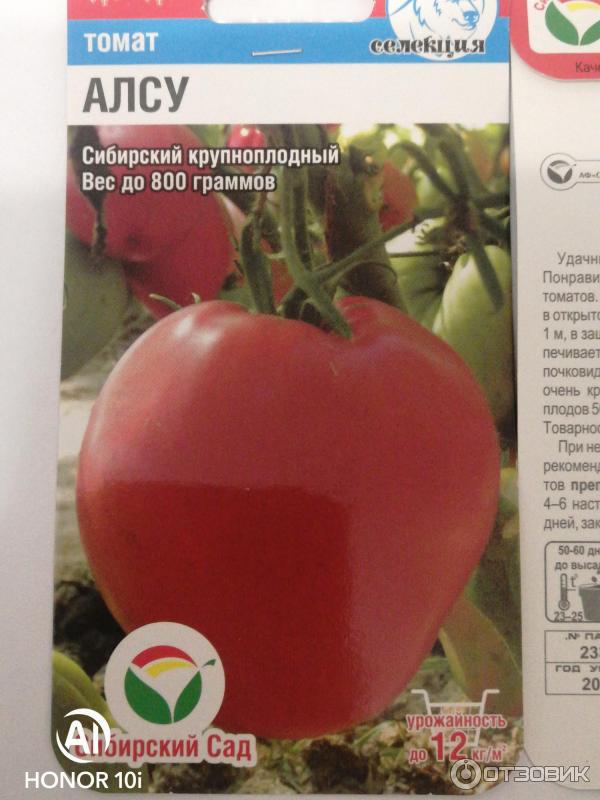
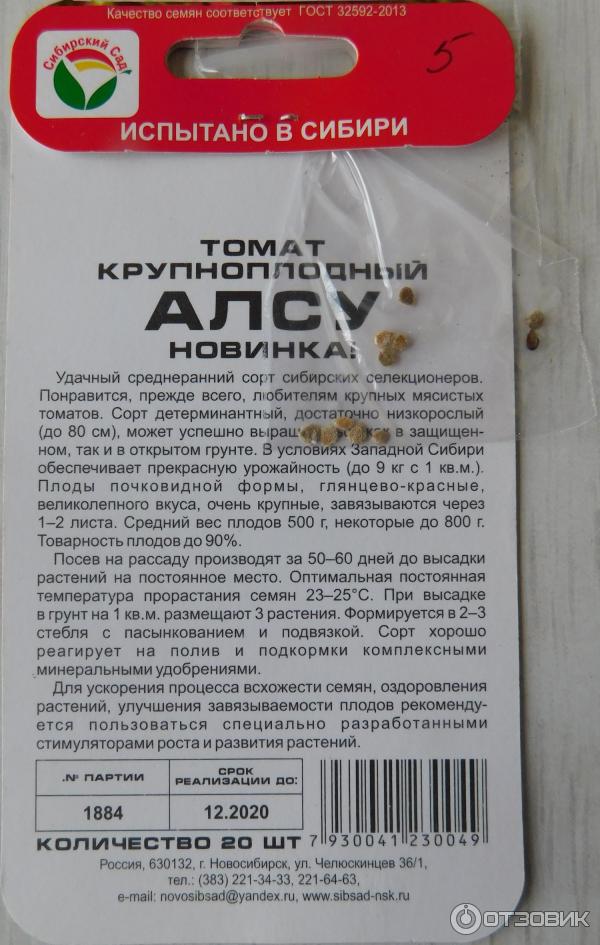
It's time to plant tomatoes. I didn't bother choosing a variety, but instead went with the tried-and-true Siberian Garden "ALSU" large-fruited tomato seeds.
I tried them last year because I don't have a greenhouse and I wanted to grow my own tomatoes. They recommended the ALSU tomato. Because of their large size, they're only suitable for salads.
They grow well in warm climates, which is just right for me in Siberia. 20 seeds come in a convenient packet with instructions.
They can be stored for a long time until 2021, that is, for 4 seasons, but I sow a pack right away.
I start sowing 60 days before planting in open ground, around the twenties of March, when the days are favorable for planting.
They germinate quickly and are easy to maintain. I plant 2-3 bushes per square meter, and they reach over 1.5 meters in length, requiring constant staking.
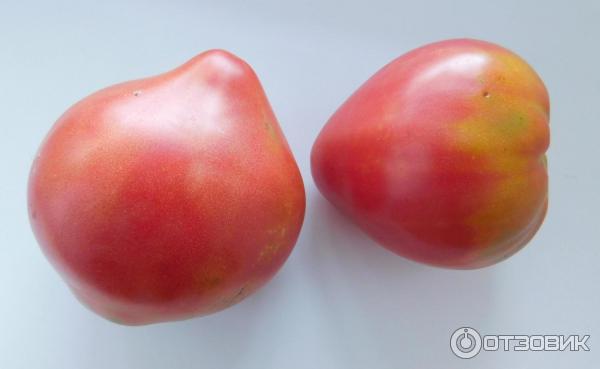
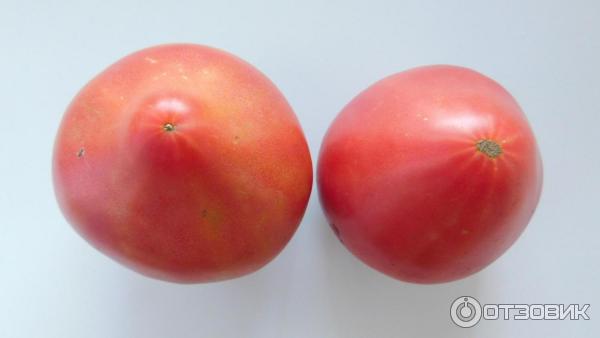
They ripen early, producing fruit by mid-August. The tomatoes are heart-shaped, firm, and produce up to eight large tomatoes per plant, all without cracking. They are bright red with pink accents, juicy and sweet, and filled with almost pure flesh.
I used it for summer salads and pizza, and also made lecho in jars. The dishes were rich and simply delicious.
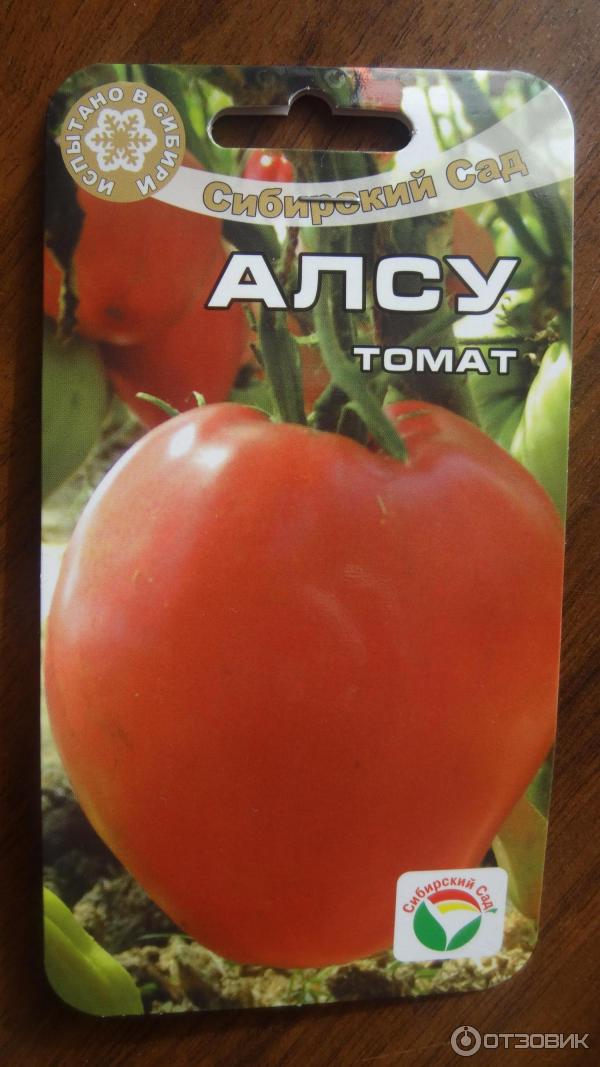
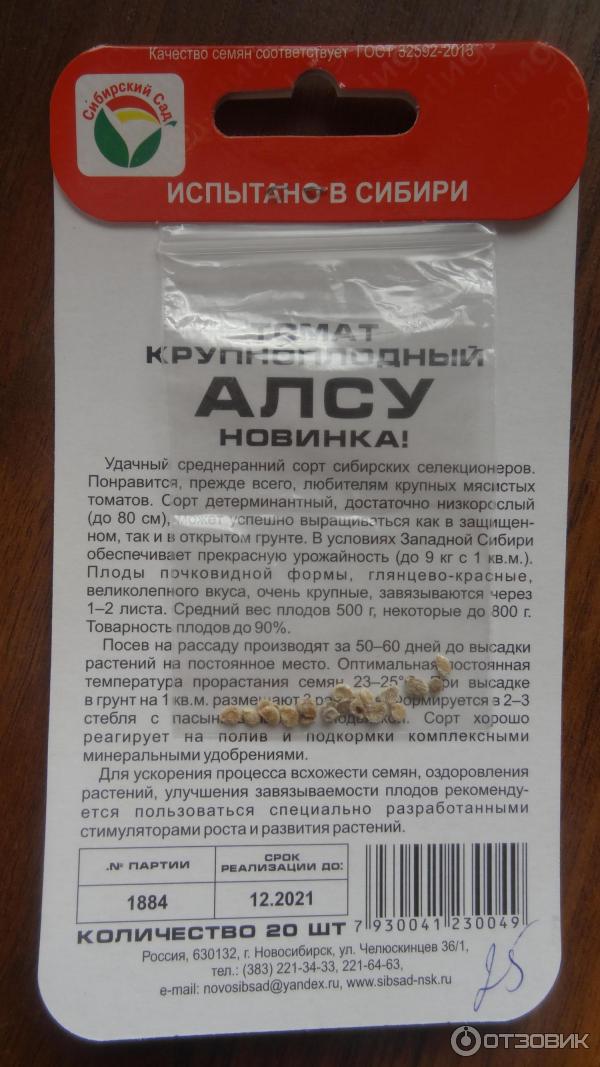
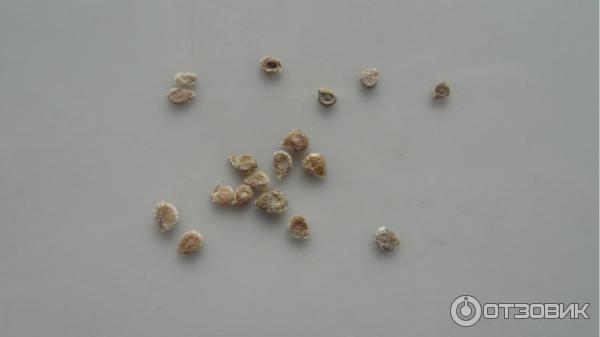
What's summer without a tomato salad? Especially big, juicy, and fleshy ones—mmmmm!!!! For example, a new-to-me variety called "Alsou" is just the thing!
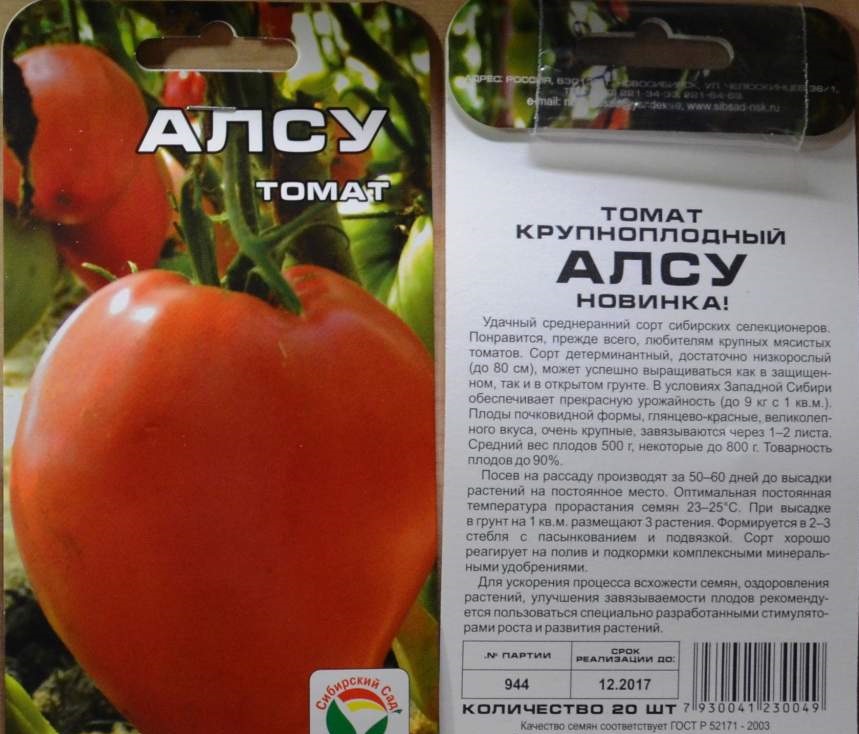
There were 20 seeds in the packet, they sprouted well (far left row in the photo) and there were still some seeds left the following year.
I grew tomatoes in open ground.
Regarding the short stature - well, almost... about 1 meter tall - normal.
In terms of ripening time, it is mid-season, as promised by the manufacturer.
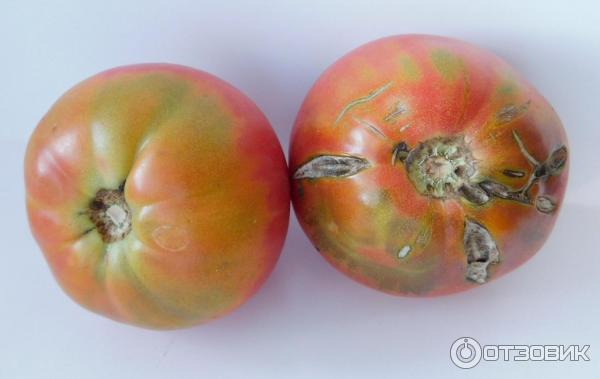
The yield is excellent, there are a lot of fruits and they are mostly large, some for some reason cracked, but this is a problem with most of my tomatoes this year.
They are perfect for salads; the flesh is pink, juicy and very tasty.Next year I will definitely plant the remaining seeds and I recommend all tomato lovers to try growing this variety!
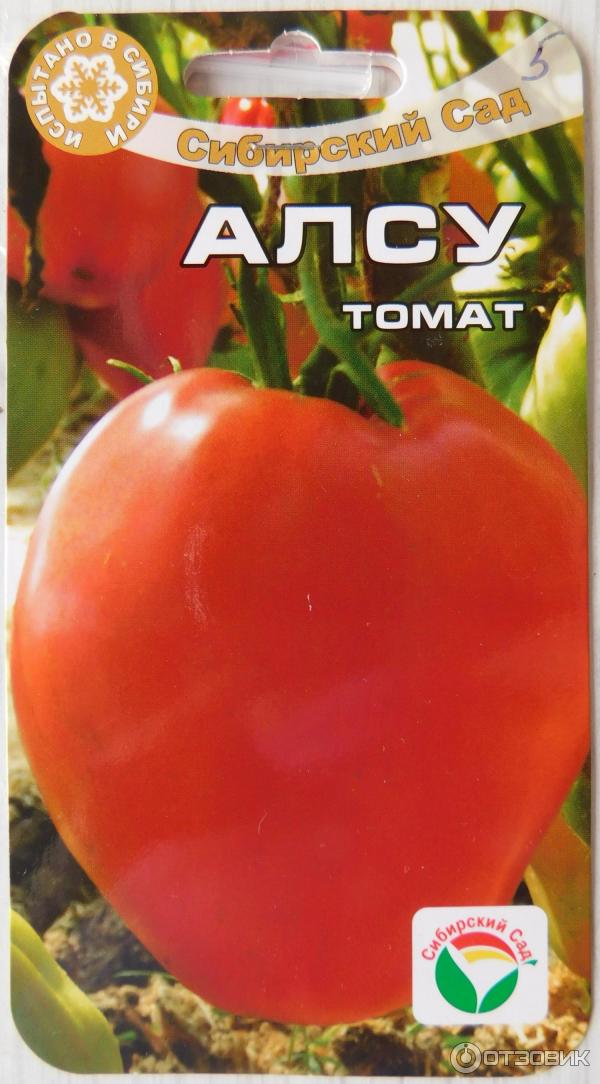
UserOfra, Russia, Tolyatti - away, December 12, 2019
Hi all!
Recently, I've been keeping a notebook where I write down the details of my gardening: what seeds I planted, and what harvest I got.
This year, I was captivated by the "Alsu" tomato seeds from the Siberian Garden company. However, this variety isn't suitable for pickling, as it produces very large fruits.For me, a novice gardener, tomatoes used to be divided into two types: pink and red. The former were preferred for their sweetness, while the latter had a slightly sour taste.
So, Alsu tomatoes are one of the first, pink-burgundy and sugary.
I planted the seedlings in March and transplanted them into individual pots in April. Tomatoes are very sun-loving plants, but it's important to keep them from burning on the sunny side of the window.
At the end of May and beginning of June, I began planting my seedlings in the ground. The distance between the bushes should be wider, about 80 centimeters.
When the seedlings begin to grow and bush out, don’t forget to pinch off the new shoots.
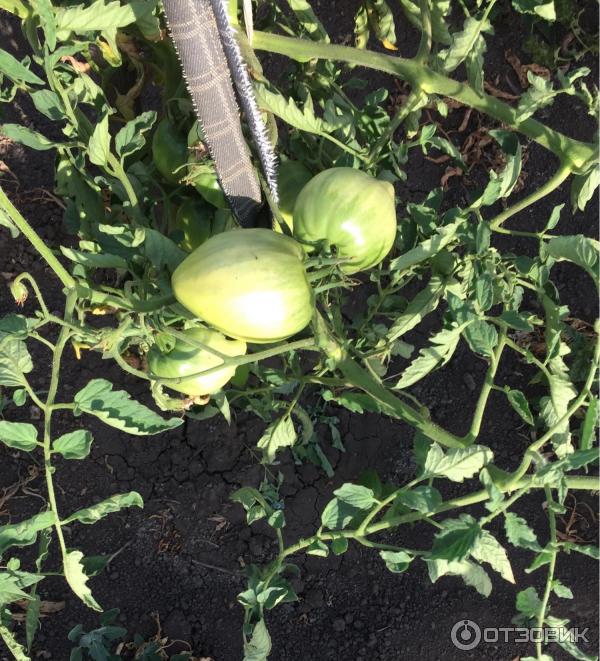
Here is a photo of my ripening tomatoes:
I started picking the first fruits already at the beginning of July.
Alsu's tomatoes grew very large and fleshy. My sister bought five for a week—that was enough for her—and in the evenings, she'd cut one into a large salad bowl.
I can’t eat a lot of tomatoes (they raise my blood pressure), so I fed them to my whole family, such was the rich harvest.
But it's impossible to roll them into jars; they won't fit. For that, I used a different variety—"Sanka"