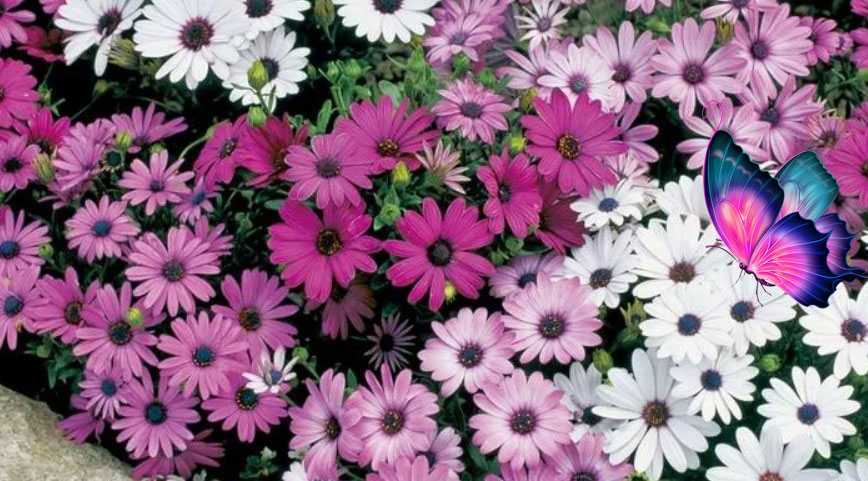
Dimorphotheca is known to gardeners by its more familiar name, American daisy. This flower belongs to the Asteraceae family and comprises over 20 varieties of perennial and annual plants.
Interestingly, a single plant produces achenes of two different shapes: one pointed and ribbed, the other flat and smooth. This is where the dimorphotheca gets its name, as the word "dimporphos" translates from Latin as "two-shaped container."
Content
- 1 Description of Dimorphotheca
- 2 When dimorphotheca blooms
- 3 Dimorphotheca species + 14 varieties in tables with photos and descriptions
- 4 Dimorphotheca seeds
- 5 Growing Dimorphotheca from seeds at home
- 5.1 Planting dates by region
- 5.2 Dimorphotheca seedling sowing dates according to the 2023 Lunar Calendar
- 5.3 Preparing containers and soil
- 5.4 Step-by-step instructions for sowing Dimorphotheca
- 5.5 How many days does it take for dimorphotheca to sprout?
- 5.6 Caring for seedlings
- 5.7 Transplanting dimorphotheca seedlings to the site
- 6 Planting dimorphotheca seeds in open ground
- 7 Dimorphotheca: planting and care in open ground
- 8 Diseases and pests of Dimorphotheca
- 9 Dimorphotheca in landscape design + lots of photos
- 10 Dimorphotheca in a pot
- 11 Osteospermum and Dimorphotheca: What are the differences, gardeners?
- 12 Reviews of the Dimorphotheca flower from gardeners
Description of Dimorphotheca
Dimorphotheca is an annual or perennial plant. The flowers are semi-rigid and low-growing. They are widespread in South Africa.
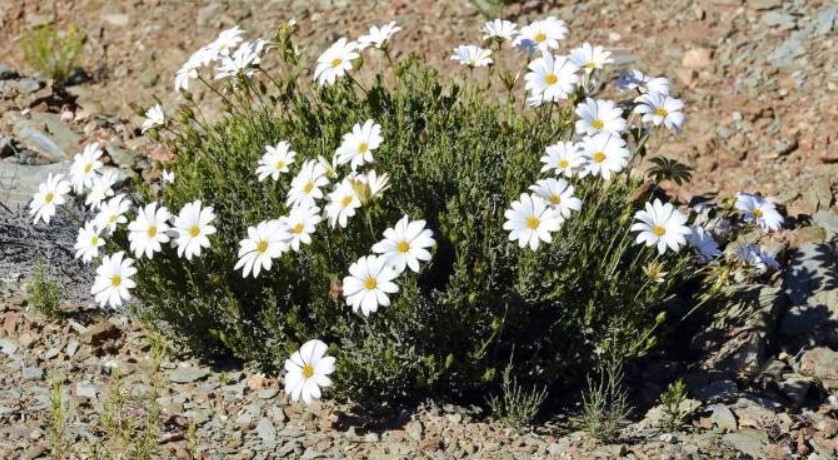
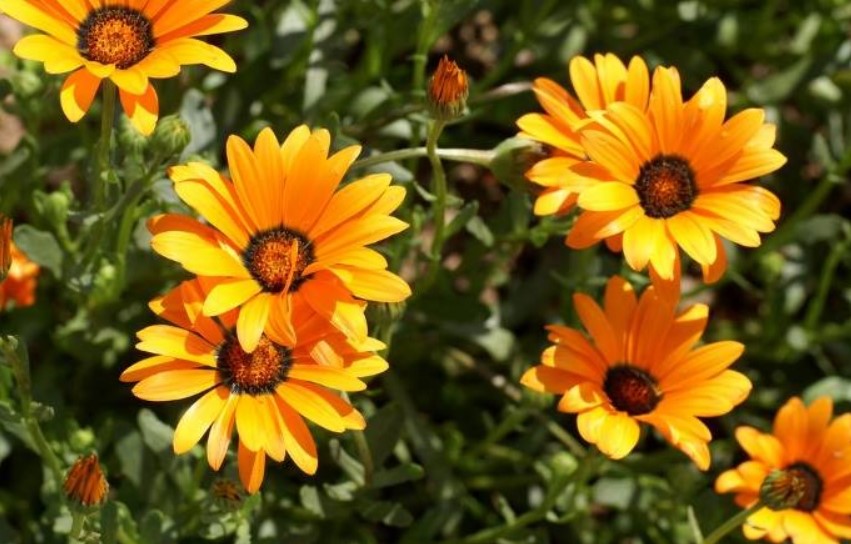
The shoots reach a height of 30-60 cm. But the main distinguishing feature of the dimorphotheca is its decorative flowers with elongated petals, which bloom as early as June and fall in late summer. The inflorescences resemble daisies, but the shades can vary depending on the variety: white, blue, orange, pink, and lilac. The flower diameter is approximately 10 cm. The buds open primarily only in sunny weather; before rain and sunrise, they curl their petals to conserve pollen.
When dimorphotheca blooms
Under favorable conditions, dimorphotheca begins to bloom in early June. The duration of flowering depends on the variety chosen; it can end in late August or early September. The plant is resistant to short frosts and can survive nighttime temperatures down to -5°C.
Dimorphotheca species + 14 varieties in tables with photos and descriptions
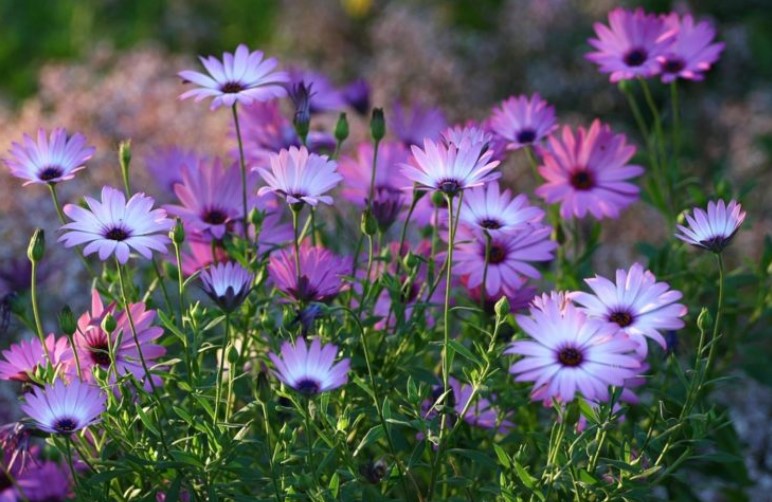
Today, there are over 70 species of dimorphotheca. Furthermore, breeders have developed many hybrid varieties of this plant that are easy to care for and have a long flowering period.
Dimorphotheca rainforest
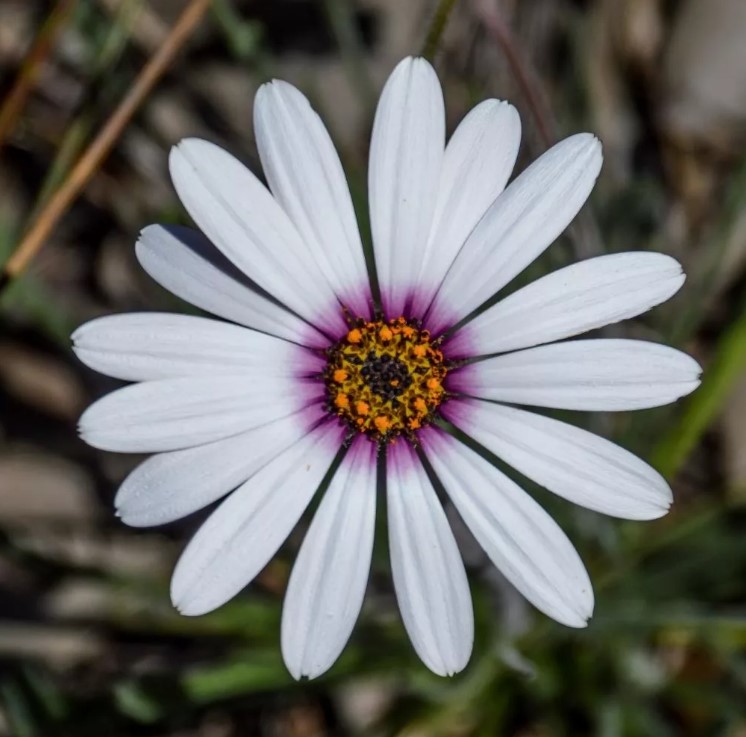
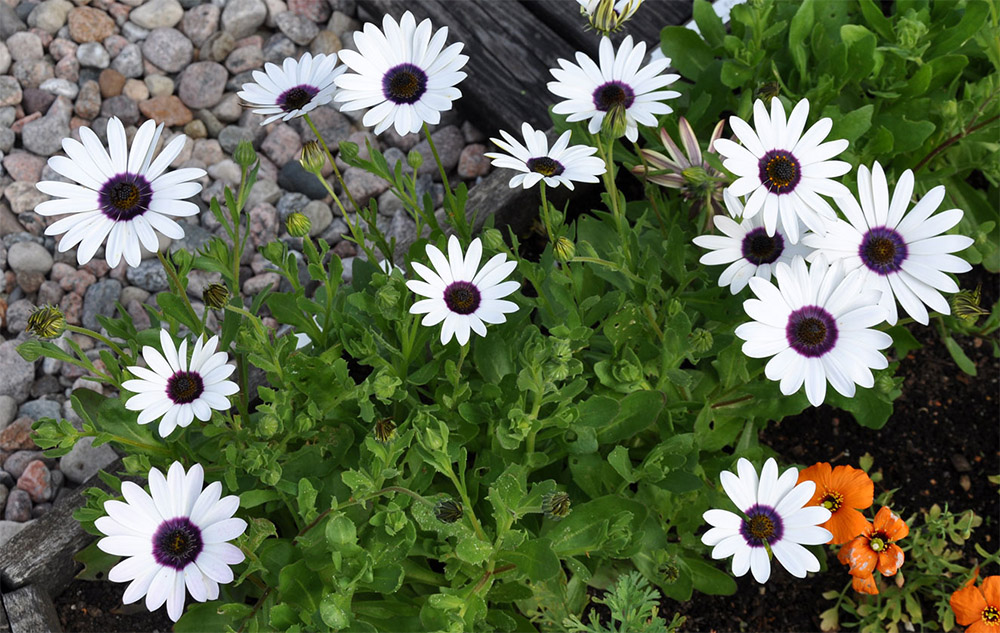
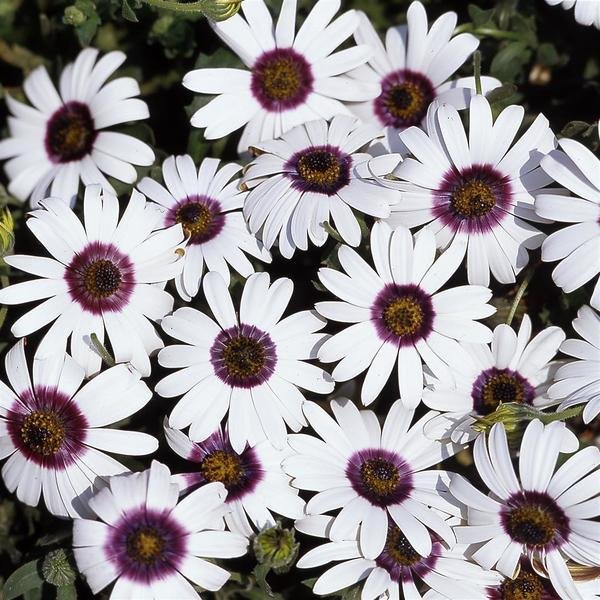
Dimorphotheca pluvalus (syn. D. annua) was bred in 1752. This annual plant grows to a maximum of 40 cm tall, with head-shaped inflorescences reaching 8 cm in diameter. The petals are elongated and white, but change to a bright purple at the base. This species is distinguished by its extremely pleasant fragrance, emitted not only by the flowers but also by the pubescent, elongated leaves.
Dimorphotheca emarginata
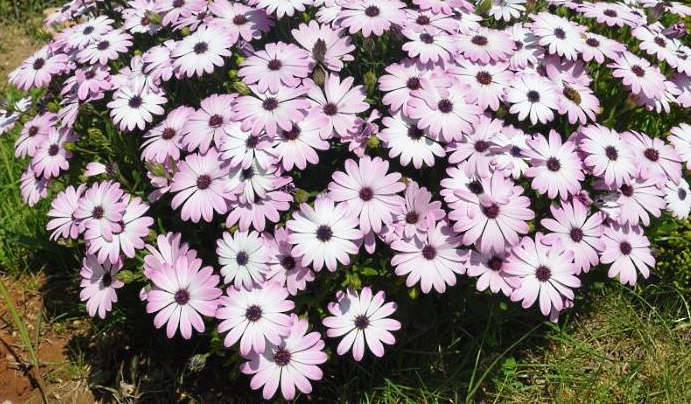
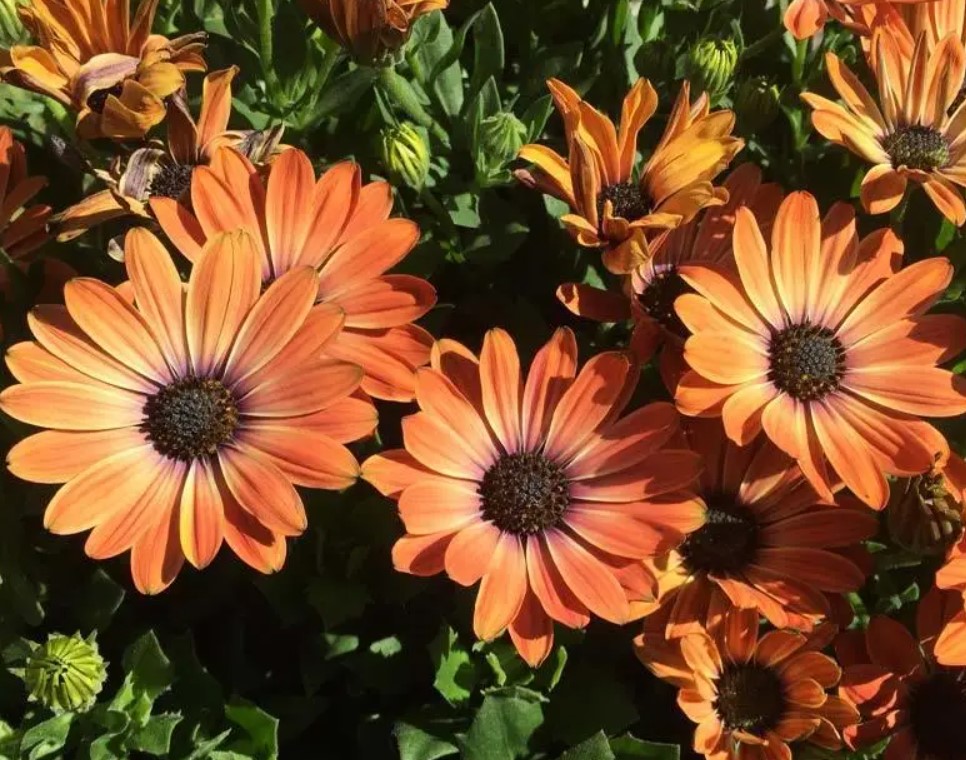
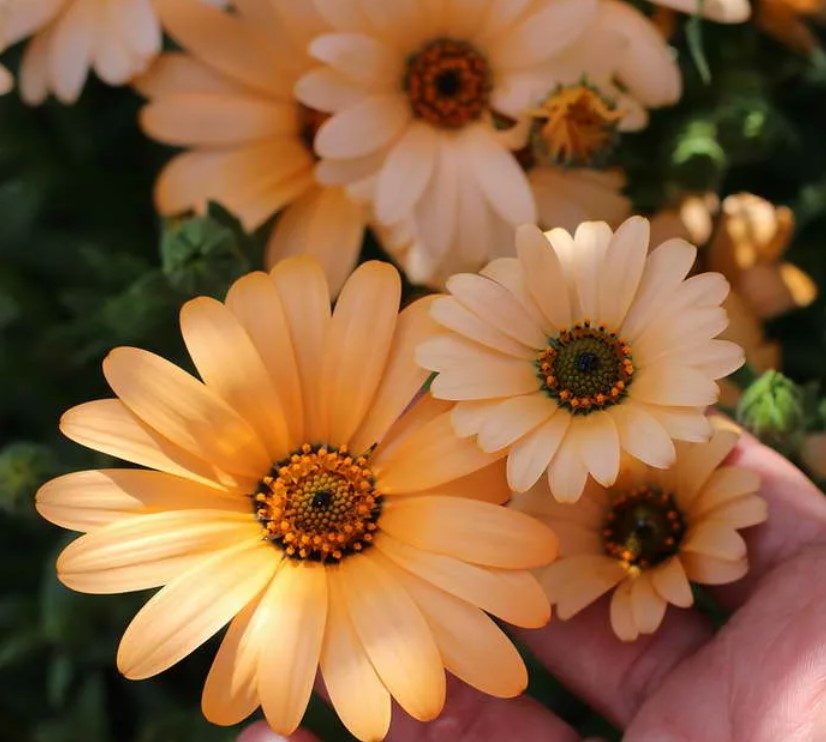
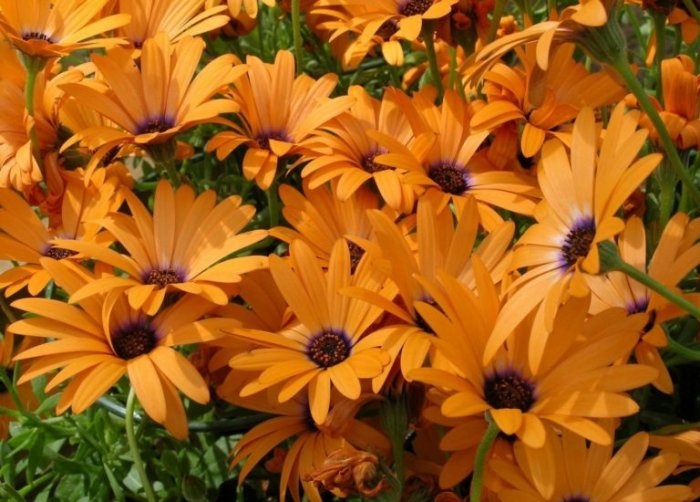
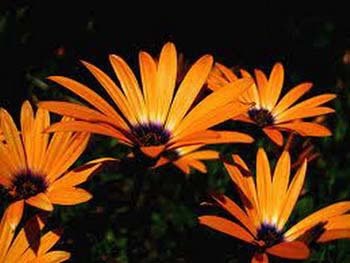
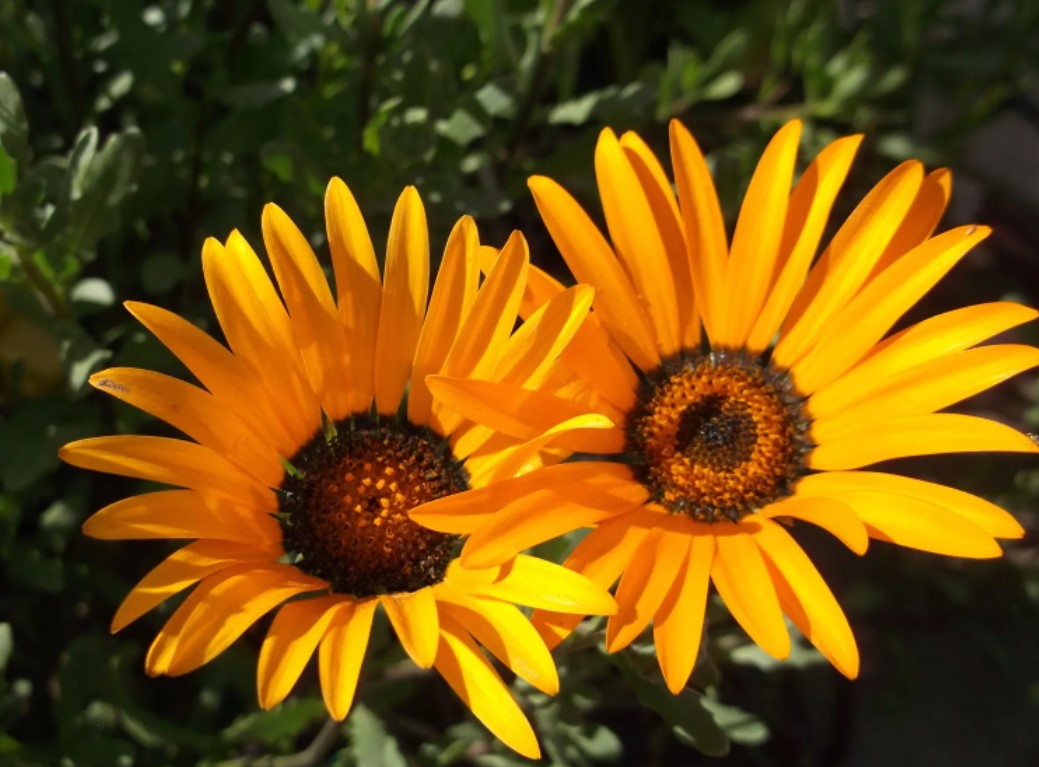
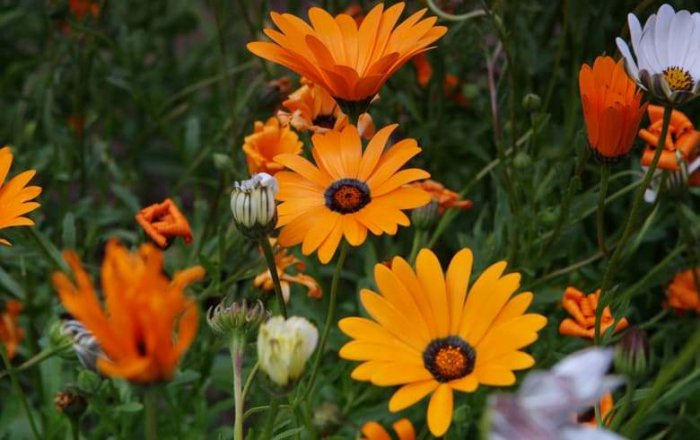
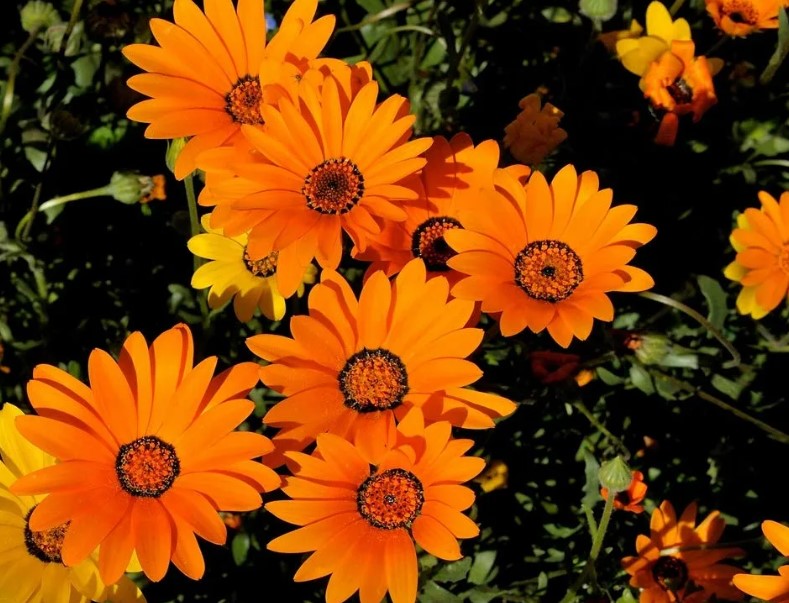
Dimorphotheca sinuata (syn. D. aurantiaca) has branching shoots up to 45 cm tall. The leaves are pubescent, elongated-oval, and notched. Each plant produces up to 30 inflorescences at a time. Their diameter does not exceed 6 cm. The color depends on the variety, but is most often red or bright orange. The central part of the flower is brown.
Dimorphotheca hybrida
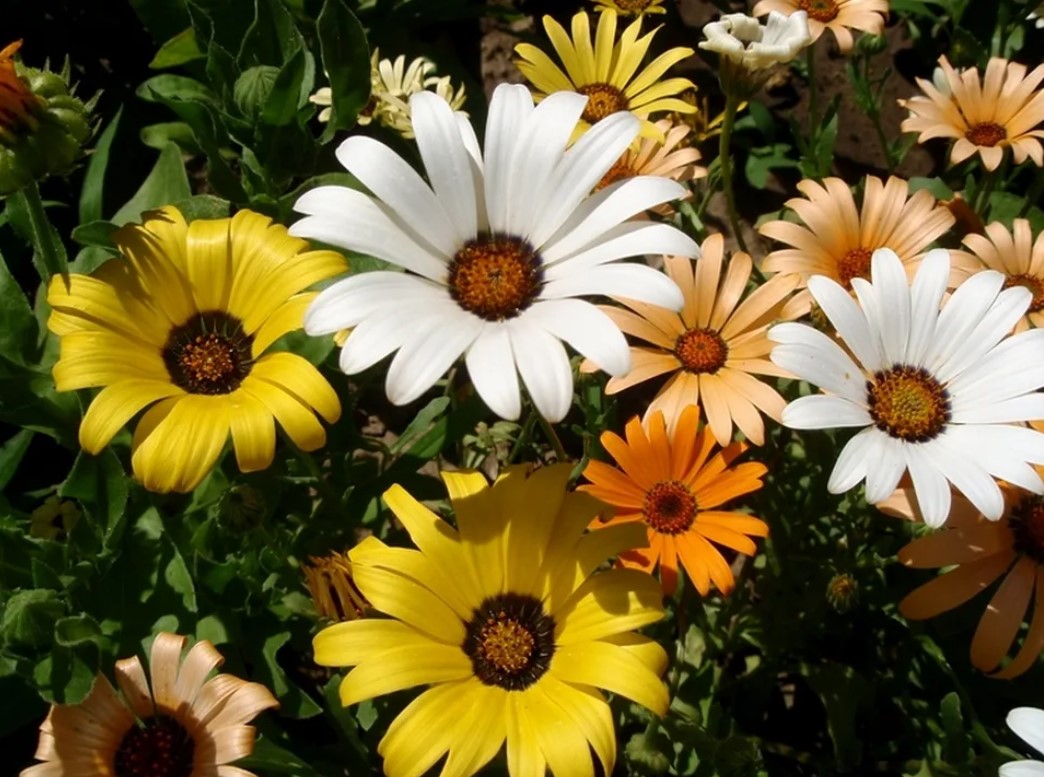
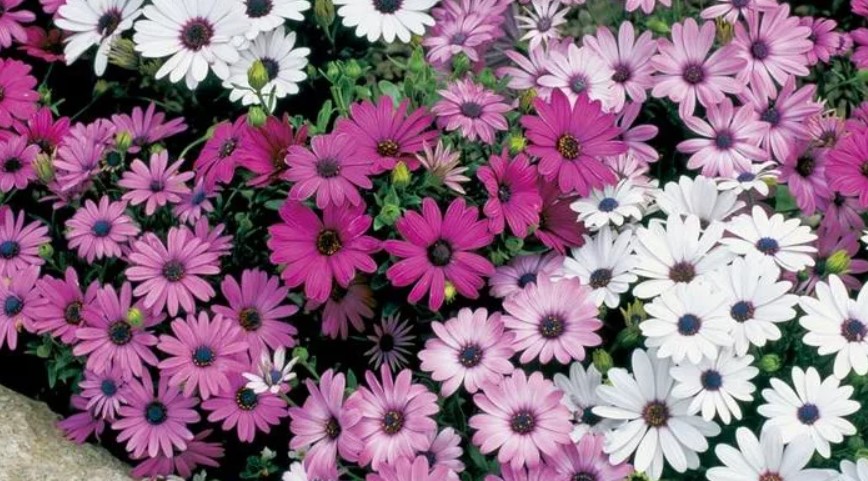
This hybrid variety was created by crossing Dimorphotheca notata and Dimorphotheca d'Arcticana. The bushes are typically short, ranging from 20 to 40 cm. The petals can be smooth or serrated, and the coloring is very varied.
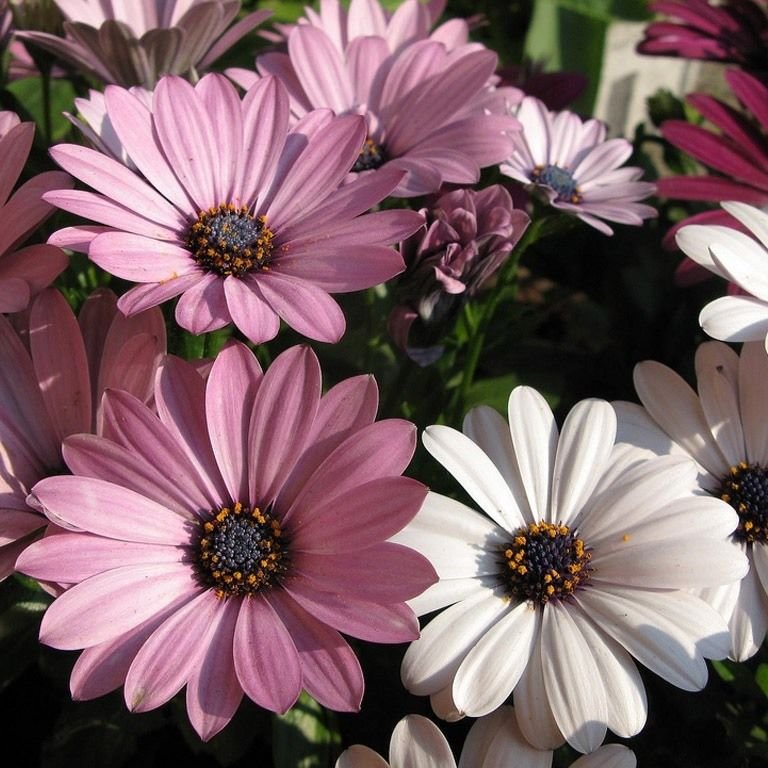
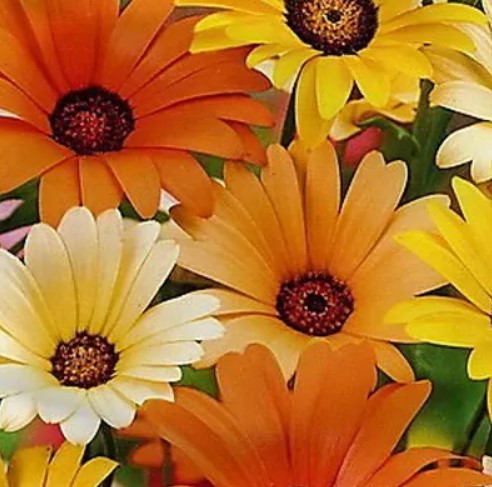
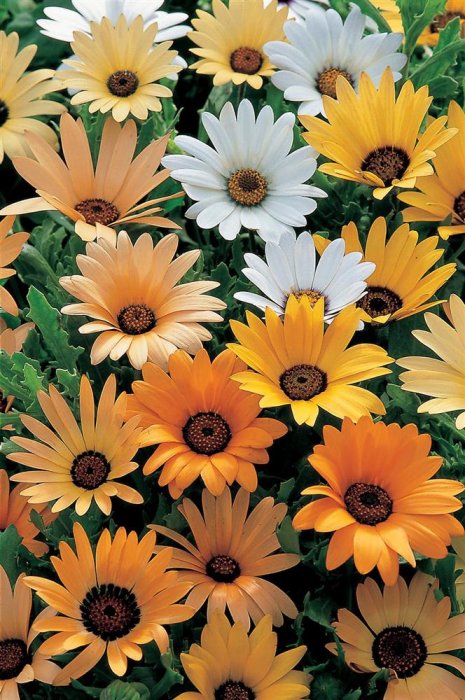
14 varieties of Dimorphotheca
Below are some popular varieties:
| Name | Bush height | Description of flowers |
| Polaris
|
40-50 cm | White petals with a dark brown center. Diameter up to 10 cm. |
| Snow Maiden
|
30 cm, highly branched shoots | White flowers up to 7 cm in diameter, with a dark central part. |
| Tetra Polarstern
|
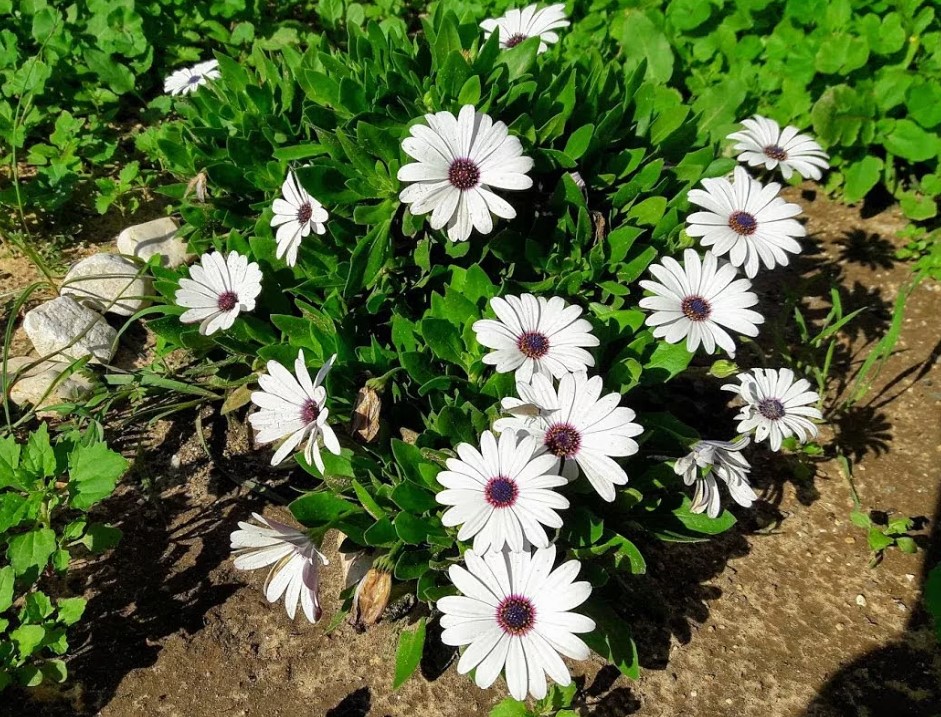
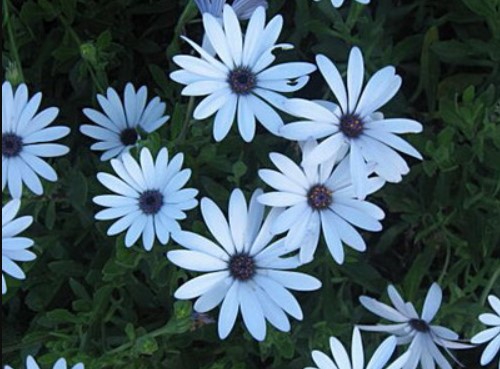
30-40 cm | The flowers are white. The center is purple, and the diameter is 7-8 cm. |
| Merry quadrille
|
35 cm | Color: white. Diameter: 6-8 cm. |
| Tetra Goliath
|
40 cm | Amber and yellow flowers with a dark center. Diameter 7 cm. |
| Giant Mixed
|
20-30 cm | Color: coral, white, or pinkish. Diameter: 4-6 cm. |
| African Moon
|
30-45 cm | Rich orange color. Diameter 8 cm. |
| Giggler
|
60 cm | Pastel-colored petals: pink, cream, and yellow, with a brown center. Diameter up to 7 cm. |
| The Shine of a Star
|
Up to 20 cm | White or pink in color, yellow in center. Diameter up to 8 cm. |
| Flower nectar
|
25-30 cm | The petals are cream, white, purple, or light green. The center is dark brown, up to 10 cm in diameter. |
| Reegens
|
20-30 cm | The petals are white with a blue border and the same center. |
| Palm Spring
|
30-40 cm | Profuse blooms, with petals in shades of bright orange, salmon, or cream. They close at night and in cloudy weather. |
| Gleaming White
|
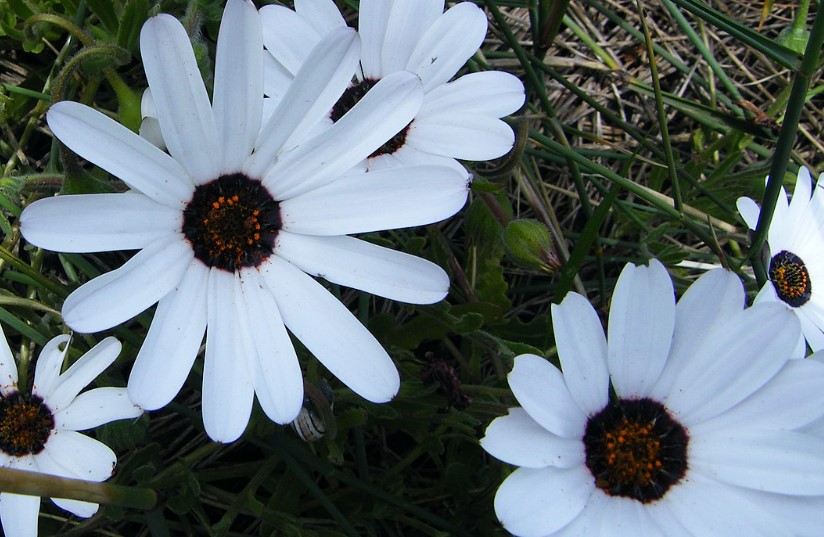
40 cm | The flowers are snow-white with a black center. Diameter up to 8 cm. |
| Pastel
|
30-40 cm | The petals in the upper part are white, yellow or purple-orange, the lower part is purple or violet. |
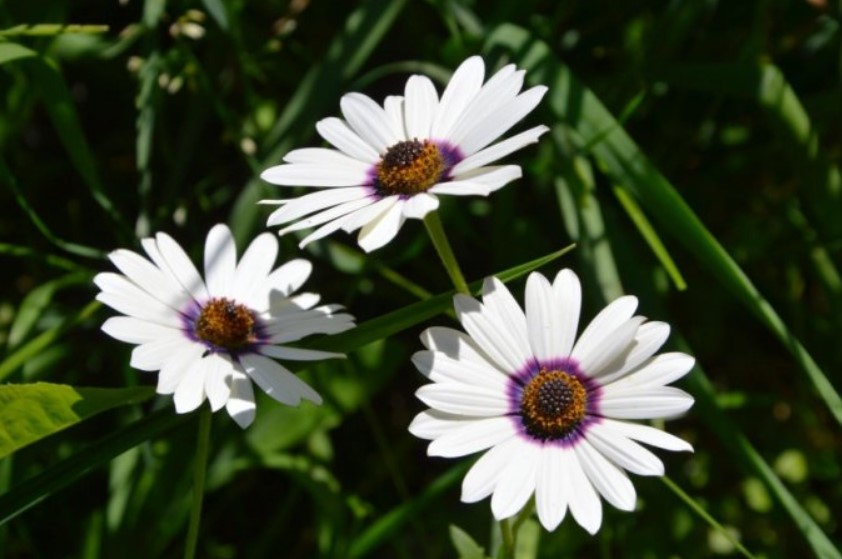




We also recommend reading an article about other beautiful flowers you can use to decorate your flower beds: Iberis, daisy, nasturtium, godetia.
Dimorphotheca seeds
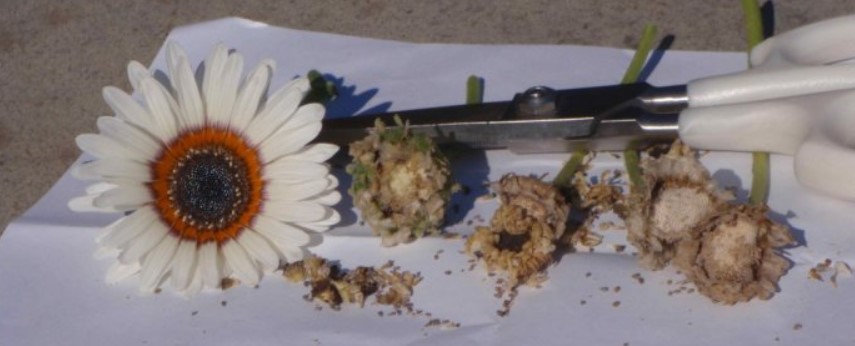
The seed pods begin to ripen in August; they can be cut and dried at home, or you can tie the largest inflorescences with gauze and wait for the seeds to dry on the bush.
After harvesting, dry seeds are placed in paper bags and stored in a cool, dark place, labeled with the harvest date. They will remain viable for 2-3 years.
The planting material is very small, with up to 500 seeds per gram. Dimorphotheca can self-seed, is frost-resistant, and survives winter well. However, many gardeners prefer to grow flowers from seedlings.
Growing Dimorphotheca from seeds at home
Many gardeners prefer to grow dimorphotheca using seedlings, which allows for flowering much earlier.
Planting dates by region
Seeds should be sown 60 days before transplanting to a permanent flowerbed. Planting times will vary depending on weather conditions in different regions.
- In the Central Belt – mid-March,
- In the Urals, Northwest, Siberia – the first half of April,
- In the South – the second half of February.
Dimorphotheca seedling sowing dates according to the 2023 Lunar Calendar
| Months | Favorable days | Unfavorable and prohibited dates |
| February | 1 (from 11:10 p.m.) -4 (until 11:47 a.m.), 7-13, 16-17, 24 (from 11:28 a.m.) - 26 (until 6:46 p.m.) | 5, 6, 18, 19, 20, 21 |
| March | 1-5, 8 (from 17:43)-13 (until 10:21), 15 (from 15:05)-17 (until 17:24), 19 (from 18:12), 20 (from 20:21), 23 (from 21:41)-25, 28 (from 13:21)-31 | 6 (from 15:39), 7, 8 (until 15:39), 17 (from 17:24), 18, 19 (until 18:12), 20 (from 20:21), 21, 22 |
| April | 7 (from 09:29 a.m.)-9 (until 15:57 p.m.), 16-17, 21 ((7:13 a.m.)-22 (until 1:11 p.m.), 24 (from 21:58 p.m.)-27 (until 9:29 a.m.) | 1, 2 (up to 13:58), 5, 6, 7 (until 09:29), 19, 20 |
Preparing containers and soil
It's best to use light, loose soil for dimorphotheca. It's advisable to purchase a special potting mix for flower seedlings. If using garden soil, add equal parts peat, humus, and sand, then disinfect it with a potassium permanganate solution.
It's best to initially use individual small cups as containers to avoid damaging the delicate roots during replanting. Be sure to provide a drainage system by making holes in the bottom, unless you're planting in peat cups.
Step-by-step instructions for sowing Dimorphotheca
Sowing seeds is carried out in several stages:
- Preparing the seeds. For better germination, it is recommended to treat the seeds with a stimulating solution. If using home-collected seeds, disinfect them by soaking them in a weak solution of potassium permanganate for 10 minutes.
- Drainage. Place a layer of perlite, vermiculite, or other drainage material (10% of the volume) at the bottom of the cup.
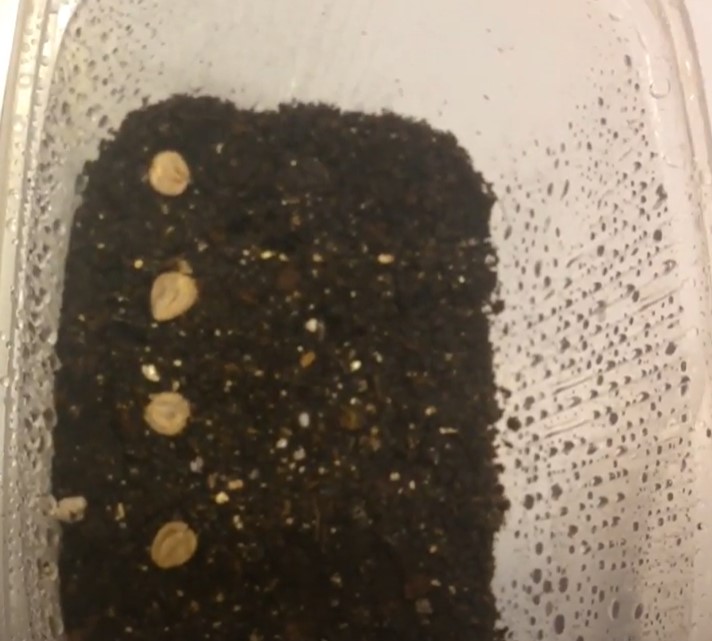
- Filling with soil. Fill the cup three-quarters full with soil, making a hole no more than 10 mm deep in the center. Place the seed in the hole and cover with soil.
- Watering. After planting, water the seeds using a syringe or spray bottle.
- Covering. The cups should be covered with plastic wrap and placed in a warm place until the sprouts appear.
Important! When planting dimorphotheca, keep in mind that seed germination may not be 100%. Therefore, it's best to plant 2-3 seeds per hole at once, so that only the strongest shoot is left.
How many days does it take for dimorphotheca to sprout?
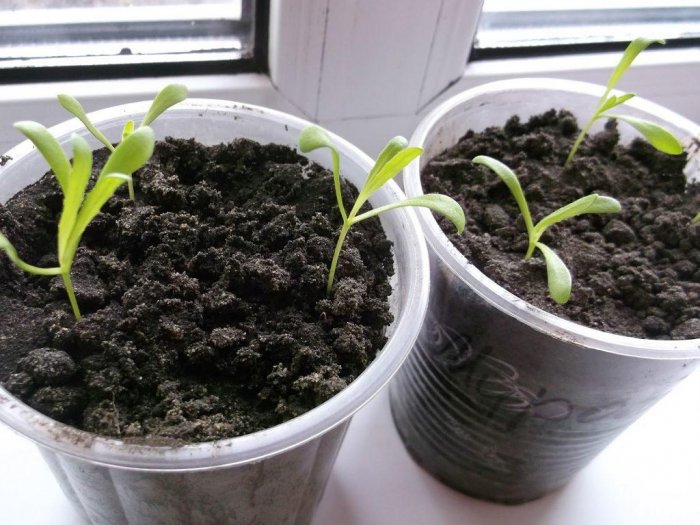
The first shoots in nutrient-rich soil may appear within a week. If the seeds haven't sprouted within 20 days, don't expect them to appear.
Caring for seedlings
Caring for seedlings is not particularly difficult and consists of several stages.
- The containers are placed in a warm place until germination occurs; the cover must be removed once a day for ventilation.
- After the seedlings emerge, the cover is removed and the air temperature is lowered from 24-26 degrees to 18-20.
- Seedlings should receive at least 12 hours of daylight, otherwise the shoots will stretch and weaken. If necessary, supplement with a phytolamp.
- Watering is carried out with warm, settled water as the top layer of soil dries out.
- When 3-4 true leaves appear, the plants are transplanted into larger cups using the transshipment method.
- Hardening off the dimorphotheca spp. is done 14 days before planting it in its permanent bed. The seedlings are then moved outside, gradually increasing their time outdoors.
Transplanting dimorphotheca seedlings to the site
Dimorphotheca can be planted in a permanent flowerbed after the danger of night frosts has passed. In temperate climates, this occurs in the second half of May. Holes are prepared for the seedlings in pre-dug and watered soil. The distance between the holes should be at least 20 cm. The flowers, along with a lump of soil, are placed in the holes and covered with soil.
The area should be well lit, not damp, and protected from drafts.
Planting dimorphotheca seeds in open ground
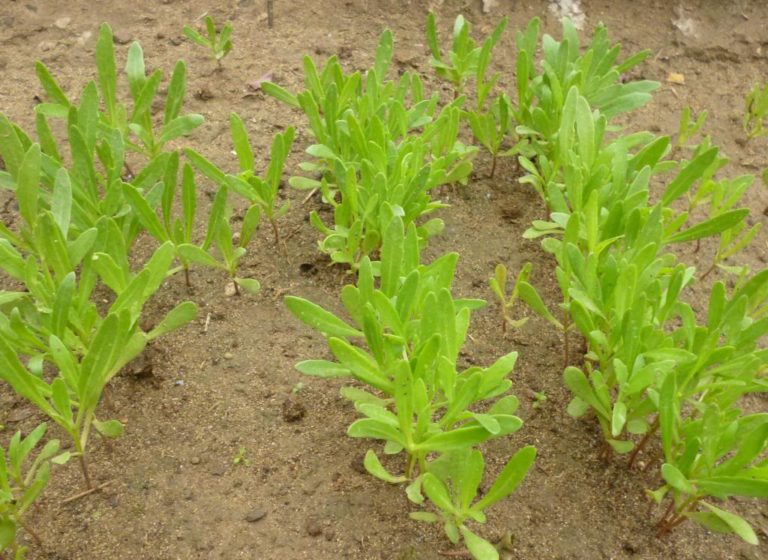
Many gardeners prefer to avoid the hassle of seedlings and sow dimorphotheca seeds directly into the ground. It's very simple. The surface of the bed is loosened, then the seeds are carefully sprinkled on top, "salted" with soil, and covered with plastic wrap overnight to protect them from frost damage.
Avoid planting in areas where water collects. Dimorphotheca will not thrive in such conditions.
After the seedlings emerge, thinning of the plantings is carried out; the recommended flower placement pattern is 15x15.

Dimorphotheca: planting and care in open ground
It's important not only to properly grow and plant Dimorphotheca from seed, but also to consider the care requirements of the plant. Let's take a look.
Location and soil
Dimorphotheca prefers well-lit locations free from drafts and strong winds. It's important to avoid prolonged exposure to direct sunlight. Even more important, avoid waterlogging or becoming waterlogged. While Dimorphotheca can thrive in full sun, it will die if exposed to excessive moisture.
Watering
Watering depends on weather conditions. If the summer is dry, one thorough watering per week is sufficient. If the weather is sparse with rain, the flowers will thrive without any additional care. Dimorphotheca tolerates drought better than overwatering.
Top dressing
For dimorphotheca, a single application of fertilizer during tilling of the bed before planting is sufficient. During the budding period, any complex fertilizer with a minimal amount of nitrogen can be used.
Other care
As additional care, weeding and loosening the soil around the plantings are performed periodically. During flowering, faded buds should be removed to encourage new growth.
Diseases and pests of Dimorphotheca
Dimorphotheca has a strong immune system. It can only suffer from overwatering, which can lead to gray mold. The plant is not susceptible to any other diseases.
The most common pests are spider mites and aphids. For small colonies, an ash-soap solution will help. If the pest infestation is large, only specialized products (Karbofos, Fufanon, and others) will be effective.
Dimorphotheca in landscape design + lots of photos
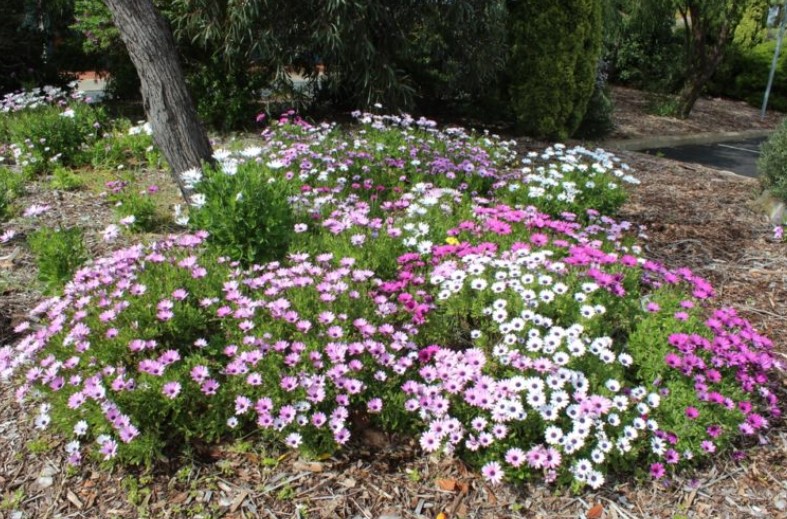
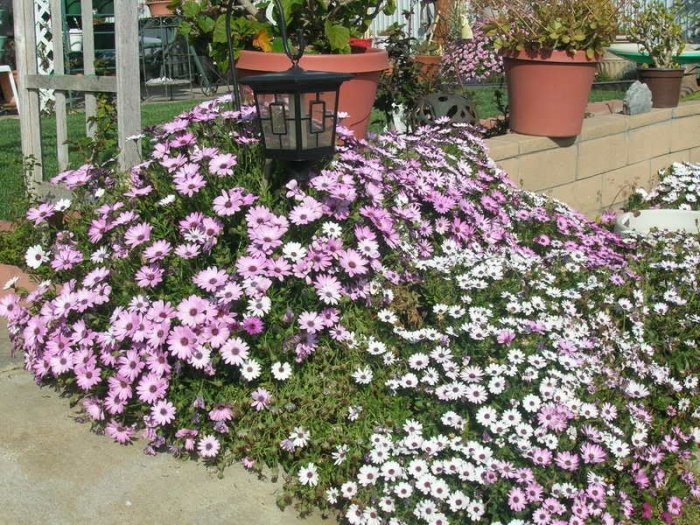
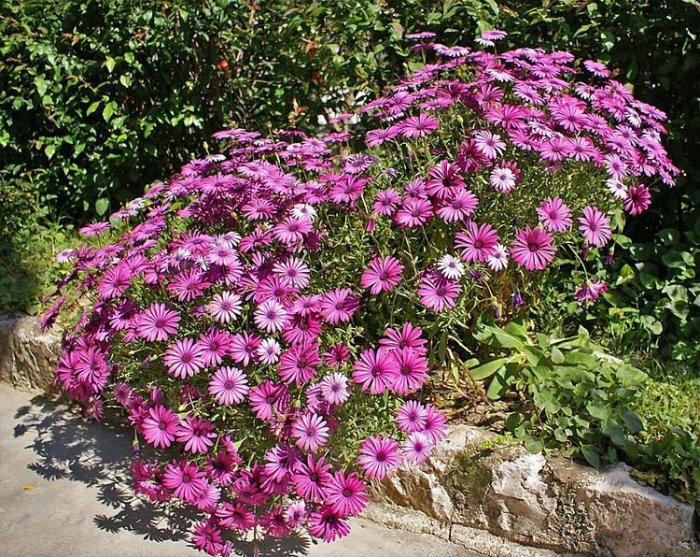
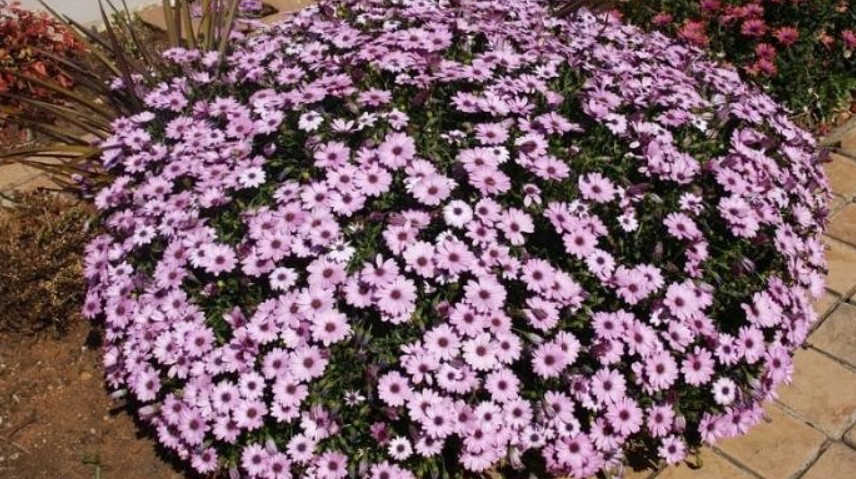
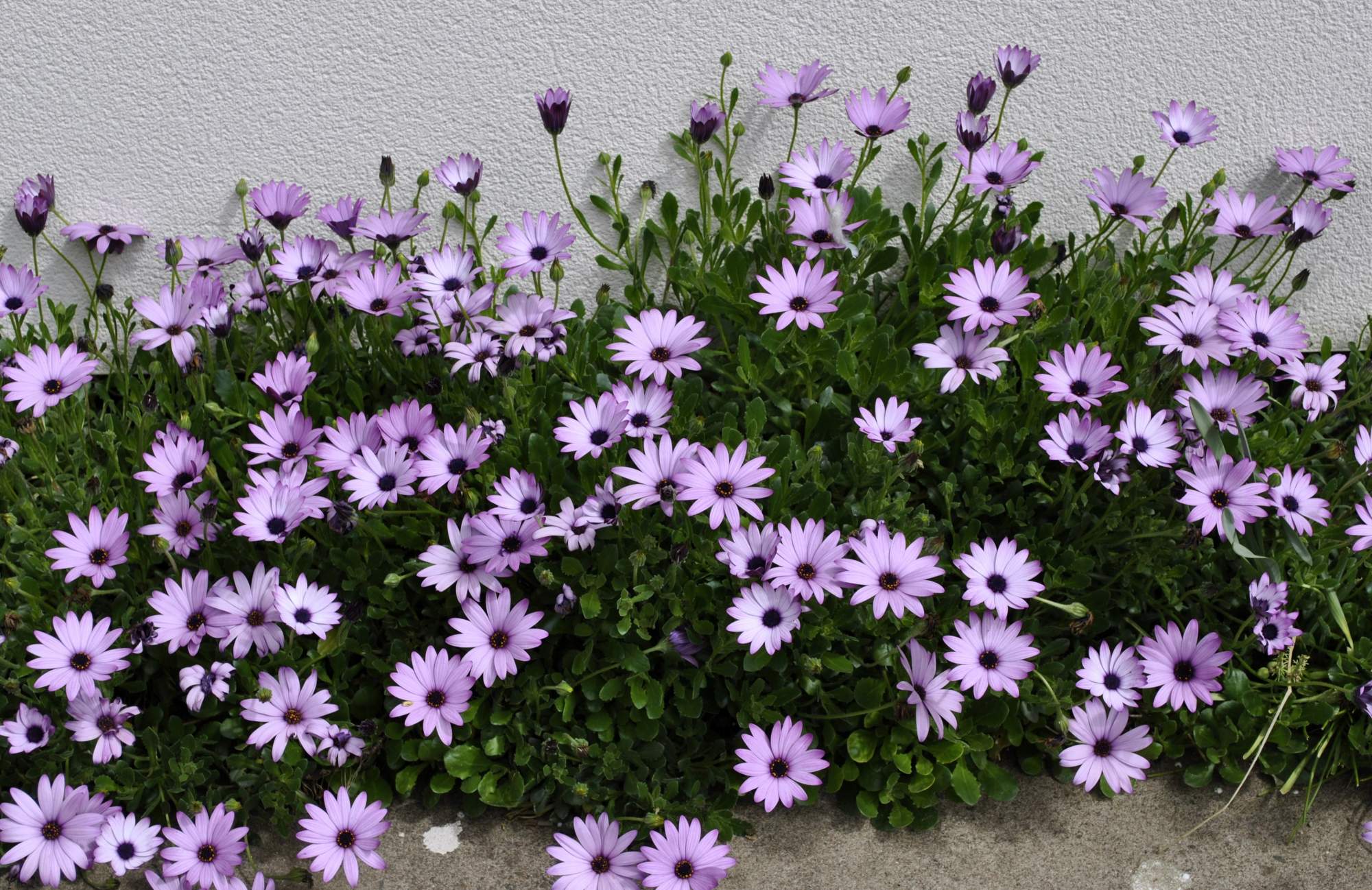
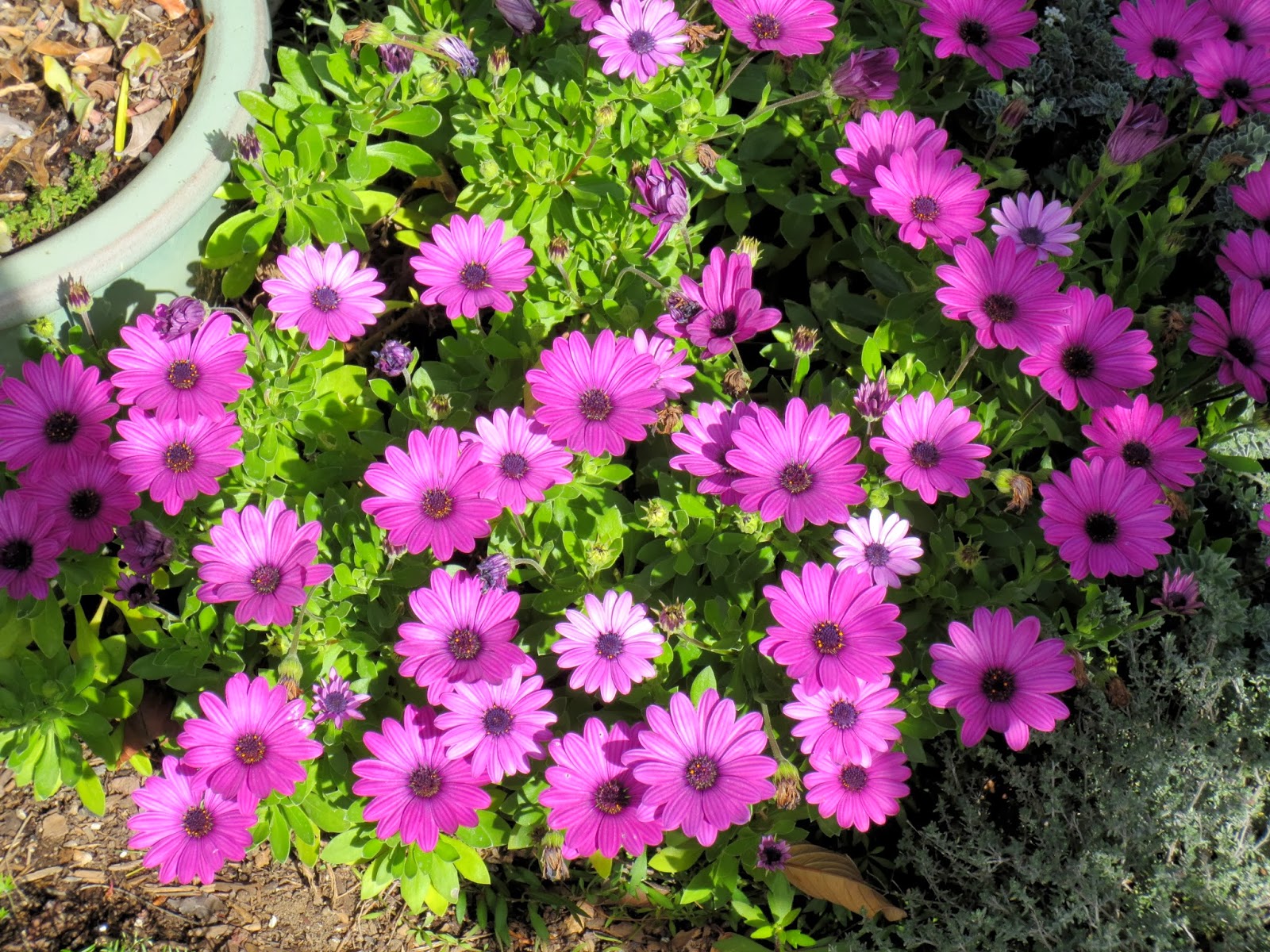
Low-growing, profusely flowering varieties of dimorphotheca are ideal for creating vibrant borders, edging paths, and edging the perimeter of a property.
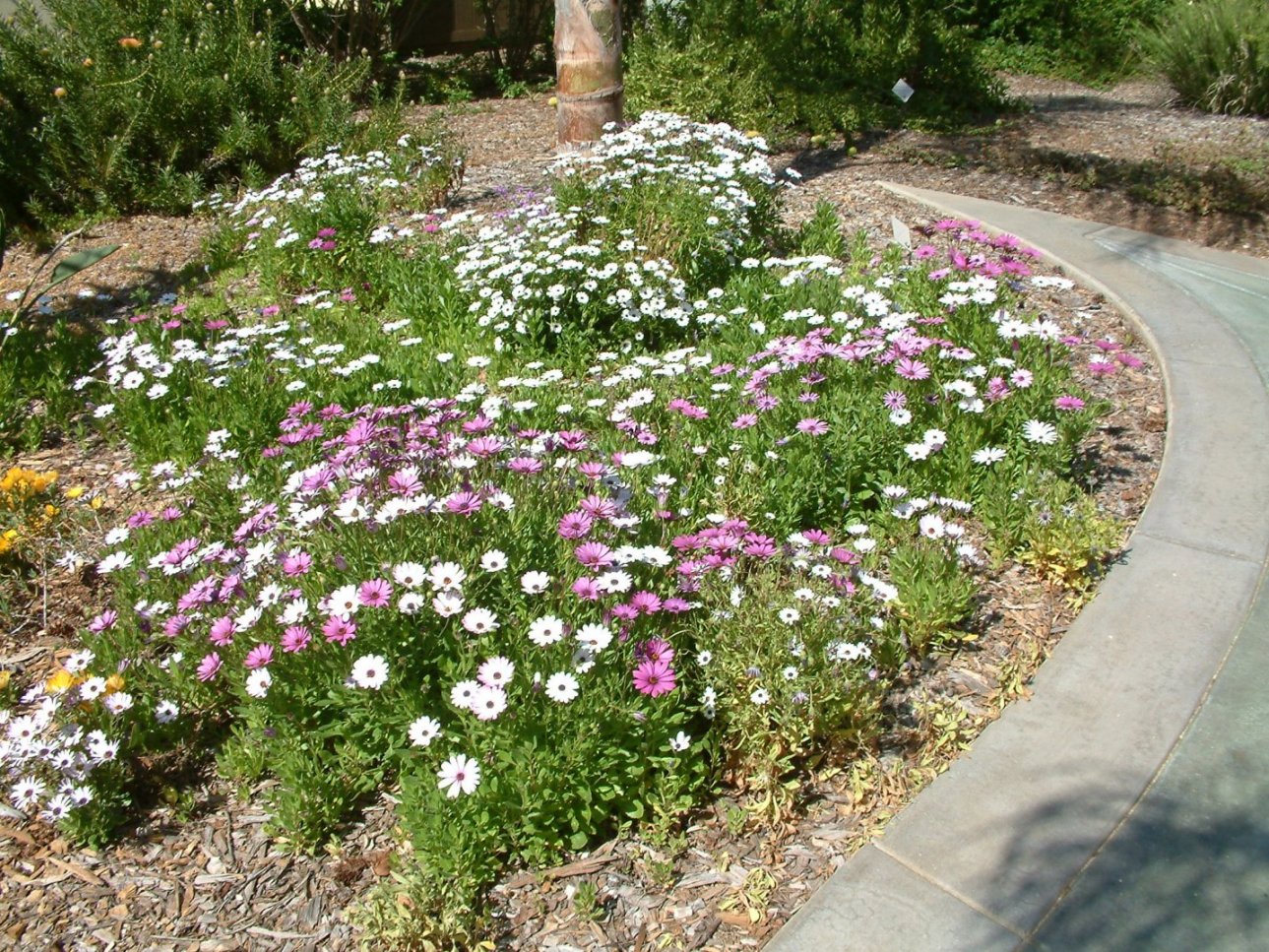
A green lawn very effectively highlights the beauty of the flower, so many gardeners create single, bright islands in the middle of the plot.
Dimorphotheca looks great in mixed borders. It pairs well with saxifrage, pelargonium, petunias, phlox, ageratum, and heliotrope.
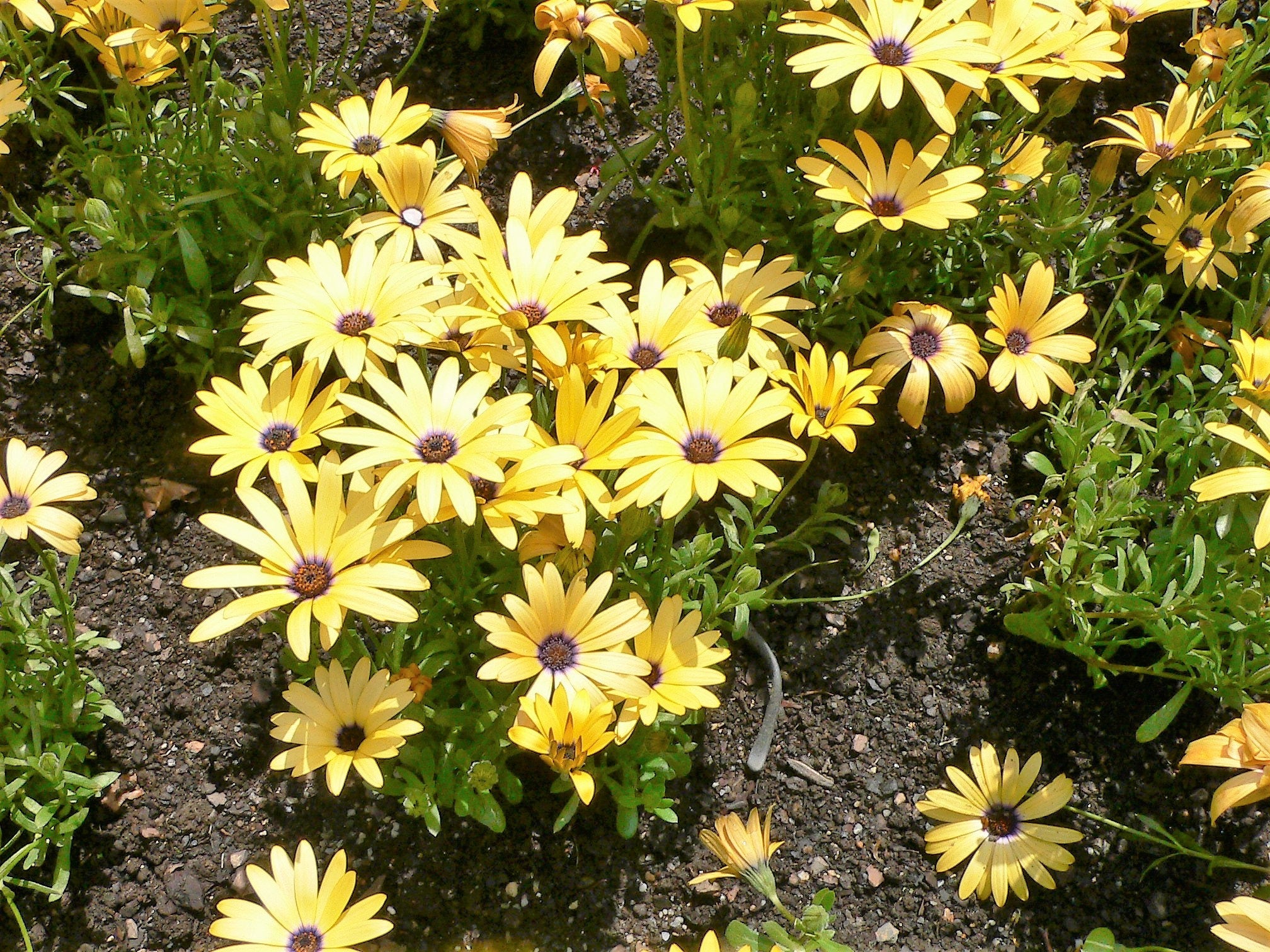
Photos of dimorphotheca in a flowerbed and in the landscape design of a dacha plot:
Dimorphotheca in a pot
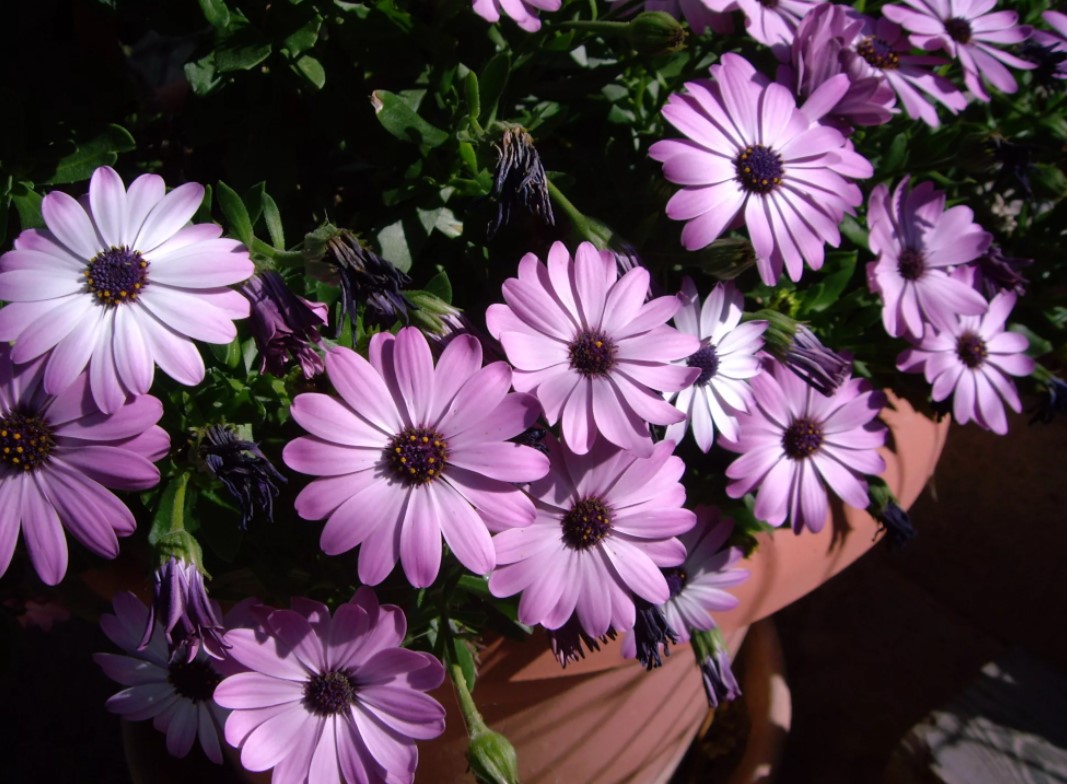
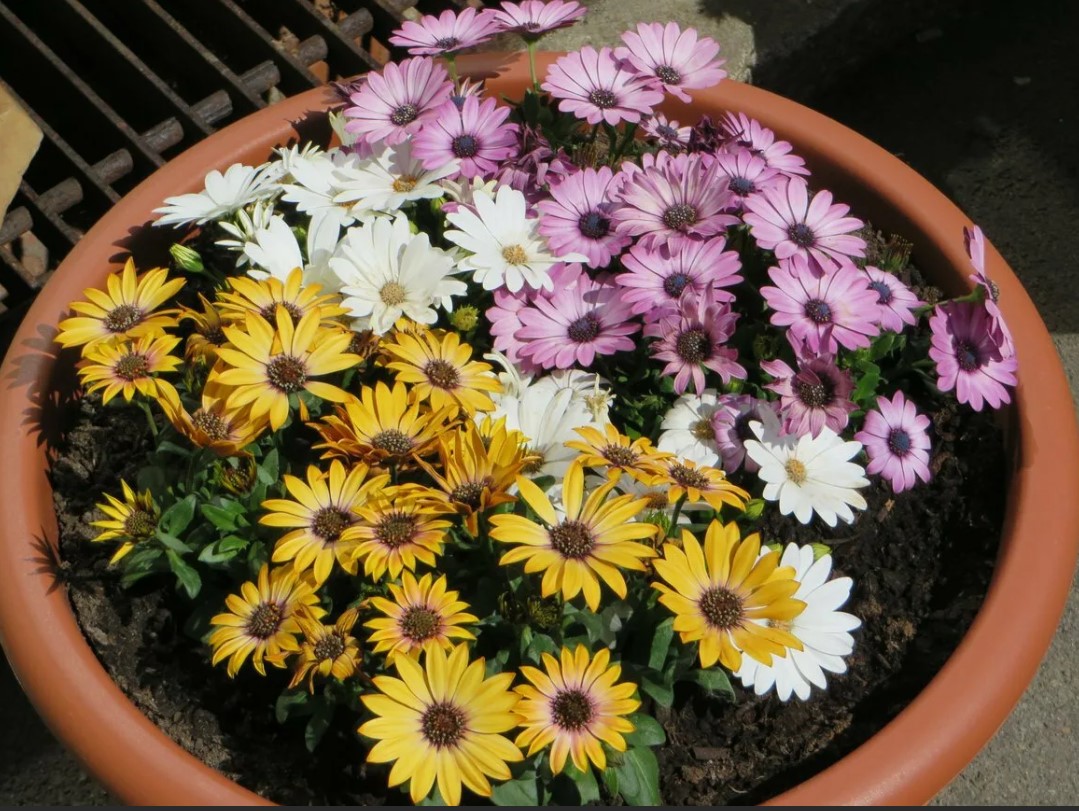
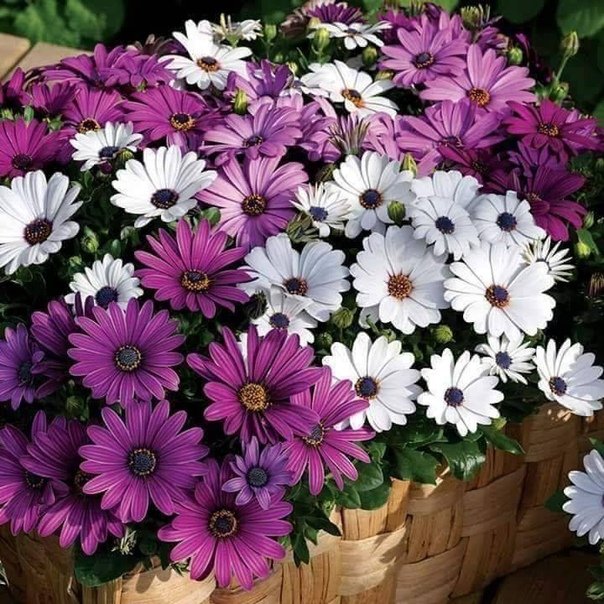
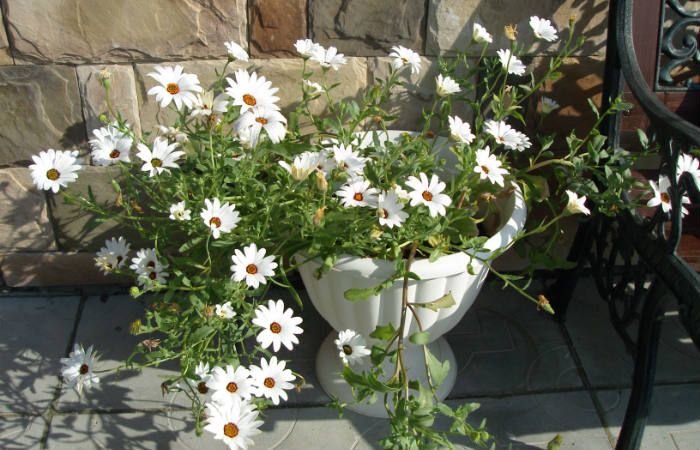
The most common use of Dimorphotheca in landscape design is potted planting. Containers, pots, vases, and planters with low-growing plants decorate balconies, verandas, gazebos, and the interior surfaces of fences. They are placed throughout the garden and integrate beautifully into rockery.
Osteospermum and Dimorphotheca: What are the differences, gardeners?
Dimorphotheca is very similar in appearance to Osteospermum. This resemblance is not surprising, as the flowers belong to the same family. However, they are actually two different species.
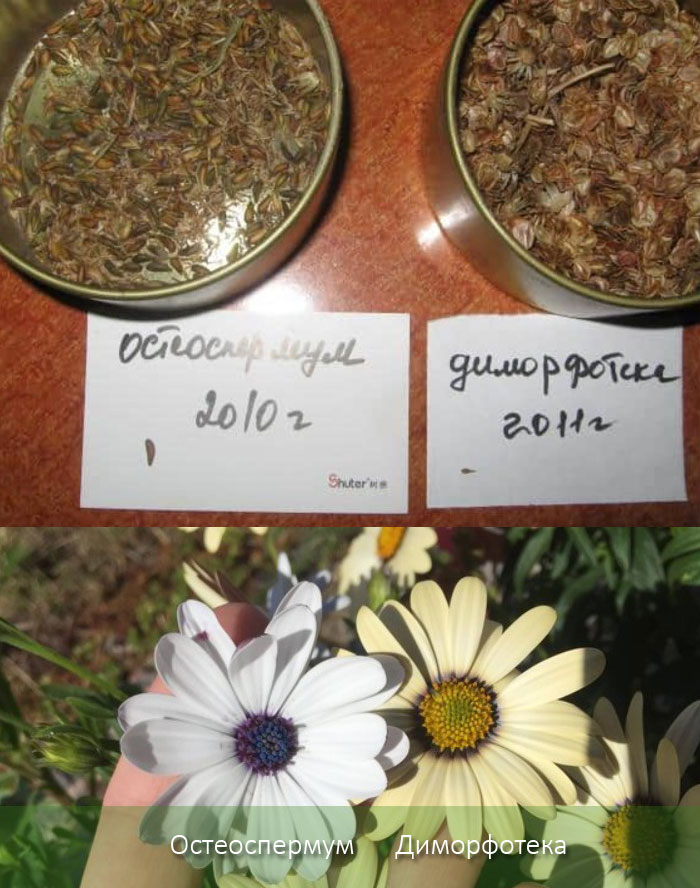
Their main differences are as follows:
- Seeds of different shapes.
- Dimorphotheca bushes are lower than Ostespermum;
- Osteospermum has wider leaves.
- The heart of the dimorphotheca flower can have different colors, and the difference here is that the center of the ostespermum is always blue.
- Ostespermum needs to be grown from seedlings. Seeds often die in open ground.
Read more about osteospermum on our website.Osteospermum: photo, cultivation and care.
Reviews of the Dimorphotheca flower from gardeners
Everyone knows our native chamomile—it spreads easily by seed and blooms for a long time. I love chamomile. So I noticed the seeds, which looked like a chamomile in the picture, but with a bright purple center. The seller told me they were "African chamomile," an annual. So, I tried planting some at home.
I was so surprised and delighted when this miracle bloomed. The flowers were even more beautiful than in the picture. The contrast of the white petals and the center, dark as a southern night, is truly delightful.
When I was visiting Rehovot, I noticed that even in this dry city, they decorate their front gardens with this wonderful daisy. I was in Rehovot in March—look at the gorgeous blooms!
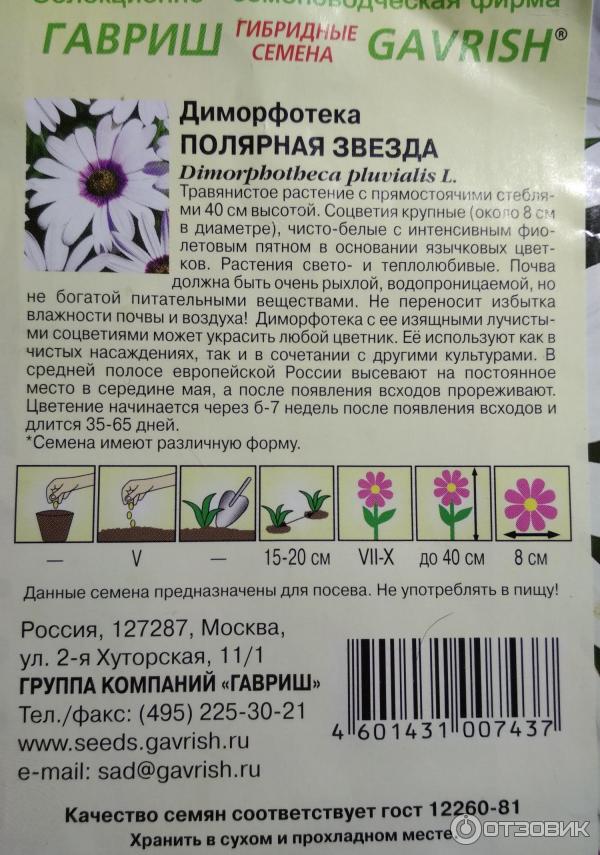
Dimorphotheca 'Polar Star' seeds don't need to be sown for seedlings. I planted them in the ground around May 10th-15th. However, we live almost in the center of Perm. The plot has sandy, light soil and is surrounded by fences. The flowers bloomed in July and lasted until the frost.
Seed germination was good, there were no mis-sortings.
I highly recommend that lovers of delicate, bright and unpretentious flowers try planting this beauty.

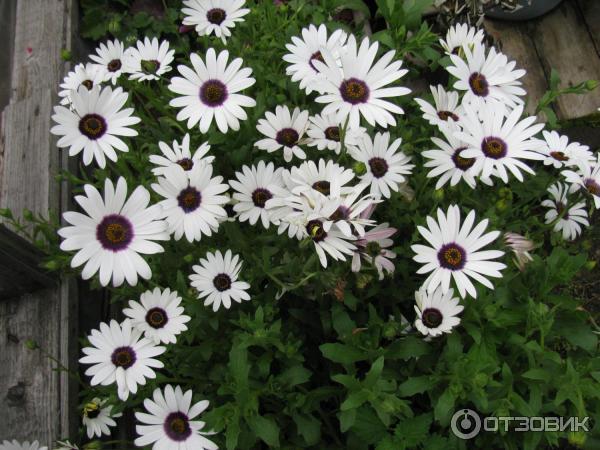
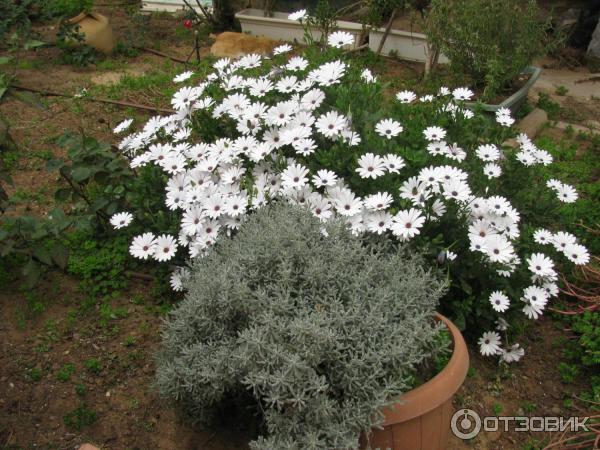
A beautiful flower. Sow in May, and plant seedlings around mid-June. To ensure your dimorphotheca blooms for longer, water well and trim off any wilted flowers.
Dimorphotheca doesn't like overly wet soil, and damp air isn't good for the plant. Also, if the soil is too fertilized, the plant will grow vigorously, but the blooms won't be as impressive. Therefore, fertilize sparingly, without overdoing it.
I love this plant: it's easy to grow and provides a long-lasting "eye candy." I grow it by direct seeding in open ground—I sow it into moist soil, cover it with dry soil, and cover it with burlap until the seedlings emerge. To avoid having to thin the seedlings later, I mix the seeds with either sand or ash before sowing.