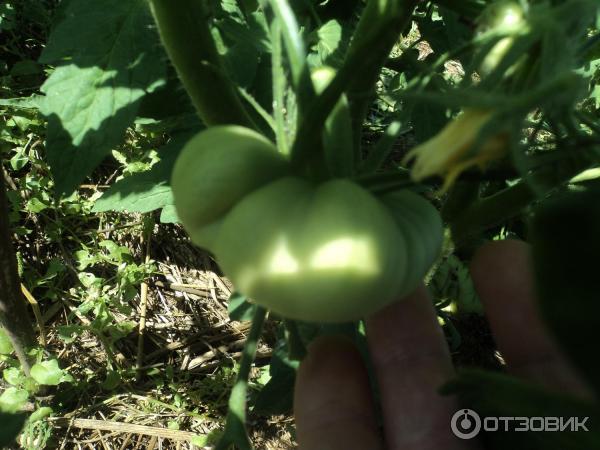
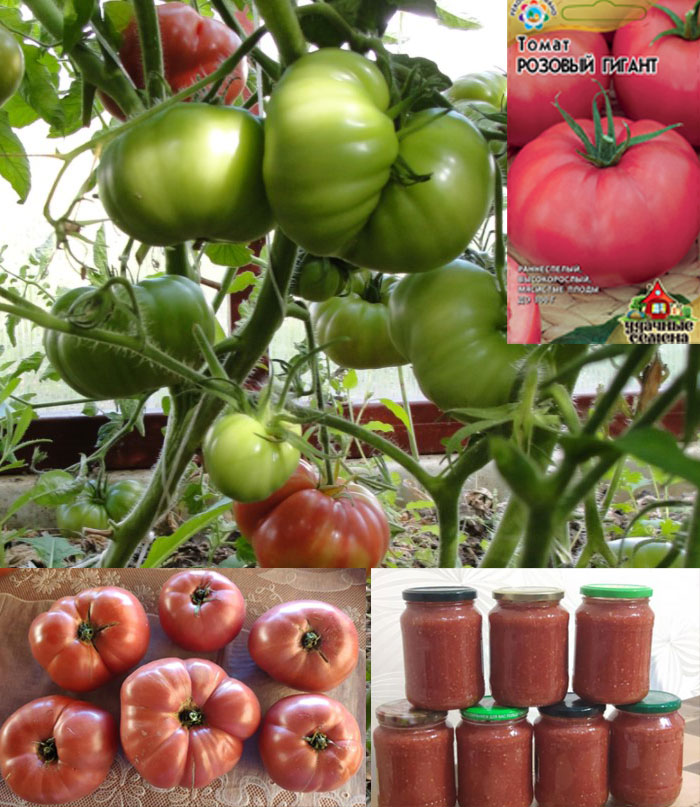
The Pink Giant tomato is distinguished by its large fruits and excellent flavor. It's easy to grow and rarely suffers from diseases, making it a favorite among gardeners across the country. Although originally intended for outdoor planting, there are many positive experiences growing the Pink Giant in greenhouses and hotbeds.
Content
- 1 Characteristics of the Pink Giant tomato variety in a table
- 2 The history of the Pink Giant tomato variety
- 3 A detailed description of the Pink Giant tomato variety
- 4 Advantages and disadvantages of the Pink Giant tomato variety
- 5 Growing the Pink Giant tomato variety
- 6 Resistance of the Pink Giant tomato variety to diseases and pests
- 7 Harvesting, using and storing the Pink Giant tomato variety
- 8 Comparison of the Pink Giant tomato variety with other varieties in the table
- 9 Gardener reviews of the Pink Giant tomato variety
Characteristics of the Pink Giant tomato variety in a table
| Characteristic | Description |
| Description | An indeterminate, mid-season tomato with a mid-season ripening period. Suitable for outdoor cultivation. |
| Ripening period | 110-120 days |
| Fruit weight | 350 g |
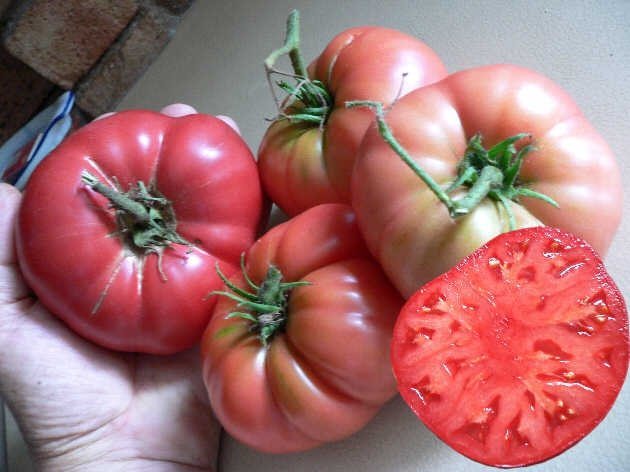
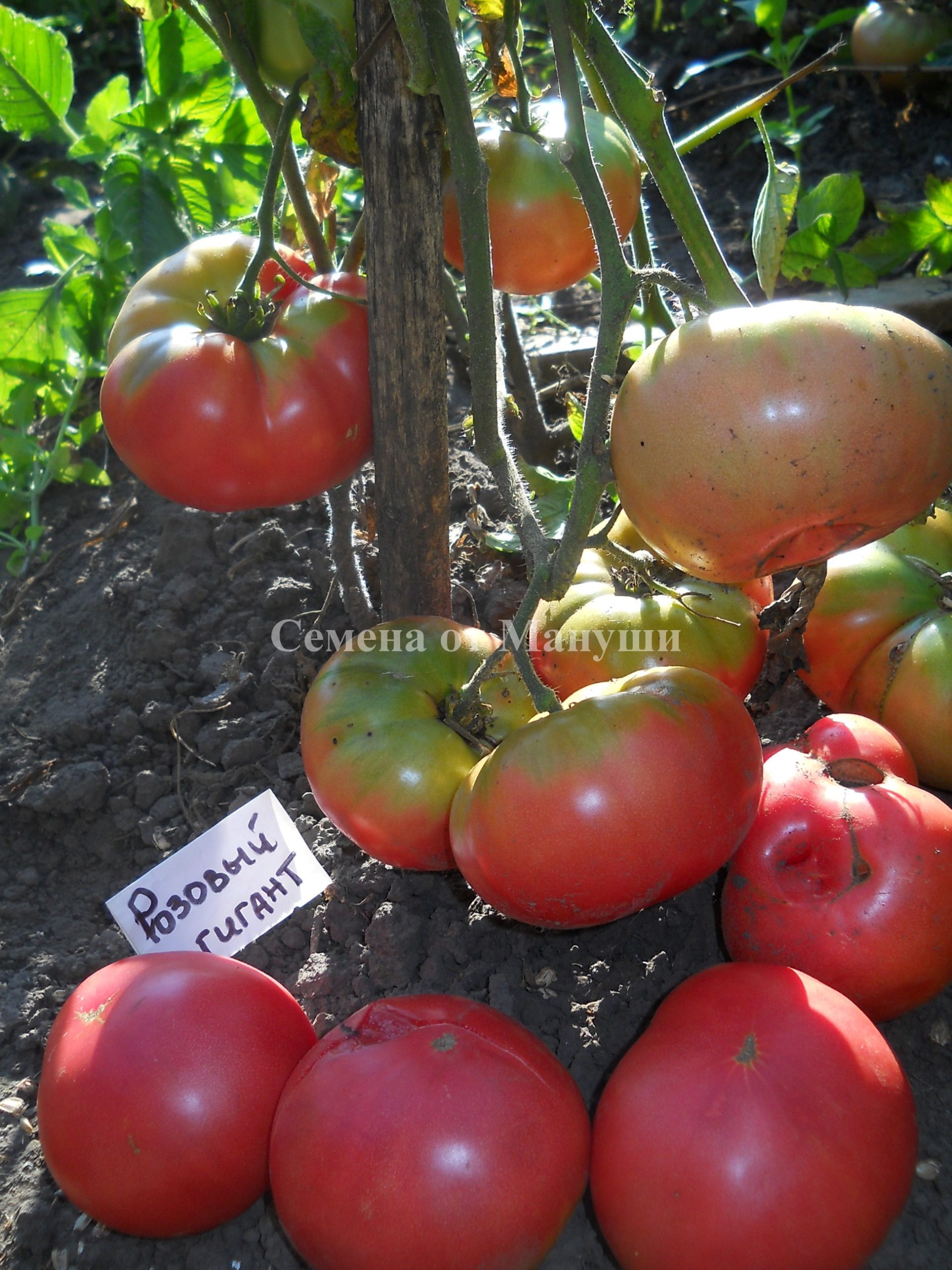
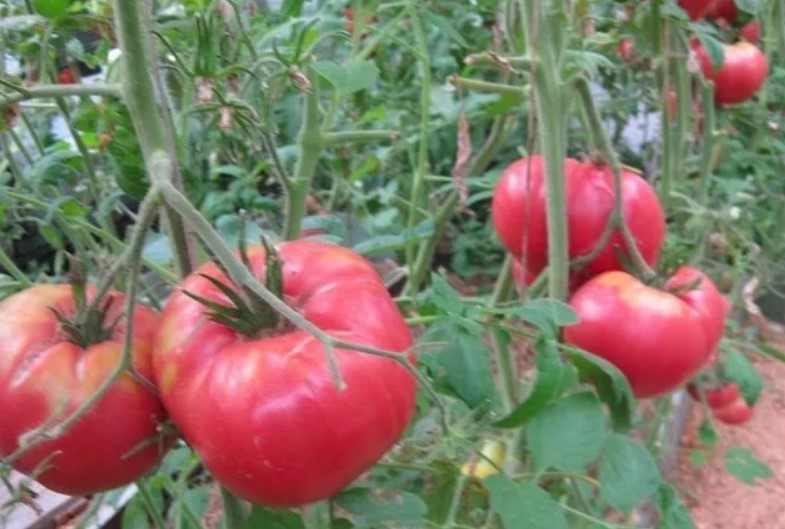
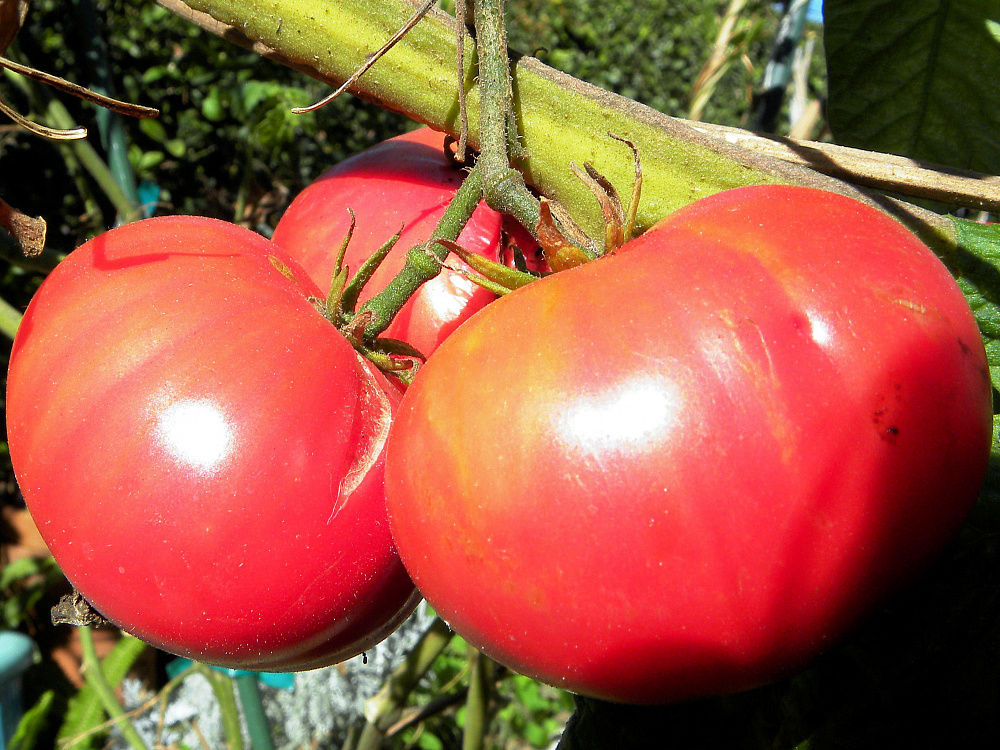
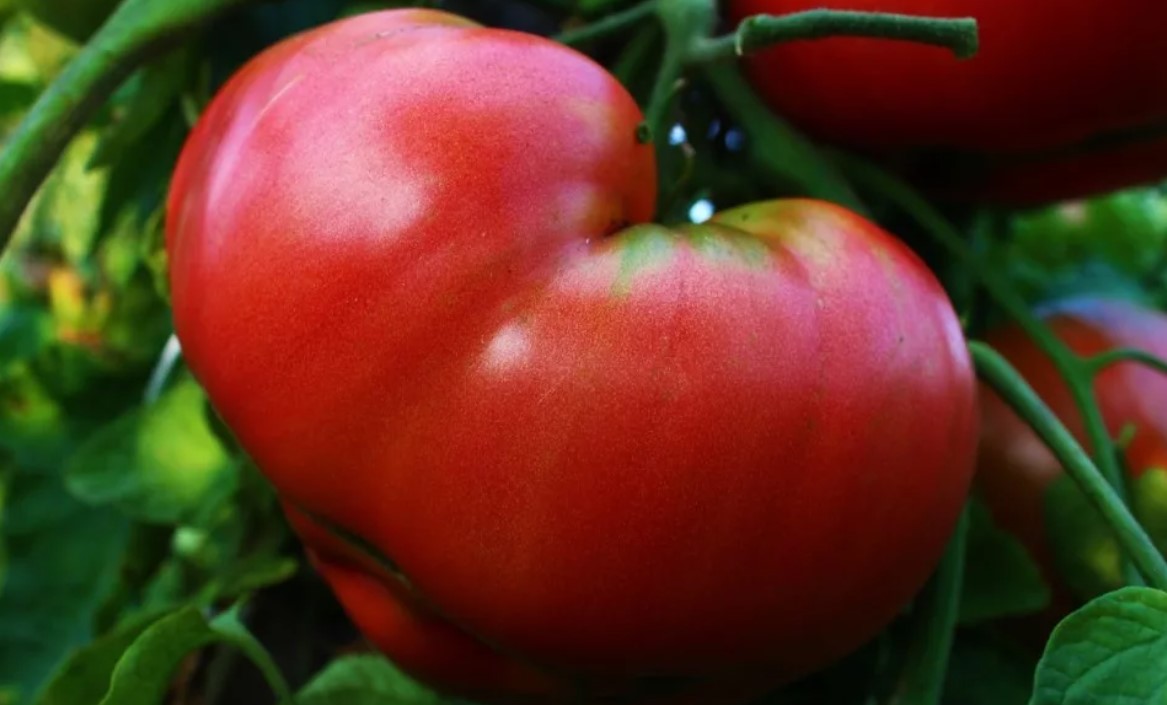
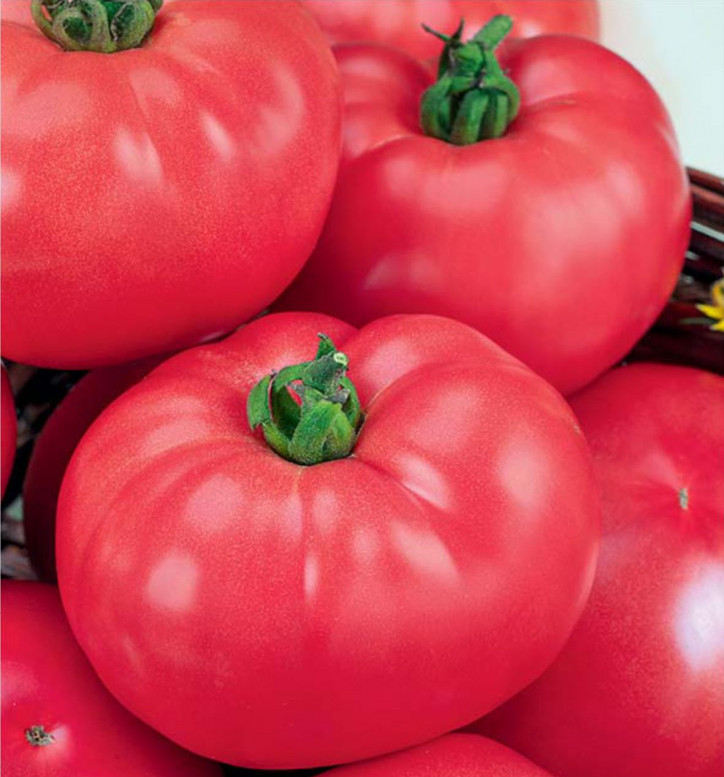
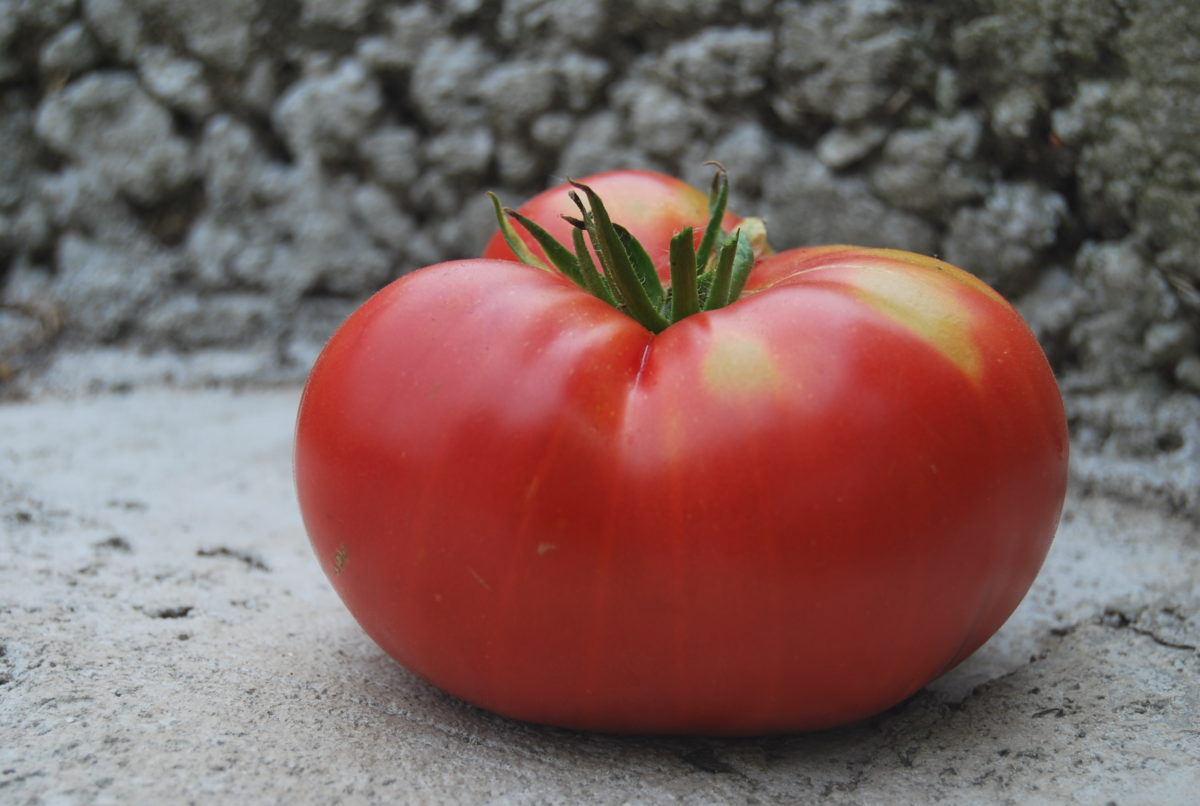
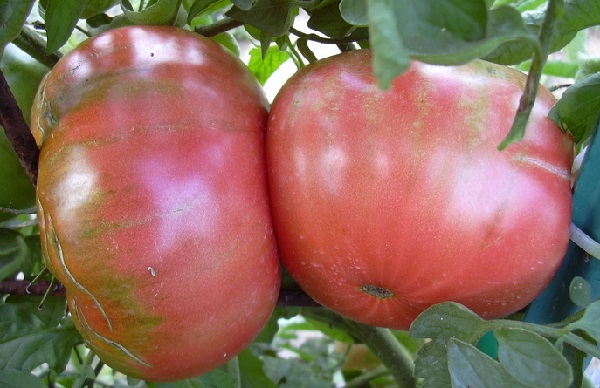
| Description of the fruit | The tomatoes are large, flat-round, pink in color, and have pronounced ribbing. |
| Productivity | 5.8-6.4 kg per sq.m. |
| Usage | Salad variety, used for fresh eating. |
| Preferred growing regions | Regions with a temperate climate, in northern regions it can only be grown in greenhouse conditions |
| Disease resistance | Resistance to major tomato diseases. |
| Agricultural technology | Requires mandatory garter, formed into 1-2 stems. |
| 2001 | |
| Originator | JSC Scientific and Production Corporation NK.LTD. |
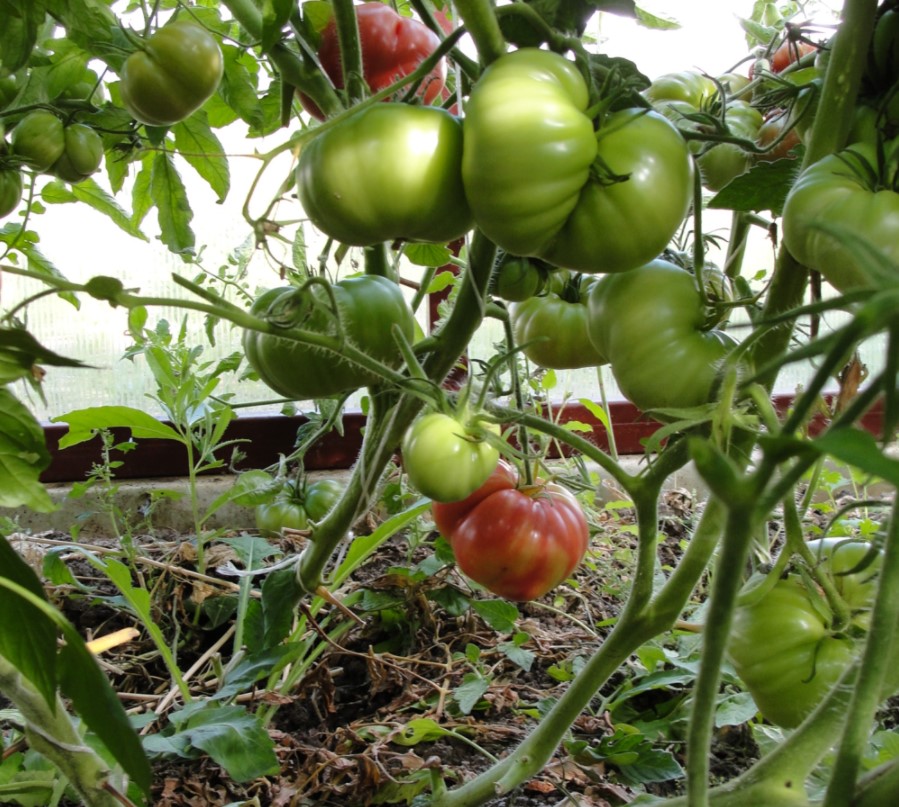
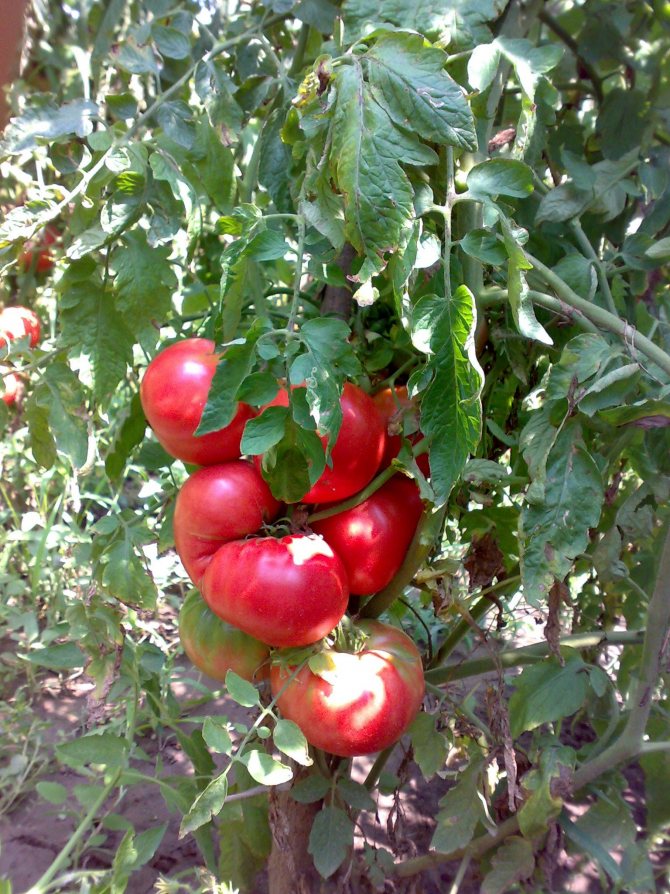
Photo gallery of the Pink Giant tomato variety


The history of the Pink Giant tomato variety
At the end of the 20th century, a group of experienced breeders from the Moscow region (V.A. Vasilevsky, V.M. Nalizhity, S.A. Korotkov, and A.V. Dynnik) developed a new pink tomato variety with large fruits. In 1998, an application was submitted to include the variety in the State Register of Vegetable Crops. Three years later, in 2001, the tomato was officially recognized and assigned a state registration number.
A detailed description of the Pink Giant tomato variety
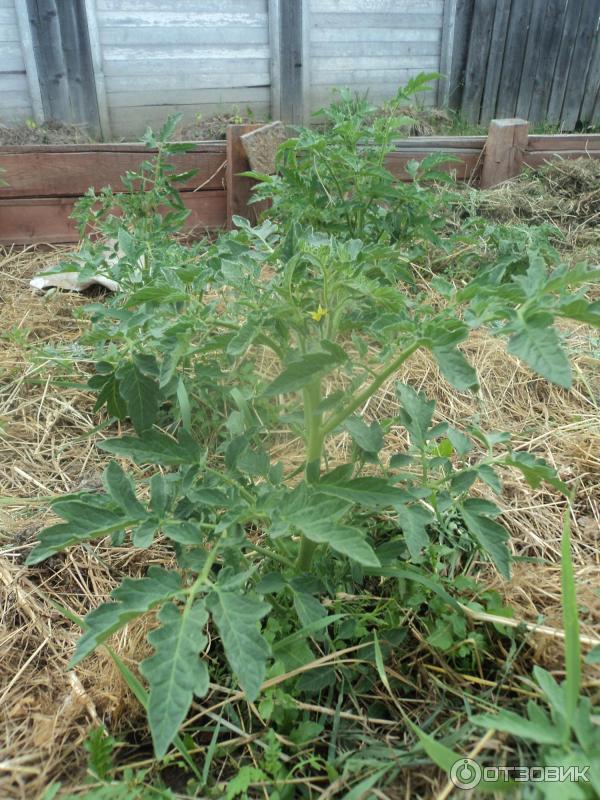
The Pink Giant tomato is virtually indistinguishable in appearance from its tomato counterparts at the bush stage, but its fruits have a characteristic shape and size.
Characteristics of the bush
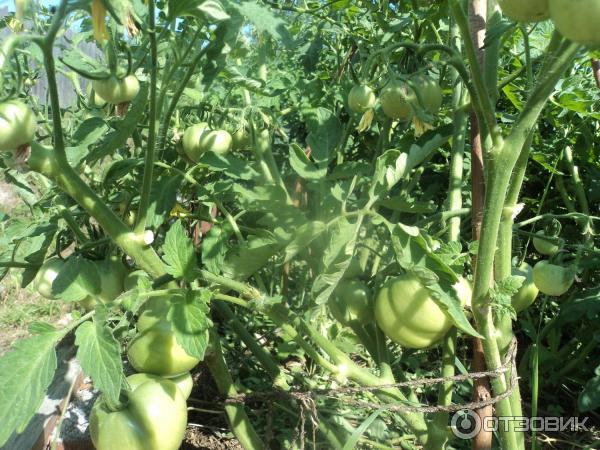
Indeterminate shoots can grow up to 180-200 cm, so they require staking. The leaves are small, slightly elongated, and more potato-like in shape. The foliage is medium. The inflorescence can be either intermediate or simple. It begins to emerge above the ninth leaf, and then the inflorescences form at intervals of three leaves. Each will eventually develop a fruiting cluster, which can simultaneously hold up to six tomatoes.
Fruit characteristics
The tomatoes are relatively large, with the grower's estimate of their weight being 350 g, but many gardeners have found much heavier tomatoes. This is especially true if the tomatoes are formed into a single stem and the weather is hot and sunny.
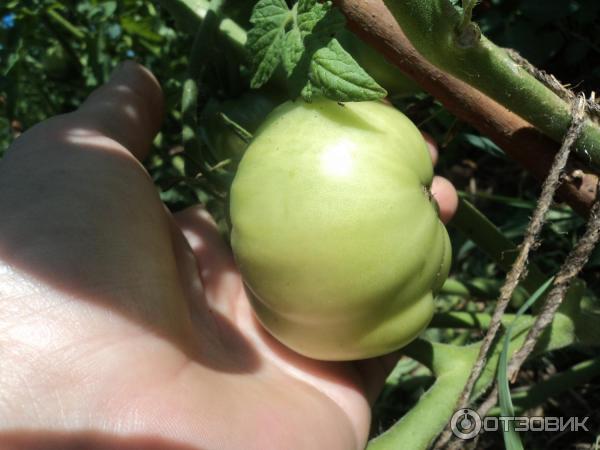
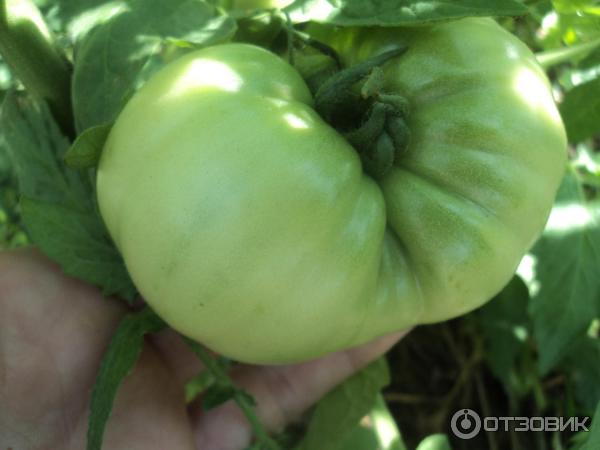
The tomatoes are flattened and heavily ribbed. When unripe, a bright green spot can be seen near the stem. As the tomatoes ripen, this spot fades, and the fruit turns pink.
The pulp is juicy, meaty, and very sweet. The seed chambers are small, and the seeds themselves are very tiny.
Ripening time
This tomato is considered mid-season. Ripening time depends on growing conditions and ranges from 110 to 120 days. If the tomatoes are planted in a greenhouse or grown in regions with a warm, sunny climate, they will ripen earlier.
Productivity
Yields depend on planting conditions and shoot formation, and can range from 5.8 to 6.4 kg per square meter. Some reports indicate yields of up to 5 kg per bush.
Advantages and disadvantages of the Pink Giant tomato variety
The table below shows the advantages and disadvantages of the Pink Giant variety.
| Advantages | Flaws |
|
|
Growing the Pink Giant tomato variety
The main rule for growing the Pink Giant tomato is that it's recommended to plant no more than three plants per square meter. Otherwise, care is the same as for other indeterminate tomato varieties.
Sowing seeds and growing seedlings
You can collect Pink Giant seeds yourself, but it's not easy—they're too small. Therefore, it's best to purchase planting material from a reputable supplier.
If the seeds have not been processed at the factory, you will have to do it yourself.
- DisinfectionThe seeds are dipped in a weak solution of potassium permanganate for 20 minutes and then washed with water.
- HardeningThe seeds are placed in the refrigerator overnight, then taken out, and the procedure is repeated once more in the evening.
- SoakingBefore planting, it is recommended to soak the seeds in a stimulating solution to strengthen the immunity of future plantings and accelerate germination.
Many gardeners prefer to sprout tomatoes before planting them. This procedure also speeds up germination.
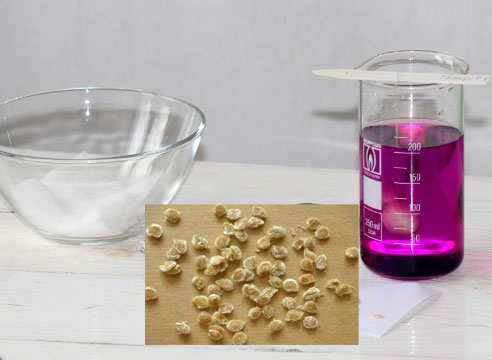
Planting times vary depending on the growing region. Begin 60 days before planting in the permanent garden bed.
- In the south – the end of February – the first ten days of March.
- In the central zone – the end of March.
- In the northern regions – mid-April.
For information on favorable days for planting seeds for seedlings, see the articleLunar calendar for sowing seeds for seedlings in 2022 in a table (planting seedlings)
Tomatoes can be planted in separate cassettes, peat cups, or in one large box.
The soil should be balanced in composition. It's easiest to buy it at a gardening store, but you can also mix equal parts of sand, humus, peat, and garden soil yourself.
Fill the selected container (boxes or cups) with this mixture until it reaches 2/3 of its original size, then make furrows. These furrows should be no more than 10 mm deep, otherwise the seeds will take longer to germinate and may even rot.
The seeds are placed in furrows at intervals of 2.5 cm to prevent them from interfering with each other as the roots develop. The furrows are then covered with soil and watered using a spray bottle.
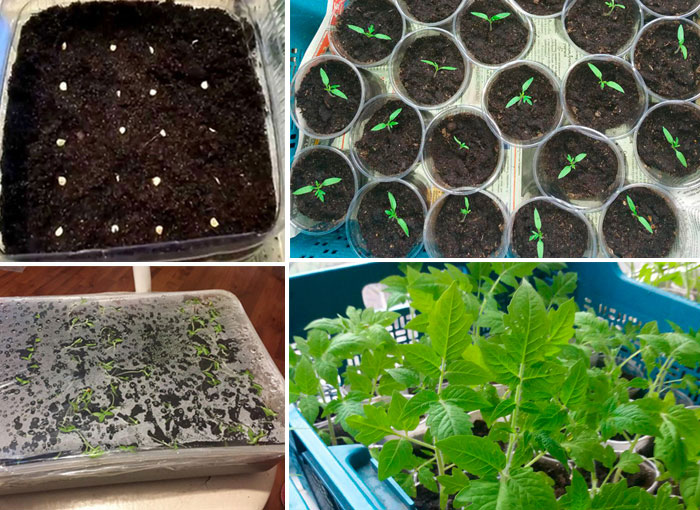
Cover the container with glass or plastic and place it in a warm place. Periodically ventilate it and moisten the soil as it dries out.
Once most of the sprouts have emerged from the ground, the cover is removed and the seedlings are moved to a cooler, well-lit location. For the first two weeks, it is recommended to provide supplemental lighting around the clock, then reduce the daylight hours to 15 hours.
After two true leaves appear, tomatoes are transplanted into separate containers.
Planting in the ground
Two weeks before transplanting, tomatoes begin hardening off. To do this, they are placed outside or on the veranda for a few hours, acclimating them to outdoor conditions.
Plants are planted in pre-dug holes. Gardeners recommend preparing them two weeks before planting. The holes are staggered and spaced at least 60 cm apart. The space between rows is 70 cm wide.
It is not recommended to plant the pink giant too densely; there should be no more than 3 bushes per square meter.
The tomatoes are placed in the hole along with the root ball. At this stage, many gardeners consider a staking system. To avoid attaching the rope to the stem, one end is buried in the hole and the other is left outside. This will later serve as a support for the shoots.
After planting, the plants are watered and the bed is mulched with peat or sawdust.
Care
The first care procedures can begin 10-14 days after transplanting tomatoes.
Water approximately once every 7 days at a rate of 7-10 liters per plant. However, weather conditions should be taken into account, especially if the Pink Giant is planted outdoors. Overwatering combined with rainy weather can lead to disease.
Fertilizers should be applied only after watering the plants to avoid burning the roots. During the initial stages of vegetative growth, they may contain nitrogen, but don't overdo it. Later, tomatoes will require phosphorus, potassium, and calcium.
As the shoots grow, remove side shoots and shape the bush into 1-2 stems. The smaller the number, the larger the harvest. Two leaf blades can be removed from the lower tiers of the stem at a time to ensure all resources are directed toward the fruit.
Periodically, it is necessary to loosen the bed to improve root aeration, and also remove weeds to reduce the risk of pests.
Resistance of the Pink Giant tomato variety to diseases and pests
The Pink Giant tomato has a strong immune system and is rarely susceptible to common tomato diseases.
If watering rules aren't followed, plants can become infected with late blight. To prevent this and protect tomatoes, spray with Bordeaux mixture or phytosporin three times per season, at two-week intervals.
Folk remedies are effective against insect pests in the initial stages, for example, wiping the leaves with a soap solution when aphids appear.
For more serious ailments, it's best to use specialized medications to avoid wasting time and losing your harvest.
Harvesting, using and storing the Pink Giant tomato variety
Harvesting occurs 110-120 days after the shoots emerge. During this period, tomatoes can hang on the branches for some time without splitting. However, they won't keep for long; at most, they'll keep in a cool place for a few days.
The Pink Giant tomato is ideal for salads. It's juicy, tasty, and meaty. However, due to its large size, it's not suitable for whole-fruit canning.
Comparison of the Pink Giant tomato variety with other varieties in the table
Please note! How can you easily convert centners/ha to kg/sq.m? Simply divide by 100! For example, the Abakansky Pink tomato yields 400 centners of marketable fruit per hectare. This equals 4 kg per square meter. It's that simple! Also, keep in mind that typically no more than 3-4 plants are planted per square meter. This way, you can calculate the yield per bush. In the case of the Abakansky Pink, it's about 1 kg.
| Variety | Ripening period (number of days from full germination to ripening)
Yield of commercial fruits |
Brief description | Fetus |
| Pink giant | 115-125 days
580-640 c/ha |
A mid-season indeterminate variety for open ground. Requires staking and shaping. Suitable for salads. | Flat-round, strongly ribbed, pink, 350 g. Excellent taste. |
| King of the Giants | 120 days
800-1400 c/ha depending on the region |
A mid-late indeterminate variety for open ground and greenhouses. Suitable for salads, appetizers, and processing into tomato products. | Flat-round, slightly ribbed near the stem, red, rarely yellow and pink, 400 g (up to 800 g). Good to excellent flavor. |
| Abakan pink | 120 days or more 400 c/ha |
A late-ripening determinate variety for open ground and greenhouses. Requires staking and training. Suitable for salads and processing into tomato products. | Flat-round, slightly ribbed, medium density and pink in color, 200-500 g. Good taste. |
| De Barao is a giant | 123-128 days
2000-2400 c/ha |
A high-yielding, indeterminate tomato variety with very large fruits, with shoots growing up to 270 cm. Suitable for both open and closed ground cultivation, it requires support, staking, and training. These tomatoes are suitable for fresh eating, as well as for making juices and pastes. They are not suitable for whole-fruit canning. | The tomatoes are oval-round in shape, have a dense skin, weigh 350 g. The taste is excellent. |
| Wild rose | 110-115 days
600 c/ha |
An early-ripening indeterminate variety for open ground and greenhouses. Requires staking and training. Suitable for salads. Heat- and salinity-tolerant. | Round, smooth, pink, 300-350 g. Excellent taste. |
| Favorite holiday | 105-110 days
750 c/ha |
An early-ripening determinate variety for open ground. Suitable for salads. | Heart-shaped, slightly ribbed, medium density, pink, 350 g. Good taste. |
| Mikado Pink | 90-95 days 500-600 c/ha |
A mid-early indeterminate variety for greenhouses. Suitable for salads. | Flat-round, large, ribbed, medium density, pink, 300-360 g. Excellent taste. |
| Raspberry Giant | 105-110 days
590 c/ha |
An early-ripening determinate variety for open ground and plastic greenhouses. Requires staking and training. Suitable for salads. | Round, slightly ribbed, medium density, raspberry, 200-300 g. Excellent taste. |
| Honey Giant | 110-115 days
750-800 c/ha (greenhouse and under film) |
An early-ripening indeterminate variety for open ground and greenhouses. Requires staking and shaping. Suitable for salads. | Flat-round, ribbed, medium density, orange, 250-300 g. Good taste. |
| Pink elephant | 112 days
620-820 c/ha |
A mid-season semi-determinate variety for greenhouses. Suitable for salads, canning, and processing into tomato products. | Flat-round, fleshy, medium- to strongly ribbed, notched to smooth top, pink, 280 g. Excellent taste. |
| Pink spam | 99 days
2560 c/ha |
An early-ripening indeterminate variety for greenhouses. Suitable for salads and canning. | Heart-shaped, firm, smooth, pink, 190 g. Excellent taste. |
| Pink honey | 111-115 days
380 c/ha (open ground) |
A mid-season determinate variety for open ground and greenhouses. Suitable for salads. Marketability is 96%, and the yield of ripe marketable fruits is 90%. | Round, ribbed, pink, 160-200 g. Excellent taste. |
| Wind rose | about 100 days
600-700 c/ha |
An early-ripening, determinate, standard variety for open ground. Requires staking and shaping. Suitable for salads. Drought-resistant. | Round, smooth, pink, 140-160 g. Excellent taste. |
| Chinese pink | about 110 days
up to 1500 c/ha (open ground), up to 2000 c/ha (greenhouse) |
A mid-early semi-determinate variety for open ground and greenhouses. Requires staking and training. Suitable for salads and processing into tomato products. | Heart-shaped, fleshy, sweet, pink, 300-350 g. Excellent taste. |
| The Pink King | 100-112 days
680 c/ha (greenhouse and under film) |
A mid-season indeterminate variety for open ground and greenhouses. Requires staking and shaping. Suitable for salads. | Flat-round, ribbed, medium density, pink, 200-300 g. Excellent taste. |
Gardener reviews of the Pink Giant tomato variety
Many gardeners compare the Pink Giant to the Pink Elephant, noting the striking similarity between the fruits. When grown properly, some have even managed to harvest tomatoes weighing up to 1 kg.
Today's review of the Pink Giant tomato is the icing on the cake—about the most delicious and beautiful part! Look at these wonderful tomatoes!
And the name of the variety “Pink Giant” is completely justified!
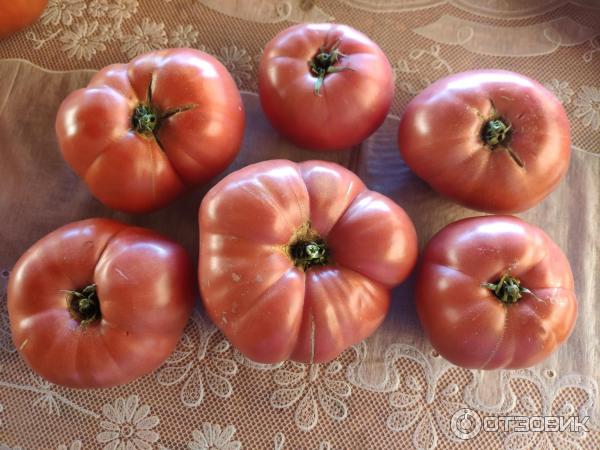
The tomatoes are beautiful and really large!
Their average weight ranges from 300 to 500 grams.
There are smaller ones, too. But in my opinion, these are still large fruits!
Some are even heavier than half a kilogram. But they're not as pretty.
It's good that their appearance doesn't affect their taste!)
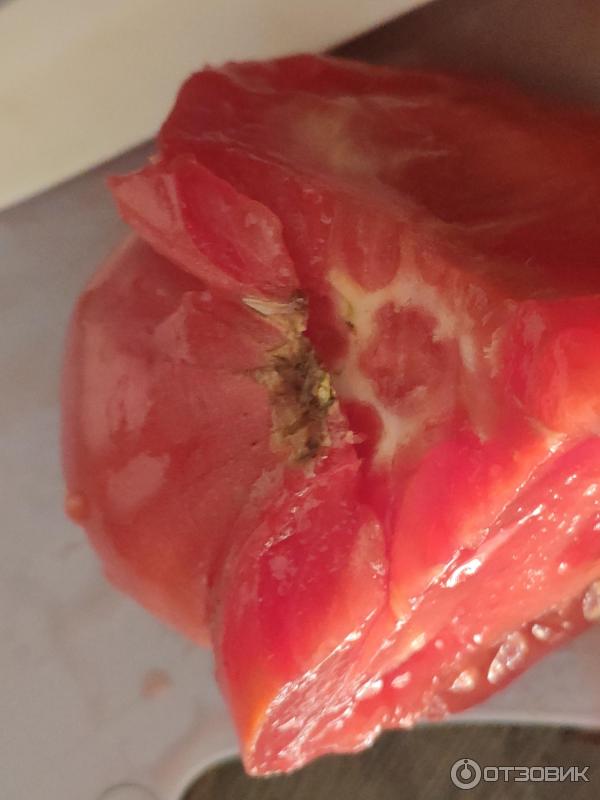
I always emphasize that I don’t like it when tomatoes have white veins and thickenings near the stem (like, for example, in the beautiful black-fruited variety with the “telling” name “Chernomor”).Surprisingly, even with such a huge weight (over 500 grams), these tomatoes have no lumps! Look at the photo below; I peeled away the skin around the stem, and the flesh is pink, with virtually no white.
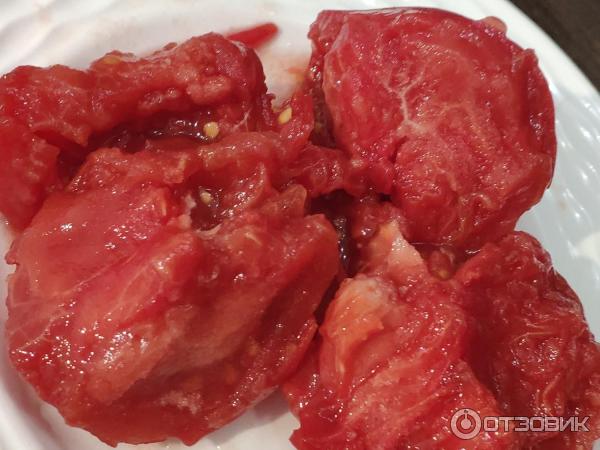
I broke the tomato apart with my hands. This made its sugar content more visible.
I look at this photo and my mouth is watering, it’s so delicious!
And here is the "Pink Giant" cut in half by a knife.
The aroma is divine! This is what real, homegrown tomatoes smell like, grown under the hot southern sun! A "live," authentic scent.
The pulp is dense, multi-chambered, sweet, with a rich “tomato” flavor.
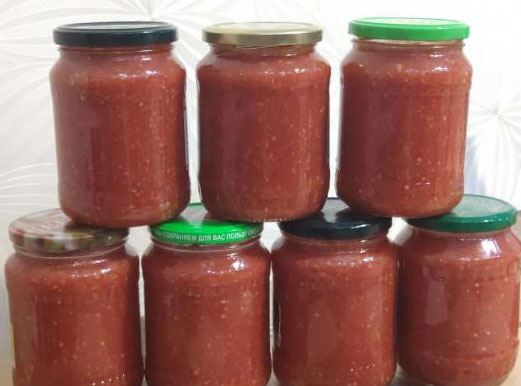
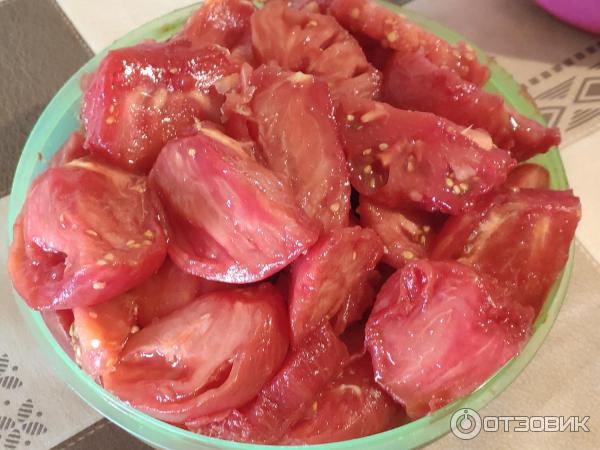
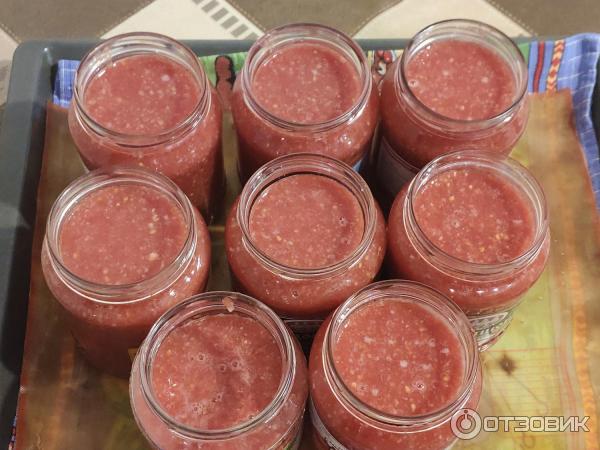
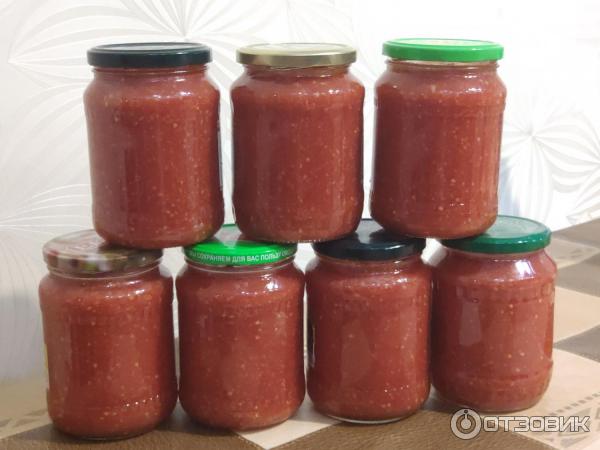
These tomatoes make the most delicious preparations for the winter.
The Pink Giant is easy to blanch. The thin skin comes off in a jiffy.
I processed five kilograms of tomatoes very quickly.
Preparations from the "Pink Giant" have a rich, sweet "tomato" flavor.
Thick and aromatic, the most amazing!
I highly recommend the "Pink Giant" variety for growing if you're willing to give it some care and attention. The bushes are tall, strong, and productive. Regular pinching and staking are essential. The plants require a lot of energy to produce abundant and consistent fruit, so I'd say fertilizing is "highly recommended." I try to use organic fertilizers, avoiding chemicals. But that depends on each person's goals and resources.
I know there are homemakers who strive for maximum fruit weight. With the "Pink Giant" tomato, it's possible to achieve magnificent fruits weighing over a kilogram. There are some rare specimens that reach record weights—almost two kilograms!
Such outstanding results are a kind of “sport”, which, thank God, I don’t indulge in.) I like “medium” giants, with a weight in the range of 300 to 500 grams (like, for example, the varieties “Ox’s Heart”, “Abakansky Pink”, “Puzata Khata” or “Sto Pudov”).
It's possible to achieve greater weight, but to do so, you need to adjust the number of flowers in the cluster and promptly remove excess ones, leaving the bare minimum. I don't like overly large fruits; to my taste, they look gnarled and less appetizing.
For me, the tomato varieties "Pink Giant" and "Pepper Giant" are beyond competition; I will definitely plant them again and again.
I've already collected fresh seeds for next season!
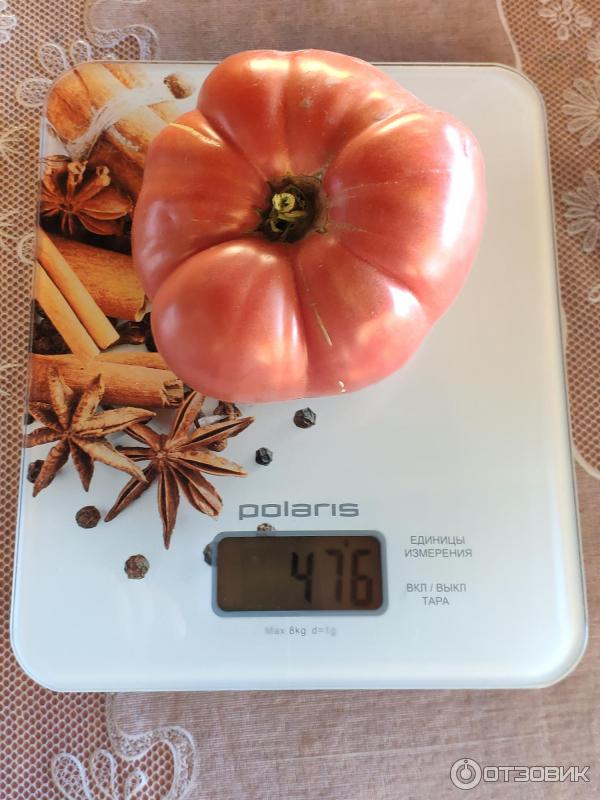
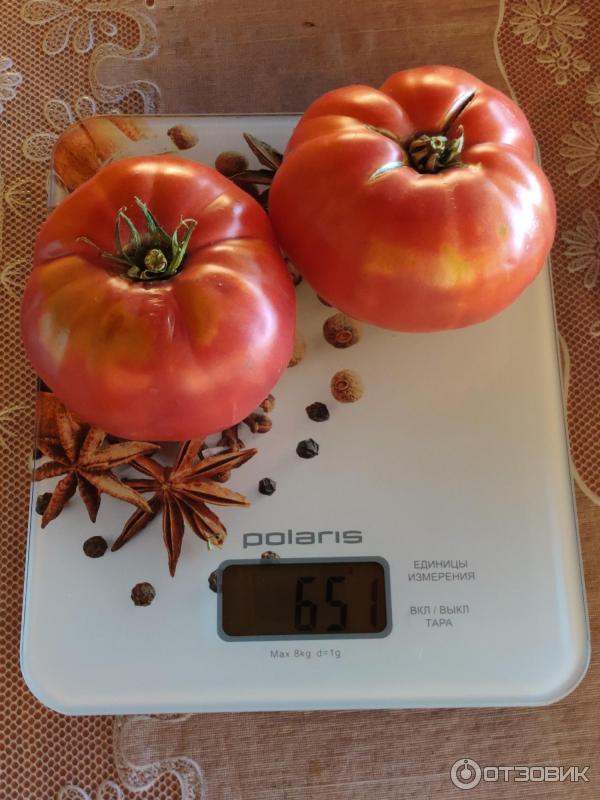
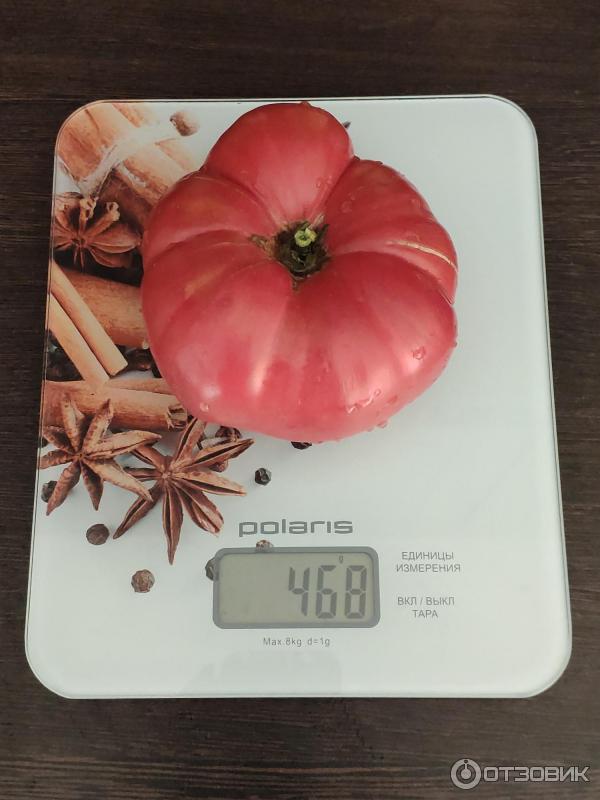
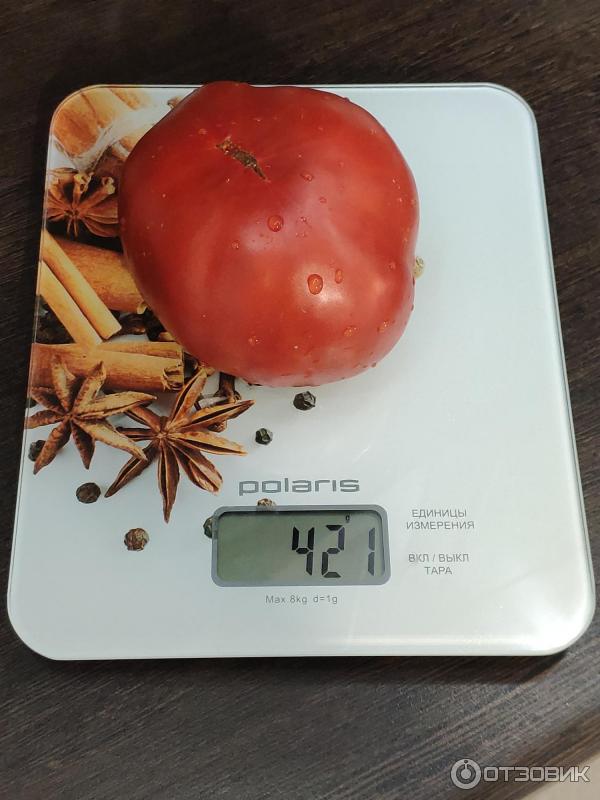
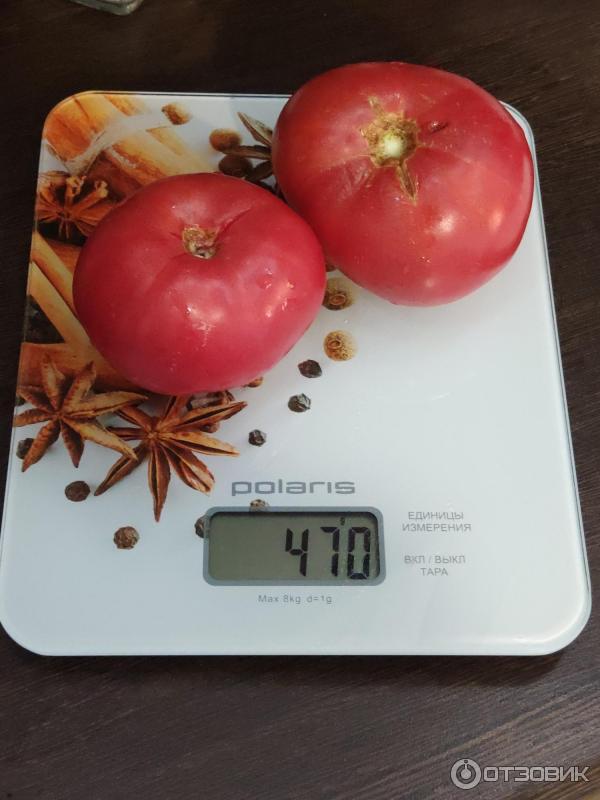
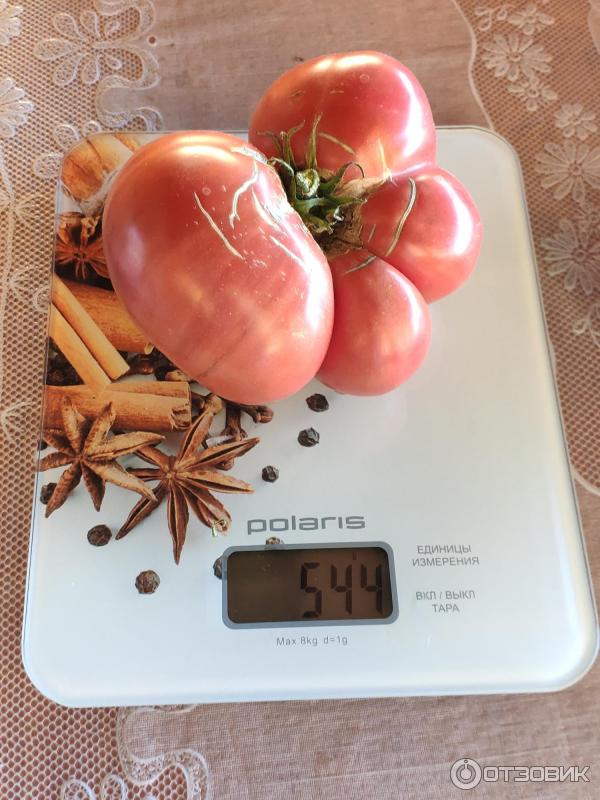
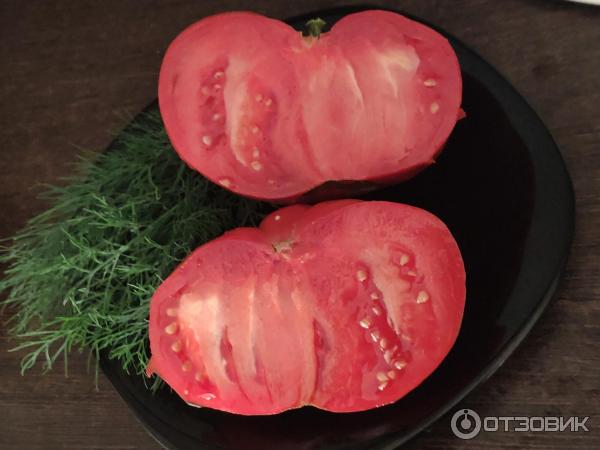
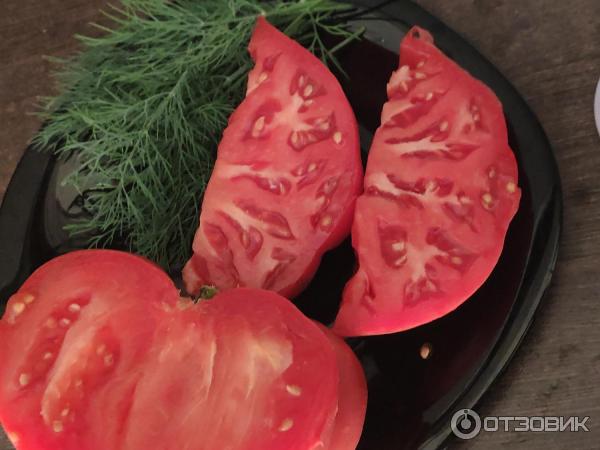
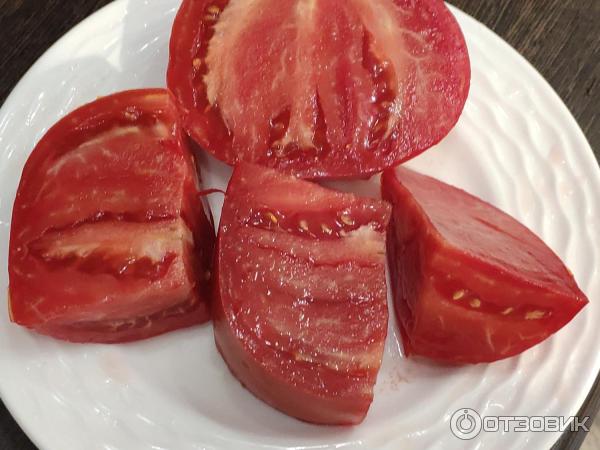
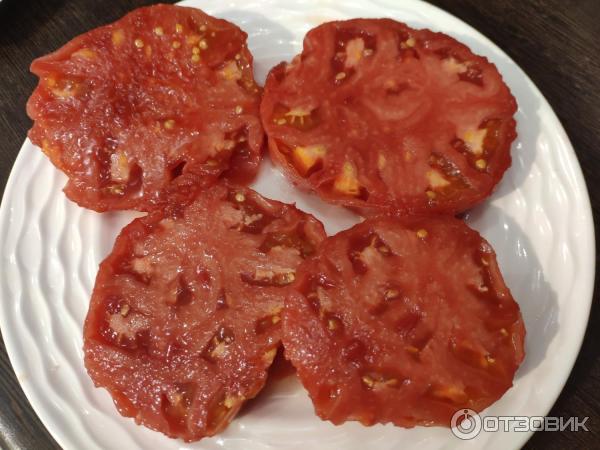

I purchased a packet of Pink Giant tomato seeds from the Russian Garden grower, along with many other varieties, drawn to the photo of the enormous tomato on the packaging.
There were a lot of seeds in the packet, about 30, so I sowed them all in a container, and the seedlings appeared in about a week. I think they all sprouted, but I delayed transplanting them a bit, and several died due to the crowding.After transplanting into individual cups, the seedlings developed well and also tolerated transplanting into open ground well.
It began to bloom early, but the first fruits appeared around mid-July, when other, earlier varieties were already bearing fruit in full swing.
The Pink Giant bush is not very tall, it grew to about 1.3-1.5 meters.
The fruits grow large, slightly irregular in shape, as if flattened.
There are only a few tomatoes on the bush, only about 10 pieces, and while the existing fruits are ripening, new ones are in no hurry to form.
The increase in fruit size is happening slowly; I already managed to clean out its neighbors in the bed twice while I was waiting for the Pink Giant to be ready to harvest its fruits.
The seeds are excellent, but the variety didn’t suit me. I’d prefer smaller, but more productive varieties.