The Siberian grape tomato is ideal for growing throughout Russia. It can be planted in a greenhouse or grown in an open garden bed, while maintaining high yields.
Content
- 1 Table with characteristics of the Siberian Grape tomato variety
- 2 Photo gallery of the Siberian Grape tomato variety:
- 3 The origin of the Siberian Grape tomato variety
- 4 A detailed description of the Siberian Grape tomato variety
- 5 Advantages and disadvantages of the Siberian Grape tomato variety
- 6 Features of growing the Siberian Grape tomato variety
- 7 Resistance of the Siberian Grape tomato variety to diseases and pests
- 8 Harvesting, use and storage of the Siberian grape tomato variety
- 9 Comparison of the Siberian Grape tomato variety with other varieties in the table
- 10 Gardeners' reviews of the Siberian Grape tomato variety
Table with characteristics of the Siberian Grape tomato variety
| Characteristic | Description |
| Description | Low-growing determinate tomato with early ripening period. |
| Ripening period | Up to 110 days |
| Fruit weight | 60-150 g |
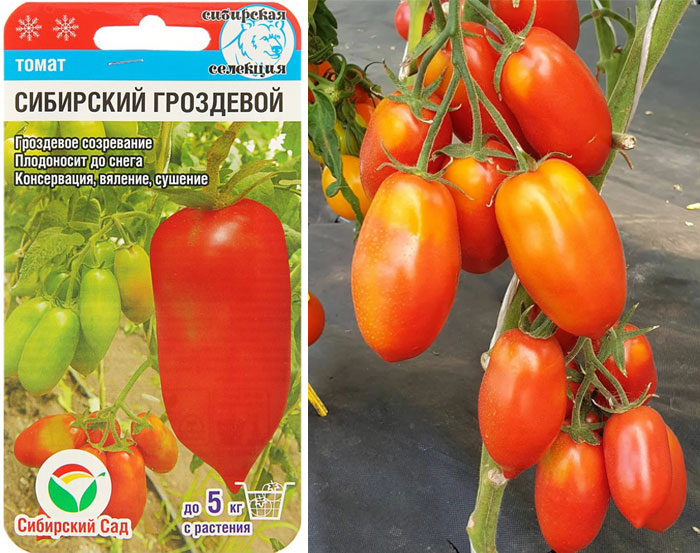
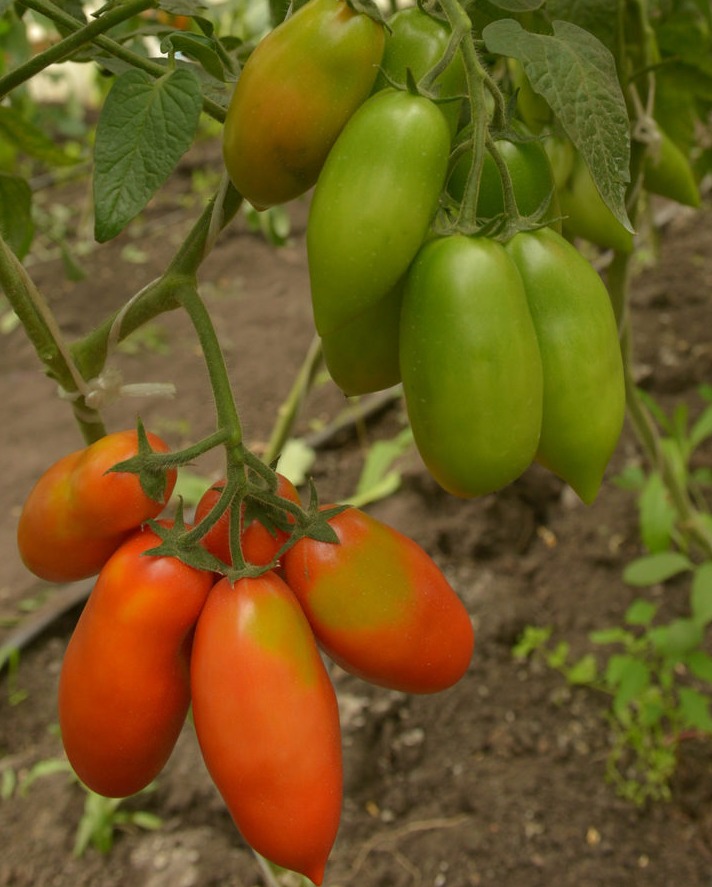
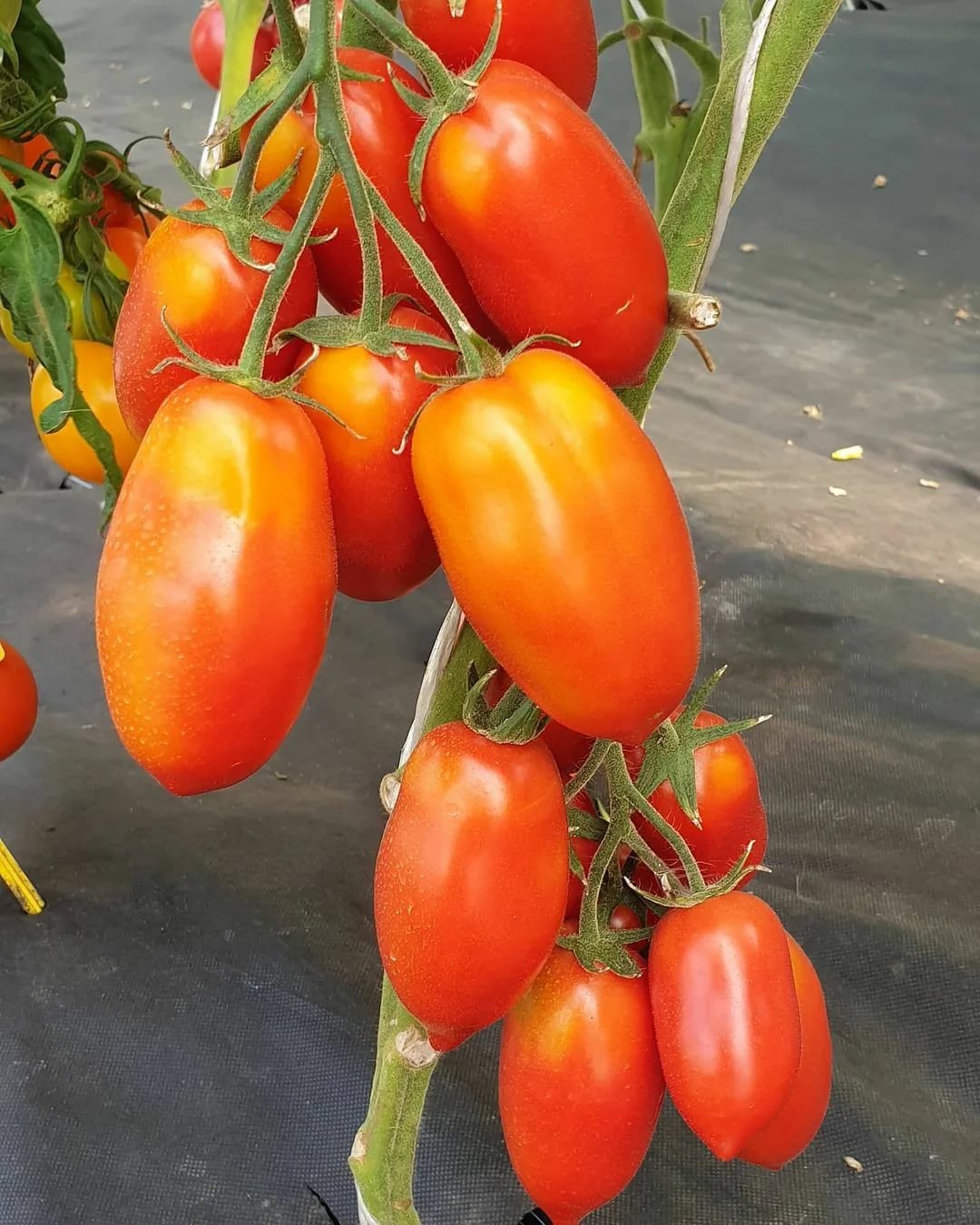
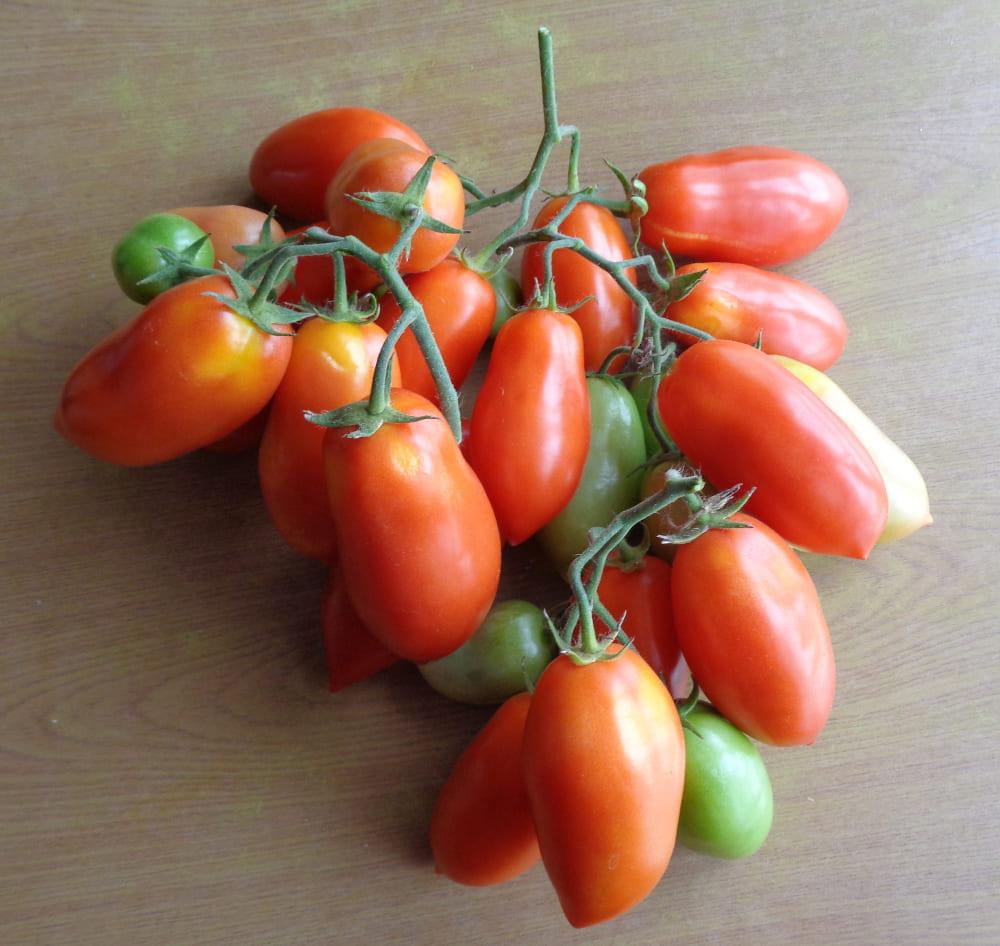
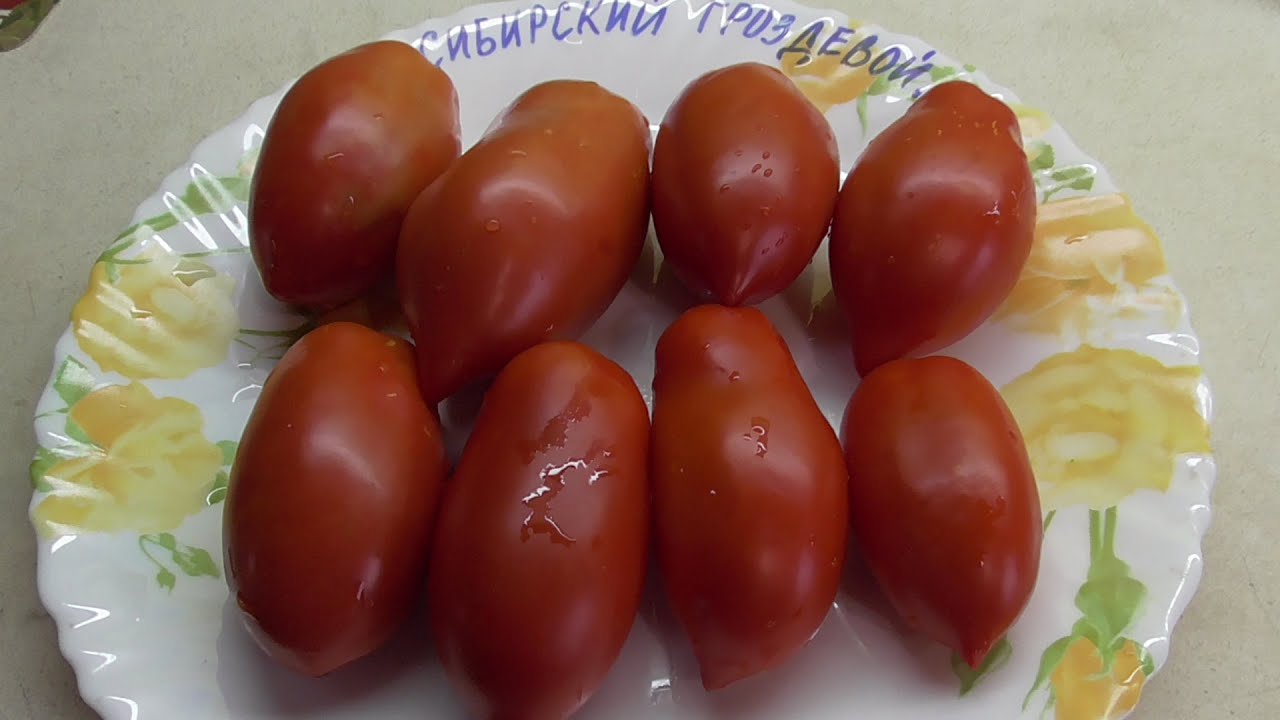
| Description of the fruit | Small, bright red tomatoes with an elongated oval shape. There are no ribs, and the skin is firm. |
| Productivity | 6.5-9 kg per bush |
| Usage | Tomatoes are excellent for whole-fruit pickling and canning. They can be dried, cured, and even used in a variety of dishes. |
| Preferred growing regions | Central Russia, the Urals, Siberia, the Far East. |
| Disease resistance | It has good immunity, demonstrating high resistance to fusarium, nematodes, tomato mosaic, and verticillium wilt. It rarely suffers from late blight. |
| Agricultural technology | Relatively low bushes require tying up shoots and shaping. |
| 2019 | |
| Country of origin | Postnikova O.V., agricultural firm Siberian Garden. |
Photo gallery of the Siberian Grape tomato variety:
The origin of the Siberian Grape tomato variety
For a long time, gardeners in Siberia and the Urals lacked the opportunity to choose from a wide variety of vegetables. But today, thanks to the efforts of breeders, a large number of tomatoes have been developed specifically for regions with harsh climates. One such variety is the Siberian Grapefruit. Its creator is Olga Valentinovna Postnikova, the founder, director, and driving force behind the Siberian Garden agrofirm.
The tomato was added to the State Register only a few years ago – in 2019.
A detailed description of the Siberian Grape tomato variety
The Siberian Grape variety is distinguished by its compact bushes and excellent yield, combined with strong immunity and ease of cultivation.
Bushes
This variety's shoots are determinate. In a greenhouse, they can grow up to 90 cm, while in open ground, their height is even smaller (about 70 cm). Despite its relatively small size, the variety requires support and tying.
Siberian grape tomato requires shaping, which is done with 2-3 stems. The more shoots, the more modest the yield.
The foliage is average. It is recommended to trim the lower leaves with sharp pruning shears as the fruit ripens.
Fruit
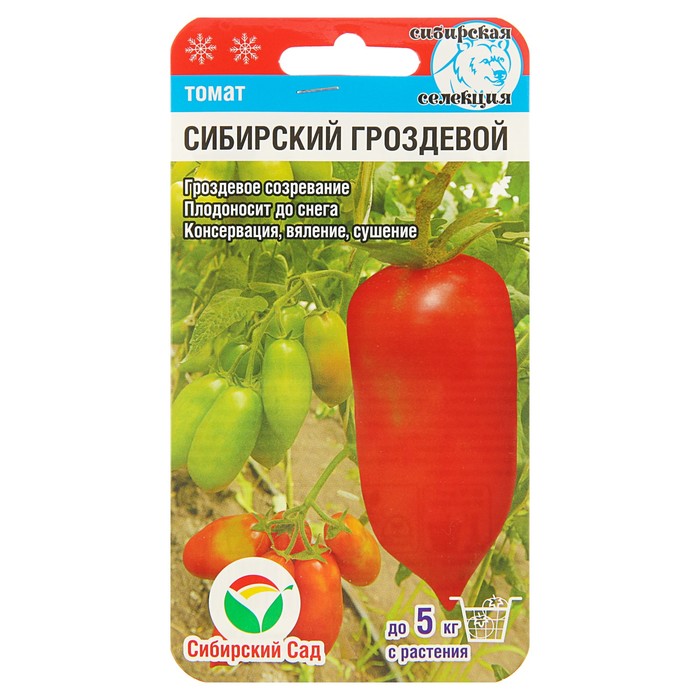
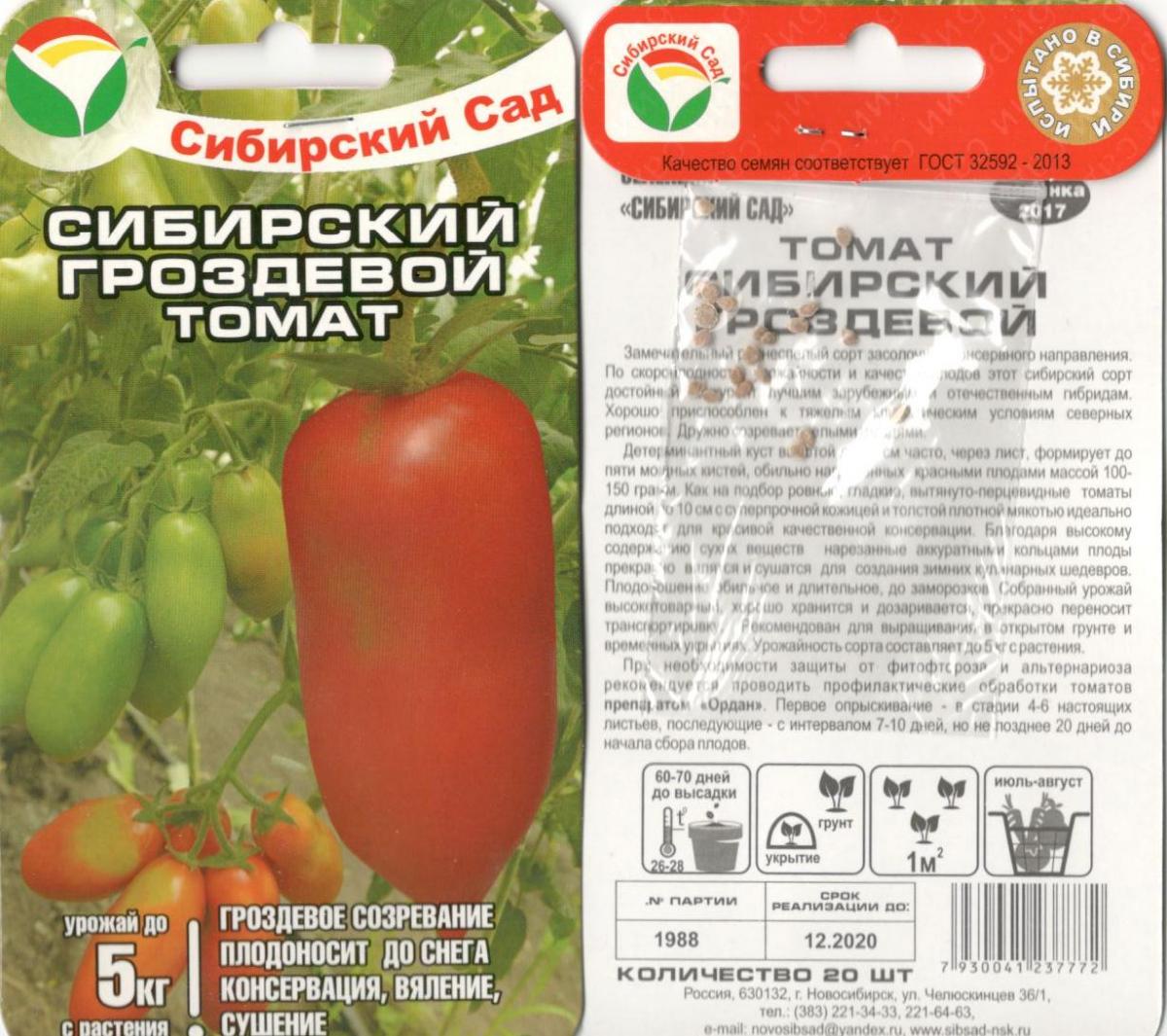
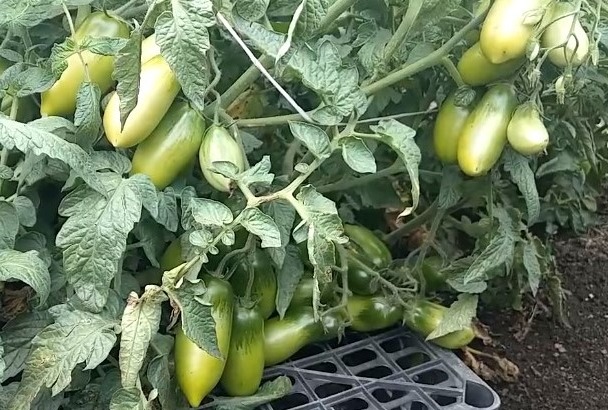
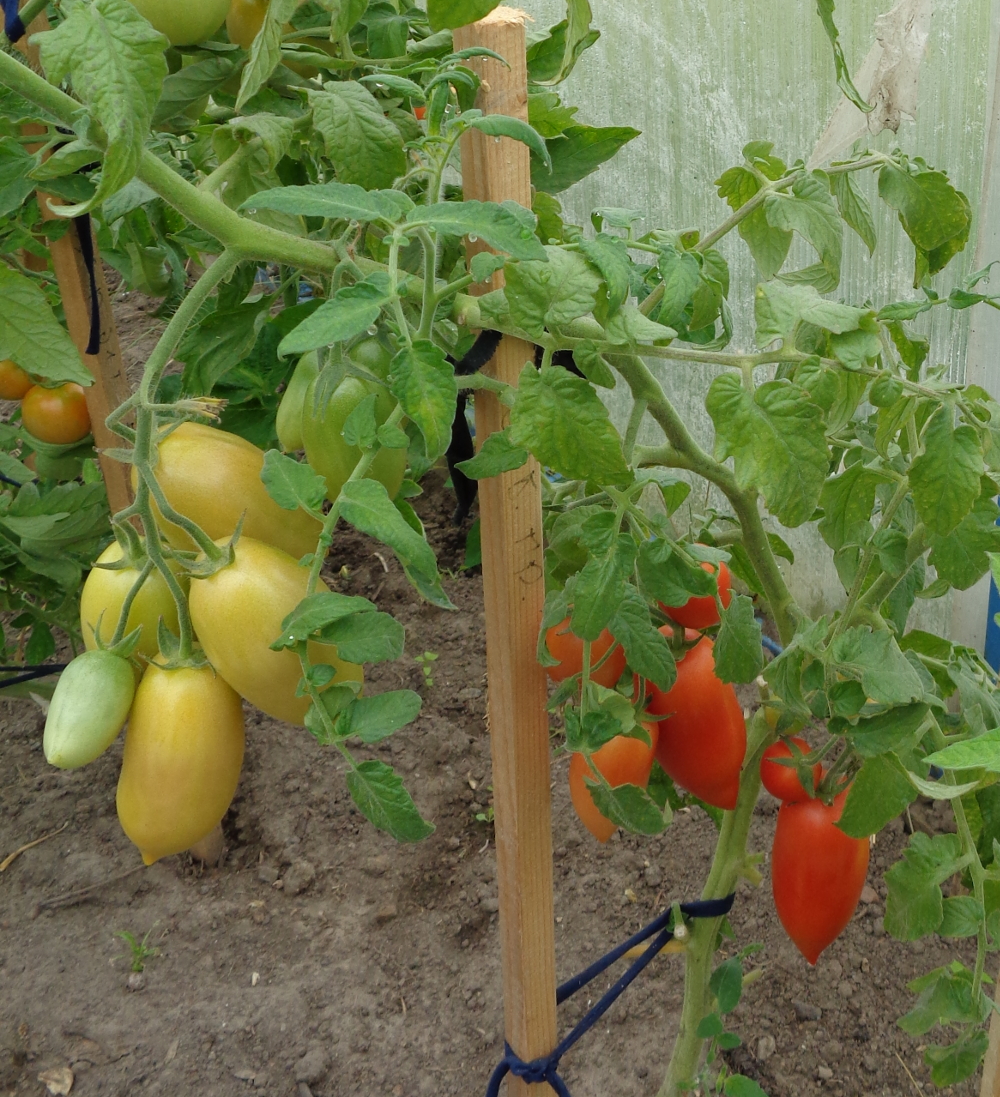
The fruits of the Siberian grape tomato, as the name suggests, are formed in clusters, more like bunches of 5-6 fruits each. From a distance, the tomatoes look very similar to peppers – the same oval-elongated shape, pointed tip, and bright red color.
The tomatoes are relatively light in weight, ranging from 60 to 150 grams. Their flavor isn't particularly impressive. However, due to their short growing season and low maintenance, the Siberian Grape Tomato has become one of the few varieties suitable for early salads.
The skin is very dense. It perfectly maintains the tomatoes' shape and prevents them from cracking in the jar or on the vine.
Productivity
The Siberian Grape variety is rightfully considered a high-yielding variety. In a greenhouse, each plant can yield up to 9 kg of tomatoes. In the open field, the yield is 6.5 kg per plant.
Ripening time
Siberian grape tomato ripens quickly. It takes about 110 days from germination to harvest.
Advantages and disadvantages of the Siberian Grape tomato variety
The Siberian Grape variety has its advantages and disadvantages, which are listed in the table.
| Advantages | Flaws |
|
|
Features of growing the Siberian Grape tomato variety
The Siberian grape tomato can be grown both in a greenhouse and in the open ground. With proper cultivation techniques, which don't require complex manipulation, it produces an excellent harvest with long shelf life.
Sowing seeds and growing seedlings
Siberian grape tomatoes are planted in the ground 60 days before they are planted in their permanent beds. The exact date varies by region. In the south, seeds are sown in late February or early March, while in the north, they are sown no earlier than April.
The best soil for tomatoes is a store-bought soil mix for tomatoes and peppers. If you can't find it, you can make a mixture of equal parts garden soil, humus, peat, and sand. Just be sure to calcine the mixture first to kill any potential microorganisms.
Fill the selected container halfway with soil. Next, make furrows approximately 1 cm deep. Place the tomato seeds in these furrows, then cover them with the remaining soil, ensuring the soil layer is no more than 1 cm thick. Water only with a gentle trickle, which can be achieved using a syringe, sieve, or spray bottle. Cover the container with glass or plastic wrap and place it in a well-lit area with a temperature of at least 24°C.
As soon as the tomatoes begin to actively grow, the cover is removed, and the box with the seedlings is moved to a cooler location with a temperature of 17°C for about a week. Then they are moved again – to a room with a temperature of 22°C. Another important factor is the quality of lighting. It should be continuous. Natural light is typically still very limited in early spring, so supplemental lighting with a special lamp will be necessary.
During this time, water the plants as the soil dries. The volume and frequency depend on the growing conditions and the size of the container. It's important to ensure that the soil doesn't remain dry for long periods, but waterlogging shouldn't be allowed.
Planting in the ground
It's best to prepare the soil in advance and dig it over in the fall, adding fertilizer (superphosphates, humus, potassium salt). In the spring, dig the bed again to ensure the tomatoes take root as well as possible. It's important to follow crop rotation rules—ideal predecessors include cabbage, greens, legumes, or cucumbers.
Ten days before transplanting, tomatoes begin preparing them for the new conditions by hardening them off. To do this, take the seedlings out onto the balcony, outside, or veranda every day. You can start with one hour, then increase the time to the maximum possible.
Holes about 25 cm deep are dug at a distance of 50 cm from each other. They should be of such a diameter that the bush, removed along with the root and the lump of soil on it, fits easily into the hole.
It is recommended to leave at least 70 cm between rows. The Siberian Grape variety requires mandatory support for shoots, and the bush is formed into 2-3 stems.
The top of the bed can be mulched with sawdust and straw 8 cm thick to retain moisture and protect from weeds.
Care, watering and fertilizing
Siberian grape vines don't require much care. For normal growth and development, the plants primarily need water. Watering should be done a couple of times a week. In hot weather, especially during flowering, the frequency increases. Water consumption per bush is approximately 5 liters. Initially, this amount is sufficient for 3-4 small plants. Watering should be done only in the evening to prevent residual drips from causing sunburn on the delicate leaves. It's best to use settled water that has been warmed in the fresh air. During flowering and fruit formation, water consumption increases to 15 liters per square meter.
The first fertilizers can be applied approximately 10 days after transplanting tomatoes. Experienced gardeners recommend fertilizing the soil three times per season: before flowering, when fruit set, and during ripening. You can use ready-made fertilizers, such as Signor Tomato or Aquarin Vegetable. However, some prefer organic fertilizers and infuse solutions of ash, mullein, weeds, and iodine. It is recommended to apply the fertilizer after watering. For greater effectiveness, you can pour the fertilizer into a furrow made around the bush or between the rows.
Another important procedure is loosening the soil. Unmulched beds often become covered with a dense crust, which prevents oxygen from penetrating. Therefore, it's necessary to loosen the soil and weed periodically.
Resistance of the Siberian Grape tomato variety to diseases and pests
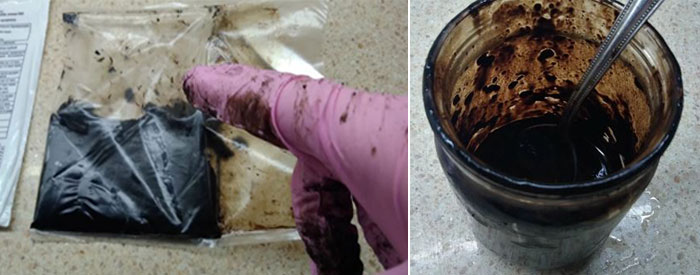
The Siberian Grape variety has good immunity, but gardeners aren't always able to maintain the correct humidity levels and watering ratios. Improper care can lead to the development of various rots and fungi. To minimize the risk of these diseases, it's recommended to spray the plants with Fitosporin and Bordeaux mixture. Oxychom can help combat the fungus in the early stages of infestation. It can also be used preventatively, treating the plants three times per season.
If there are anthills in the area, they can cause aphids to appear. To prevent this, it is recommended to treat tomato leaves with a solution of iodine (30 drops per 10 liters) and laundry soap (50 g).
To kill the cutworm, use Citcor or Fosbecid, and to deal with the whitefly, use Intavir or Fitoverm.
Harvesting, use and storage of the Siberian grape tomato variety
Tomatoes ripen within 110 days from germination. Depending on the region, the first harvest can be as early as July or August. If the weather is poor or the plants show signs of disease, the crop can be harvested earlier than planned, allowing it to ripen indoors.
Siberian grape tomatoes contain a small amount of liquid, making them ideal for drying and curing. However, due to their long shelf life, they can be eaten fresh for a long time. Their small size makes them ideal for whole-fruit canning.
Comparison of the Siberian Grape tomato variety with other varieties in the table
Please note! How can you easily convert centners/ha to kg/sq.m? Simply divide by 100! For example, the Abakansky Pink tomato yields 400 centners of marketable fruit per hectare. This equals 4 kg per square meter. It's that simple! Also, keep in mind that typically no more than 3-4 plants are planted per square meter. This way, you can calculate the yield per bush. In the case of the Abakansky Pink, it's about 1 kg.
| Variety | Ripening period (number of days from full germination to ripening)
Yield of commercial fruits |
Brief description | Fetus |
| Siberian grape | 110-120 days
The yield of commercial fruits in open ground was 8.5 kg/sq.m. |
A mid-late determinate variety for open ground and greenhouses. Suitable for salads. | Cylindrical, medium density, slightly ribbed, red, 89 g. Good taste. |
| Siberian garland | 90-95 days
1700-1900 c/ha |
An early-ripening indeterminate variety for open ground and greenhouses. Suitable for salads. | Flat-round, large, smooth, dense, red, 260 g. Excellent taste. |
| Siberian Shan'gi | 100-110 days The yield of commercial fruits in open ground was 5.6 kg/sq.m. |
A mid-season determinate variety for open ground and greenhouses. Suitable for salads. | Flat-round, medium density, slightly ribbed, raspberry, 157 g. Excellent taste. |
| Siberian pirouette | 85-100 days
The yield of commercial fruits is 6.0-6.5 kg/sq.m. |
An early-ripening determinate variety for open ground and greenhouses. Requires staking and training. Suitable for salads, pickling, and whole-fruit canning. | Cylindrical, smooth, dense, resistant to cracking, red, 65-70 g. Excellent taste. |
| Siberian tiger | 110-120 days
Up to 1200 c/ha |
A mid-season indeterminate variety for open ground and greenhouses. Requires staking and training into 1-2 stems. Suitable for salads and processing into tomato products. | Flat-round, ribbed, dark pink with dark purple streaks, 150-250 g. Excellent taste. |
| Siberian miracle | 110-115 days
The yield of commercial fruits under film covers is 10 kg/sq.m. |
A mid-season indeterminate variety for open ground and greenhouses. Requires staking and shaping. Suitable for salads. | Ovoid, smooth, medium density, red, 150-200 g. Good taste. |
| Siberian giant | 115-120 days The commercial yield of fruits was 9.0-11.0 kg/sq.m. |
A mid-early indeterminate variety for greenhouses. Suitable for salads. | Flat-round, large, medium-ribbed, loose, red, 400-500 g. Excellent taste. |
| Siberian bananas | 105-110 days
Up to 1500 c/ha |
A mid-season semi-determinate variety for open ground and greenhouses. Suitable for salads and canning. | Banana-shaped, smooth, yellow, 150-180 g. Good to excellent taste. |
| Abakan pink | 120 days or more
400 c/ha |
A late-ripening determinate variety for open ground and greenhouses. Requires staking and training. Suitable for salads and processing into tomato products. | Flat-round, slightly ribbed, medium density and pink in color, 200-500 g. Good taste. |
| Scarlet Mustang | 115-120 days
391 c/ha |
A mid-early, indeterminate variety for open ground and greenhouses. Suitable for canning. It has a very high marketability (97.3%). | Medium, cylindrical, hard, slightly ribbed, red, 95 g. |
| Fighter | 95 days 230 c/ha |
An early-ripening, determinate, standard variety for open ground and greenhouses. Suitable for salads, canning, and pickling. Marketability: 72%. Drought-resistant. | Cylindrical, smooth, red, 67-88 g. Good taste. |
| Casanova | 110-115 days
1080 c/ha |
A mid-season indeterminate variety for open ground and greenhouses. Suitable for salads. | Cylindrical, medium-density, slightly ribbed, red, 30-38g. Good to excellent taste. |
| Matador | 105-110 days
500-600 c/ha |
An early-ripening, determinate variety for open ground. Suitable for salads and whole-fruit canning. | Cylindrical, smooth, dense, red, 100 g. Excellent taste. |
| Khokhloma | 112-119 days
850-990 c/ha |
A mid-season indeterminate variety for greenhouses. Requires staking and training. Suitable for salads and canning. | Cylindrical, red, 108-127 g. Excellent taste. |
| Petrusha the gardener | 111-115 days 640 c/ha (open ground) |
A mid-season, determinate, standard variety for open ground. Suitable for salads. | Cylindrical with a pointed top, smooth, medium density, raspberry, 150-180 g. Good taste. |
Gardeners' reviews of the Siberian Grape tomato variety
The Siberian Grape variety has received many positive reviews from consumers, who note its ease of cultivation and adaptability to various weather conditions. However, they also note that the tomatoes often weigh less than the manufacturer's stated weight.