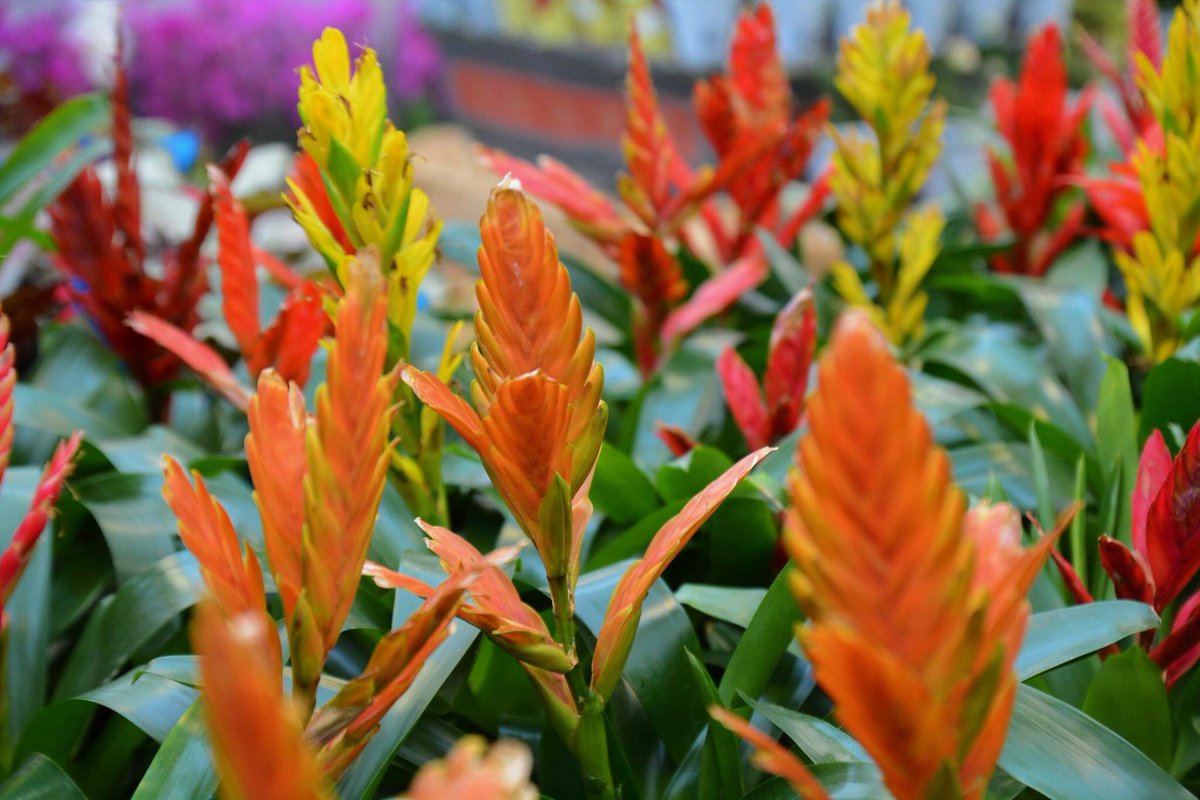
Vriesea (the correct name for friesea is from the Latin Vriesea) is a plant of the Bromeliaceae family, which gardeners love for its unusually beautiful inflorescence and ease of care.
Content
- 1 History of Vriesea
- 2 Botanical description of Vriesea
- 3 9 types of Vriesea with photos and descriptions
- 4 16 Vriesea varieties and hybrids with photos and descriptions
- 5 Planting and care of Vriesea depending on the time of year in the table
- 6 What to do immediately after purchasing a Vriesea
- 7 Caring for Vriesea at home
- 8 Pests and diseases of Vriesea (table)
- 9 Reproduction of Vriesea
- 10 Top.tomathouse.com warns: mistakes in caring for Vriesea
- 11 Signs and superstitions about Vriesea
- 12 The meaning of Vriesea in Feng Shui
- 13 How to Train a Vriesea Bromeliad Tree
History of Vriesea
This flower was first discovered in the forests of South and Central America. It was studied and described by the Dutch botanist Willem Hendrik de Vries. The flower was named in his honor. Its correct name is "friesia," and it would be more correct to call it that. However, in our country, houseplant reference book compilers thoughtlessly translated it with a "V." This is the origin of the distortion that led to the flower's current name, "vriesia."
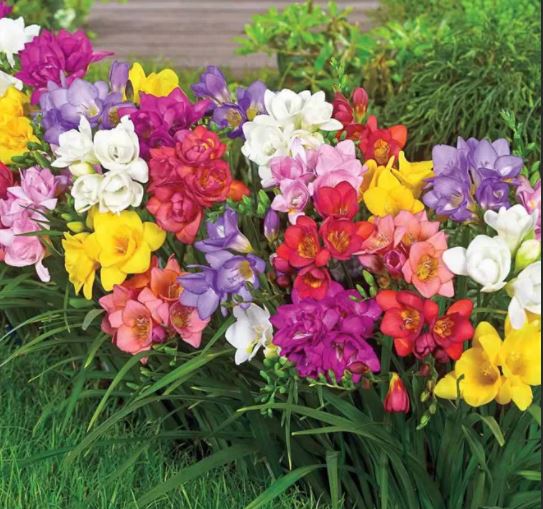
Important! Don't confuse Vriesea with Freesia. The latter belongs to the Iridaceae family. It is a genus of African perennial herbaceous bulbous plants.
Botanical description of Vriesea
Vriesea is an ornamental perennial plant of the Bromeliad family. In its natural habitat, it is epiphyte, as it prefers to grow by clinging to its taller neighbors. This position gives it an advantage, as Vriesea receives more light and has virtually no competition with other plants for water and oxygen.
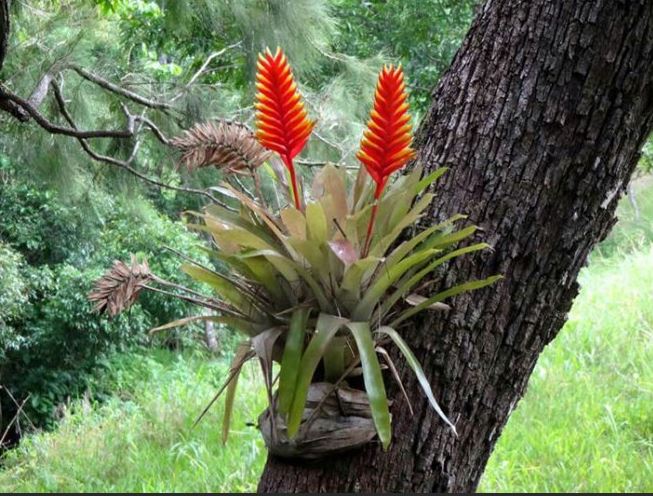
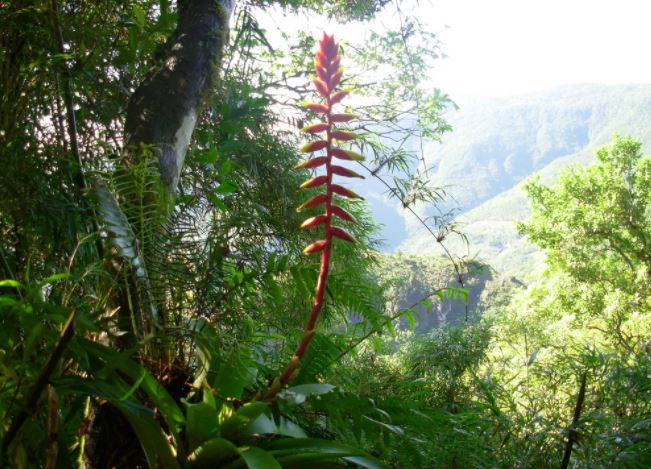
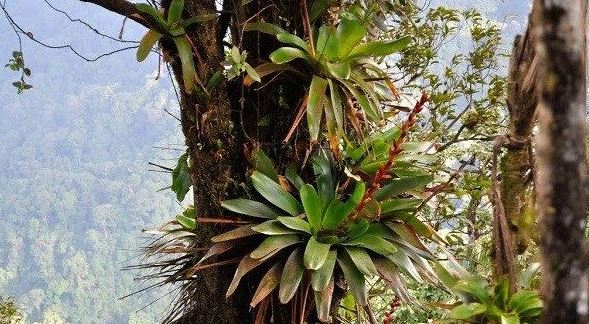
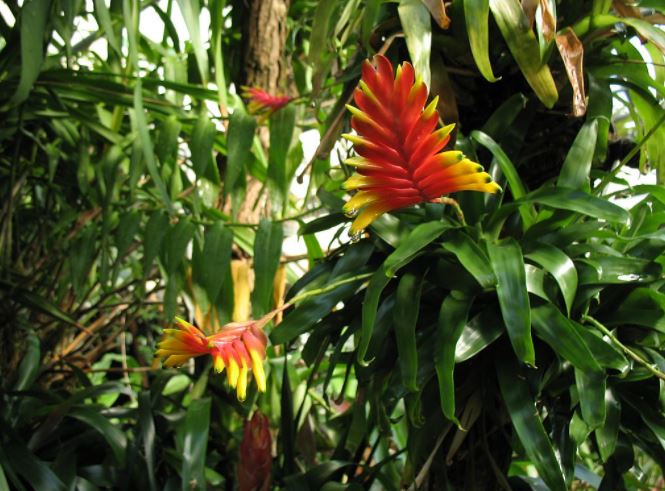
In nature, it is most often found in the tropics of South and Central America, in the south of Brazil and Argentina, as well as in Western India.
The leathery, smooth-edged leaves grow in such a way that a rosette forms at their base. This rosette serves as a reservoir for collecting rainwater, which feeds the plant. The leaf can reach 8 cm in width and 80 cm in length. The color of the leaf depends on the cultivar.
During flowering, a peduncle emerges, which can reach 1 meter in length. The inflorescences are spike-shaped and multi-flowered. The coloring can be uniform or multicolored, depending on the variety. The peduncle lasts for a very long time, over a month. After flowering, a seed capsule appears.
The Vriesea's root system is poorly developed. Epiphytes, which include this plant, rarely use their roots for nutrition, merely clinging to support themselves above ground. The plant obtains all its essential nutrients from the rosette of leaves. In tropical conditions, it can sometimes store up to 4.5 liters of water.
You may be interested in: All about growing guzmanias.
9 types of Vriesea with photos and descriptions
Florists have conventionally divided the entire variety of Vriesea, which includes about 250 species (indoor - 150), into two large groups: with solid green leaves and with leaves of various colors.
Vriesea with green leaves
First of all, let's talk about this type.
Keeled (Vriesea carinata)
The species was discovered in 1866. In the forests of Eastern Brazil, the keeled vriesea grows equally well on the ground and in trees.
The leaves are pale green, reaching up to 5 cm in width and 20 cm in length. The entire leaf surface is covered with barely noticeable small scales. The peduncle is erect, growing up to 30 cm. Its tip ends in a wide inflorescence just 4-5 cm high. The bracts are narrow, pointed, and most often bright red, while the edges and tips are yellow or green.
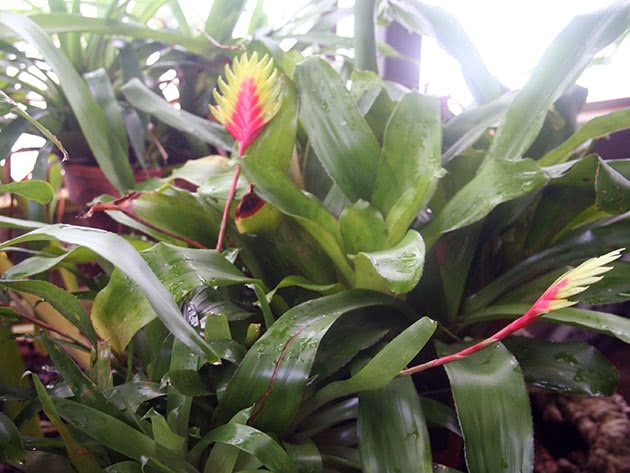
Flowering begins in early to mid-summer. Under favorable growing conditions, it may recur in late fall or early winter.
Royal (Vriesea regina)
In the wild, this is a gigantic plant. The leaves grow up to 1.2 m, sometimes reaching 18 cm in width. These dimensions are typical of the royal vriesea, which grows in the forests of Brazil; in domestic settings, these dimensions are often much more modest. The flower stalk is also large, reaching 2 m in length. The inflorescence resembles a drooping, branched panicle. Initially, the flowers are white, but later turn yellow. The bracts are pinkish. During flowering, the space is filled with a pleasant aroma.
Parrotfish (Vriesea psittacina)
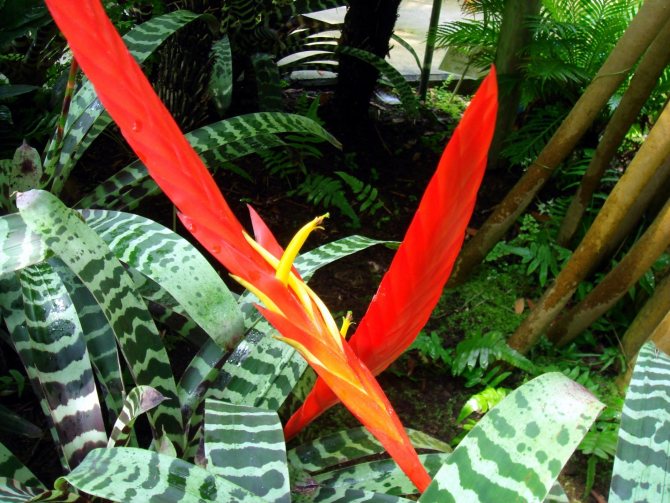
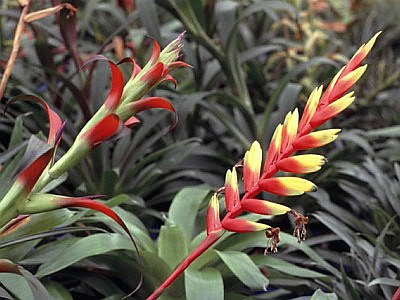
The plant gets its name from the shape of its inflorescence, which closely resembles a parrot's feather: the slightly pointed flower stalk is bright red, gradually fading to orange and ending in a yellow bract. The leaves are long, dark green, and oblong. The leaf blade is slightly widened at the base, which is necessary to form a spacious rosette.
Vriesea with variegated leaves
Now let's look at species with variegated leaves.
Splendens or shiny (Vriesea splendens)
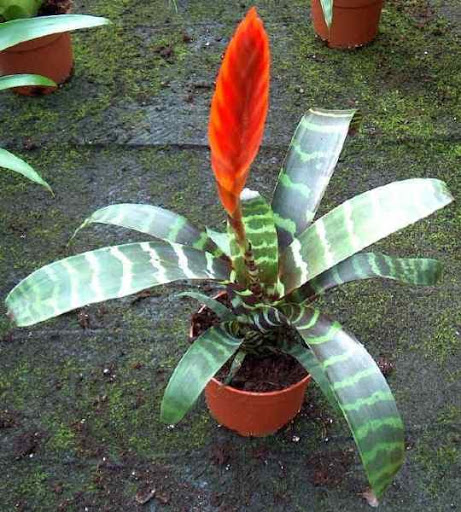
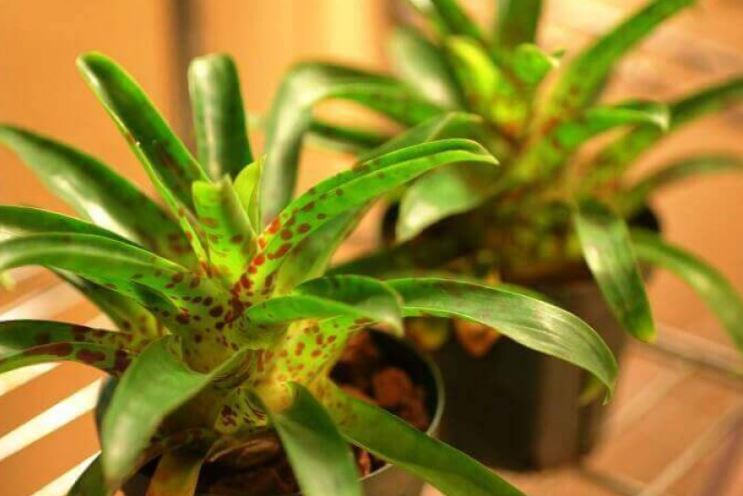
The leaves are unevenly colored in varying shades of green, giving them a striped or variegated appearance. The blade can reach 80 cm in length and 8 cm in width. The flower stalk grows up to 1 meter, the inflorescences are spike-shaped, and the coloring can vary depending on the variety. The flowers fade within a few days, while the stiff bracts can retain their decorative appeal for several months.
Perforated (Vriesea fenestralis)
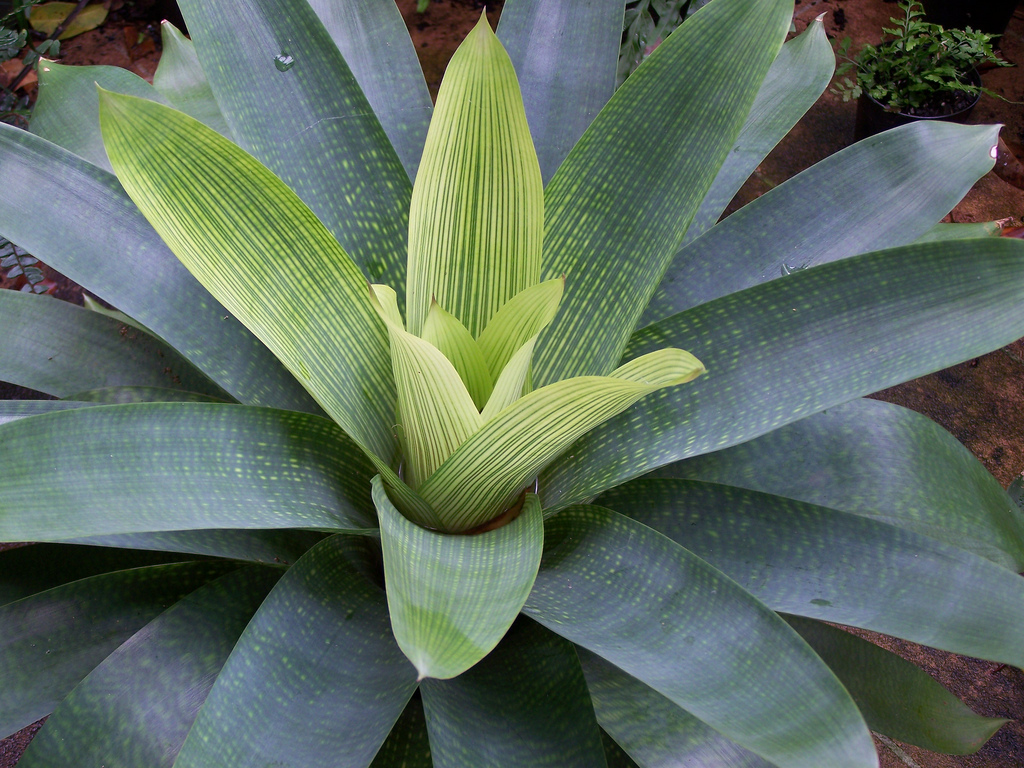
The leaves reach 40 cm in length and 6 cm in width. The leaf blade is light green, and its entire surface is covered with numerous dark green veins, giving the leaf a perforated appearance. The peduncle reaches 50 cm in length, the inflorescence is light yellow and 9 cm high, and the bracts are speckled with dark green. The plant is grown in greenhouses.
Giant (chessboard or mosaic, Vriesea gigantea or tessellata)
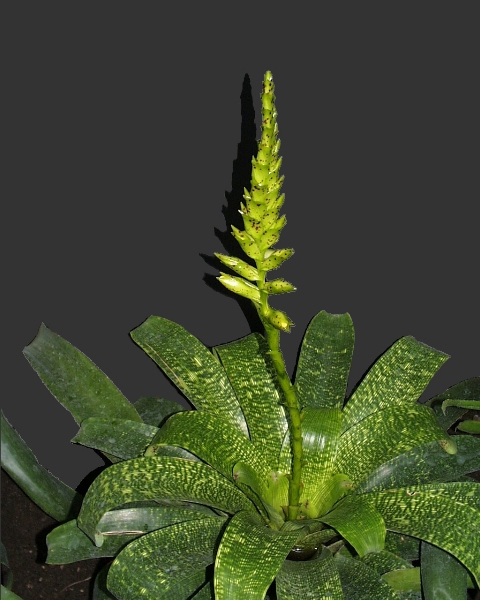
The leaves are broad but relatively short. They are light green, and the entire surface is speckled: lilac on the back and light yellow on the outside. The flower stalk can reach 2 meters in height, with wide, yellow inflorescences. However, growing giant vriesea indoors is very difficult, and it rarely blooms in cultivation.
Sanders (Vriesia saundersii)
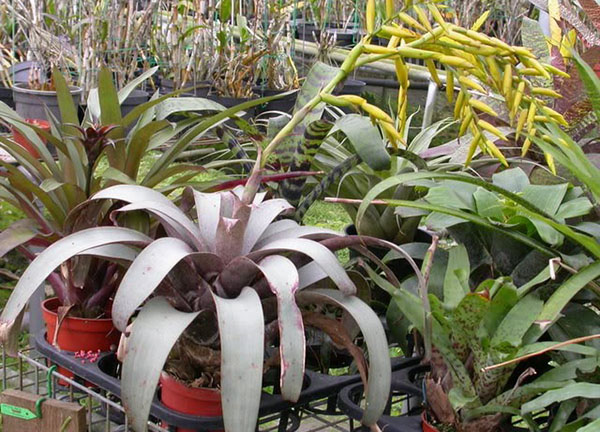
The leaves are elliptical, up to 30 cm long. The underside of the leaf blade is speckled with small dark spots, while the outer side is covered with ash-gray scales. The peduncle is crowned with an inflorescence up to 15 cm in size. This inflorescence is paniculate with yellow leaves up to 3 cm long.
Hieroglyphic (Vriesea hieroglyphica)
It has large green leaves up to 90 cm long with a light yellow pattern reminiscent of hieroglyphs. The reverse side of the leaf blade has a reddish-purple hue. The inflorescence is paniculate, yellowish-green, and up to 50 cm tall. It does not bloom indoors.
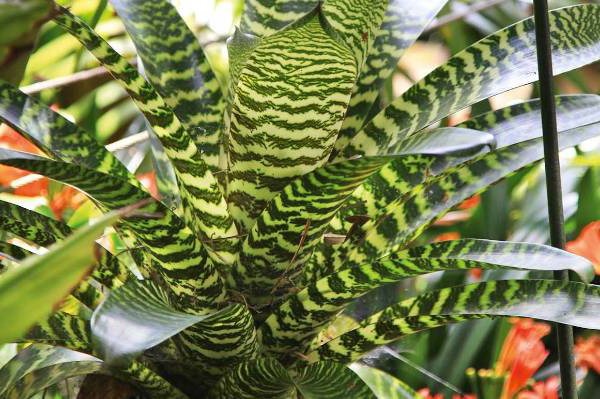
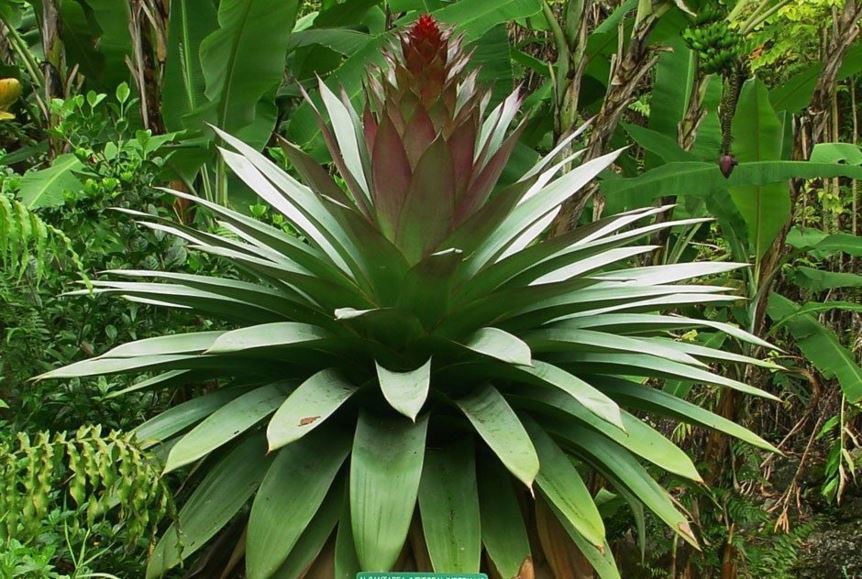
Large or imperialis (Vriesea imperialis)
The leaves are large and wide (up to 1.5 m long, 10-12 cm wide), green, and curled at the apex. The peduncle is densely covered with leaflets and is strong. The inflorescence is a branched panicle of 35-40 large yellow-white flowers 15-17 cm long. The bracts are red or green.
We also recommend reading the article about Aechmea and growing it at home.
16 Vriesea varieties and hybrids with photos and descriptions
The most numerous variety is Vriesea Splendens, which has become widespread in indoor gardening and is most often found in greenhouses and winter gardens.
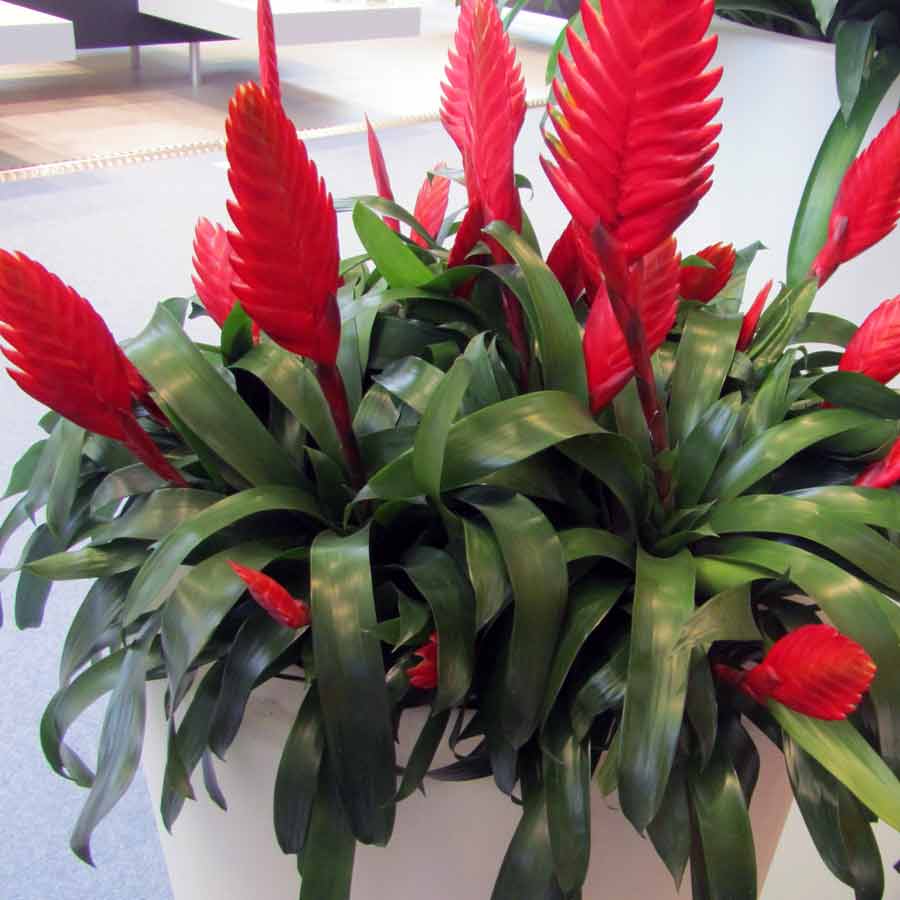
- Splenriet – distinguished by light green leaves with deep green transverse stripes, a marbled (tiger) coloration. The flower stalk bears a paniculate, bright red inflorescence. Height: 30 cm. One of the most common varieties in indoor gardening. Blooms from June to August.
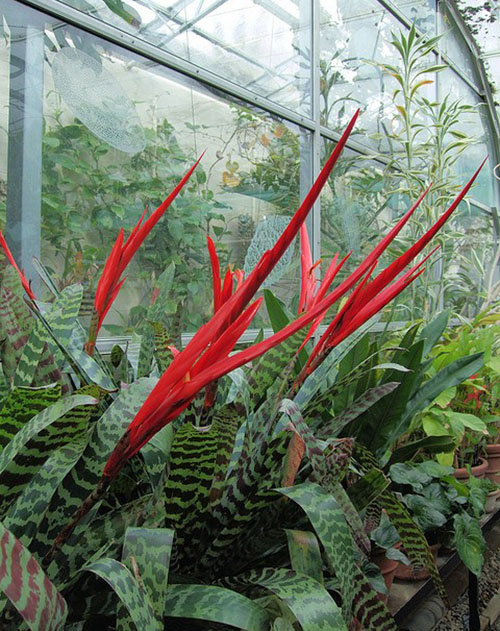
- Astrid The spike-shaped inflorescence is crimson. The leaves are narrow, light green, and softer in color than other varieties, slightly curling at the tip, growing up to 45 cm. This variety is distinguished by its abundant flowering: up to five red flower stalks up to 1 meter tall can be produced at a time. It blooms in late winter and remains decorative for several months. It blooms profusely.
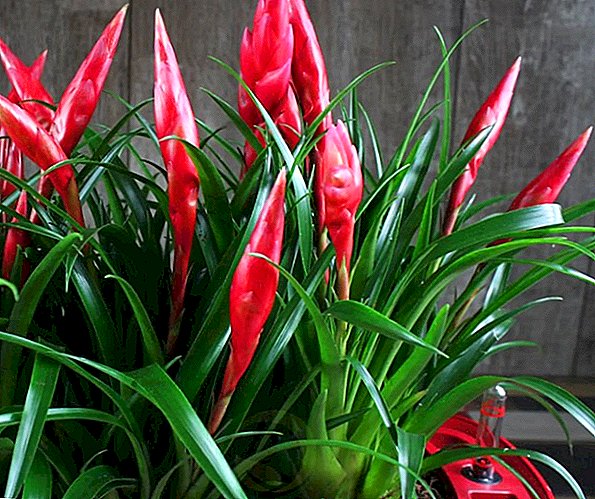
- Shannon – This variety is similar to the previous one. It has the same narrow green leaves. They differ in the color of their prebracts. While Astrid's are bright red, crimson, Shannon's are very unusual: they start with a soft red and end with yellow plumage.
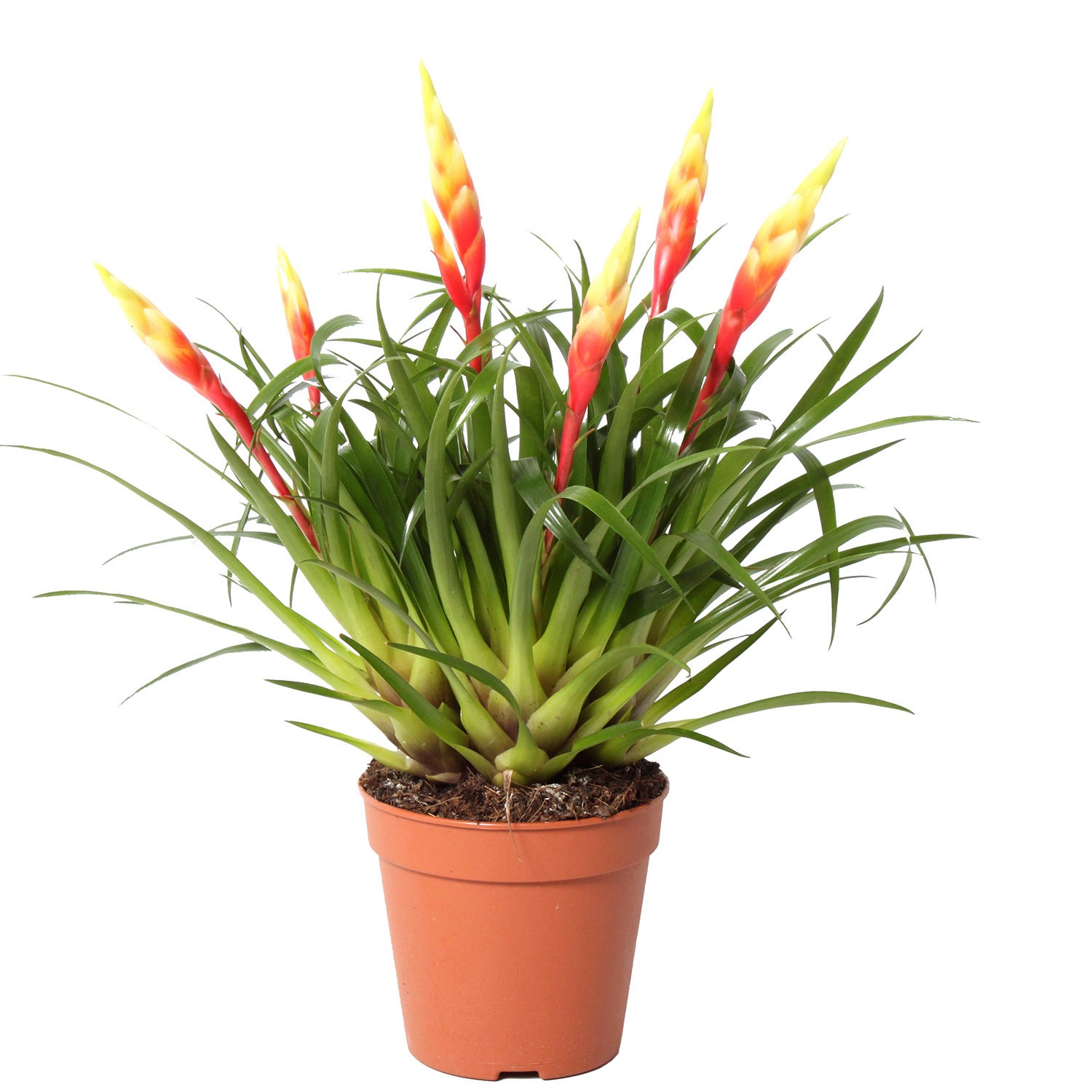
- Elan This variety features branched bracts ranging from light to dark red, with serrated tips that are always a soft cream. The leaves are smooth, a uniform green, slightly turned outward, long, and narrow. Flowering begins in early spring.
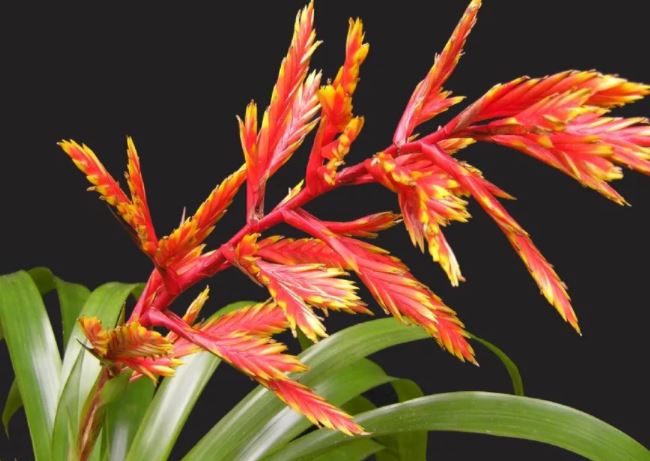
Other hybrids and varieties:
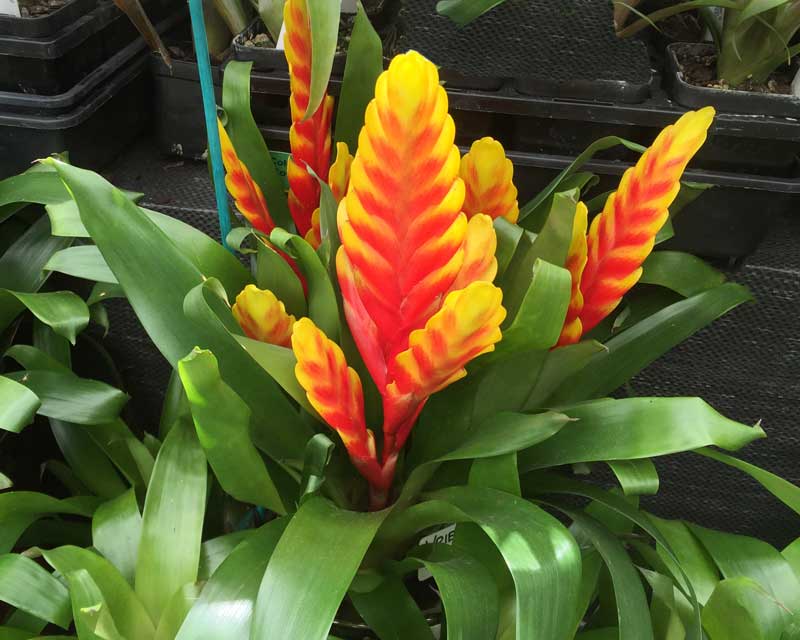
- Davina This hybrid is the result of extensive breeding efforts. It is small in size (up to 30 cm tall). The bracts are bright red-yellow. It blooms for a long time. The leaves are light green and leathery.
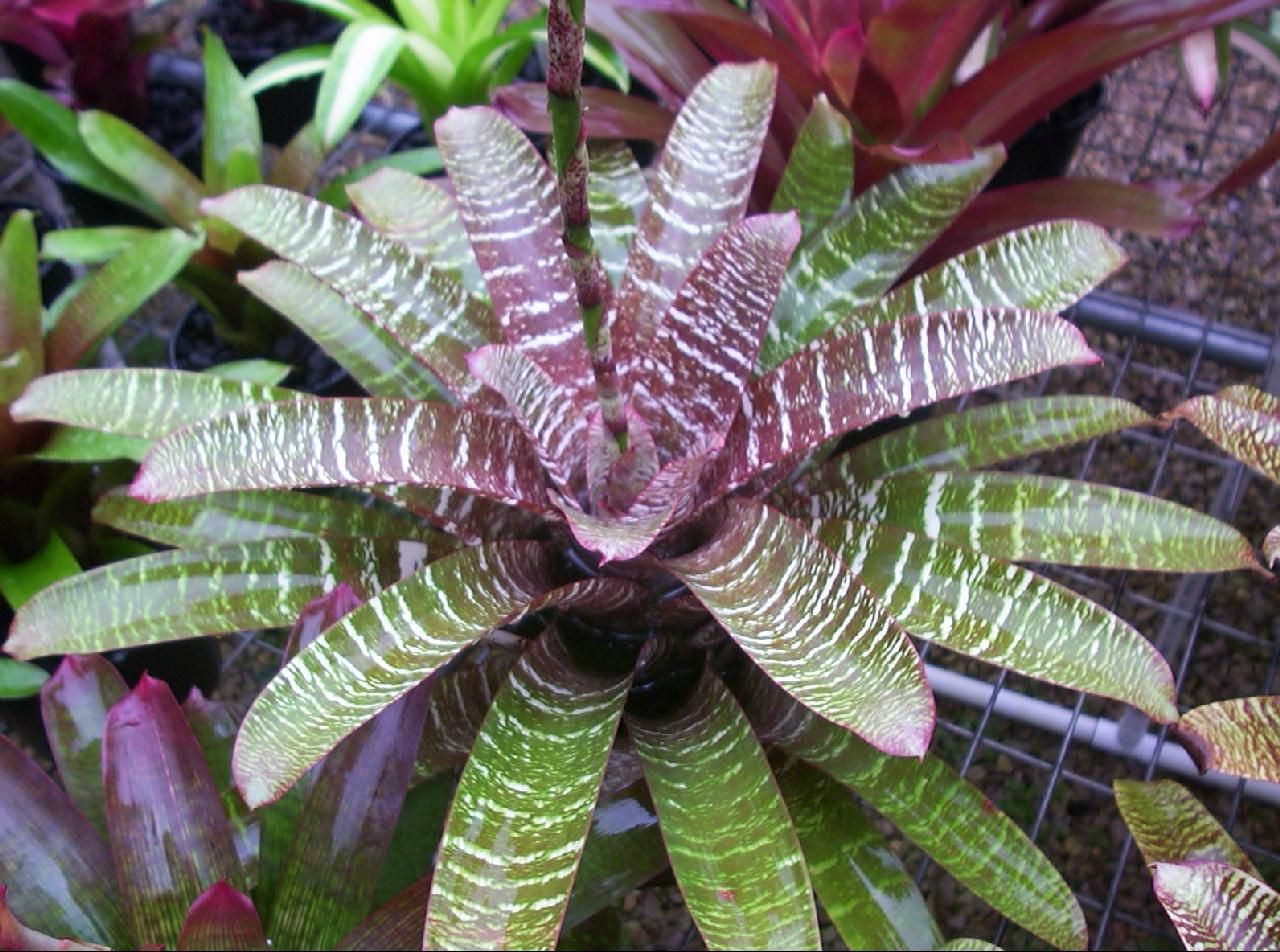
- Red Chestnut – grows up to 40 cm, valued for its unusual red-pink leaves, speckled with light stripes.
- Kristian Variegata – has a bright red inflorescence, dark green leaves with a light longitudinal stripe, grows up to 45 cm.
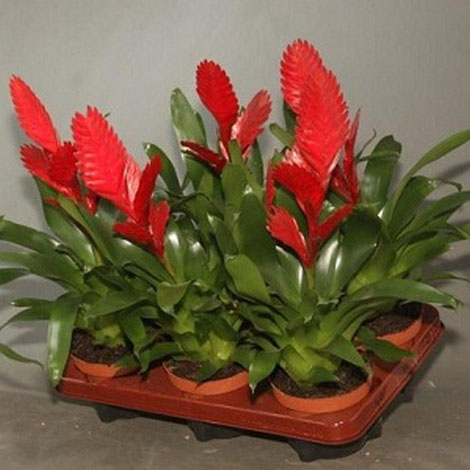
- Intenso Orange – is distinguished by its bright orange inflorescence, the length of the leaves is 30 cm. The height is up to 60 cm.
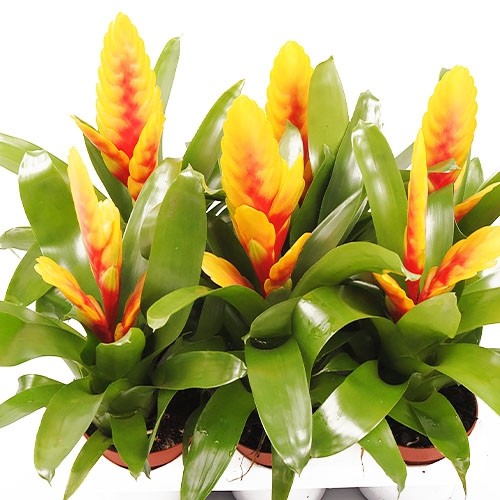
- Poelmani Barbara (Barbara) – scarlet inflorescence, leaves up to 50 cm long, slightly bent at the top.
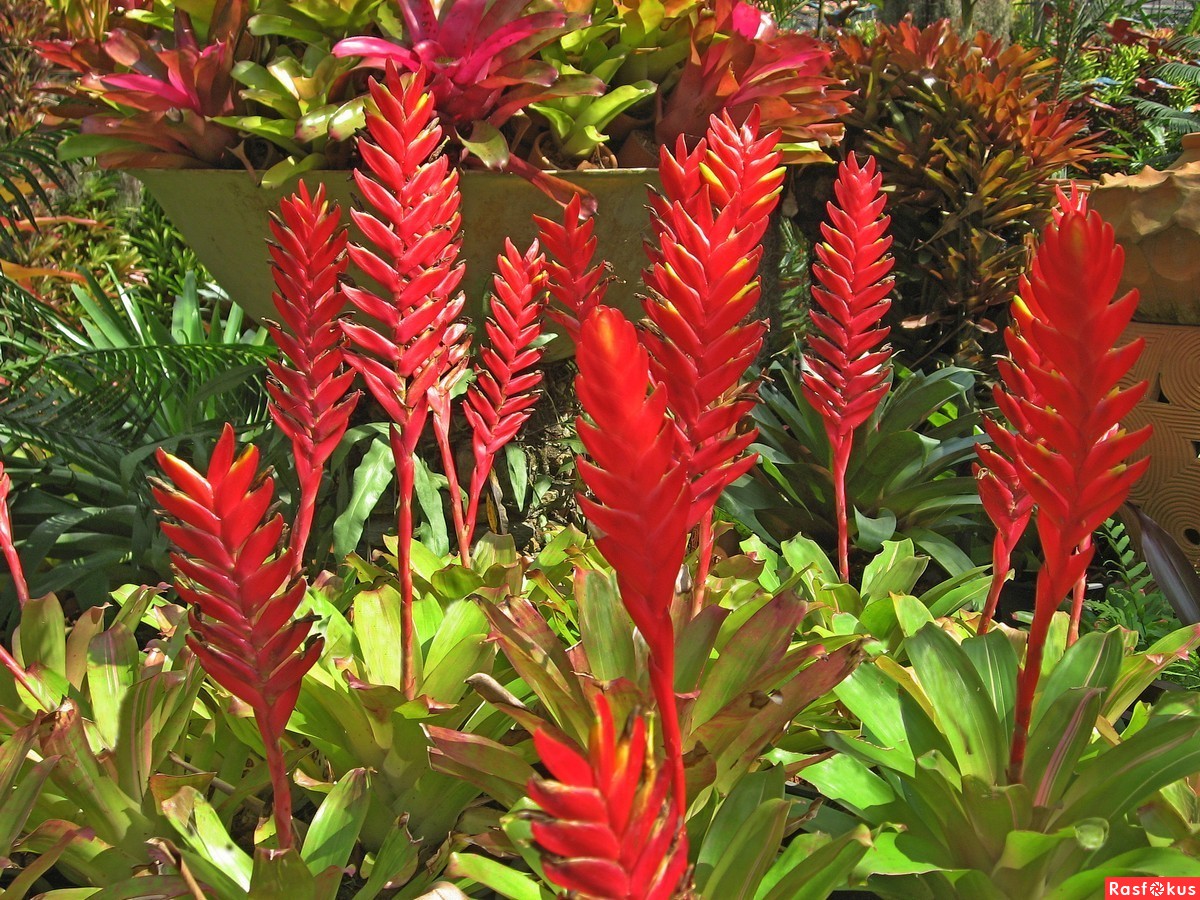
- Evita – the inflorescence is yellow-orange, the height of the plant is about 35 cm.
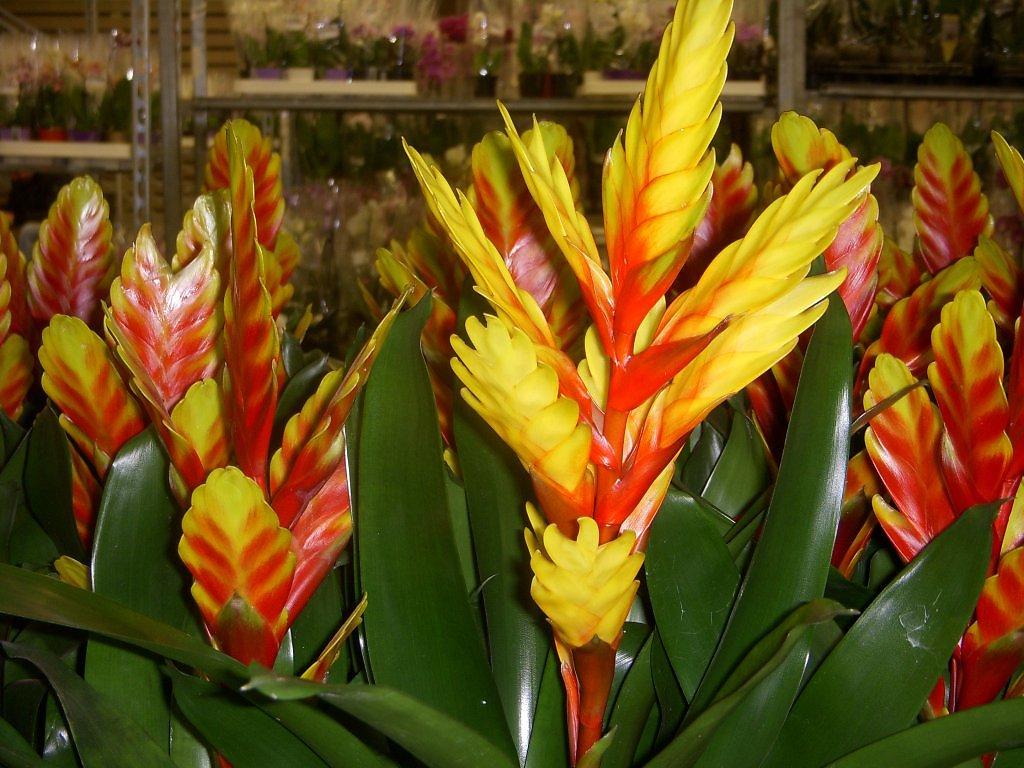
- EraIt is distinguished by its wide, but not overly long, leaves, which have a distinct striped pattern. It blooms in summer, with red inflorescences.
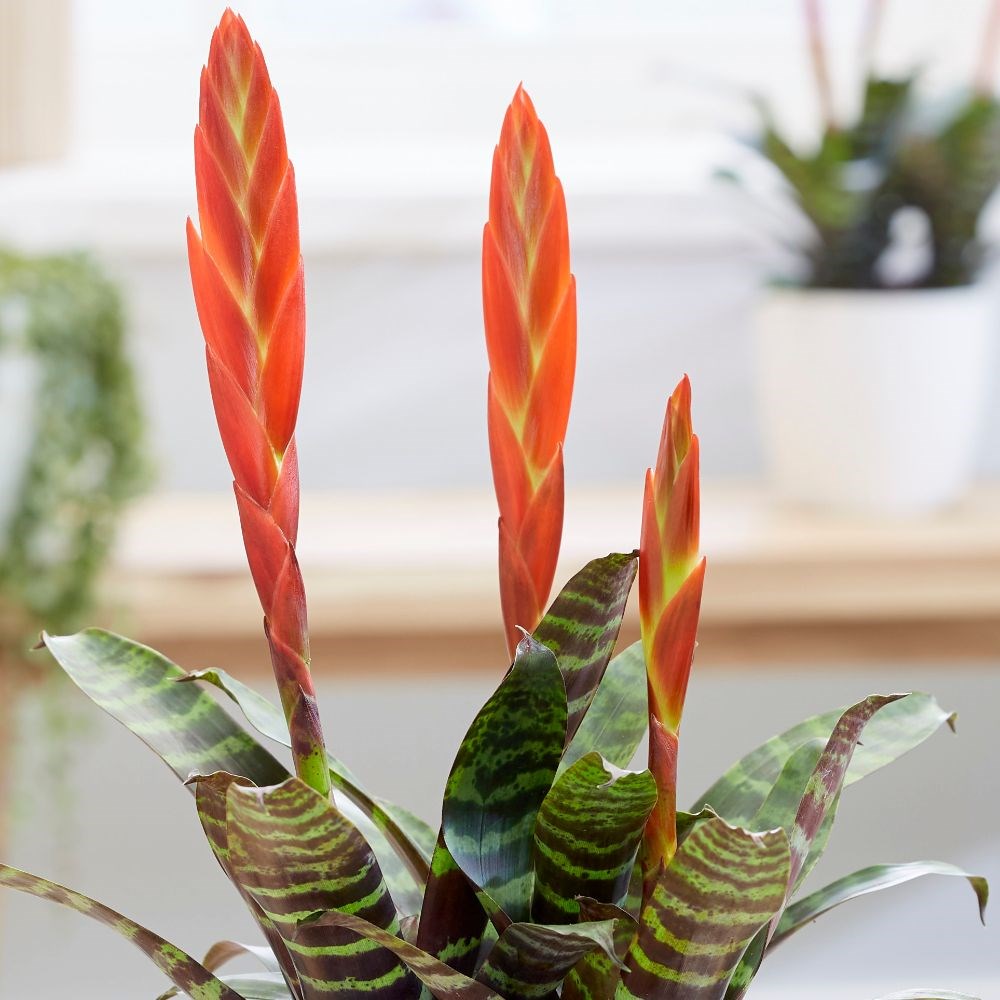
- StreamThe leaves are wide, very dense, but not too long. A long, slightly branched, and flat peduncle emerges from the center of the rosette, with bright red inflorescences.
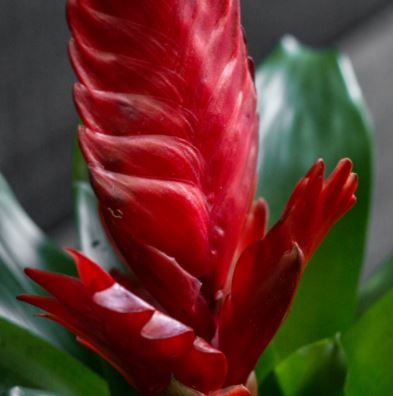
- StyleIt is distinguished by its bright green, stiff leaves. The flower stalk can grow up to 50 cm, is bright red, and is branched, creating the impression of lush blooms. The flowers fall quickly, but the dense bracts ensure a long-lasting decorative effect.
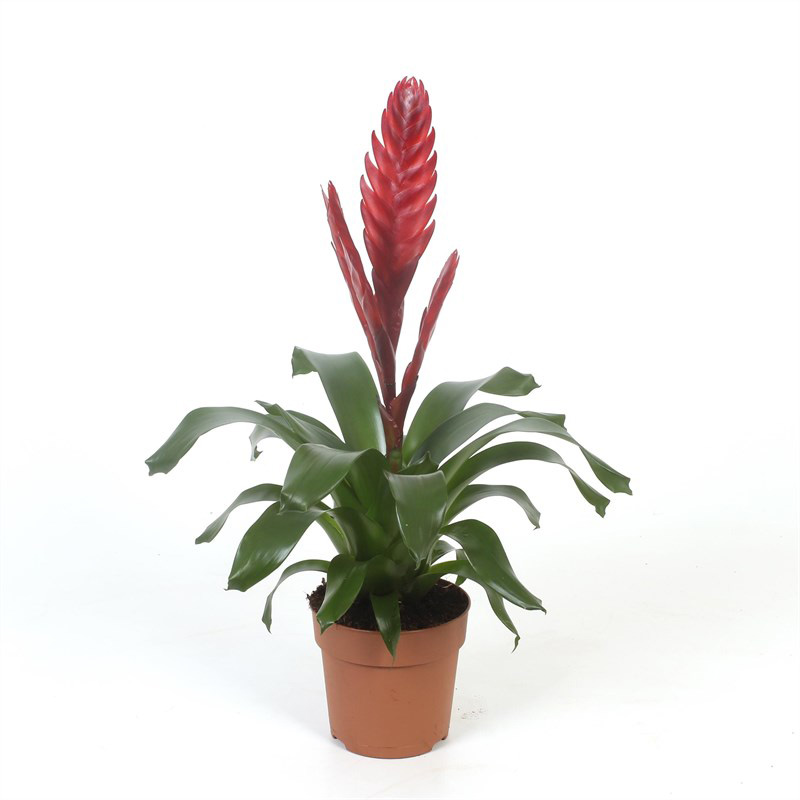
- MixIt has uniform green leaves, and the scaly bracts come in a variety of colors: from light yellow to deep burgundy.
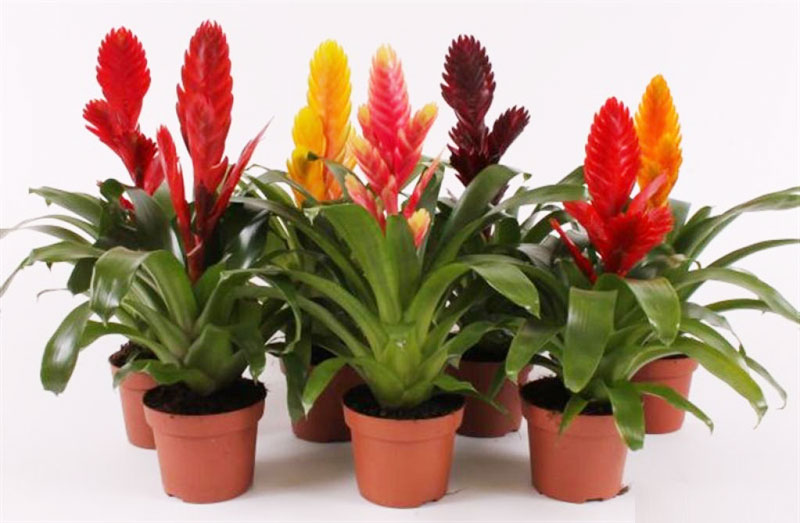
- CallistoThe leaves are wide, bright green, and arranged in dense rosettes. The peduncle is long and covered with scarlet bracts.
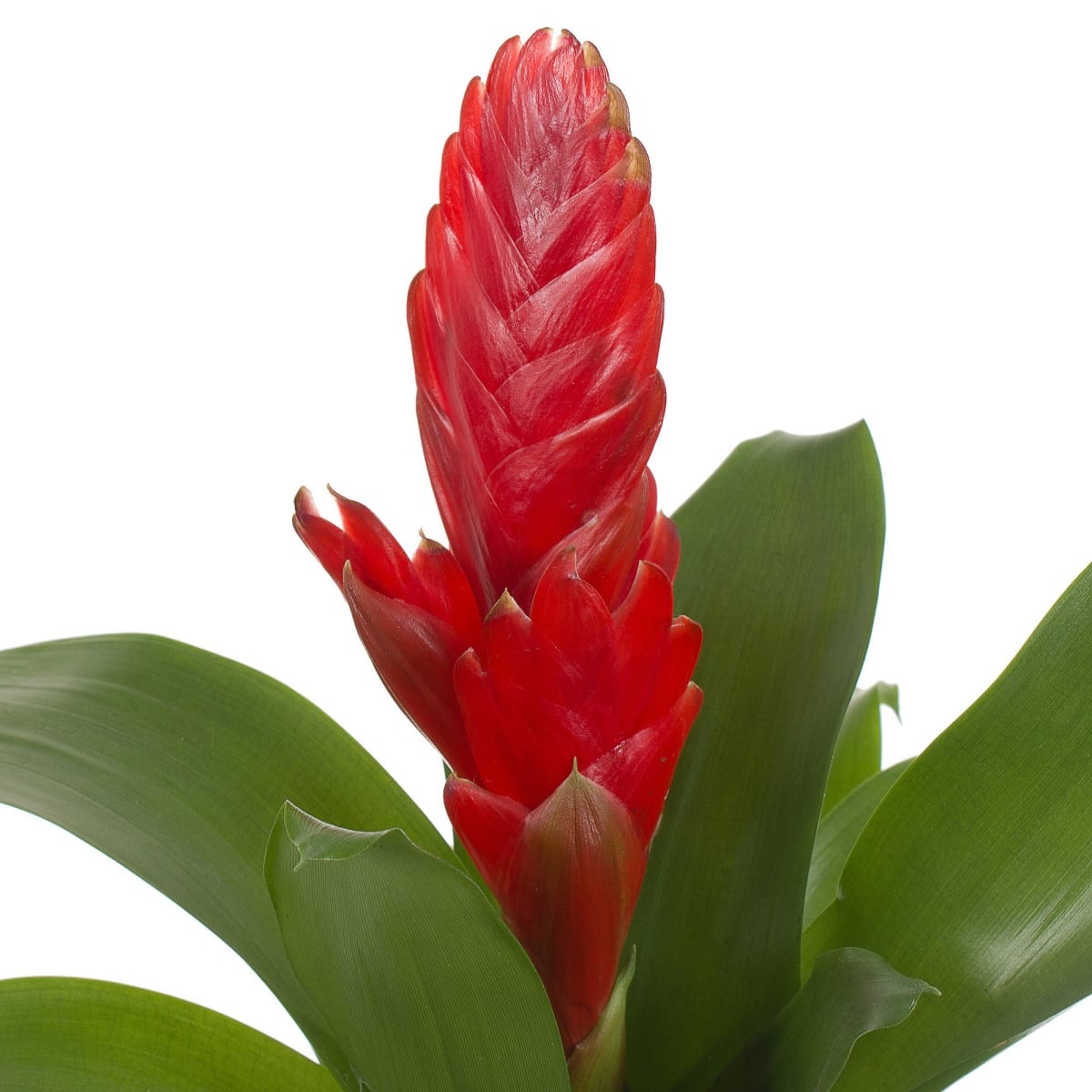
- CupidoIt has uniform green leaves, up to 20 cm long and about 5 cm wide. The height of the variety is no more than 40 cm. The bract is red.
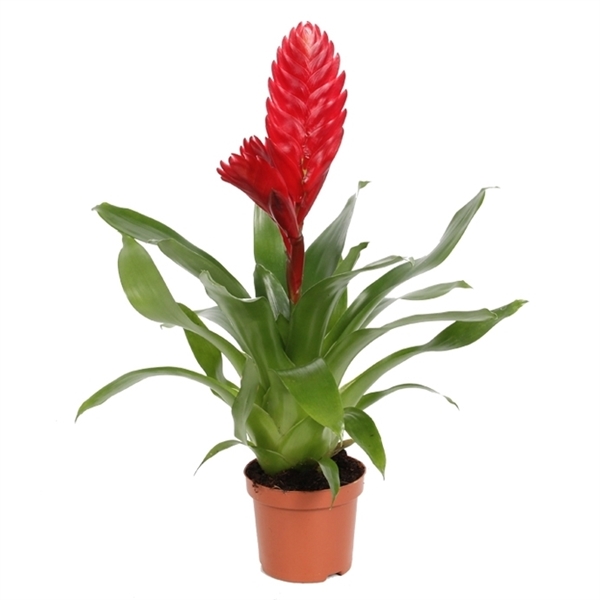
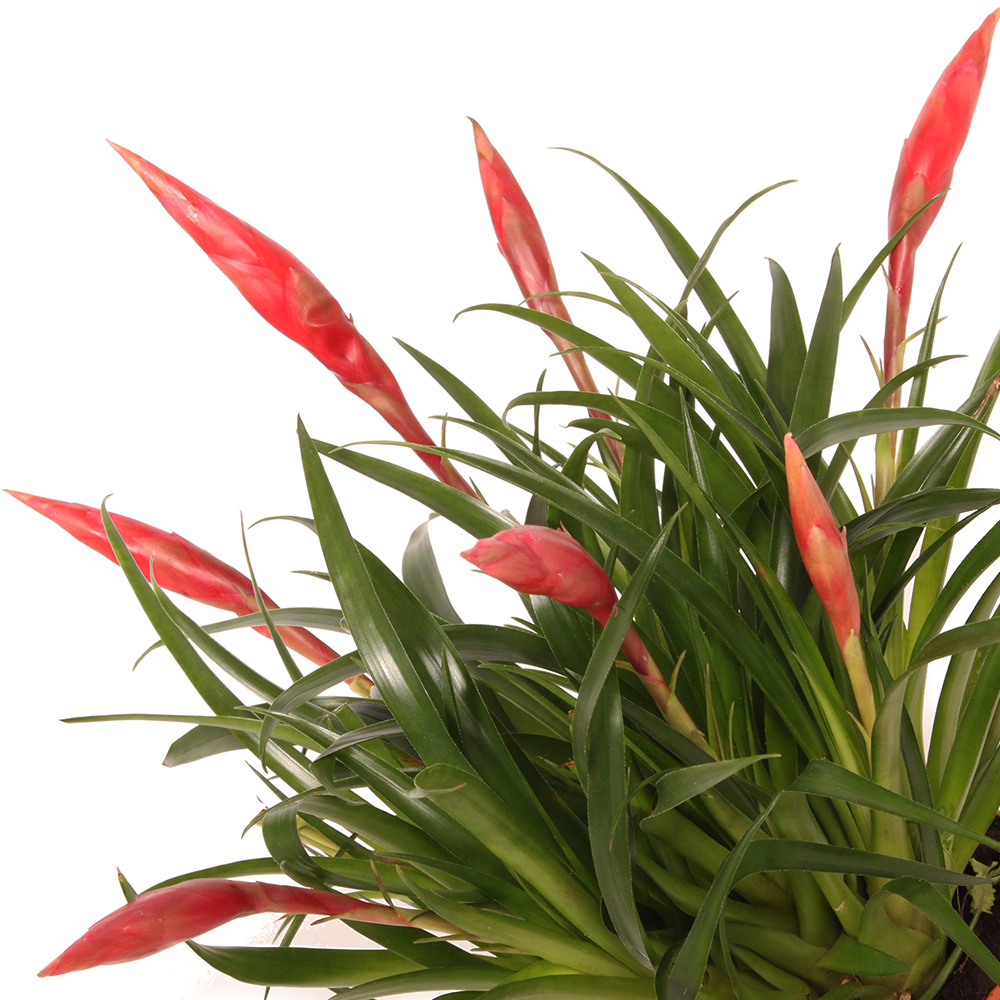
- MultifloraThe variety has several red bracts and many thin green leaves.
Planting and care of Vriesea depending on the time of year in the table
| Time of year | Features of watering | Light | Air humidity, % | Temperature |
| Spring | Keep the soil slightly moist. Water the rosette twice a week, first draining any remaining water from the previous watering. | Bright, but slightly diffused | 70-80 | +24…+26 °C |
| Summer | Water the soil as it dries out. The rosette should be watered every three days. | During the day, the plant must be protected from direct sunlight. | 70-80. When the temperature rises, it is necessary to spray at least twice a day and place a saucer of water next to the flower. | +24…+32 °C |
| Autumn | Water the plant approximately once a week. If the temperature drops to 20°C, drain the water from the outlet. Water the soil infrequently as it dries out. | Bright but diffused light. | 60-80. Spraying is carried out after turning on the central heating once a day. | +18…+24 °C |
| Winter | During the dormant period, water the plant sparingly; the soil is moistened only when it is completely dry. If the room temperature is below 20°C, do not water the rosette. | It is advisable to place the Vriesea on the south side. | Humidity is maintained by daily misting. If the plant is close to a radiator, more frequent misting may be necessary. | +17…+22 °C. At +15 °C, additional heating will be required. |
What to do immediately after purchasing a Vriesea
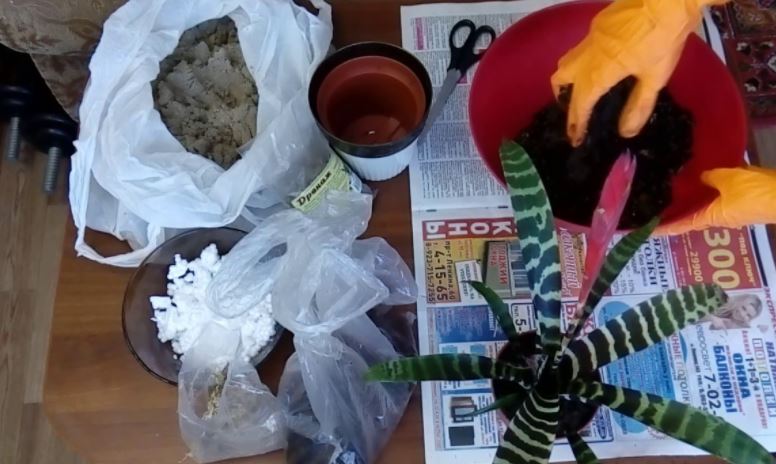
After purchasing a Vriesea, give it time to adapt. Store-bought plants typically have balanced soil that has received all the necessary nutrients. This ensures the plant looks strong and healthy. It's best not to repot the Vriesea immediately; instead, give it time to recover. If a flower stalk emerges from the center of the rosette, it's best to mist the Vriesea rather than water it directly. Protect the plant from drafts and keep in mind that the minimum temperature is 15°C. Water the soil as it dries out.
Caring for Vriesea at home
- LightVrieseas prefer bright but slightly indirect light. If the windowsill receives direct sunlight in summer, it's best to cover the plant to prevent the leaves from burning. Vrieseas grow best on the east side of the house.
- PrimingBromeliad soil is available in specialty stores; it's already perfectly balanced. However, if this isn't available, you can create your own soil mixture. To do this, mix peat, leaf mold, turf, and sand (in a 1:1:2:1/3 ratio, as indicated in cups). If this amount isn't enough, you can increase the proportions evenly.
- Watering, spraying and humidityDon't allow Vriesea to dry out, so water it as the soil dries. Keep in mind that watering isn't as important, as Vriesea receives most of its nutrition through the rosette. If you've purchased a flowering plant with a flower stalk emerging directly from the center of the rosette, you don't need to water it. Mist the plant and water the roots. Misting is done daily, especially if the heating is on. This will help maintain humidity at 70-80%. In hot weather, double the frequency of misting. At temperatures below 18°C, there should be no water in the rosette.
- TemperatureVrieseas die at temperatures below 15°C and above 32°C, so make sure the thermometer doesn't cross these critical levels. Optimal temperatures are considered to be 22°C to 26°C, but if the plant is dormant, it's best to place it in a cool room with a temperature of 18°C to 20°C.
- Top dressingThis is done by spraying or watering the rosette. Use a regular fertilizer for flowering plants, but reduce the concentration by a factor of 4 when preparing the solution.
- TransferThis is done every four years when the plant has grown significantly and the pot has become too small. At this time, you can separate old rosettes and rejuvenate the plant. This work is done in the spring, but not until a flower stalk appears.
Pests and diseases of Vriesea (table)
Vriesea are rarely affected by diseases and pests, but if care rules are not followed, they may appear.
| Disease/pest | Signs of appearance | Prevention and control |
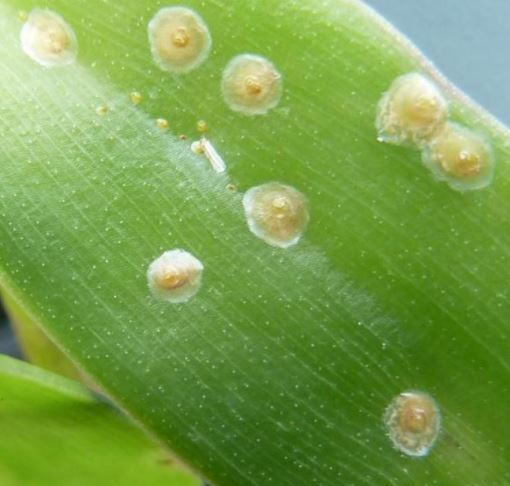
| Scale insect
|
Light brown or yellowish bumps and a sticky substance appear on the leaf blades. The leaves darken and die. | Spraying with Aktara or Actellic, onion peel infusion, or garlic scape infusion. Mechanically treat the leaves with a sponge soaked in a soapy solution. |
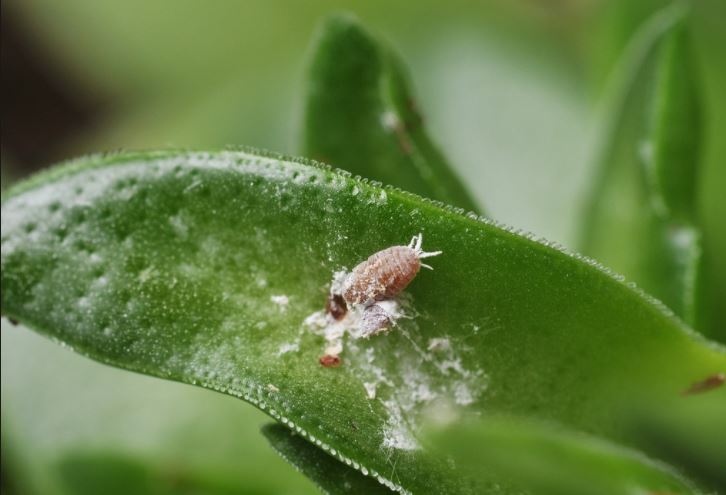
| Mealybug
|
A small, white, furry-bodied pest can be seen on leaves and roots, leaving a sticky trail. Leaves begin to die, and flowers and buds fall off. | Treatment with Fitoverm or Aktara. For large affected areas, Karbofos is recommended. |
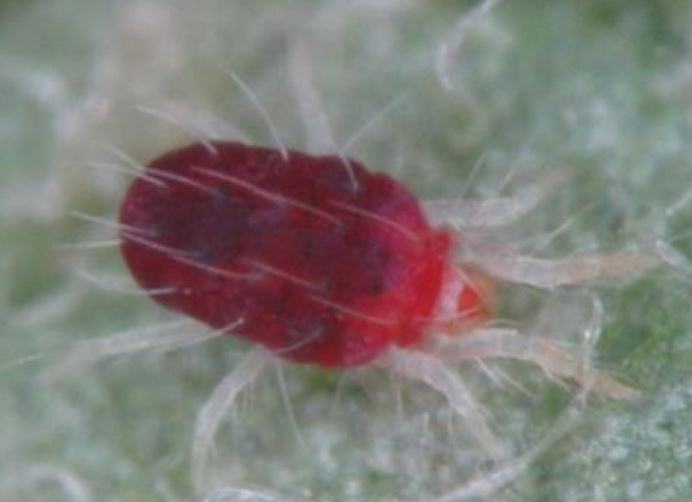
| Red spider mite
|
They're difficult to detect due to their very small size. However, the tick leaves behind secretions in the form of thin, barely noticeable trails, similar to a spider web. | For prevention, water the area with warm water. Ticks can be washed off with a shower, followed by treatment with Decis or Zolon. |
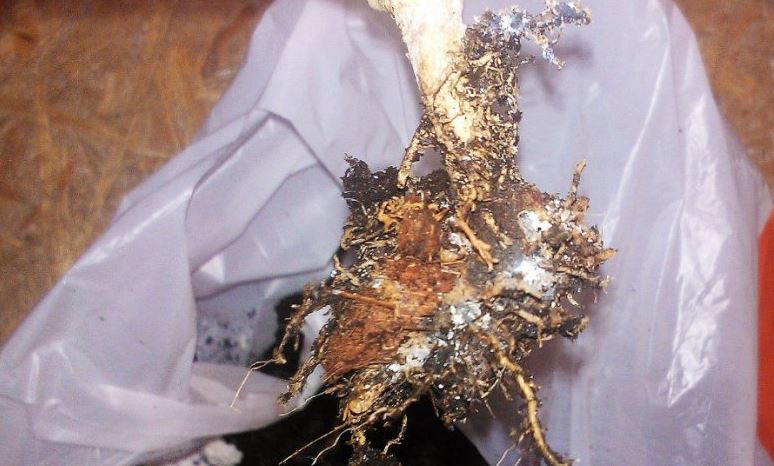
| Root mealybug
|
Pest clutches appear around the root collar and roots. In the early stages, detecting the pest is very difficult, as it is virtually invisible. | Treatment with Karbofos or Fazalon. As a preventative measure, always check the roots and adjust watering. If the infestation is severe, it's best to destroy the plant. |
| Spotting
|
The leaf blade becomes covered with blisters, which then darken and spread over the surface of the leaves. | For prevention, you need to water correctly, and if the disease appears, treat with fungicides (Fitosporin, Topaz, Green soap). |
Reproduction of Vriesea
Vriesea is quite easy to propagate in several ways.
Propagation of Vriesea by shoots
The simplest method, which is almost always successful, involves several stages; let's break it down step by step:
- Remove the adult plant from the pot and carefully wash the soil off the roots.
- Using a sharp, pre-disinfected knife, separate the lateral shoot so that it has several roots.
- Treat the cut areas with activated carbon crushed into dust and leave to dry for 24 hours.
- Fill the pot with drainage and soil, place the shoot in the center and add more soil.
It's recommended to cover young and weak shoots with a jar or a cut-off bottle. However, most Vriesea plants root well without such tricks. Flowering from the shoots can be expected no sooner than three years later.
Growing Vriesea from seeds at home
Under natural conditions, a flower stalk transforms into a fruit containing seeds. This only occurs through pollination, making it virtually impossible to perform at home. However, many gardeners perform cross-pollination using a brush.
If you do manage to get seeds, you can try sprouting them. It's difficult and unlikely to be practical at home, but you can give it a try.
- Within 24 hours, the seeds removed from the cracked box are left to dry out.
- A container is prepared, into which sand and peat are poured in equal proportions.
- The seeds are laid out on the leveled soil mixture and moistened with a spray bottle.
- The container is covered with film or glass and placed in a warm place.
- Watering and ventilation of plantings is carried out periodically.
The first shoots appear in about a month, and after two full-sized leaves appear, you can pick the seedlings and transplant them into separate pots. Once the Vriesea reaches six months of age, care is the same as for an adult plant. Flowering will not begin until the fifth year.
Top.tomathouse.com warns: mistakes in caring for Vriesea
Our portal http://top.tomathouse.com warns about possible mistakes when growing Vriesea at home:
- Violation of watering rules. If the plant is not properly moistened, it will begin to wilt. It's important to keep the rosette constantly hydrated and to mist the leaves regularly.
- Lack of lightVriesea is stretching out, the leaves are turning pale.
- Low temperature and draftsEven in good weather, it's not recommended to place the plant on a balcony or veranda; it doesn't tolerate drafts or temperature fluctuations well. If the temperature drops to 15°C, the flower may die completely.
- Place in bright sunlightDirect sunlight can cause burns on leaves and flowers.
- Stagnation of waterIf water constantly stands in the tray and outlet without being changed, bacteria that cause rot can begin to multiply in it.
Signs and superstitions about Vriesea
There are many signs and superstitions associated with growing Vriesea.
- It is believed that the plant charges those around it with energy and vigor, relieves monotony and promotes the realization of new ideas.
- Vriesea can enhance intuition and strengthen faith in one's own strengths and capabilities.
- Placed near the bed, it activates male potency and has a beneficial effect on potency.
- The appearance of a flower in the house symbolizes goodness and promises good changes and new beginnings.
The meaning of Vriesea in Feng Shui
According to Feng Shui, placing Vriesea in different places of the house will bring tangible benefits:
- Vriesea activates vital energy. When placed in a study, it helps make important decisions and find new ways of working.
- In the bedroom, the flower helps men express their ego.
- Vriesea in the house activates abilities, fills the inhabitants with energy and strength.
How to Train a Vriesea Bromeliad Tree
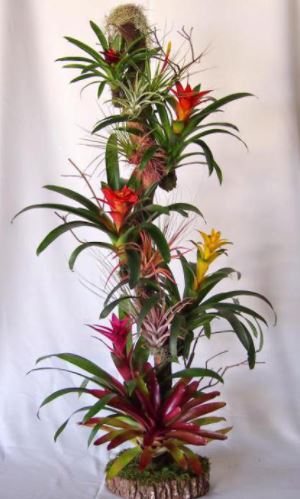
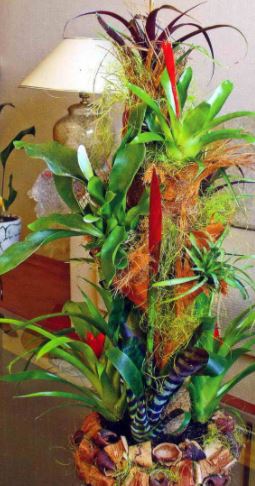
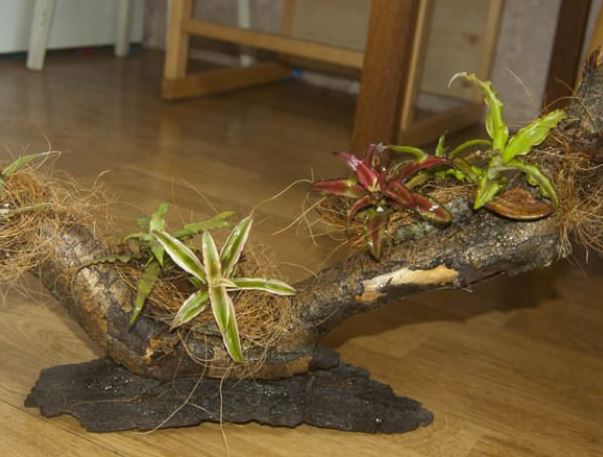
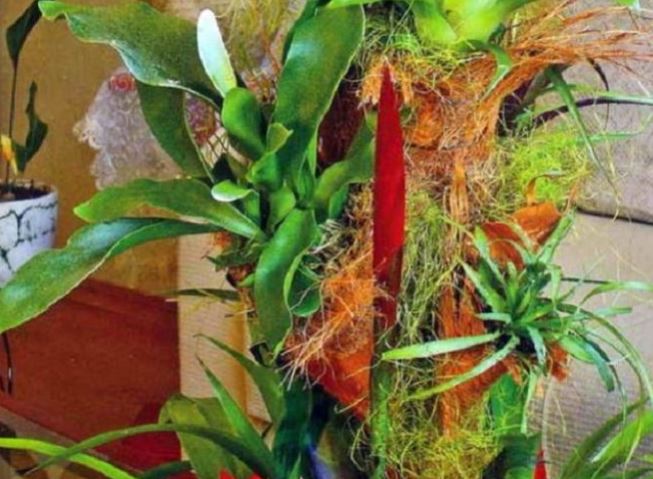
In the wild, Vriesea don't require soil; they're epiphytes and thrive on trees, clinging to the bark with their roots. At home, you can create a beautiful arrangement that will wow all your guests. To do this, place a piece of bark-covered driftwood in a planter. It's best to have a slight bend in the driftwood, where the transplanted Vriesea will sit until the root system develops. During this period, it's important to mist regularly and water the rosette. Remove excess water with a sponge or cloth every three days.
Vriesea Bromeliad Tree Photo Gallery: