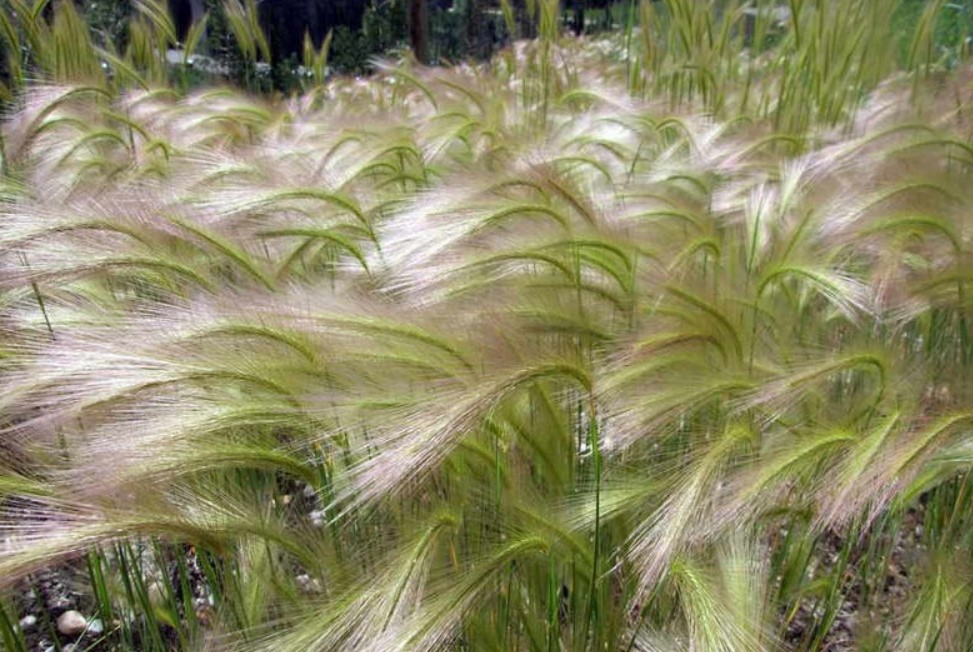
Crested barley is a cereal crop that has recently become increasingly popular among gardeners. This is due to its ease of cultivation, yet its highly decorative appearance.
Content
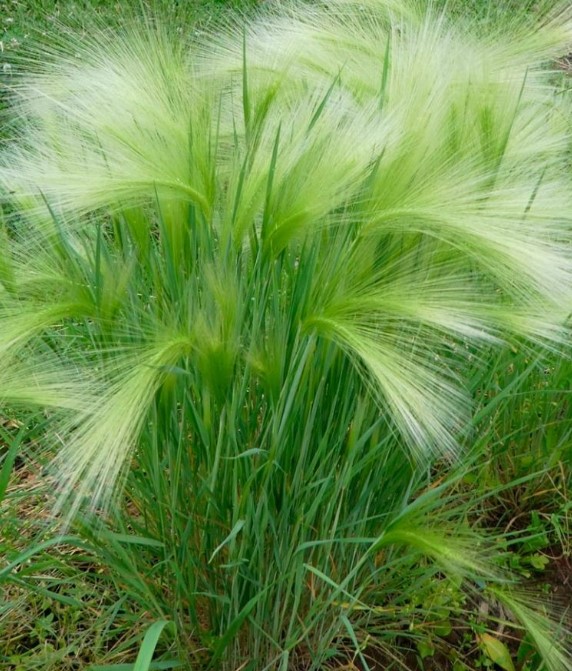
Description of the Maned Barley
The homeland of crested barley is considered to be North America. It is also found in the Far East and Eastern Siberia, further demonstrating the plant's undemanding nature regarding its growing conditions.
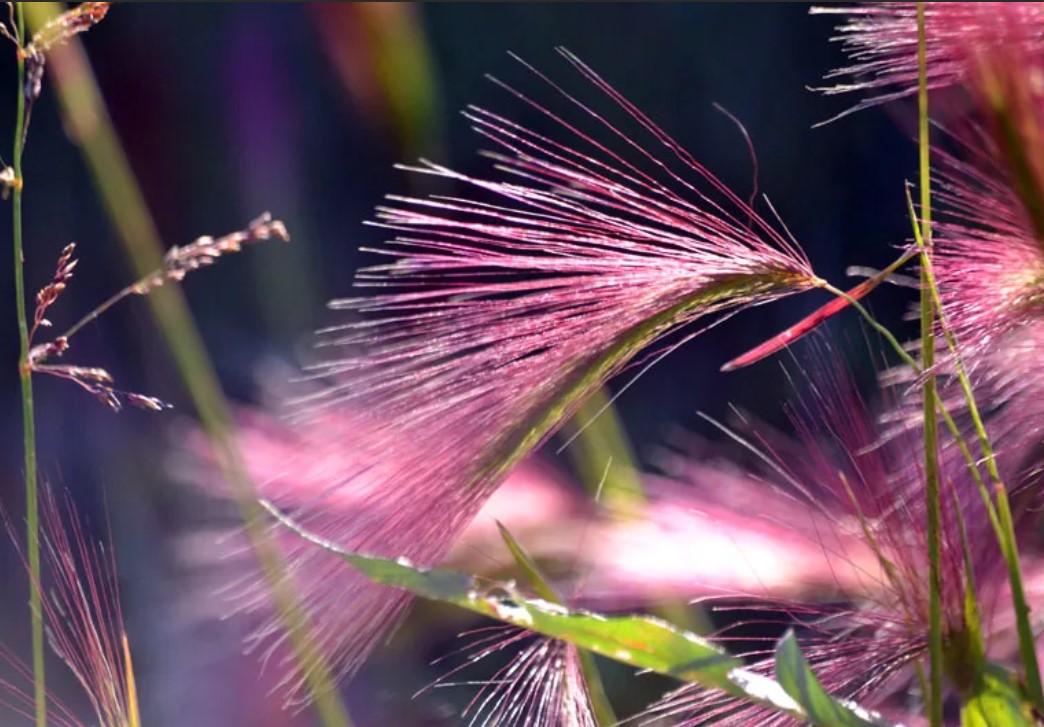
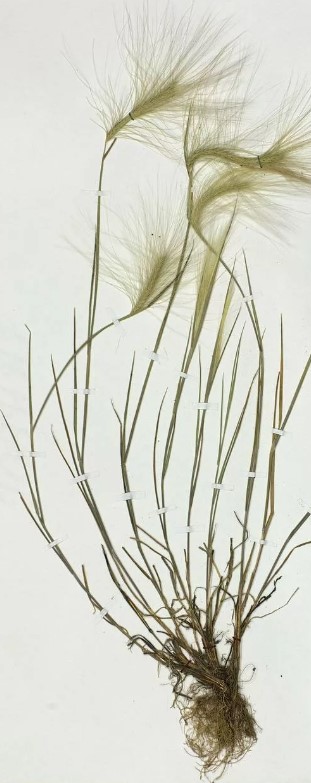
Barley shoots grow to no more than 50 cm tall, are straight, and have a well-developed root system. They are gray-green in color and weak in strength. The leaves are numerous, fragile, long (3-8 cm), and pointed at the tip.
The inflorescences consist of three flowers and are distinguished by a reddish-purple hue. They appear in June-July, and the first ripe grains can be seen by August-September.
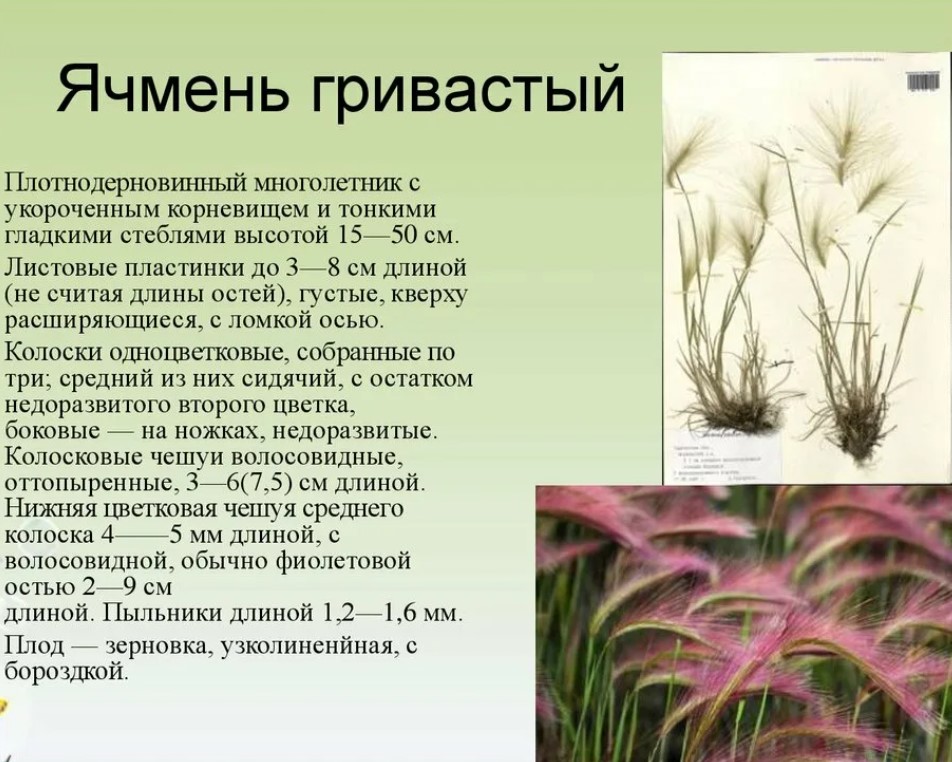
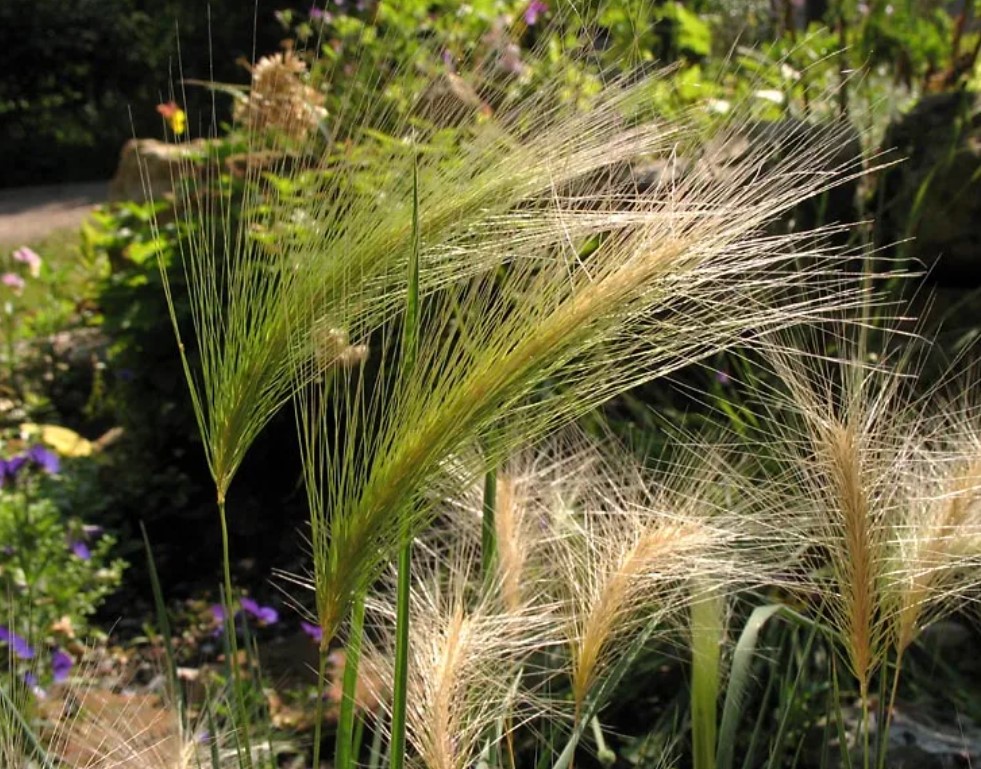
The plant gets its name from the abundance of silky hairs and fan-shaped ears, which create a mane-like effect. It's recommended to cut the ears 3-4 weeks after they appear, otherwise they will cling to clothing or animal fur and spread throughout the garden.
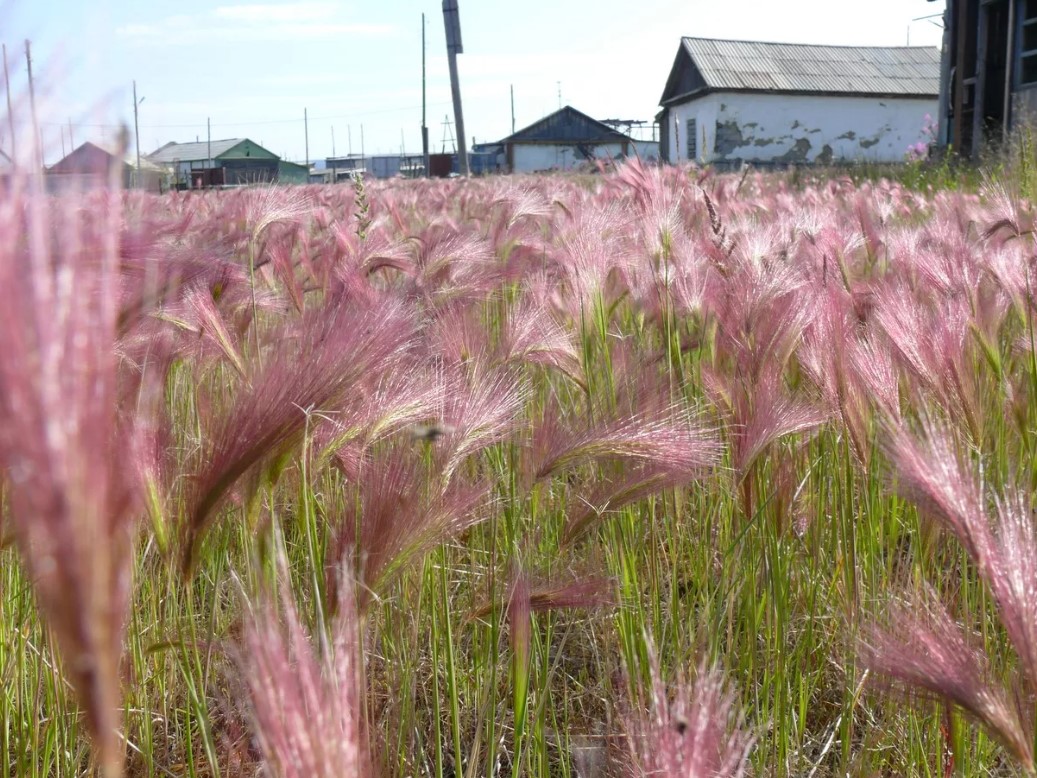
In some regions, crested barley grows too aggressively because it spreads very quickly through self-seeding.
Methods of growing ridged barley
There are three ways to grow barley:
- Sow in the ground in early May.
- Plant seeds in a flower bed in October-November.
- By seedling method in the first half of March.
Growing ribbed barley from seeds
Growing from seed is the easiest way to get ridged barley on your property. It's tolerant of temperature fluctuations and soil quality. Simply follow a few planting and care recommendations to achieve excellent results.
Location and soil in open ground
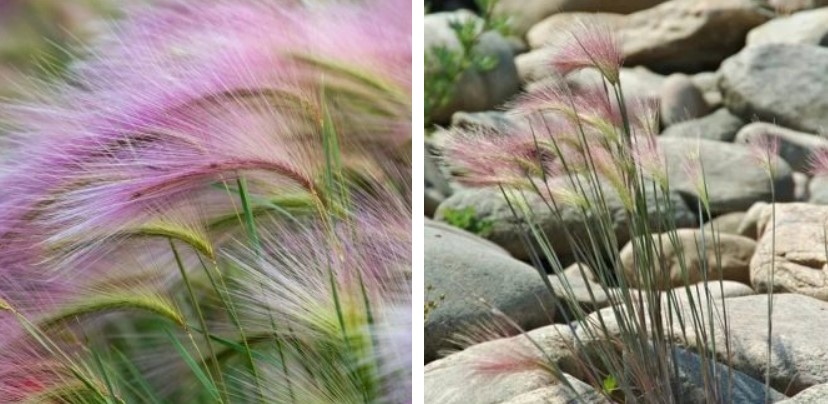
For good growth and rooting, ribbed barley requires only three conditions regarding the growing site:
- Abundant light. The plant loves the sun, so its full beauty can only be appreciated if it receives ample sunlight. It will also grow in partial shade, but then its decorative qualities are lost: the shoots become elongated and the color fades.
- Moderately moist soil. Maned barley does not tolerate stagnant moisture at the roots; it will become diseased and wither, so it's best to avoid planting it in low-lying areas.
- Light soil. Maned barley is undemanding about soil composition; it can be poor and not very nutritious, but it should not be heavy. In dense soil, the root system develops poorly, and it also retains moisture, causing the plants to become diseased and wilt.
Timing of sowing in open ground
The timing of barley sowing depends on the growing region. In southern regions, this may be late March, while in central Russia, it may be the last ten days of April or even early May. The key is to ensure that the hot summer has not yet set in, but that there is also no threat of recurrent frosts.
Winter sowing of plants is allowed, but then flowering will only be seen the following year, while spring seeds will produce ears of corn in the current season.
Seed preparation
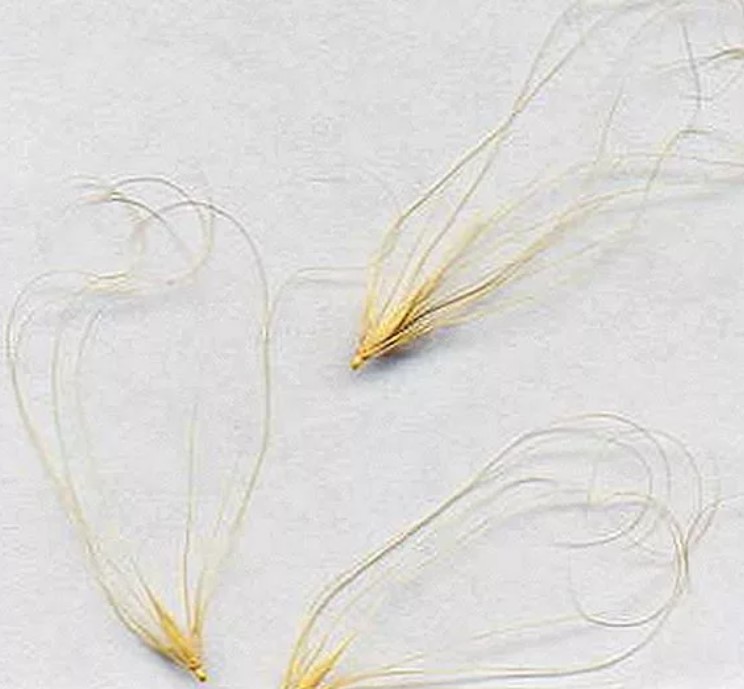
Experienced gardeners recommend stratifying the seeds two months before planting. To do this, place the seeds in a small container with a small amount of damp peat moss. Cover the container with plastic wrap, poking several holes in it. Place the container on the bottom shelf of the refrigerator.
Preparing the soil for sowing
Maned barley is completely undemanding regarding soil quality, so minimal preparation of the bed for sowing is required:
- The earth is being dug up.
- Weeds and their roots are removed.
- Fertilizers containing potassium and phosphorus are added.
Sowing can be done using any convenient method; there are no strict requirements. However, if you want a thick and lush carpet, it's best to plant 2-3 seeds per spot.
How to grow barley from seedlings
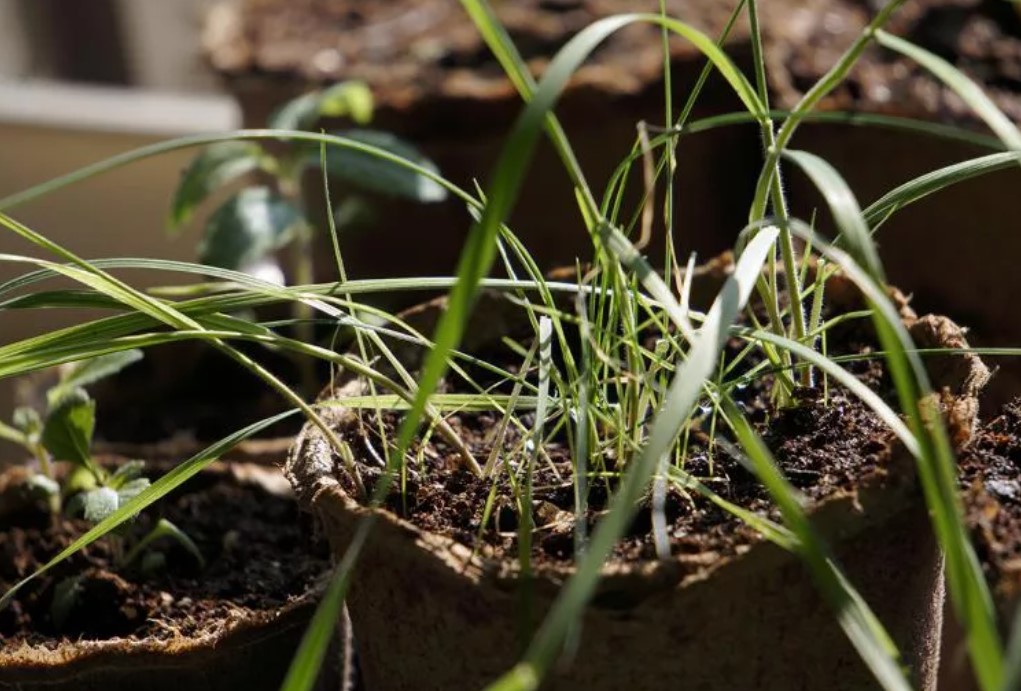
A large box filled with any potting mix is suitable for planting seedlings. Sow the seeds and cover them with a layer of soil no more than 1.5 cm thick. Place the container in a bright, cool place. After about 30 days, you can transplant the barley into individual pots. Once the threat of frost has passed, you can transplant the seedlings outdoors.
Caring for barley in open ground
Caring for a barley horse comes down to a few simple procedures:
- Watering.
- Top dressing.
- Trimming.
Watering
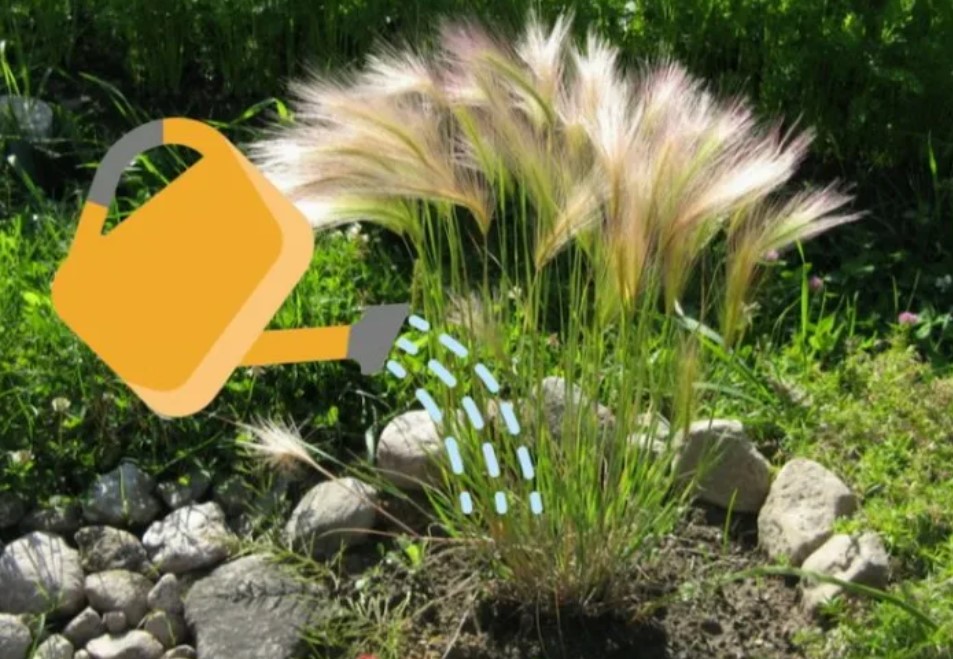
When watering barley, it's important to maintain a balance: don't let the soil dry out, but don't overwater it. In most regions, natural moisture is generally sufficient for mature plants, and watering should be done once a week during hot weather.
Top dressing
King barley doesn't require fertilizing, but responds gratefully to it. If desired, to promote lush flowering, potassium-phosphorus fertilizers can be applied once or twice per season. It's important to avoid nitrogen-containing fertilizers, as they promote abundant foliage growth but delay flowering.
Trimming
As the spikelets mature, they lose their decorative qualities and begin to reproduce by self-seeding, so they must be cut off 3-4 weeks after emergence.
Choosing neighbors
The stems of crested barley are very thin; under the weight of the ripe spikelets, they bend toward the ground and lose their decorative appearance. Therefore, it's best to plant plants with flowers that can provide support. These include low shrubs, such as arborvitaes, barberries, or some varieties of spirea. Perennials with dense rosettes of leaves and graceful vines, such as clematis erecta, can also support the spikelets. Sometimes barley is planted along a supporting wall or a high border.
When tilted, it will look great in pots on terraces and gazebos.
Problems in growing ridged barley
The plant is rarely susceptible to disease, but if the soil is overwatered, gray mold may appear, causing shoots to turn yellow and wilt. Such plants should be dug up and destroyed if the infestation is severe. If the disease is caught in its early stages, the damaged parts are removed, and all plantings are treated with fungicides such as Fundazol, Topaz, or Horus.
Landscape applications of crested barley
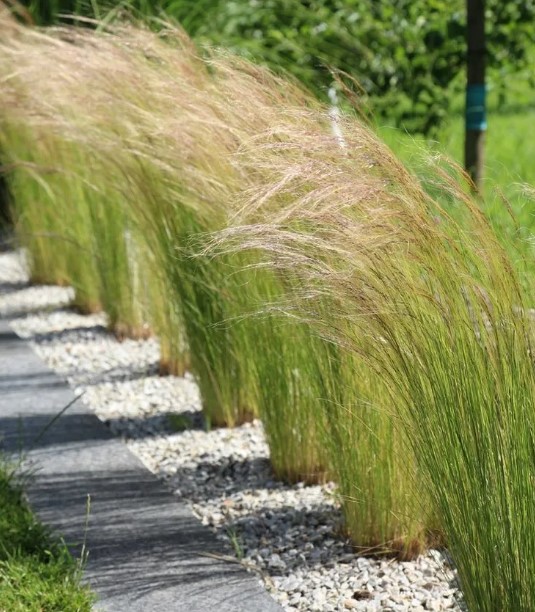
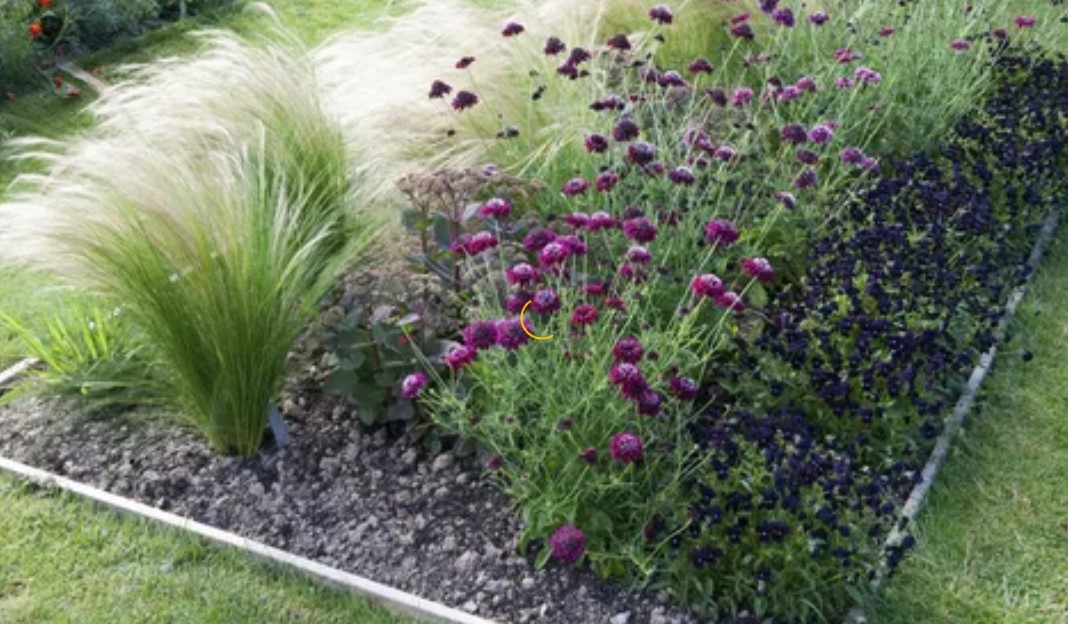
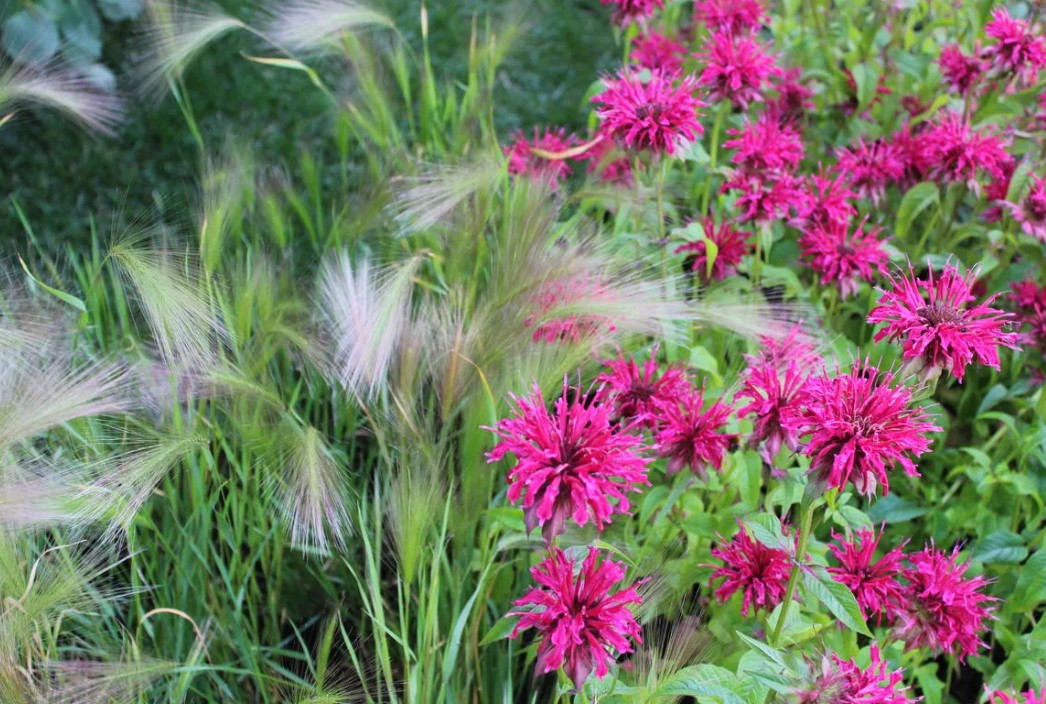
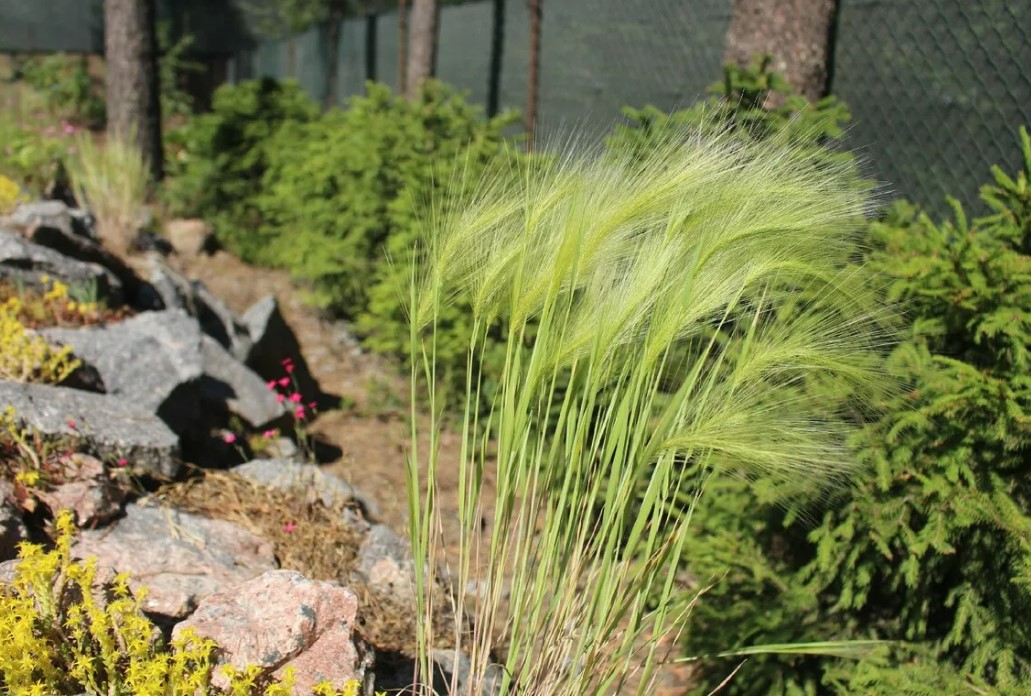
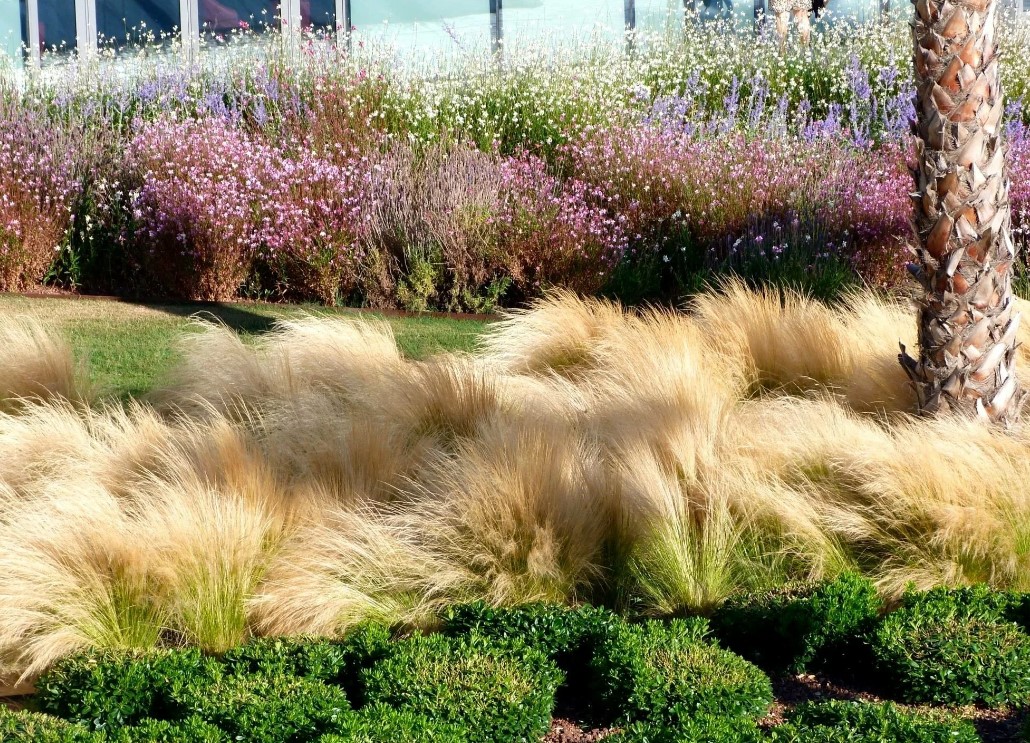
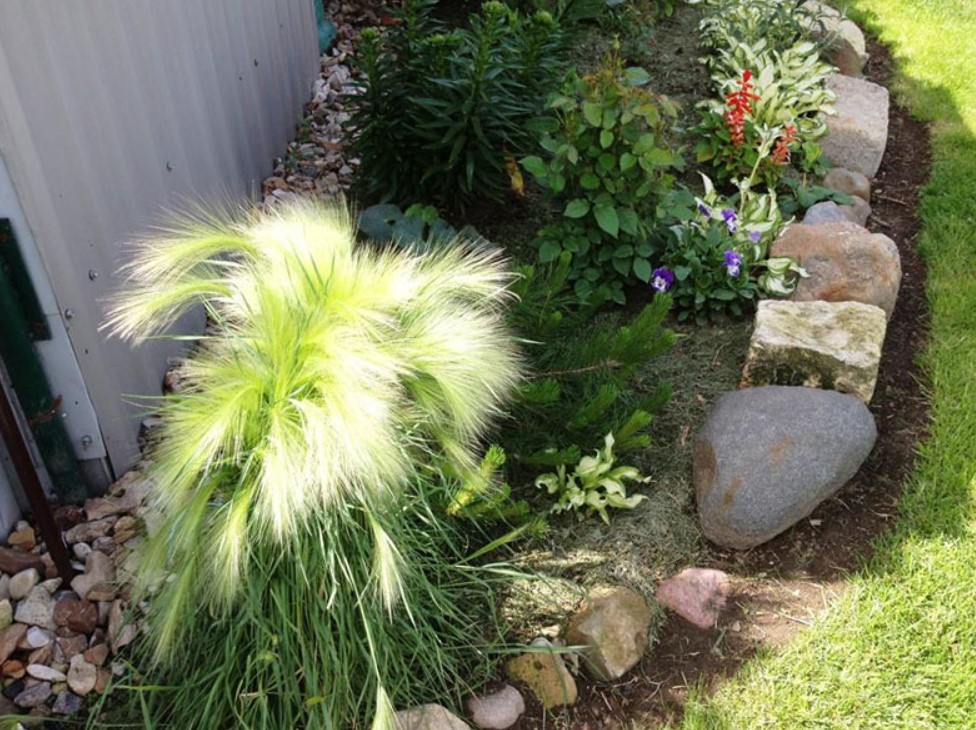
Barley is widely used in landscape design due to its ornamental qualities. It blends beautifully with rock gardens, elegantly decorates the walls of buildings, and also enhances flowerbeds. It also looks beautiful when planted alone.
Florists recommend combining barley with the following flowers:
- Marigold.
- Lavender.
- Calendula.
- Pennisetum.
- Bicolor haretail.
- Rudbeckia.
- Sage.
- Openwork bentgrass.
- Switchgrass.
- Two-colored cross.
Florists use the grain to create flower arrangements, but in this case the spikelets are collected in the first week of their appearance, before they begin to fall off, then they are tied into bunches and dried in a shaded, well-ventilated place.
Photo gallery of crested barley in the landscape
Reviews of crested barley from gardeners
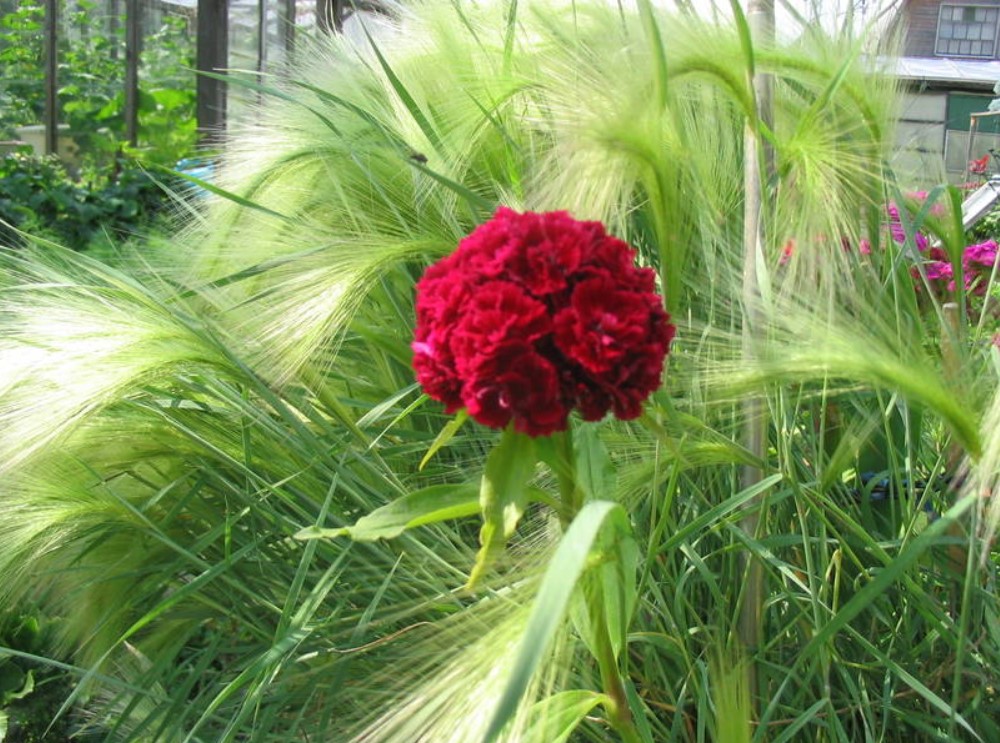
I really liked the barley with Turkish cloves.
I have some growing. It's growing into a small, very moderate mound, doesn't creep anywhere, and surprisingly, it doesn't self-seed, which many people have complained about here. I'm very happy with my barley.
Maybe I weed it out too.. It’s in my rose garden, in the foreground, I destroy everything living there, except for the roses and their companions, of which I leave less and less every year.
Mine almost never stays in the same spot after winter. It either freezes or gets soaked, but it always self-sows somewhere. And since I can easily distinguish it from other herbs (its bluish leaves), I can transplant it anywhere I like; it tolerates transplanting with flying colors. But when the spikes sway in the wind and sun—they're so beautiful—I think I should definitely keep this plant.
I've had it for many years; it rarely overwinters, but it self-seeds well. If you don't need it, it's easy to weed it out; the roots are flimsy, but I have a hard time mistaking it for grass and accidentally weeding it out. It's not goutweed, so I recommend letting it grow for a year and seeing for yourself if you like it. The only thing I don't like is how the scattered seeds prick your hands when you start weeding flower beds without gloves.
I also have barley growing and don't plan to get rid of it. It's sown, but it's not critical and can be easily removed. It can be transplanted anywhere. When it's flowering, the tassels shimmer in the sun with all the colors of the rainbow. When it starts to set seeds and the spikes spread out, I pass by and remove most of it, but every year it's sure to reappear somewhere.
I've learned how to locate barley—as soon as its spikelets transform from a silky mane into a terrible comb, I easily remove the ripe seeds by hand and immediately plant them in the right spot. That's it, you'll get results next year.
It is easily distinguished from ordinary grass.
It's very decorative at any stage, spreads easily, and is very easy to weed out where it's not needed. I don't recommend sowing it near a lawn—it'll end up there one way or another. It's easy to mow, but it gives the lawn a bluish-gray tint. It's not a problem for me, but a relative of mine was wringing her hands over her "parterre" lawn. :)
Every year, some of our bushes freeze or get soaked, but there's so much self-seeding that we don't have any problems with them falling out. Also, they don't fall over, only after a heavy downpour, and even then they "get up" within a couple of hours. Maybe it's because they're in the full sun?
Lenysik, you probably don't have barley, but feather grass. I'm originally from Kazakhstan, and we mostly grew feather grass there. I planted barley at my dacha specifically to imitate feather grass. My wife and I were into imitating "meadows" and "steppes" at one point.