
Lawn care in spring depends on its condition; after winter, the grass doesn't always sprout smoothly. From personal experience, I know that even the most well-maintained, dense lawn can present unpleasant surprises. Repairs are carried out in a specific sequence. I'll explain everything in order.
For those looking for information on winter lawn care, there is a section on that at the very end of the article.
Content
The Basics of Spring Lawn Care
Rolled biennial and seeded lawns are similar in structure. Density depends largely on the grass variety.
Parterre lawns often require restoration, while mixtures for garden and park lawns are more durable.
When open patches of land appear, they need to be seeded with a lawn seed mixture. For this purpose, it's advisable to purchase a large amount of seed mixture when planting. It has a germination period of up to 7 years. Otherwise, care is standard:
- cleaning from dry grass and leaves;
- If a lot of felt has accumulated, it is removed (this is called scarification);
- enrichment of roots with oxygen (aeration);
- top dressing.
Rolling and combing
The first step is to assess whether compaction is necessary. This is done when the soil has dried out to a depth of about 5 centimeters; too much pressure too early can damage the grass. To spread the remaining snow, it's best to walk on the joists—I use wide boards. When I had some leftover laminate flooring after renovations, I started using them—they're very convenient!
Rolling is carried out in several cases:
- when hummocks are formed that protrude above the ground;
- moles or ground rats have made passages;
- the seeds were sown in the fall, the soil needs to be compacted;
- The area is uneven and puddles are forming.
After rolling, the soil is leveled and compacted. Using a special roller will not damage the grass.
Before I had a store-bought roller, I used a piece of pipe for this purpose; I simply secured it with wire. It's a good idea to roll the lawn for the first two or three years. A dense lawn creates an even turf.
The best tool for a summer cottage with a lawn is a fan rake. It's great for raking not only dry grass but also mulch. This is especially necessary for young lawns and areas with little winter snow. A regular garden rake with sharp teeth isn't suitable for lawns; it will pick up grass, and trust me, the clumps can be substantial.
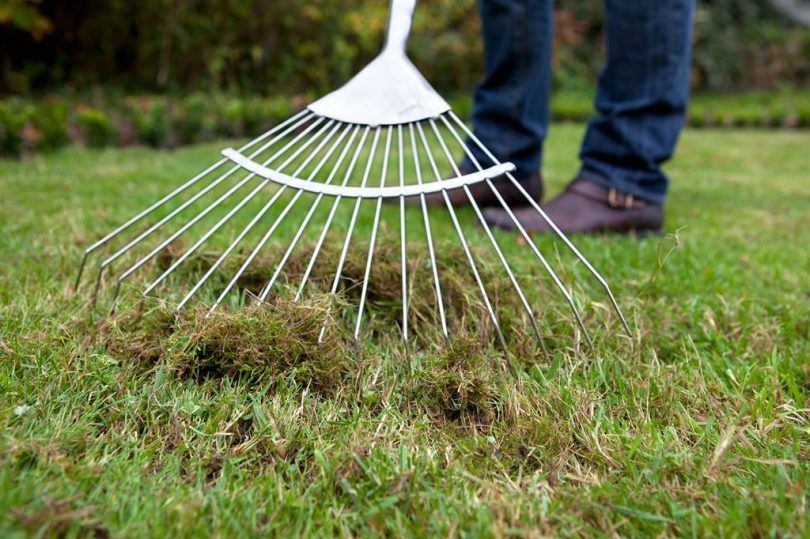
There's a specific technique for combing the lawn: first comb it lengthwise, then crosswise. For best results, additional diagonal combing is practiced. I pick up the rake as soon as the soil dries out. Then the young grass will sprout in a friendly manner.
If you're worried about making mistakes, the best way to avoid them is to read everything in one place instead of searching for information from disparate sources. For example, our editorial team wrote a book about how to plant and maintain a lawn yourself. We highly recommend it if you're not wasting your time. Read more>>>
Scarification and verticulation
Cleaning the top layer of turf (scarification) is done as needed when fine grass accumulates at the roots and begins to interfere with growth. On lawns, we remove the thatch every two to three years.
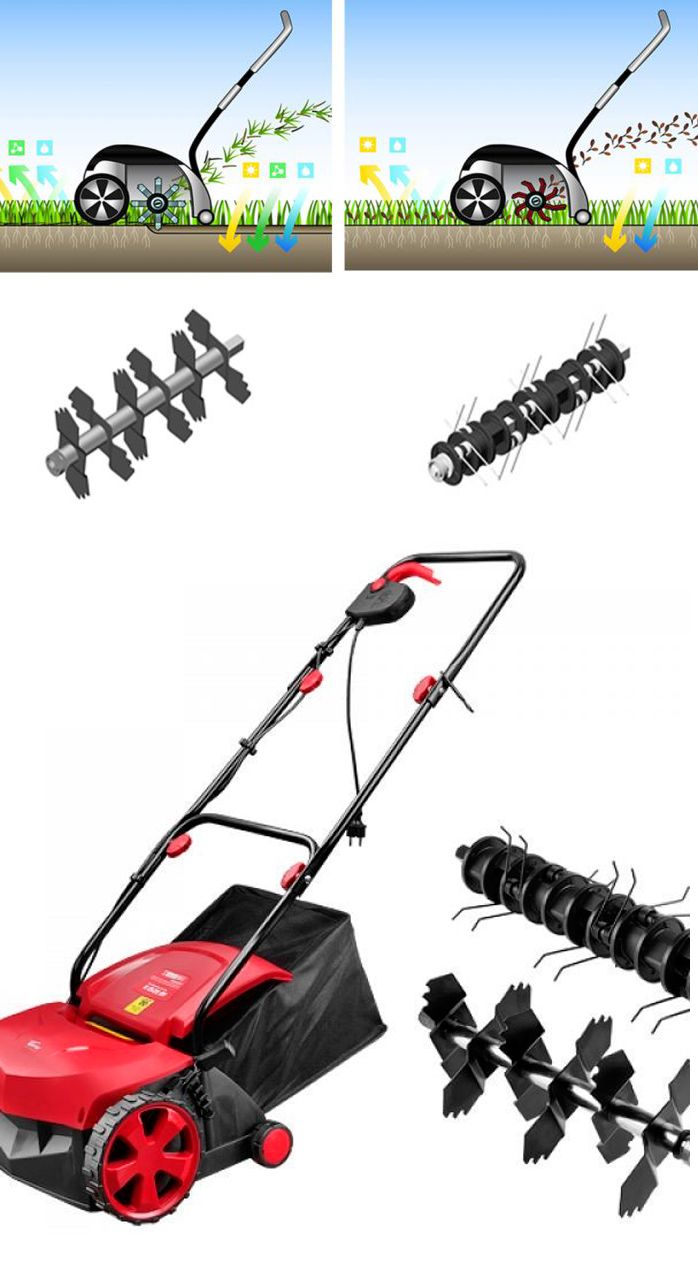
Mechanical scarification is best done before raking the lawn. It's believed that if you thoroughly rake the lawn after mowing, scarification will be unnecessary, but I'm not so sure.
Also sometimes verticulation is carried out (cutting the turf to comb it out and saturate it with oxygen).
Sanding
If necessary, sanding is carried out on heavy soils - lowlands or the entire lawn area are covered with river sand or light soil in which turf quickly forms (compost soil is mixed with sand in a 1:1 ratio).
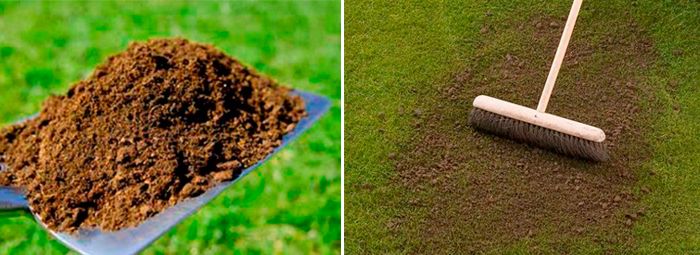
For more information on sandblasting, read the article.Lawn sanding: necessity, timing and rules of implementation.
Sanitary treatment
Lawn diseases develop when there's a lack of iron. Spring treatment with ferrous sulfate is recommended, especially in flood-prone areas and after prolonged floods. Weeds can be controlled with specialized products such as Gazontrel, Lontrel, and Magnum. Wear gloves and a respirator when applying herbicides. It's best to spray the lawn immediately on the first calm evening if there are sow thistles or milkweed.
A folk remedy for ubiquitous dandelions is said to be boiling water. Scalding the sprouts after they emerge removes the flowers. Burning the dandelions with a blowtorch and sprinkling the cut surfaces with salt or citric acid are also recommended. Frankly, I haven't tried these methods. My grandmother used to pour boiling water on the dandelions along the fence, heating up the sauna specifically for this purpose. In my opinion, the only way to get rid of dandelions is to uproot them. There are even special tools for this now.
For more information on diseases, pests, and how to control them, as well as other lawn problems, read the following articles:
- Lawn diseases;
- Lawn pests and their control measures;
- Lawn weed control;
- Moss on the lawn: causes and how to get rid of it;
- The lawn has turned yellow: why and what to do.
Aeration and mowing of the lawn in spring
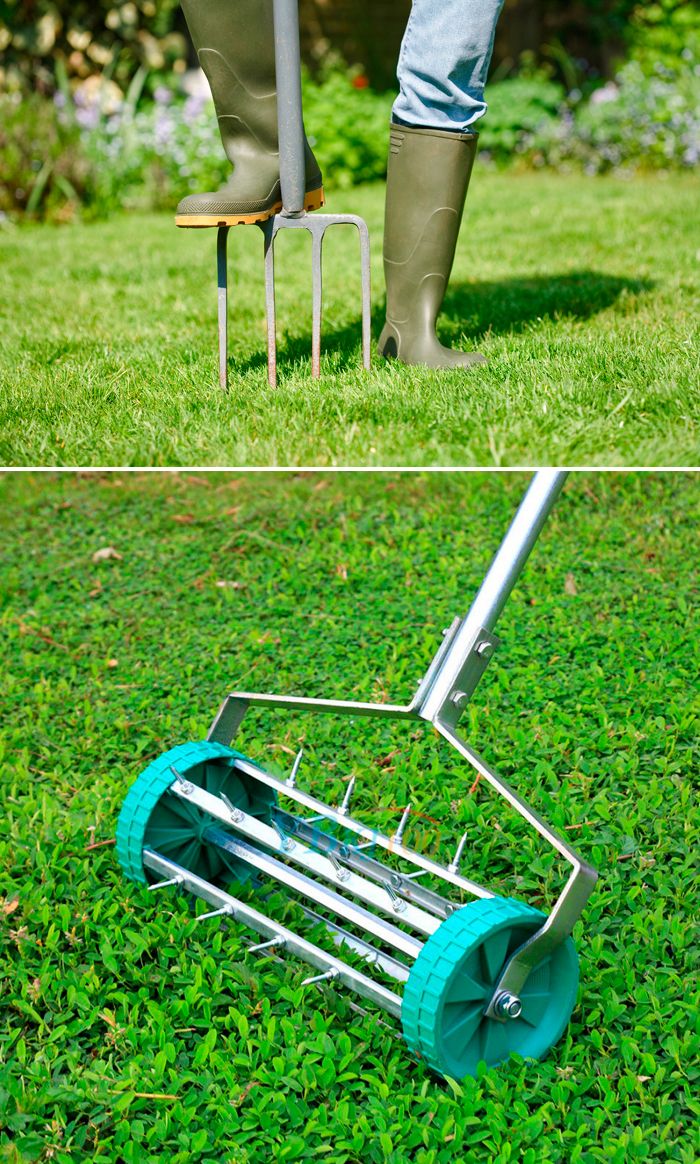
Instead of digging, the lawn is aerated – the soil is pierced to a depth of up to 25 cm.
For work use:
- A pitchfork is inserted to its full depth, gently rocked, and then moved to a new location. This process covers the entire plot. There are special tubular pitchforks—instead of tines, the crossbars have sections of stainless steel tubing, cut at an angle of at least 45 degrees at the bottom. This is a very handy tool; it also removes excess moisture from the soil.
- A drum aerator studded with large, sharp spikes. It's inconvenient for small lawns, but it's perfect for large, even areas. If you decide to make your own drum, be sure to properly calculate the load so the spikes dig into the soil under the drum's weight.
- I've heard about aerating sandals—shoe attachments that are secured with straps or ropes. You put them on, walk across the lawn, and loosen it. But I don't think this kind of "aeration" is particularly helpful.
Spring aeration This is done annually. If the soil is heavy, the turf is pierced several times per season.
The first grass cutting is done when it reaches 10 centimeters, and we cut it back by half. We've noticed that a timely first cut increases the density of the new growth.
It's important to remember that there's no standard grass height; it depends on the type of seed mixture used. Lawn growth rates also vary. By the way, mowing is done when the grass is dry.
Read more:Lawn Mowing: Timing, Rules, Mowing Height, Tools,Lawn aeration: what it is, how, when, and what to do it with.
Watering the lawn
Over the years we've had a lawn on our property, I've learned that the more the grass grows, the less water it requires. A young lawn needs watering every day, while an older lawn needs watering about twice a week. It's convenient if you have a sprinkler system. If you don't, use a regular hose. The pressure spray works well if you partially block the hose with your finger. Not watering on sunny days can cause the grass to burn.
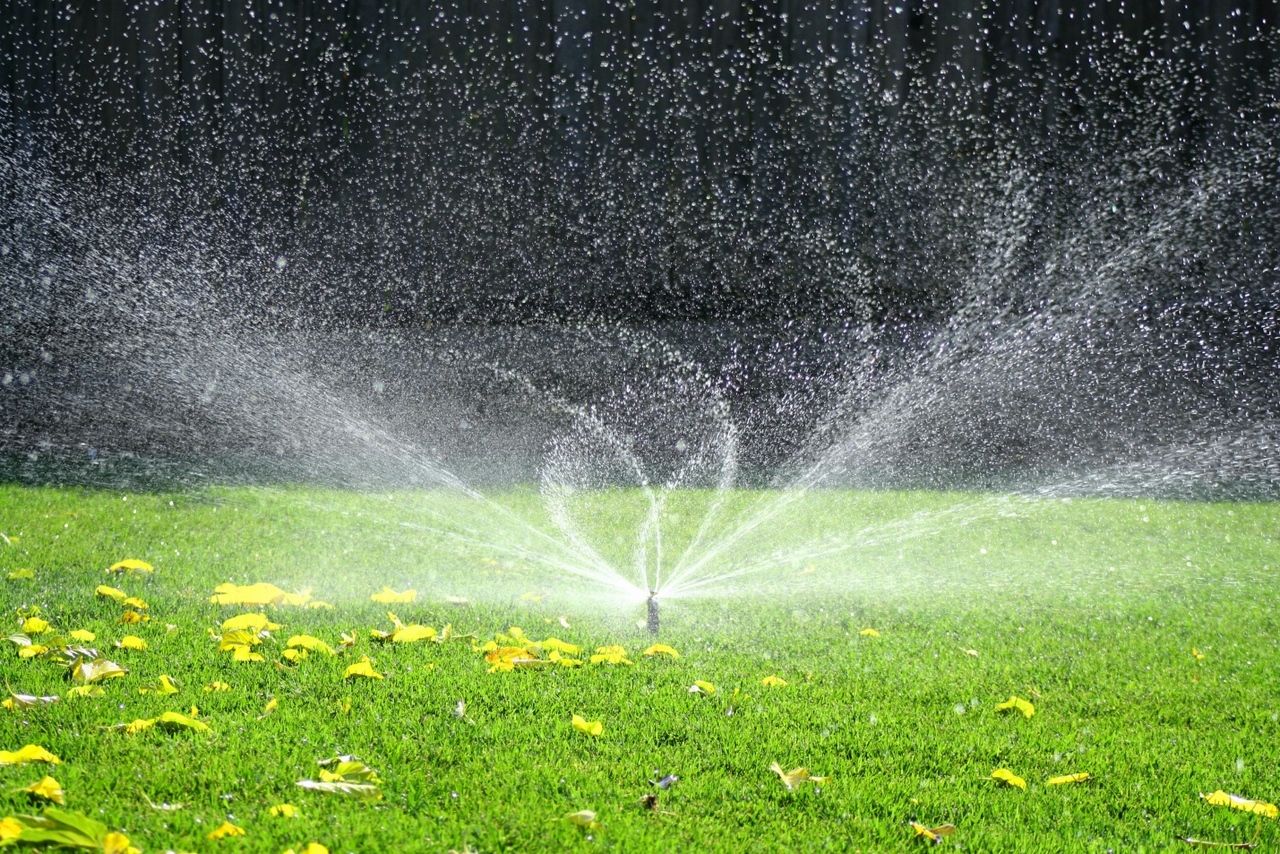
It's best to moisten the soil early in the morning or late in the evening, when there's no direct sunlight. Watering at dusk can lead to fungal infections. At night, a fog forms over the grass and lingers until sunrise. While heavy dew falls in the morning, the risk of root rot in some grass species increases significantly.
How and with what to fertilize a lawn in spring
In spring, nitrogen fertilization is recommended to stimulate grass growth. Apply urea, ammophoska, or ammonium nitrate at a rate of 20 g (a matchbox) per square meter. Later, preferably after the first cutting, apply phosphorus, potassium, and calcium in a 2:1:1 ratio.
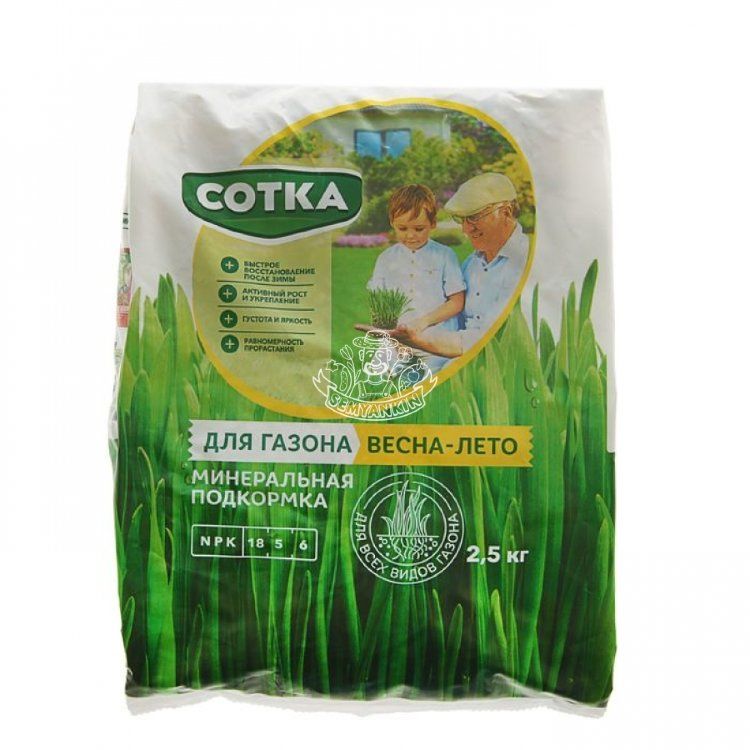
If you're having trouble choosing fertilizer, I recommend Fertika's universal spring-summer fertilizer mix. Apply according to the package instructions. With proper fertilization, your lawn will look fluffy.
More details in the article Lawn fertilizers.
Work by month
This calendar is approximate and is for the Moscow region. In other regions of the central part of the country, the Urals, and Siberia, the dates may shift depending on weather conditions.
IN March They'll requisition the equipment. If the snow melts by the end of the month and the ground dries out, we can begin inspecting the area. We'll need to gather all the necessary supplies, and it will become clear whether we'll need seeds or turf for restoration, or whether rolling is necessary.
April – Beginning of work: combing and loosening. Reseeding of the lawn if there are bare spots. Aerating. Applying the first fertilizing.
May – time for the first pruning, second feeding, and dandelion control, as they become visible. If it's hot, frequent watering is necessary.
The most favorable days for lawn care in spring 2024. Based on your region:
February (if the snow has melted, the temperature is above zero and the ground has dried out a little):
19-21 (until 16:40) – cleaning, reseeding, laying any type of lawn;
8 (from 16:59)-10 (until 16:42), 12 (from 16:25)-14 (until 18:01), 16 (from 22:38)-18, 21 (from 16:40)-26 (until 17:28) – mowing, weed control;
19-23 (until 15:30) – watering, mowing to get a thick lawn;
2-4 (until 09:27 a.m.), 6 (from 15:08 p.m.)-10 (until 16:42 p.m.), 12 (from 16:25 p.m.)-14 (until 18:01 p.m.), 16 (from 22:38 p.m.)-18, 21 (from 16:00 p.m.) 40m.)-26 (until 17h. 28m.), 29– control and treatment of pests and diseases.
As a rule, this work is for the southern regions; for the rest, we add snow and break up the ice.
March (if the snow has melted, the temperature is above zero and the ground has dried out a little):
1-2 (until 16:56), 9-10, 17 (from 12:41)-19 (until 22:32), 27 (from 12:02)-29 (until 22:52) – mowing to obtain a thick lawn;
1-6, 15 (from 06:15)-17 (until 12:41), 19 (from 22:32)-22 (until 10:42), 27 (from 12:02)-31 – cleaning, reseeding, aeration, fertilizing;
2 (from 16:56)-4, 7-8, 11-12, 15 (from 06:15)-17 (until 12:41), 19 (from 22:32)-24, 29 (from 22:52)-31 – mowing, weed control;
1-8, 11-17 (until 12:41), 19 (from 22:32)-22 (until 10:42), 27 (from 12:02)-31 – pest and disease control and treatment.
In March, the listed works are also for the South, the rest are engaged in the drainage of melt water.
April:
1 (from 07:04)-3 (until 12:07), 9 (from 21:20)-11 (until 15:57), 13 (from 20:44)-16 (until 05:24), 18 (from 17:09)-21 (until 06:08), 25, 28 (from 12:37)-30 (until 18:20) – fertilizing, watering, if necessary;
1 (from 07:04 am) - 3 (until 12:07 pm), 11 (from 15:57 pm) - 13 (until 20:44 pm), 25, 28 (from 12:37 pm) - 30 (until 18:20 pm) – additional sowing, aeration, cleaning;
16 (from 05:24) - 18 (until 17:09), 26-28 (until 12:37) - sowing, watering, if necessary, laying any type of lawn;
5 (from 14:12)-7 (until 14:24), 13 (from 20:44)-16 (until 05:24), 25 – mowing to obtain a thick lawn;
1-4, 9 (from 15:57)-11 (until 20:33), 18-20 (until 7:30), 22 (from 13:11)-24 (until 21:58), 27 (from 9:29)-30 – mowing, weed control;
1-4, 7 (from 09:29)-15, 18-24 (until 21:58), 27 (from 09:29)-30 – treatment against pests and diseases.
May:
11 (from 06:12)-13 (until 13:35), 16-22 (until 16:52), 25 (from 18:36)-27 – fertilizing, watering, if necessary;
9 (from 06:22)-11 (until 06:12), 21-22 ((until 16:52), 25 (from 18:36)-27 – additional sowing, aeration, cleaning;
13 (from 13:35)-15, 24 (from 16:52)-25 (until 18:36) – sowing, watering, if necessary;
2 (from 9:52 pm)-4 (until 11:40 pm), 11 (from 6:12 am)-13 (until 1:35 pm), 21-23 (until 11:23 am) – mowing to obtain a thick lawn;
1-2 (until 21:52), 4 (from 23:40)-6, 9-11 (until 06:12), 13 (from 13:35)-15, 24 (from 11:23)-25 (until 18:36), 28-30 (until 03:32) – mowing, weed control;
1-2 (until 21:52), 7-11 (until 06:12), 13 (from 13:35)-15, 21:30 (until 03:32) – treatment against pests and diseases.
You can water on any day as needed.
Spring lawn care is simple. It's essential to find time for it in your busy schedule. Failure to do so promptly will significantly deteriorate your lawn's condition.
For more information on lawn care in the fall and preparing it for winter, read the article.Preparing your lawn for winter and caring for it in autumn.
Lawn care in winter
A garden lawn requires year-round maintenance. The bulk of the work occurs during the warmer months, but a number of rules should be followed even in winter.
There are two basic rules for winter lawn care, and they are quite simple:
- do not walk on the surface,
- remove ice in a timely manner.
Movement around the site should be planned to minimize foot traffic. Plants become fragile and vulnerable at temperatures as low as 5°C. If you continue to stress the surface during this time, for example, with your body weight or gardening tools, you're likely to encounter a tragic situation by spring: the grass may simply fail to grow in these areas.
Only after the snow cover on the lawn reaches a depth of more than 25 centimeters will it be possible to walk on it without fear of damage.
There is no need to clear snow from the area; this can only be done on those paths that you use regularly.
With the onset of the first thaw, which can happen even in midwinter, it's important to ensure your lawn isn't frozen solid. Plants can't breathe under it. If you notice this in your yard, grab a rake or pitchfork and break up the ice, otherwise the grass will simply rot and die.
By following these simple recommendations, you are guaranteed to have a bright, fragrant green lawn this spring that will be the pride of your life and the envy of your neighbors.





Are these tips also applicable to rolled lawns? Or should they be treated differently in the spring? Rolled lawns are generally easier to maintain than seeded lawns, but I've heard that preparing them for summer requires a slightly different approach.