For a long time, gardeners in the Siberian District were limited in their choice of vegetable varieties. This is unsurprising, given the region's harsh climate. But thanks to the development of numerous agricultural companies and the painstaking work of breeders working there, a large number of varieties have emerged that thrive in various regions of the country. One of these is the Siberian Pirouette tomato.
Content
- 1 Table of characteristics of the Siberian Pirouette tomato variety
- 2 Photo gallery of the tomato variety Siberian Pirouette:
- 3 The origin of the Siberian Pirouette tomato variety
- 4 A detailed description of the Siberian Pirouette tomato variety
- 5 Advantages and disadvantages of the Siberian Pirouette tomato variety
- 6 Growing the Siberian Pirouette tomato variety
- 7 Resistance of the Siberian Pirouette tomato variety to diseases and pests
- 8 Collection, use and storage
- 9 Comparison of the Siberian Pirouette tomato variety with other varieties in the table
- 10 Gardeners' reviews of the Siberian Pirouette tomato variety
Table of characteristics of the Siberian Pirouette tomato variety
| Characteristic | Description |
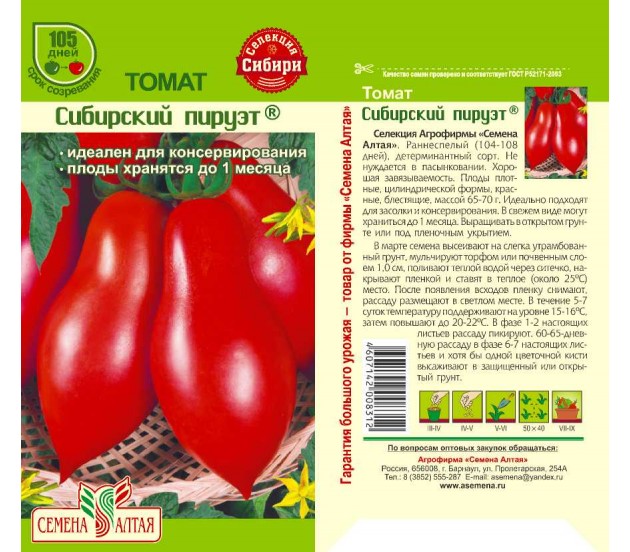
| Description | A determinate, low-growing (up to 60 cm), early-ripening tomato variety, intended for growing in open ground or in a greenhouse. |
| Ripening period | 104-108 days |
| Fruit weight | 65-70 g |
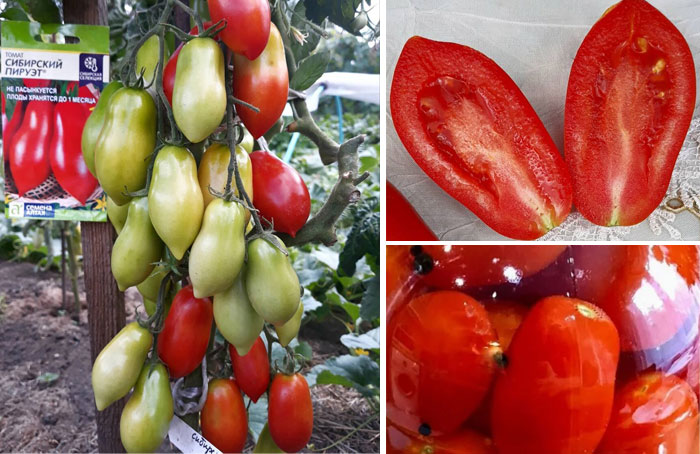
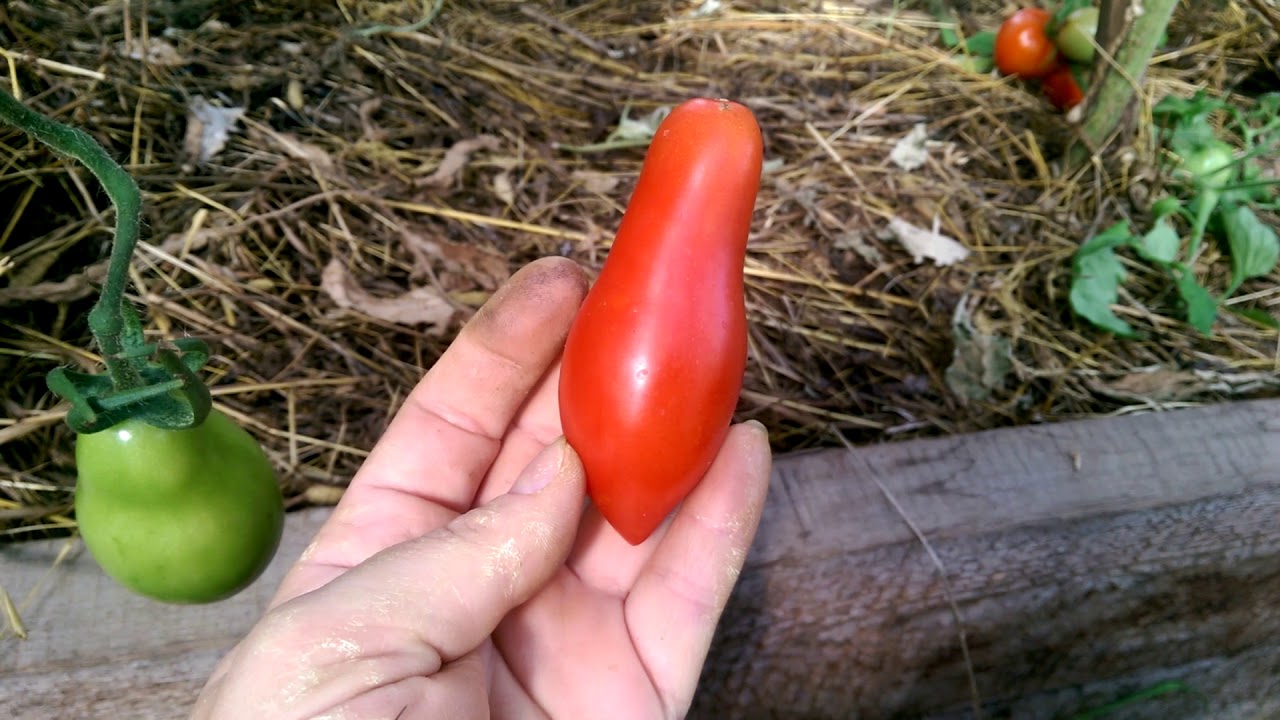
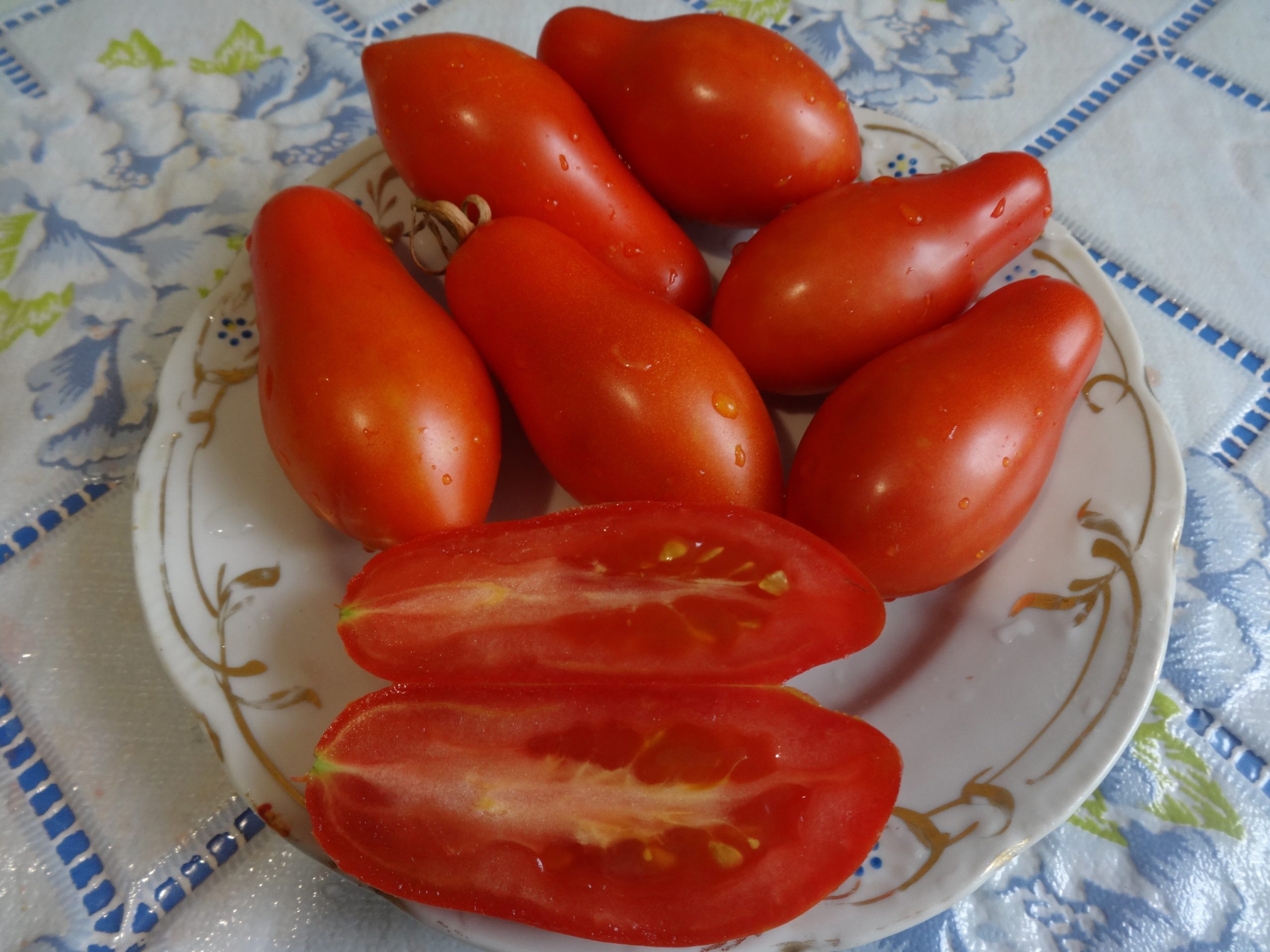
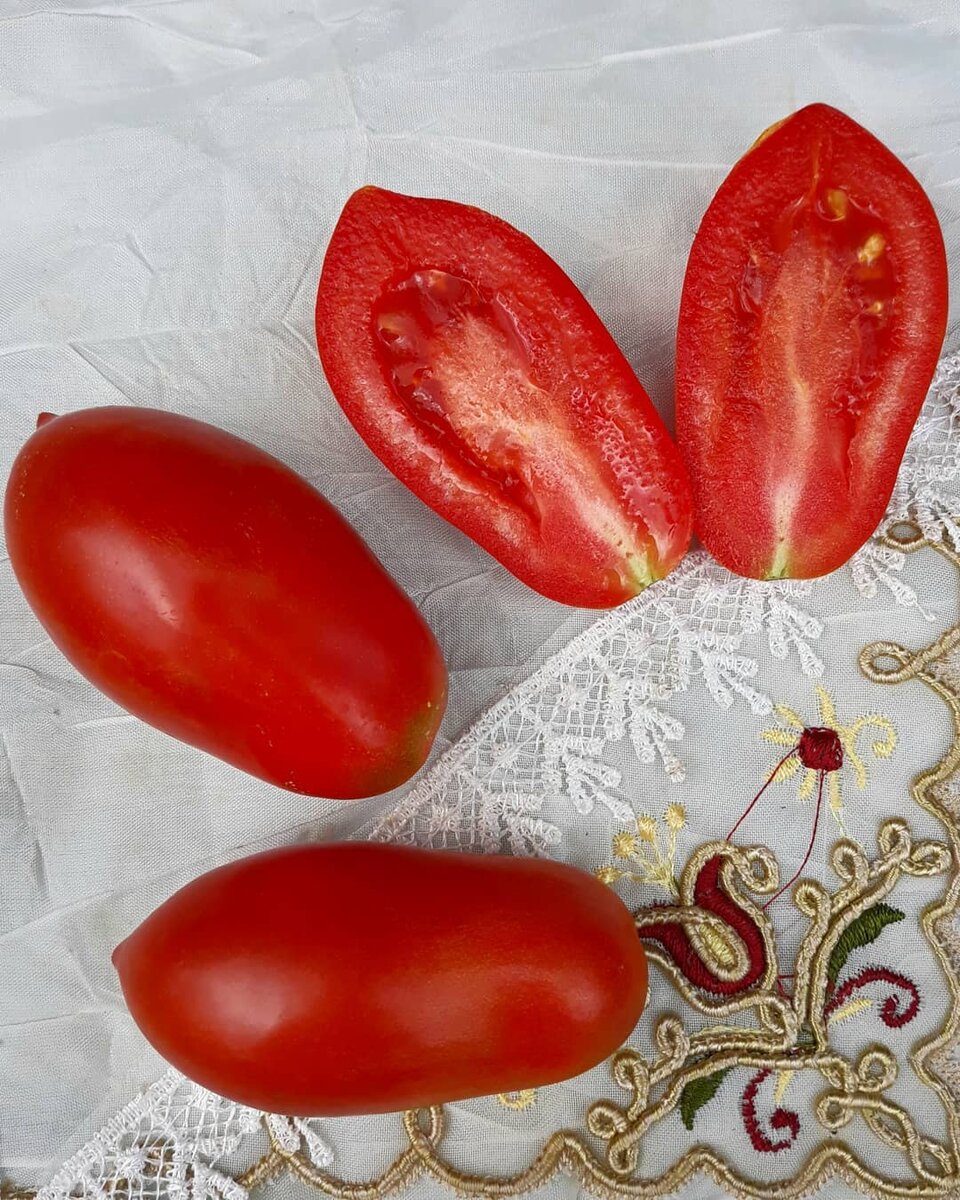
| Description of the fruit | The tomatoes are cylindrical, widening toward the bottom and ending in a pointed tip. The color is bright red. |
| Productivity | 6.0-6.5 kg/sq.m |
| Usage | The fruits are intended for pickling and canning; thanks to their long shelf life, they can be used for eating fresh for a long time. |
| Preferred growing regions | At the very beginning of its development, the variety was intended for Siberian latitudes, but recently it has been used by gardeners in other regions. |
| Disease resistance | It has good resistance to common diseases and is highly resistant to late blight. |
| Agricultural technology | Despite the relatively compact shoots, the bush still requires staking. The tomato plant develops into 1-2 stems. |
| 2008 | |
| Country of origin | Federal State Budgetary Institution of Science Central Siberian Botanical Garden of the Siberian Branch of the Russian Academy of Sciences, LLC Agrofirm 'Seeds of Altai', Individual Entrepreneur Sergey Nikolaevich Kondakov |
Photo gallery of the tomato variety Siberian Pirouette:

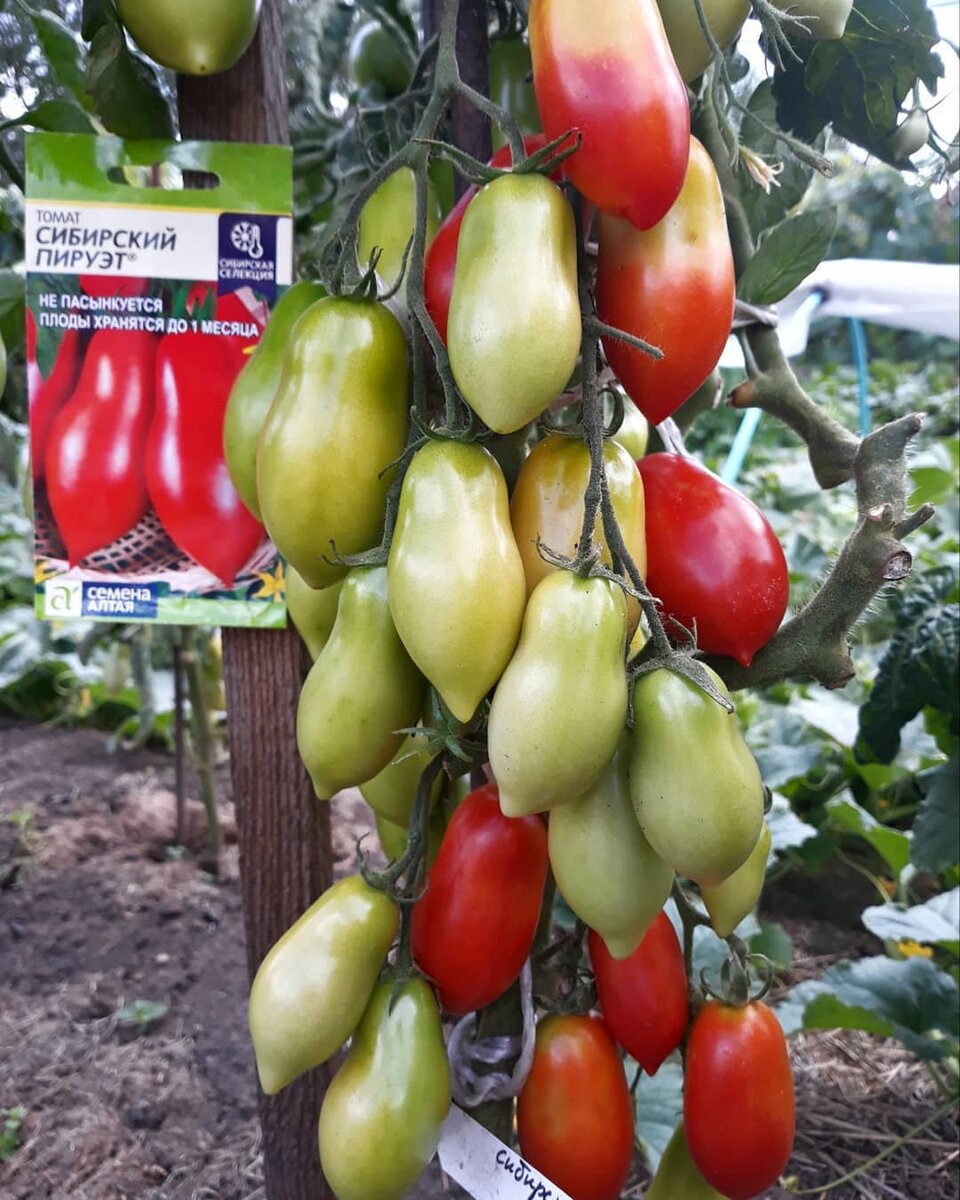
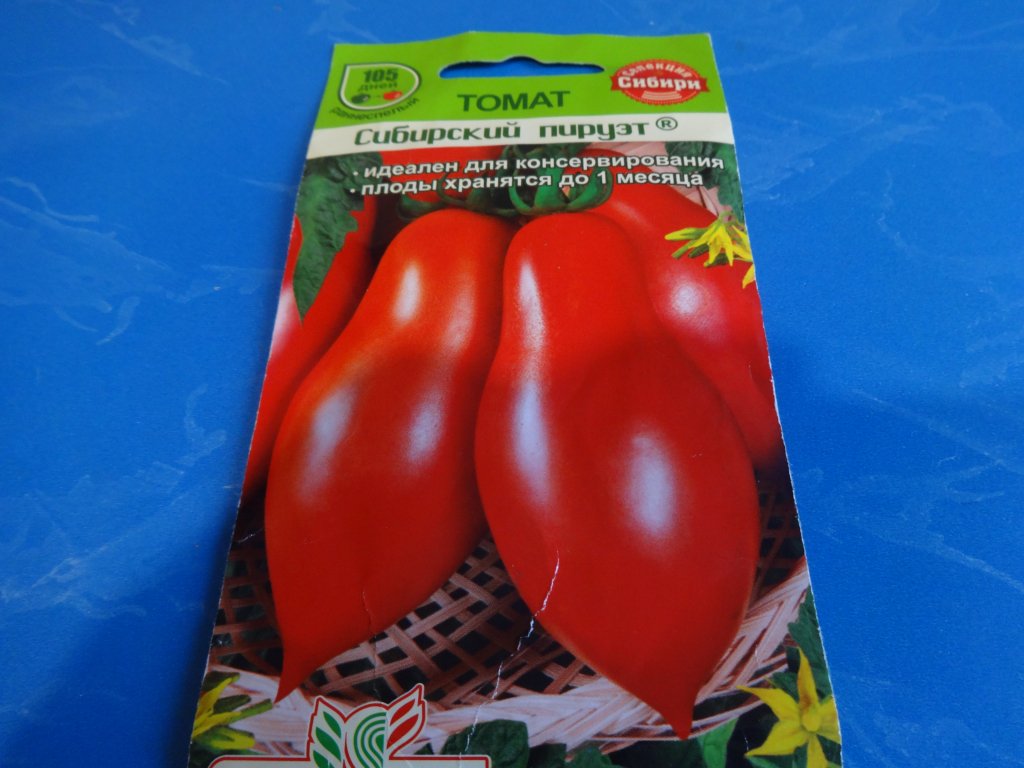
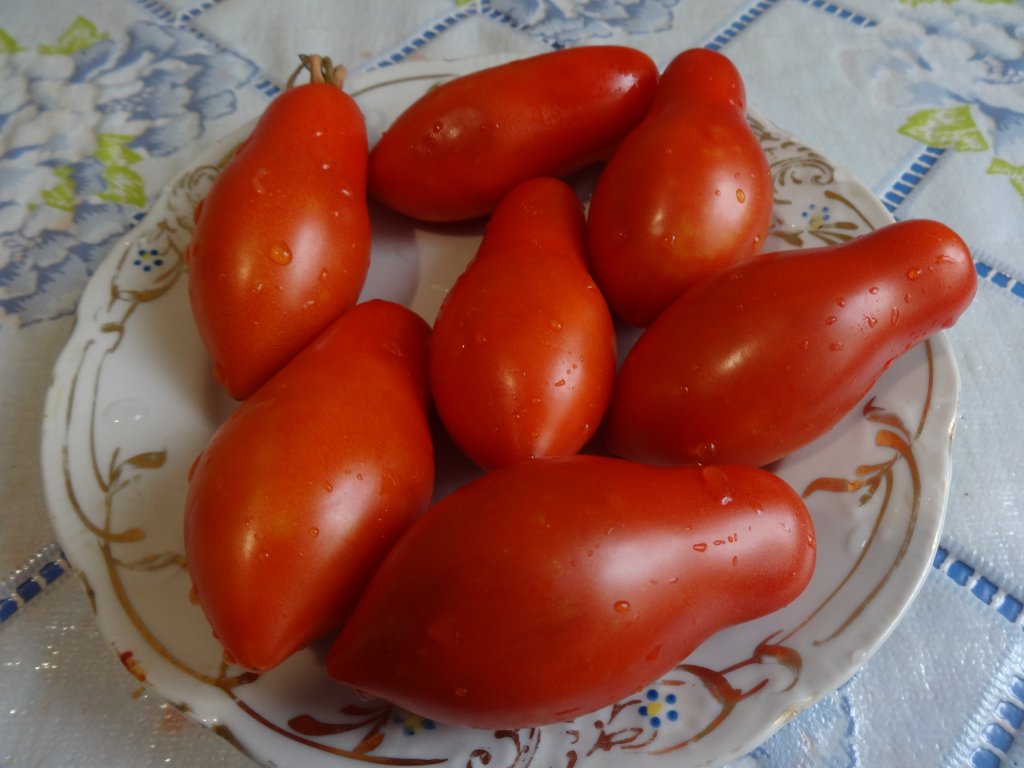
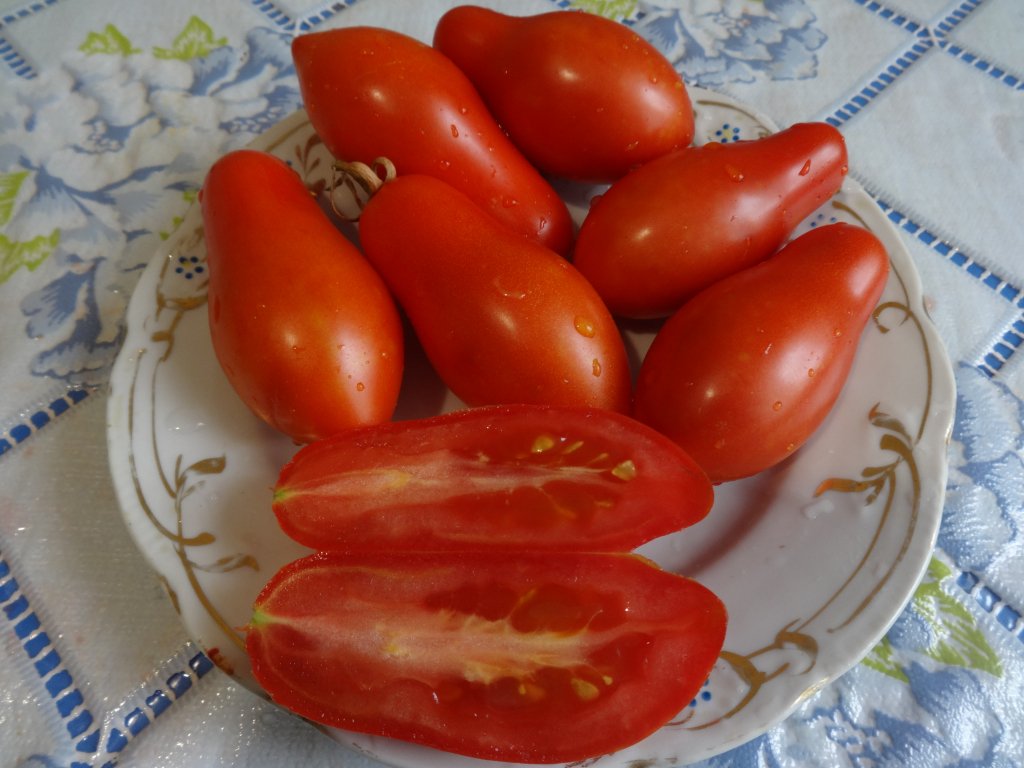
The origin of the Siberian Pirouette tomato variety
Siberian Pirouette is the creation of three breeding companies. The specialists simultaneously refined the tomato's varietal characteristics, honing them to perfection. They succeeded, and the resulting crop met all the necessary parameters. Therefore, in 2007, an application was submitted for inclusion in the official register. And in 2008, the variety was recognized and patented.
A detailed description of the Siberian Pirouette tomato variety
The Siberian Pirouette tomato is considered a compact and low-growing variety, which does not affect its yield and allows you to harvest a large number of delicious tomatoes.
Bushes
The Siberian Pirouette tomato variety is characterized by short shoots. During the growing season, they grow up to 60 cm. However, even despite this, the stems need to be tied up—this will prevent them from breaking under the weight of the fruit and will also make care much easier.
There are few leaves; after the tomatoes begin to ripen, they can be removed from the lower tiers.
The tomato is formed into 1-2 shoots.
Fruit
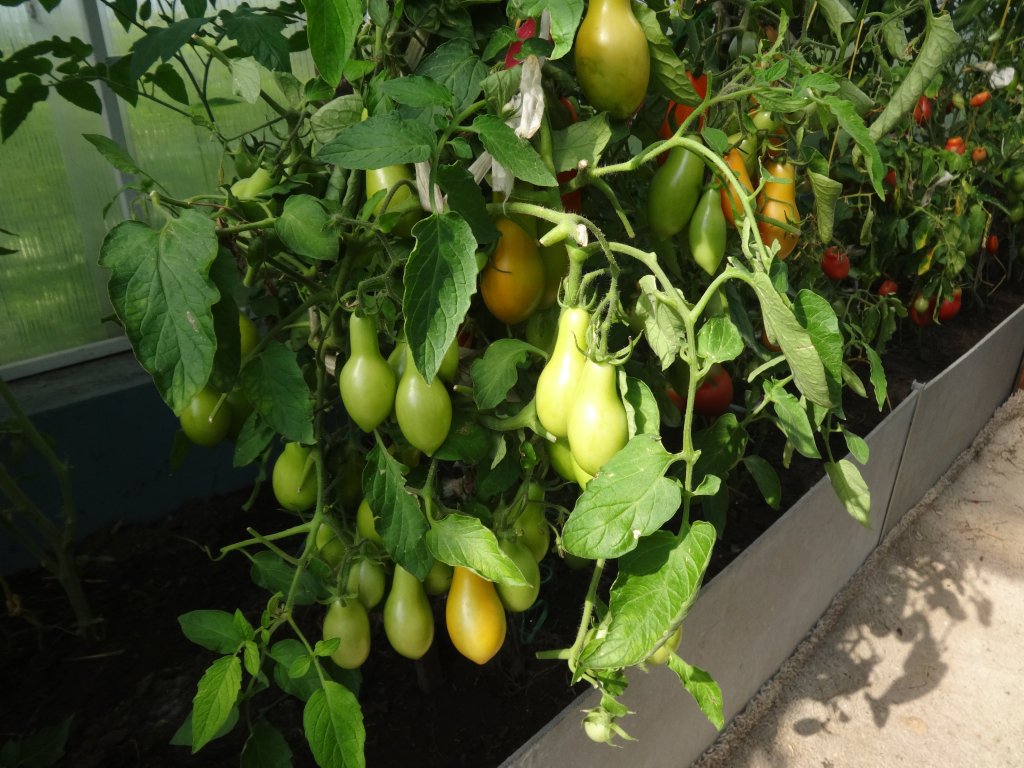
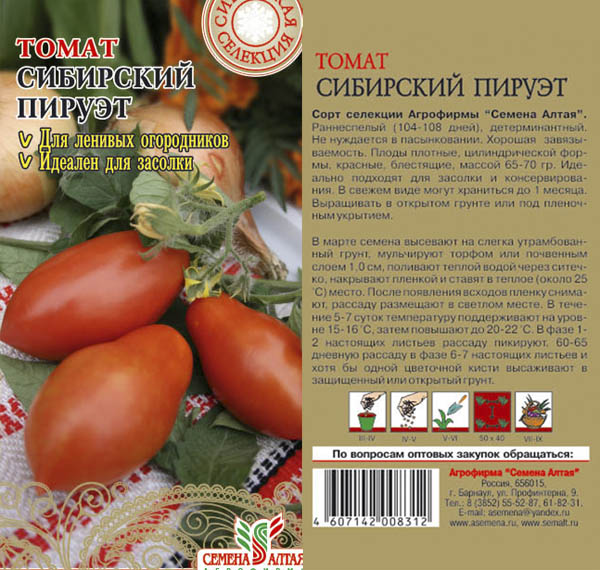
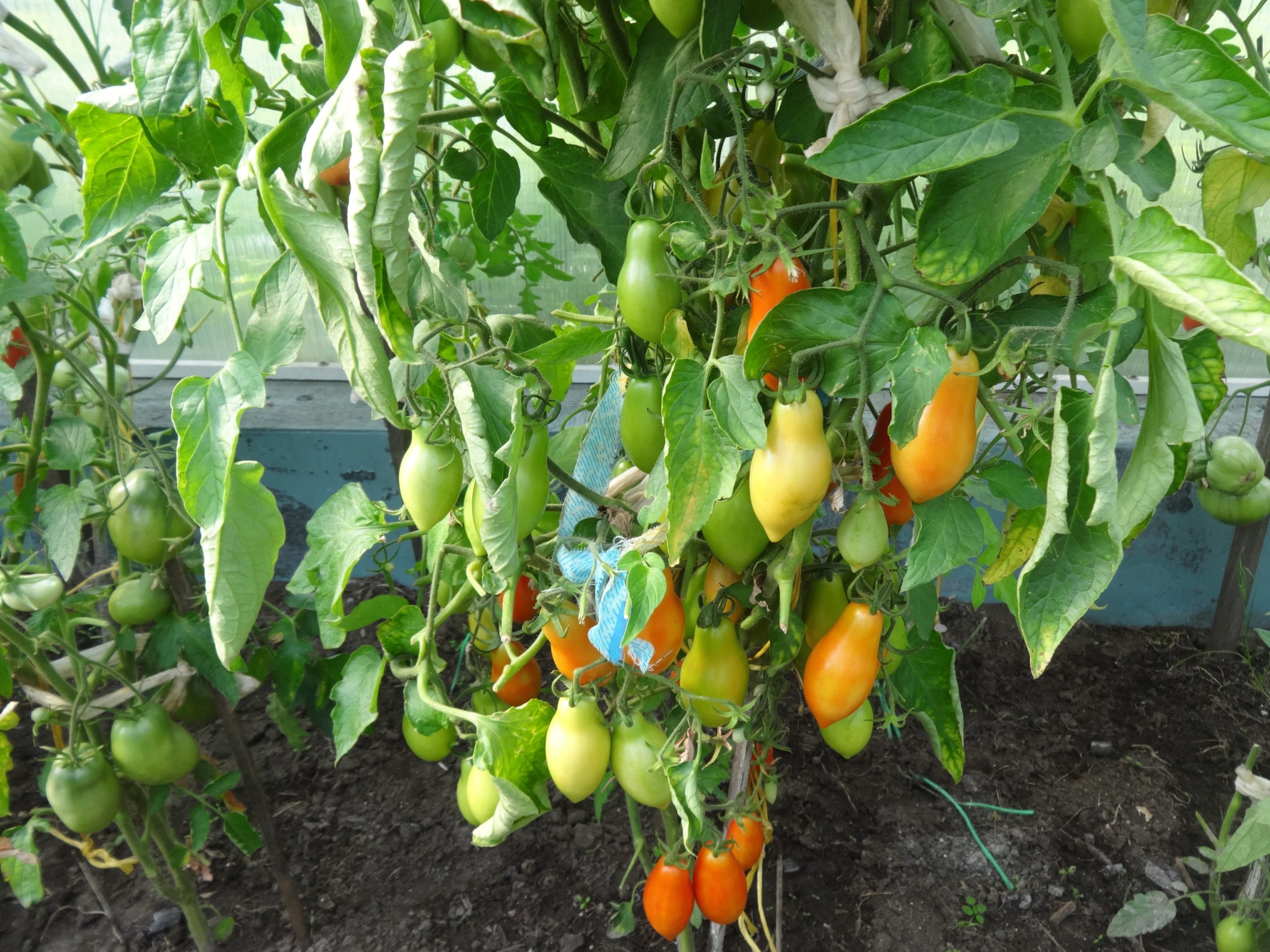
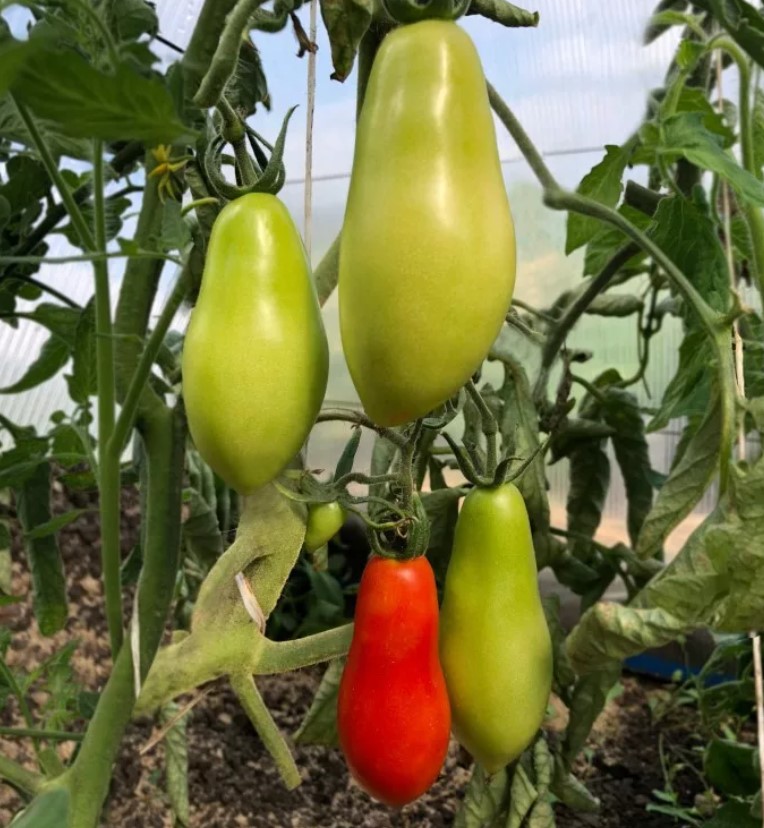
The tomatoes are relatively small, rarely weighing more than 75g. They are bright red in color and cylindrical in shape, rounder at the base, ending in a pointed tip.
The flesh isn't the juiciest, but the flavor is pleasant—sweet with a hint of tartness. There are 2 to 3 seed chambers. The dry matter content is high.
Productivity
This variety boasts a moderate yield. Many gardeners report that when planting store-bought seeds, the harvest is mediocre in flavor and quality. However, the seeds obtained from the first harvest produce excellent results the following season.
With proper care in a greenhouse, it is possible to harvest up to 10 kg of fruit per square meter.
Ripening time
Siberian Pirouette is characterized by early ripening. From germination to harvest, it takes approximately 108 days. In southern regions, tomatoes can be harvested even earlier.
Advantages and disadvantages of the Siberian Pirouette tomato variety
The table below shows the main advantages and disadvantages of the Siberian Pirouette variety.
| Advantages | Flaws |
|
|
Growing the Siberian Pirouette tomato variety
The Siberian Pirouette tomato can be grown from seedlings or sown directly into the ground, depending on the region and weather conditions. The compact size of the plant allows for the construction of a shelter against inclement weather, even in an open-ground garden bed.
Sowing seeds and growing seedlings
Seeds are sown in March, 60-65 days before planting tomatoes in the garden. The exact date depends on the growing region.
Most Siberian Pirouette seeds found in stores are not pre-treated. They are cheaper, but require additional homework to ensure germination.
First, the seeds are disinfected by placing them in a weak solution of potassium permanganate for 20 minutes.
The second step is to soak them in a suitable growth activator, such as Epin. Some gardeners prefer to use a solution of Fitosporin to strengthen the planting material.
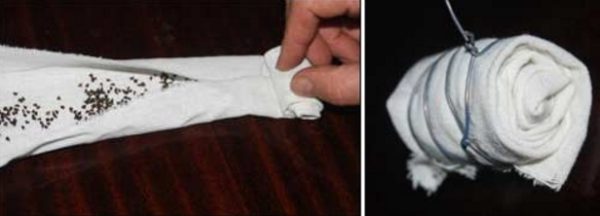
The final stage involves germination. The seeds are wrapped in a damp cloth for a couple of days and placed in a warm place. Experienced gardeners recommend not skipping this step, even if the manufacturer recommends dry planting. As many years of experience have shown, sprouted seeds have a better germination rate.
It's best to use ready-made soil—it maintains a balance of all elements. However, you can mix one part garden soil, one part compost, one part sand, and one part peat moss yourself.
The selected container is half-filled with potting soil, after which the seeds are sprinkled on top. They are then covered with a 1-2 cm layer of soil, carefully watered with a spray bottle, and covered with plastic wrap.
The resulting mini-greenhouse is placed in a warm spot until the tomatoes sprout. Once all the shoots emerge from the ground and have strengthened slightly, the covering is removed, and the container with the seedlings is moved to a cooler, well-lit spot.
During the first week, the manufacturer recommends maintaining the temperature at +15…+17 °C, and then increasing it to +22 °C.
Picking is carried out when 1-2 true leaves appear on the shoots.
Planting in the ground
Before placing tomatoes in a permanent bed, especially if we are talking about open ground, they need to be hardened off.
To do this, approximately 5-7 days before planting, begin acclimating the seedlings to the new conditions by placing them outside, on a veranda, or balcony. Initially, they should be left outside for an hour, but later they can be left there for the entire day.
The soil must warm up to +15 °C, otherwise the tomatoes will freeze and either die, or will take too long to get used to the new location and grow slowly.
Incidentally, Siberian Pirouette seedlings are very compact, making them easy to transport from home to garden. The planting pattern can also be quite dense: about 30-40 cm between plants is acceptable.
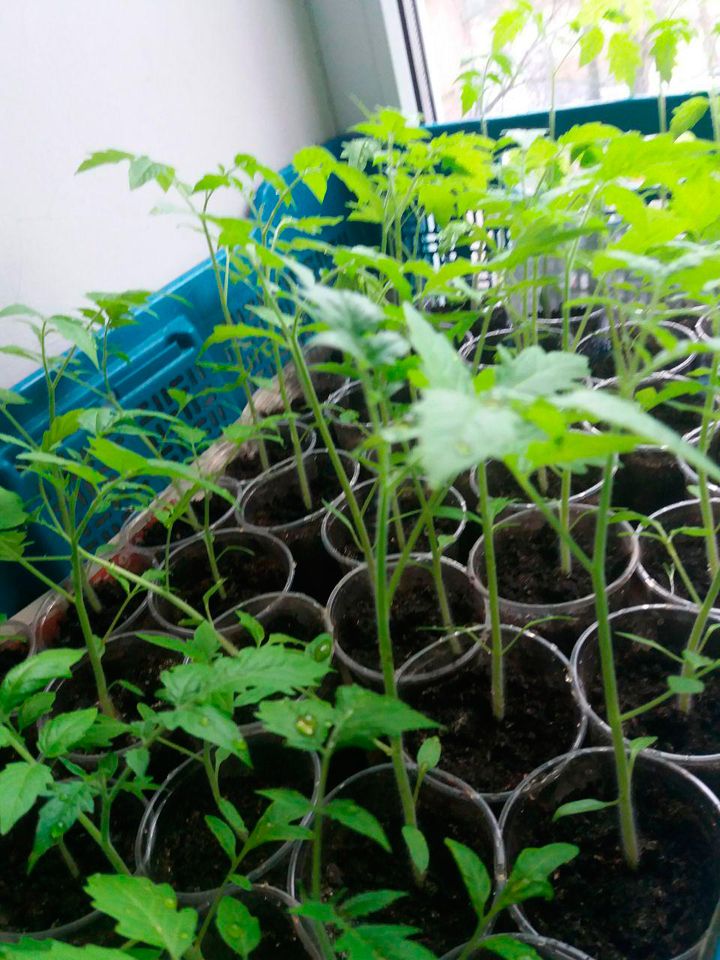
The holes are made about 25 cm deep and wide enough to accommodate the roots and soil from the cup. It's best to prepare the soil in advance, in the fall. In the spring, all that's left to do is dig the bed again.
Some gardeners add ash, onion peels, and other fertilizers to the holes. These should be covered with soil to prevent root burn. However, if your soil was well-nourished in the fall, you won't need to add anything extra when planting tomatoes.
In order to retain moisture in the soil and reduce the rate of weed emergence, the surface of the bed is mulched.
Care, watering and fertilizing
Siberian Pirouette is an easy-to-grow tomato. It grows well even with minimal care.
Despite the shoots' short stature, they still need to be tied up to ensure better aeration and even distribution of sunlight. Moreover, tied plants are much easier to care for.
Tomatoes develop into 1-2 stems. This will depend on the growing method: in southern regions, more shoots can be left in open ground. However, the yield from these shoots will be slightly smaller.
Watering requires special attention. If the soil isn't moist enough, the tomatoes will taste sour. Therefore, it's best to install a drip irrigation system to evenly distribute the water throughout the soil. If this isn't possible, use settled water. Initially, 5 liters of water per meter, every 5-6 days, is sufficient. During flowering, the amount of water should be increased to 15 liters, and the frequency of watering should increase to twice a week.
The first fertilizers can be applied to the soil no earlier than 10 days after transplanting tomatoes. Many gardeners prefer organic fertilizers, infusing weeds, ash, or mullein. For those who prefer ready-made fertilizers, a wide variety of products are available in specialty stores, such as Senor Pomidor.

As a rule, during the entire growing season, tomatoes are fed 3-4 times at each stage of development.
Fertilizers can be applied only after it has rained or watered.
Another useful maintenance procedure is weeding combined with loosening the soil. This improves air penetration to the roots and reduces the risk of diseases and pests that can cause weeds.
Resistance of the Siberian Pirouette tomato variety to diseases and pests
Siberian Pirouette has excellent resistance to all common tomato diseases. And thanks to its early ripening period, fruits have time to form on the bushes before late blight begins to emerge and become active.
But don't forget that if care isn't properly implemented, tomatoes will become susceptible to diseases, which in turn increases their susceptibility to various pests. This is especially true if humidity levels are increased, temperatures are lowered, or the plant is overwatered. For prevention, it's recommended to treat the plants with Bordeaux mixture or a solution of Fitosporin.
Collection, use and storage
From germination to harvest, it takes up to 108 days. You can pick tomatoes that aren't fully ripe—they'll ripen at home until they're ready.
The tomato's main distinguishing feature is its long shelf life. The manufacturer claims 30 days, but gardeners note that this period can be even longer.
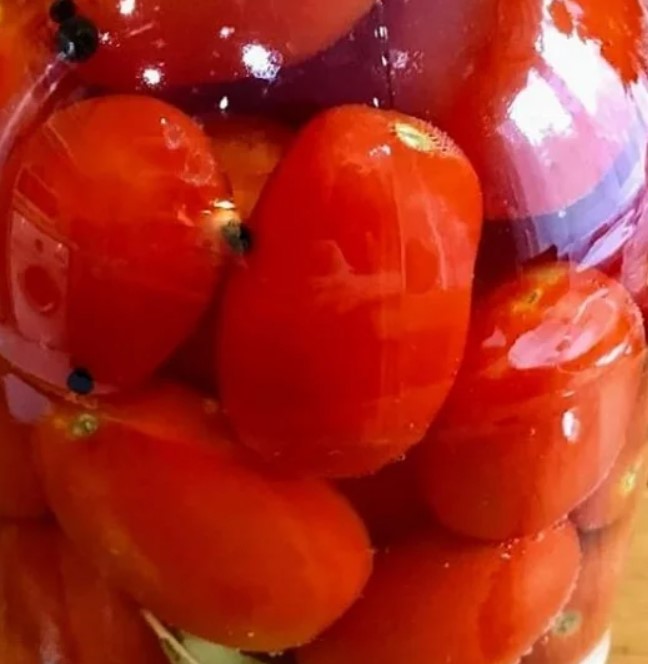
The main purpose of the fruit is whole-fruit canning. The thick skin prevents them from losing their shape and cracking. Siberian Pirouette tomatoes are also used to make sun-dried tomatoes. They can also be eaten fresh, but their flavor is not the best among the family.
Comparison of the Siberian Pirouette tomato variety with other varieties in the table
Please note! How can you easily convert centners/ha to kg/sq.m? Simply divide by 100! For example, the Abakansky Pink tomato yields 400 centners of marketable fruit per hectare. This equals 4 kg per square meter. It's that simple! Also, keep in mind that typically no more than 3-4 plants are planted per square meter. This way, you can calculate the yield per bush. In the case of the Abakansky Pink, it's about 1 kg.
| Variety | Ripening period (number of days from full germination to ripening)
Yield of commercial fruits |
Brief description | Fetus |
| Siberian pirouette | 85-100 days
The yield of commercial fruits is 6.0-6.5 kg/sq.m. |
An early-ripening determinate variety for open ground and greenhouses. Requires staking and training. Suitable for salads, pickling, and whole-fruit canning. | Cylindrical, smooth, dense, resistant to cracking, red, 65-70 g. Excellent taste. |
| Siberian Troika | about 120 days
600 c/ha |
A mid-season determinate variety for open ground. Suitable for salads and canning, including whole-fruit preserves. Heat-resistant. | Cylindrical with a spout, smooth, dense, red, 80-100 g (up to 200 g). Excellent taste. |
| Siberian grape | 110-120 days
The yield of commercial fruits in open ground was 8.5 kg/sq.m. |
A mid-late determinate variety for open ground and greenhouses. Suitable for salads. | Cylindrical, medium density, slightly ribbed, red, 89 g. Good taste. |
| Siberian garland | 90-95 days
1700-1900 c/ha |
An early-ripening indeterminate variety for open ground and greenhouses. Suitable for salads. | Flat-round, large, smooth, dense, red, 260 g. Excellent taste. |
| Siberian Shan'gi | 100-110 days
The yield of commercial fruits in open ground was 5.6 kg/sq.m. |
A mid-season determinate variety for open ground and greenhouses. Suitable for salads. | Flat-round, medium density, slightly ribbed, raspberry, 157 g. Excellent taste. |
| Siberian tiger | 110-120 days
Up to 1200 c/ha |
A mid-season indeterminate variety for open ground and greenhouses. Requires staking and training into 1-2 stems. Suitable for salads and processing into tomato products. | Flat-round, ribbed, dark pink with dark purple streaks, 150-250 g. Excellent taste. |
| Siberian miracle | 110-115 days
The yield of commercial fruits under film covers is 10 kg/sq.m. |
A mid-season indeterminate variety for open ground and greenhouses. Requires staking and shaping. Suitable for salads. | Ovoid, smooth, medium density, red, 150-200 g. Good taste. |
| Siberian giant | 115-120 days
The commercial yield of fruits was 9.0-11.0 kg/sq.m. |
A mid-early indeterminate variety for greenhouses. Suitable for salads. | Flat-round, large, medium-ribbed, loose, red, 400-500 g. Excellent taste. |
| Siberian bananas | 105-110 days
Up to 1500 c/ha |
A mid-season semi-determinate variety for open ground and greenhouses. Suitable for salads and canning. | Banana-shaped, smooth, yellow, 150-180 g. Good to excellent taste. |
| Abakan pink | 120 days or more
400 c/ha |
A late-ripening determinate variety for open ground and greenhouses. Requires staking and training. Suitable for salads and processing into tomato products. | Flat-round, slightly ribbed, medium density and pink in color, 200-500 g. Good taste. |
| Scarlet Mustang | 115-120 days
391 c/ha |
A mid-early, indeterminate variety for open ground and greenhouses. Suitable for canning. It has a very high marketability (97.3%). | Medium, cylindrical, hard, slightly ribbed, red, 95 g. |
| Fighter | 95 days
230 c/ha |
An early-ripening, determinate, standard variety for open ground and greenhouses. Suitable for salads, canning, and pickling. Marketability: 72%. Drought-resistant. | Cylindrical, smooth, red, 67-88 g. Good taste. |
| Casanova | 110-115 days
1080 c/ha |
A mid-season indeterminate variety for open ground and greenhouses. Suitable for salads. | Cylindrical, medium-density, slightly ribbed, red, 30-38g. Good to excellent taste. |
| Matador | 105-110 days
500-600 c/ha |
An early-ripening, determinate variety for open ground. Suitable for salads and whole-fruit canning. | Cylindrical, smooth, dense, red, 100 g. Excellent taste. |
| Khokhloma | 112-119 days
850-990 c/ha |
A mid-season indeterminate variety for greenhouses. Requires staking and training. Suitable for salads and canning. | Cylindrical, red, 108-127 g. Excellent taste. |
| Petrusha the gardener | 111-115 days
640 c/ha (open ground) |
A mid-season, determinate, standard variety for open ground. Suitable for salads. | Cylindrical with a pointed top, smooth, medium density, raspberry, 150-180 g. Good taste. |
Gardeners' reviews of the Siberian Pirouette tomato variety
Gardeners value the Siberian Pirouette for its excellent shelf life—the fruits can be stored for a month or two without losing their flavor. However, when harvested for home ripening, their flavor becomes dull. It's also noted that the best quality and yield are obtained not from store-bought seeds, but from those collected at home after the first year of cultivation.
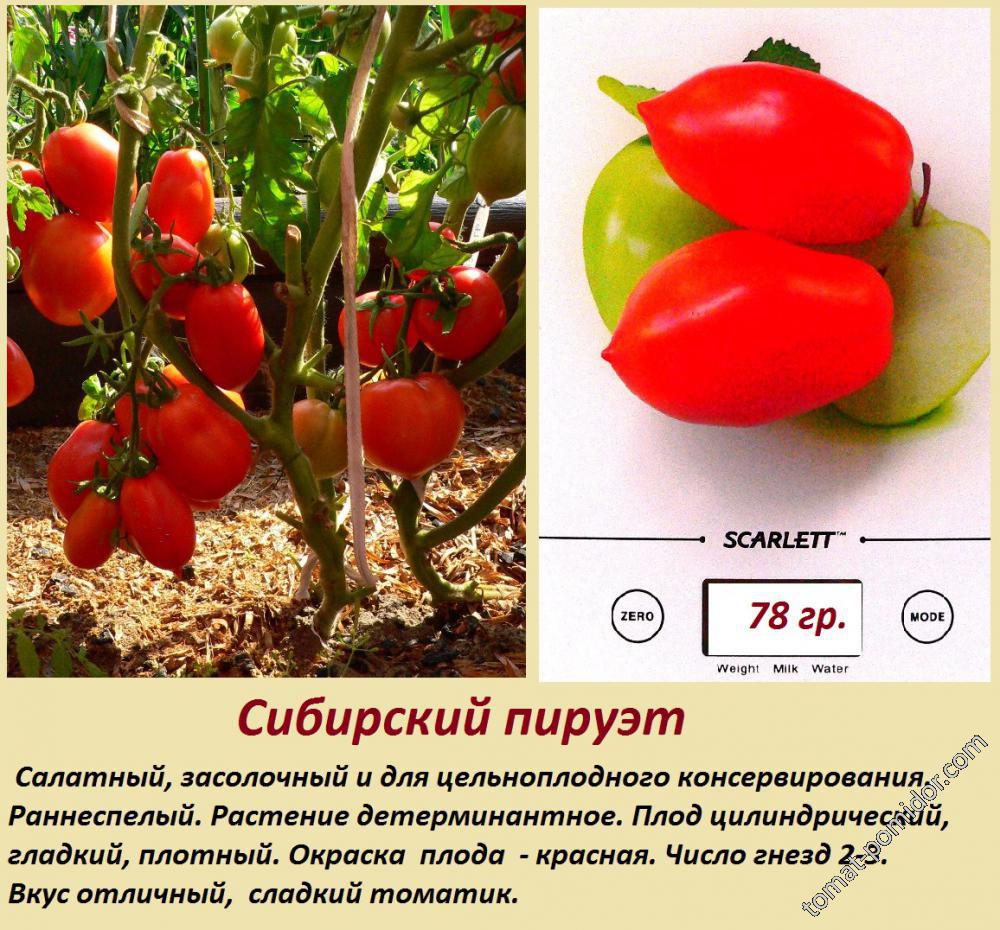
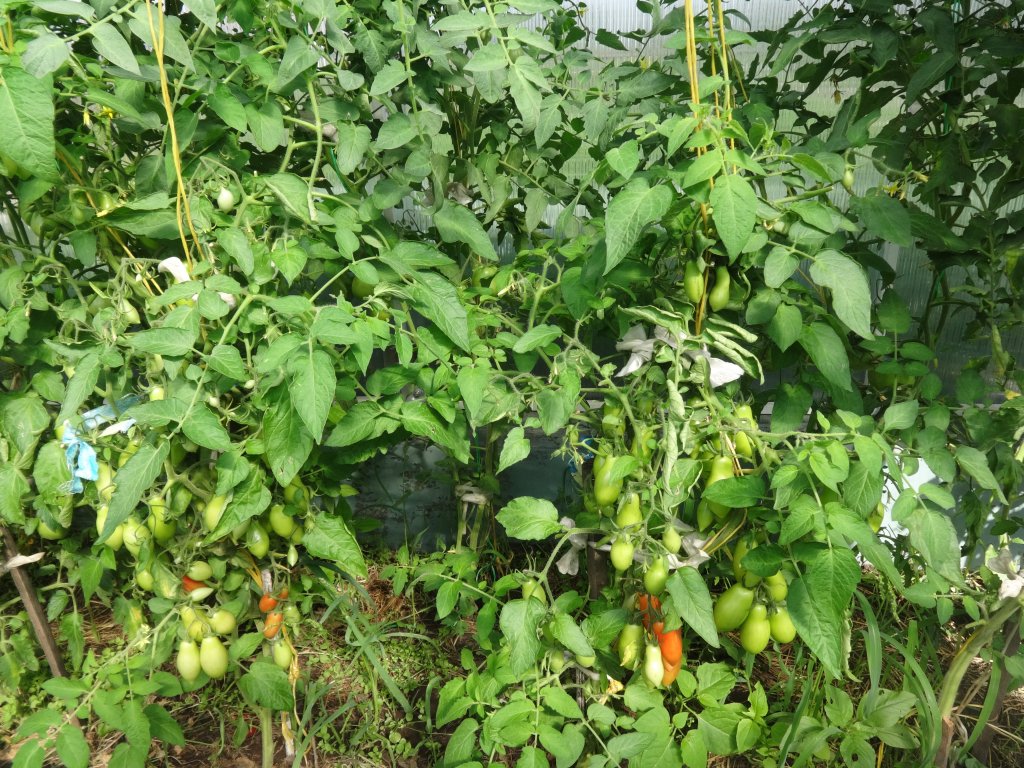
Hello. I planted it in 2019 because it promised good shelf life. Yes, it's productive, and initially, when ripe on the vine, it had a good, average flavor and kept well, but when it ripened at home, it became tasteless. And mine wasn't an early variety. It's firm and should hold its shape well when canned, but I didn't pickle it. The photo is of only the green ones from August 10.
Tomato "Siberian Pirouette" - for delicious and beautiful pickles
Sometimes you walk into a gardener's cellar and it's like stepping into a museum. Jars line up, and the inside is so beautiful you just can't wait to try the contents. Pickling whole tomatoes is considered the pinnacle of craftsmanship. Experienced gardeners know that not every variety can be pickled so that the fruit's original shape is preserved. Often, the tomato skins burst, spilling the contents, and the resulting dish is completely different. That won't happen with the "Siberian Pirouette" tomato! We'll tell you about the variety's main advantages.
Varietal characteristics:
1. Early maturing. The first fruits will be produced 104-108 days after the first shoots emerge.
2. Low-growing. Thanks to its compact size, the bush looks great even in the smallest garden.
3. Unpretentious. This variety requires no pinching at all. The plant forms its own bush.
4. Good fruit set. This variety produces excellent fruit, meaning you'll definitely have plenty of pickled tomatoes this winter.
5. Original shape. The main advantage of this variety is its shape. The red cylindrical fruits grow from 65 to 70 g, making them ideal for jars.
6. Skin density. Another important parameter for pickling and storage. Thanks to their density, tomatoes don't crack in the jar, retain their shape, and stay fresh for up to 1 month.Such wonderful tomatoes were produced in our greenhouse during the 2018 summer season!