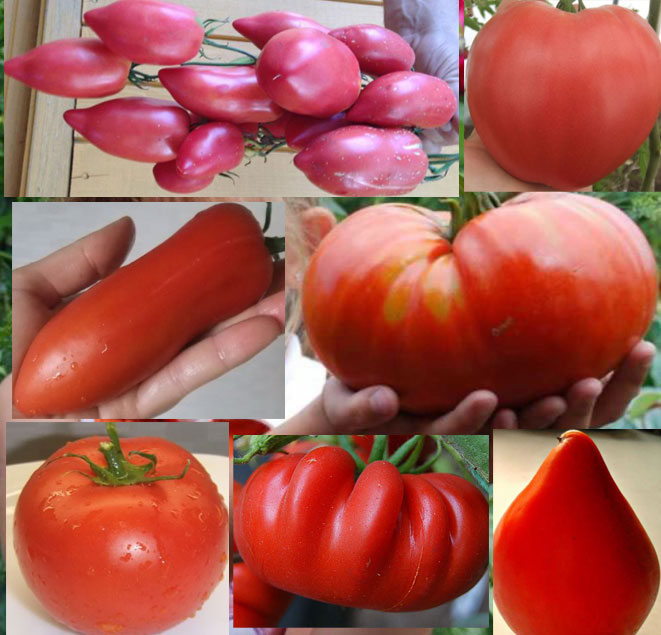
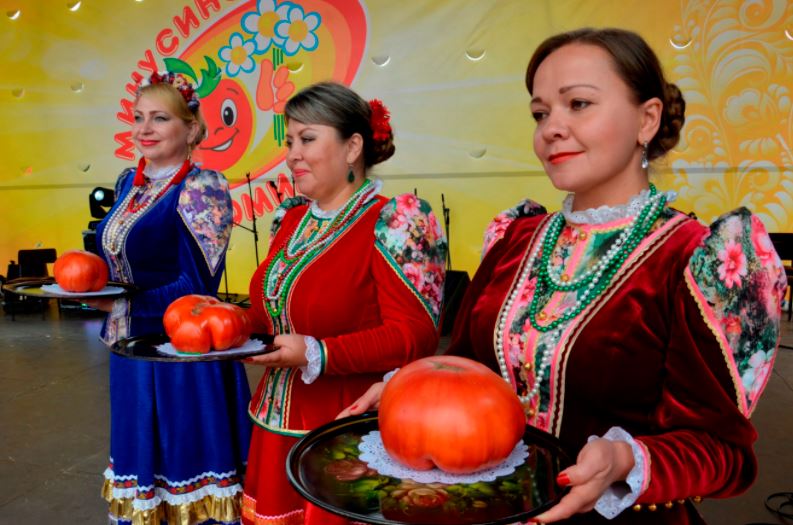
Minusinsk tomatoes are renowned for their large size and ability to produce abundant harvests in the harshest climates. They are grown even in the Urals and Siberia. An annual festival is held in their homeland in their honor. Minusinsk tomatoes include several varieties, and this article provides a detailed overview of each.
Content
- 1 The history of the creation of the Minusinsk tomato series
- 2 Minusinsk series of tomato varieties
- 2.1 Minusinsk glasses
- 2.2 Apple Minusinsk
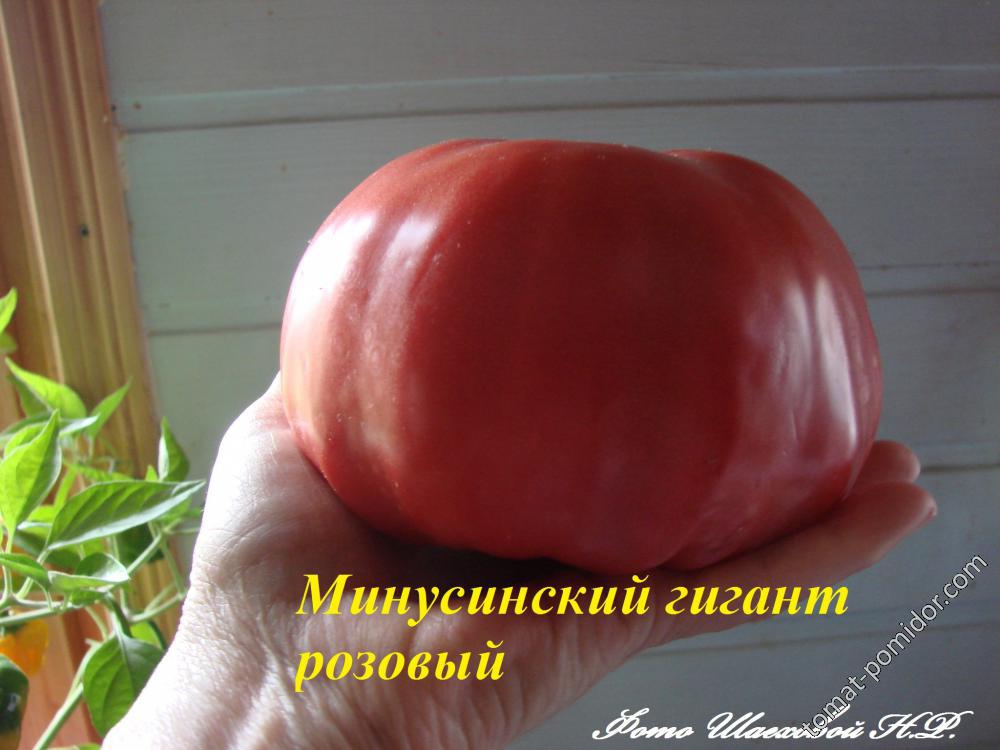
- 2.3 Minusinsk giant
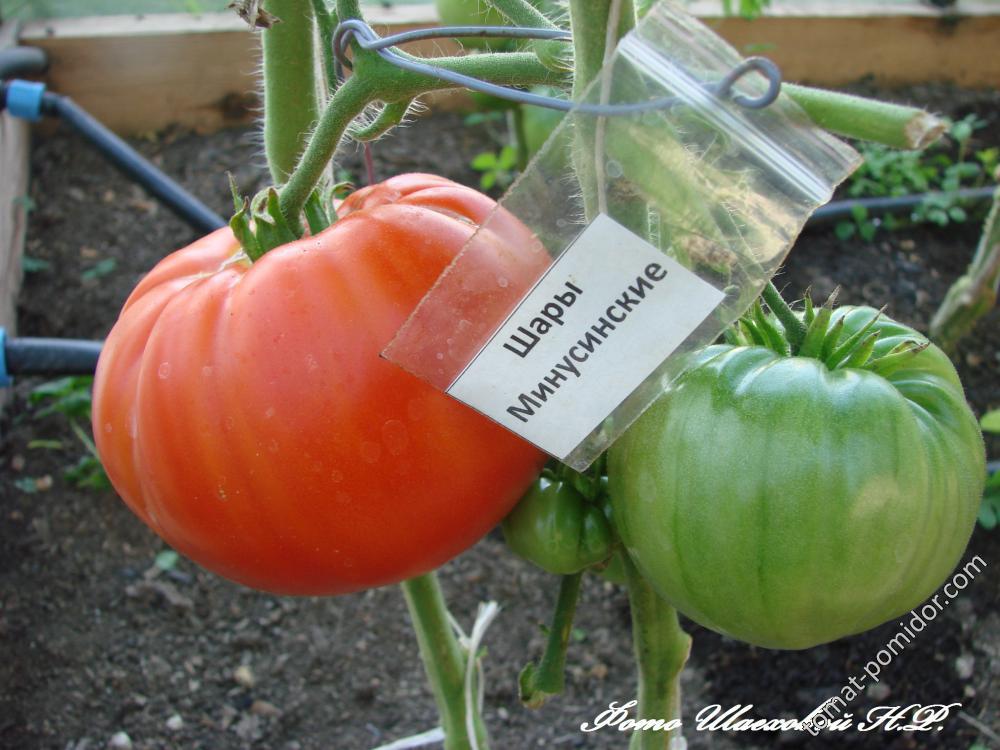
- 2.4 Minusinsk balls
- 2.5 Minusinsk bulls
- 2.6 Minusinsk barge hauler
- 2.7 Minusinsk bull's heart
- 2.8 Minusinsk home
- 2.9 Minusinsk flat hearts
- 2.10 Minusinsk pepper-shaped
- 2.11 Minusinsk fruitful
- 2.12 Lev Minusinsky
- 2.13 Minusinsk temptation
- 2.14 Minusinsk traditional
- 2.15 Minusinsk wrist
- 2.16 Minusinsk barrel
- 2.17 Minusinsk large
- 2.18 Minusinsk bast shoe
- 2.19 Soldatovo
- 3 Tips from experienced gardeners on growing Minusinsk tomatoes
- 4 Comparison of Minusinsky tomato varieties with each other and other varieties in the table
- 5 Real reviews from gardeners about Minusinsk tomatoes
The history of the creation of the Minusinsk tomato series
This series of tomatoes was named after the city of Minusinsk, where the Decembrists were exiled after the 1825 uprising. After serving their sentences, they purchased small houses with plots of land there, where they farmed, including growing various crops. According to some sources, the tomato varieties they developed were called Minusinsk tomatoes. However, there is no confirmation of this; no Decembrists' letters mention such information.
Around 1850, a wave of migrants from European Russia and Ukraine began. Many chose Siberia for farming. Given the huge number of migrants, it's plausible to assume that the Minusinsk tomato series was developed by them, not the Decembrist Hundred. However, even this theory contains some inconsistencies. In 1892, P.A. Argunov wrote a book, "Essays on the Agriculture of the Minusinsk Region and an Explanatory Catalogue of the Museum's Agricultural Department." It was in this book that the first mentions of what was grown in Minusinsk appeared. Various crops are described, but eggplants (which were confused at the time) are mentioned only in the gardens of a certain Medyachikha and in the village of Tes. Therefore, it's highly unlikely that the variety appeared at that time. Moreover, tomatoes weren't highly regarded; they were even confused with eggplants.
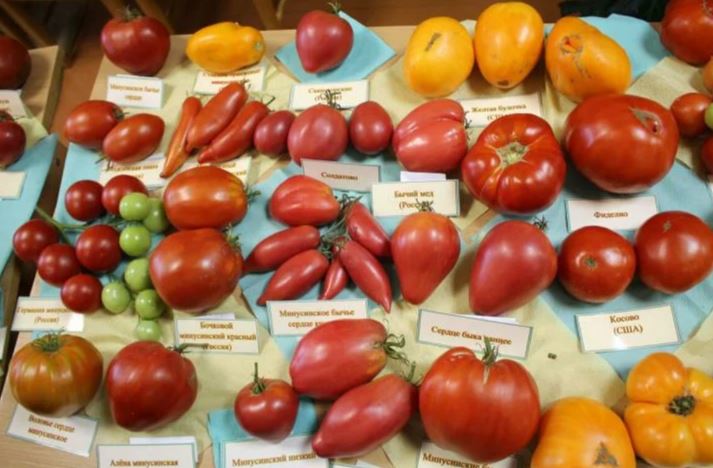
Tomato growing in Minusinsk only began to actively develop in 1909, when the exiled agronomist I. P. Bedro arrived in the area. He proved to be a very talented specialist, and within a year he founded an agricultural society that cultivated various crops, including tomatoes.
Tomatoes grown in the Minusinsk District were first presented at an exhibition in 1912 by I.S. Starukhin. He received a bronze medal for them. The next exhibition was held in 1913. Sixteen participants presented six varieties. Starukhin presented seven large tomatoes, weighing between 562 and 766 grams, to the jury. For this, the agronomist was awarded 10 rubles—enough to buy a cow at the time.
In 1910, I. P. Bedro first leased and then purchased land on Tagarsky Island to establish a nursery for agricultural crops, despite numerous obstacles and restrictions from local authorities. It was there that the active cultivation and breeding of new tomato varieties, later named Minusinsk, began.
The first historical mention of them can be found only in 1927, in the article "Minusinsk Scientific Fruit Growing at the Turn of the Century" by T.K. Smykova and G.A. Muravyov. It reads as follows: "...by 1927, the station's staff had developed the first varieties of agricultural plants: wheat—Lutes-cens 015, corn—Minusinskaya skorospelka, tomatoes—Minusinsky,..."
For reference! The record weight for Minusinsk tomatoes during their cultivation was 1,648 g.
Minusinsk series of tomato varieties
Below is a list of varieties from the Minusinsk tomato catalog with detailed descriptions and growing tips.
Minusinsk glasses
| Characteristic | Description |
| Ripening time | 110-115 days. |
| Plant type | Tall, indeterminate, mid-season, greenhouse variety. |
| Description of the fruit | Plum-shaped, with a dense skin. |
| Fruit weight | Up to 400 g. |
| The taste of the fruit | Sweet and sour, not watery. |
| Usage | For salads, tomato processing. |
| Productivity | 3.5-4.2 kg per bush. |
| Agricultural technology | Needs support and pinching. |
| Growing regions | Any. |
Minusinsk glasses come in various colors:
- Pink;
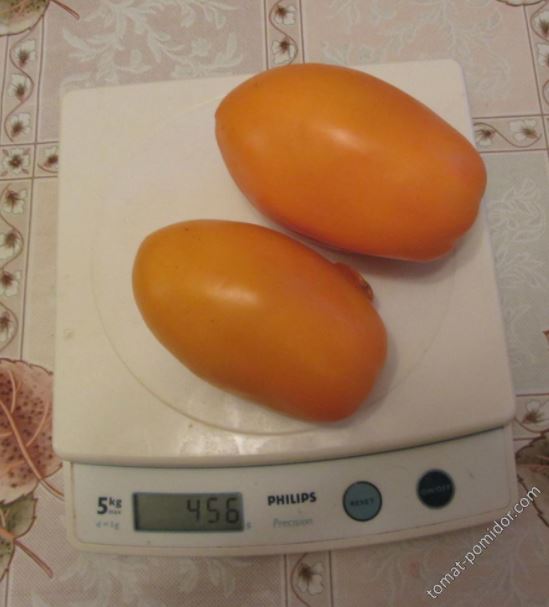
- Orange;
- Reds.
You can see what they look like in the photo:
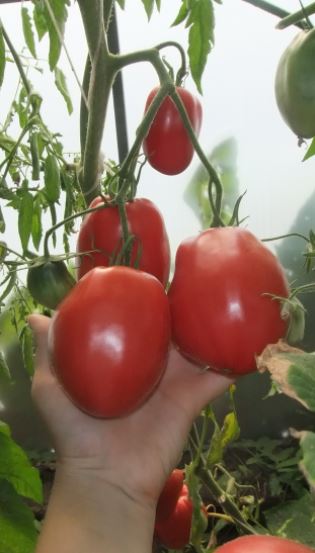
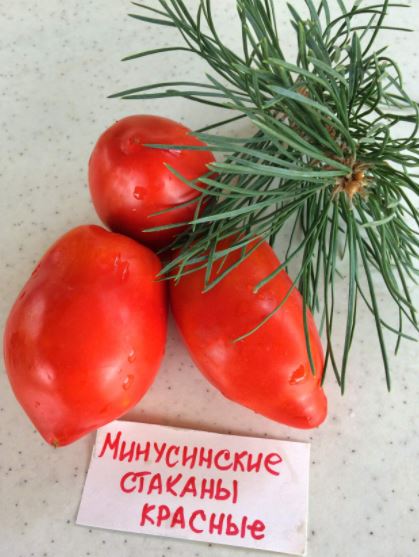
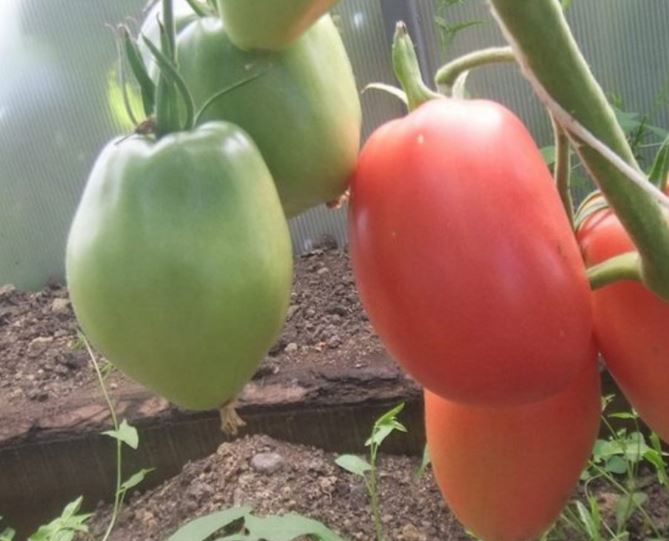
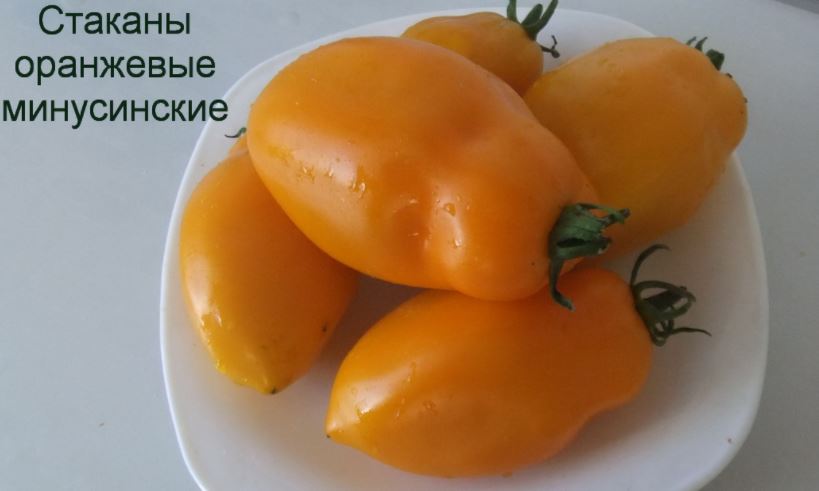
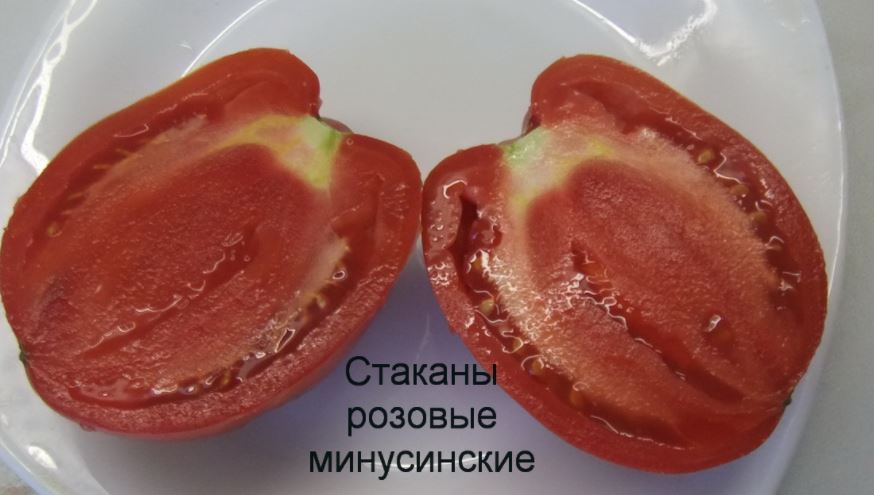
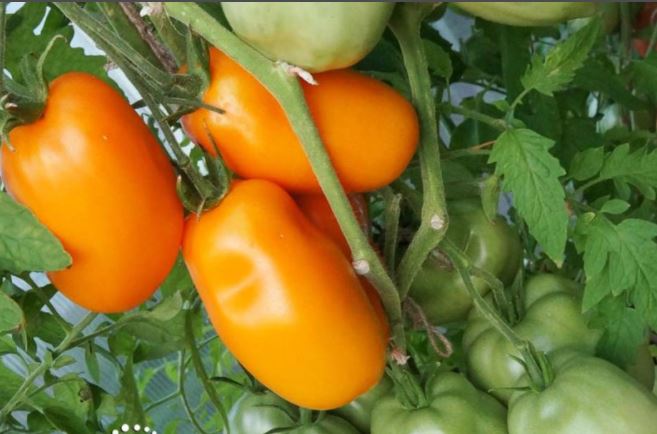
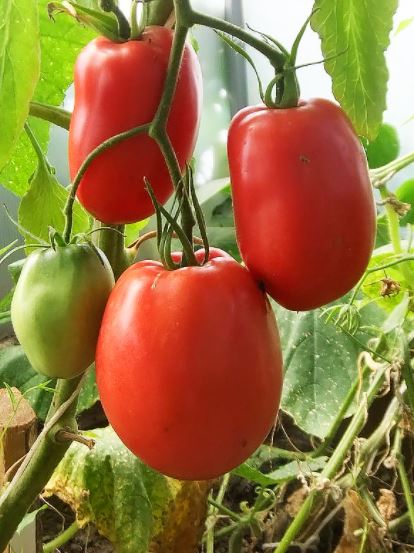
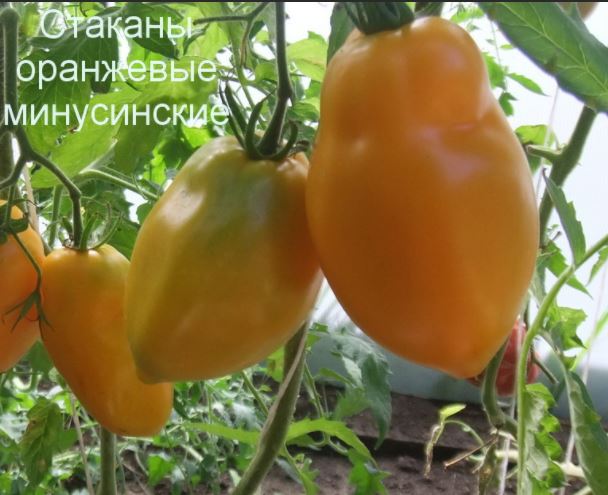
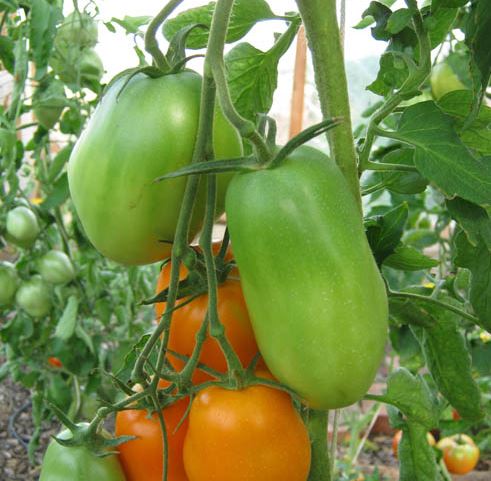
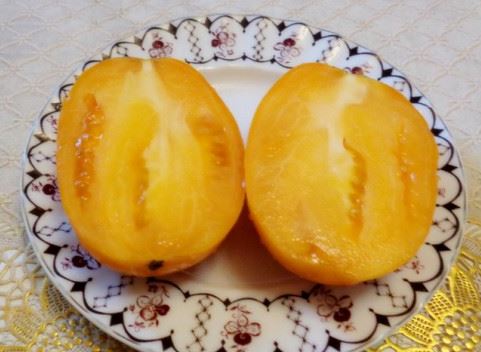
They are distinguished by a long fruiting period, as the tomatoes ripen on different branches at intervals. The largest tomatoes are formed on the lower clusters. Their thick skin prevents them from cracking.
| Advantages | Flaws |
|
|
This variety is grown exclusively from seedlings. When planted in a heated greenhouse, seeds can be sown from February 20th to March 10th.
A characteristic feature of Minusinsk cups is that the bushes produce a huge number of side shoots. These are unnecessary and only drain nutrients, preventing fruit ripening. Therefore, it is necessary to remove these extra shoots. Side shoots should be removed regularly during cloudy weather.
The bushes are tall and require support. Without it, the thin shoots can break under the weight of the fruit.
It's recommended to grow this variety in two stems to ensure a good harvest. When shaping, leave the strongest shoot under the first flower cluster. For an early harvest, Minusinsk Cups can also be grown in a single stem, leaving 3-4 clusters. In southern regions, they are also trained in three stems. However, keep in mind that the fruits will be smaller.
Reviews of Minusinsk cups are overwhelmingly positive. Gardeners appreciate their taste and good germination rate.
Read more about the Minusinskie Glasses tomato variety and real reviews from gardeners in the article. Minusinsk Glasses Tomato: Description, Photos, Reviews
Apple Minusinsk
| Characteristic | Description |
| Ripening time | 110-112 days. |
| Plant type | Mid-season, indeterminate, greenhouse, tall. |
| Description of the fruit | Flat, round, ribbed, bright scarlet. |
| Fruit weight | 450-500 g |
| The taste of the fruit | Sweet, with apple notes. |
| Usage | Canning, salads and appetizers, addition to main dishes, processing into tomato products. |
| Productivity | Up to 6 kg per bush. |
| Agricultural technology | Tying and shaping into 1 or 2 stems. |
| Growing regions | Any. |
Photo gallery of the tomato variety Yablochny Minusinsky:
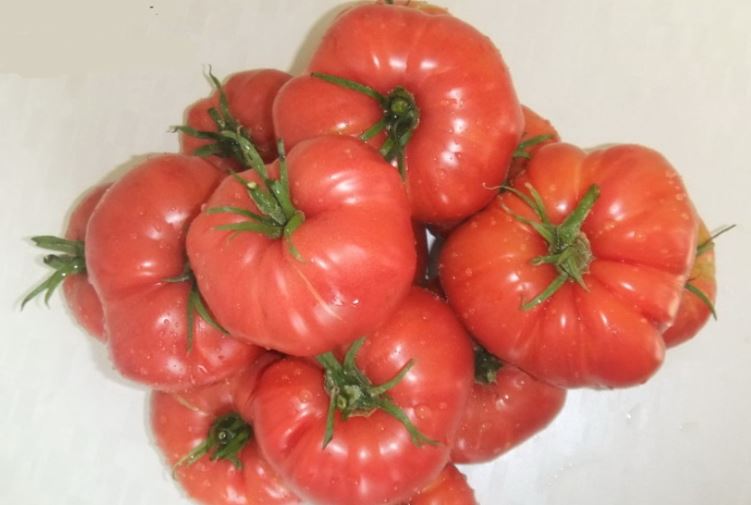
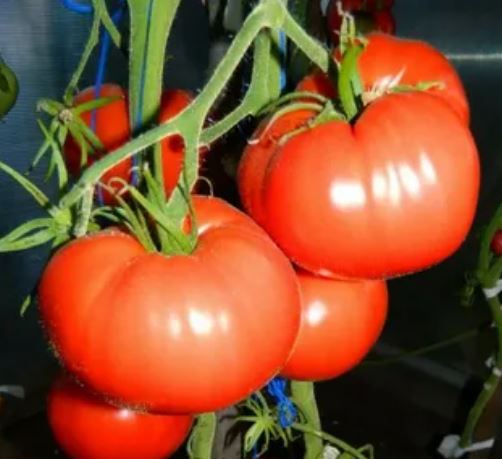
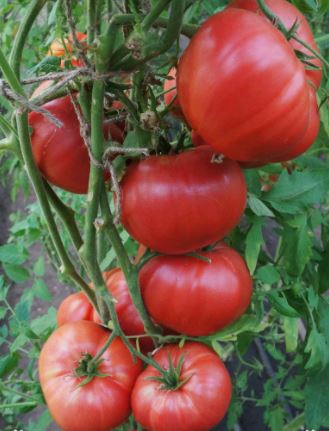
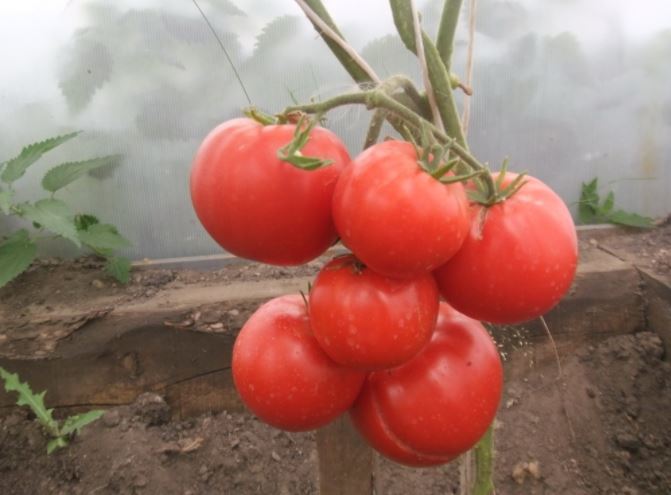
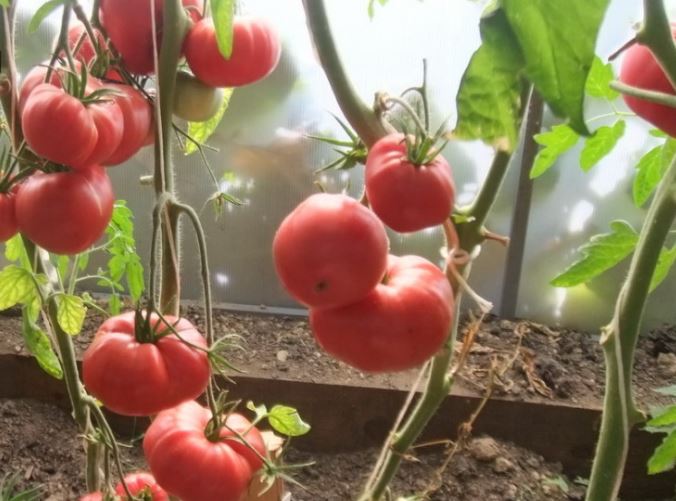
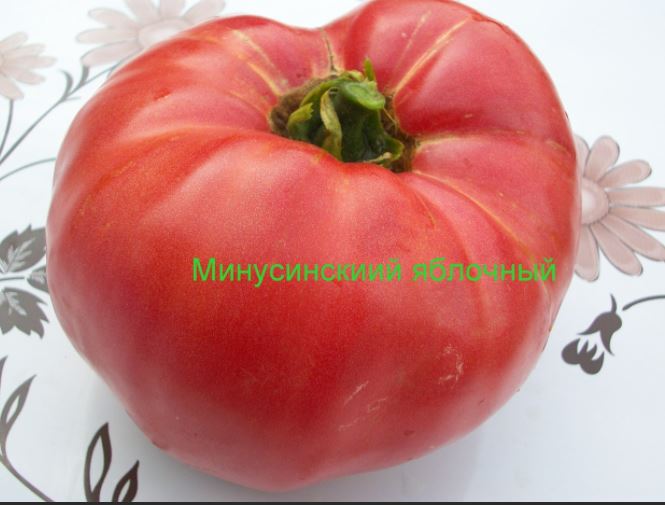
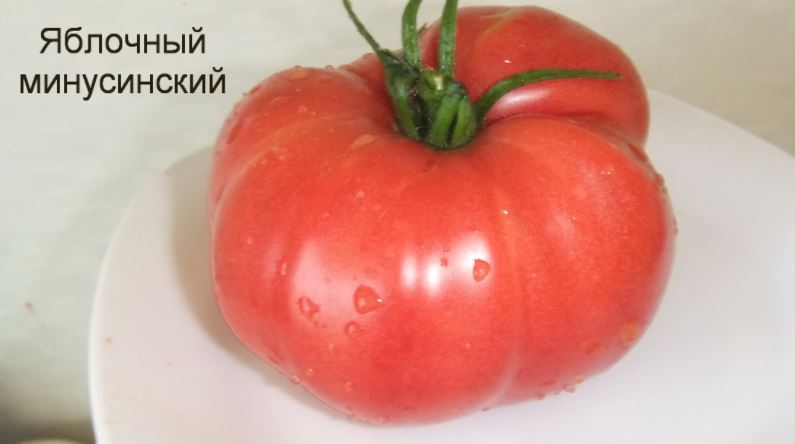
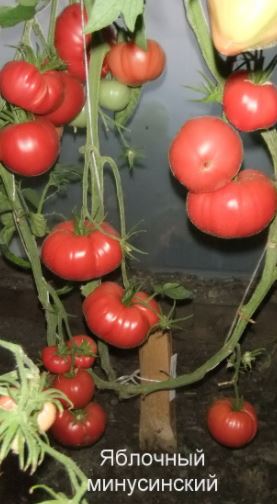
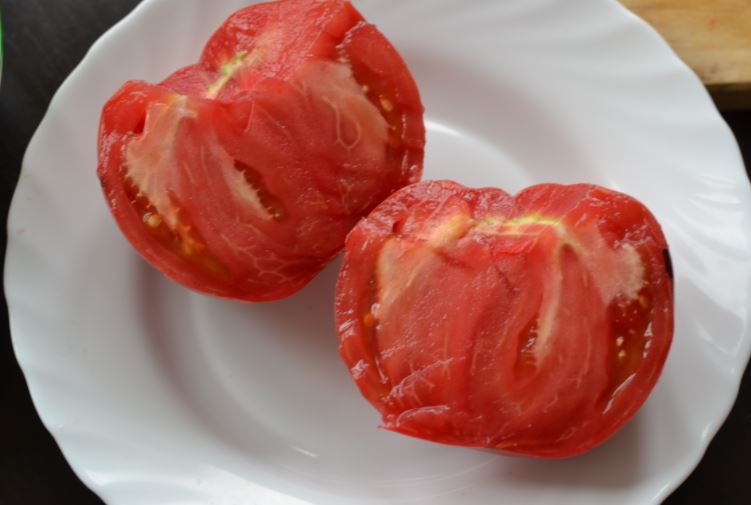
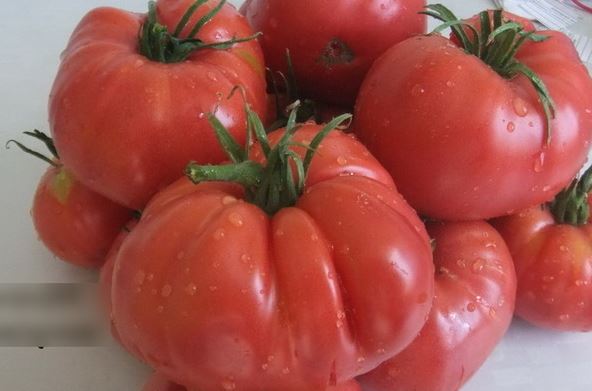
The Minusinsk apple tomato variety is considered a "folk selection." This means that its development was focused on good flavor, high yields, and large fruits. Appearance was not a priority. However, this doesn't mean the fruits are ugly. They have a flattened, round shape with pronounced ribbing.
In the central and northern climates, this variety should be grown indoors. In the south, it can also be planted in regular garden beds.
| Advantages | Flaws |
|
|
Staking should be done immediately after planting in the greenhouse, not once the bushes have grown. Otherwise, the fragile stems will break.
When forming two stems, the main stem is the first, and the second is recommended to be a shoot located under the lower fruit cluster. Any remaining extra shoots should be removed.
This variety produces large fruits, so no more than seven ovaries should be left on a single branch. The rest should be removed.
Reviews of this variety are both positive and negative. The large fruit size, excellent flavor, and versatility are praised. However, gardeners dislike the time-consuming nature of caring for the tomatoes.
Read more about the Minusinsky Apple tomato variety and real reviews from gardeners who grow it in the article. Minusinsk Apple Tomato: Description, Photos, Reviews.
Minusinsk giant
| Characteristic | Description |
| Ripening time | 110-125 days. |
| Plant type | Tall, mid-season, indeterminate, greenhouse variety. |
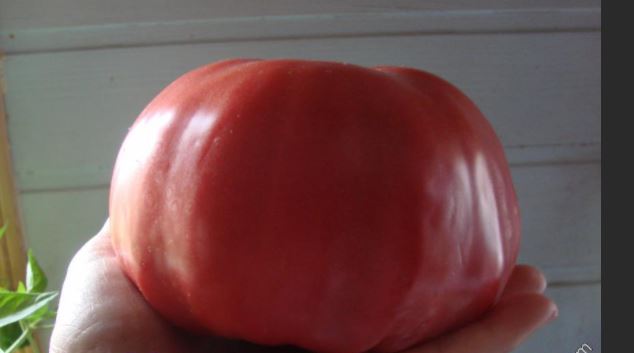
| Description of the fruit | Very large, heart-shaped, red. |
| Fruit weight | Up to 1 kg. |
| The taste of the fruit | Sugar. |
| Usage | Fresh, canning, processing. |
| Productivity | Up to 4.5 kg per bush. |
| Agricultural technology | Need for periodic pruning, pinching and shaping. |
| Growing regions | Any. |
Photo gallery of the Minusinsk Giant tomato variety:
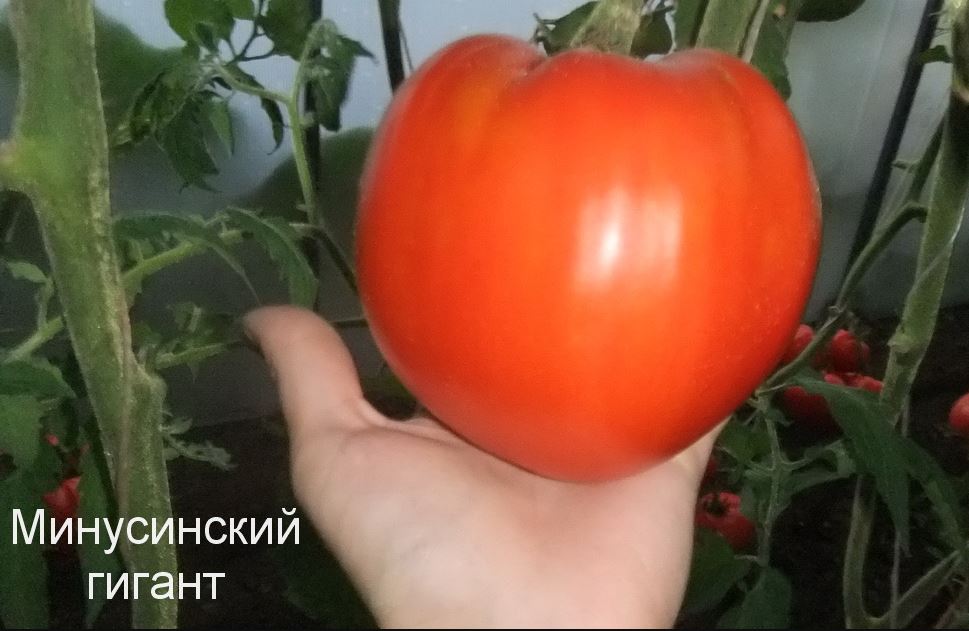
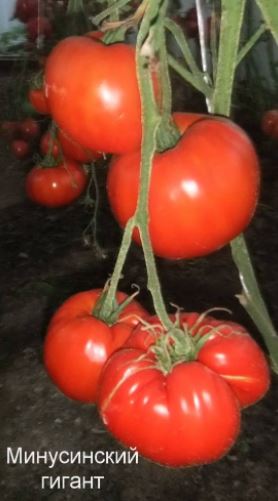
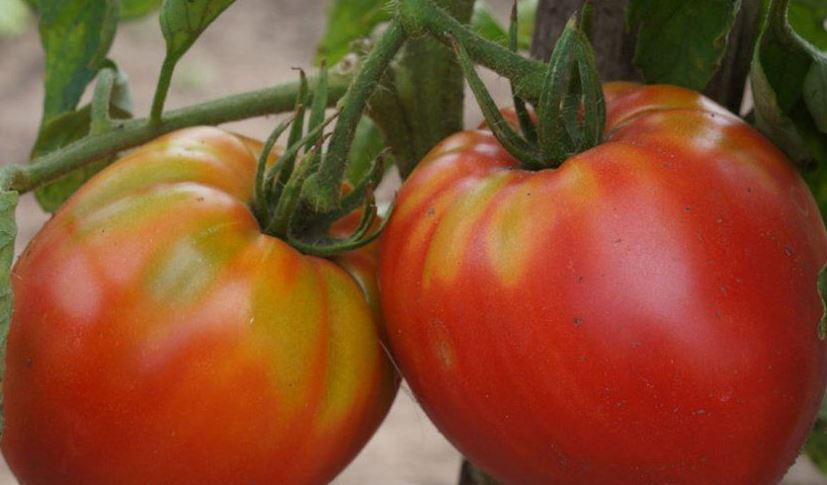
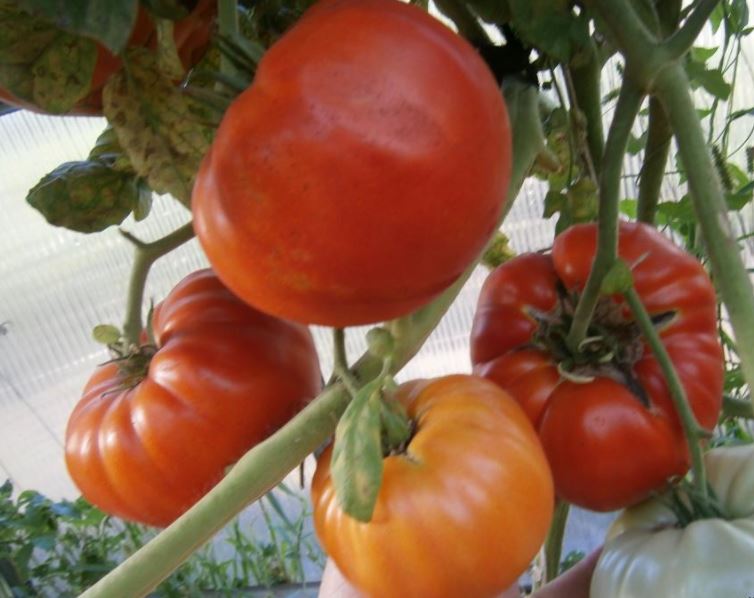
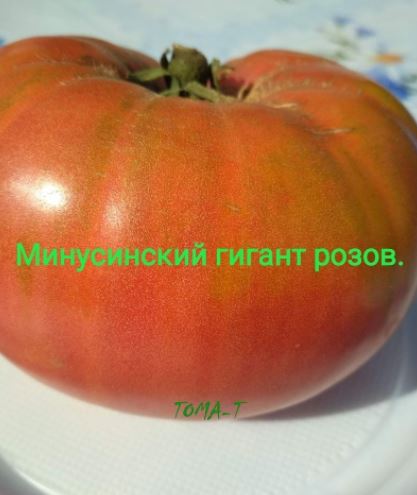
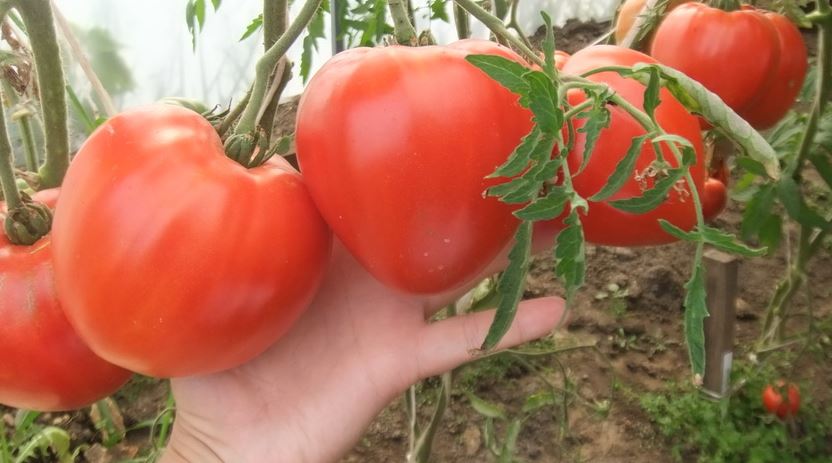
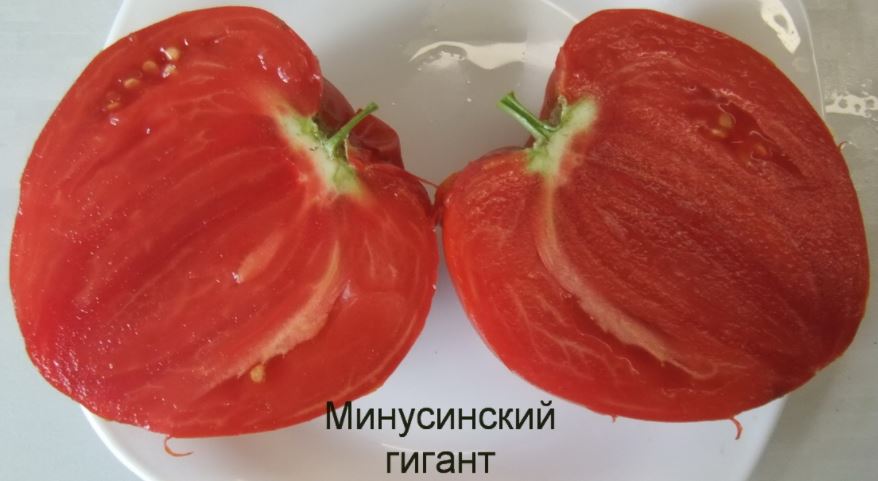
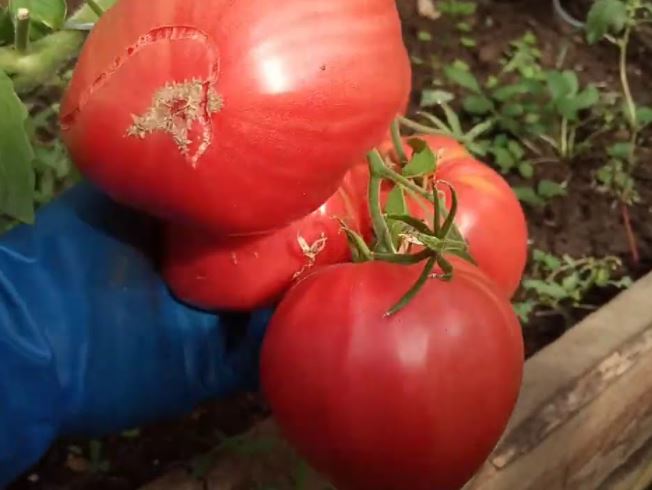
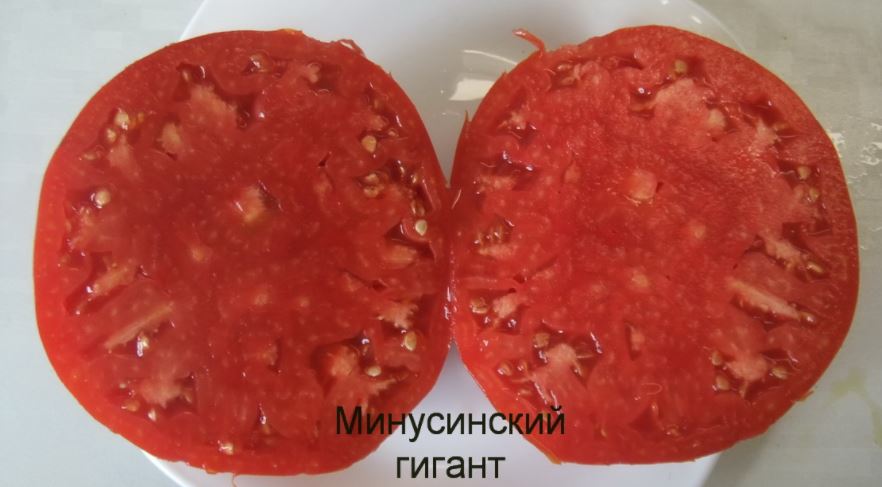
Although the Minusinsk giant adapts well to climate conditions, it is recommended to grow it indoors in both the northern regions and in central Russia.
In the south, planting in regular beds is allowed.
The fruits are very large and are regular prize winners at various exhibitions.
| Advantages | Flaws |
|
|
Since this variety is indeterminate, the bushes can reach a height of 2.5 m. To prevent this, pinching is necessary. Staking and side shoots are also required.
To obtain a good harvest, it is recommended to form the plant into 1 or 2 stems.
The rest of the care for the tomato is standard.
Reviews of the Minusinsk Giant variety are overwhelmingly positive. The main advantage highlighted by gardeners is the large fruit size, provided proper cultivation practices are followed.
Minusinsk balls
| Characteristic | Description |
| Ripening time | 110-122 days. |
| Plant type | Mid-early, indeterminate. |
| Description of the fruit | Heart-shaped and rounded, bright crimson in color. |
| Fruit weight | 150-450 g, can reach 1000 g. |
| The taste of the fruit | Delicate, sweetish. |
| Usage | Salads, processing into juice and paste. |
| Productivity | Up to 15 kg, subject to agricultural requirements. |
| Agricultural technology | The need for timely pruning, tying, and shaping. |
| Growing regions | Any. |
Photo gallery of the Minusinsk Balls tomato variety:
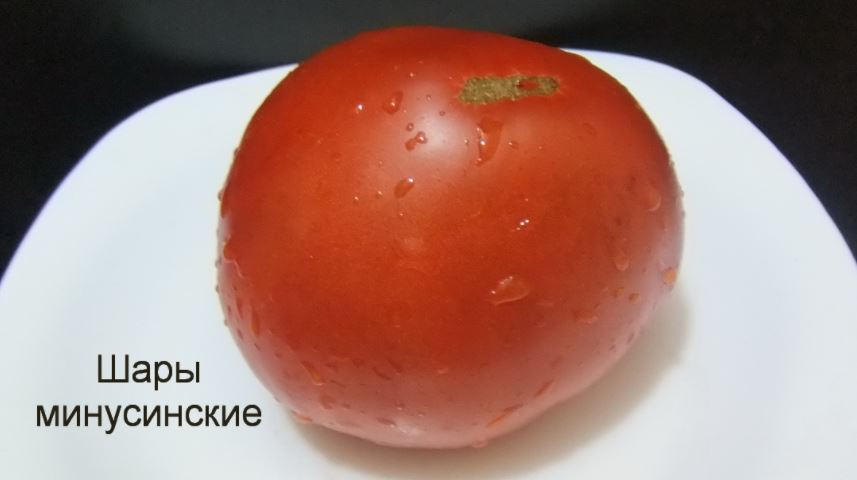
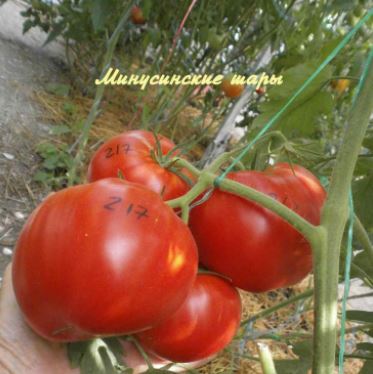
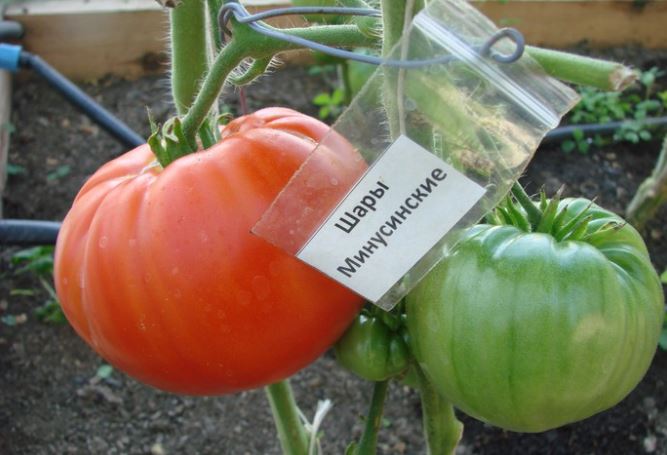
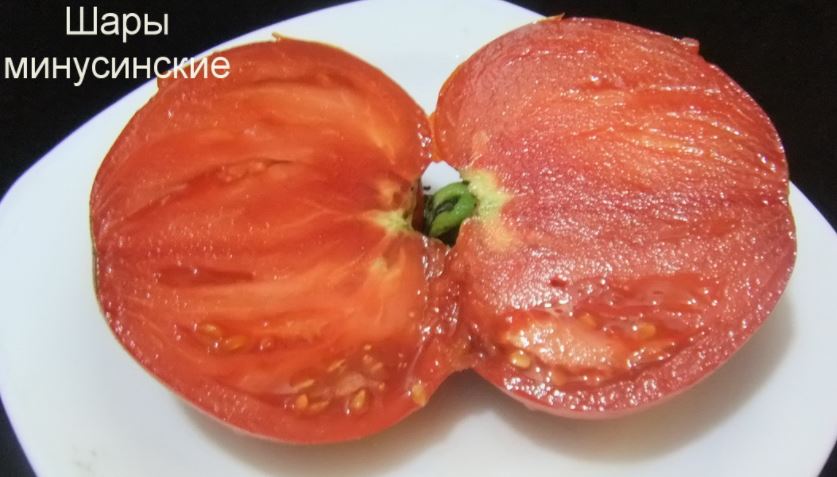
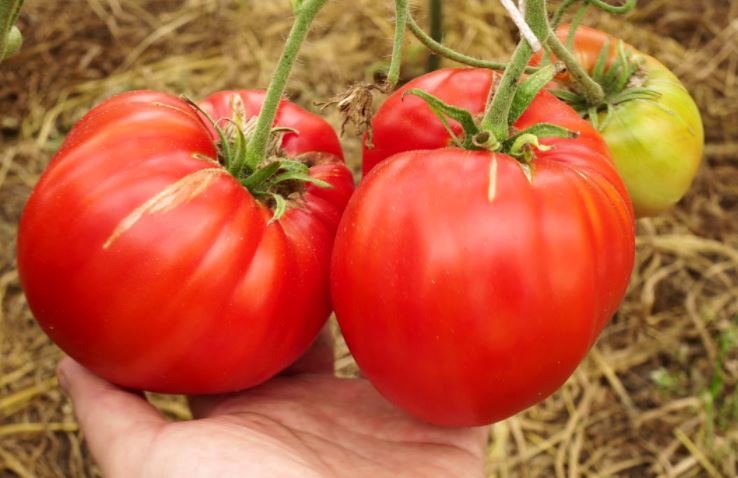
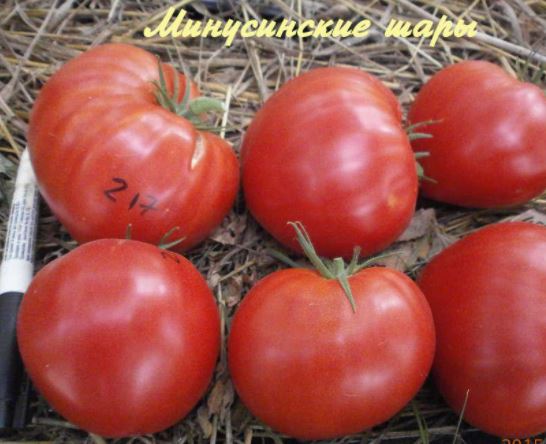
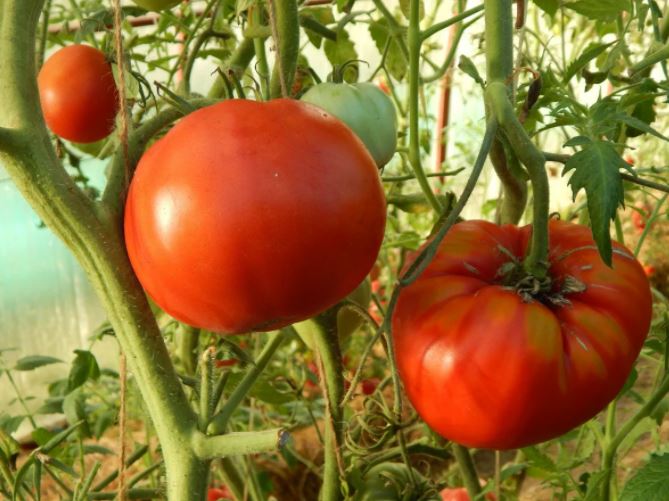
Minusinsk Shary varieties have a mid-season ripening period. The heart-shaped, pink fruits are distinguished by juicy, fleshy flesh and numerous seeds. The bushes are tall, reaching 2.5 m without pinching.
| Advantages | Flaws |
|
|
Pruning is necessary not only to ensure a bountiful harvest. Without it, the fruits will lose their flavor and become less sweet and sugary.
Formation is carried out in 1-2 stems.
Reviews of Minusinsk balls outnumber negative ones. They are noted for their excellent taste, regardless of the preparation method.
Read more about the Minusinskie Shary tomato variety and real reviews from gardeners who grow it in the article. Minusinsk Balls Tomato: Description, Photos, Reviews.
Minusinsk bulls
| Characteristic | Description |
| Ripening time | 115-125 days. |
| Plant type | Mid-season, indeterminate. |
| Description of the fruit | Heart-shaped, elongated with a spout, glossy, pink. |
| Fruit weight | Up to 500 g. |
| The taste of the fruit | Sugar. |
| Usage | Fresh and for thick sauces. |
| Productivity | 4-5 kg per bush. |
| Agricultural technology | The need for tying, pinching and growing in 1-2 stems. |
| Growing regions | Any. |
Photo gallery of Minusinskie Bychki tomatoes:
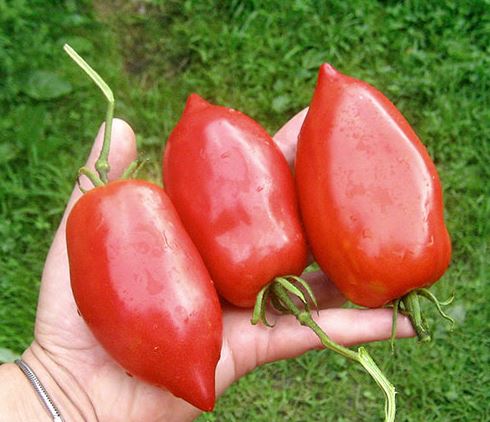
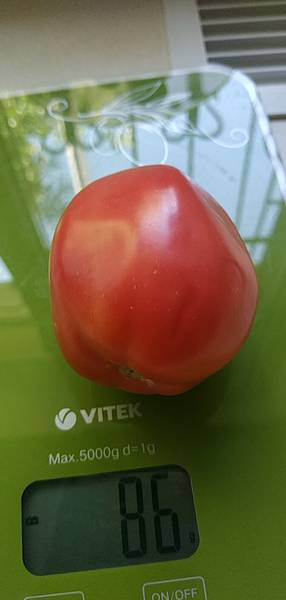
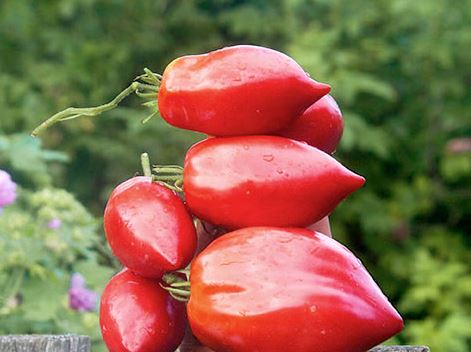
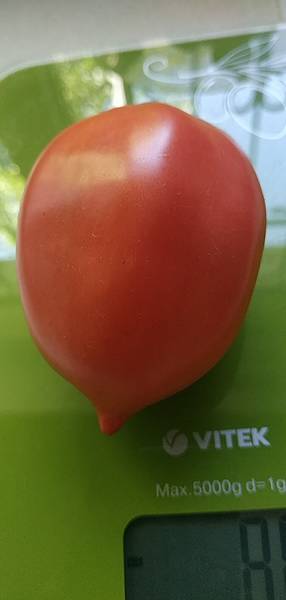
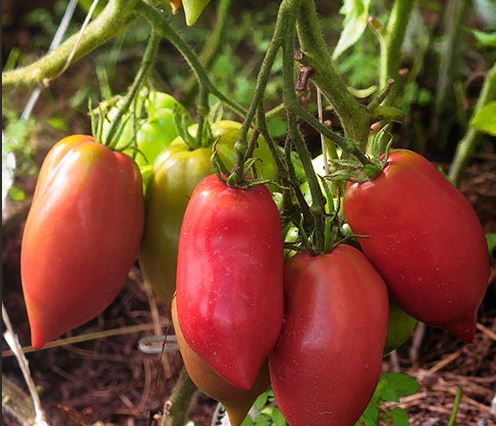
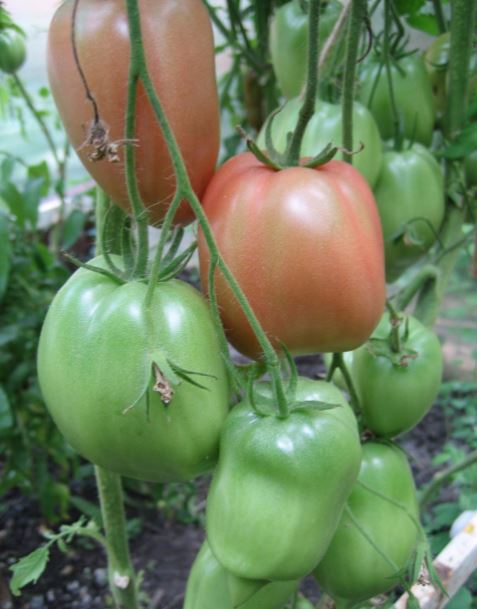
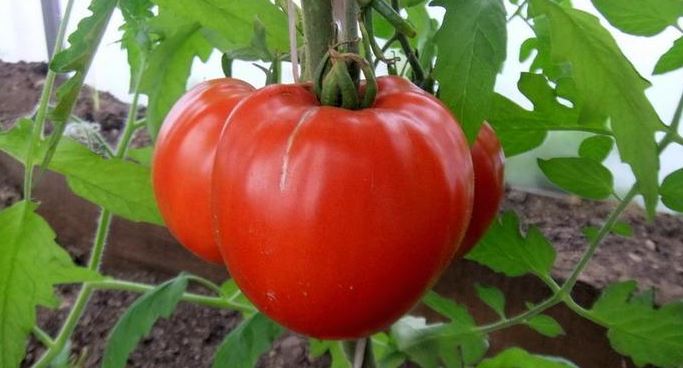
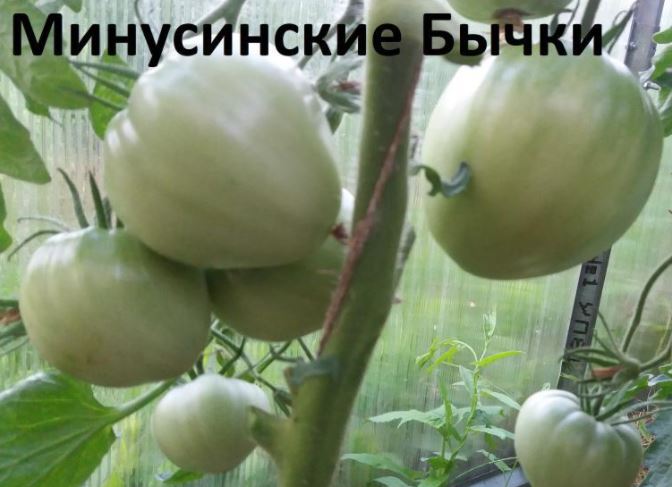
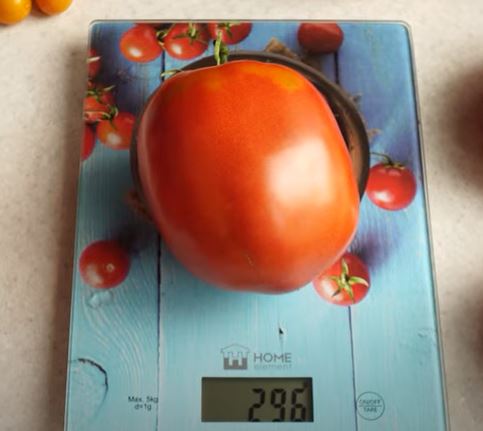
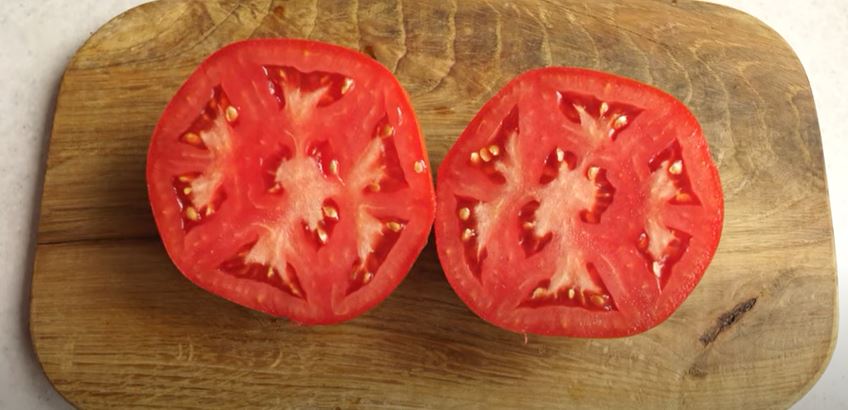
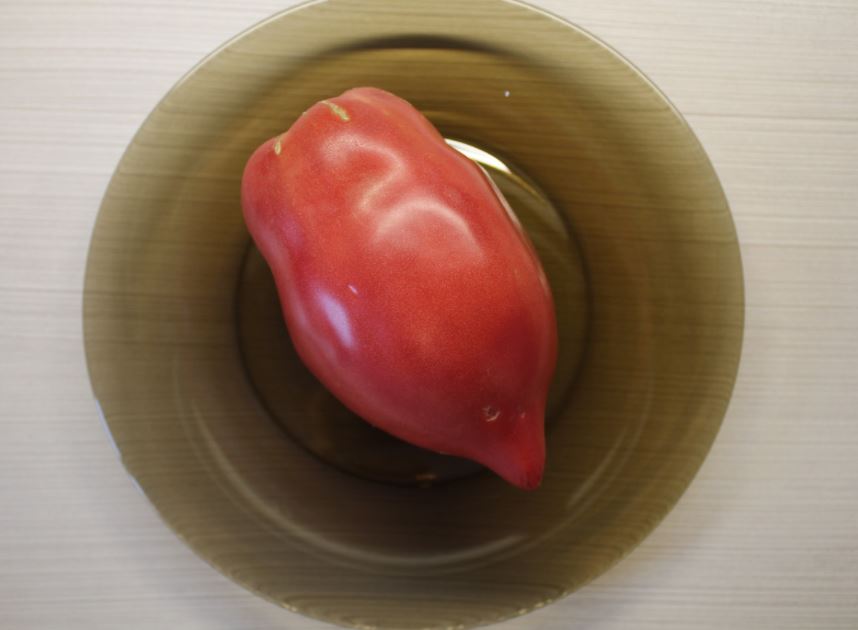
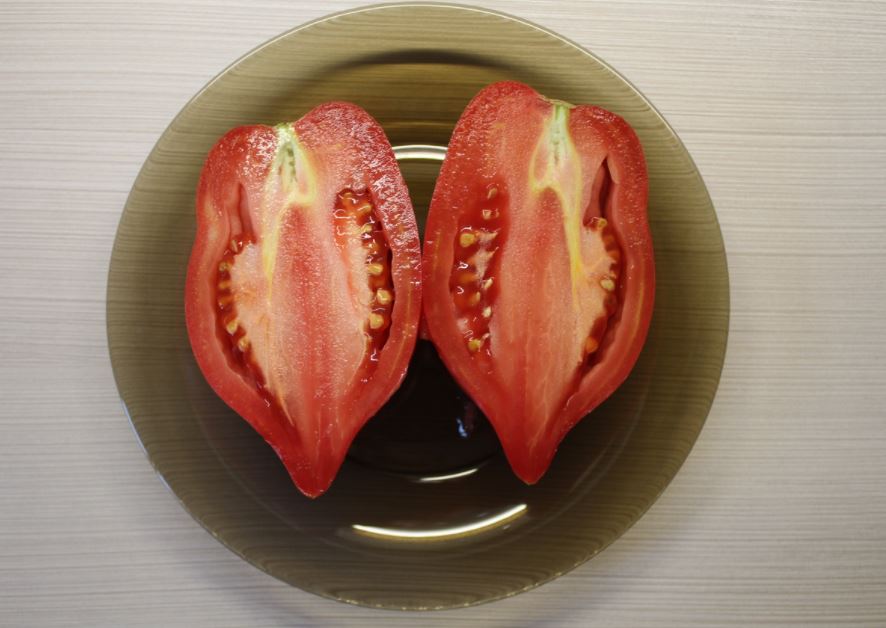
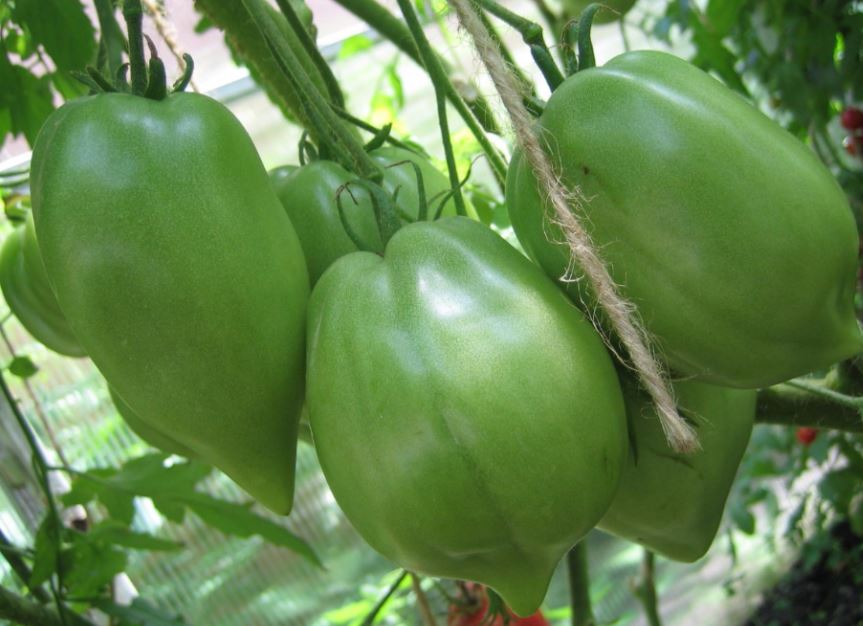
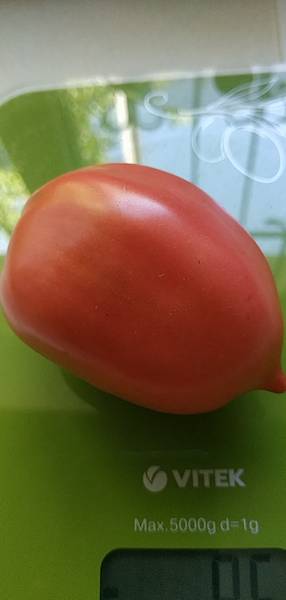
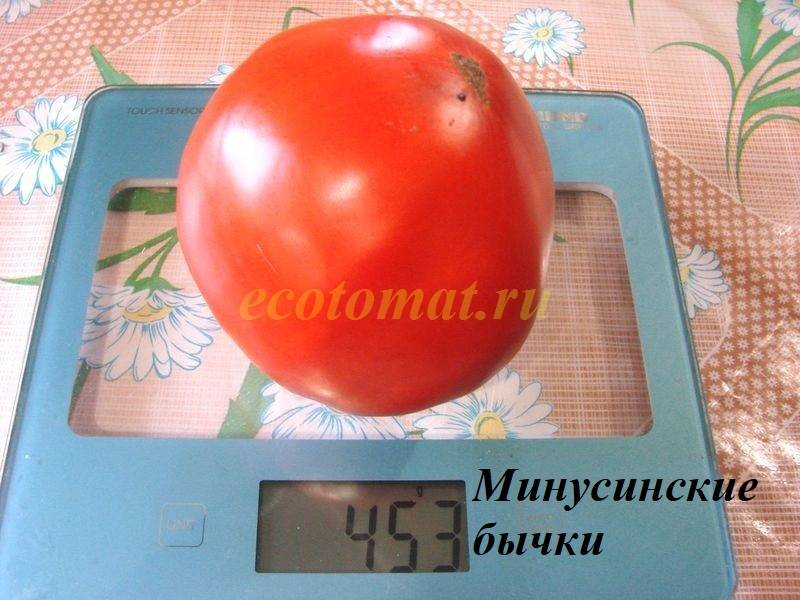
Forms powerful, tall bushes up to 2.5 m. The lower fruits can weigh 300-500 g, the upper ones - 150-250 g.
Depending on where they are grown, Minusinskie Bychki tomatoes can be larger or more elongated, but they always retain a slight heart shape and a small nose at the end of the fruit.
The variety has the following advantages and disadvantages:
| Advantages | Flaws |
|
|
Growing features:
- formation into 1-2 stems;
- triple feeding (during active growth, flowering, formation of ovaries);
- pinching out side-children every 1.5-2 weeks;
- tying to vertical or horizontal supports as the bushes grow;
- loosening after each watering;
- watering in the evening as the top layer of soil dries out.
Reviews of Minusinsk bulls are mostly positive. They are prized for their large, sugary fruits.
Read more about the Minusinskie Bychki tomato variety and real reviews from gardeners who grow it in the article. Minusinsk Bulls tomato: description, photos, reviews.
Minusinsk barge hauler
| Characteristic | Description |
| Ripening time | 115-120 days. |
| Plant type | Mid-early, indeterminate. |
| Description of the fruit | Round-flat, rounded, crimson. |
| Fruit weight | Before 700 |
| The taste of the fruit | Sweetish. |
| Usage | Fresh, processed into tomato products. |
| Productivity | Up to 5 kg per bush. |
| Agricultural technology | Tying and shaping into 1-2 shoots. |
| Growing regions | Any. |
Photo gallery of Minusinsky Burlak tomato variety:
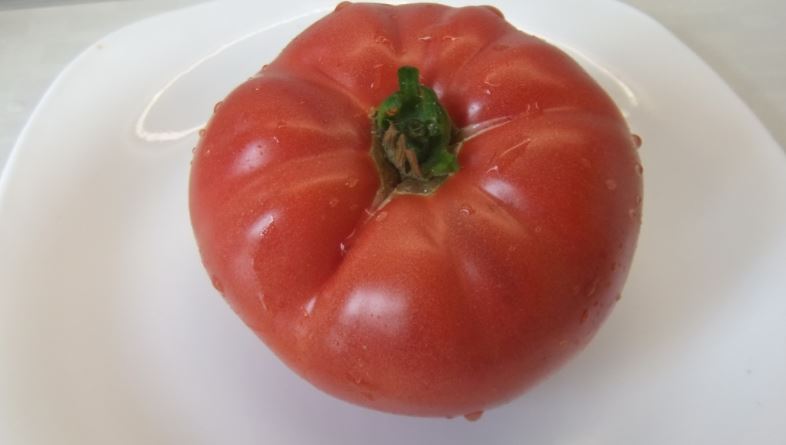
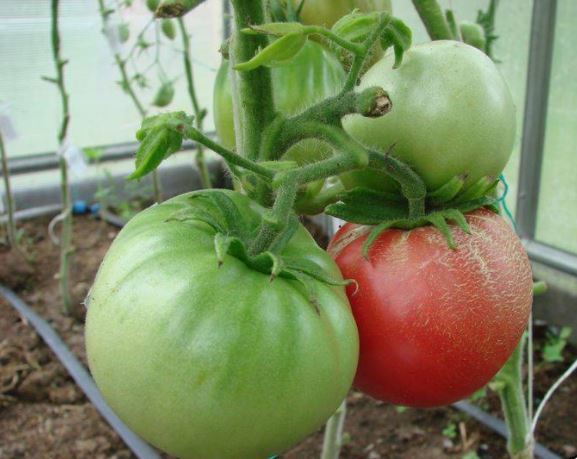
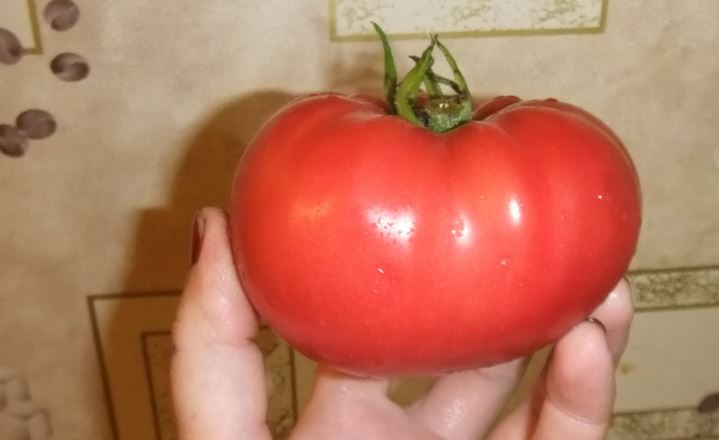
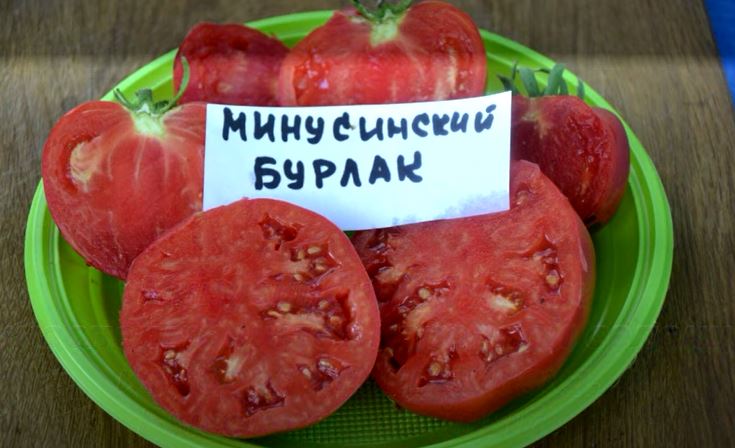
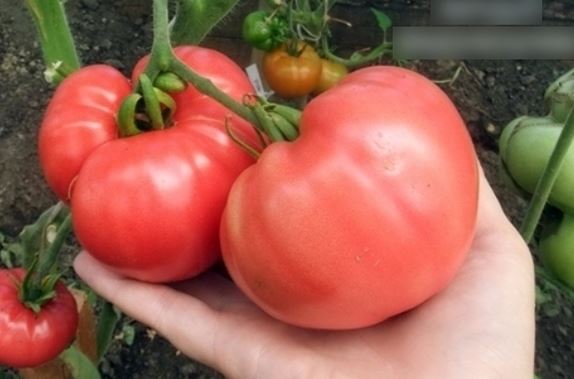
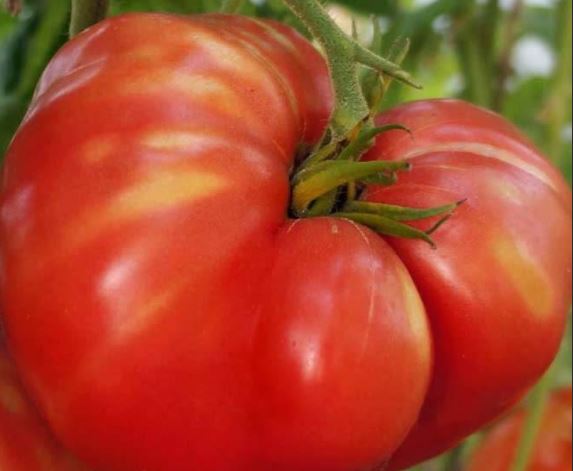
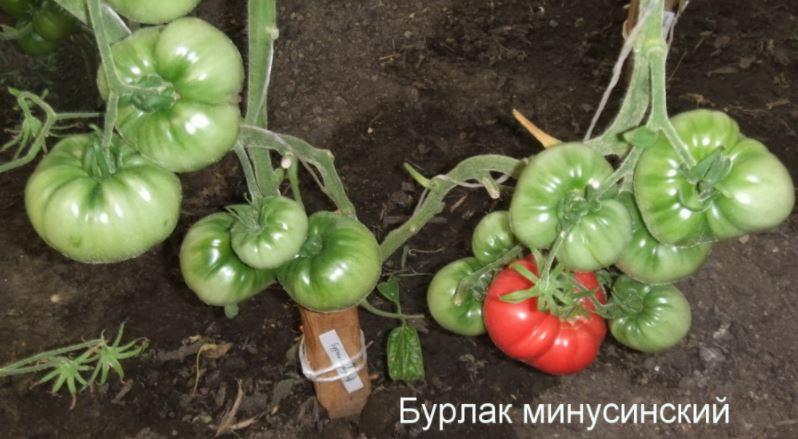
Forms strong, vigorous bushes up to 2.5 m. The fruits are large, with fleshy and juicy pulp containing many seeds.
Despite the fact that the peel is thin, it is quite dense and does not crack.
The advantages and disadvantages include:
| Advantages | Flaws |
|
|
This variety produces large fruits and therefore requires support. Otherwise, the stems will bend or break under the weight.
To obtain a bountiful harvest, it is recommended to train the plant into two stems. Regular pinching is necessary to limit the bush's growth.
Reviews of the Minusinsk Burlak range from good to bad, with the former predominating. The negative ones are primarily related to violations of agricultural practices.
Minusinsk bull's heart
| Characteristic | Description |
| Ripening time | 125-130 days. |
| Plant type | Indeterminate, greenhouse. |
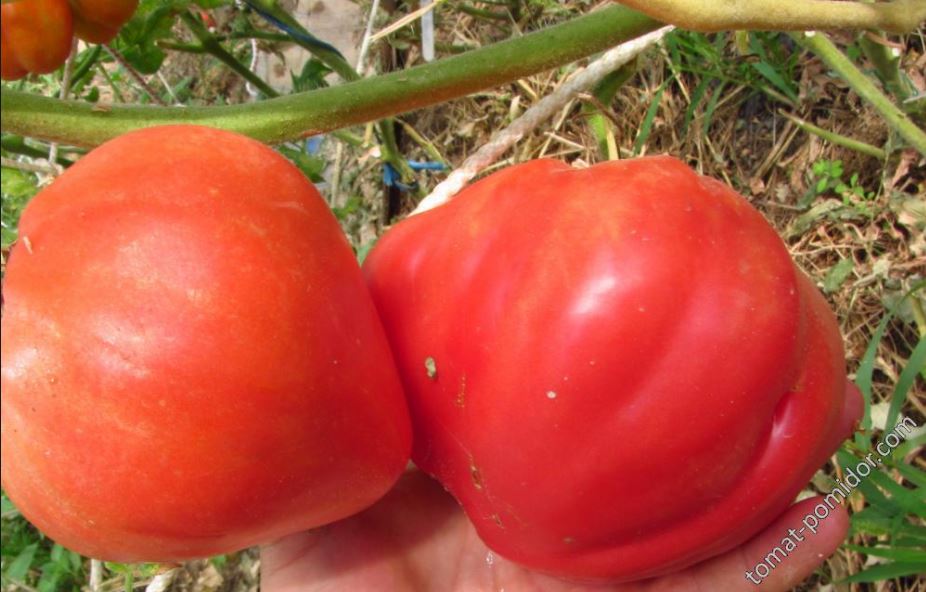
| Description of the fruit | Flat-round, heart-shaped, often double, glossy, pink. |
| Fruit weight | Before 1000 |
| The taste of the fruit | Sweet and sour. |
| Usage | Salads, sliced meats, juices. |
| Productivity | 4.5 kg per bush. |
| Agricultural technology | Requires formation. |
| Growing regions | Any. |
Photo gallery of the Bull's Heart tomato variety:
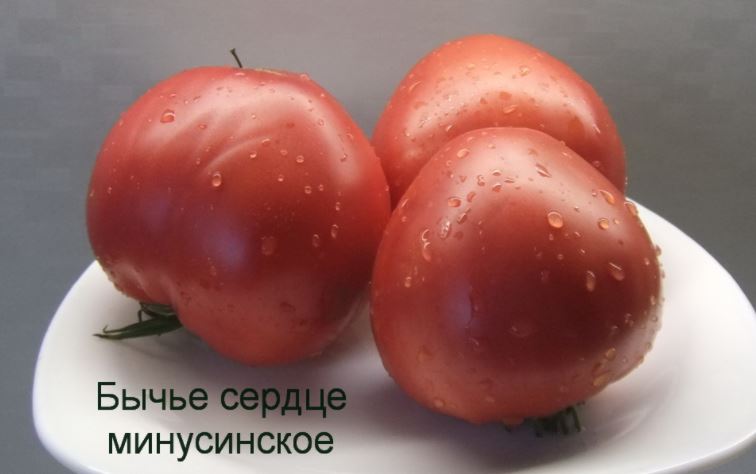
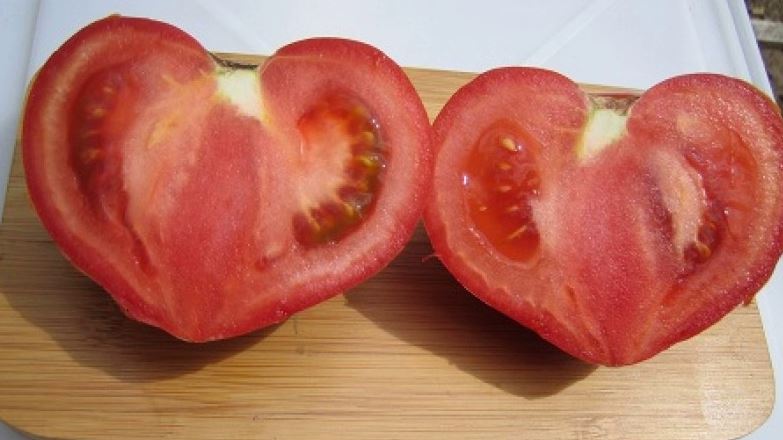
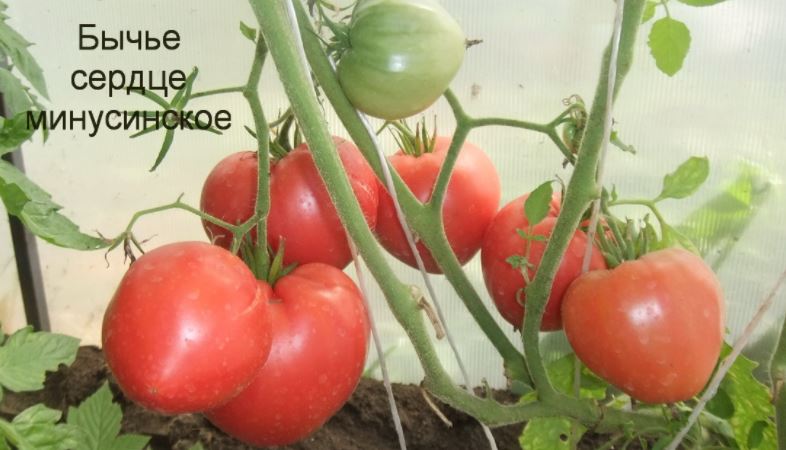
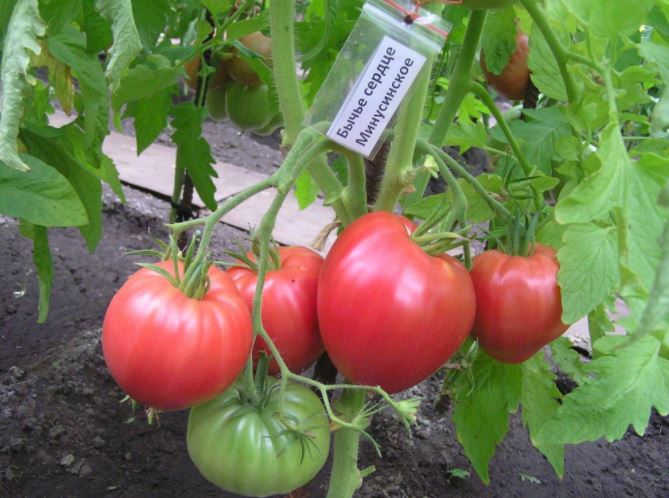
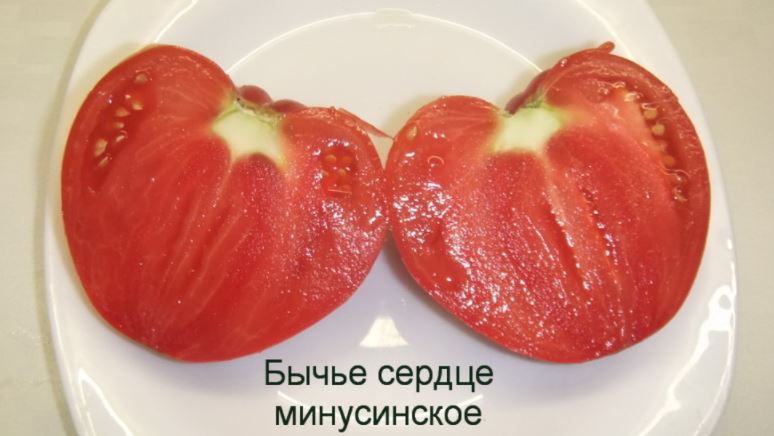
The variety became the record holder of the "Minusinsk Tomato 2020" competition.
Forms tall, bushy plants with endless growth. Without pinching, they can reach a height of 1.7-1.8 m.
The advantages and disadvantages of Minusinsk beef heart are presented in the table:
| Advantages | Flaws |
|
|
In addition to forming 1-2 stems, the variety requires tying to prevent the stems from breaking under the weight of the fruit.
Also, as the lower leaves dry out, they need to be removed so that they do not take away nutrients.
The reviews are mostly positive, with consistently high yields noted year after year.
Minusinsk home
| Characteristic | Description |
| Ripening time | 120-130 days. |
| Plant type | Mid-early, indeterminate, for indoor cultivation. |
| Description of the fruit | Kidney-cordate, raspberry. |
| Fruit weight | 350-500 g |
| The taste of the fruit | Sugary, with a pleasant aftertaste. |
| Usage | Universal. |
| Productivity | Up to 5 kg per bush. |
| Agricultural technology | Formation in 1-2 stems. |
| Growing regions | Any. |
Photo gallery of Minusinsky Domashny tomato variety:
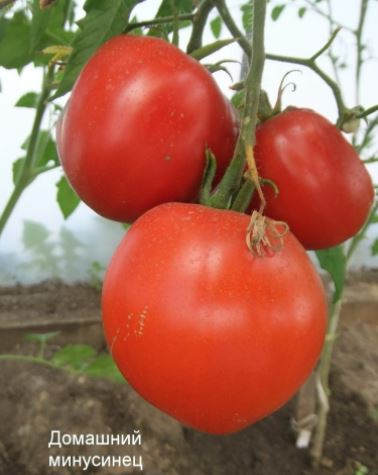
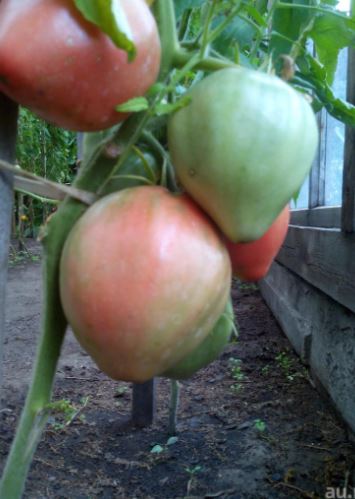
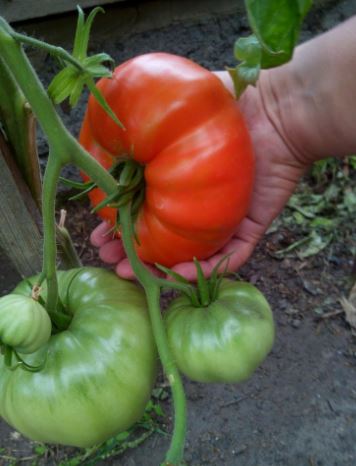
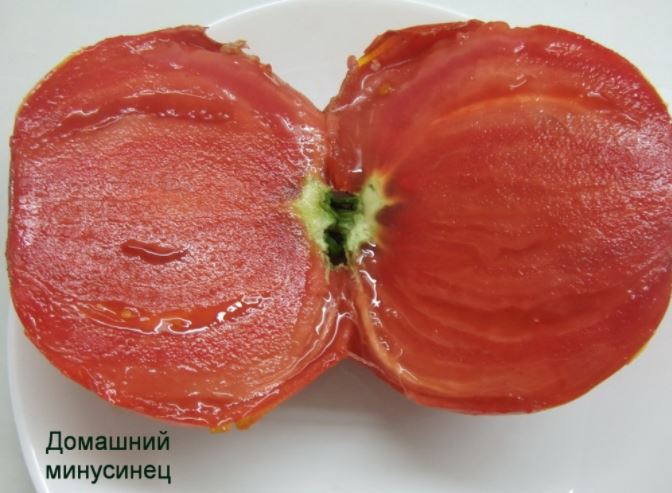
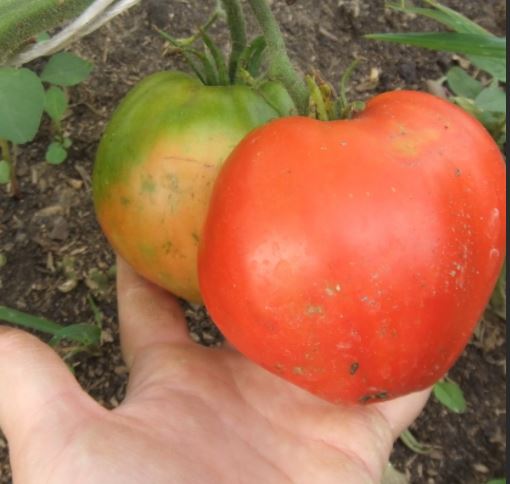
The bushes are 160-180 cm tall. A single stem bears 5-7 clusters, each containing 3-7 fruits. The tomato flesh is very sweet and contains many seeds.
| Advantages | Flaws |
|
|
Growing rules:
- form into 1-2 stems;
- do not plant too densely, the distance between bushes should be at least 30 cm;
- carry out timely side-sonning;
- After the first brush ripens, stop or reduce the amount of watering.
Reviews of Minusinsky Domashny are almost universally positive. Negative reviews note the need for greenhouse cultivation.
Read more about the Minusinsky Domashny tomato variety and real reviews from gardeners who grow it in the article. Minusinsk Homemade Tomato: Description, Photos, Reviews.
Minusinsk flat hearts
| Characteristic | Description |
| Ripening time | 110-112 days. |
| Plant type | Indeterminate, mid-early, tall. |
| Description of the fruit | Flattened heart-shaped, bright crimson. |
| Fruit weight | On average 250-350 g. |
| The taste of the fruit | Great. |
| Usage | For processing. |
| Productivity | Up to 4.5 kg per plant. |
| Agricultural technology | Garter and shaping. |
| Growing regions | Any. |
Photo gallery of Minusinsk Flat Hearts tomatoes:
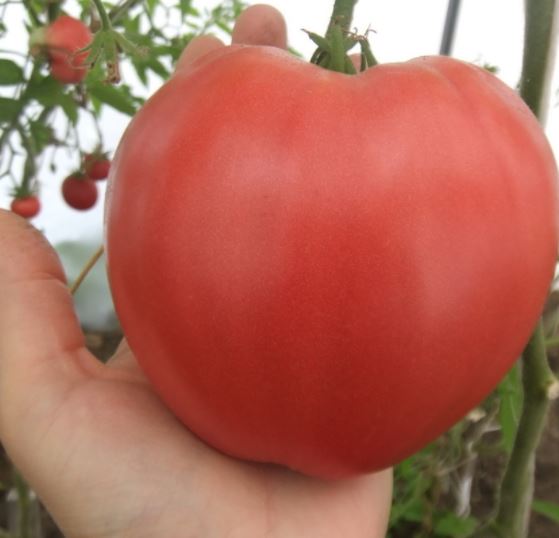
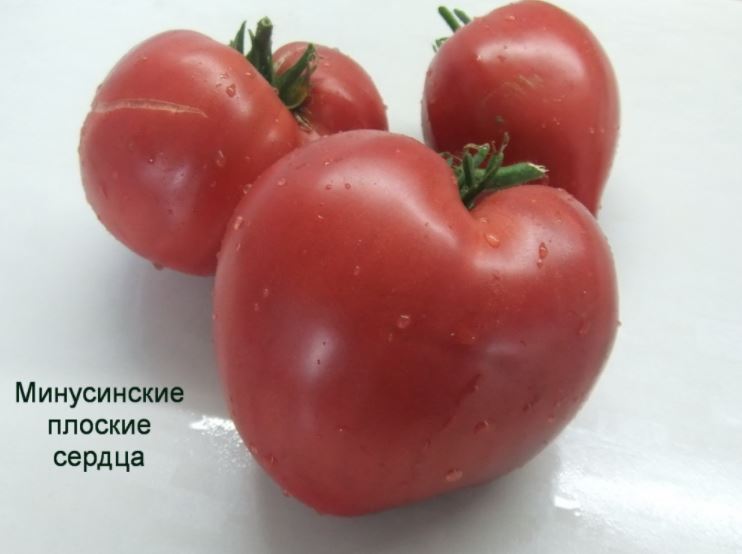
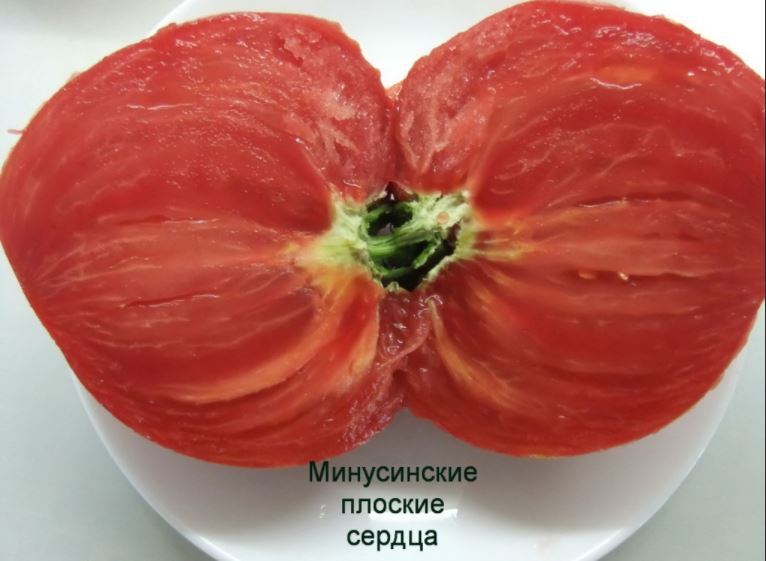
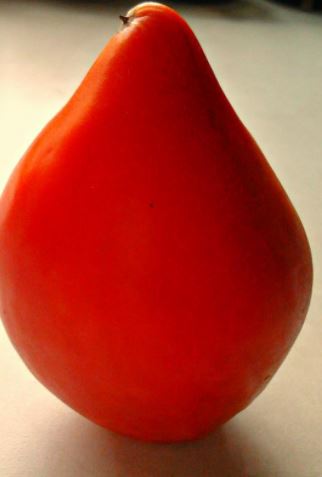
A fairly early variety from the Minusinsk tomato collection. Bushes can reach 1.8-2.5 m. A single cluster produces 3-5 tomatoes. The flesh is very meaty, with few seeds.
The advantages and disadvantages of the variety include:
| Advantages | Flaws |
|
|
Since the variety has thin shoots, they can break under the weight of the fruit, so they need to be tied up.
The best results in terms of yield were achieved when forming 1-2 stems.
According to gardeners' reviews, the fruits are indeed low-seeded, and some have even been found without seeds at all.
Minusinsk pepper-shaped
| Characteristic | Description |
| Ripening time | 110-115 days. |
| Plant type | Mid-season, indeterminate, tall. |
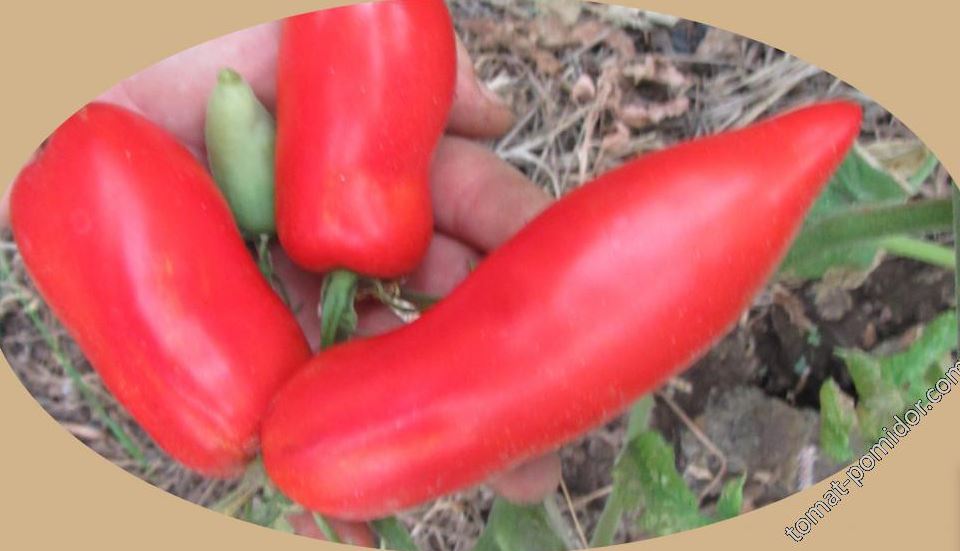
| Description of the fruit | Pepper-shaped, bright scarlet. |
| Fruit weight | 80-200 g |
| The taste of the fruit | Pleasant, delicate. |
| Usage | Universal. |
| Productivity | Up to 5 kg per bush. |
| Agricultural technology | Formation into 2-3 stems, pruning of side shoots. |
| Growing regions | Any. |
Photo gallery of Minusinsk pepper-shaped tomatoes:
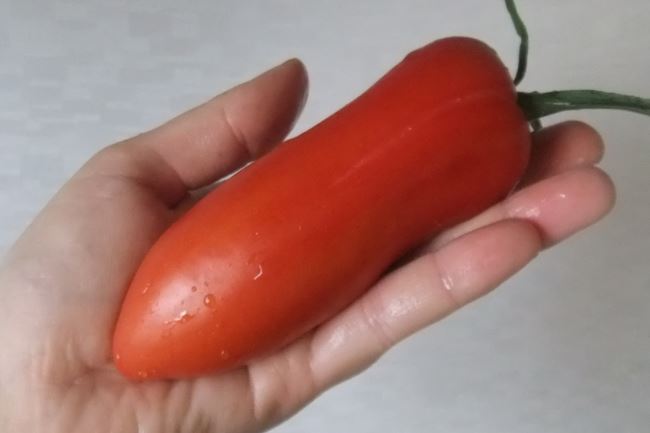
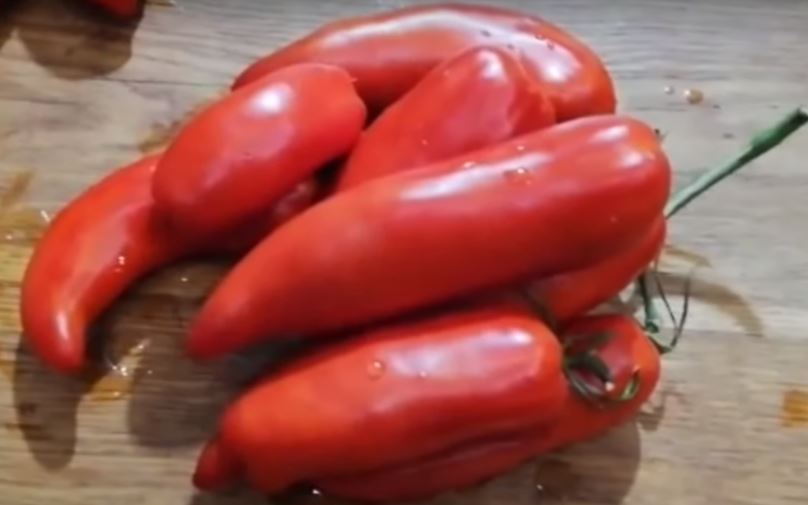
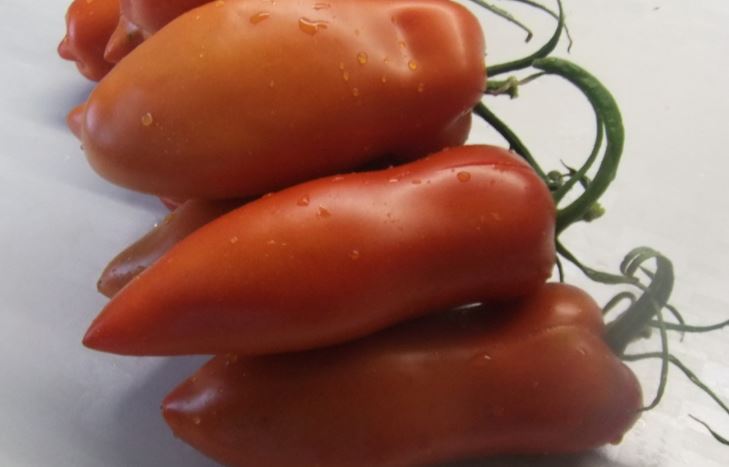
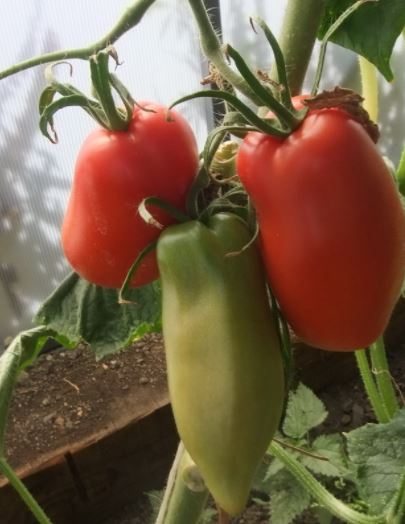
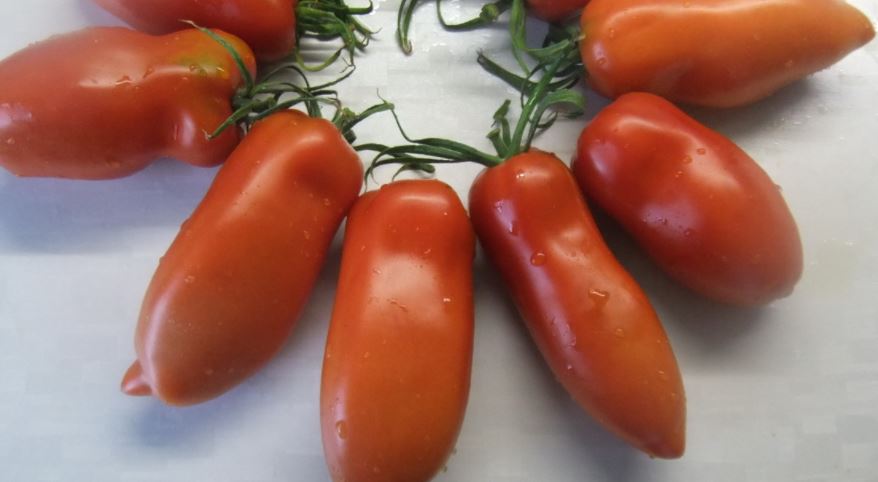
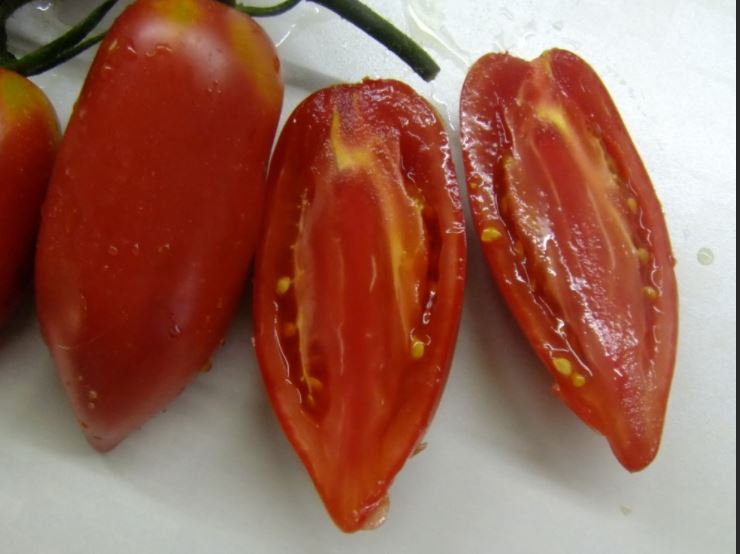
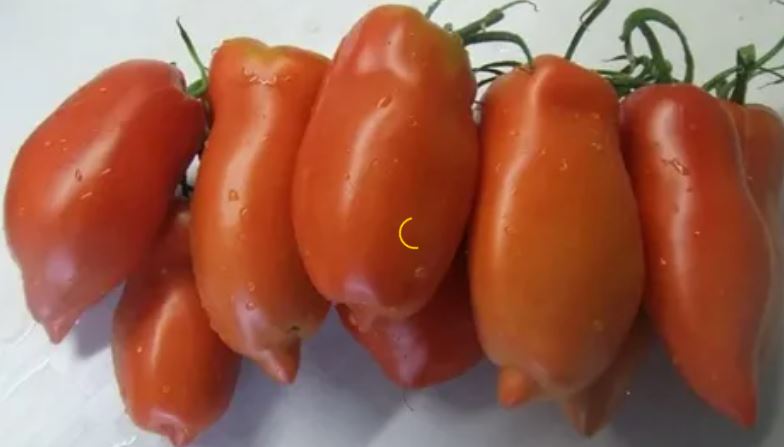
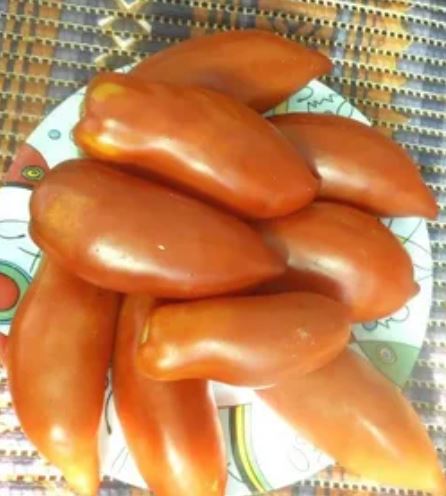
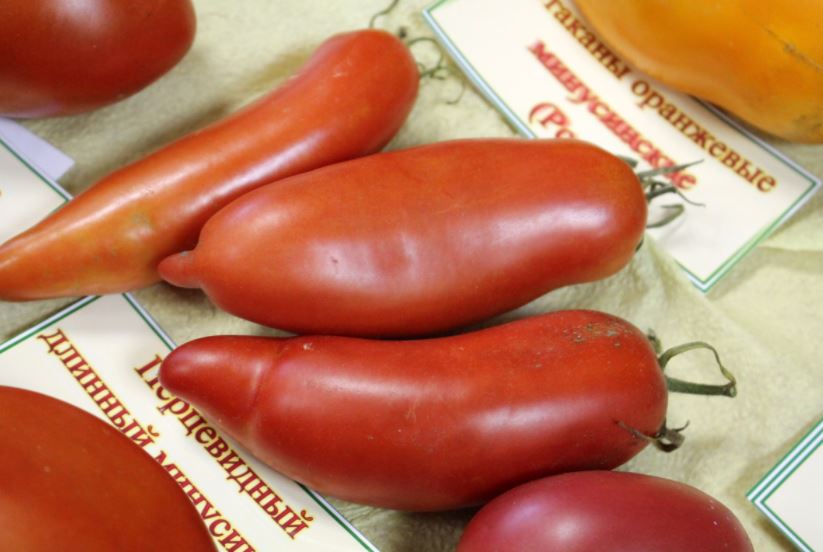
It can grow up to 1.8-2 m and can be grown both indoors and outdoors. The pepper-shaped fruits are long, reaching 10 cm.
The advantages and disadvantages include:
| Advantages | Flaws |
|
|
To obtain the desired yield, the plants need to be trained to 2-3 shoots. To prevent the bushes from growing too large, regularly remove side shoots.
Gardeners love this variety, particularly the fruit's interesting shape and long shelf life.
Minusinsk fruitful
| Characteristic | Description |
| Ripening time | 110-120 days. |
| Plant type | Indeterminate, tall, mid-early. |
| Description of the fruit | Round, reddish |
| Fruit weight | 200-400 g |
| The taste of the fruit | Sweet and sour. |
| Usage | Universal |
| Productivity | 5-6.5 kg per bush. |
| Agricultural technology | Formation of 2-4 shoots. |
| Growing regions | Any. |
Photo gallery of the Minusinsky Harvest tomato variety:
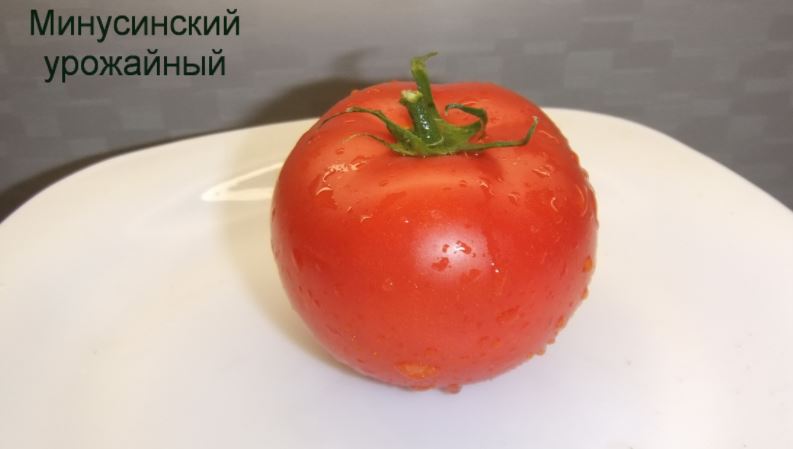
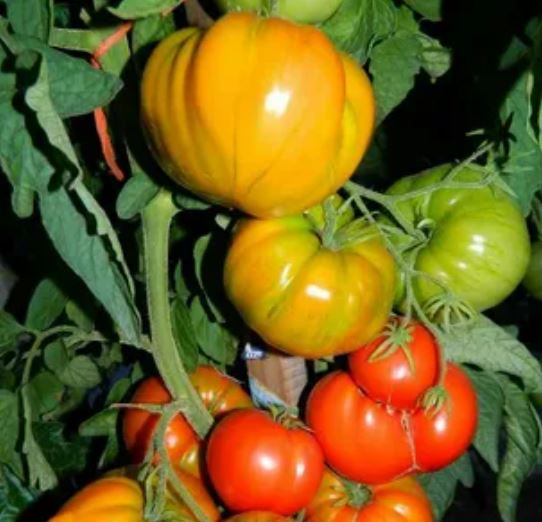
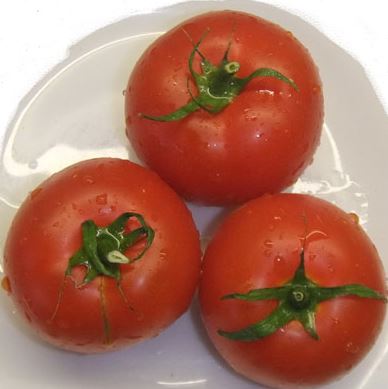
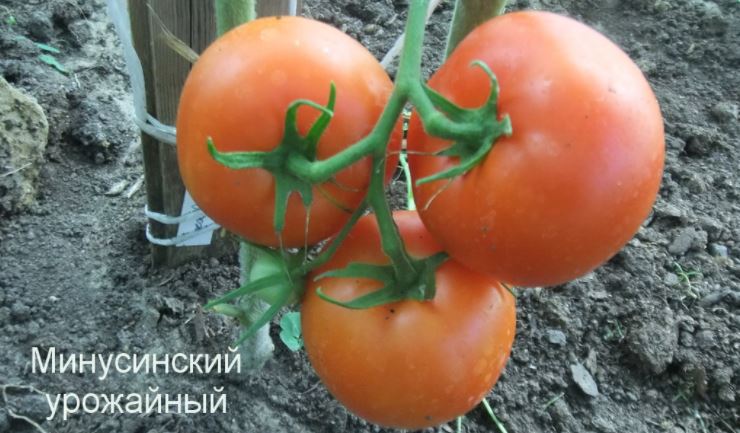
The Minusinsky fruitful variety is suitable for greenhouses and open beds. The bushes are tall, up to 1.8-2 m, with moderate branching. A single cluster can produce 3-5 tomatoes. The flesh is juicy and meaty, with very few seeds.
The advantages and disadvantages include:
| Advantages | Flaws |
|
|
Training the plant into 2-3 stems is necessary to achieve high yields. Additionally, the variety requires pinching every 2 weeks to slow down the growth of the bushes.
According to gardeners, they like the taste of tomatoes, as well as their good fertility.
Lev Minusinsky
| Characteristic | Description |
| Ripening time | 125-130 days. |
| Plant type | Late-ripening, for greenhouses, indeterminate. |
| Description of the fruit | Flat-round, ribbed, crimson. |
| Fruit weight | 250-500 g |
| The taste of the fruit | Sweetish, pleasant. |
| Usage | Tomato processing. |
| Productivity | 4-5 kg per plant. |
| Agricultural technology | Growing in 1-2 stems. |
| Growing regions | Any. |
Photo gallery of the Lev Minusinsky tomato variety:
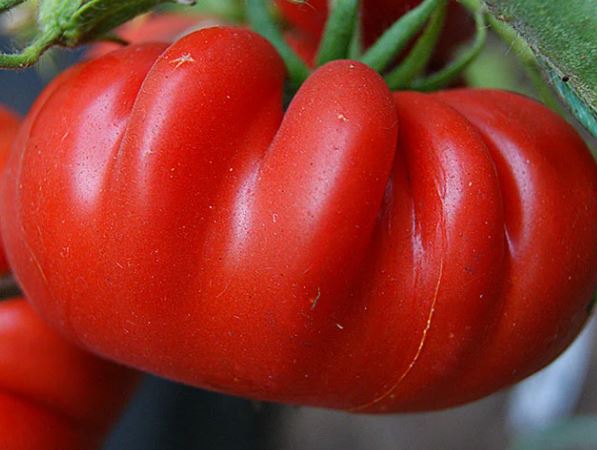
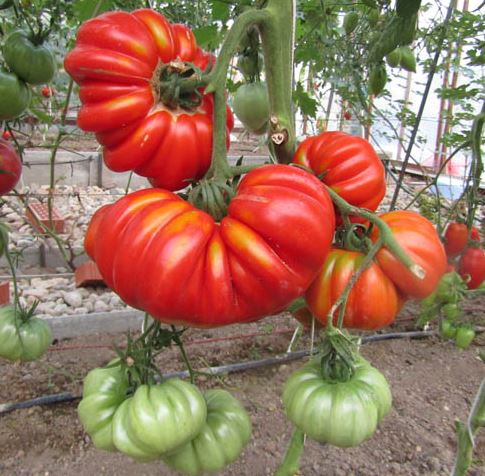
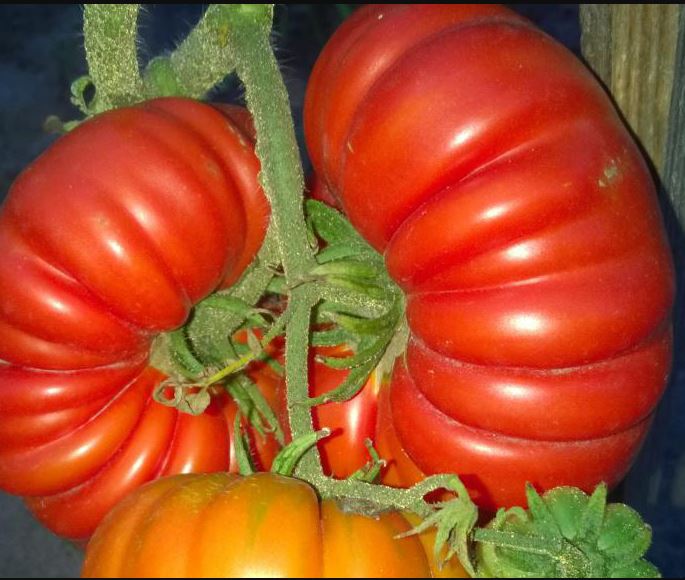
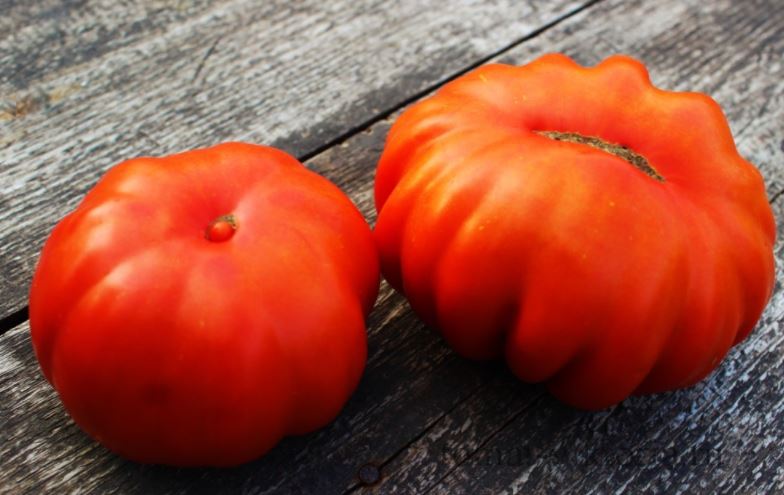
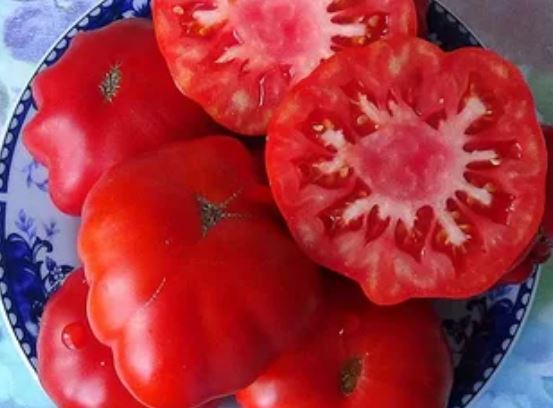
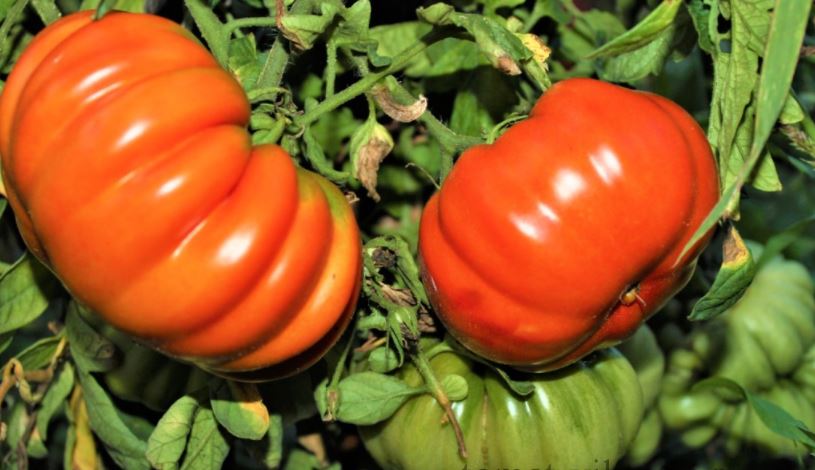
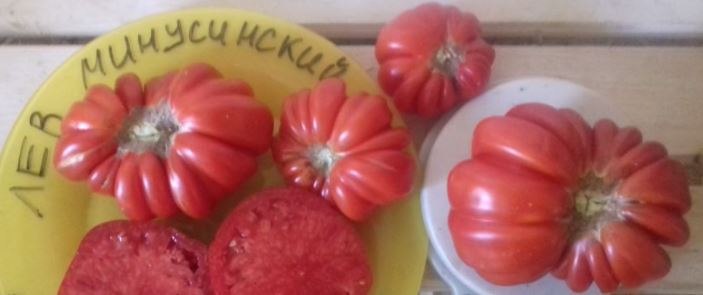
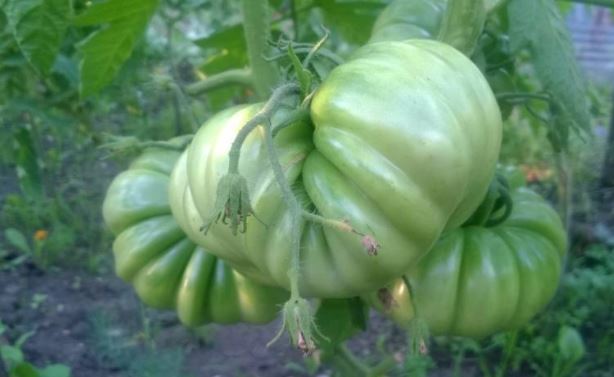
Forms tall, sturdy bushes. Fruiting continues for a long time, until frost sets in.
It is characterized by uniform germination, with 3-5 ovaries forming on each cluster.
Pros and cons:
| Advantages | Flaws |
|
|
The main agronomic requirements are shaping and staking as they grow. Furthermore, the plants require a high level of light and fertilizer.
In their reviews, gardeners write that this variety is very productive, regardless of weather conditions. It's one of the first to ripen.
Minusinsk temptation
| Characteristic | Description |
| Ripening time | 115-125 days. |
| Plant type | Indeterminate, mid-early. |
| Description of the fruit | Flat-round, red. |
| Fruit weight | 130-200 g |
| The taste of the fruit | Sweet. |
| Usage | Universal. |
| Productivity | Up to 5 kg per bush. |
| Agricultural technology | Formation in 1-2 stems. |
| Growing regions | Any. |
Photo of the Minusinskoye Temptation tomato variety:
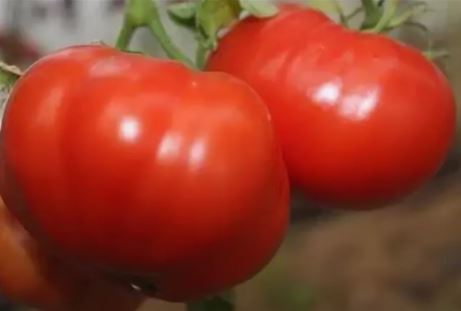
Tall bushes can reach 2 meters without pinching. The fruits are tasty, with fleshy, moderately juicy pulp.
The main pros and cons are:
| Advantages | Flaws |
|
|
Pruning of shoots must be carried out regularly, otherwise the bushes will form thickets.
The variety also requires preventative treatment against infections and pests.
Gardeners appreciate the flavor and fruitfulness of the Minusinsk Temptation. Among its drawbacks, they point out the frequent side-sonning, which takes a lot of time and effort.
Minusinsk traditional
| Characteristic | Description |
| Ripening time | 115-120 days. |
| Plant type | Indeterminate, tall, mid-early. |
| Description of the fruit | Large, wide, heart-shaped, raspberry-pink. |
| Fruit weight | More than 1 kg. |
| The taste of the fruit | Bright, rich, sweetish. |
| Usage | Universal. |
| Productivity | Up to 6-7 kg per bush. |
| Agricultural technology | Formation and pinching of 1-2 stems. |
| Growing regions | Any. |
Photo of the Minusinsk Traditional tomato variety
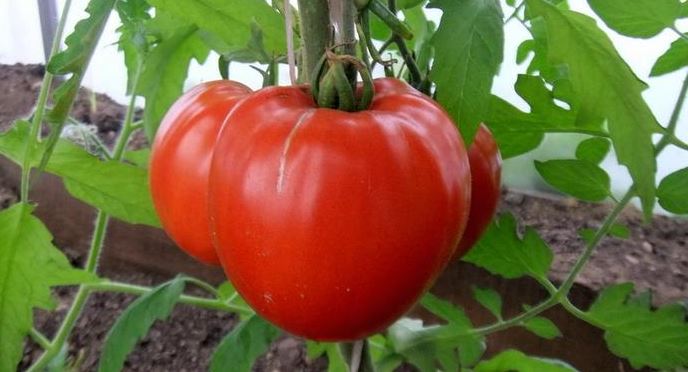
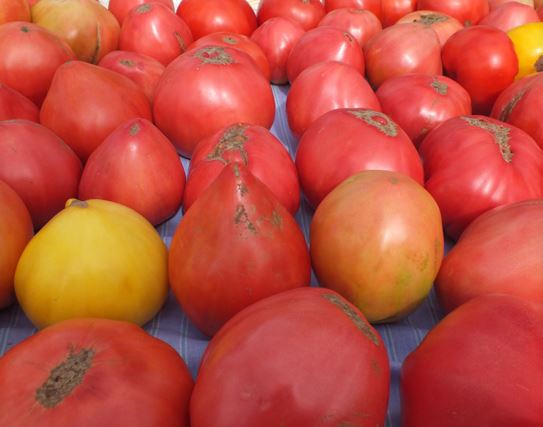
The bush of the Traditional variety from the list of Minusinsk tomatoes can grow up to 200 cm.
It produces very large fruits, which can be called giants. They have fleshy pulp with a small seed content.
| Advantages | Flaws |
|
|
To prevent the bushes from growing too large, side shoots need to be removed. To achieve large fruit, train the plants into 1-2 stems.
In central Russia and the north, greenhouse planting is necessary. In the south, they can be planted in garden beds.
Gardeners comment on the large size of the fruits, saying they never have small ones.
Minusinsk wrist
| Characteristic | Description |
| Ripening time | 110-112 days. |
| Plant type | Mid-season, indeterminate, tall. |
| Description of the fruit | Round, elongated, with an elongated nose, reddish. |
| Fruit weight | 200-350 g |
| The taste of the fruit | Sweet and sour. |
| Usage | For salads and canning. |
| Productivity | Up to 4.5 kg per bush. |
| Agricultural technology | Requires fertilizing and requires formation into 1-2 stems. |
| Growing regions | Any, including Siberian. |
Photo gallery of the Minusinsky Kistyevy tomato variety:
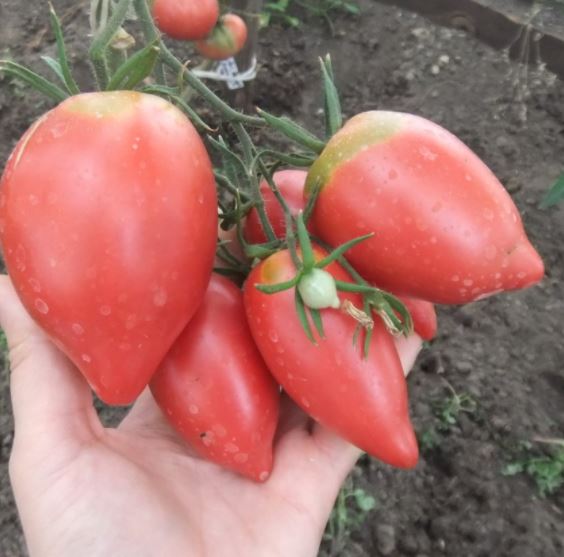
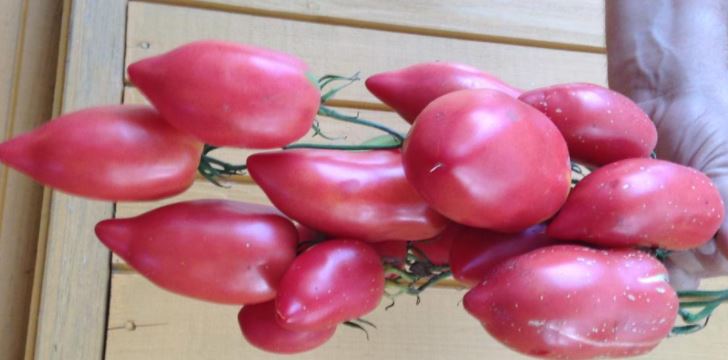
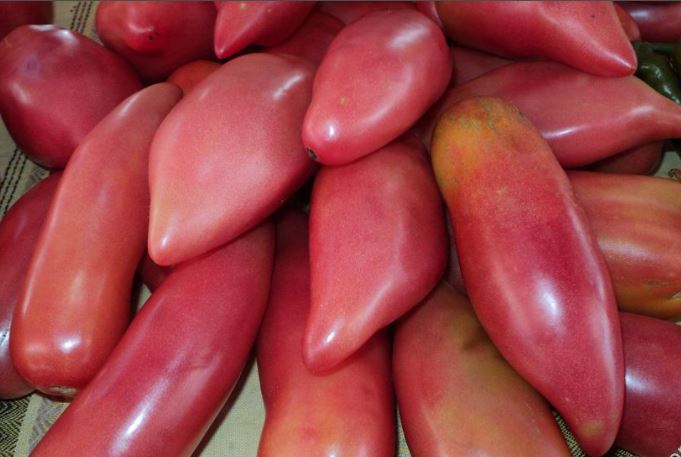
The Minusinsk racemose grows up to 2 m. The pulp of the fruit is dense, fleshy, and very tasty.
It is sometimes also called Bull's Heart.
The advantages and disadvantages of the variety include:
| Advantages | Flaws |
|
|
Gardeners note that the Minusinsky Kistevay tomato produces abundant fruit. The bushes are completely covered with tomatoes.
Minusinsk barrel
| Characteristic | Description |
| Ripening time | 110-125 days. |
| Plant type | Indeterminate, mid-early. |
| Description of the fruit | Cylindrical, red. |
| Fruit weight | 200-500 g |
| The taste of the fruit | Sweet. |
| Usage | For salads and pickling, preparation of first and second courses. |
| Productivity | Up to 4 kg per bush. |
| Agricultural technology | Garter, pinching out side shoots, regular watering and fertilizing. |
| Growing regions | Any. |
Photo gallery of Minusinsky Bochkovoy tomato variety:
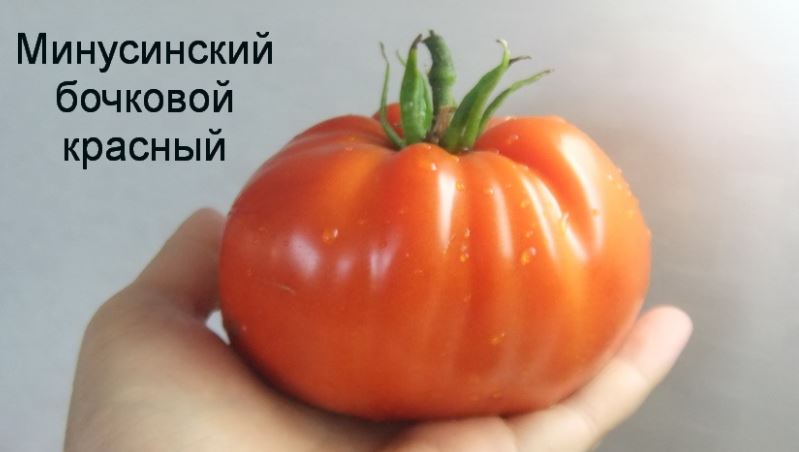
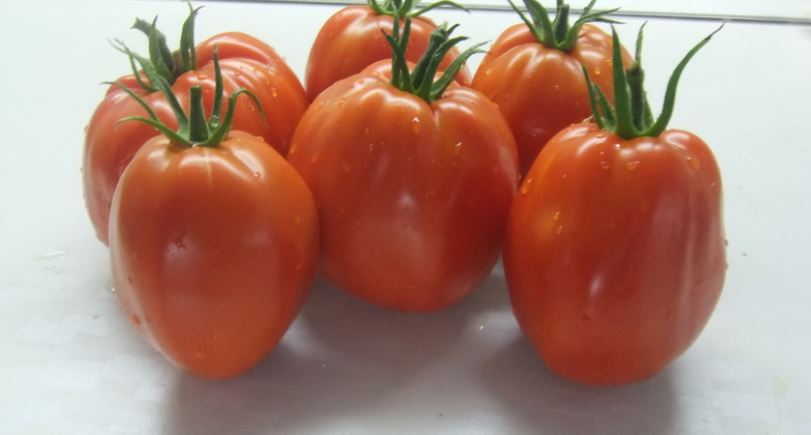
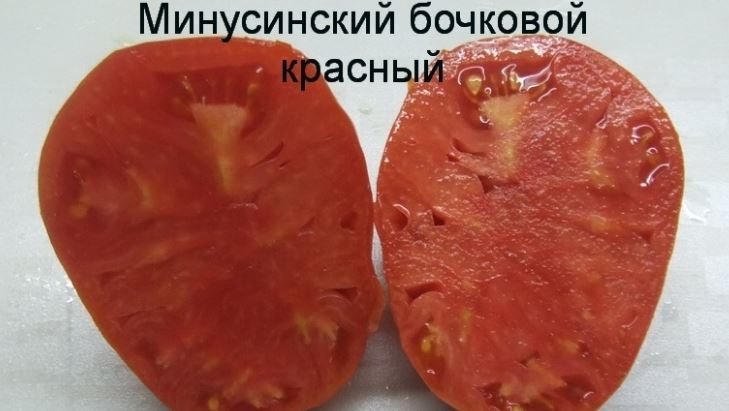
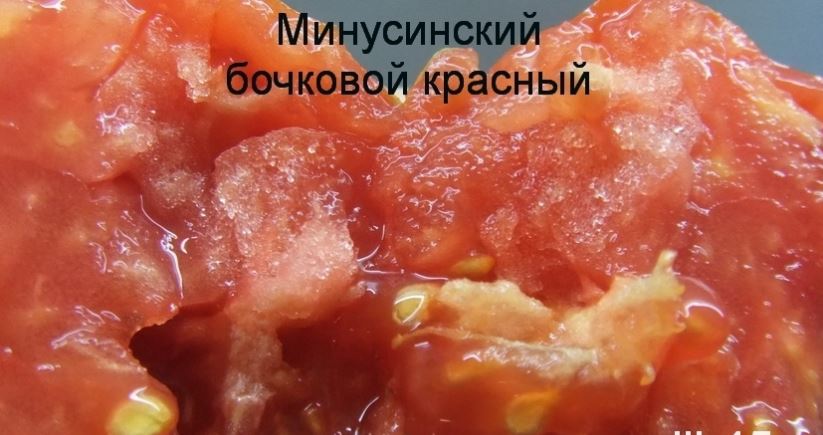
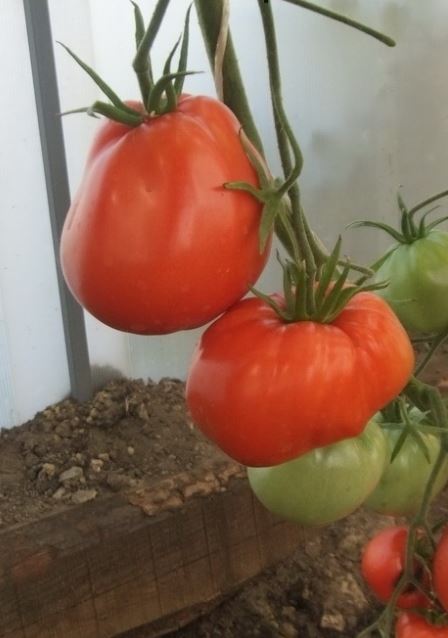
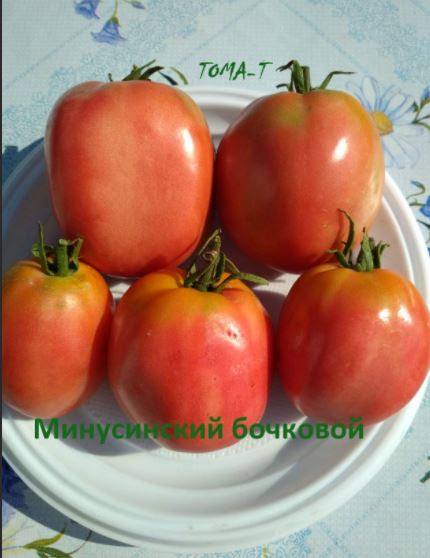
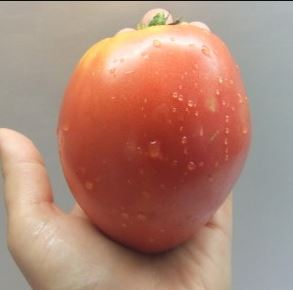
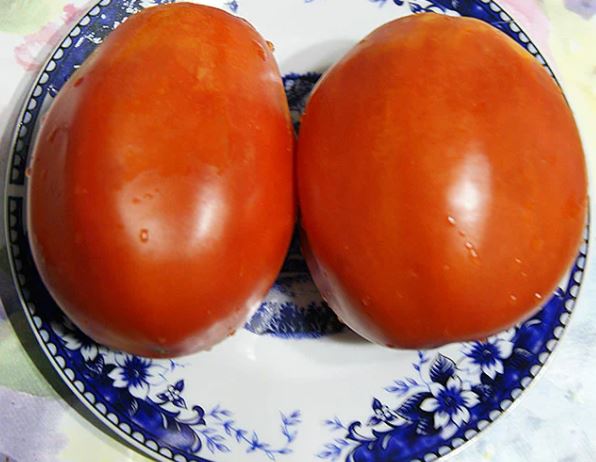
The Minusinsky barrel variety can be planted both in garden beds and greenhouses. The fruits are juicy and have firm flesh.
| Advantages | Flaws |
|
|
This variety requires periodic pinching and staking. It also requires a fair amount of fertilizing and watering.
Gardeners who have tried planting it in their plots note that it has good disease resistance, but still recommend preventative treatment with Fitosporin.
Read more about Minusinsk Bochkovoy in the article Minusinsky Barrel Tomato: Reviews, Variety Description, Photos
Minusinsk large
| Characteristic | Description |
| Ripening time | 110-115 days. |
| Plant type | Mid-early, indeterminate. |
| Description of the fruit | Round, raspberry. |
| Fruit weight | Before 1000 |
| The taste of the fruit | Sweetish. |
| Usage | Fresh and for home preparations. |
| Productivity | Up to 4.5 kg per bush. |
| Agricultural technology | Formation in 2 stems. |
| Growing regions | All. |
Photo of tomatoes of the Minusinsky Large variety;
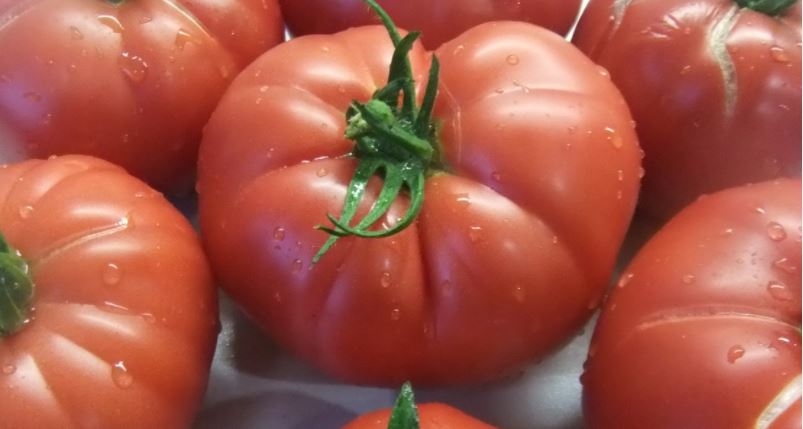
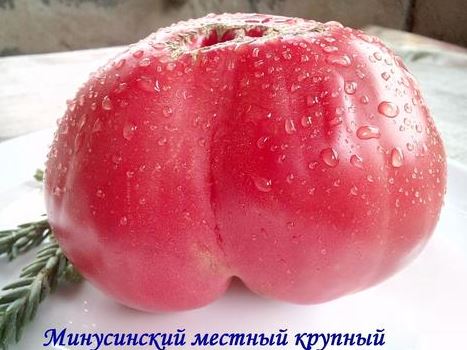
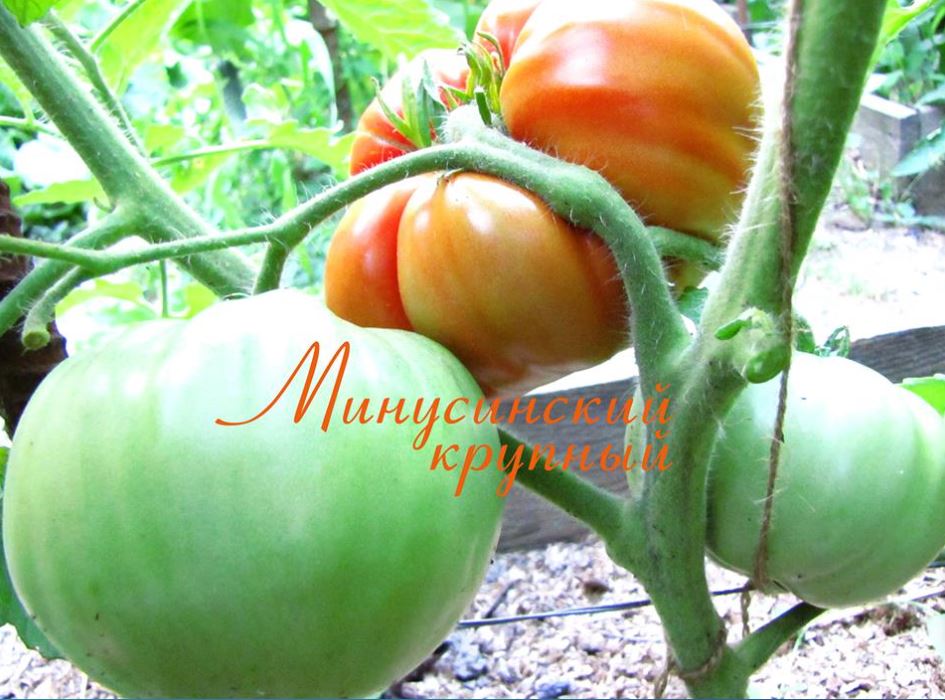
Forms tall bushes up to 200 cm. Suitable for planting in open and closed ground.
| Advantages | Flaws |
|
|
If you plant the bush in a sunny spot right away, caring for this variety is not very difficult. You just need to fertilize it regularly and tie it up occasionally.
Gardeners who have grown this variety in their plots write in their reviews that it surpasses all other types of tomatoes in terms of yield.
Minusinsk bast shoe
| Characteristic | Description |
| Ripening time | 110-112 days. |
| Plant type | Mid-season, indeterminate. |
| Description of the fruit | Rounded, slightly ribbed, scarlet. |
| Fruit weight | 350-500 g |
| The taste of the fruit | Sweetish. |
| Usage | Universal. |
| Productivity | Up to 4.5 kg per bush. |
| Agricultural technology | Planting in a well-lit place, demanding for feeding, the need for shaping. |
| Growing regions | All. |
Photo gallery of Minusinsky Lapot tomatoes:
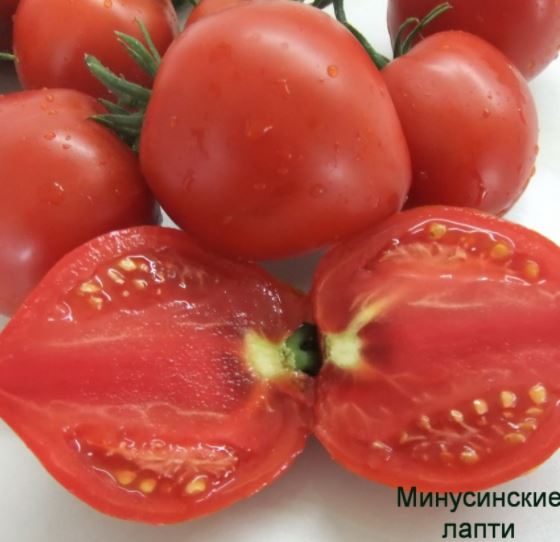
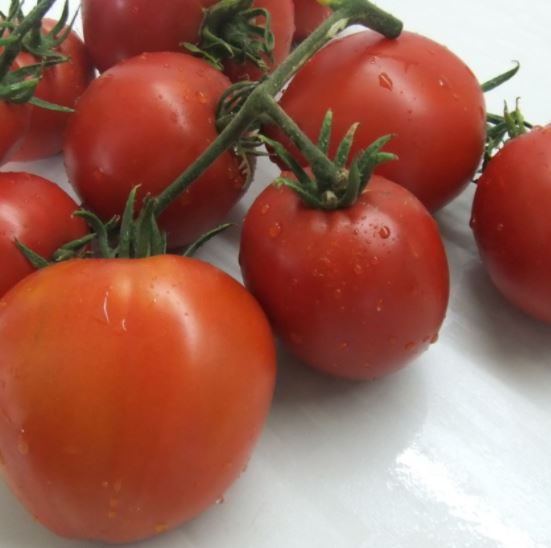
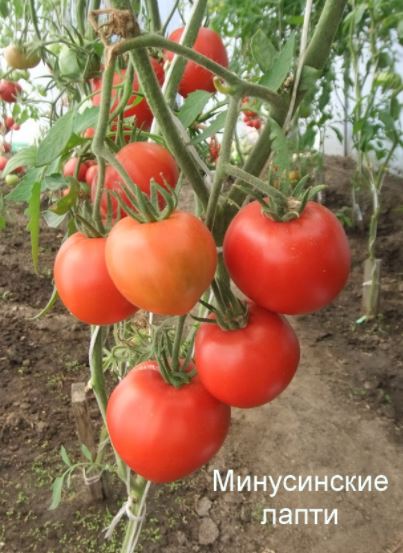
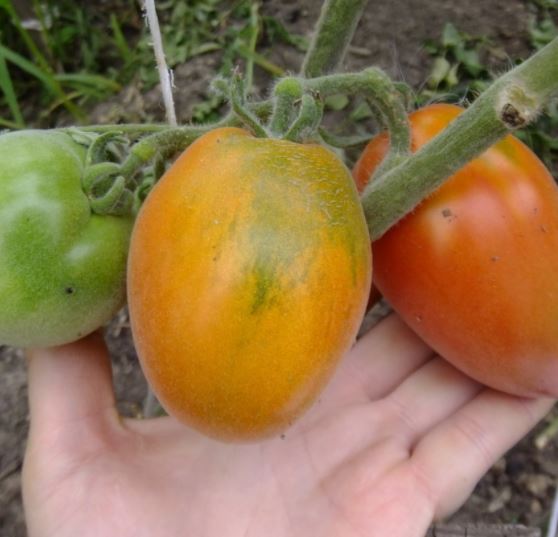
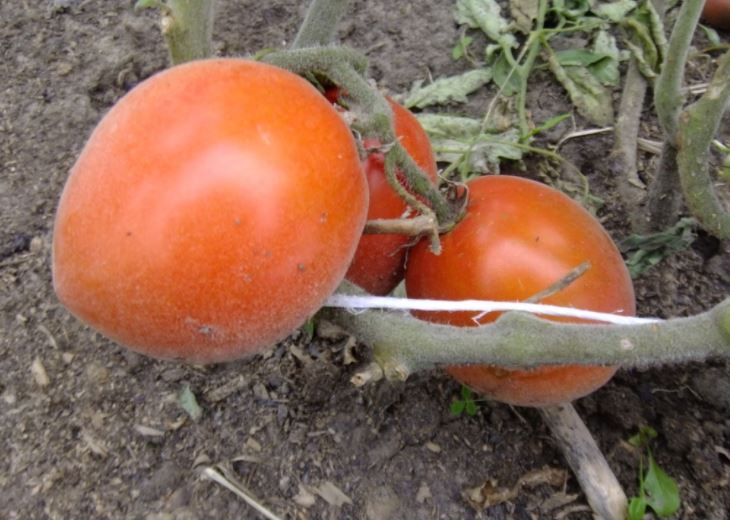
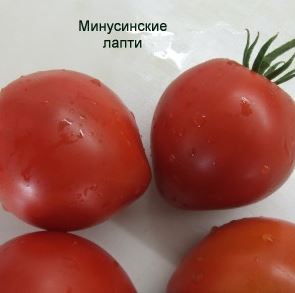
The bushes can reach 180 cm. The clusters are simple, each holding 3-5 fruits. The flesh is dense, with few seeds, and grainy when broken.
| Advantages | Flaws |
|
|
The Minusinsky Lapot variety must be planted in a sunny location, protected from drafts.
Don't forget about regular fertilizing. It also needs to be supported and pinched.
The reviews are mostly positive; the negative ones are related to the complexity of the agricultural technology.
Soldatovo
| Characteristic | Description |
| Ripening time | 110-115 days. |
| Plant type | Mid-season, indeterminate. |
| Description of the fruit | Oval-cylindrical, aligned, crimson. |
| Fruit weight | On average 300 g. |
| The taste of the fruit | Sweet. |
| Usage | Universal. |
| Productivity | Up to 4.5 kg per bush. |
| Agricultural technology | Formation of 1-2 shoots. |
| Growing regions | Any. |
Photo gallery of the Soldatovo tomato variety:
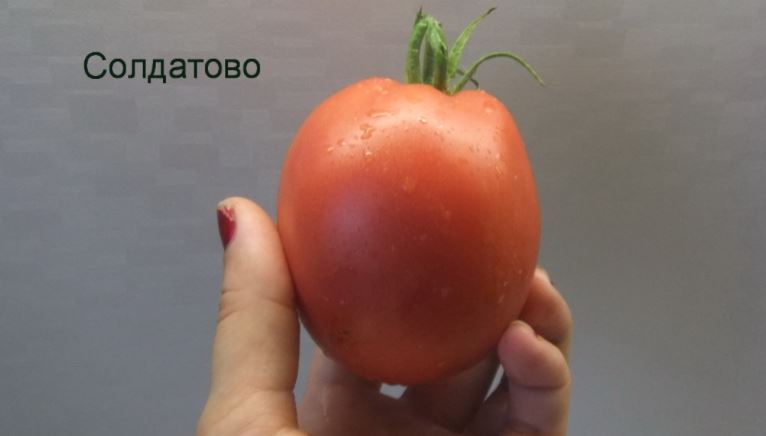
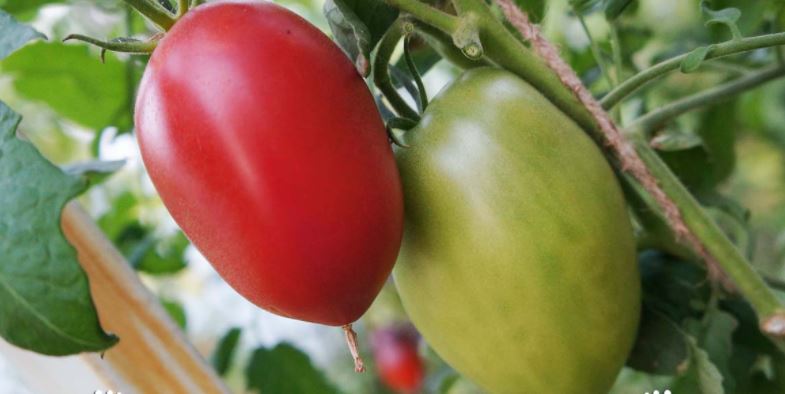
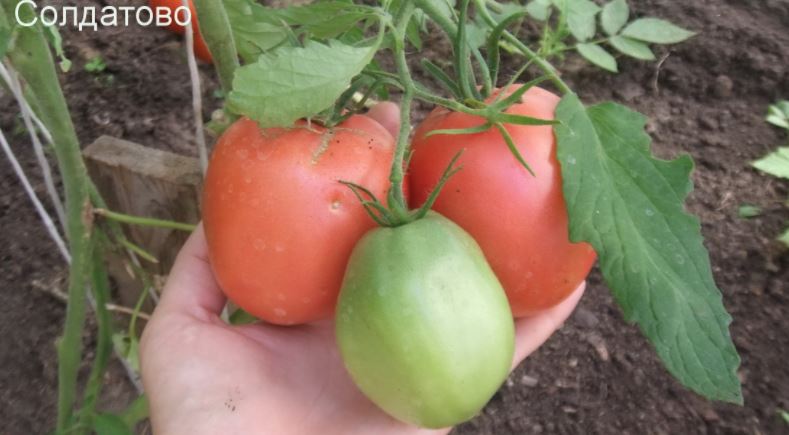
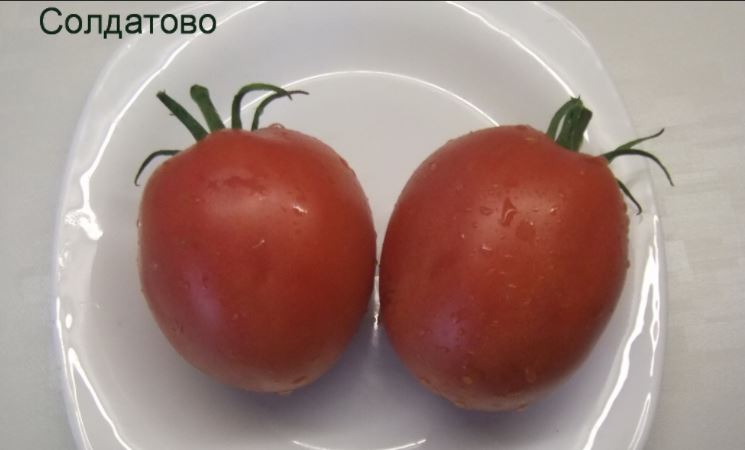
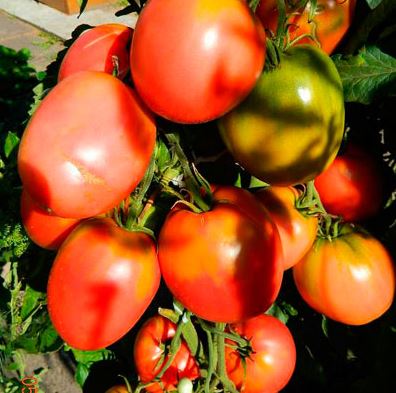
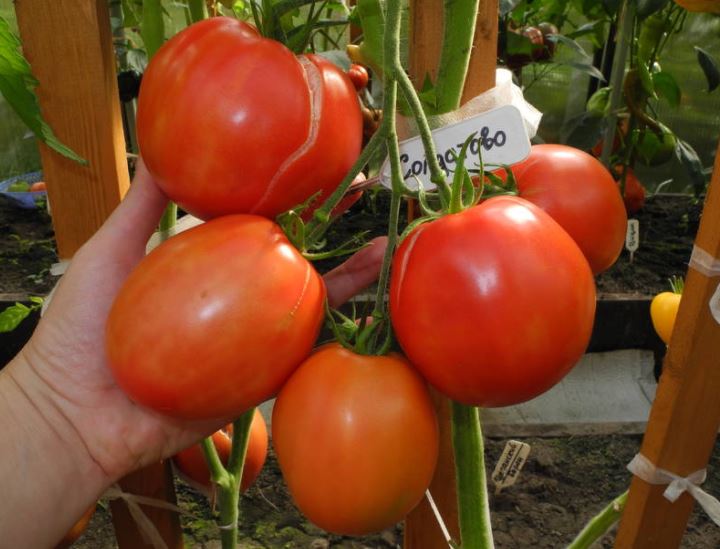
The bushes are 2 m tall. The skin is thin and smooth, but withstands mechanical stress well and does not crack during transportation.
| Advantages | Flaws |
|
|
In addition to shaping tomatoes into 1-2 stems, they need to be supported. Otherwise, the thin stems will break under the weight of the tomatoes.
Reviews of tomatoes are mostly positive, noting that they look attractive when preserved whole.
Tips from experienced gardeners on growing Minusinsk tomatoes
Useful tips to help you achieve a good harvest:
- Start watering when the plants have formed two clusters. Moisten the soil weekly. One plant will require 0.5 buckets of water. If the tomatoes are under-watered, they will develop small, irregularly shaped fruits. Stop watering when the tomatoes ripen.
- When removing side shoots, remove lateral shoots growing from the leaf axils. It is not recommended to touch the tops. Experienced agronomists believe this is harmful.
- If you plan to collect seeds from your own garden and plant them, avoid planting the bushes too close together. They cross-pollinate excessively, resulting in poor-quality seeds.
- If you buy seeds, do so only from official manufacturers or private breeders, for example, Myazina or Shcherbinina.
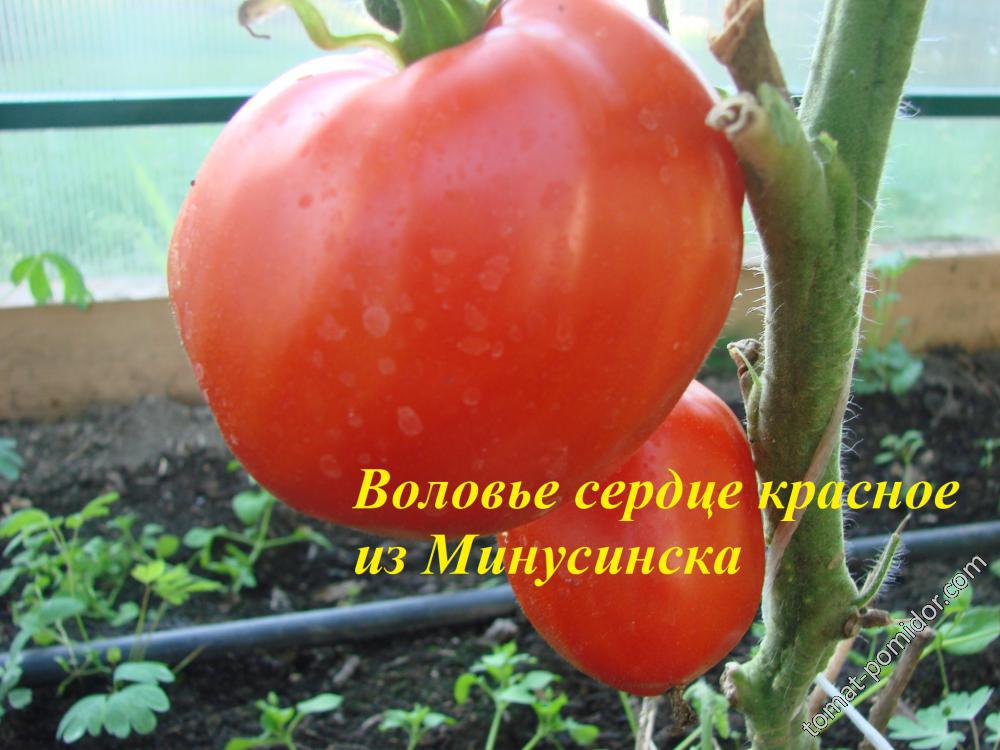
This article presents some of the most delicious and productive varieties of Minusinsk tomatoes. However, there are many more. For example, Vlastelin, Volovye Serdtse, Serdtsa Gonsiorovskikh, Grushanka, Senor (Senior) Pomidor, Orange Elephant, Starozhilov, Cherry, Alena, and others. There are both tall and short varieties, red, yellow, pink, and orange. The selection is simply vast, so everyone can find a tomato to their liking. Below in the article, you can compare Minusinsk tomatoes with other varieties, as well as read and see reviews and photos of the tomatoes from gardeners who have grown them.
Comparison of Minusinsky tomato varieties with each other and other varieties in the table
Please note! How can you easily convert centners/ha to kg/sq.m? Simply divide by 100! For example, the Abakansky Pink tomato yields 400 centners of marketable fruit per hectare. This equals 4 kg per square meter. It's that simple! Also, keep in mind that typically no more than 3-4 plants are planted per square meter. This way, you can calculate the yield per bush. In the case of the Abakansky Pink, it's about 1 kg.
| Variety | Ripening period (number of days from full germination to ripening)
Yield of commercial fruits |
Brief description | Fetus |
| Minusinsk bulls | 110-118 days
1200 c/ha |
A mid-season indeterminate variety for open ground and greenhouses. Suitable for salads, canning, and processing into tomato products. | Heart-shaped, elongated, with a spout, ribbed, raspberry-pink, 200-250 g (up to 400 g). The taste is good to excellent. |
| Minusinsk glasses | 110-112 days
Up to 1200 c/ha |
A mid-season indeterminate variety for greenhouses. Suitable for salads, canning, and processing into tomato products. | Oval, smooth, orange, pink or red, up to 400 g. Good taste. |
| Minusinsk balls | 110-122 days
Up to 1500 c/ha subject to agricultural practices |
A mid-season indeterminate variety for greenhouses. Requires staking and training into single or double stems. Suitable for salads and processing into tomato products. | Round-heart-shaped, ribbed, pinkish-red, 150-250 g. Excellent taste. |
| Minusinsk barrel | 112-125 days
900-1200 c/ha |
Mid-season indeterminate variety for open ground and greenhouses. Requires staking and shaping into 1-2 stems. Suitable for salads, processing into tomato products, and canning. |
Flat-round, slightly ribbed, red, 250-500 g. Good to excellent taste. |
| Minusinsk home | 110-120 days
Up to 1500 c/ha |
An early-ripening indeterminate variety for greenhouses. Requires staking and shaping into 1-2 stems. Suitable for processing into tomato products and canning. | Heart-shaped, slightly ribbed, raspberry, 350-500 g. Excellent taste. |
| Minusinsk apple | 110-112 days
Up to 2500 c/ha |
A mid-season indeterminate variety for greenhouses. Requires staking and training into two stems. Suitable for salads and processing into tomato products. | Flat-round, ribbed, red, up to 500 g. Excellent taste. |
| Alsou | 105-110 days
700 c/ha |
An early-ripening, determinate variety for open ground and greenhouses. Requires staking and shaping. Suitable for salads. | Flat-round, slightly ribbed, medium density, red, 312 g. Good taste. |
| Mazarin | 95-115 days depending on the region
1350-1400 c/ha (greenhouse and under film) |
An early-ripening determinate variety for open ground and greenhouses. Requires staking and training. Suitable for salads and whole-fruit canning. | Round, smooth, dense, red, 150-190 g. Excellent taste. |
| Mikado Red | 115-120 days
700-900 c/ha |
A mid-early indeterminate tomato for open garden beds and plastic shelters. Suitable for salads. | Round, flattened, with pronounced ribbing, dark pink or burgundy, 270 g. Excellent taste. |
| Mikado Orange | 85-100 days
600-700 c/ha |
An early indeterminate variety. Outdoor cultivation is acceptable in warmer regions. In central Russia, greenhouse planting is recommended. Suitable for salads. | Round, ribbed, orange, up to 300 g. Excellent taste. |
| Mikado Pink | 90-95 days
500-600 c/ha |
A mid-early indeterminate variety for greenhouses. Suitable for salads. | Flat-round, large, ribbed, medium density, pink, 300-360 g. Excellent taste. |
| Mikado Sibiriko | 90-95 days
800 c/ha |
An early indeterminate variety from Siberian breeders. For salads, juice, and pasta. | Heart-shaped, ribbed, pinkish, 400-600 g. Excellent taste. |
| Königsberg | 115 days
460-2000 c/ha |
A mid-season indeterminate variety for open ground. Requires staking and training. Suitable for salads and processing into tomato products. Marketability: 56% (Novosibirsk Region). Heat-resistant. | Cylindrical, smooth, dense, good keeping quality, red, 155-230 g (up to 300 g). Excellent taste. |
| Adelina | 82-109 days
242-447 c/ha, maximum 669 c/ha |
A mid-season determinate variety for open ground. Suitable for salads, whole-fruit canning, and processing into tomato products. Heat- and drought-resistant. | Egg-shaped, smooth, transportable red, 59-83 g. The taste is good to excellent. |
| Openwork | 105-110 days
610 c/ha |
An early-ripening, determinate variety for open ground and greenhouses. Requires staking and shaping. Suitable for salads. | Round, smooth, dense, fleshy, red, 220-250 g. Good taste. |
Real reviews from gardeners about Minusinsk tomatoes
Minusinsk (low) - up to a meter in height
They're very similar to Mazarini, Alsu, and Podsineevskie Serdtsatsya. They're large, mid-season, tasty, and fleshy, with raspberry-pink hearts. The first and second clusters are large, then they start to suffer from the heat and produce smaller fruits. They finish their growing season in late July or early August. They start harvesting around June 20th. But I always plant them for their early maturity and flavor. This year, I had 12 similar bushes: 6 Alsu, 4 Minusinskie, and 2 Mazarini. I'll be cutting the number in half and planting some later. Since they ripen all at once, we don't have time to eat them, and it's a shame to waste such beauties.
Podsineevskie Hearts, the photo is from last year, but they were similar. These also look like Minusinsk Lowgrowings, but the bush was taller.
The Podsinsky miracle (the photo didn't work out) was a rather frail bush and suffered greatly from the heat, including the top. The fruits were large plums. I'll try again.
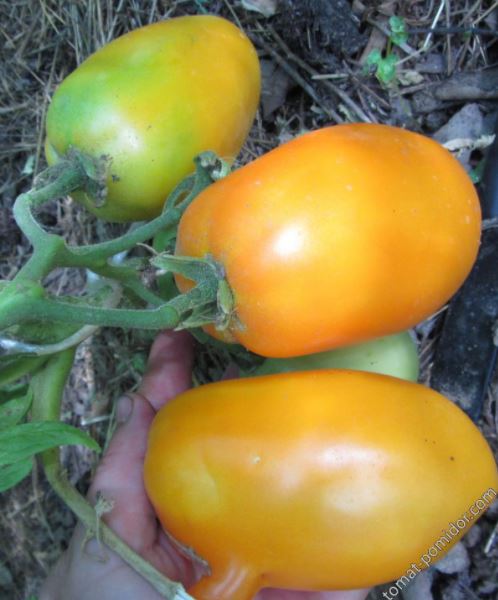
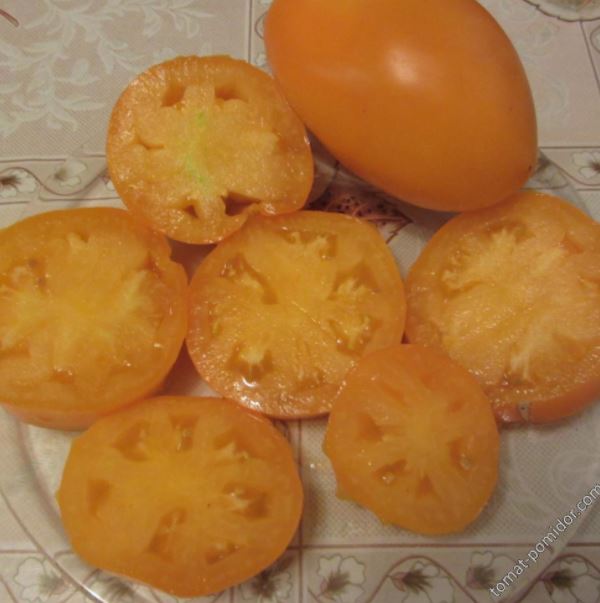
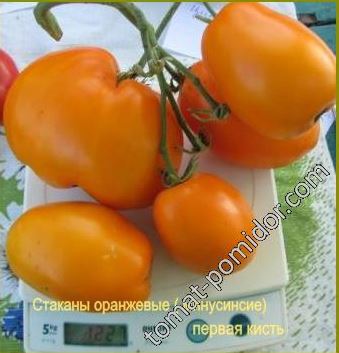
The glasses are orange
delicious, a little different from the Golden Königsberg, the color is closer to yellow than orange, not so pot-bellied.
Minusinsk from Seryoga the summer residentI didn't save the bush... and they were good, I need to look for seeds, maybe there are a few left. They look like the Podsinsky miracle.
Minusinsk pepper-shaped
These took a long time to grow; I picked the last ones at the end of September. They were tasty, fleshy, and not dry. The top was just a little bit off, but I kept discovering that each fruit didn't have a pointed tip, but a dark spot. But they grew large and were tasty, despite the spot. There were three or four of them on a bush.
Minusinsk bull's heart
Quite large pink hearts.
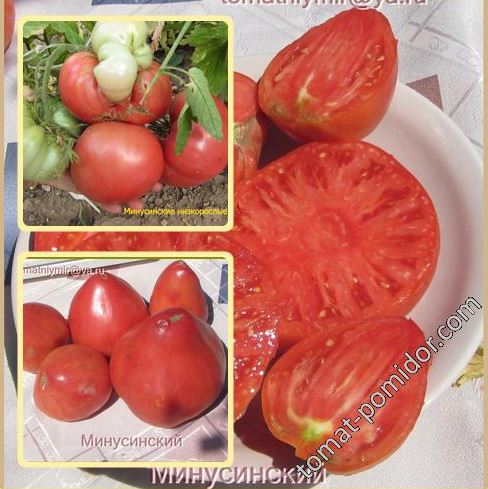
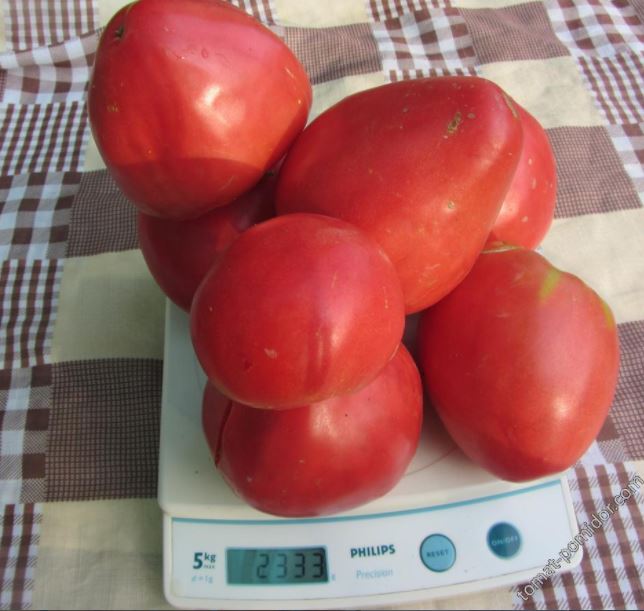
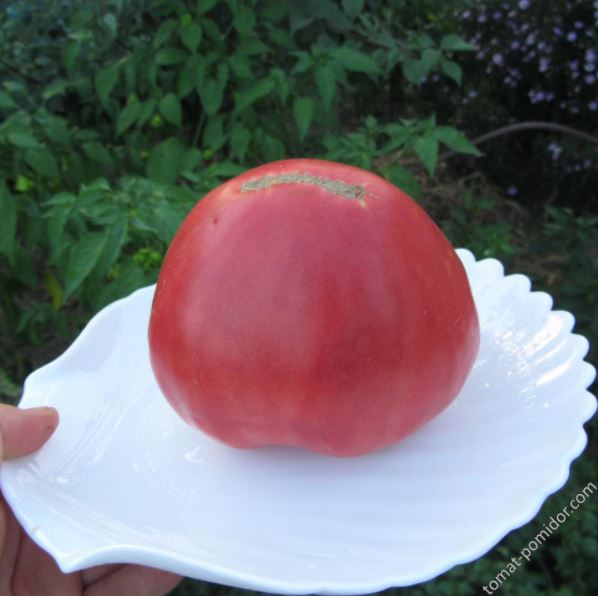
Grew Minusinsk
and the Podsinsky hearts (they turned out to be earlier, these are the first ones, they were smaller)
They're fleshy, and my yield is quite good, considering I drop 2-3 clusters. They produced until they stopped. They were about one and a half meters tall, which I like.
What did they taste like? Mine weren't bad.
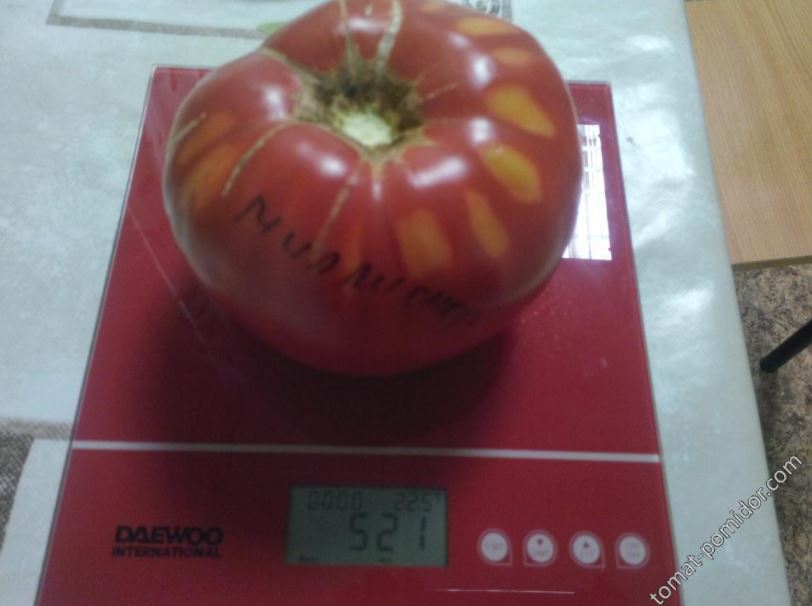
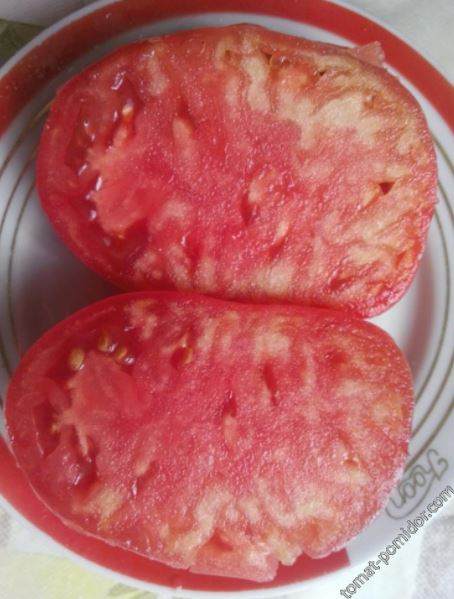
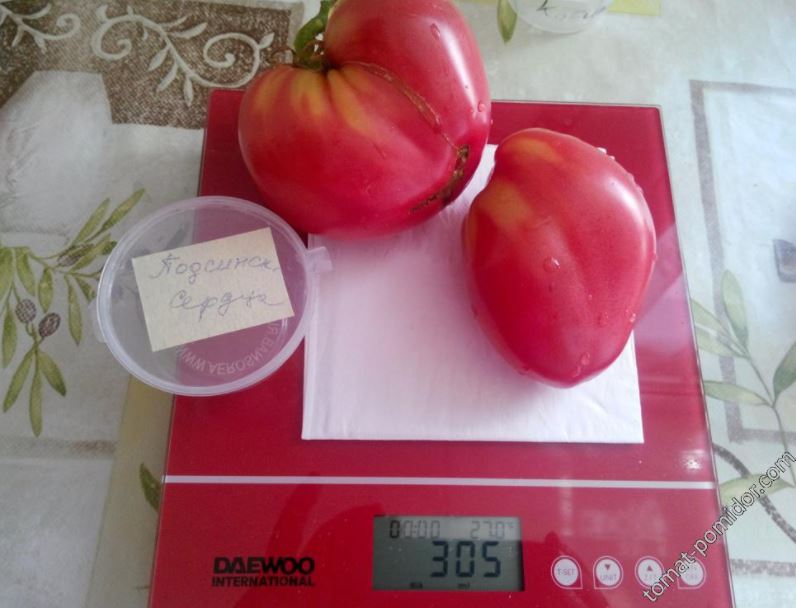
I see that most of the participants have already released pairs of Minusinsk varieties, so I will allow myself to make a modest speech. :-[ A year ago, when I came to the forum, I did not catch the point that there are a whole ton of Minusinsk varieties :hey: I read that it was good and asked Olya (O-la-la) for it, and she could not send me a bad one :-*! Two plants were sown on March 9th for subsequent determination in the garden. On July 29th, I had 2 bushes like these. (To the right and left of me) Now I do not regret at all that I do not have the full variety of Minusinsk varieties and my (Olin's) Minusinsk variety is with me forever. :yep: Everyone liked it! Including the fact that despite its impressive size, it can lie around. Olya, thank you so much and again!!! :thx: :thx: :-*
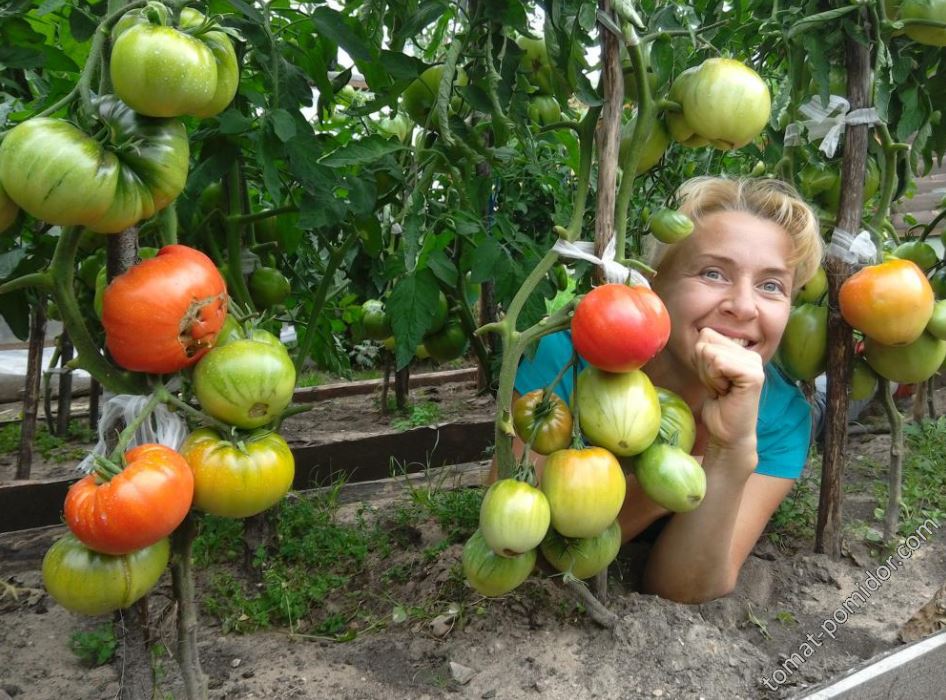
Here are my Minusinsk tomatoes.
MINUSINSKIE from Zyryanova 08/02/2015.
one of the sweetest varieties.
MINUSINSK giant 08/02/2015.
MINUSINSK giant first brush 2.0815.
MINUSINSKIY GIGANT for seeds 08/2/2015.
MINUSINSKAYA Grushanka from Sveta Kemerovo 08/02/2015.
PODSINSKOE miracle.
MINUSINSK from Natalia Sludnikova 08/02/15.
The photo is dated August 2, but the seeds were taken a week earlier for ripening. They were planted for seedlings around the second half of February.
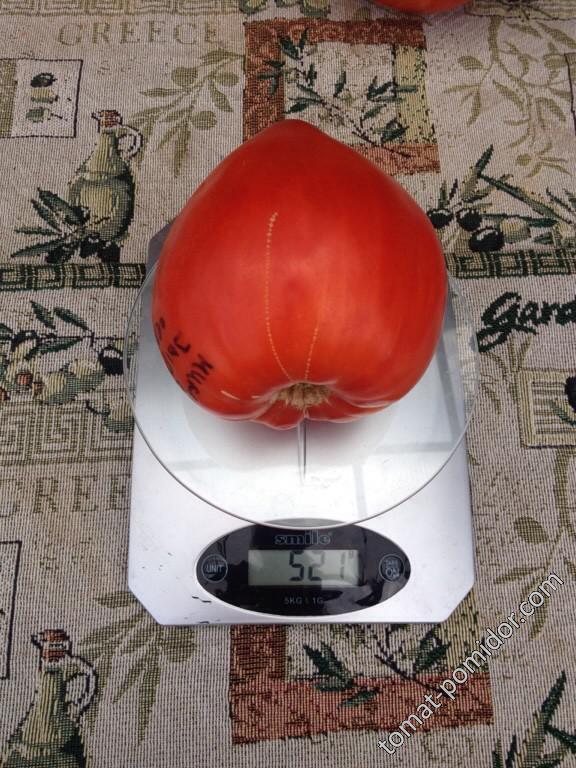
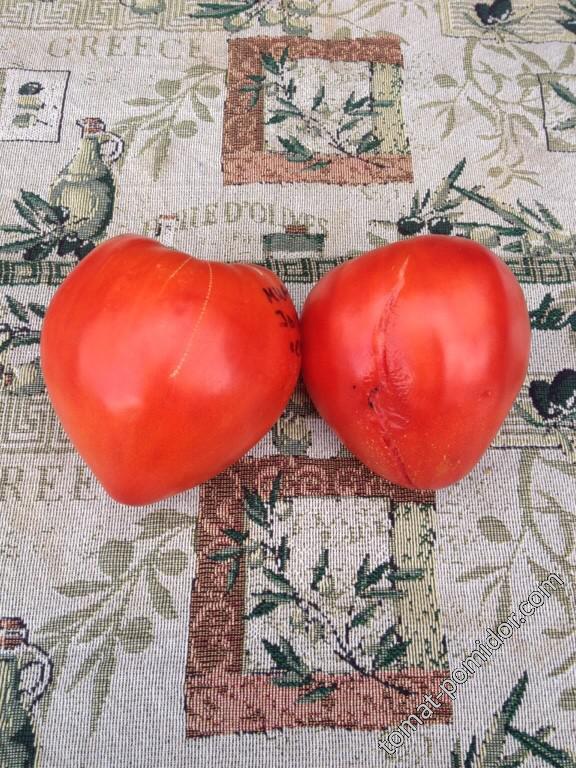
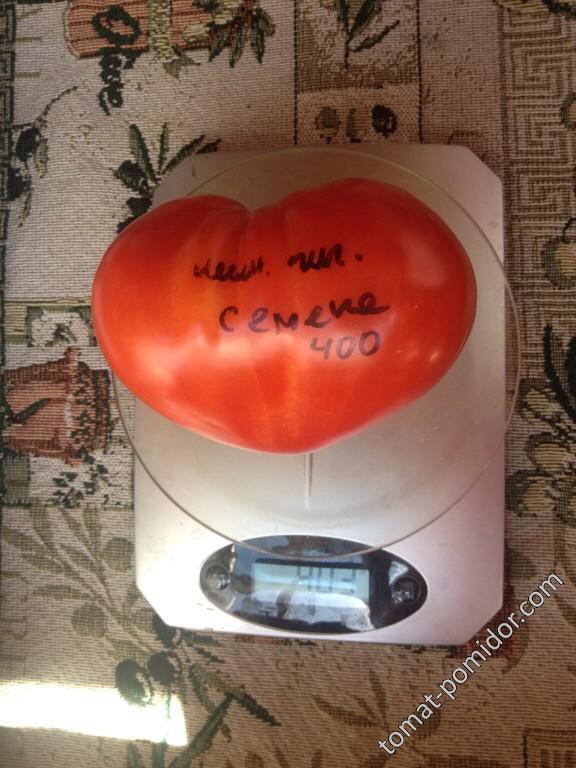
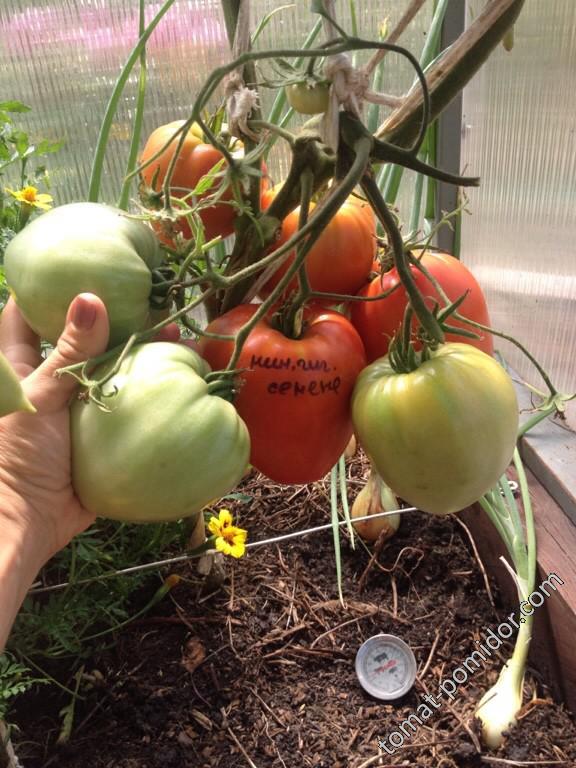
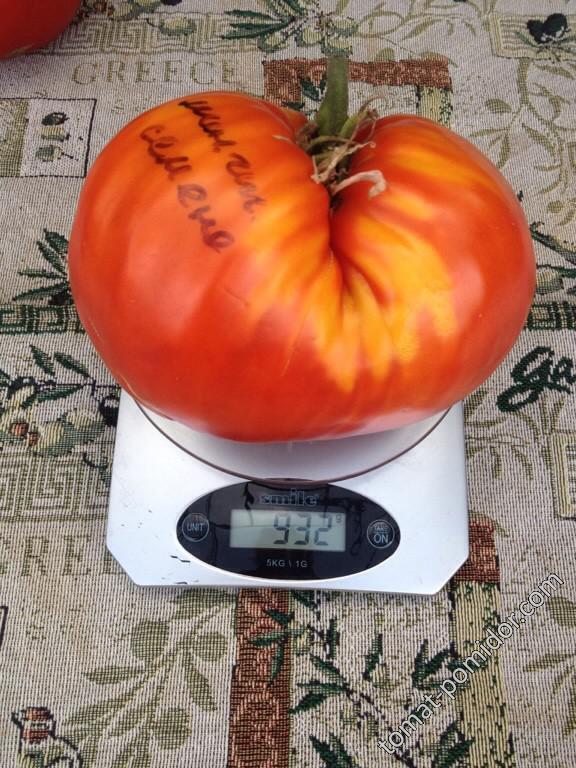
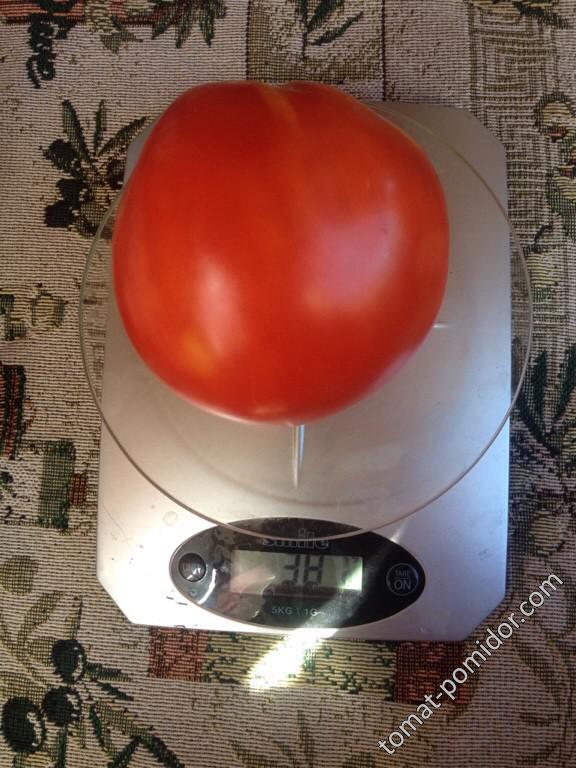
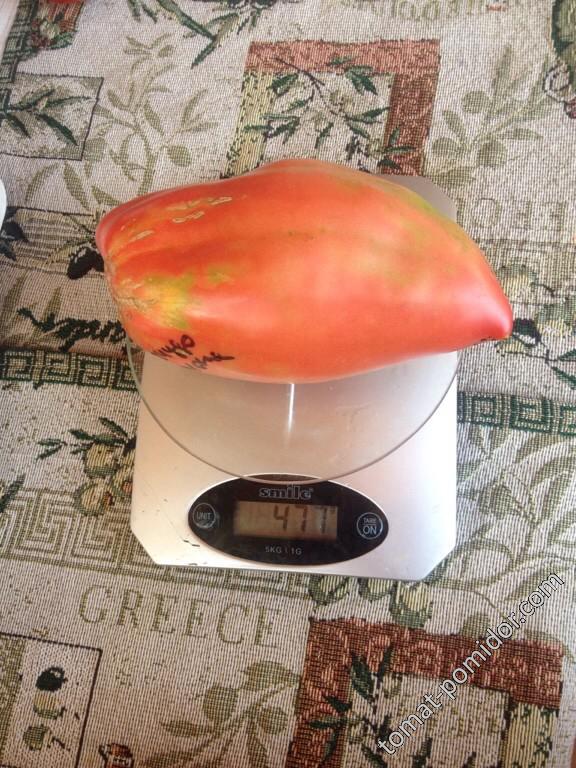
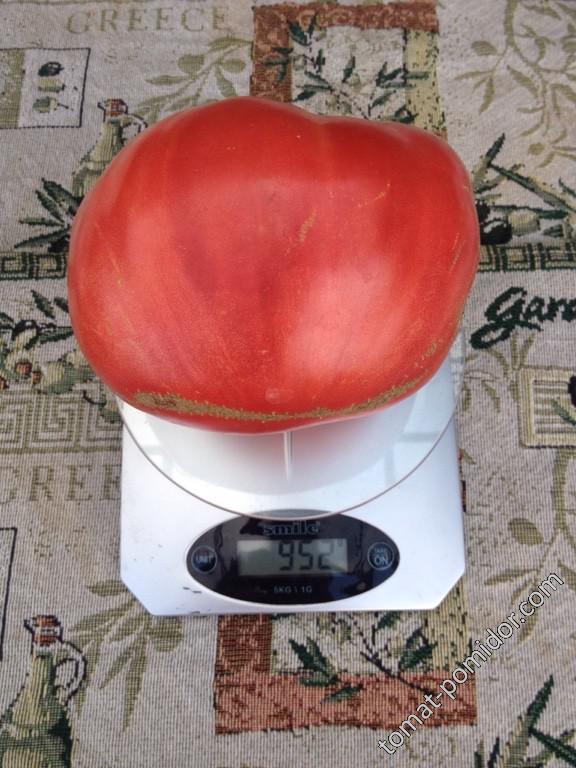
In 2015 I grew the following minusines:
Minusinsk Apple No. 1 (no photo)
Wintergreen
Minusinsk cups
Minusinsk barrel
Apple (Sonin)
Omsk resident
Minusinsk pink giant
Minusinsk pink long
Another Podsinskoye miracle, no photos. The bush was frail, first attacked by the top, then by late blight.
In 2016, I want to recreate the Minusinsk Pink Long; I liked the shape. It seems similar to the Minusinsk Pepper-shaped. Or is it different?
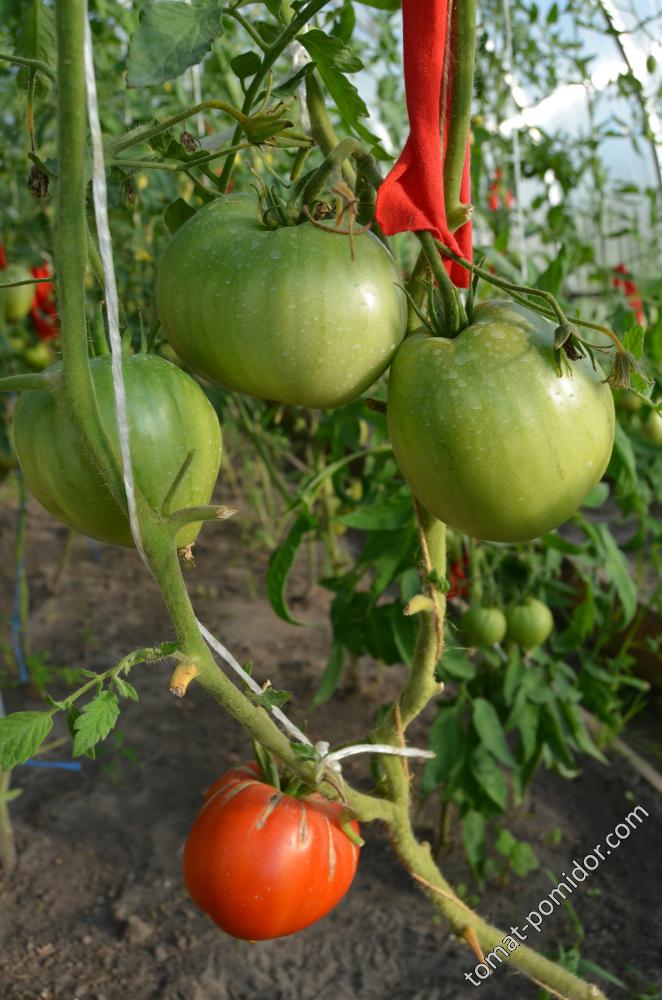
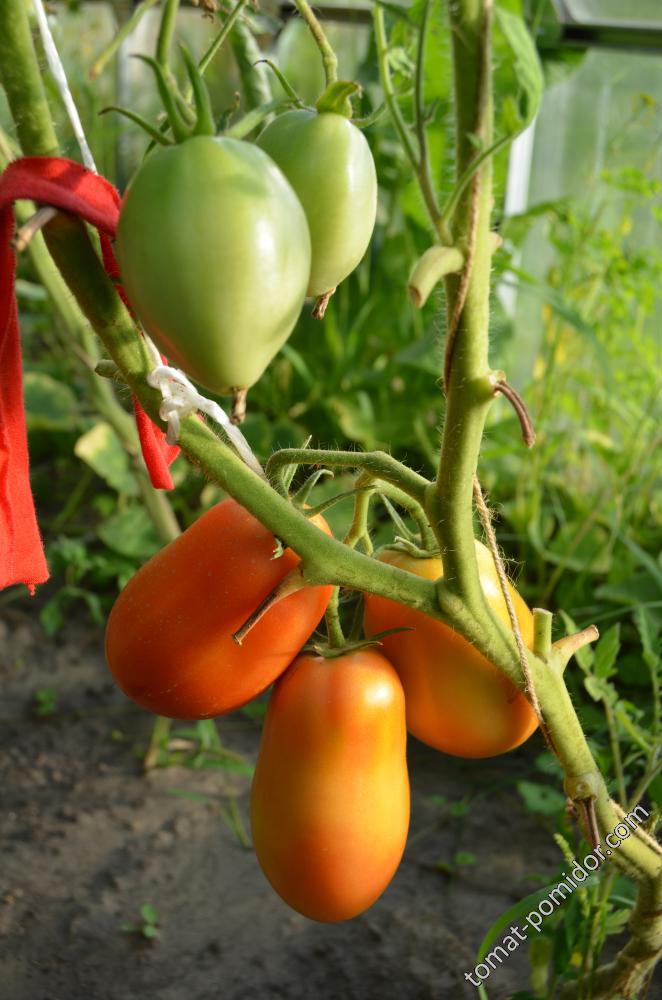
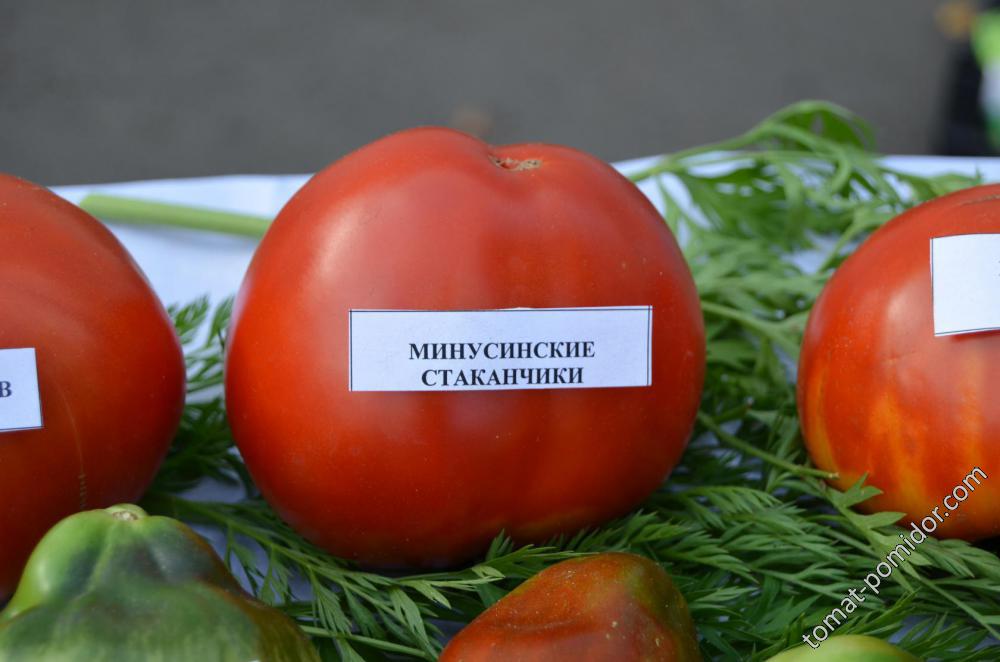
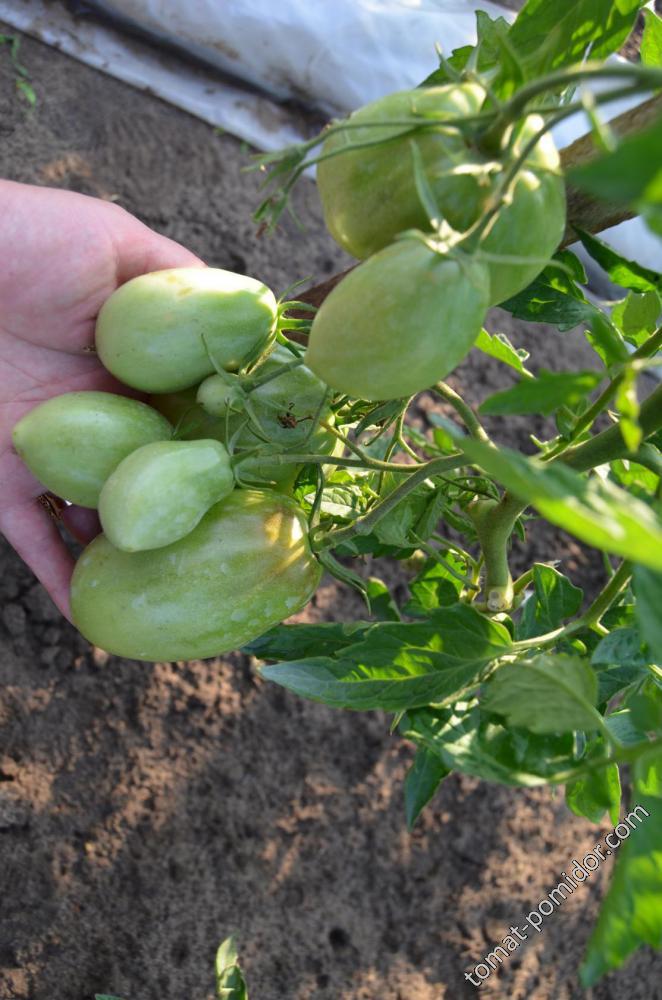
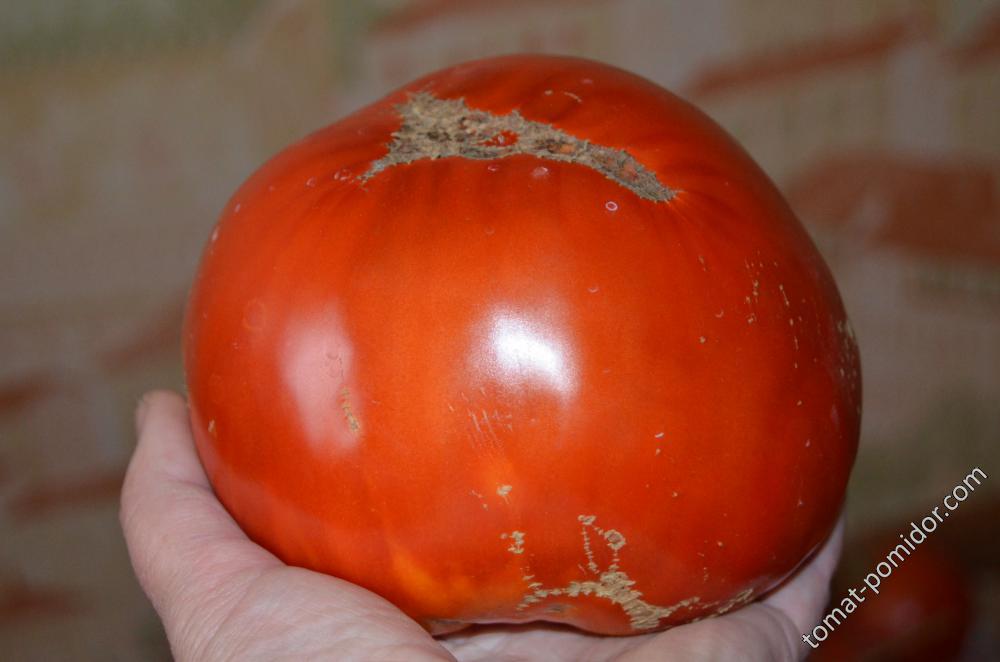
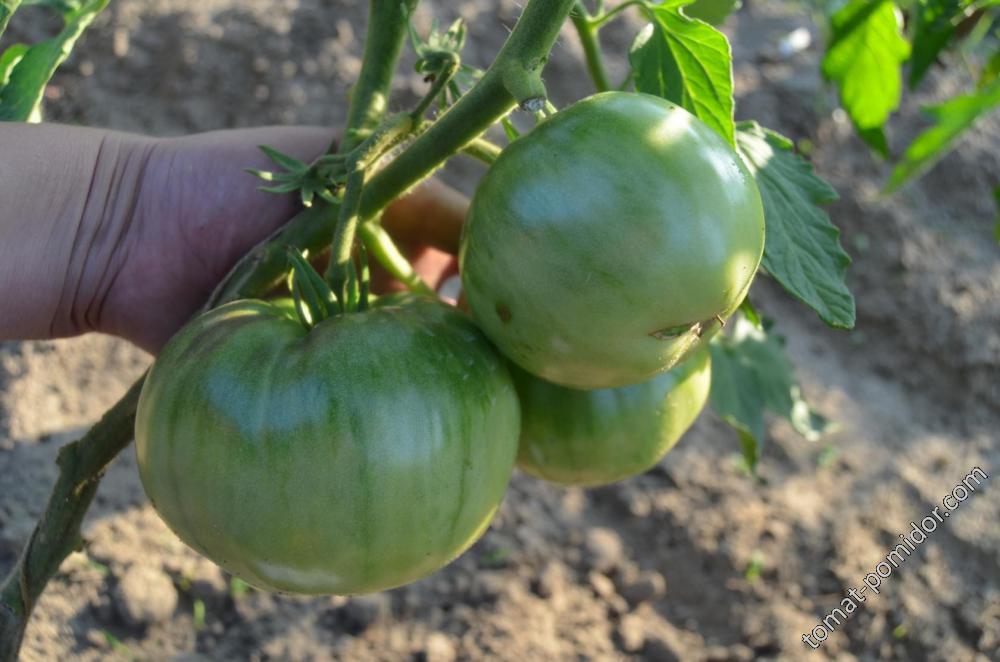
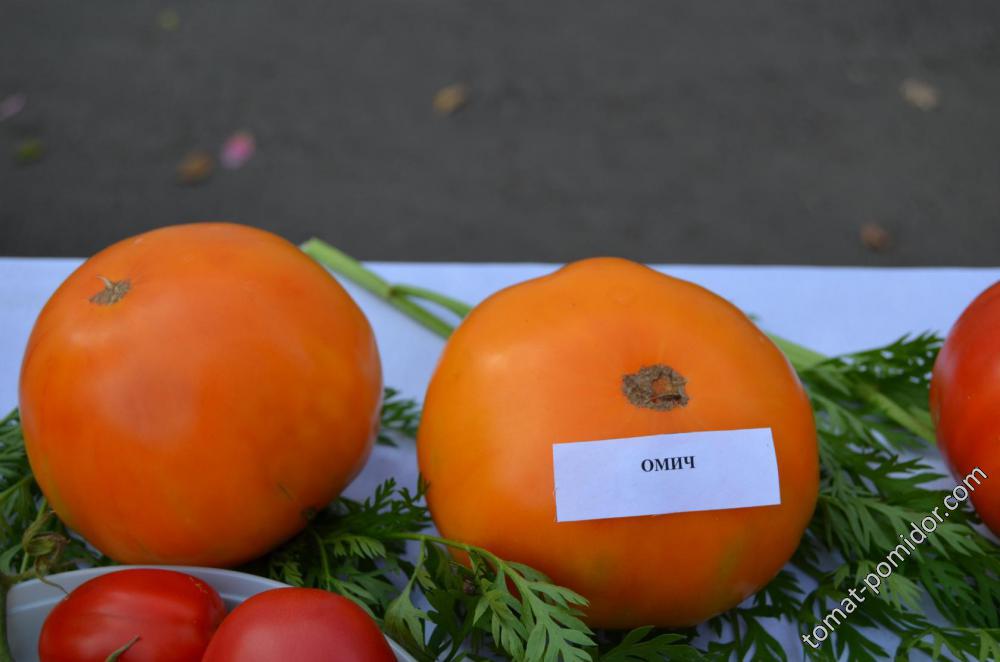
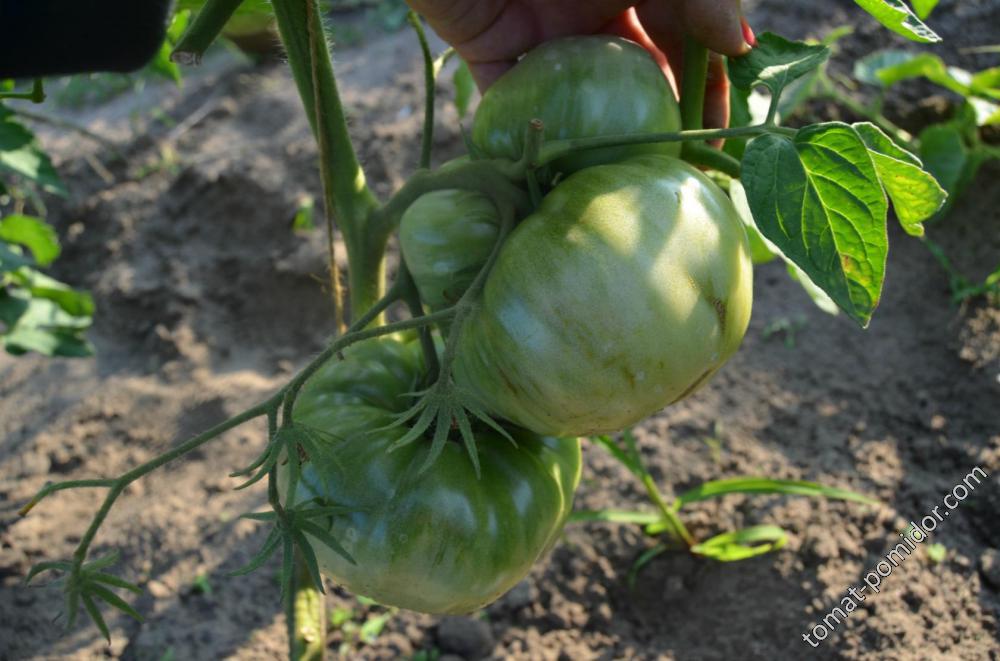
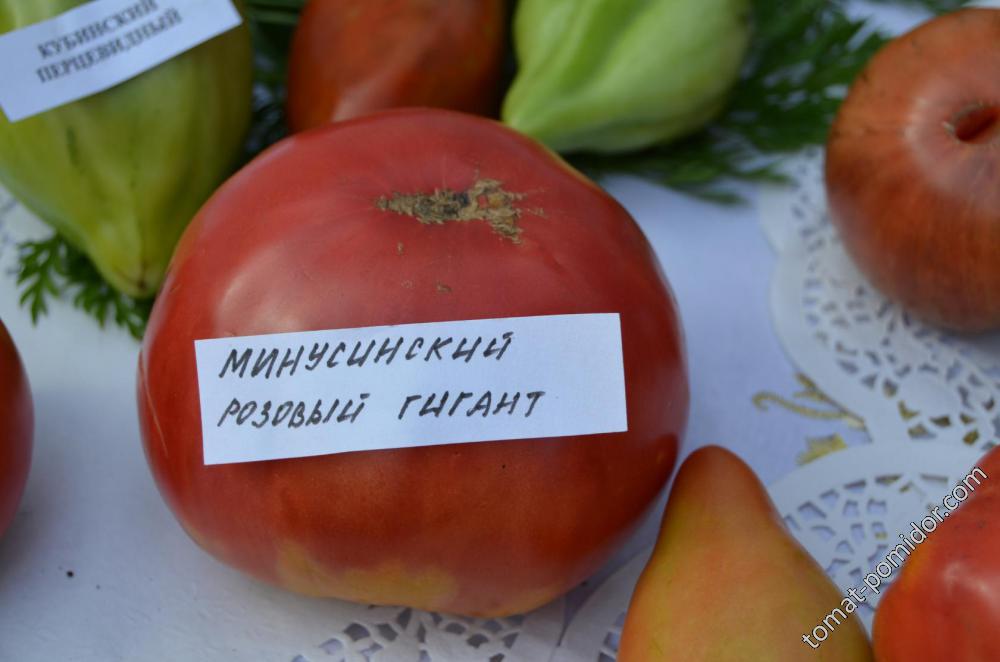
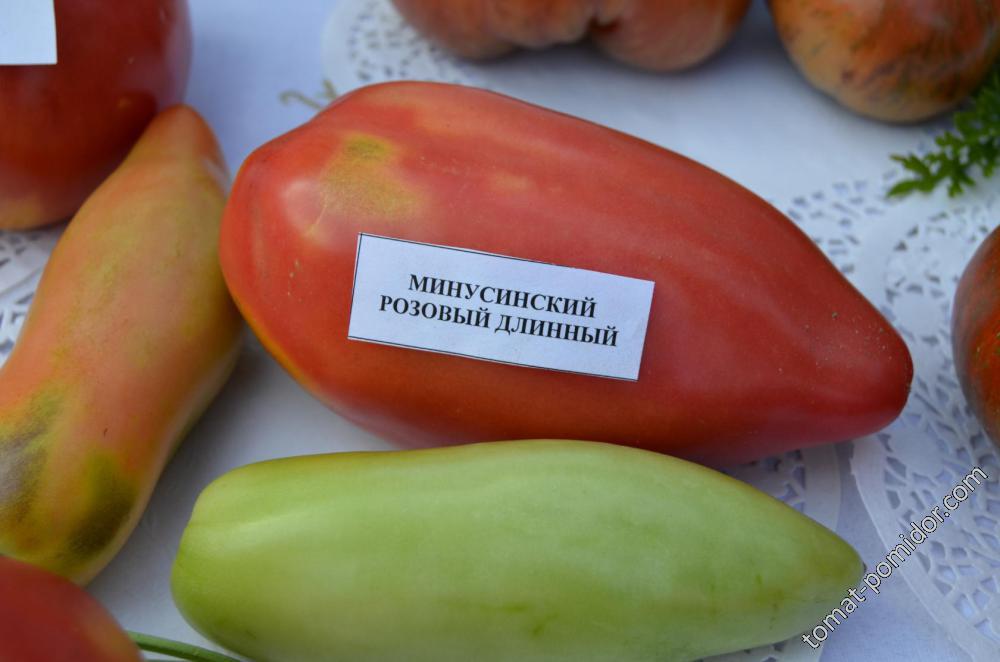
A friend from Minusinsk sent me Minusinsk seeds (we met by chance on OK).
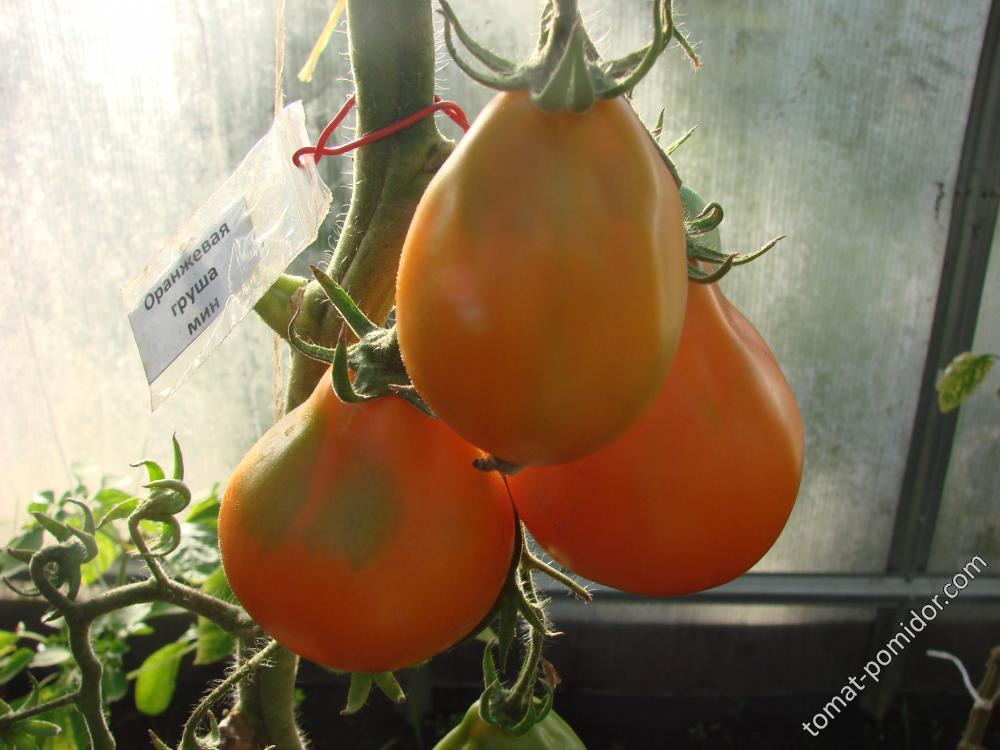
The varieties were Red Large, Ox Heart, Orange and Red Glasses, and Orange Pear. I also bought Minusinsky Giant Pink, Minusinsky Balls, and Minusinsky Apple Balls from collectors. I liked them all. Some were bigger, some were smaller. But I noticed they were quite early. The thing is, we had a frost of -7 degrees Celsius at the end of May. The tops of the tomatoes in the new greenhouse froze, right on the edge where the Minusinsky ones were, except for the Grusha (that variety was in a different greenhouse). The heater was just closer to the other edge. I had to cut off the tops. Side shoots appeared. I thought that was it, there would be no harvest. I left two side shoots. But in the end, they all fruited, several bunches formed, and even some tomatoes turned red on the bush, despite the cold and rainy summer.
Today I will definitely repeat that it seems to me that they did not fully realize their potential due to all the circumstances.