The Pink Bush tomato variety originated in France but has since spread widely across the globe. In Russia, this tomato has taken root well and is very popular due to its excellent characteristics.
Content
- 1 Characteristics of the Pink Bush F1 tomato variety in a table
- 2 The history of the Pink Bush F1 tomato variety
- 3 Detailed description of the Pink Bush F1 tomato variety
- 4 Advantages and disadvantages of the Pink Bush F1 tomato variety
- 5 Growing the Pink Bush F1 tomato variety
- 6 Resistance of the tomato variety Pink Bush F1 to diseases and pests, prevention, control
- 7 Harvesting, using and storing the Pink Bush F1 tomato variety
- 8 Comparison of Pink Bush F1 tomato varieties with other varieties in the table
- 9 Gardeners' reviews of the Pink Bush tomato variety
Characteristics of the Pink Bush F1 tomato variety in a table
| Ripening period (number of days from full seedlings to maturity) |
95-103 |
| Description | A hybrid determinate tomato variety for greenhouses and film shelters |
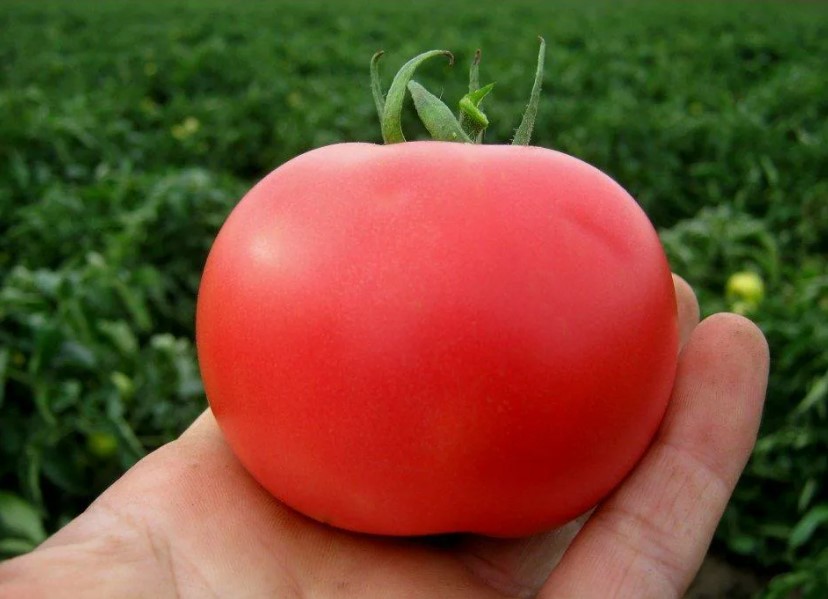
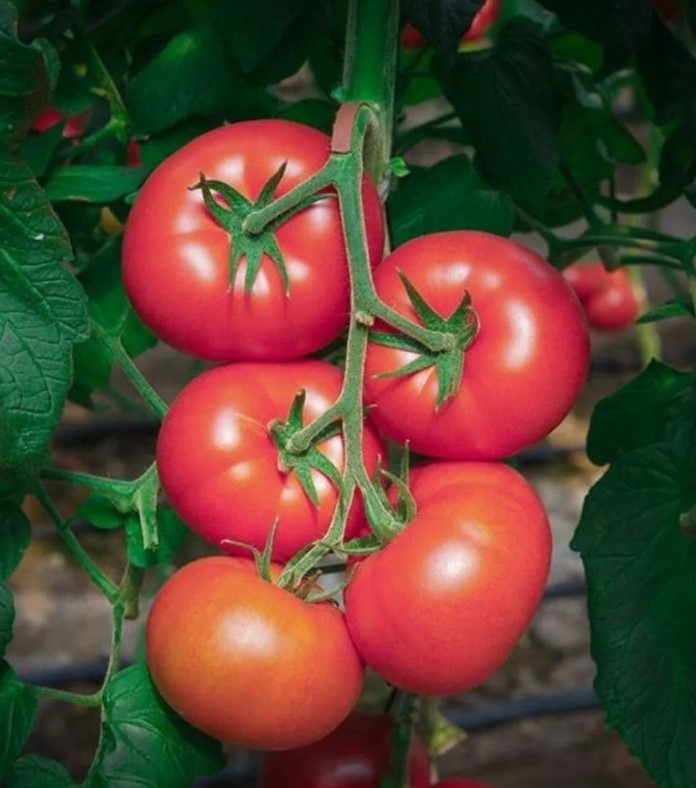
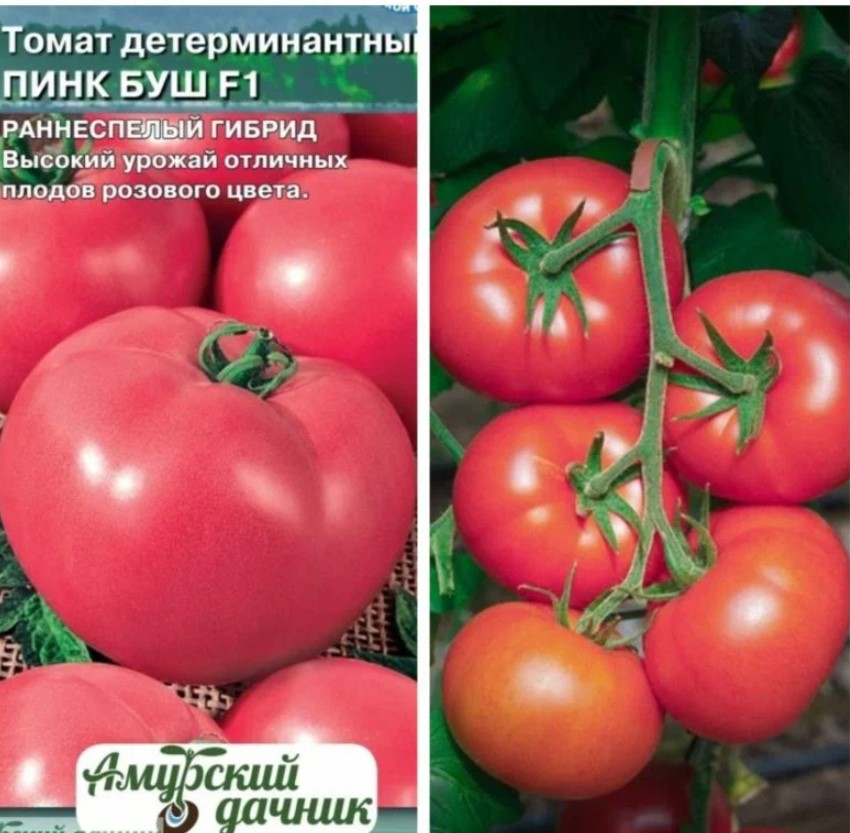
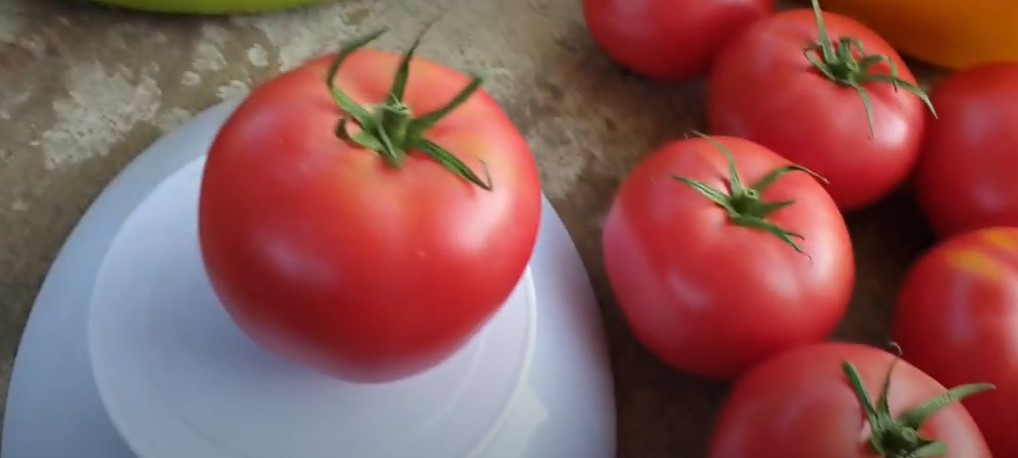
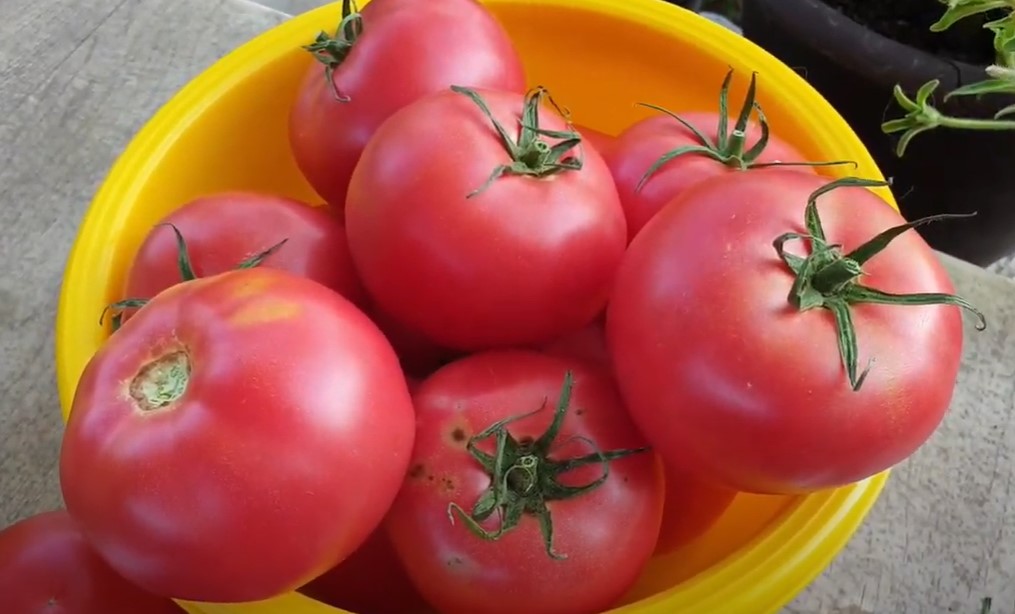
| Fetus | The fruits are large, pink in color, and flat-round in shape. |
| Fruit weight | 110-150 g |
| Taste | Nice |
| Usage | Universal purpose of fruits |
| Marketability | Up to 95% |
| Shelf life | Good |
| Yield of commercial fruits | 227-480 c/ha |
| Disease resistance | Resistant to major tomato diseases |
| Agricultural technology | Sowing of seeds is carried out in late March - early April, tomatoes are planted according to the 40x50 cm pattern. |
| Growing regions | North Caucasus, Central Black Earth Region |
| Inclusion in the State Register | 2014 |
| Originator | France |
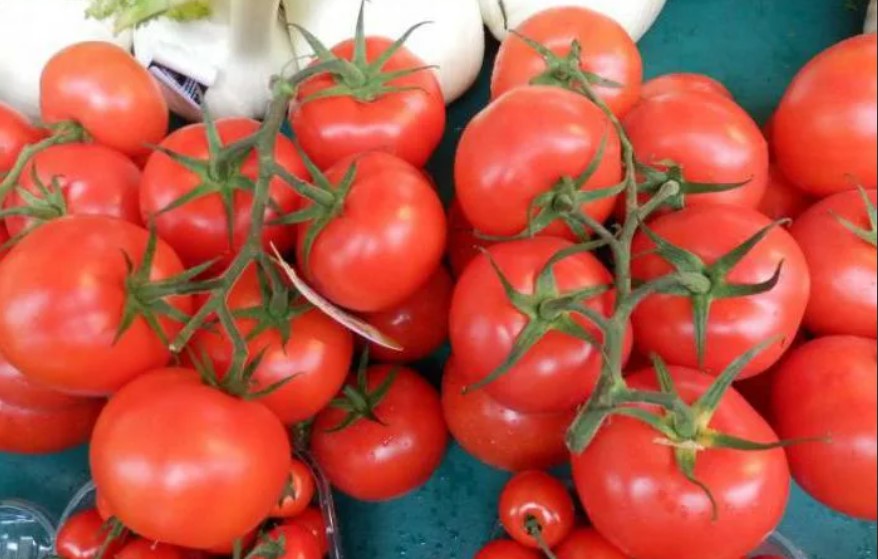
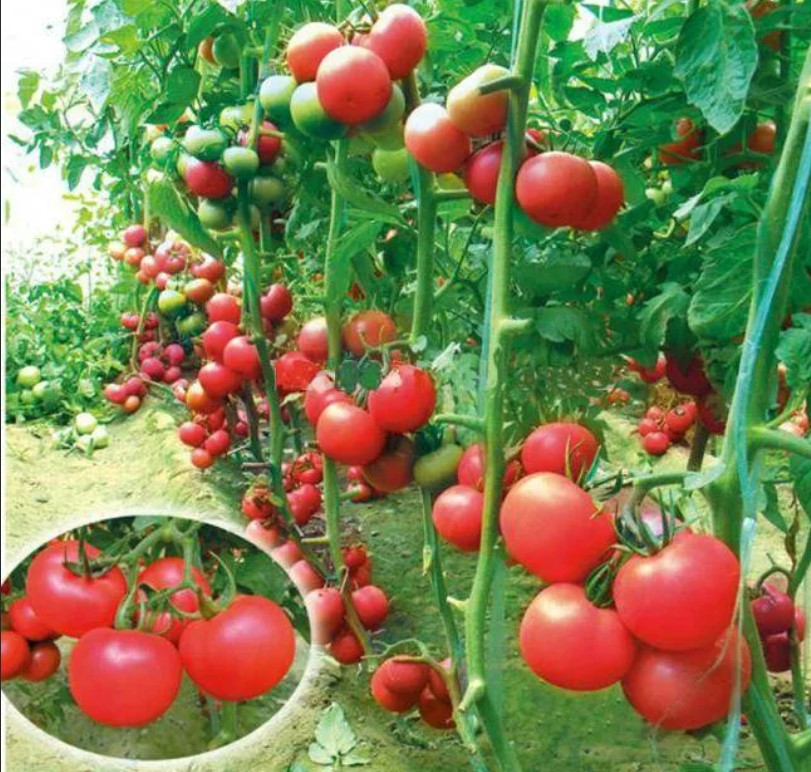
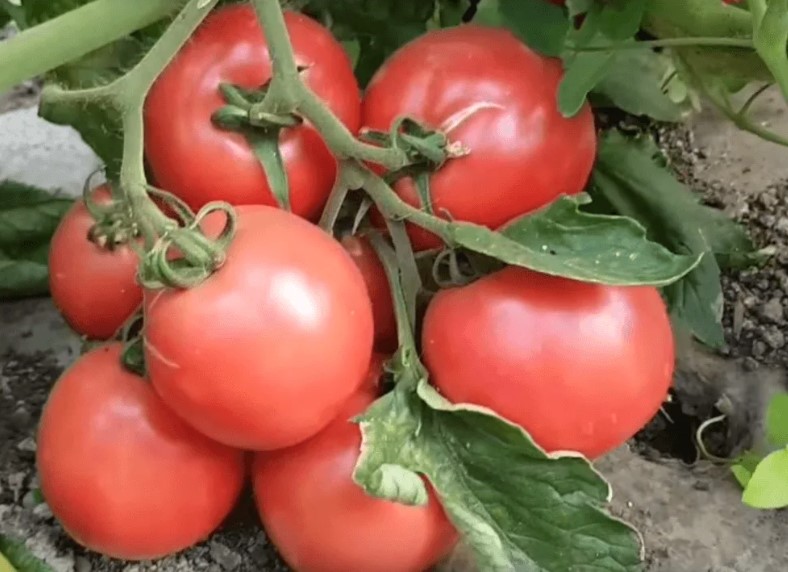
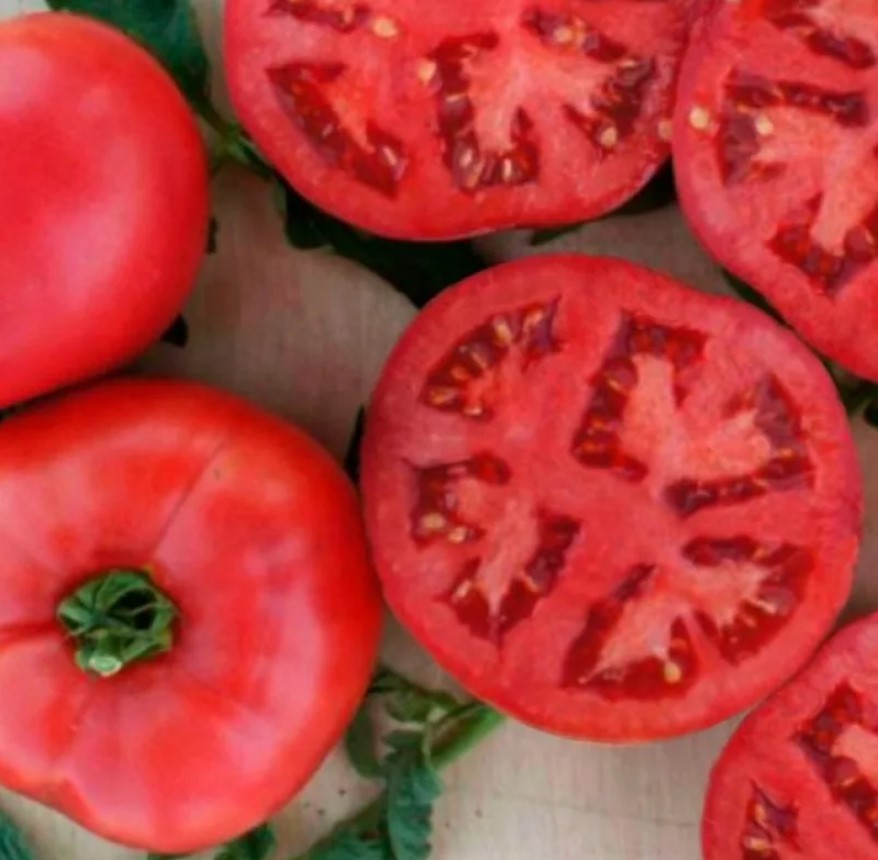
Photo gallery of the Pink Bush F1 tomato

The history of the Pink Bush F1 tomato variety
Some breeders believe that Pink Bush has Japanese roots, but it was French breeders who established it as a globally recognized variety. The variety has been widely used in Russia since 2003, but it wasn't until 2014 that the breeders received official registration.

Detailed description of the Pink Bush F1 tomato variety
The hybrid variety Pink Bush belongs to the pink-fruited tomato varieties with early ripening periods.
Characteristics of the bush
A determinate tomato variety with shoots reaching 75 cm in height. In greenhouse conditions, the plant can reach up to 145 cm. The foliage is above average, with pointed, dark green leaves. The stems are very strong, but may require support and tying during fruit formation.
Fruit characteristics
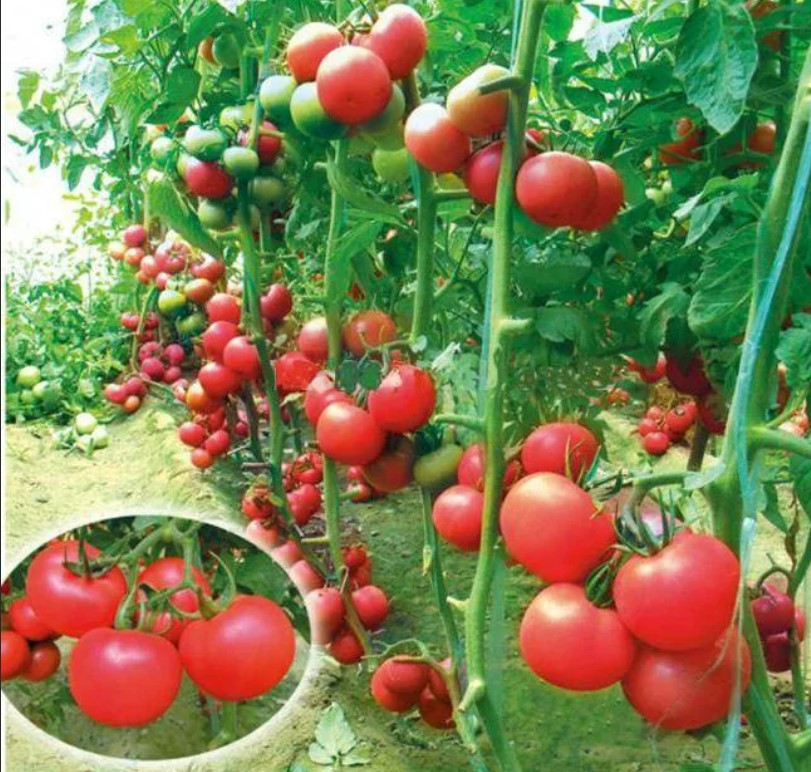
The fruits are round or flattened, and their color gradually changes from green to pink. Their weight ranges from 100 to 140 g, but with proper cultivation, some fruits can reach up to 230 g.
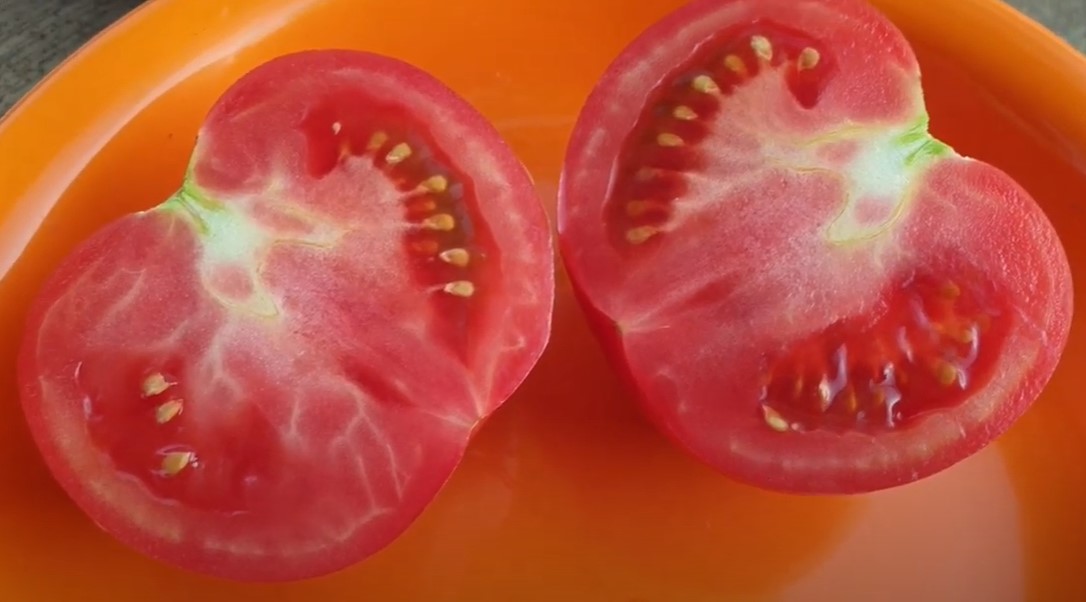
The skin is dense, glossy, and smooth. The flesh is juicy, containing 4 to 6 seed chambers. The flavor is pleasant and slightly sweet.
Ripening time and yield
The Pink Bush tomato is considered early, with the harvest ripening in just 95 days from emergence. The variety is very productive, with proper care allowing you to harvest up to 2.5 kg of tomatoes per plant.
Advantages and disadvantages of the Pink Bush F1 tomato variety
The Pink Bush tomato has a number of advantages and disadvantages, which are presented in the table below.
| Advantages | Flaws |
|
|
Growing the Pink Bush F1 tomato variety
The Pink Bush tomato is considered a relatively easy-to-grow variety, requiring little effort from gardeners. Planting and care procedures for this tomato are described below.
Sowing seeds and growing seedlings
Seeds for planting the Pink Bush variety can only be purchased in stores; you won't be able to collect them yourself, as the crop is a hybrid species.

As a rule, producers carry out preliminary seed preparation themselves; additional soaking is not required.
For planting, you can choose any suitable container, making drainage holes in it. Peat cups are the most convenient; they are ready-to-use.
Seeds are sown in holes or furrows approximately 1 cm deep. If mass planting is being carried out, the distance between seeds should be at least 2 cm.
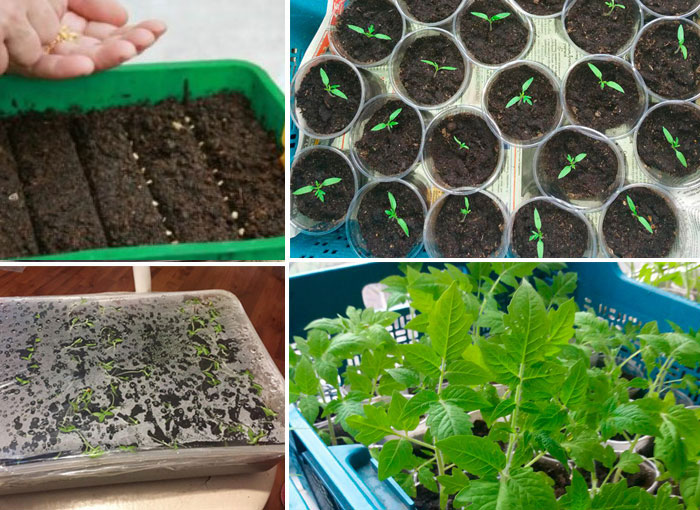
Once all the planting material has been placed in the soil, it is covered with soil. Next, water the container, cover it with plastic wrap or glass, and place it in a warm place.
Remove the covering once tomato sprouts emerge from the soil. At this stage, move the seedlings to a cooler, but well-lit location. If the plants don't receive enough light, the shoots will begin to stretch, so ensure adequate lighting.
Hardening off tomatoes begins 10-14 days before planting. Initially, they are taken outside or left in a room with an open window (but without a draft) for 1-2 hours, then gradually increase the time.
Planting in the ground
Tomatoes are planted in the ground 60 days after sowing. It's important that the soil warms up to 12 degrees Celsius by this time, and there's no risk of frost overnight. Don't delay transplanting, as plants that have developed ovaries or flowers indoors will definitely not bear fruit after transplanting.
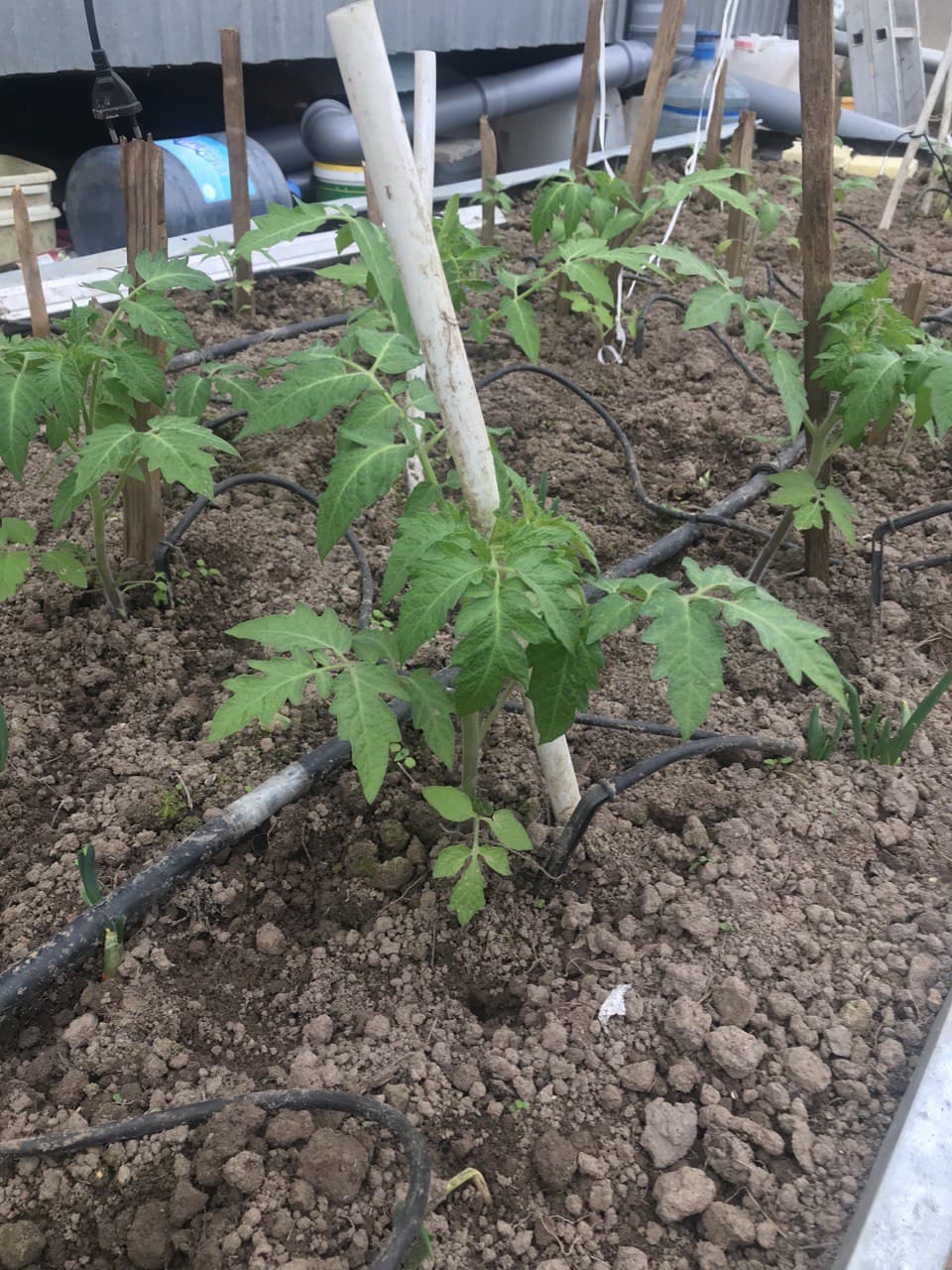
In the fall, add manure to the soil and dig it over. In the spring, dig the soil again, adding superphosphate, level it with a rake, and make 20-cm-deep holes. It's best to arrange the holes in a staggered pattern to make subsequent care easier. A handful of ash mixed with soil can be added to the bottom of each hole.
The tomatoes, along with the root ball, are transferred from the container to the hole, carefully covered with soil, and watered with warm water. If necessary, the plantings can be covered with spunbond overnight if weather conditions are unstable.
As a rule, 4 to 6 bushes are placed per 1 square meter.
Greenhouse care
Greenhouse tomatoes are watered regardless of precipitation, approximately once every three days, unless the weather is unusually hot. A drip irrigation system is most convenient. Each plant requires approximately 5 liters of water.
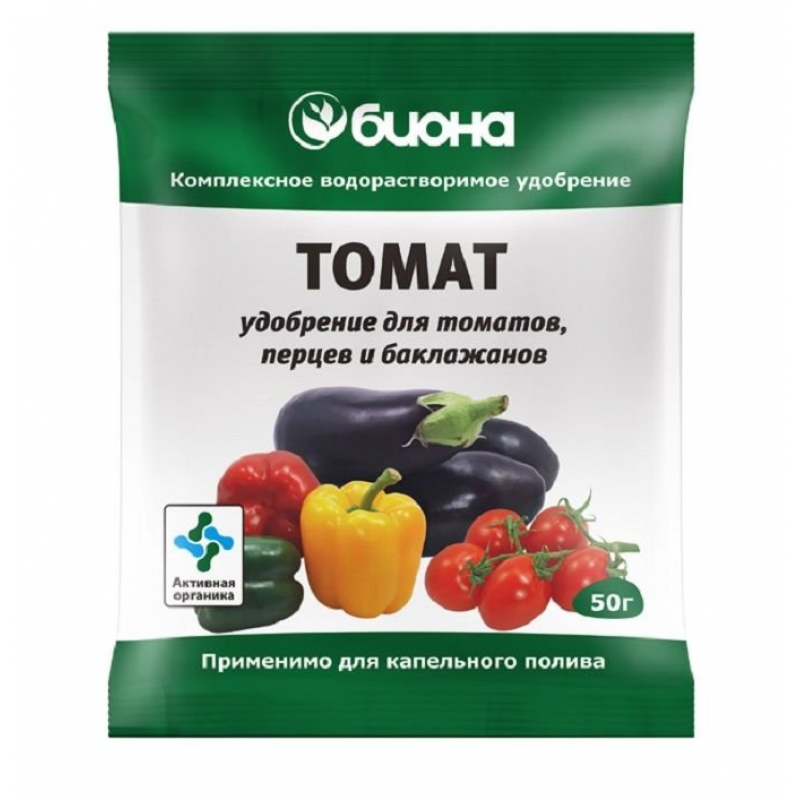
Three times per season, at intervals of 10-14 days, tomatoes are fed with complex fertilizers and treated with Bordeaux mixture.
It is important to remember that Pink Bush tomatoes do not tolerate high humidity well, so the greenhouse must be regularly ventilated.
Outdoor care
In open ground, it is very important to ensure that the tomatoes do not freeze at night at first, so at first they are covered with a special material.
ABOUT greenhouses and hothouses for your garden.
Another important rule: watering depends on weather conditions. Typically, tomatoes are watered 1-2 times a week; immediately after planting, more frequent watering is possible, but it's important to ensure the soil doesn't become overwatered. Watering should be done in the morning or evening sun, when sunlight is at its lowest. Drip irrigation is best to ensure even distribution of moisture throughout the furrows.
How to organize drip irrigation Read on our website.
Fertilize tomatoes 3-4 times per season. Fertilizers are applied after the soil has been moistened; it's best to use a combination fertilizer. At this time, you can also spray the plants with Bordeaux mixture or a Fitosporin solution.
In open ground, it is extremely important to loosen and weed in a timely manner, as weeds attract numerous insects from the outside.
Resistance of the tomato variety Pink Bush F1 to diseases and pests, prevention, control
| Disease or pest | Signs | Prevention |
| Late blight | The leaves become covered with brown spots, around which a whitish coating is visible. | Spraying with Bordeaux mixture or phytosporin at intervals of 10-14 days |
| Slugs | Insects can be seen on bushes and on the ground. | Scatter crushed eggshells or ash around the bushes, use specialized products. |
| Colorado beetle | The beetles and their larvae eat the leaves, leaving only the veins. Yellow-orange eggs are visible on the underside of the leaf. | It's best to collect the pests by hand and destroy them. For large infestations, specialized products such as Tanrek, Green Belt, Tabu, and others can be used. |
| Whitefly | They are mostly found in greenhouses, where moth-like butterflies fly around the bushes; if you shake the plants, the number of individuals increases several times. | For prevention, tomatoes are treated with a soap solution; if the bushes are affected, they are sprayed with insecticidal preparations, for example, Metarizin, Tanrek, Mospilan, and others. |
Harvesting, using and storing the Pink Bush F1 tomato variety
The Pink Bush variety is considered a salad variety, used primarily for eating fresh, in salads, and in main courses. However, some gardeners process the tomatoes into pastes or sauces, and also for canning. It's important to remember, however, that the flavor of hybrid varieties is less pronounced after processing.
The harvest is 95-103 days after the first shoots emerge. Thanks to their thick skin, tomatoes have excellent shelf life. They can be stored in the refrigerator or another suitable cool place for up to 40 days.
Comparison of Pink Bush F1 tomato varieties with other varieties in the table
Please note! How can you easily convert centners/ha to kg/sq.m? Simply divide by 100! For example, the Abakansky Pink tomato yields 400 centners of marketable fruit per hectare. This equals 4 kg per square meter. It's that simple! Also, keep in mind that typically no more than 3-4 plants are planted per square meter. This way, you can calculate the yield per bush. In the case of the Abakansky Pink, it's about 1 kg.
| Variety | Ripening period (number of days from full germination to ripening)
Yield of commercial fruits |
Brief description | Fetus |
| Pink Bush F1 | 90-100 days 227-480 c/ha |
An early-ripening determinate variety for open ground. Suitable for salads. Marketability: 95%. | Round to flat-round, slightly ribbed, medium density, pink, 110-150 g. Excellent taste. |
| Abakan pink | 120 days or more
400 c/ha |
A late-ripening determinate variety for open ground and greenhouses. Requires staking and training. Suitable for salads and processing into tomato products. | Flat-round, slightly ribbed, medium density and pink in color, 200-500 g. Good taste. |
| St. Andrew's surprise | about 120 days
800 c/ha |
A late-ripening indeterminate variety for greenhouses (can be grown outdoors in the south). Suitable for salads, juices, and tomato paste. Seedlings tolerate low light conditions well. | Flat-round, smooth, medium density, pink, 150-230 g. Excellent taste. |
| Big Dipper | 100-110 days
1150-1450 c/ha |
An early-ripening indeterminate variety for open ground and greenhouses. Requires staking and shaping. Suitable for salads. | Flat-round, slightly ribbed, medium density, pink, 210-260 g. Good taste. |
| Pink bull | 110-120 days 385-392 c/ha |
A late-ripening determinate variety for open ground and greenhouses. Suitable for salads. Marketability: 89.5-90.3%. | Large, medium-ribbed, flat-round, pink, 305-310 g. |
| Mushroom basket | 115-120 days
630 c/ha |
A late-ripening, indeterminate, standard variety for open ground and greenhouses. Requires staking and shaping. Suitable for salads. | Flat-round, very strongly ribbed, medium density, pink, 250 g. Good taste. |
| Katya is pink | 80-85 days
1600-1800 c/ha |
An early-ripening determinate variety for open ground. Suitable for salads. Marketability: 84-90%. | Flat-round, medium density, smooth, pink, 120-130 g. Good taste. |
| Pink honey | 111-115 days
380 c/ha (open ground) |
A mid-season determinate variety for open ground and greenhouses. Suitable for salads. Marketability is 96%, and the yield of ripe marketable fruits is 90%. | Round, ribbed, pink, 160-200 g. Excellent taste. |
| Pink elephant | 112 days 620-820 c/ha |
A mid-season semi-determinate variety for greenhouses. Suitable for salads, canning, and processing into tomato products. | Flat-round, fleshy, medium- to strongly ribbed, notched to smooth top, pink, 280 g. Excellent taste. |
| Yusupovsky | 110-115 days
100-1200 c/ha |
A late-ripening, tall, indeterminate variety for greenhouses. Requires staking and training. Suitable for salads, juices, and sauces. | Flat-round, large, fleshy, pink-red, 400-800 g. When grown in open ground, the weight is from 200 g. |
Gardeners' reviews of the Pink Bush tomato variety
These tomatoes are delicious, a joy to grow! They have a sweet flavor, last a long time, and are perfect for pickling and salads.
...The only good thing is the kids. The Pink Bush I planted early is still covered in tomatoes, and there's no C-section yet...
I've been planting it for three years now and am always happy. I use professional seeds from Tumanov; he just bought new ones, but I haven't used them yet. I don't know why, but you're further south, so they should be even better. It's a shame it turned out this way for you. I plant these seedlings before everyone else, so I plant them in the warmest, sunniest spot on the south side.
...Pink Bush—like Polfast in terms of time. And they say it's not that long. Just right...