Evolution is a relatively new potato variety, developed by Dutch breeders. Despite its short cultivation period, it has become a favorite among many gardeners. It's suitable for growing in a variety of climates, requires little maintenance, and boasts early maturity and consistently good yields. Let's take a look at its characteristics.

Content
- 1 Table with characteristics of the Evolution potato variety
- 2 Historical background
- 3 Description
- 4 Nutrients and nutritional value
- 5 Advantages and disadvantages
- 6 Landing features
- 7 Care
- 8 Protection from diseases and pests
- 9 Harvesting and storing the Evolution potato variety
- 10 Top.tomathouse.com's tips on growing the Evolution potato variety
- 11 Comparison of the Evolution potato variety with other varieties in the table
- 12 Reviews of the Evolution potato variety
Table with characteristics of the Evolution potato variety
|
Characteristic |
Description |
|
General information |
Mid-early potato. Bushes are medium to tall. Leaves and flowers are large. |
|
Ripening time |
90-100 days. |
|
Productivity |
241-421 c/ha |
|
Marketability |
76-97%. |
|
Shelf life |
95%. |
|
Starch concentration |
11.4-15.6%. |
|
Color of pulp |
Light yellow. |
|
Peel color |
Red. |
|
Weight of commercial tubers |
83-144 BC |
|
Number of tubers on one bush, pcs. |
9-15. |
|
Taste characteristics |
Good and excellent. |
|
Class and purpose in cooking |
"B" - Lightly cooked, good for frying, baking, and in soups and salads. It's rarely used for pureeing. |
|
Suitable regions for growing |
Northwestern, Central, Volga-Vyatka, North Caucasian, Ural, West Siberian, Lower Volga |
|
Resistance to diseases and pests |
Mosaics, cancer, nematodes |
|
Growing specifics |
Adapts to various types of soil, but prefers sandy soil. |
|
|
2015 |
|
Country of origin |
AGRICO UA (Netherlands). |
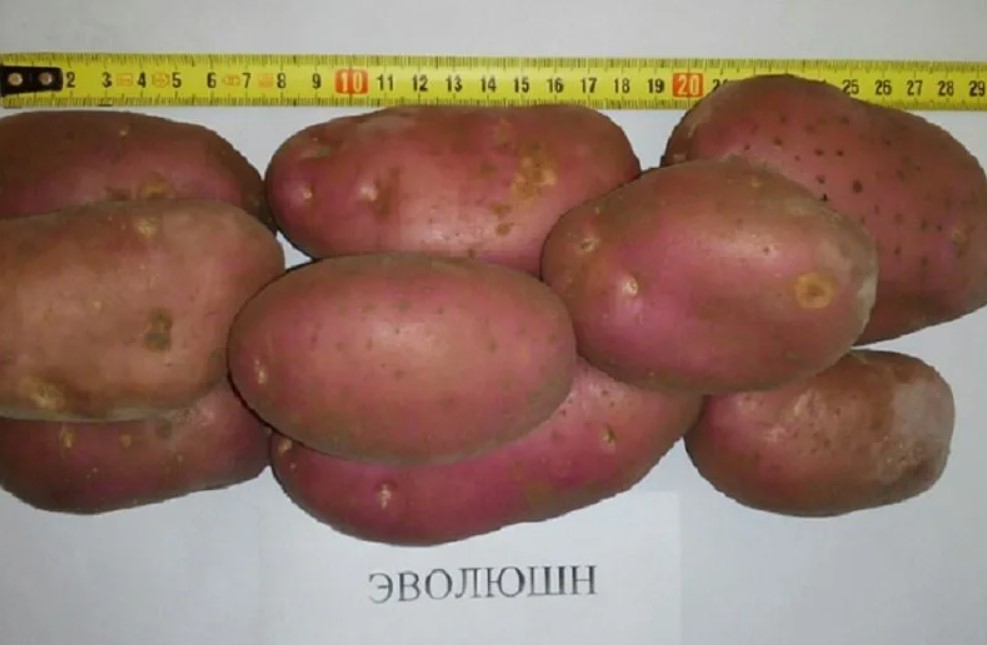
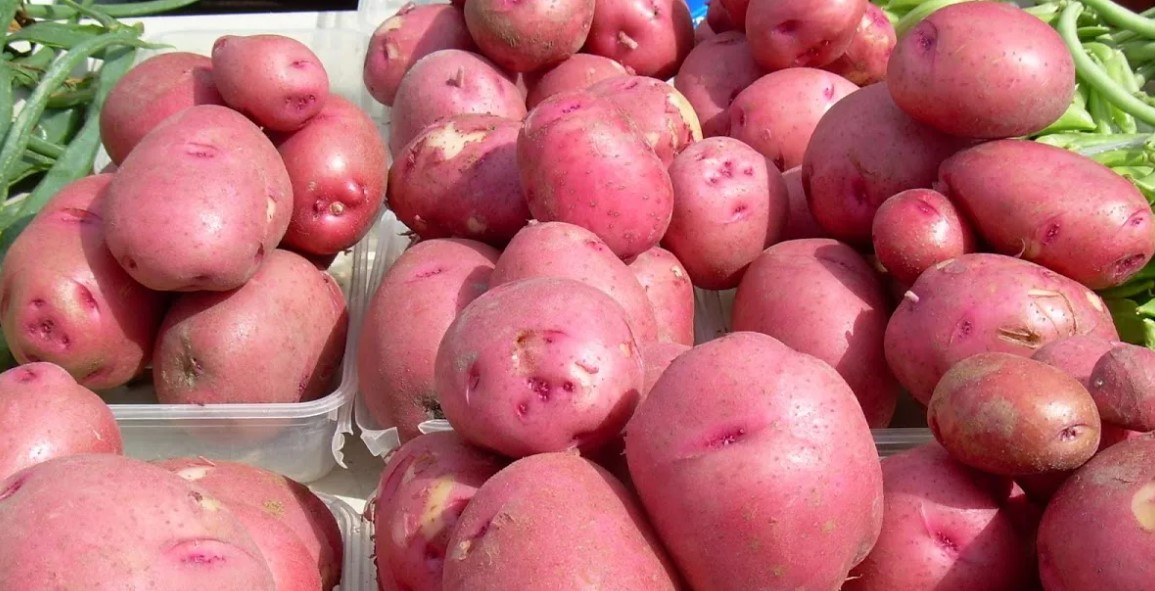
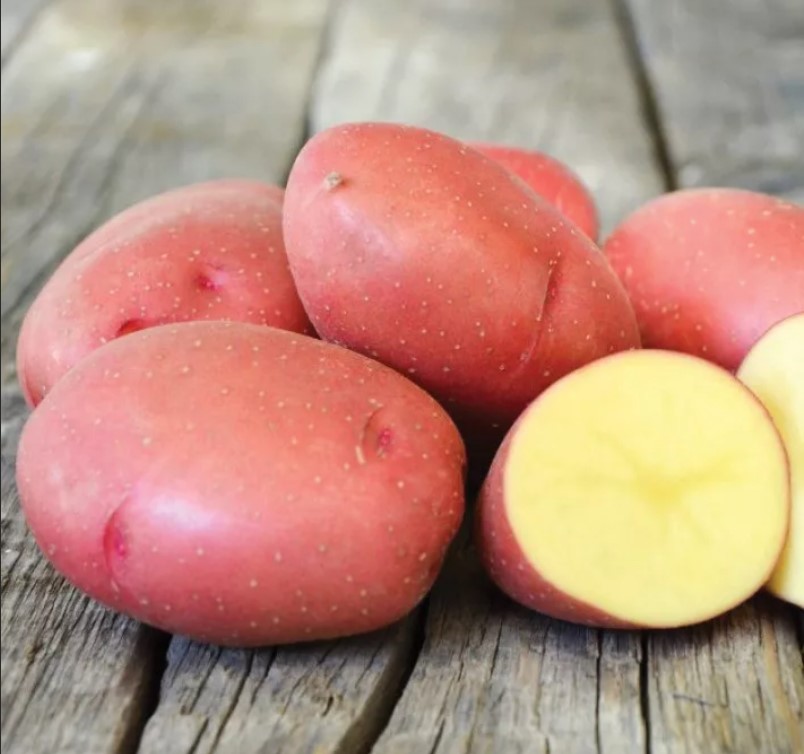
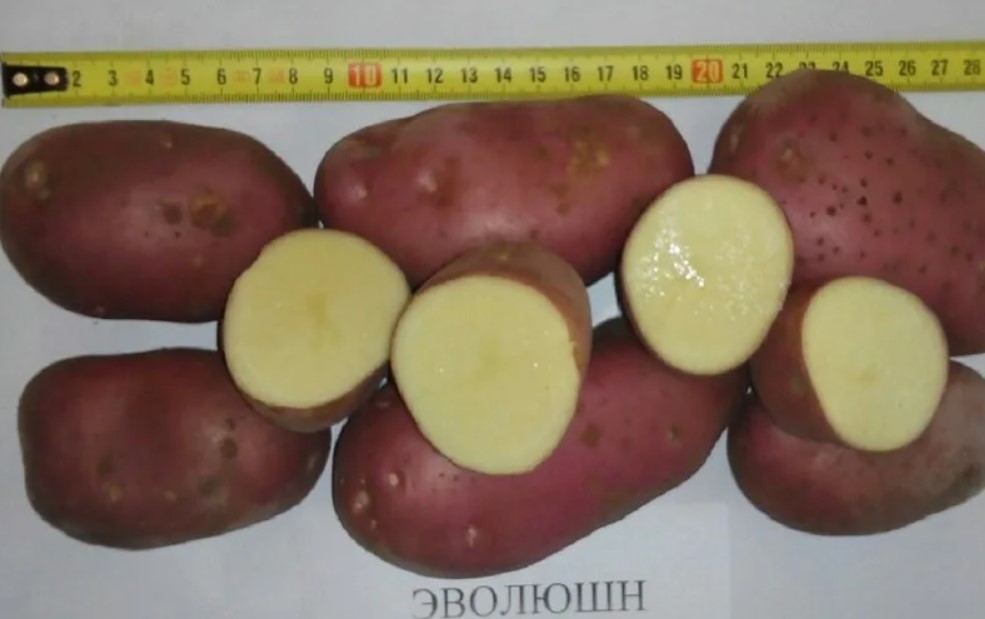
Photo gallery of the Evolution potato variety
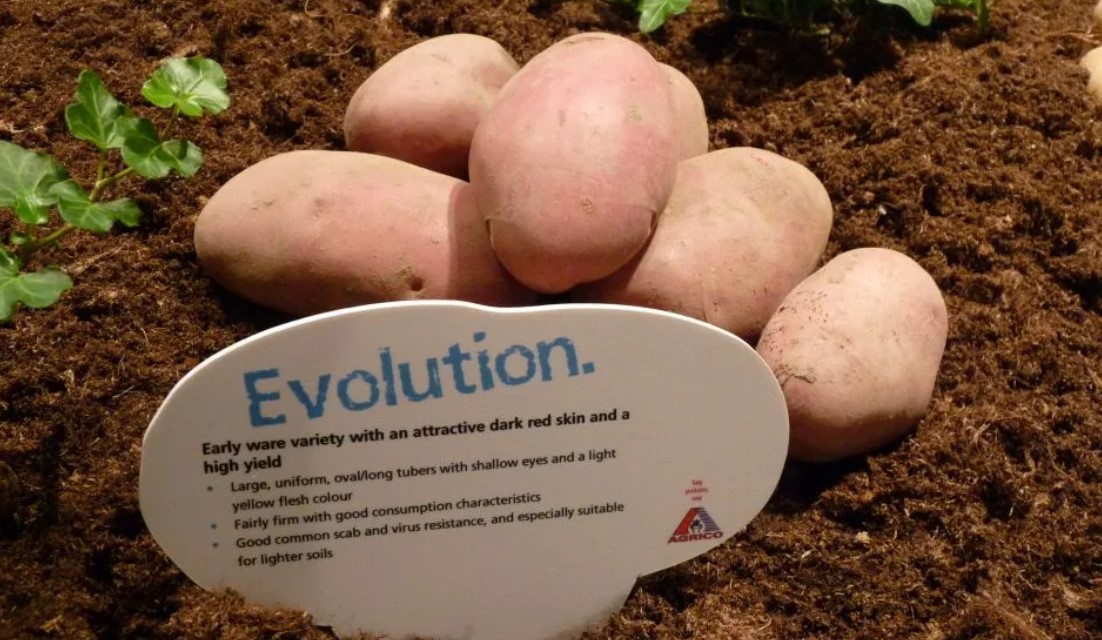
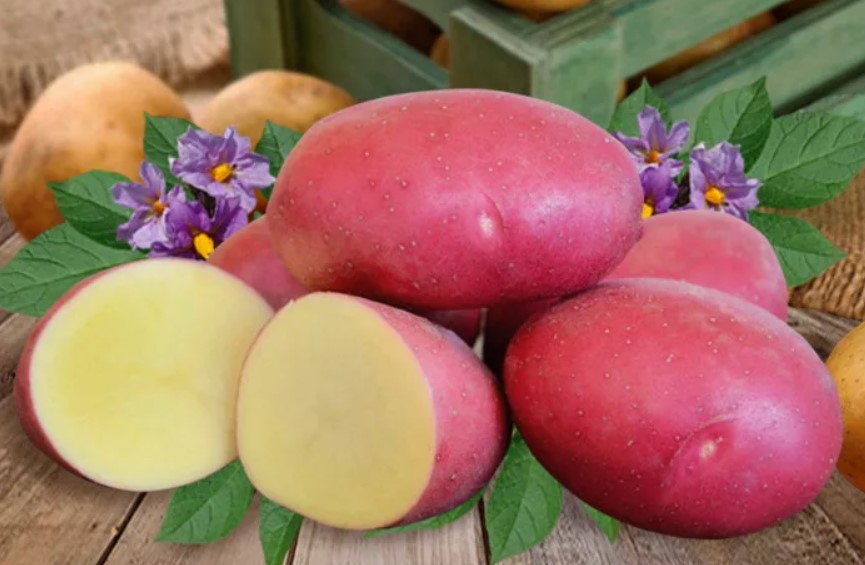
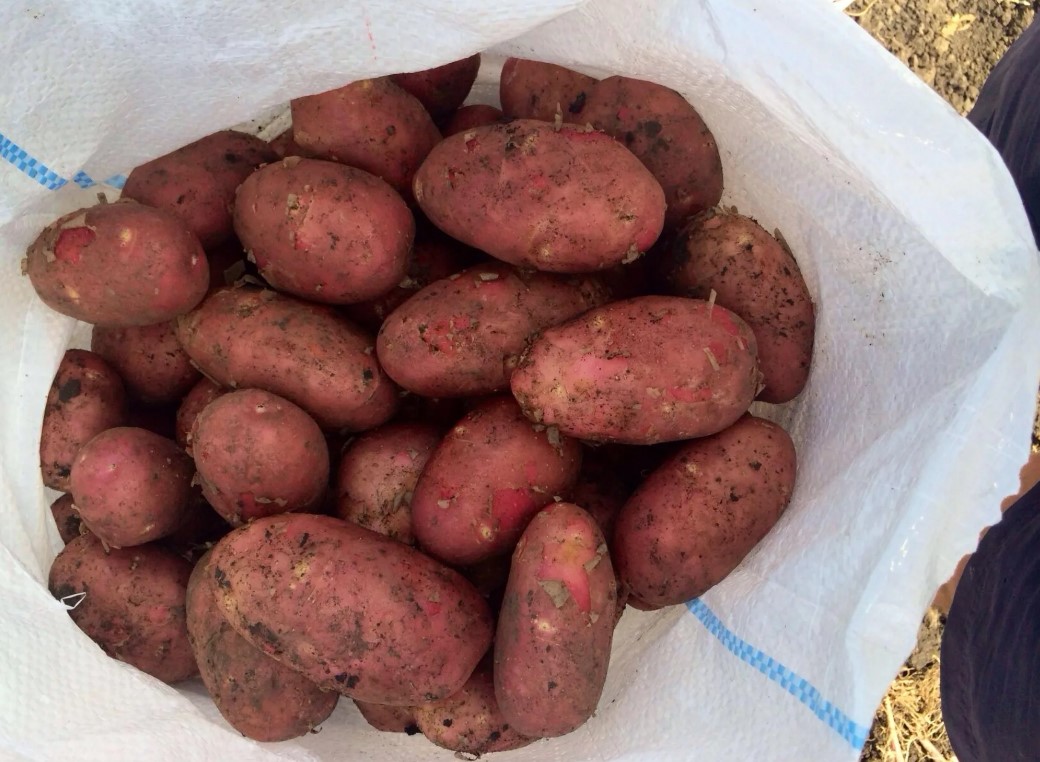
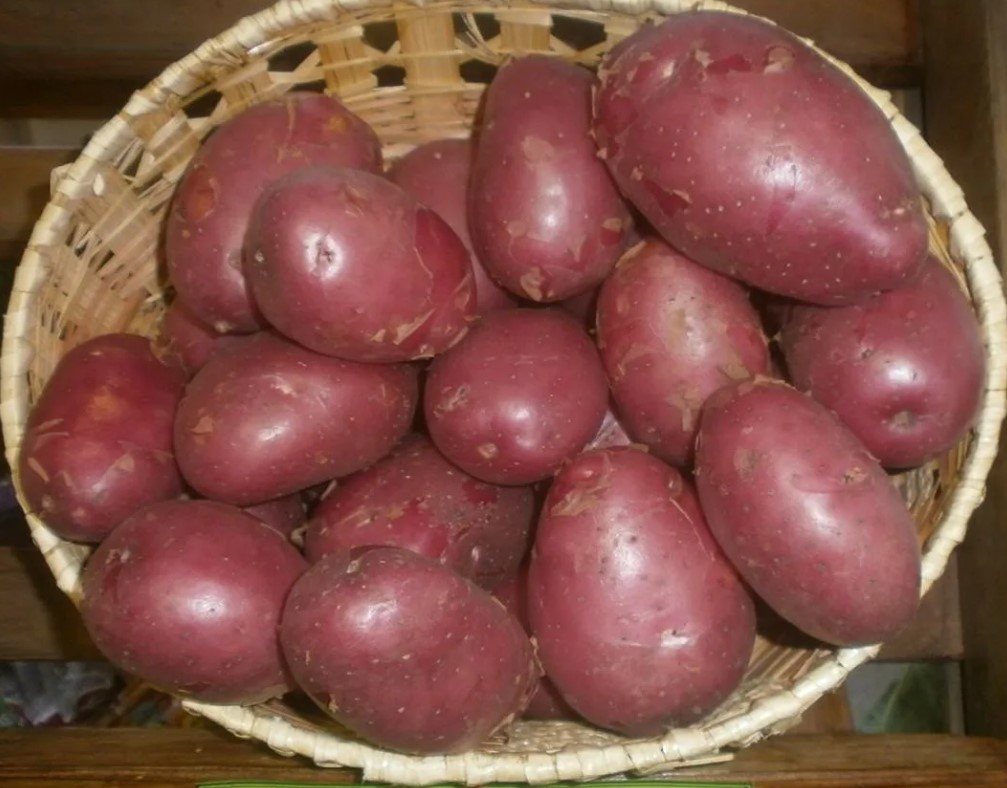
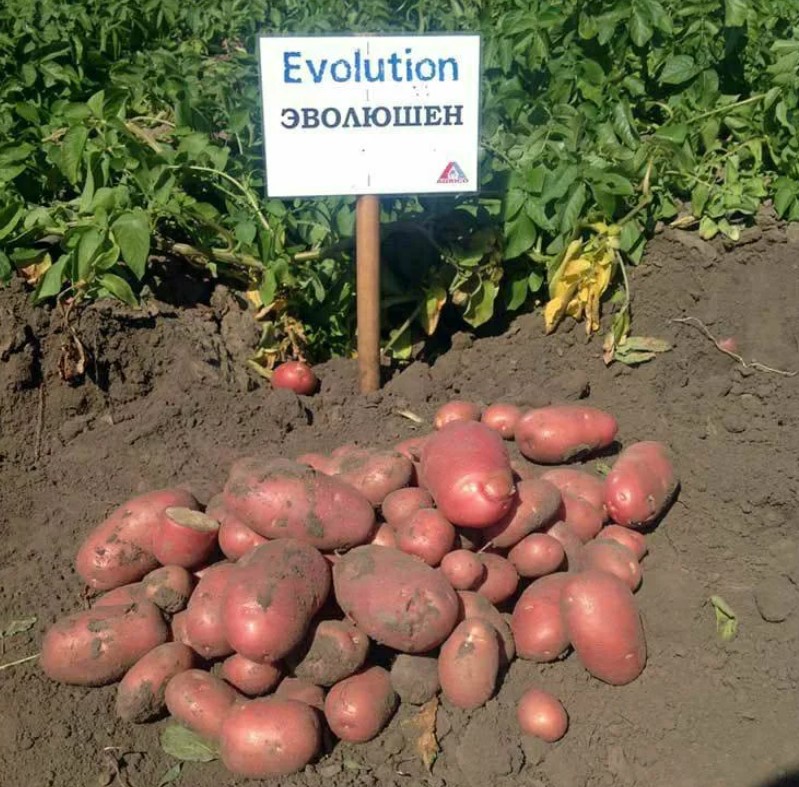
Historical background
In 2011, Dutch specialists at Agrico UA developed a new potato variety, Evolution. It adapts well to a variety of climates. Even with minimal care, it can still produce a good yield. Consequently, this crop became popular with farmers and quickly spread worldwide. Demand for the variety in Russia peaked in 2015, when it was registered under the name "Evolution."
By the way, a tomato with an identical name, but without the letter “e”, is listed in the registry.
Description
When choosing the right variety, many people first look at the appearance of the tubers. One of the factors that has contributed to the rapid growth in popularity of the Evolution potato worldwide is its marketability.
Bushes
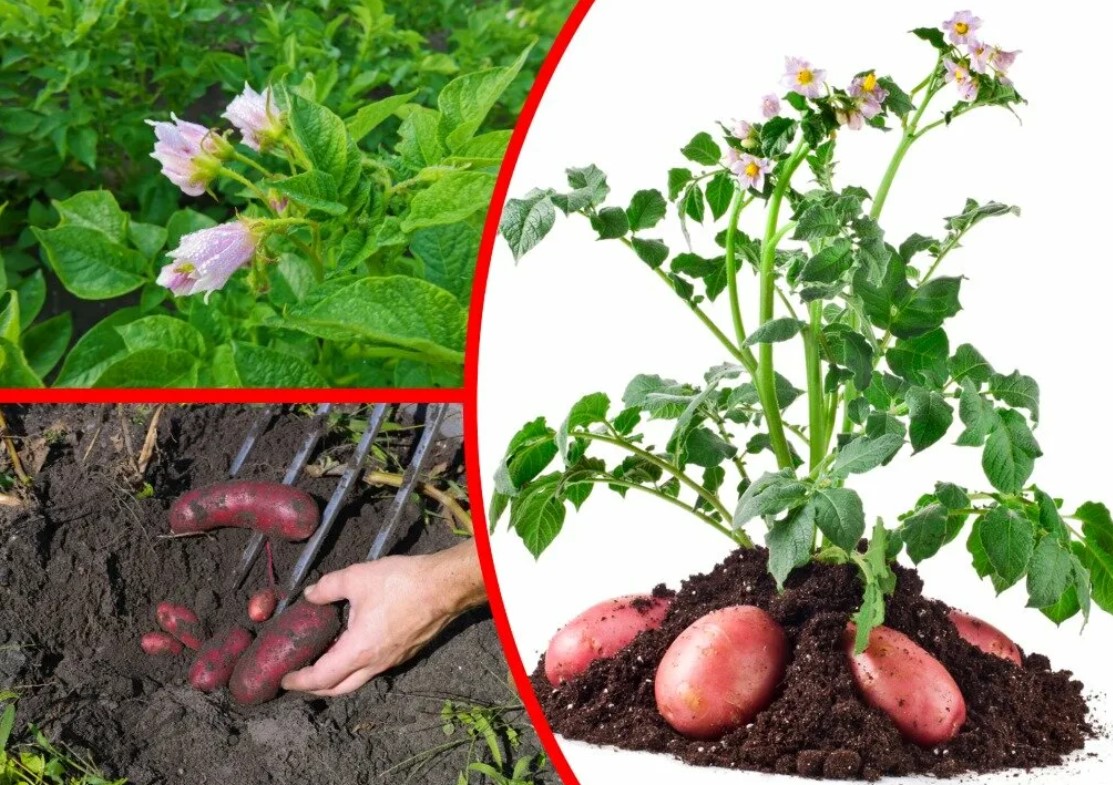
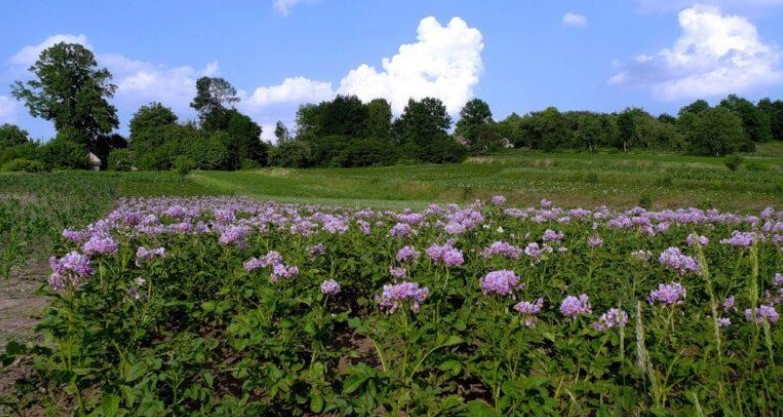
Quite tall, they can reach 0.7-0.8 m. The stems are densely covered with leaves, and can be semi-erect or prostrate. The leaves are large and bright green. The inflorescences are bright purple, sometimes with a lilac-burgundy hue. They produce numerous flowers, but they fall off after just 3-4 days.
Tubers
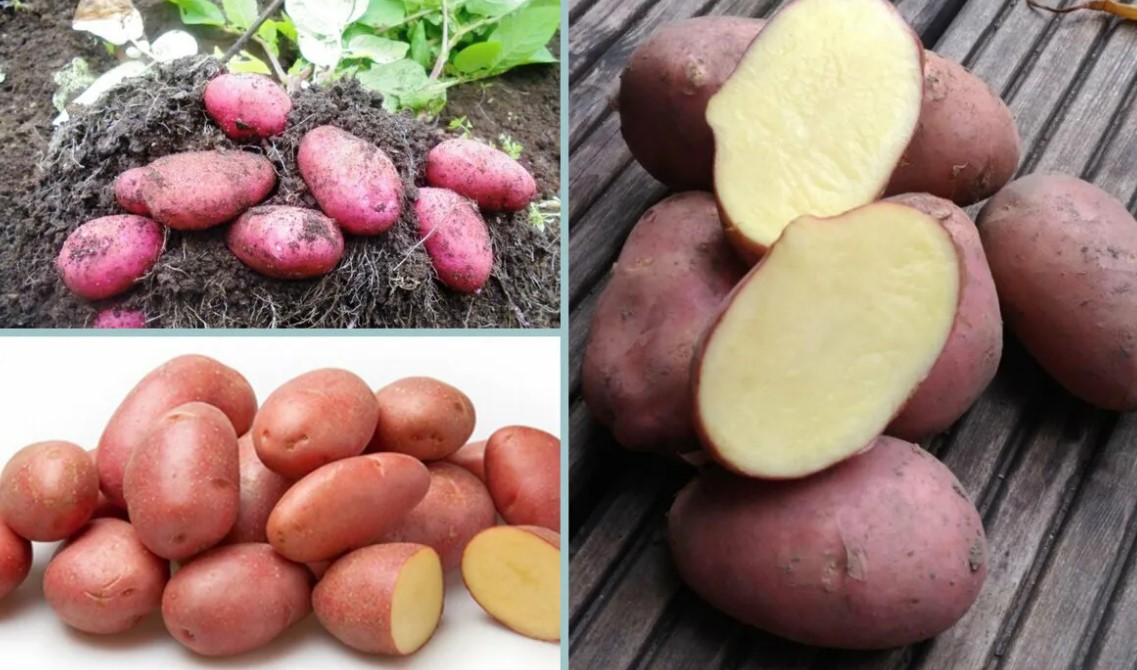
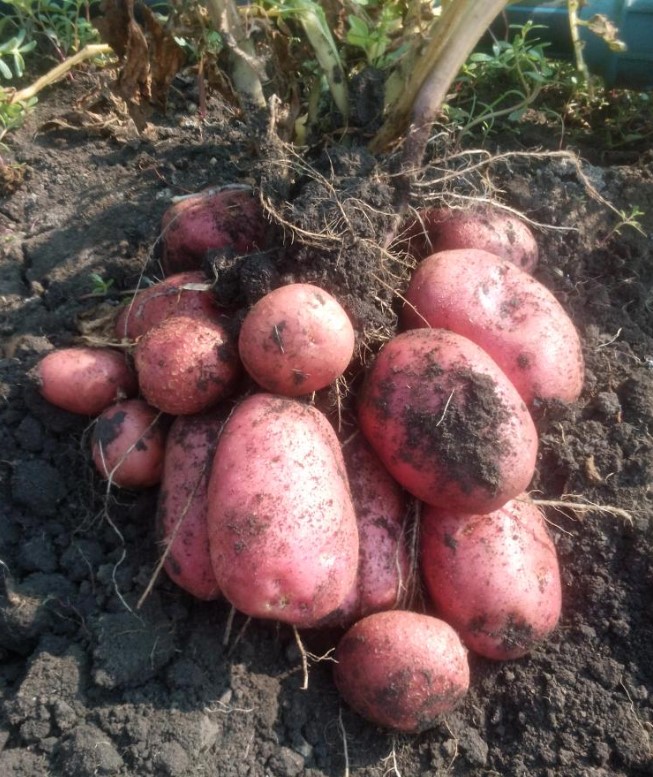
Weighing 113-150 g, they can vary in shape from oval to elongated. The skin is reddish-pink. The flesh is moderately firm and creamy-yellow. They retain their shape well when cooked.
Nutrients and nutritional value
The main indicator of potato flavor is its starch content. In Evolution, its content ranges from 9-15%. The pulp also contains minerals. The fruit has a universal purpose.
Productivity, ripening time
Belongs to the mid-early variety. The period between full germination and harvest is 117 days.
The exact timing of potato harvesting depends on weather and climate. In the south, they are considered early-ripening varieties, and will mature in 70-85 days.
A bush yields approximately 1-2 kg of tubers. 400-450 centners can be dug from 1 hectare.
Do you want to know? How to determine the best time to dig up potatoes And What tools can be used to do this quickly and conveniently, and you can do them yourself?.
Resistance to diseases and pests
|
Name |
Durability index |
|
Virus (PVY) Y |
Moderate |
|
Virus (PVX) X |
|
|
Golden nematode |
High |
|
Potato crayfish |
|
|
Wrinkled mosaic |
|
|
Phytophthora of foliage |
Average susceptibility |
|
Tuber blight |
|
|
Common scab |
Moderate stability |
What regions is it intended for?
Suitable for the European part of Russia, Western Siberia, and the Urals. This variety also thrives in other regions of the country.
Advantages and disadvantages
Let's consider the advantages of this variety, as well as the possible difficulties in growing it.
|
Pros |
Cons |
|
High yield rate |
Lack of drought tolerance |
|
Attractive appearance |
Rapid shedding of inflorescences |
|
Pleasant soft taste |
Degeneration of seed material (it must be changed every 2-3 years) |
|
High marketability and shelf life |
|
|
Moderate starch ratio |
|
|
Strong immunity |
|
|
Unpretentiousness |
|
|
Adaptation to different climatic conditions |
Landing features
The tubers grow well and don't require any special preparation, so even a beginner can handle them. To plant them correctly, simply time them accordingly, do some light soil preparation, and maintain the proper spacing between the tubers.
Requirements for the landing site and its preparation
The soil should be slightly alkaline. Acidic soil will negatively affect the roots, significantly reducing yield.
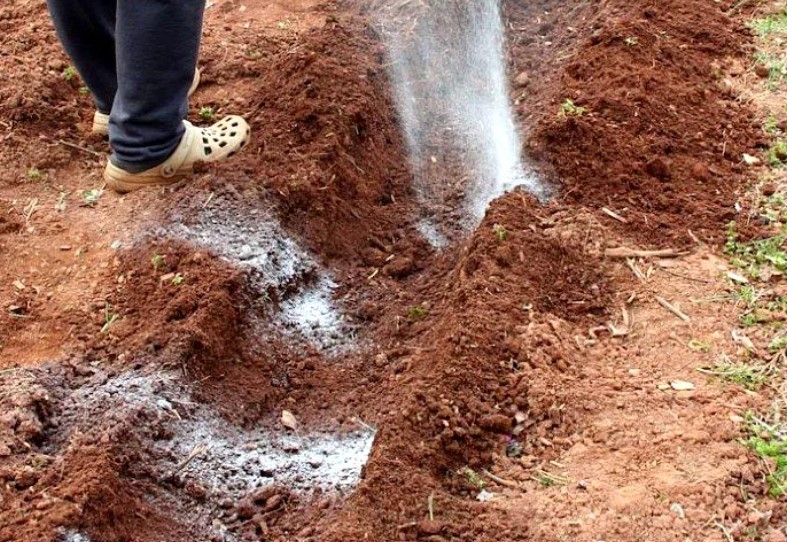
How to properly prepare potato beds:
- Remove all plant debris and dig up the area.
- Apply a complex fertilizer that simultaneously contains phosphorus, potassium and magnesium.
- Loosen the beds before planting.
For reference! The highest yields are observed in loose, sandy soil.
Selection and preparation of planting material
No pre-germination required.
It is enough to do the following:
- Select medium-sized tubers up to 7 cm in length.
- Treat the planting material with a fungicide to prevent infectious diseases.
Important! Only healthy tubers, free of rot and blemishes, should be used for planting. They should not have any mechanical damage.
Planting times and rules
Potatoes tolerate low temperatures well, so planting can begin as early as the first half of May. The key is for the soil to warm to 8°C at a depth of 15 cm. The air temperature should be at least 12°C.
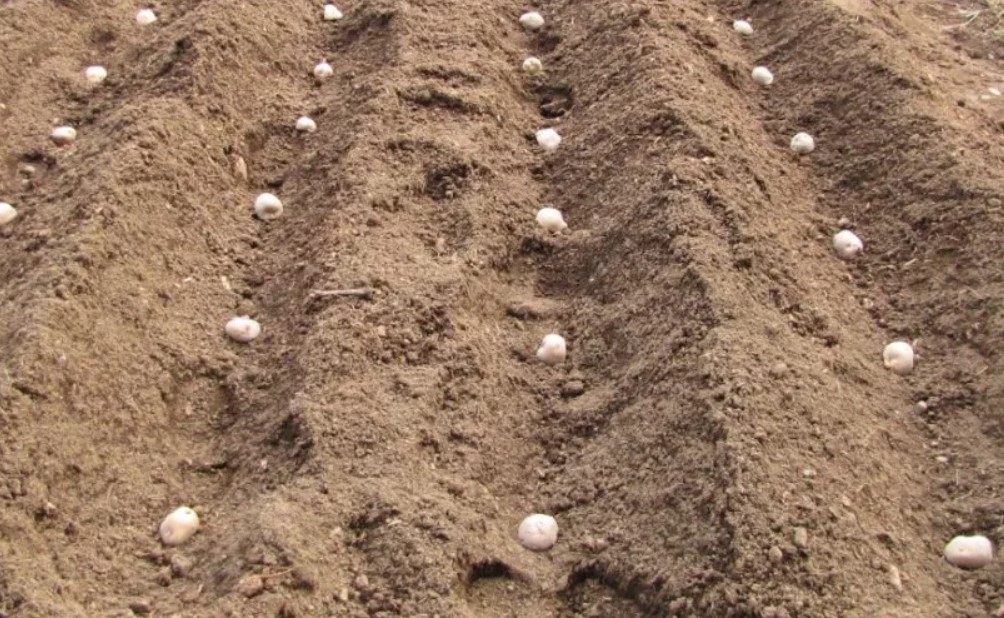
The landing algorithm will be standard:
- Dig planting holes about 6 cm deep. The distance between them should be 30 cm, and between rows – 75 cm.
- Add a pinch of humus or bird droppings to each hole.
- Place the seedlings on top of the fertilizer. If they have sprouts, they should point upward.
- Fill with soil, level the surface.
Helpful tip! For rapid growth, the crop requires sunlight, so it's recommended to arrange the beds in a north-south direction.
Care
This variety doesn't require any specific cultivation techniques. Even a novice gardener can grow it.
Watering
Watering is only necessary during prolonged droughts accompanied by high temperatures. Otherwise, natural precipitation is sufficient. Basic watering guidelines:
- The first time it is carried out is 20 days after emergence of seedlings.
- Water for the second time before flowering.
- The third time, watering is carried out at the peak of flowering.
- The last time watering is done after flowering has finished.
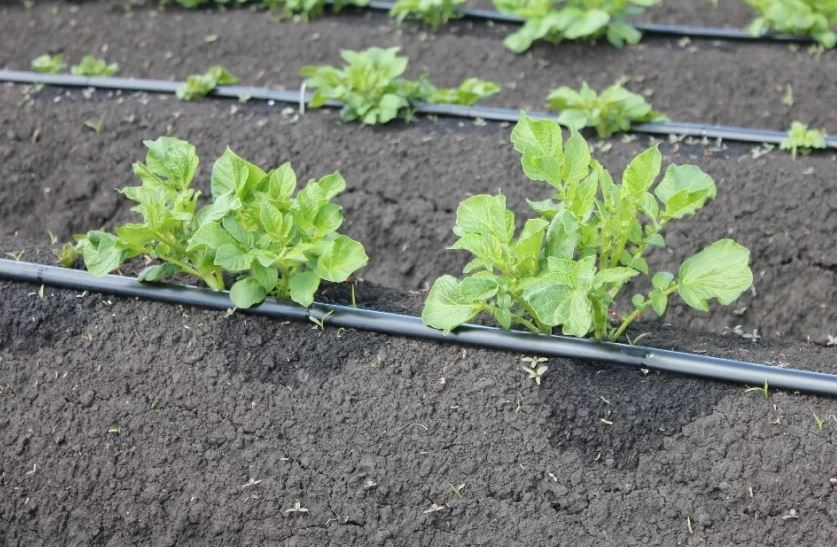
It is recommended to use drip systems to moisten potatoes.
Top dressing
If nutrient mixtures were already added to the soil before planting, there's no need to reapply them. Excess fertilizer is even worse than too little. This is especially true for nitrogen. An excess of this element will force plants to devote all their energy to growing tops, resulting in a meager harvest. You can simply sprinkle wood ash between the rows. This prevents the appearance of Colorado potato beetles.
Loosening, weeding
The following procedures must be carried out:
- Weed control. It's especially important to prevent weed growth from the moment seedlings emerge until budding begins.
- Loosening the soil. This procedure improves soil aeration. It should be performed after rain or watering.
Helpful tip! It's not recommended to neglect mulching your garden beds. This will help retain moisture in the soil longer, prevent weeds from growing, and protect against overheating and freezing.
Hilling
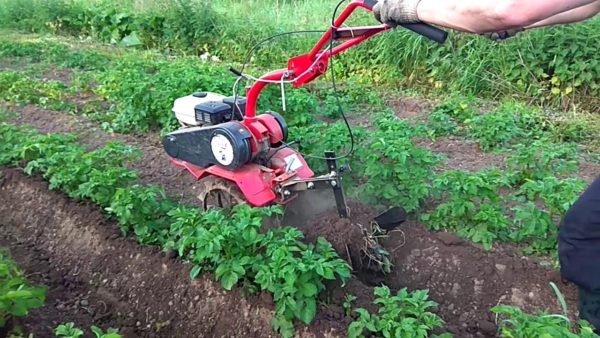
This allows the tubers to form a nest, has a beneficial effect on the root system, and prevents weed growth and drying out. The first treatment is performed when the bushes reach 20 cm. The second treatment is performed 2-3 weeks later.
Protection from diseases and pests
|
Disease, pest |
Characteristic |
Prevention, treatment |
|
Phytophthora of the aboveground part and tubers
|
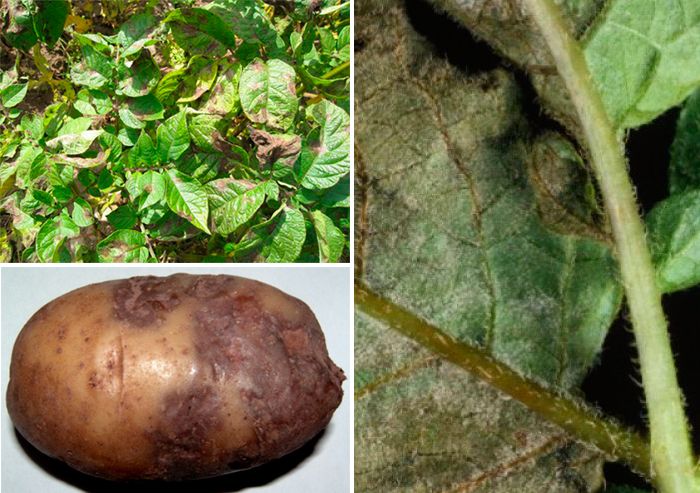
The disease is promoted by excessive moisture, accompanied by low air temperatures. Dark spots appear on the leaves, which then turn brown and become covered with a whitish coating. |
To save the crop, treatment with Bordeaux mixture or copper sulfate is required. Prevention consists of treating planting material, observing crop rotation and agricultural practices. |
|
Colorado beetle
|
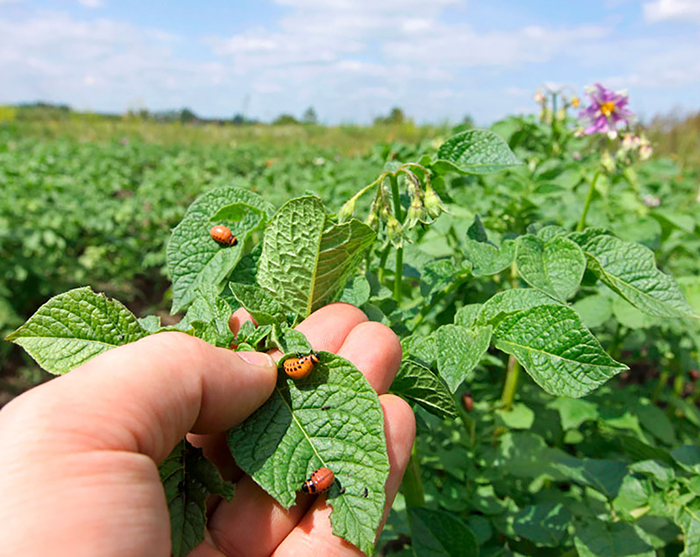
It lays eggs on bushes, from which larvae emerge. They consume the green mass, causing crop yields to decline. |
To control insects, the crop must be regularly inspected, adult beetles, larvae, and eggs must be collected by hand, and destroyed with a saline solution. If the infestation is severe, specialized chemicals must be used. Prevention consists of preliminary treatment of tubers, compliance with watering rules, loosening and hilling of bushes. |
Harvesting and storing the Evolution potato variety
You can determine that it is time to start harvesting potatoes by the following signs:
- the tops began to dry out and fell down by 1/3;
- the skin has become dense and tolerates mechanical stress well (to check this, you can dig up one bush);
- The growing season has come to an end.
The tubers are dug up with a shovel or pitchfork, then collected by hand. If any potatoes from last year remain in the soil, they should also be dug up, as they will become a source of food for pests.
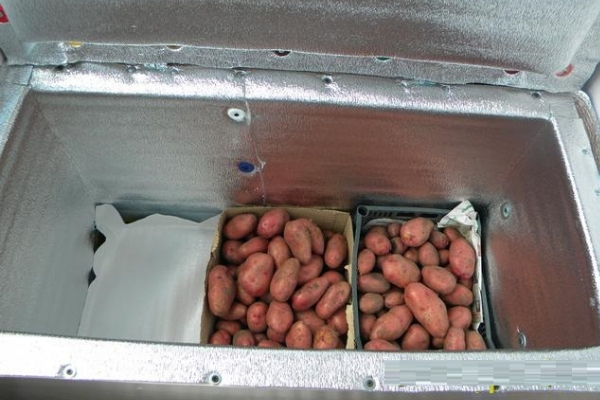
After harvesting, store the potatoes in a dark place for three days. Then, sort them, discarding any diseased or damaged ones. Provided the harvest is kept at a temperature of 3 to 5°C and humidity of 85–90%, it will keep until spring.
More details about storing potatoes Read on our website.
Top.tomathouse.com's tips on growing the Evolution potato variety
To obtain a bountiful and high-quality harvest, it's important to control soil moisture levels. Avoid overwatering and avoid allowing the soil to dry out. This will cause the tubers to stunt and spoil.
It's easier to prevent any disease or pest infestation than to treat it later. Therefore, preventative measures should not be neglected. If your plants are infected, they should be treated with specialized products.
Comparison of the Evolution potato variety with other varieties in the table
| Variety | Ripening period (number of days to maturity) | Starch (%) | Yield (c/ha) | Weight of tubers (g)
Number of tubers per bush |
Shelf life (%) |
| Evolution | Mid-early** | 16-18.7 | 420-590 | 70-140
9-15 |
92 |
| Red Scarlett | Early ripening* | 10.1-15.6 | 164-192, 270 | 56-102
up to 15 |
98 |
| Treasures | Mid-season*** | 12-18 | up to 650 | 95-250
12-18 |
94 |
| Banker | Mid-early** | 15-16 | 200-350 | 70-160
10-15 |
90 |
| Luck | Early ripening* | 11-15 | 420-430 | 100-150
10-15 |
88-97 |
| Uladar | Early ripening* | 11.5-17.8 | 127-353 | 91-140
6-11 |
94 |
| Unique | Mid-early** | 13 | 320 | 400-500
10-14 |
96 |
| Sarpo of the world | Late-ripening**** | 14-17 | 350-360 | 75-140
6-11 |
94 |
| Favorite | Mid-season*** | 12.6-16.4 | 420 | 101-136
6-12 |
93 |
| Adretta | Mid-early** | 13-18 | 450 | 100-150
10-25 |
95 |
*Early ripening – 50-65 days.
**Mid-early – 65-80 days.
***Mid-season – 80-95 days.
****Late ripening – 110 days or more.
Reviews of the Evolution potato variety
Evolution Potato. An excellent, productive potato. The average yield is 1:12. Beautiful, uniform, and delicious. However, it has a short dormancy period, plus it degenerates very quickly (maybe a virus is causing this), so there aren't many good potatoes to choose from for planting next year. But! I buy and plant them every year. I have enough for myself and to sell, so I can use the money to buy seed for next year's planting. It loves water.
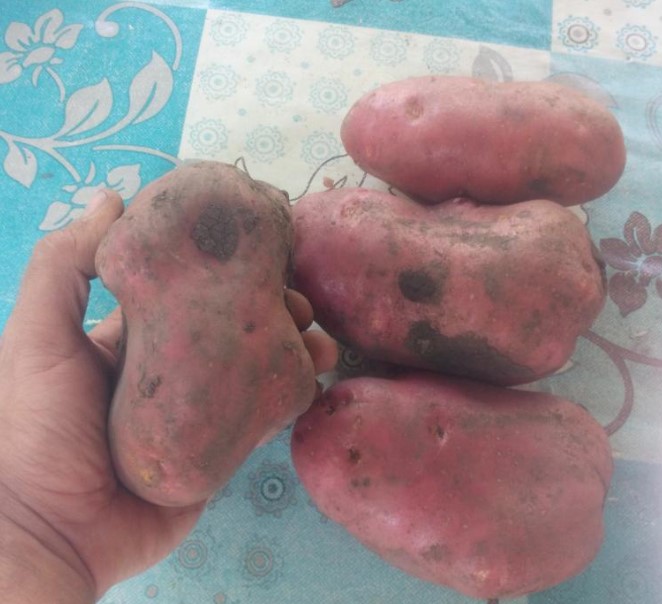
Potato Evolution (Solanum tuberosum L.) Included in the register for the Northwestern (2), Central (3), Volga-Vyatka (4), North Caucasian (6), Ural (9) and West Siberian (10) regions. Mid-early, table variety. The plant is of medium to tall height, intermediate type, semi-erect to spreading. The leaf is large to very large, intermediate, green to dark green. The corolla is large. The intensity of the anthocyanin coloration on the inner side of the corolla is strong. Marketable yield is 241-421 c/ha, at the level of the Elizaveta standard and 46 c/ha higher. Maximum yield is 548 c/ha, at the level of the standard (Vologda region). The tuber is elongated-oval with small eyes. The skin is red. The flesh is light yellow. Marketable tuber weight is 83-144 g. Starch content is 11.4-15.6%. Good flavor. Marketability is 76-97%. Shelf life is 95%. Resistant to the potato wart pathogen and the golden potato cyst nematode. According to the All-Russian Research Institute of Phytopathology, it is moderately susceptible to the late blight pathogen affecting the tops and tubers. According to the cultivar's originator, it is resistant to rugose mosaic.
Year of inclusion in the register of admitted: 2015
Region of admission: North-West, Central, Volga-Vyatka, North Caucasus, Ural, West Siberian
Originator(s): AGRICO UA
POSTBUS 70, 8300 AB EMMELOORD NETHERLANDS
Evolution Potato. General characteristics: A mid-early, intensively cultivated Dutch table potato variety with large, elongated oval tubers. Resistant to mechanical damage. Primarily used for early potato harvests. Adapts to various soils and climates. Due to its low maintenance requirements, it is considered a variety for professional potato growers.
Ripening period (vegetation): 65-85 days.
Starch content: 16-18.7%.
Weight of commercial tubers (grams): 70-140.
Number of tubers in a bush: 9-15 pieces.
Yield (c/ha): 420-590.
Consumer qualities: low cooking time, culinary type (AB), suitable for preparing salads, soups and fried potatoes.
Keeping quality (ability to store): 94% (short dormant period).
Peel color: red.
Flesh color: light yellow.
Preferred growing regions (RF): any soil and climate (sandy soil is recommended).
Disease resistance: the variety is resistant to potato nematode and tuber blight, moderately resistant to Yntn virus and scab, and susceptible to late blight of tops.
Growing instructions: Germination is not necessary, but a reduced nitrogen fertilizer rate is preferred. The highest yield is achieved in sandy soils. Tubers tend to germinate quickly, so storing the seed at a low temperature is recommended. Highly sensitive to zenkor. The planting rate is 45,000 plants per hectare (35 x 55 mm). Watering is required during the dry season.
Other: the originator of the Evolution potato variety is Agrico (Netherlands).