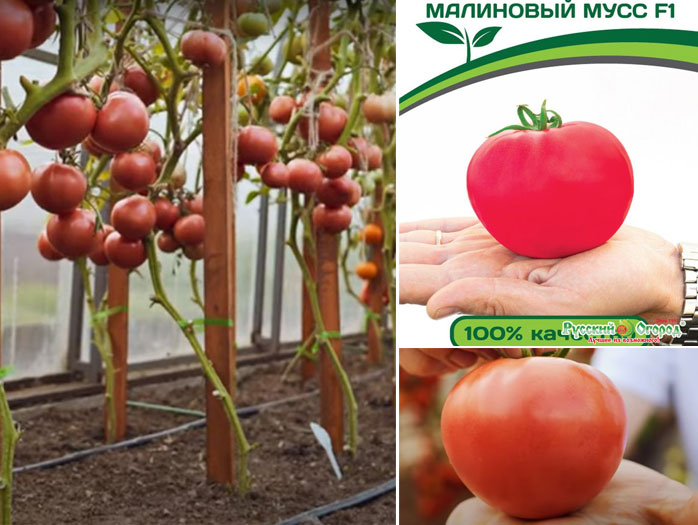
Raspberry Mousse is a completely new pink-fruited tomato variety that recently hit the shelves. Unlike other pink varieties, this tomato ripens quite early, and the yield is in no way inferior to other similar tomatoes in taste and volume.
Content
- 1 Table with characteristics of the Raspberry Mousse tomato variety
- 2 Photo gallery of the tomato variety Raspberry Mousse F1:
- 3 The origin of the Raspberry Mousse F1 tomato variety
- 4 Detailed description of the Raspberry Mousse F1 tomato variety
- 5 Advantages and disadvantages of the Raspberry Mousse F1 tomato variety
- 6 Growing the Raspberry Mousse F1 tomato variety
- 7 Using Raspberry Mousse F1 tomatoes
- 8 Comparison of the Raspberry Mousse F1 tomato variety with other varieties in the table
- 9 Gardeners' reviews of the Raspberry Mousse F1 tomato variety
Table with characteristics of the Raspberry Mousse tomato variety
| Characteristic | Description |
| Description | Early-ripening, hybrid, determinate variety. Suitable for open ground and plastic greenhouses. |
| Ripening period | 90-95 days |
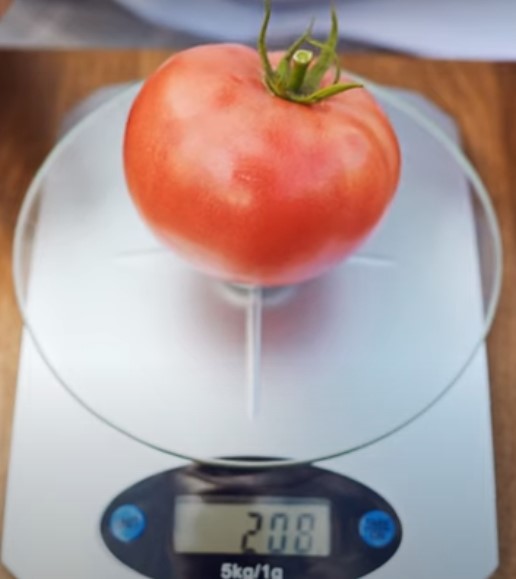
| Fruit weight | 200-300 g |
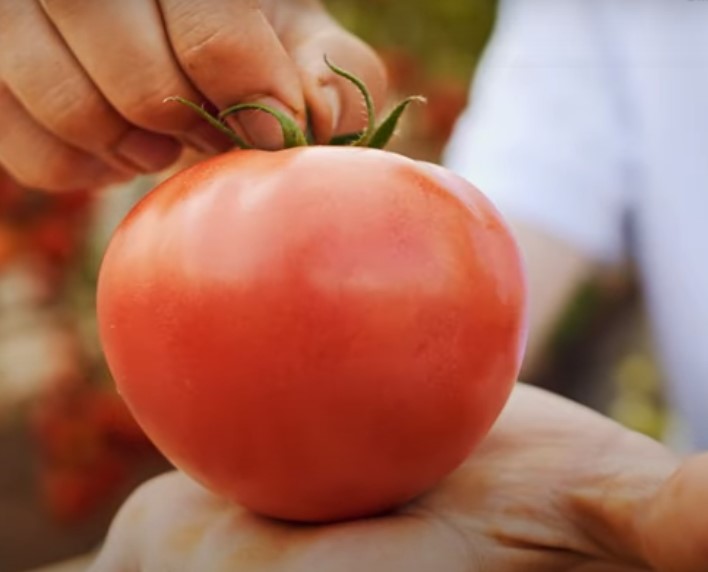
| Description of the fruit | The tomatoes are large, round, pink in color, with 4-6 seed chambers inside. |
| Productivity | 1600-1700 c/ha in open ground, in greenhouses it can increase to 2200 c/ha. |
| Usage | A salad variety, suitable for processed tomato preparations (adjika, sauces, ketchup, etc.). It is rarely used for whole-fruit canning. |
| Preferred growing regions | It can be grown with equal success in different regions of the country. |
| Disease resistance | Resistant to fusarium, alternaria, and mosaic. If cultivation practices are not followed, it can be affected by late blight. |
| Agricultural technology | When grown, the bush forms 3-4 shoots. Staking and support for the clusters are recommended. |
| 2021 | |
| Country of origin | Vasily Ivanovich Blokin-Mechtalin |
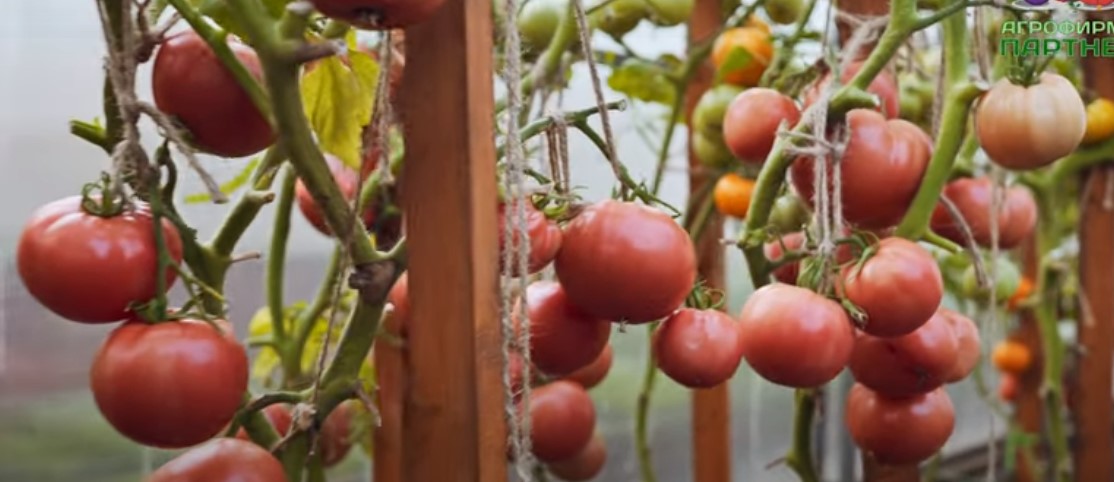
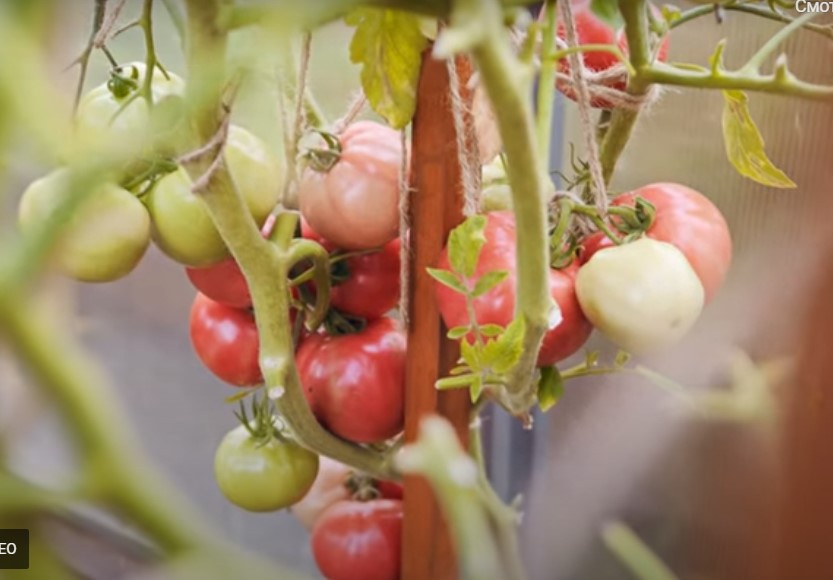
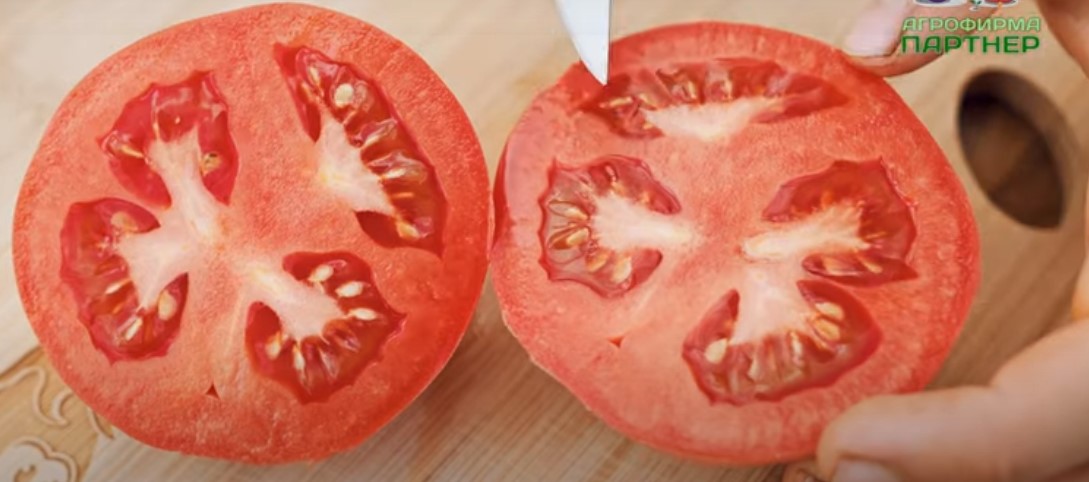
Photo gallery of the tomato variety Raspberry Mousse F1:
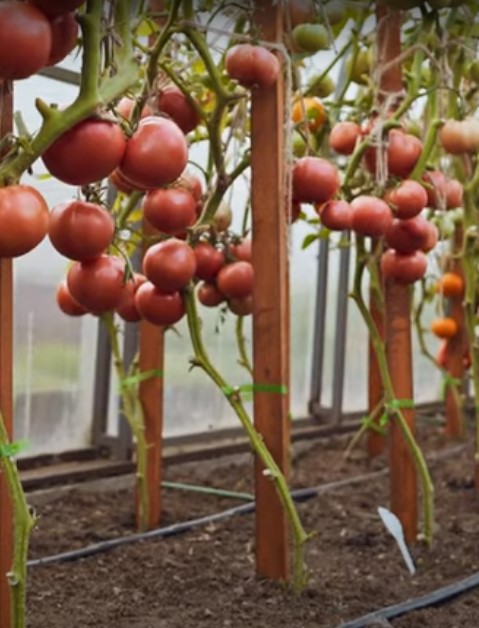
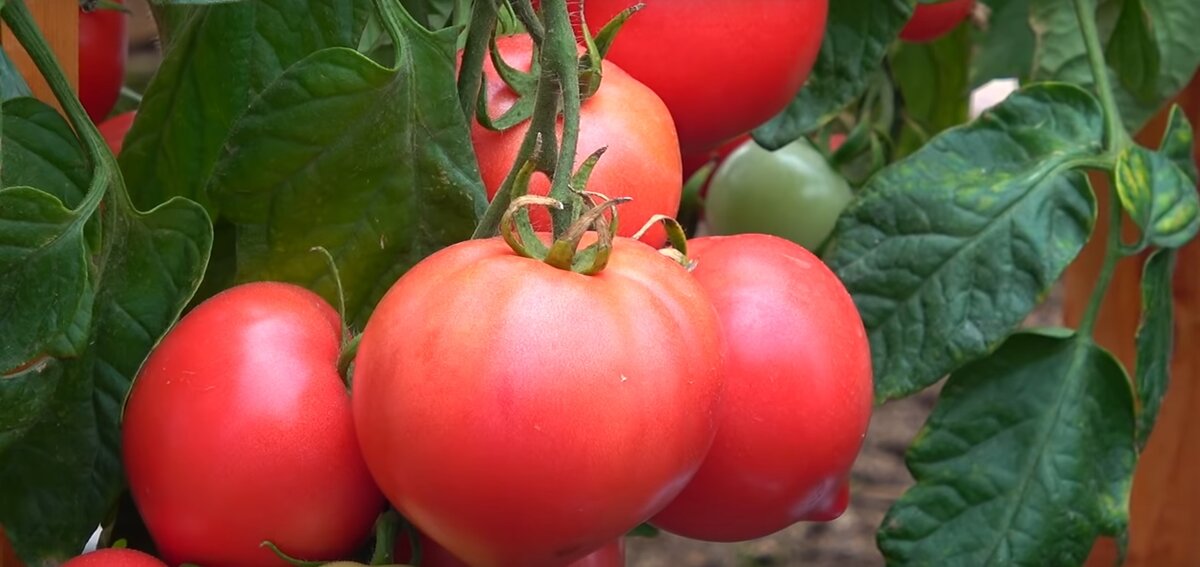
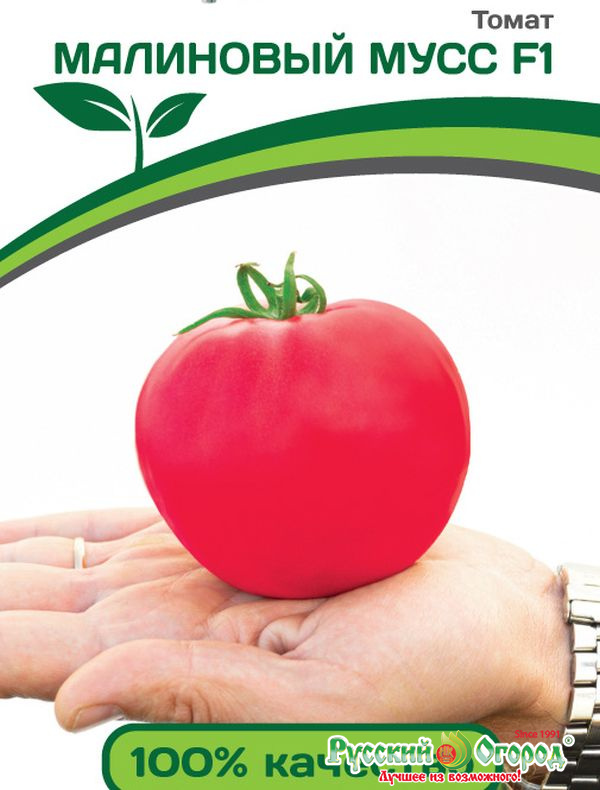
The origin of the Raspberry Mousse F1 tomato variety
The Raspberry Mousse variety, like many other exciting new vegetable varieties, was developed by Vasily Blokin-Mechtalin. This young but well-known breeder is the director of the Partner agricultural company, which sells seeds worldwide and in neighboring countries.
Raspberry Mousse was released in 2019. After several seasons of production, it confirmed its characteristics and was added to the register in 2021. It can only be purchased from the official manufacturer.
Read about other tomato varieties from the Partner agrofirm in the articlePartner tomatoes: a catalog with photos and descriptions
Detailed description of the Raspberry Mousse F1 tomato variety
The Raspberry Mousse variety is a newcomer to the tomato world, but it has already won the recognition of those gardeners who have managed to try the first seeds, which have not yet been added to the register.
Bushes
This is a determinate variety, with shoots reaching 90 cm in greenhouses and 110 cm in open ground. The shoots are quite dense, but sometimes they can be overwhelmed by the weight of the clusters, so additional support is recommended for future harvests. The leaves are few and should be removed from the lower portion of the stem as they grow.
The bush is formed into 3-4 shoots in open ground, and into 2 stems in a greenhouse.
The first brush is laid above the seventh leaf, the rest appear at intervals of 1 leaf.
Fruit
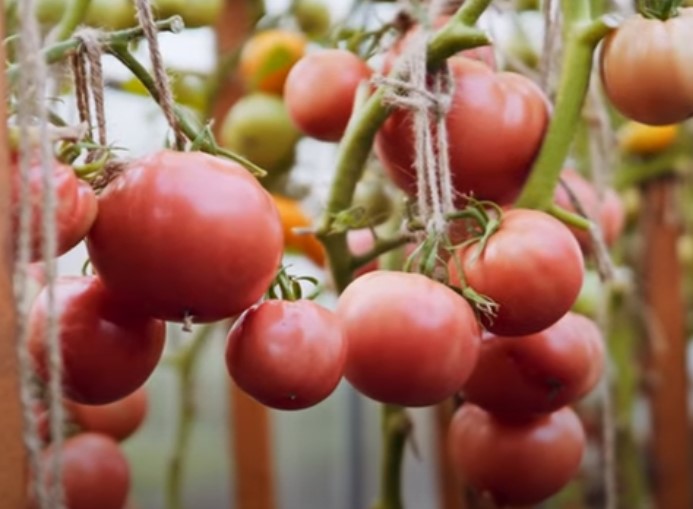
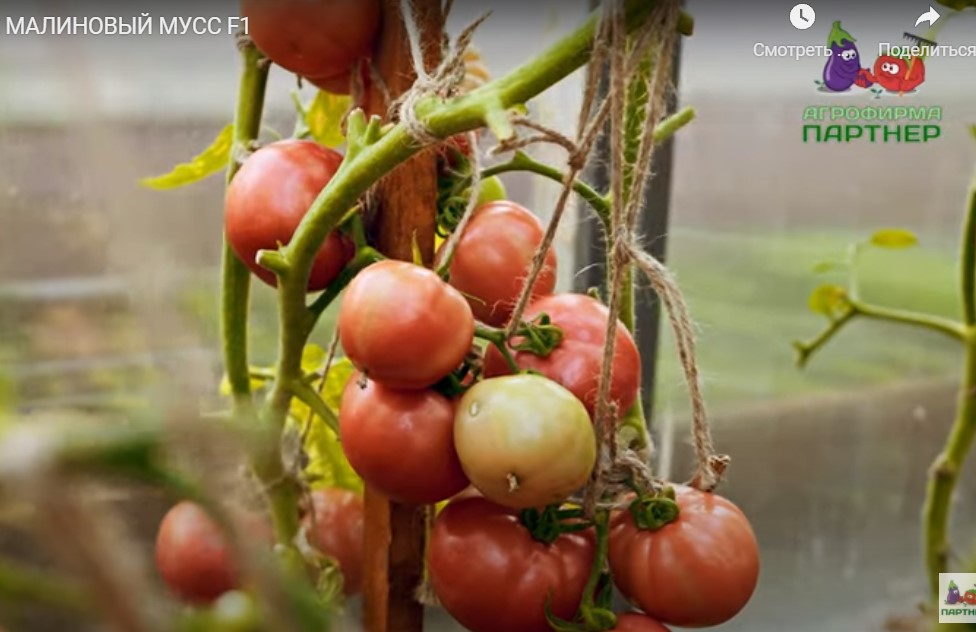
The fruits of the Raspberry Mousse variety are extremely attractive—round, gently ribbed, and pink. They grow in clusters of 3-5 tomatoes each. The tomatoes weigh between 200 and 300 grams.
The skin is dense, the tomato does not crack and can be stored for two weeks without loss of quality.
The pulp is juicy, grainy, and fleshy, containing 4 to 6 seed chambers with a minimal amount of liquid. The flavor is sweet with a very slight, pleasant tartness.
Productivity
The yield of the Raspberry Mousse variety depends on the cultivation method. In open ground, it yields 16-17 kg per square meter, while in a greenhouse, this figure reaches 22 kg per square meter.
Ripening time
The ripening period is early (according to other sources, mid-early). Tomatoes can be harvested 90-95 days after germination.
Disease resistance of the Raspberry Mousse F1 tomato variety
The cultivar's originator claims high resistance to Alternaria, Fusarium, and tomato mosaic virus. Late blight may develop if care is not provided correctly, such as by overwatering the soil.
Advantages and disadvantages of the Raspberry Mousse F1 tomato variety
Raspberry mousse has advantages and disadvantages, which are described in the table below.
| Advantages | Flaws |
|
|
Growing the Raspberry Mousse F1 tomato variety
The Raspberry Mousse tomato does not require special growing conditions; it is quite unpretentious and can be planted both in a greenhouse and in open ground.
Sowing seeds and growing seedlings
Raspberry Mousse tomato seeds must be purchased from the official manufacturer, Partner. You cannot collect them yourself, as the variety is a hybrid. On average, a pack, costing about 60 rubles, contains 8 to 10 seeds.
They require preliminary preparation, which has already been done at the factory. As the originator notes, tomatoes can be sown with dry seeds, but germination yields better results. To do this, place the seeds in a damp cloth and place them in a warm place. They begin to sprout within 24 hours, and after the second day, they can be planted.
You can buy a universal potting soil, but it's important to remember that pink tomatoes prefer permeable soil. You can mix it yourself. To do this, take 1 part soil and 1 part deoxidized peat. Add vermiculite to this mixture at a rate of 15% of the total volume. The ideal substrate for Raspberry Mousse is ready.
Fill the selected container halfway with soil, then make furrows 15 mm deep and spaced 2-3 cm apart. Place the seeds in these furrows and cover with a layer of soil no more than 1 cm thick. Water the seeds with a spray bottle. Cover the seedlings with plastic or glass to create a greenhouse-like environment. Periodically open the container to remove any condensation.
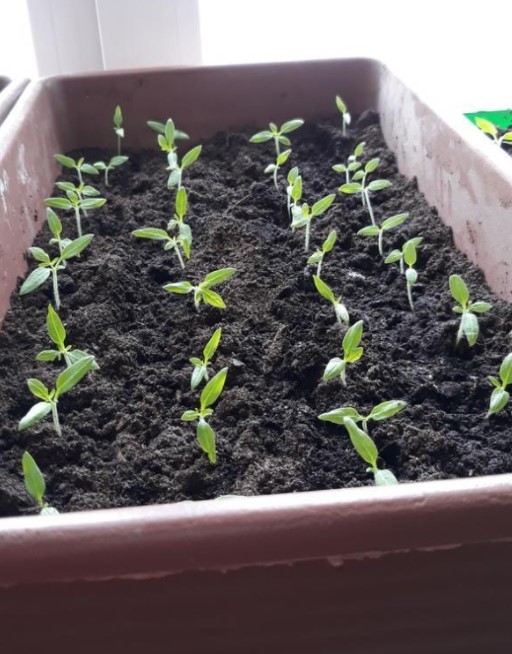
As soon as the first shoots appear, the cover is removed, and the tomatoes are placed in a well-lit, but cooler place with a temperature of +20…+22 °C.
The process of growing seeds for seedlings takes about 60 days. Then you can begin planting them in open ground.
Planting in the ground
The soil for tomatoes is prepared in the fall, when it is dug over with fertilizer. In the spring, the soil is dug over again with the addition of humus (10 kg per square meter).
The holes are made at a rate of four per square meter. Their depth is 25 cm, and their width should be 5 cm larger than the diameter of the pot.
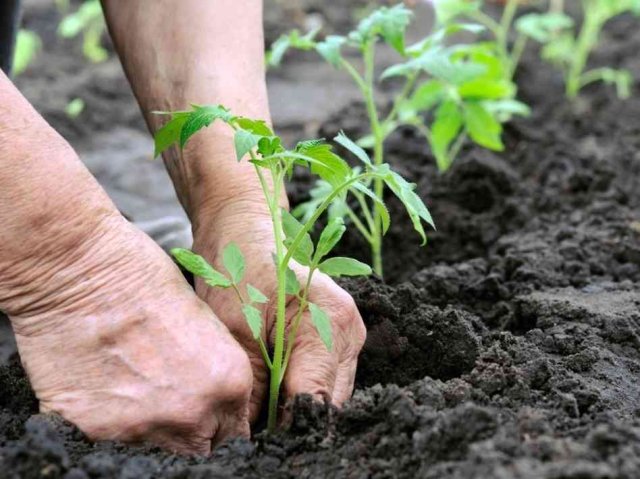
It's recommended to fill the hole halfway with humus or well-rotted compost. Place the seedlings in the hole along with the soil ball, then cover the base with soil and water. The soil will likely settle after this, so you'll need to add more.
The support and tying of shoots, which in open ground can reach more than a meter in height, and in a greenhouse - from 70 to 90 cm, are thought out in advance.
The standard row spacing is 70 cm.
Care
The Raspberry Mousse tomato is relatively easy to care for, adapts well to the garden bed, and tolerates various weather conditions well.
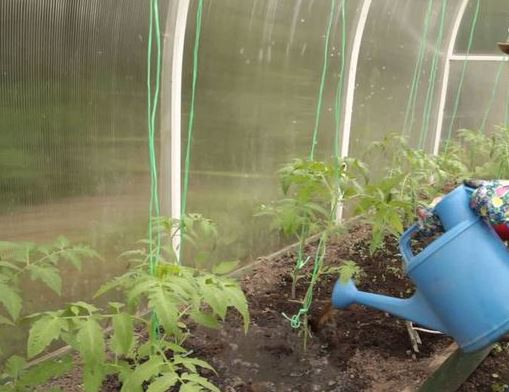
Water the plants once every 5-6 days, but it is important to ensure that moisture does not stagnate near the roots, as this can lead to the development of fungal diseases.
For healthy growth and a good harvest, periodic fertilization is necessary. Initially, plants require nitrogen to build vegetative mass. During the period of ovary and fruit formation, potassium and phosphorus fertilizers will be needed.
A weakened immune system and the onset of disease are often caused by a lack of micronutrients in the soil. If your soil has been heavily used for several years, it's important to fertilize it with complex fertilizers containing iron, boron, zinc, cobalt, copper, and molybdenum. Eco-friendly fertilizers can be added once a month.
Raspberry Mousse responds well to organic fertilizers such as manure, which can be added every 15-20 days. Dissolve a bucket of manure in a barrel of water (100 liters) and let it sit for 24 hours. Then, water each bush at a rate of 2-3 liters after the main watering.
Using Raspberry Mousse F1 tomatoes
Raspberry Mousse tomatoes are quite large, making them unsuitable for whole-fruit canning. However, they are excellent for processing into paste, ketchup, and other sauces.
Tomatoes have a pleasant flavor, making them a perfect complement to any dish. Fresh tomatoes are refreshing and a great thirst quencher in the summer.
Comparison of the Raspberry Mousse F1 tomato variety with other varieties in the table
Please note! How can you easily convert centners/ha to kg/sq.m? Simply divide by 100! For example, the Abakansky Pink tomato yields 400 centners of marketable fruit per hectare. This equals 4 kg per square meter. It's that simple! Also, keep in mind that typically no more than 3-4 plants are planted per square meter. This way, you can calculate the yield per bush. In the case of the Abakansky Pink, it's about 1 kg.
| Variety | Ripening period (number of days from full germination to ripening)
Yield of commercial fruits |
Brief description | Fetus |
| Raspberry mousse | 90-95 days
1600-1700 c/ha (open ground), 2000-2200 c/ha (greenhouse and under film) |
An early-ripening determinate variety for open ground and greenhouses. Training into 3-4 stems is recommended. Suitable for salads and processing into tomato products. | Round, large, dense, pink, 200-300 g. Excellent taste. |
| Raspberry ringing | 115-120 days
450 c/ha |
An early-ripening determinate variety for open ground and greenhouses. Requires staking and shaping. Suitable for salads. | Round, smooth, medium density, pink, 150 g. Excellent taste. |
| Raspberry Viscount | 95-105 days 500-600 c/ha |
A mid-season determinate variety for greenhouses. Suitable for salads. | Flat-round, large, slightly ribbed, medium density, raspberry, 220-260 g. Excellent taste. |
| Raspberry Giant | 105-110 days
590 c/ha |
An early-ripening determinate variety for open ground and plastic greenhouses. Requires staking and training. Suitable for salads. | Round, slightly ribbed, medium density, raspberry, 200-300 g. Excellent taste. |
| Raspberry wine | 105 days
1200-1400 c/ha (greenhouse and under film) |
An early-ripening determinate variety for open ground and greenhouses. Requires staking and shaping. Suitable for salads. | Round, large, smooth, medium density, raspberry, 350 g. Excellent taste. |
| Raspberry Farmer | 85-90 days
1000 c/ha |
An early-ripening determinate variety for greenhouses. Suitable for salads. | Round, dense, slightly ribbed, raspberry, 50-60 g. Good taste. |
| Crimson Dawn | 110-115 days 790 c/ha |
A mid-season indeterminate variety for open ground and greenhouses. Requires staking and shaping. Suitable for salads. | Heart-shaped, loose, ribbed, raspberry, 350-400 g. Good taste. |
| Raspberry Strongman | 112-116 days
880-900 c/ha |
A mid-season indeterminate variety for open ground and greenhouses. Suitable for canning. | Pear-shaped, large, smooth, medium density, raspberry, 150-190 g. Good taste. |
| Crimson Elephant | 110-120 days
650 c/ha |
An early-ripening determinate variety for greenhouses. Suitable for salads. | Round, slightly ribbed, medium-dense, pink, 150-200 g. Excellent taste. |
| Raspberry Miracle | 90-95 days
1200-1500 c/ha |
Mid-early determinate variety for open ground and greenhouses. Suitable for salads and processing into tomato products. |
Round, smooth, pink, 350 g. Excellent taste. |
| Abakan pink | 120 days or more 400 c/ha |
A late-ripening determinate variety for open ground and greenhouses. Requires staking and training. Suitable for salads and processing into tomato products. | Flat-round, slightly ribbed, medium density and pink in color, 200-500 g. Good taste. |
| Agatha Plus | 98-113 days
301-798 c/ha |
An early-to-mid-early determinate variety for open ground. Suitable for salads. | Round, smooth, medium density, red, 128-190 g.
The taste is good and excellent. |
| Manych | 92-97 days
610 c/ha |
Early maturing determinate variety for greenhouses. Suitable for salads. | Flat-round, slightly ribbed, dense, red, 200 g. Good taste. |
| Bear's paw | 110-115 days
710 c/ha |
A mid-season determinate variety for open ground. Requires staking and shaping. Suitable for salads. Marketability: 93.0% (Altai Krai). Heat-resistant. | Flat-round, smooth, fleshy, red, 115-300 g (up to 500 g). Excellent taste. |
| Michurinsky | 90-95 days
800-1000 c/ha |
An early-ripening determinate variety for open ground and greenhouses. Suitable for salads, canning, and processing into tomato products (ketchup and sauce). | Round, smooth, red, 80-100 g. The taste is good and excellent. |
| Potato raspberry | 100-105 days
up to 1800 c/ha |
A mid-season, indeterminate, standard variety for open ground and greenhouses. Requires staking and training. Suitable for salads, canning, and processing into tomato products. | Flattened-round, raspberry, 700-800 g. Excellent taste, sugary, rich. |
| Perseus | 108-115 days
600-800 c/ha |
A mid-season determinate variety for open ground and greenhouses. Suitable for salads and canning. | Flat-round, smooth, red, 110-180 g. Good taste. |
| Petrusha the gardener | 111-115 days
640 c/ha (open ground) |
A mid-season, determinate, standard variety for open ground. Suitable for salads. | Cylindrical with a pointed top, smooth, medium density, raspberry, 150-180 g. Good taste. |
| Pink miracle | 70-90 days (in a greenhouse and in open ground)
230 c/ha |
An ultra-early determinate variety for open ground and greenhouses. Requires staking and shaping. Suitable for salads. | Round, smooth, medium density, raspberry, 100 g. Excellent taste. |
Gardeners' reviews of the Raspberry Mousse F1 tomato variety
The Raspberry Mousse tomato has generated considerable interest among gardeners. This young variety has not yet become widely popular, but those who have planted it note its excellent yield, low maintenance, and excellent taste.