All owners of summer cottages and gardens are primarily interested in high-yielding potato varieties. Since most Russians have small plots of land, this factor is paramount.
In uncertain agricultural conditions and the unpredictable vagaries of the weather, it is undesirable for the time and effort spent on cultivating the soil, sowing, loosening, hilling, and fighting weeds and pests to result in an insignificant harvest—less than what was planted, which is unsuitable for food and storage because the tubers have not grown to the required size.
Therefore, choosing potatoes is an important task, requiring careful study of growing characteristics, yield, and nutritional properties. It can sometimes take several years to find the most suitable variety for a given location.
It happens that good, tasty, productive potatoes in a separate garden do not show their stated qualities.
Perhaps the soil is too dense or, conversely, too rich. Or the variety doesn't tolerate stagnant water, and the site is low and marshy. It's important to follow crop rotation rules and keep the seed clean. It's no wonder that breeders develop new, high-yielding potato varieties every year.
Around 300 high-yielding potato varieties are regularly grown in different regions.
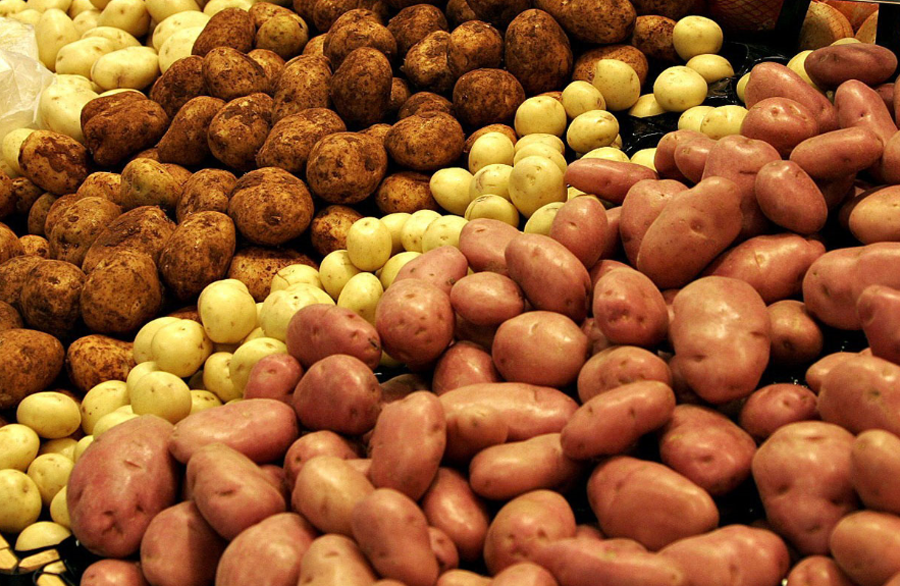
Characteristics of potatoes
Potato varieties differ in ripening time: early, mid-season and late.
Early potato varieties begin producing full-fledged fruit in the central part of the country, starting in mid-summer. Before planting, the seeds are vernalized until sprouts with green leaves form and planted in open ground when the soil has warmed up well (to 12°C) and the average daily temperature is 15°C.
Seedlings will emerge 14 days after planting, and the first tubers of some early-maturing varieties can be harvested as early as 40-45 days. These potatoes reach technical maturity before the onset of cold nights, fog, and dew. Therefore, they are less susceptible to late blight and fungal diseases.
The only peculiarity is that it is not suitable for long storage; it must be eaten immediately after digging.
You can determine the potato's readiness by its external characteristics. If the leaves have turned yellow and begun to curl, or the stems have become bare, fallen over, and are drying out, this means the plant's growth has stopped and the potato is ripe. Further storage in the ground will not extend its shelf life.
If left in the ground for too long, new potatoes may begin to sprout. Therefore, harvesting and planting should be done on time.
If the tubers have grown to a size of 3-6 cm in diameter, the potatoes are suitable for cooking.
The flavor of potatoes is judged by how they behave when fried, boiled, or stewed. The best potatoes are those that don't fall apart completely, but cook quickly until soft, and have a slightly grainy texture. Potatoes with a watery, "soapy" consistency are considered unsatisfactory.
Easy-to-cook and starchy potatoes are perfect for mashed potatoes, while those with firm flesh are perfect for soups and frying. Picasso potatoes, for example, are considered a versatile choice. Their smooth, thin-skinned fruits are easy to wash and peel. Their perfectly even shape makes a beautiful addition to a simple boiled potato dish.
Popular potato varieties for the Moscow region and central Russia
Central Russia is characterized by a continental climate with abundant precipitation and highly humid soils. Seasonal weather fluctuations are minor. There are no high temperatures, dry spells, or severe, prolonged frosts.
The average daily temperature during the warm season ranges from 17 to 23°C. Average annual precipitation is 500–750 mm. There are no prolonged rains, but showers are frequent.
The gardening season lasts from May to September. Daylight hours range from 14.5 to 17.5 hours. Most of the farmland consists of podzolic and peat soils. The climate is favorable for growing potatoes. The Moscow region is characterized by a temperate climate with rainy, cool summers and early frosts.
Suitable varieties for these parameters are those that are zoned, have a short ripening period, are resistant to cold and diseases, are not sensitive to daily and seasonal temperature fluctuations, and are tolerant of high humidity and drought.
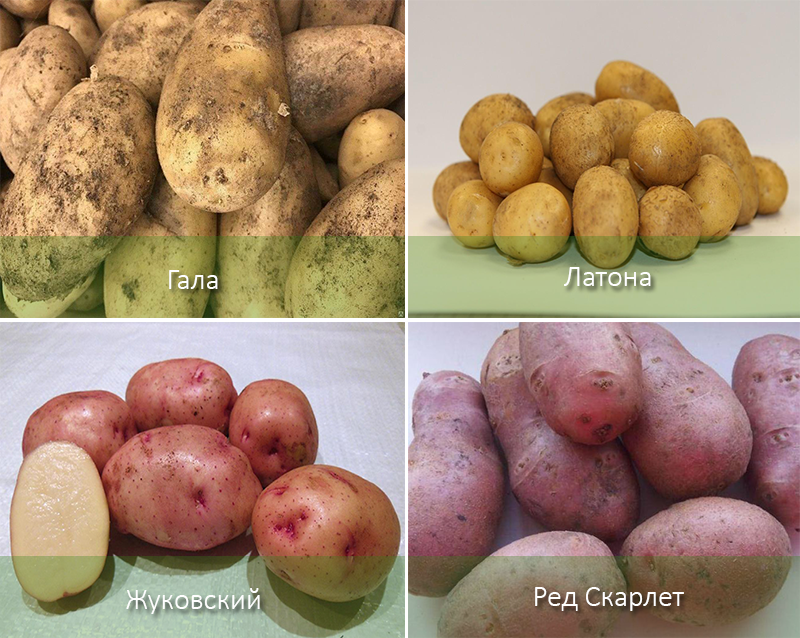
The following are considered popular: Nevsky, Lugovskoy, Zhukovsky, Romano, Aurora, Latona, Bela Rosa, Blue-eyed, Luck and others.
It is desirable that it be equally suitable for all soils, that it stores well, does not sprout, and is suitable for boiling, frying, etc. As a rule, the yield will be low for early varieties, average for late ones, and the highest for mid-season varieties.
The best potato varieties for central Russia achieve yields of 200-300 kg and even up to 600 kg per 100 square meters. They differ in sowing and ripening times, susceptibility to or resistance to various diseases, taste, shelf life, storage, tuber size, and color.
Early, more productive potato varieties
| Variety | Ripening time (days) | Tuber | Peculiarities | Harvest (kg per hundred square meters) | |
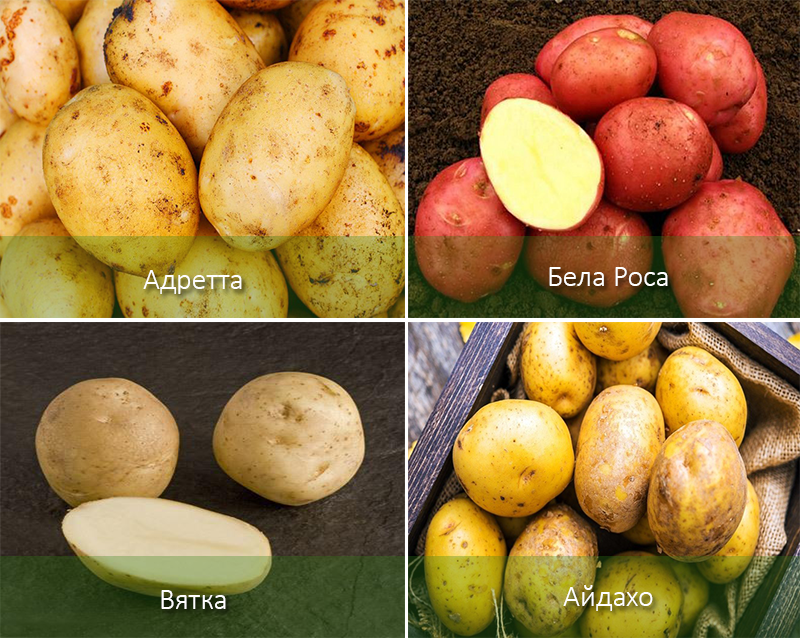
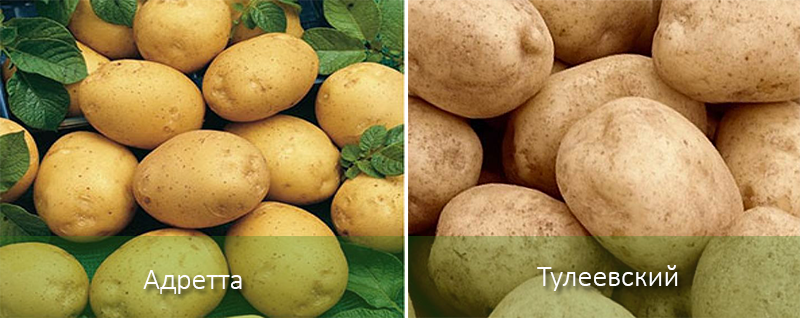
| Adretta | 60-80 | The skin is yellow, the flesh is light yellow. Weight 100-150 g. Starch 13-18%. | Frost-resistant, produces a good harvest even in cold and rainy summers. | 450 | |
| Idaho | from 50 | Beige, round, perfectly smooth. | Contains a lot of carbohydrates and starch and has excellent taste properties. | 500 | |
| Bela Rosa | from 40 | Large, oval-shaped, pink in color, weighing up to 500 g. Table-grade, tasty. | Prefers fertile soil. In hot regions with long summers, two harvests are harvested. | 350 | |
| Vyatka | 50-60 | White in section, up to 140 g. | Resistant to late blight and other diseases. Productive and easy to store. | 400 | |
| Gala | 75 | Round, small, skin and flesh bright yellow. Weight 71-122 g. Starch 10.2-13.2%. | A German variety, low in starch and high in carotene. Used in dietary nutrition, it boasts excellent flavor. | 216-263 | |
| Zhukovsky early | 55-60 | Large, white inside, does not darken after cutting. Weight 100-120 g. Starch 10-12%. | Suitable for transportation, stores well, and is not susceptible to damage or disease. | 400-450 | |
| Latona | 45-75 | Large, yellow with a smooth skin, light yellow inside. Weight 85-135 g. Starch 12-15.8%. | Not susceptible to diseases, resistant to weather conditions, stores and transports well. | 291-300 | |
| Red ScarletT | 50-65 | Pinkish-purple, elongated oval shape. Up to 15 fruits per bush, creamy flesh. Weight 56-102 g. Starch 10.1-15.6%. | Drought-resistant, tasty. | 164-192 | |
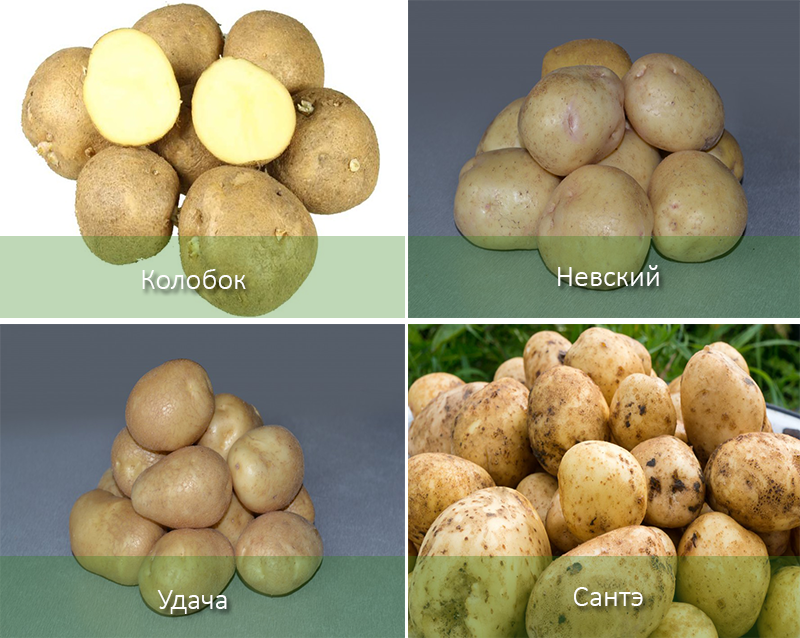
| Nevsky | 65-80 | Oval, creamy-fleshed, delicious. Plants produce 15 tubers. Weight: 90-130 g. Starch: 10-12%. | Elite, grows everywhere, in any conditions, is resistant to bacteria, and is drought-resistant. | 380-500 | |
| Sante | 65-80 | Golden skin and core. Pleasant flavor, long shelf life. Weight up to 120 g. Starch 10-14%. | Brought from Holland, it's almost disease-resistant and doesn't require fertilizer. | 300-570 | |
| Luck | 60-70 | Medium size, thin skin, white and crumbly when cut. Weight 120-250 g. Starch 12-15%. | Elite, very productive, requires constant care. | 300-500 | |
Popular mid-season varieties for the Central Belt
| Variety | Ripening time (days) | Tuber | Peculiarities | Harvest (kg per hundred square meters) |
| Kolobok | 80-95 | Round, without depressions or large eyes, the skin is rough. The inside is yellow. Weight 93-118 g. Starch 11.4-13%. | It is drought-resistant but susceptible to nematode damage. It is a table variety. | 124-227 |
| Share | 80-95 | Bright beige, sometimes brown, large, weight 400 g. | Not prone to diseases, good culinary qualities, crumbly when cooked. | 390 |
| Tuleyevsky | 80-100 | The skin and core are yellow, not watery, weight 122-170 g. Starch 13.7-16.8% | A hybrid of Canadian and Russian selection. Grown throughout Russia. | 180-424 |
| Fambo | 80-95 | Sand-colored, oblong, smooth oval. Beige interior, with a good flavor. Weight 80-140 g. Starch 13-16%. | Suitable for any soil and climate conditions, resistant to diseases. | 185-395 |
| Dauphiné | 85-95 | Large, weighing 300g, 20 fruits per bush. Retains its marketable quality for up to 9 months. | Unpretentious, neutral to diseases, adapted to damp areas. | 250 |
The best late potato varieties for the Central Belt
| Variety | Ripening time (days) | Tuber | Peculiarities | Harvest (kg per hundred square meters) |
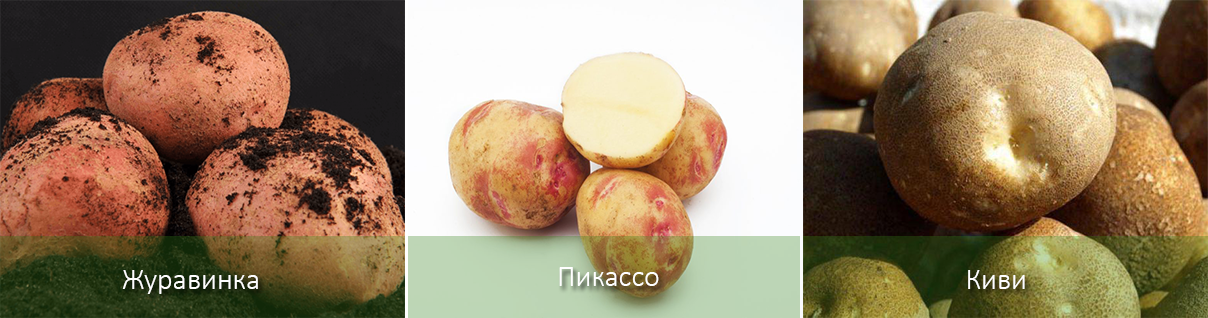
| Crane | 90-110 | Round, red, medium-sized, tasty. Weight 89-139 g. Starch 14.6-19.6%. | Drought-resistant, unpretentious. | 177-242 |
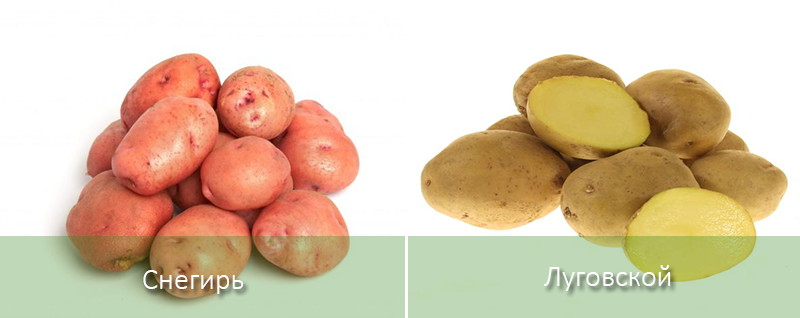
| Lightning | 115-140 | Oval, pink, yellowish flesh. Starch 12.7-17.3%. | It keeps for a long time in storage and is delicious. | up to 520 |
| Kiwi | 120-140 | The skin is thick, rough, and brown, similar to a kiwi. The inside is white. It's easy to boil in its skin—it won't overcook or crack, and it peels easily. Starch content: 14-19.5%. | It grows in a variety of soils and tolerates variable weather conditions. Besides common diseases, it is resistant to the Colorado potato beetle and wireworm. | up to 400 |
| Victory | 95-110 | Round, golden, with white flesh. Low starch content (10.3-13.2%). | Elite, withstands heat and slight drought. | 191-304 |
| Picasso | 110-130 | Yellow, round-oval with small pink eyes and creamy flesh, 75-126 g, starch 7.9-13.5%. | Good preservation (83-90%), pleasant taste. | 193-315 |
| Pace | 110-120 | Large, flat, white, starchy (19-22%), 103-175 g. Light yellow flesh. Table fruit, used for starch production. | Versatile, hardy, and moisture-loving. Stores well until spring and is resistant to late blight. | 350-460 |
The best potato varieties for different regions
Russia's territory is vast. Naturally, weather and soil conditions vary across different regions. Therefore, potatoes with different characteristics are selected for each location.
For the Urals
The best potato varieties for the Urals should be less susceptible to strong changes in daily temperatures, uneven precipitation, unexpected frosts, and typical diseases.
The following varieties are considered such: Lugovskoy, Bashkirsky, Snegir, Effect.
For Siberia
Siberia has continental conditions, frosts can strike even in late spring, summer is short and abundant with rain.
The best potato varieties for Siberia are the mid-early Tuleevsky, Nevsky, Udacha, Adretta, etc.
For the Middle Volga region
The Volga region's weather is unstable, with a frost-free warm season lasting only 150 days. Strong winds and low humidity are typical.
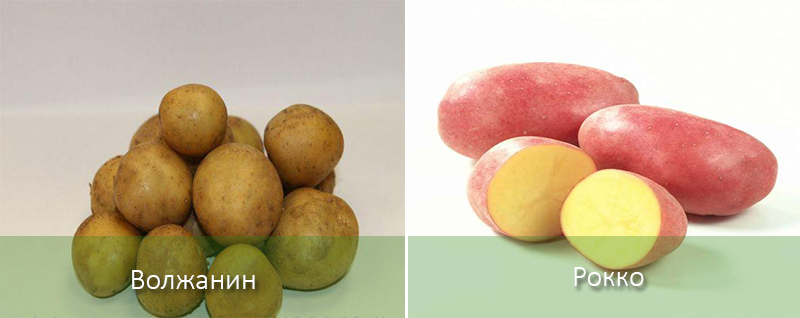
The best potato varieties for the Volga region are drought-resistant and should ripen quickly. Examples include Zhukovsky Ranniy, Volzhanin, Udacha, Rocco, and others.
Experienced gardeners grow at least three varieties simultaneously for central Russia. Early varieties are used for eating new potatoes. Late varieties are stored.
Selection is usually done empirically, as varieties may produce varying yields in different climates.
In addition, it should be taken into account that the Dutch selection requires that the seed material be renewed every three years, as it loses its valuable properties.
Potatoes from Russian breeders and those from the former USSR countries require updating slightly less frequently.