Manifest is a potato variety popular among gardeners with a rich pink skin. In addition to its unusual appearance, it has a pleasant taste and excellent varietal characteristics. We'll discuss these in more detail in this article.
Content
- 1 The origin of the Manifest potato variety
- 2 Potato variety Manifest characteristics in the table
- 3 Detailed description of the Manifest potato variety
- 4 For which regions is the Manifest potato variety suitable?
- 5 Advantages and disadvantages of the Manifest potato variety
- 6 Planting Features of the Manifest Potato Variety
- 7 Caring for the Manifest potato variety
- 8 Protection of the Manifest potato variety from diseases and pests in the table
- 9 The nuances of harvesting and storing the Manifest potato variety
- 10 Comparison of the Manifest potato variety with other varieties in the table
- 11 Real reviews from gardeners about the Manifest potato variety
The origin of the Manifest potato variety
We owe the development of the Manifest variety to the Belarusians. They set themselves the goal of developing a high-yielding variety that could be grown equally successfully in garden plots and on large, industrial scales. They realized their vision, and Manifest soon spread abroad and gained recognition in its neighbors. In Russia, the variety was registered relatively recently – in 2014.
Potato variety Manifest characteristics in the table
The table below lists the main characteristics of the Manifest potato:
| Parameter | Characteristic |
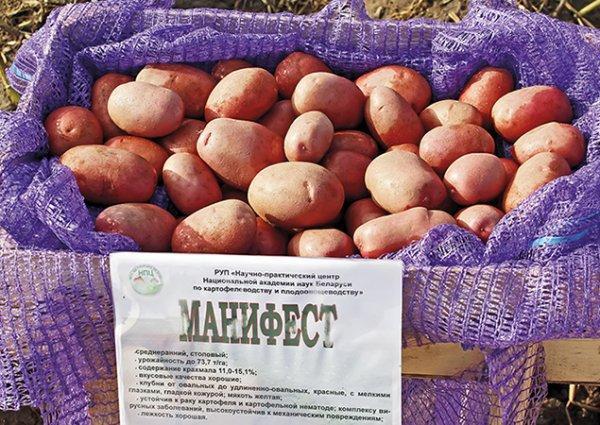
| General information | A Belarusian variety with a mid-season ripening period. It produces a consistently good harvest. The bushes are low, growing up to 55 cm. The leaves are medium-sized, bright, and slightly serrated at the tips. |
| Ripening period | 60-80 days (mid-early). |
| Productivity | 165-408 c/ha, maximum - 458 c/ha. |
| Marketability of tubers | 79-97% |
| Shelf life | 94% |
| Starch content | 13-15.4% |
| Peel color | Red (pink) |
| Pulp color | Light yellow |
| Weight of commercial tubers | 104-132 BC |
| Number of tubers in a bush | 11-15 pcs. |
| Taste qualities | Consumers note the pleasant taste. The potatoes are medium-soft. They can be used in a variety of dishes. |
| Cooking class | AB |
| Preferred growing regions | North-West, Central, Volga-Vyatka. |
| Disease resistance | High resistance to canker, nematodes, rugose mosaic, and leaf curl. Moderate resistance to late blight and scab. |
| Features of cultivation | Grows best in light, breathable soils and requires good watering. |
| 2014 | |
| Country of origin | Belarus |
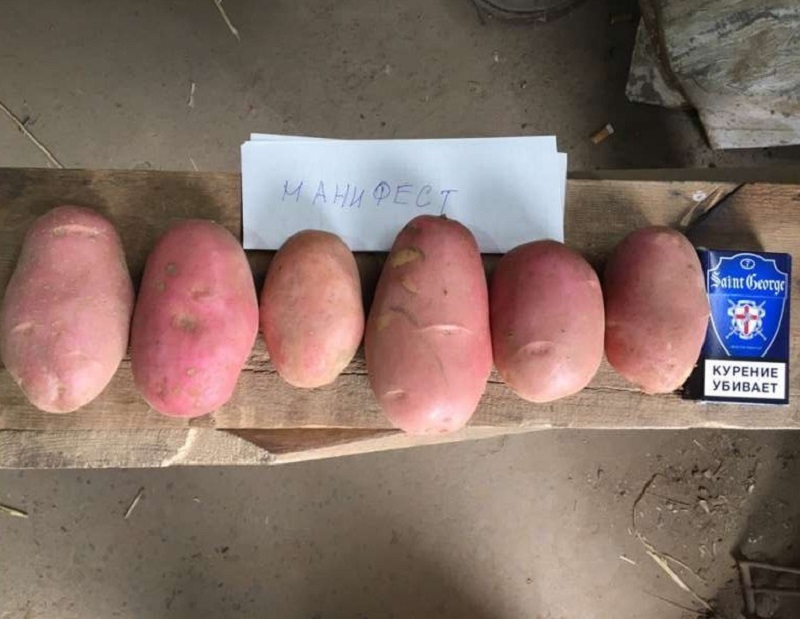
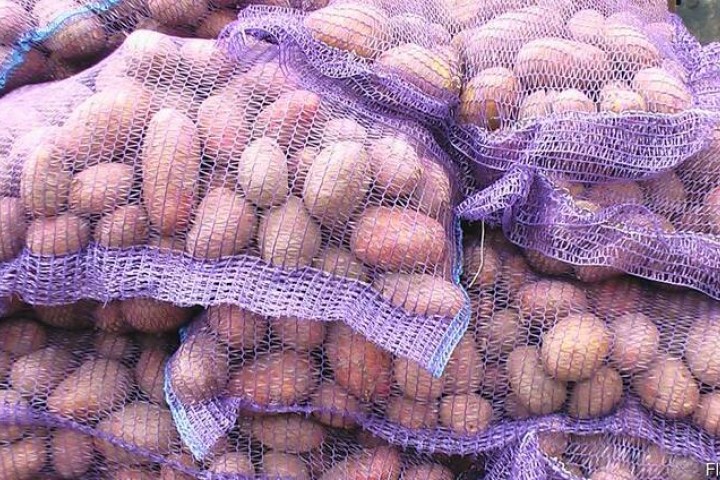
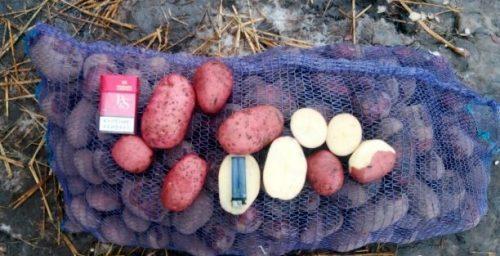
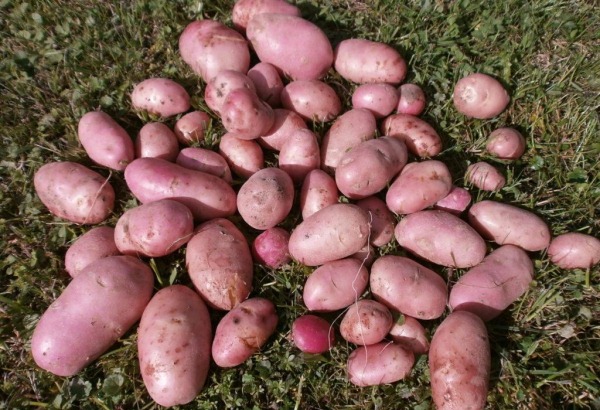
Photo gallery of the Manifest potato variety:
Detailed description of the Manifest potato variety
The Manifest variety is considered a mid-season potato. In addition to excellent yields, it has good immunity, helping it resist common potato diseases.
Bushes
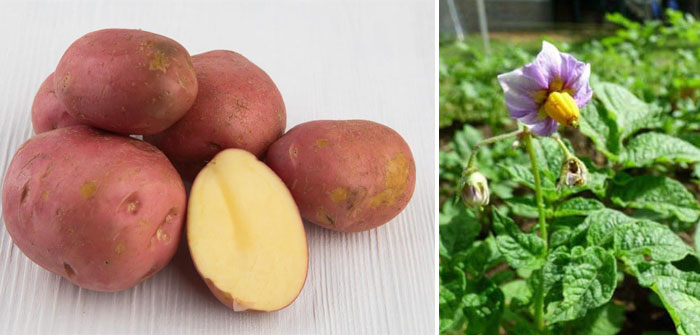
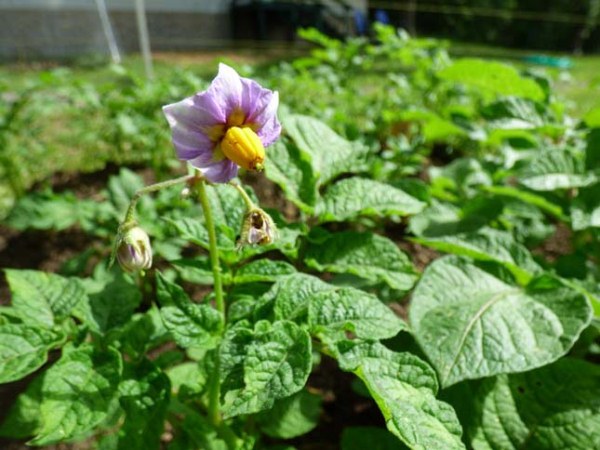
The bushes are medium-height, with semi-erect shoots. The leaves are very vibrant, dark green with a glossy surface. During flowering, purple buds with yellow centers appear.
Each bush produces up to 15 tubers.
Tubers
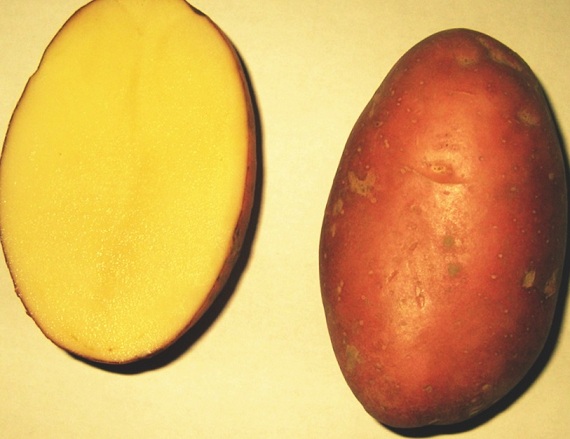
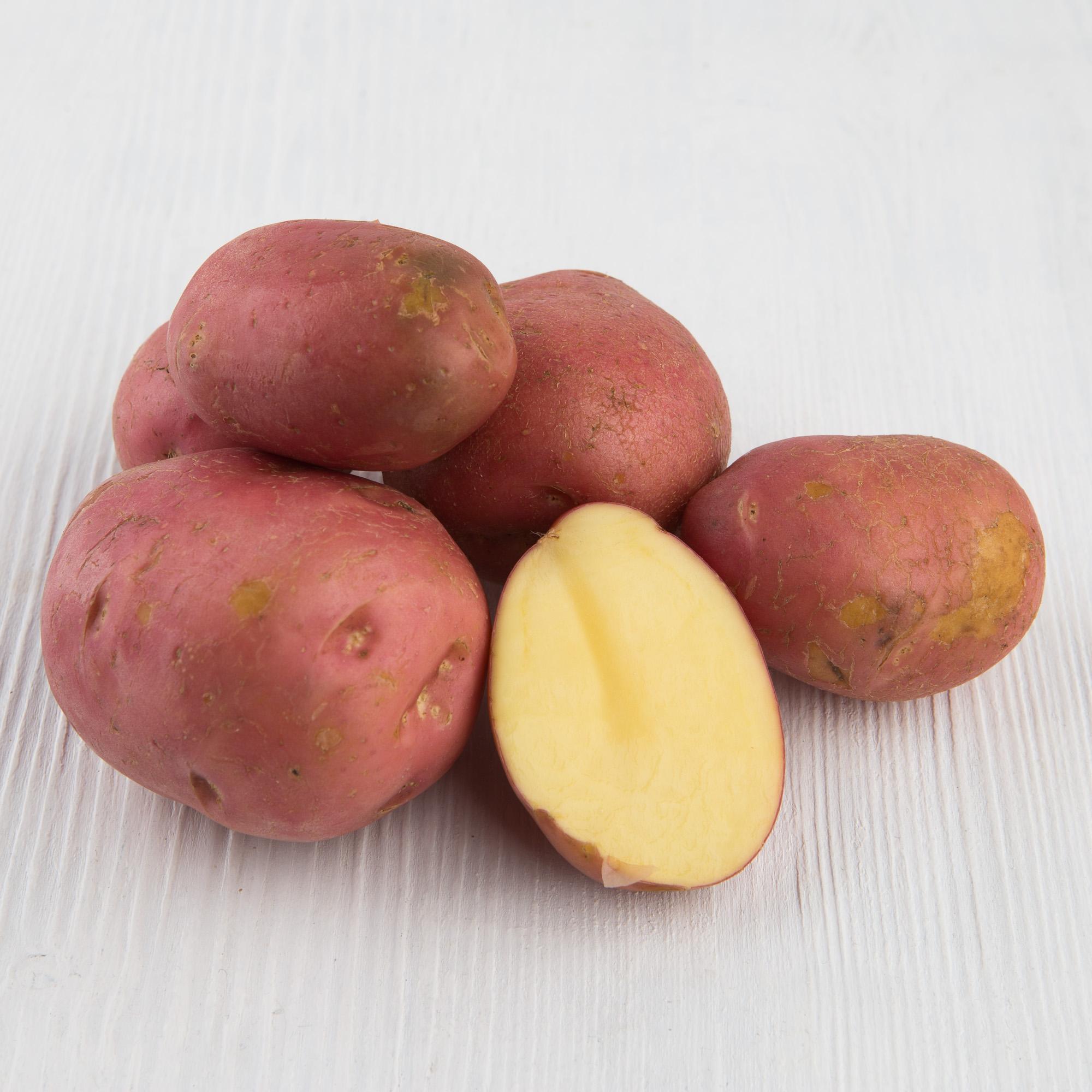
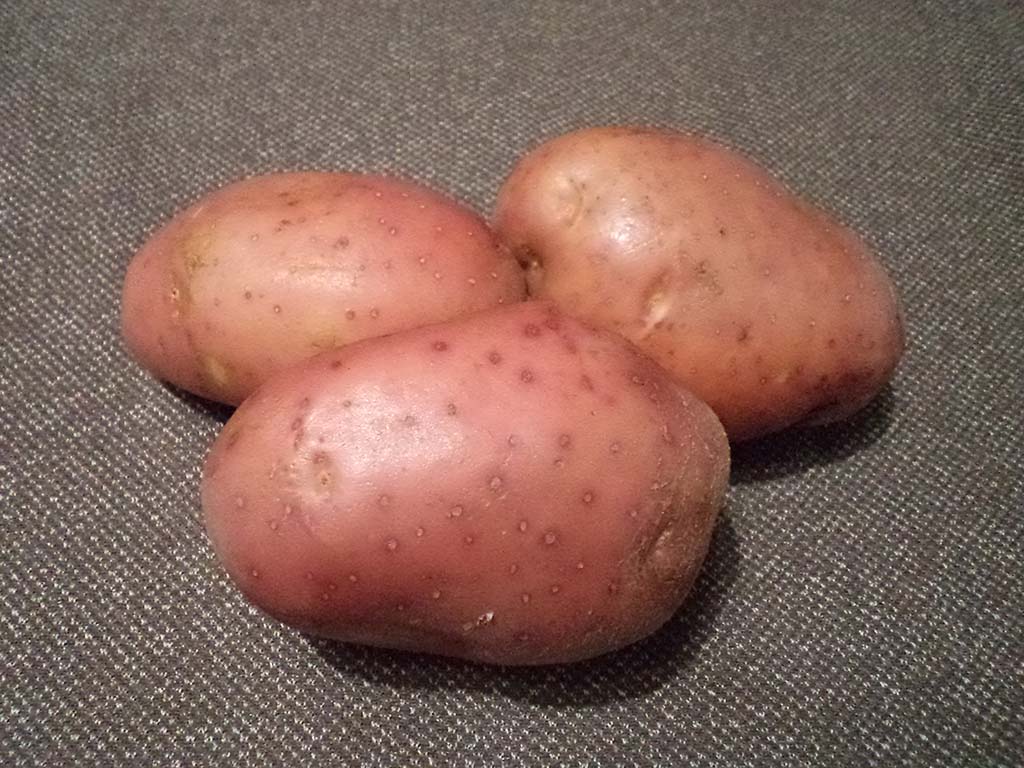
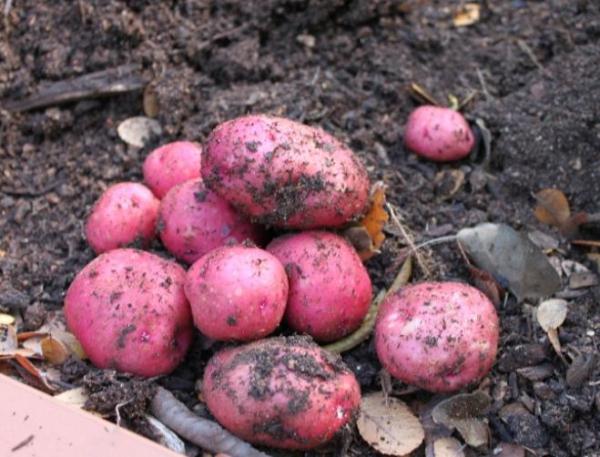
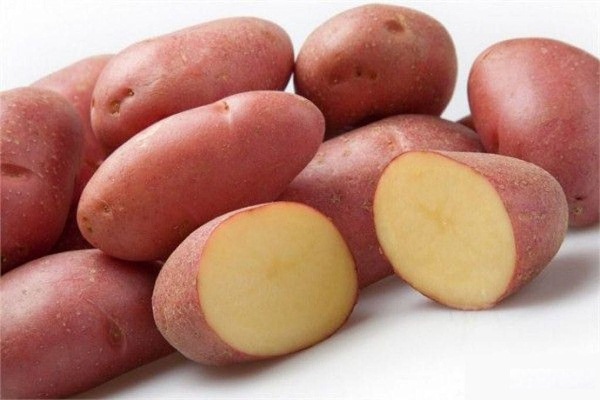
The tubers are elongated and oval. The skin is very bright, deep pink, and smooth. There are few, shallow eyes on the surface. Each tuber weighs 104-132 g, reaching 150 g under favorable conditions.
The flesh is yellowish, has a pleasant flavor, and doesn't overcook during cooking. Marketability is 79-97%, and shelf life is 94%.
Nutrients and nutritional value
Manifest tubers contain 13-15.4% starch.
The list of beneficial nutrients is quite extensive. It includes B vitamins, vitamin C, iron, iodine, carotene, manganese, and biotin. The highest concentrations are found in raw potatoes; cooking significantly reduces them. The larger the potato is cut, the more nutrients are retained. Accordingly, fried and mashed potatoes contain the least amount of these nutrients, especially if the dishes are refrigerated for a while.
Productivity, ripening time
The tubers mature within 60-80 days from planting. This timeframe depends on weather conditions and the growing region.
Yields also vary; in poor soils and cool weather, they can reach 170 centners per hectare. With proper cultivation practices, yields increase to 370 centners per hectare.
The absolute maximum in our country was reached in the Tula region and amounted to 458 c/ha.
Resistance to diseases and pests
Manifest has high immunity to many diseases.
| Disease | Stability indicator |
| Cancer | High |
| Scab | High |
| Nematode | High |
| Viruses | High |
| Wrinkled banded mosaic | High |
| Phytophthora blight of tops | Average |
| Tuber blight | Average |
For which regions is the Manifest potato variety suitable?
Manifest prefers well-warmed soil, so it's recommended to plant it no earlier than the second half of May. This variety is zoned for the Northwest, Central, and Volga-Vyatka regions.
Advantages and disadvantages of the Manifest potato variety
The Manifest variety has advantages and disadvantages, which are described in the table.
| Advantages | Flaws |
|
|
Planting Features of the Manifest Potato Variety
Manifest grows well in a variety of weather conditions and produces a stable harvest if basic growing rules are followed.
Requirements for the landing site and its preparation
For Manifest potatoes, choose well-lit sites. They ripen best in well-drained soils with adequate nutrients.
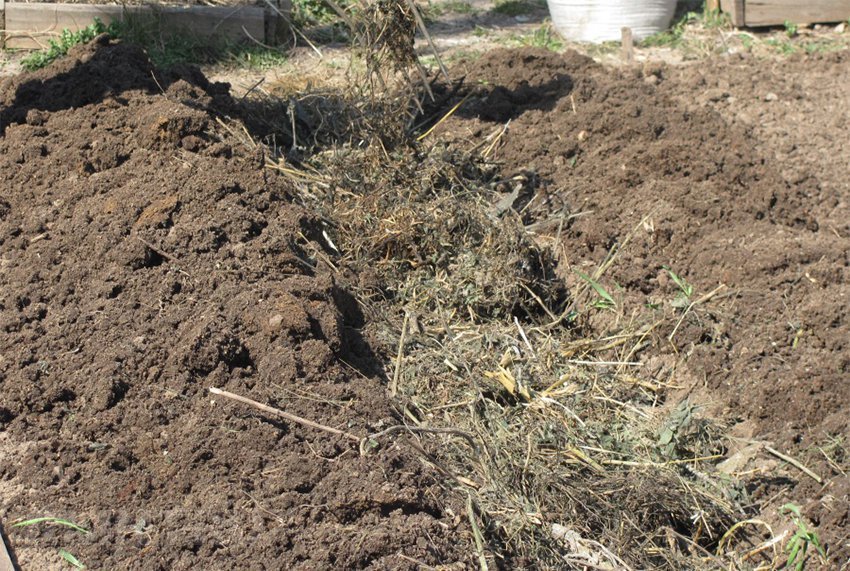
Preparing the bed should begin in the fall. Dig the soil to a depth of 30 cm, adding one bucket of compost (humus can be substituted), a couple of tablespoons of potassium salt, and 3-4 tablespoons of superphosphate.
In the spring, you need to re-dig the area. If your soil is dense and heavy, add a bucket of sand for every meter.
In the spring, all that remains is to add equal amounts of nitrogen, phosphorus and potassium to the bed.
Selection and preparation of seed tubers
Seed tubers begin to be prepared approximately 3-4 weeks before planting. All the material is sorted, and medium-sized potatoes are selected. Some novice gardeners mistakenly believe that large tubers guarantee a bountiful harvest. However, this is not true: far fewer shoots form on their surface.
All selected potatoes are placed in boxes. They are kept in a warm place until sprouts appear. The tubers should be inspected periodically for signs of rot.
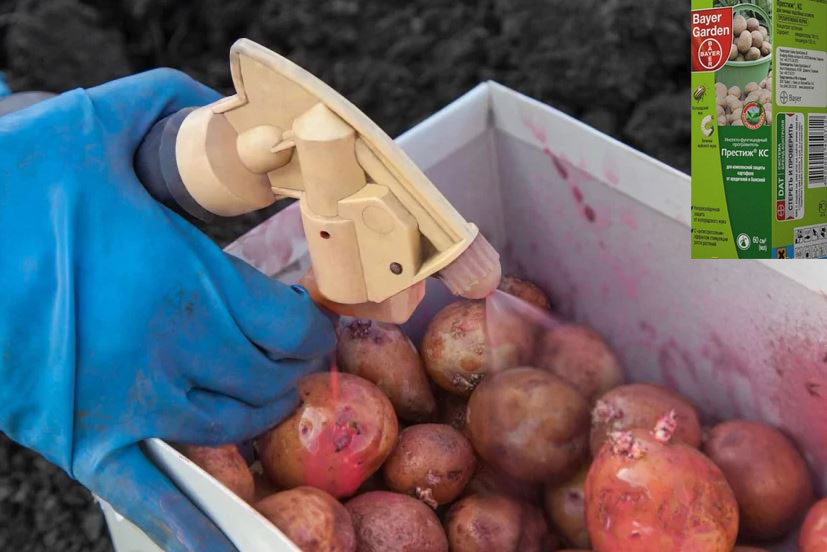
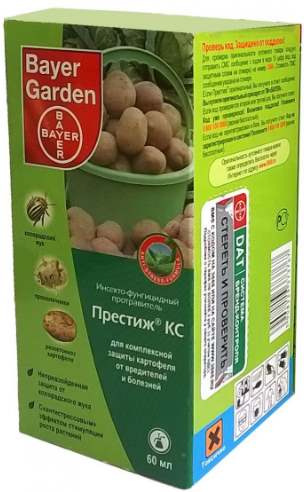
To reduce the risk of disease, you can treat the planting material with specialized products, such as Matador or Prestige. These products are used to prepare a solution; all proportions are detailed in the instructions.
Planting times and rules
The Manifest variety does not tolerate cold temperatures well during the initial stages of growth, so it is crucial that the soil warms up to +8…+10 °C by the time of planting, and that the risk of night frosts is minimal.
Planting should begin no earlier than mid-May, although many gardeners leave this work until the May holidays. There is a certain risk here; you still need to focus on weather conditions.
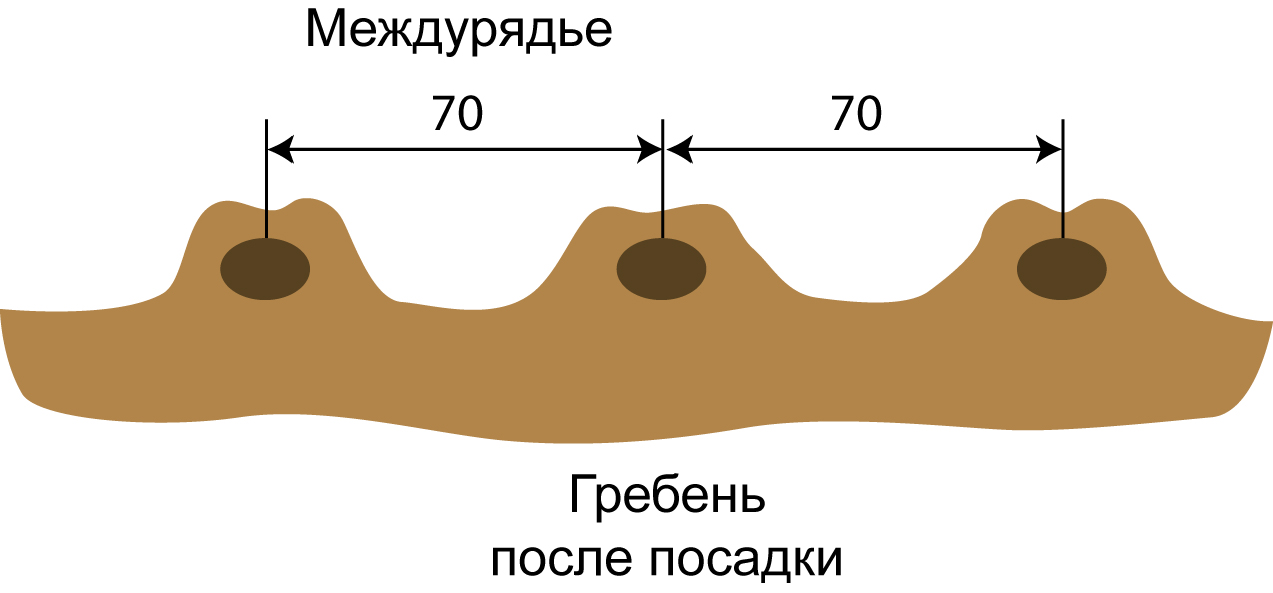
The ridge planting method is best for Manifest potatoes. It's fairly simple and doesn't require much physical effort:
- Furrows 10 cm deep are made in the garden bed.
- The optimal distance between furrows is 70 cm.
- The tubers are carefully laid out in them at a distance of 30 cm from each other, with the sprouts facing upwards.
- The top of the plantings is covered with soil, which forms a small mound – a ridge – 15 cm high.
- Every week, soil is added to the ridge until its height reaches 30 cm.
This method helps improve aeration and prevents the tubers from freezing, resulting in seedlings appearing 2 weeks earlier than with the traditional method.
Caring for the Manifest potato variety
The yield of Manifest potatoes largely depends on compliance with the rules for caring for the plantings.
Watering
The frequency of watering depends directly on the hot weather in the region. If the summer is typical, potatoes need to be watered three times per season:
- The first time when planting tubers in furrows.
- The second - when the shoots reach a height of 15 cm.
- The third time during the budding period.
There is no need to water the potatoes two weeks before digging, otherwise the taste of the tubers will become watery and their shelf life will decrease.
Top dressing
Experienced gardeners recommend adding a cup of ash to each hole when planting. Ash contains a wealth of beneficial substances that not only strengthen the immune system but also improve the absorption of micronutrients from the soil and stimulate shoot growth.
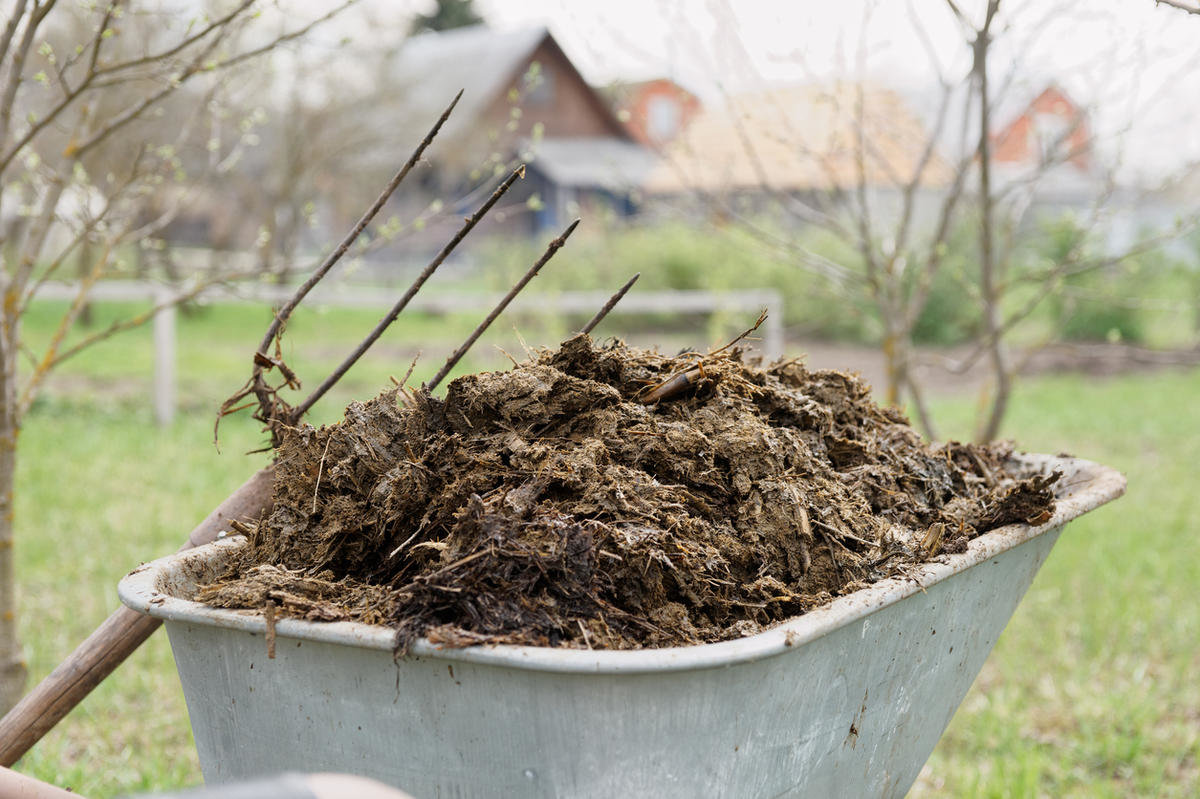
The next feeding is carried out when the shoots grow to 12 cm. The best solution is a solution of manure (1 liter per 10 liters of water) and 15 g of superphosphate.
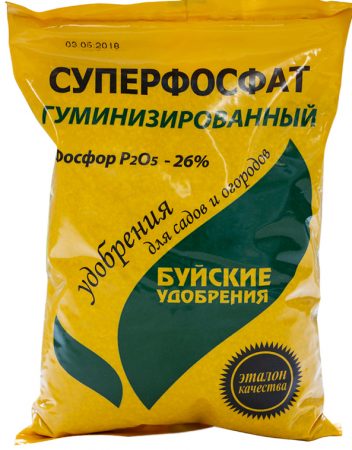
During the vegetative growth period, adding nitrogen is not advisable, as it can slow down the rate of tuber formation, but it will stimulate the emergence of new shoots and leaves.
Loosening, weeding
Gardeners typically perform weeding and loosening simultaneously. The first weeding and loosening can be done after the seedlings emerge. With ridge planting, weeds are few and far between at first, and they can be easily removed by hand. The second weeding is performed three weeks later.
Hilling
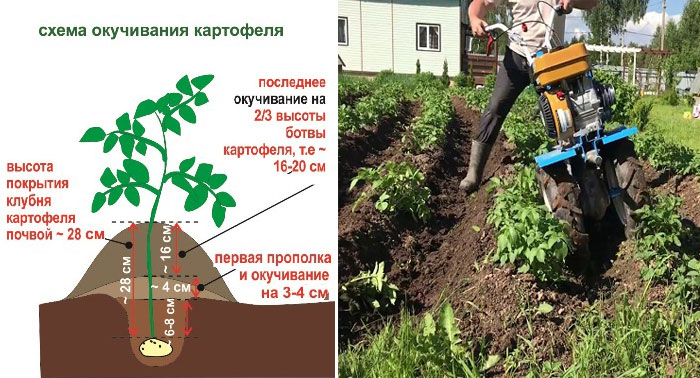
The classic potato planting scheme involves hilling three times: when the shoots grow to 10 cm, then after 2 weeks, and then during the flowering period.
When using the ridge method, the soil is raked weekly during the first month of potato growth. Thereafter, the ridge height is maintained at 30 cm.
Hilling is carried out to protect the tubers and to increase the area for absorption of nutrients.
Protection of the Manifest potato variety from diseases and pests in the table
Manifest has a fairly high immunity; if cultivation guidelines are not followed, it can become infected with late blight. The most common pests found on the bushes are the potato moth and the Colorado potato beetle.
| Disease or pest | Description | Prevention and treatment |
| Late blight
|
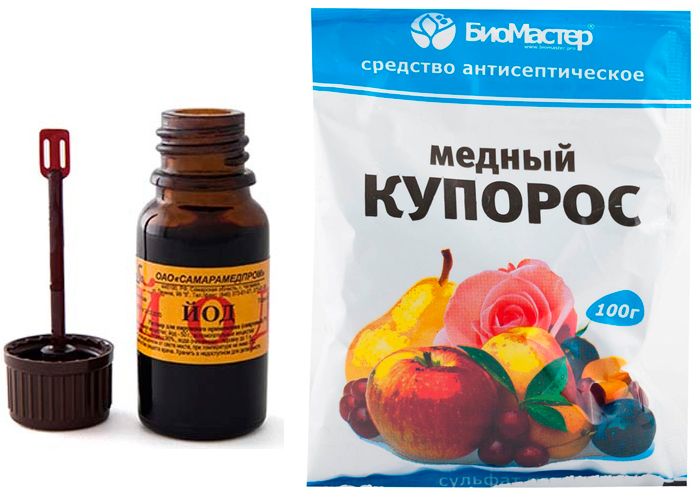
Dark ulcerative spots appear on shoots and tubers. | Treating planting material can help reduce the risk of late blight. At the first sign of the disease, a copper sulfate solution (10 g per 10 liters of water) can be used. Spraying should be done weekly until the disease has completely disappeared. |
| Colorado beetle
|
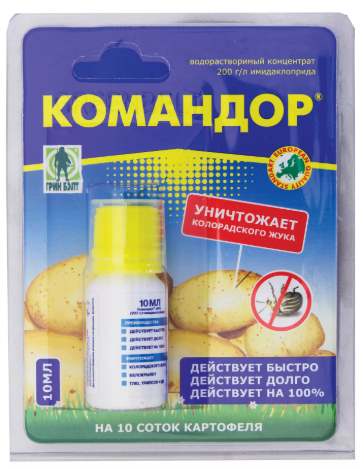
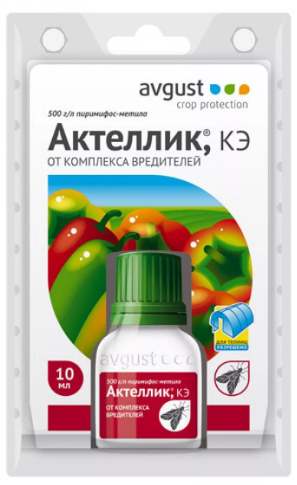
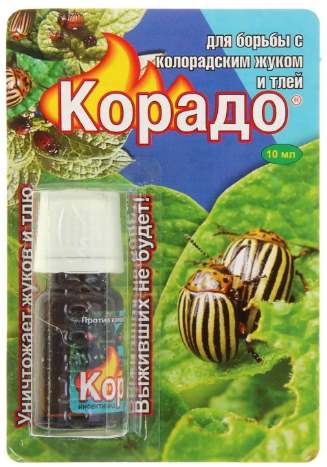
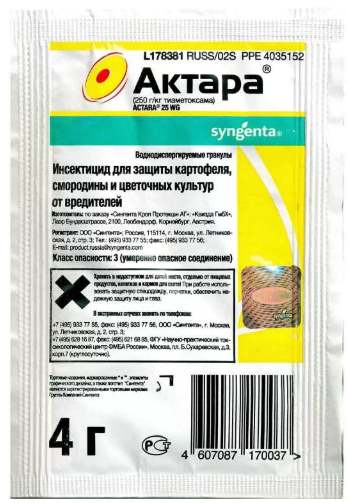
It eats leaves on shoots and lays bright yellow larvae on the underside of the leaf. | Small numbers of pests can be collected by hand. If there are large numbers, treatments such as Aktara, Corado, Actellic, and others will help. |
| Potato moth
|
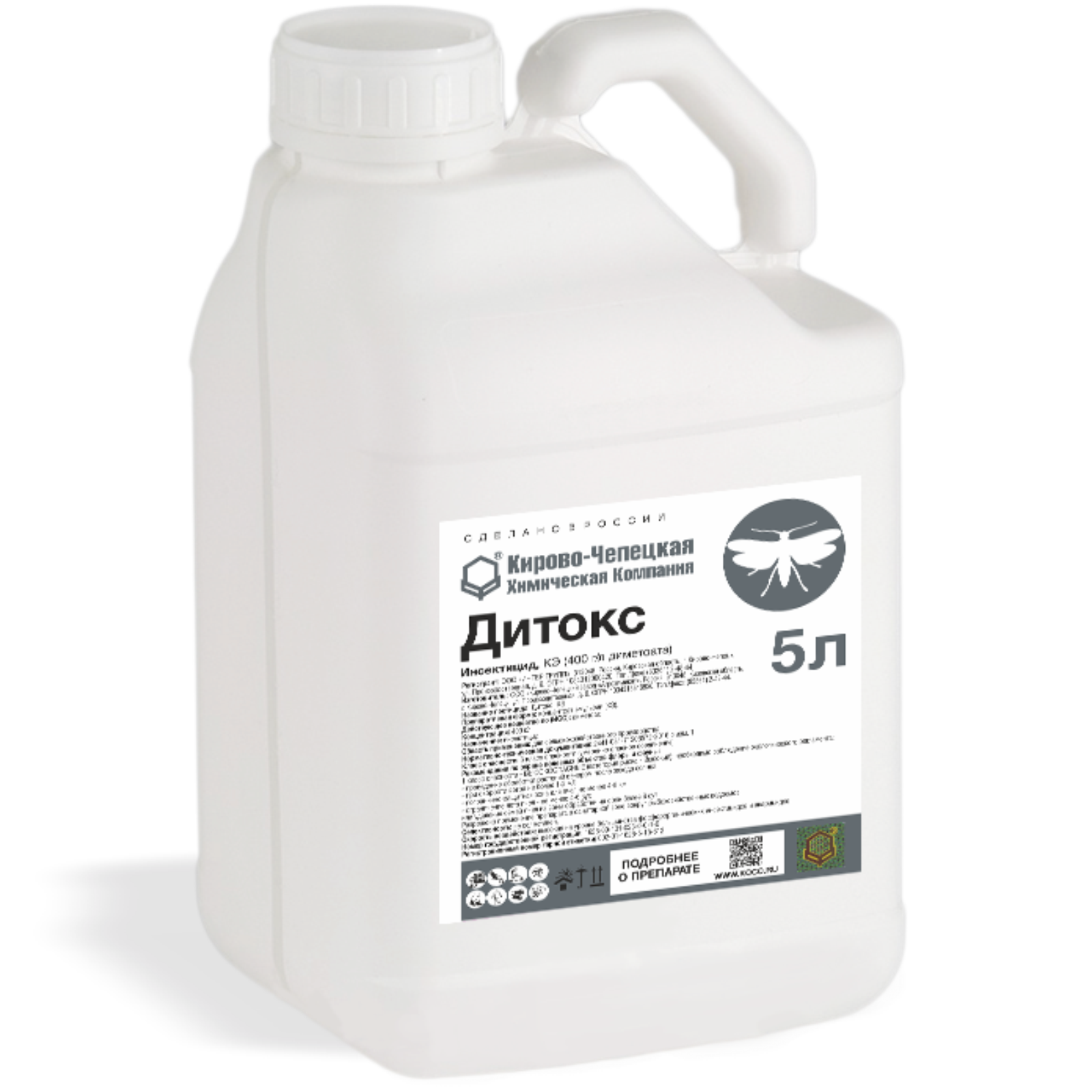
The shoots become entangled in webs, and damage and spider mites appear on the back of the leaf. | This flying insect not only sucks the juices from the leaves but also lays eggs that can live and develop in the tubers. As a preventative measure, all the tops are cut off two weeks before harvest, sprinkler irrigation is used, and the plants are hilled up more frequently to make it more difficult for the insects to reach the tubers. If there are numerous moths, it is necessary to treat the potatoes with pesticides such as Bi58, Di68, Ditox, and others. |
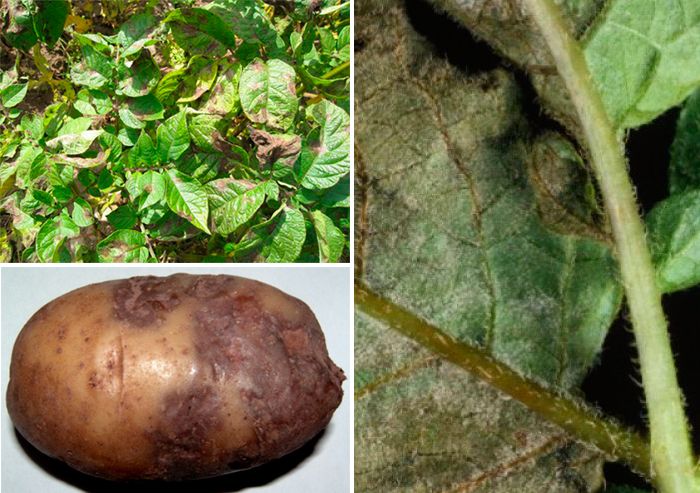
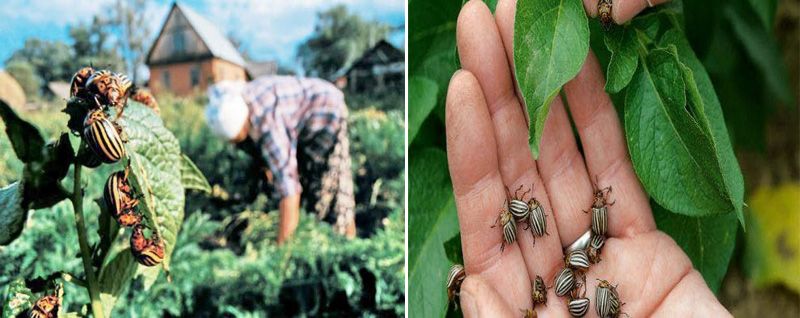
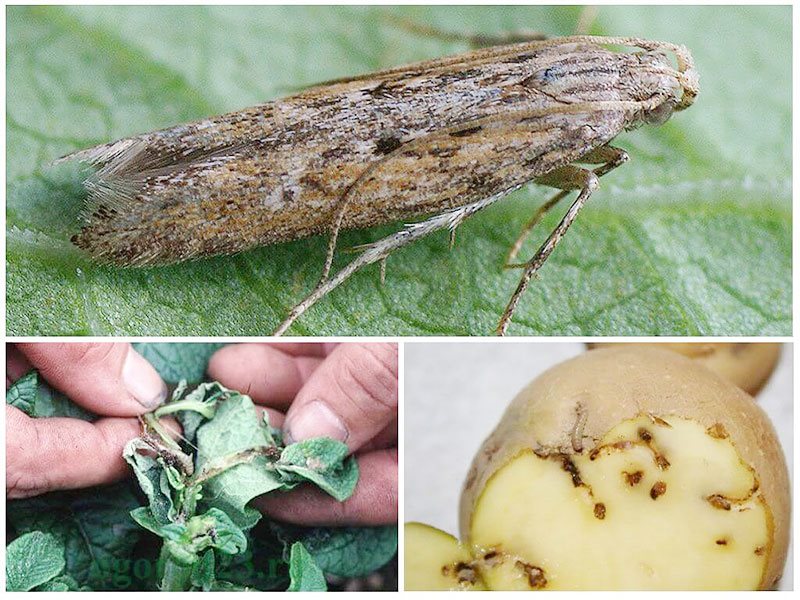
Photo gallery of products for combating late blight, Colorado potato beetle, and potato moth:

Read about common potato diseases and methods of controlling them.
The nuances of harvesting and storing the Manifest potato variety
Harvesting Manifest potatoes is possible 60-80 days after planting. The tubers are ripe when the tops droop and dry out. However, many gardeners strongly recommend cutting them off two weeks before harvesting – this will help the skins harden slightly and better withstand mechanical stress.
After harvesting, the potatoes are sorted and thoroughly dried in a sun-protected, well-ventilated area. If you have a shelter in your garden, you can spread the tubers out on a layer of plastic underneath.
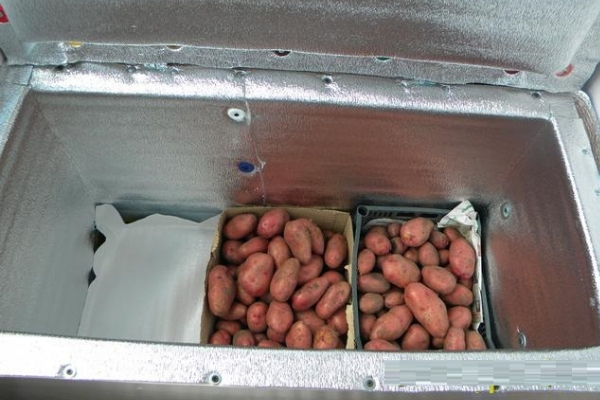
For storage, potatoes are placed in boxes or bags and stored in a cool place with a temperature of +2…+4 °C.
Under these conditions, it can be stored for up to 7 months without losing its shape or taste.
Comparison of the Manifest potato variety with other varieties in the table
| Variety | Ripening period (number of days to maturity) | Starch (%) | Yield (c/ha) | Weight of tubers (g)
Number of tubers per bush |
Shelf life (%) |
| Manifesto | Mid-early*** | 13-15.4 | 165-458 | 104-132
11-15 |
94 |
| Elizabeth | Mid-early*** | 13-18 | 290-400 | 80-140 up to 10 |
93 |
| Impala | Ultra-early* | 10-15 | 180-360 | 90-160
15-21 |
95 |
| Empress | Ultra-early* | 14-16 | up to 400 | 70-145
8-12 |
91-95 |
| Madeira | Mid-early*** | 12.5-18.6 | 202-632 | 106-136
20-30 |
94 |
| Red Scarlett | Early ripening** | 10.1-15.6 | 164-192, 270 | 56-102
up to 15 |
98 |
| Treasures | Mid-season**** | 12-18 | up to 650 | 95-250
12-18 |
94 |
| Banker | Mid-early*** | 15-16 | 200-350 | 70-160
10-15 |
90 |
| Luck | Early ripening** | 11-15 | 420-430 | 100-150
10-15 |
88-97 |
| Uladar | Early ripening** | 11.5-17.8 | 127-353 | 91-140
6-11 |
94 |
| Unique | Mid-early*** | 13 | 320 | 400-500
10-14 |
96 |
*Ultra-early – 35-50 days.
**Early ripening – 50-65 days.
***Mid-early – 65-80 days.
****Mid-season – 80-95 days.
Real reviews from gardeners about the Manifest potato variety
Everyone who has planted potatoes notes the pleasant flavor, uniformity of the tubers, and their good preservation when cooked, making Manifest suitable for salads, soups, and baked goods. Gardeners report that the variety is quite easy to grow, while its marketability and yield are quite high. However, residents of northern regions are not satisfied with the quality of the harvest.
User Lyubavushka, Ryazan
I grew the Belarusian variety Manifest this year. It's large, beautiful, productive, and delicious. I'll plant more next year.

User Svetlana, Minsk, January 9, 2018, 2:48 PM
Lad didn't suit us; the tubers were a good size, plenty of them, but most of the insides were damaged. Vector also didn't work—the potatoes were beautiful, but not tasty (in our sandy soil). However, we liked the taste (for mashing) of Manifest, with its red tubers, and the German variety Wendy. And finally, our main variety, Skarb, which is suitable for growing in all types of soil.
User michailo, January 9, 2018, 3:13 PM
Our Skarb is absolutely useless, in damp loam. Lad is very good, but is very susceptible to late blight. Vector resembles the old Zdabutak variety; it's tasty, but tends to get very soft. We use Manifest as an early summer variety. We got Atlant – we liked it, even though it's late. Our lily also grows large and beautiful. Gala didn't do well – it's small. Ragneda is beautiful all around, but it degenerates quickly and becomes small from its seeds. We don't treat potatoes for late blight.
User Nyura, December 30, 2018, 8:19 PM
What kind of Manifesto was this that Lukashenko presented to our leader?
In addition to the Manifesto, Putin received a bag of Vector, Rubin, Nary, and lard as gifts.
Let's leave the lard alone, and as for the other potato varieties, who knows? I suppose they gave me the best they had. It's interesting, isn't it?
This very same Manifesto has surfaced more than once; last year it was given to the Georgians

User Grant, December 31, 2018, 9:33 AM
I grew it. But given its AB type, it wasn't suitable for boiled potatoes. Perhaps it would have suited me better in other situations. In short, it's a matter of taste. The selection process involved selecting varieties specifically for mashed potatoes, potato pancakes, and baking. Perhaps they chose this variety based on what grew more or less well. Let's say we grew other varieties (Uladar, Queen Anna, Satina) on our plot at our residence in 2018.
User S.V. Kozlov, Nizhny Novgorod region.
In my opinion (and the taste of my family), the tasty potato varieties are Charaunik, Eurostarch, Yugana, Bellarosa, Sarov, Labella, Gioconda, and Captiva. These varieties are suitable for both frying and boiling. Suitable for frying are Estrella, Manifest, Sudarushka, Irbitsky, and Madeline. Solnechny (Solnechny) is also a very tasty variety.
User issedon, Russia, Novosibirsk, September 18, 2018
I bought 2 kg of seed potatoes at the Leroy Merlin store on Vatutina Street in Novosibirsk in May 2019. I planted them in my garden around June 5th.
The potatoes grew well. They had good tops and weren't sick. But when I harvested them, they yielded absolutely nothing. Compared to other potatoes I have, this one didn't yield anything at all. Peas. Apparently, these potatoes aren't suitable for our region (Novosibirsk). I took the peas to my mother-in-law for her chickens.