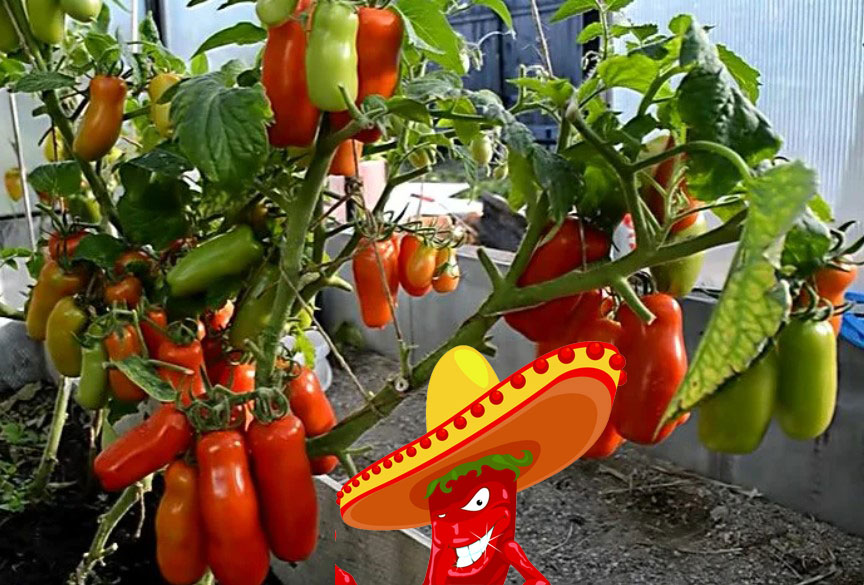
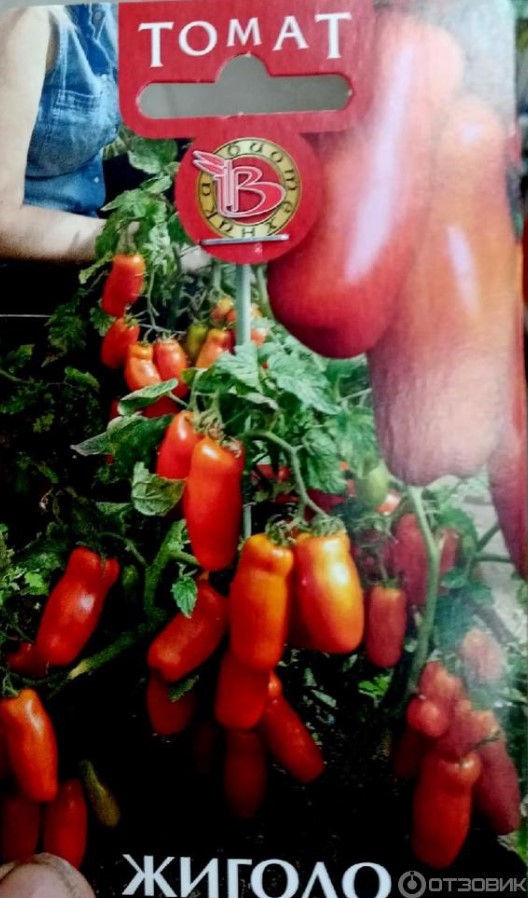
The Zhigalo tomato variety was developed by Moscow breeders and is distinguished by its unusually shaped fruits, which are ideal for both canning and fresh eating.
Content
- 1 Characteristics of the tomato variety Zhigalo (Gigolo) in the table
- 2 The history of the Gigalo tomato variety
- 3 A detailed description of the tomato variety Gigalo
- 4 Advantages and disadvantages of the Gigolo tomato variety
- 5 Features of growing the tomato variety Gigalo (Gigolo)
- 6 Resistance of the tomato variety Gigolo to diseases and pests, prevention, control (table)
- 7 Harvesting, using and storing the Gigolo tomato variety
- 8 Comparison of the Gigolo tomato variety with other varieties in the table
- 9 Gardeners' reviews of the Gigolo tomato variety
Characteristics of the tomato variety Zhigalo (Gigolo) in the table
| Ripening period (number of days from full germination to ripening) | 97-105 days |
| Description | A determinate tomato variety for growing in greenhouses and open ground with compact bushes and strong fruits. |
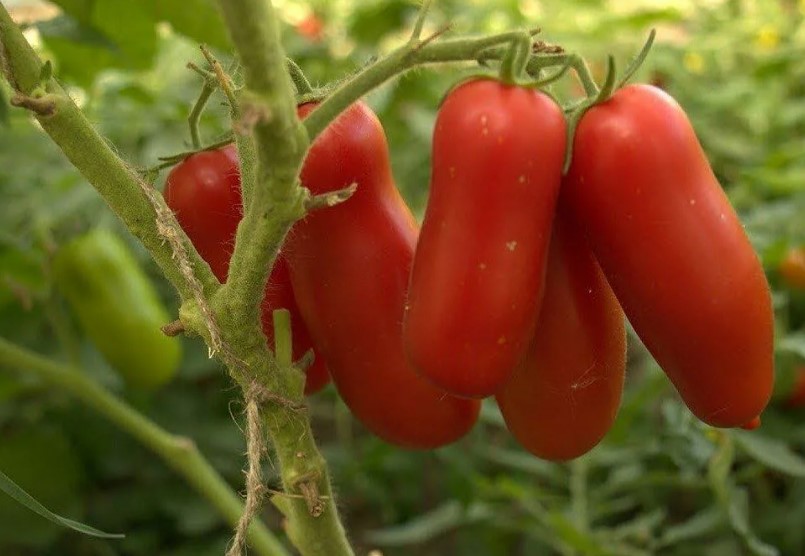
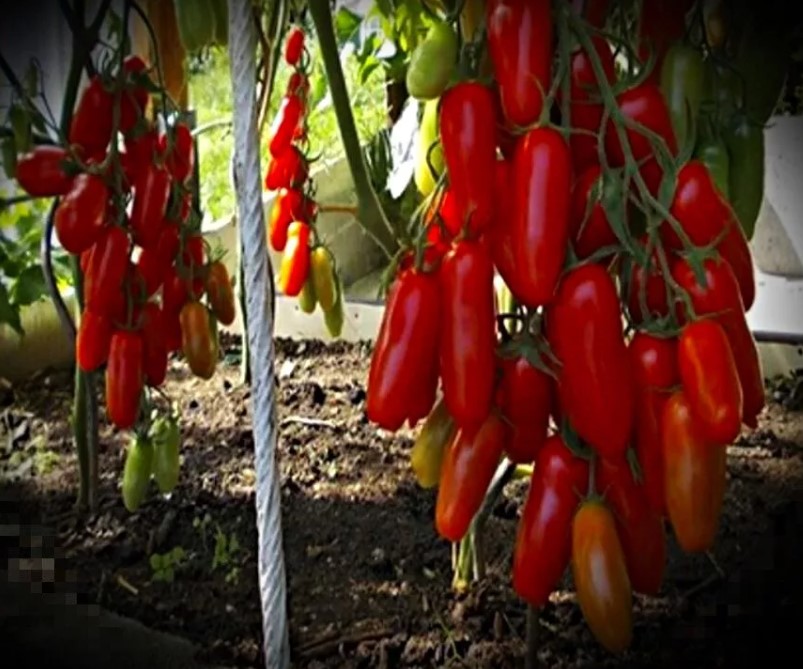
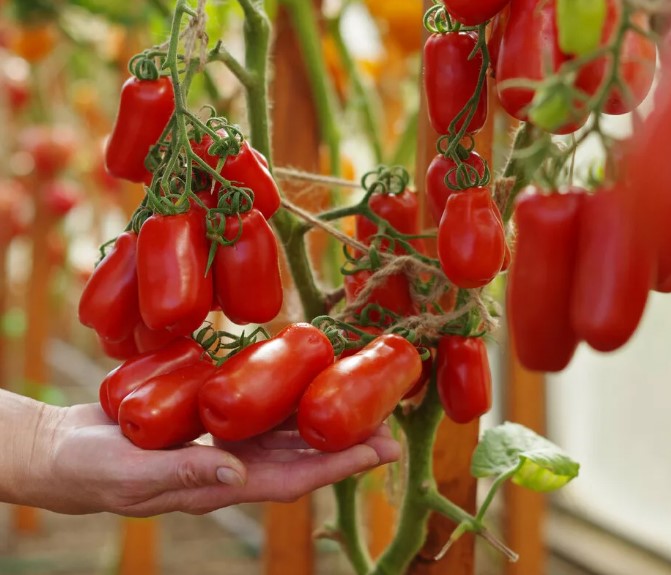
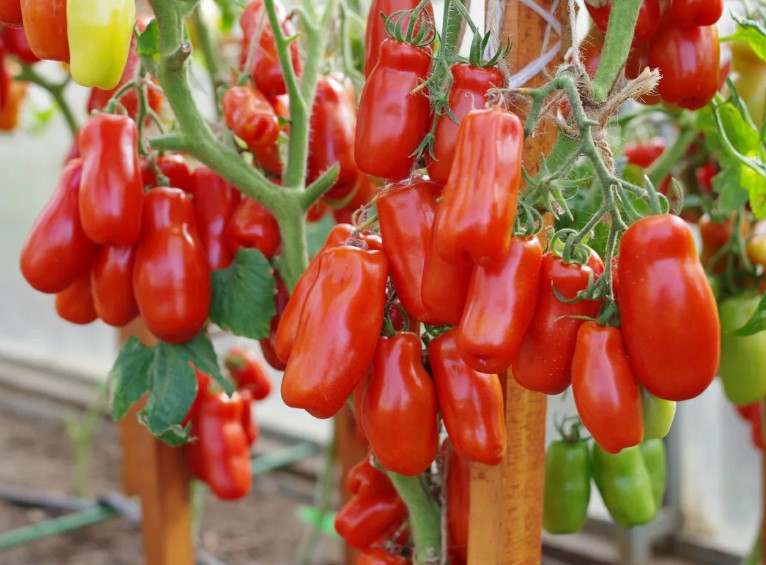
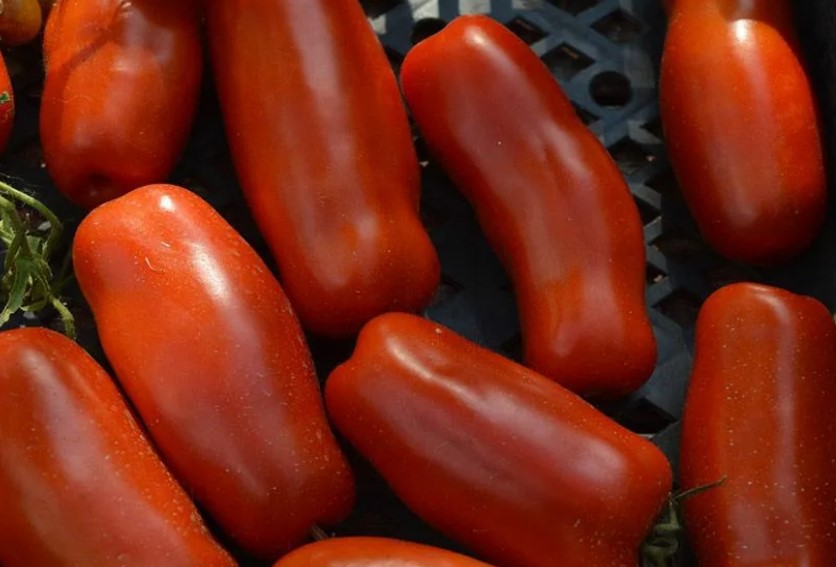
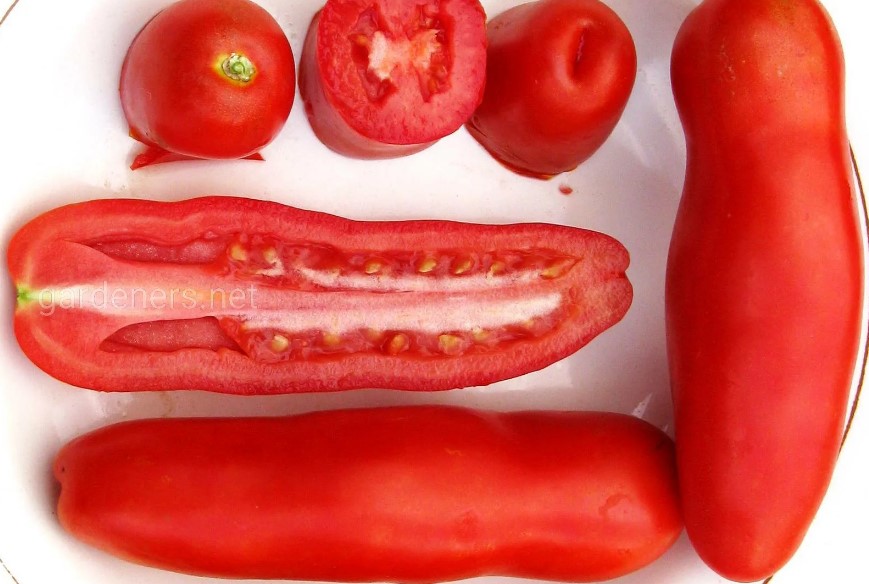
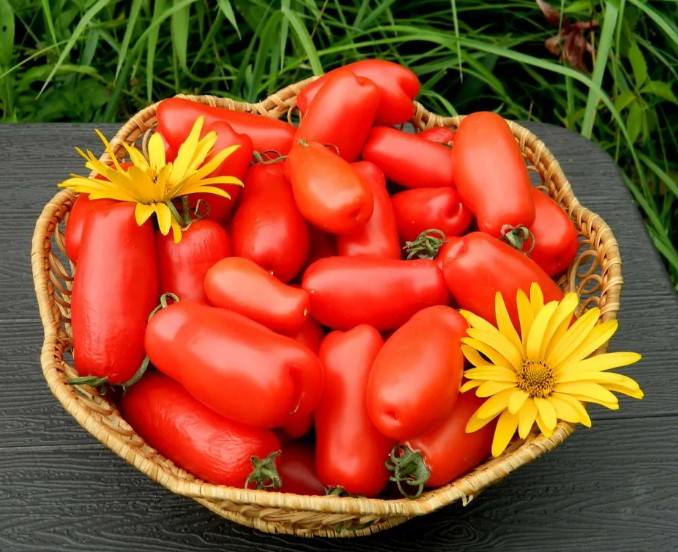
| Fetus | The fruit is cylindrical in shape, with a slightly ribbed surface. The skin is dense and smooth. The tomatoes are red in color and range in length from 8 to 15 cm. |
| Fruit weight | 100-120 g. |
| Taste | Sweet and sour |
| Usage | Fresh food, whole fruit canning. |
| Marketability | High |
| Shelf life | Good |
| Yield of commercial fruits | 15.0-15.5 kg/sq.m |
| Disease resistance | High resistance to tomato diseases. |
| Agricultural technology | Sowing of seeds is carried out in March, the planting pattern of tomatoes is 40x30 cm. |
| Growing regions | Northern, Northwestern, Central, Volga-Vyatka, Central Black Earth Region, North Caucasian, Middle Volga, Lower Volga, Ural, West Siberian, East Siberian, Far Eastern regions |
| Inclusion in the State Register | 2021 |
| Originator | Blochkin-Mechtalin V.I. |
Photo gallery of the Gigalo variety
The history of the Gigalo tomato variety
Gardeners believe the Zhigalo tomato got its name from its unusually shaped fruit. Sometimes, instead of a perfect cylinder, the cluster produces bizarre, elongated tomatoes. This variety was developed by Russian breeder V.I. Blokin-Mechtalin in 2015, and in 2021, it was added to the State Register of Vegetable Crops under the name Zhigalo.
A detailed description of the tomato variety Gigalo
The Zhigalo tomato is a varietal crop and has a number of characteristic features, which are described in more detail below.
Characteristics of the bush
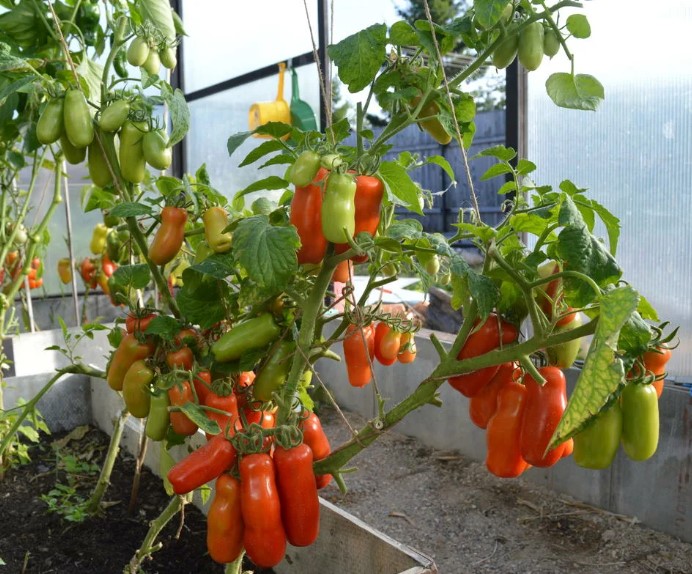
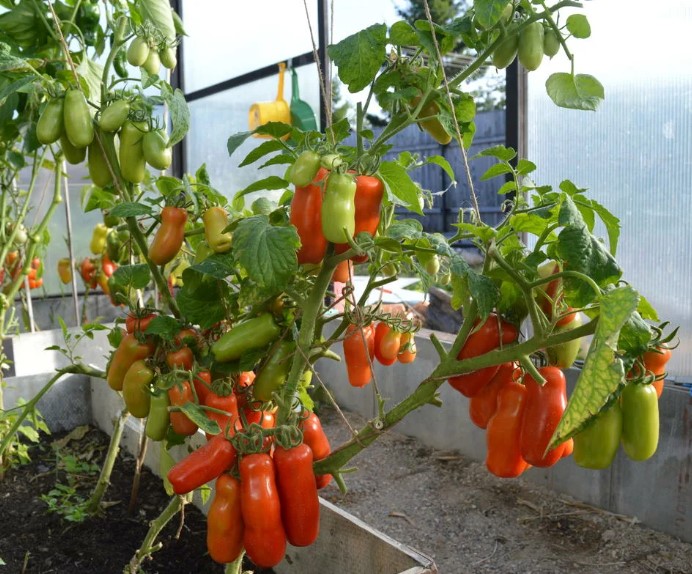
The shoots are determinate and standard, and the bush grows no more than 40 cm tall. It grows compactly, not sprawling. The root system is robust but close to the surface. The leaves are medium-sized and dark green.
The formation of fruit clusters occurs above the third leaf and then alternates at intervals of two leaves.
Fruit characteristics
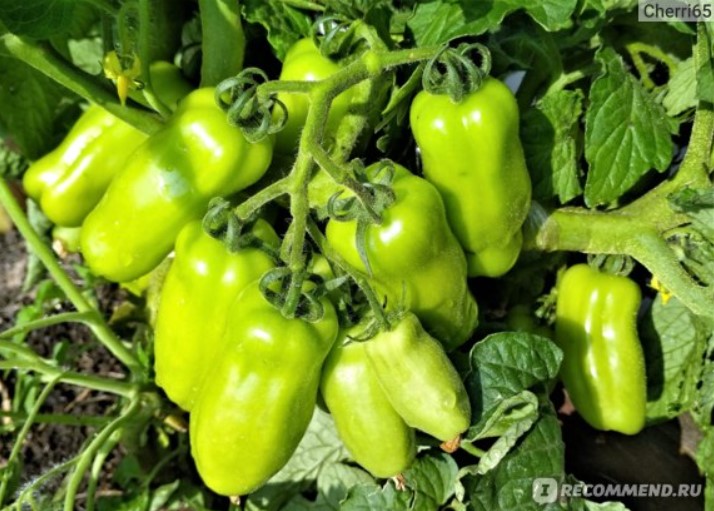
Tomatoes are cylindrical in shape with slight ribbed surfaces. Sometimes the fruits can stretch from 8 to 15 cm, and their color changes from green to red as they ripen. They weigh 100-120 g. The flesh is dense, slightly dry, with a small number of seeds inside.
Ripening time and yield
The Zhigalo tomato is distinguished by its early ripening period: the fruits ripen within 97-105 days from the first shoots. The variety has a relatively high yield; with proper cultivation practices, up to 15.5 kg of ripe tomatoes can be harvested from each square meter.
Advantages and disadvantages of the Gigolo tomato variety
The table below shows the main advantages and disadvantages of the Gigalo tomato.
| Advantages | Flaws |
|
|
Features of growing the tomato variety Gigalo (Gigolo)
The Gigalo tomato doesn't require any special cultivation techniques; if provided with the proper conditions, it will certainly delight gardeners with an excellent harvest.
Sowing seeds and growing seedlings
Gigalo tomato seeds are sown 50-60 days before transplanting the seedlings into the ground. This period varies from region to region, ranging from late February to mid-March. However, experienced gardeners agree on one thing: before sowing, the seeds must be germinated by placing them in a damp cloth for approximately 24 hours.
General-purpose soil purchased from a specialty store is suitable for tomatoes. However, if necessary, you can always mix two parts garden soil with one part each of sand and humus. If desired, you can add vermiculite at a rate of 10% of the total volume of the soil mixture – it drains well and prevents moisture from stagnating around the roots.
Tomato containers can range from wooden crates to peat pots; each gardener can choose what's most convenient for them. The only rule is that all household containers should be disinfected beforehand.
Fill the boxes or cups approximately 2/3 full with soil, then make 1-cm-deep furrows in the top. Fill each furrow with seeds at 3-cm intervals, then cover them with soil and water with a spray bottle.
Next, cover the container with plastic wrap or glass and place it in a warm place until the first sprouts appear. As soon as the tomatoes begin to sprout, remove the plastic wrap and move the containers to a cooler, brighter area.
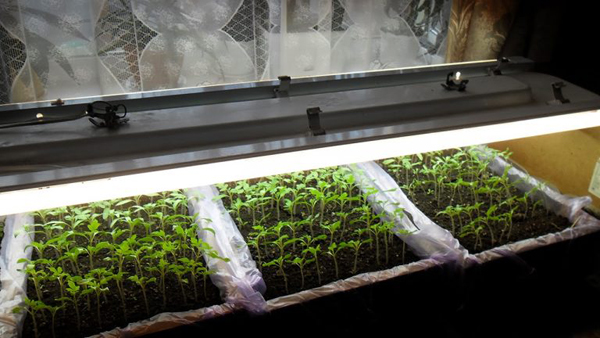
In winter and early spring, seedlings may still be in a dark place, so stems may begin to stretch in search of light. To prevent this, provide supplemental lighting, such as with a grow light.
Planting in the ground
Tomatoes can be planted in the ground only after the soil warms up to 12 degrees Celsius. Otherwise, the seedlings will sit in the ground for a long time without developing, which will delay fruiting for several days.
Before planting, the soil is dug up with humus and superphosphates, but it is also advisable to dig up the bed with the addition of manure in the fall so that the soil becomes more nutritious and lighter.

Next, prepare holes 20 cm deep each. Place a handful of ash mixed with soil in each hole. The seedlings, along with a lump of soil on their roots, are transferred into the hole, covered with soil, and watered with warm, settled water.
If the weather has not yet settled, you can cover the plantings with spunbond at night.
Care
The Zhigalo tomato variety is quite easy to grow; its shoots have limited growth, so they don't need pinching, and the compact bushes don't require support.
All care comes down to standard procedures:
- Mulching. After transplanting tomatoes into the ground, the surface of the bed is covered with sawdust, straw, or tree bark. This protective layer prevents the roots from being exposed to harsh sunlight and frost.
- Watering: 1-2 times a week; when planted outdoors, the frequency is adjusted depending on weather conditions.
- Fertilizing. It is recommended to fertilize tomatoes with any suitable complex fertilizer three times per season, at 10-14 day intervals. This should be done before fruit begins to form.
- Weeding and loosening. These two procedures are usually performed together; they help improve soil aeration and reduce the risk of various pests.
Resistance of the tomato variety Gigolo to diseases and pests, prevention, control (table)
| Disease or pest | Signs | Prevention and treatment |
| Late blight | Brown spots with a white border – a moldy coating – appear on the leaves. | Treatment of plantings with a solution of Bordeaux mixture or Fitosporin. |
| Slugs | Adults emerge on the ground, easily climbing bushes and devouring foliage. | Crushed eggshells or ash are scattered around the plants. For large slug infestations, specialized products and traps are suitable. |
| Colorado beetle | The leaves on the bushes are beginning to be eaten away, leaving only the veins. Upon closer inspection, the presence of beetles and their orange larvae on the undersides of the leaves becomes apparent. | If the planting area is small, you can collect the beetles by hand. For larger pest infestations, specialized products such as Green Belt, Tanrek, Tabu, and others will help. |
| Whitefly | A very common occurrence in greenhouses, its appearance is usually due to poor soil cultivation and infestation. Moth-like butterflies appear en masse on the bushes and reproduce rapidly. | To prevent whiteflies, disinfect the soil in the greenhouse before planting, and spray the bushes periodically with a soapy solution as they grow. However, if the infestation is large, insecticides (Tanrek, Metarizin, etc.) are essential. |
Harvesting, using and storing the Gigolo tomato variety
The Zhigalo tomato harvest begins 97 days after the first shoots emerge. The fruits don't split on the vine, so there's no rush to harvest them, unlike with some other varieties.
Tomatoes are used primarily for canning; in salads, their flavor is not very pronounced due to the dry pulp.
Thanks to their thick skin, tomatoes have a long shelf life and excellent shelf life. If stored in a paper-lined box in a cool place, they can stay fresh for up to a month.
Comparison of the Gigolo tomato variety with other varieties in the table
Please note! How can you easily convert centners/ha to kg/sq.m? Simply divide by 100! For example, the Abakansky Pink tomato yields 400 centners of marketable fruit per hectare. This equals 4 kg per square meter. It's that simple! Also, keep in mind that typically no more than 3-4 plants are planted per square meter. This way, you can calculate the yield per bush. In the case of the Abakansky Pink, it's about 1 kg.
| Variety | Ripening period (number of days from full germination to ripening)
Yield of commercial fruits |
Brief description | Fetus |
| Gigolo (Gigolo) | 98-104 days
900-1200 c/ha |
A mid-season, determinate, standard variety for open ground and greenhouses. Requires staking and training. Suitable for salads, stuffing, and canning. | Oddly shaped, reminiscent of a sausage, muted red, 125 g. Good taste. |
| Adelina | 82-109 days
242-447 c/ha, maximum 669 c/ha |
A mid-season determinate variety for open ground. Suitable for salads, whole-fruit canning, and processing into tomato products. Heat- and drought-resistant. | Egg-shaped, smooth, transportable red, 59-83 g. The taste is good to excellent. |
| Scarlet Mustang | 115-120 days 391 c/ha |
A mid-early, indeterminate variety for open ground and greenhouses. Suitable for canning. It has a very high marketability (97.3%). | Medium, cylindrical, hard, slightly ribbed, red, 95 g. |
| Casanova | 110-115 days
1080 c/ha |
A mid-season indeterminate variety for open ground and greenhouses. Suitable for salads. | Cylindrical, medium-density, slightly ribbed, red, 30-38g. Good to excellent taste. |
| Königsberg | 115 days
460-2000 c/ha |
An indeterminate, mid-season variety for garden beds. Requires staking and training. Suitable for salads and processing into tomato products. Marketability: 56% (Novosibirsk Region). Heat-resistant. | Cylindrical, smooth, dense, good keeping quality, red, 155-230 g (up to 300 g). Excellent taste. |
| Ladies' man | 110 days
1000 c/ha (greenhouse) |
A mid-season indeterminate variety for open ground and greenhouses. Requires staking and training. Suitable for salads, whole-fruit canning, and pickling. | Cylindrical, with a spout, smooth, very dense, resistant to cracking, red, 45-60 g. Excellent taste. |
| De Barao | about 125 days 500-600 c/ha |
A late-ripening indeterminate variety for open ground and greenhouses. Requires staking and training. Suitable for salads and whole-fruit canning. | Ovoid, smooth, red, 30 g. Excellent taste. |
| Rio Grande | 110-115 days
1500-1800 c/ha |
A mid-season determinate variety for open ground and greenhouses. Suitable for salads, processing into tomato products, and canning. | Plum-shaped, slightly ribbed, pinkish-red, 100-115 g. The taste is good to excellent. |
| Rocket | 122-129 days
328-618 c/ha |
A mid-early determinate variety for open ground. Suitable for canning. Requires increased doses of potassium fertilizer. | Elongated plum-shaped with a tapering top, smooth, red, 34-58 g. Good taste. |
| Siberian grape | 110-120 days
The yield of commercial fruits in open ground was 8.5 kg/sq.m. |
A mid-late determinate variety for open ground and greenhouses. Suitable for salads. | Cylindrical, medium density, slightly ribbed, red, 89 g. Good taste. |
| Siberian Troika | about 120 days 600 c/ha |
A mid-season determinate variety for open ground. Suitable for salads and canning, including whole-fruit preserves. Heat-resistant. | Cylindrical with a spout, smooth, dense, red, 80-100 g (up to 200 g). Excellent taste. |
| Siberian pirouette | 85-100 days
The yield of commercial fruits is 6.0-6.5 kg/sq.m. |
An early-ripening determinate variety for open ground and greenhouses. Requires staking and training. Suitable for salads, pickling, and whole-fruit canning. | Cylindrical, smooth, dense, resistant to cracking, red, 65-70 g. Excellent taste. |
Gardeners' reviews of the Gigolo tomato variety
Tomatoes are easy to grow, grow quickly, and rarely get sick, but their flavor isn't the most vibrant. They pack well in jars, so I use them exclusively for pickling.
Tomato Gigalo, a unique variety. I was surprised by the shape of the fruits, resembling a sausage. Super productive. Care: plant and forget.
Price: 95 rubles
Hi all!My main hobby at the dacha is growing a variety of tomatoes. The busy season begins in early spring, when I'm already choosing varieties to plant, and since I have so many in my collection, I spend a week sorting through packets, picking out the lucky ones. I try not to buy tomato seeds anymore, but sometimes I can't resist the temptation.
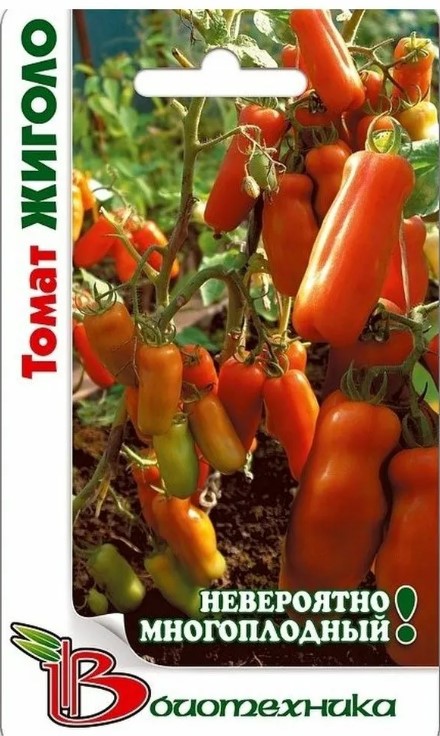
When I visited a seed store, the salesperson suggested a variety with the romantic name "Gigalo" from the Biotekhnika brand. I decided to buy it only after much persuasion and hearing about how popular this variety is among gardeners. I was confused by the shape of the fruits; they were very unsightly, in my opinion.
🍅GENERAL INFORMATION
Brand: Biotekhnika, Russia.
Price: 95 rubles.
Packaging: 12 pieces.
The plant height is 40-45 centimeters.
Growing conditions: open ground.
You can buy them in online seed stores.
🍅 SOWING, GERMINATION
I planned to grow it in open ground, so I sowed it later than the others, in the first ten days of April.
The soil was prepared in the fall, following all the rules of agricultural technology. I doused it with boiling water and spread the seeds in a furrow. I pre-treated them with potassium permanganate and phytosporin to prevent possible diseases.
Germination is excellent, I used three seeds for the experiment, and the same number sprouted.
I planted them in pots after the third true leaf appeared.
The seedlings were not sick or stretched out, and by the time of planting they had grown into compact bushes no more than twenty centimeters high.
🍅 LANDING, CARE
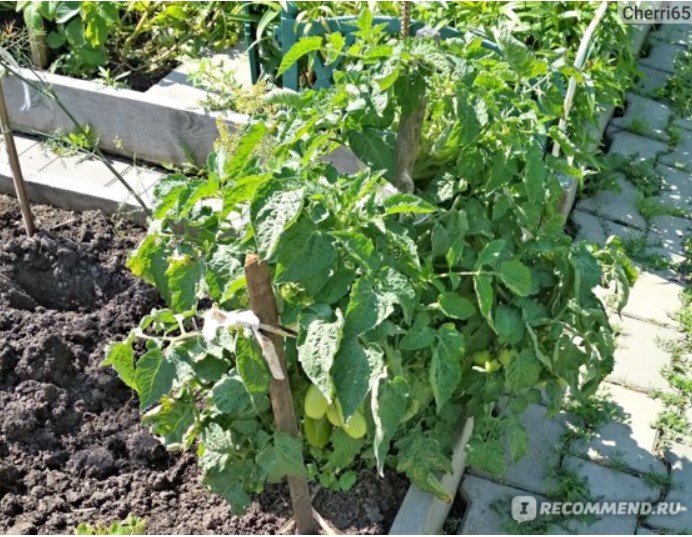
In the first ten days of June, I finished planting the remaining tomato plants; there was no more room. So I kept one plant for myself, planting it in an orphaned spot at the end of the Victoria citrus bed. I paid it virtually no attention, only watering it once a week on average.
But he wasn't upset by this location; he loved the spot, exposed to full sun all day long. The bush grew quickly, sending up side shoots, looking dense and surprising with the lushness of its foliage.
I didn't remove the side shoots or leaves; this isn't usually necessary with compact bushes. I thought I could get by without tying it to a support, but it was hard to hold its crown from the wind with such a large crown. I had to install a stake and tie the trunk down.
After a couple of weeks, it became necessary to strengthen it further by adding two more sticks, as the branches had already begun to fall to the ground.
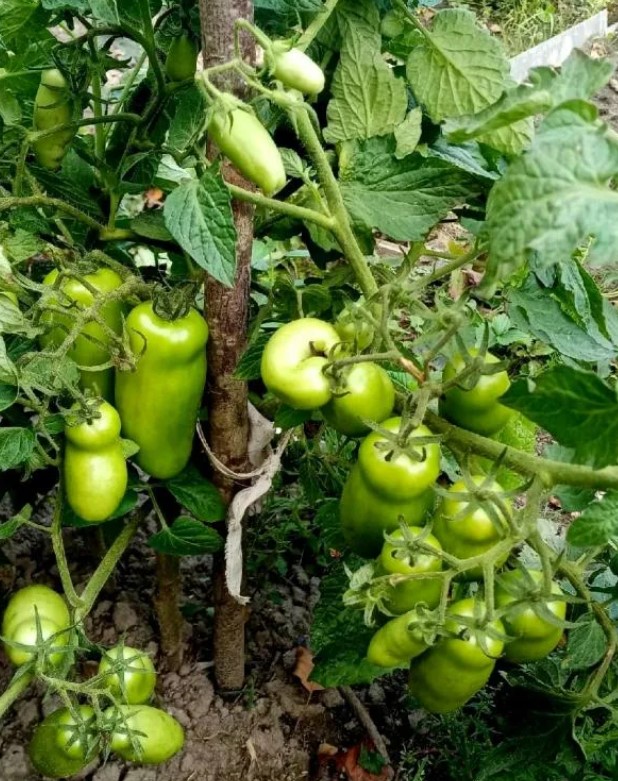
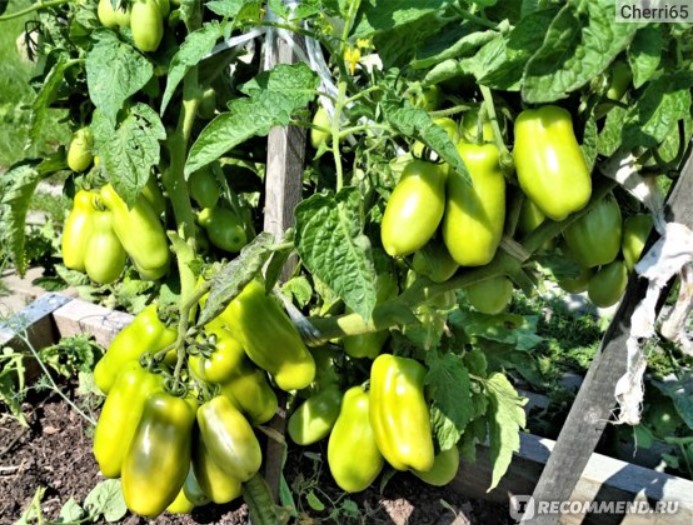
While tying up the trunks, I discovered numerous tomato plants forming under the leaves, which was incredibly surprising. They were literally hanging in clusters, one on top of the other. All were green. To ensure they had sunlight and direct nutrients to the fruit, I removed the side shoots and many of the leaves.
This is what it looked like: a bush about 60 centimeters high, covered in tomatoes.
Each cluster produced 6-8 elongated, cylindrical fruits, averaging fifteen centimeters in length. A single bush yielded approximately six kilograms. The fruits, picked while still green, ripened beautifully in crates without losing their flavor.
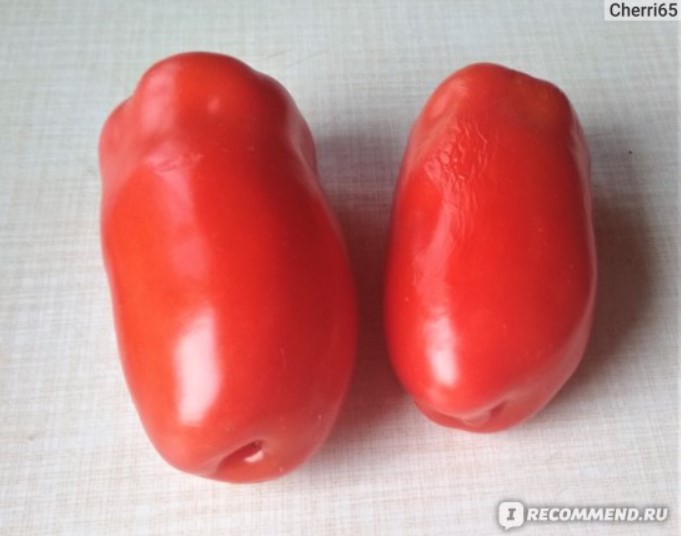
They all started ripening at once, turned red within a week, and were ready to be harvested and processed. The color is red, the skin is firm, shiny, and does not crack. They are suitable for storage and transportation.
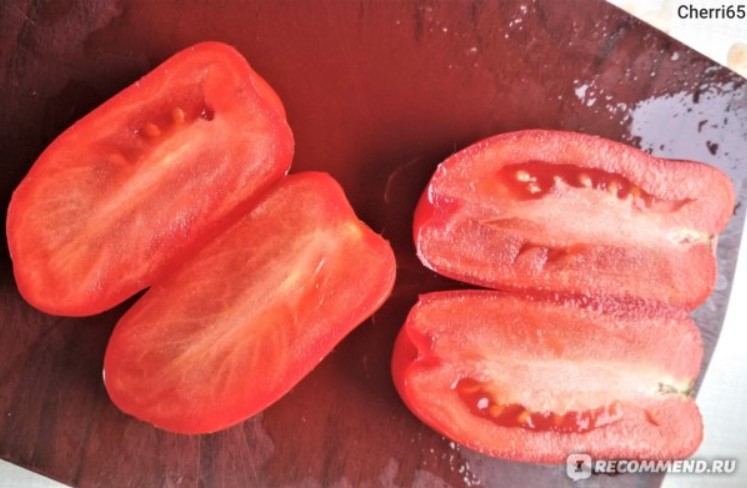
The flesh is firm and dense, with few seeds, making it ideal for drying and canning. The flavor is distinctly tomato-like, sweet and tart.
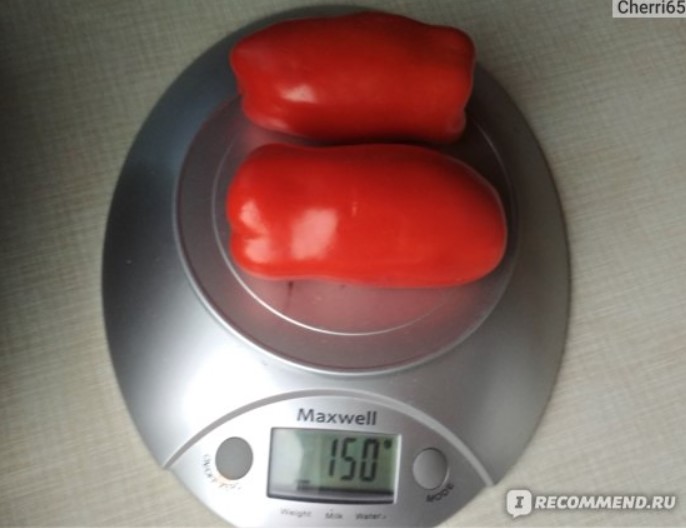
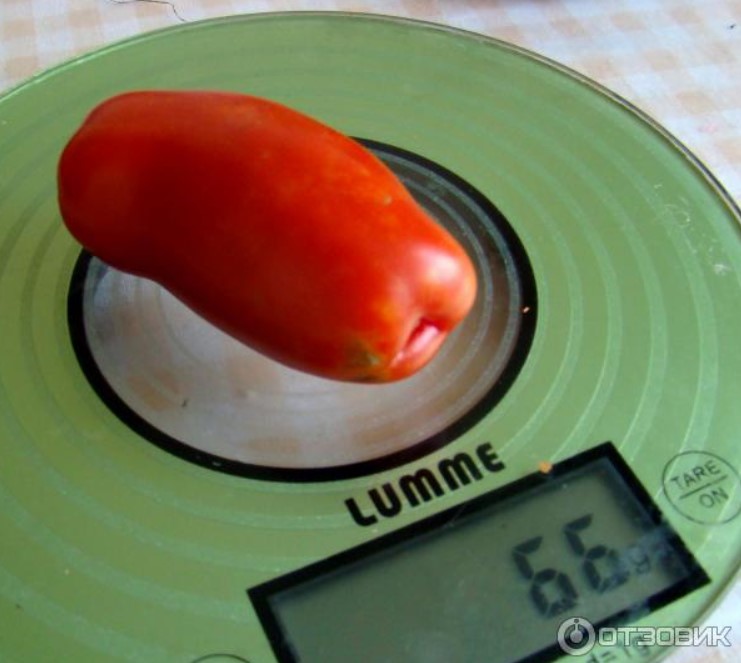
My weight didn't exceed one hundred grams; in the photo, the average is seventy-five grams.
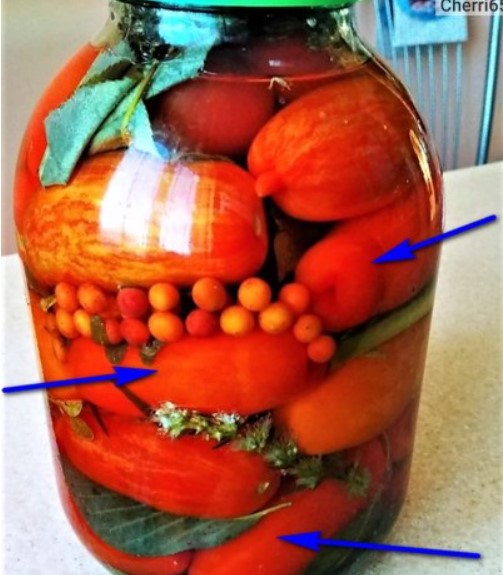
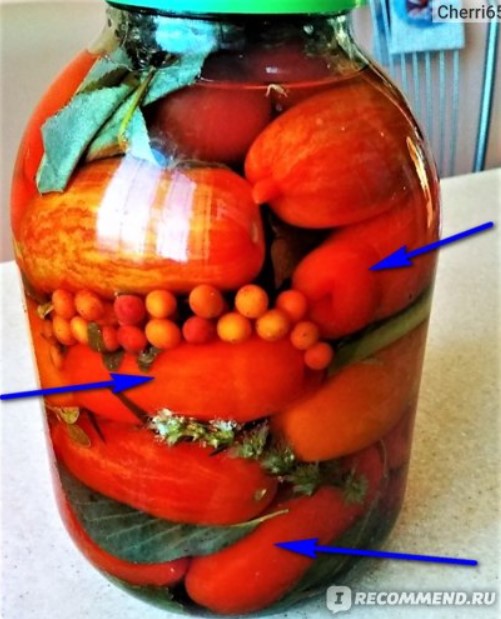
Basically, all the tomatoes went into processing, for pickling in jars.They look great in jars, holding their shape without bursting or swelling. They're delicious to bite into, just like fresh ones, with the firm texture.
ConclusionsThis unique tomato variety surprised me with its sausage-shaped fruits and its incredibly abundant harvest.
It's easy to grow—plant and forget about, just water. It's disease-resistant. The compact bush takes up little space. It requires staking, as it tends to collapse under the weight of the harvest.
Universal purpose, delicious to eat fresh, canned, dried.
They are stored and ripen well, which is a big plus, since it is difficult to process the harvest quickly in the fall.
I will definitely plant it every year.
Suitable for growing in open and closed ground.
These are these beauties, fresh from the jar, served for dinner!
Thank you for your attention, happy shopping and great harvests!

I have already talked about some of the hybrids and varieties of tomatoes that I grow.
I'm currently preparing a new seed order. I've reviewed my remaining seeds, considering what I'll plant and what I'll discard. I discovered that for the fourth year running, I'll be planting the "Gigolo" tomato from Biotekhnika LLC, but this time with my own seeds. However, I did buy a package of seeds from the 6 Sotok store last fall for my neighbor, with whom I always exchange mini-gifts for New Year's and March 8th.
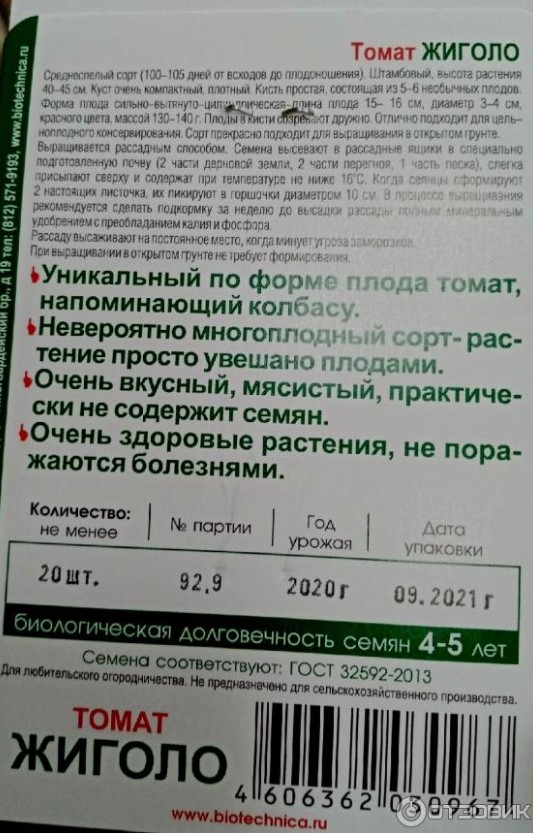
The back of the package contains complete information for the consumer: characteristics of the variety, features of growing seedlings and caring for tomatoes planted in the ground, and other data.
I noticed the seed package has gotten heavier: 20 seeds instead of the 12 my colleagues and I used to buy early in the spring of 2019 for 80 rubles, including a 7% discount with a card. Now the price has increased proportionally, and it'll probably go up even more by spring.
I would like to share my impressions of growing it.
I really liked these tomatoes for making sun-dried tomatoes. They're productive, don't require much attention during cultivation (if you mulch the soil surface, you can even leave them untied), are short, ripen well, which is important when weather conditions force you to pick the fruit at a blanched stage for fear of late blight, and they last a long time without changing their consistency. They're very fleshy, have few seeds, and they don't even interfere with the drying process; you can even leave them in if you prefer.
The taste is very ordinary, but we don’t use them in salads; their purpose is drying.
The first year, I pickled them; they were very good because they were meaty and held their shape. But now my husband and I don't eat pickles, and I now pickle cucumber gherkins for my daughter.
The germination of the seeds was excellent, and I planted them in the ground already sprouted at a considerable distance.
I don't like tall tomatoes, so for open ground I treat the seedlings with Atlet according to the instructions. I really like it. The resulting seedlings are stocky and don't grow to the sky in the garden.
In the first year, I planted four tomato plants. I selected a tomato from the second cluster of the best plants and collected my own seeds.
I grew tomatoes from my own seeds for two years,
Every year, I select the best tomatoes from the best bush. This year, I harvested an amazing crop (the summer was perfect for growing tomatoes—two months of heat): a bucket of tomatoes from four bushes.
All the bushes were perfectly matched, and after getting the hang of it, I planted them more spacingly, as they were spreading out. Seeing the abundance of beautifully set tomatoes, my husband couldn't resist and tied up the trusses at the end of the season.
True, I haven't achieved the promised fruit weight of 130-140 grams in any year: the first bunches weigh a maximum of 100-120 grams, and even less later. Perhaps my soil isn't quite right: no matter what I feed the roots, it all gets washed away with the first watering. I should spray more often instead of applying root fertilizer, but I don't always get around to it. And in the third part of the plot, where the soil is denser, I don't grow tomatoes, because I periodically grow potatoes, which are sometimes susceptible to late blight.
Moreover, due to the cold and rainy August, I was afraid of late blight, and when I left for my small homeland on August 20th, I collected all the tomatoes for ripening and liquidated the bed.
I picked half the tomatoes when they were just beginning to lighten in color, that is, at the blanched ripeness stage. And while I was away for three weeks, they lay quietly on the table on the balcony, covered with newspaper, in a single row. They ripened perfectly and didn't soften at all.
This photograph was the only one found, taken about two weeks before the collection. The lower brushes and brushes on the south side had already been collected.
It's clear that the bush is low, as described, very foliated, with the lower fruits literally digging into the ground. This may be due to the influence of "Athlete."
This variety is mid-season; I usually planted it earlier, but this year, due to a trip to the countryside to visit my gravely ill mother, I planted them late, in early April. Planting them in mid-March usually yields better results, as they're usually ready to be planted in the garden by mid-May. And if there's a sudden frost, which I can't remember the last time around this time, lutrasil will help.
I should also note that the main problem with this variety in my garden is blossom-end rot. It's appeared in the last two years. I used to have a "Khurma" variety that suffered from this disease, but I parted with it. So, I've somehow fallen out of the habit of monitoring it, as my other hybrids and varieties have never been affected.
This year, I also noticed darkened tops on literally the first cluster of two bushes. I immediately realized what was wrong and began regularly spraying the bushes with a calcium gluconate solution (I had some unused ampoules that had been prescribed to my husband for injections). The disease quickly subsided.
So, it's worth keeping this in mind when growing this variety. Personally, I'll be adding a handful of crushed eggshells to the holes with these tomatoes, but I'll still give the tomatoes a point.
I can't say anything about late blight resistance; I haven't had it in my garden for about 10 years. I try to buy resistant varieties and hybrids, but I still treat them 2-3 times with a homemade burgundy solution.
Otherwise, care is the same as for all tomatoes: fertilizing, watering as needed, spraying with boric acid, Zavyaz, and a solution of potassium permanganate.
I really like these tomatoes from my own, practically free, seeds for drying. We dry a little to get 2-3 jars for my gourmet daughter, and I wouldn't mind enjoying them on holidays, either.
I recommend this variety to lovers of whole-fruit canning and sun-dried tomatoes. They don't require any special care and are a success for almost everyone.
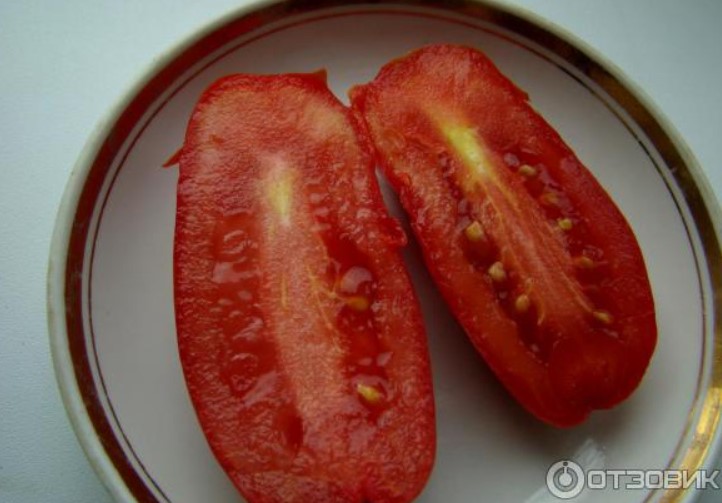
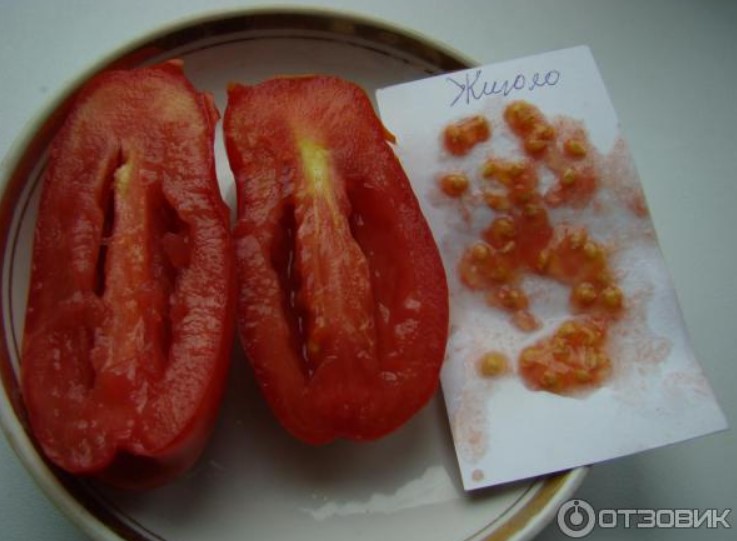
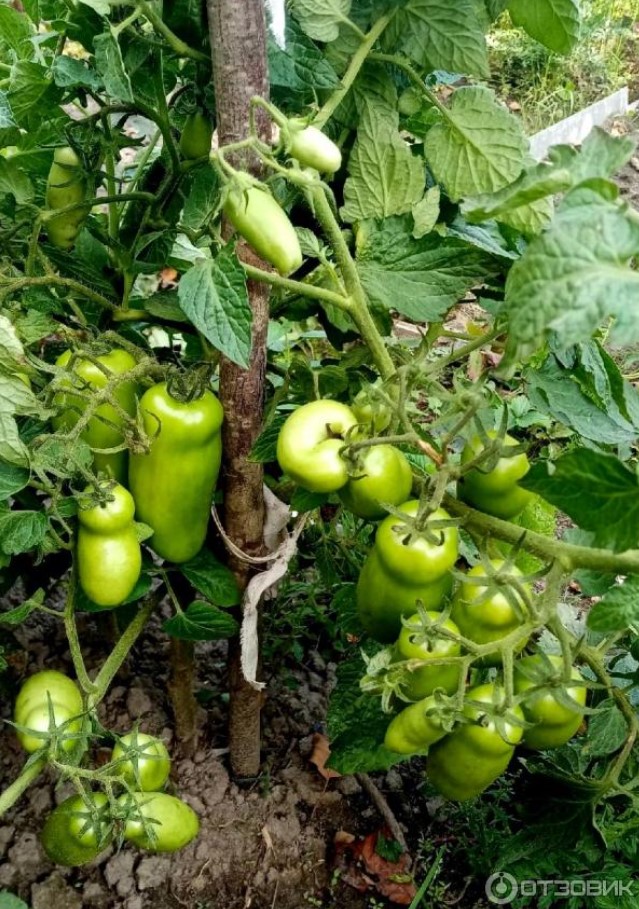
Hello everyone! I really want to recommend this variety to gardeners. I'm writing a review in this thread, even though I made the seeds myself from a tomato my neighbor shared with me, and she raved about it. She's also been making seeds from her own harvest for several years now and can't remember where she got them originally. My own seeds always germinate better than store-bought ones, so the germination rate was 100 percent. The seedlings grew cheerful, strong, and stocky. They were pleasing to the eye and stood out from other varieties with their healthy appearance. Transplanting into the ground was no problem. A ton of tomatoes set. And although the bushes aren't tall and don't require staking or pinching, they did lean over under the weight of the harvest, but there was nowhere to fall—the tomatoes were crammed in bunches everywhere. It's hard to capture this in a photo; I can't get the right angle, and some of the tomatoes are hidden behind the foliage.
One drawback is that they don't turn red uniformly, slowly. But that's probably because there's something missing in the soil. I should probably spray them with iodine solution, but I haven't gotten around to it yet.
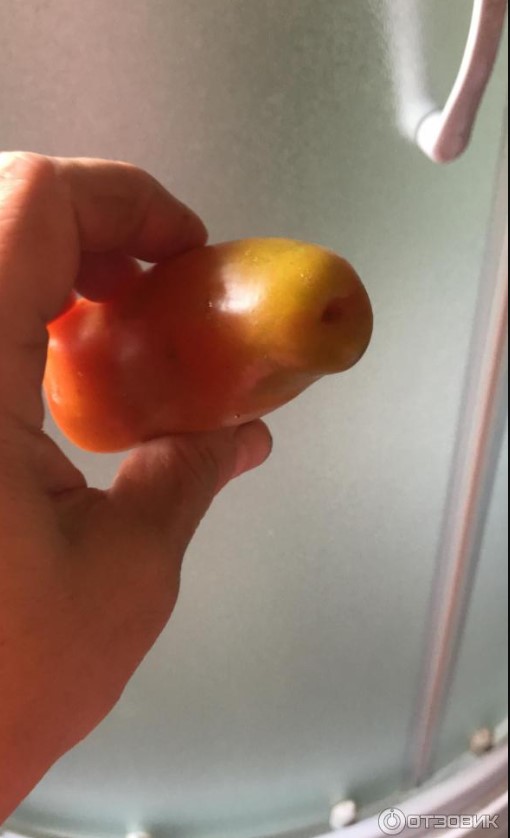
Tomatoes have an interesting name, I read on the Internet why they were called that, if you have a good imagination, you can also guess from this photo))).
I also want to praise this variety for its taste; they are not large, but they are meaty and tasty, and they are very convenient for salting and marinating.
Overall, I highly recommend this tomato variety and, of course, give it an "A" rating, especially since you can save your own seeds later. Thanks for reading the review, and bye!
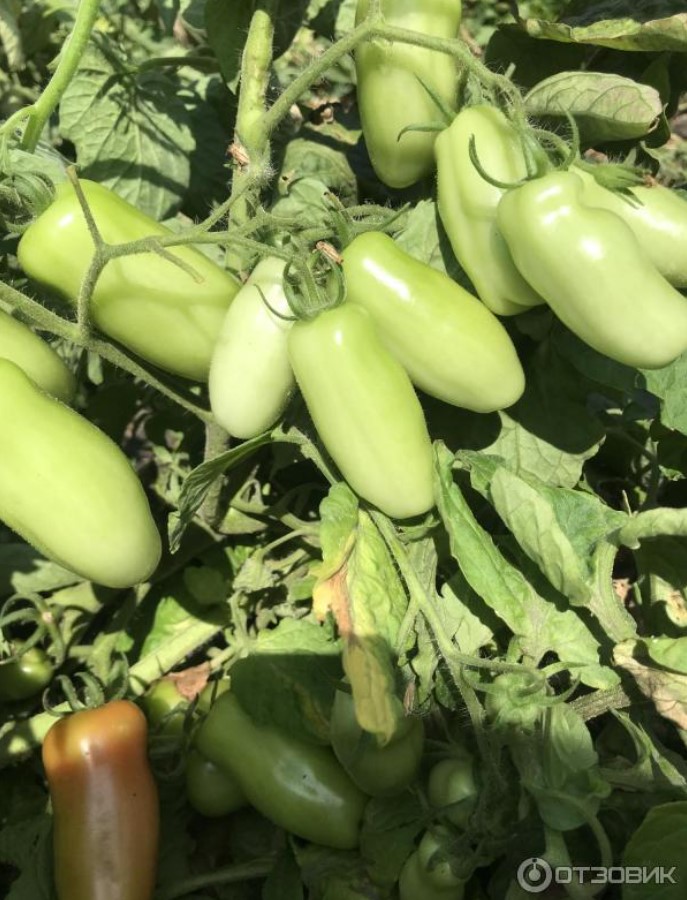
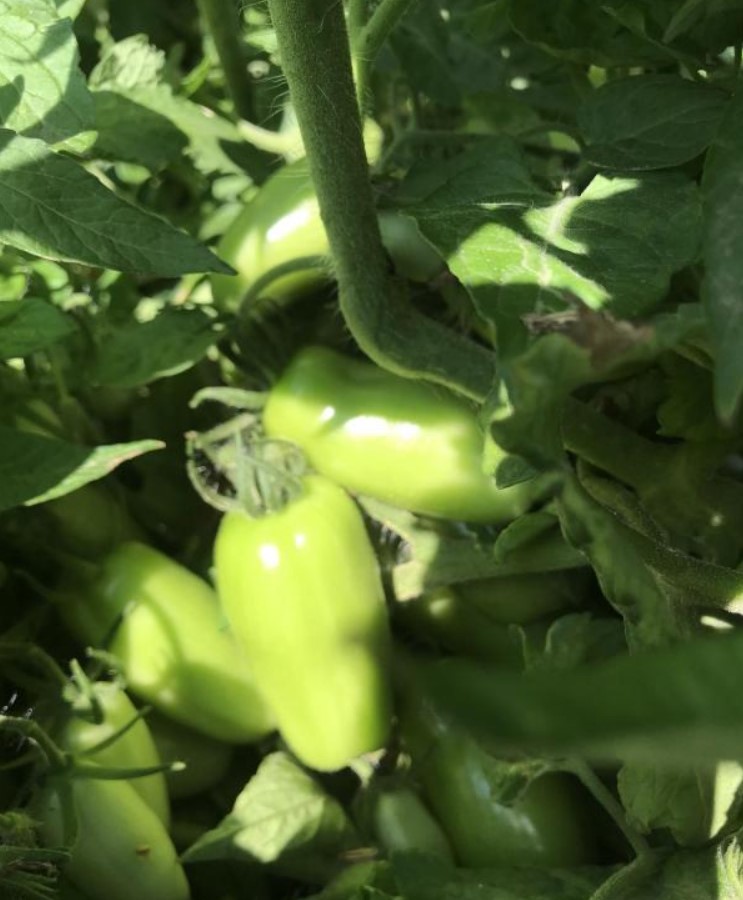
Every spring, our family wonders which tomato varieties to plant. For eating, we prefer large, fleshy, thin-skinned ones. But for pickling, we prefer firm, thick-skinned tomatoes. This particular variety of tomato is just that. The bush is very low and sturdy, but covered in fruit. It doesn't require pinching or staking. The fruit has a very unique shape, making it ideal for pickling, as its oblong shape holds a large amount of tomatoes, which pack tightly into the jar. It's best to prick the tomatoes with a fork before pickling; this allows the marinade to penetrate them better, making them even more delicious. They don't fall apart in the jar. I'll never turn down this variety and recommend it to anyone.