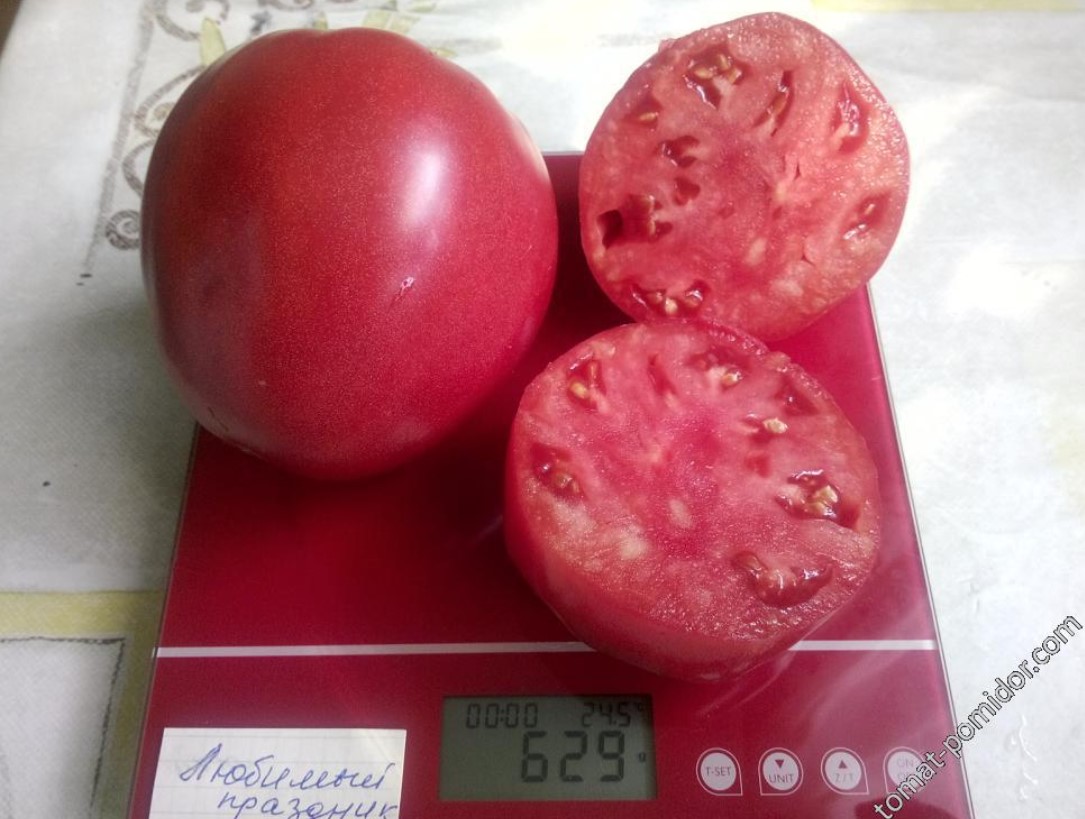
The "Favorite Holiday" tomato was given its name for a reason. It not only has a pleasant taste but is also easy to care for, making it suitable for growing in various regions of the country.
Content
- 1 Characteristics of the tomato variety Favorite Holiday in the table
- 2 The history of the tomato variety Favorite Holiday
- 3 A detailed description of the tomato variety Favorite Holiday
- 4 Advantages and disadvantages of the tomato variety Favorite Holiday (table)
- 5 Features of growing the tomato variety Favorite Holiday
- 6 Resistance of the tomato variety Favorite Holiday to diseases and pests, prevention, control (table)
- 7 Harvesting, using and storing the tomato variety Favorite Holiday
- 8 Comparison of the tomato variety Favorite Holiday of different varieties with other varieties in the table
- 9 Gardeners' reviews of the Favorite Holiday tomato variety
Characteristics of the tomato variety Favorite Holiday in the table
The main characteristics of the tomato Favorite Holiday are presented in the table below.
|
Ripening period (number of days from full germination to ripening) |
100 days |
| Description | An early-ripening, large-fruited tomato variety for greenhouses and open ground. |
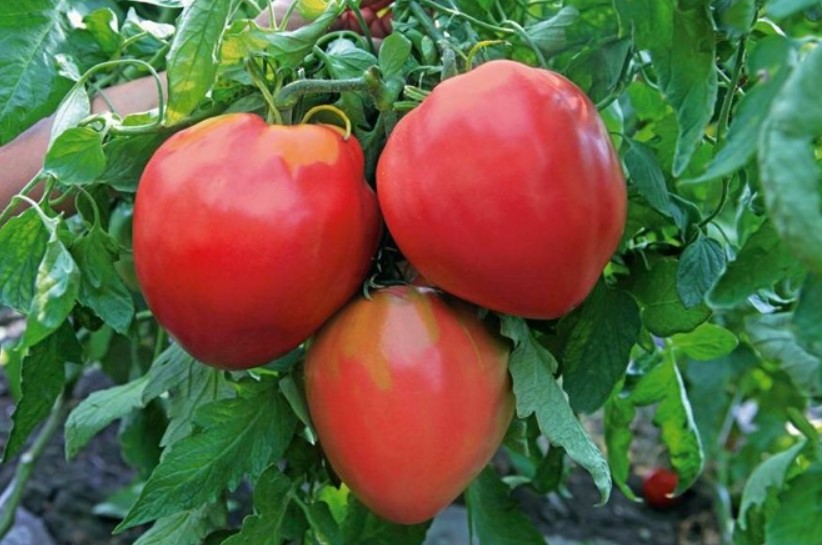
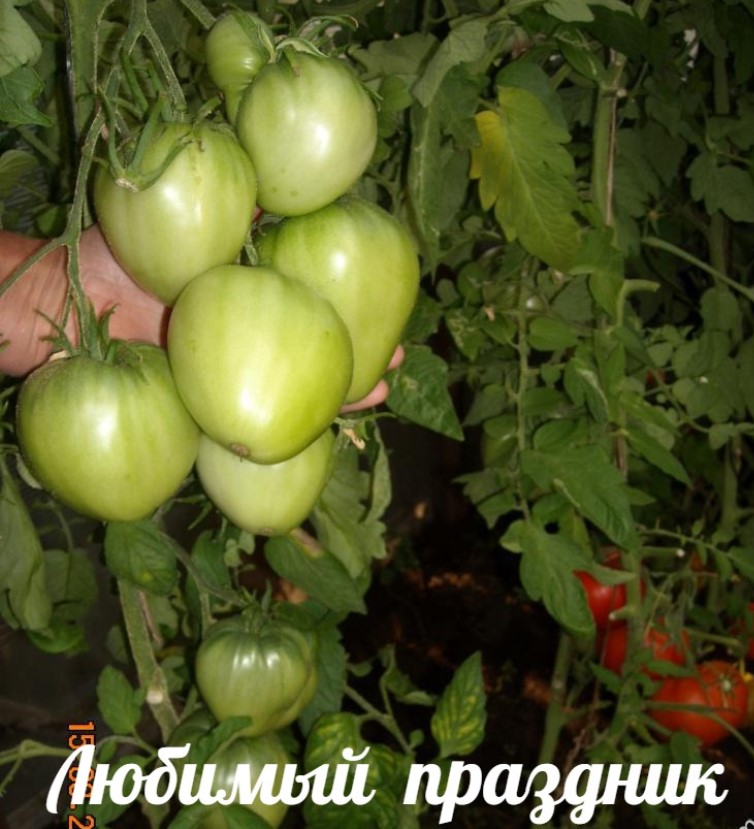
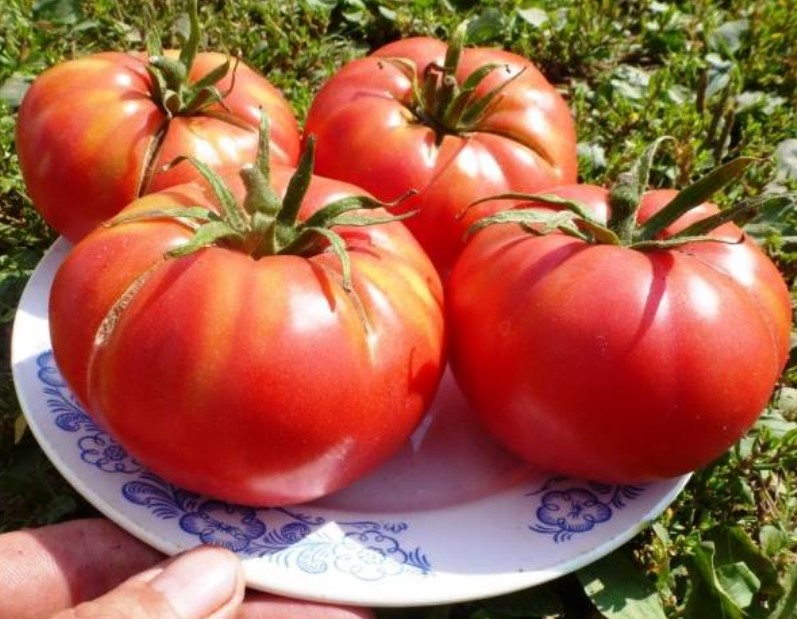
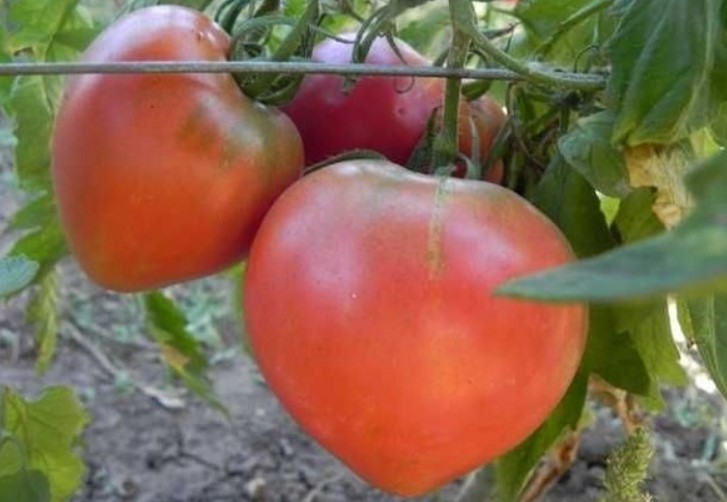
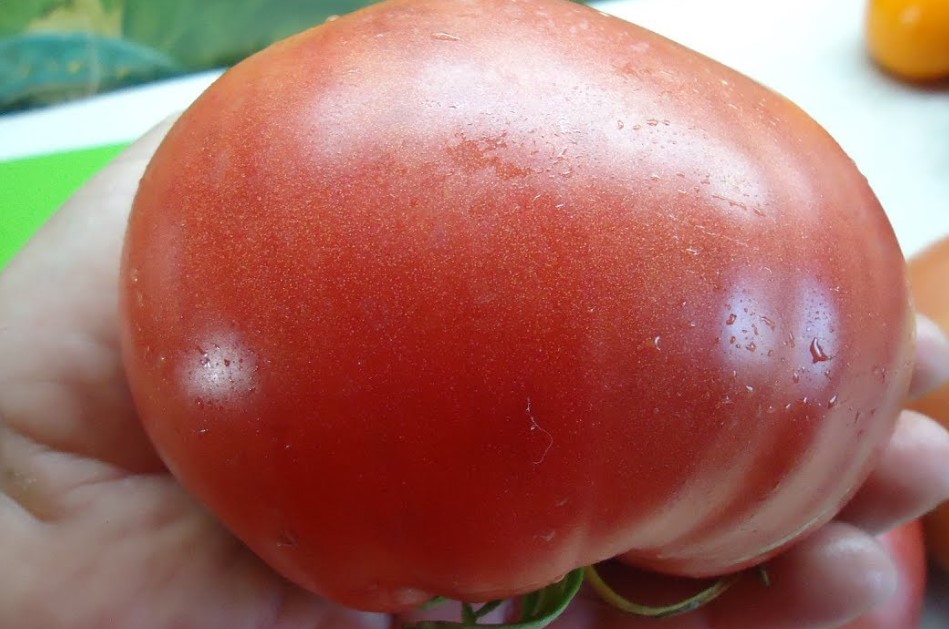
| Fetus | The fruits are heart-shaped with a pointed base and pink in color. Large tomatoes may be kidney-shaped rather than clearly heart-shaped. |
| Fruit weight | Up to 350 g. |
| Taste | Sweetish |
| Usage | Consumed fresh, processed into sauces. |
| Marketability | High |
| Shelf life | Good |
| Yield of commercial fruits | Up to 7.5 kg per square meter |
| Disease resistance | Good resistance to tomato diseases |
| Agricultural technology | No more than three bushes are placed per 1 sq.m., the shoots must be tied up. |
| Growing regions | Northern, Northwestern, Central, Volga-Vyatka, Central Black Earth Region, North Caucasian, Middle Volga, Lower Volga, Ural, West Siberian, East Siberian, Far Eastern regions |
| 2008 | |
| Originator | Ugarova S.V., Dederko V.N., Postnikova T.N. |
Photo gallery of the tomato variety "Favorite Holiday"
The history of the tomato variety Favorite Holiday
The "Favorite Holiday" tomato was developed by Siberian breeders under the direction of V.N. Dederko. In 2008, it passed the required testing and was added to the register of vegetable crops.
A detailed description of the tomato variety Favorite Holiday
The "Favorite Holiday" tomato is a varietal variety suitable for growing in various regions of the country and has distinctive bush and fruit characteristics, which are described below.
Characteristics of the bush
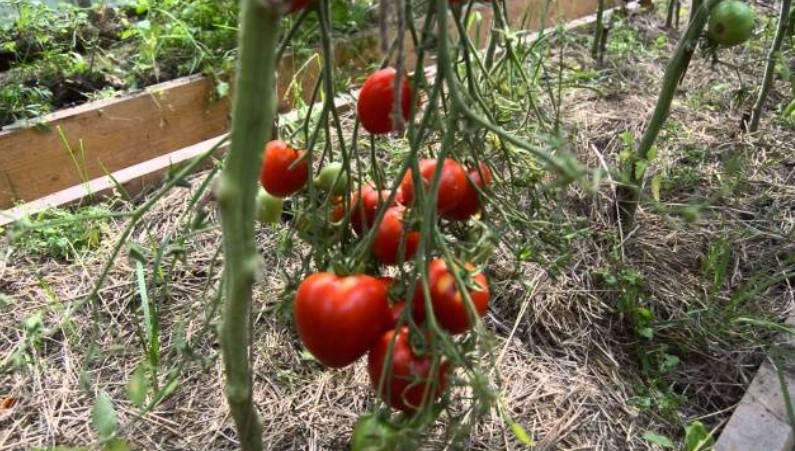
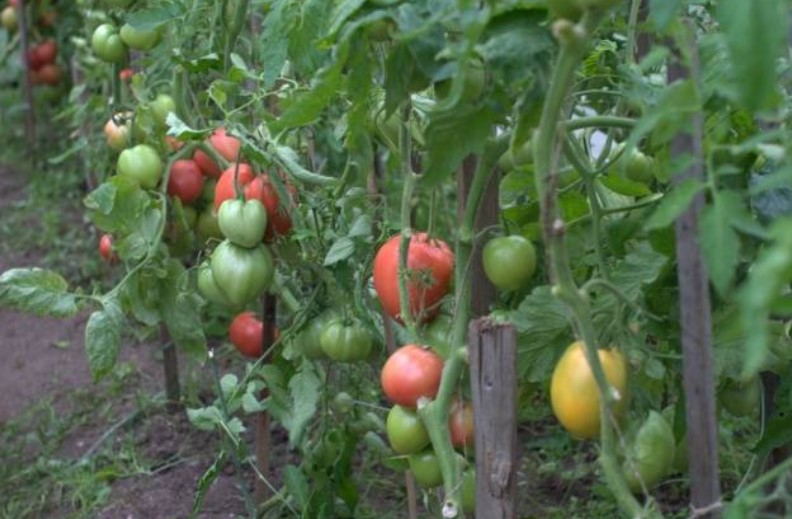
The shoots on the bushes are determinate, reaching 80-120 cm in height, but in favorable conditions they can grow up to 180 cm. The leaves are medium-sized, dark green, and there are few of them on the bushes, which promotes an even distribution of air and light, even within the plantings.
The shoots may break under the weight of the fruit, so it is important to provide them with support and tying.
Fruit characteristics
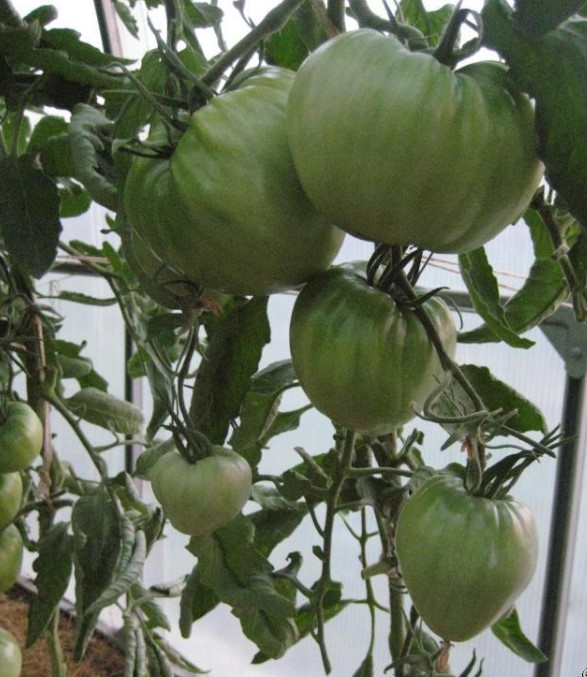
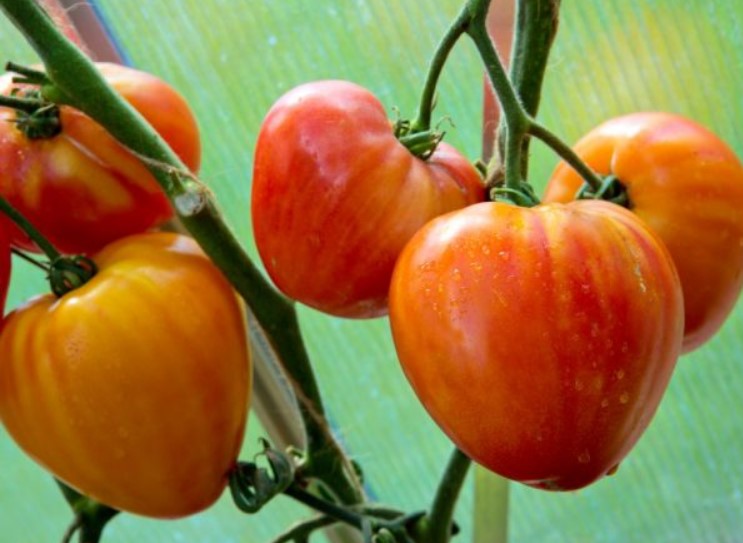
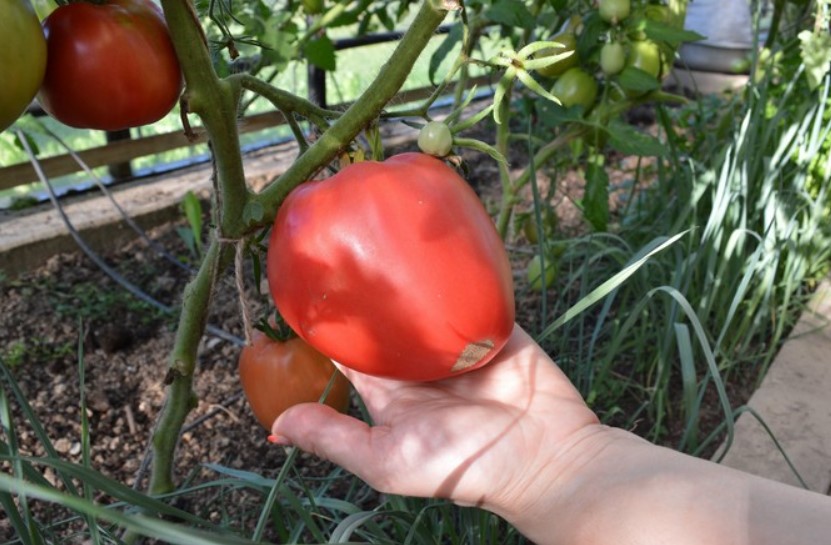
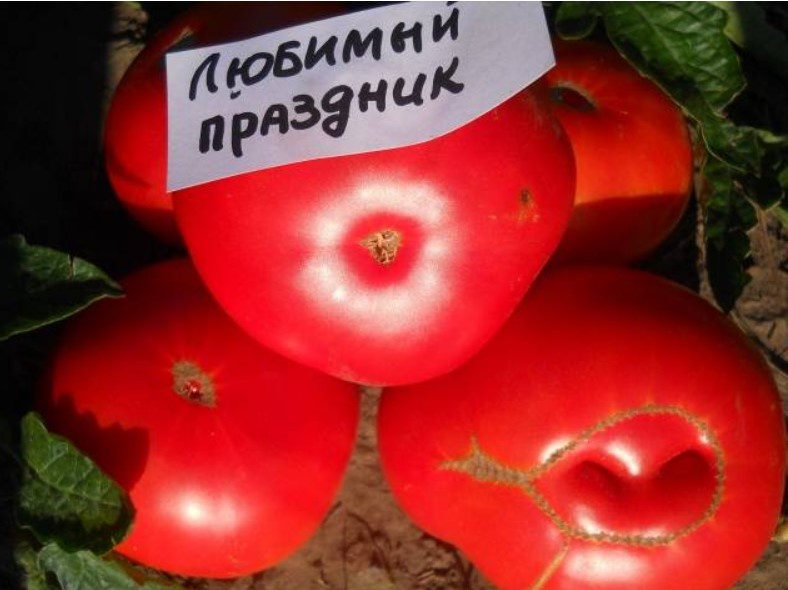
The tomatoes are heart-shaped with a pointed base. The surface is slightly ribbed, and the fruits are large, often weighing over 300 g.
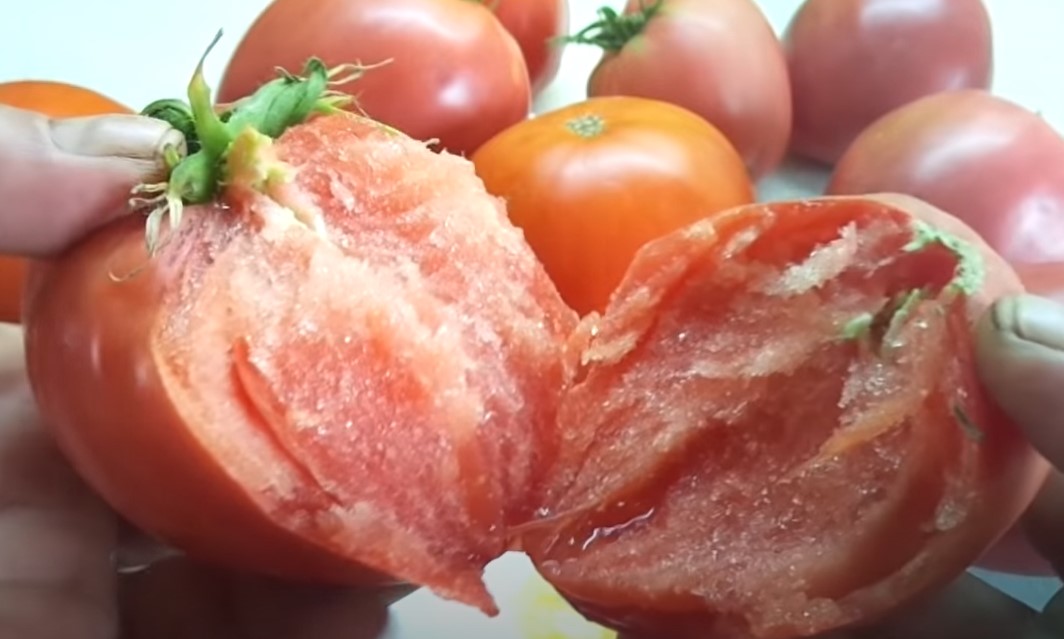
Ripe tomatoes are a deep pink color, but they can be ripened at home even after being picked from the bush at the technical maturity stage.
The fruit contains approximately six seed chambers. The flesh is dense, juicy, and slightly sweet.
Ripening time and yield
The "Favorite Holiday" tomato is considered an early variety, with approximately 100 days between germination and harvest. With proper farming practices, up to 7.5 kg of ripe tomatoes can be harvested per square meter.
Advantages and disadvantages of the tomato variety Favorite Holiday (table)
The table below shows the main advantages and disadvantages of the Lyubimy Prazdnik variety.
| Advantages | Flaws |
|
|
Features of growing the tomato variety Favorite Holiday
The Favorite Holiday tomato is considered unpretentious; even a novice gardener can grow it and get an excellent harvest.
Sowing seeds and growing seedlings
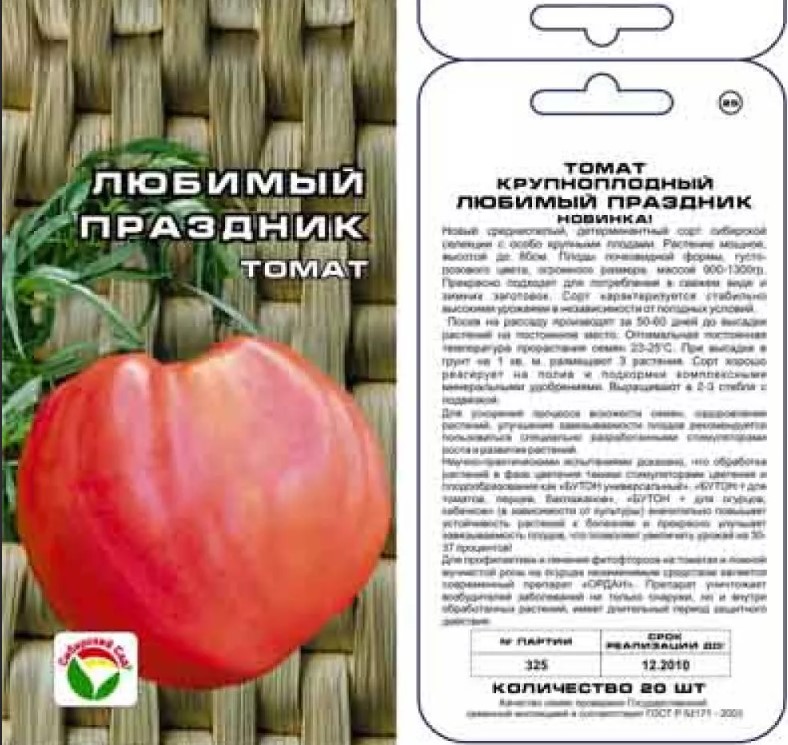
The "Favorite Holiday" tomato is best grown from seedlings. Seeds can be purchased at the store or collected independently. The latter option requires some effort on the part of gardeners. Home-grown seeds should be disinfected by soaking them in a weak solution of potassium permanganate for 15-20 minutes. They can then be treated with any growth stimulant to accelerate germination. These treatments are usually already performed on store-bought seeds, as indicated on the packaging.
Experienced gardeners strongly recommend germinating seeds before planting to enhance their adaptability. To do this, place the seeds on a damp cloth, cover, and place in a warm place for 24 hours.
Planting should be done 50-60 days before transplanting tomatoes into a greenhouse or open ground. It's best to place the seedlings directly into peat pots; this will facilitate their transfer to the permanent garden bed. However, you can use any suitable container if desired:
- Plastic container.
- Wooden box.
- Cut off bottoms of boxes or bottles.
- Peat tablets.
- Plastic cups.
Fill the container slightly more than halfway with soil, and make furrows about 1 cm deep in the surface. Place the seeds in these furrows, spacing them 3 cm apart. It's recommended to leave the same amount of space between the furrows.
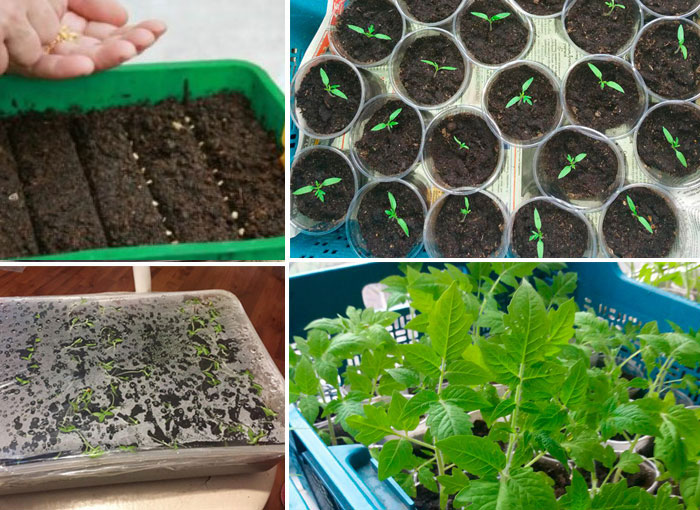
After planting, water the tomatoes. It's best to use a syringe or spray bottle to prevent the water jet from washing away the soil. Next, cover the container with glass or plastic and place it in a warm place. Periodically, remove the cover and ventilate the tomatoes to prevent them from rotting. Finally, remove the cover once the first sprouts emerge. At that point, move the tomatoes to a cooler, more well-lit location.
Planting in the ground
Tomatoes are planted in the ground 50-60 days after germination. Regardless of whether it's a greenhouse or an outdoor garden bed, the soil should be prepared in the fall. To improve the soil's nutritional value, it's tilled with manure and humus. In the fall, another round of tilling is done, after which you can begin preparing the holes. For this, dig holes about 20 cm deep in a staggered pattern. It's recommended to leave 50 cm between them, and the row spacing should be at least 60 cm.
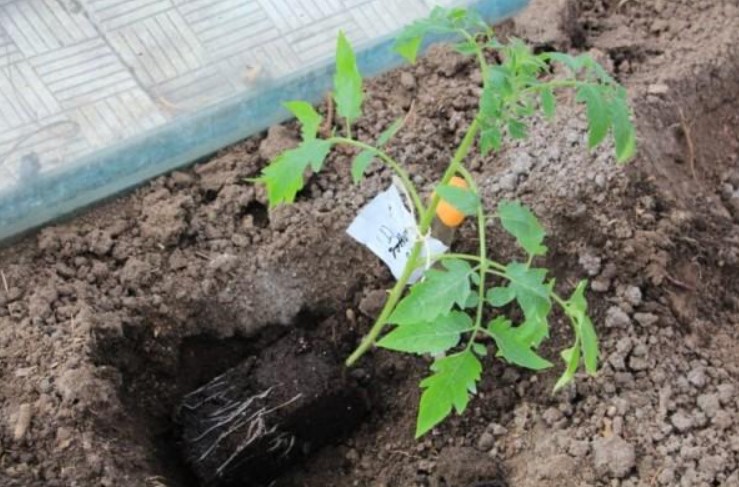
Place one tomato plant in each hole, and cover the roots with soil. The final step is watering the plants and covering them if there's a risk of frost.
Care
Caring for the Lyubimy Prazdnik tomato is quite simple:
- The Lyubimy Prazdnik tomato variety tolerates drought well, but don't expect a large harvest if water is scarce. Therefore, it's crucial to water the plants at least once a week with warm, settled water, at a rate of 5-6 liters per plant. In very hot weather, you can increase the frequency of watering.
- Avoid over-watering the soil, as this increases the risk of various types of fungi that cause many tomato diseases.
- Another essential care procedure is mulching the garden bed. Straw or bark can be used for this. This protective layer will prevent sun rays from burning the roots and cold from penetrating deep into the soil.
- Periodically, it is necessary to loosen the bed and remove any weeds that appear so that they do not compete with the crop for oxygen, water and nutrients.
- You can feed tomatoes with any complex fertilizer three times per season at intervals of 10-14 days, but it is very important to complete the work before the crop ripens.
- As the bushes grow, they are tied up to prevent them from breaking under the weight of the tomatoes.
Resistance of the tomato variety Favorite Holiday to diseases and pests, prevention, control (table)
According to gardeners, the Lyubimy Prazdnik variety is rarely susceptible to tomato diseases. However, official studies have not confirmed its tolerance, so it's best to carry out preventative treatments.
The table shows the main problems that can affect the Favorite Holiday tomato.
| Disease | Signs | Prevention and treatment |
| PhytophthoraA | Dry patches appear on the leaves, and a white coating can be seen on the underside. The fruits become covered with brown spots, and blackening with a white coating can be seen on the stems. | As a preventative measure, spray the bushes with Fitosporin, Bordeaux mixture, or Profit Gold at 10-day intervals. Remove and burn any affected plant parts. |
| Cladosporiosis | The lower leaves become covered with orange spots, which then develop a dark coating. A brown coating forms on the underside of the leaf blade. | Fruits are almost never affected by the disease; it spreads only to the leaves and stems. Affected parts must be removed, and tomatoes can continue to ripen safely on the vines. At the first signs of the disease, spray the bush from the bottom up with any biological product, such as Gamair, Fitosporin, or Alirin. |
| Blossom end rot | Brown spots appear on the ends of the tomatoes. | To prevent the disease, the bushes are fed with calcium nitrate. If the disease appears, spray with Bordeaux mixture or HOM. |
| Colorado beetle | Striped beetles and their red eggs appear on the bushes, the leaves are eaten away, only the veins and stem remain. | It's best to collect beetles and larvae by hand. If necessary, you can spray the plantings with a solution of vinegar and mustard (1 kg of mustard powder per 100% or 9% vinegar). |
Harvesting, using and storing the tomato variety Favorite Holiday
Tomatoes of the Lyubimy Prazdnik variety ripen approximately 100 days after the first shoots emerge. They can be harvested even at the technical maturity stage; they ripen well indoors.
Thanks to their dense structure and strong skin, tomatoes can be stored in cool conditions for quite a long time without losing quality.
The fruits are eaten fresh, as well as processed into sauces or pastes. Due to their large size, whole-fruit tomatoes are not suitable for canning.
About heart-shaped tomatoes from Siberian selection Read on Top.tomathouse.com.
Comparison of the tomato variety Favorite Holiday of different varieties with other varieties in the table
Please note! How can you easily convert centners/ha to kg/sq.m? Simply divide by 100! For example, the Abakansky Pink tomato yields 400 centners of marketable fruit per hectare. This equals 4 kg per square meter. It's that simple! Also, keep in mind that typically no more than 3-4 plants are planted per square meter. This way, you can calculate the yield per bush. In the case of the Abakansky Pink, it's about 1 kg.
| Variety | Ripening period (number of days from full germination to ripening)
Yield of commercial fruits |
Brief description | Fetus |
| Favorite holiday | 105-110 days 750 c/ha |
An early-ripening determinate variety for open ground. Suitable for salads. | Heart-shaped, slightly ribbed, medium density, pink, 350 g. Good taste. |
| Ox heart | 105-120 days
630-690 c/ha |
A late-ripening indeterminate variety for open ground and greenhouses. Requires staking and shaping. Suitable for salads. Grows best in southern Russia. | Heart-shaped, medium-ribbed, pink-raspberry, 150-300 g. Good taste. |
| Ox heart pink | 111-115 days
950-1000 c/ha |
A mid-early indeterminate variety for open beds and greenhouses. Requires staking and shaping. Suitable for salads. | Heart-shaped, ribbed, medium density, pink, 160-210 g. Good taste. |
| Mom's Raspberry Heart | 112-120 days
1200-1500 c/ha |
A mid-season indeterminate variety for greenhouses and open ground. Suitable for salads and canning. | Heart-shaped, ribbed, pink, 300-600 g (up to 1200 g). Excellent taste. |
| Crimson Dawn | 110-115 days 790 c/ha |
A mid-season indeterminate variety for open ground and greenhouses. Requires staking and shaping. Suitable for salads. | Heart-shaped, loose, ribbed, raspberry, 350-400 g. Good taste. |
| Heart of Siberia | 92-110 days
The yield of commercial fruits is 7.9 kg/sq.m. |
An indeterminate, early-ripening, tall tomato variety intended for planting in open ground or greenhouses. | Large, heart-shaped, slightly ribbed, pink tomatoes weighing 300-400 g. An excellent salad variety, ideal for making juices, sauces, ketchup, and other preserves. |
| The Beauty of Siberia | 95-110 days
580 c/ha |
A mid-season indeterminate variety for open ground and polycarbonate greenhouses. | Heart-shaped, medium-ribbed, pink, 300-400 g, salad-colored. Excellent flavor. |
| Bull's heart (red) | 120-125 days
300-400 c/ha Important! There are other colors besides red, see the article (hover over the variety name to jump). |
A late-to-mid-late determinate variety for open ground and greenhouses. Requires staking and shaping. Suitable for salads. | Heart-shaped, smooth, fleshy, red, 108-225 g. Excellent taste. |
| nobleman | 103-117 days
107-587 c/ha, maximum 780 c/ha (Omsk region) |
A mid-season determinate variety for open ground. Suitable for salads. 95% marketability. | Heart-shaped, medium-ribbed, raspberry, 131-250 g. Good to excellent taste. |
| Abakan pink | 120 days or more
400 c/ha |
A late-ripening determinate variety for open ground and greenhouses. Requires staking and training. Suitable for salads and processing into tomato products. | Flat-round, slightly ribbed, medium density and pink in color, 200-500 g. Good taste. |
| King of Siberia | 110-120 days
900-1115 c/ha |
A mid-season indeterminate variety for greenhouses. Requires shaping and support. Suitable for salads and canning. | Heart-shaped, slightly ribbed, orange, 400-800 g. Good to excellent taste. |
| Mikado Sibiriko | 90-95 days 800 c/ha |
An early indeterminate variety from Siberian breeders. For salads, juice, and pasta. | Heart-shaped, ribbed, pinkish, 400-600 g. Excellent taste. |
| Minusinsk bulls | 110-118 days
1200 c/ha |
A mid-season indeterminate variety for open ground and greenhouses. Suitable for salads, canning, and processing into tomato products. | Heart-shaped, elongated, with a spout, ribbed, raspberry-pink, 200-250 g (up to 400 g). The taste is good to excellent. |
| Minusinsk balls | 110-122 days
Up to 1500 c/ha subject to agricultural practices |
A mid-season indeterminate variety for greenhouses. Requires staking and training into single or double stems. Suitable for salads and processing into tomato products. | Round-heart-shaped, ribbed, pinkish-red, 150-250 g. Excellent taste. |
| Minusinsk home | 110-120 days
Up to 1500 c/ha |
An early-ripening indeterminate variety for greenhouses. Requires staking and shaping into 1-2 stems. Suitable for processing into tomato products and canning. | Heart-shaped, slightly ribbed, raspberry, 350-500 g. Excellent taste. |
Gardeners' reviews of the Favorite Holiday tomato variety
Gardeners report that the Lyubimy Prazdnik tomato variety is a very good one; the bushes have never been sick during the season. They're especially good in salads; they ripen quickly, even at home, which is very convenient.
Good day, dear readers of the site!
Once again, we'll be talking about choosing seeds for planting. My previous review was about "Spetsnaz" tomato seeds from Siberian Garden. I really liked Siberian Garden this year. I'll likely use their seeds again next year, as their planting material is simply superb.
The seed germination rate is almost 100%. The seedlings are strong and disease-resistant. Pricking out the seedlings went smoothly. The tomatoes took root quickly. The root system is strong. The seedlings bloomed on time and produced numerous, well-shaped fruits. The taste is superb. The tomatoes perform well not only in salads but also in preserves.
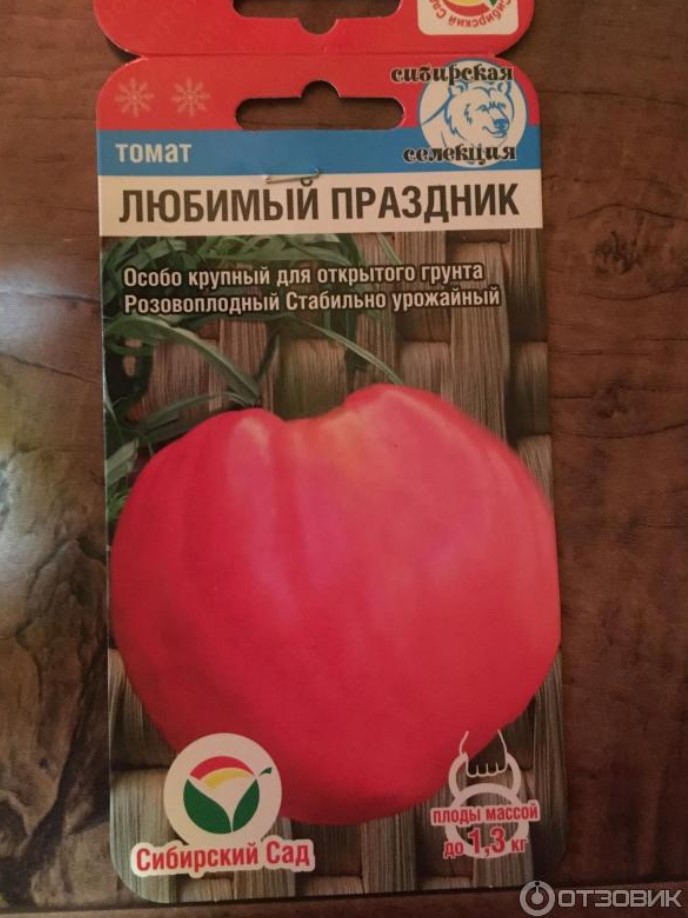
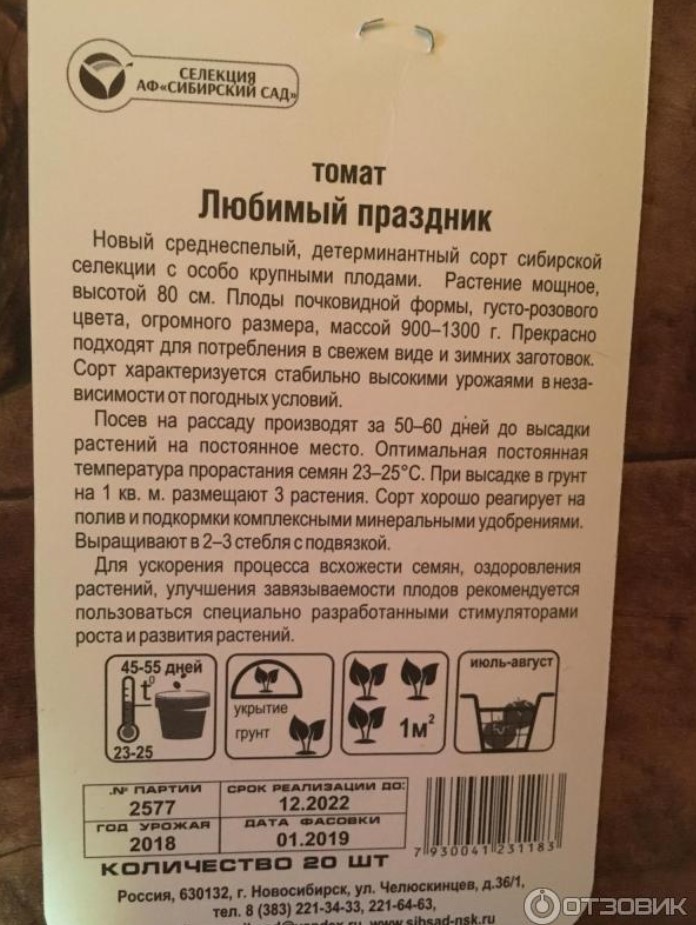
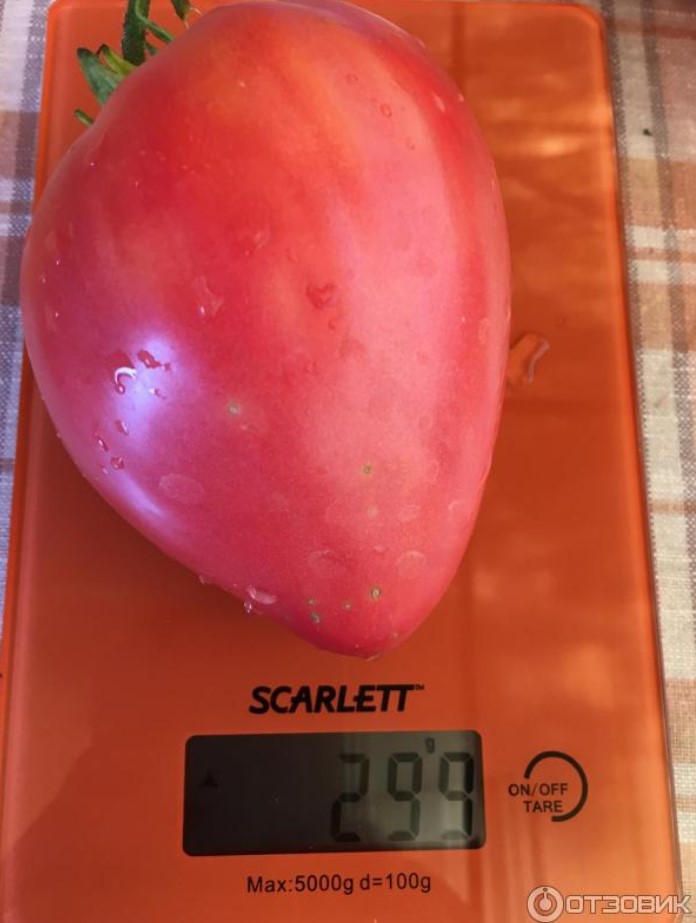
I grew my favorite holiday this year in the open area - it grew very well, there were many large fruits.
Description from the pack:
The plant is vigorous, reaching a height of up to 80 cm. The fruits are kidney-shaped, deep pink, and huge, weighing 900-1300 grams. They are perfect for fresh consumption and winter preservation.
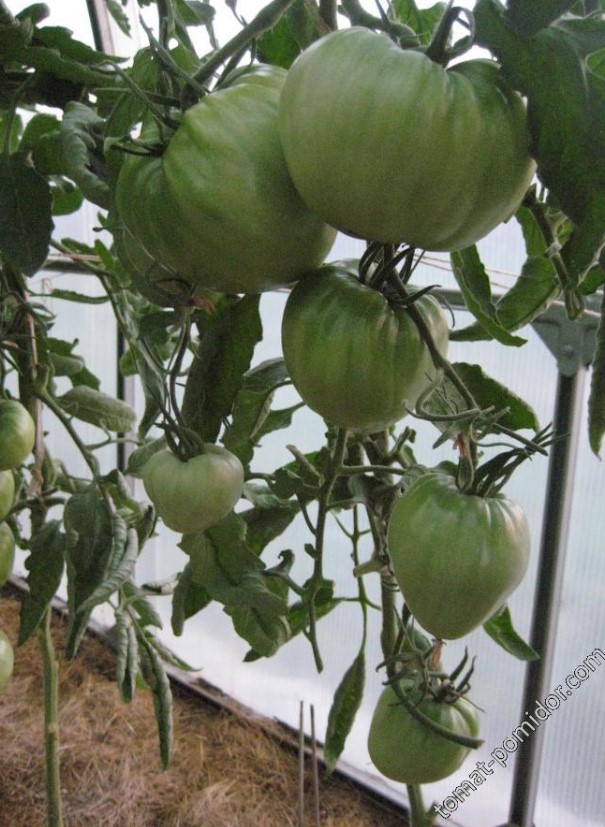
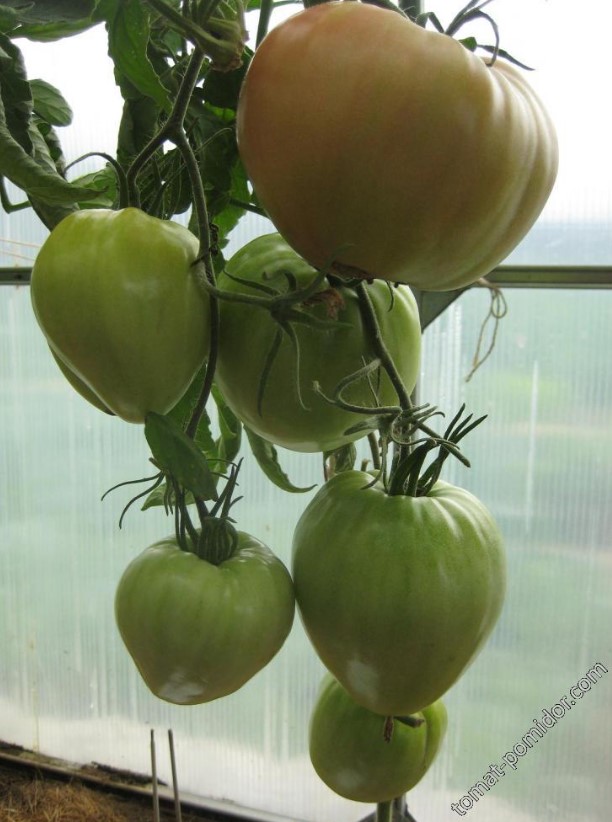

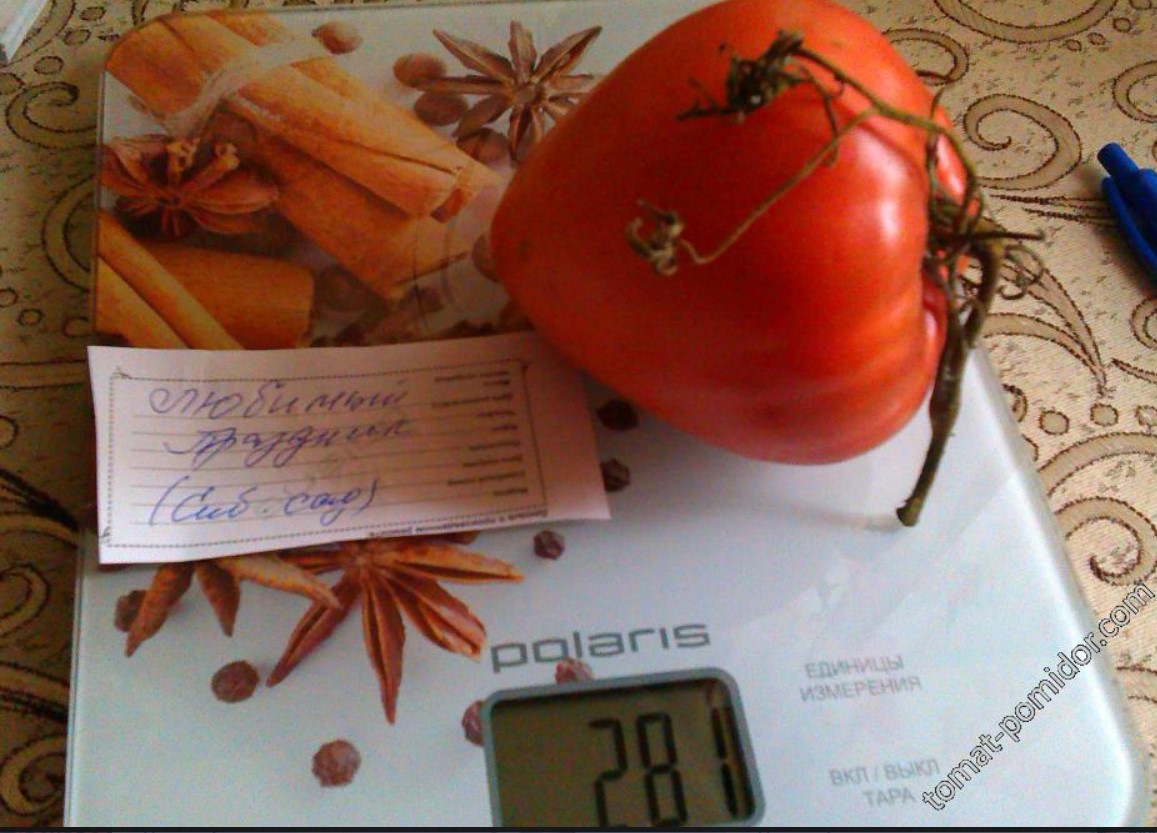
A favorite holiday. Grew up in the OG, fruitful, meaty, but no flavor, went into processing - especially good is "Tomatoes in their own juice"
I grew it last year too. I liked it. They weren't super big, but the bunches were amazing! I think mine were from SibGarden too. I grew it in a greenhouse for a simple reason—all the tomato soil was pushed under the roof. I'll be planting it this year too. Mine grew 150 cm tall, and the leaf was kind of pressed down.
My favorite holiday.
Delicious and productive, I really liked it! I've put it in reserve for planting.