To obtain a bountiful harvest, it is important not only to follow all the necessary agricultural practices but also to select the appropriate variety of seed potatoes.
In this article, we'll tell you about the best ones that will guarantee a good harvest and are suitable for different growing regions.
Content
- 1 What are seed potatoes?
- 2 Rules for choosing seed potatoes
- 3 Top 33 seed potato varieties with photos and descriptions
- 3.1 Aurora (Russia)
- 3.2 Adretta (Germany)
- 3.3 Azhur (Russia)
- 3.4 Bellarosa (Germany)
- 3.5 Breeze (Belarus)
- 3.6 Vega (Germany)
- 3.7 Vineta (Germany)
- 3.8 Gala (Germany)
- 3.9 Golubizna (Russia)
- 3.10 Jelly (German variety)
- 3.11 Zhukovsky early (Russia)
- 3.12 Zhuravinka (Belarus)
- 3.13 Zekura (Germany)
- 3.14 Impala (Netherlands)
- 3.15 Kamensky (Russia)
- 3.16 Kiwi (Russia)
- 3.17 Kolobok (Russia)
- 3.18 Colomba (Netherlands)
- 3.19 Labella (Netherlands)
- 3.20 Lasunak or Lasunok (Belarus)
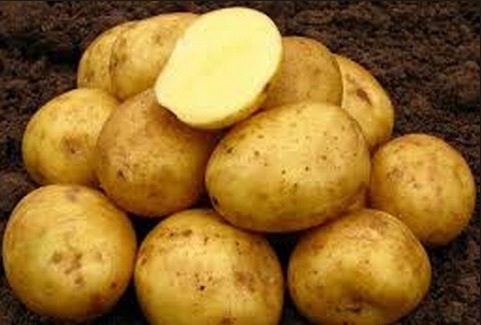
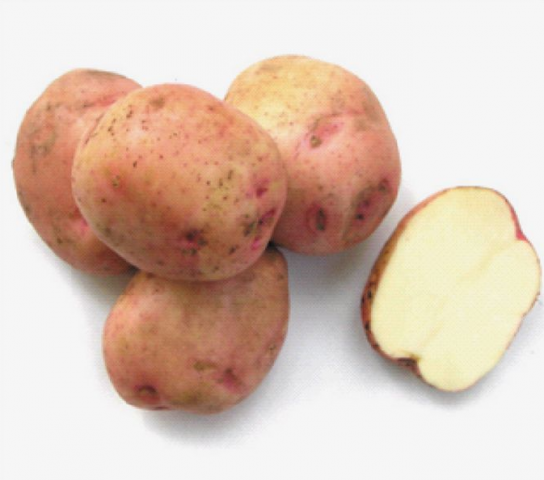
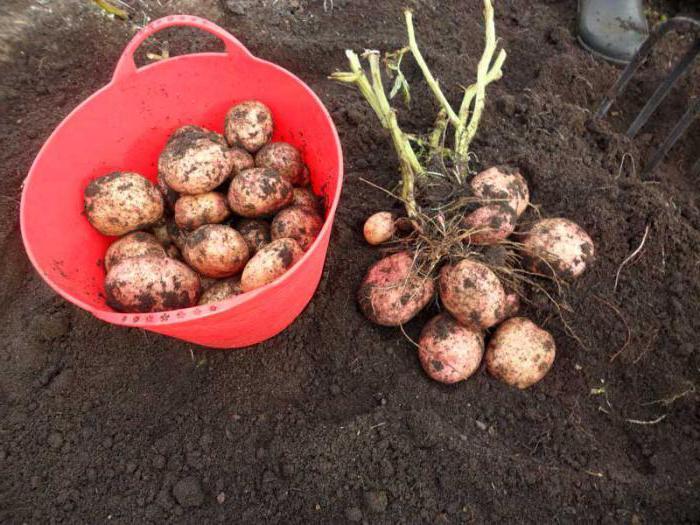
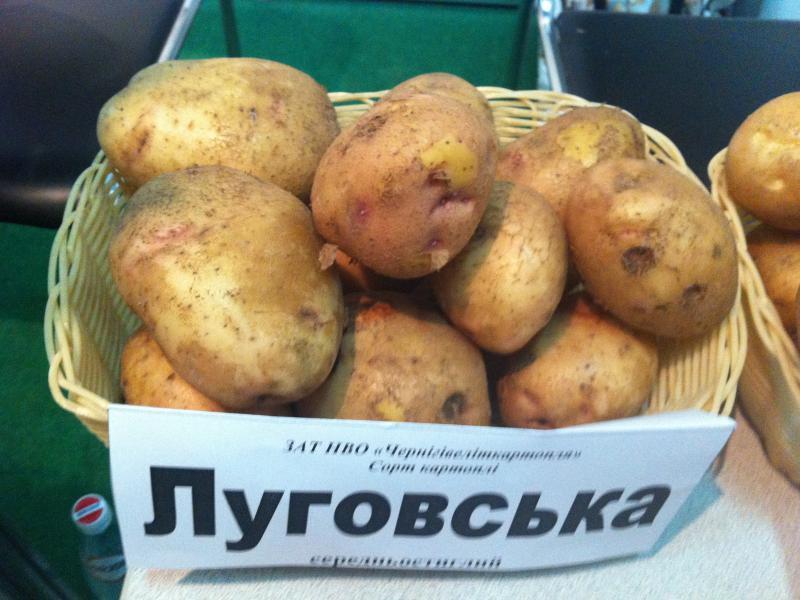
- 3.21 Lugovskoy (Ukraine)
- 3.22 Lyubava (Russia)
- 3.23 Meteor (Russia)
- 3.24 Nevsky (Russia)
- 3.25 Red Scarlet (Netherlands)
- 3.26 Riviera (Netherlands)
- 3.27 Rodrigues (Germany)
- 3.28 Rosara (Germany)
- 3.29 Ryabinushka (Russia)
- 3.30 Svitanok of Kyiv (Ukraine)
- 3.31 Tuleyevsky (Russia)
- 3.32 Luck (Russia)
- 3.33 Uladar (Belarus)
- 4 TOP 34 varieties of early seed potatoes (ultra-early, early-ripening, and mid-early)
- 5 TOP 7 mid-season seed potato varieties
- 6 TOP 7 late varieties of seed potatoes (mid-late and late ripening)
- 7 245 of the best seed potato varieties for different regions of Russia and the CIS
- 7.1 TOP 31 seed potato varieties for the Northern and Northwestern regions
- 7.2 TOP 47 seed potato varieties for the Central region, including the Moscow region
- 7.3 Top 39 seed potato varieties for the Volga-Vyatka region
- 7.4 TOP 16 seed potato varieties for the Central Black Earth region
- 7.5 Top 22 seed potato varieties for the North Caucasus region
- 7.6 TOP 26 seed potato varieties for the Middle and Lower Volga regions
- 7.7 Top 22 Seed Potato Varieties for the Urals
- 7.8 TOP 23 seed potato varieties for Siberia (West Siberian and East Siberian regions)
- 7.9 TOP 19 seed potato varieties for the Far East (Far Eastern region)
- 8 TOP 9 high-yielding seed potato varieties
- 9 TOP 37 Pest and Disease-Resistant Seed Potato Varieties
- 10 The best varieties of seed potatoes for winter storage
- 11 Top.tomathouse.com recommends: where to buy seed potatoes
- 12 What areas are included in different regions of Russia (Appendix)
What are seed potatoes?
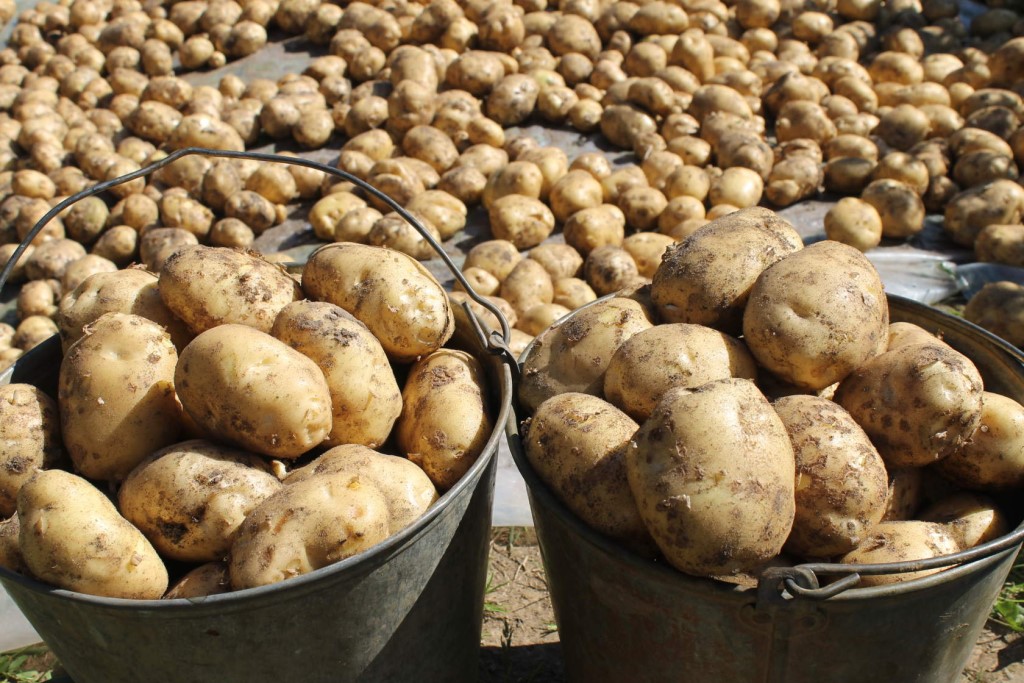
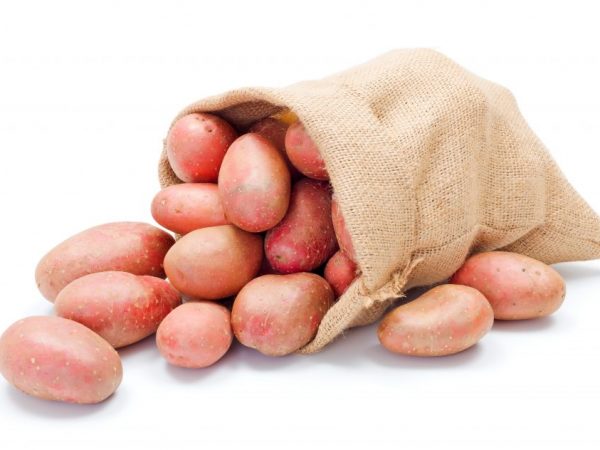
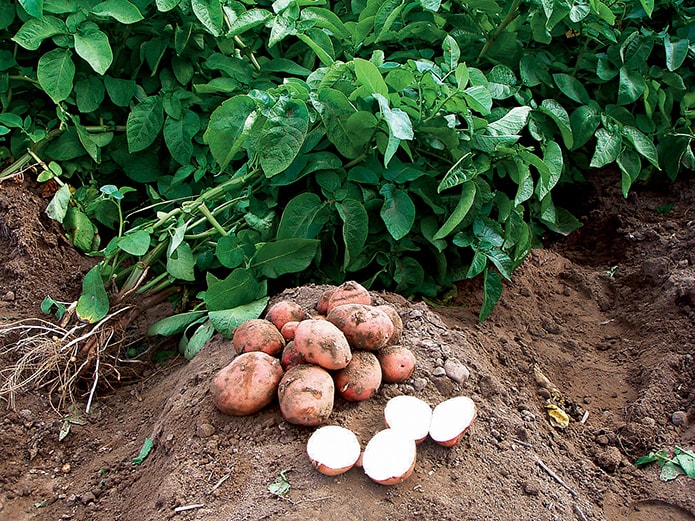
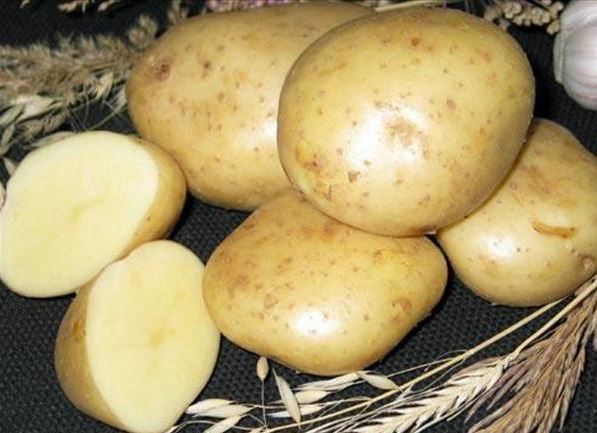
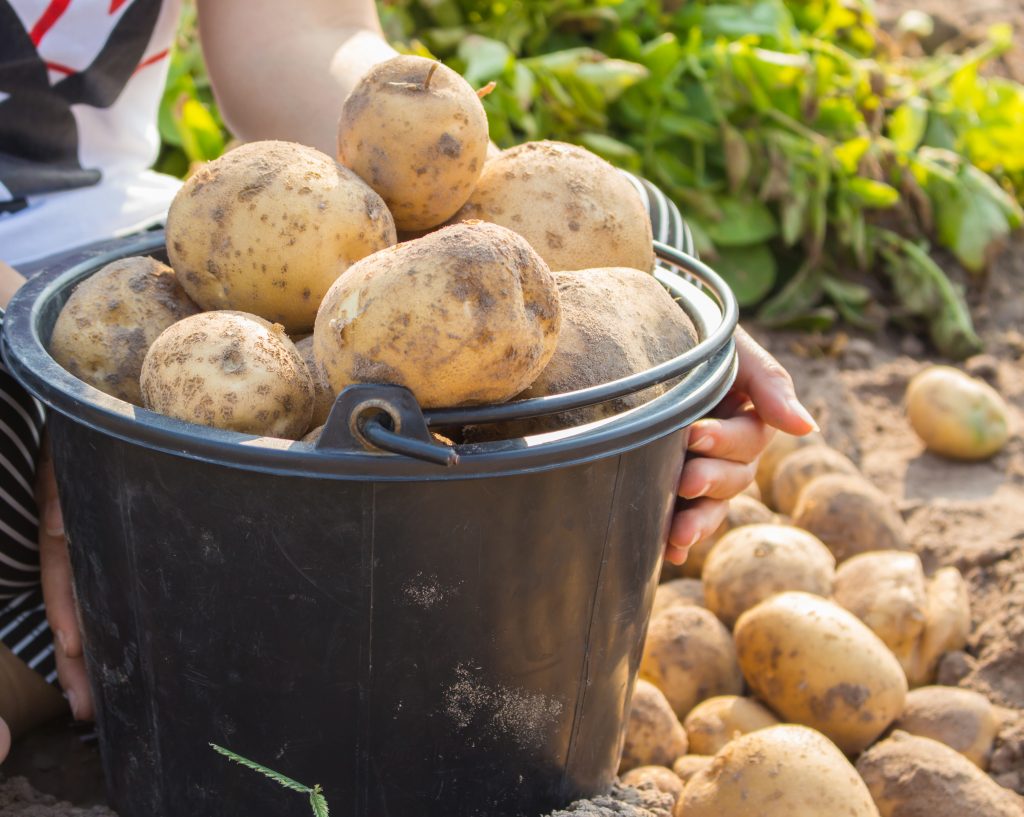
Seed potatoes are the potatoes used for planting and growing. Only the best, medium-sized tubers, free from damage and signs of disease, are selected from healthy plants that have not suffered any disease throughout the season. These tubers, after some light treatment, can be used to produce an excellent harvest.
First-generation mini-tubers are considered the best seed potatoes—they're grown from seed and used to renew and rejuvenate plantings. It's no secret that potato varietal characteristics deteriorate year after year, with key performance indicators (weight, yield, marketability, etc.) declining. This is why gardeners must periodically purchase seed potatoes to avoid losing their harvest, which becomes smaller year after year.
Rules for choosing seed potatoes
To choose the right seed potatoes, there are several important criteria:
- AgeThe older the tubers, the faster they will degenerate during annual planting. Two- to three-year-old potatoes are considered the best.
- Growing regionsAlthough universal varieties now exist, experts recommend selecting potatoes strictly based on the geographic location of their future growing site. Varieties that are specific to a region typically perform better in cultivation.
- Disease resistance to diseasesDifferent regions have different prevalent plant diseases. Sometimes, a disease is specific to a specific site due to soil conditions. Therefore, when choosing seed potatoes, it's important to select a variety with high resistance to the diseases common in your area.
- Originator and originMany foreign varieties differ in taste from the familiar domestic ones. This fact should also be taken into account when making your choice.
- Culinary typeAll potatoes are divided into several culinary types:
- A – practically does not boil over, retains its shape and firmness.
- B is the most versatile type, which softens slightly during heat treatment.
- C – boils fairly quickly, but retains its shape when deep-fried, becoming soft inside.
- D – literally falls apart during cooking, used for making mashed potatoes and casseroles.
Top 33 seed potato varieties with photos and descriptions
Let's look at the best potato varieties available today.
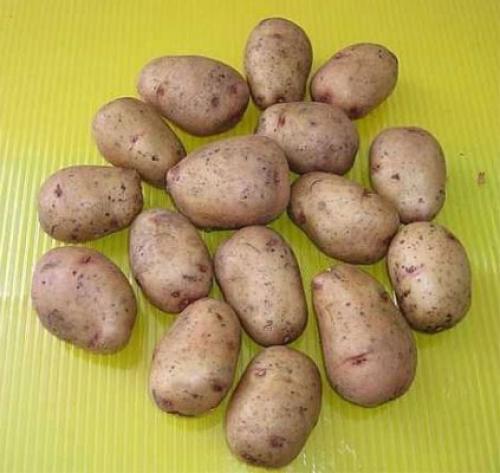
Aurora (Russia)
- Ripening period: 70-90 days (mid-season).
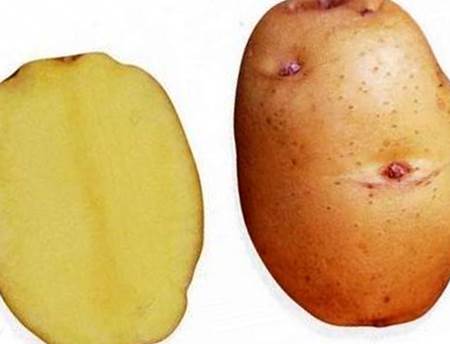
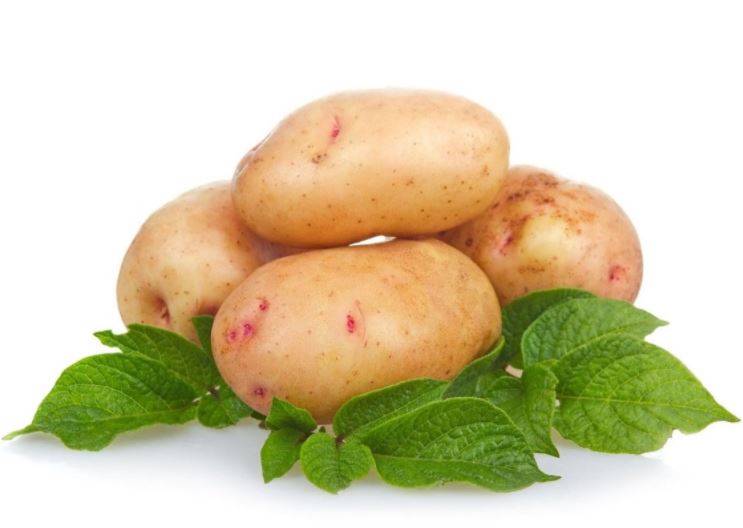
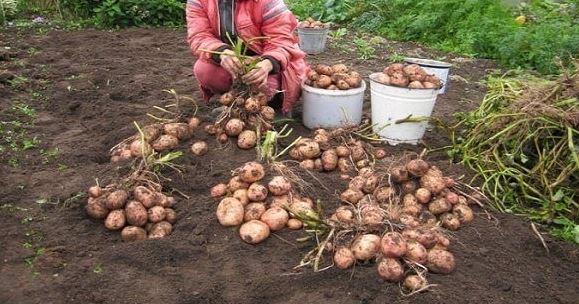
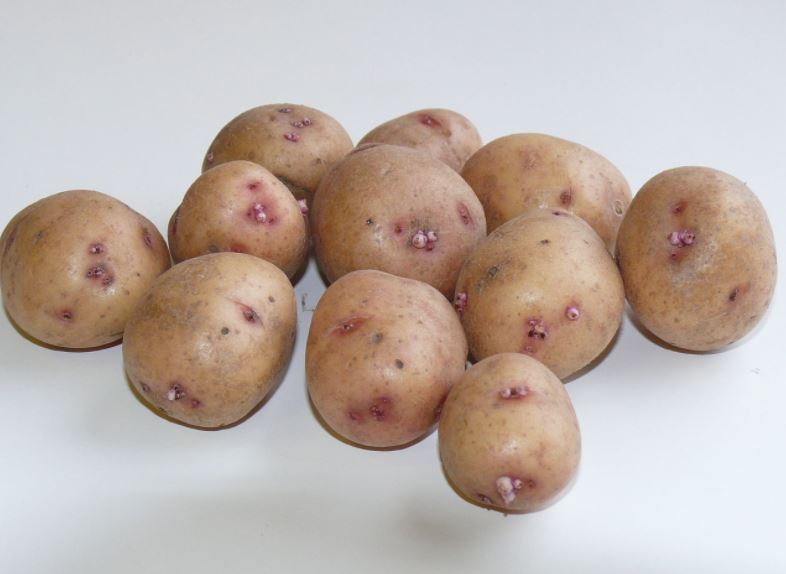
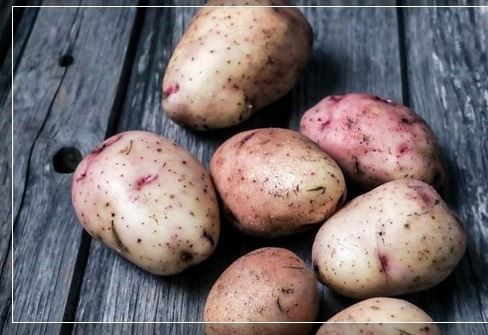
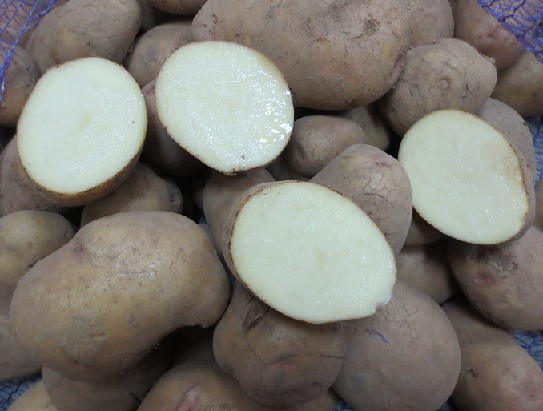
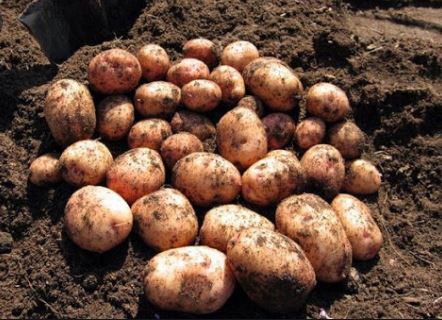
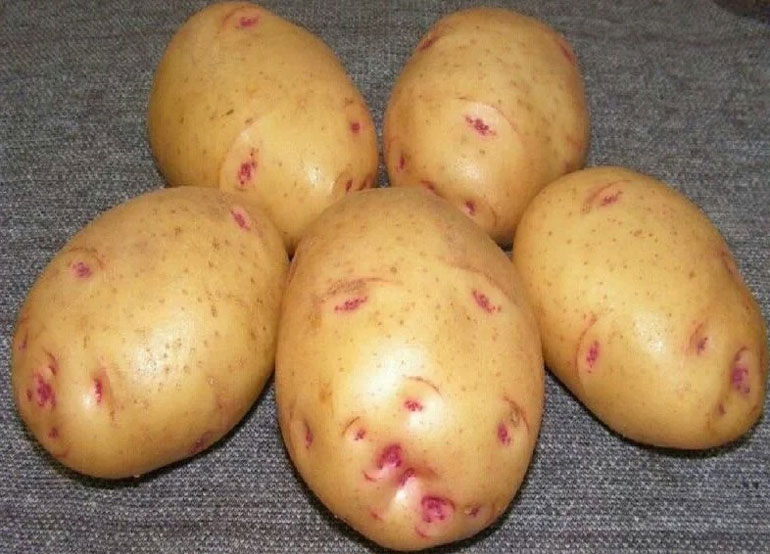
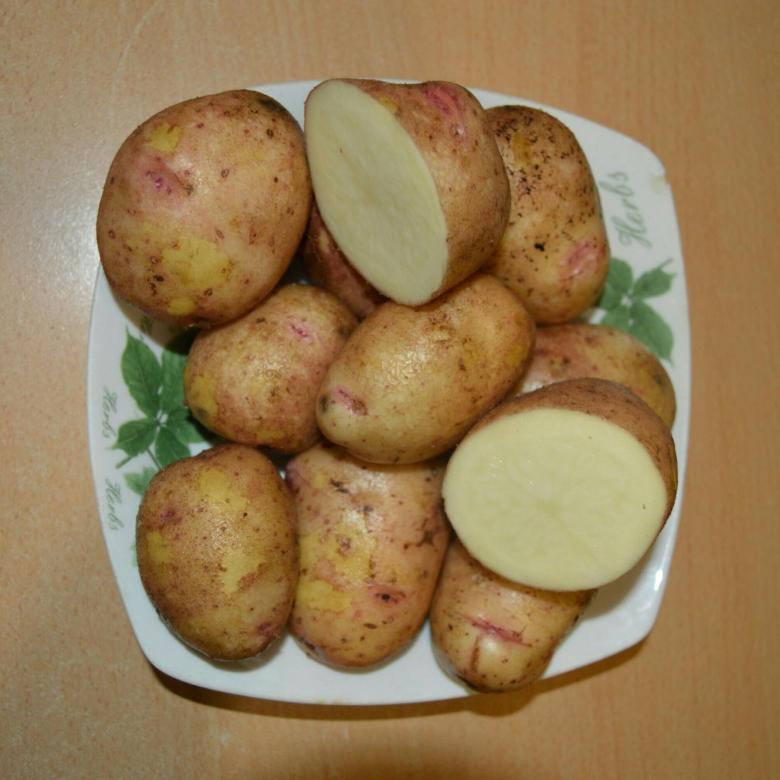
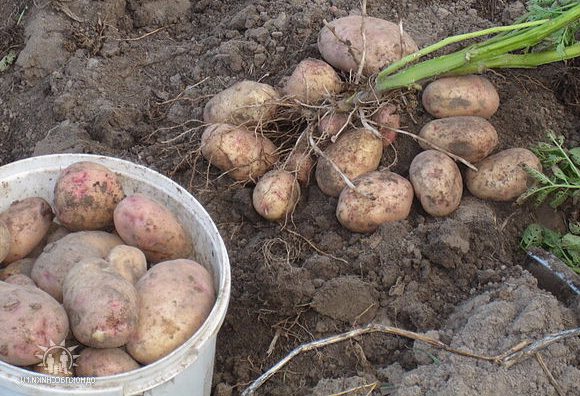
- Tubers: oval with reddish-yellow smooth skin and creamy flesh, weighing 93-128 g. The eyes are small.
- Starch content: 13.5-17.3%.
- Culinary type: Sun
- Productivity: 214-396 c/ha, maximum - 416 c/ha (Leningrad region).
- Disease resistance: resistant to cancer, nematode, moderately susceptible to late blight of tops and tubers.
- Advantages: Good yield, undemanding to growing conditions, high shelf life (94%) and marketability (80-93%), good and excellent taste.
- Flaws: comparatively long germination.
- 2006.
Photo gallery of the Aurora potato variety:
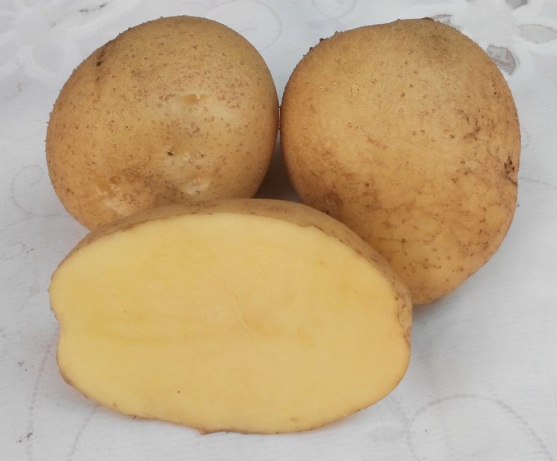
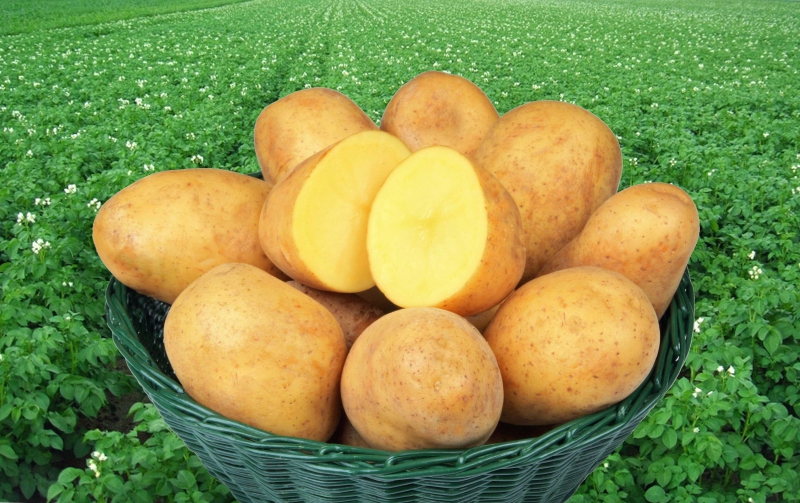
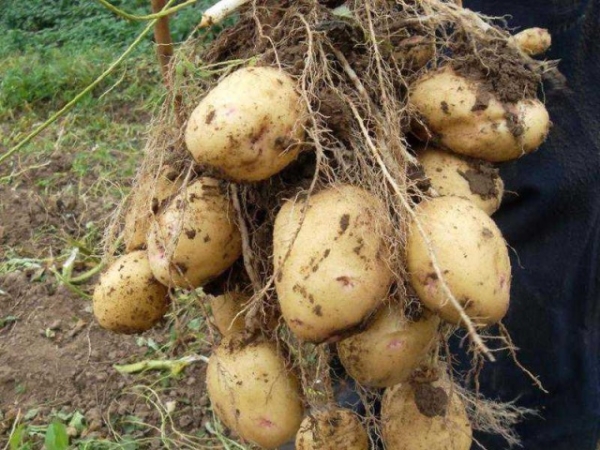
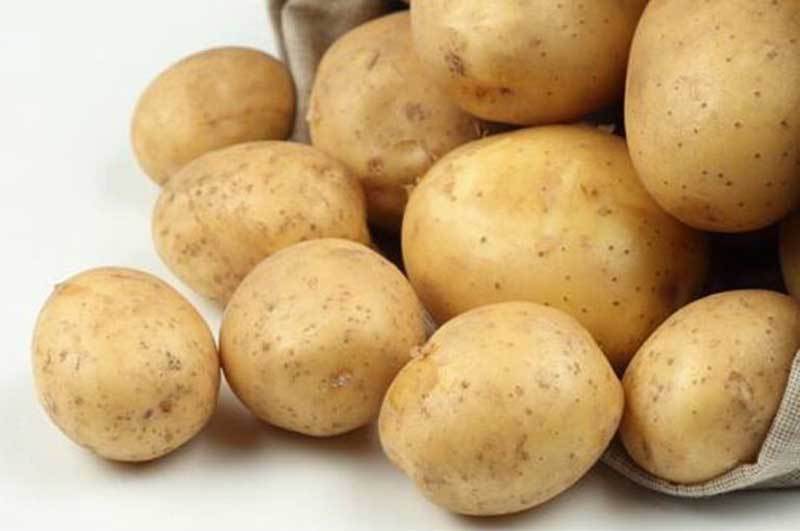
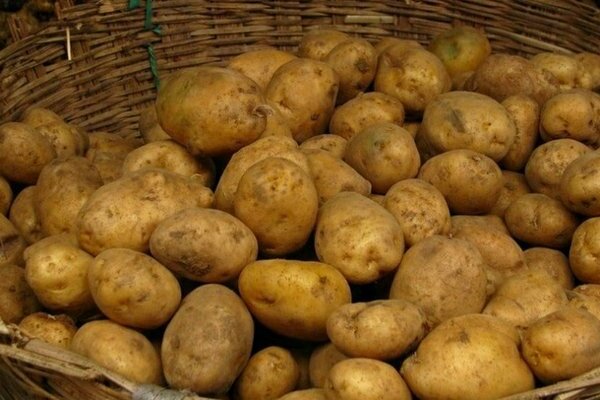
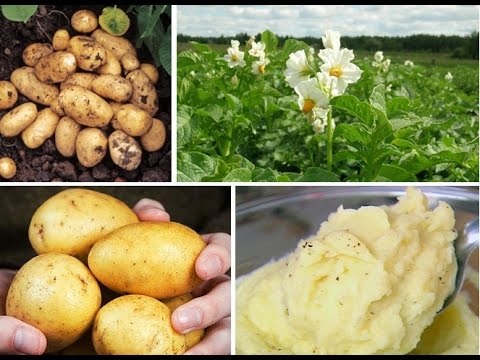
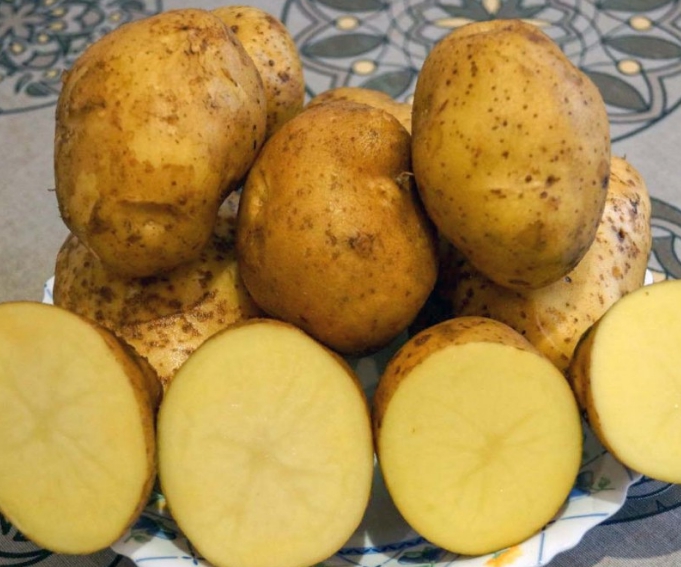
Adretta (Germany)
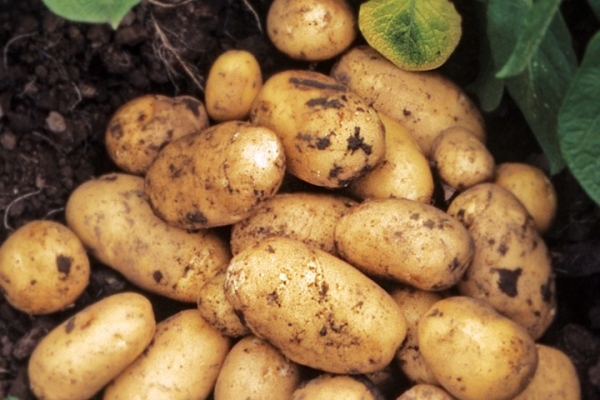
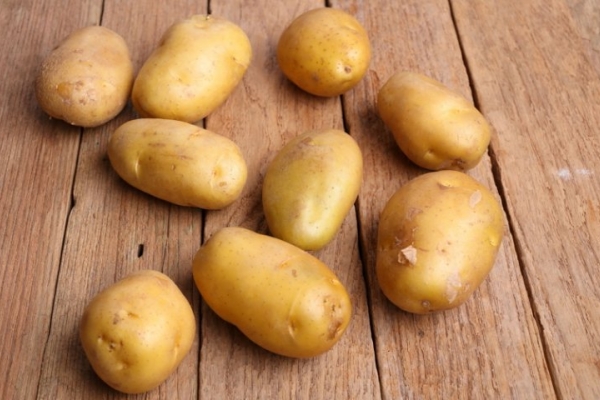
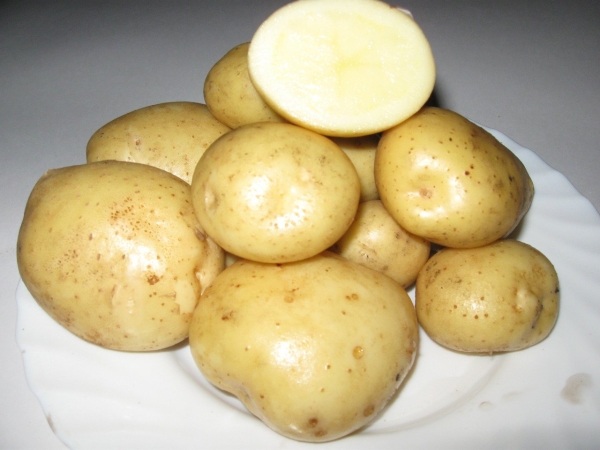
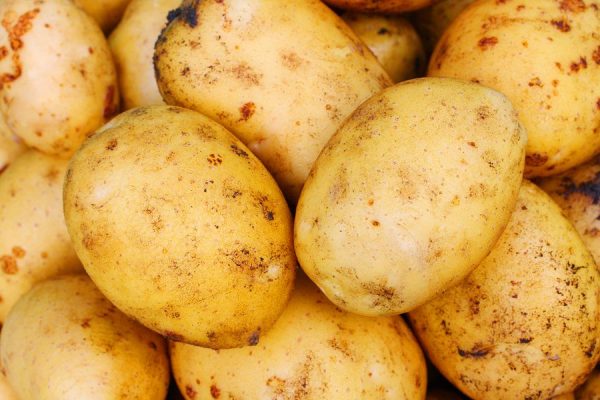
- Ripening period: 70-80 days (mid-early).
- Tubers: wide, oval, weighing 100-150 g, yellow skin, slightly paler flesh, few eyes.
- Starch content: 13-18%.
- Culinary type: C, not prone to change in pulp color during cooking.
- Productivity: maximum - 400-450 c/ha.
- Disease resistance: resistant to cancer, relatively resistant to viruses, with prolonged cultivation in the same place the immunity decreases, if care rules are not followed it easily becomes infected with late blight, scab, nematodes, rhizoctonia, as it is susceptible to these diseases.
- AdvantagesThe tubers are tasty, crisp, ripen early, and the skin is easy to peel. Recommended for French fries and chips; their shelf life is satisfactory to good.
- Flaws: not very good resistance to diseases.
- 1980.
Photo gallery of the Adretta potato variety:
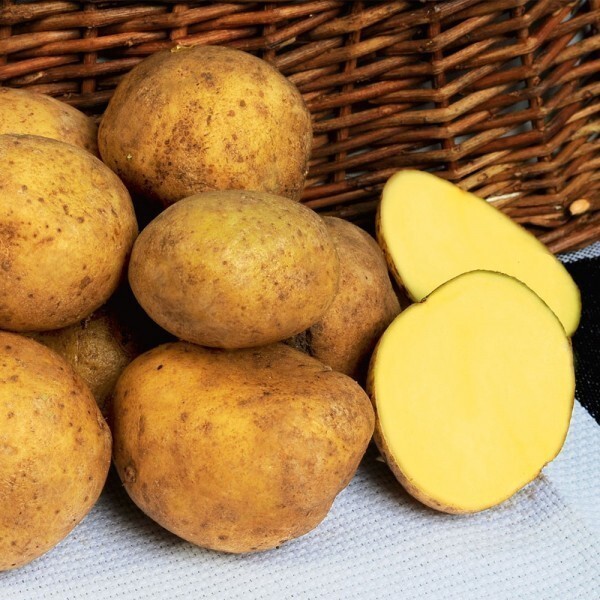
Azhur (Russia)
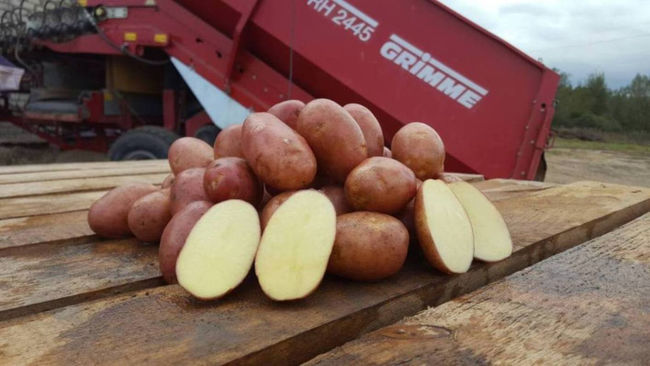
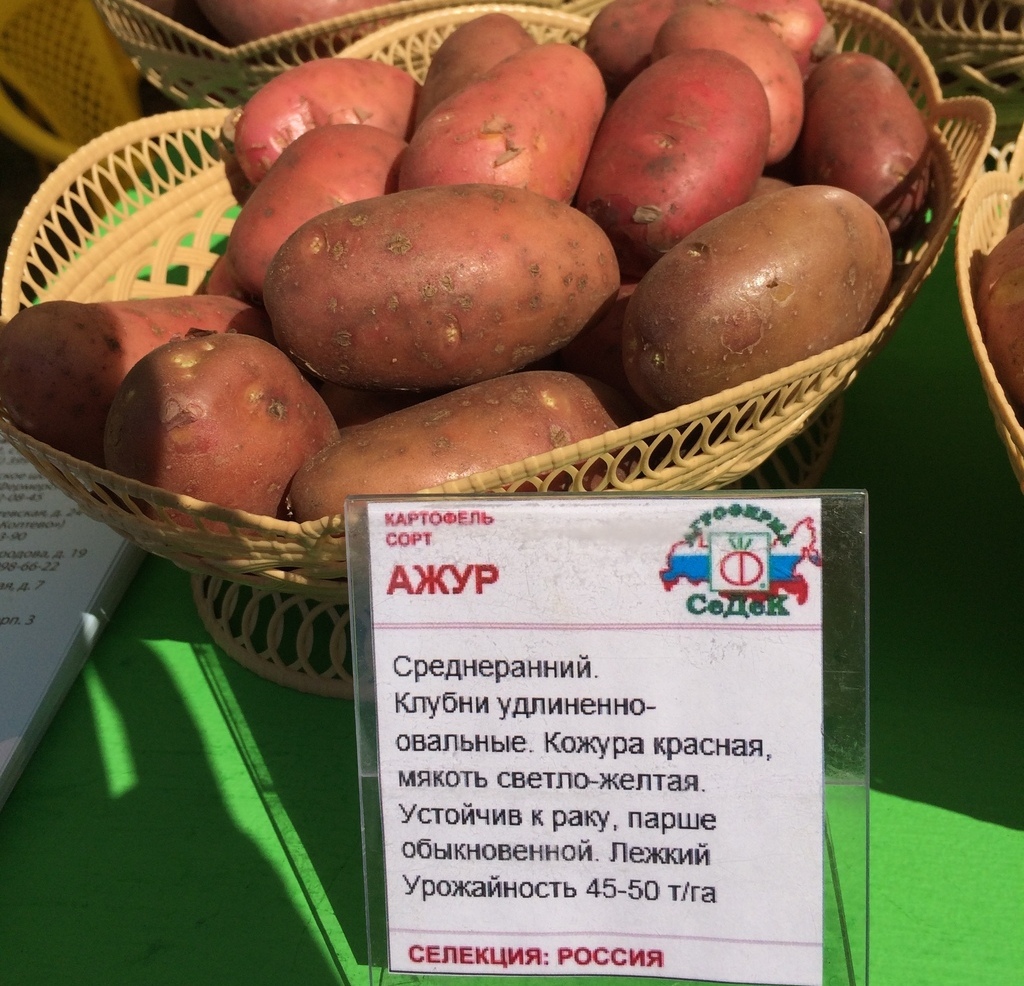
- Ripening period: 75-85 days (mid-early). However, the first harvest can be enjoyed 45 days after emergence.
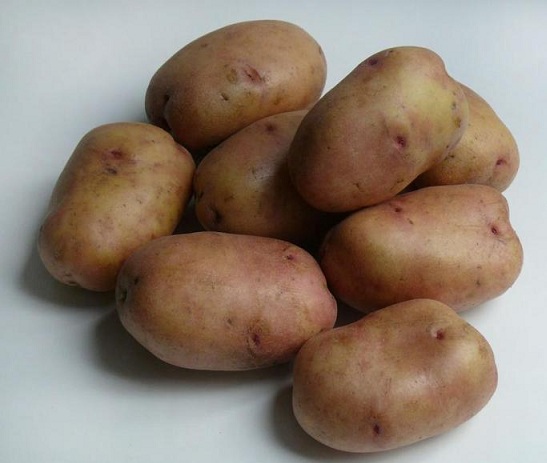
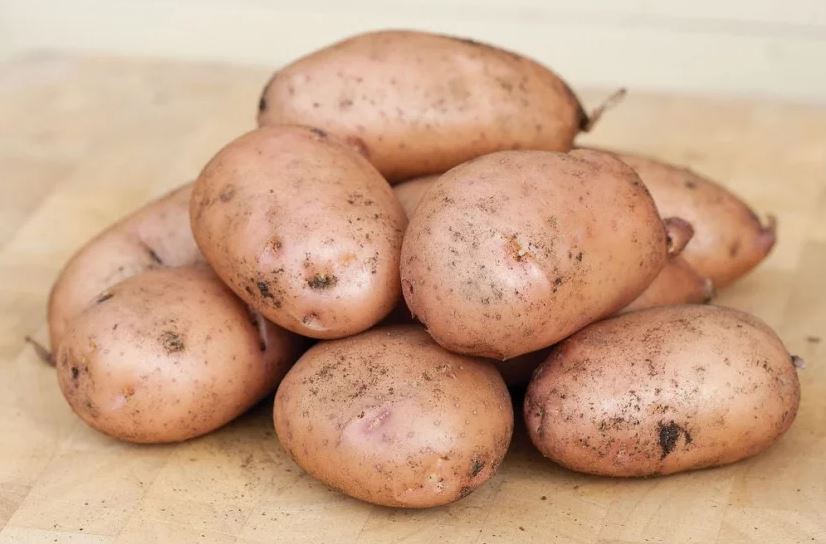
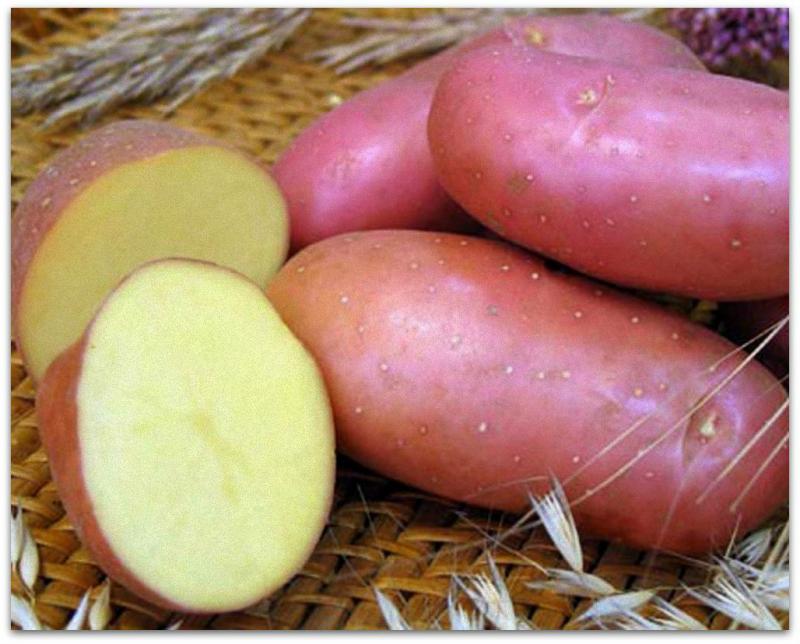
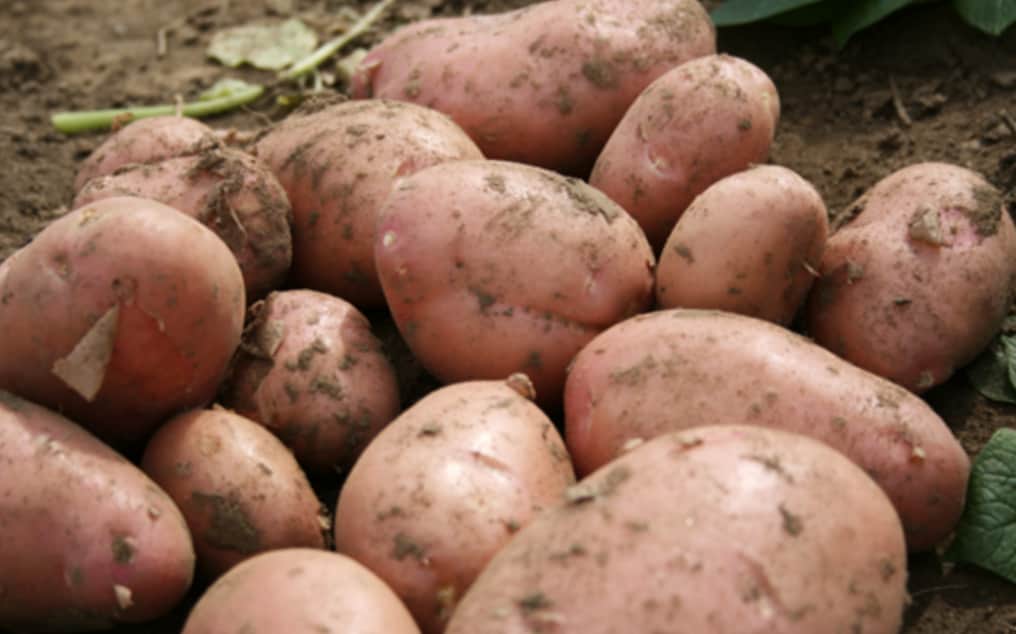
- Tubers: elongated-oval, smooth, pinkish skin, with small eyes, light yellow flesh, weight 98-135 g.
- Starch content: 13.7-16.4%.
- Culinary type: A
- Productivity: 187-410 c/ha, maximum - 443 c/ha (Bryansk region).
- Disease resistance: resistant to cancer, striped mosaic, leaf curl, susceptible to nematodes, late blight of tops and tubers.
- Advantages: drought-resistant, good keeping quality (94%), marketability from medium to high (78-98%), high yield, good to excellent taste.
- Flaws: low resistance to skin damage.
- 2017.
Photo gallery of the Ajour potato variety:
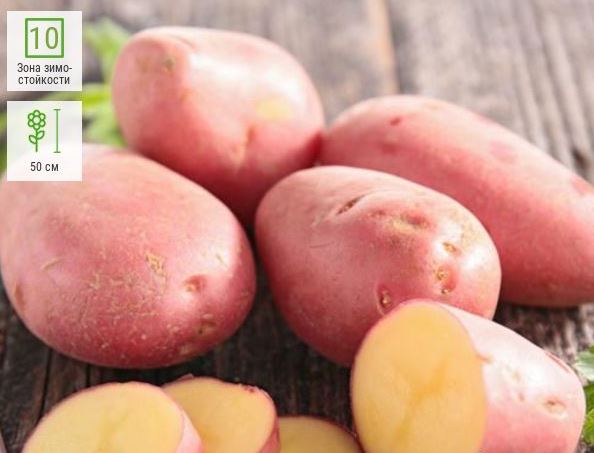
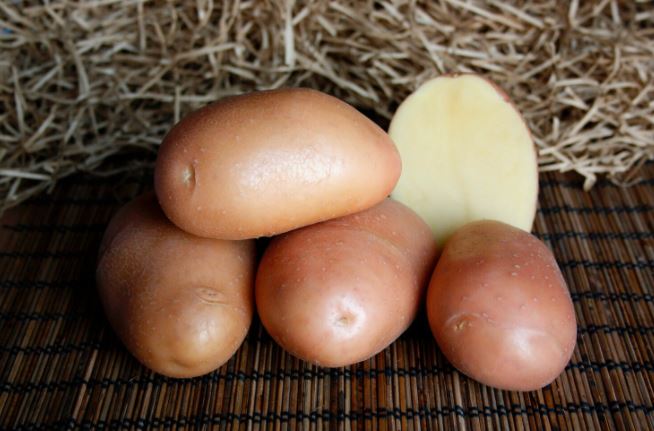
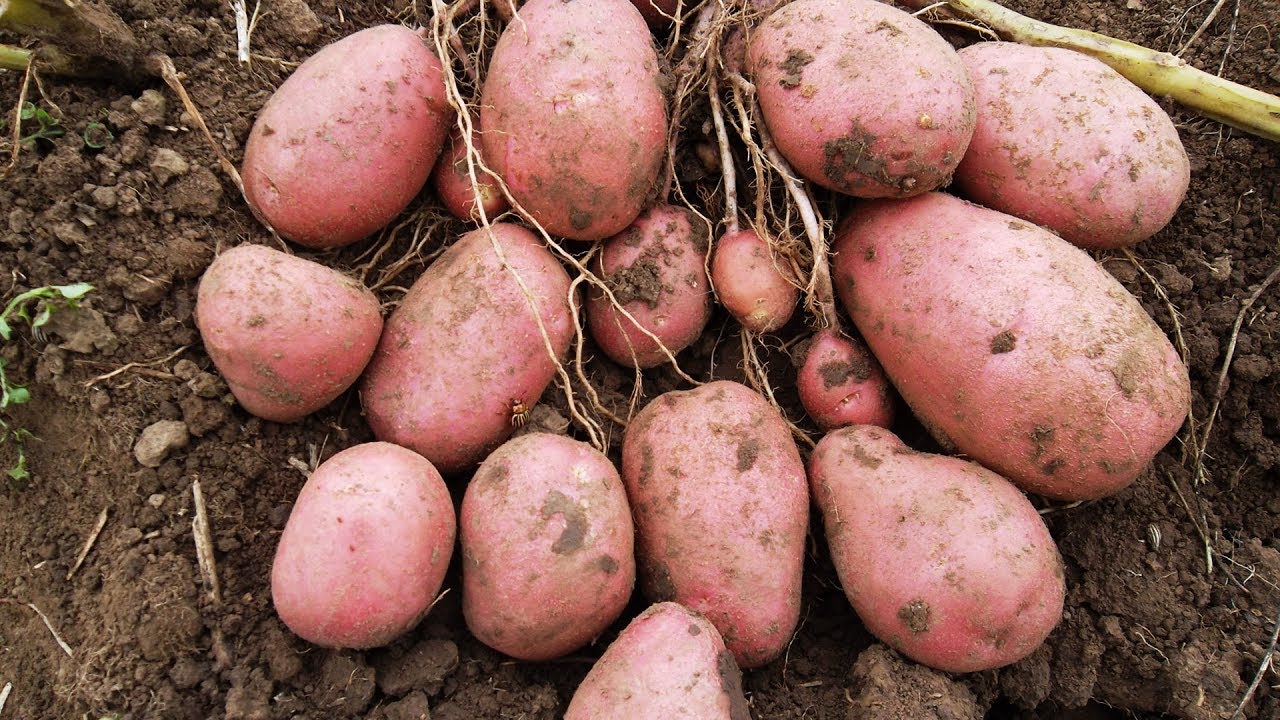
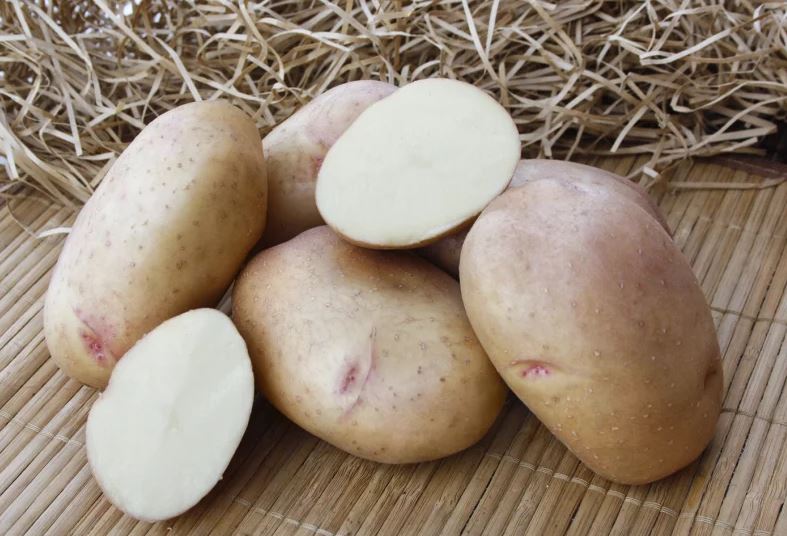
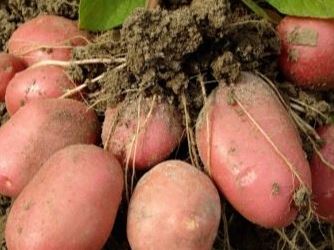

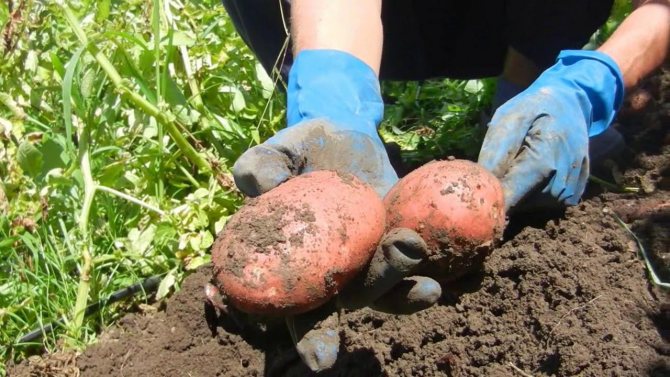
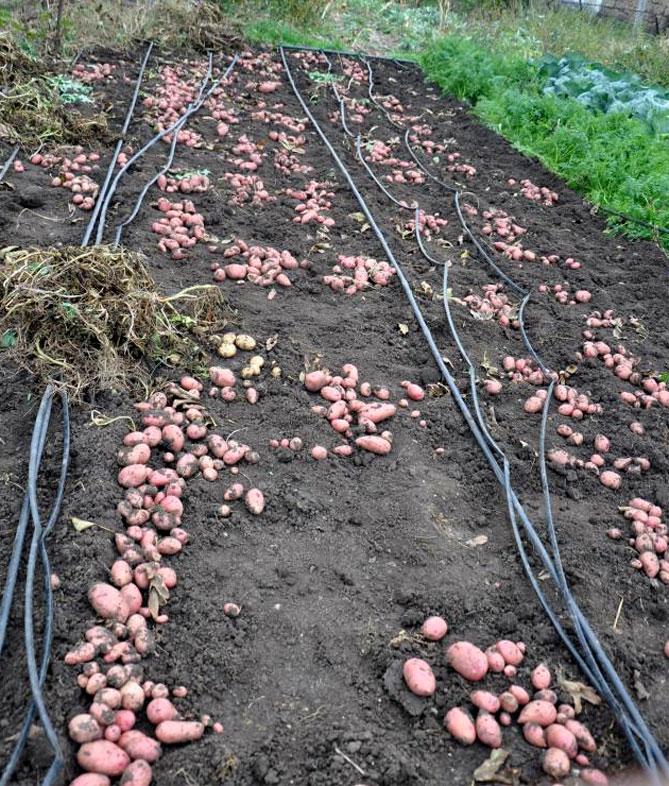
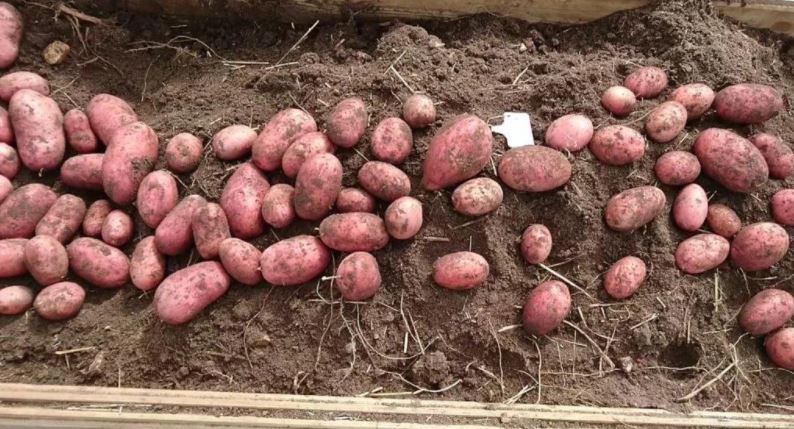
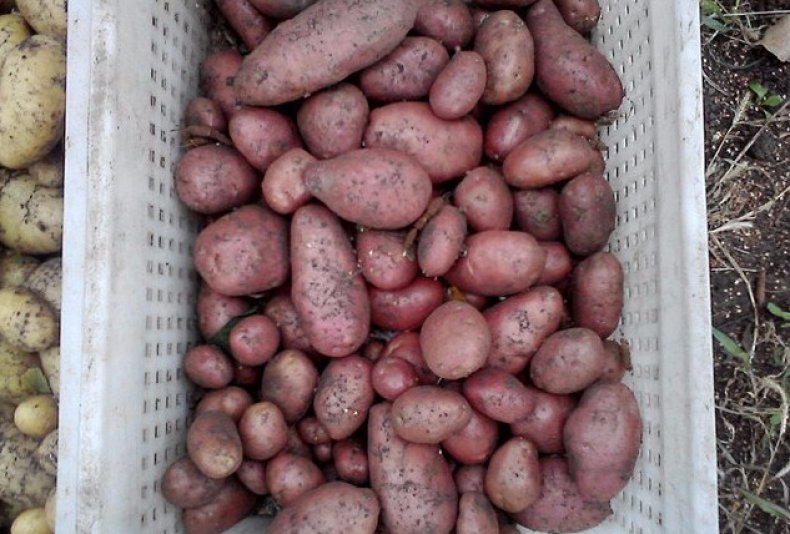
Bellarosa (Germany)
- Ripening period: 45-55 days (ultra-early).
- Tubers: round-oval, reddish skin, light yellow flesh, with a small number of lilac eyes, weight 117-207 g.
- Starch content: 12.6-15.7%.
- Culinary type: AB
- Productivity: 169-326 c/ha, on the 45th day - 143-277 c/ha, on the 55th - 170-385 c/ha, maximum - 385 c/ha (Tambov region).
- Disease resistance: resistant to cancer, viruses, nematodes, moderately resistant to late blight and scab.
- Advantages: good taste, excellent yield, good drought tolerance, good immunity, good marketability (82-99%) and shelf life (93%).
- Flaws: uneven shape of tubers, skin is easily damaged during digging.
- 2006.
Photo gallery of the Bellarosa potato variety:
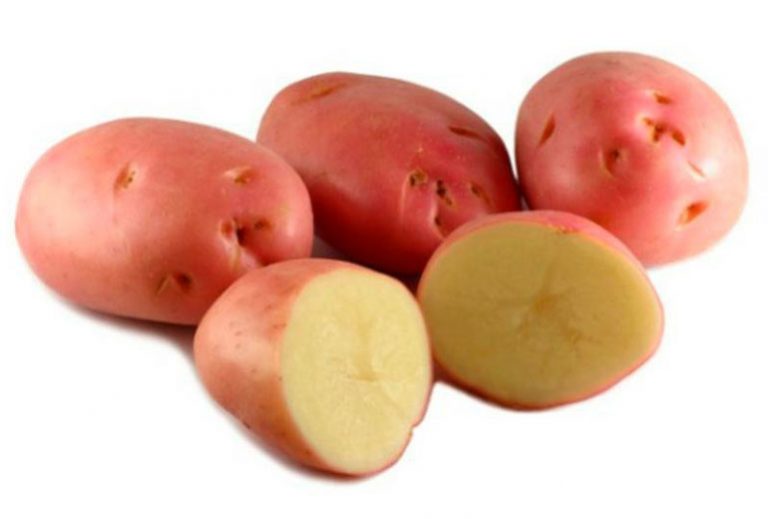
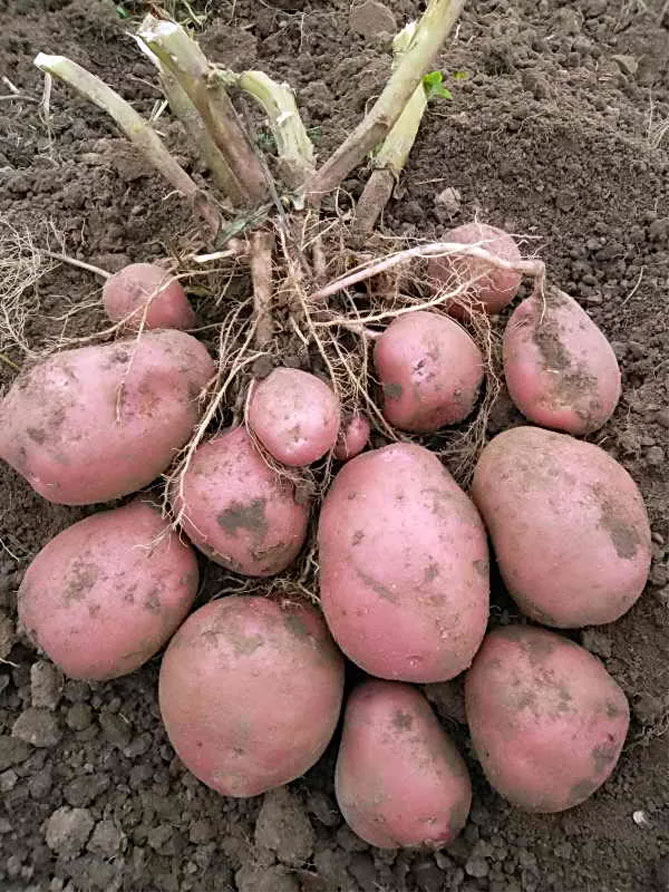
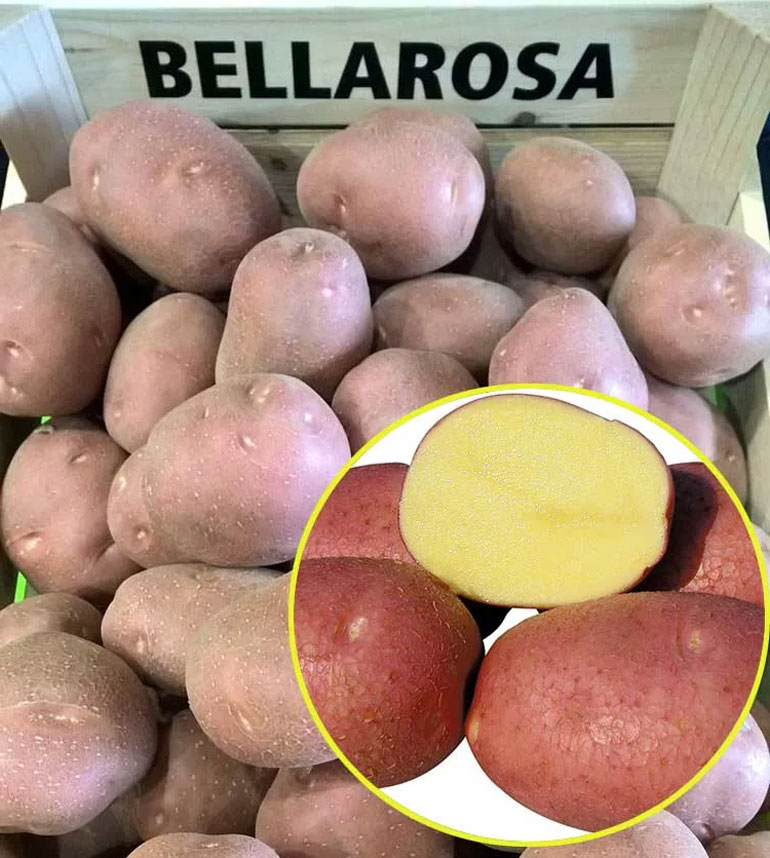
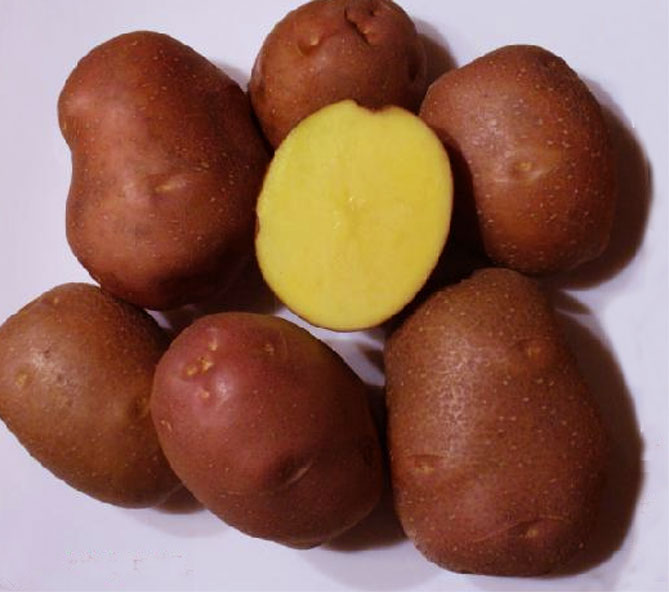
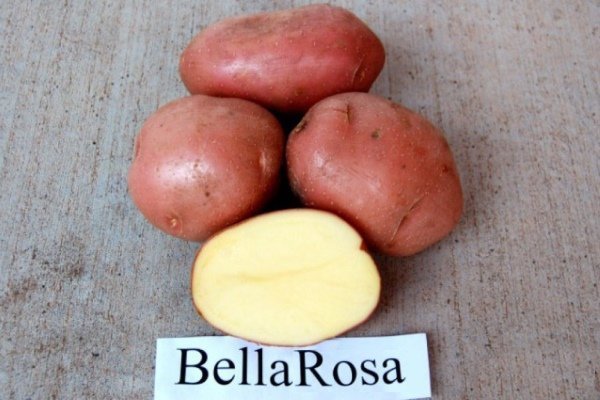
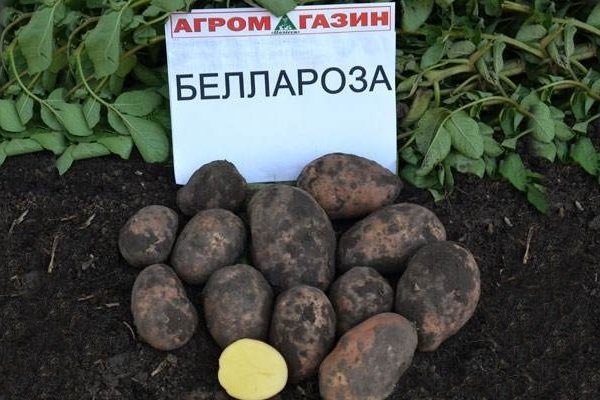
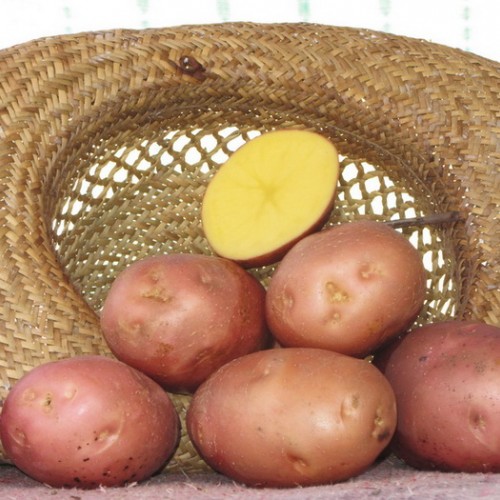
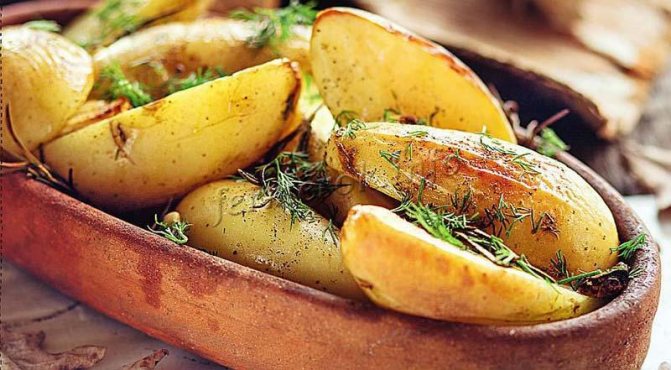
You can find out more about the variety in the article. Bellarosa Potato: Variety Characteristics, Reviews, and Comparison.
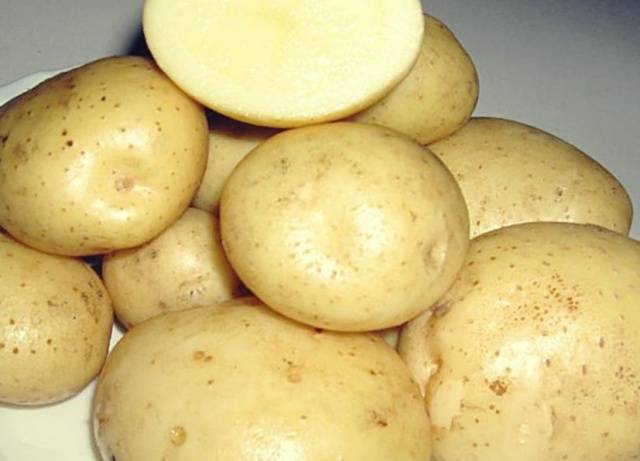
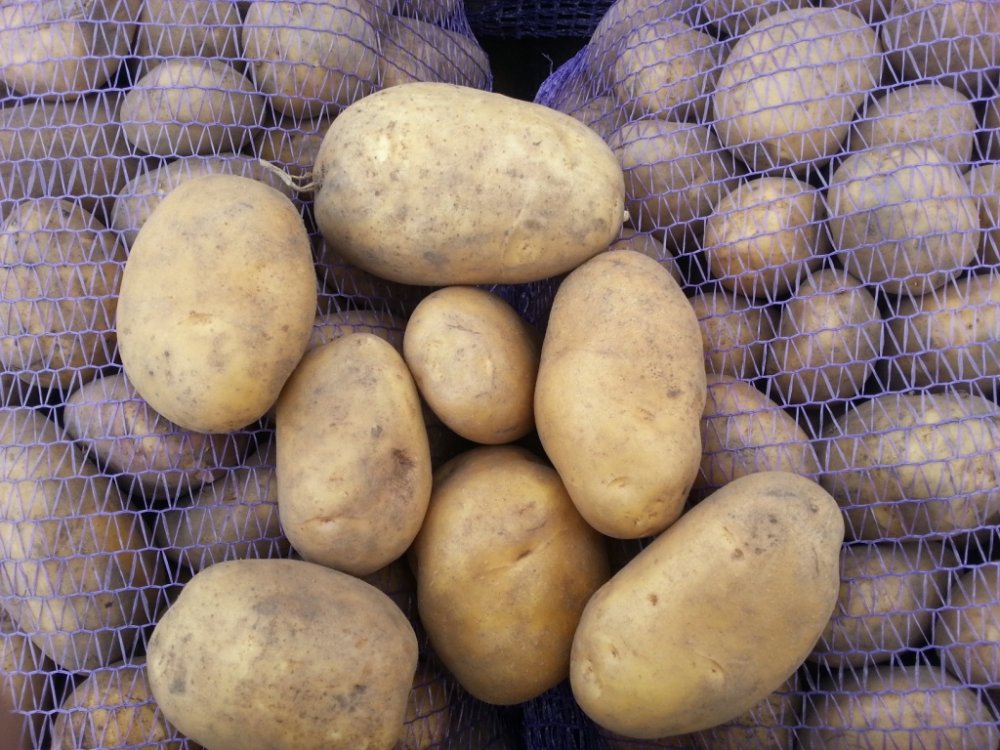
Breeze (Belarus)
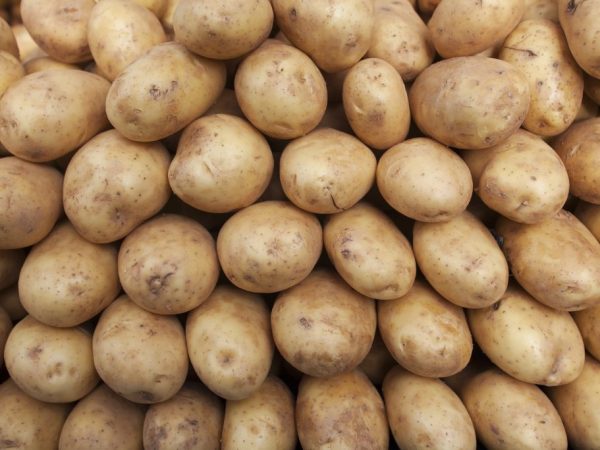
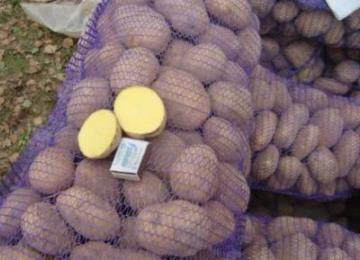
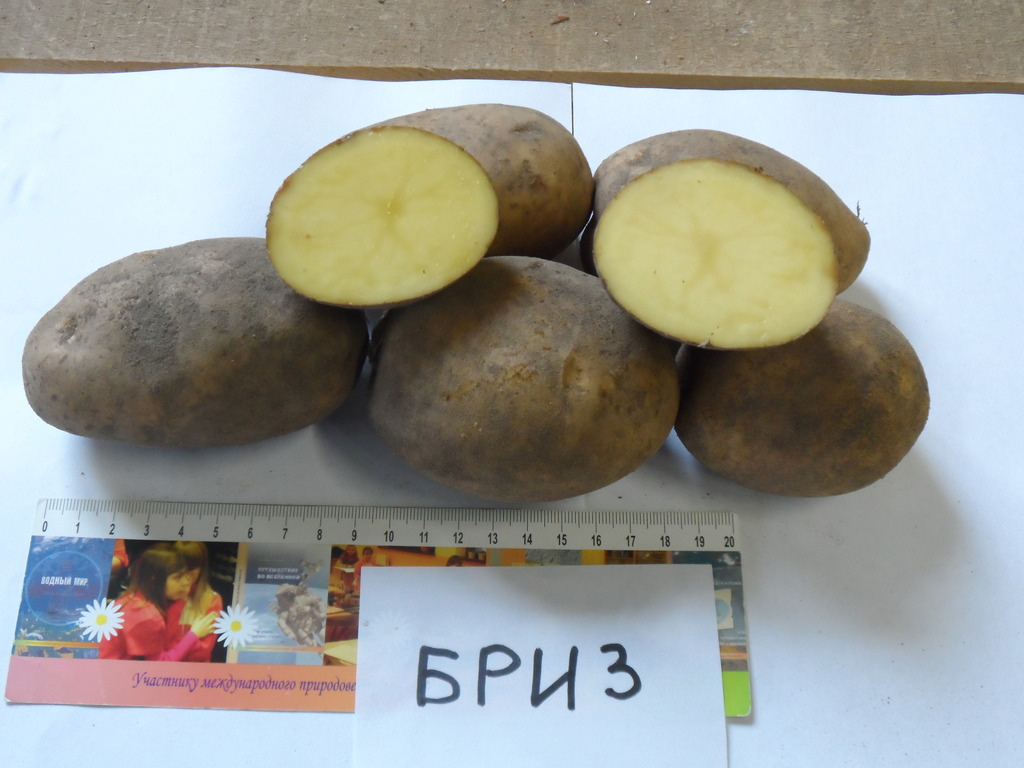
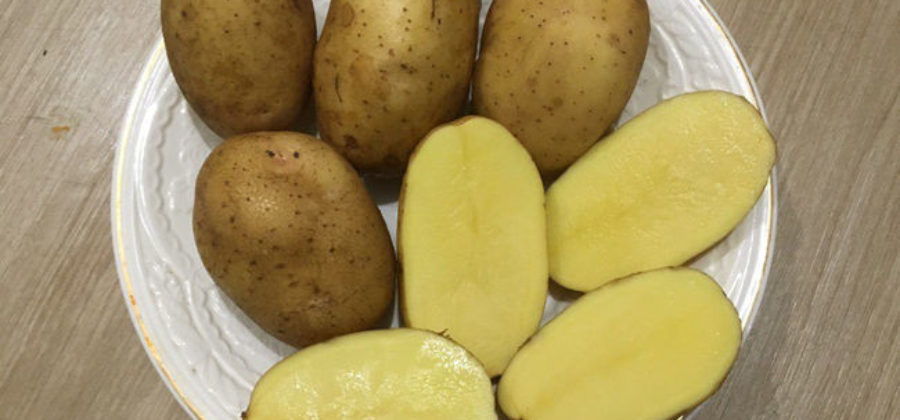
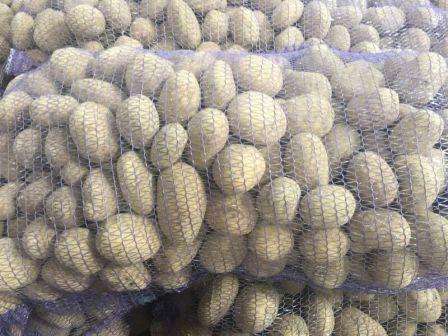
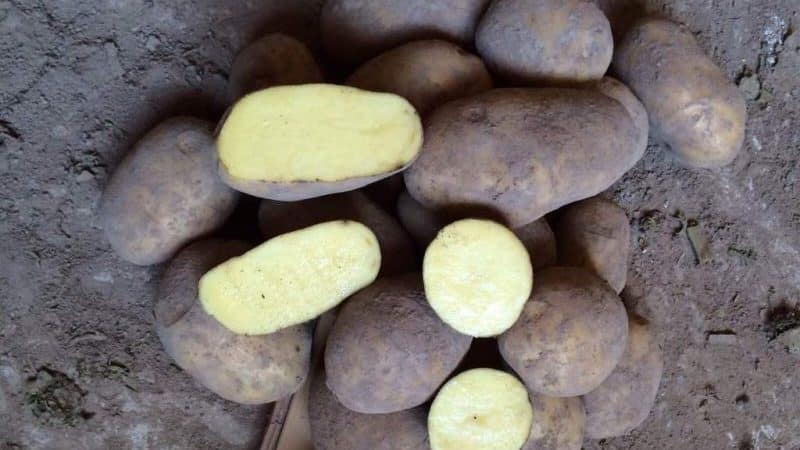
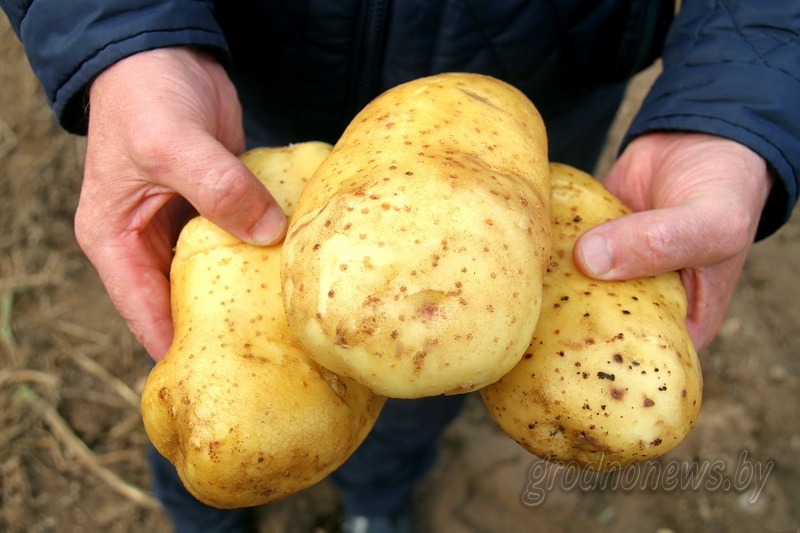
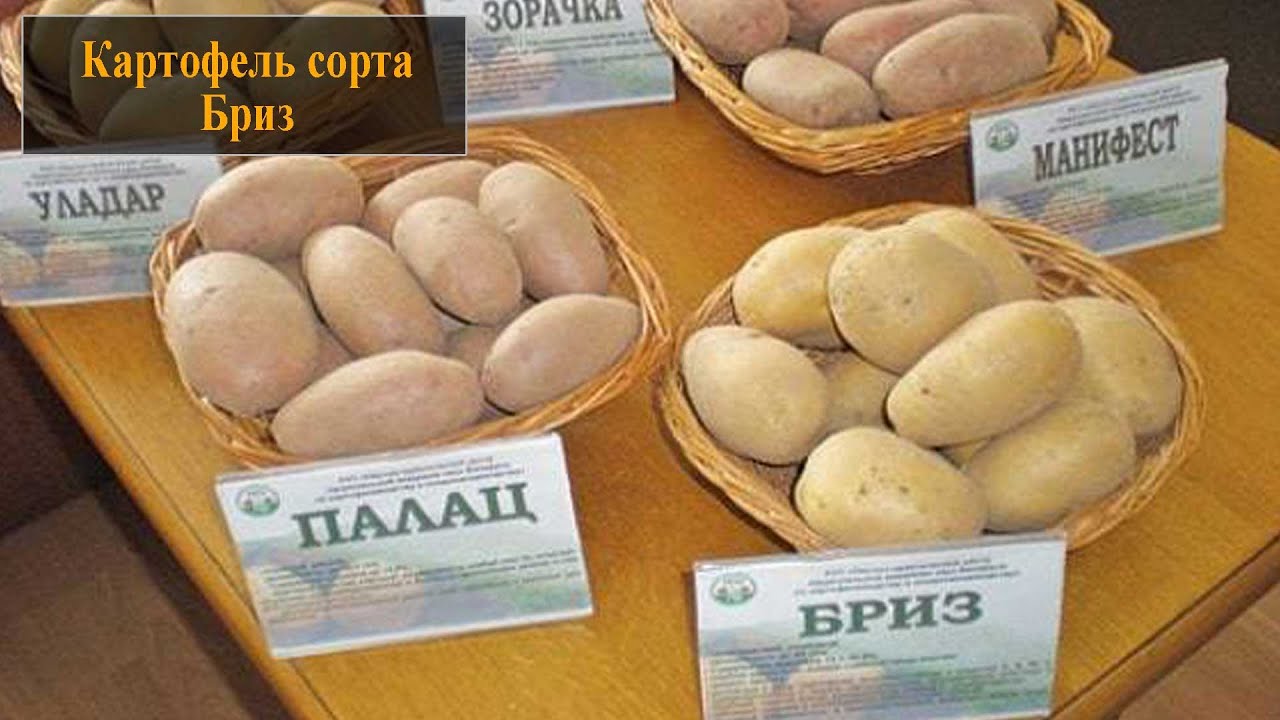
- Ripening period: 60-80 days (mid-early).
- Tubers: oval, with smooth yellowish skin and yellow flesh, small eyes, medium deep, weight 97-154 g.
- Starch content: 10-15.8%.
- Culinary type: IN
- Productivity: 160-395 c/ha, maximum - 451 c/ha (Kaliningrad region).
- Disease resistance: resistant to cancer, rugose and striped mosaic, leaf curl, moderately resistant to scab, late blight, rhizoctonia, susceptible to nematodes.
- Advantages: unpretentious, high-yielding, good marketability (83-98%) and shelf life (97%), good taste, resistant to mechanical damage.
- Flaws: may be affected by nematodes.
- 2009.
Photo gallery of the Breeze potato variety:
Vega (Germany)
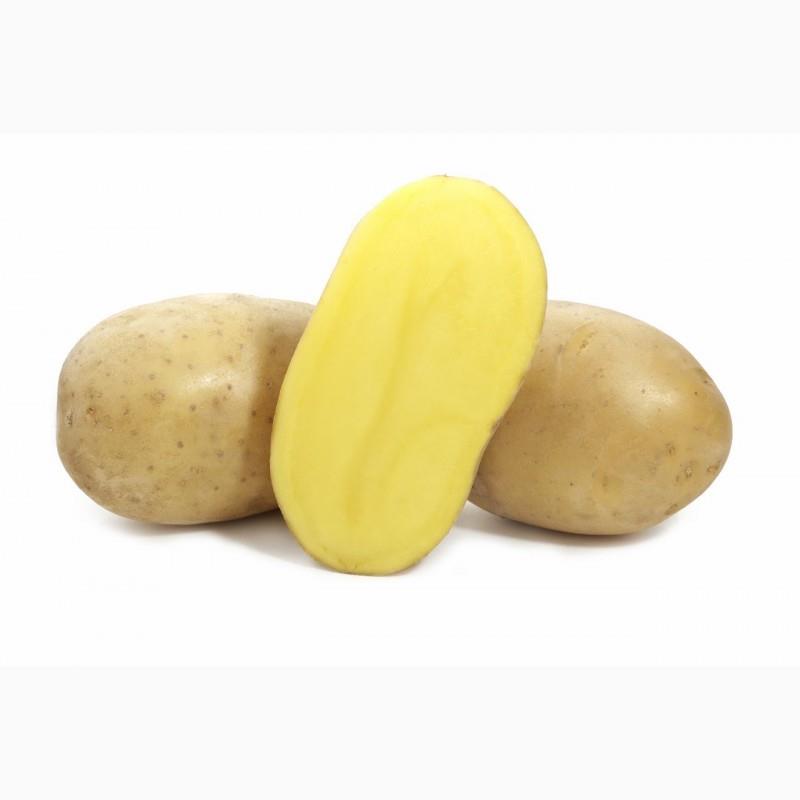
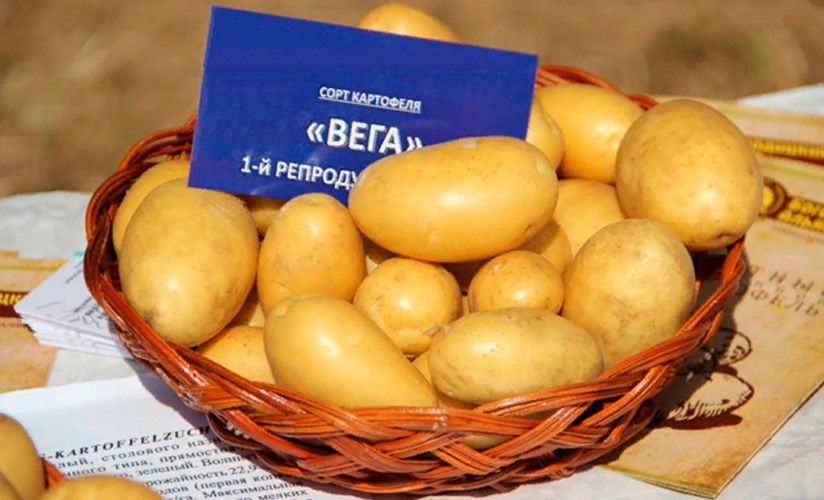
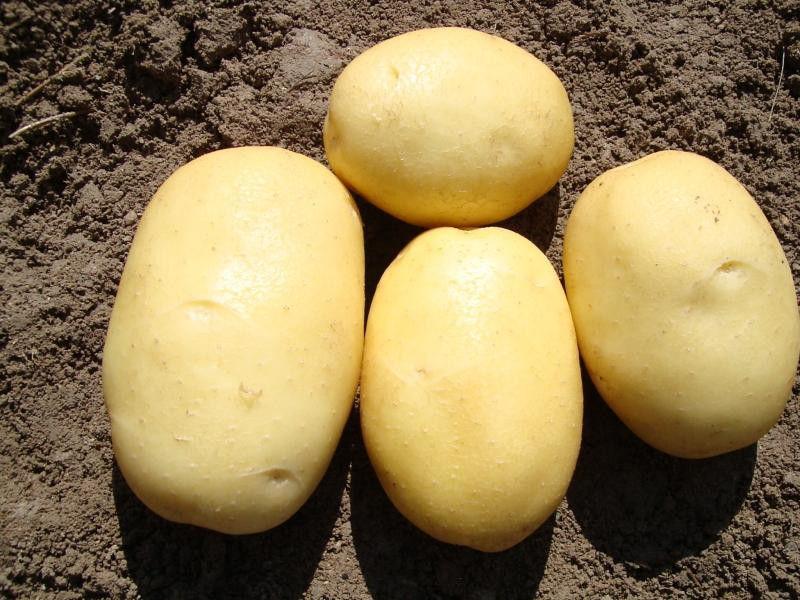
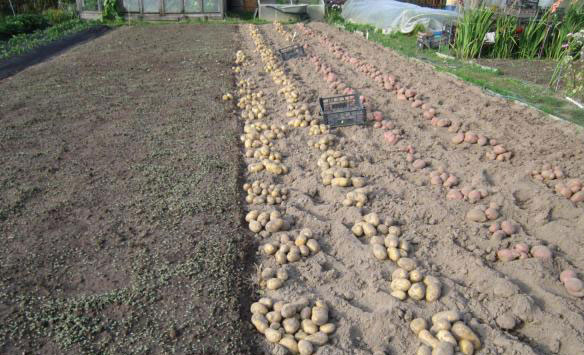
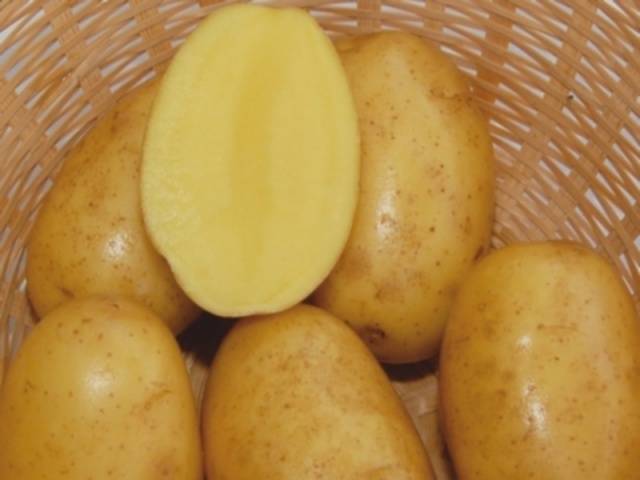
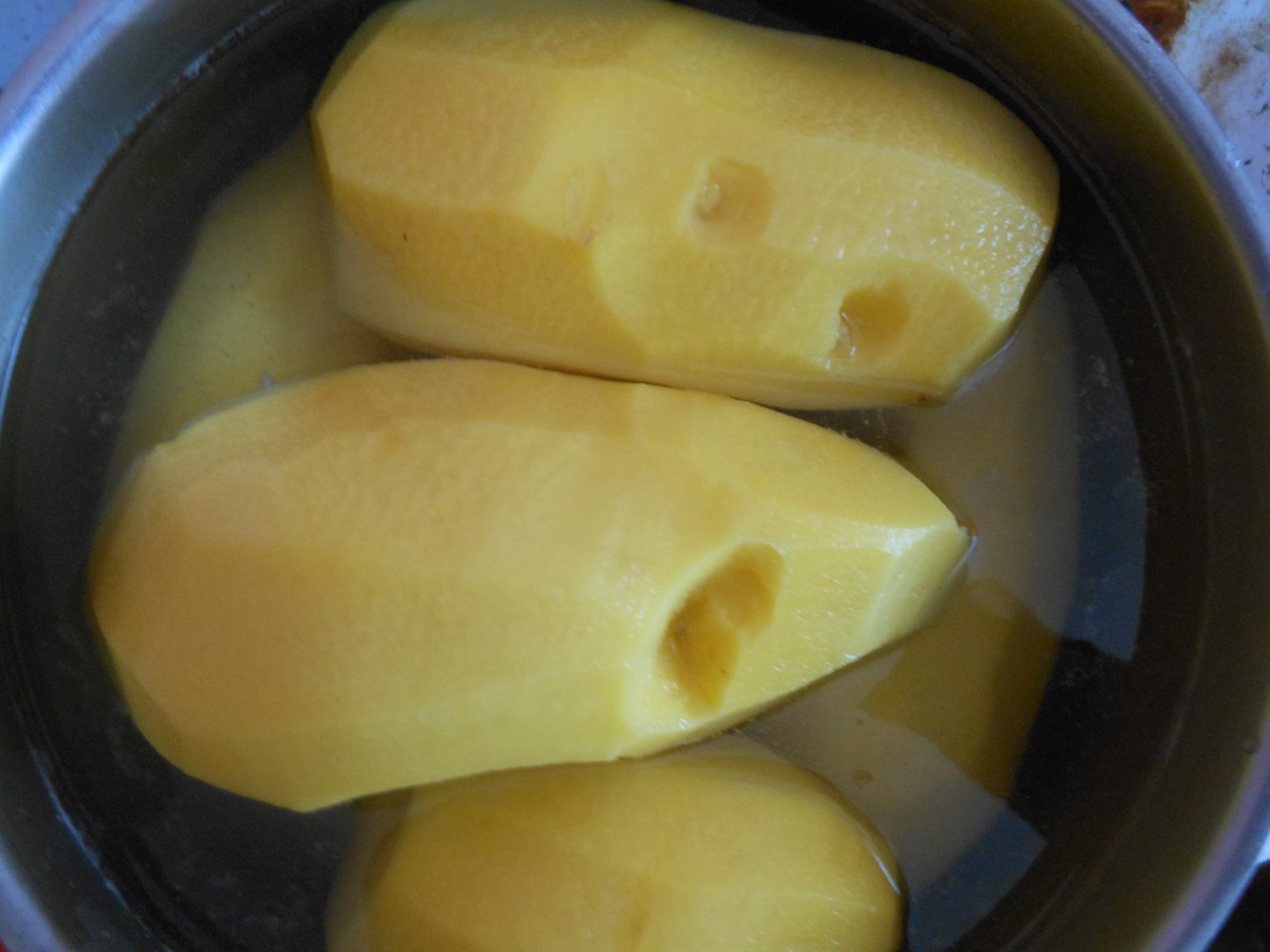
- Ripening period: 50-65 days (early maturing). On the 45th day, you can begin digging.
- Tubers: oval, with small eyes, weight 87-120 g, dark yellow flesh, yellow skin.
- Starch content: 10.1-15.9%.
- Culinary type: IN
- Productivity: 229-377 c/ha, on the 45th day - 81-143 c/ha, on the 55th - 109-187 c/ha, maximum - 484 c/ha (Tula region).
- Disease resistance: resistant to cancer, nematode, late blight, moderately resistant to rugose mosaic.
- Advantages: with good care it produces very large tubers, it is tasty, resistant to mechanical damage, has excellent marketability (87-95%) and shelf life (99%).
- Flaws: sensitivity to waterlogging of the soil, demanding of soil fertility.
- 2013.
Photo gallery of the Vega potato variety:
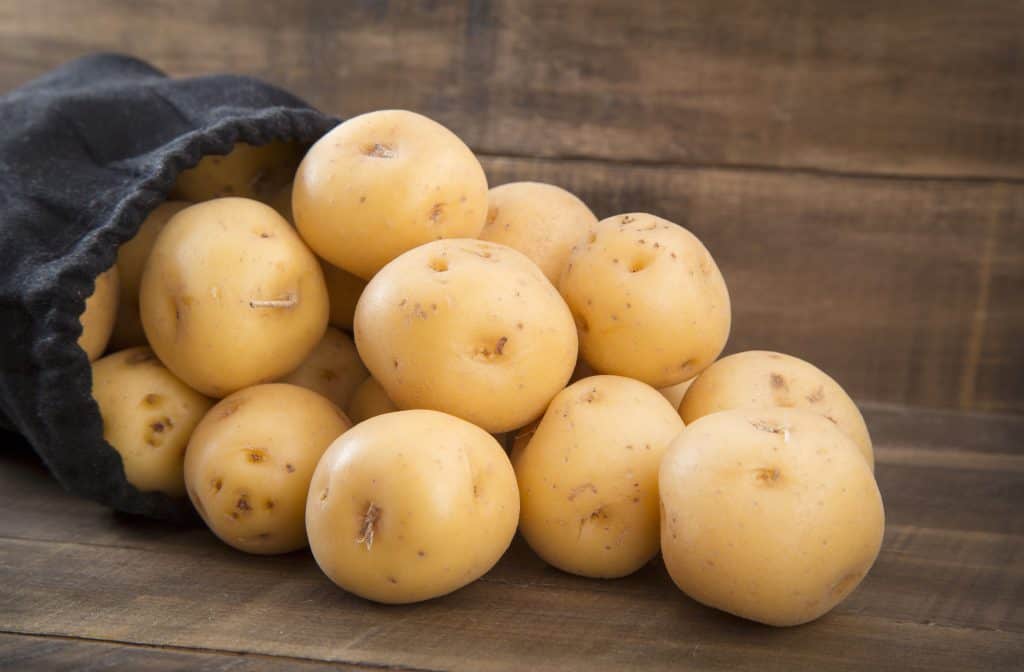
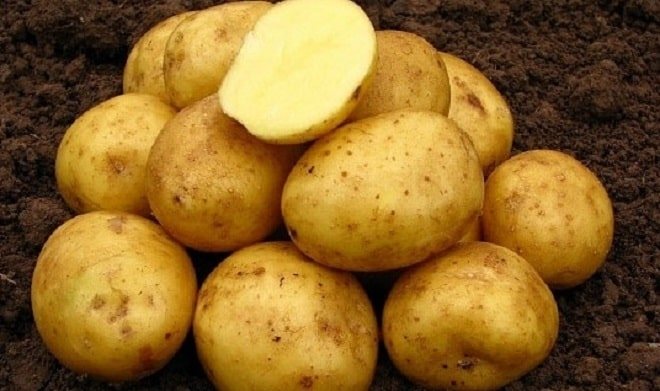
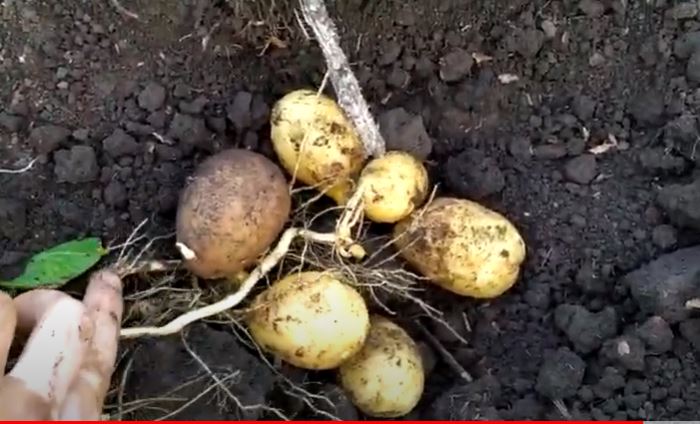
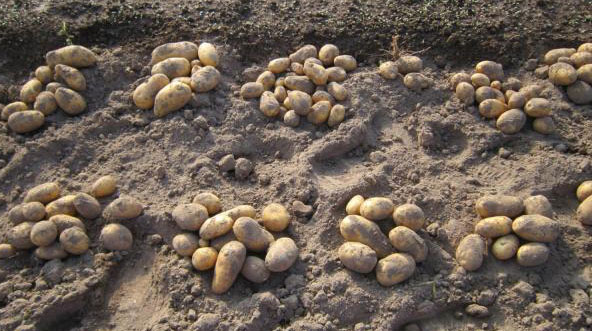
Read more about the variety in the article Vega potato variety: description, comparison with others, photos, reviews.
Vineta (Germany)
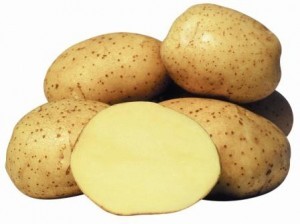
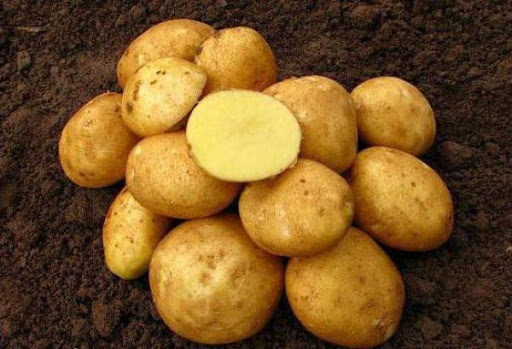
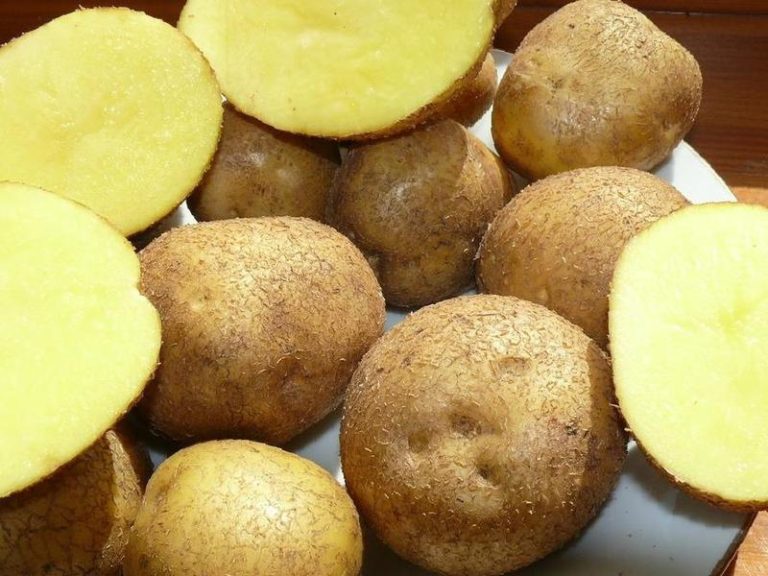
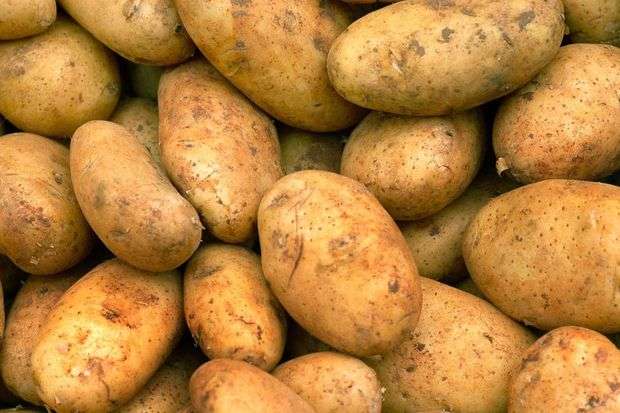
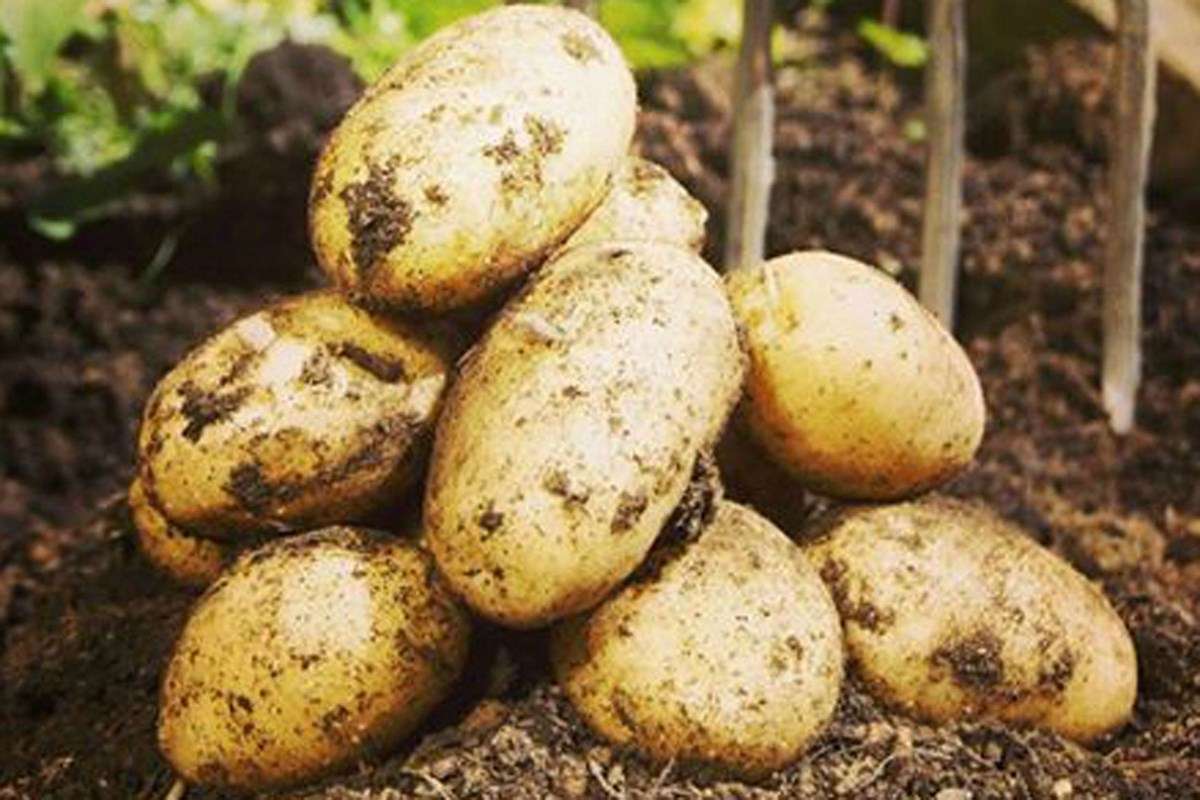
- Ripening period: 60-70 days (early maturing).
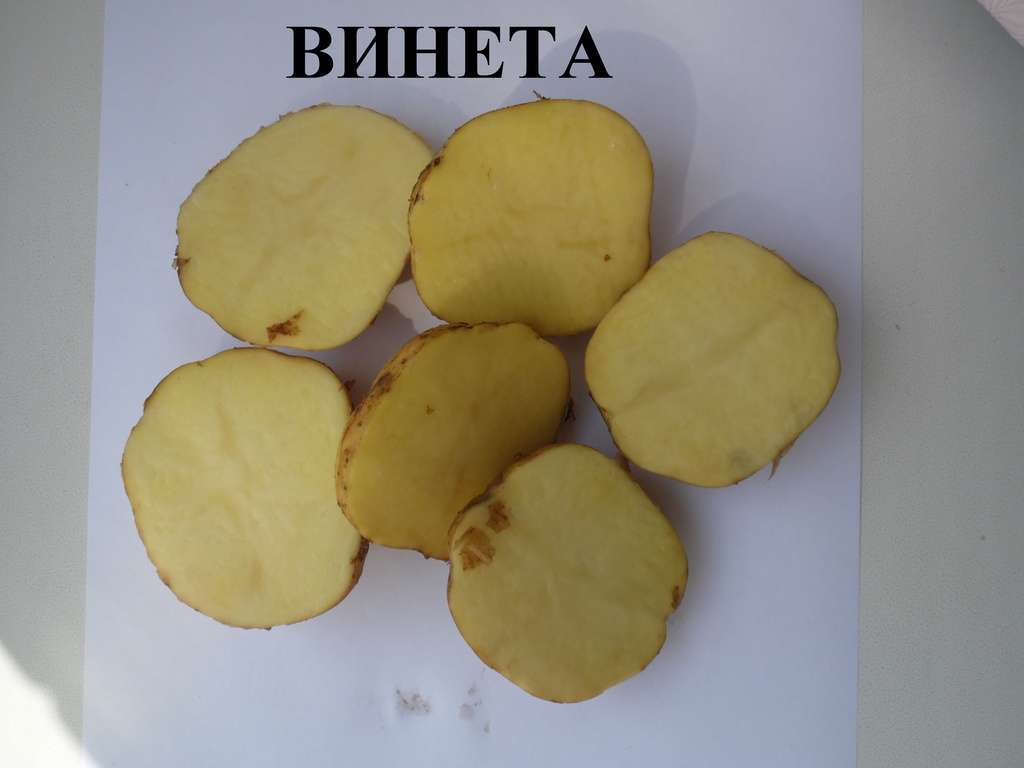
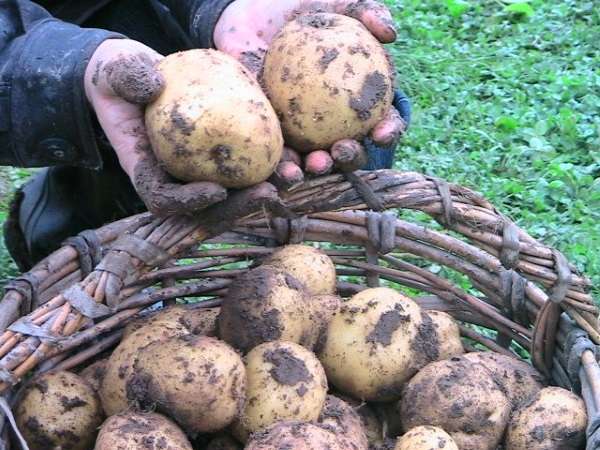
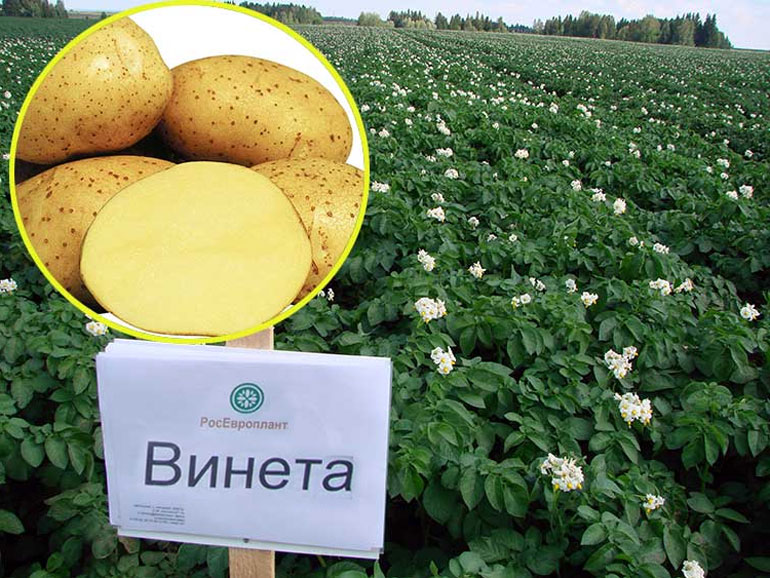
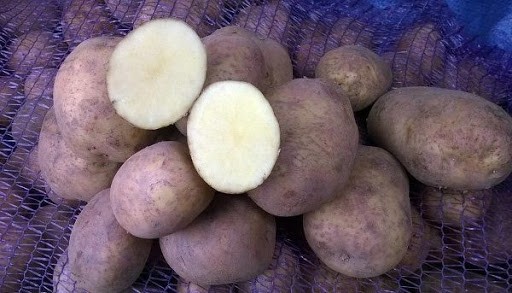
- Tubers: oval-round, with yellow skin and light flesh, weighing 67-95 g.
- Starch content: 12.9-15.2%.
- Culinary type: IN
- Productivity: 160-228 c/ha, on the 45th day - 127-159 c/ha, on the 55th - 155-220 c/ha, maximum - 238 c/ha (Kabardino-Balkarian Republic).
- Disease resistance: resistant to cancer, nematode, rugose and striped mosaic, leaf curl, susceptible to late blight of tops, moderately susceptible to late blight of tubers.
- Advantages: tolerates drought well, is suitable for regions with cold climates and changeable weather, has good and excellent taste, excellent marketability (87-97%).
- Flaws: small tubers, average shelf life compared to other varieties (87%), not very high yield.
- 2001.
Photo gallery of the Vineta potato variety:
Gala (Germany)
- Ripening period: 65-80 days (mid-early).
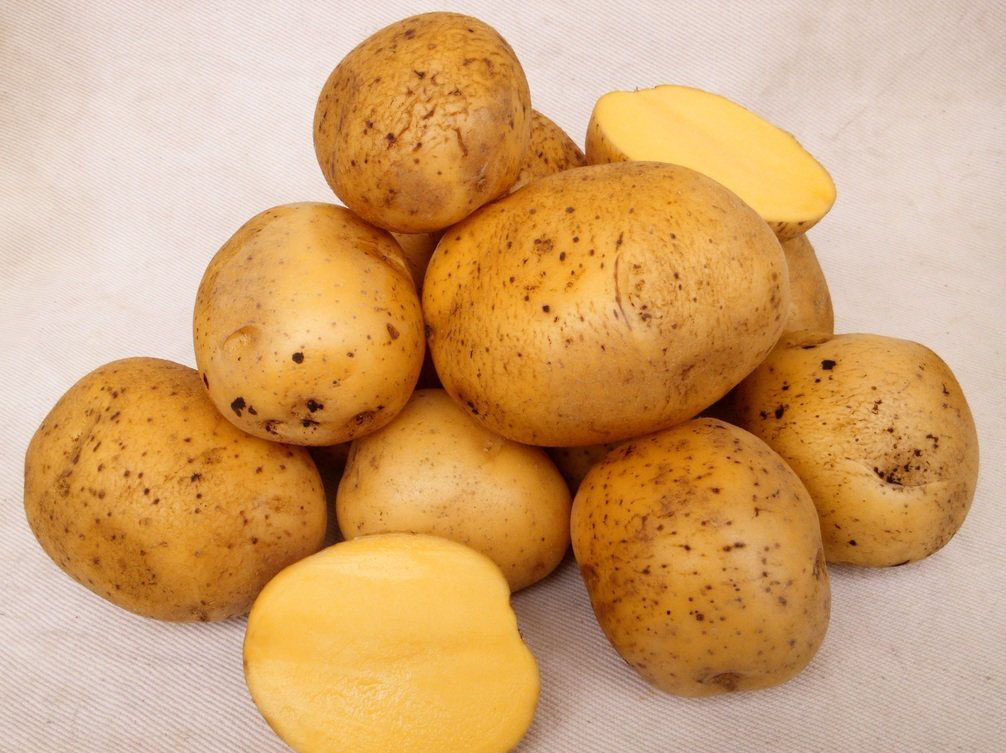
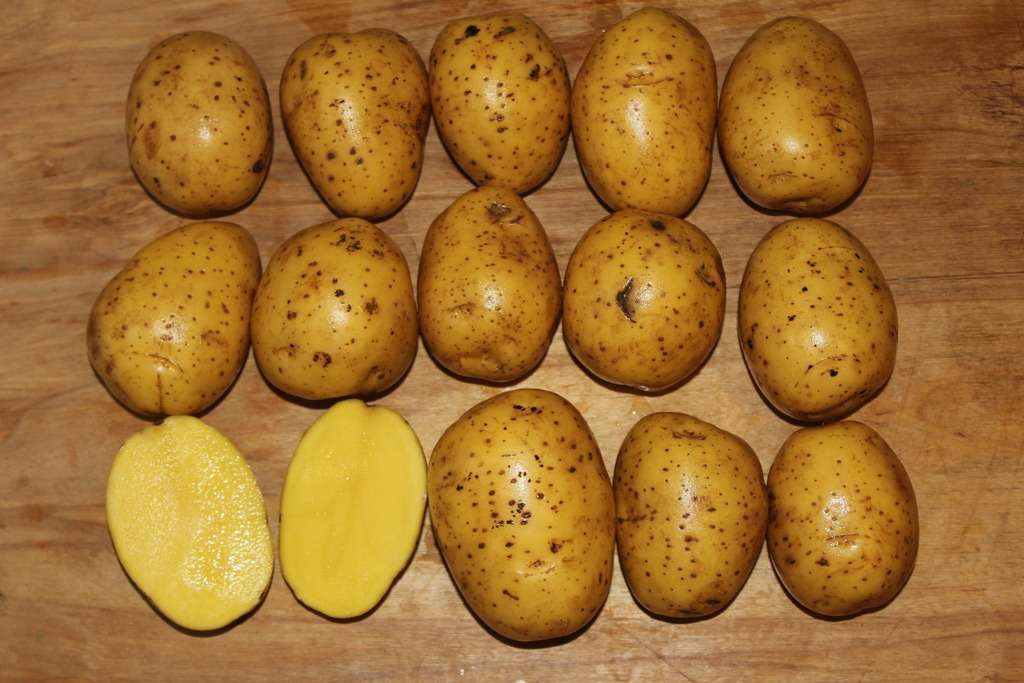
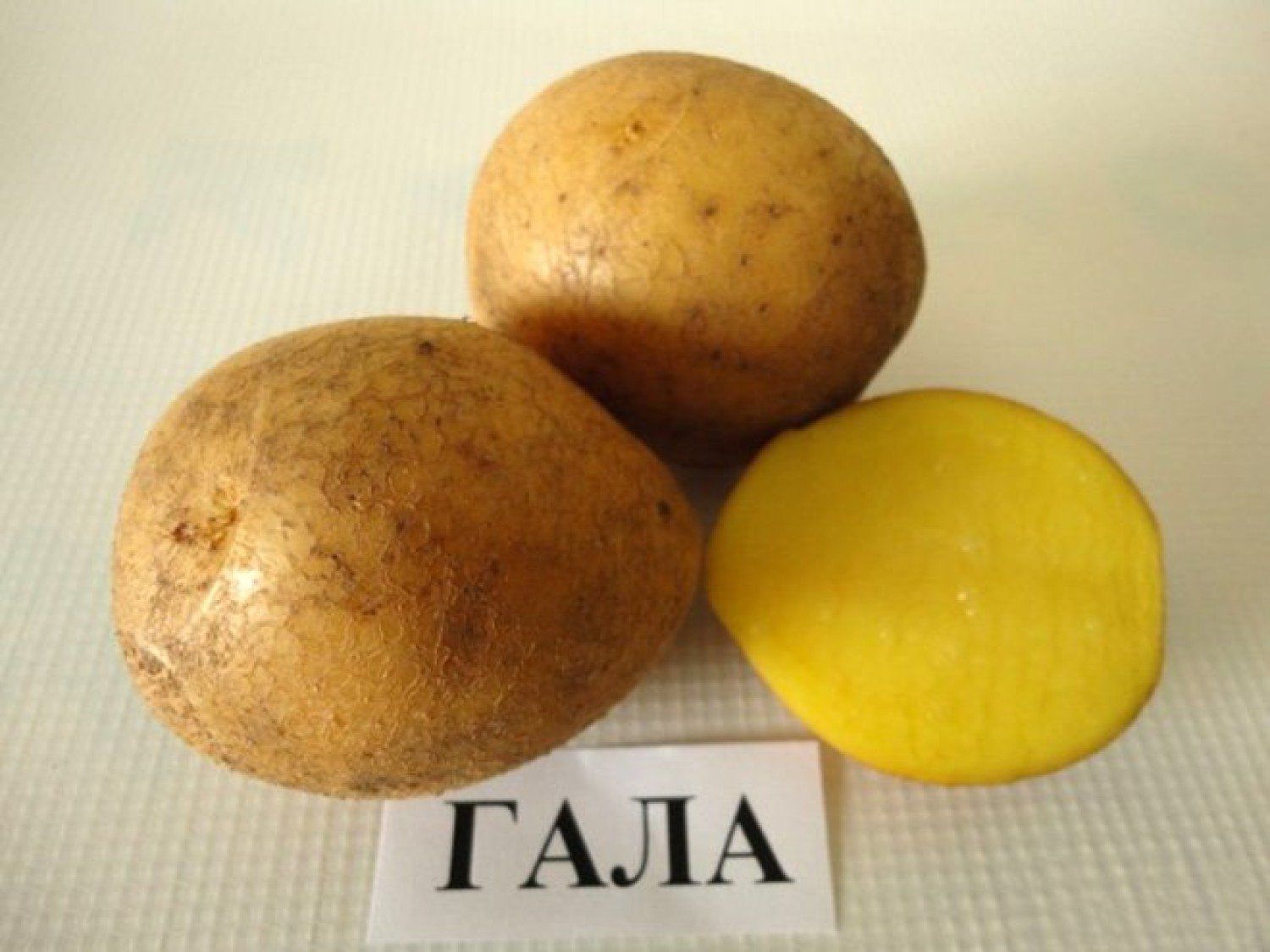
- Tubers: elongated-oval in shape with small eyes, golden skin, dark yellow flesh, weight 71-122 g.
- Starch content: 10.2-13.2%.
- Culinary type: A
- Productivity: 216-263 c/ha, maximum - 390 c/ha (Vologda region).
- Disease resistance: resistant to cancer and nematode, moderately resistant to late blight.
- Advantages: good taste, resistance to mechanical damage.
- Flaws: requires fertile soil, average shelf life (89%), marketability from average to fairly high (71-94%), sprouts appear early, under unfavorable conditions the size of the tubers decreases.
- 2008.
Photo gallery of the Gala potato variety:
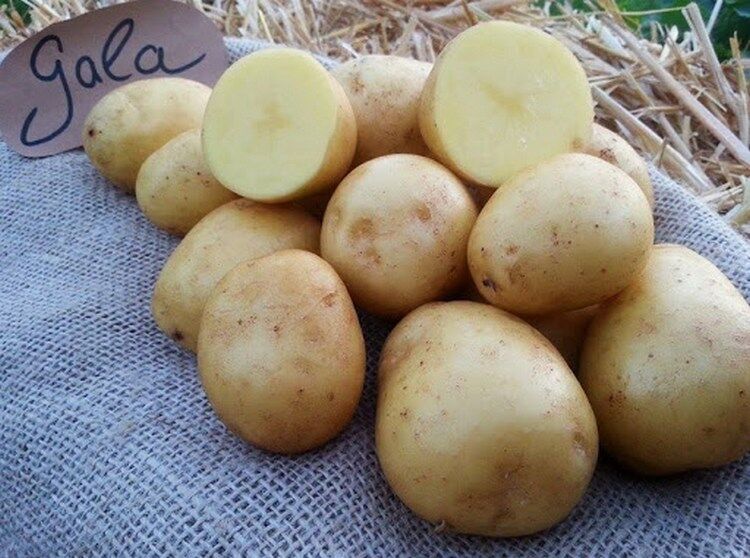
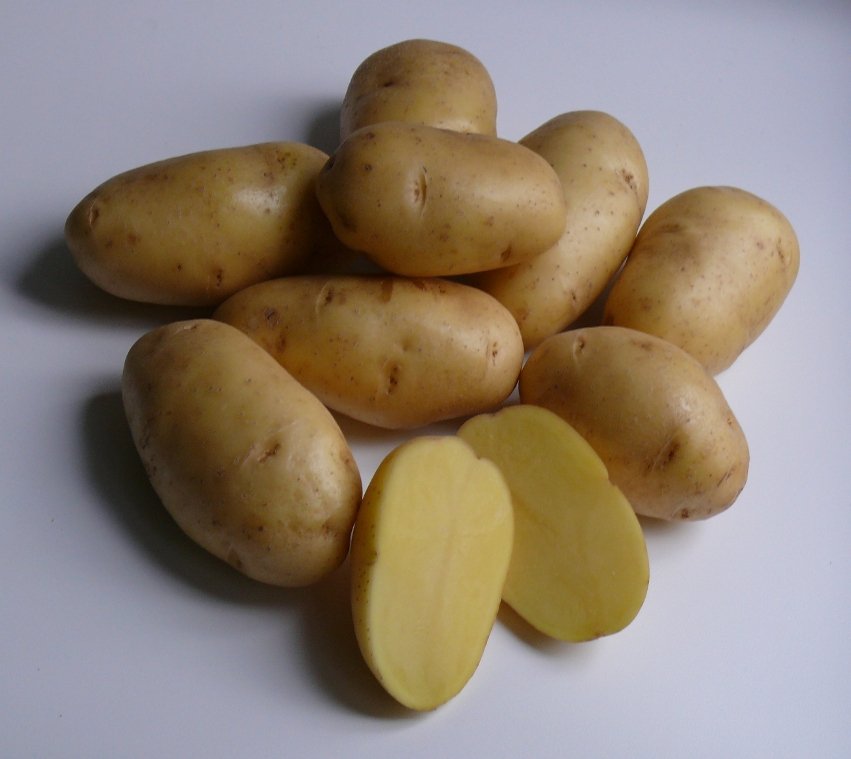
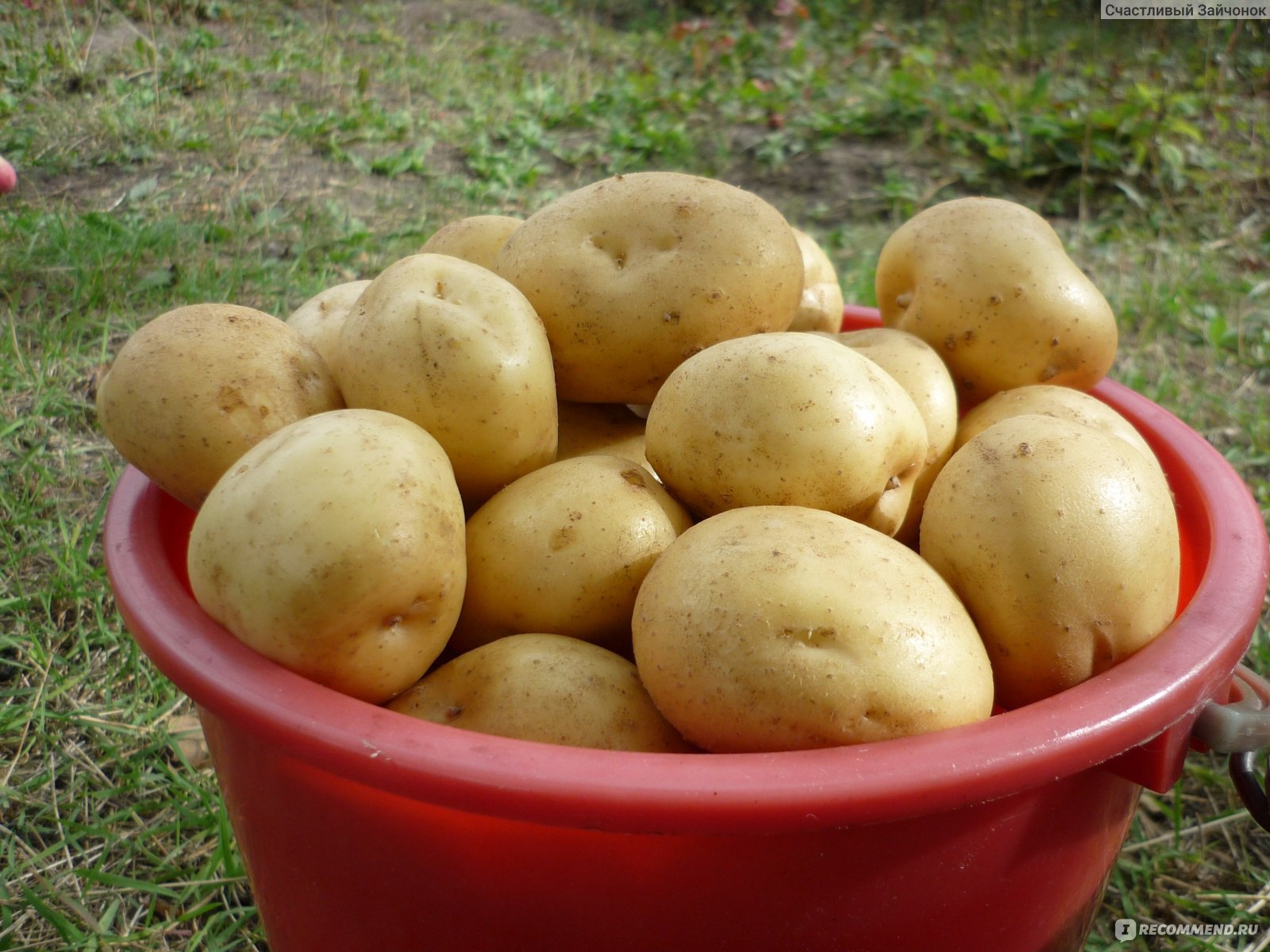
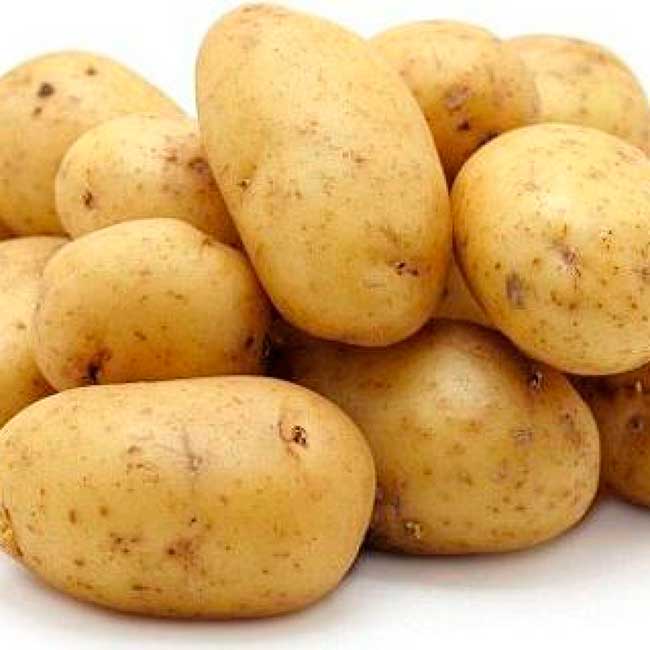
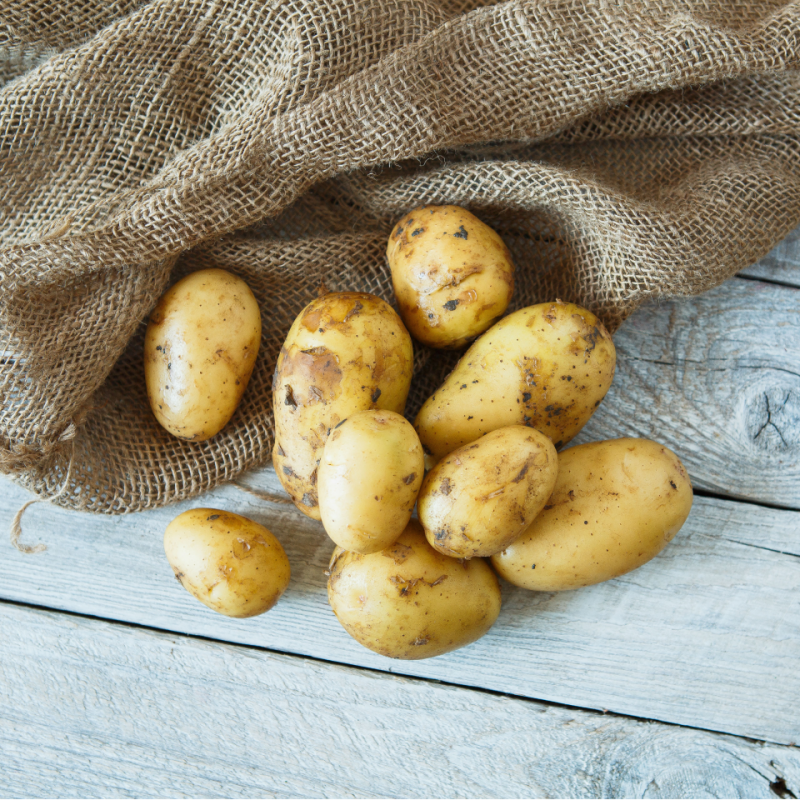
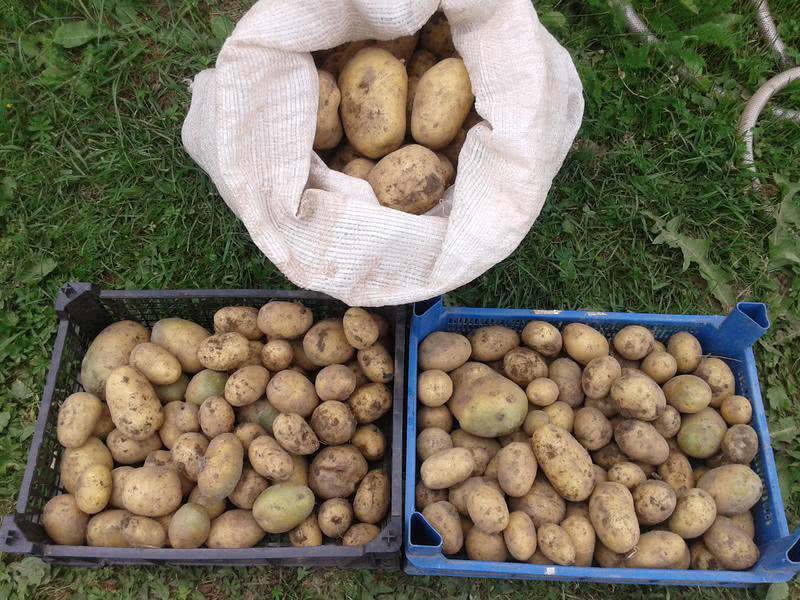
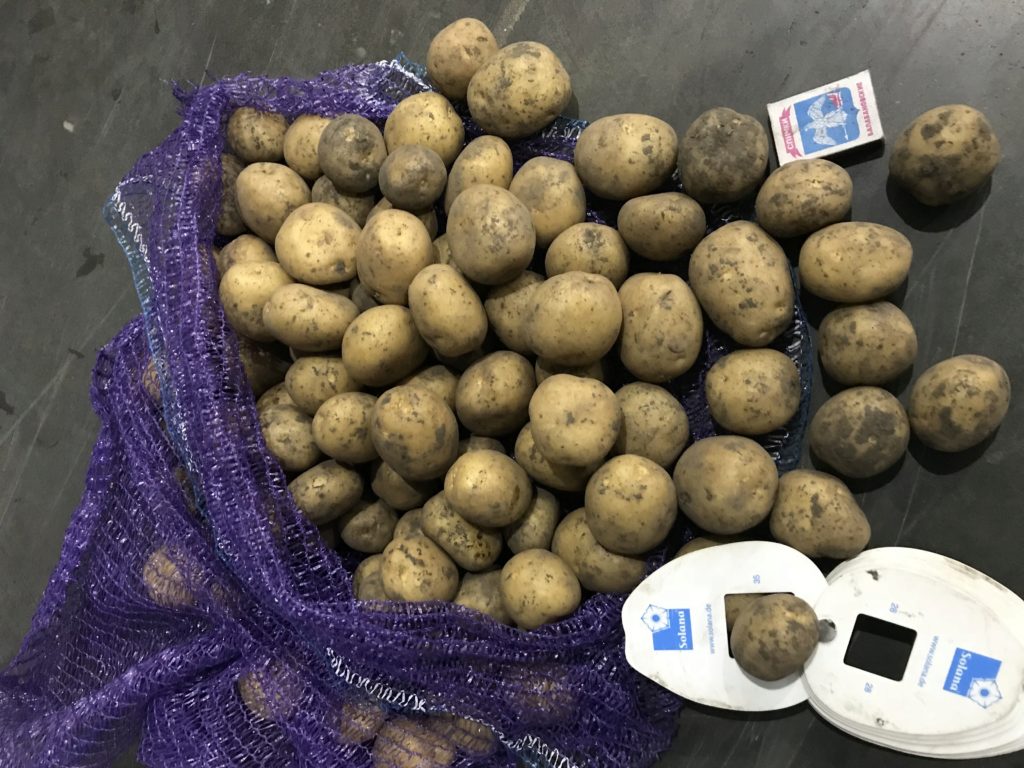
Read more about the variety in the article Gala Potato: characteristics and comparison of the variety with others in tables, reviews
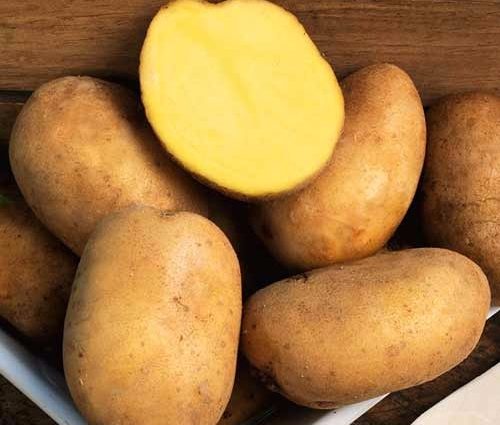
Golubizna (Russia)
- Ripening period: 90-110 days (mid-late).
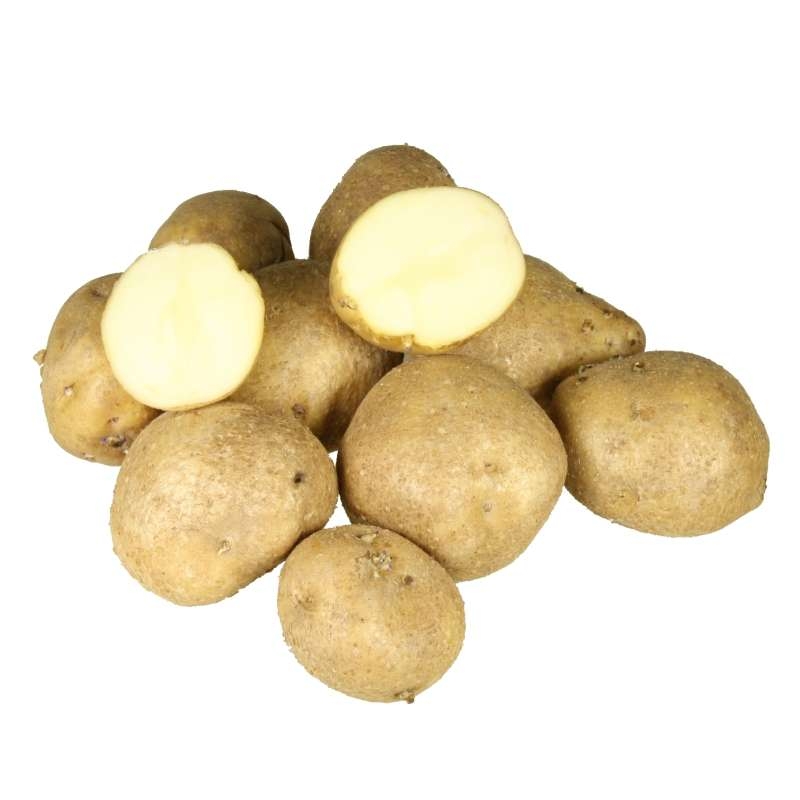
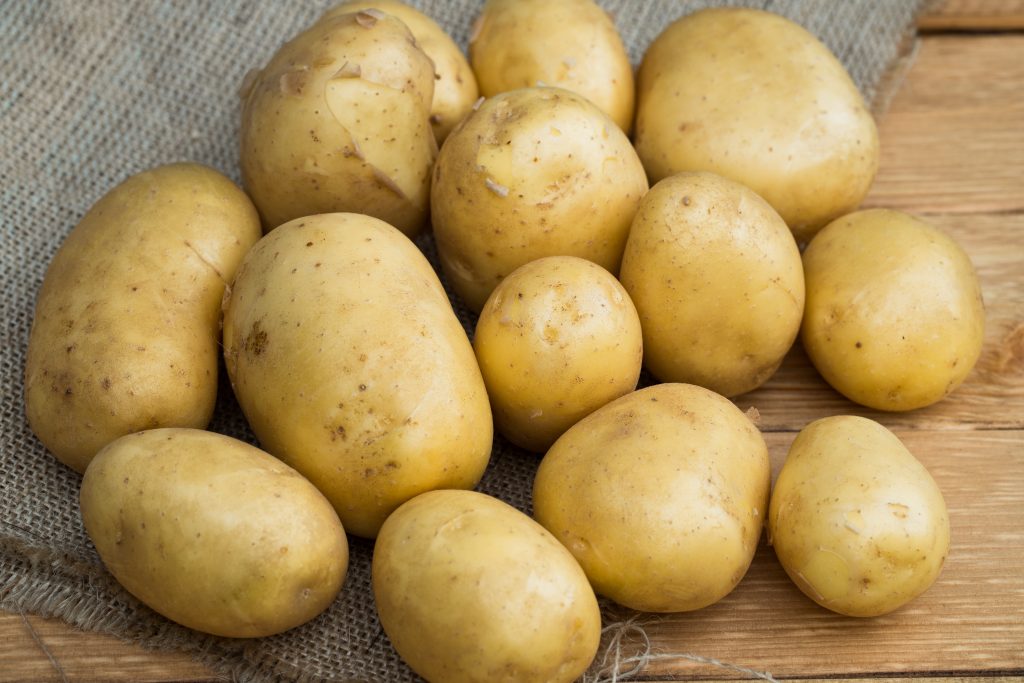
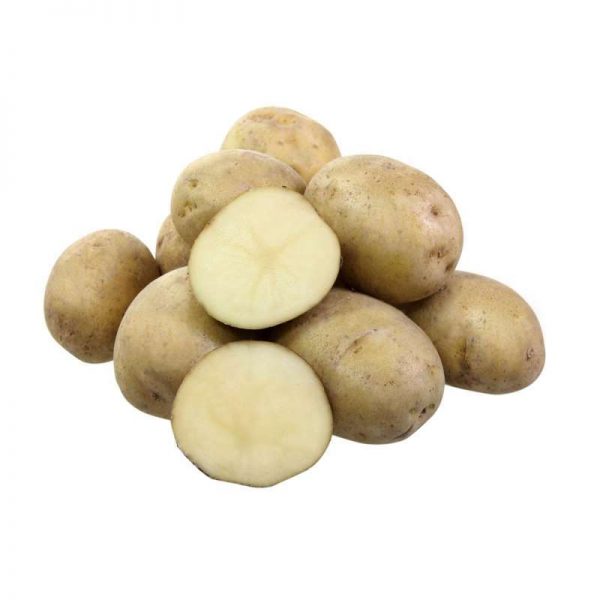
- Tubers: oval, slightly elongated with beige skin and creamy flesh, weight 90-110 g, eyes very small, shallow.
- Starch content: 17-19%.
- Culinary type: C
- Productivity: 400-500 c/ha.
- Disease resistance: resistant to cancer, Y-virus, alternaria, scab, rhizoctonia, ring and soft rot, moderately susceptible to late blight, susceptible to nematode.
- Advantages: resistant to temperature fluctuations and prolonged cold spells, with relatively high disease resistance. Adapted to conditions with close groundwater levels. High marketability (91-95%) and shelf life (exact data not available). Excellent flavor.
- Flaws: the possibility of hollowness (emptiness inside the tuber) in certain seasons.
- 1993.
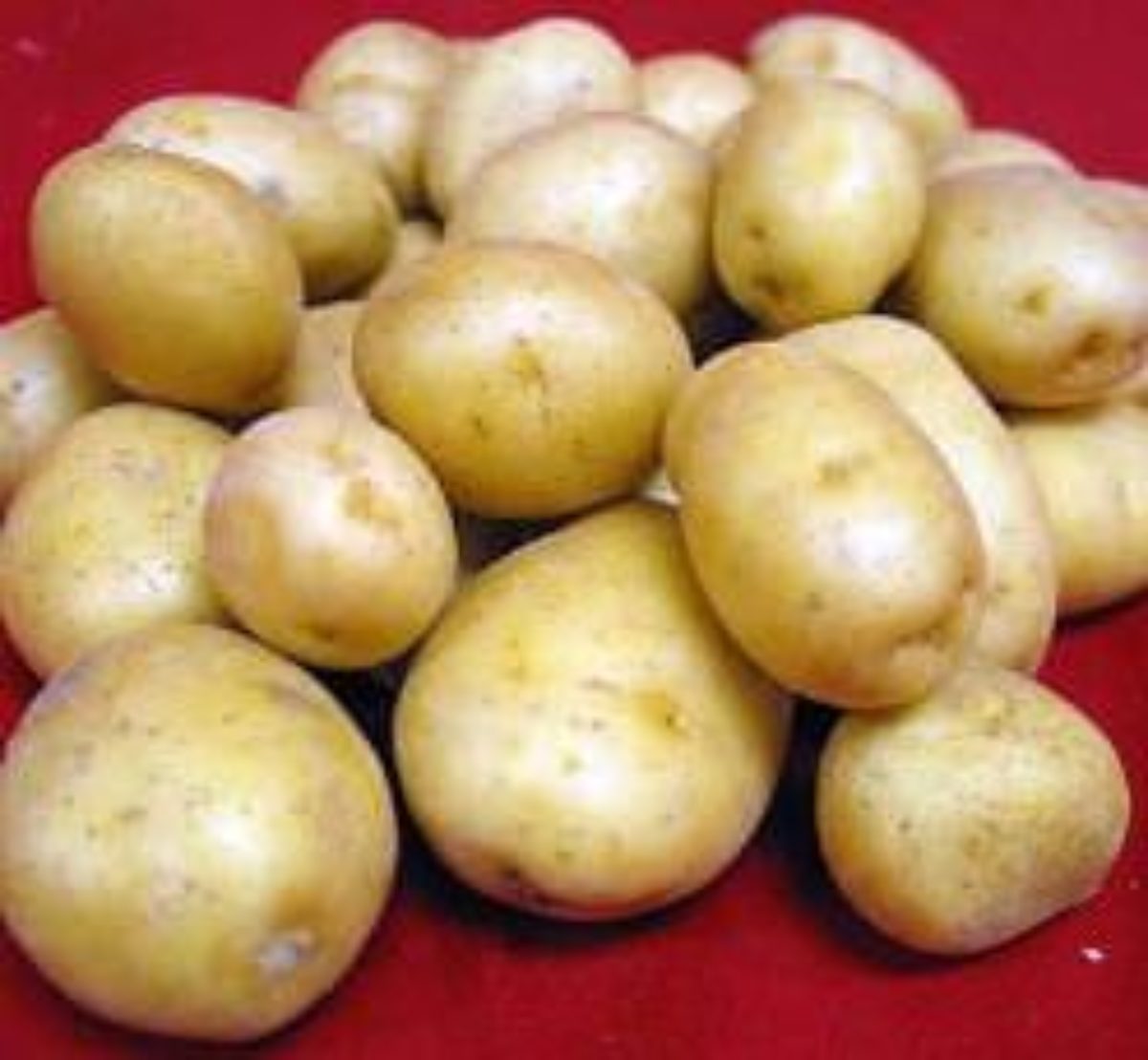
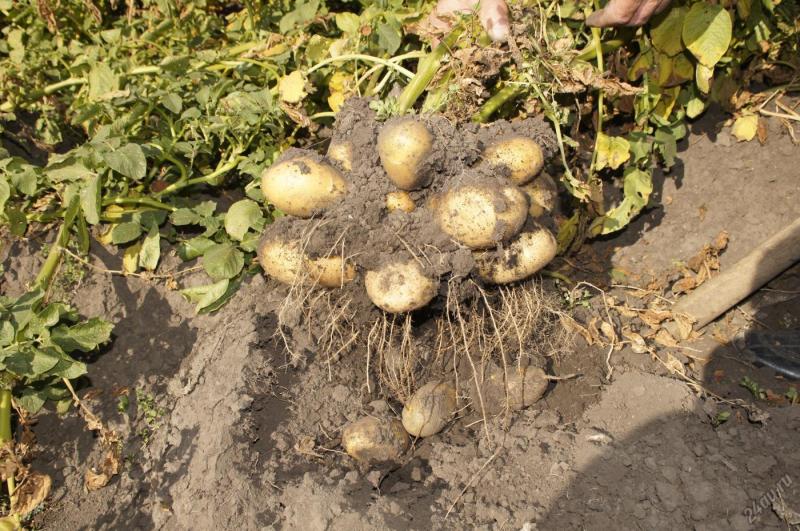
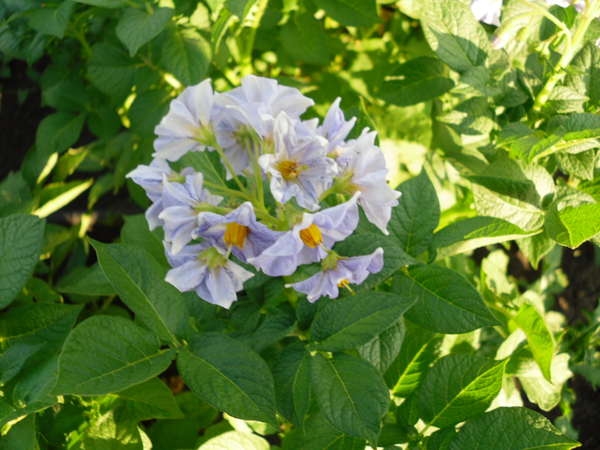
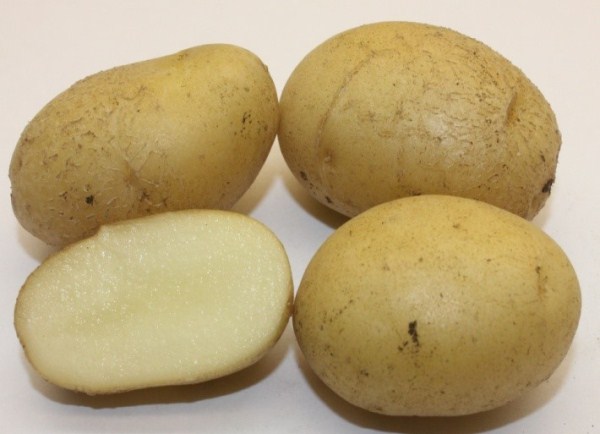
Photo gallery of the Golubizna potato variety:
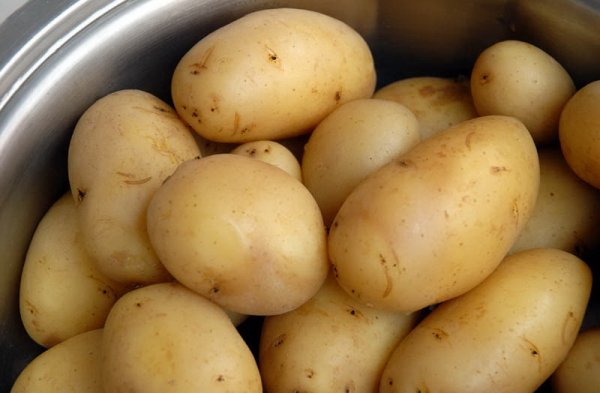
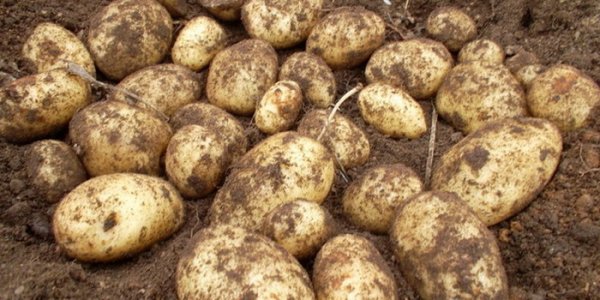
Jelly (German variety)
- Ripening period: 70-90 days (mid-early).
- Tubers: oval, with few and small eyes, with yellow skin, dark yellow flesh, weight 84-135 g.
- Starch content: 13.4-17.8%.
- Culinary type: A
- Productivity: 156-292 c/ha, maximum - 335 c/ha (Tula region).
- Disease resistance: resistant to cancer, nematode, virus Y, scab, black leg, moderately susceptible to late blight.
- Advantages: good marketability (88-97%), excellent and good taste, fairly good resistance to diseases.
- Flaws: average shelf life (86%).
- 2005.
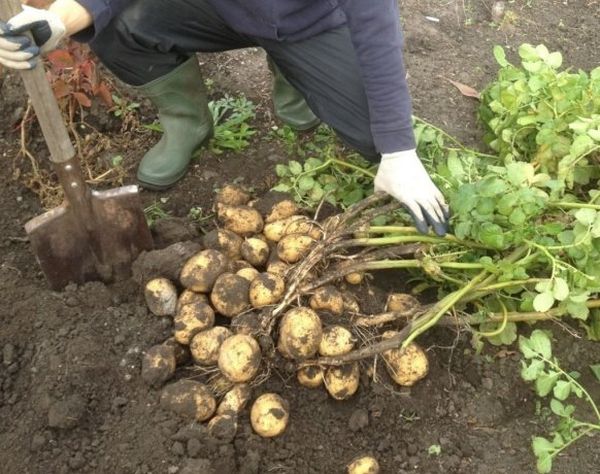
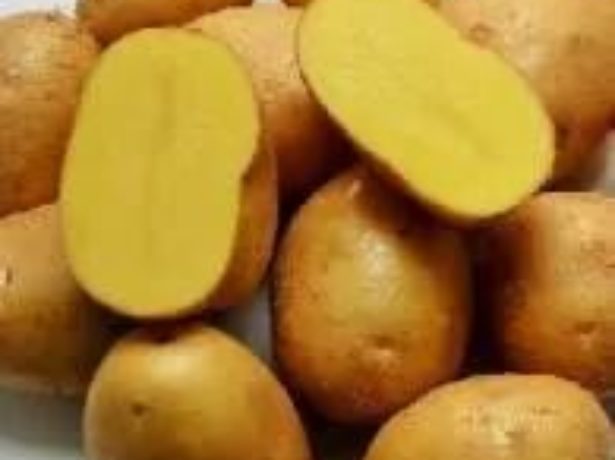
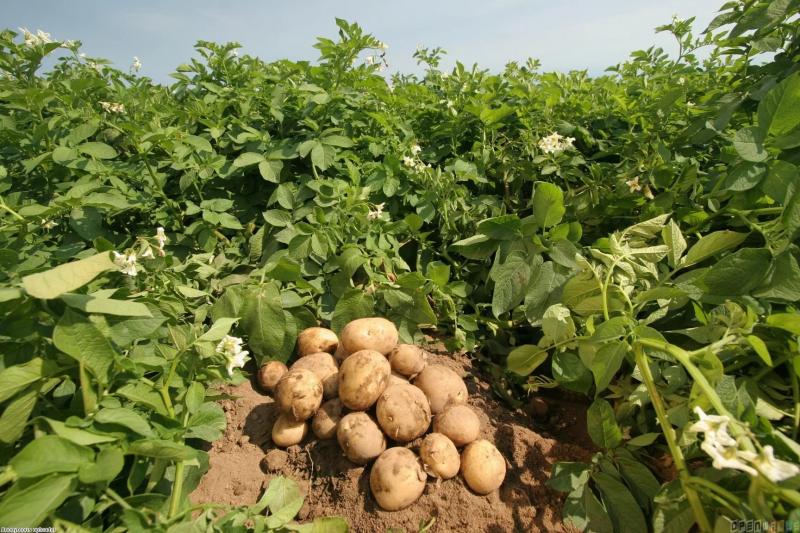
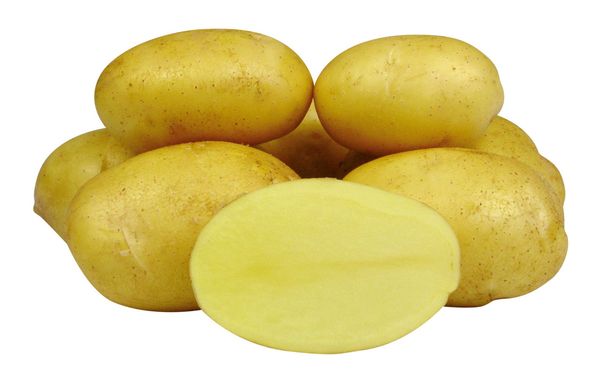
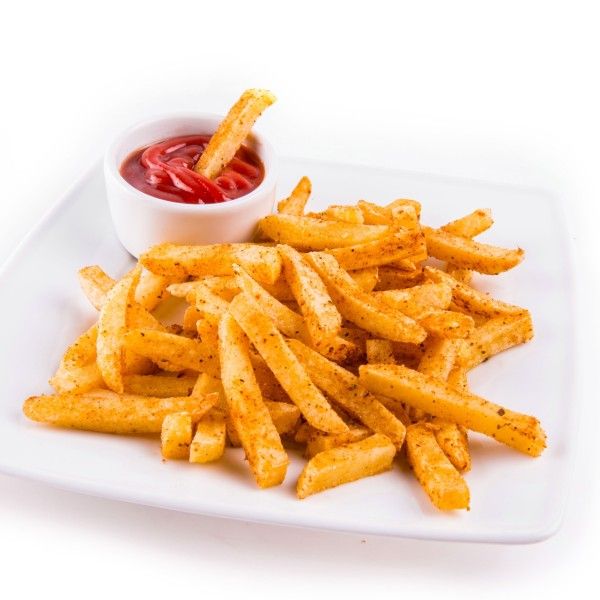
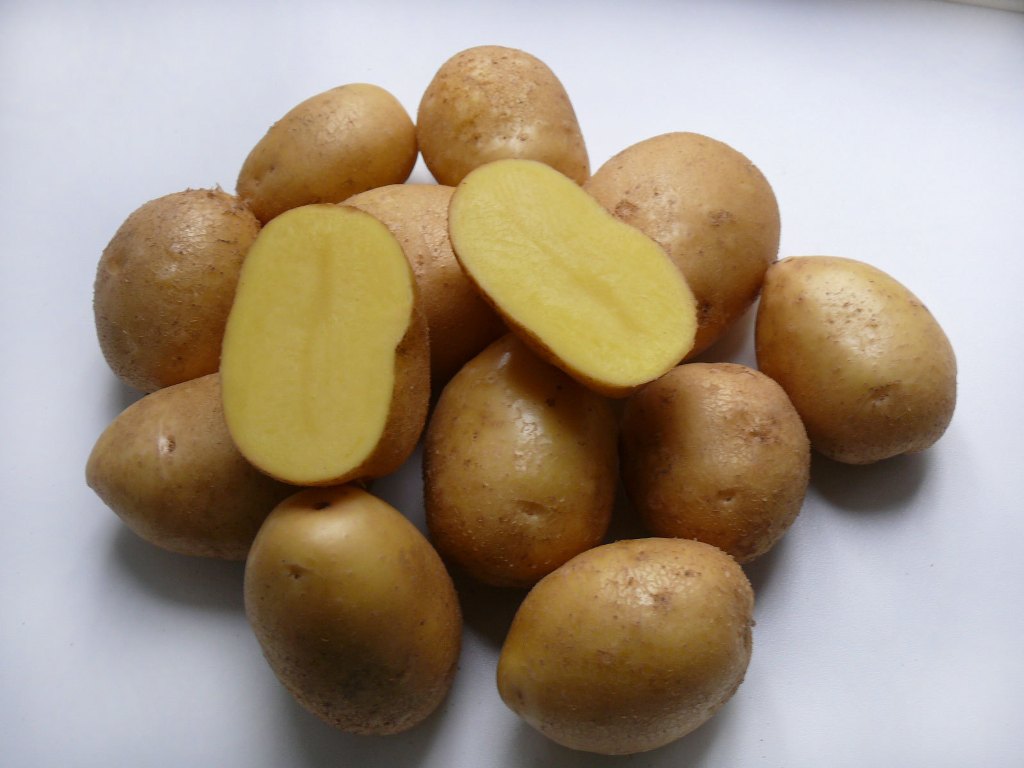
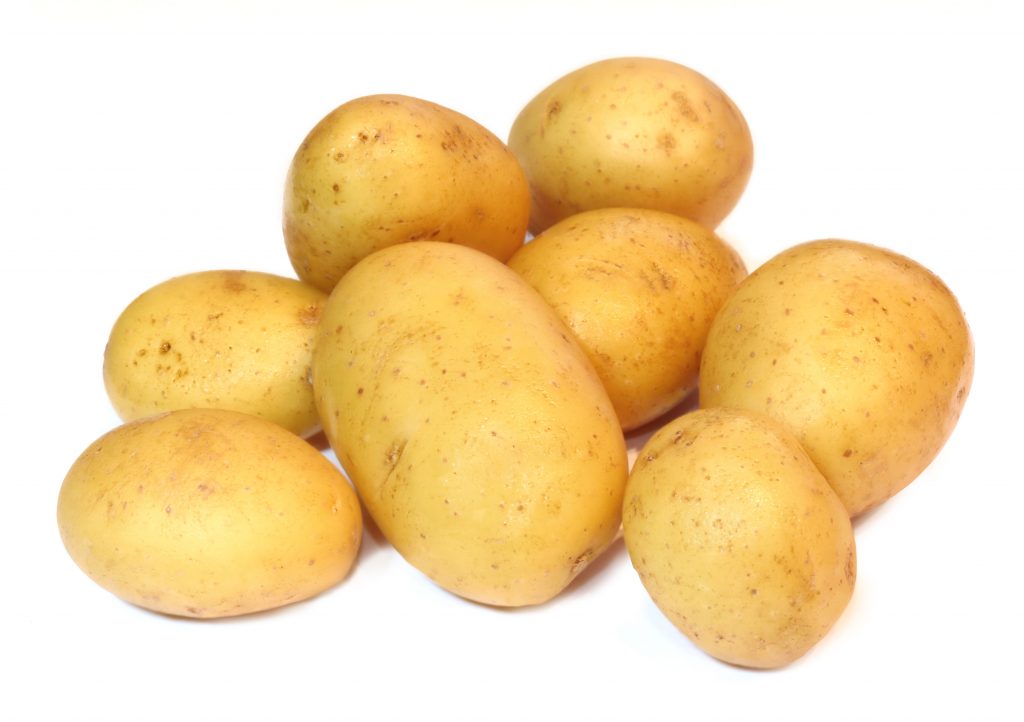
Photo gallery of the Jelly potato variety:
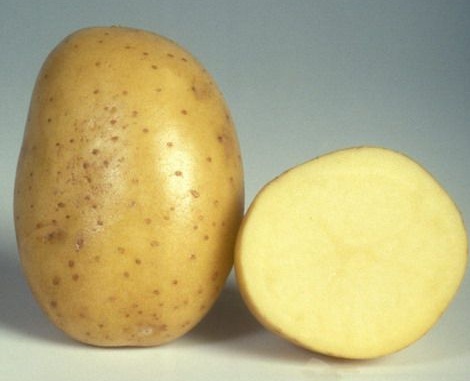
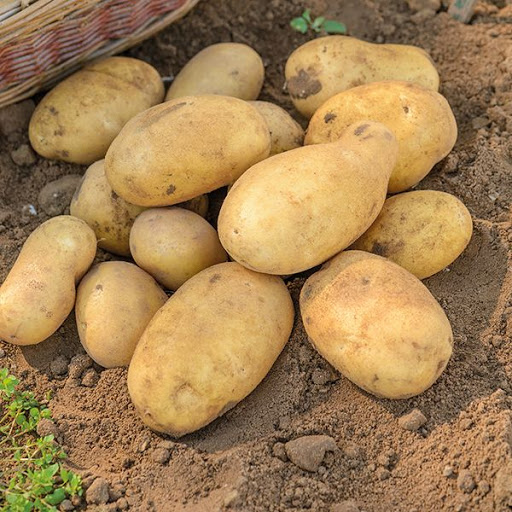
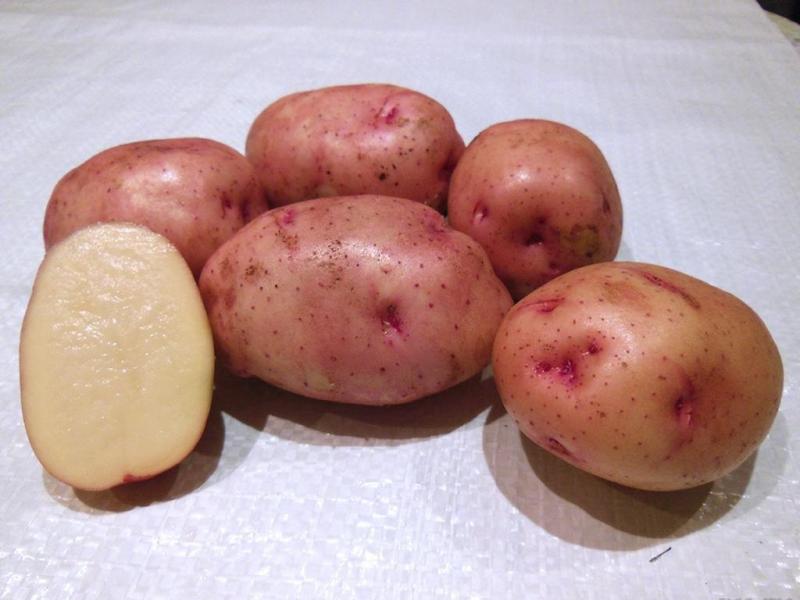
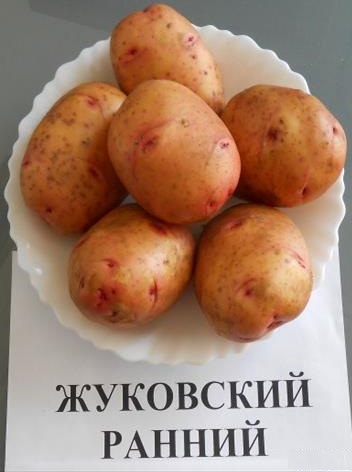
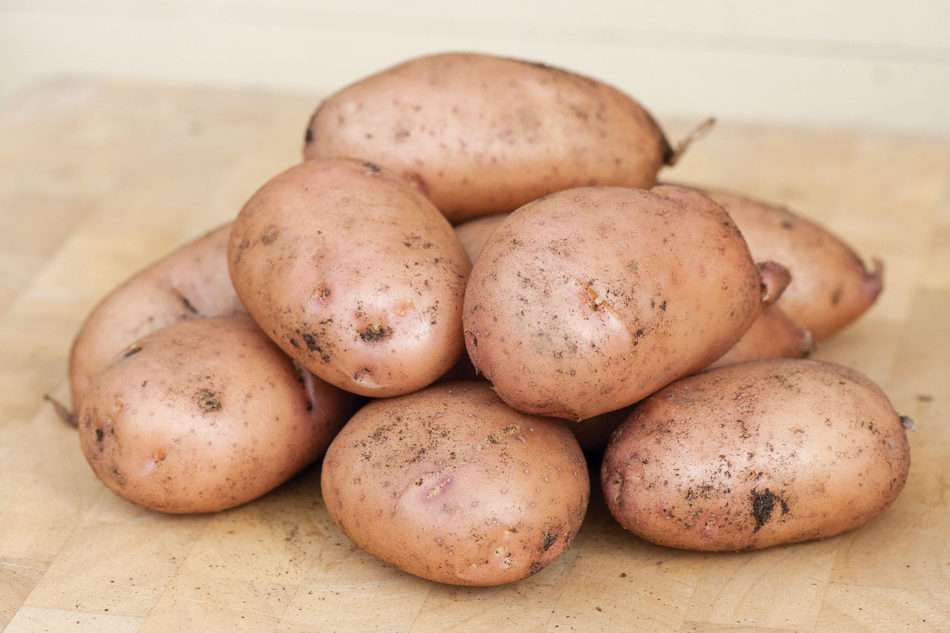
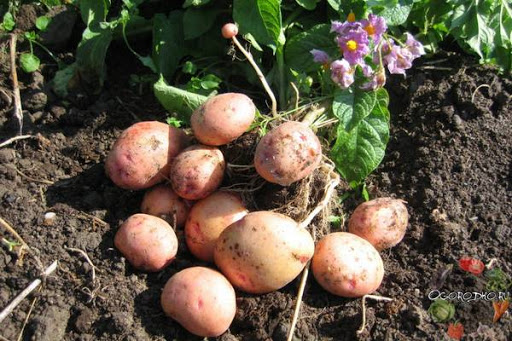
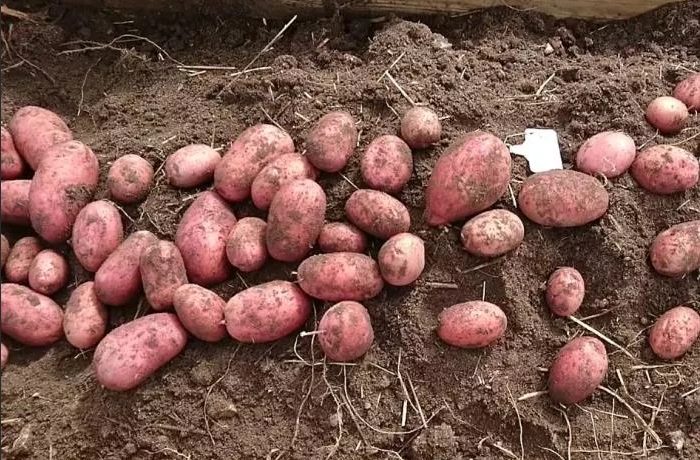
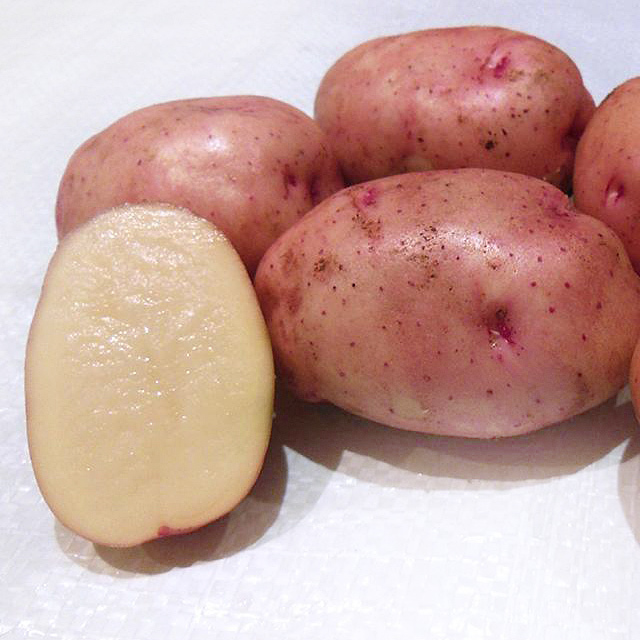
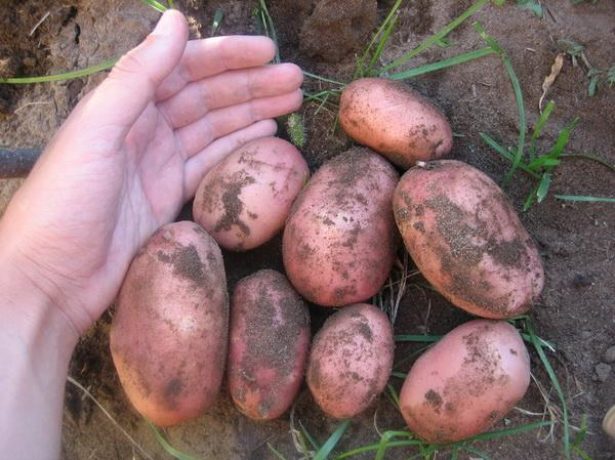
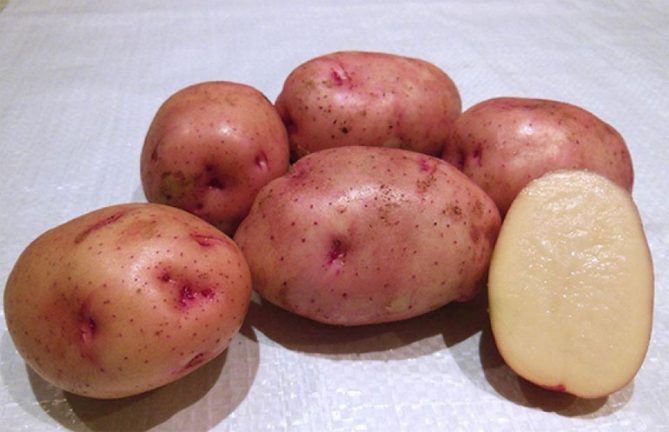
Zhukovsky early (Russia)
- Ripening period: 60-65 days (early maturing).
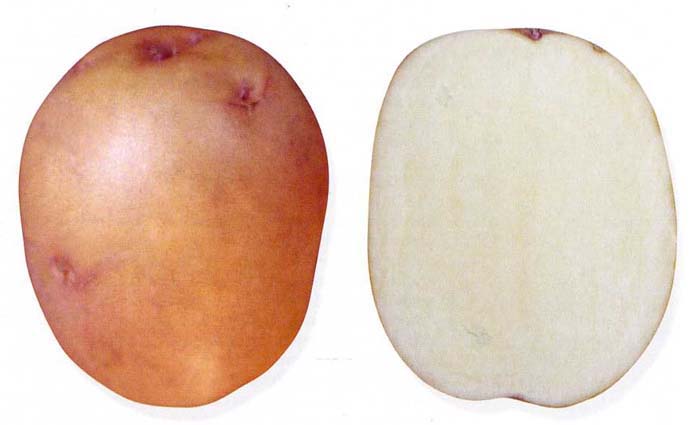
- Tubers: oval-round with smooth, pinkish skin and white flesh, small red eyes, weight 100-120 g.
- Starch content: 10-12%.
- Culinary type: IN
- Productivity: 400-450 c/ha.
- Disease resistance: resistant to cancer, nematode, rhizoctonia, alternariosis, susceptible to late blight.
- Advantages: high yield, good shelf life (92-96%) and marketability (90-92%), drought tolerance, good taste, resistant to damage.
- Flaws: susceptibility of tubers to rotting if storage rules are not followed.
- 1993.
Photo gallery of the Zhukovsky early potato variety:
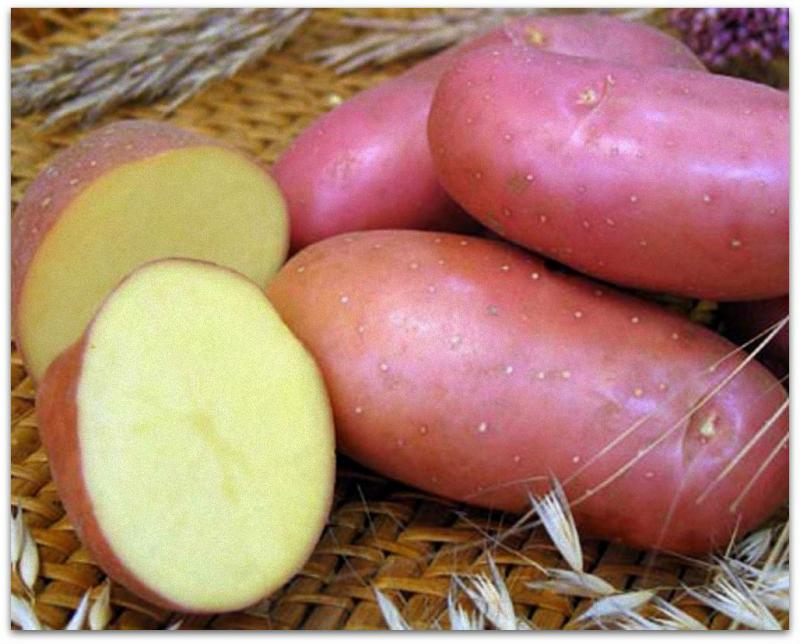
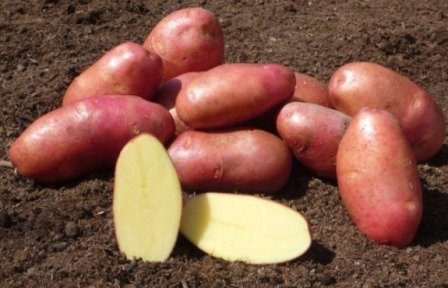
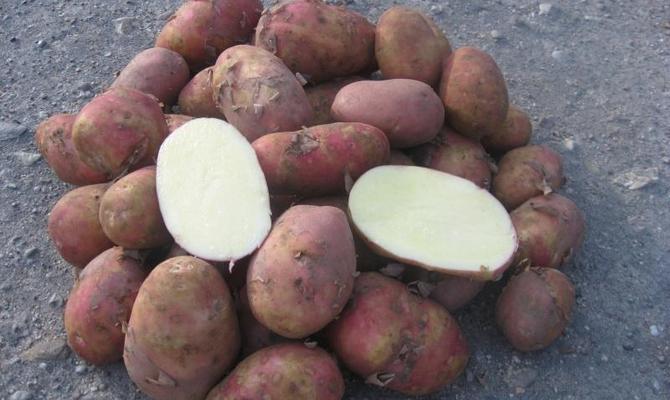
Zhuravinka (Belarus)
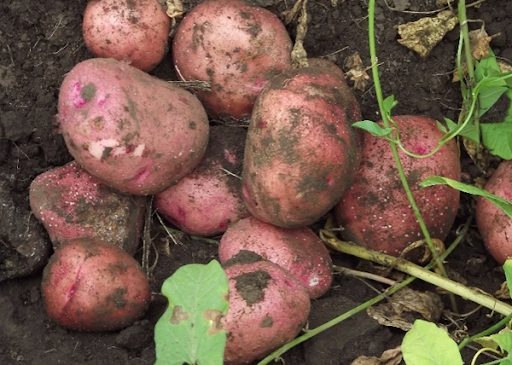
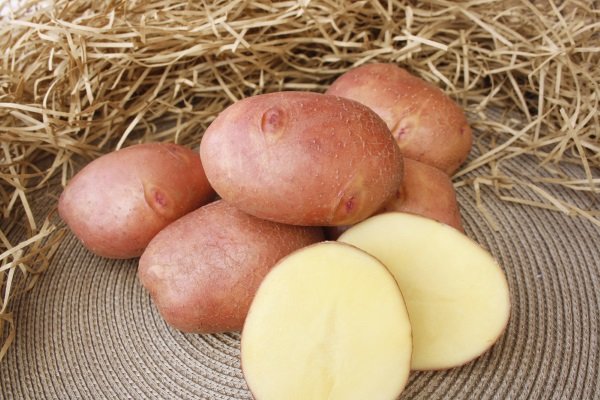
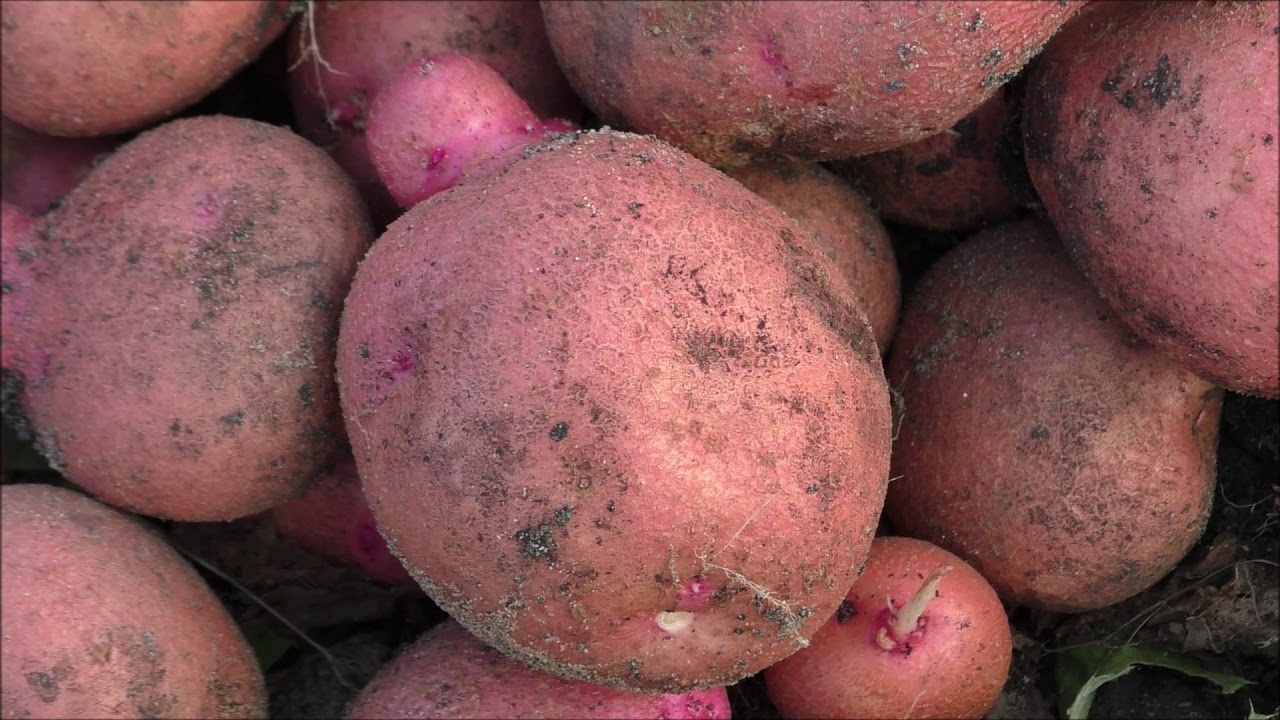
- Ripening period: 90-110 days (mid-late).
- Tubers: oval-round, with reddish skin, light flesh, weighing up to 139 g.
- Starch content: 14.6-19.6%
- Culinary type: Sun
- Productivity: 177-242 c/ha.
- Disease resistanceResistant to cancer, nematodes, scab, and blackleg, moderately resistant to late blight, rhizoctonia, and viruses. Interestingly, even if other potato varieties are grown in the same plot, Zhuravinka is not susceptible to the Colorado potato beetle.
- Advantages: high resistance to diseases, good taste, marketability from medium to high (83-96%), high keeping quality (93%).
- Flaws: sensitive to lack of moisture, only moderate resistance to mechanical damage.
- 2005.
Photo gallery of the Zhuravinka potato variety:
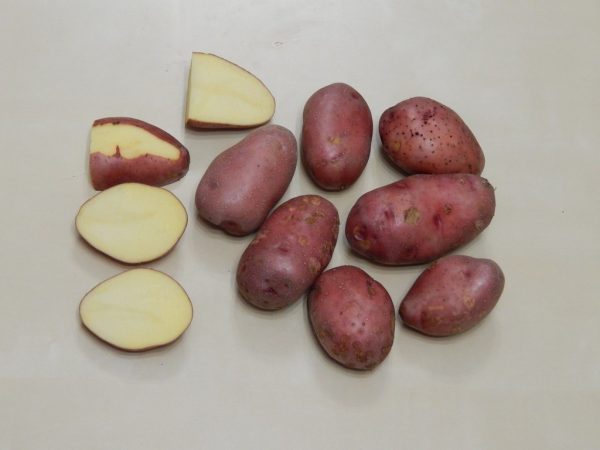
Zekura (Germany)
- Ripening period: 70-80 days (mid-early).
- Tubers: oblong, flesh and skin yellow, small eyes, weight 59-150 g.
- Starch content: 13-18.2%
- Culinary type: IN
- Productivity: 195-323 c/ha, maximum - 365 c/ha (Oryol region).
- Disease resistance: resistant to cancer, nematodes, viruses A and Y, scab, iron spot, late blight, slightly susceptible to leaf curl.
- Advantages: undemanding to growing conditions, high shelf life (98%), good and excellent taste, resistant to rotting in wet soil, not susceptible to pest attacks with timely prevention.
- Flaws: average marketability (79-96%).
- 1997.
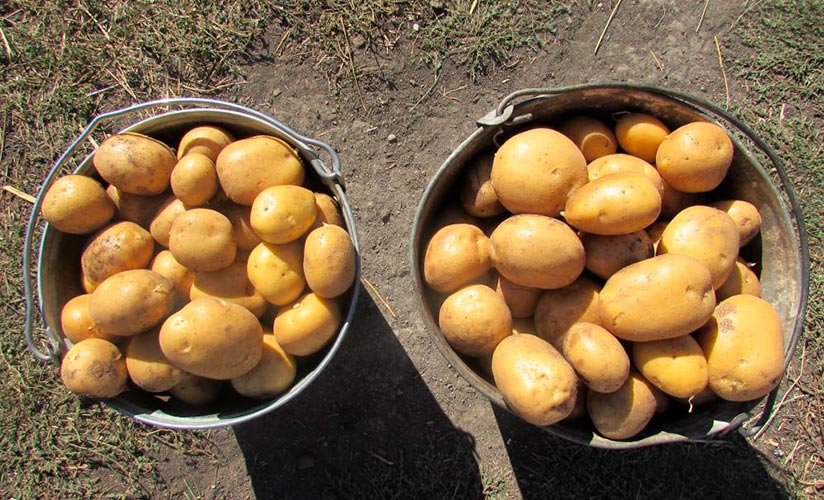
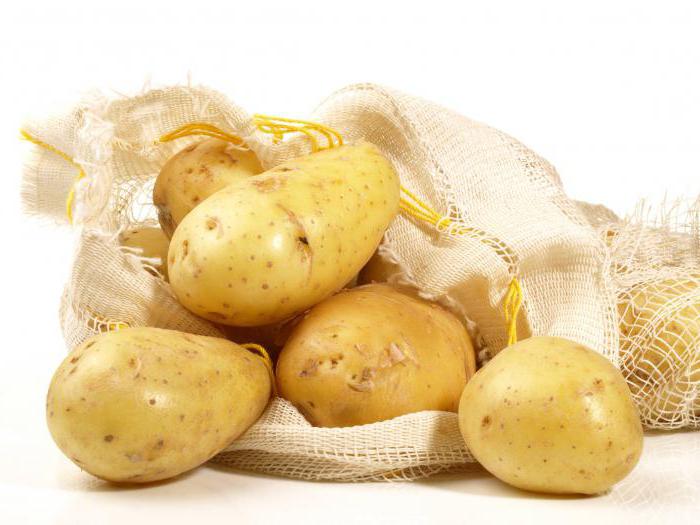
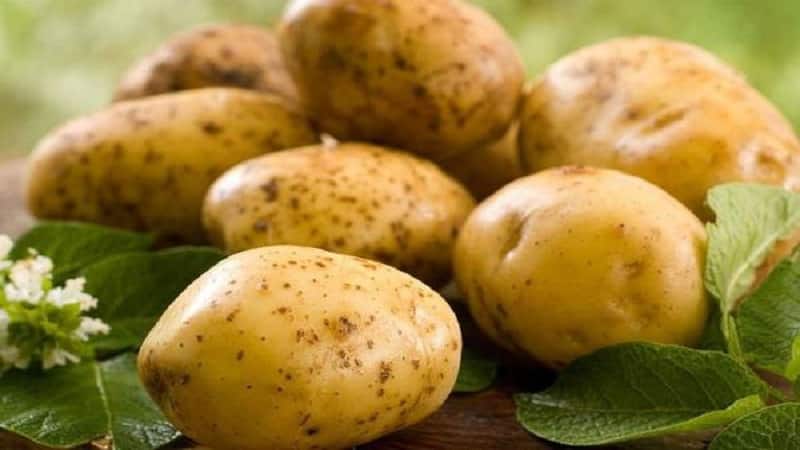
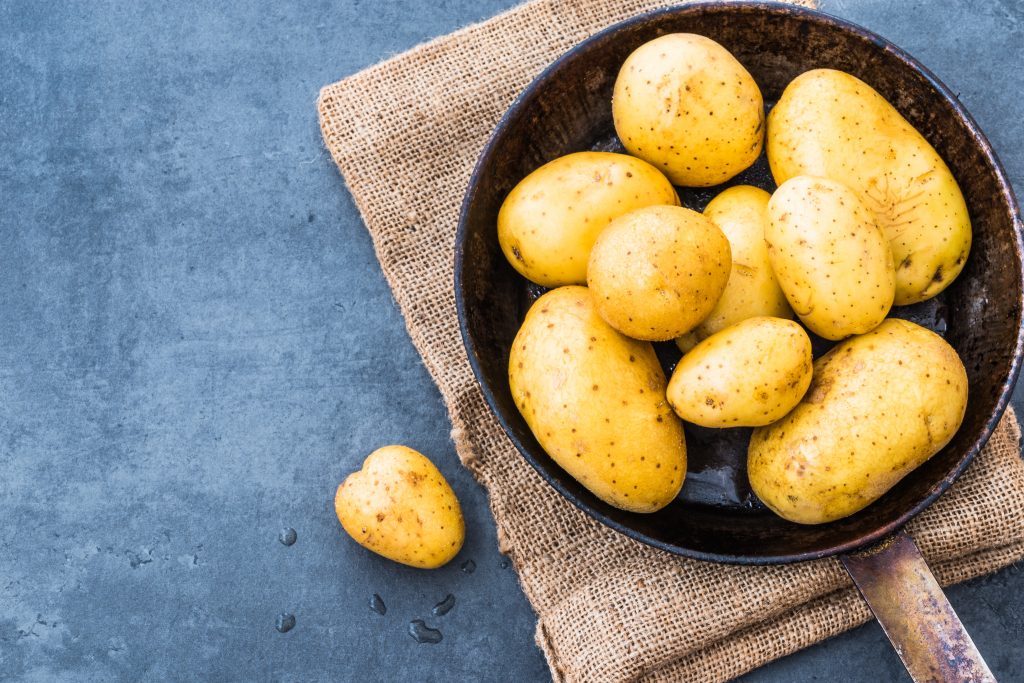
Photo gallery of the Zekura potato variety:
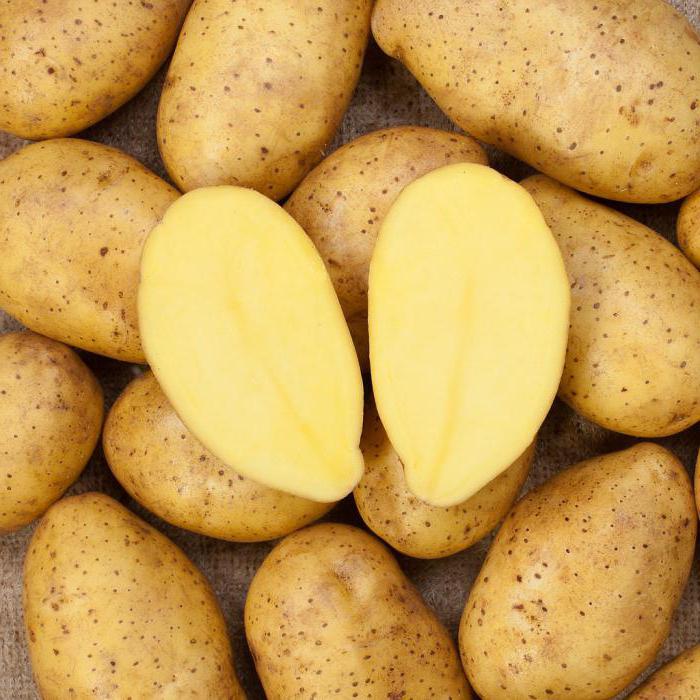
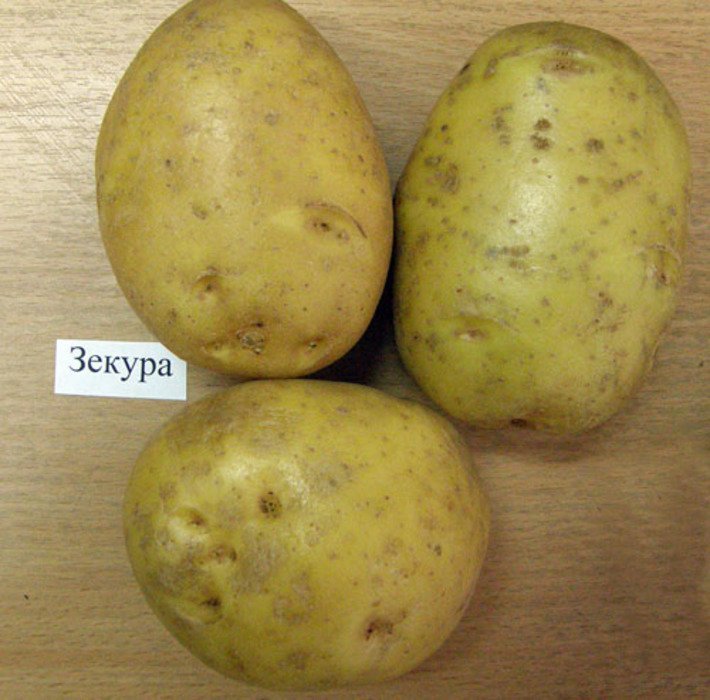
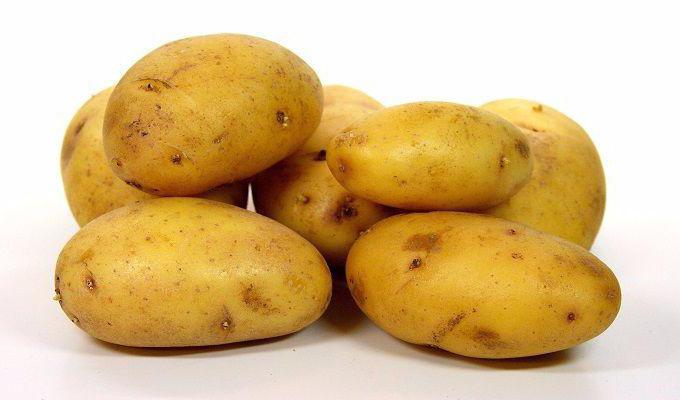
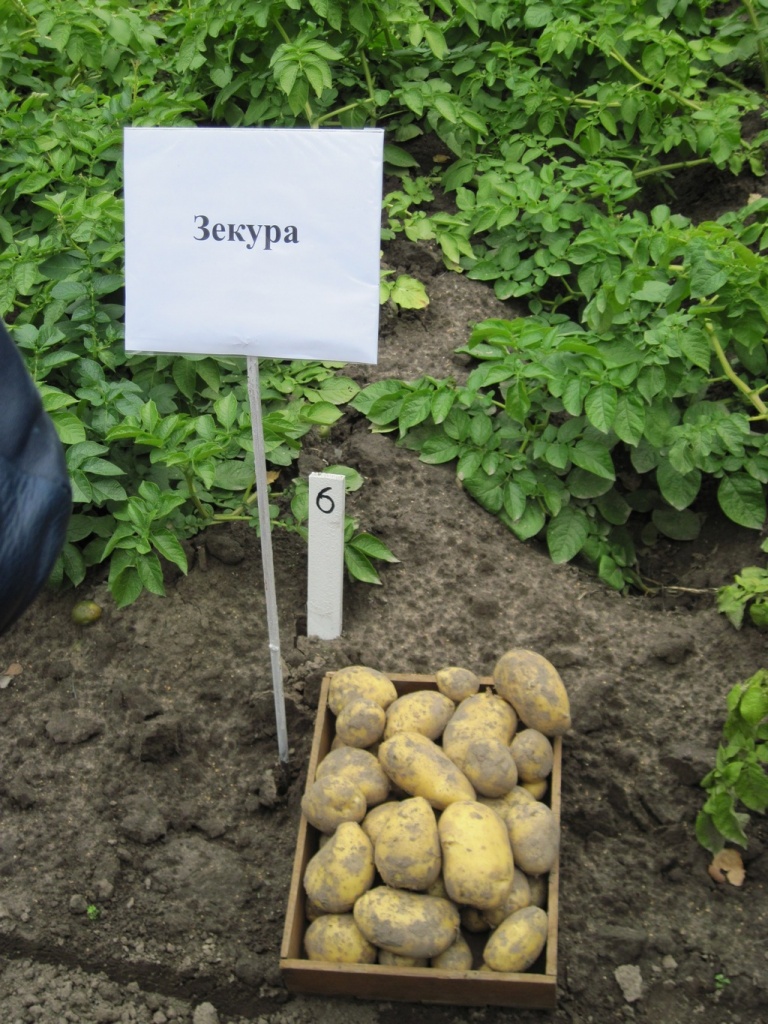
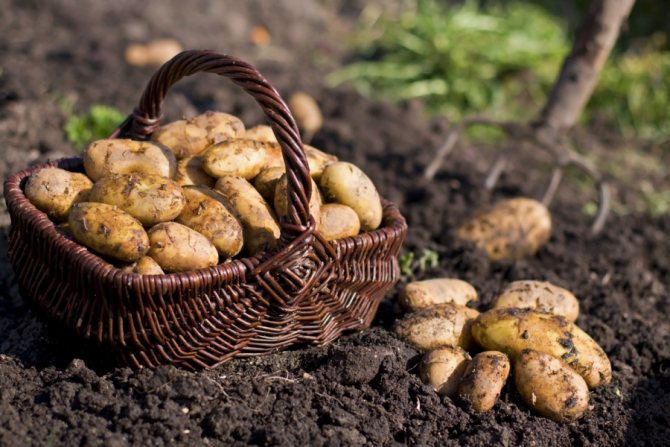
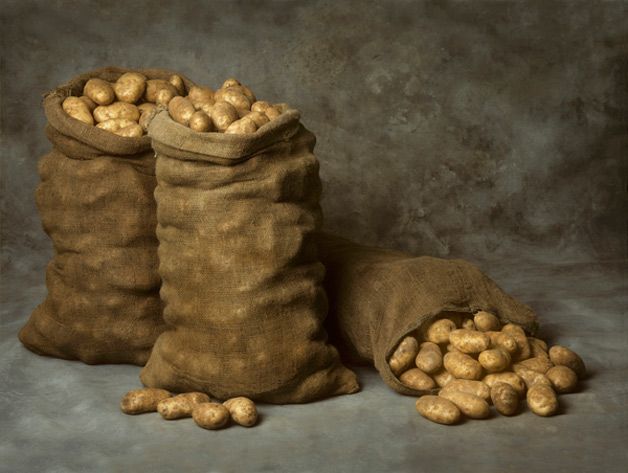
Read more about the variety in the article Potato variety Zekura: characteristics and comparison with others in tables, reviews.
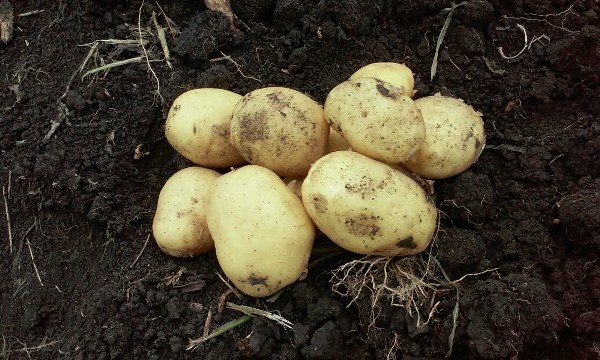
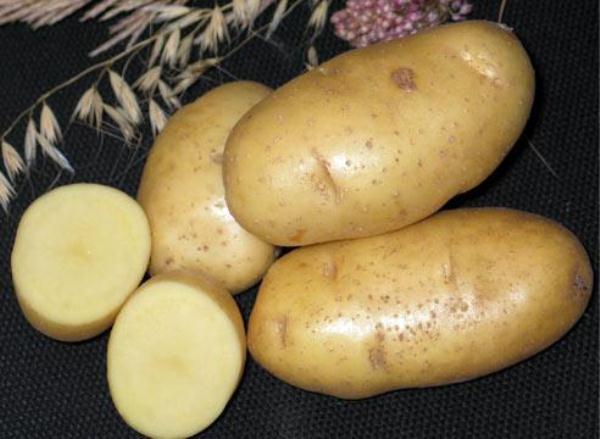
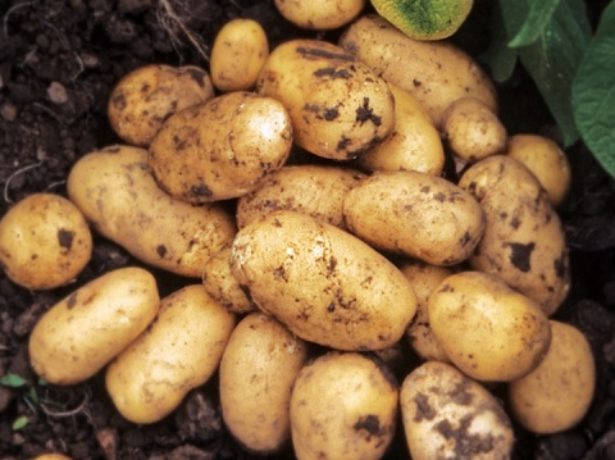
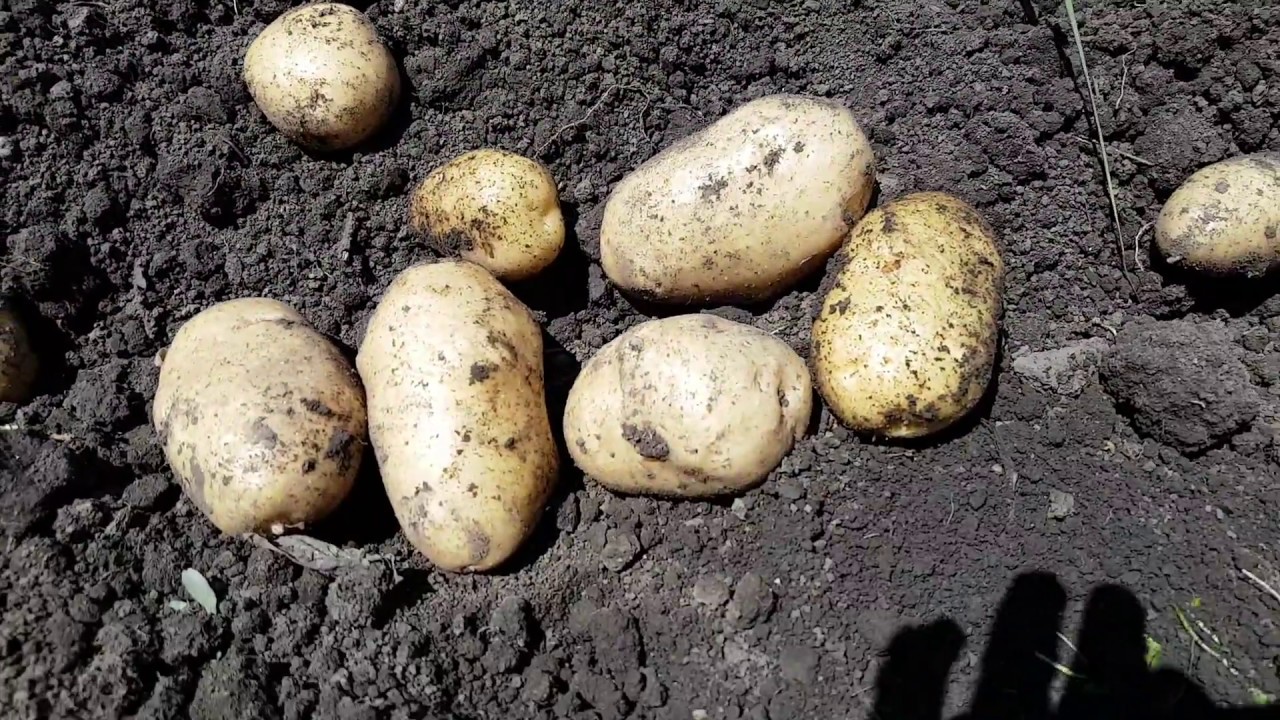
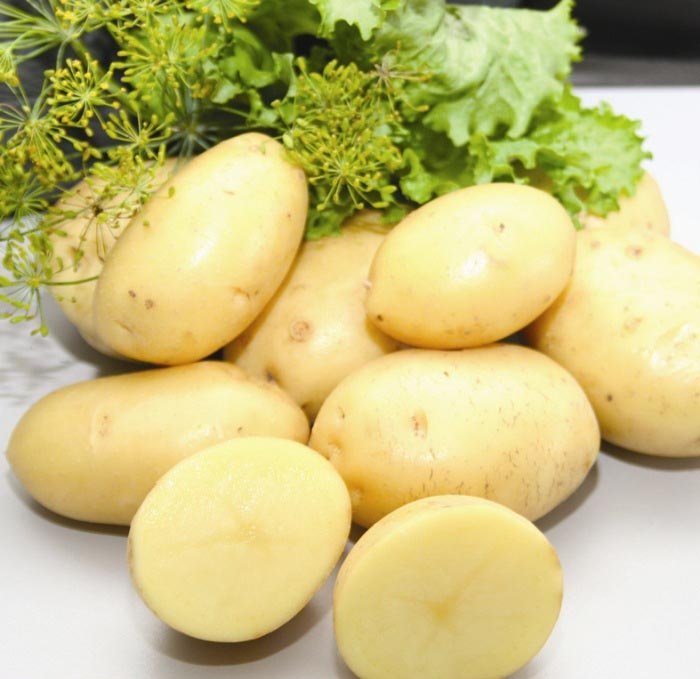
Impala (Netherlands)
- Ripening period: 55-65 days (early maturing). On the 45th day, you can begin digging.
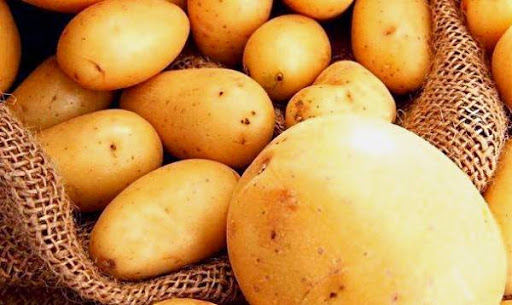
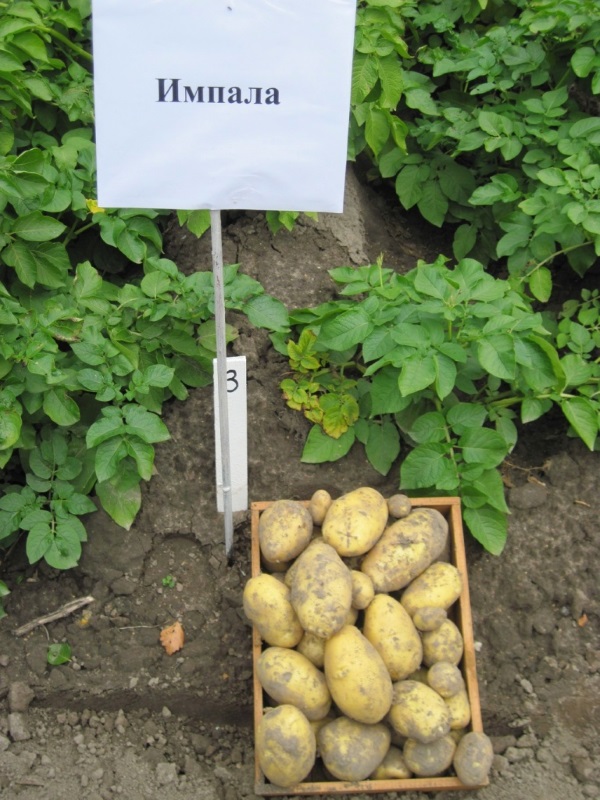
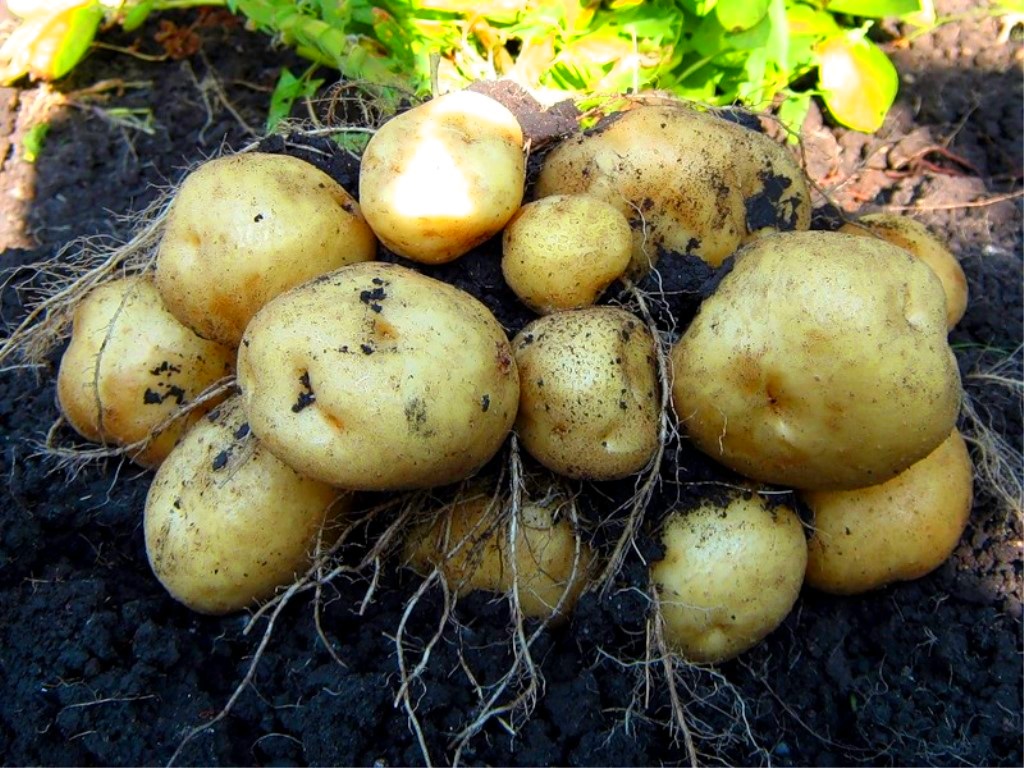
- Tubers: oval-round, with reddish skin, light flesh, small eyes, weight 88-150 g.
- Starch content: 10.5-14.6%
- Culinary type: AB
- Productivity: 180-360 c/ha, maximum - 367 c/ha (Bryansk region).
- Disease resistance: resistant to cancer, nematodes, viruses and scab, susceptible to late blight and rhizoctonia.
- Advantages: stable yield, undemanding to weather conditions, good taste, good marketability (89-94%) and shelf life (90%).
- Flaws: sensitive to lack of moisture.
- 1995.
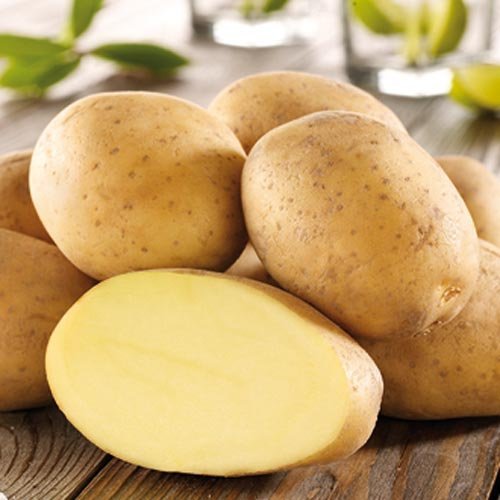
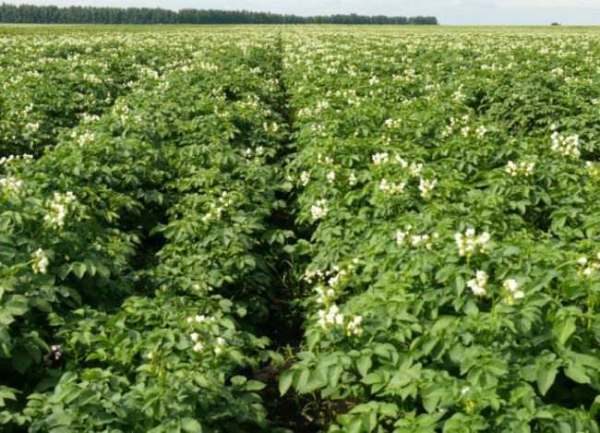
Photo gallery of the Impala potato variety:
Kamensky (Russia)
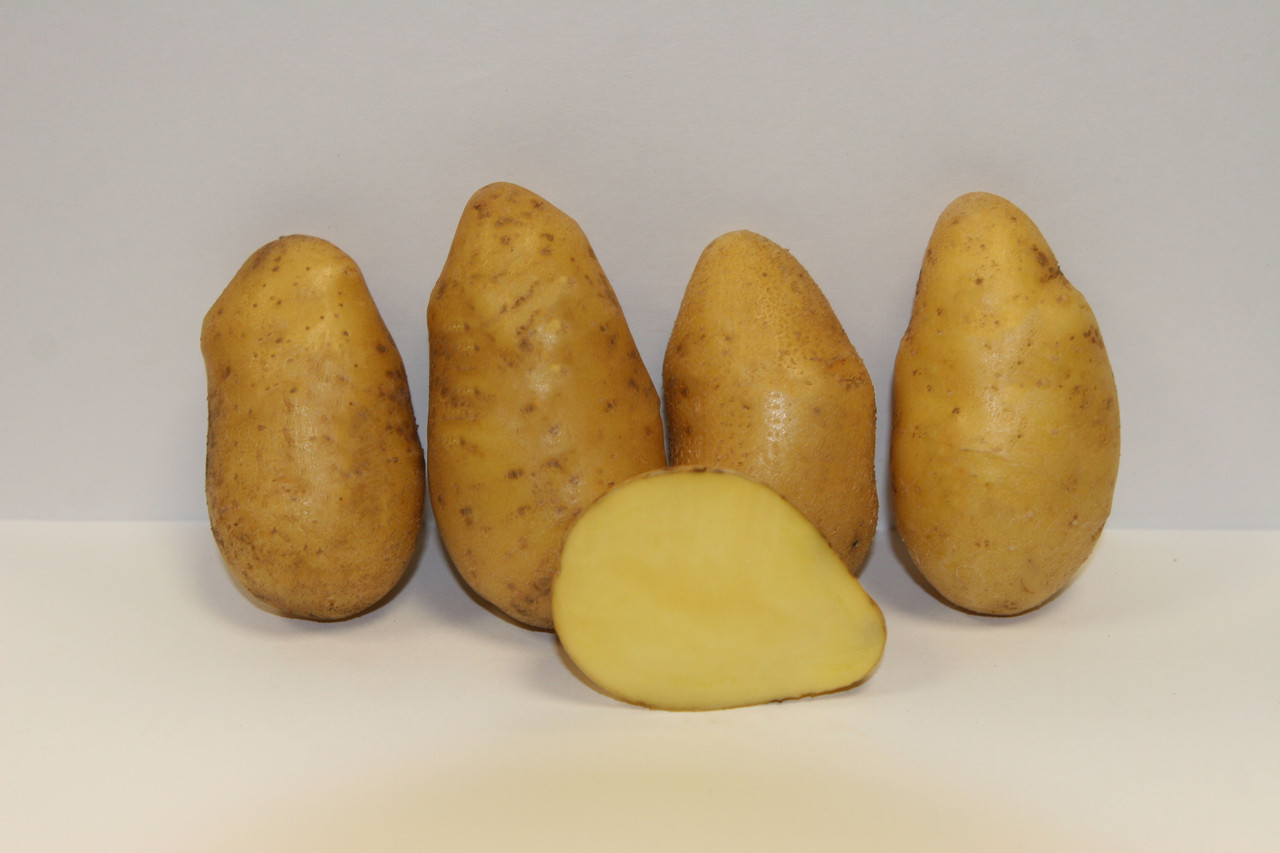
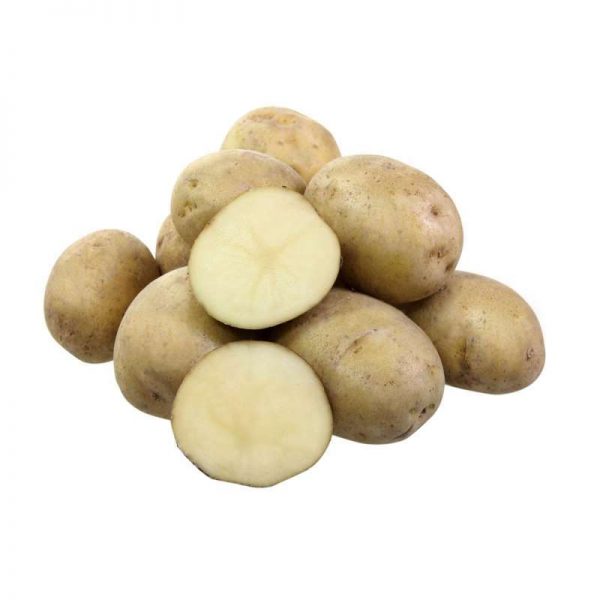
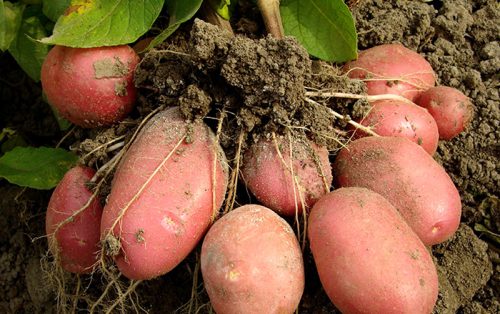
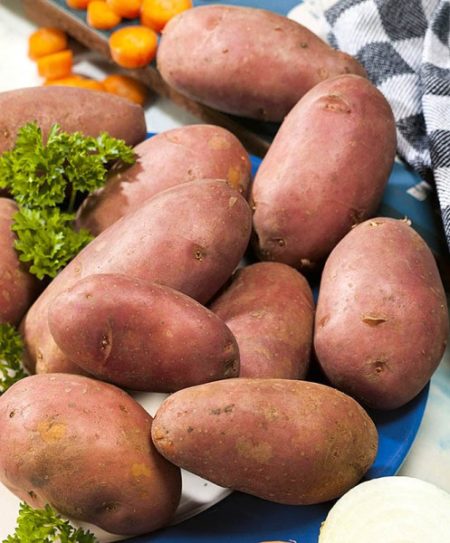
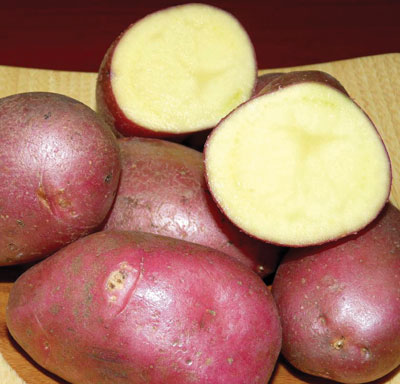
- Ripening period: 50-60 days (early maturing). On the 45th day, you can begin digging.
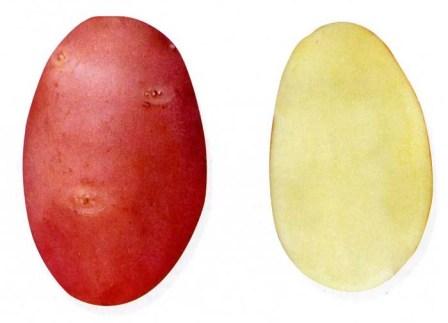
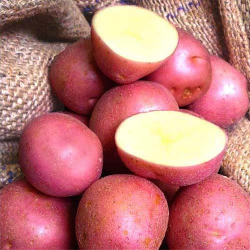
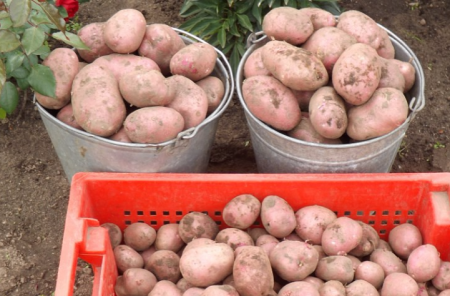
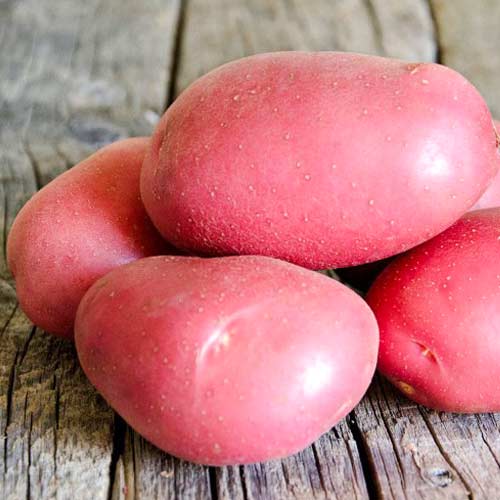
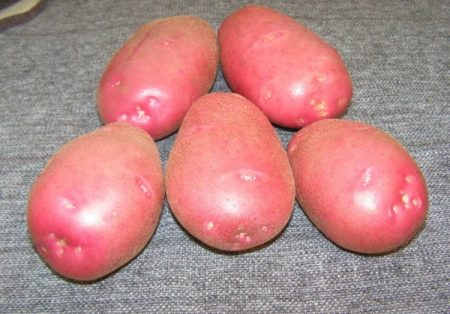
- Tubers: smooth, oval, slightly elongated, red skin, light yellow flesh, weight 96-108 g.
- Starch content: 12.2-16.8%
- Culinary type: IN
- Productivity: 185 c/ha, on the 45th day - 95 c/ha, on the 55th - 176 c/ha, maximum - 252 c/ha (Orenburg region).
- Disease resistance: resistant to cancer, rugose and striped mosaic, leaf curl, rosoctonia, moderately resistant to late blight, scab, susceptible to nematodes.
- Advantages: high shelf life (97%), good marketability (85-94%), drought resistance, not susceptible to attack by the Colorado potato beetle.
- Flaws: average yield, not resistant to nematodes.
- 2009.
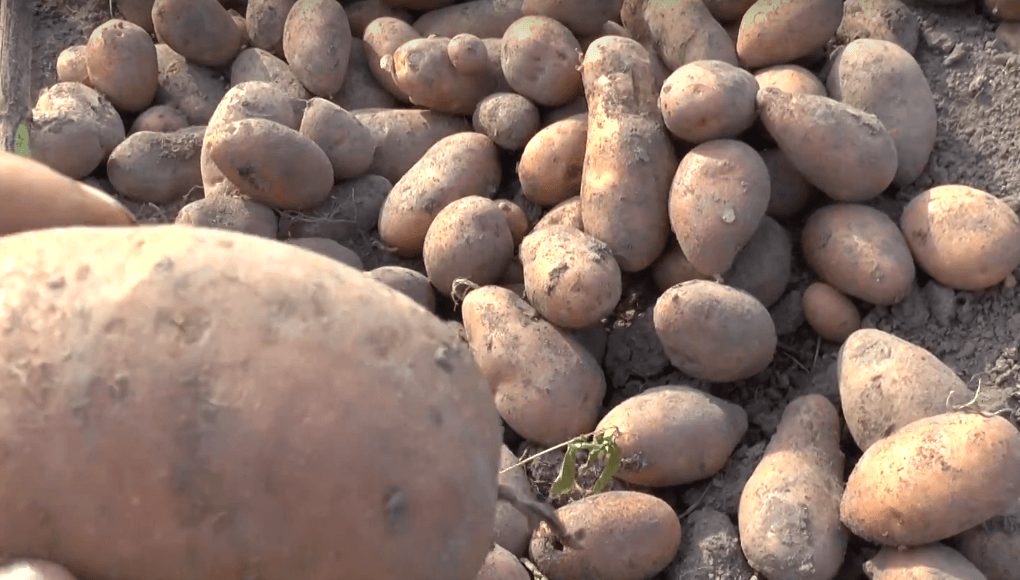
Photo gallery of the Kamensky potato variety:
Kiwi (Russia)
- Ripening period: 120-140 days (late ripening).
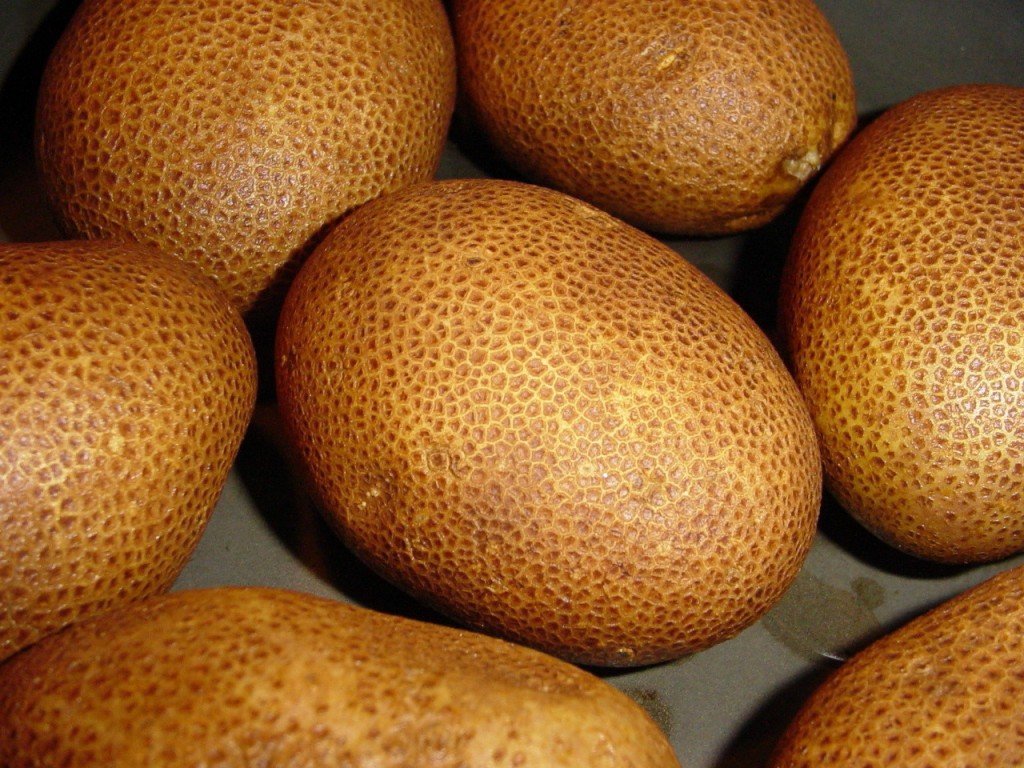
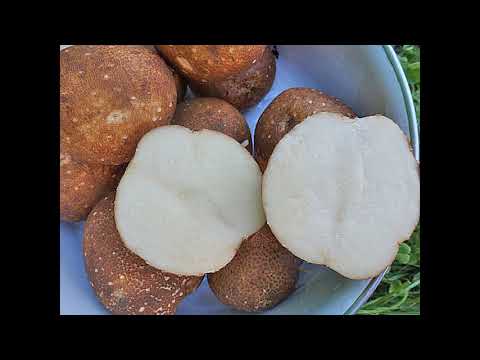
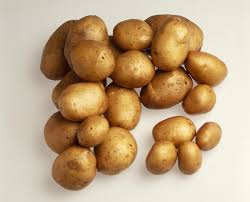
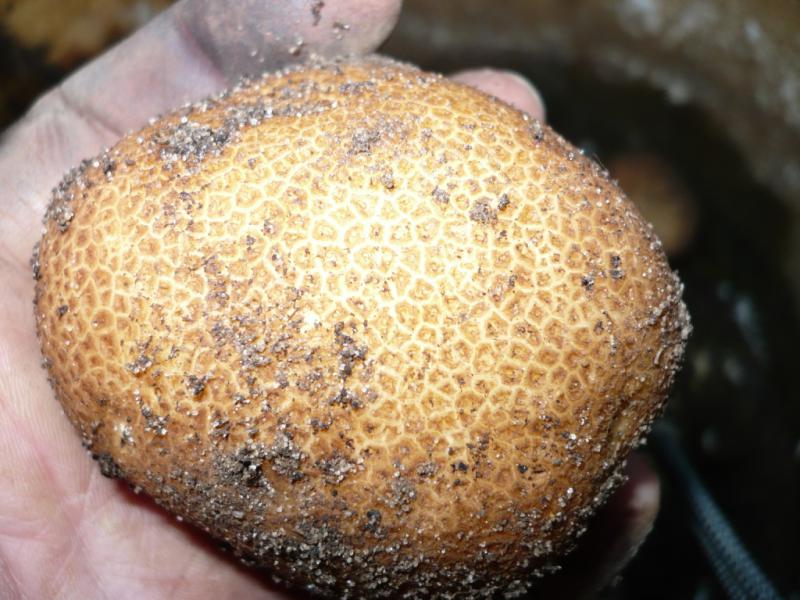
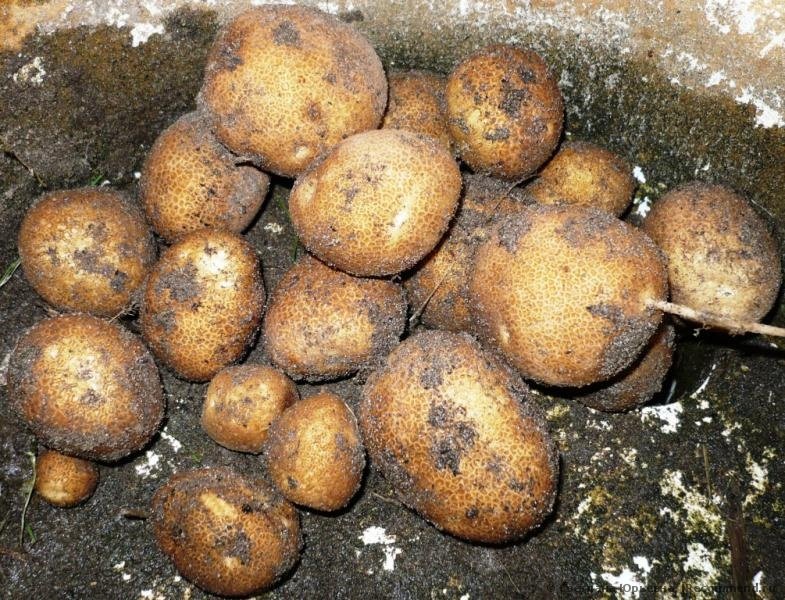
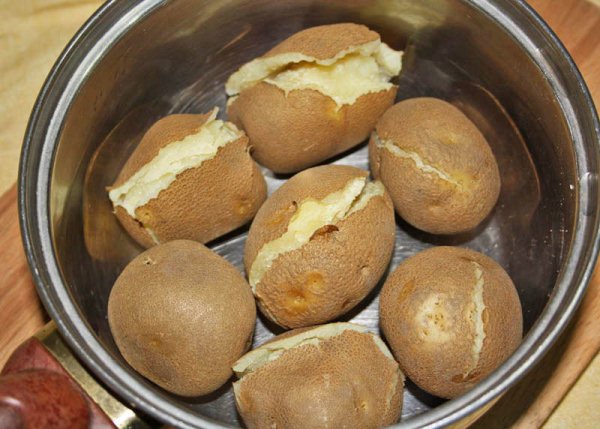
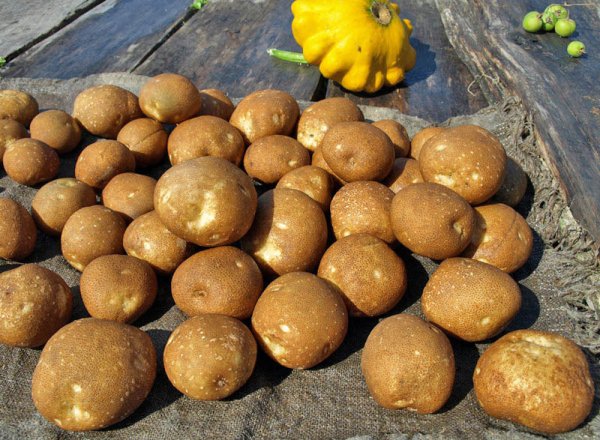
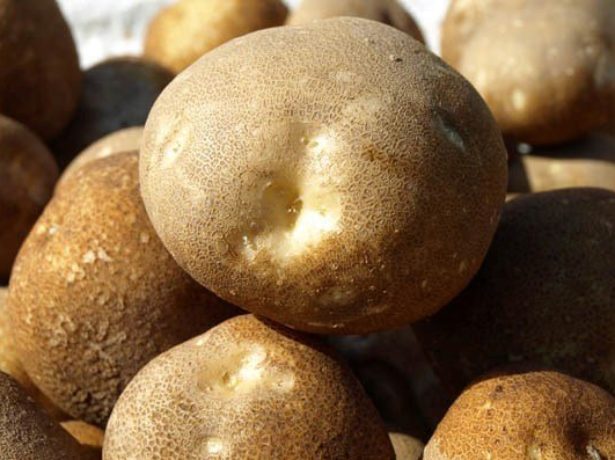
- Tubers: round, elongated, brownish skin covered with a fine rough mesh, white flesh, average weight not determined.
- Starch content: 14-19.5%.
- Culinary type: WITH
- Productivity: maximum - 400 c/ha.
- Disease resistance: high resistance to cancer, scab, late blight, average resistance to nematodes.
- Advantages: high yield, suitable for any soil, undemanding to weather, not susceptible to attack by wireworms and Colorado potato beetles.
- Flaws: average taste, rarely found on sale.
- not yet enabled.
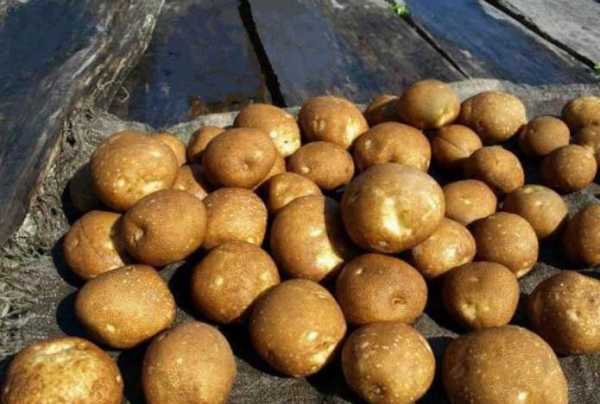
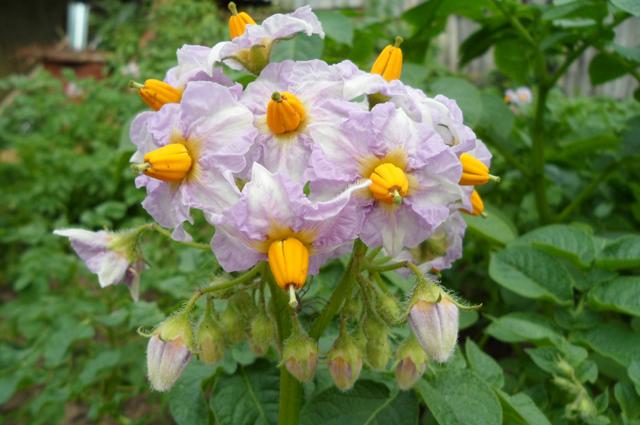
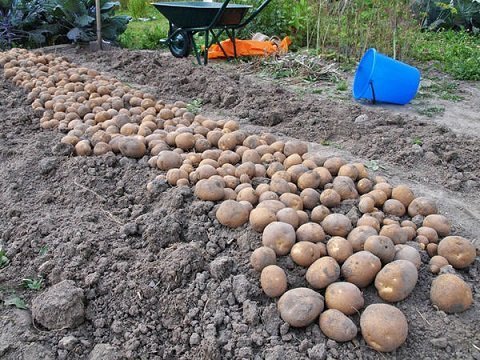
Photo gallery of the Kiwi potato variety:
Kolobok (Russia)
- Ripening period: 80-85 days (mid-season).
- Tubers: round, flesh and skin yellow, surface slightly rough, weight 93-118 g. Eyes of medium to deep depth.
- Starch content: 11.4-13%.
- Culinary type: WITH
- Productivity: 124-227 c/ha c/ha, maximum - 256 c/ha (Moscow region).
- Disease resistanceResistant to canker and Alternaria, slightly susceptible to scab and rhizoctonia, moderately susceptible to late blight of foliage, susceptible to nematodes, and tuber blight. It is frequently attacked by the Colorado potato beetle and less frequently by wireworms.
- Advantages: good taste, unpretentiousness, excellent keeping quality (98%) and marketability (87-97%).
- Flaws: average yield.
- 2005.
Photo gallery of the Kolobok potato variety:
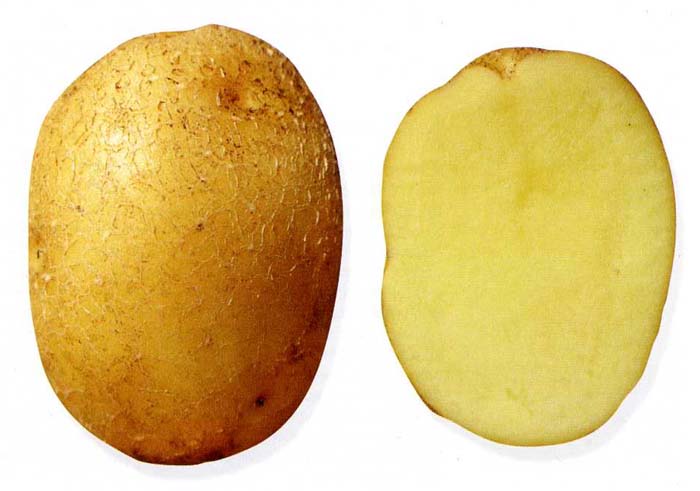
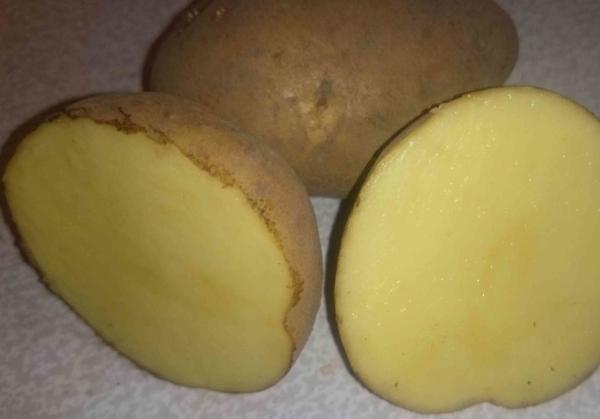
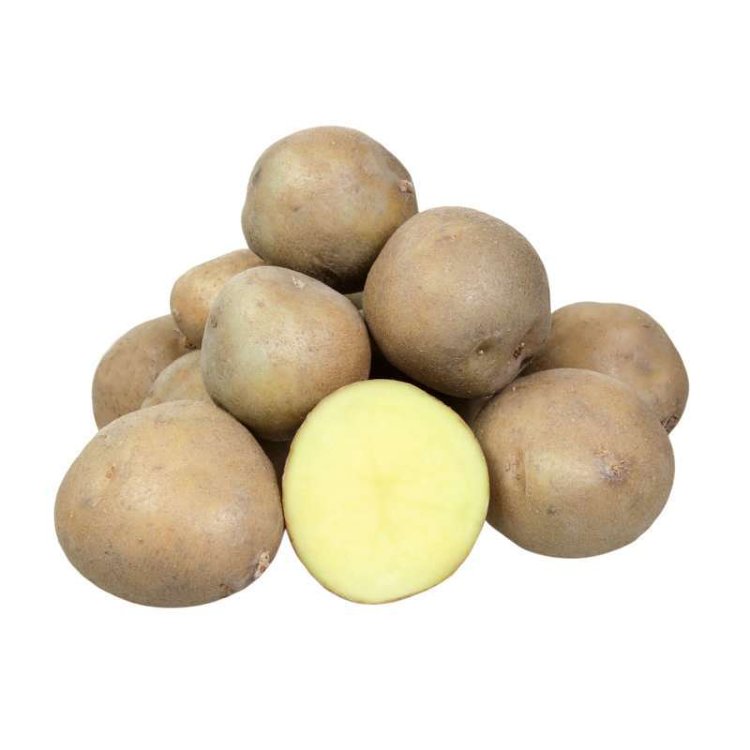
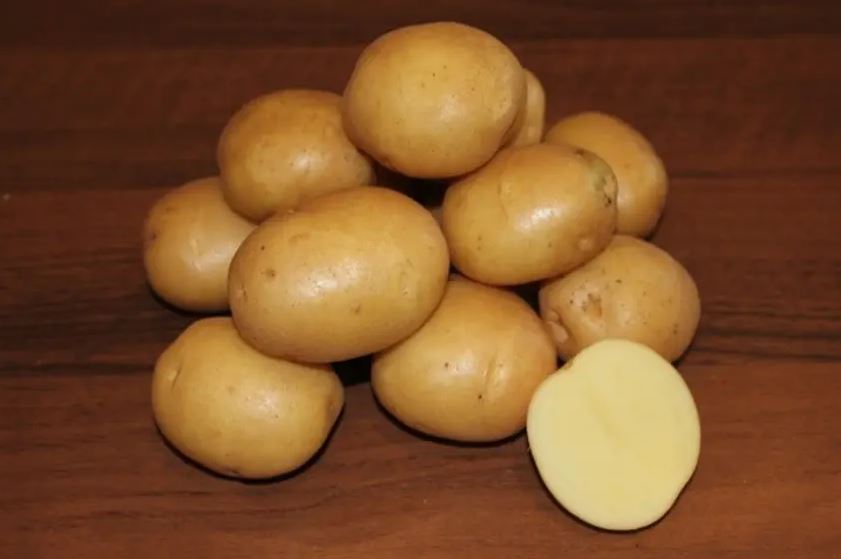
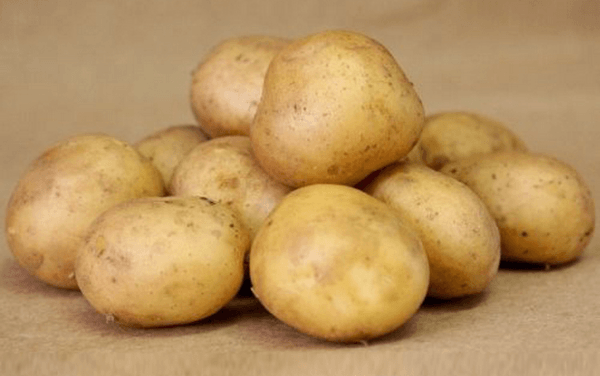
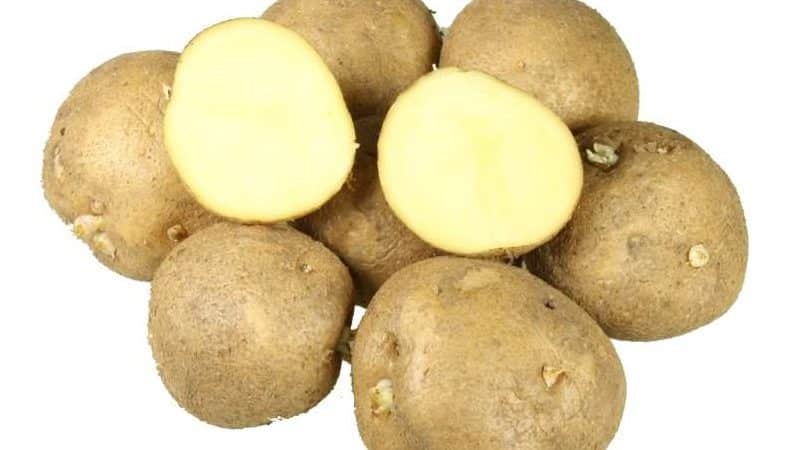
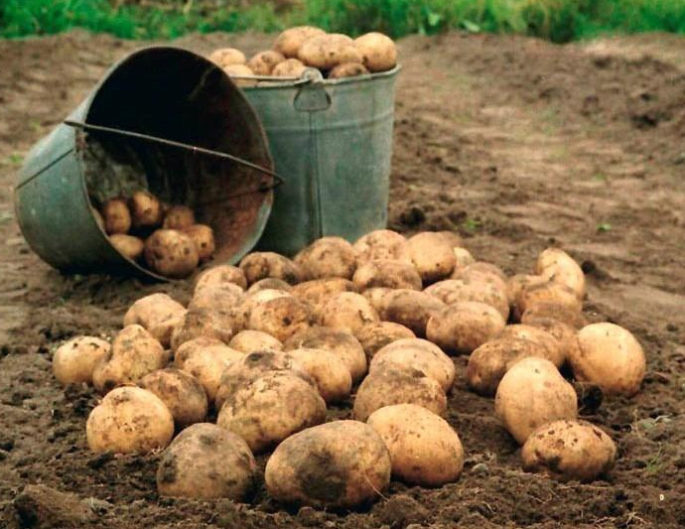
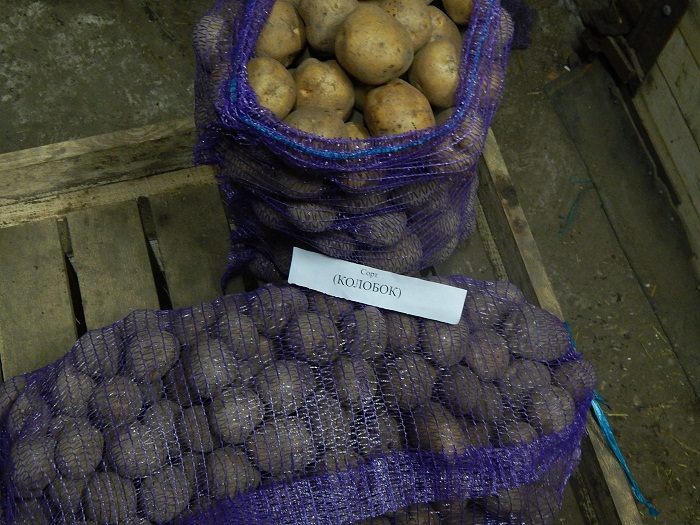
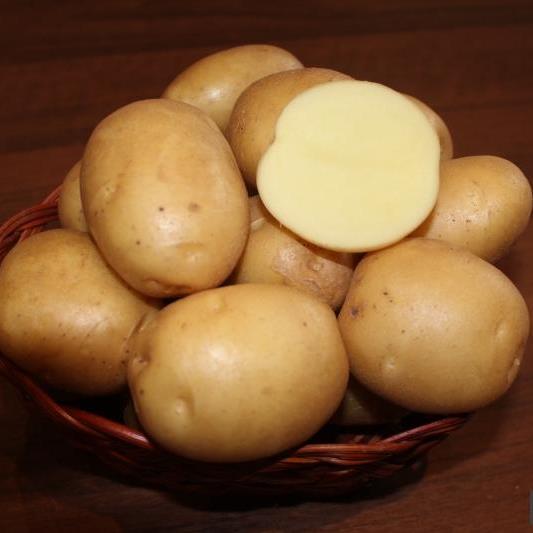
Read more about the variety in the article Kolobok Potato: variety characteristics and comparison with others in tables, reviews.
Colomba (Netherlands)
- Ripening period: 55-65 days (ultra-early, since digging can be started starting from the 35th day).
- Tubers: oval-round, with a smooth surface and small to medium-depth eyes, flesh and skin are yellow, weight 82-126 g.
- Starch content: 11-15%.
- Culinary type: AB
- Productivity: 224-422 c/ha, on the 45th day - 111-345 c/ha, on the 55th - 244-364 c/ha, maximum - 422 c/ha (Stavropol Territory).
- Disease resistance: resistant to cancer, nematodes. Moderately resistant to late blight, scab, viruses.
- Advantages: good yield, good to excellent taste, high shelf life (95%), marketability from average to high (81-98%).
- Flaws: requires well-warmed soil.
- 2013.
Photo gallery of the Colomba potato variety:
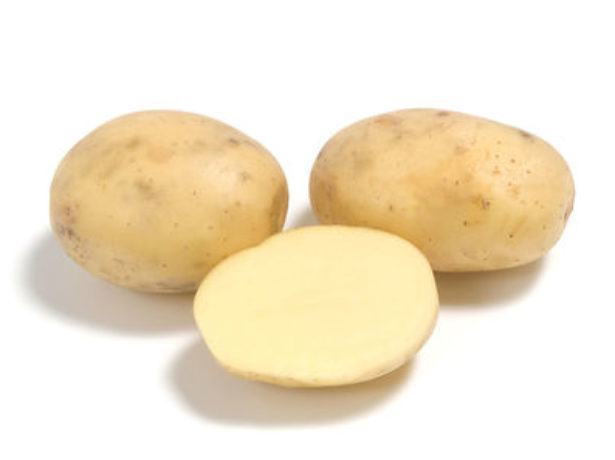
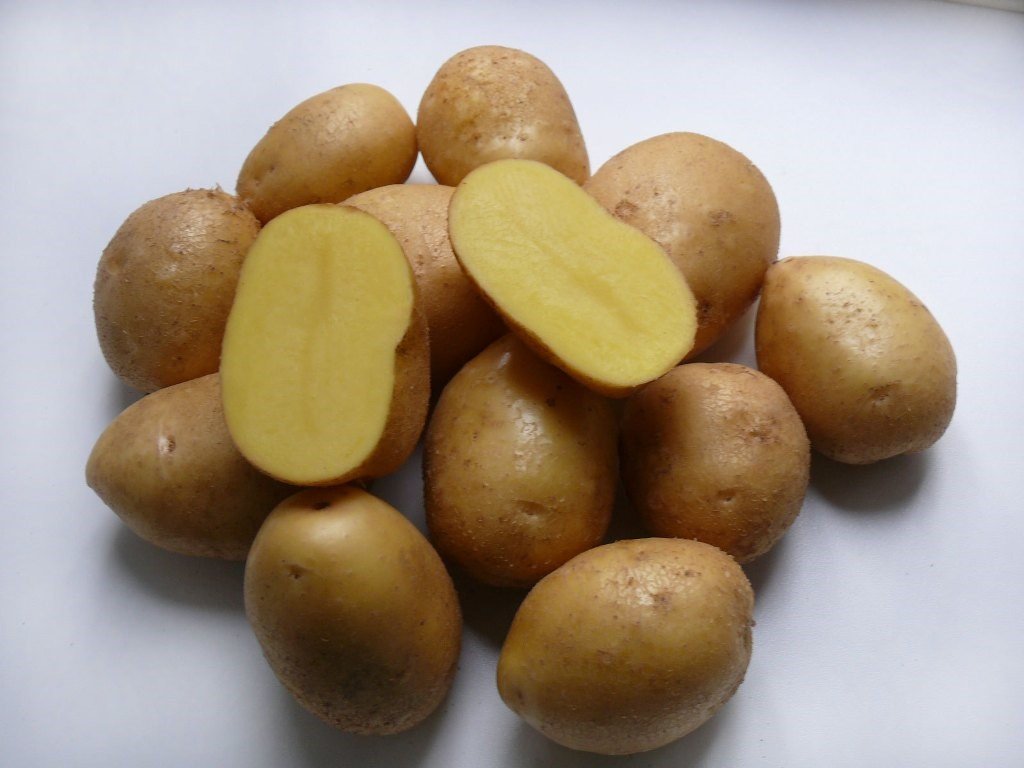
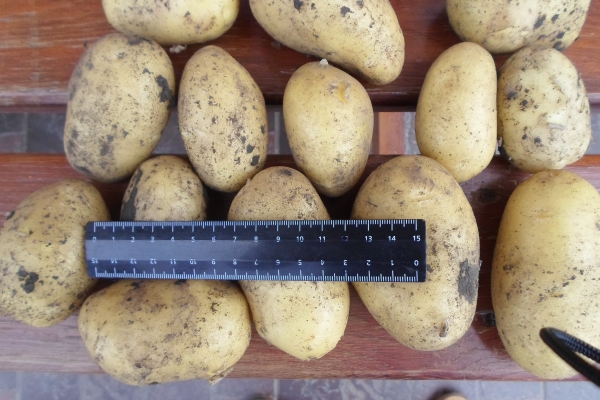
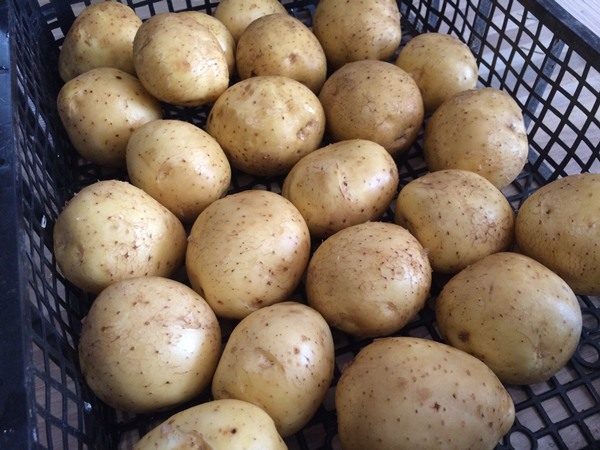
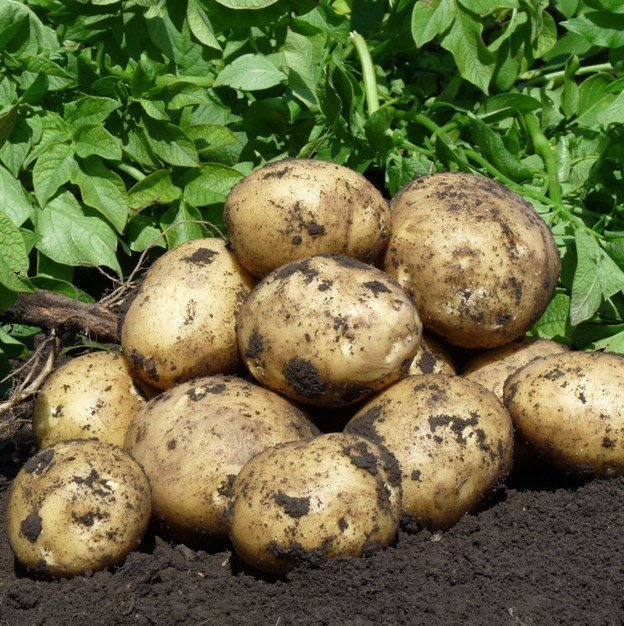
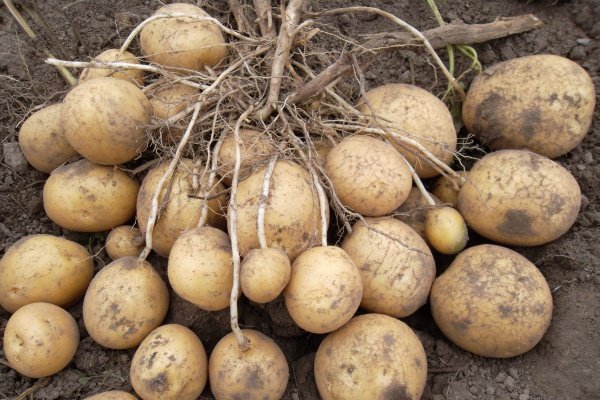
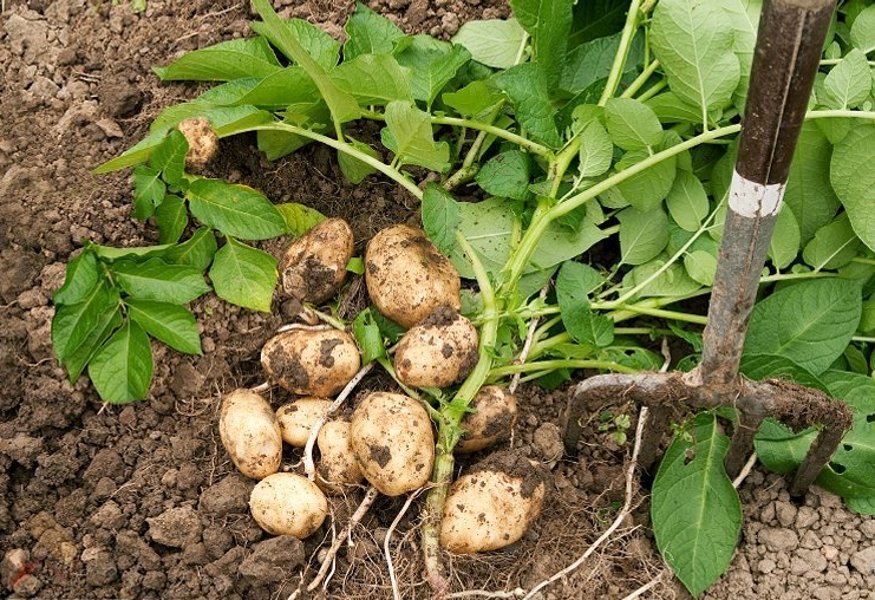
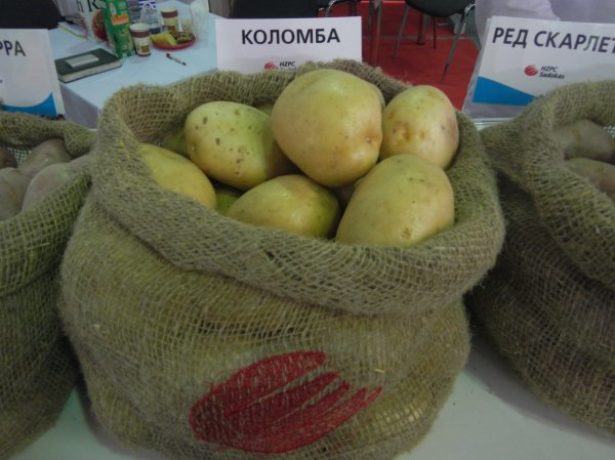
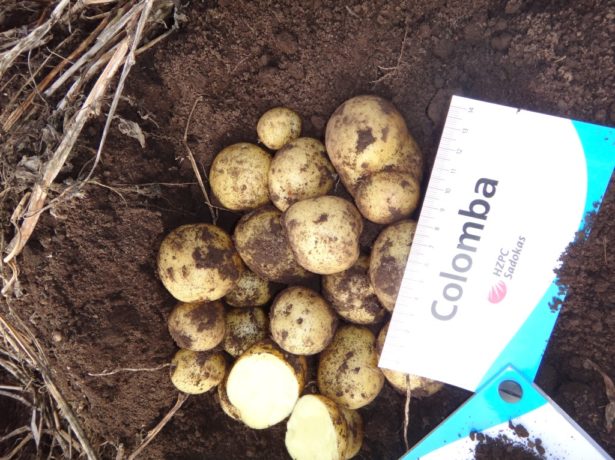
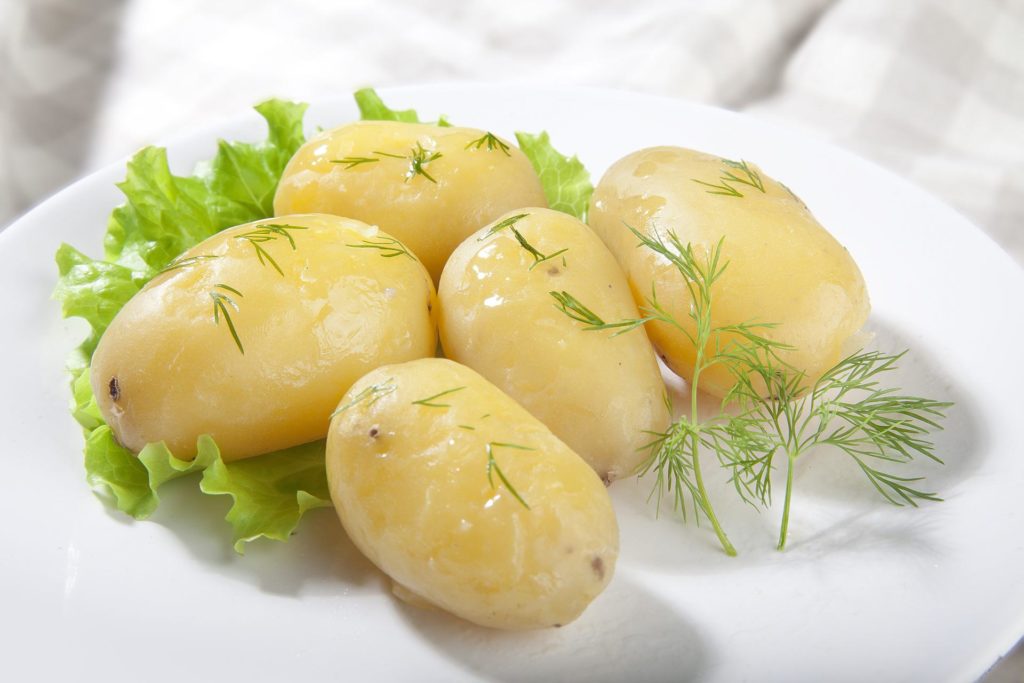
Read more about the variety in the article Colombo Potato: variety description, comparison, photos, reviews.
Labella (Netherlands)
- Ripening period: 70-80 days (early maturing, since you can start digging on the 40th day).
- Tubers: elongated, oval-shaped, with a smooth surface, red skin, yellow flesh, medium-depth eyes, weight 78-102 g.
- Starch content: 15.8%.
- Culinary type: IN
- Productivity: 176-264 c/ha, maximum - 342 c/ha (Rostov region).
- Disease resistance: resistant to cancer, nematode, leaf curl, moderately resistant to scab and late blight.
- Advantages: excellent taste, heat resistance, undemanding to soil, very high shelf life (98%) and good marketability (91-92%).
- Flaws: sensitive to lack of moisture.
- 2011.
Photo gallery of the Labella potato variety:
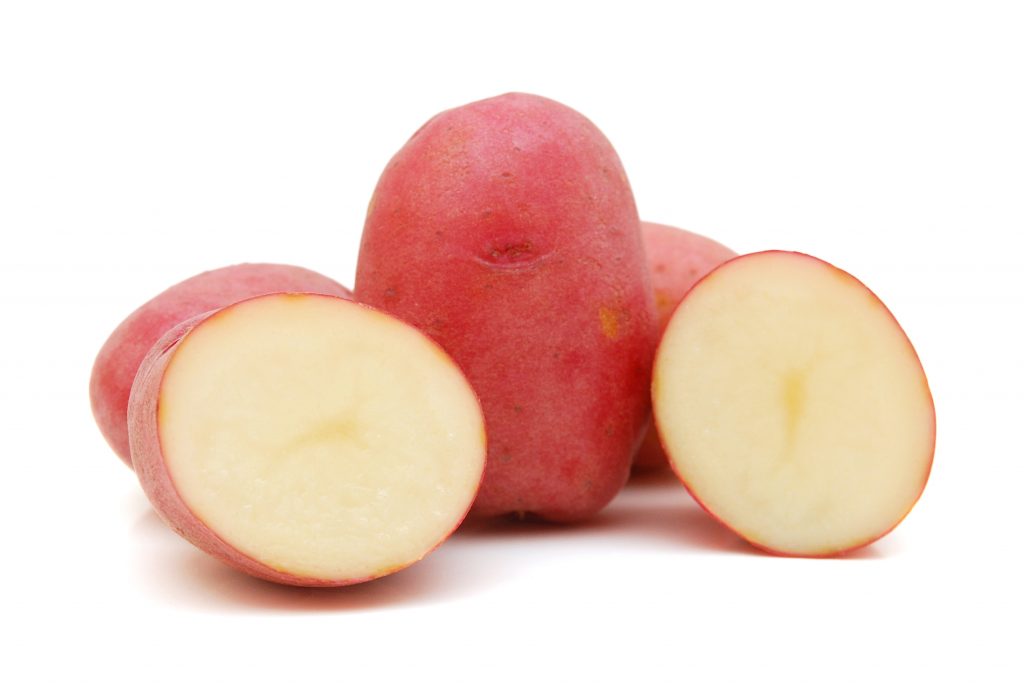
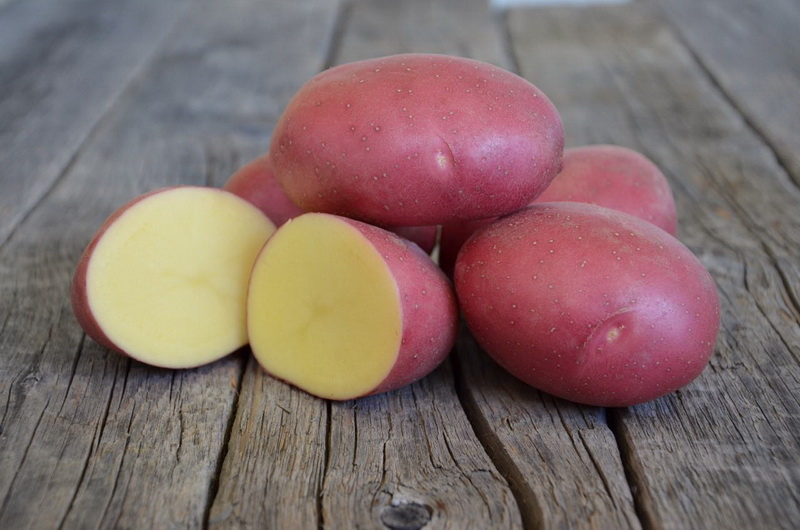
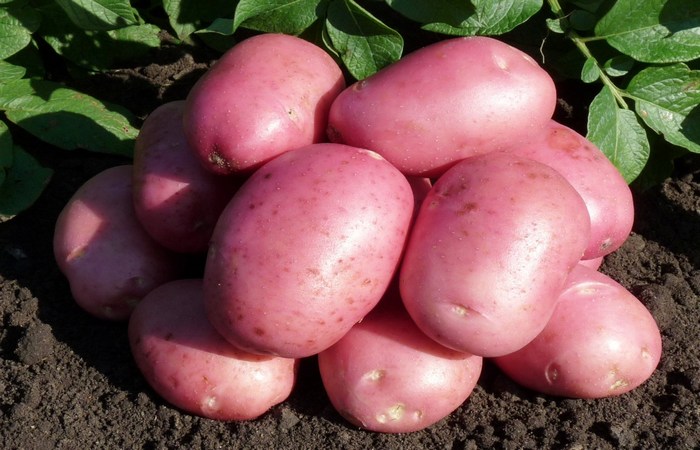
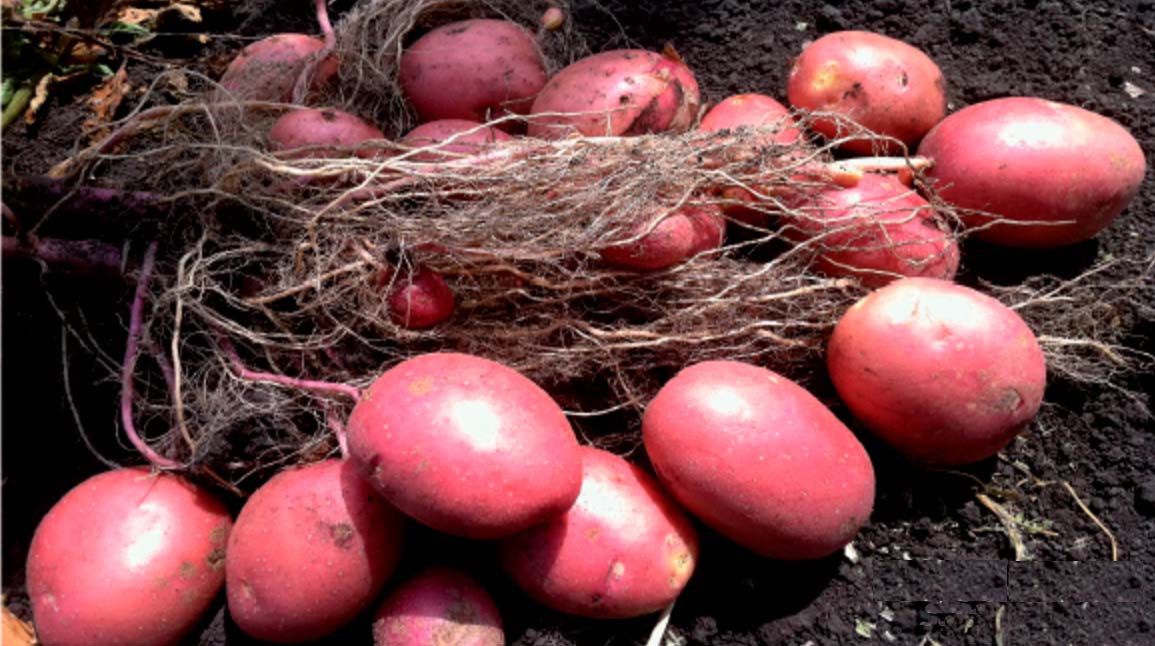
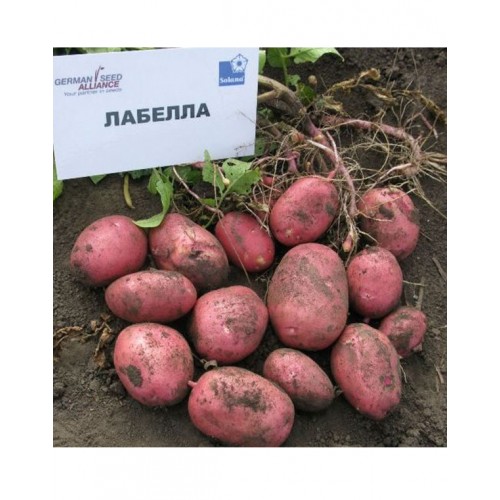
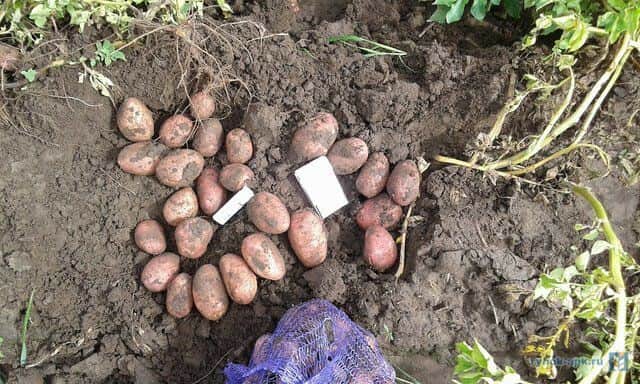
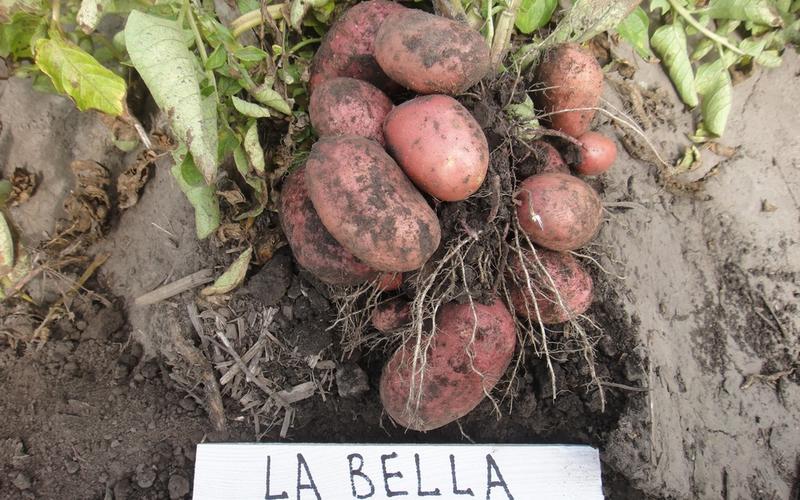
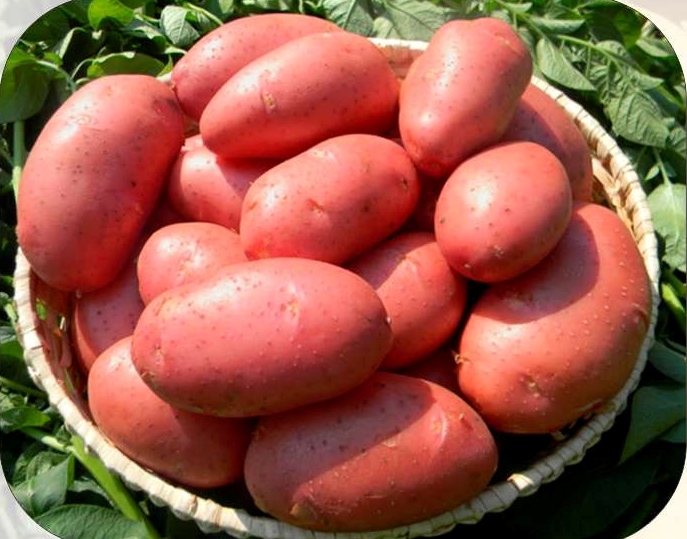
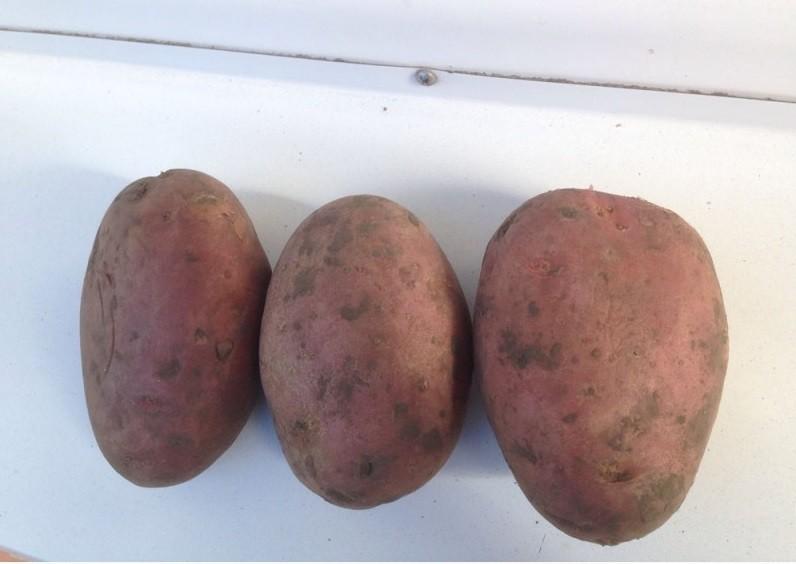
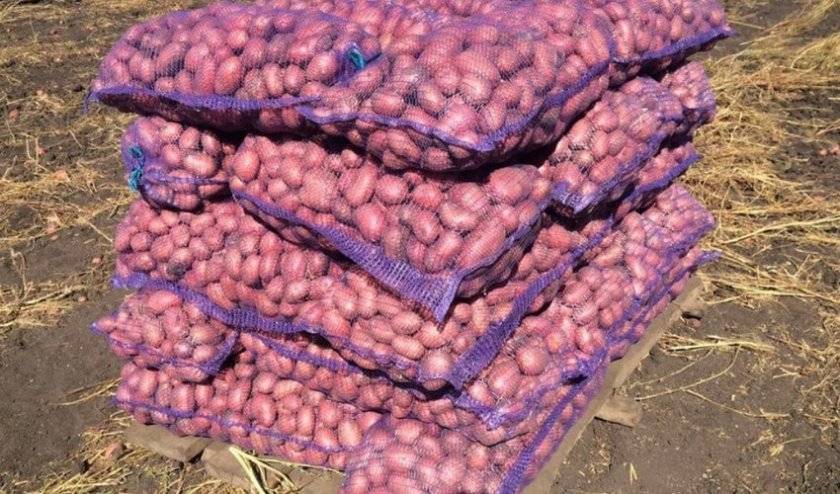
Read more about the variety in the article Labella potato variety: characteristics and comparison with others in tables, reviews.
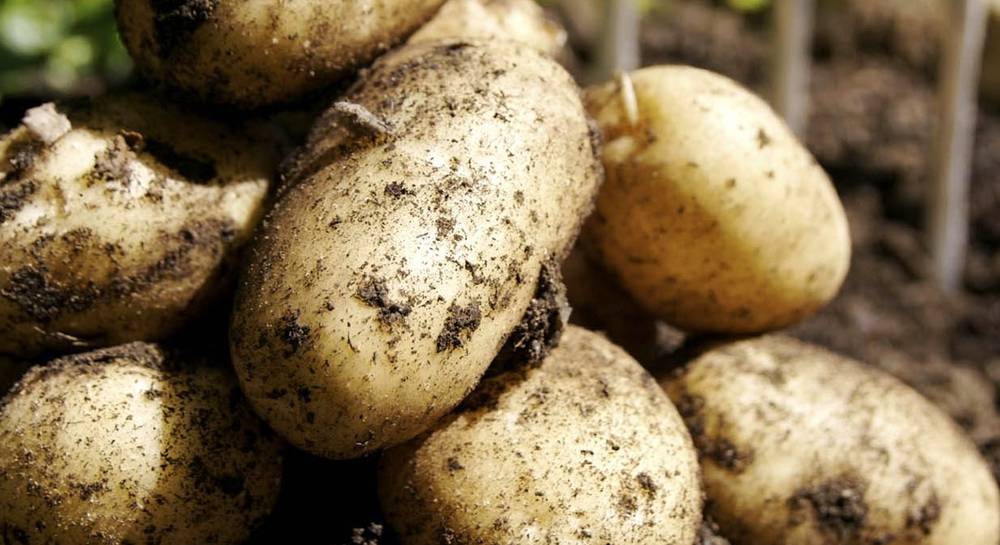
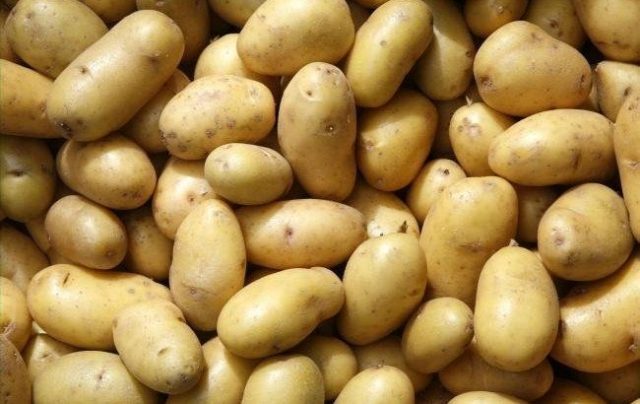
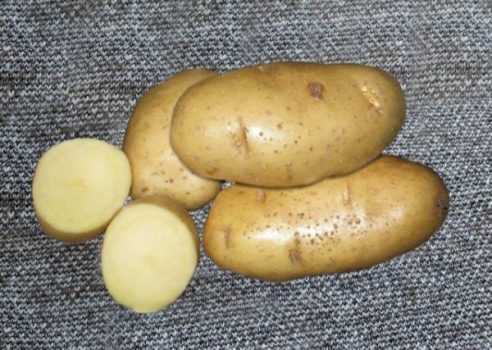
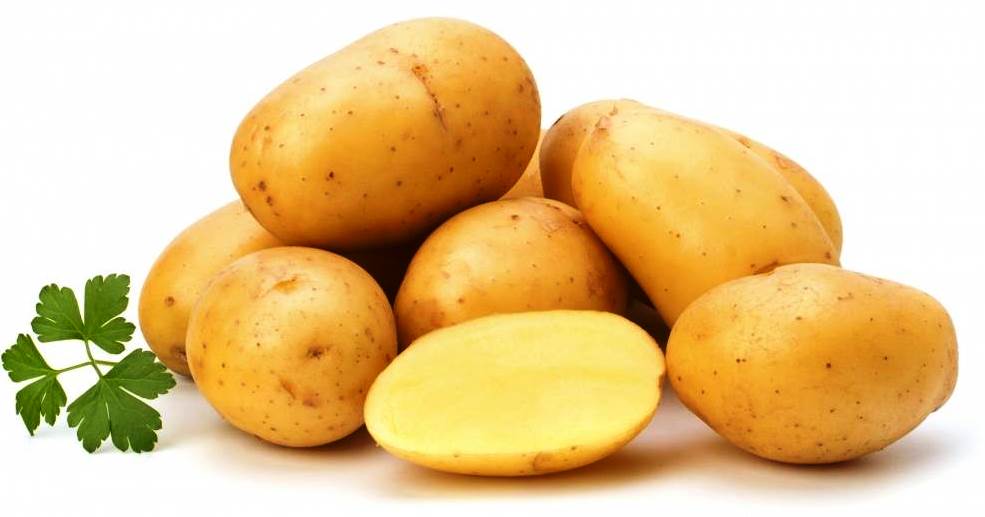
Lasunak or Lasunok (Belarus)
- Ripening period: 80-120 days (late ripening).
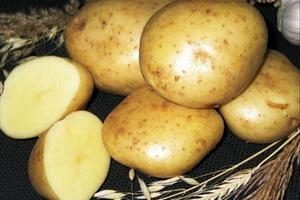
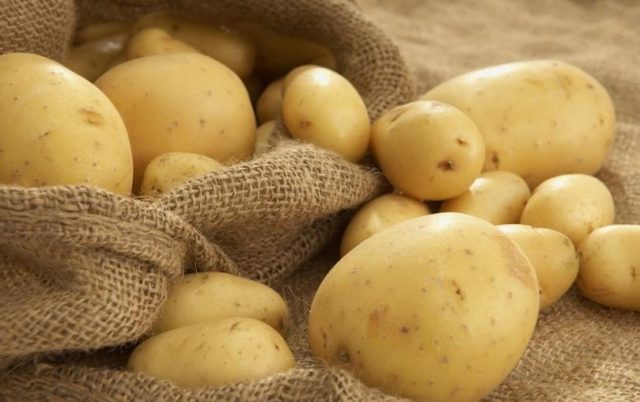
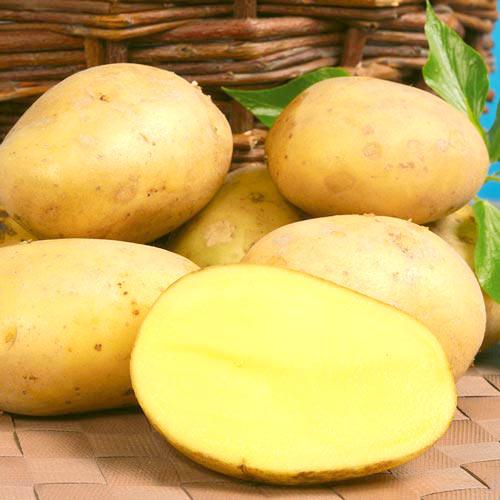
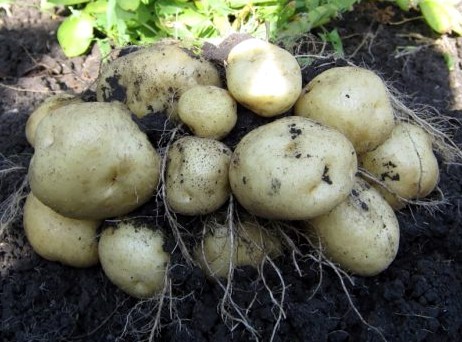
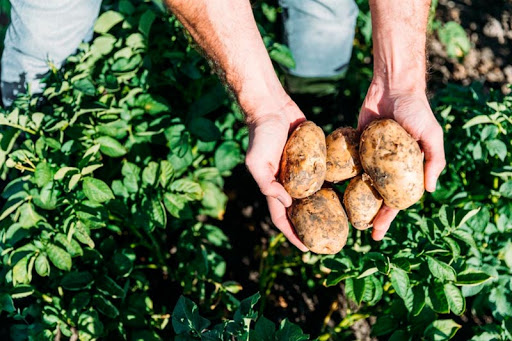
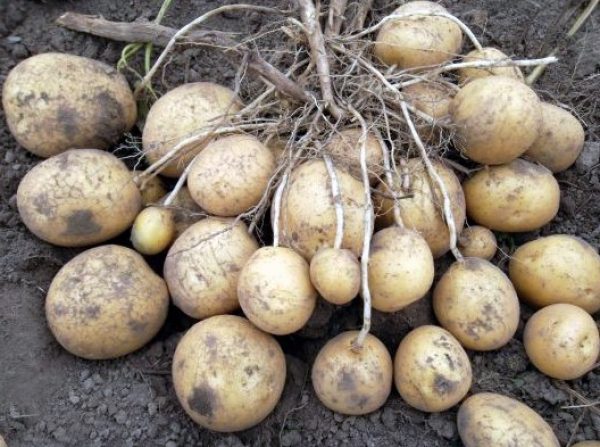
- Tubers: large, round-oval, with a mesh yellowish skin, creamy flesh, weight 150-200 g.
- Starch content: 15-22%.
- Culinary type: C
- Productivity: 450-620 c/ha.
- Disease resistance: resistant to cancer, tuber blight, viruses S, M, Y, L, moderately resistant to leaf blight, scab, rhizoctonia, black leg, susceptible to virus X.
- Advantages: stable and very high yield, good taste, not prone to mechanical damage.
- Flaws: does not have a long shelf life, degenerates quickly, therefore, strict adherence to the storage conditions of +1…+2 °C is required, the shelf life is satisfactory to average, due to the large size of the tubers they do not look particularly marketable.
- 2006.
Photo gallery of the Lasunok potato variety:
Lugovskoy (Ukraine)
- Ripening period: 70-95 days (mid-season).
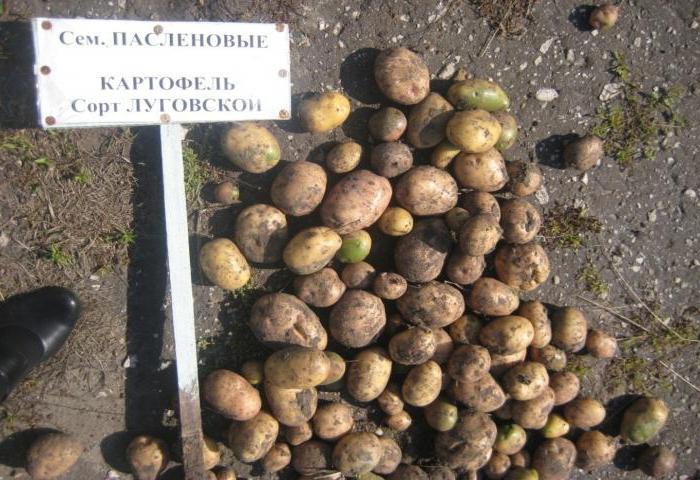
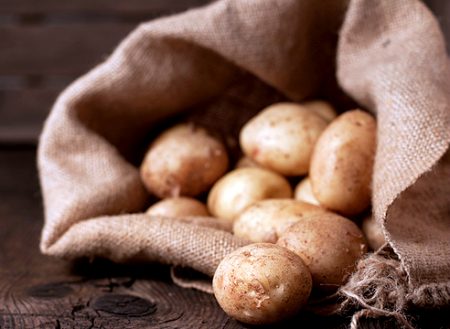
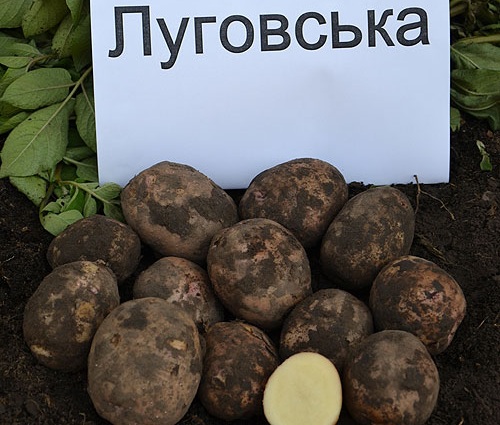
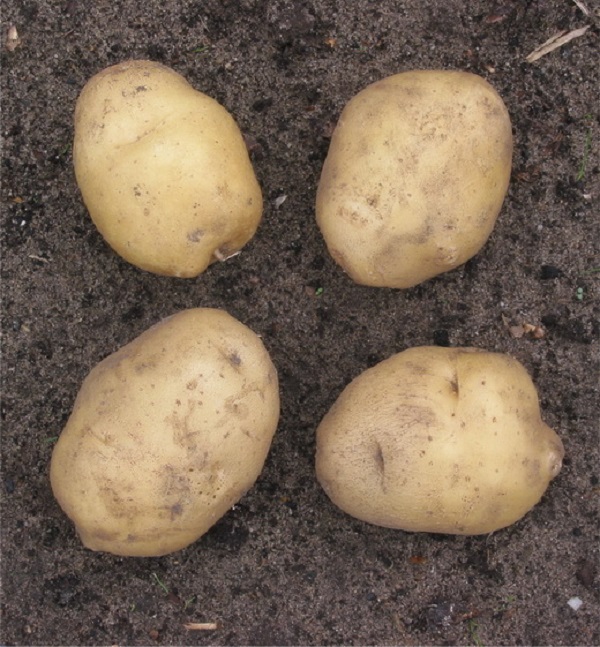
- Tubers: oval with a pinkish mesh skin and small eyes, white flesh, weight 85-125 g.
- Starch content: 12-19%.
- Culinary type: WITH
- Productivity: maximum - 514 c/ha.
- Disease resistance: resistant to cancer, relatively resistant to scab, late blight, black leg, viruses.
- Advantages: consistently high yield, suitable for all weather conditions, good shelf life and marketability, dense skin.
- Flaws: sensitive to lack of moisture.
- 1987.
Photo gallery of the Lugovskoy potato variety:
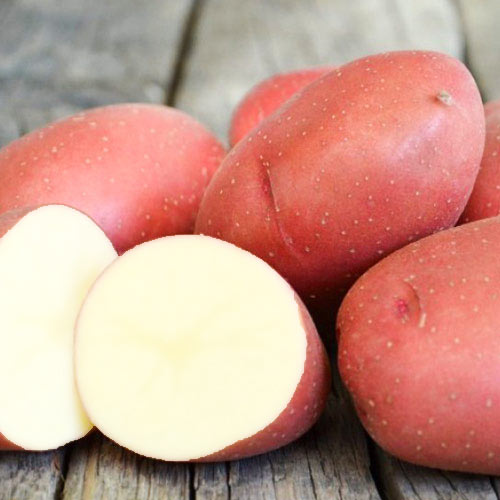
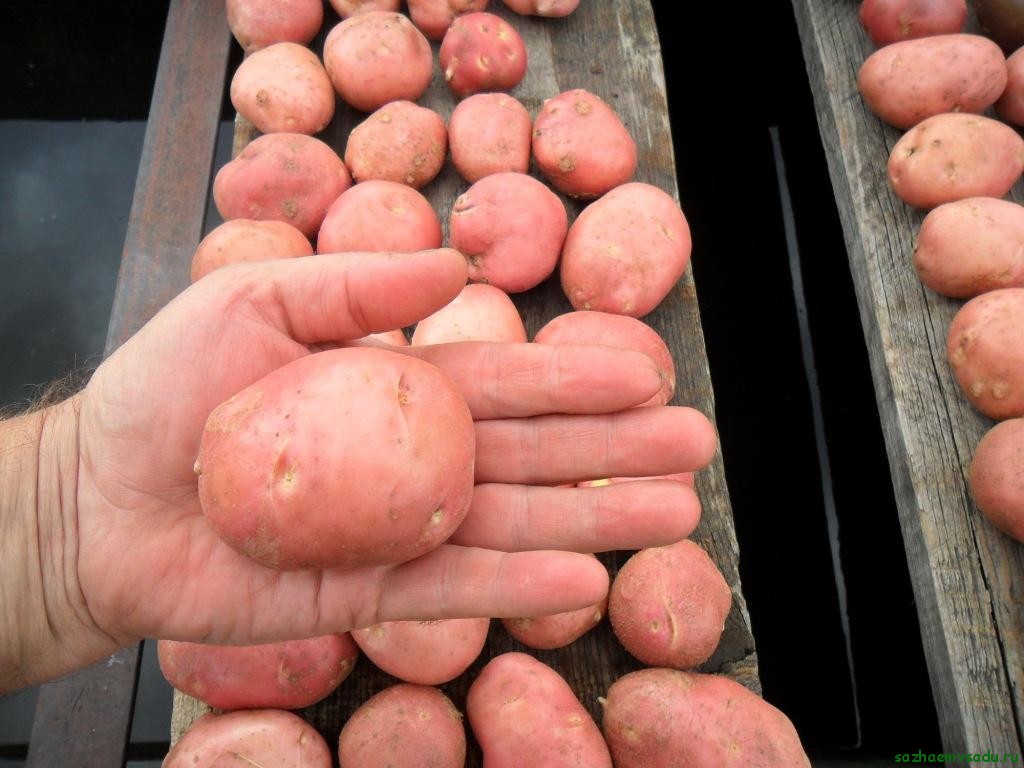
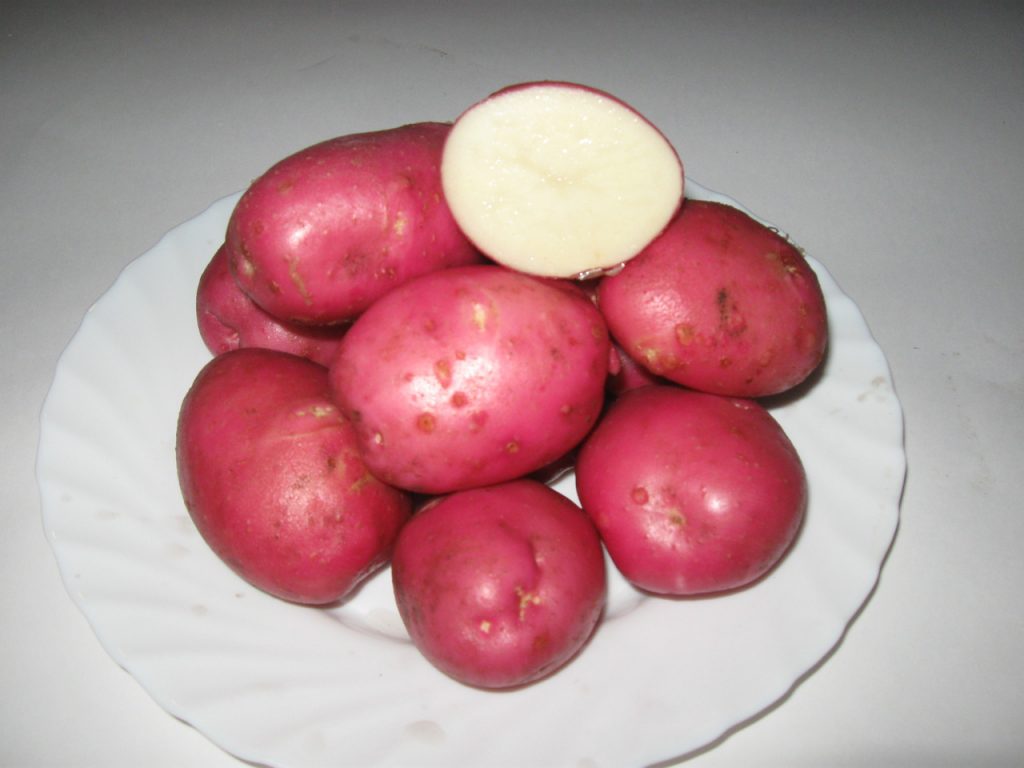
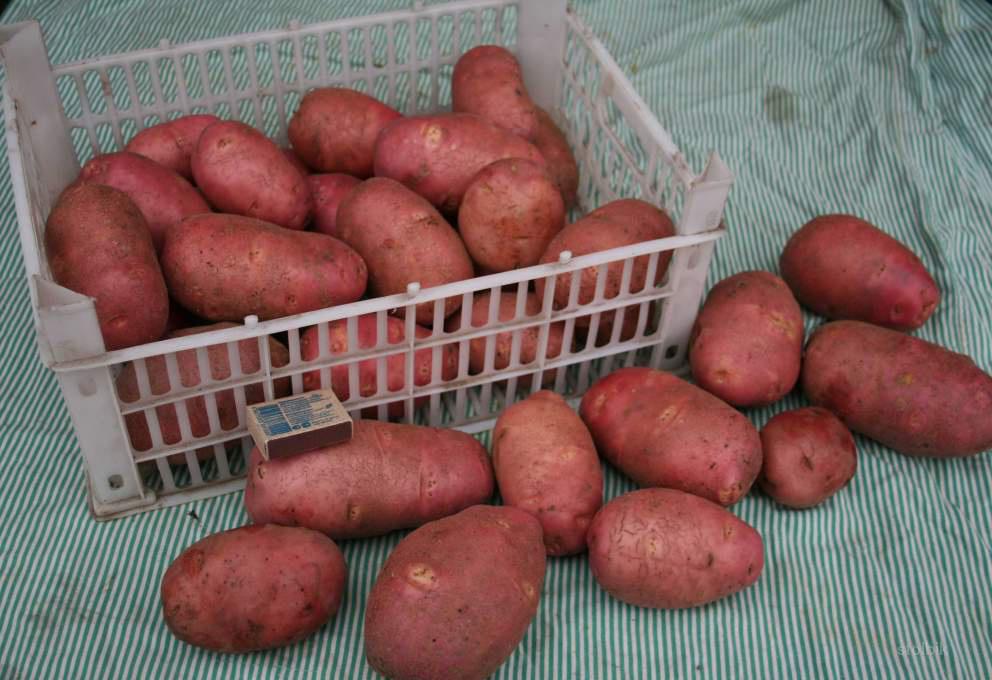
Lyubava (Russia)
- Ripening period: 50-65 days (early maturing).
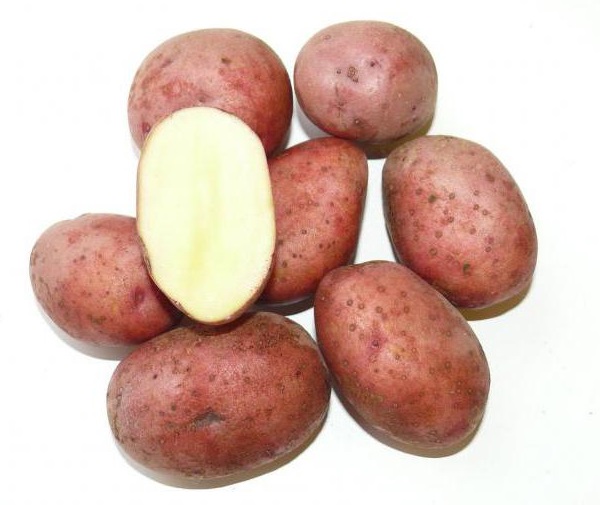
- Tubers: oval-round, with rough red skin, with eyes of medium depth, white flesh, weight 109-210 g.
- Starch content: 11.2-16.9%.
- Culinary type: A
- Productivity: 288-400 c/ha, on the 45th day - 145-200 c/ha, on the 55th - 203-272 c/ha, maximum yield - 524 c/ha (Tomsk region).
- Disease resistance: resistant to cancer, rhizoctonia, moderately resistant to tuber blight, scab, susceptible to top blight, nematode.
- Advantages: high yield, good taste, shelf life and marketability (80-98%).
- Flaws: sensitive to lack of moisture.
- 2003.
Photo gallery of the Lyubava potato variety:
Meteor (Russia)
- Ripening period: 45-50 days (ultra-early).
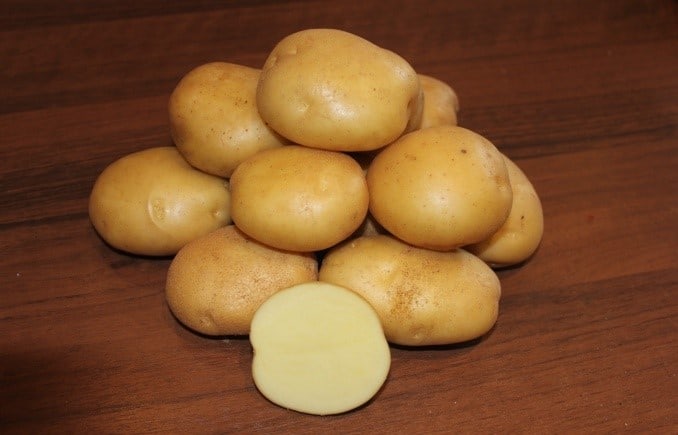
- Tubers: round-oval, with yellow skin and lighter flesh, eyes of medium depth, weight 102-147 g.
- Starch content: 12-14.9%.
- Culinary type: Sun
- Productivity: 209-404 c/ha, on the 45th day - 175-213 c/ha, on the 55th - 229-322 c/ha, maximum - 450 c/ha.
- Disease resistance: resistant to cancer, nematodes, tuber blight, relatively resistant to leaf blight, viruses, wrinkled and striped mosaic.
- Advantages: good taste, high adaptability, resistant to heat and drought, good marketability (88-98%) and shelf life (95%), resistant to mechanical damage.
- Flaws: No.
- 2013.
Photo gallery of the Meteor potato variety:
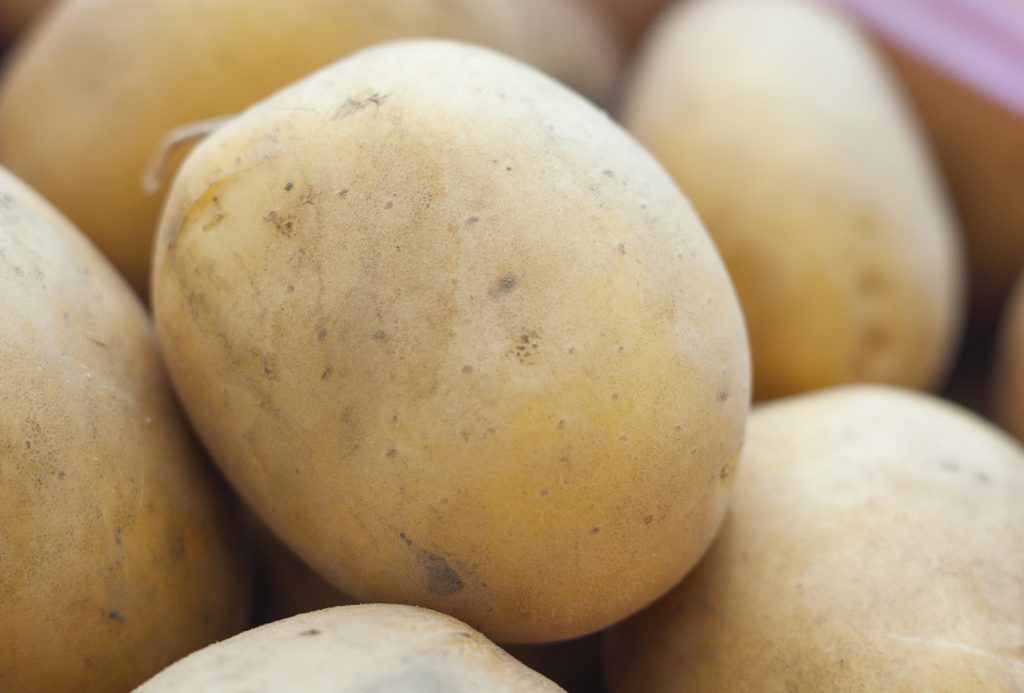
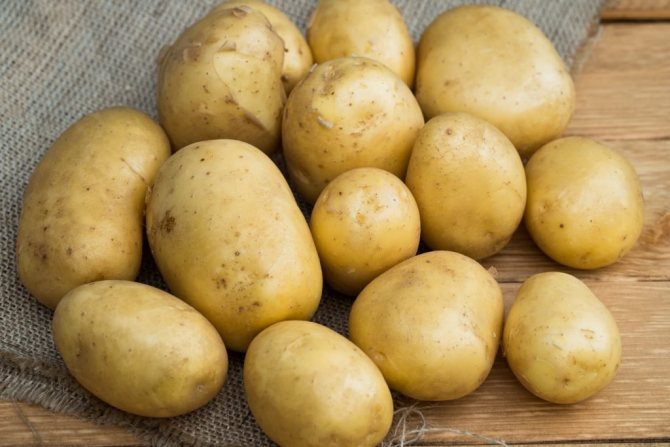
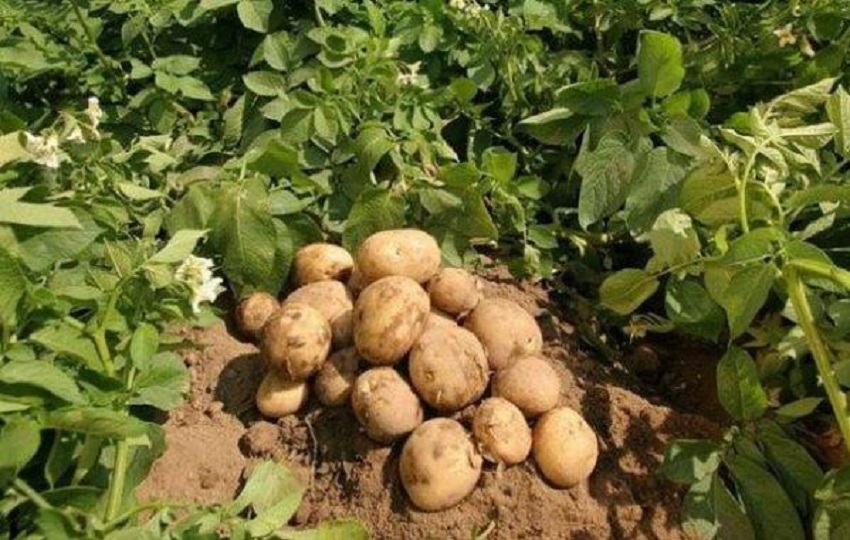
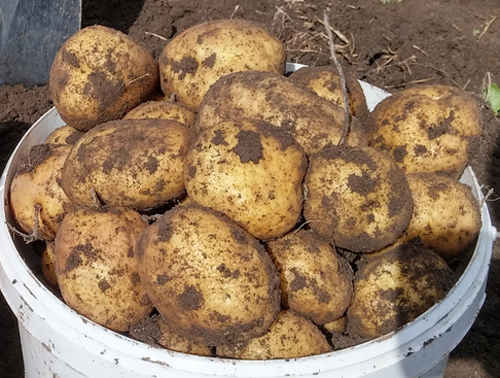
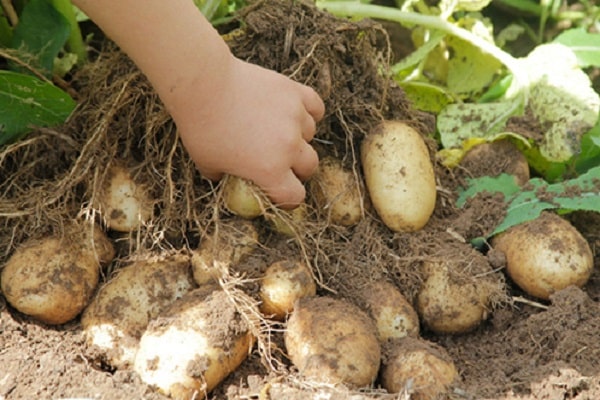
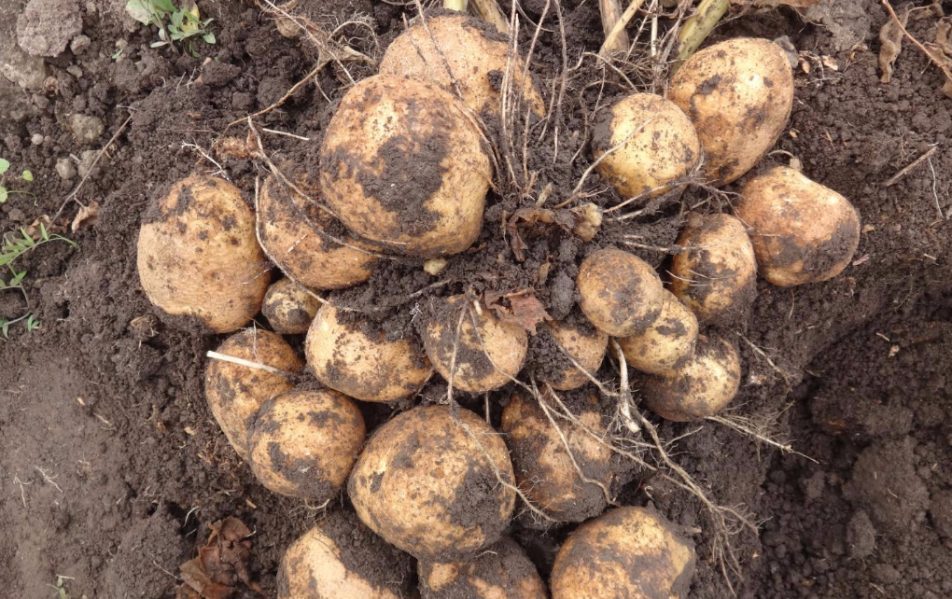
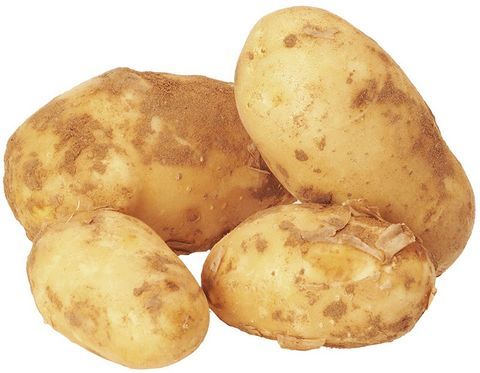
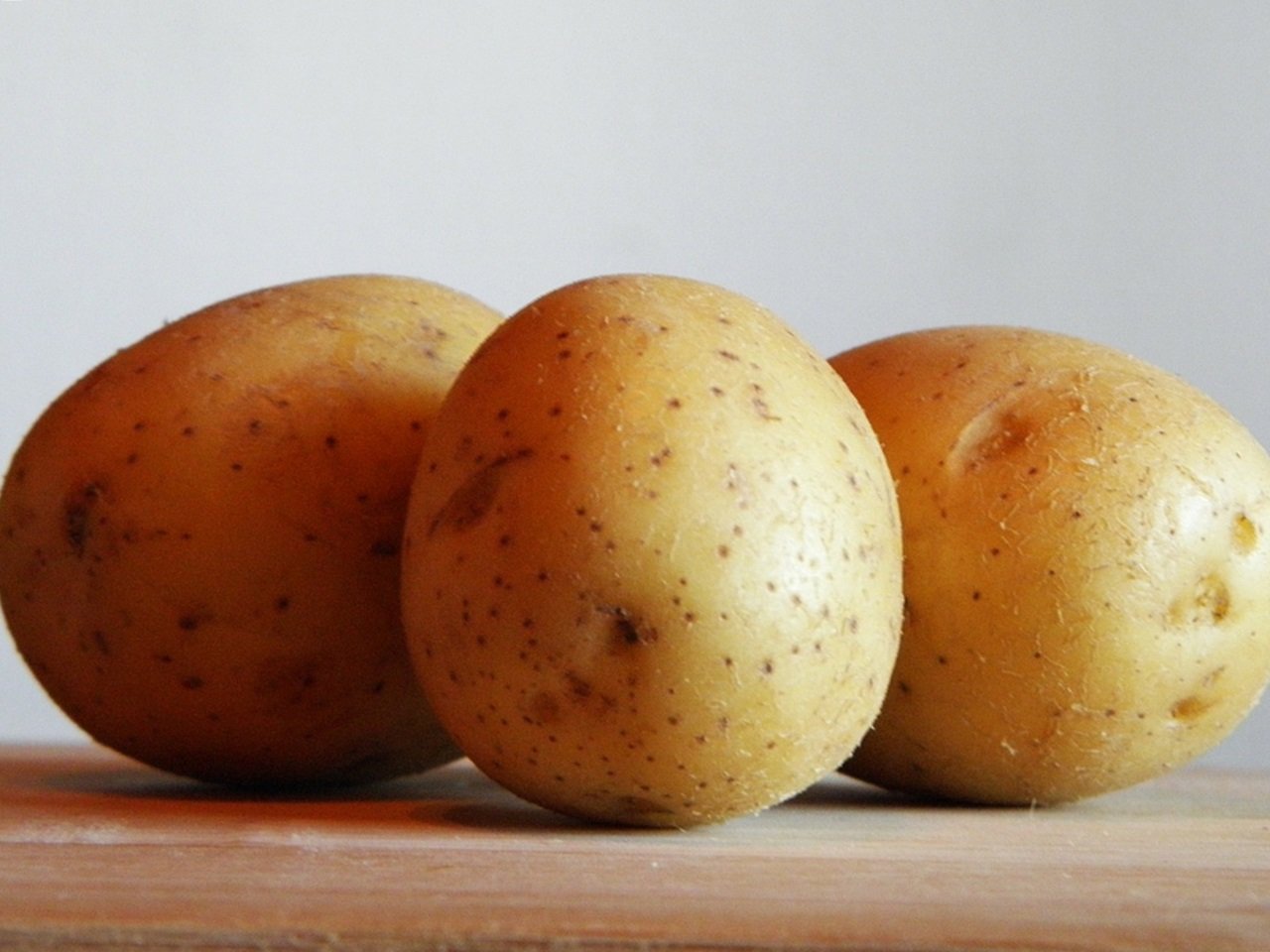
Read more about the variety in the article Meteor Potato Variety: Description and comparison with others in the table, planting and care, reviews
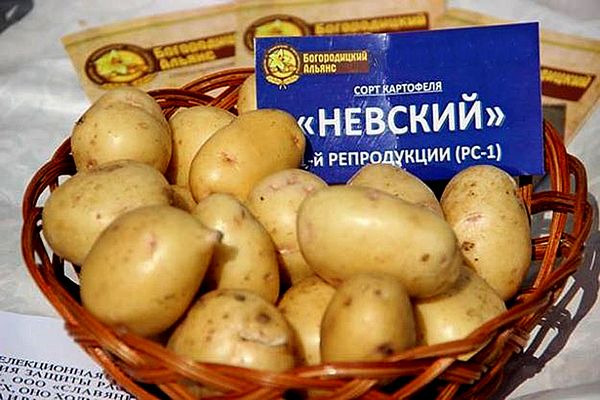
Nevsky (Russia)
- Ripening period: 70-80 days (mid-early).
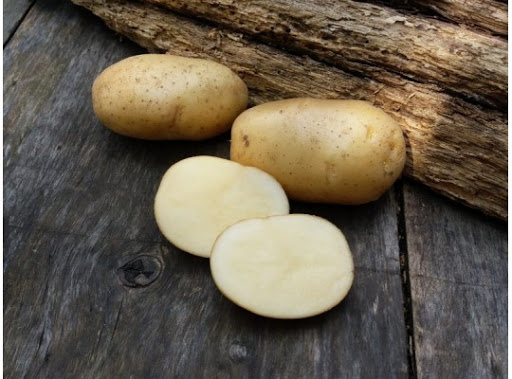
- Tubers: round-oval, with yellowish skin and creamy flesh, pink and small eyes, weight 90-130 g.
- Starch content: 10-12%.
- Culinary type: Sun
- Productivity: 380-500 c/ha.
- Disease resistance: resistant to cancer, rhizoctonia, moderately resistant to scab, moderately susceptible to late blight, susceptible to nematode.
- Advantages: not susceptible to the Colorado potato beetle, high yield, marketability (90-95%), shelf life.
- Flaws: susceptible to nematode, has satisfactory and good taste.
- 1982.
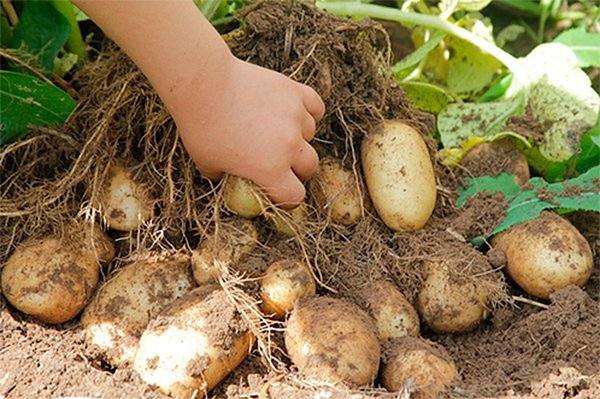
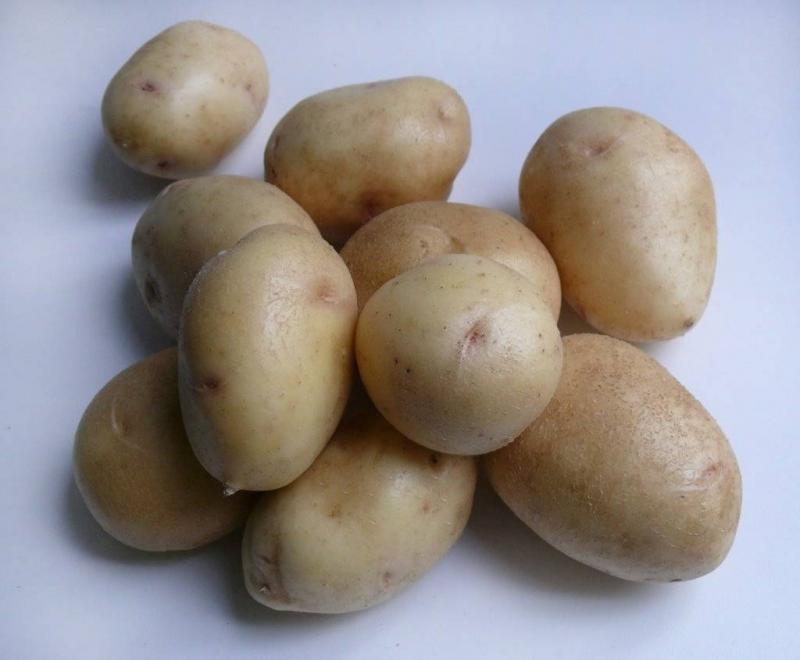
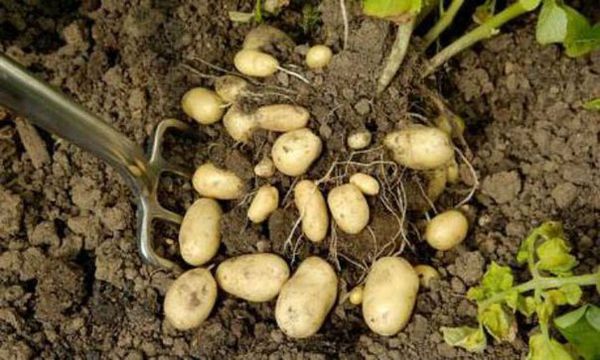
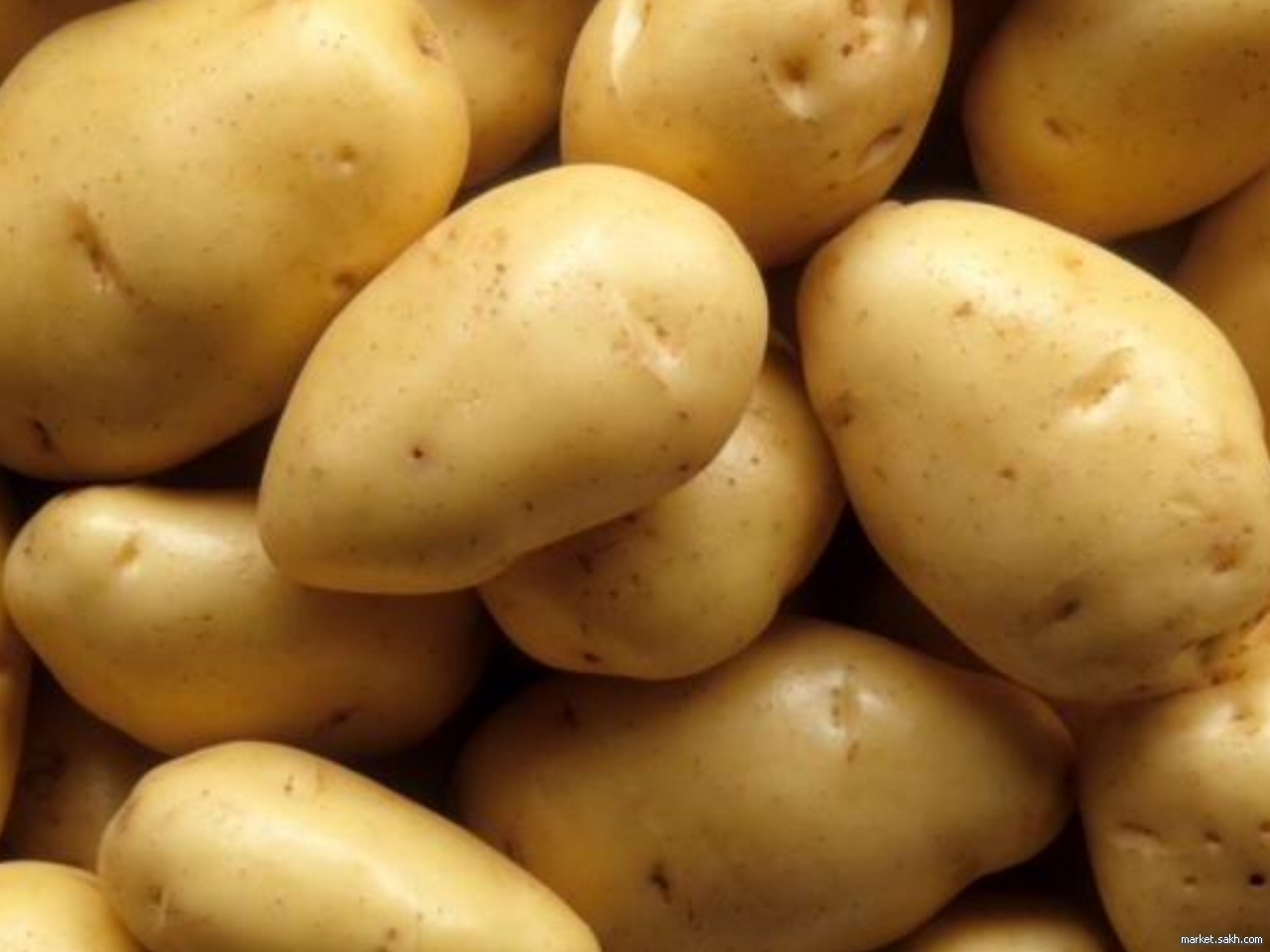
Photo gallery of the Nevsky potato variety:
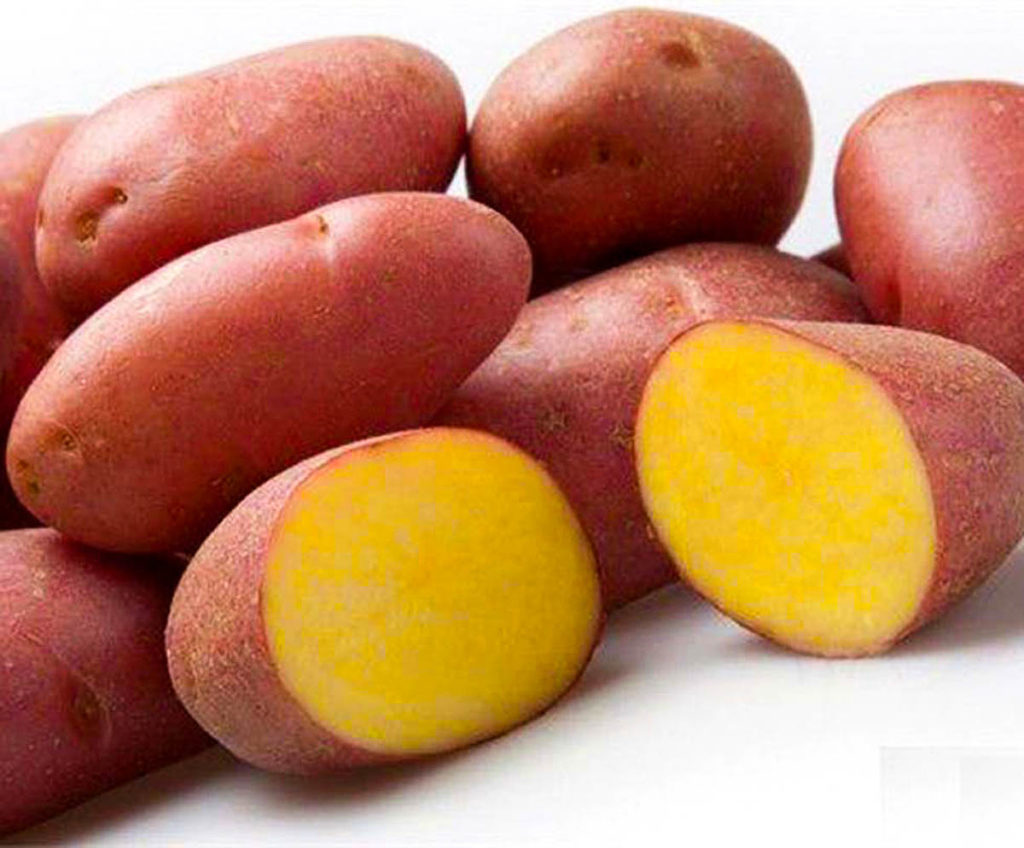
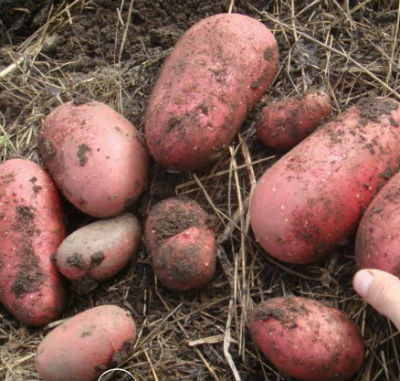
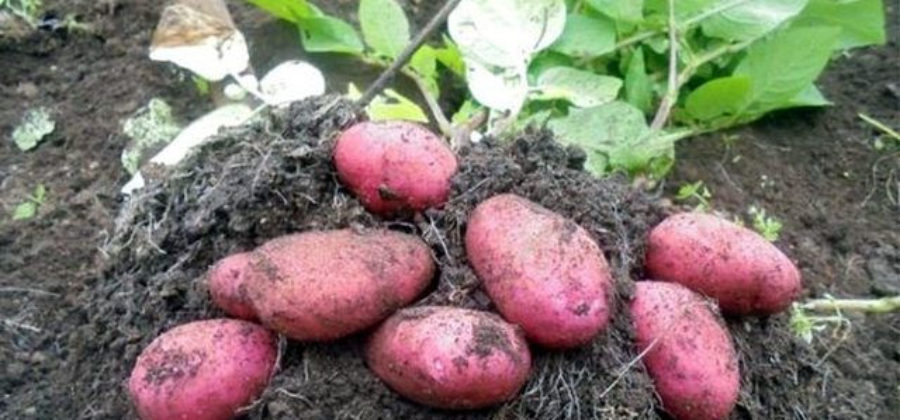
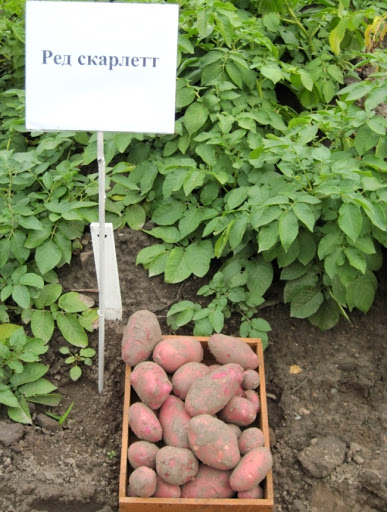
Red Scarlet (Netherlands)
- Ripening period: 70-80 days (early maturing, since you can dig up already on the 45th day).
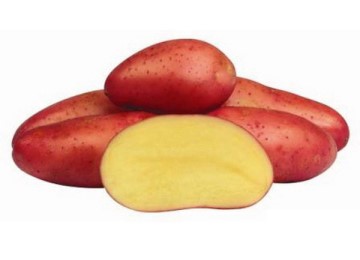
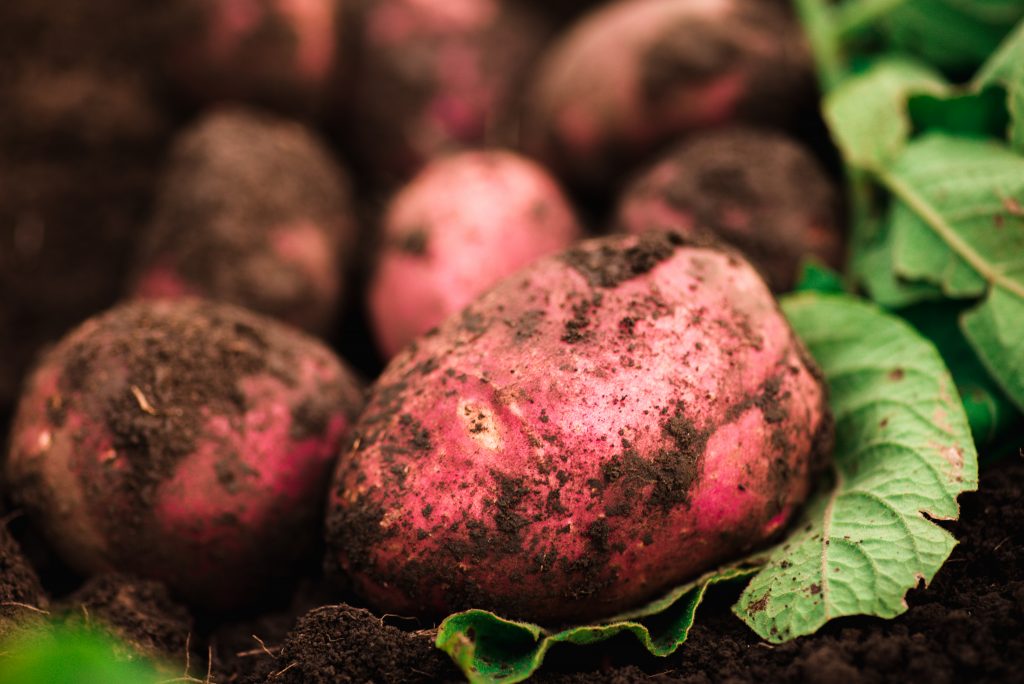
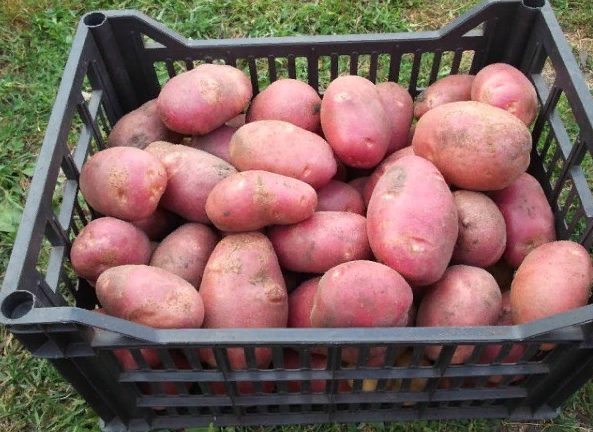
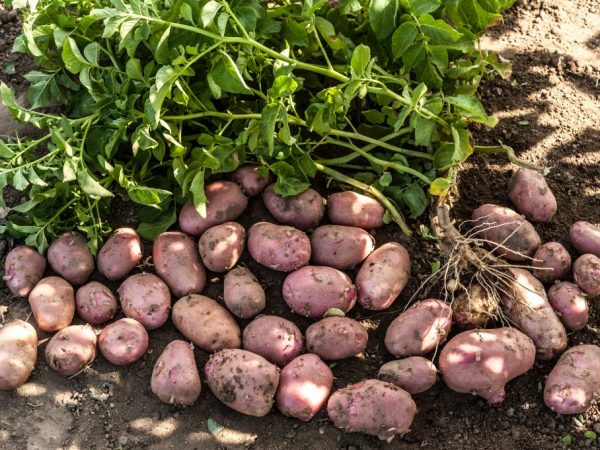
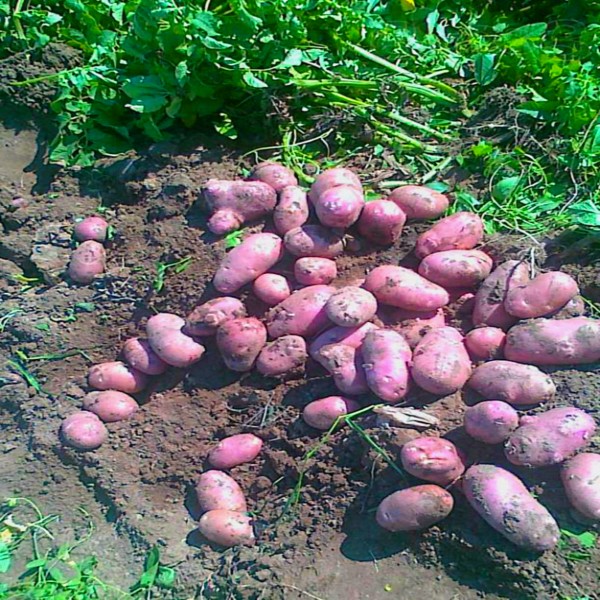
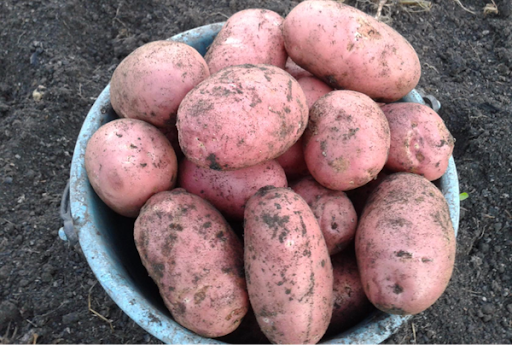
- Tubers: elongated, oval, smooth, reddish skin, yellow flesh, small eyes, few of them, weight 56-102 g.
- Starch content: 10.1-15.6%.
- Culinary type: AB
- Productivity: 164-192 c/ha, on the 45th day - 84 c/ha, on the 55th - 108 c/ha, maximum - 270 c/ha (Smolensk region).
- Disease resistance: resistant to cancer, nematode, moderately susceptible to tuber blight, susceptible to top blight.
- Advantages: drought resistance, high shelf life (98%) and marketability (82-96%).
- Flaws: small yield, satisfactory taste.
- 2000.
Photo gallery of the Red Scarlet potato variety:
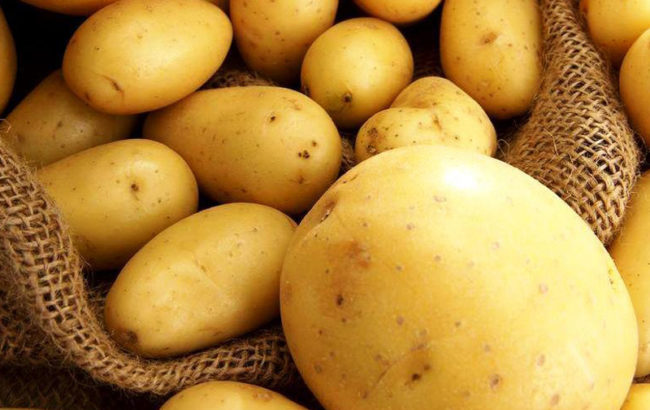
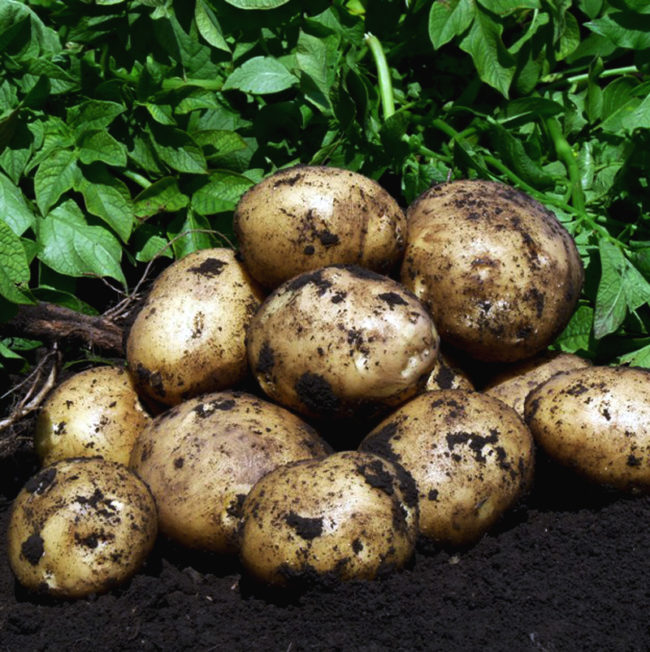
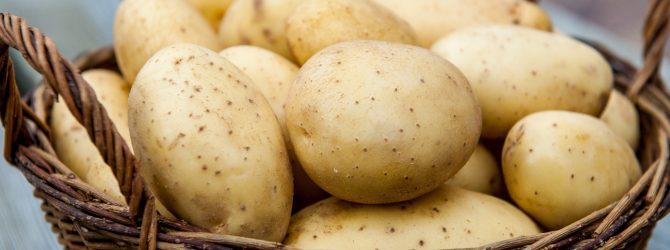
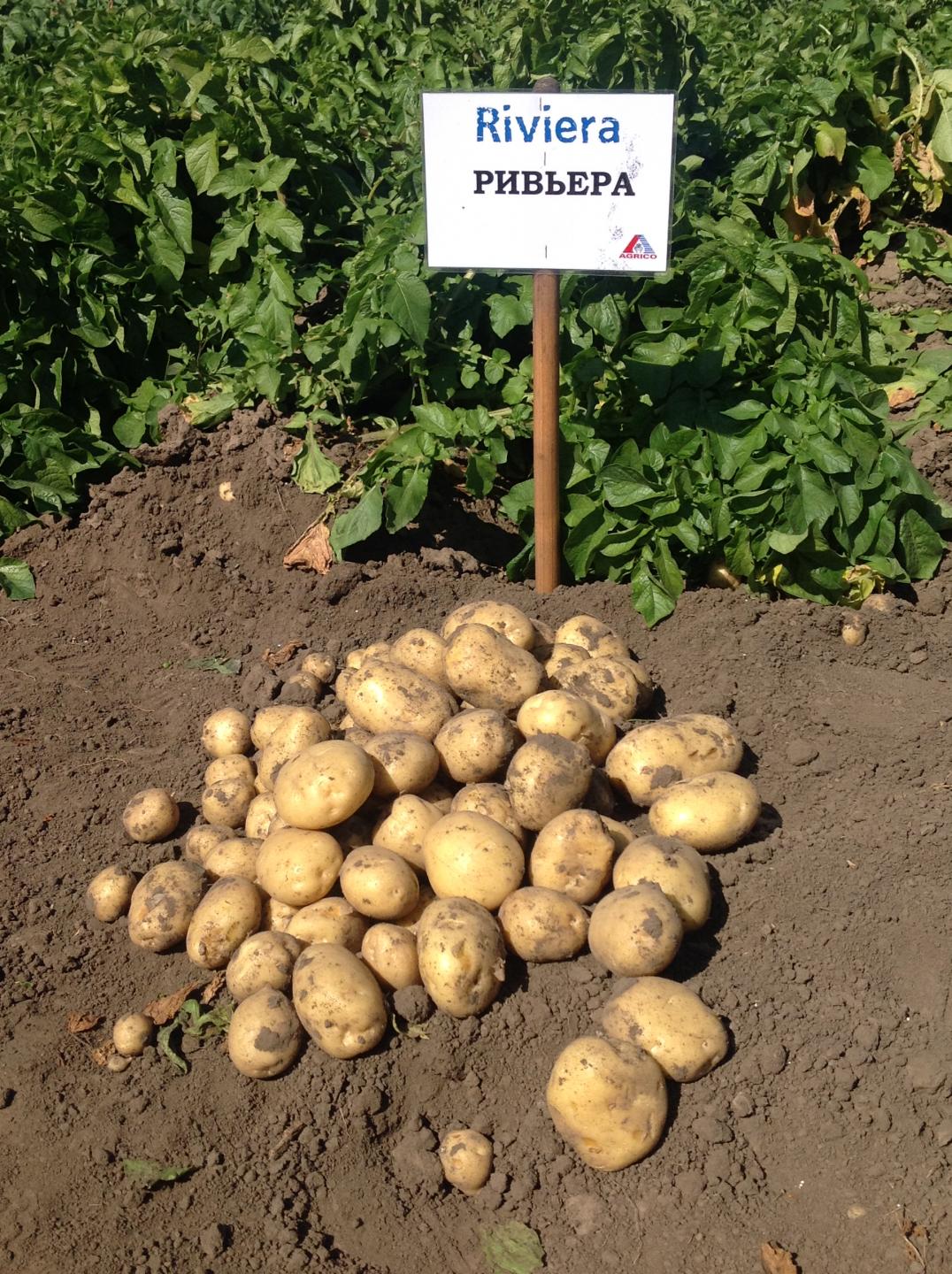
Riviera (Netherlands)
- Ripening period: 70-80 days (early maturing because it begins to ripen early, on the 40-45th day you can already dig up the first potatoes).
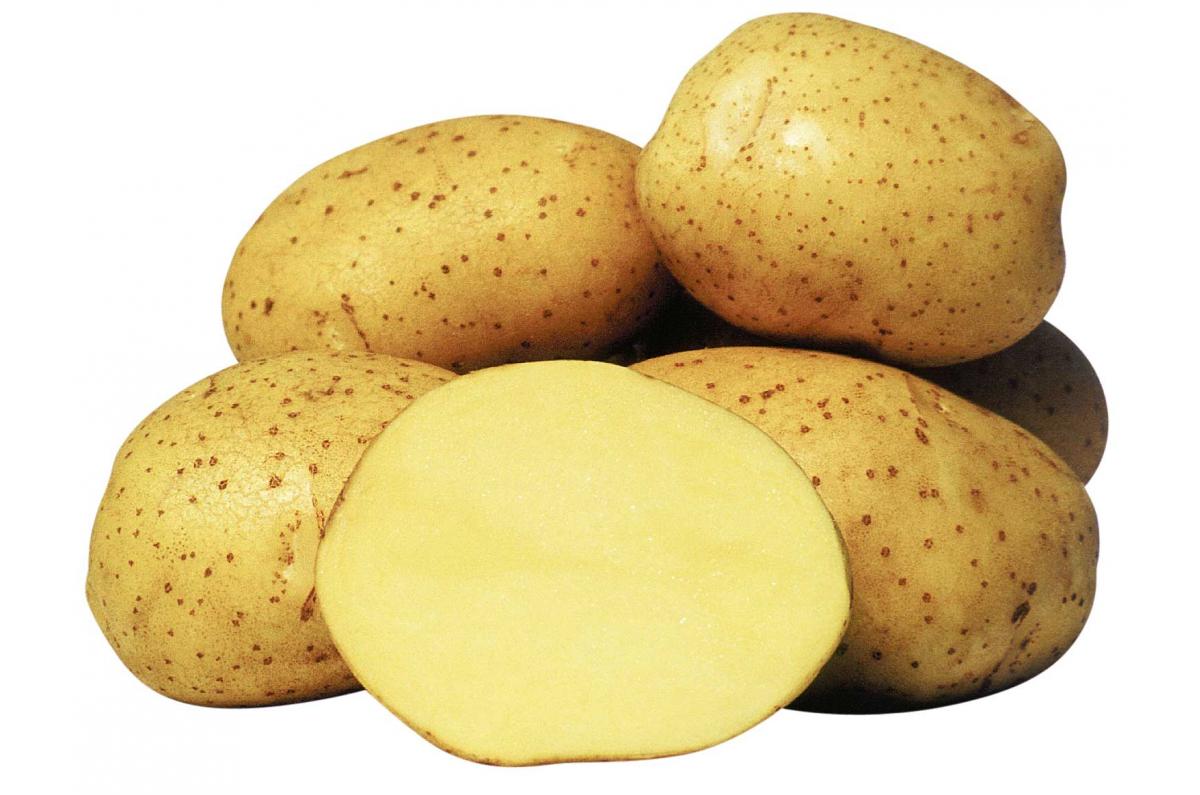
- Tubers: oval, with small to medium-depth eyes, creamy flesh, light skin, weight 101-177 g.
- Starch content: 11.5-15.9%.
- Culinary type: BС
- Productivity: 189-366 c/ha, on the 45th day - 134-225 c/ha, on the 55th - 273-312 c/ha, maximum - 465 c/ha (Vladimir region).
- Disease resistance: resistant to cancer, nematode, striped mosaic, susceptible to late blight.
- Advantages: resistance to drought, mechanical damage, good taste, good marketability (80-96%) and shelf life (94%).
- Flaws: affected by late blight.
- 2013.
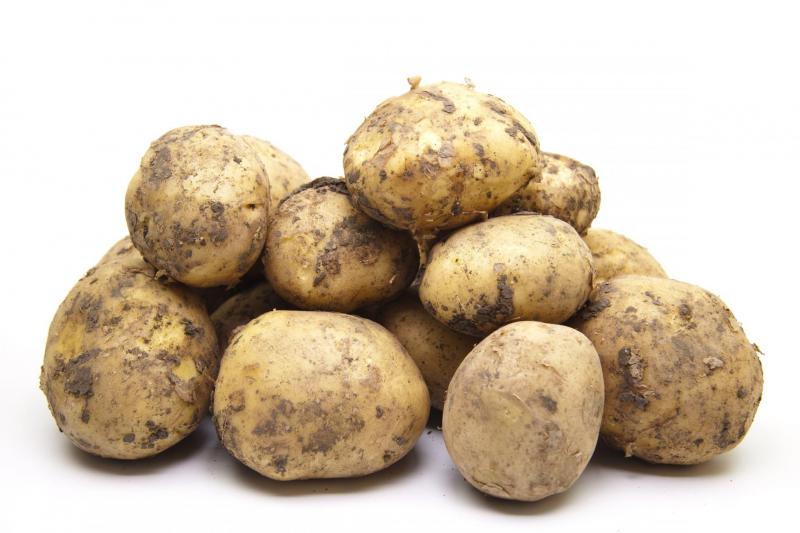
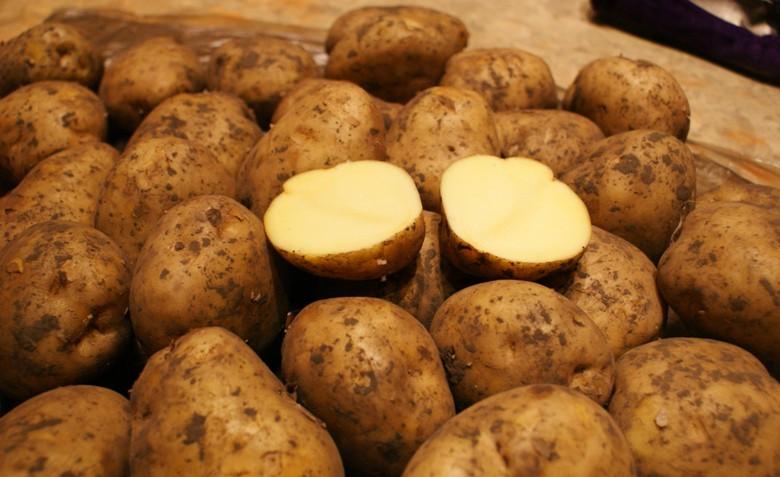
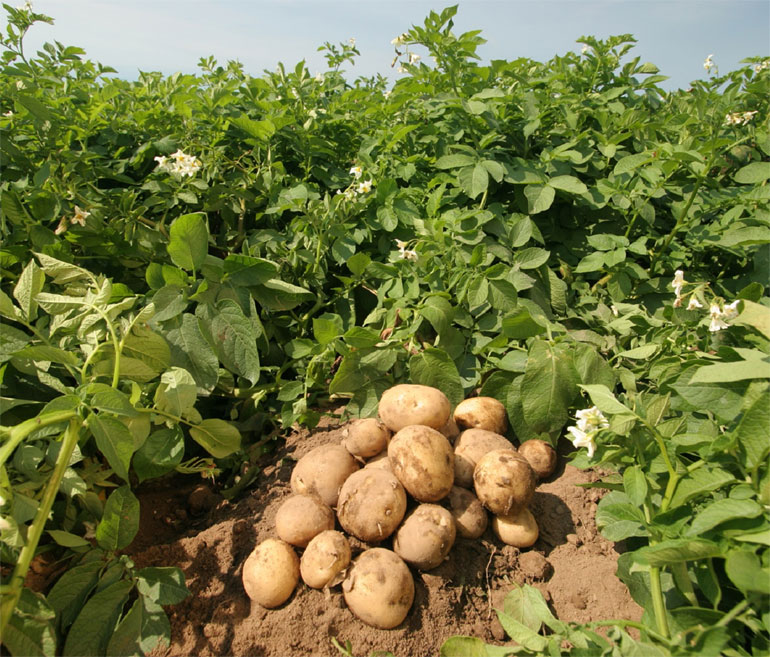
Photo gallery of the Riviera potato variety:
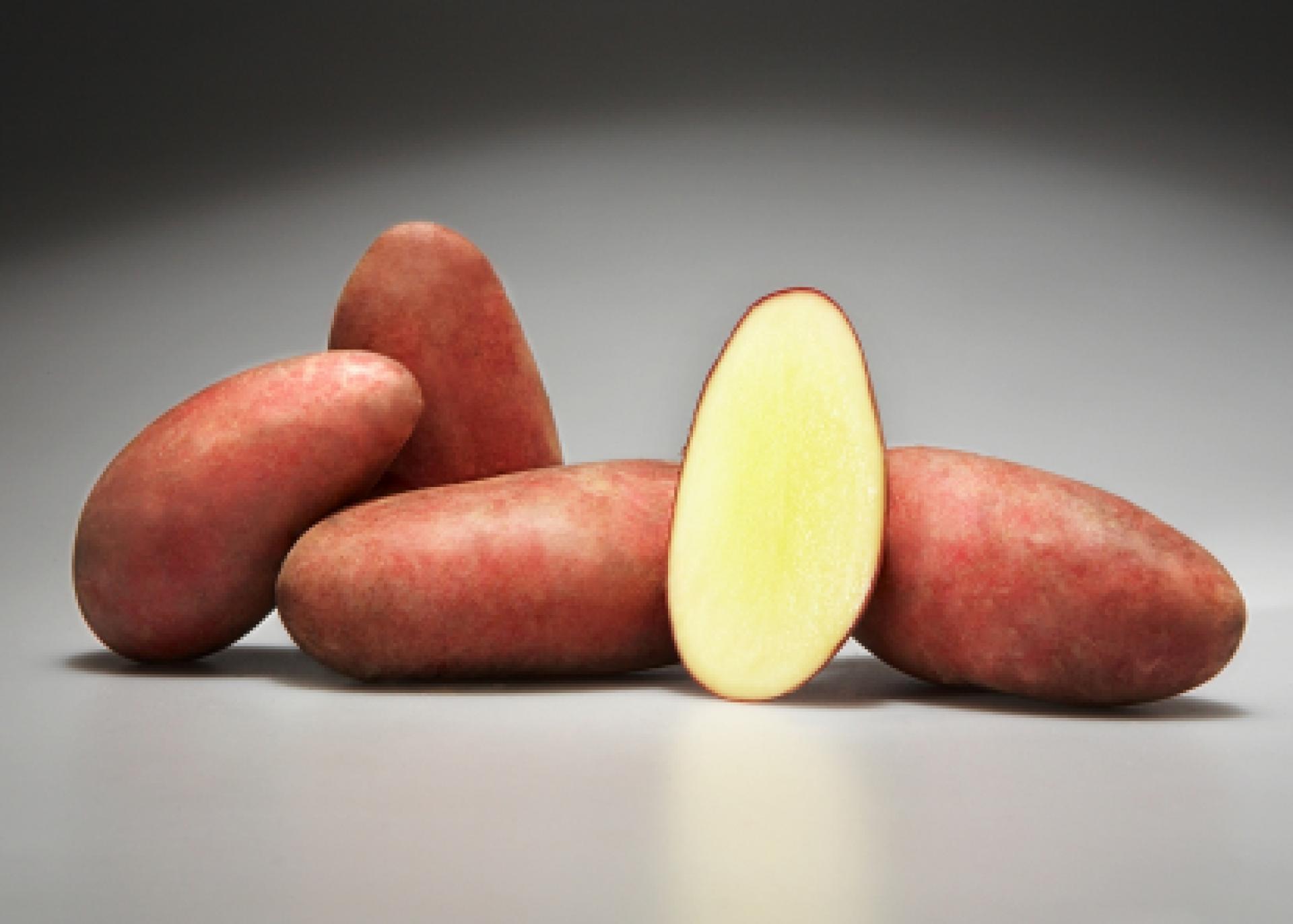
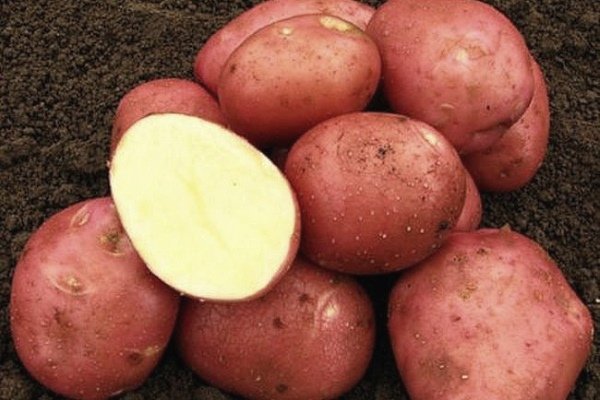
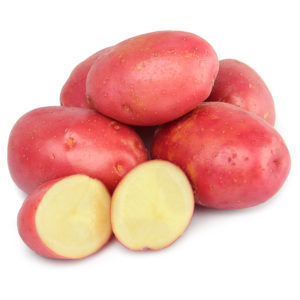
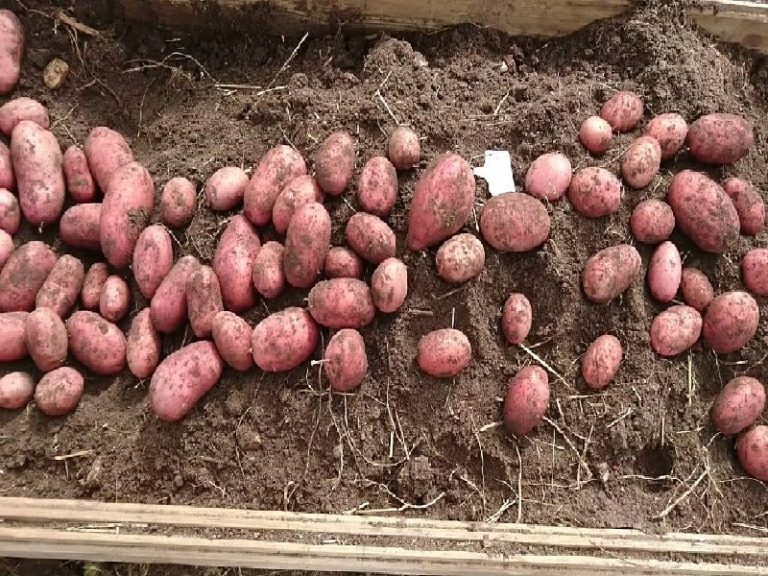
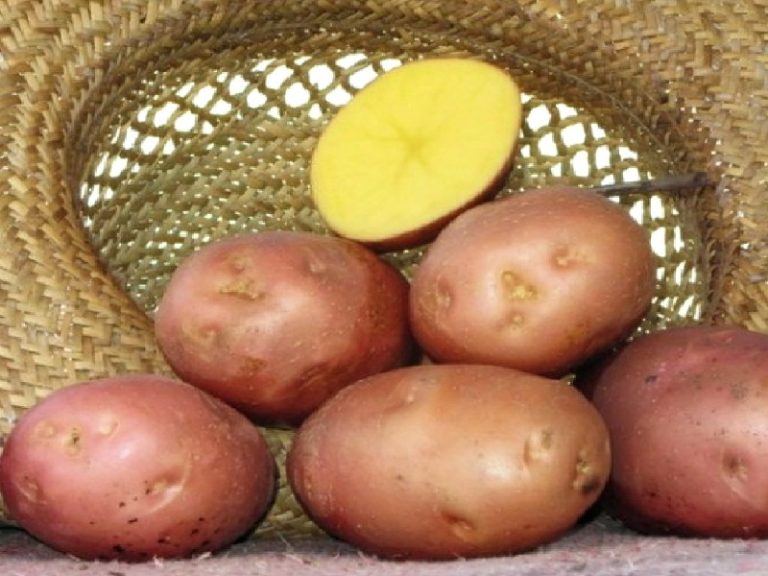
Rodrigues (Germany)
- Ripening period: 70-80 days (mid-early).
- Tubers: oval, with smooth reddish skin and a small number of small eyes, light yellow flesh, weight 85-147 g.
- Starch content: 12.5-15.4%.
- Culinary type: AB
- Productivity: 150-218 c/ha, maximum - 382 c/ha.
- Disease resistance: resistant to cancer, nematodes, drought, moderately resistant to late blight, scab.
- Advantages: unpretentiousness, good keeping quality (95%) and marketability (85-96%), smooth tubers, excellent taste.
- Flaws: average marketability, spreading bush.
- 2008.
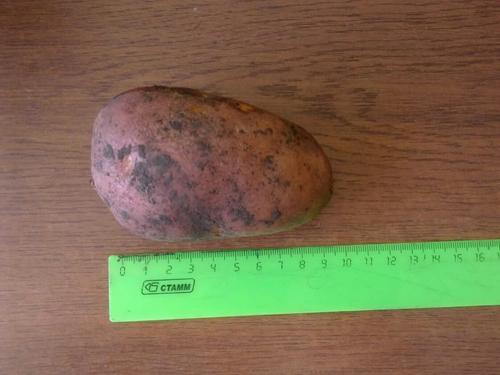
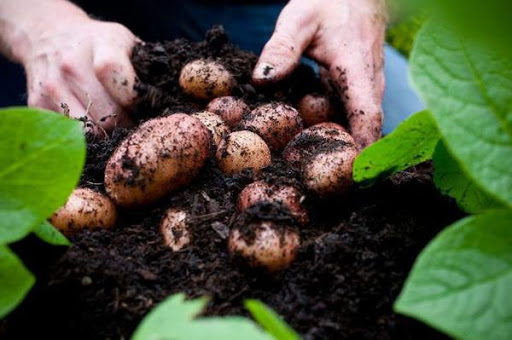
Photo gallery of the Rodrigue potato variety:
Rosara (Germany)
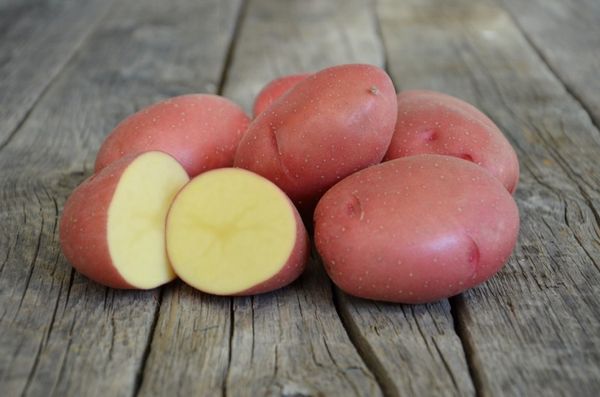
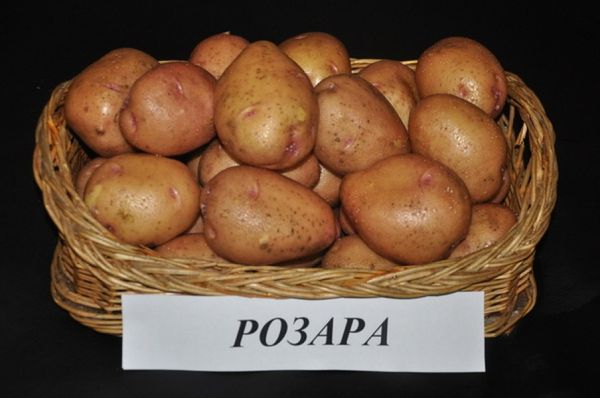
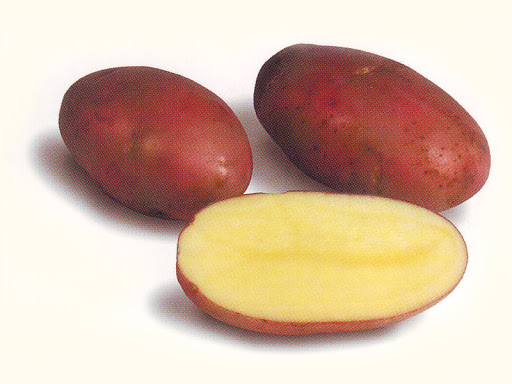
- Ripening period: 50-65 days (early maturing).
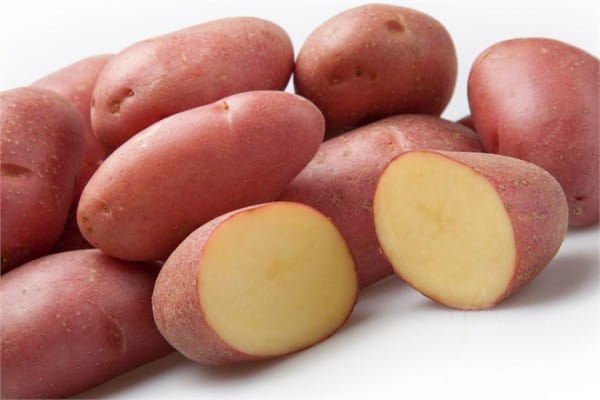
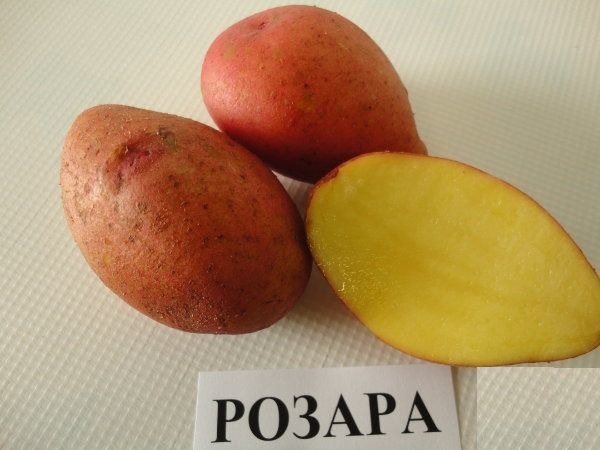
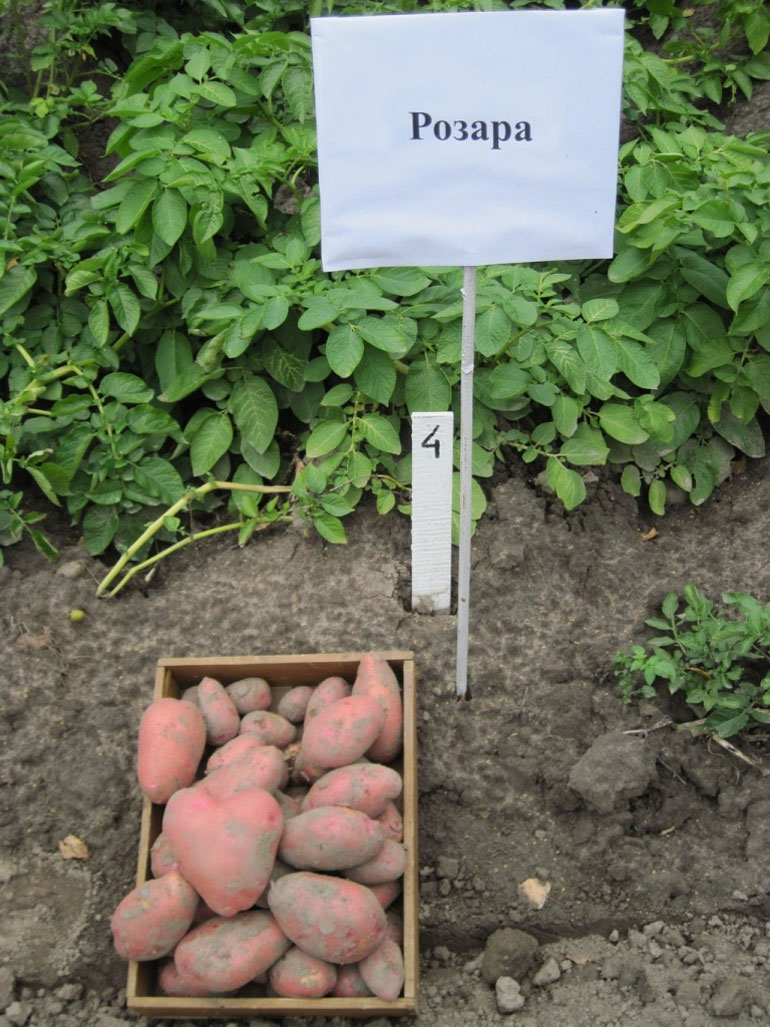
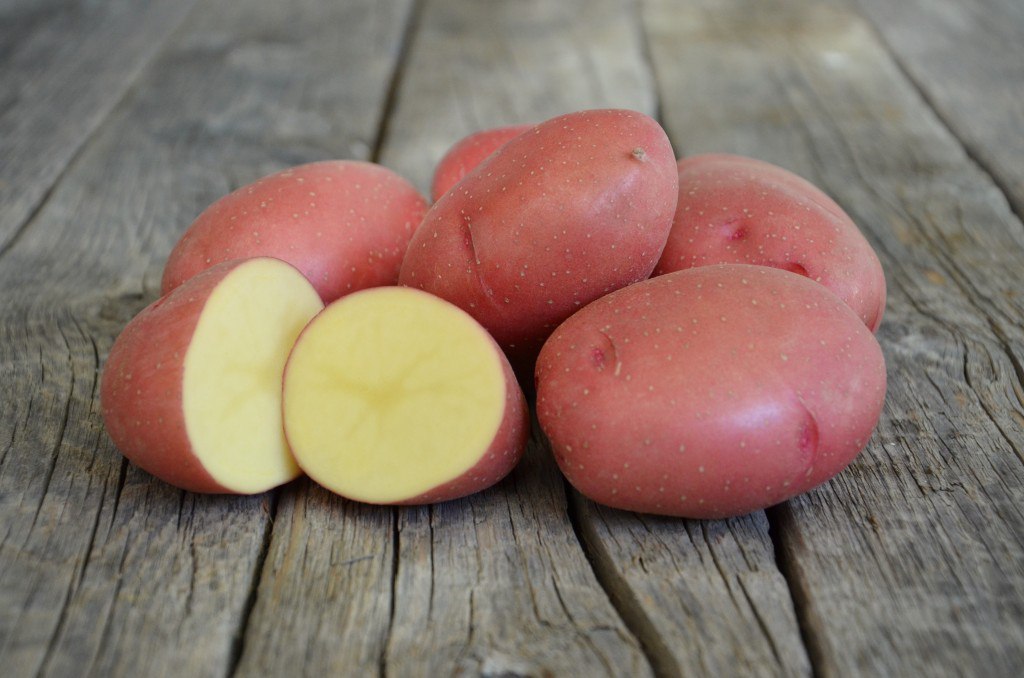
- Tubers: oval, slightly oblong, red skin, yellow flesh, small eyes, few of them on the surface, weight 81-115 g.
- Starch content: 12.1-15.8%
- Culinary type: IN
- Productivity: 202-310 c/ha, maximum - 415 c/ha (Oryol region).
- Disease resistance: resistant to cancer, nematode, moderately resistant to late blight and scab.
- Advantages: high yield even under less favorable conditions, transportability, excellent and good taste, high marketability (91-99%),
- Flaws: spreading bushes, average keeping quality.
- 1996.
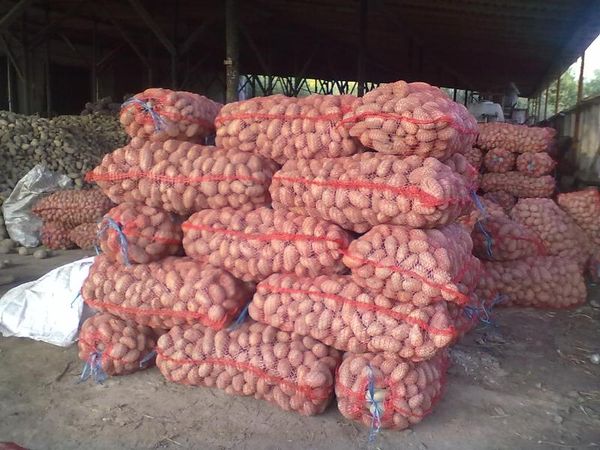
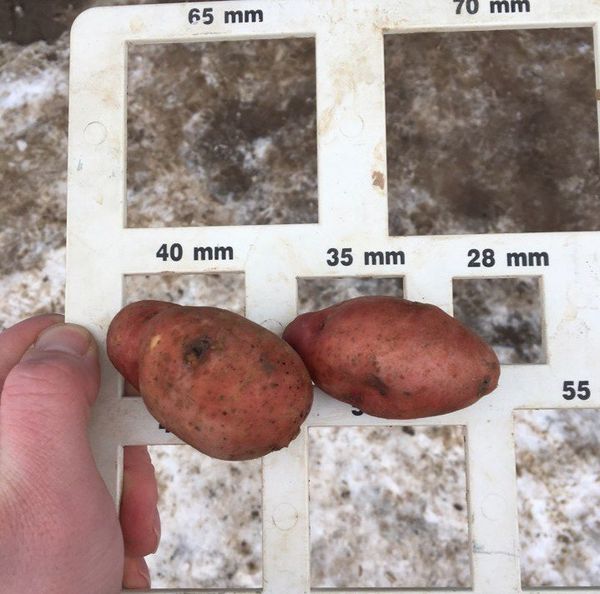
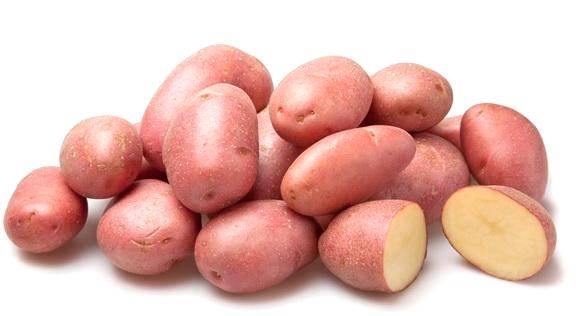
Photo gallery of the Rosara potato variety:
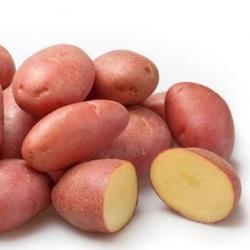
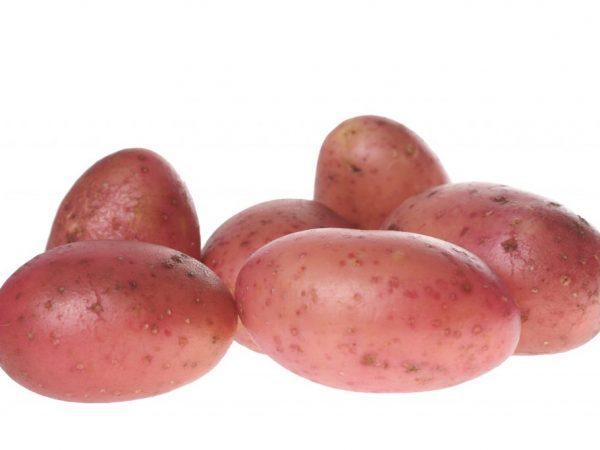
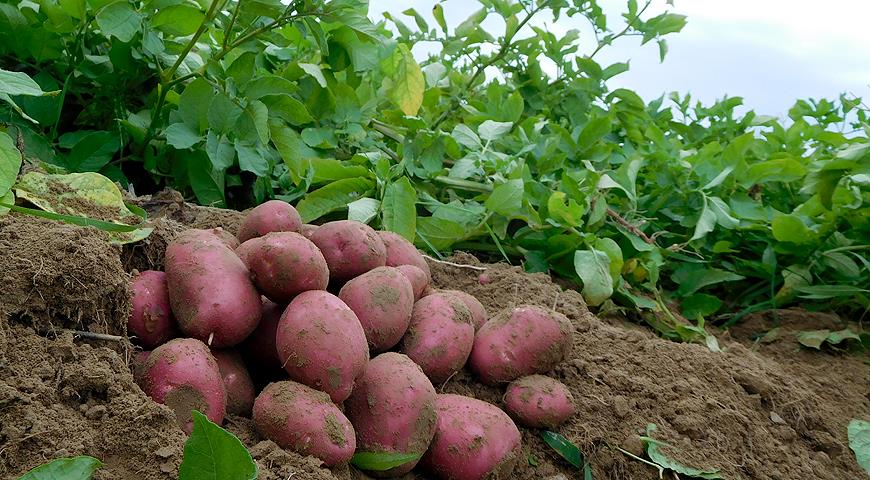
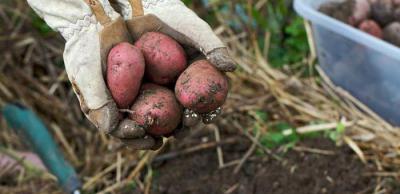
Ryabinushka (Russia)
- Ripening period: 65-70 days (mid-early).
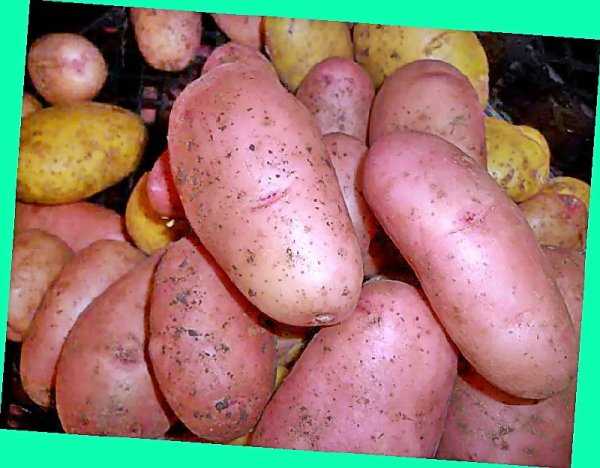
- Tubers: oval, smooth surface with small eyes, red skin, creamy flesh, weight 91-133 g.
- Starch content: 11.9-15%.
- Culinary type: IN
- Productivity: 220-234 c/ha, maximum - 396 c/ha (Moscow region).
- Disease resistance: resistant to cancer, nematode, moderately resistant to tuber blight, moderately susceptible to top blight.
- Advantages: high yield, good taste, high adaptability, resistance to heat, drought and mechanical damage, good marketability (86-96%) and shelf life (90%).
- Flaws: affected by the Colorado potato beetle.
- 2007.
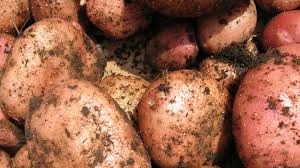
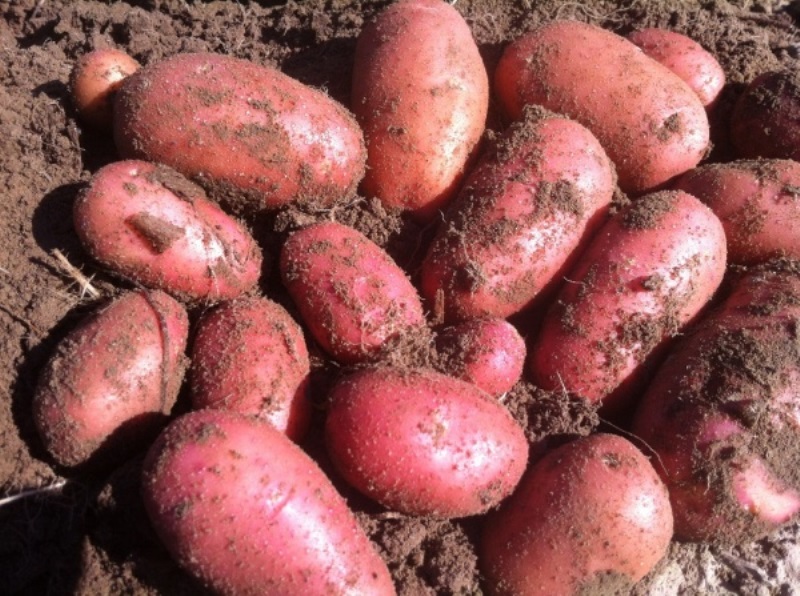
Photo gallery of potato variety Ryabinushka:
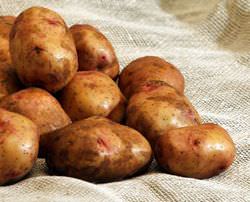
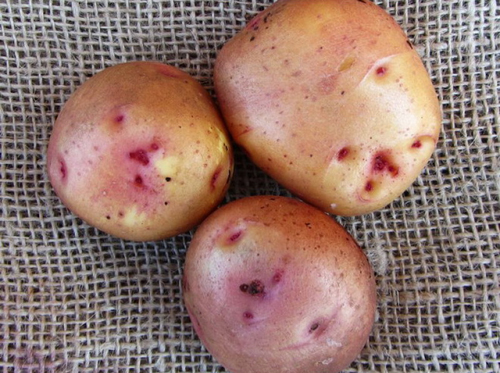
Svitanok of Kyiv (Ukraine)
- Ripening period: 80 days (mid-early).
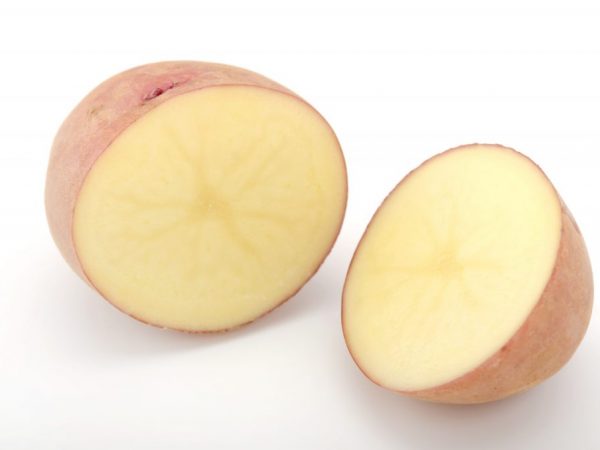
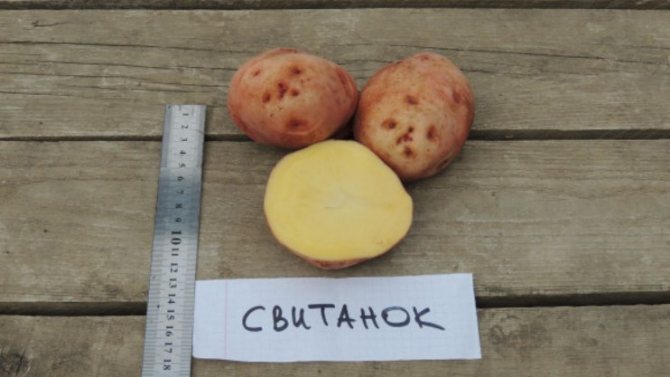
- Tubers: round shape, smooth surface, pinkish skin, creamy flesh, weight up to 130 g.
- Starch content: 16-19%.
- Culinary type: WITH
- Productivity: up to 300 c/ha.
- Disease resistance: resistant to cancer, rhizoctonia, moderately resistant to viruses, scab, black leg, susceptible to late blight, nematodes, leaf curl.
- Advantages: resistance to the Colorado potato beetle, high adaptability, excellent taste, good shelf life and marketability, strong immunity.
- Flaws: not the highest yield.
- 1987.
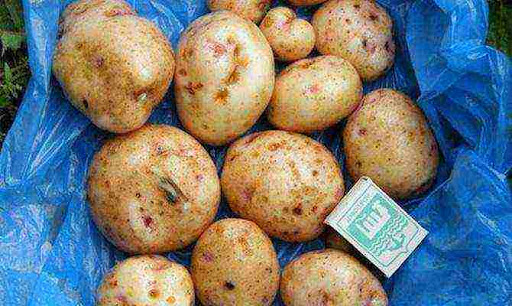
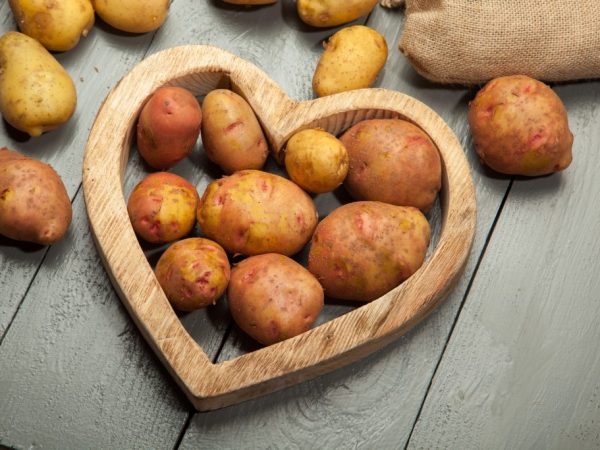
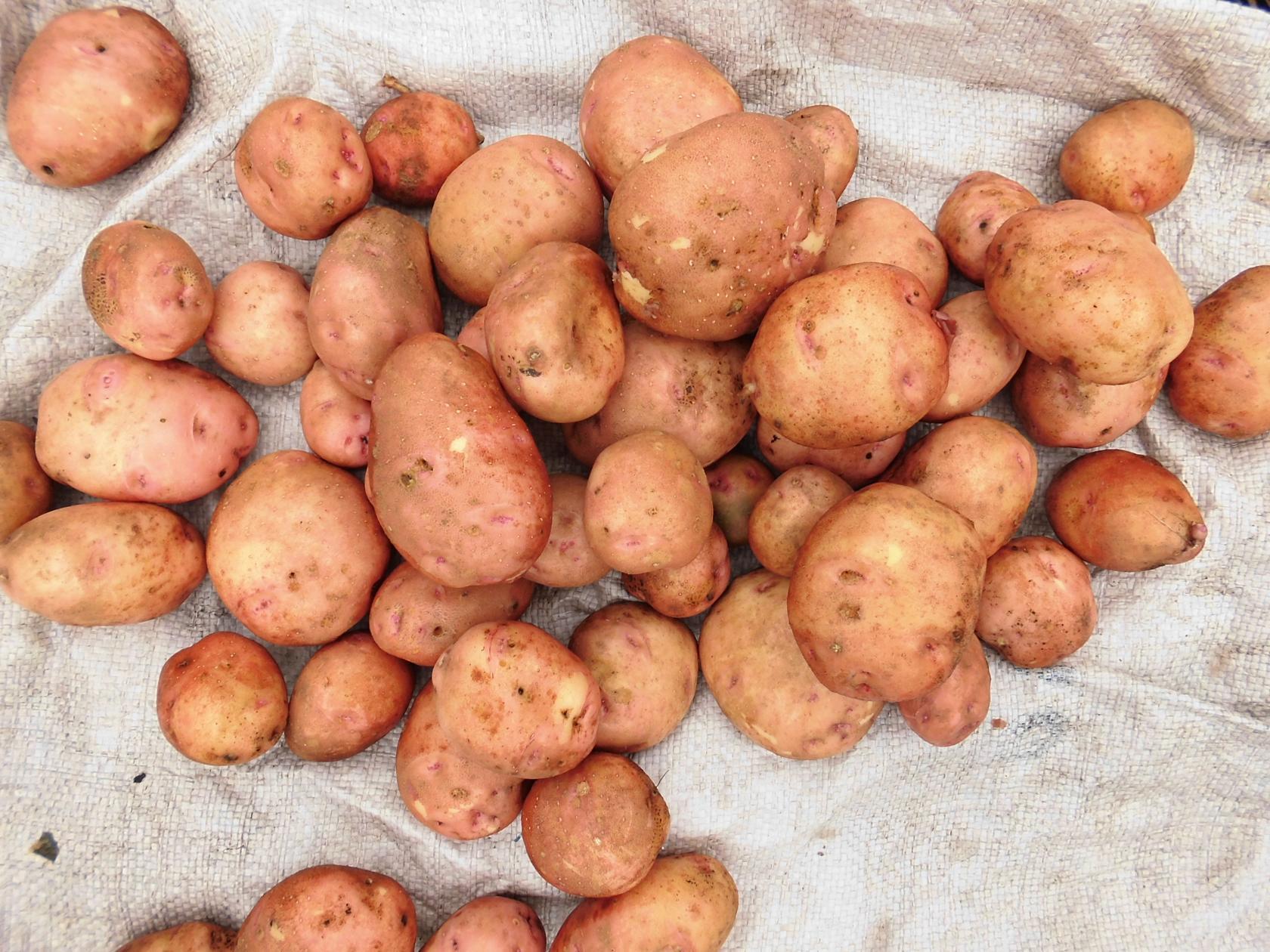
Photo gallery of the Svitanok Kyiv potato variety:
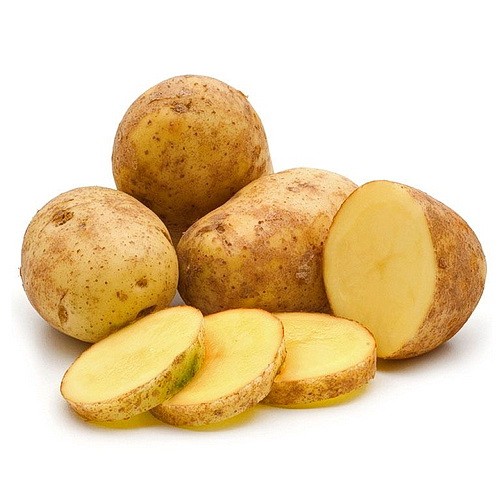
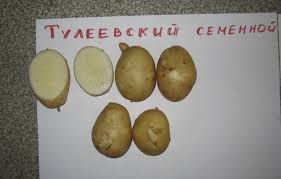
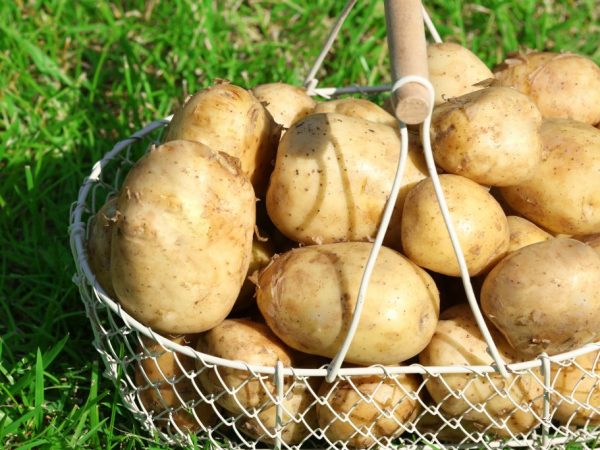
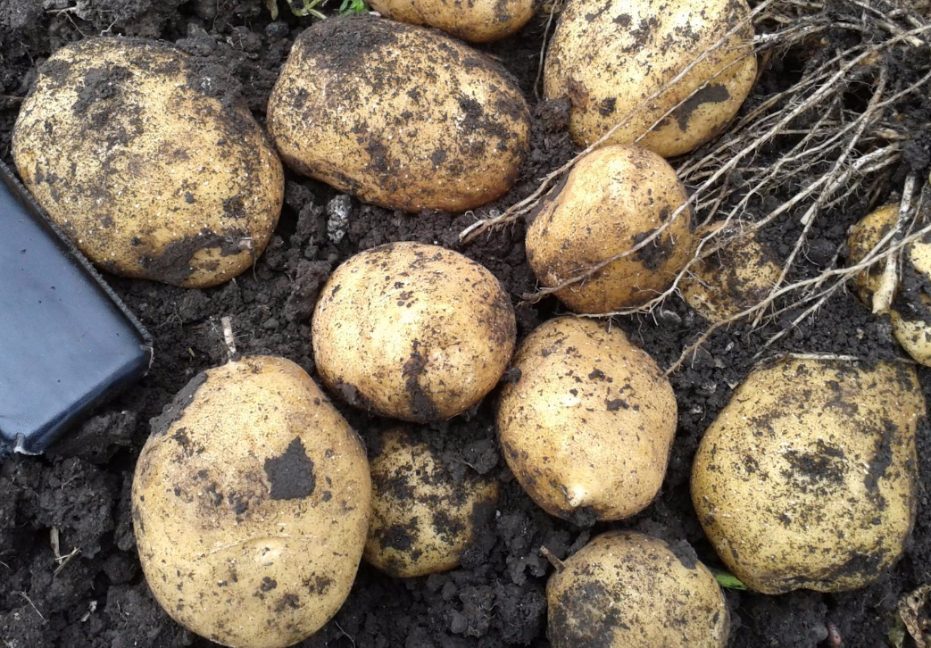
Tuleyevsky (Russia)
- Ripening period: 80-100 days (mid-season).
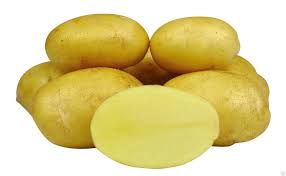
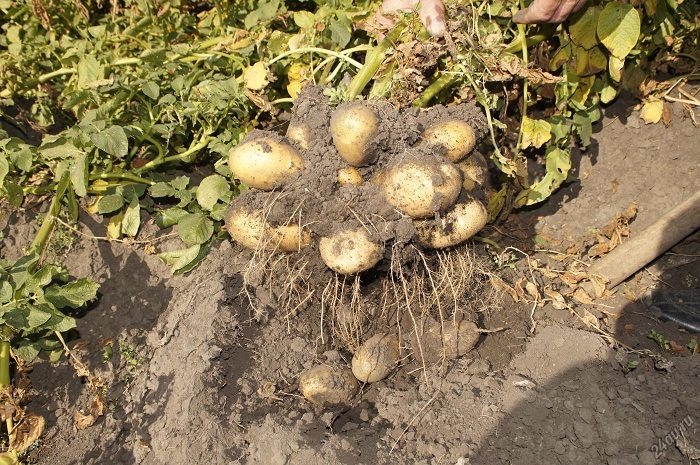
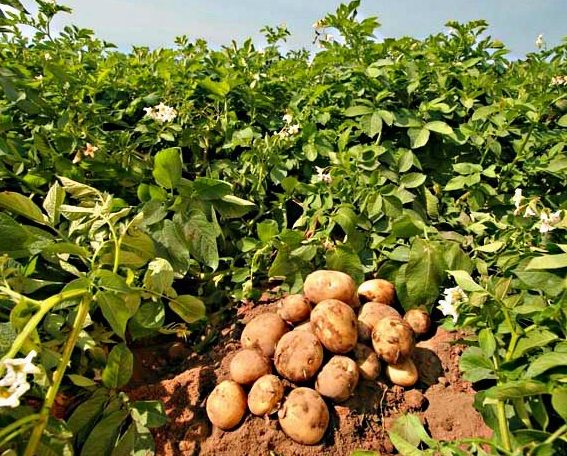
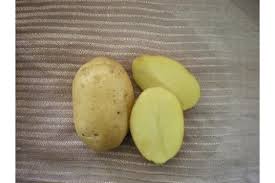
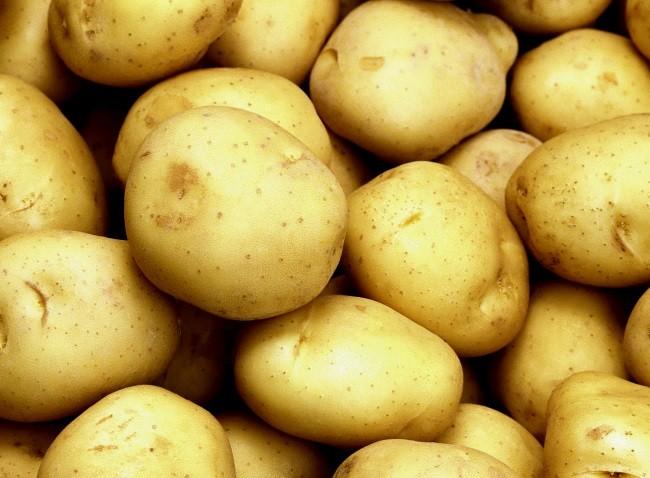
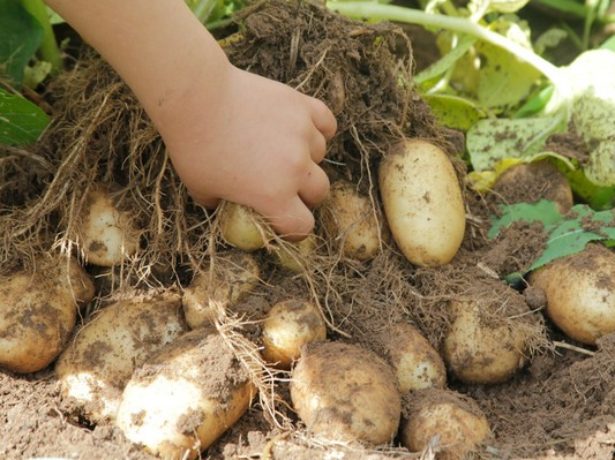
- Tubers: very large, elongated-oval, with very small eyes, yellow flesh and the same skin, it is rough, weight 122-270 g.
- Starch content: 13.7-16.8%.
- Culinary type: Sun.
- Productivity: 180-424 c/ha, maximum - 458 c/ha.
- Disease resistance: resistant to cancer, moderately resistant to late blight of tops, moderately susceptible to late blight of tubers, susceptible to nematodes.
- Advantages: unpretentiousness, compactness, good yield, good and excellent taste, high marketability (88-99%) and shelf life (90%), resistance to mechanical damage.
- Flaws: demanding soil quality.
- 2006.
Photo gallery of the Tuleevsky potato variety:
Luck (Russia)
- Ripening period: 60-70 days (early maturing).
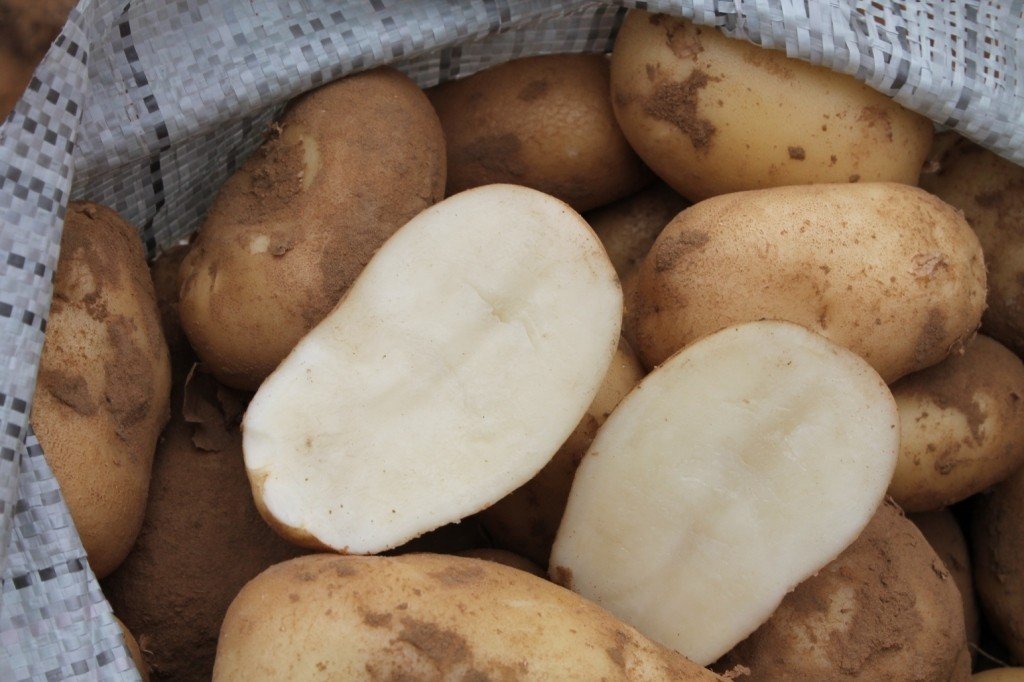
- Tubers: oval-round, smooth surface with small eyes, creamy skin, white flesh, weight 120-250 g.
- Starch content: 12-15%.
- Culinary type: IN
- Productivity: 300-500 c/ha.
- Disease resistance: resistant to cancer, nematode, moderately resistant to tuber blight, moderately susceptible to top blight.
- Advantages: undemanding to soil quality and humidity levels, tolerates transportation well, high marketability (96%), good taste.
- Flaws: may be affected by late blight.
- 1994.
Photo gallery of the potato variety Udacha:
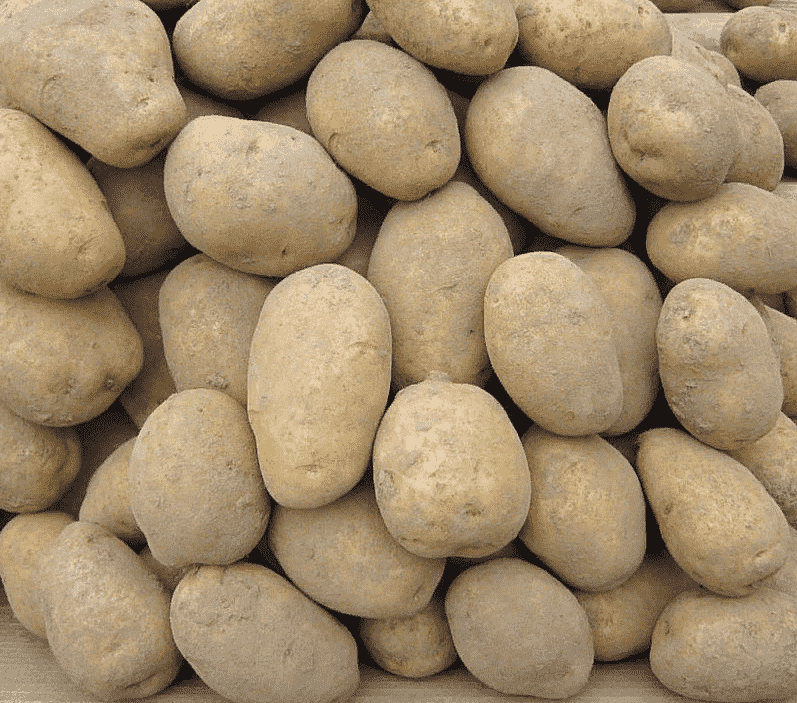
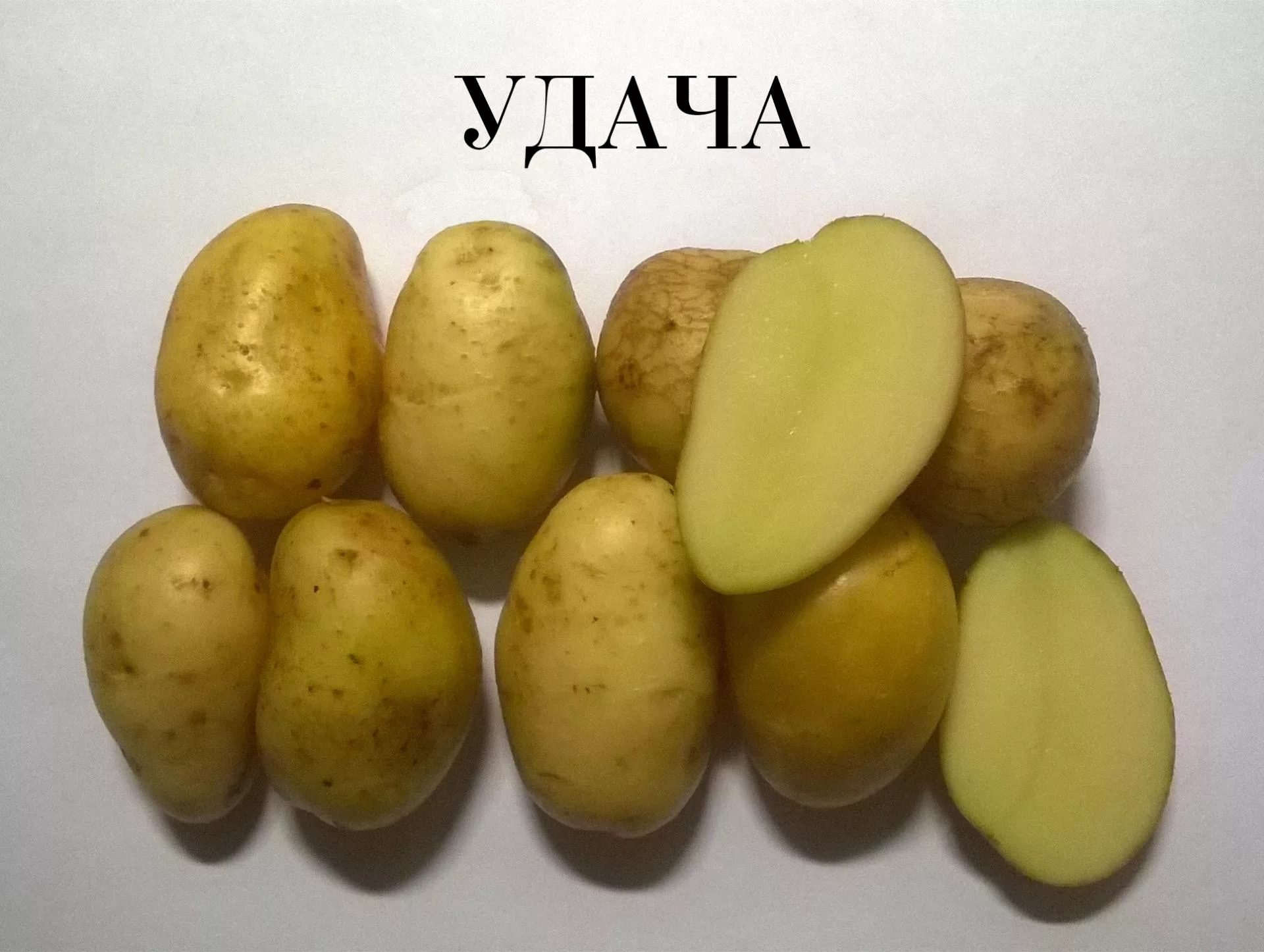
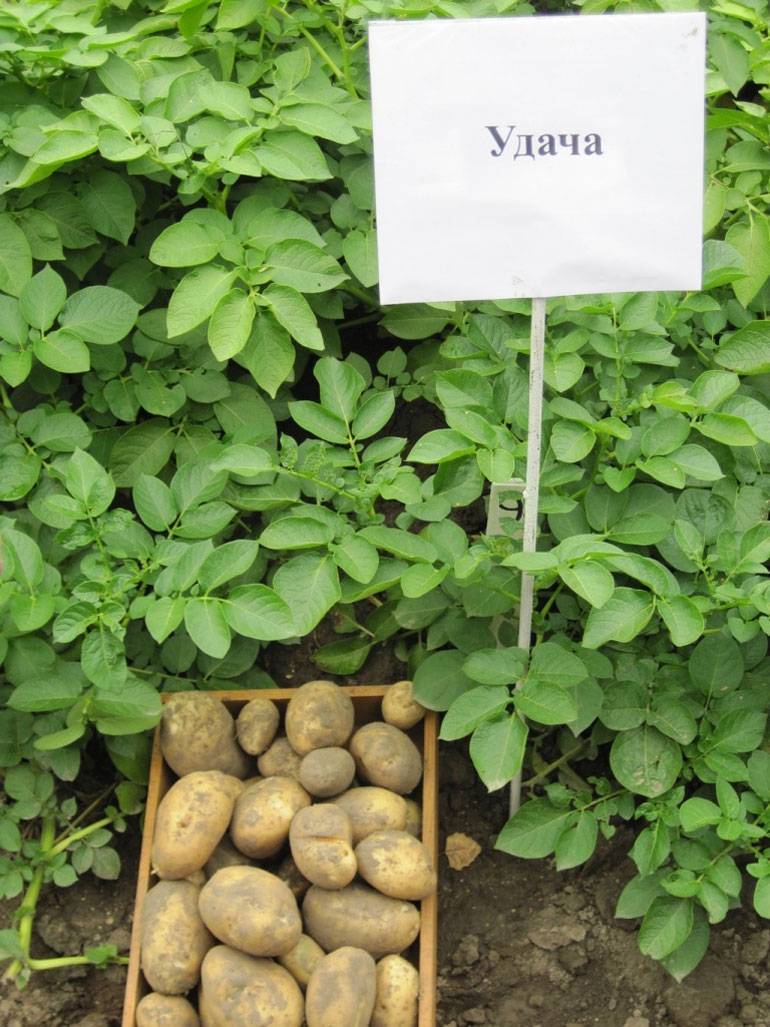
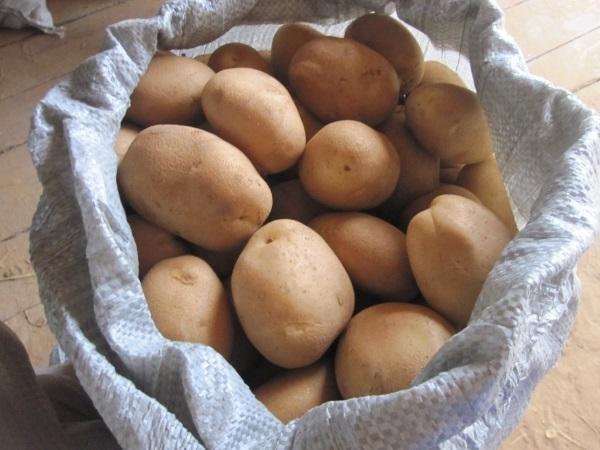
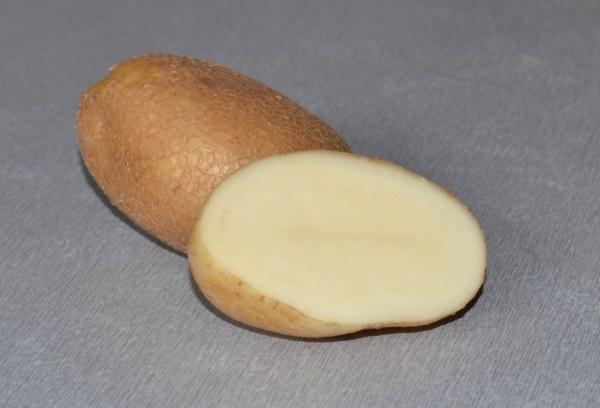
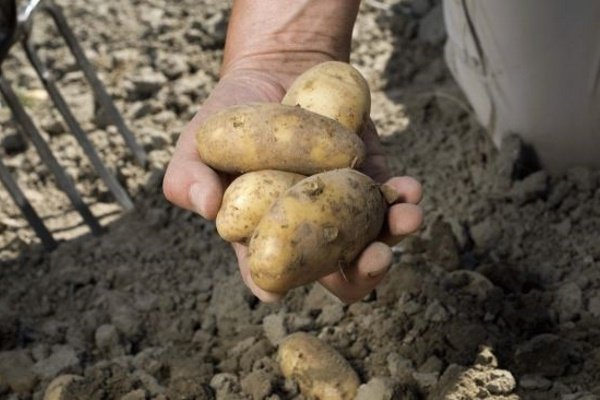
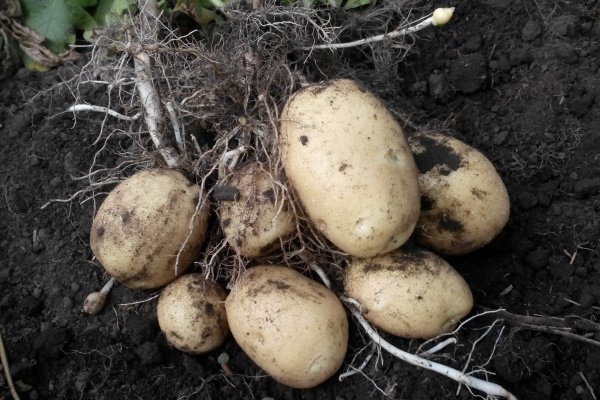
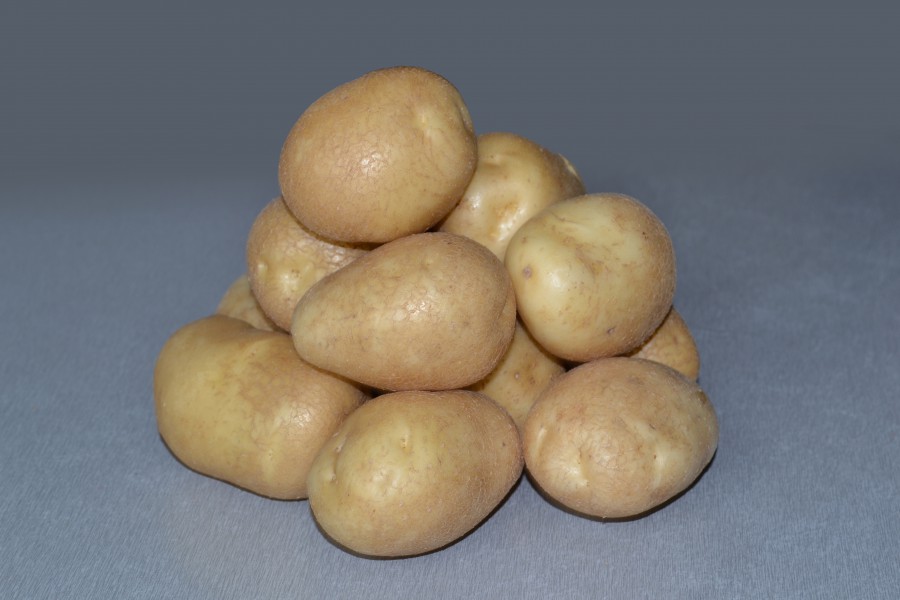
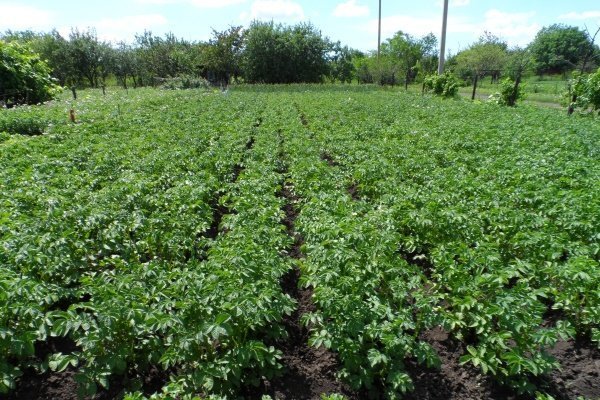
You can find out more about the variety in the article. Potato variety Udacha: photo, characteristics, comparison, reviews.
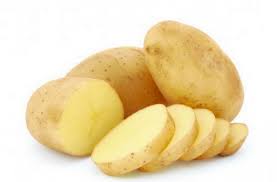
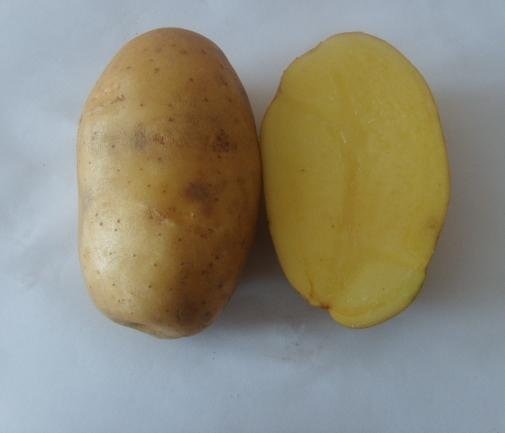
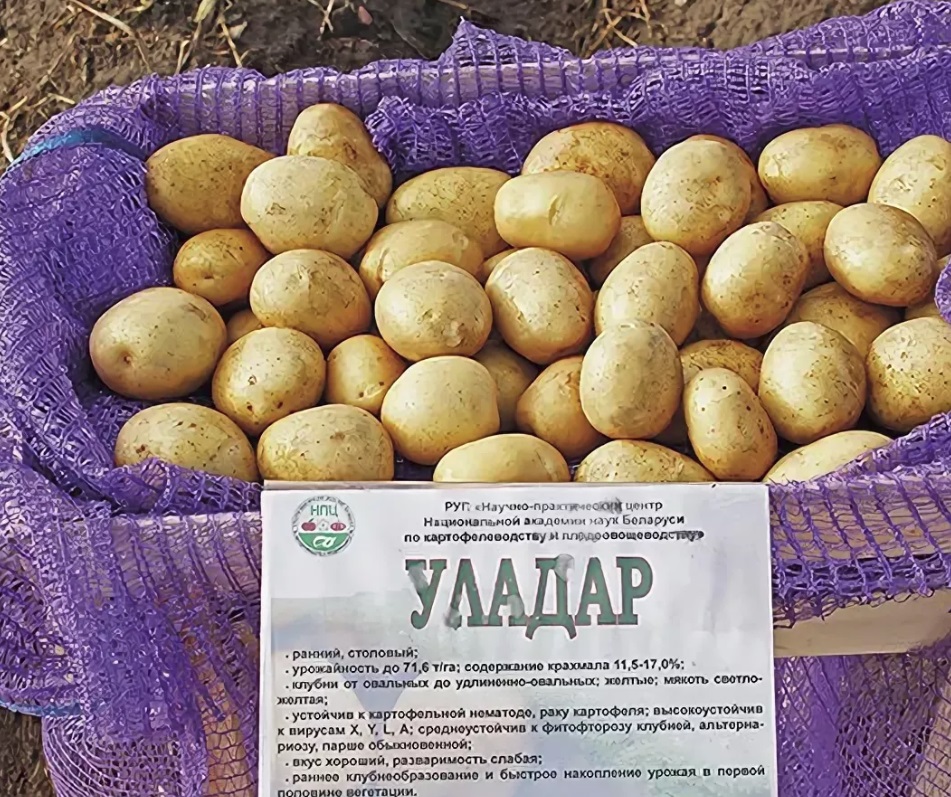
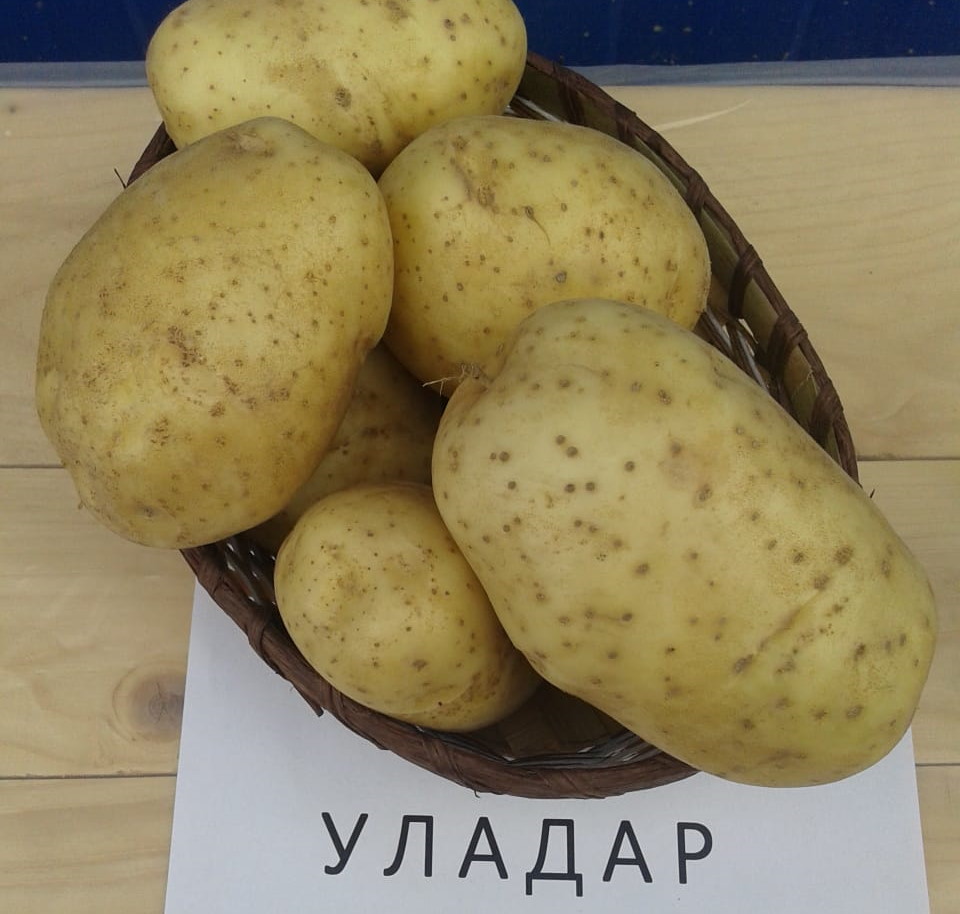
Uladar (Belarus)
- Ripening period: 50-65 days (early maturing). On the 45th day, you can begin digging.
- Tubers: oval-round, few eyes, they are very small, yellow skin, creamy-yellow flesh, weight 91-140 g.
- Starch content: 13.8-17.5%.
- Culinary type: IN
- Productivity: 127-353 c/ha, on the 45th day - 72-159 c/ha, on the 55th - 165-261 c/ha, maximum - 424 c/ha.
- Disease resistance: resistant to cancer, nematode, rugose and striped mosaic, moderately resistant to late blight, leaf curl, scab, susceptible to rhizoctonia.
- Advantages: excellent taste, good yield, undemanding to soil, high marketability (90-95%) and shelf life (94%).
- Flaws: practically defenseless against rhizoctonia.
- 2011.
Photo gallery of the Uladar potato variety:
TOP 34 varieties of early seed potatoes (ultra-early, early-ripening, and mid-early)
Now let's look at the best early varieties of seed potatoes.
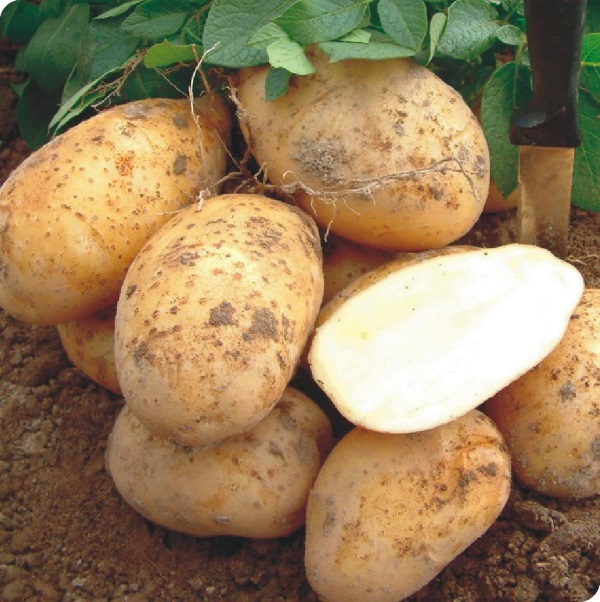
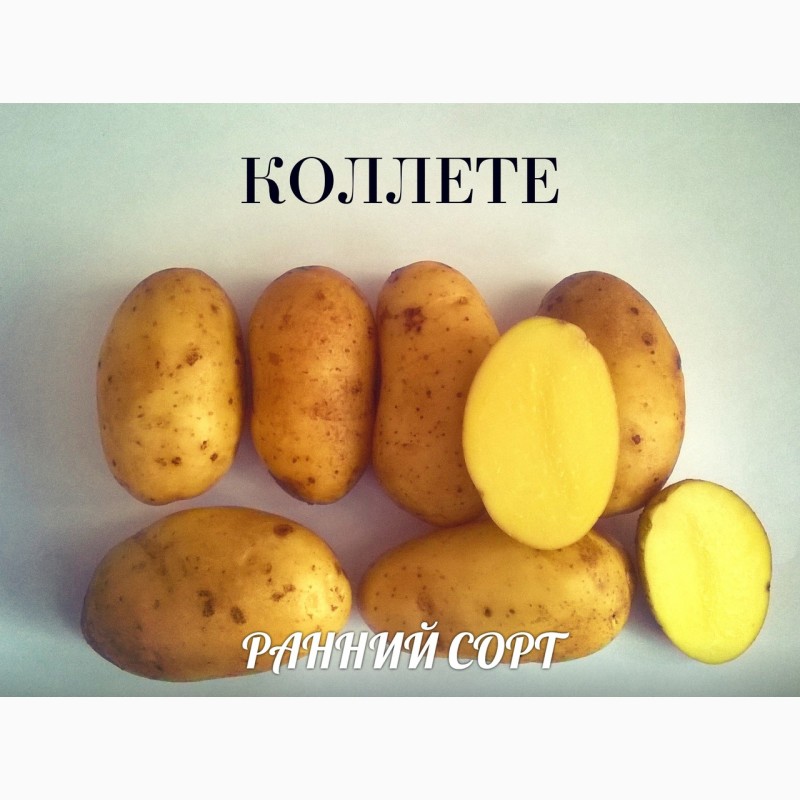
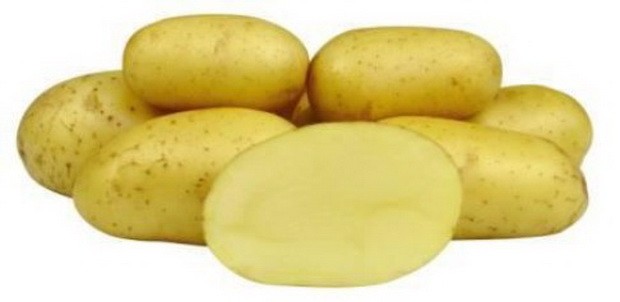
Colette (Germany)
- Ripening period: 50-65 days (early maturing).
- Tubers: elongated-oval, shallow eyes, light yellow flesh, yellow skin, weight 66-125 g.
- Starch content: 12.2-15.2%.
- Culinary type: IN
- Productivity: 166-217 c/ha, on the 45th day - 113-153 c/ha, on the 55th day - 156-276 c/ha, maximum - 290 c/ha (Rostov region).
- Disease resistance: resistant to cancer, nematode, susceptible to late blight.
- Advantages: good taste, high yield, undemanding to the growing region, good shelf life (92%).
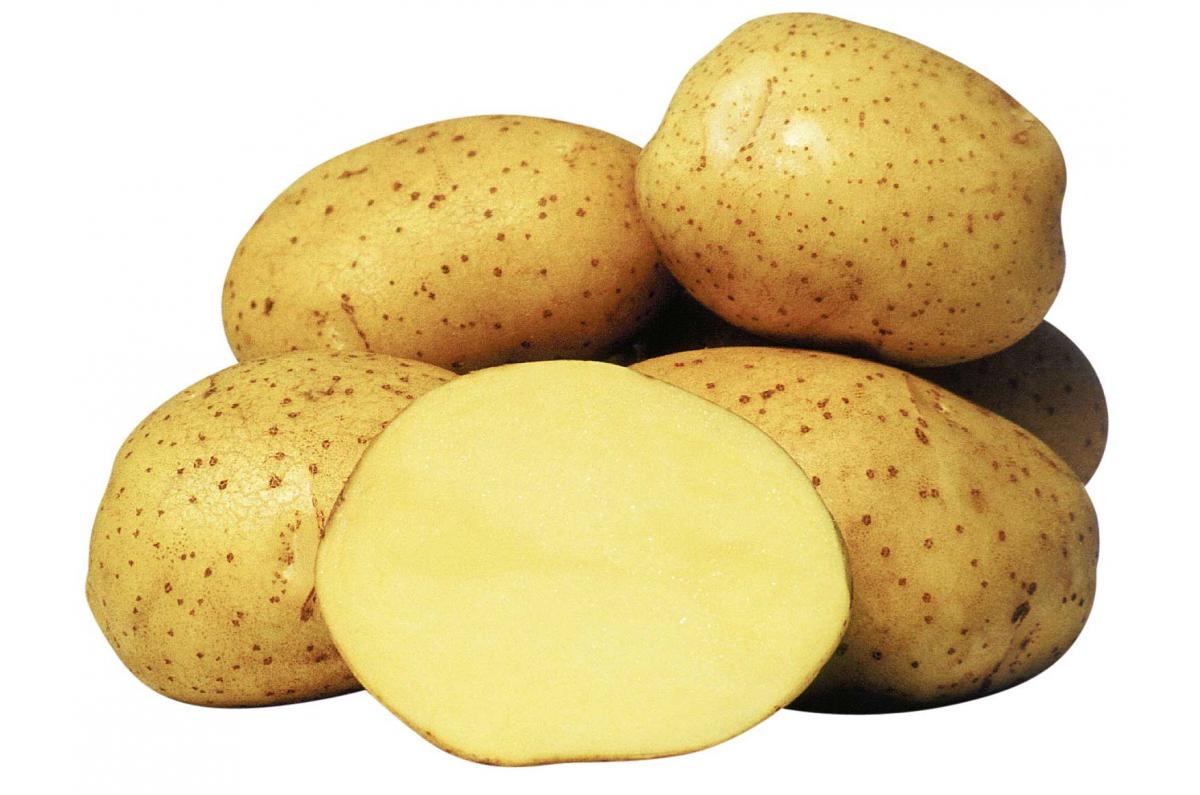
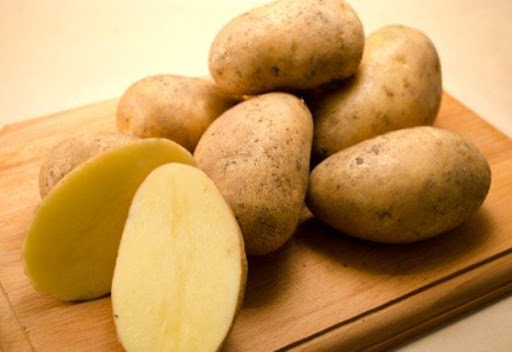
- Flaws: may be susceptible to late blight. According to the cultivar's originator, it is recommended to sprout the tubers before planting. Marketability can be average (76-98%).
- 2002.
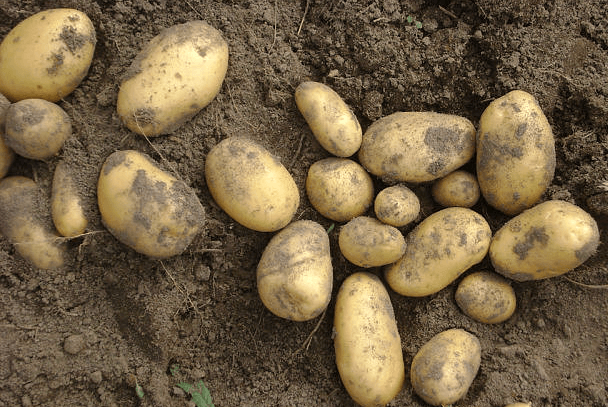
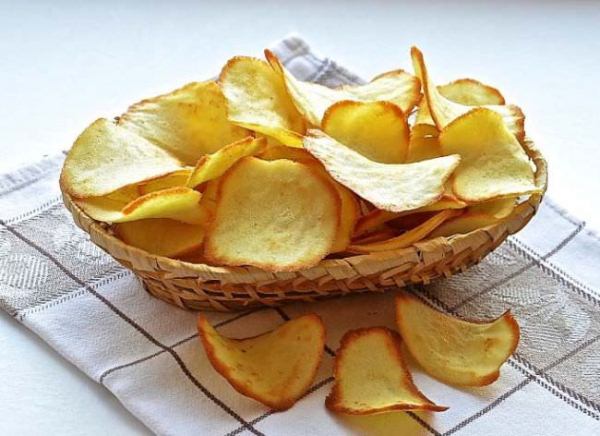
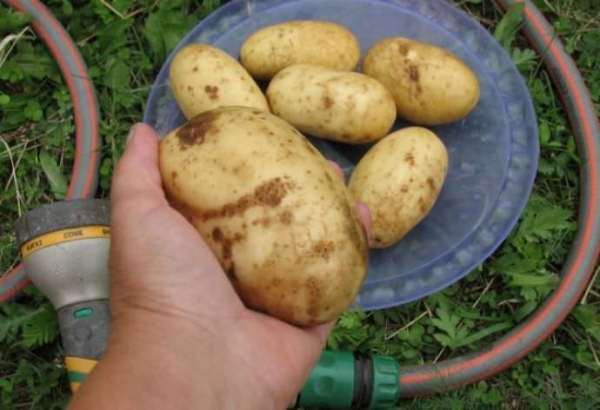
Photo gallery of the Colette potato variety:
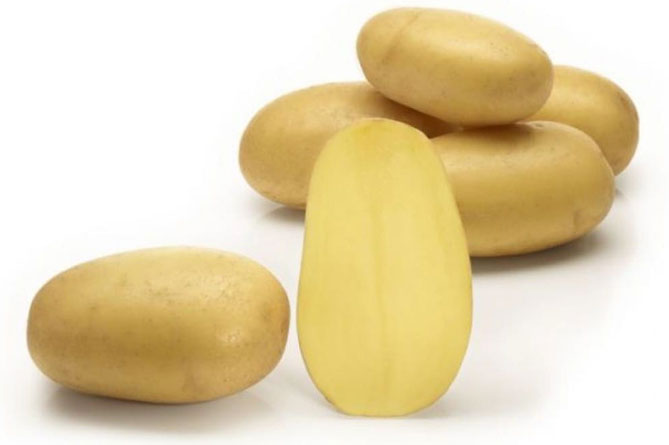
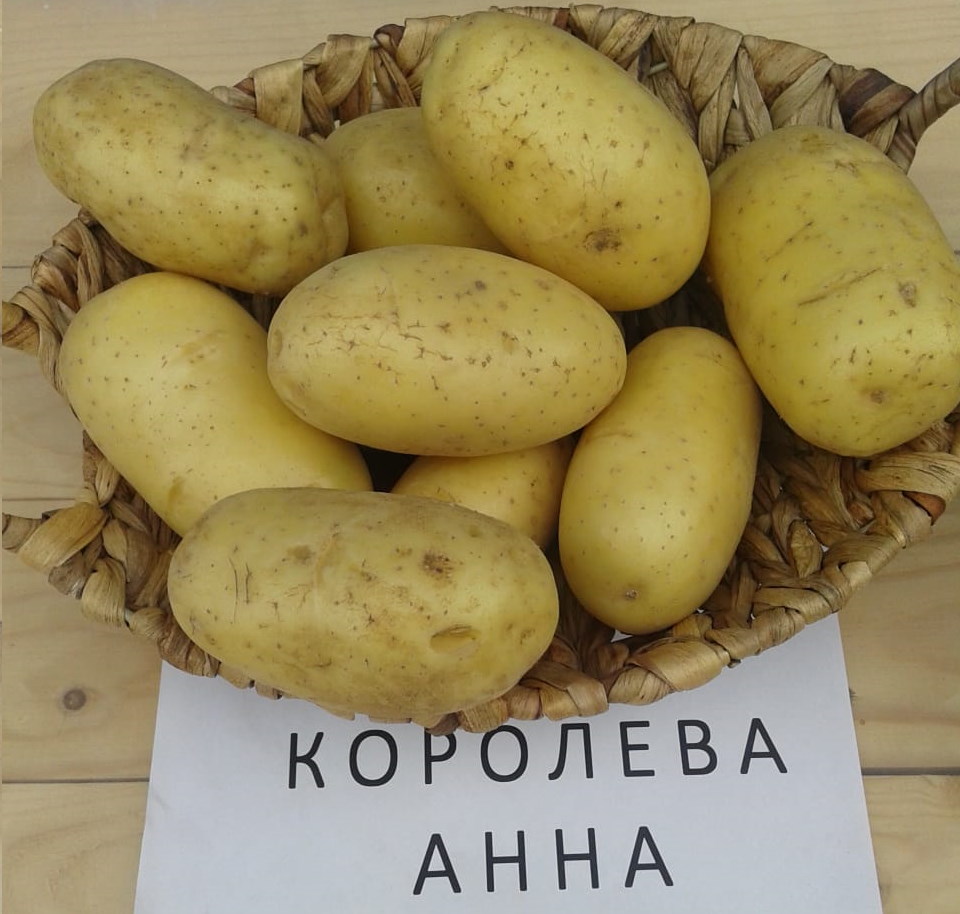
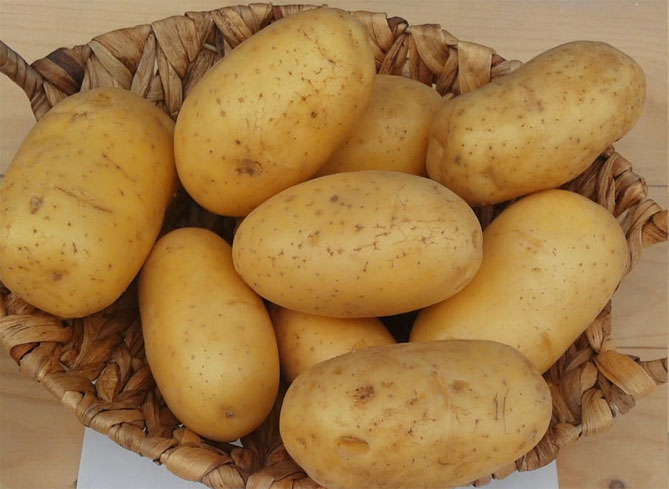
Queen Anne (Germany)
- Ripening period: 60-70 days (early maturing).
- Tubers: large, smooth, elongated-oval, with very small to small eyes, flesh and skin yellowish, weight 84-137 g.
- Starch content: 13.1-14.4%.
- Culinary type: IN
- Productivity: 113-304 c/ha, on the 45th day - 56-140 c/ha, on the 55th - 82-215 c/ha, maximum - 495 c/ha (Republic of Mordovia).
- Disease resistance: resistant to cancer, nematode, rugose and striped mosaic, leaf curl, moderately resistant to late blight.
- Advantages: good yield and disease resistance, high carotene content, unpretentiousness in cultivation, excellent taste, good marketability (82-96%) and shelf life (93%).
- Flaws: requires regular watering, long germination period, difficult to acquire.
- 2015.
Photo gallery of the Queen Anne potato variety:
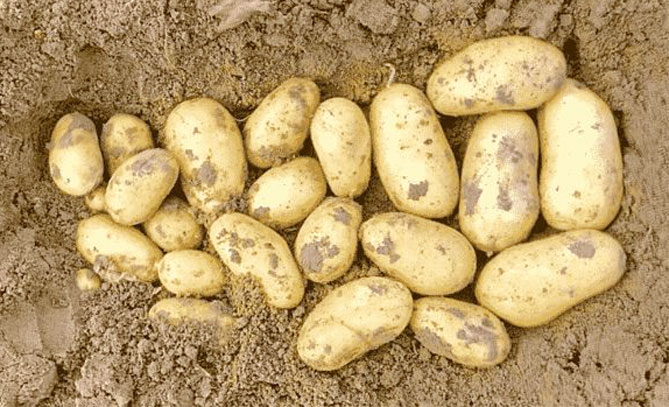
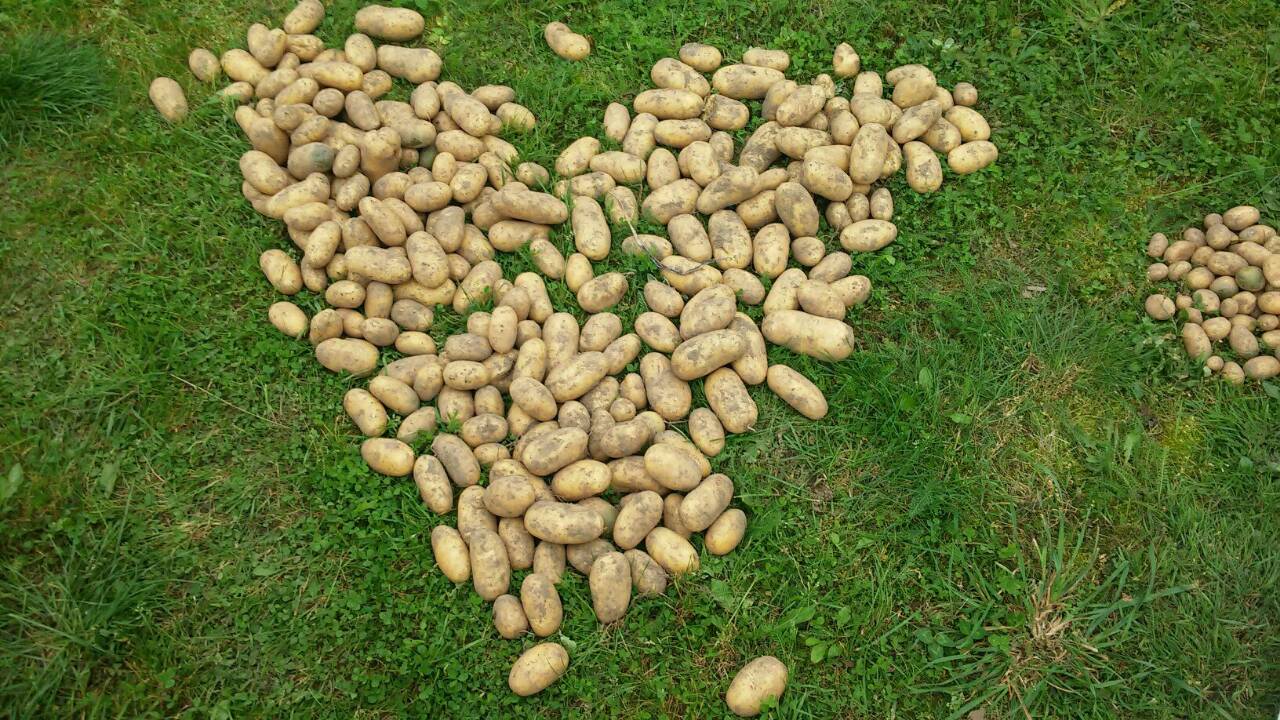
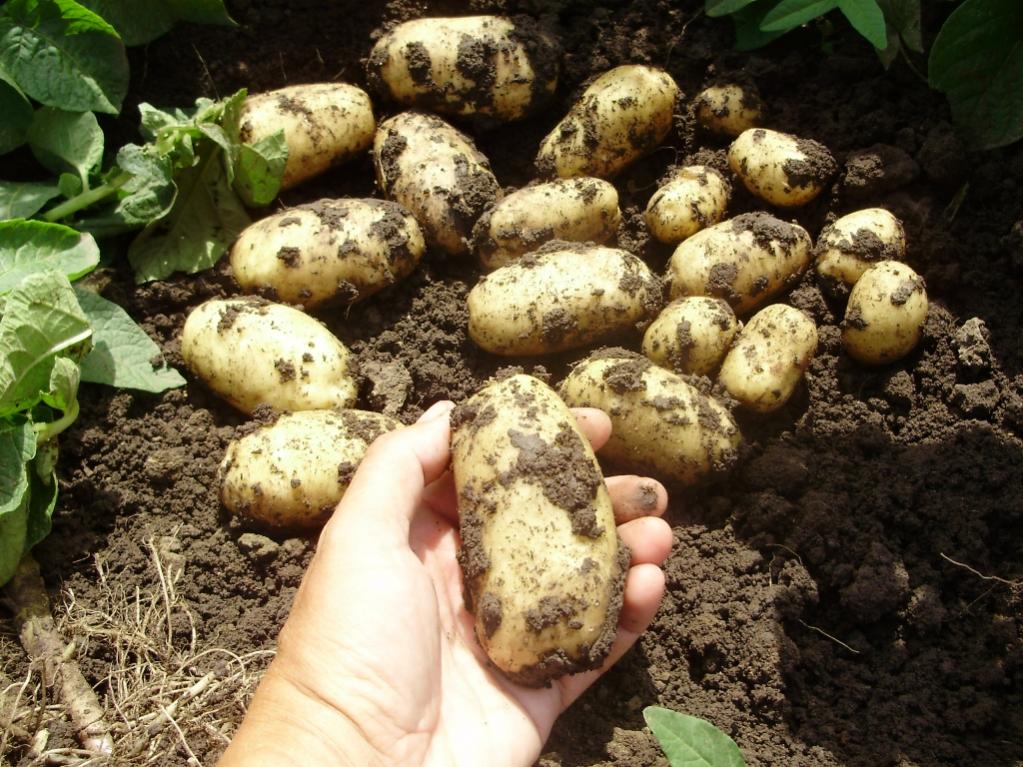
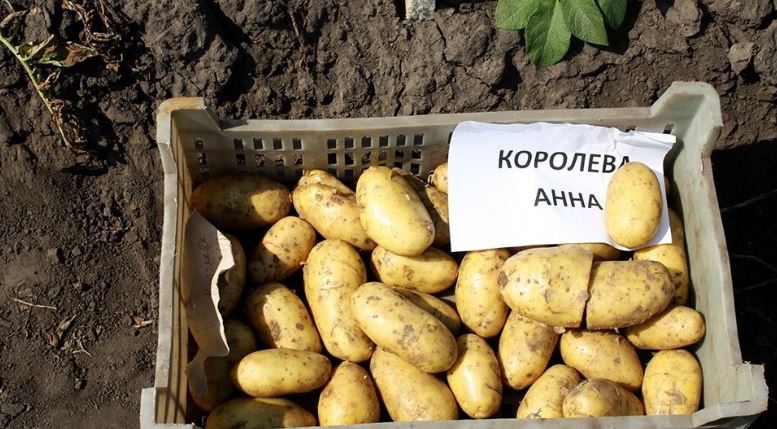
Read more about the variety in the article Queen Anne Potato: variety description in a table, comparative characteristics, reviews.
Laura (Germany)
- Ripening period: 70-80 days (mid-early).
- Tubers: reddish, round-oval, weighing up to 150 g.
- Starch content: 15-17%.
- Culinary type: A
- Productivity: maximum - 510 c/ha.
- Disease resistance: high resistance to virus Y and leaf curl, average resistance to all other diseases, rarely susceptible to late blight.
- Advantages: large tubers, good shelf life, pleasant taste.
- Flaws: requires potassium, low resistance to mechanical damage.
- not yet enabled.
Photo gallery of the Laura potato variety:
Madeline (Netherlands)
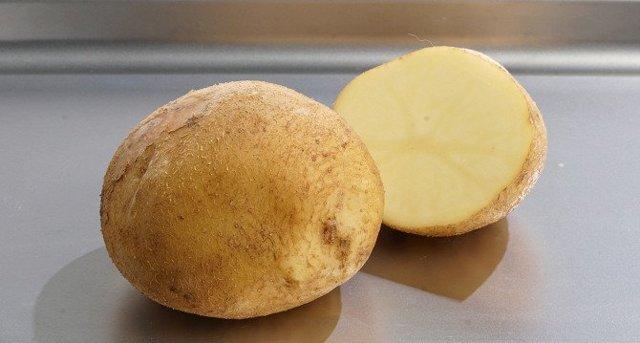
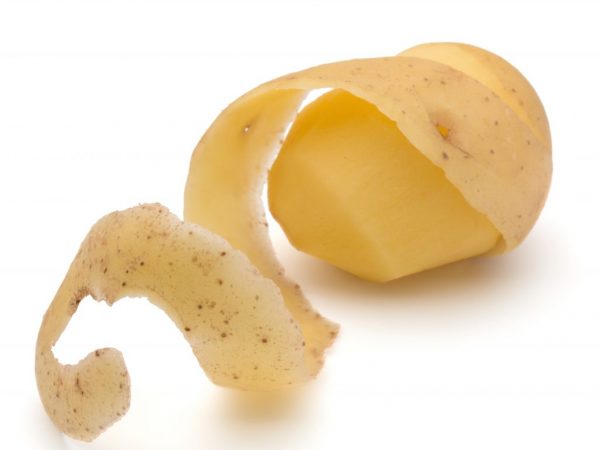
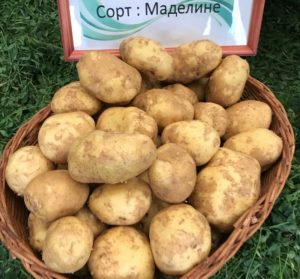
- Ripening period: 70-80 days (refers to early ripening, since the first digging is possible already on the 45th day).
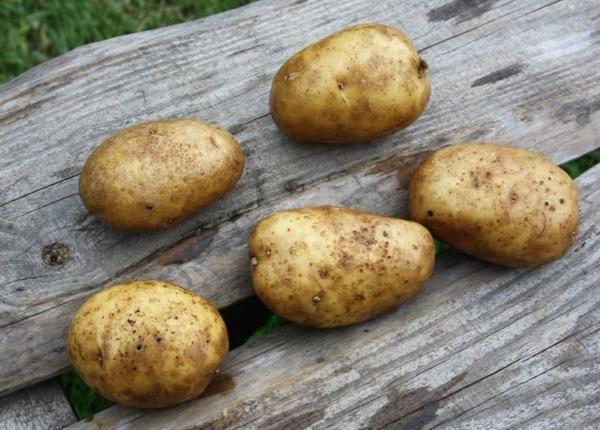
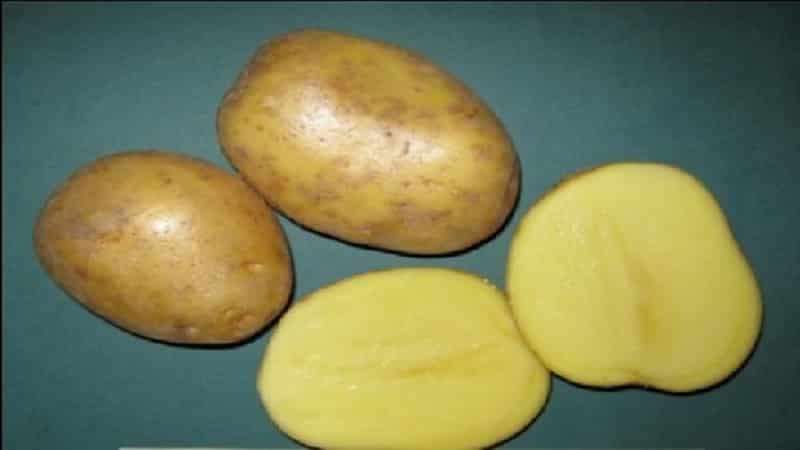
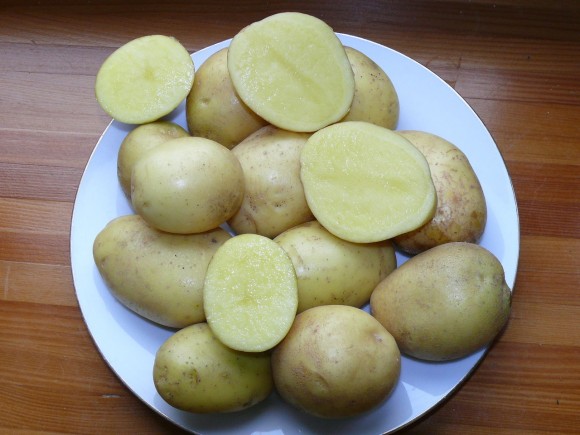
- Tubers: oval, shallow to medium depth small eyes, flesh and skin yellow, weight 84-118 g.
- Starch content: 11.6-14.7%.
- Culinary type: AB
- Productivity: 164-232 c/ha, on the 45th day - 70-174 c/ha, on the 55th - 102-221 c/ha, maximum - 327 c/ha (Tula region).
- Disease resistance: resistant to cancer, nematodes, viruses, striped mosaic, scab, tuber late blight, moderately resistant to top late blight.
- Advantages: good and excellent taste, resistant to mechanical damage, good marketability (80-93%) and shelf life (91%).
- Flaws: when growing, preliminary heating and germination of tubers is necessary; the variety is capricious to fertilizers (does not like nitrogen fertilizers).
- 2011.
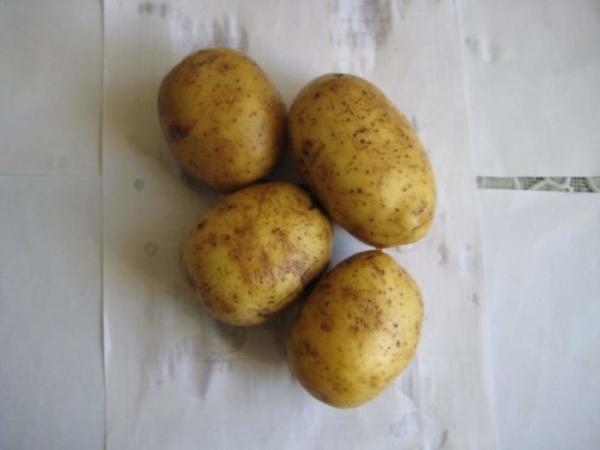
Photo gallery of the Madeline potato variety:
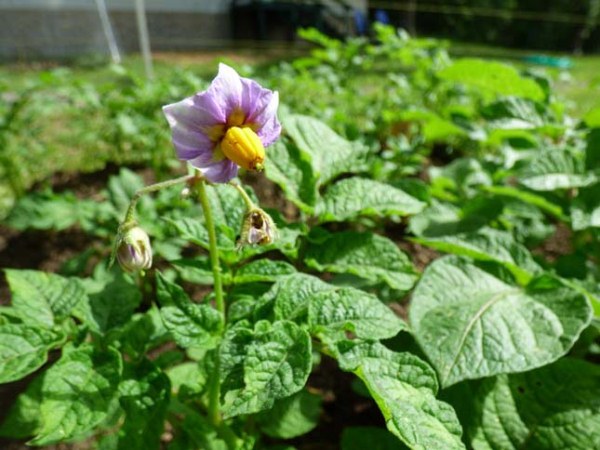
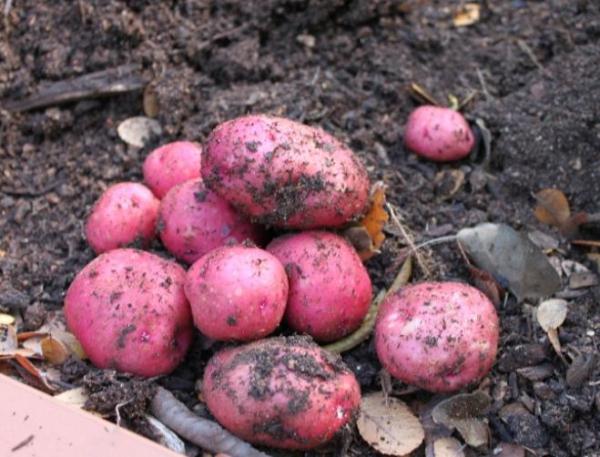
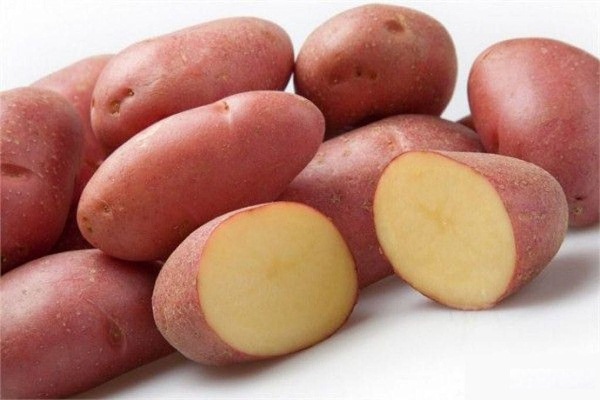
Manifesto (Belarus)
- Ripening period: 60-80 days (mid-early).
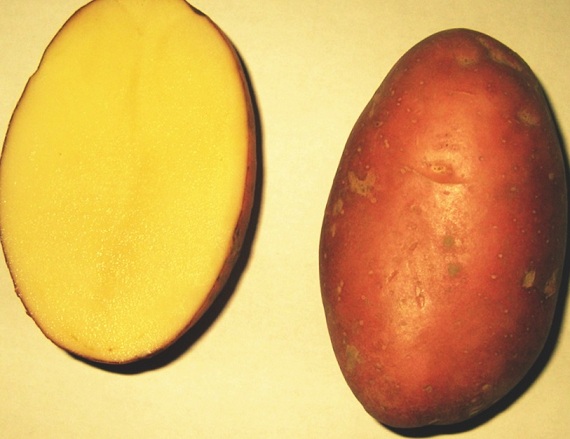
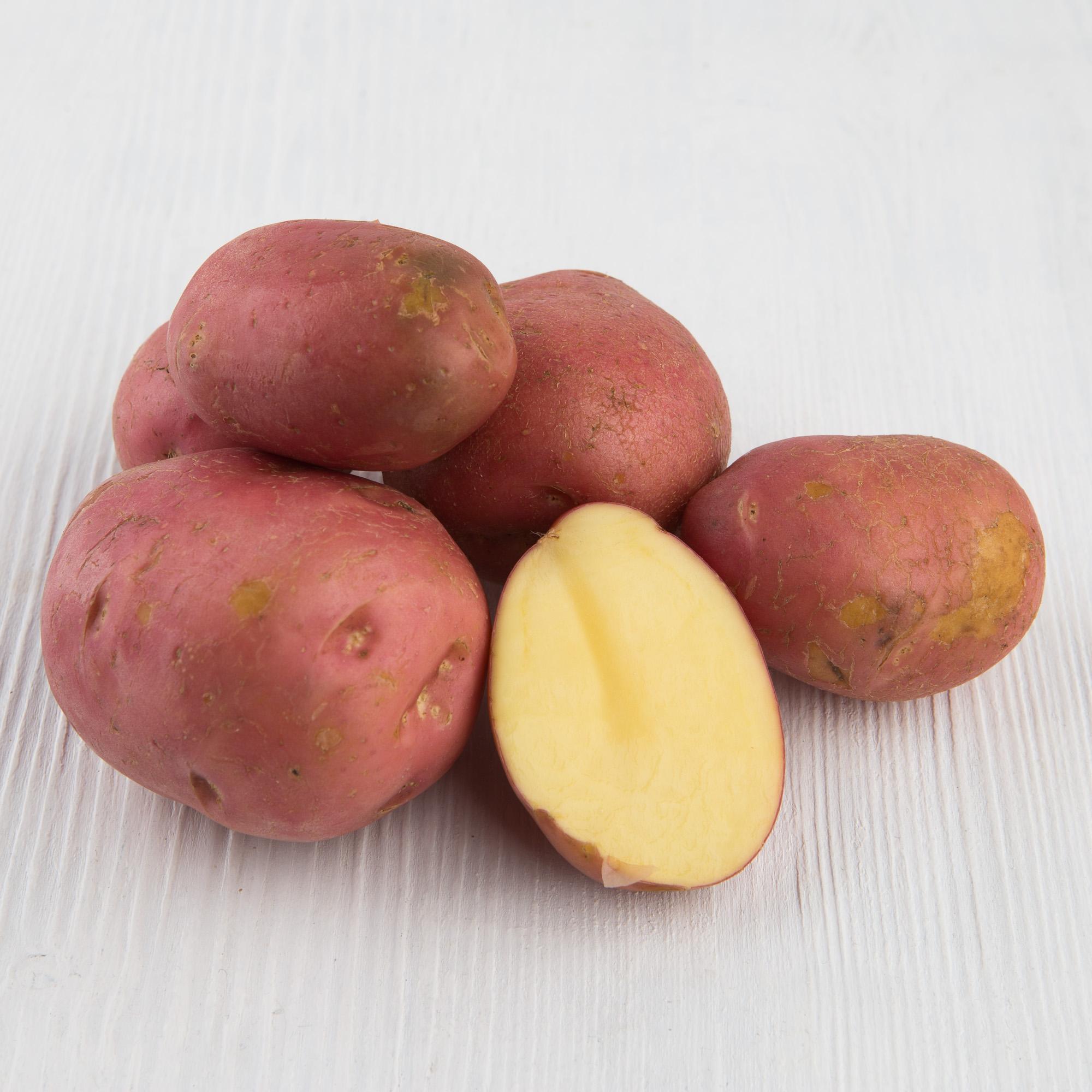
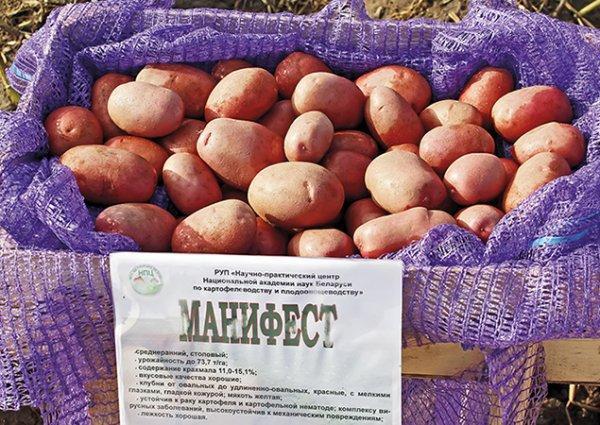
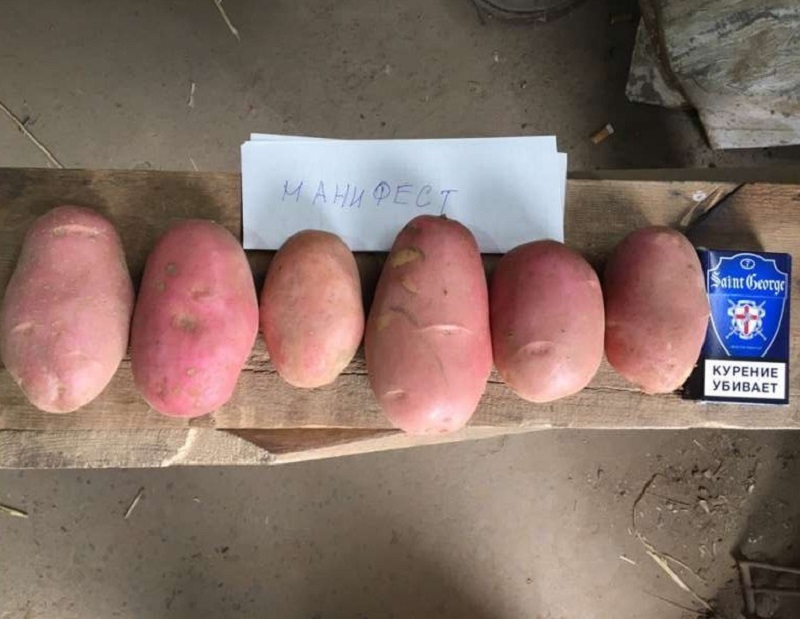
- Tubers: elongated-oval, large, with small eyes, light flesh and dense red skin, weight 104-132 g.
- Starch content: 13-15.4%.
- Culinary type: AB
- Productivity: 165-408 c/ha, maximum - 458 c/ha (Tula region).
- Disease resistance: resistant to viruses, nematodes, leaf curl, wrinkle and stripe mosaic, moderately resistant to late blight and scab.
- Advantages: good yield, high shelf life (94%), transportability, excellent taste.
- Flaws: susceptible to potato moth, average marketability (79-97%).
- 2014.
Photo gallery of the Manifest potato variety:
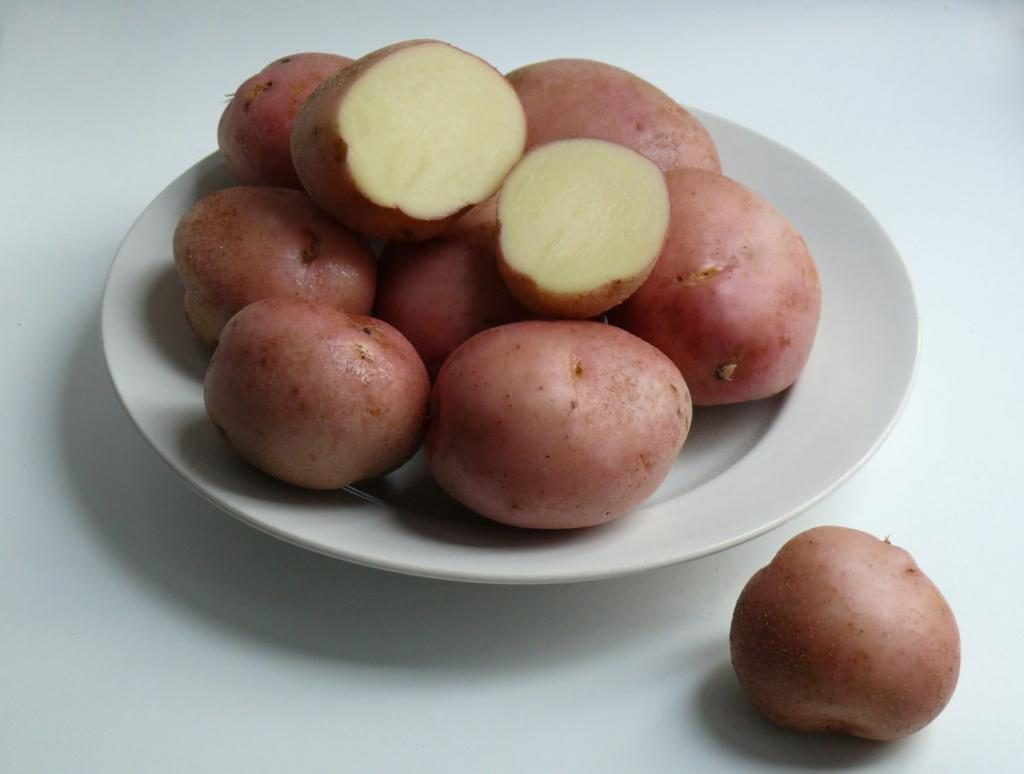
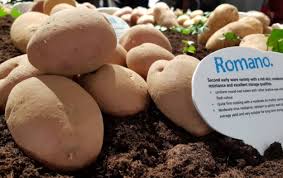
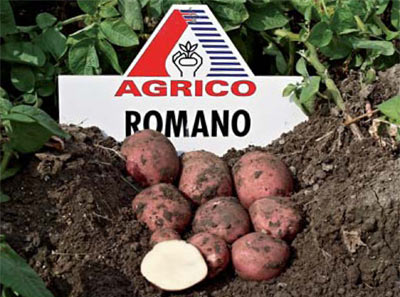
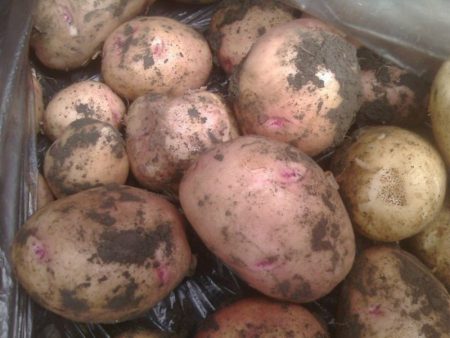
Romano (Netherlands)
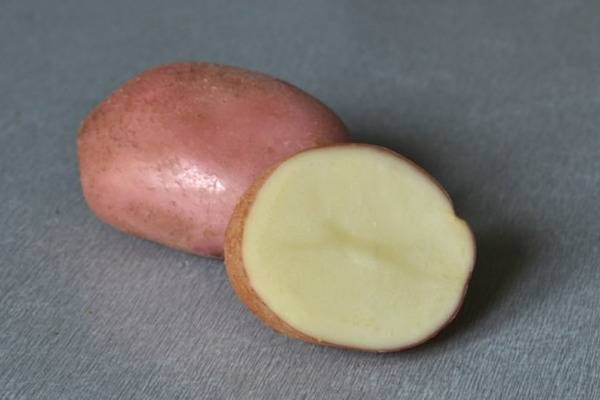
- Ripening period: 65-80 days (mid-early).
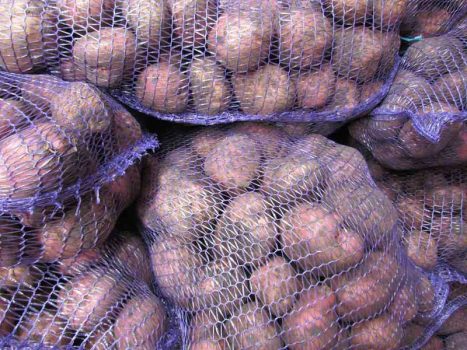
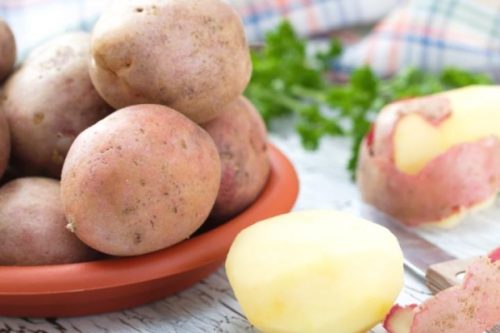
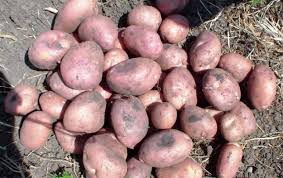
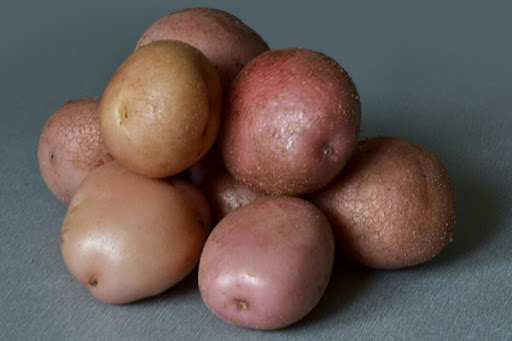
- Tubers: short-oval, smooth, pink skin, light cream flesh, pinkish eyes, few of them on the surface and of medium depth, weight up to 70-80 g.
- Starch content: 10-13%.
- Culinary type: AB
- Productivity: 110-320 c/ha, maximum - 347 c/ha.
- Disease resistance: resistant to cancer, relatively resistant to mosaic, moderately resistant to late blight, rhizoctonia, leaf curl, susceptible to scab.
- Advantages: high yield, good keeping quality and marketability (90-94%), good taste.
- Flaws: skin too thick.
- 1994.
Photo gallery of the Romano potato variety:
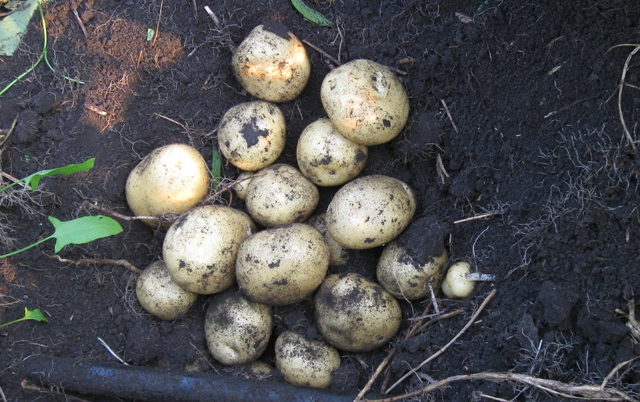
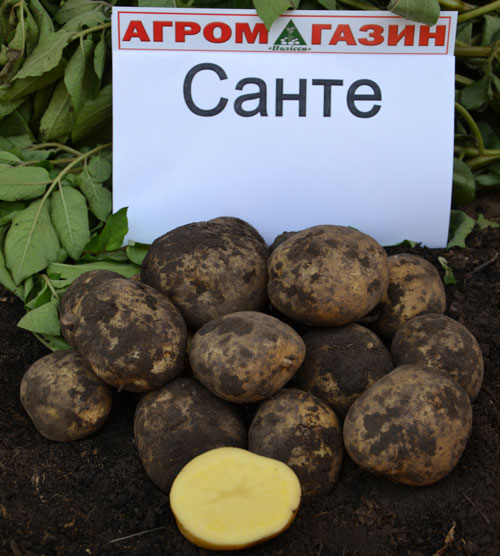
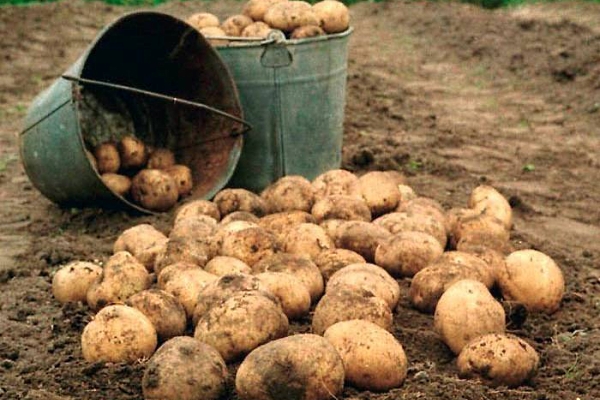
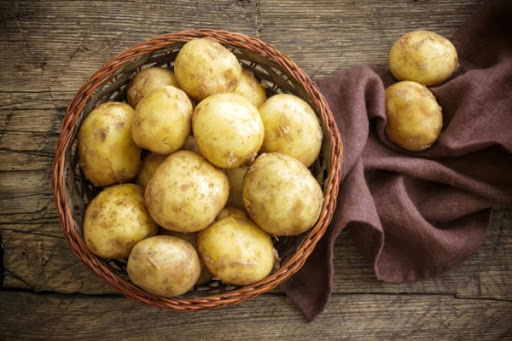
Sante (Netherlands)
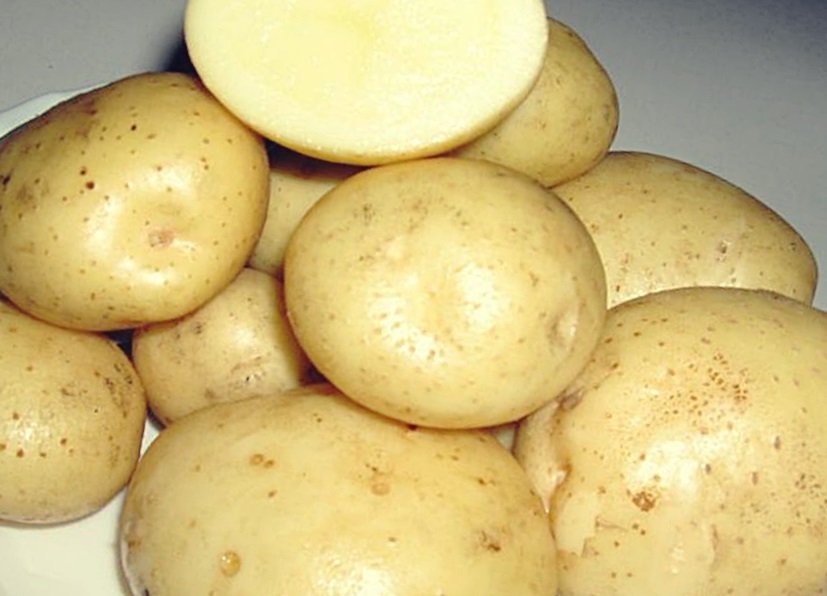
- Ripening period: 65-80 days (mid-early).
- Tubers: oval, smooth, large, light yellow flesh, yellow skin, weight up to 120 g.
- Starch content: 10-14%.
- Productivity: up to 570 c/ha, maximum - 416 c/ha.
- Culinary type: A
- Disease resistance: resistant to cancer, nematodes, late blight, viruses, moderately resistant to scab, susceptible to rhizoctonia.
- Advantages: stores well, does not sprout, has a dense skin, good marketability and shelf life.
- Flaws: needs regular watering.
- 1993.
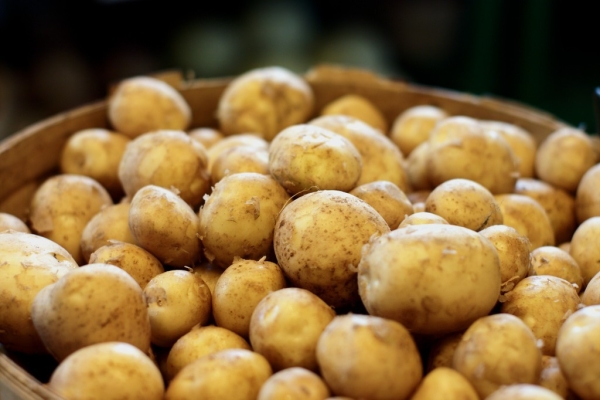
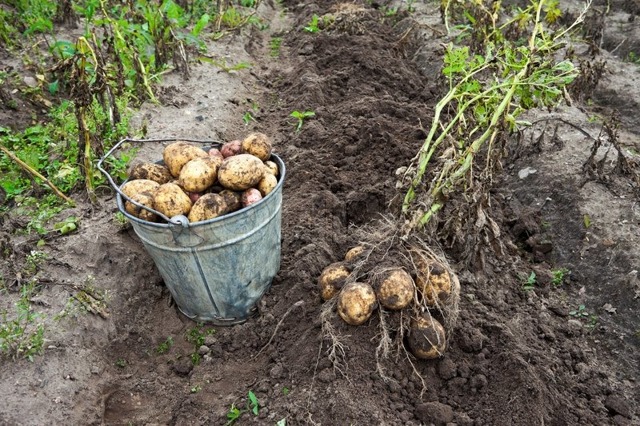
Photo gallery of the Sante potato variety:
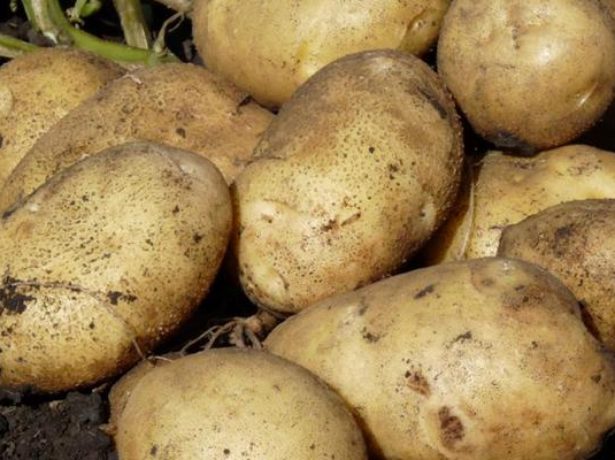
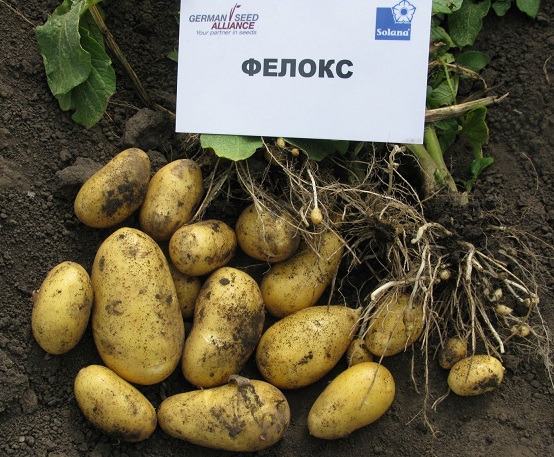
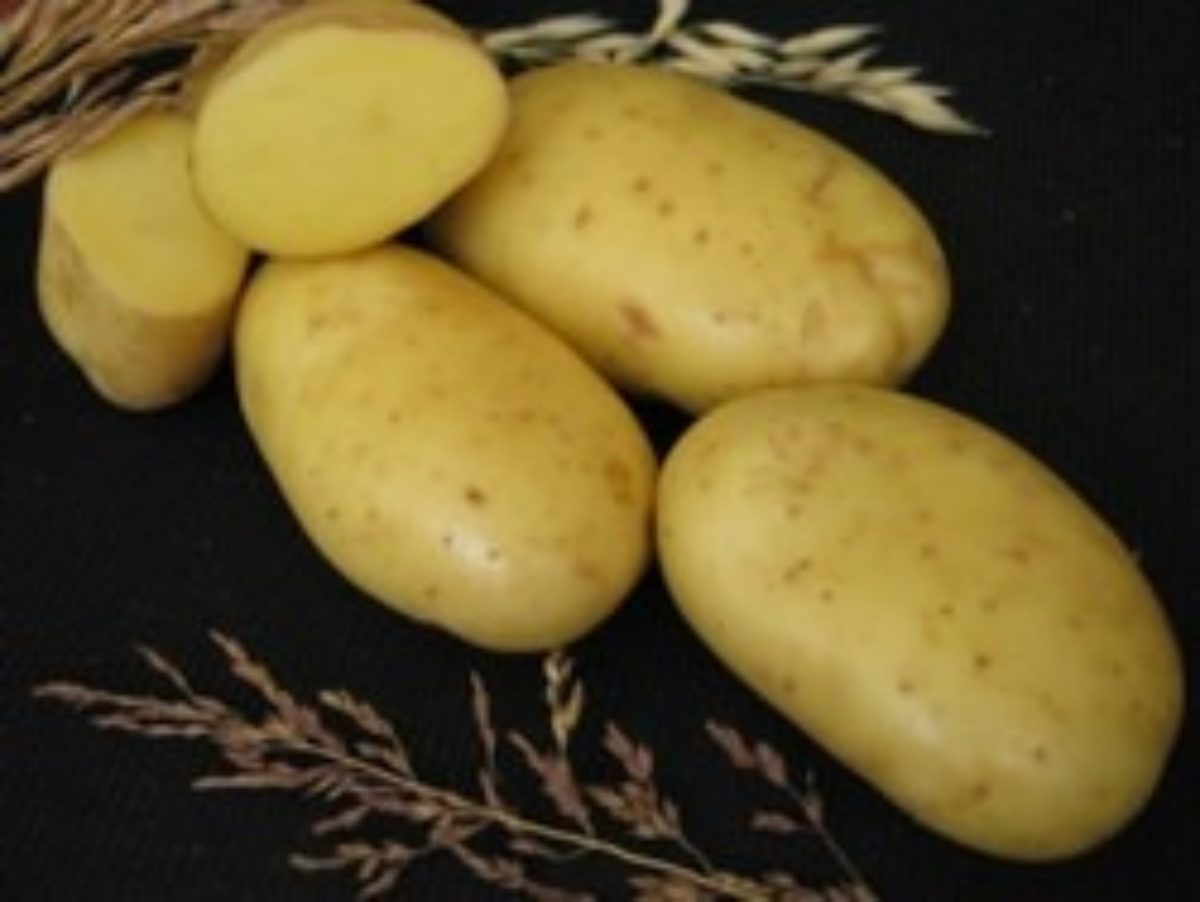
Felox (Germany)
- Ripening period: 60-70 days (early maturing).
- Tubers: elongated-oval, with small superficial eyes, light yellow flesh, yellow skin, weight 87-113 g.
- Starch content: 16.4-17%.
- Culinary type: IN
- Productivity: 248 c/ha c/ha, maximum - 591 c/ha (Samara region).
- Disease resistance: resistant to cancer, nematode, rugose and striped mosaic, leaf curl, moderately susceptible to late blight.
- AdvantagesVery tasty, suitable for any culinary processing, easy to maintain, high yield. Excellent flavor. Marketability is 98%, 8% higher than the Zov.
- Flaws: may be affected by late blight.
- 1999.
Photo gallery of the Felox potato variety:
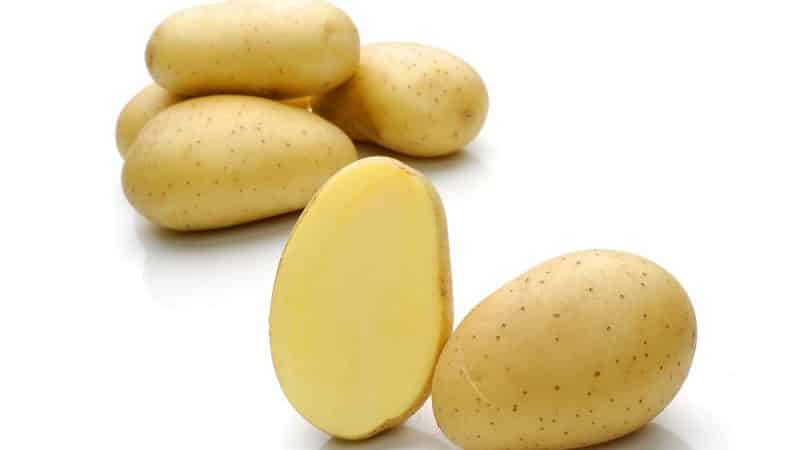
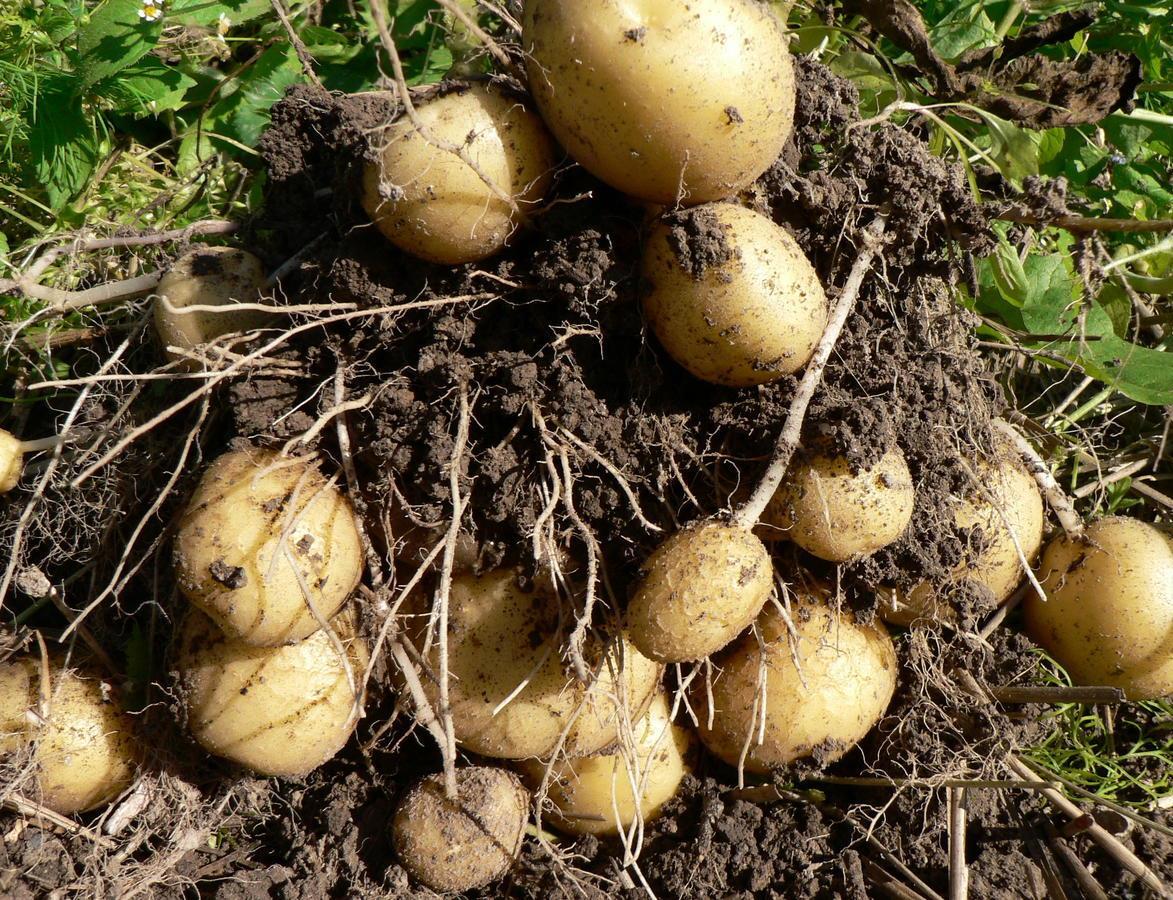
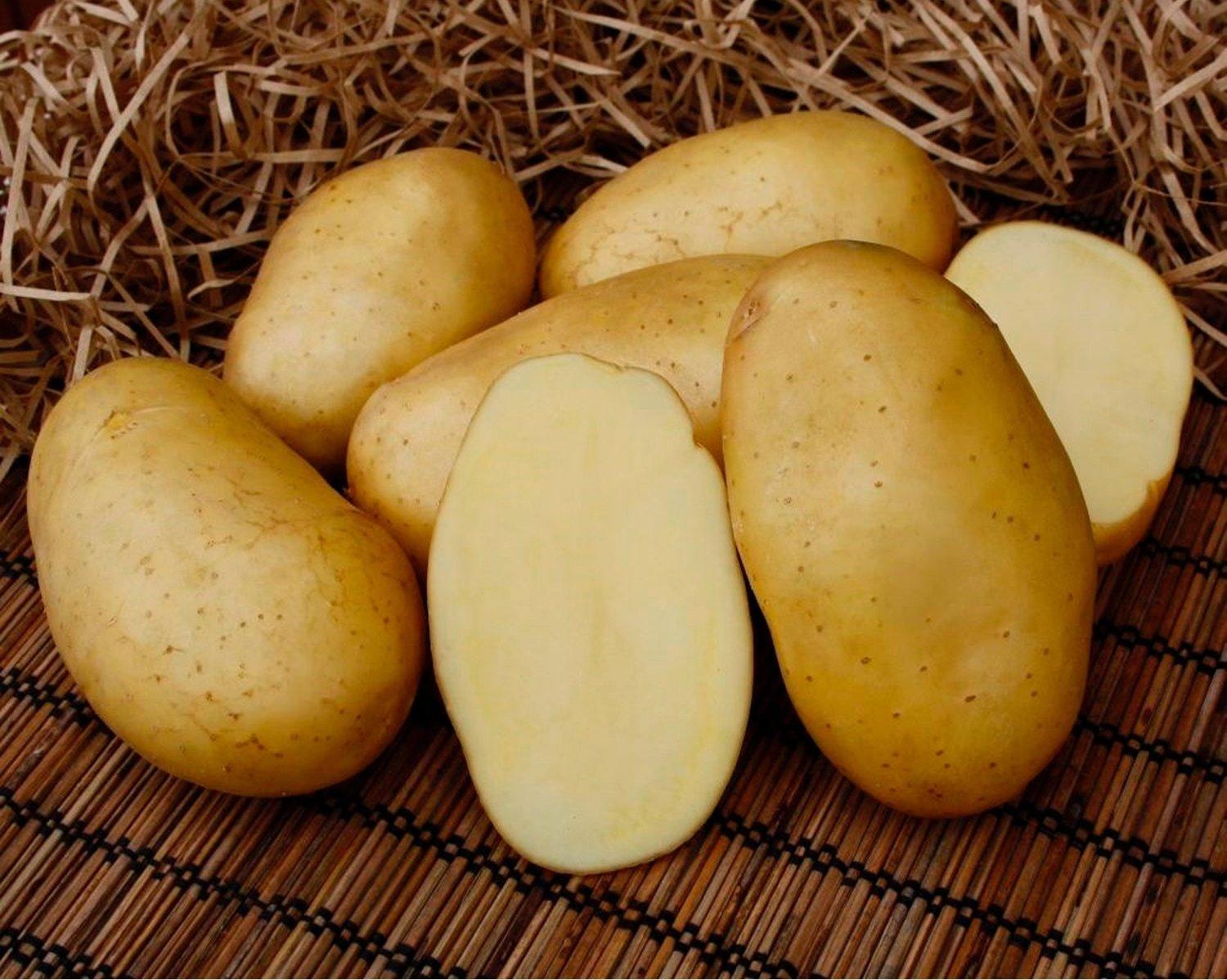
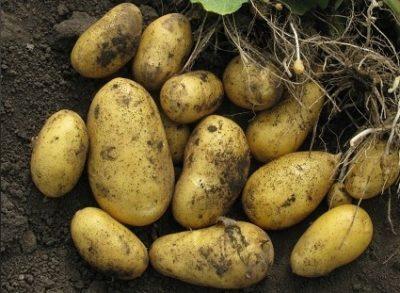
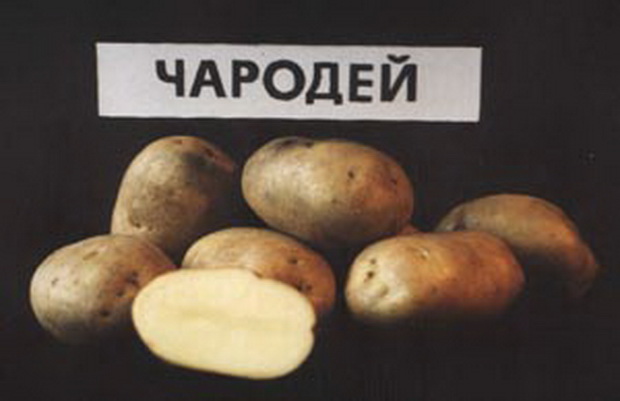
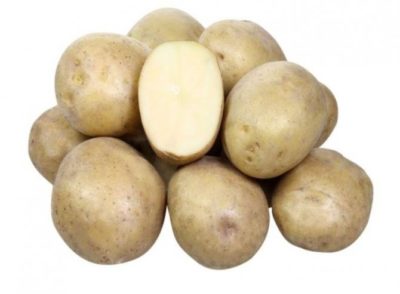
Sorcerer (Russia)
- Ripening period: 65-80 days (mid-early).
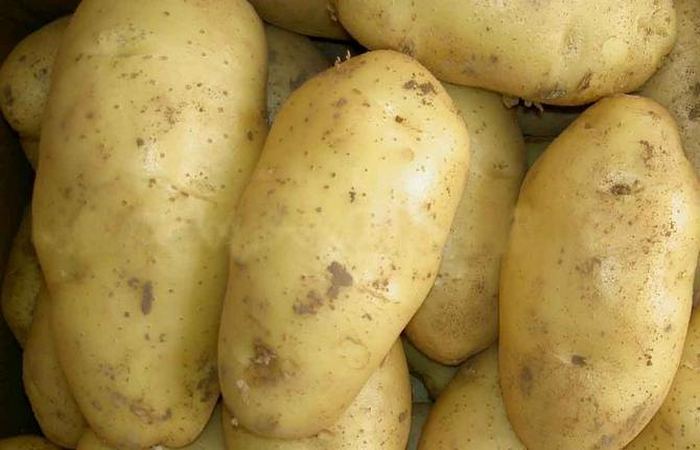
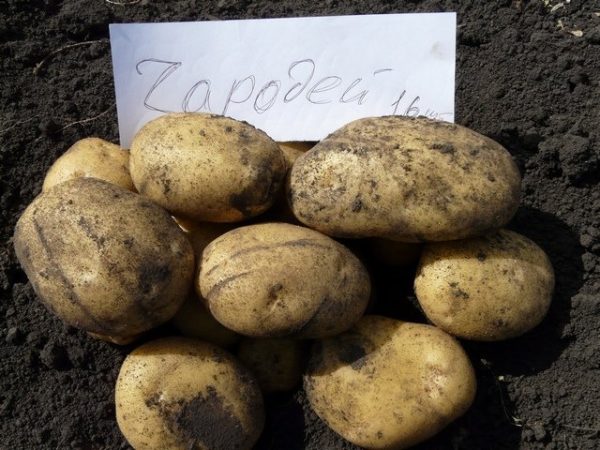
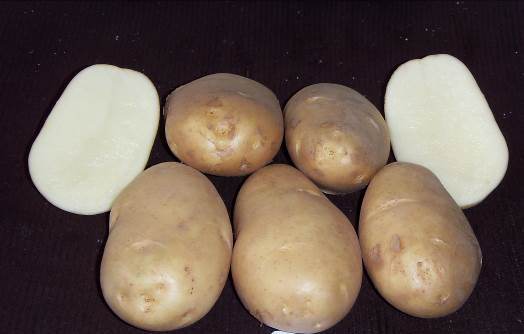
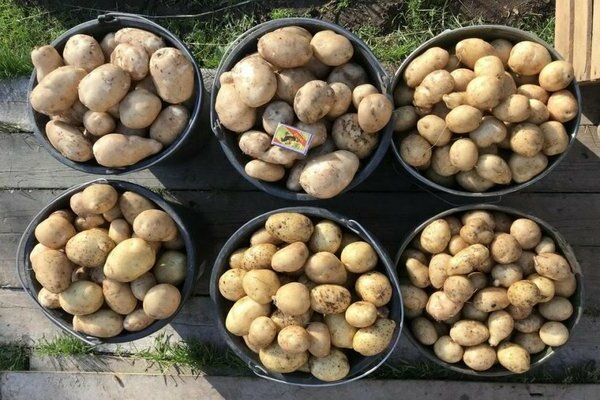
- Tubers: flattened, oval, yellow skin, white flesh, few and very small eyes, weight 73-116 g.
- Starch content: 12.4-15%.
- Culinary type: AB
- Productivity: in the Northern region - 270-352 c/ha, maximum - 370 c/ha (Republic of Karelia). In the Middle Volga region - 174-272 c/ha, maximum - 419 c/ha.
- Disease resistance: resistant to cancer, moderately resistant to late blight, susceptible to nematode.
- Advantages: high marketability (84-97%) and shelf life (96%), unpretentiousness in cultivation, good taste.
- Flaws: sprouts early, prone to nematodes.
- 2000.
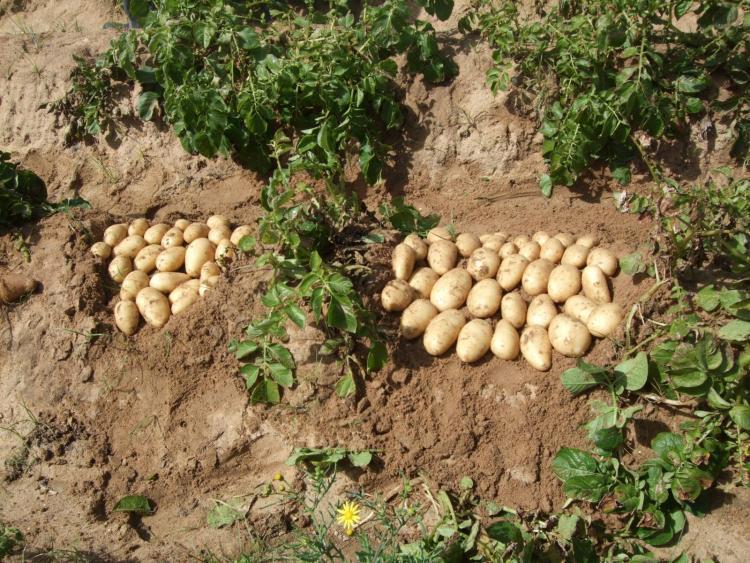
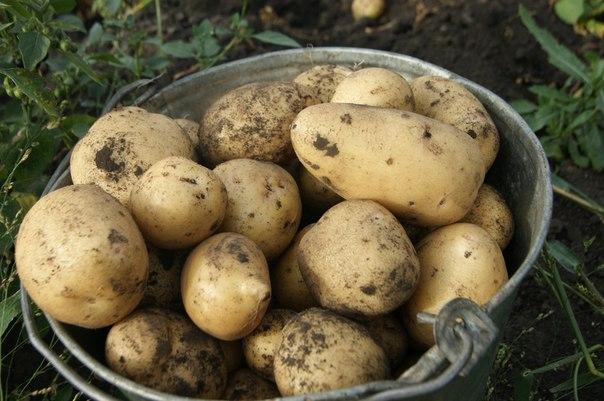
Photo gallery of the Charodey potato variety:
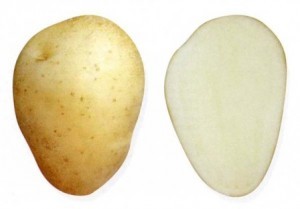
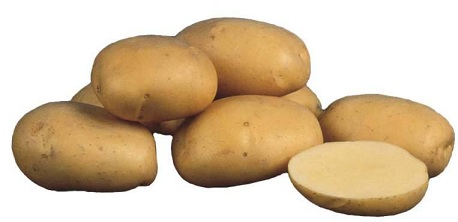
This group also includes the following varieties: Adretta, Azhur, Bellarosa (ultra), Briz, Vega, Vineta, Gala, Jelly, Zhukovsky Ranniy, Zekura, Impala, Kamensky, Colomba (ultra), Labella, Lyubava, Meteor (ultra), Nevsky, Red Scarlet, Riviera, Rodriga, Rosara, Ryabinushka, Svitanok Kyiv, Udacha, and Uladar. Their descriptions are provided in the TOP-33 list.
TOP 7 mid-season seed potato varieties
Now let's look at the best mid-season varieties of seed potatoes.
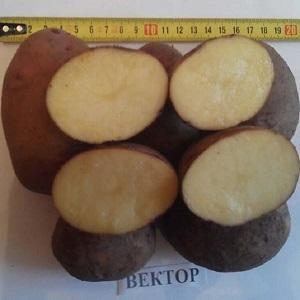
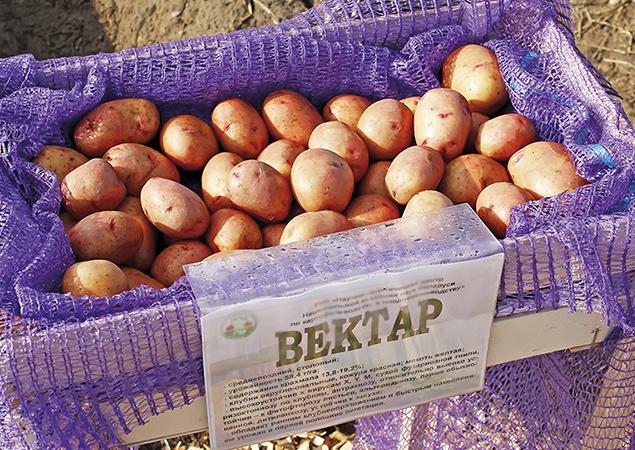
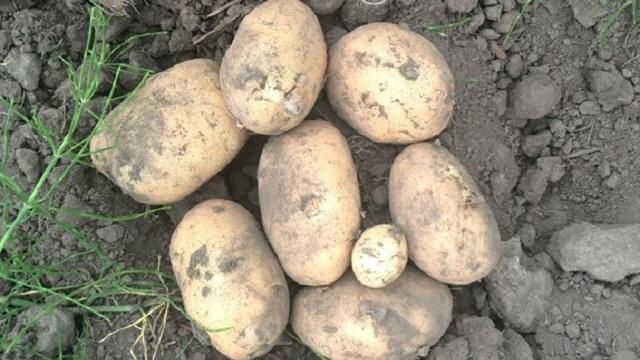
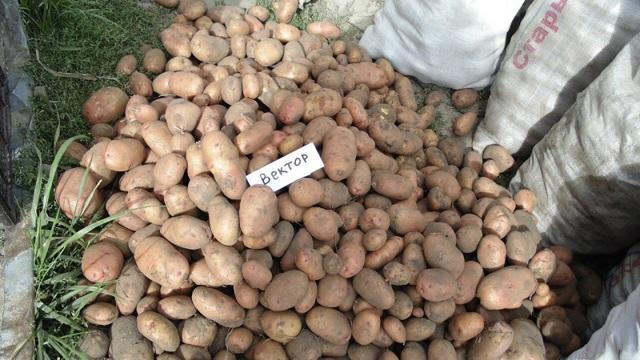
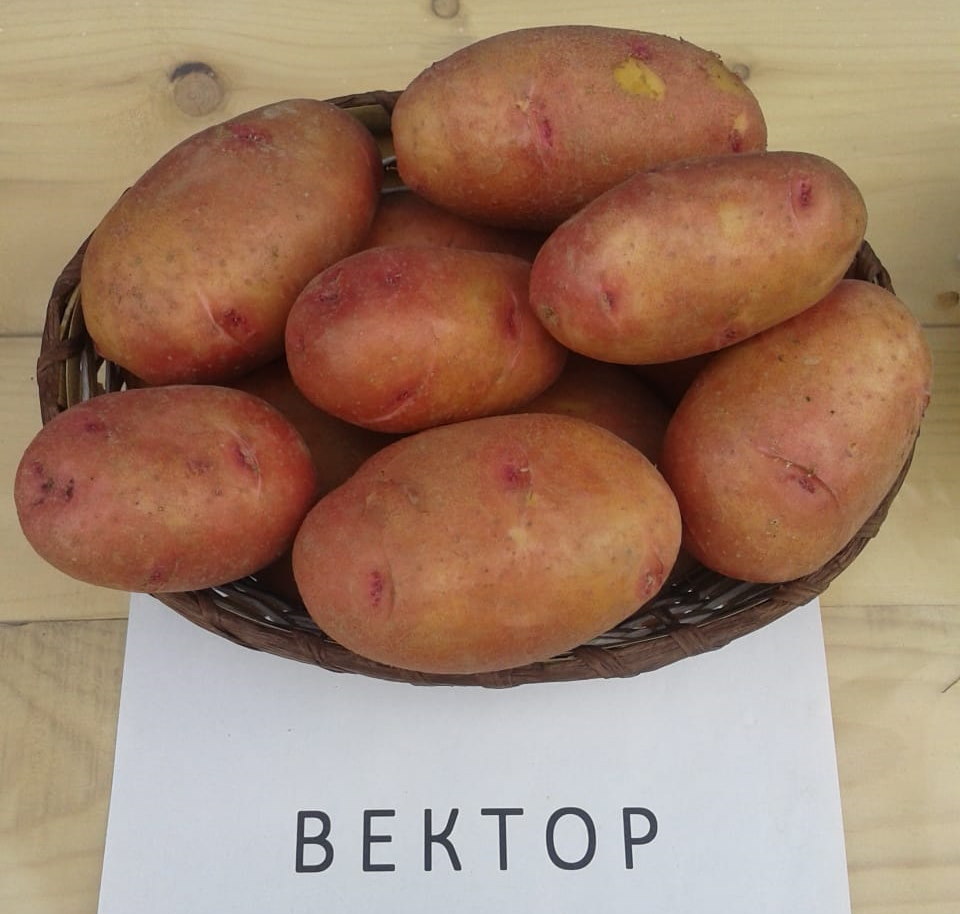
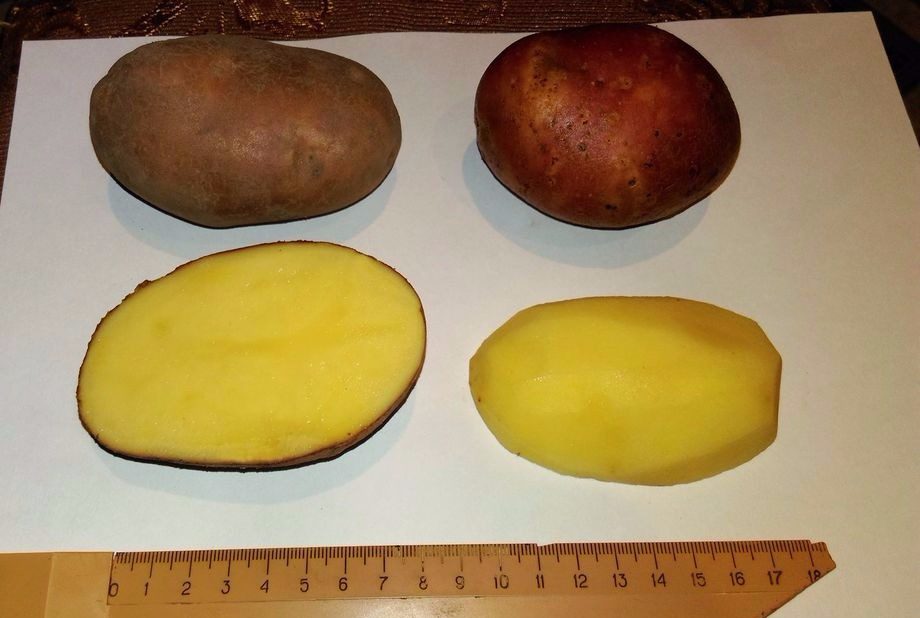
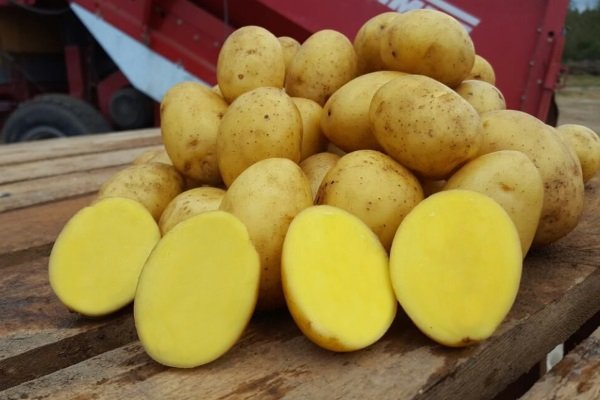
Vector (Russia)
- Ripening period: 80-100 days (mid-season).
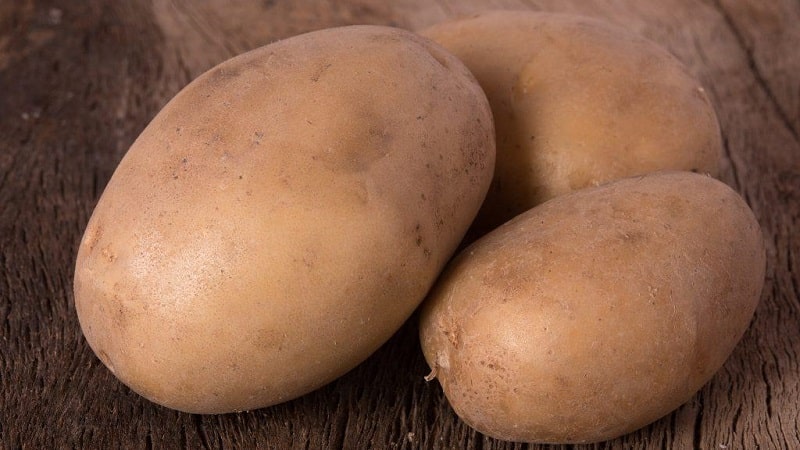
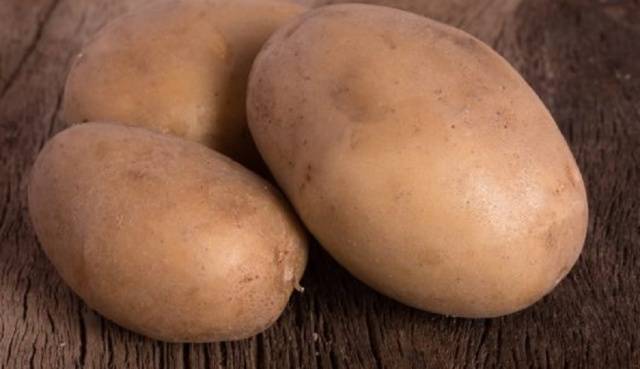
- Tubers: oval-round with small eyes, dense red skin, light yellow flesh, weight 92-143 g.
- Starch content: 16.7-17.5%.
- Culinary type: Sun
- Productivity: 180-263 c/ha, maximum - 403 c/ha (Tula region).
- Disease resistance: resistant to cancer, late blight, rugose and striped mosaic, leaf curl, moderately resistant to scab, susceptible to nematodes.
- Advantages: undemanding to soil, tolerates heat well, and is not susceptible to mechanical damage. The flavor is good to excellent. Marketability is 90-98%. Shelf life is 95%.
- Flaws: affected by nematodes.
- 2014.
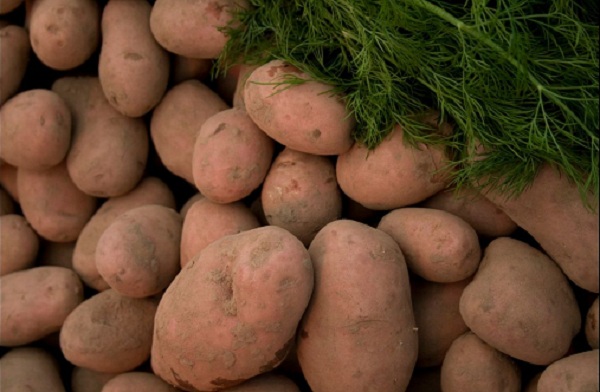
Photo gallery of the Vector potato variety:
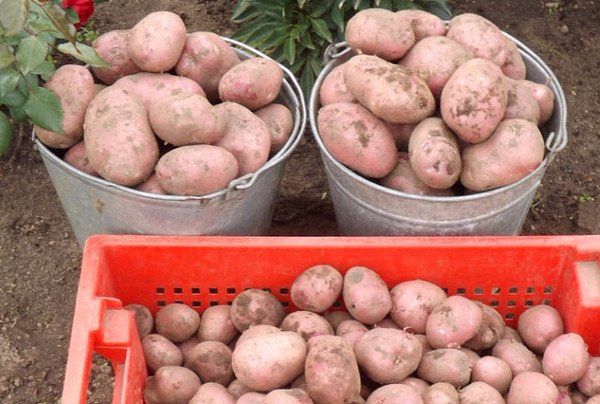
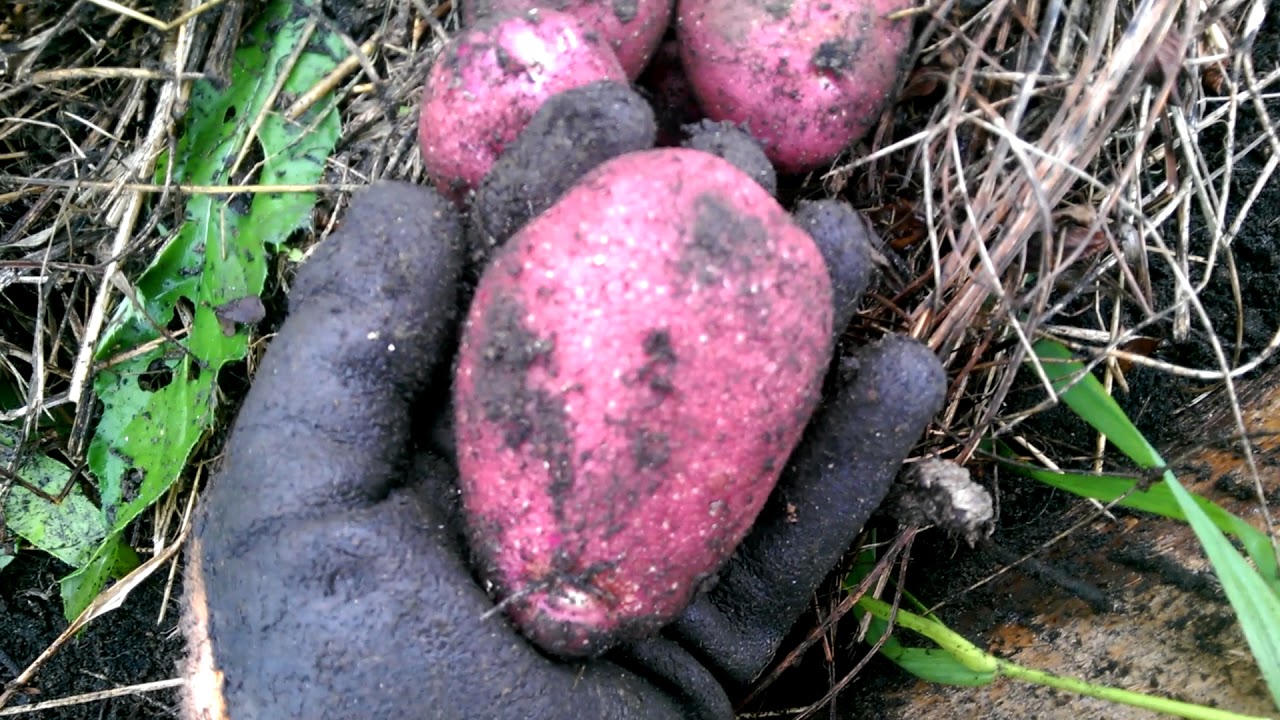
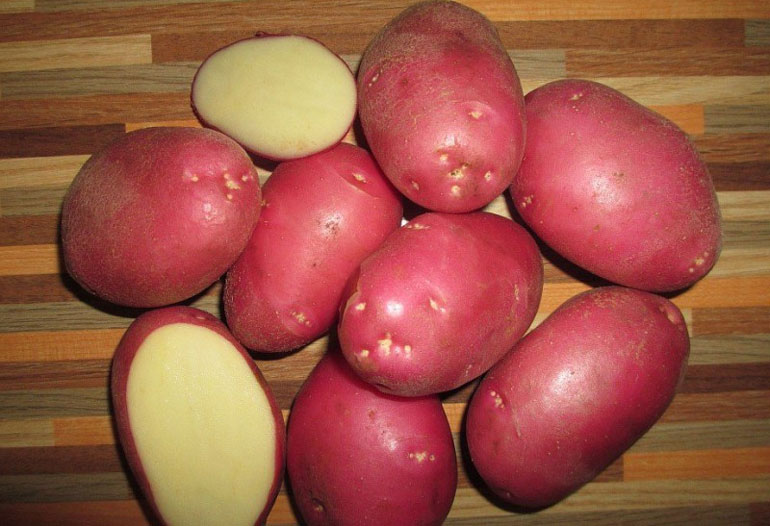
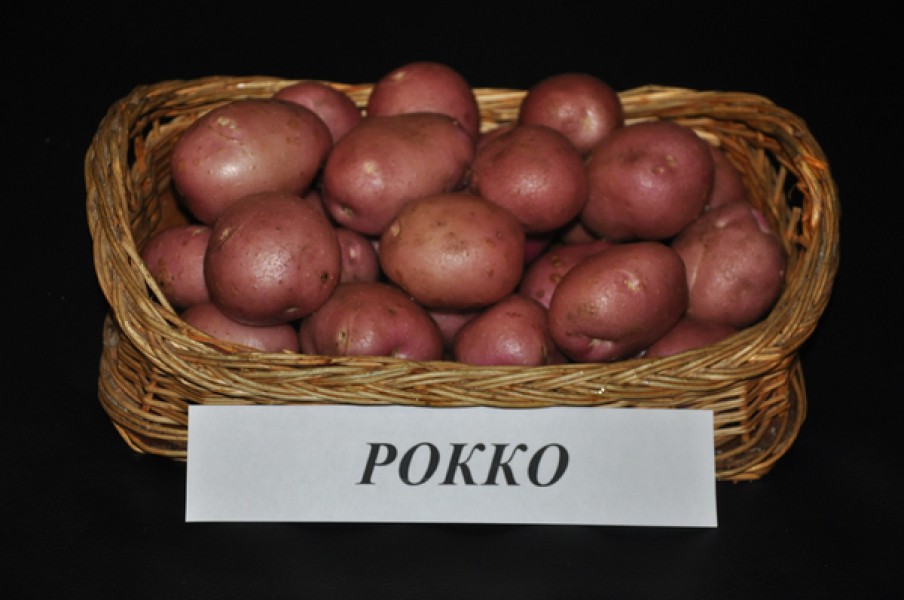
Roko (Austria)
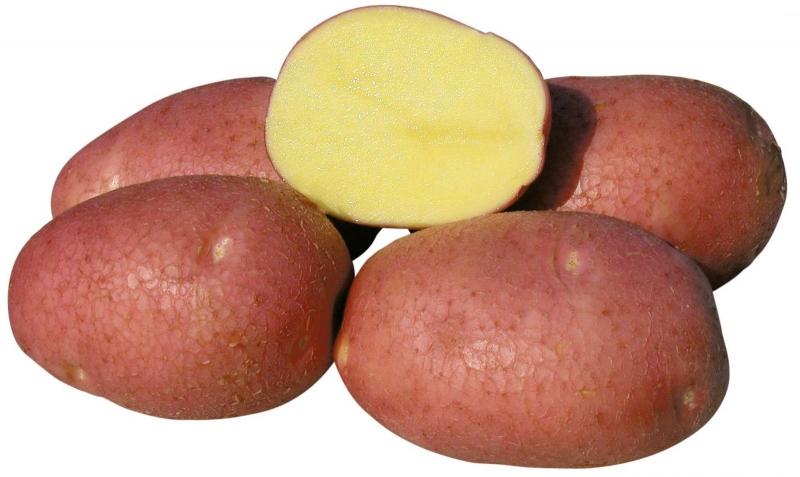
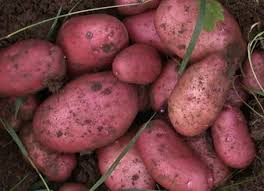
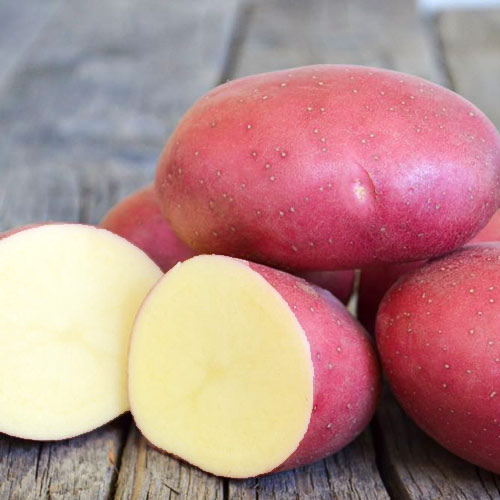
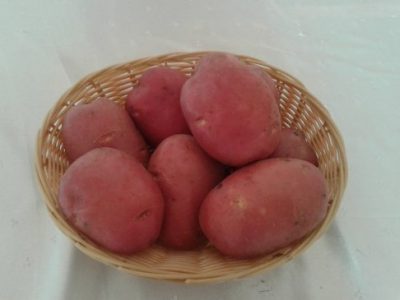
- Ripening period: 85-95 days (mid-season).
- Tubers: oval with small eyes, smooth, red skin, creamy flesh, weight 75-119 g.
- Starch content: 12.9-14.5%.
- Culinary type: A
- Productivity: 136-261 c/ha, maximum - 275 c/ha (Penza region).
- Disease resistance: resistant to cancer, nematode, rugose and striped mosaic, moderately resistant to tuber blight, susceptible to top blight.
- Advantages: resistance to adverse conditions, good marketability (84-96%) and taste.
- Flaws: attractive to insect pests, average shelf life (89%), not the highest yield.
- 2002.
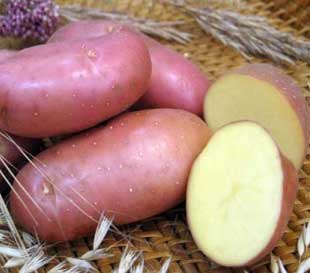
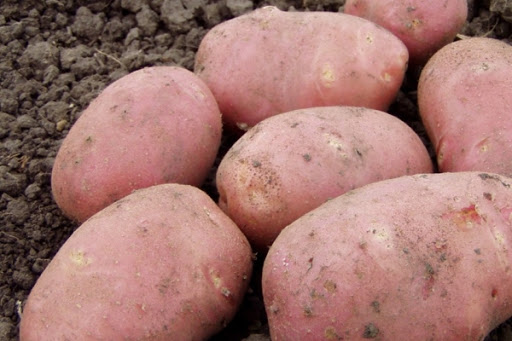
Photo gallery of the Roko potato variety:
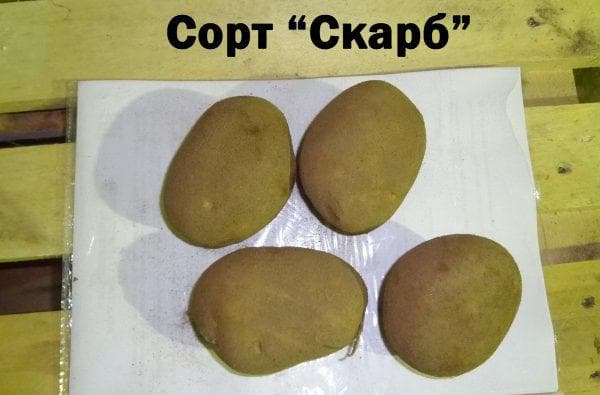
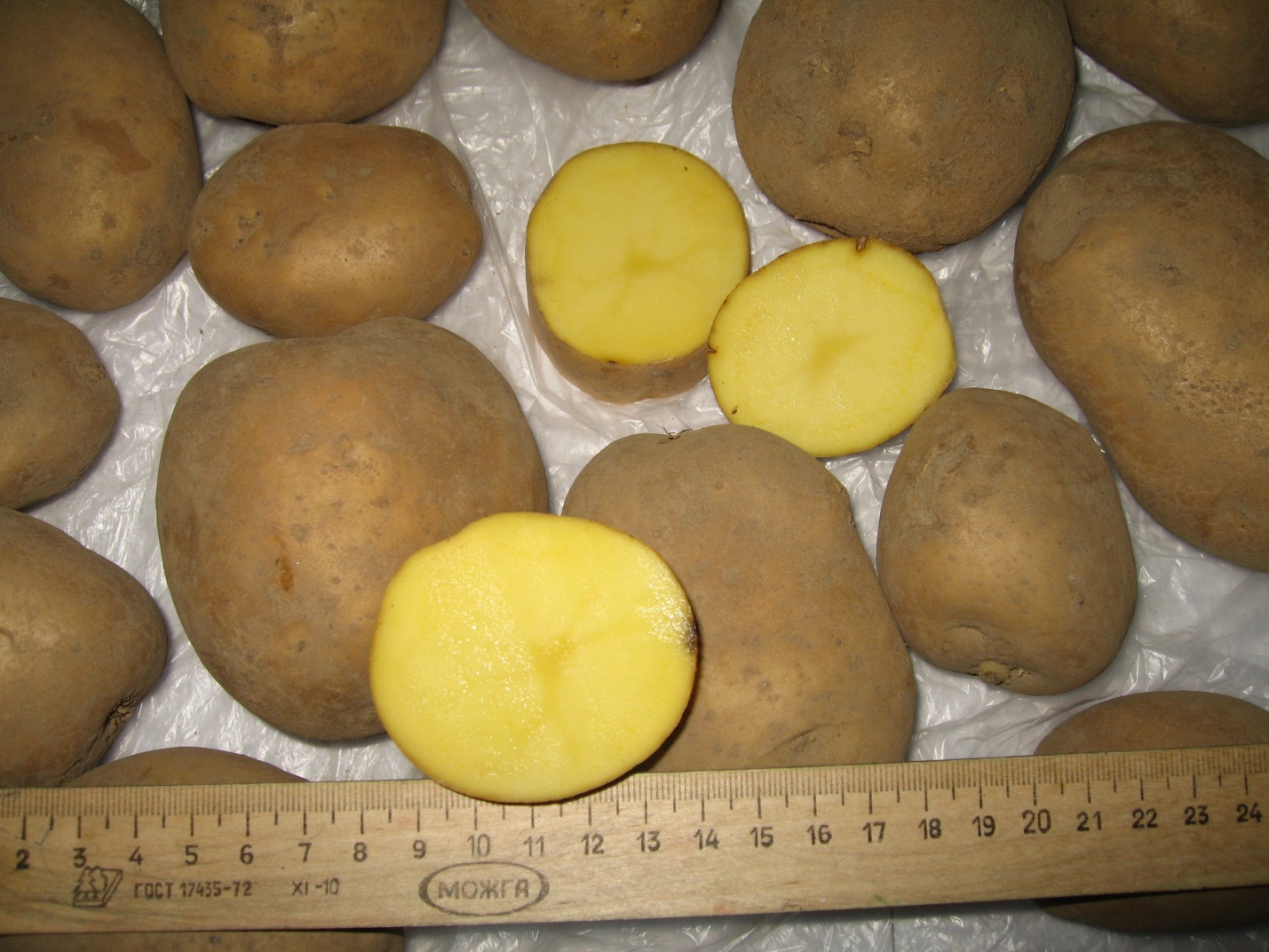
Treasure (Belarus)
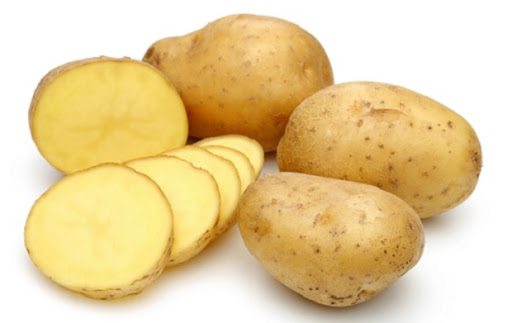
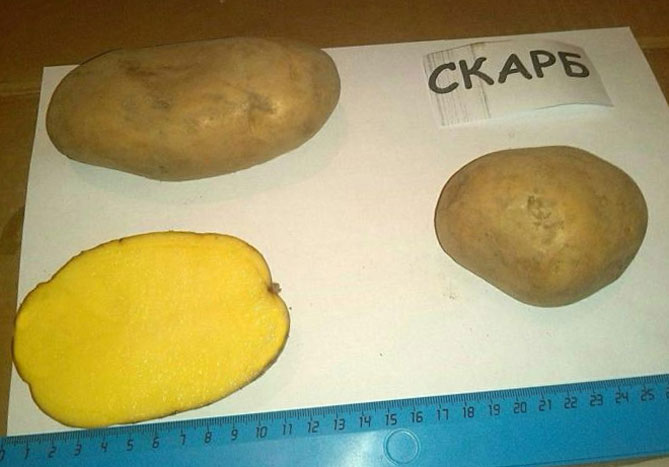
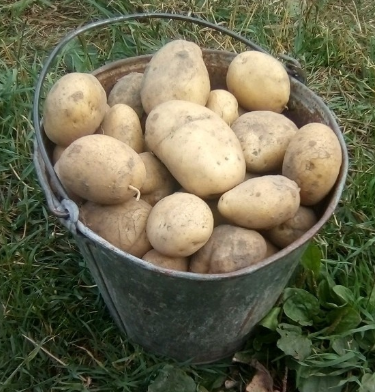
- Ripening period: 85-90 days (mid-season).
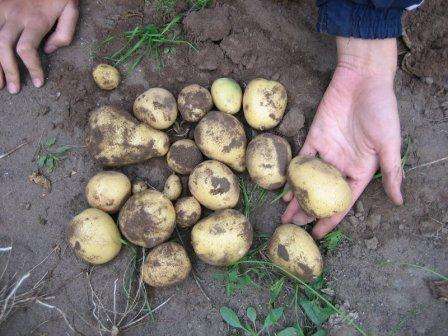
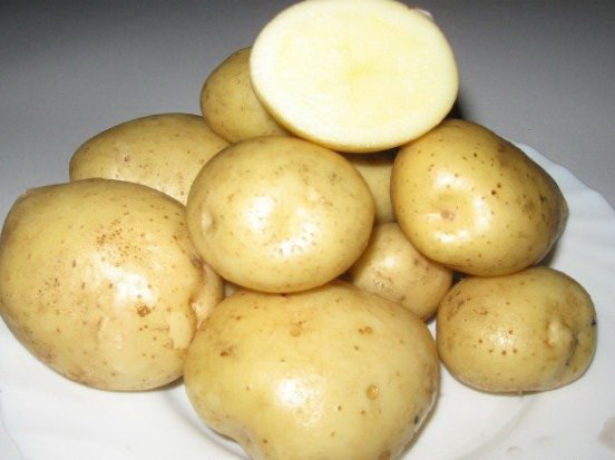
- Tubers: medium-sized, oval, with smooth yellowish skin and yellow flesh, with very small eyes, weight 94-138 g.
- Starch content: 10.8-17.7%.
- Culinary type: IN.
- Productivity: 253-411 c/ha, maximum - 508 c/ha (Vologda region).
- Disease resistance: resistant to wrinkle and striped mosaic, nematode, cancer, moderately resistant to rot, susceptible to late blight.
- Advantages: high yield, good taste, good marketability (84-99%).
- Flaws: requires watering, not the best resistance to diseases, shelf life can be average (88-98%).
- 2002.
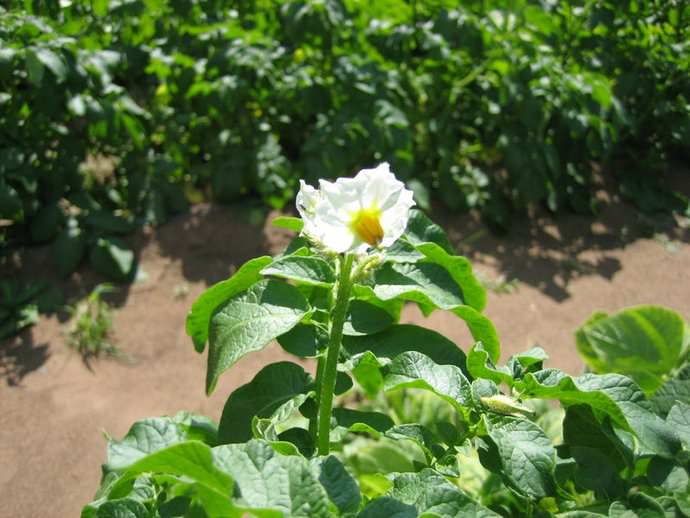
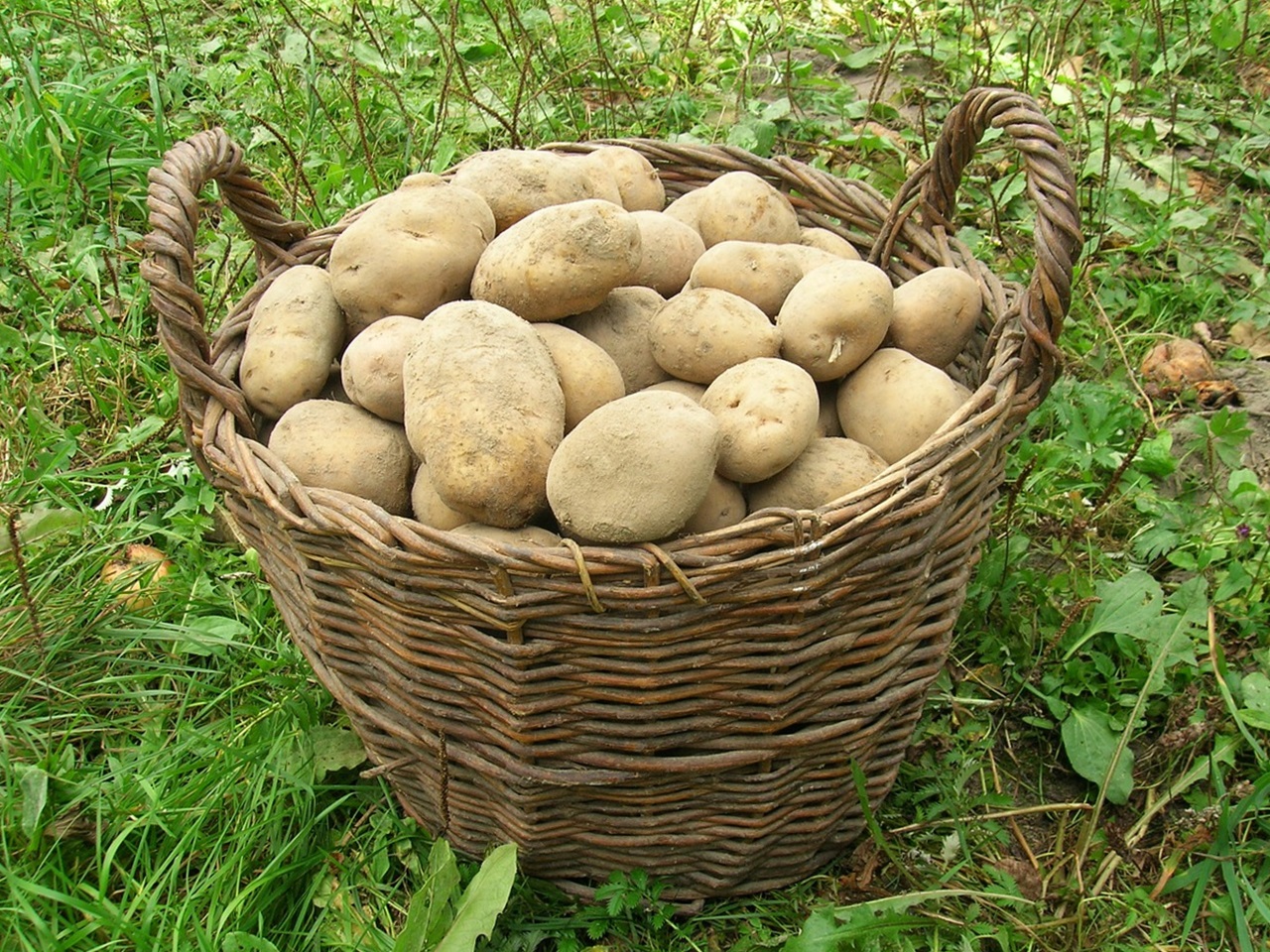
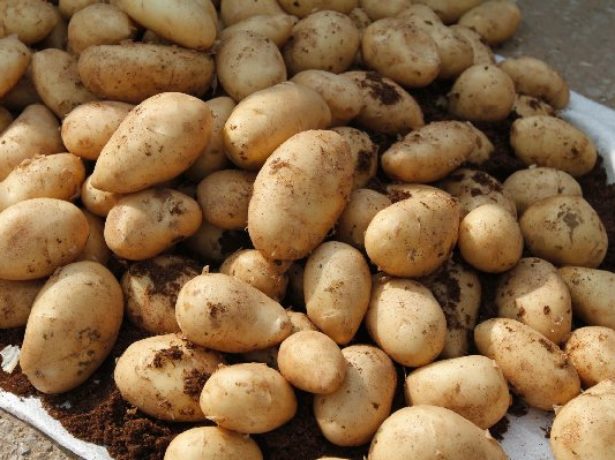
Photo gallery of the potato variety Skarb:
The following varieties also belong to this group: Aurora, Kolobok, Lugovskoy, and Tuleevsky. Their descriptions are provided in the TOP-33 list.
TOP 7 late varieties of seed potatoes (mid-late and late ripening)
In this section we will consider mid-late and late-ripening varieties of seed potatoes.
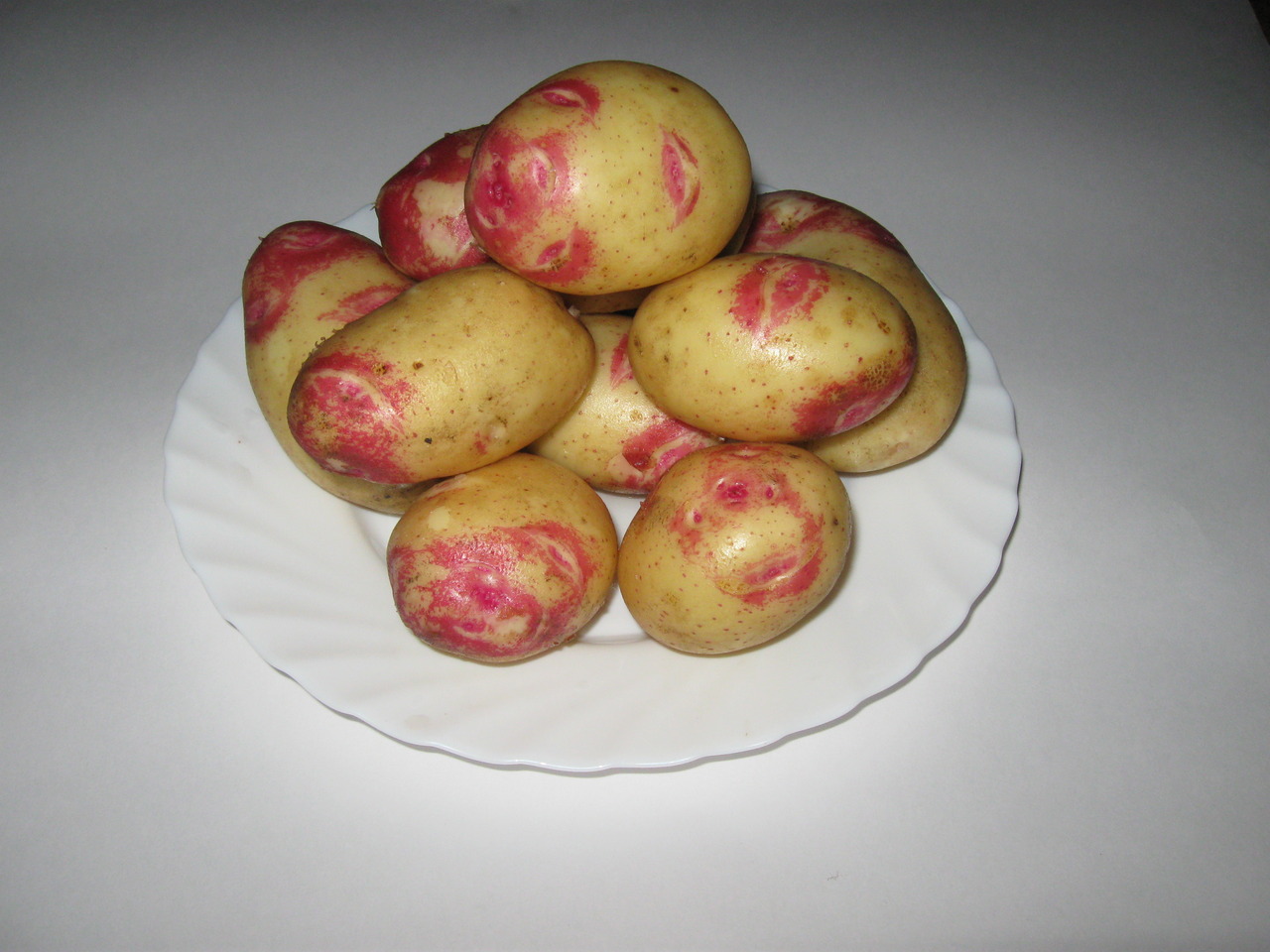
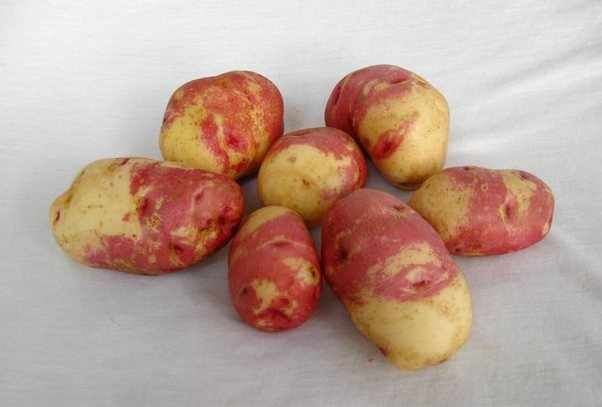
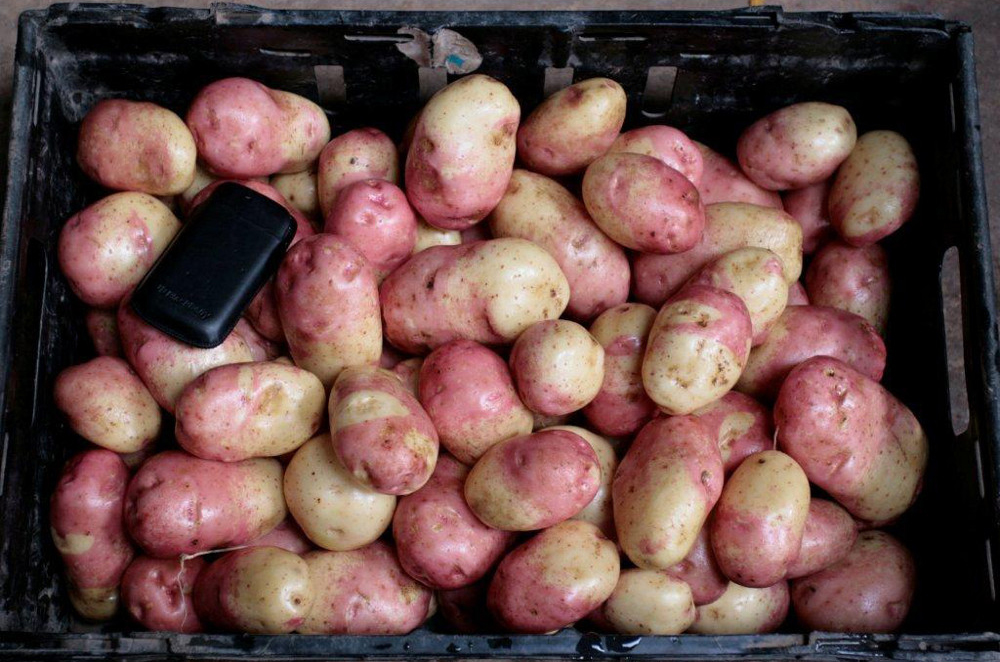
Ivan da Marya (Russia)
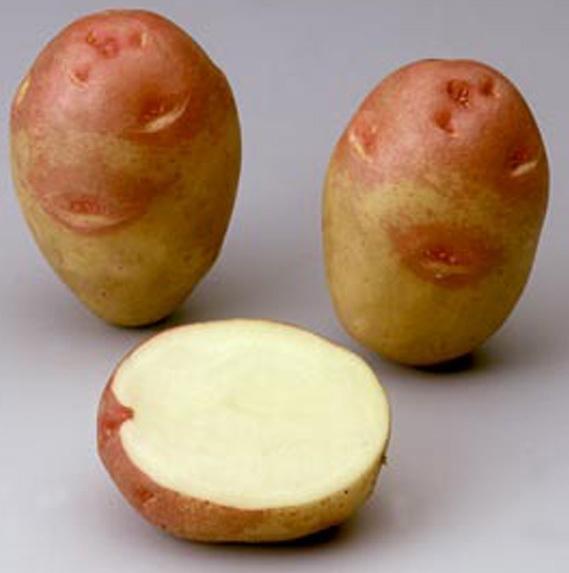
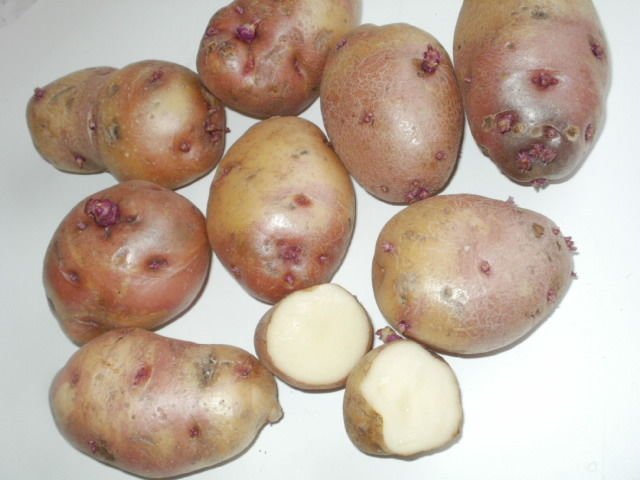
- Ripening period: 120-150 days (late ripening).
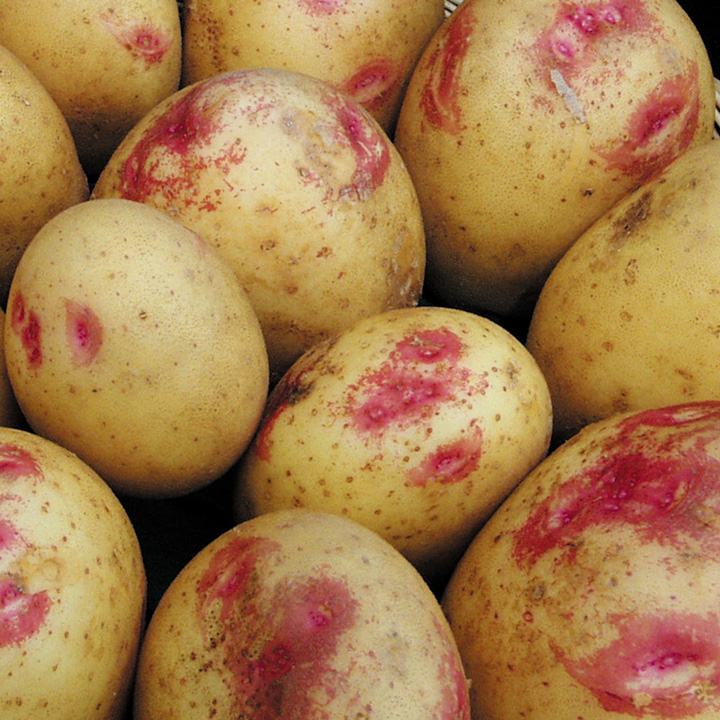
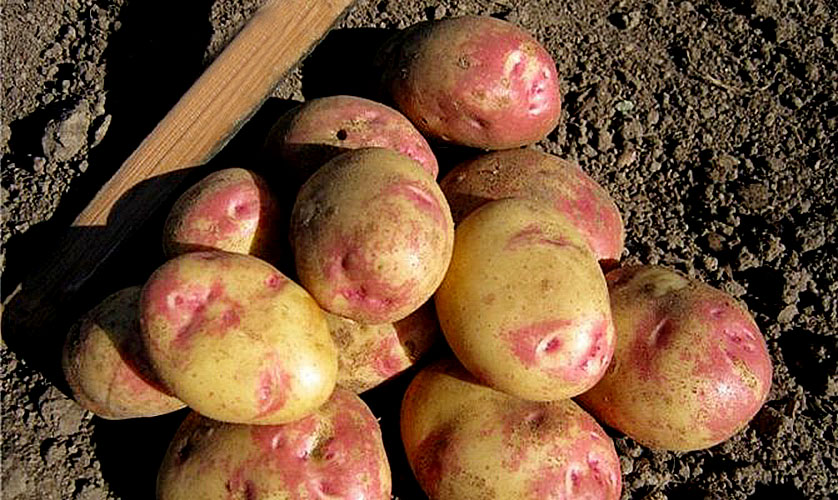
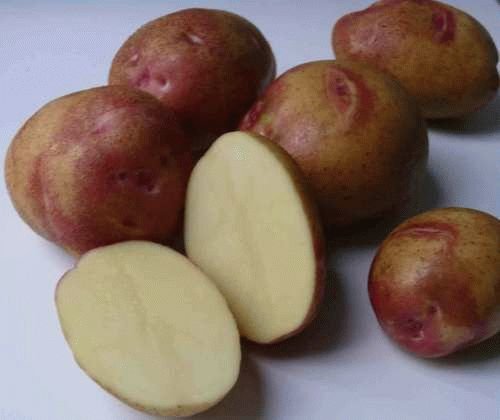
- Tubers: unusual, yellow-pink skin color, white flesh, tuber weight up to 150 g.
- Starch content: 10-14%.
- Culinary type: IN
- Productivity: maximum - 320 c/ha.
- Disease resistance: average resistance to cancer, late blight, viruses, low resistance to scab.
- Advantages: good keeping quality, even shape, pleasant taste, drought resistance.
- Flaws: susceptibility to scab.
- not yet enabled.
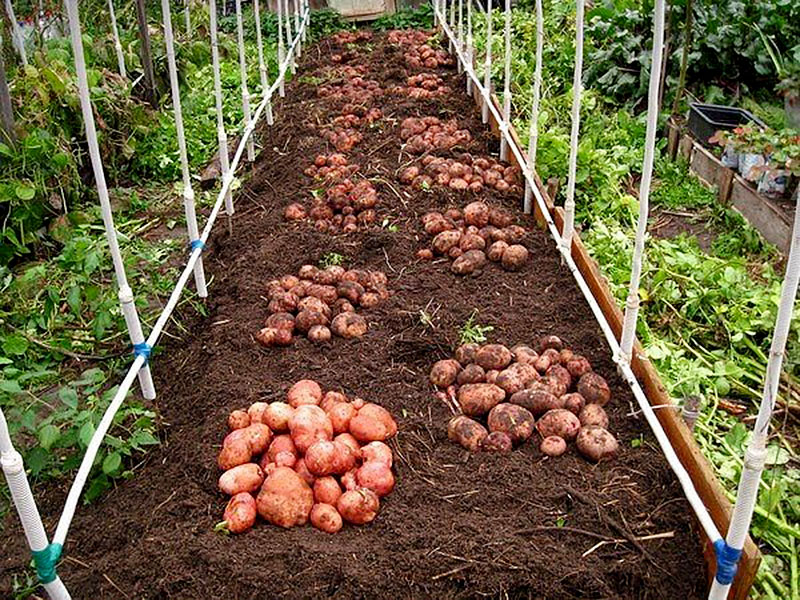
Photo gallery of the Ivan da Marya potato variety:
Melody (Netherlands)
- Ripening period: 95-115 days (mid-late).
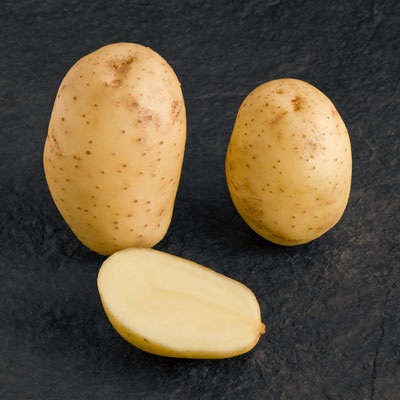
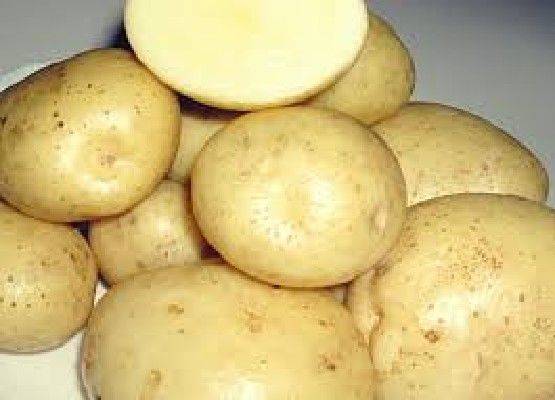
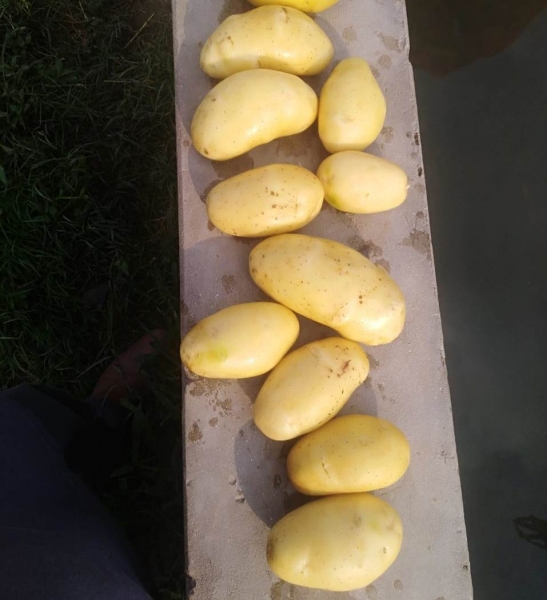
- Tubers: round-oval, fairly smooth, yellow skin and flesh, weight 96-179 g.
- Starch content: 11-17%.
- Culinary type: WITH
- Productivity: 176-335 c/ha, maximum - 636 c/ha (Moscow region).
- Disease resistance: resistant to cancer, nematode, rugose and striped mosaic, moderately resistant to late blight.
- Advantages: good resistance to diseases, high adaptability and productivity, good drought tolerance, good and excellent taste, high marketability (87-95%) and shelf life (95%).
- Flaws: No.
- 2009.
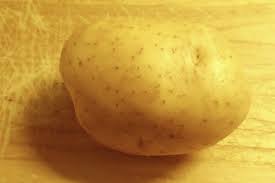
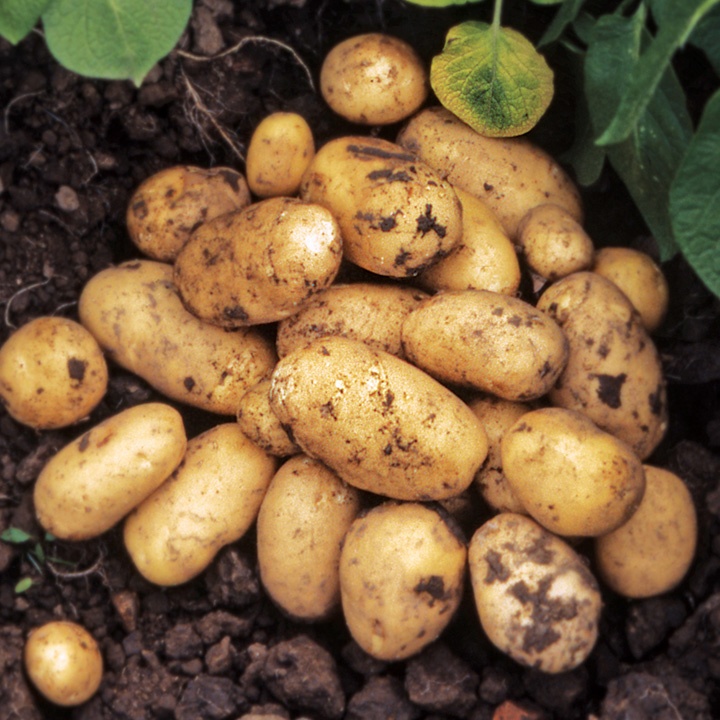
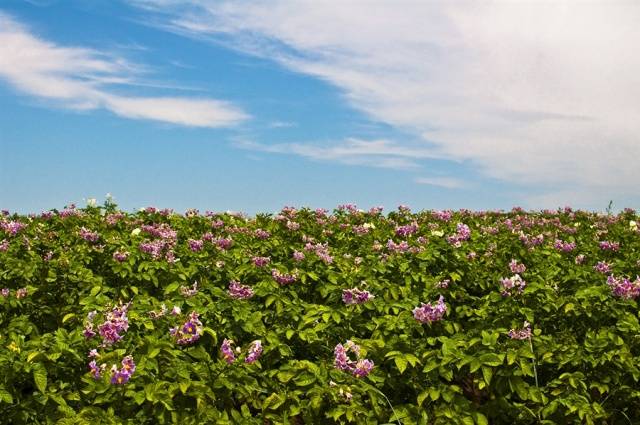
Photo gallery of the Melodiya potato variety:
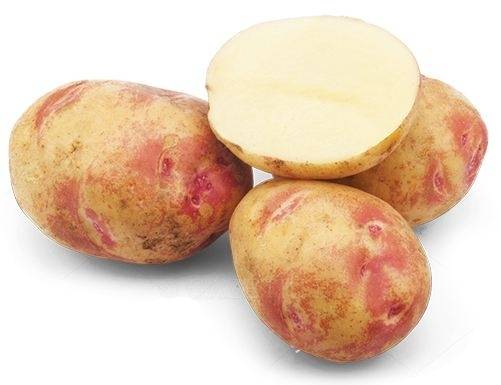
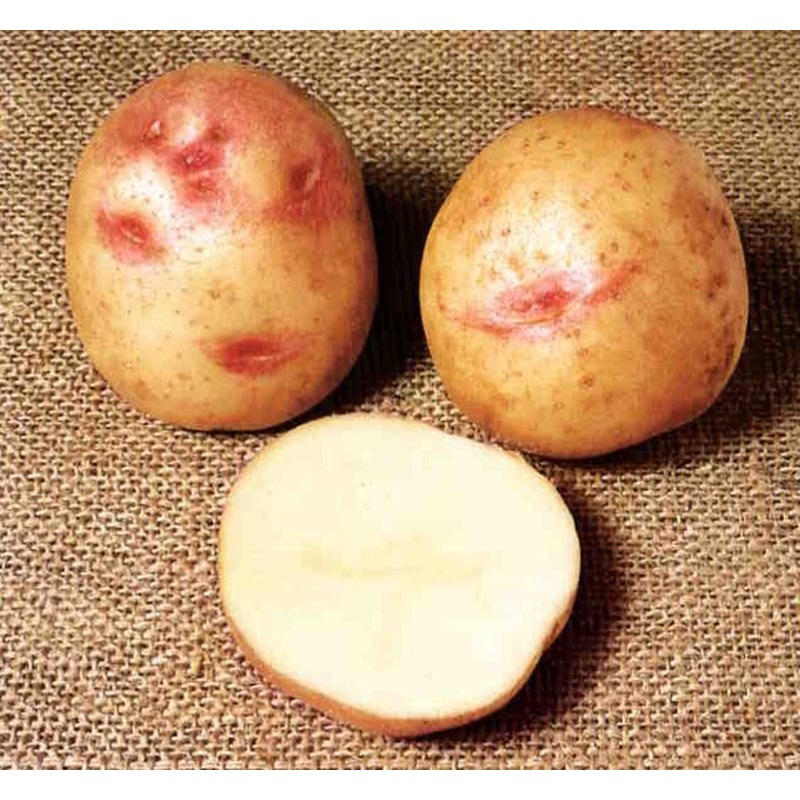
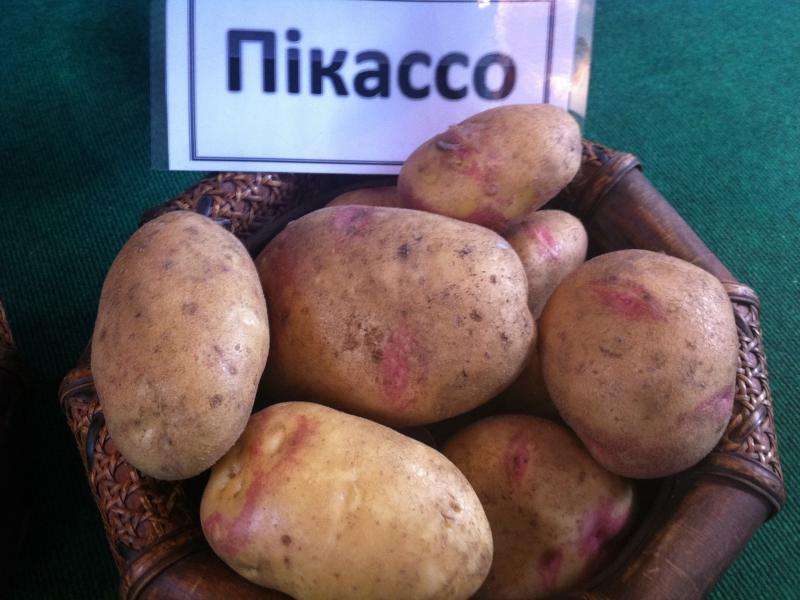
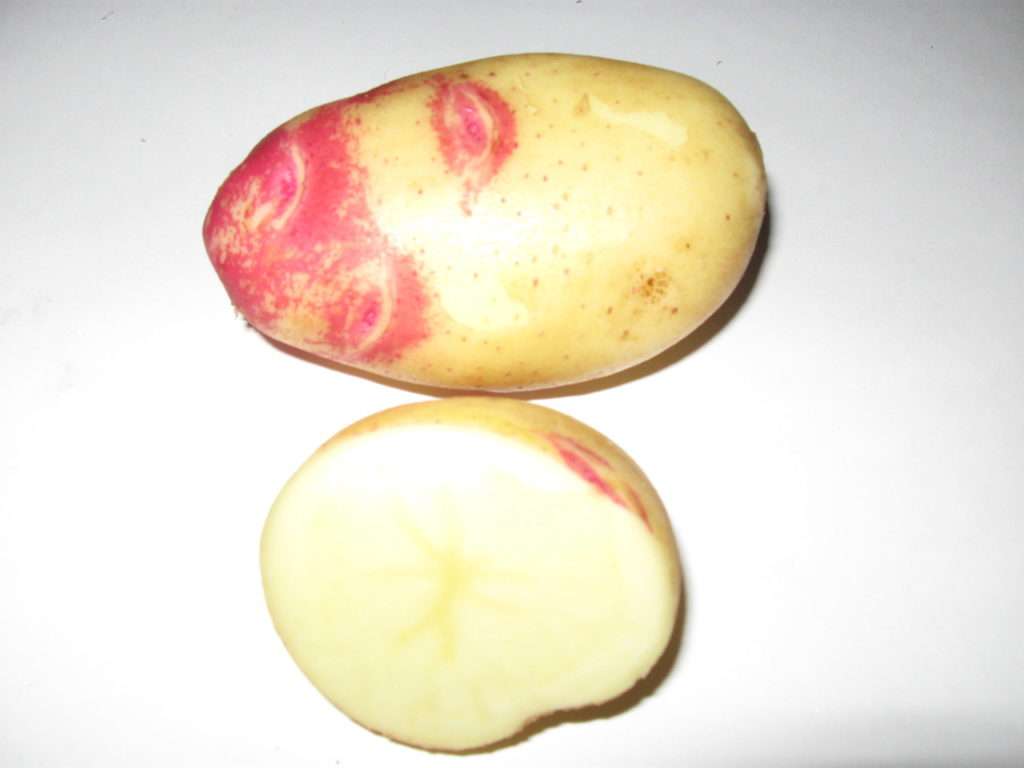
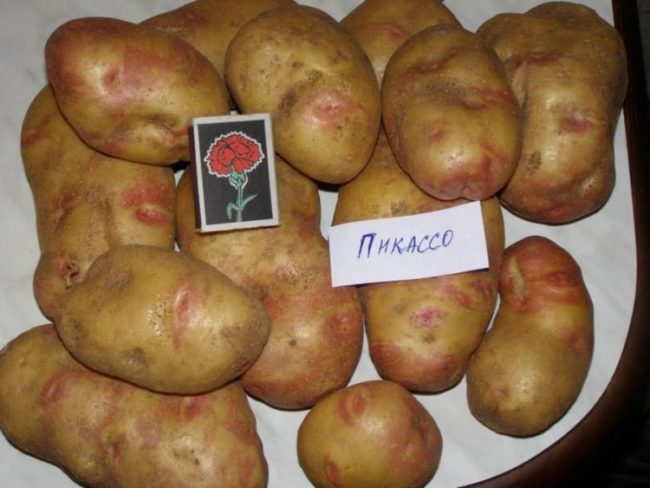
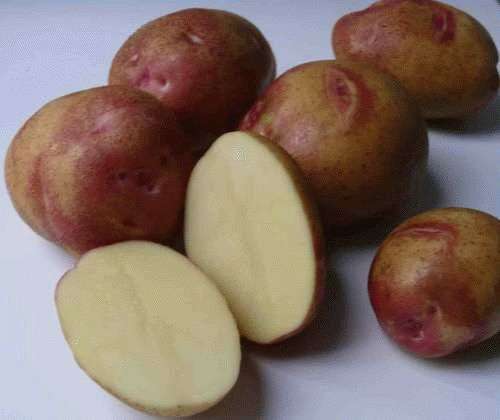
Picasso (Netherlands)
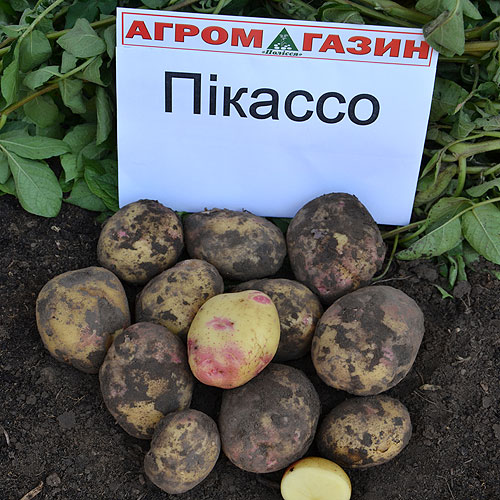
- Ripening period: 110-130 days (late ripening).
- Tubers: large, round-oval, yellow skin with small pink eyes, creamy flesh, weight 75-126 g.
- Starch content: 7.9-13.5%.
- Culinary type: IN
- Productivity: 193-320 c/ha, maximum - 321 c/ha.
- Disease resistance: resistant to many viruses, cancer, nematodes, moderately resistant to leaf curl, scab, susceptible to late blight.
- Advantages: high or medium resistance to all known potato diseases, beautiful tubers, resistance to high air and soil temperatures during the growing season, drought, does not require a large amount of fertilizers.
- Flaws: slow ripening, taste qualities are significantly reduced if fertilizers are not used, has a satisfactory and good taste, marketability is average (79-94%), as is keeping quality (83-90%).
- 1995.
Photo gallery of the Picasso potato variety:
This group also includes the Golubizna, Zhuravinka, Kiwi, and Lasunak varieties. Their descriptions are provided in the TOP-33 list.
245 of the best seed potato varieties for different regions of Russia and the CIS
We also recommend checking out our review of the best seed potatoes in different regions of the Russian Federation.
TOP 31 seed potato varieties for the Northern and Northwestern regions
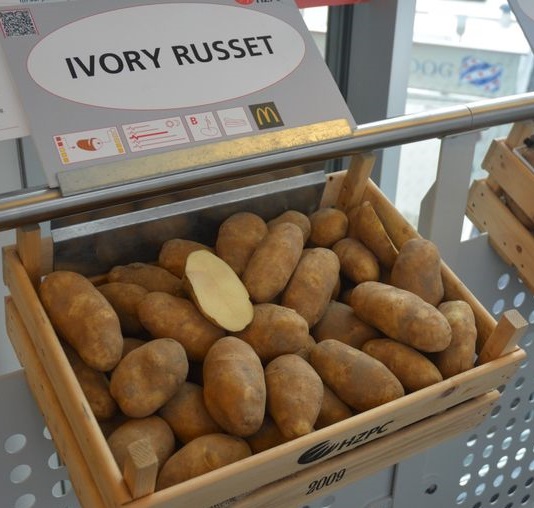
Ivory Russet (Netherlands)
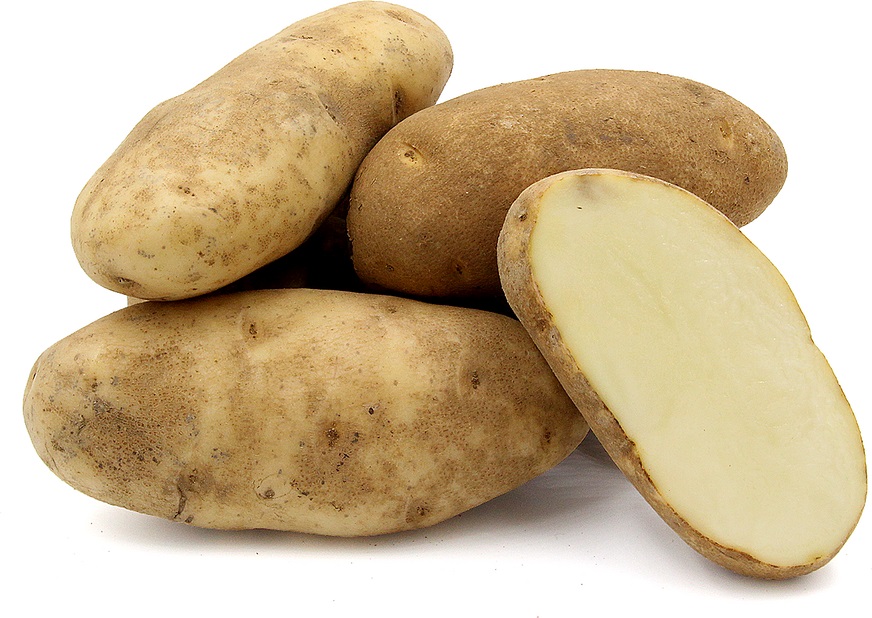
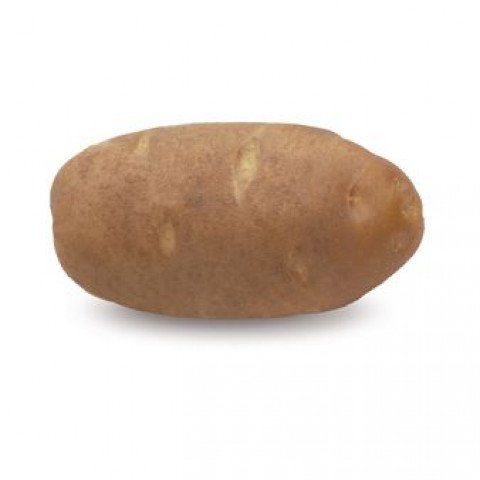
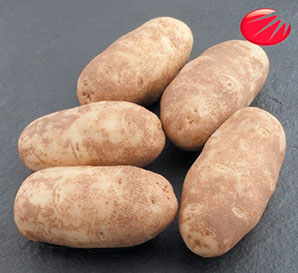
- Ripening period: 45-65 days (early maturing).
- Tubers: elongated, oval, with small eyes, yellow skin, white flesh, weight 82-181 g.
- Starch content: 16.2-18.2%.
- Culinary type Armed Forces
- Productivity: 144-312 c/ha, on the 45th day - 62-121 c/ha, on the 55th - 153-208 c/ha, maximum - 420 c/ha (Sverdlovsk region).
- Disease resistance: resistant to cancer, nematode, moderately resistant to late blight.
- Advantages: pleasant taste, good yield, early ripening, good flavor, good shelf life (93%).
- Flaws. marketability may not be very high (73-96%).
- 2015.
Photo gallery of the Ivory Russet potato variety:
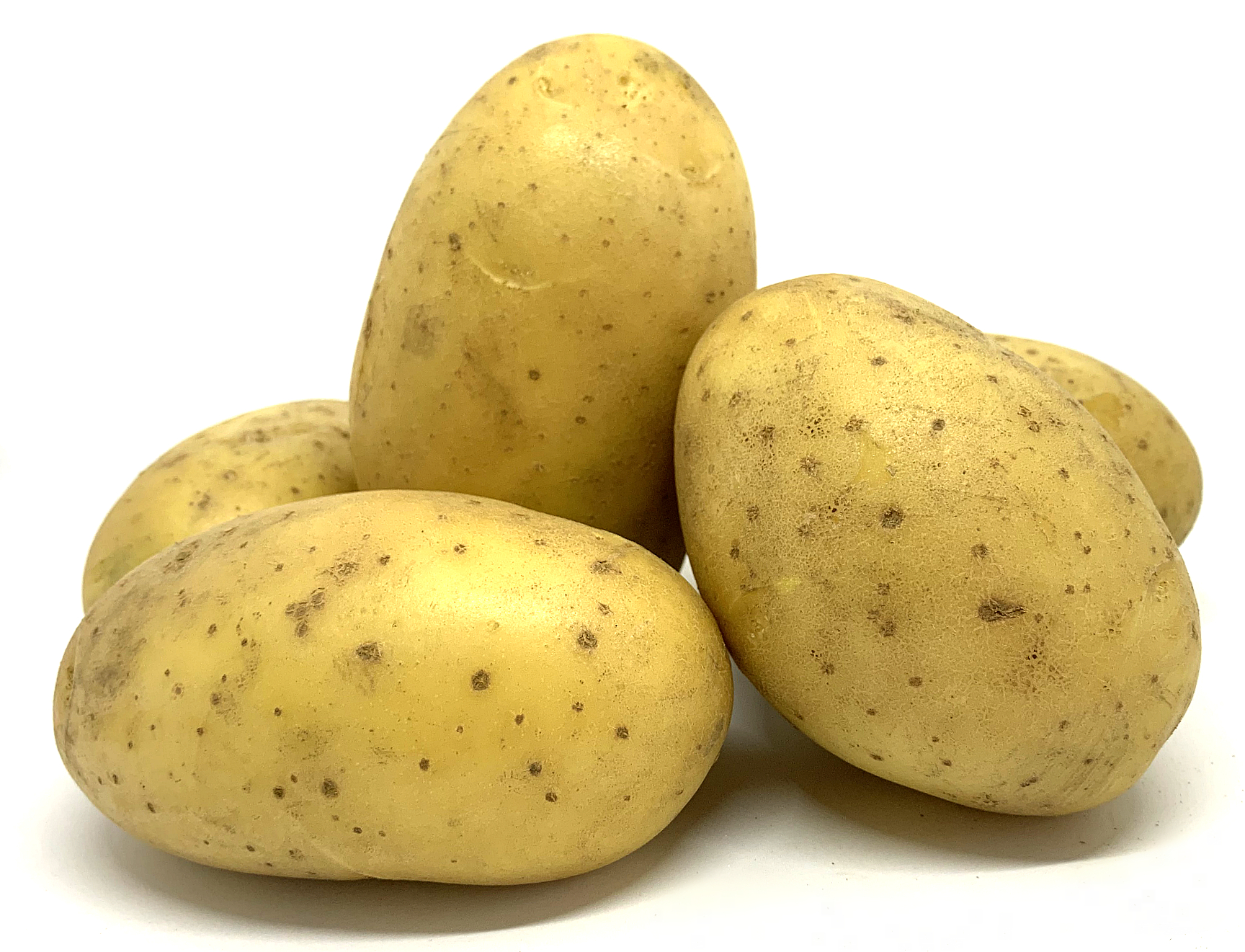
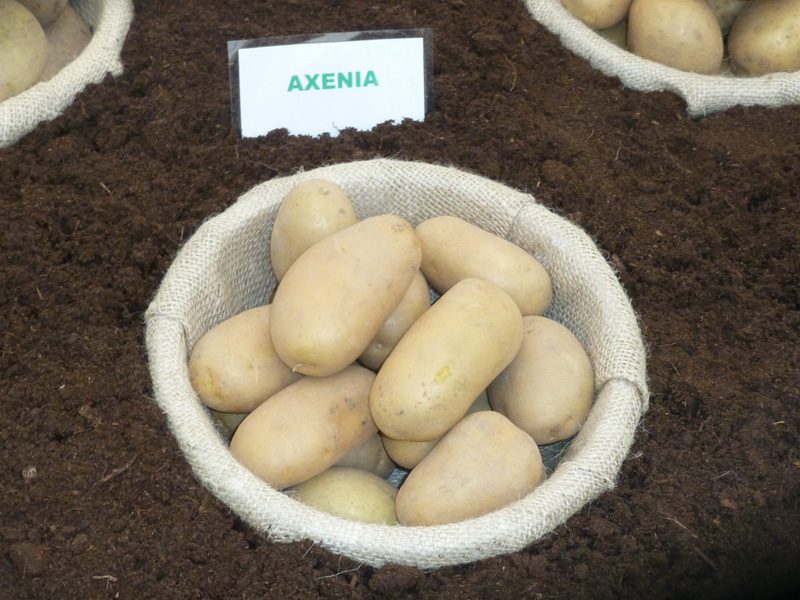
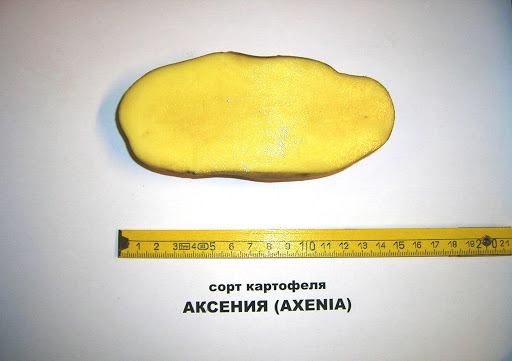
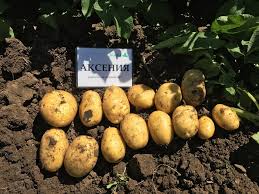
Aksenia (Germany)
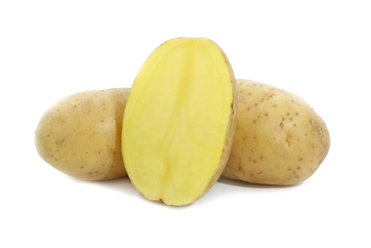
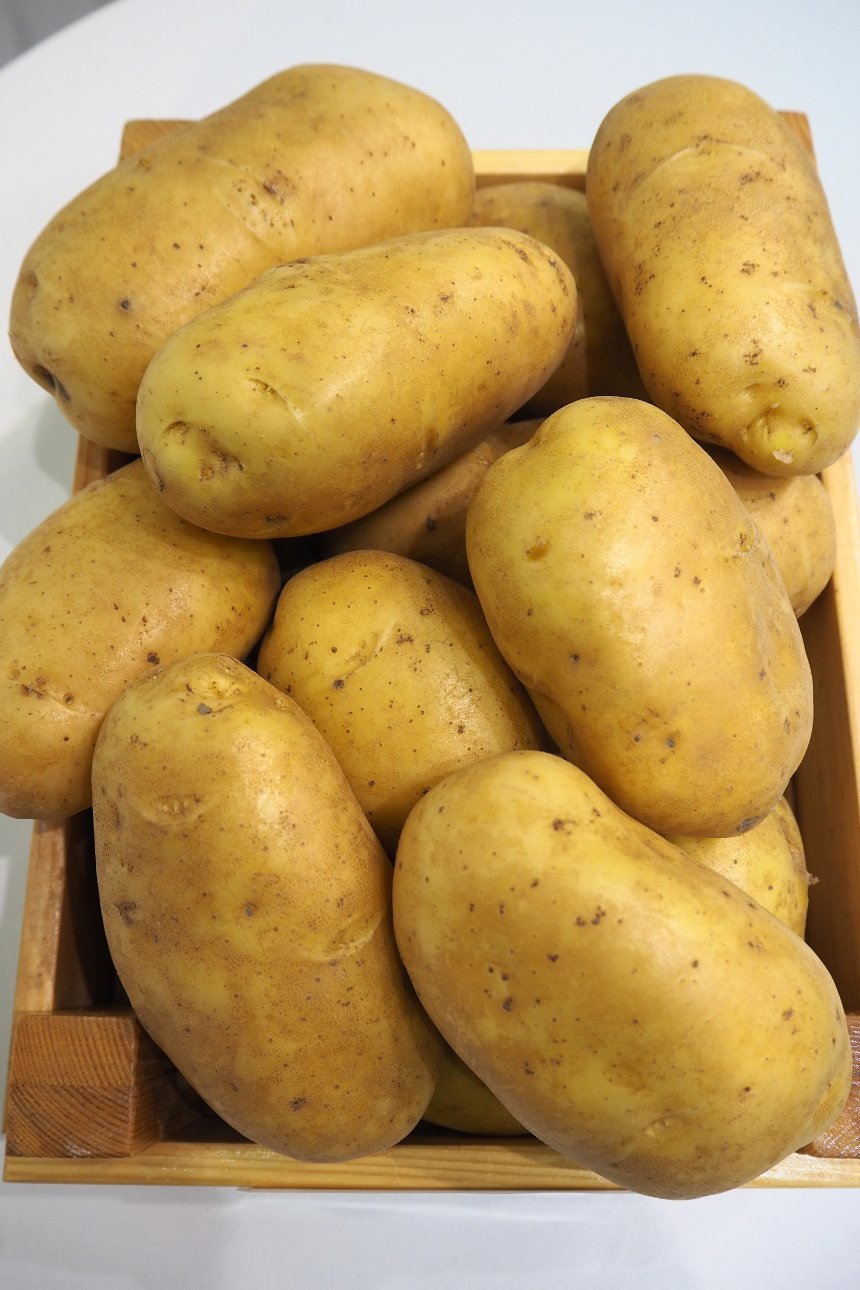
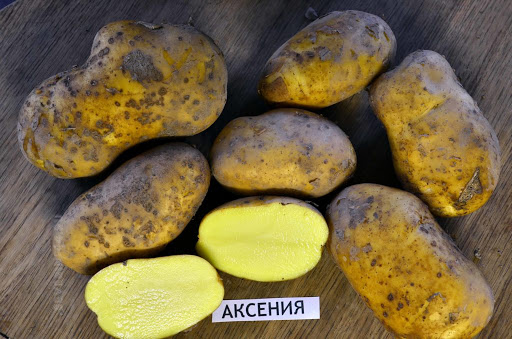
- Ripening period: 65-75 days (early maturing, since you can already dig up on the 45th day).
- Tubers: elongated-oval with small eyes, light yellow skin, deep yellow flesh, weight 82-122 g.
- Starch content:12.2-13%.
- Culinary type: IN
- Productivity: 217-264 c/ha, and on the 45th day - 158-187 c/ha, on the 55th - 184-279 c/ha, maximum - 516 c/ha (Vologda region).
- Disease resistance: resistant to cancer, nematode, rugose and striped mosaic, moderately resistant to late blight.
- Advantages: stable yield, smooth tubers, good marketability (85-98%) and good shelf life (92%), good taste.
- Flaws: if agricultural practices are improper, it can be affected by late blight.
- 2015.
Photo gallery of the Aksenia potato variety:
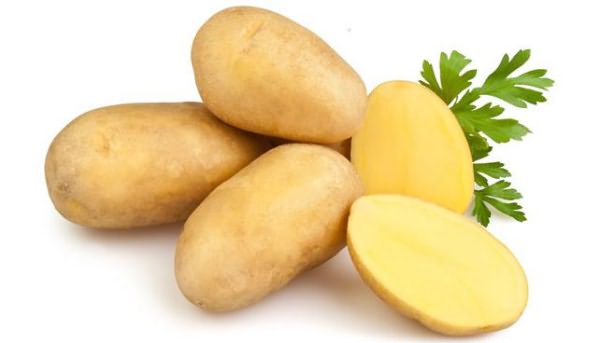
Alova (France)
- Ripening period: 60-70 days (early maturing). On the 45th day, you can already dig up.
- Tubers: elongated-oval with small eyes, smooth, yellow skin, light yellow flesh, weight 95-217 g.
- Starch content: 10-11.8%.
- Culinary type: AB
- Productivity: 194-396 c/ha, on the 45th day - 107-207 c/ha, on the 55th - 202-300 c/ha, maximum - 477 c/ha (Moscow region).
- Disease resistance: resistant to cancer, nematode, moderately susceptible to late blight of tops, susceptible to late blight of tubers.
- Advantages: good yield, large tubers, good taste, excellent marketability (88-98%) and shelf life (94%).
- Flaws: often suffers from tuber blight.
- 2007.
Photo gallery of the Alova potato variety:
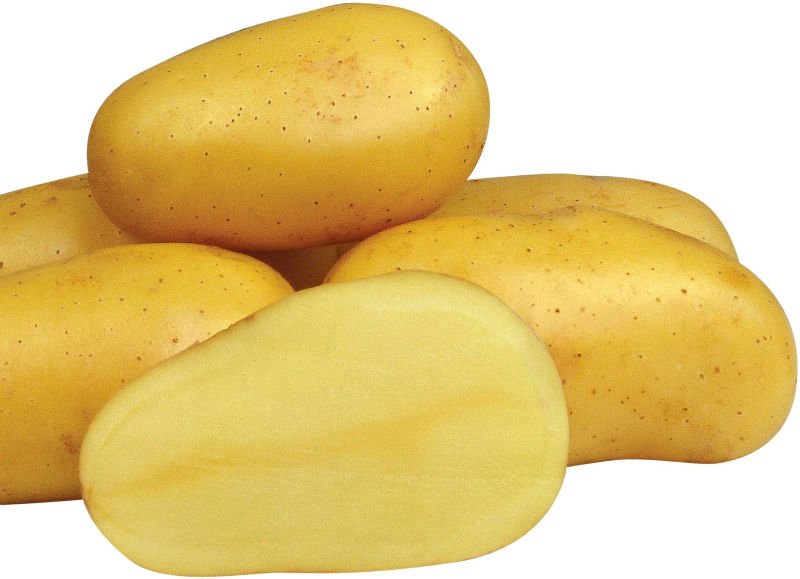
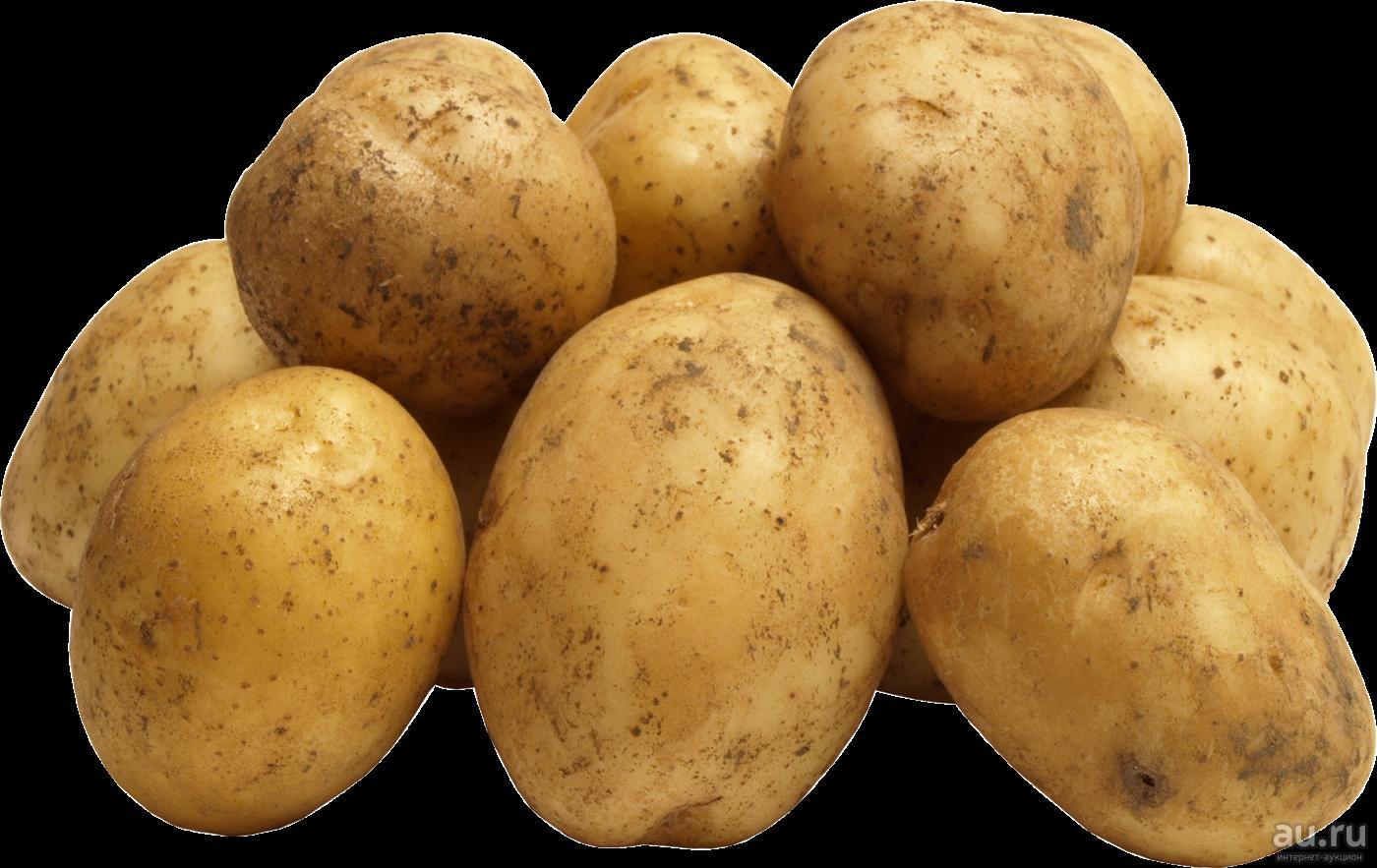
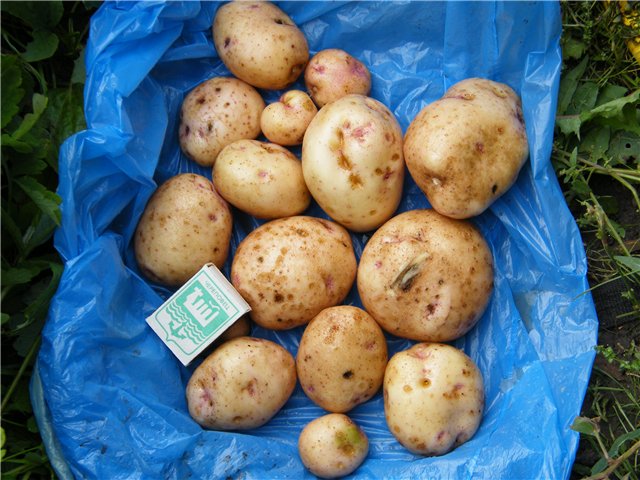
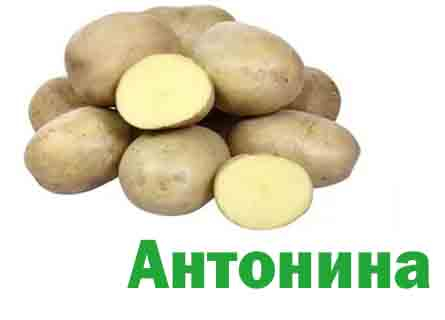
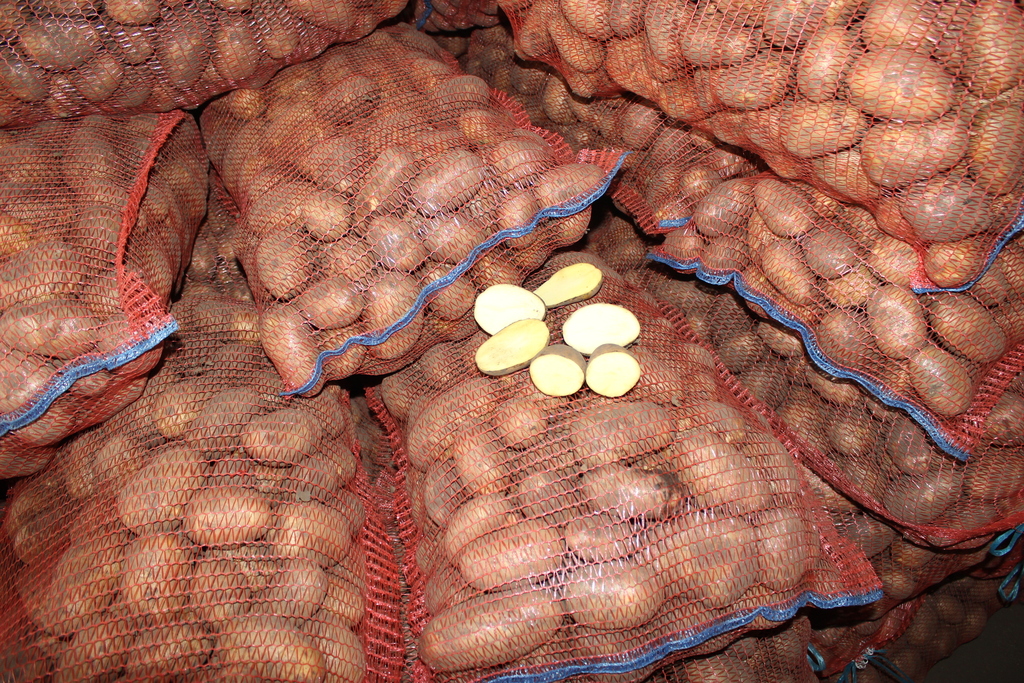
Antonina (Russia)
- Ripening period: 50-65 days (early maturing).
- Tubers: oval with medium-depth eyes, slightly rough skin, yellow, flesh color slightly lighter, weight 104-153 g.
- Starch content:15.9-19.4%.
- Culinary type: CD
- Productivity: 211-300 c/ha, maximum - 426 c/ha (Kemerovo region).
- Disease resistance: resistant to cancer, scab, moderately susceptible to late blight, susceptible to nematodes.
- Advantages: unpretentiousness, high shelf life (95%), good marketability (80-94%), good taste.
- Flaws: susceptibility to late blight and nematodes.
- 2005.
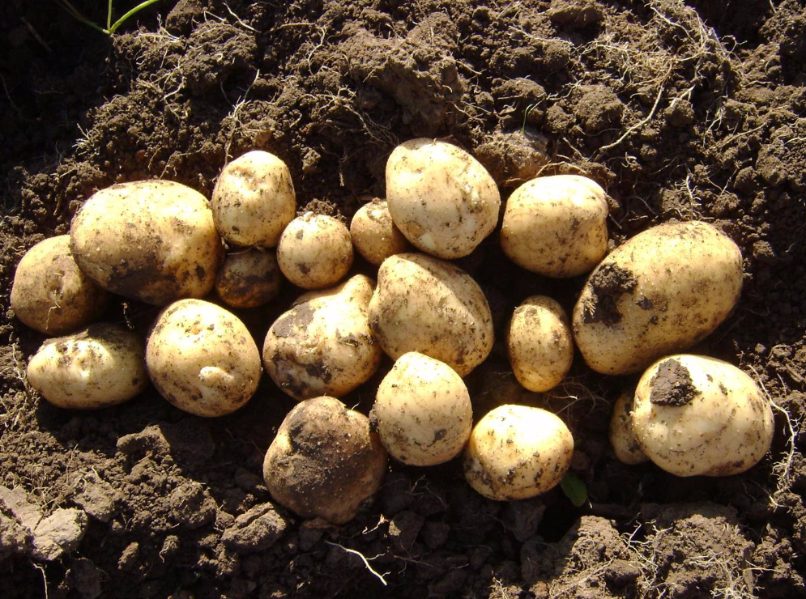
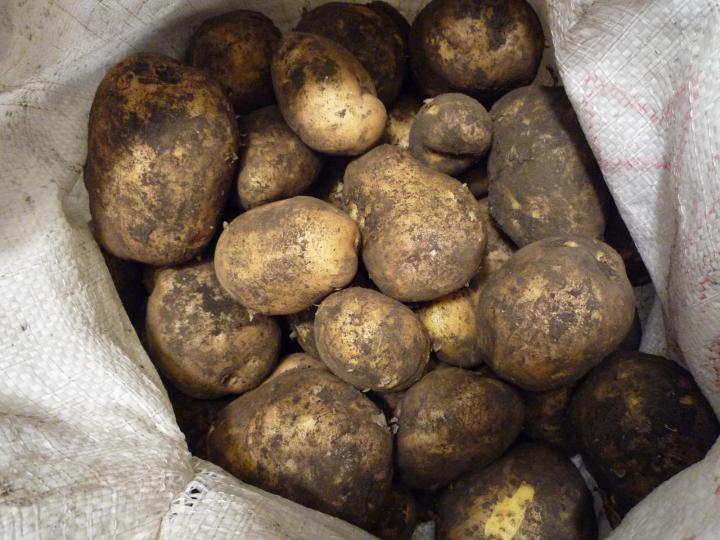
Photo gallery of the Antonina potato variety:
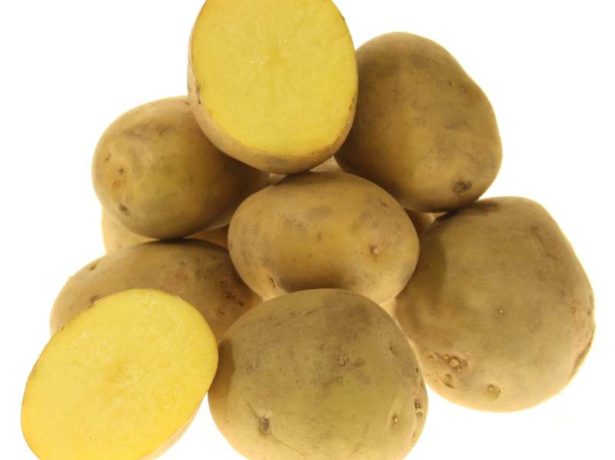
Bafana (Netherlands)
- Ripening period: 100-110 days (mid-late).
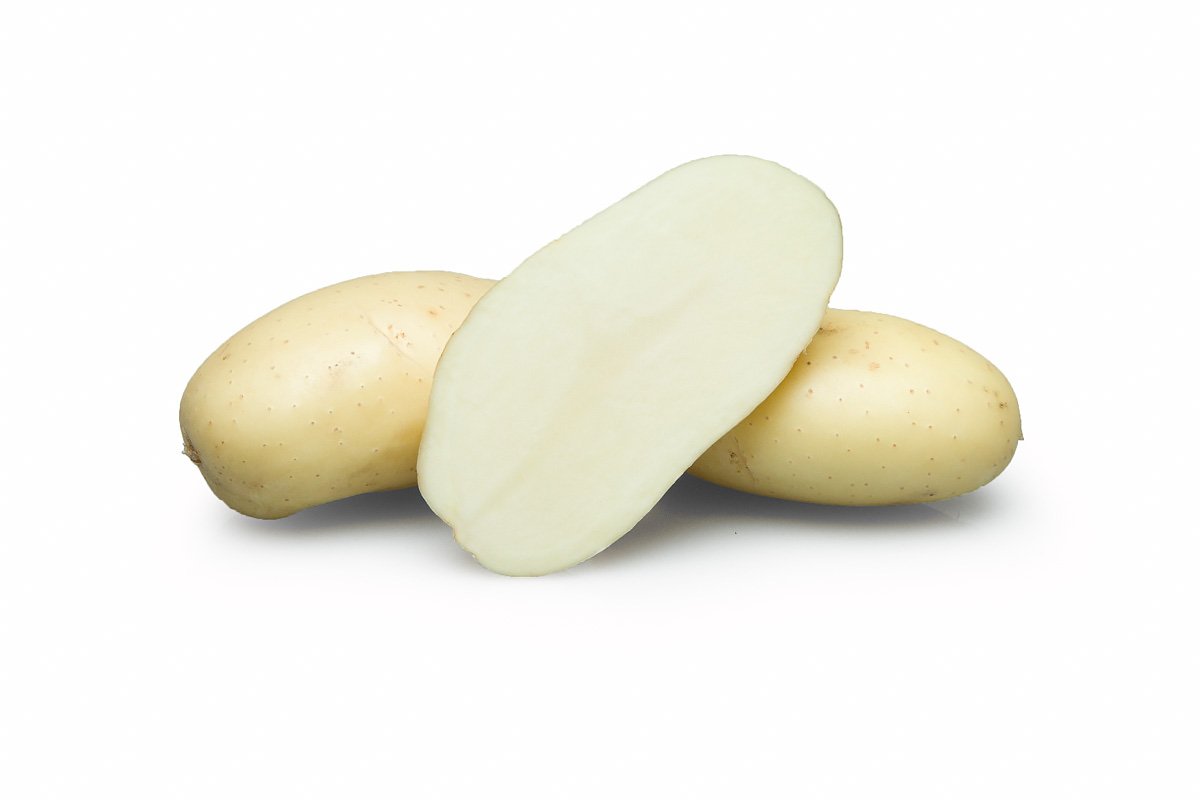
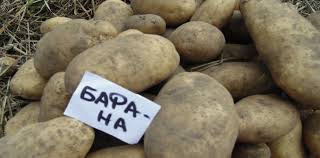
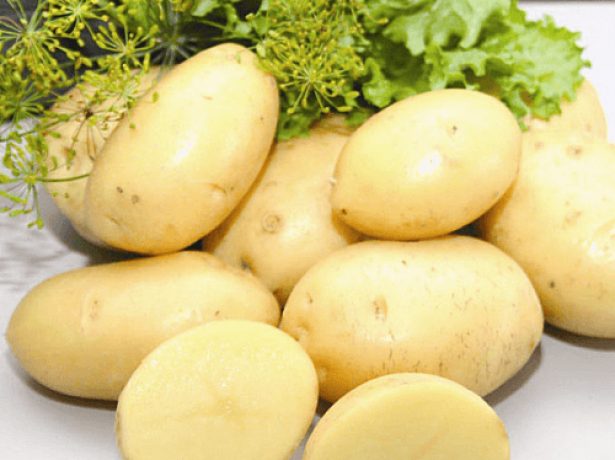
- Tubers: large, elongated-oval with small eyes, yellow skin, almost white flesh, weight 105-156 g.
- Starch content: 14.2-16.2%.
- Culinary type: Sun
- Productivity: 221-442 c/ha, maximum - 526 c/ha (Vologda region).
- Disease resistance: resistant to cancer, nematode, moderately susceptible to late blight.
- Advantages: large tubers and good yield, good and excellent taste, high shelf life (95%) and a good marketability rate (85-98%).
- Flaws: susceptibility to late blight.
- 2013.
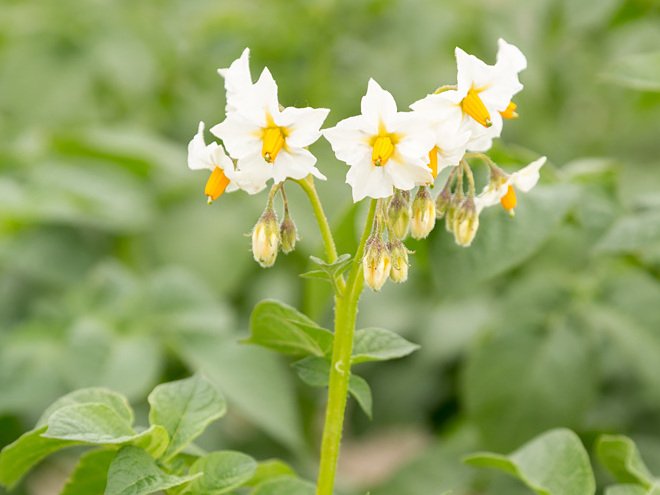
Photo gallery of the Bafana potato variety:
Visa (Russia)
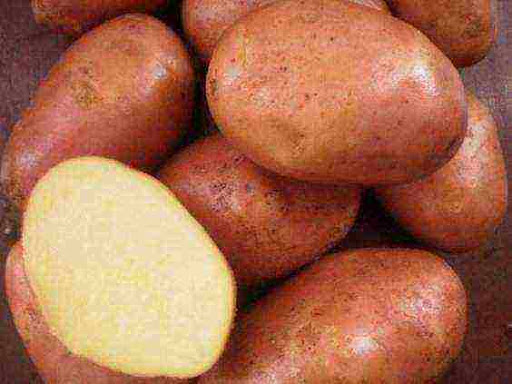
- Ripening period: 65-80 days (mid-early).
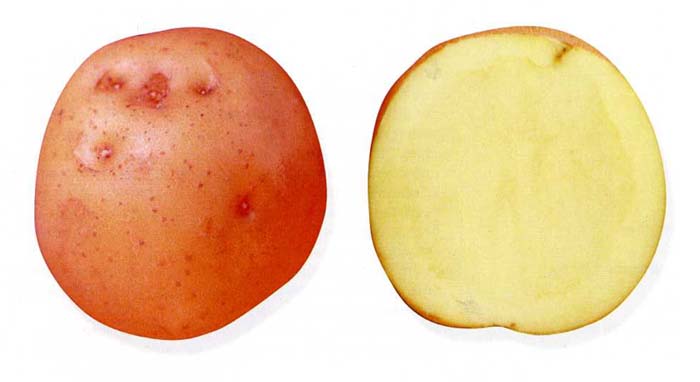
- Tubers: oval-round with medium to deep eyes, reddish skin, light yellow flesh, weight 72-120 g.
- Starch content: 13.7-18.7%.
- Culinary type: Sun
- Productivity: 169-326 c/ha, maximum - 466 c/ha (Kirov region).
- Disease resistance: resistant to cancer, viruses, tuber blight, moderately susceptible to top blight, susceptible to nematodes.
- Advantages: good yield.
- Flaws: average shelf life (89%) and marketability (78-91%), satisfactory and good taste.
- 2005.
Photo gallery of the Visa potato variety:
Gloria (Russia)
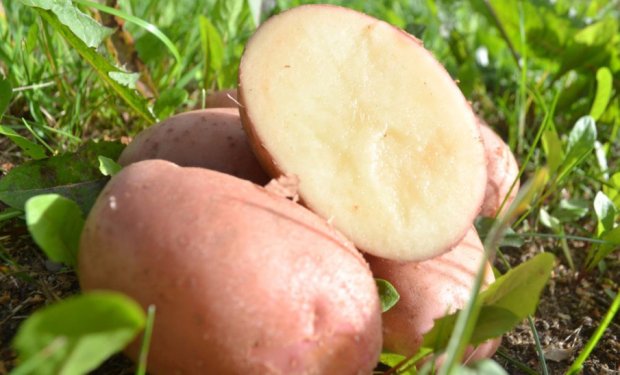
- Ripening period: 60-70 days (early maturing).
- Tubers: oval with small eyes, red skin and light yellow flesh, weight 80-130 g.
- Starch content: 13.9-15.6%.
- Culinary type: AB
- Productivity: 247-417 c/ha, on the 45th day - 118-240 c/ha, on the 55th - 165-346 c/ha, maximum - 588 c/ha (Vologda region).
- Disease resistance: resistant to cancer, nematode, rugose and striped mosaic, moderately resistant to late blight.
- Advantages: good and excellent taste, high shelf life (97%), good marketability (84-96%).
- Flaws: No.
- 2013.
Photo gallery of the Gloria potato variety:
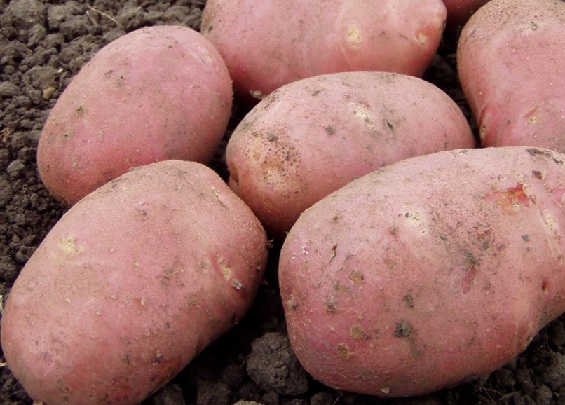
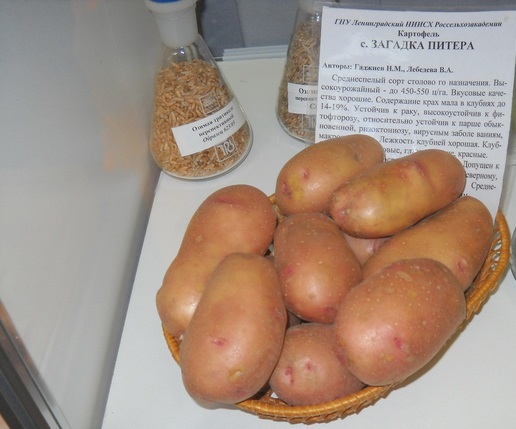
The Riddle of Peter (Russia)
- Ripening period: 80-95 days (mid-season).
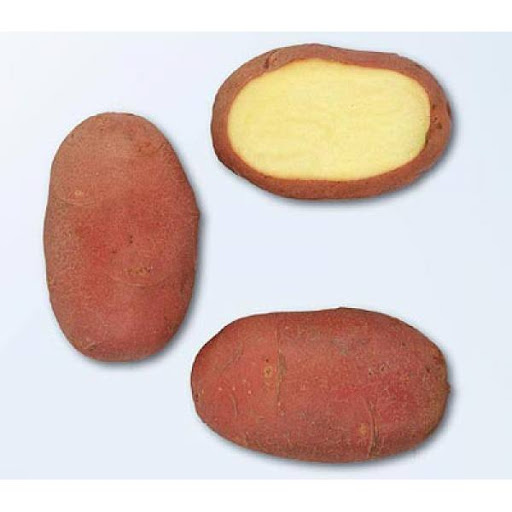
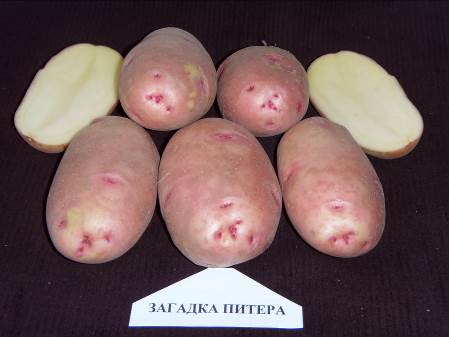
- Tubers: oval, oblong with medium-depth eyes, red smooth skin and creamy flesh, weight 92-124 g.
- Starch content: 10-12.5%.
- Culinary type: AB
- Productivity: 192-336 c/ha, maximum - 460 c/ha (Khabarovsk Krai).
- Disease resistance: resistant to cancer, rhizoctonia, scab, moderately susceptible to viruses, tuber blight, susceptible to nematodes.
- Advantages: good taste, good marketability (86-96%) and shelf life (94%).
- Flaws: affected by nematodes, late blight, viruses.
- 2005.
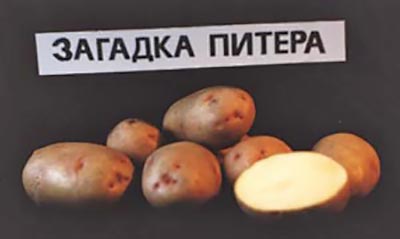
Photo gallery of the potato variety Zagadka Pitera:
The following varieties are also suitable for the Northern and Northwestern regions: Aurora, Lugovskoy, Nevsky, Ryabinushka, Sante, Felox, and Charodey. The following varieties can only be grown in the Northwestern region: Bellarosa, Briz, Gala, Zhukovsky Ranniy, Zhuravinka, Impala, Kolomba, Queen Anna, Lasunak, Manifest, Red Scarlet, Rosara, Svitanok Kyiv, Skarb, Udacha, and Uladar. Descriptions of all are provided in this article.
TOP 47 seed potato varieties for the Central region, including the Moscow region
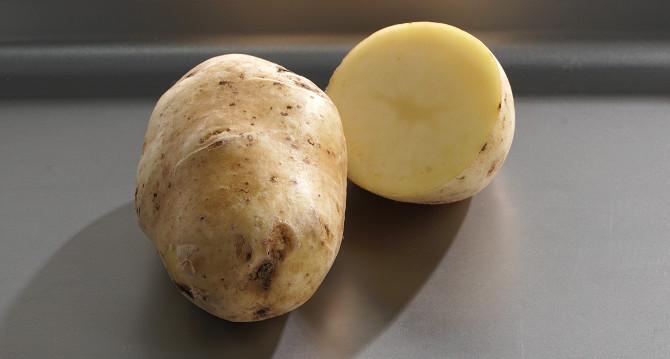
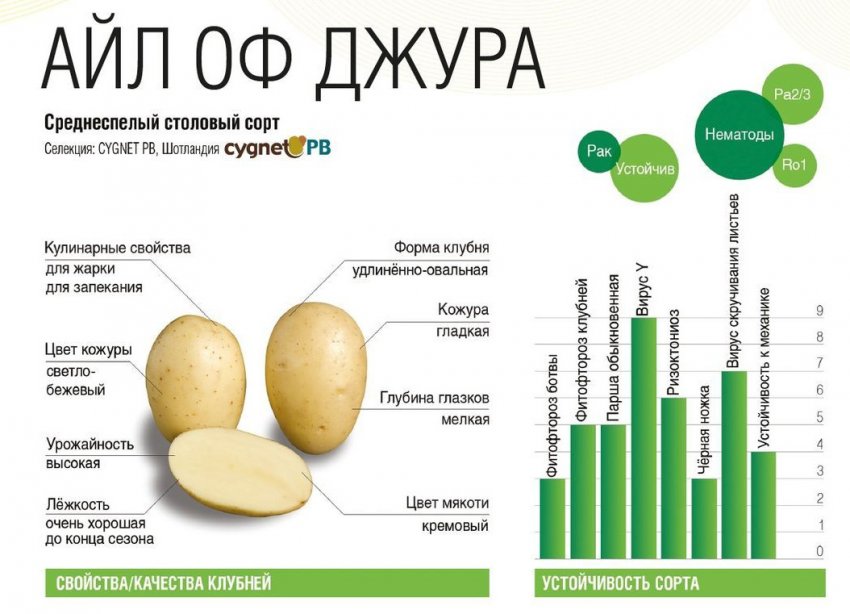
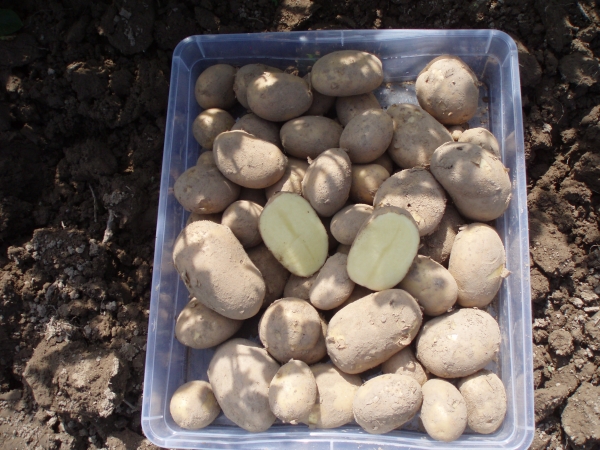
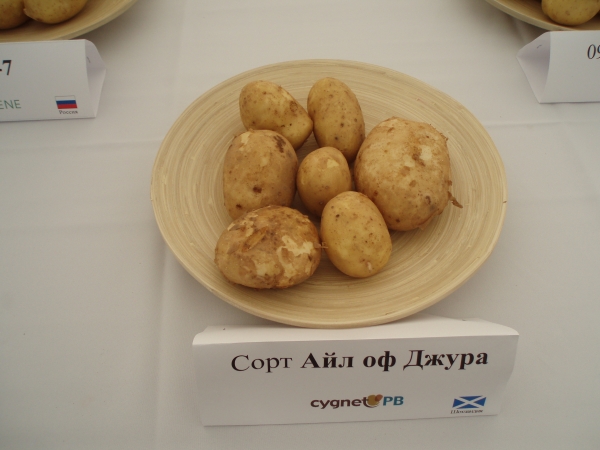
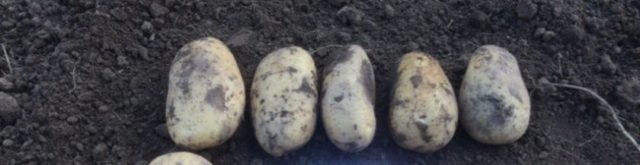
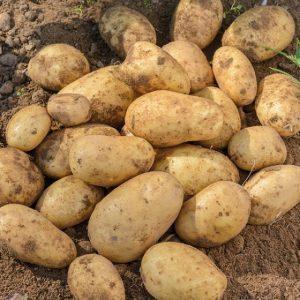
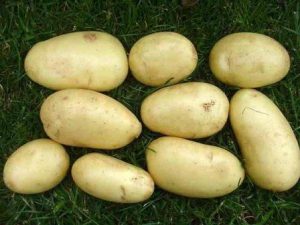
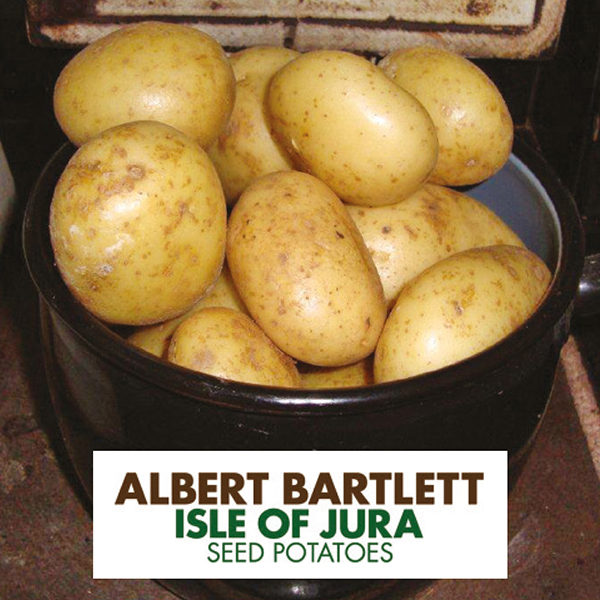
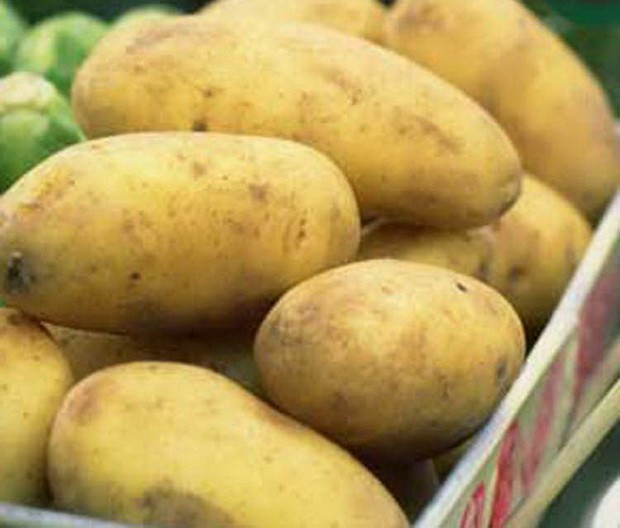
Isle of Jura (Russia and Great Britain)
- Ripening period: 65-80 days (mid-early).
- Tubers: elongated-oval with very small eyes, yellow rough skin and light yellow flesh, weight 88-192 g.
- Starch content: 12-16.2%.
- Culinary type: AB
- Productivity: 248-338 c/ha, maximum - 415 c/ha (Vladimir region).
- Disease resistance: resistant to cancer, nematode, moderately susceptible to tuber blight.
- Advantages: frost-resistant, long shelf life (95%), good to excellent taste.
- Flaws: does not tolerate drought, attracts the Colorado potato beetle, marketability is average to high (77-98%).
- 2007.
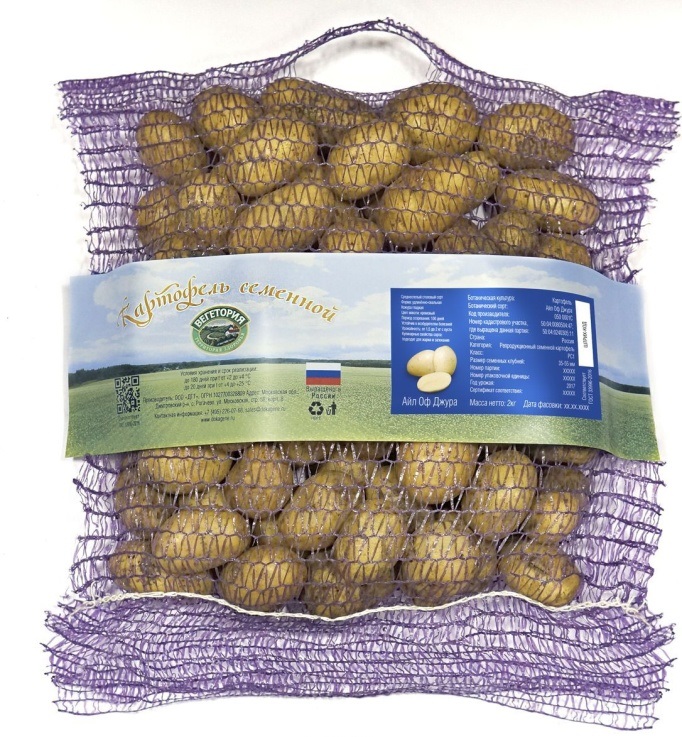
Photo gallery of the Isle of Jura potato variety:
Axona (Hungary)
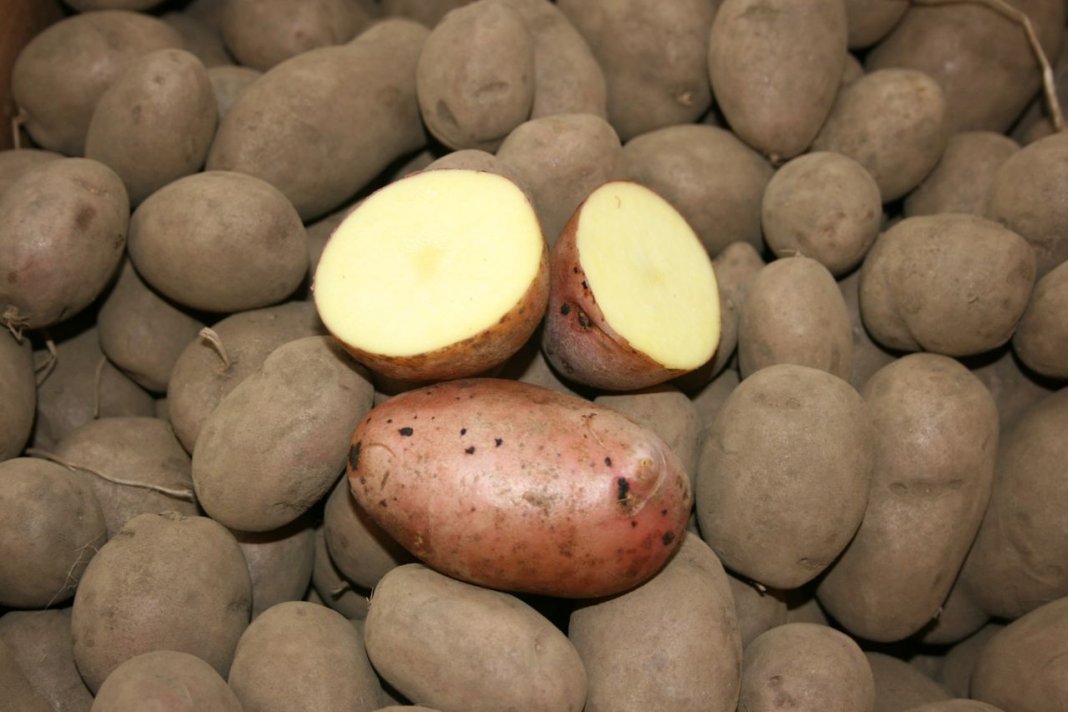
- Ripening period: 85-95 days (mid-season).
- Tubers: elongated-oval with medium-depth eyes, reddish skin and creamy flesh, weight 80-149 g.
- Starch content: 15-18.3%.
- Culinary type: IN
- Productivity: 169-373 c/ha, maximum - 424 c/ha (Tula region).
- Disease resistance: resistant to cancer, nematode, rugose mosaic and leaf curl, moderately resistant to late blight.
- Advantages: large tubers, good yield, high shelf life (96%), good marketability (80-95%), good to excellent taste.
- Flaws: not very high resistance to mechanical damage.
- 2014.
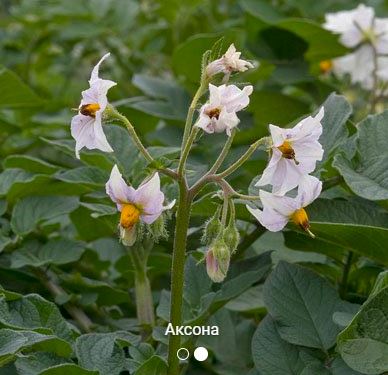
Photo gallery of the Axona potato variety:
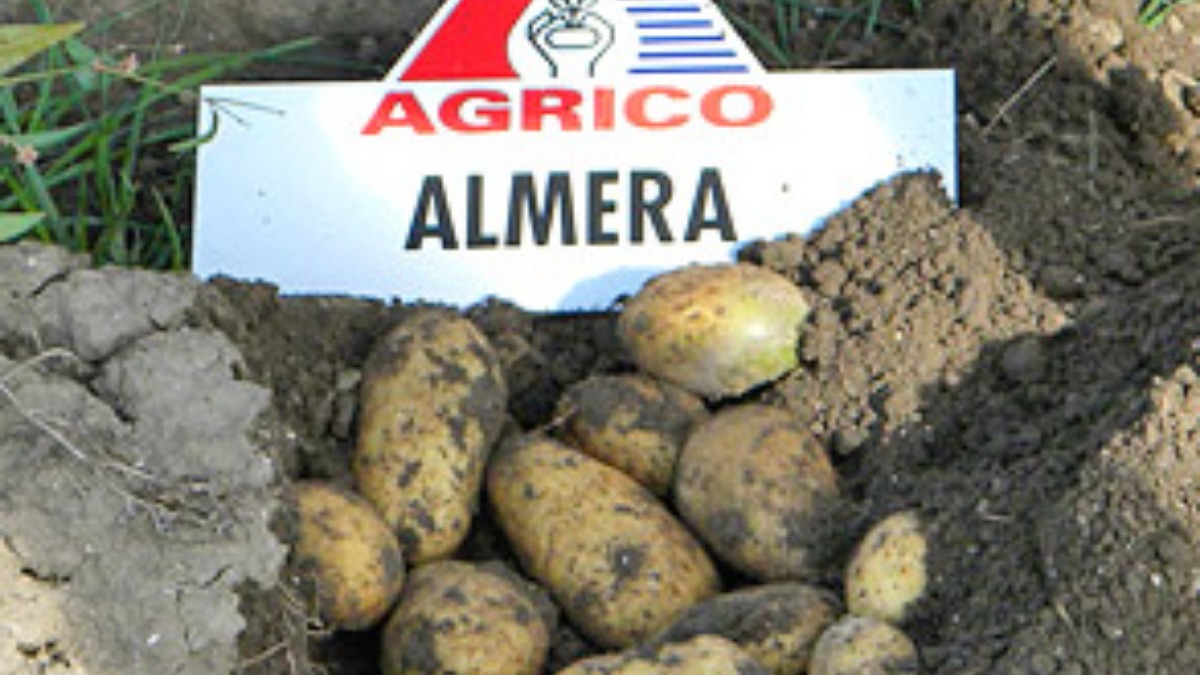
Almera (Netherlands)
- Ripening period: 70-90 days (mid-early).
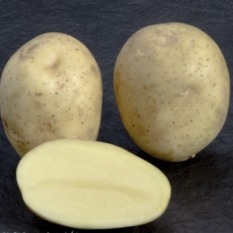
- Tubers: oval with small eyes, smooth, yellow skin, slightly lighter flesh, weight 106-142 g.
- Starch content: 9.8-10.4%.
- Culinary type: A
- Productivity: 157-409 c/ha, maximum - 530 c/ha (Moscow region).
- Disease resistance: resistant to cancer, nematodes, wrinkled, striped mosaic and leaf curl, viruses, moderately resistant to scab and late blight.
- Advantages: good disease resistance, stable yield, large tubers, long shelf life (97%), good marketability (81-92%), good taste.
- Flaws: moderately resistant to mechanical damage.
- 2009.
Photo gallery of the Almera potato variety:
Albatross (Germany)
- Ripening period: 80-95 days (mid-season).
- Tubers: medium-sized oval with small eyes, rough skin, both skin and flesh are yellow, weight 64-106 g.
- Starch content: 18.3-22.1%.
- Culinary type: A
- Productivity: 117-166 c/ha, maximum - 213 c/ha (Moscow region).
- Disease resistance: resistant to cancer, nematodes, viruses, rugose and striped mosaic, leaf curl, moderately susceptible to late blight, susceptible to scab.
- Advantages: good taste, good marketability (80-94%), high starch content.
- Flaws: average shelf life (88%) and yield.
- 2000.
Photo gallery of the Albatross potato variety:
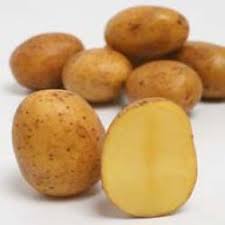
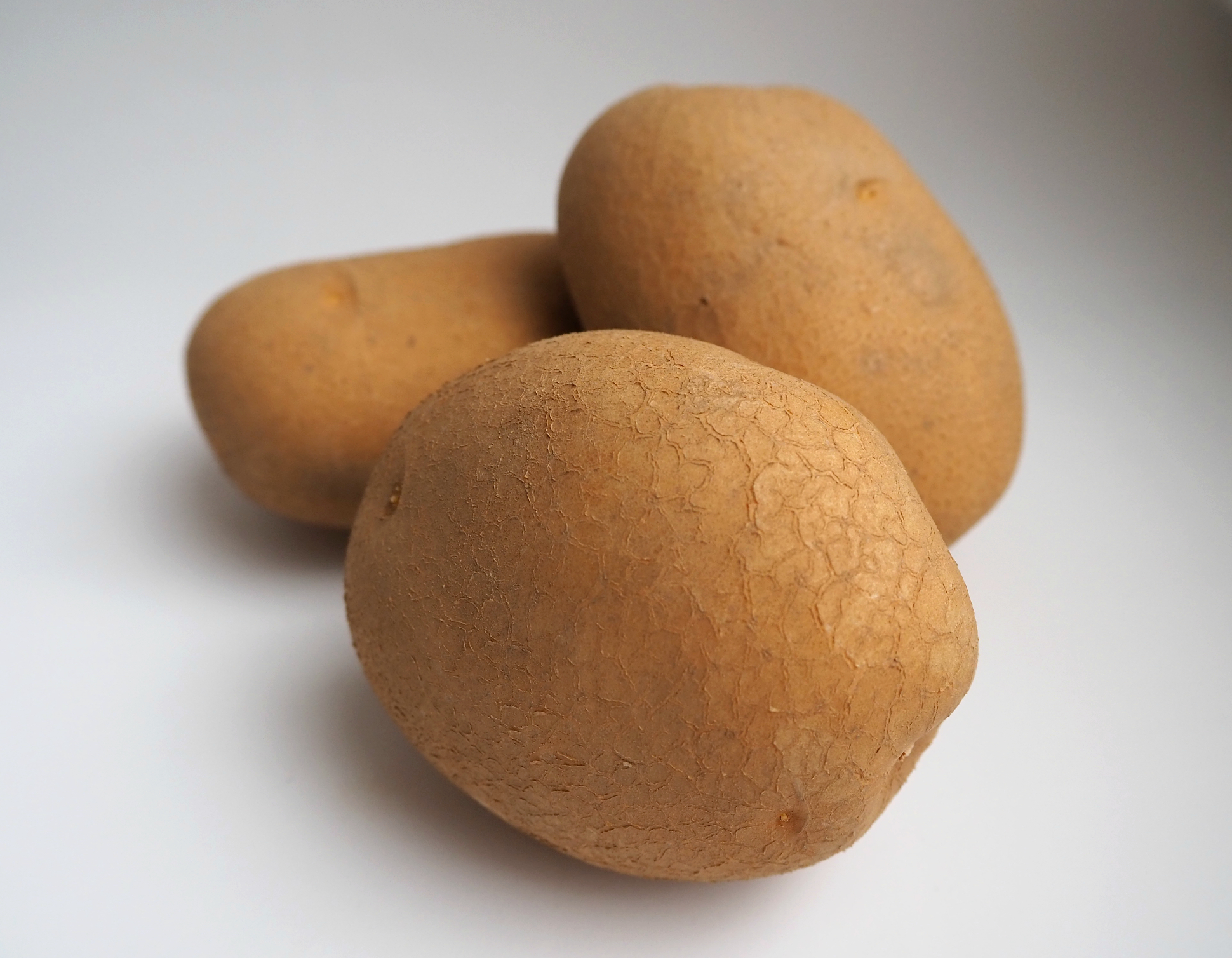
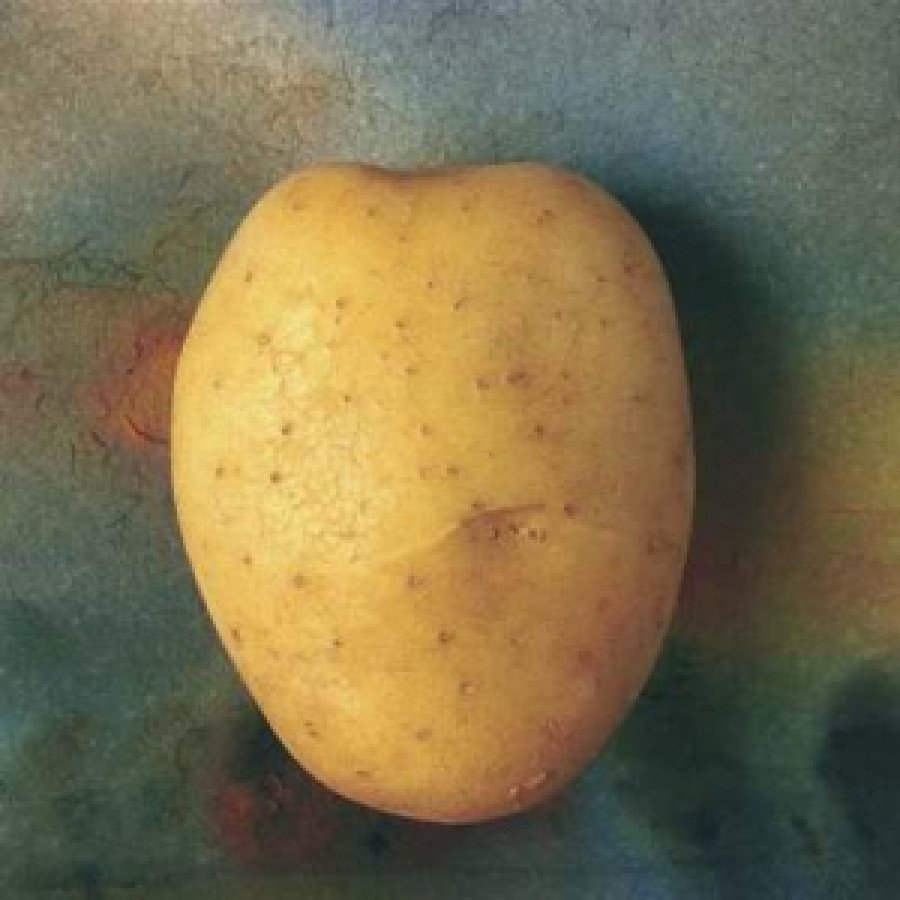
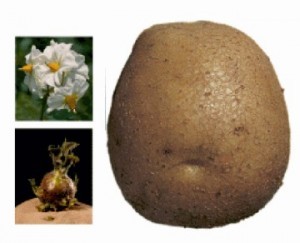
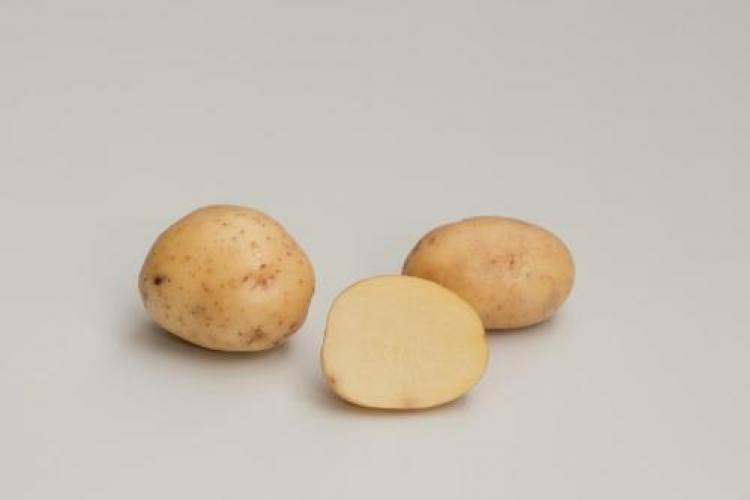
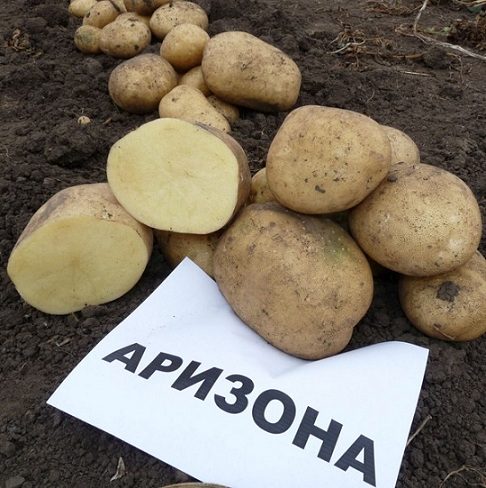
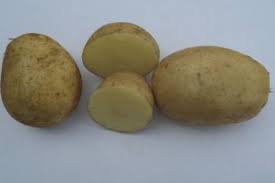
Arizona (Netherlands)
- Ripening period: 70-80 days (mid-early).
- Tubers: elongated-oval with small eyes, even, with smooth yellow skin and light yellow flesh, weighing up to 112-150 g.
- Starch content: 13-16%.
- Culinary type: IN
- Productivity: 225-408 c/ha, maximum - 577 c/ha (Vladimir region).
- Disease resistance: resistant to cancer, nematode, rugose mosaic, relatively resistant to tuber blight, moderately susceptible to top blight.
- Advantages: high yield, good marketability (88-97%) and shelf life (95%), large tuber size, good taste.
- Flaws: susceptibility to late blight.
- 2013.
Photo gallery of the Arizona potato variety:
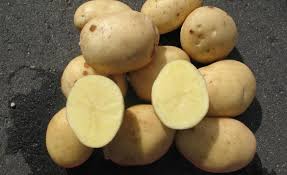
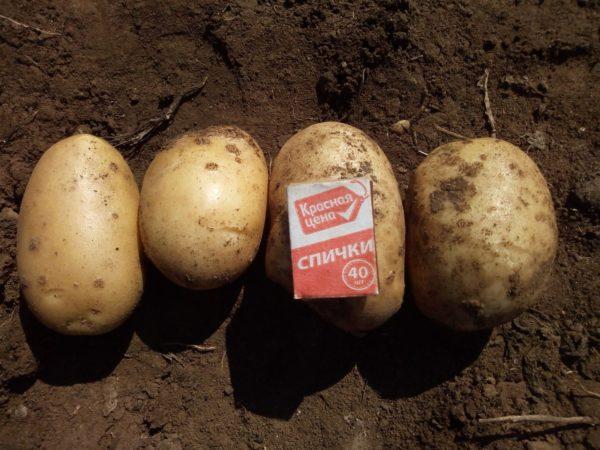

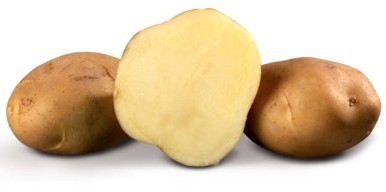
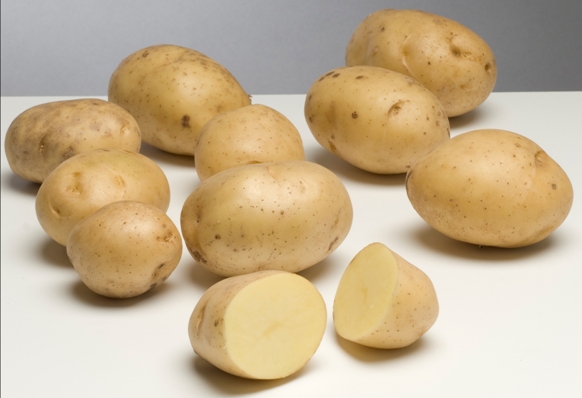
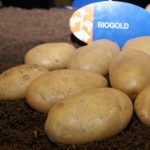
Biogold (Netherlands)
- Ripening period: 50-60 days (early maturing).
- Tubers: oblong-oval, flesh and skin yellow, weight up to 147 g.
- Starch content: 15.4-16.8%.
- Culinary type: Sun
- Productivity: maximum - 300 c/ha.
- Disease resistance: resistant to cancer, nematodes, moderately resistant to viruses, late blight.
- Advantages: large tubers and good yield.
- Flaws: poor shelf life.
- not yet enabled.
Photo gallery of the Biogold potato variety:
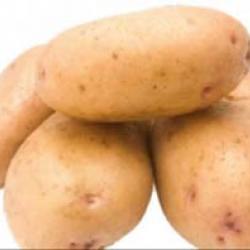
Bryansk Novelty (Russia)
- Ripening period: 80-95 days (mid-season).
- Tubers: oval-round with small eyes, smooth with beige skin and white flesh, weight 66-122 g.
- Starch content: 14-19.3%.
- Culinary type: B, the flesh does not darken when cut.
- Productivity: 160-307 c/ha, maximum - 536 c/ha (Bryansk region).
- Disease resistance: resistant to cancer, late blight, severe forms of viral infection, alternaria, stem nematode, relatively resistant to scab, susceptible to nematode (golden potato).
- Advantages: good taste and productivity.
- Flaws: affected by nematodes, average marketability (73-92%).
- 1998.
Photo gallery of the Bryansk Novinka potato variety:
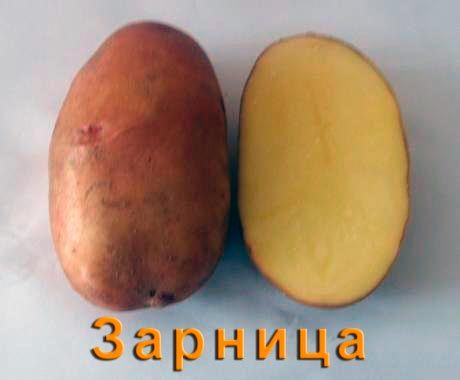
Zarnitsa (Belarus)
- Ripening period: 115-140 days (late ripening).
- Tubers: oval, reddish-pink skin, slightly yellowish flesh, weight up to 120 g.
- Starch content: 12.7-17.3%.
- Culinary type: Sun.
- Productivity: maximum - 527 c/ha.
- Disease resistance: resistant to cancer, relatively resistant to black leg, scab, rhizoctonia, moderately resistant to late blight of leaves and tubers, viruses.
- Advantages: high yield, resistant to drought, mechanical damage and diseases, good keeping quality.
- Flaws: average marketability.
- not yet enabled.
Photo gallery of the Zarnitsa potato variety:
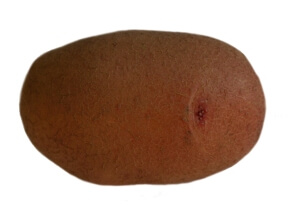
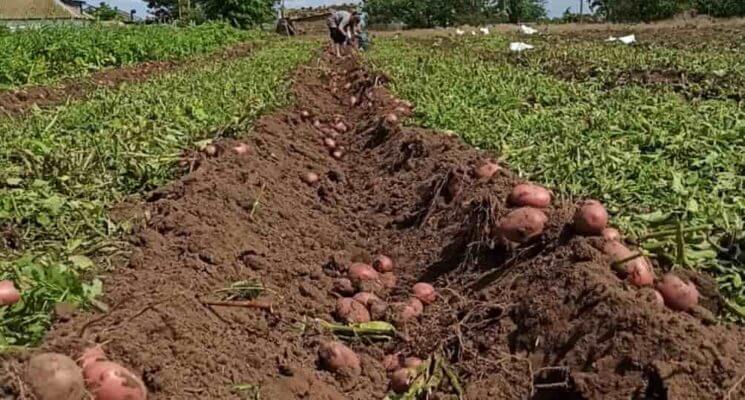
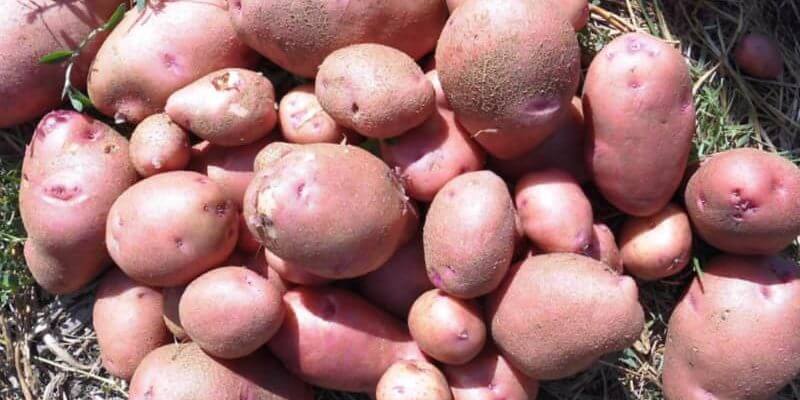
Favorite (Russia)
- Ripening period: 70-90 days (mid-early).
- Tubers: oval with cut edges, soft skin, very light, few eyes, white flesh, weight 90-125 g.
- Starch content: 11-15%.
- Culinary type: IN
- Productivity: 250-400 c/ha.
- Disease resistance: resistant to cancer, late blight, scab, rhizoctonia, nematodes, viruses, susceptible to ring rot.
- Advantages: good marketability (90%), high yield, good resistance to diseases, the variety is practically not affected by low temperatures when planted in spring.
- Flaws: average taste, short shelf life.
- 1958.
Photo gallery of the Lyubimets potato variety:
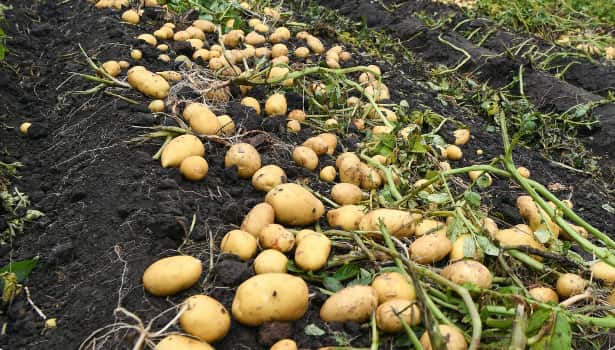
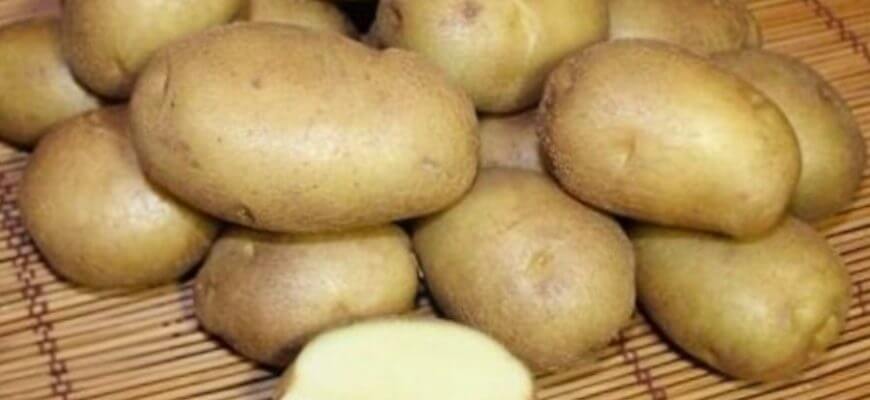
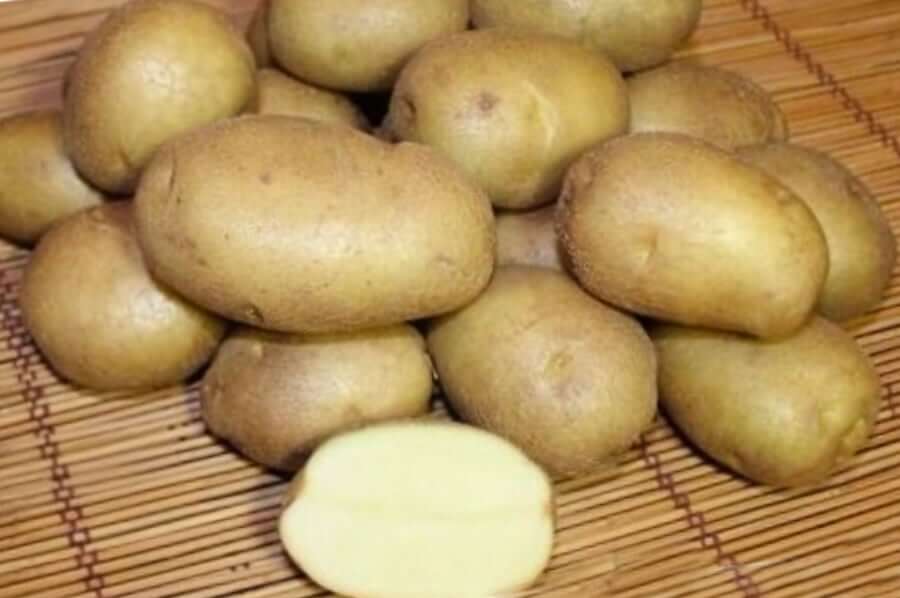
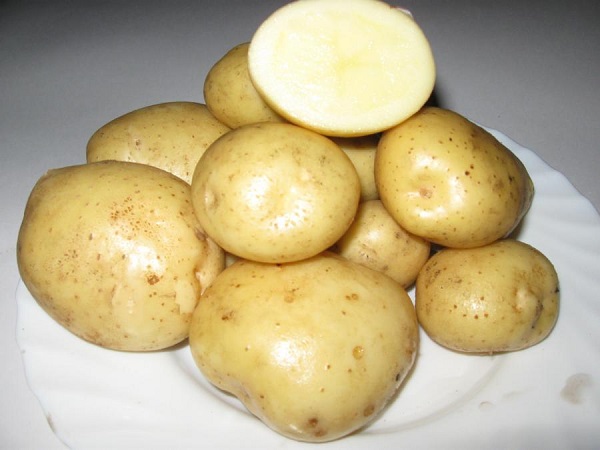
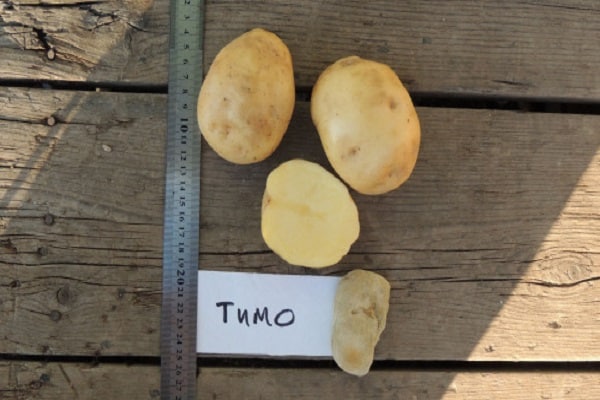
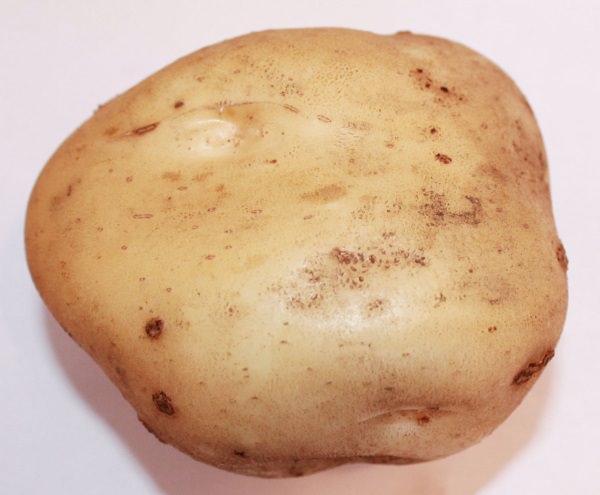
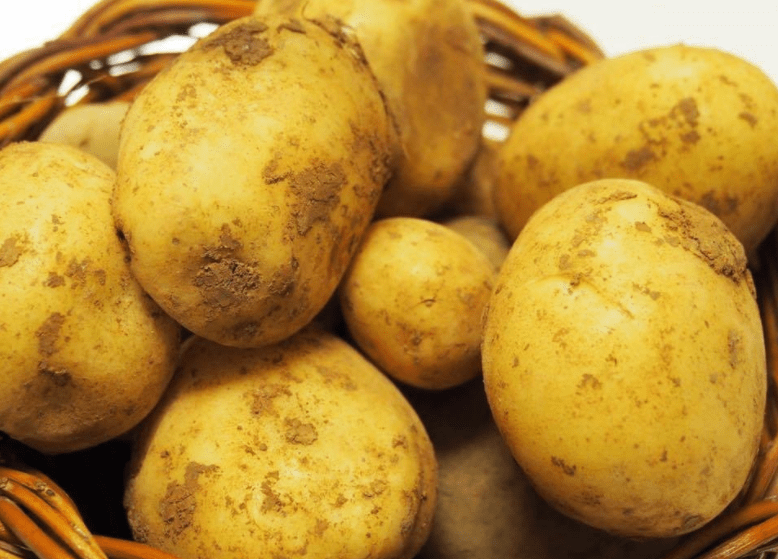
Timo Hankkijan (Finland)
- Ripening period: 50-65 days (early maturing).
- Tubers: oval with medium-depth eyes, yellow, smooth skin, light yellow flesh, weight 65-120 g.
- Starch content: 13.4-14.2%.
- Culinary type: AB
- Productivity: in the Northern region - 150-233 c/ha, maximum - 282 c/ha (Republic of Karelia). In the North-West - 234-382 c/ha, maximum - 382 c/ha (Kostroma region). In the Central - 170-211 c/ha, on the 45th day - 88 c/ha, on the 55th - 298 c/ha, maximum - 303 c/ha (Bryansk region).
- Disease resistance: resistant to cancer, moderately resistant to viruses, susceptible to scab, nematodes, and late blight.
- Advantages: unpretentiousness, good taste, high yield, excellent keeping quality (96%).
- Flaws: average marketability (69-91%), average resistance to diseases.
- 1999.
Photo gallery of the Timo Hankkijan potato variety:
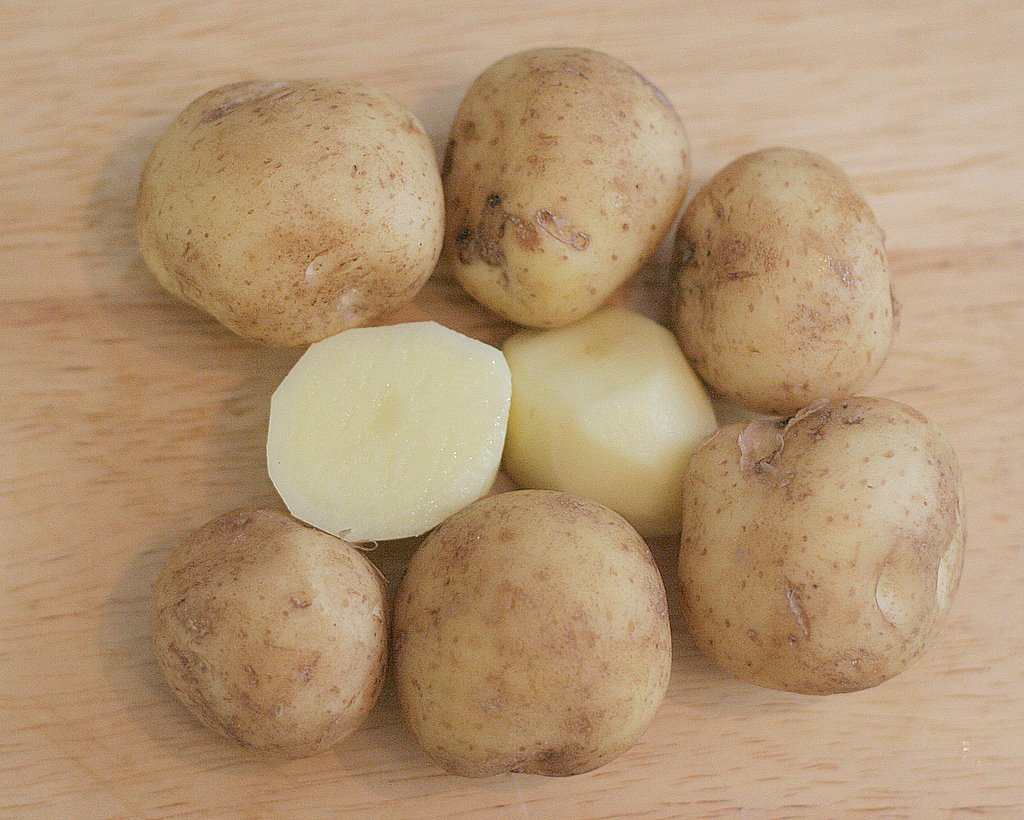
The following varieties are also suitable for cultivation in the Central Region: Aurora, Azhur, Briz, Vega, Vineta, Gala, Golubizna, Jelly, Zhukovsky Ranniy, Zhuravinka, Ivan-da-Marya, Impala, Kiwi, Colette, Kolobok, Colomba, Queen Anna, Labella, Lasunak, Lugovskoy, Madeline, Manifest, Melodiya, Meteor, Nevsky, Picasso, Red Scarlet, Riviera, Rodrigue, Romano, Ryabinushka, Sante, Svitanok Kyiv, Skarb, Udacha, Uladar, and Felox. Descriptions of all are provided in this article.
Top 39 seed potato varieties for the Volga-Vyatka region
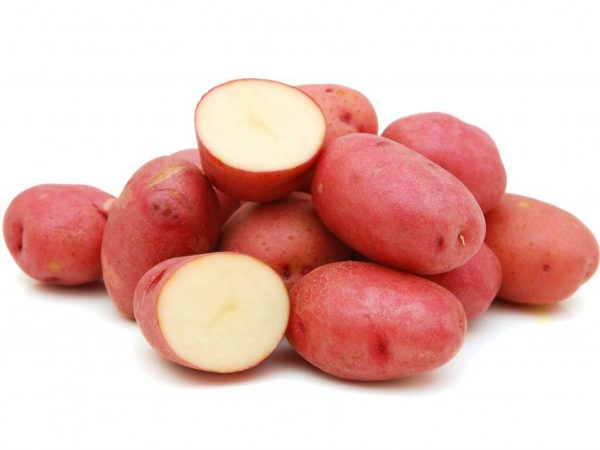
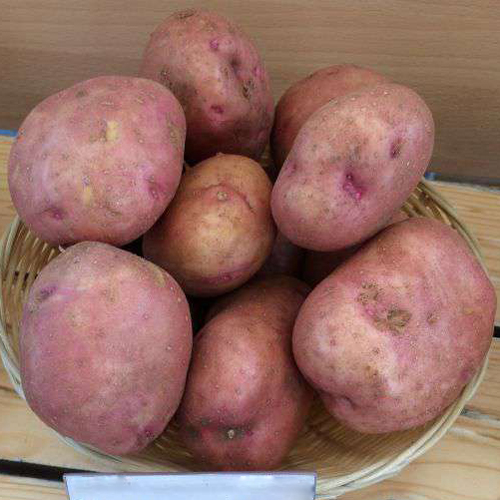
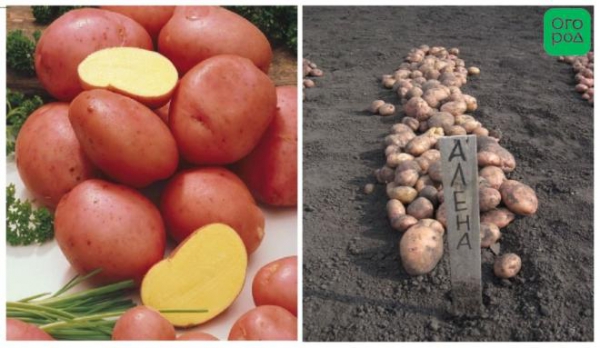
Alena (Russia)
- Ripening period: 60-70 days (early maturing).
- Tubers: oval, with smooth red skin, white flesh, weight 86-167 g.
- Starch content: 15-17%.
- Culinary type: IN
- Productivity: up to 391 c/ha, on the 45th day - 150 c/ha, on the 55th - 172 c/ha, maximum - 391 c/ha (Omsk region).
- Disease resistance: resistant to cancer, scab, rhizoctonia, moderately resistant to viruses, susceptible to nematodes, late blight.
- Advantages: good taste, unpretentiousness, high shelf life (95%), good marketability (81-97%), drought resistance.
- Flaws: average disease resistance.
- 2000.
Photo gallery of the Alena potato variety:
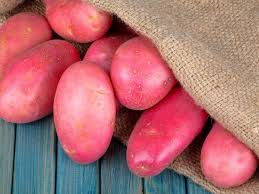
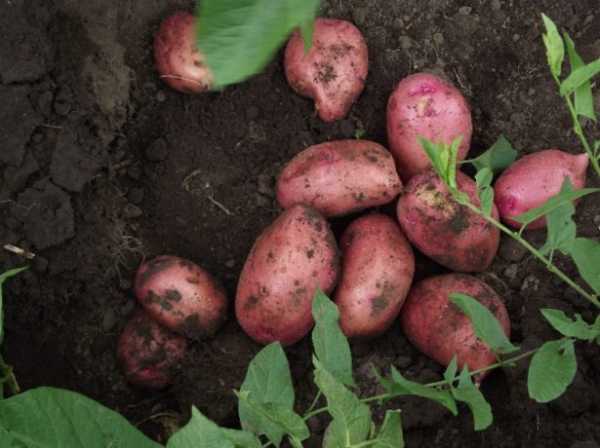
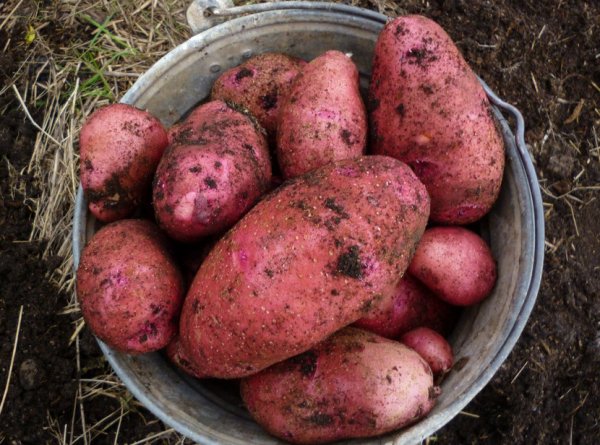
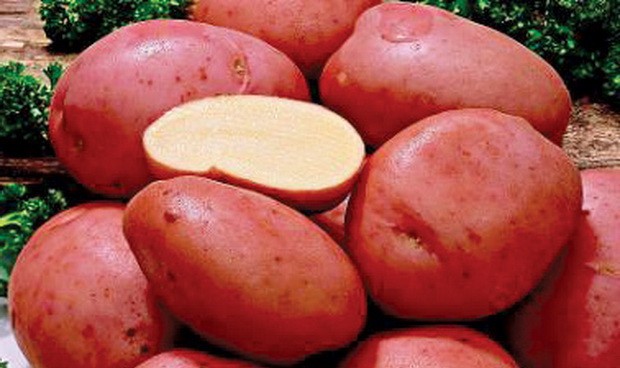
Alisa (Russia)
- Ripening period: 80-95 days (mid-season).
- Tubers: oval with small eyes, even, smooth with yellow skin and the same pulp, weight 88-133 g.
- Starch content: 14.7-15.5%.
- Culinary type: WITH
- Productivity: 243-394 c/ha, maximum - 459 c/ha (Perm region).
- Disease resistance: resistant to cancer, nematode, relatively resistant to viruses and scab, moderately susceptible to late blight of tops, susceptible to nematode, phomosis, late blight of tubers.
- Advantages: good taste, universal purpose, stable yield, relatively good marketability (82-97%) and shelf life (87-96%).
- Flaws: average disease resistance.
- 2002.
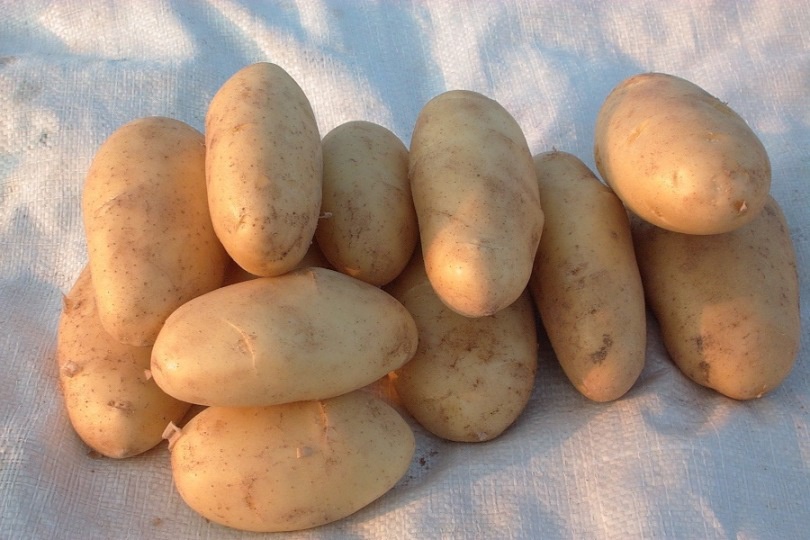
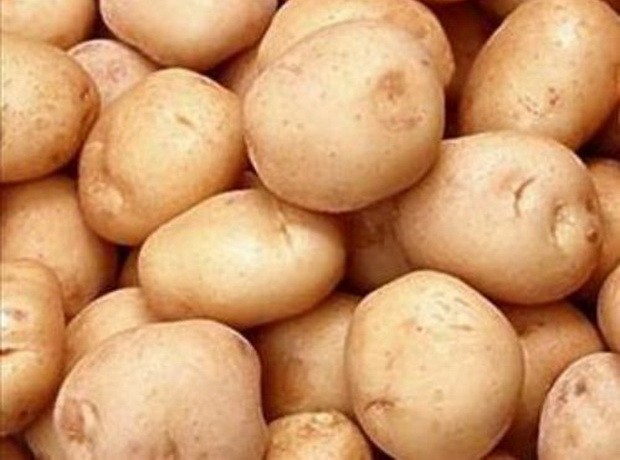
Photo gallery of the Alice potato variety:
Amur (Russia)
- Ripening period: 65-75 days (mid-early).
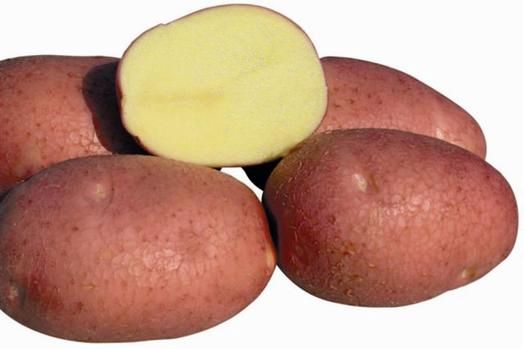
- Tubers: oval with small eyes, red skin, light yellow flesh, weight 97-128 g.
- Starch content: 12.6-15.7%.
- Culinary type: AB
- Productivity: 187-289 c/ha, maximum - 369 c/ha (Sverdlovsk region).
- Disease resistance: resistant to cancer, viruses, wrinkled and striped mosaic, leaf curl, scab, moderately resistant to late blight, susceptible to nematodes.
- Advantages: good keeping quality (94%), unpretentiousness, good and excellent taste.
- Flaws: low marketability (76-93%), susceptibility to nematodes.
- 2015.
Photo gallery of the Amur potato variety:
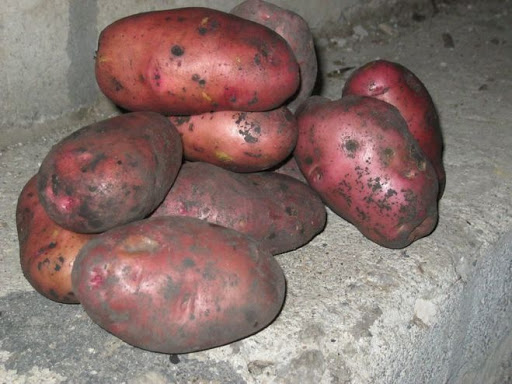
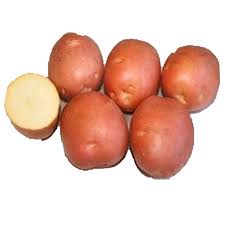
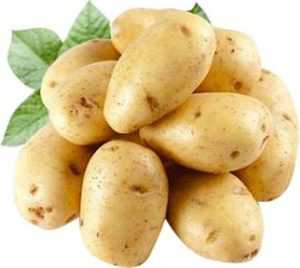
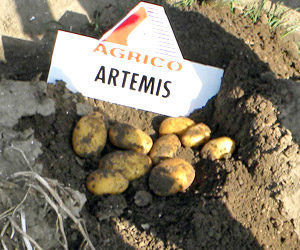
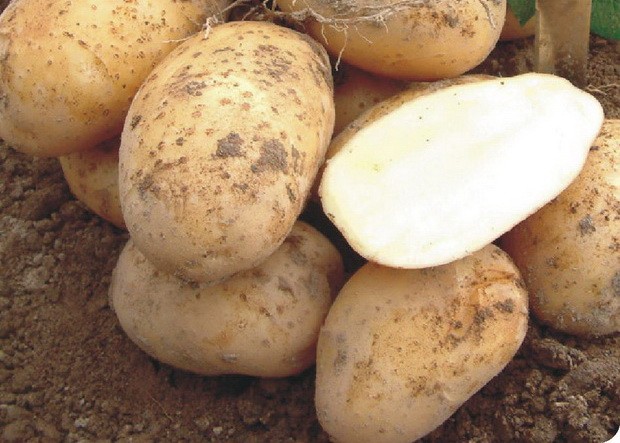
Artemis (Netherlands)
- Ripening period: 60-70 days (early maturing).
- Tubers: round-oval with small eyes, smooth, yellow skin, light yellow flesh, weight 92-144 g.
- Starch content: 11.1-14.9%.
- Culinary type: A
- Productivity: 228-350 c/ha, on the 45th day - 123-240 c/ha, on the 55th - 190-368 c/ha, maximum - 580 c/ha (Moscow region).
- Disease resistance: resistant to cancer, nematodes, moderately resistant to viruses and tuber blight, susceptible to top blight.
- Advantages: good keeping quality (93%) and marketability (87-98%), good and excellent taste.
- Flaws: tendency to late blight of tops if care rules are not followed.
- 2008.
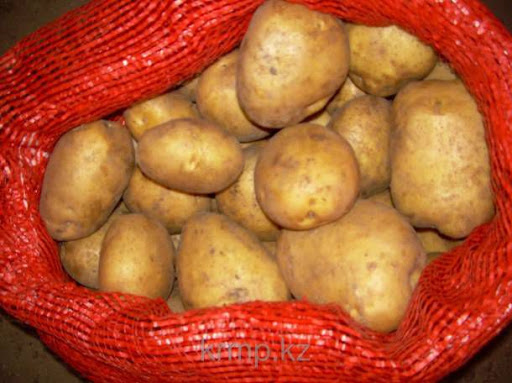
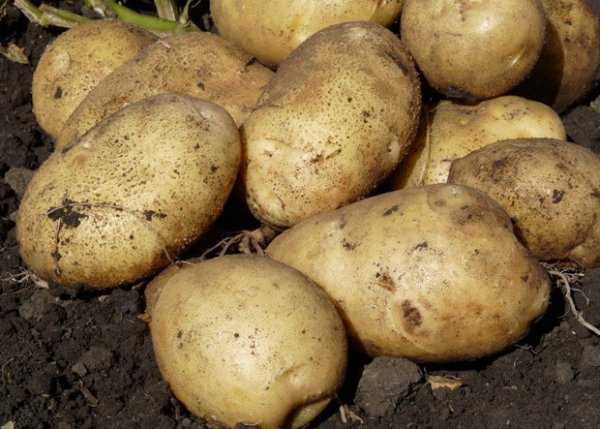
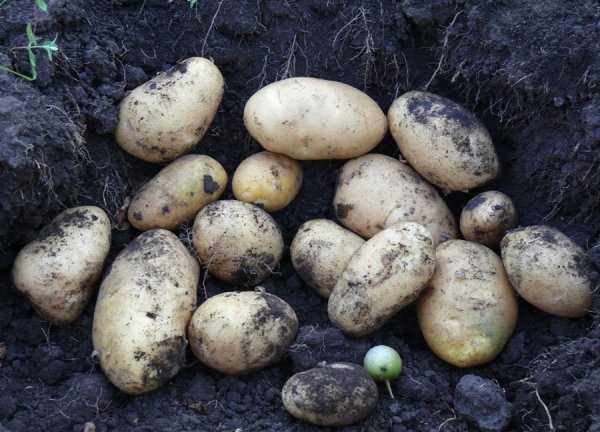
Photo gallery of the Artemis potato variety:
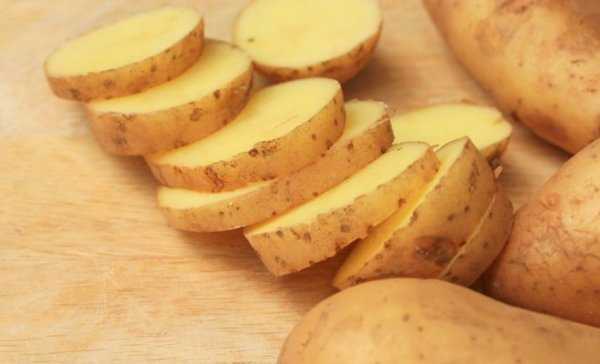
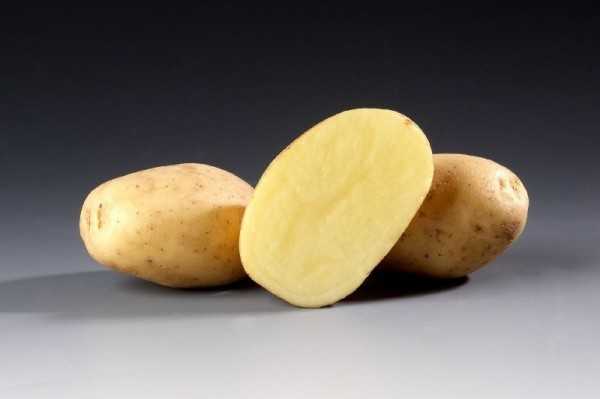
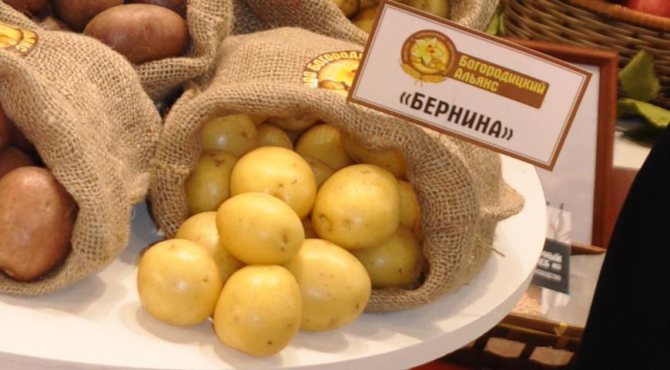
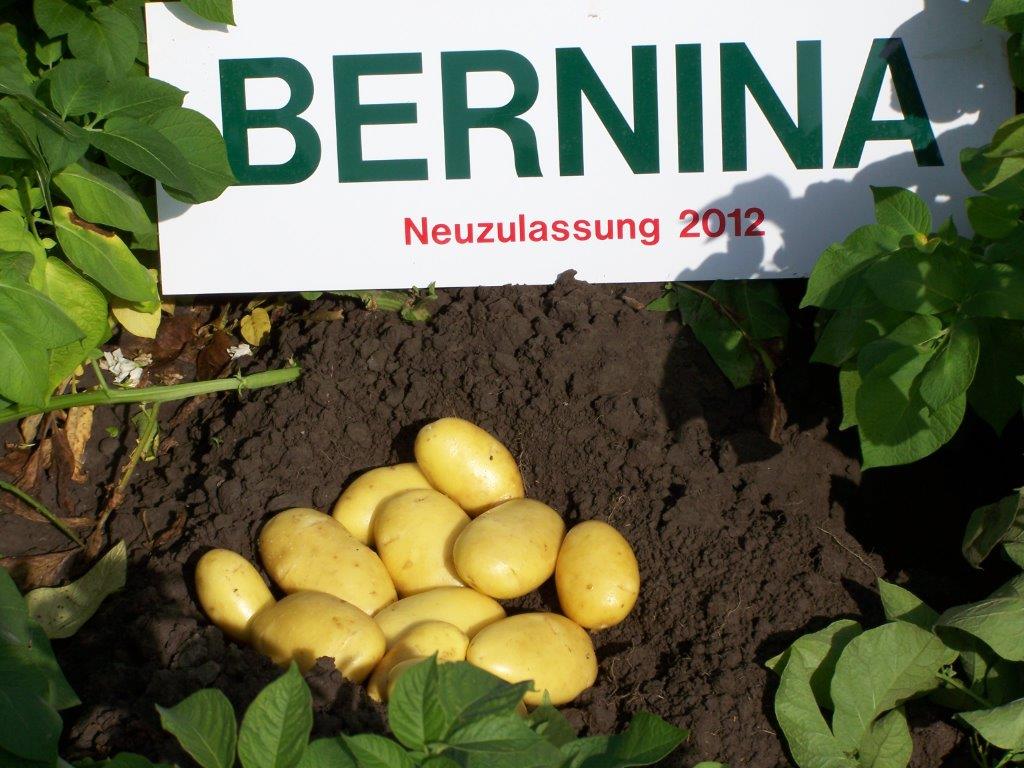
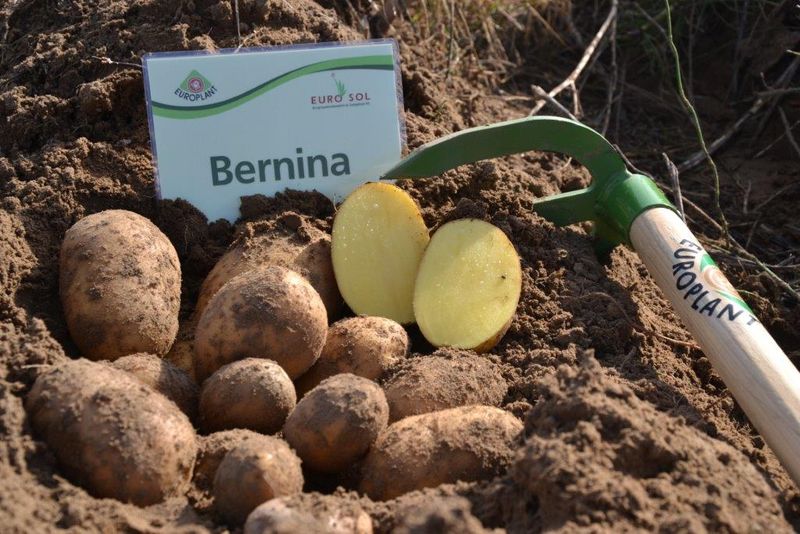
Bernina (Germany)
- Ripening period: 80-95 days (mid-season).
- Tubers: elongated-oval with small to medium-depth eyes, dense, with yellowish skin and dark yellow flesh, weight 112-142 g.
- Starch content: 12.1-15.2%.
- Culinary type: AB
- Productivity: 221-449 c/ha, maximum - 704 c/ha (Sverdlovsk region).
- Disease resistance: resistant to cancer, viruses, nematodes, rugose stripe mosaic and leaf curl, moderately susceptible to late blight of foliage and susceptible to late blight of tubers.
- Advantages: excellent shelf life (96%), drought resistance, unpretentiousness, ability to survive slight cold spells, good taste.
- Flaws: average marketability (77-95%), susceptible to late blight.
- 2017.
Photo gallery of the Bernina potato variety:
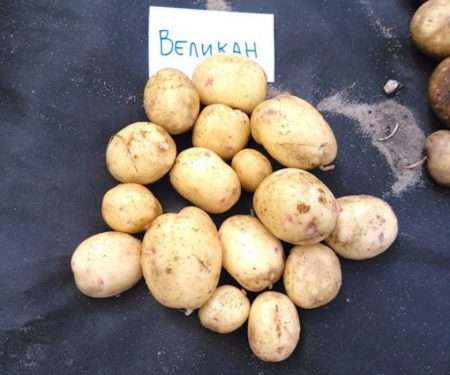
Giant (Russia)
- Ripening period: 80-95 days (mid-season).
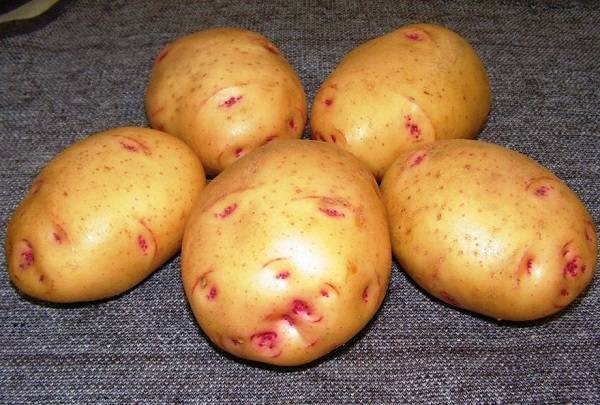
- Tubers: round-oval with medium-depth eyes, creamy skin, light flesh, weight 104-143 g.
- Starch content: 15.9-18.9%.
- Culinary type: AB
- Productivity: 290-424 c/ha, maximum - 613 c/ha (Nizhny Novgorod region).
- Disease resistance: resistant to cancer, scab, rhizoctonia, relatively resistant to late blight, leaf curl, wrinkled and striped mosaic, susceptible to nematodes.
- Advantages: disease resistance, large tubers, high yield, excellent shelf life (97%) and marketability (87-98%), excellent and good taste.
- Flaws: the variety requires fertile soil and is susceptible to nematodes.
- 2013.
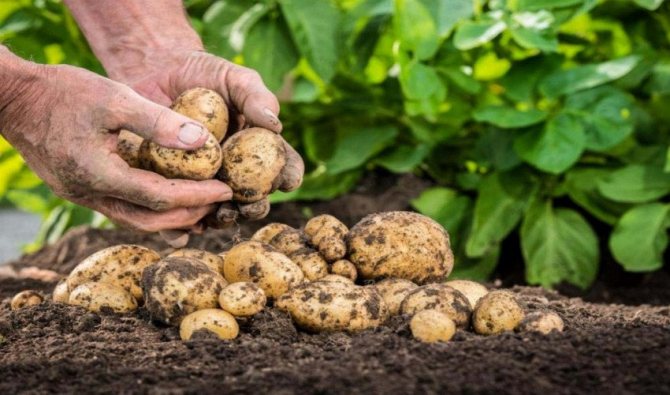
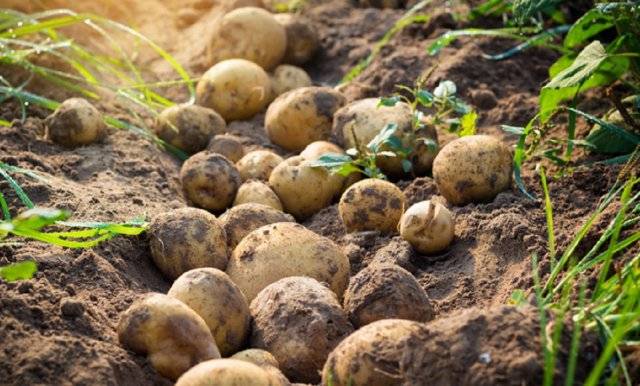
Photo gallery of the Velikan potato variety:
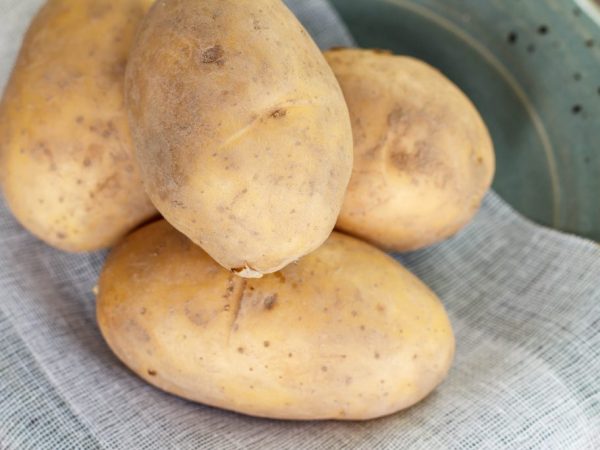
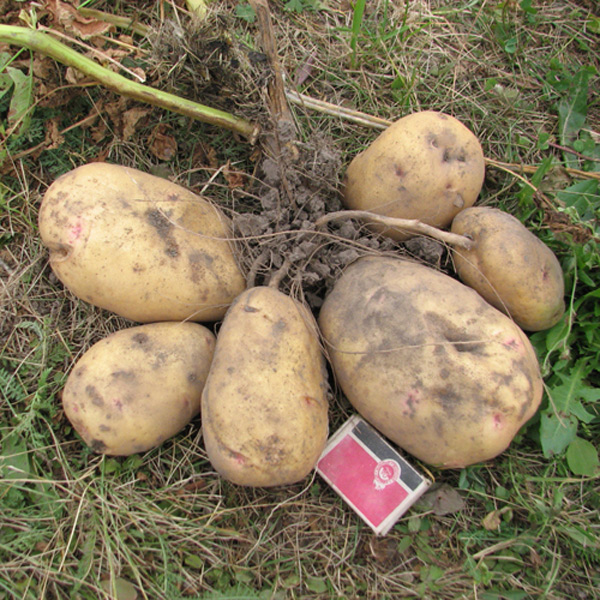
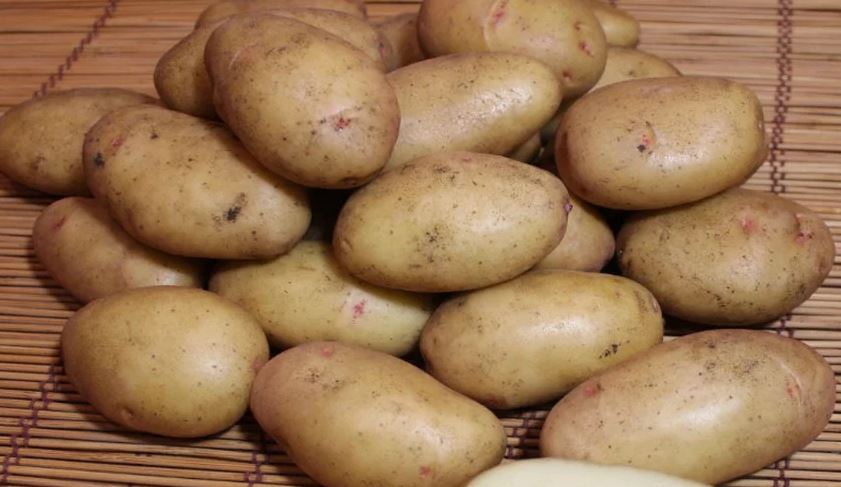
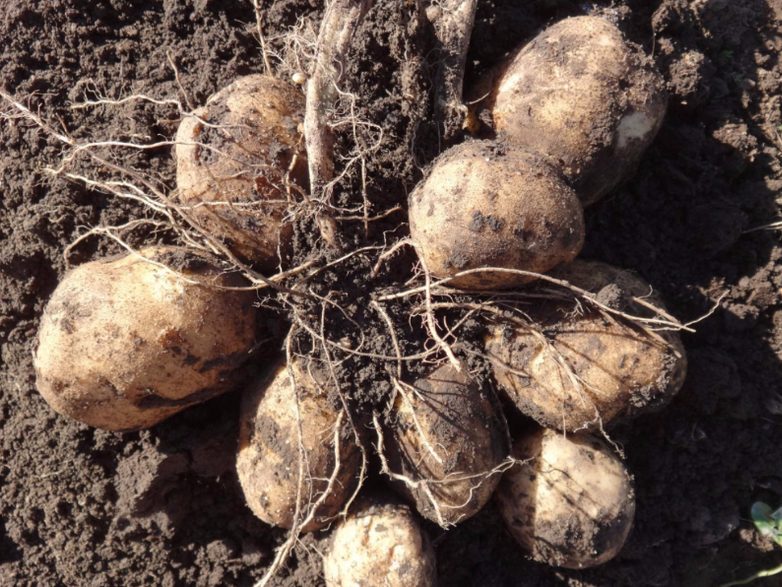
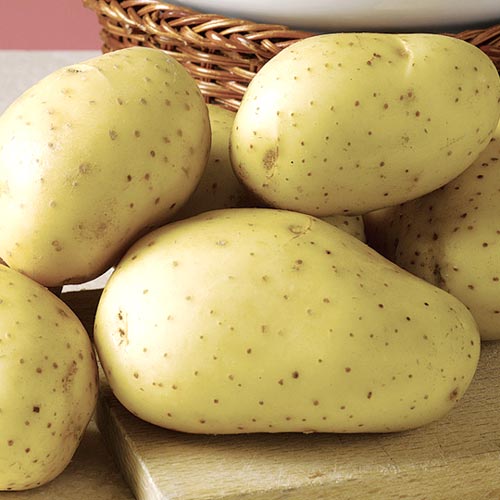
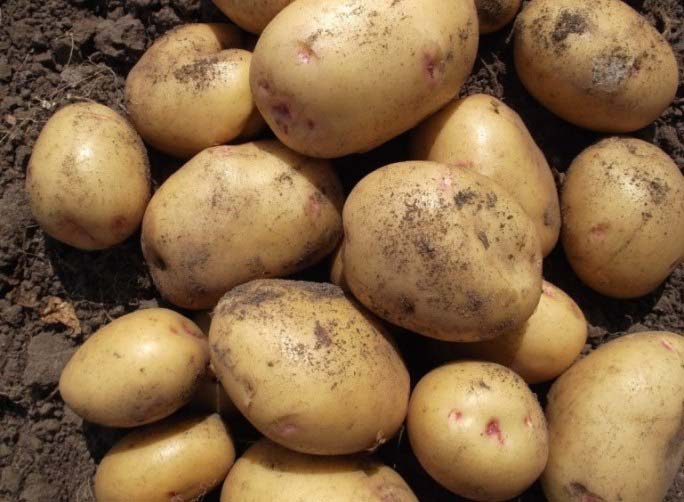
Read more about the variety in the article Potato variety "Velikan": characteristics and comparison, reviews.
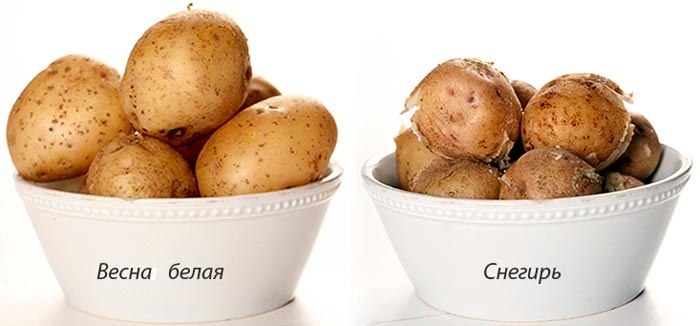
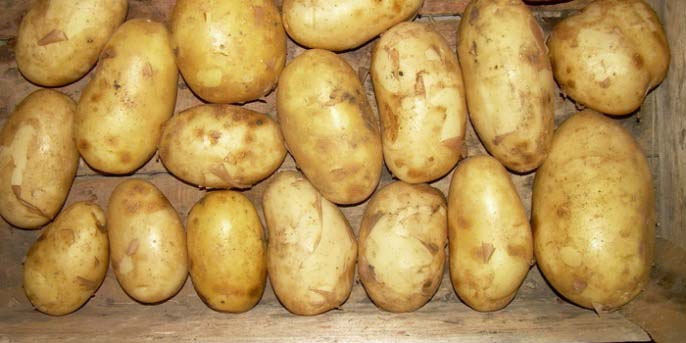
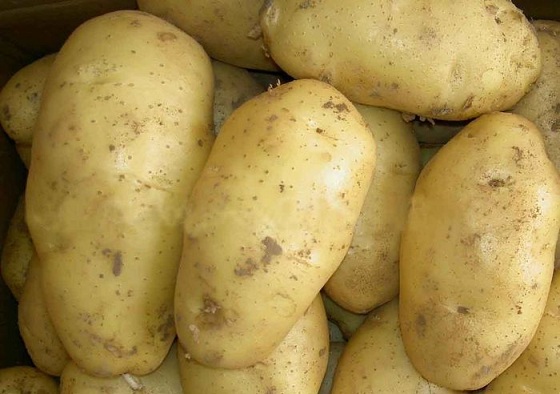
White Spring (Russia)
- Ripening period: 60-70 days (early maturing).
- Tubers: round-oval, with white flesh and light beige skin, weight 100-180 g.
- Starch content: 11-15%.
- Culinary type : A
- Productivity: 270-380 c/ha.
- Disease resistance: resistant to cancer, moderately resistant to scab, alternaria, viruses, susceptible to late blight.
- Advantages: the yield is stable, good marketability (85-93%) and shelf life (93%).
- Flaws: average taste, not very good disease resistance.
- 1994.
Photo gallery of the potato variety Vesna Belaya:
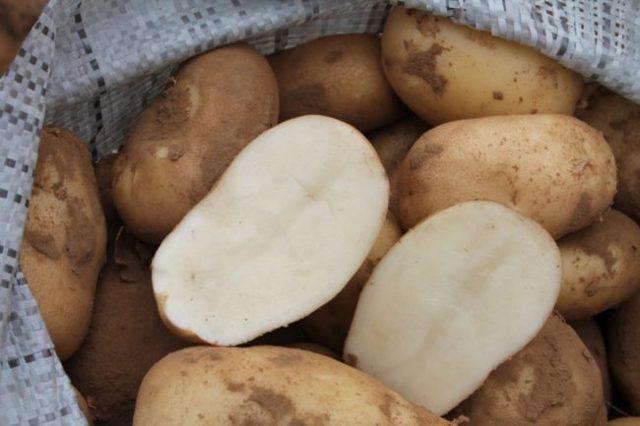
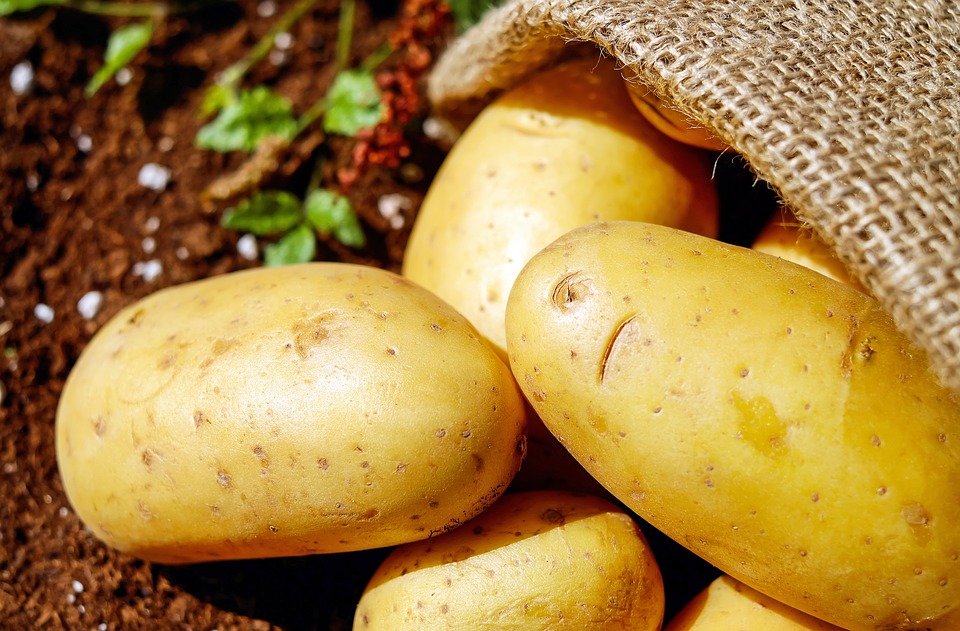
The following potato varieties are also suitable for the Volga-Vyatka region: Aurora, Bellarosa, Vineta, Gala, Golubizna, Jelly, Zhukovsky Ranniy, Zhuravinka, Zekura, Impala, Kamensky, Colette, Colomba, Queen Anna, Lasunak, Lugovskoy, Madeline, Manifest, Meteor, Nevsky, Red Scarlet, Rodrigo, Rosara, Roko, Romano, Ryabinushka, Sante, Skarb, Tuleevsky, Udacha, Felox, and Charodey. Descriptions of all are provided in this article.
TOP 16 seed potato varieties for the Central Black Earth region
The following varieties are suitable for the Central Black Earth Region: Aurora, Bellarosa, Vineta, Golubizna, Zhukovsky Ranniy, Zekura, Kolomba, Lasunak, Lugovskoy, Meteor, Nevsky, Red Scarlet, Riviera, Rosara, Ryabinushka, and Udacha. Descriptions of all are provided in this article.
Top 22 seed potato varieties for the North Caucasus region
The following varieties are best suited for the North Caucasus region: Aurora, Ivory Russet, Arizona, Bafana, Vineta, Golubizna, Zhukovsky Ranniy, Zekura, Colette, Colomba, Queen Anna, Labella, Lasunak, Lugovskoy, Nevsky, Riviera, Rodrigue, Rosara, Ryabinushka, Udacha, Felox, and Charodey. Descriptions of all are provided in this article.
TOP 26 seed potato varieties for the Middle and Lower Volga regions
The following varieties are grown in the Middle Volga region: Aurora, Adretta, Aksenia, Bafan, Vineta, Zagadka Pitera, Zekura, Colomba, Queen Anna, Labella, Meteor, Nikulinsky, Red Scarlet, Rodriga, Rosara, Roko, Svitanok Kyiv, Udacha, Felox, and Charodey. In the Lower Volga region, Impala, Lugovskoy, and Sante are grown. Zhukovsky ranniy, Nevsky, and Ryabinushka are suitable for both regions.
Descriptions of all are given in this article.
Top 22 Seed Potato Varieties for the Urals
Agnes (Germany)
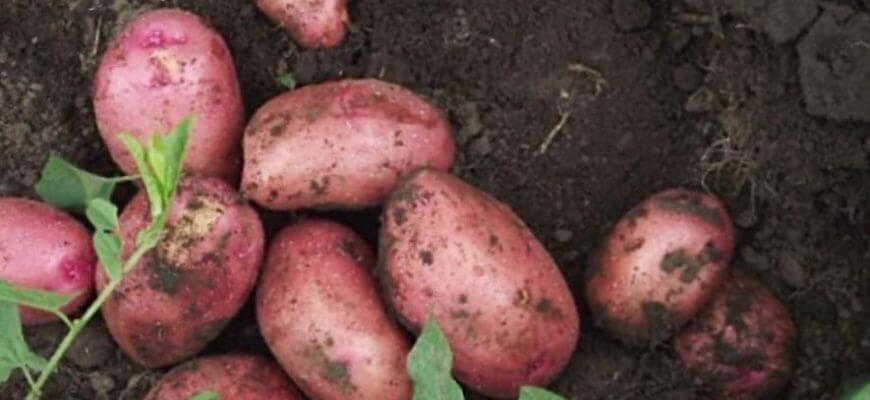
- Ripening period: 80-95 days (mid-season).
- Tubers: elongated, oval, smooth skin, light yellow, few eyes, weight up to 164 g.
- Starch content: 12.3-15.6%.
- Culinary type: A
- Productivity: maximum - 430 c/ha.
- Disease resistance: high resistance to cancer, nematodes, average resistance to viruses and tuber blight, low resistance to top blight.
- Advantages: high shelf life, pleasant taste.
- Flaws: the eyes are located at a depth of 2 mm.
- not yet enabled.
Photo of the Agnes potato variety:
Bashkir (Russia)
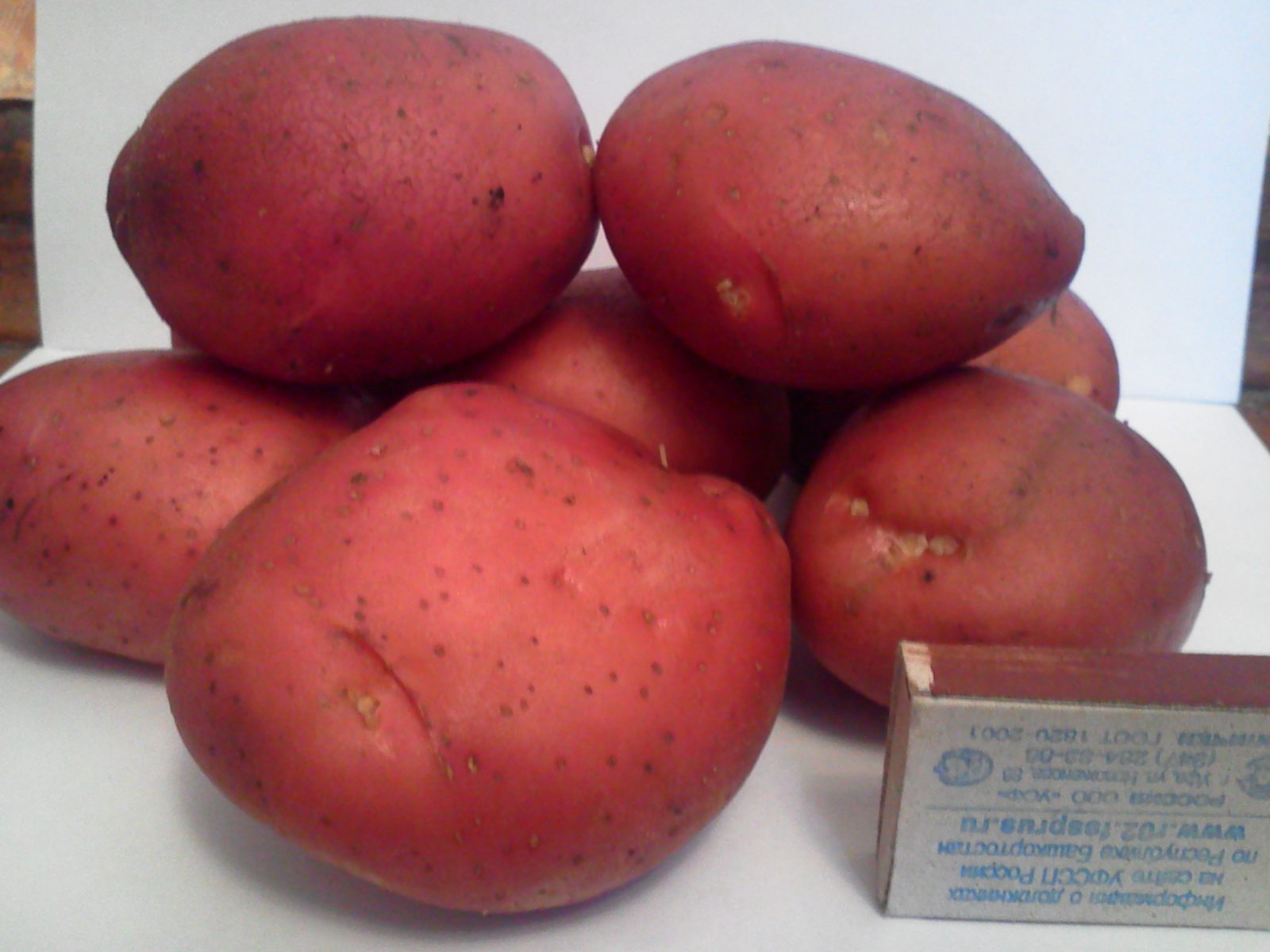
- Ripening period: 60-80 days (early maturing).
- Tubers: oval-round with medium-depth eyes, reddish smooth skin and white flesh, weight 90-198 g.
- Starch content: 14.6-19.8%.
- Culinary type: IN
- Productivity: 149-312 c/ha, on the 45th day - 94-187 c/ha, on the 55th - 168-214 c/ha, maximum - 374 c/ha (Kurgan region).
- Disease resistance: resistant to cancer, nematodes, moderately resistant to viruses and tuber blight, susceptible to top blight.
- Advantages: good keeping quality (95%), drought resistance, unpretentiousness, ability to survive slight cold spells, good taste.
- Flaws: average marketability (80-99%), susceptible to late blight.
- 2007.
Photo gallery of the Bashkir potato variety:
Burnovsky (Russia)
- Ripening period: 80-95 days (mid-season).
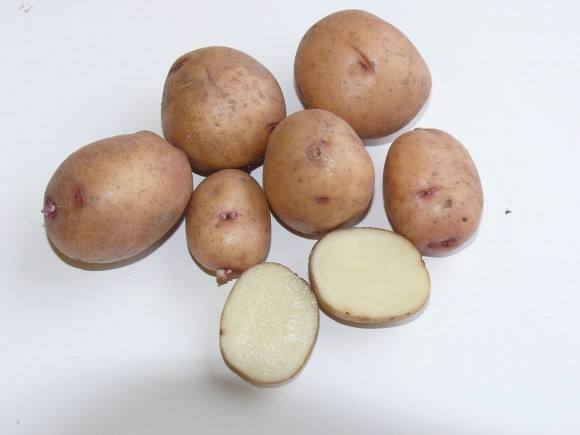
- Tubers: round-oval with small eyes, light beige skin, creamy flesh, weight 95-120 g.
- Starch content: 14-16.5%.
- Culinary type: Sun
- Productivity: 136-239 c/ha, maximum - 243 c/ha (Republic of Bashkortostan).
- Disease resistance: resistant to cancer, nematode, late blight, wrinkled and striped mosaic.
- Advantages: good keeping quality (95%), high resistance to diseases, good and excellent taste.
- Flaws: average marketability (77-97%).
- 2014.
Photo gallery of the Burnovsky potato variety:
Kuzovok (Russia)
- Ripening period: 80-95 days (mid-season).
- Tubers: oval, elongated with yellow skin with small eyes and the same pulp, weight 80-103 g.
- Starch content: 15.2-16.7%.
- Culinary type: Sun
- Productivity: 93-205 c/ha, maximum - 250 c/ha (Kurgan region).
- Disease resistance: resistant to cancer, nematode, late blight, rugose mosaic and leaf curl, moderately resistant to scab.
- Advantages: grows well in any weather conditions, is drought-resistant, has good shelf life (95%) and transportability, has good and excellent taste.
- Flaws: attracts Colorado potato beetles and potato midges, marketability is average (83-91%).
- 2015.
Photo gallery of the Kuzovok potato variety:
Nikulinsky (Russia)
- Ripening period: 95-115 days (mid-late).
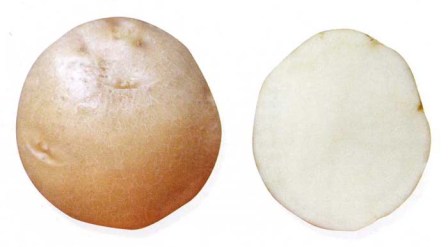
- Tubers: round, mesh-like, with white skin and white flesh, weighing 70-135 g. The eyes are small and numerous.
- Starch content: 12.5-21.3%.
- Culinary type: BC, the flesh does not darken when cut.
- Productivity: 170-294 c/ha, maximum - 410 c/ha (Ivanovo region).
- Disease resistance: resistant to cancer, viral diseases, moderately resistant to late blight of tops, susceptible to late blight of tubers, scab, black leg.
- Advantages: good keeping quality (95%), yield, taste.
- Flaws: average disease resistance, marketability from average to high (71-95%).
- 1996.
Photo gallery of the Nikulinsky potato variety:
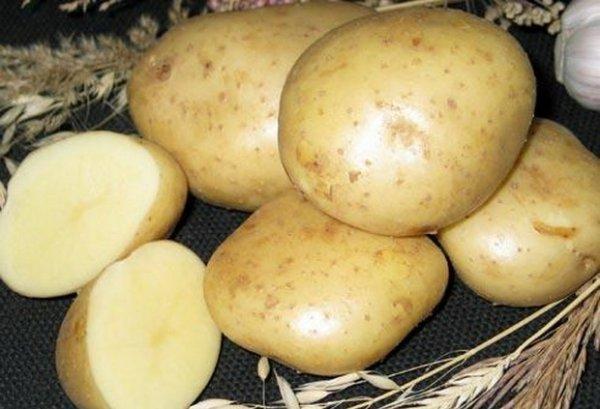
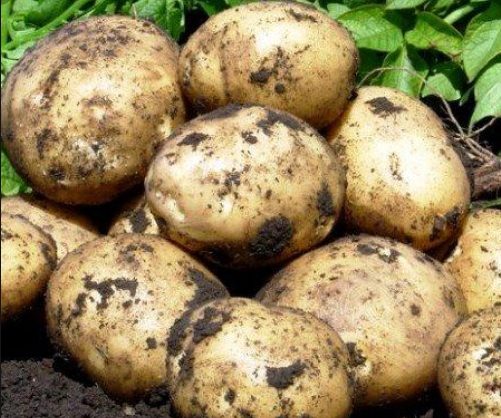
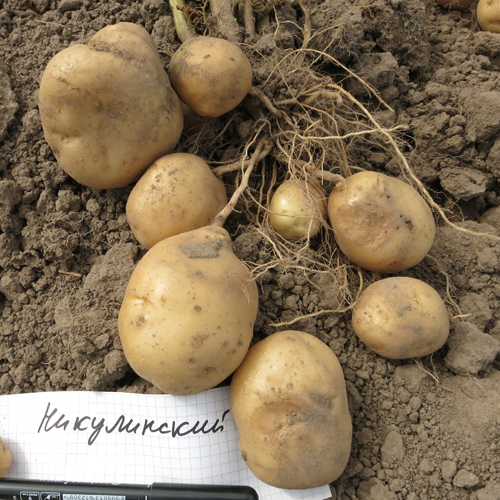
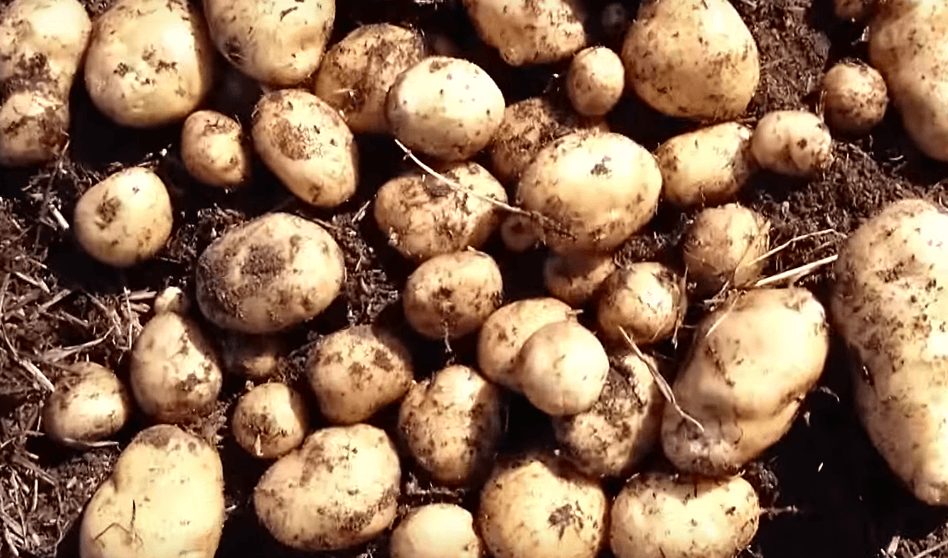
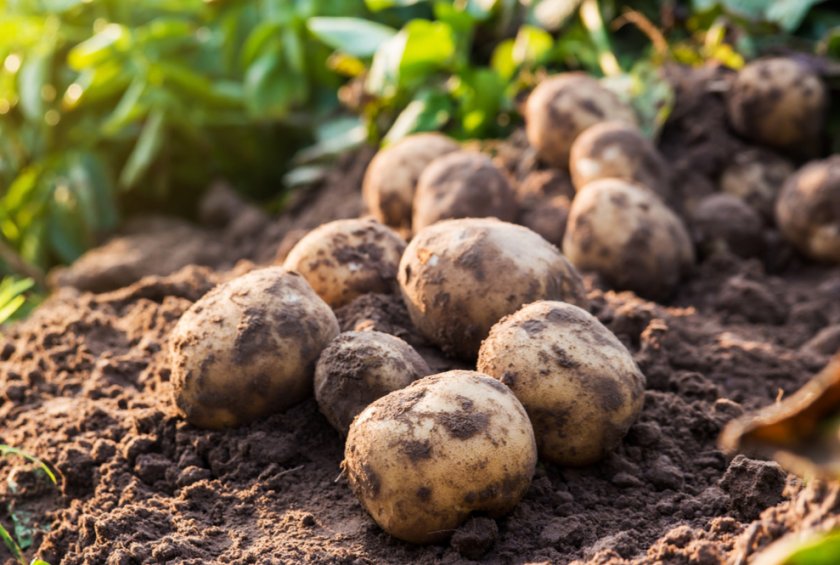
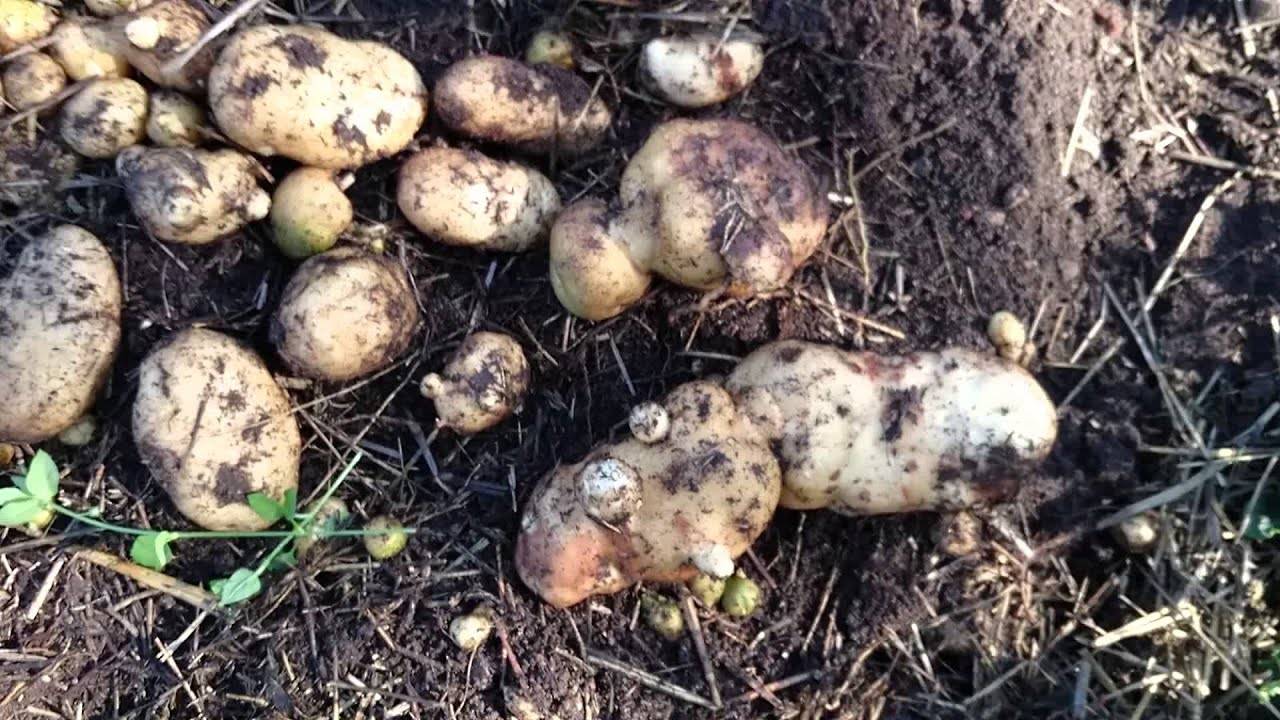
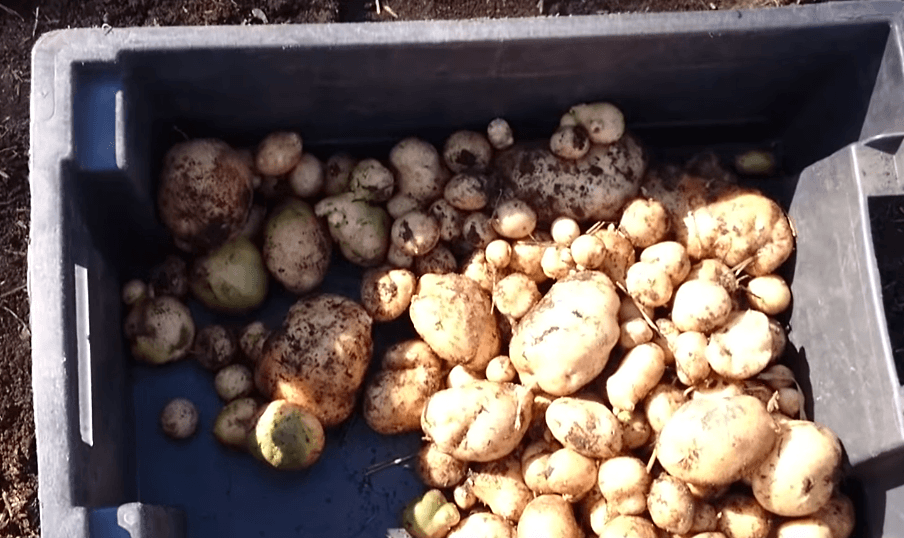
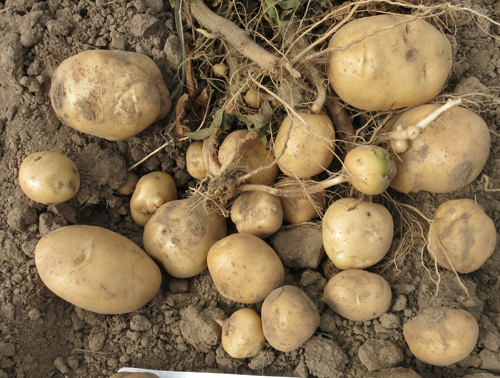
Read more about the variety in the article Nikulinsky potato variety: characteristics, comparison tables, reviews.
The following varieties are also suitable for growing in the Ural region: Bellarosa, Vector, Vineta, Zhukovsky Ranniy, Kamensky, Labella, Lugovskoy, Lyubava, Meteor, Nevsky, Rosara, Romano, Ryabinushka, Sante, Svitanok Kyiv, Skarb, and Udacha. Descriptions of all are provided in this article.
TOP 23 seed potato varieties for Siberia (West Siberian and East Siberian regions)
The following varieties are grown throughout Siberia: Vector, Queen Anna, Lugovskoy, Lyubava, Nevsky, Rosara, Ryabinushka, and Tuleevsky. Aurora, Madeline, and Felox are suitable only for the East Siberian region. Adretta, Zekura, Gala, Zhukovsky Ranniy, Zekura, Kamensky, Kolomba, Meteor, Red Scarlet, Roko, Sante, and Svitanok Kyiv are suitable only for the West Siberian region. Descriptions of all these varieties are provided in the TOP-33 section.
TOP 19 seed potato varieties for the Far East (Far Eastern region)
In the Far East, the following varieties are grown: Aurora, Adretta, Zekura, Zhukovsky ranniy, Zekura, Lugovskoy, Lyubava, Madeline, Meteor, Nevsky, Rodrigue, Rosara, Romano, Ryabinushka, Sante, Svitanok Kyiv, Tuleevsky, Udacha, Charodey.
TOP 9 high-yielding seed potato varieties
| Name | Yield, c/ha | Ripening period, days | Tuber weight, g | Starch content, % |
| Hussar | 239-532, max. 690 | 80-95 | 106-185 | 14.3-17.8 |
| Volat | 210-530, max. 678 | 80-95 | 108-146 | 14-14.8 |
| Maestro | 214-355, max. 642 | 65-80 | 92-172 | 10.6-13.6 |
| Melody | 176-335, max. 636 | 95-115 | 96-179 | 11-17 |
| Madeira | 202-481, max. 632 | 80-95 | 106-136 | 13.1-15.9 |
| Christelle | 192-362, max. 617 | 50-65 | 94-138 | 11.2-14.7 |
| Giant | 290-424, max. 613 | 80-95 | 104-143 | 15.9-18.9 |
| Symphony | 200-460, max 612 | 95-110 | 70-140 | 13-19 |
| Sandrine | 160-392, max 607 | 50-65 | 96-132 | 12.8-14.3 |
All listed high-yielding varieties are included in the register.
TOP 37 Pest and Disease-Resistant Seed Potato Varieties
| Late blight | Scab | Cancer | Nematode |
| Luck, Snow White, Crown, Lady Rosetta, Romano, Estima, Kuzovok, Artemis. | Tempo, Bryansk novelty, Snow White, Glow, Crown, Herta, Bronnitsky, Picasso. | Zhukovsky early, Fresco, Bryansky early, Pushkinets, Belorussky 3, Ilyinsky, Aspia, Bernina, Axona, Nevsky. | Prigozhiy 2, Dorisa, Sante, Agria. |
Prior, Andra, Svatova, Libana, Chernatitsa, and Aksona are resistant to viruses.
The best varieties of seed potatoes for winter storage
- CraneFull maturity occurs 110 days after germination. The tubers have a pleasant flavor, are quite marketable (83-96%), and have good shelf life (93%). Under proper storage conditions, they will easily last until late spring.
- VesnyankaThis variety is absolutely easy to grow and store. It ripens in 120 days and is considered a late-ripening variety. Marketability (91-96%) and shelf life (94%) are very good.
- AsterixRipens in 95-110 days (mid-late), yields well, marketability is average (71-91%), does not spoil during storage, does not lose shape and does not rot.
Top.tomathouse.com recommends: where to buy seed potatoes
The key to a great harvest is choosing the right potato grower. As the season begins, vendors with a huge selection of seed potatoes begin appearing at garden markets. However, there's no guarantee you'll get the perfect tubers of the exact variety you want. Too many unscrupulous traders have appeared recently. Therefore, it's best to buy from reputable growers who have been breeding and selling seed potatoes for many years.
You'll have a choice: buy premium tubers or settle for the first-generation variety. The difference is that premium tubers are used to renew planting stock; they yield a small amount of potatoes, all of which will need to be set aside for seed until the next season. For edible tubers, it's better to buy the first-generation variety, which is also much cheaper.