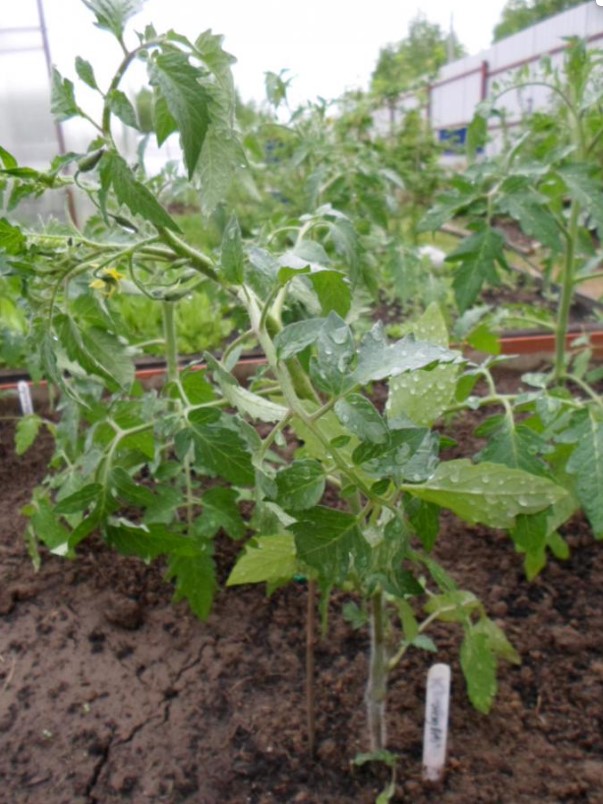
Gardeners often confuse the tomato varieties Dubok and Dubrava. Some believe these two names are synonyms, and that they actually refer to the same tomato variety. However, some experts believe that the Dubok tomato served as the basis for the Dubrava variety, as both plants share identical characteristics and features.

Content
- 1 Characteristics of the tomato variety Dubrava (Oak) in the table
- 2 The history of the Oak (Dubrava) tomato variety
- 3 A detailed description of the tomato variety Dubrava (Oak)
- 4 Advantages and disadvantages of the tomato variety Dubok (Dubrava) (table)
- 5 Features of growing the tomato variety Dubok (Dubrava)
- 6 Disease and pest resistance of the tomato variety Dubok
- 7 Harvesting, using and storing tomatoes of the Dubok (Dubrava) variety
- 8 Comparison of the tomato variety Dubok (Dubrava) with other varieties in the table
- 9 Gardeners' reviews of the Dubok tomato variety
Characteristics of the tomato variety Dubrava (Oak) in the table
The table shows the general characteristics of the Dubok variety and the Dubrava variety listed in the register, as well as some minor differences.
| Ripening period (number of days from full seedlings to maturity) |
85-95 days (Oak), 85-105 days (Oak grove) |
| Description | A determinate tomato variety with early ripening periods for cultivation in open ground and greenhouses. |
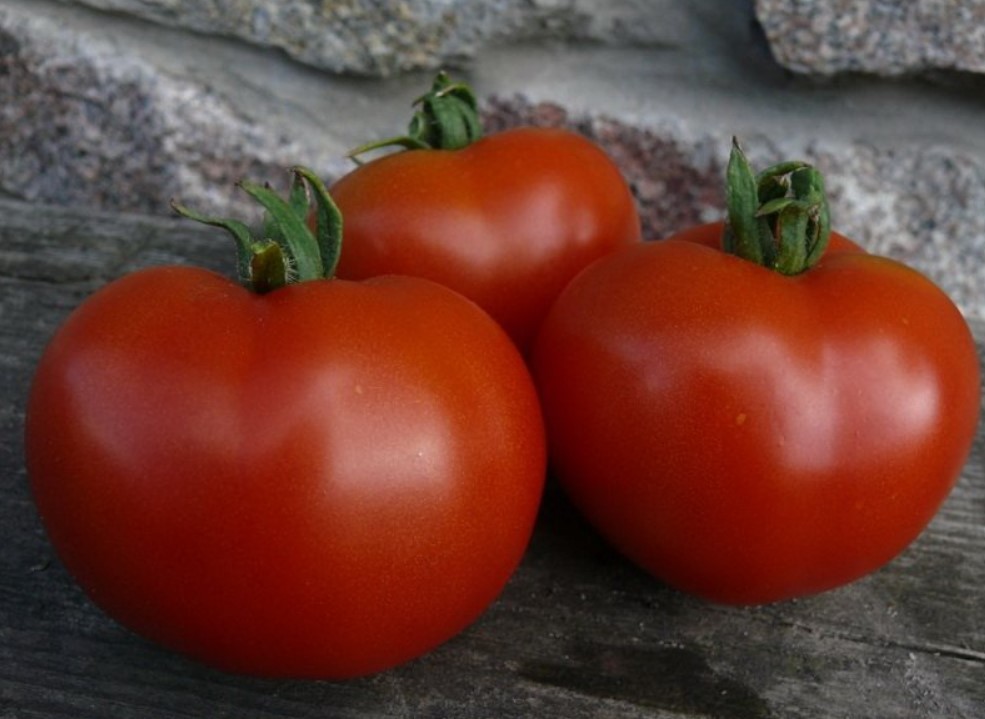
| Fetus | The fruits are round in shape, the surface is slightly ribbed, the skin color is bright red. |
| Fruit weight | 50-100 g. |
| Taste | Good, with a little sourness |
| Usage | Versatile. The fruits are used in salads, main courses, preserves, sauces, and juices. |
| Marketability | High |
| Shelf life | High |
| Yield of commercial fruits | Oak - up to 600-800 c/ha Dubrava - 133-349 c/ha (Central region), 224-551 c/ha (Volga-Vyatka region), maximum 551 c/ha (Mari El Republic) |
| Disease resistance | Average resistance to late blight |
| Agricultural technology | During the growing process it is necessary to tie up the shoots |
| Growing regions | Central, Volga-Vyatka |
| Oak is not included in the register, Dubrava - 1997 | |
| Originator | Federal State Budgetary Scientific Institution 'Federal Scientific Center of Vegetable Growing' |
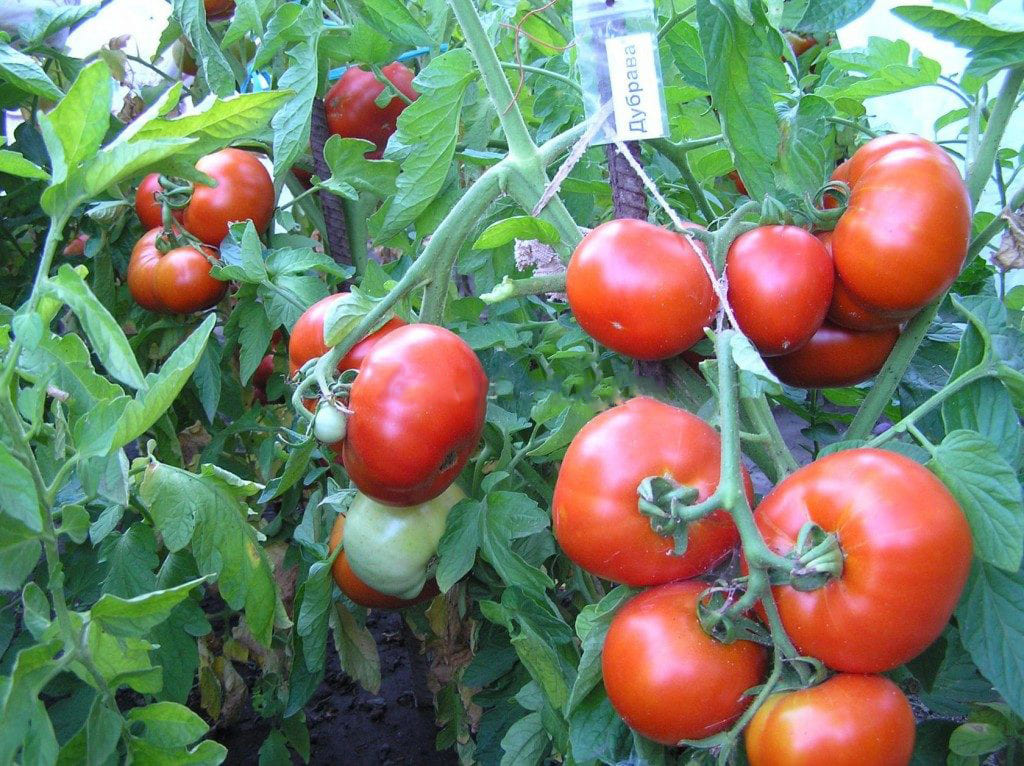
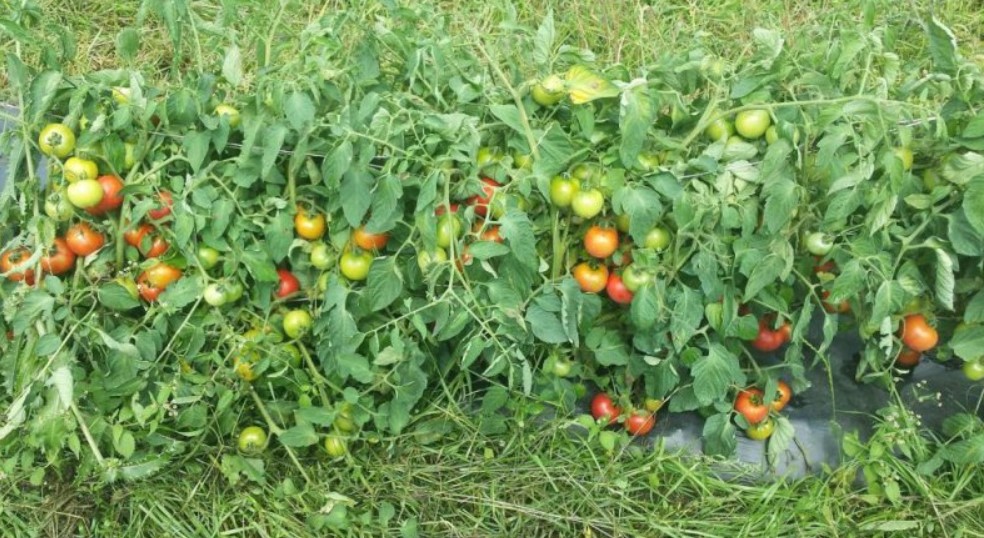
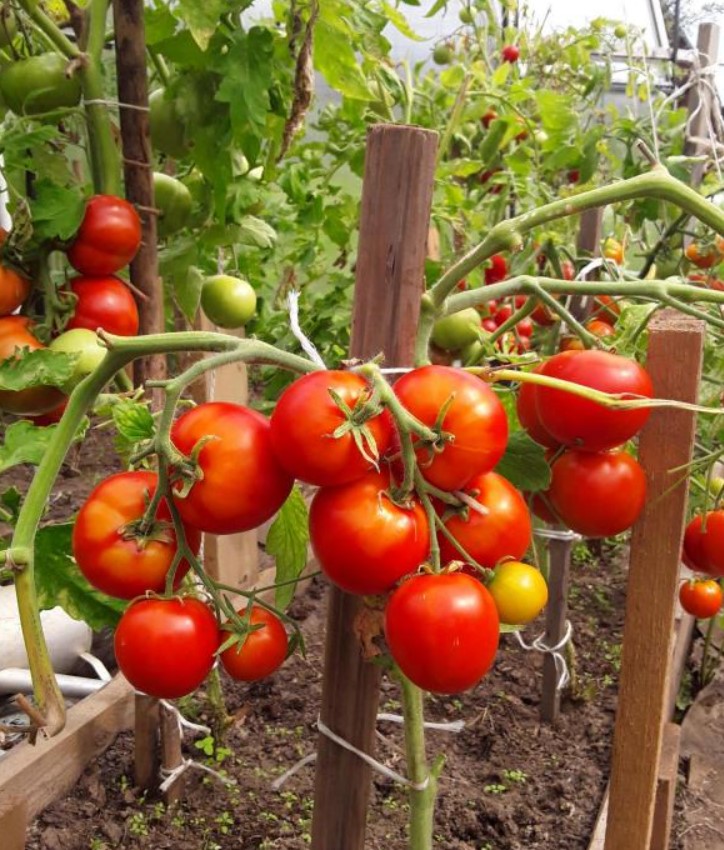
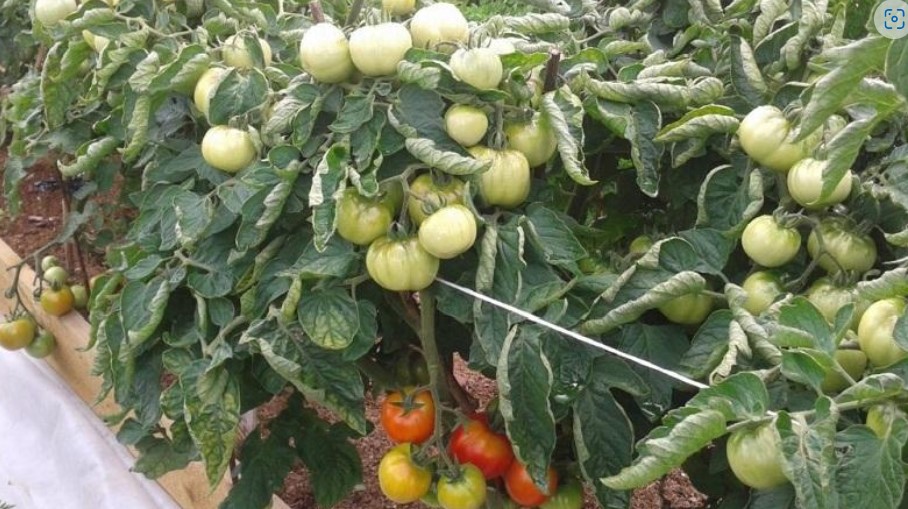
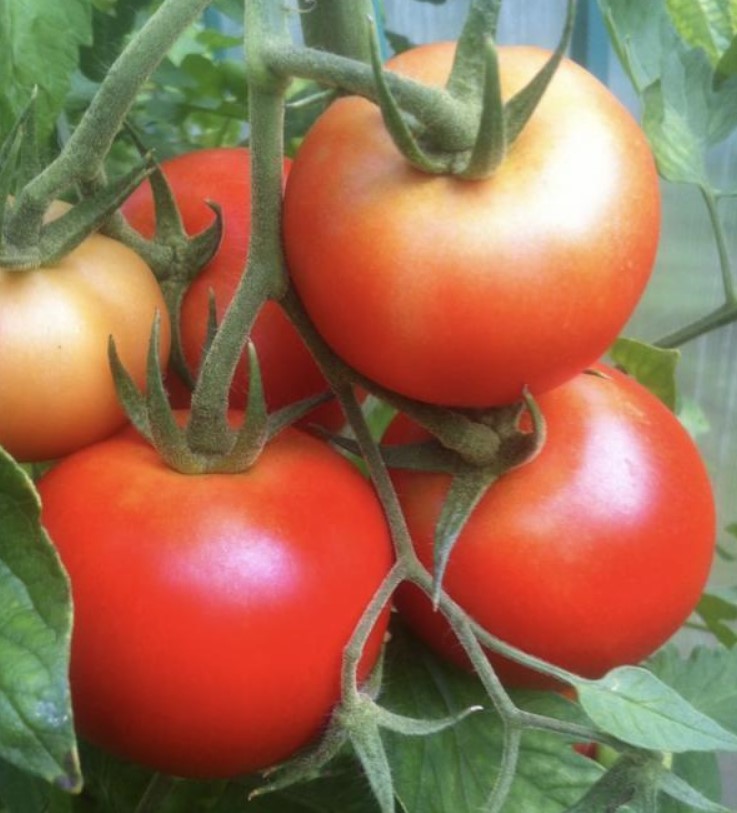
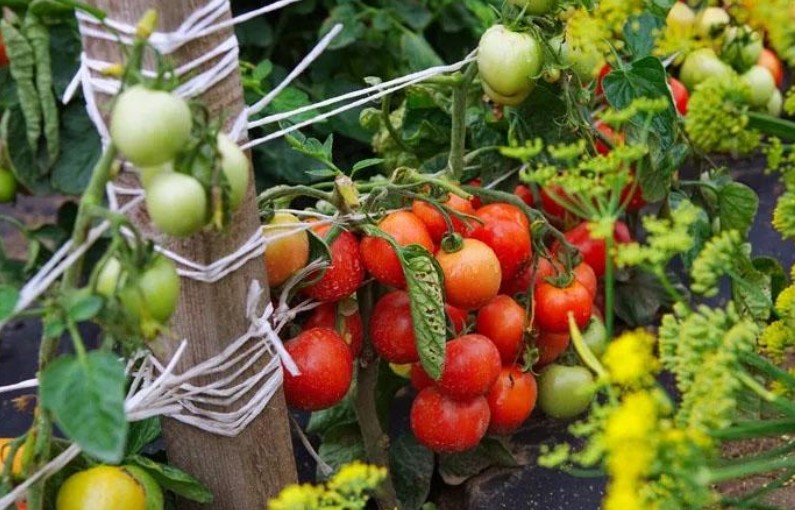
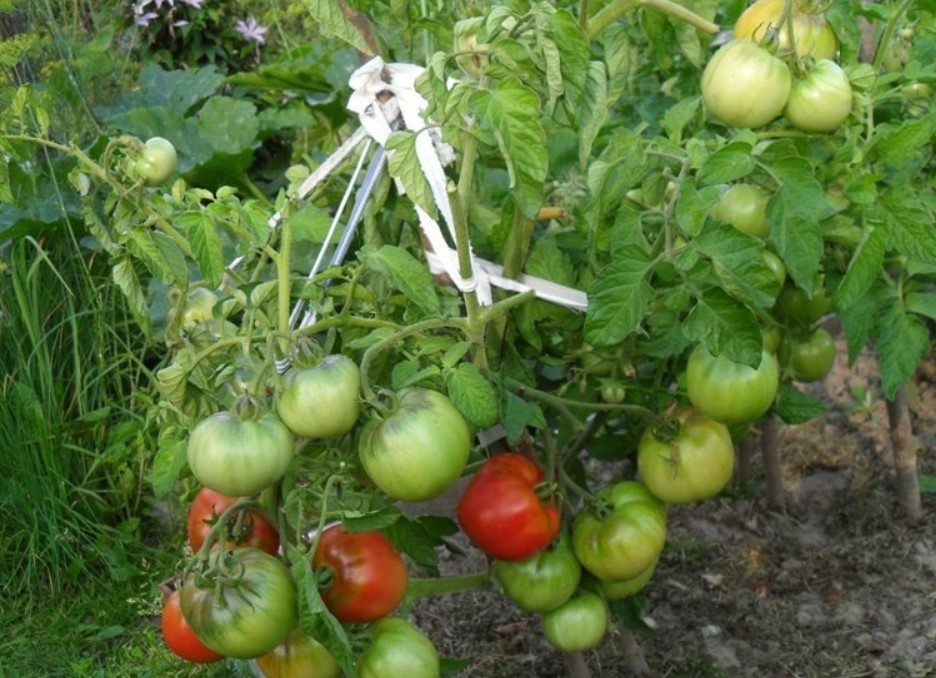
Photo gallery of the tomato variety Dubok (Dubrava)
The history of the Oak (Dubrava) tomato variety
The Dubrava tomato was developed by Russian breeders from the Federal Scientific Center for Vegetable Growing. Some believe it was based on another variety, Dubok. In 1997, this variety received official recognition and was added to the register.
A detailed description of the tomato variety Dubrava (Oak)
The Dubok tomato is distinguished by its high yield and early ripening time. It can be grown both in a greenhouse and in the open field. Furthermore, since it's not a hybrid, its seeds can be used for planting the following season.
Characteristics of the bush
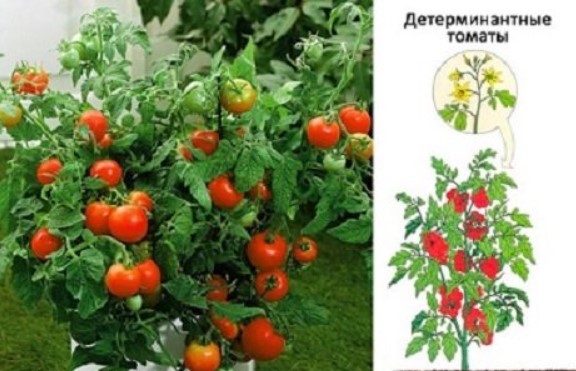
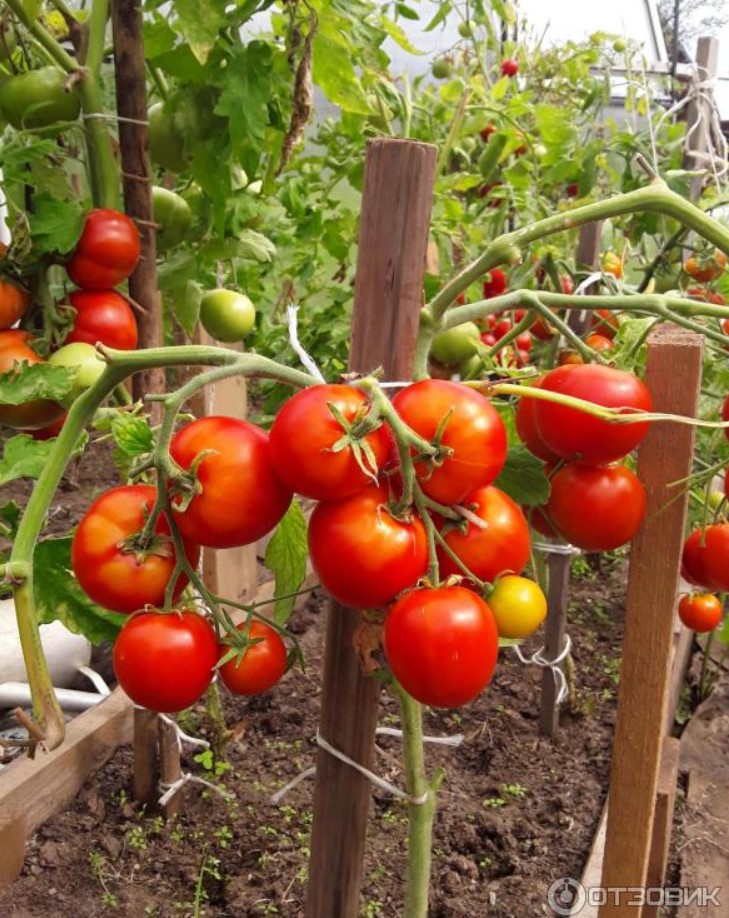
The shoots reach 45-60 cm in height and don't require pinching, but the branches can break under the weight of the fruit. Therefore, even despite the compact size, tying the shoots to a support is still recommended. The bush is trained into 3-4 shoots.
Fruit characteristics
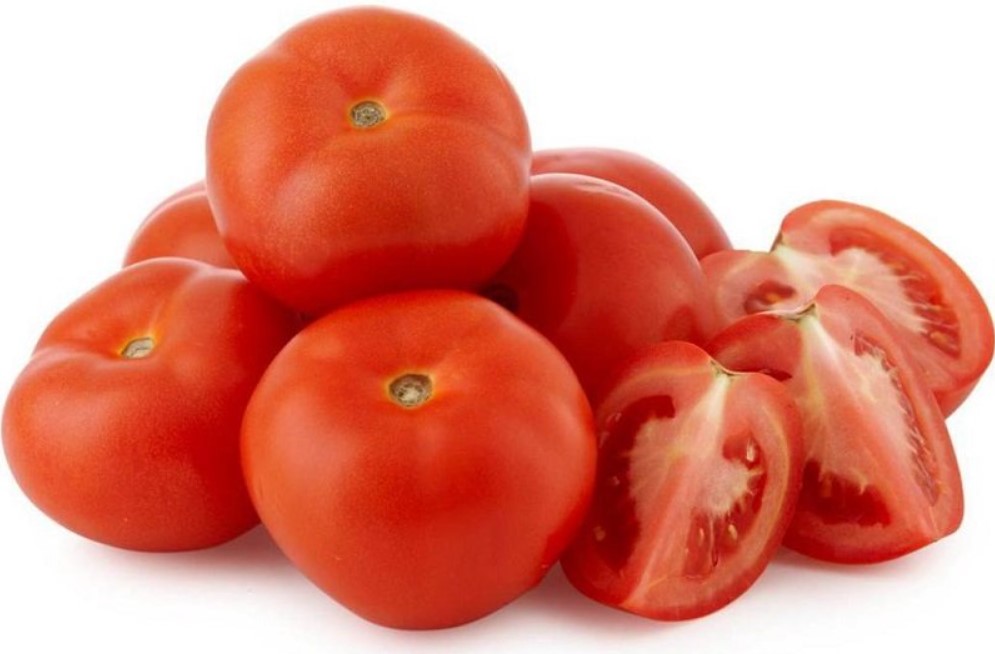
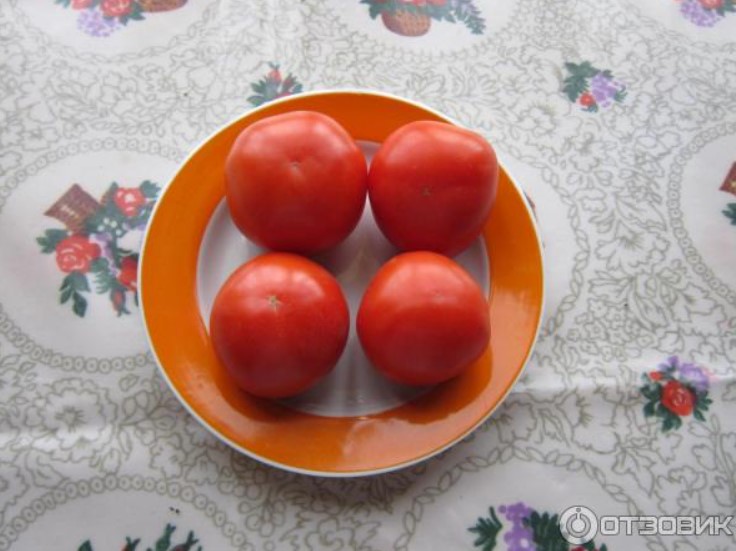
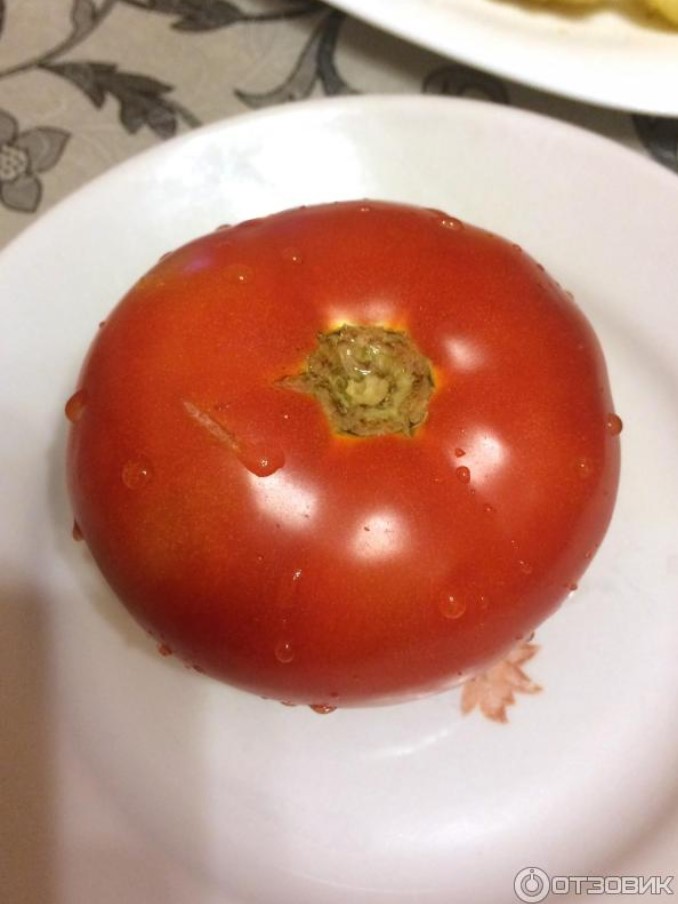
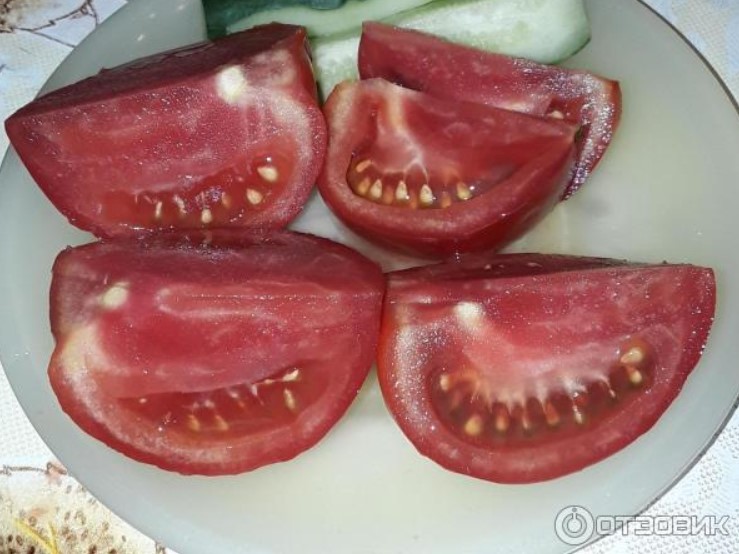
The fruits are round, with subtle ribbing. The skin is bright red, fairly firm, and free of cracks. The flesh is juicy and fleshy, containing 3 to 6 seed chambers. The flavor is sweet, but with a slight tartness. Each fruit weighs between 53 and 110 g.
Productivity and ripening time
The average fruit ripening time is 90 days from germination. With proper care, up to 8 kg of fruit can be harvested from a 1 sq. m. bed. Each bush produces an average of 2 kg of fruit.
Advantages and disadvantages of the tomato variety Dubok (Dubrava) (table)
The table below lists the main advantages and disadvantages of the Dubok (Dubrava) tomato variety.
| Advantages | Flaws |
|
|
Features of growing the tomato variety Dubok (Dubrava)
The Dubok (Dubrava) tomato can be grown using seedlings or sown directly into the ground, if the region's weather conditions permit. The latter method will extend the ripening period by approximately 14 days. The plant's compact size allows it to be grown in pots on loggias, although the yield may be slightly lower.
Sowing and planting times
The timing of sowing seeds directly depends on the growing region:
- Central zone, Urals, Siberia – first ten days of March.
- South of Russia – beginning of March.
In heated greenhouses, seeds can be sown directly into the ground at the end of February - beginning of March, provided that the night temperature is not lower than 15 degrees above zero.
In the Moscow region, seedlings can be transplanted into the garden bed in late May or early June, in the south – in late April, and in Siberia and the Urals – in mid-June.
The main condition is the absence of the threat of night frosts. If there is a risk of frost, it's best to initially cover the seedlings with plastic film or spunbond.
Growing seedlings
The fastest way to harvest tomatoes is to grow them from seedlings. To do this, the seeds are pre-sorted, selecting the strongest ones. They are then disinfected by soaking them in a 1% manganese solution for 20 minutes. Some gardeners treat the planting material with growth stimulants to speed up germination.
Next, germination is carried out by placing the seeds on damp gauze until the first signs of growth appear.
It's best to use all-purpose soil for seedlings, purchased from a specialty store. If this isn't available, mix equal parts garden soil, compost, and sand. However, disinfection will be necessary; the soil should be watered with a weak solution of potassium permanganate before planting.
For growing seedlings, you can use wooden boxes, cut-down plastic bottles, juice or milk cartons, or containers. However, peat pots are best, as they will later be transplanted to a permanent bed along with the tomato plants.
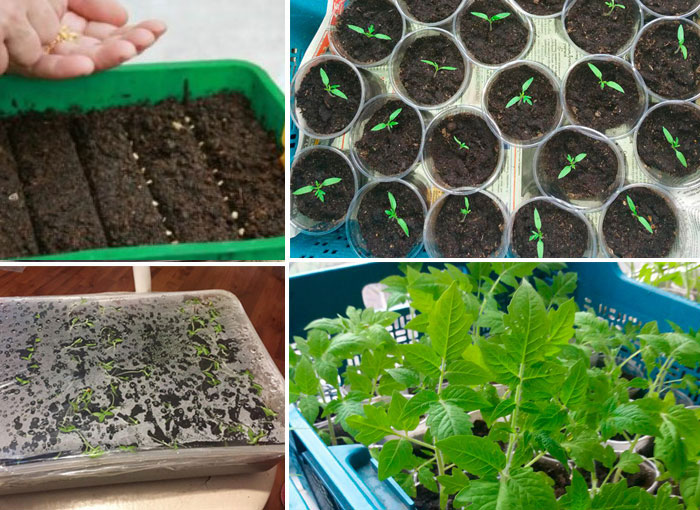
Place the seeds no more than 0.5 cm deep in the soil, then cover them with another 5 mm of soil and spray. Cover the container with plastic wrap and place in a warm place until the seedlings emerge. Periodically remove the cover and ventilate the seedlings, and ensure the soil does not dry out.
Next, the film is removed, the tomatoes are placed in a cooler room, and if necessary, additional lighting is provided with a phytolamp to prevent the stems from stretching.
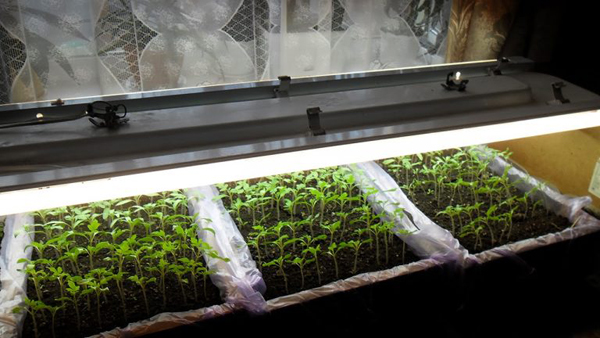
Planting seedlings in the ground
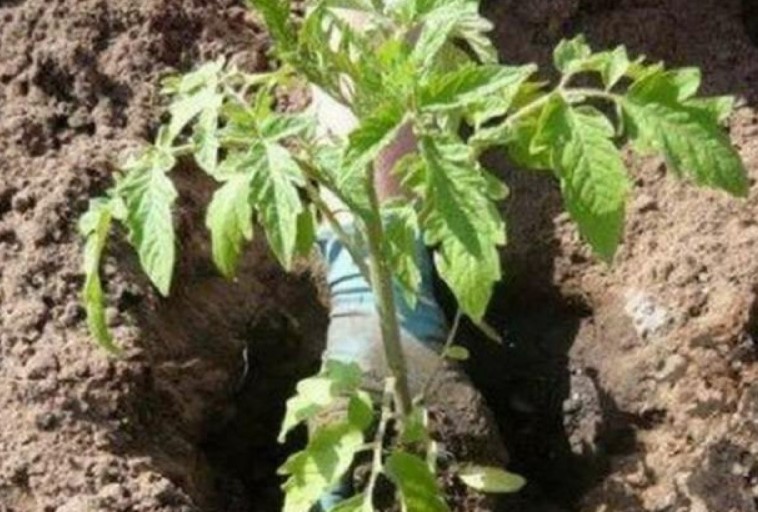
The seedlings are transplanted into the ground 60 days after germination. It's important that the threat of night frosts has passed and the soil has warmed to 12 degrees Celsius. By this point, the plants typically have developed 3-4 true leaves.
Dig holes in the bed, about 20 cm deep, spaced 40-50 cm apart. It's best to arrange them in a staggered pattern.
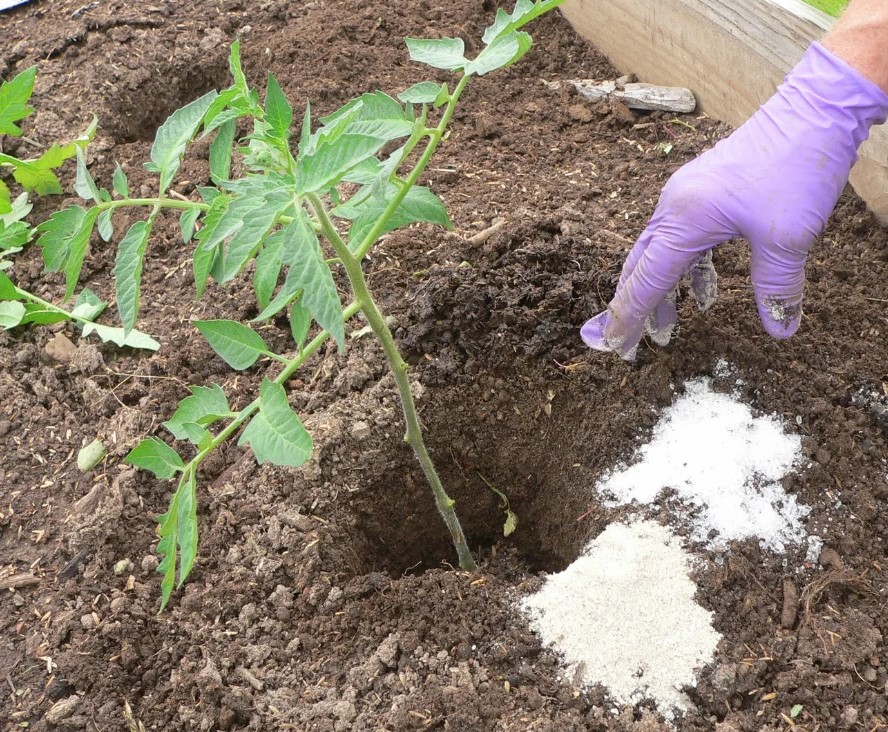
It is recommended to leave a gap of 60-70 cm between rows for ease of maintenance.
You can add a handful of ash and 1 teaspoon of superphosphate to each hole, mixing it all with the soil so as not to burn the roots.
The plants are moved into the hole together with the lump of earth, covered with soil on top and carefully watered using a watering can with a diffuser.
Sowing the Dubok tomato directly into the ground
Tomato seeds can be planted in open ground in the southern regions at the end of April, while in the central zone, Siberia, and the Urals, work can begin in the second half of May.
For this method of growing tomatoes, a raised bed with wooden edges is created, layered with sawdust, grass scraps, compost, humus, and fertile soil. A plastic sheet should be placed underneath to protect the bed from the cold.
Dig holes in the surface where the seeds are placed, then cover with 1.5 cm of soil. Water with warm water, then cover the seedlings with cut-off plastic bottles to create a greenhouse effect. These can be removed after the seedlings emerge. The bed itself is covered with spunbond, which is best stretched over pre-dug arches.
It is best to plant not one, but 2-3 seeds in a hole, so that the strongest plant remains.
Growing the Oak tomato variety in a pot
The Dubok tomato can be grown at home in pots; containers with a capacity of 5-8 liters are best suited.
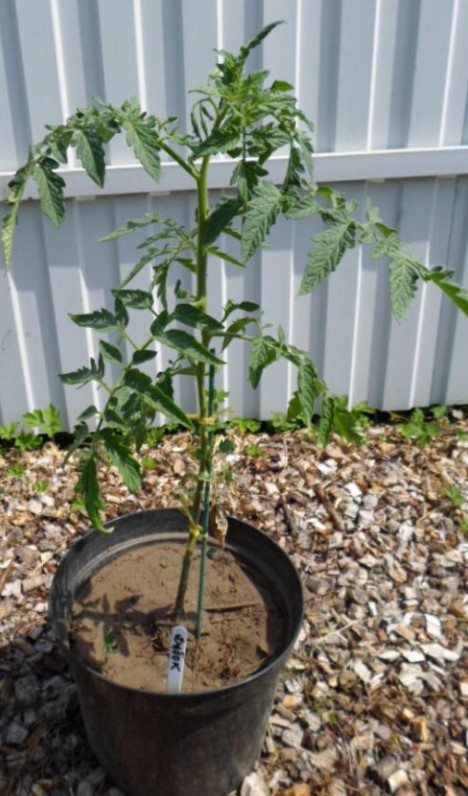
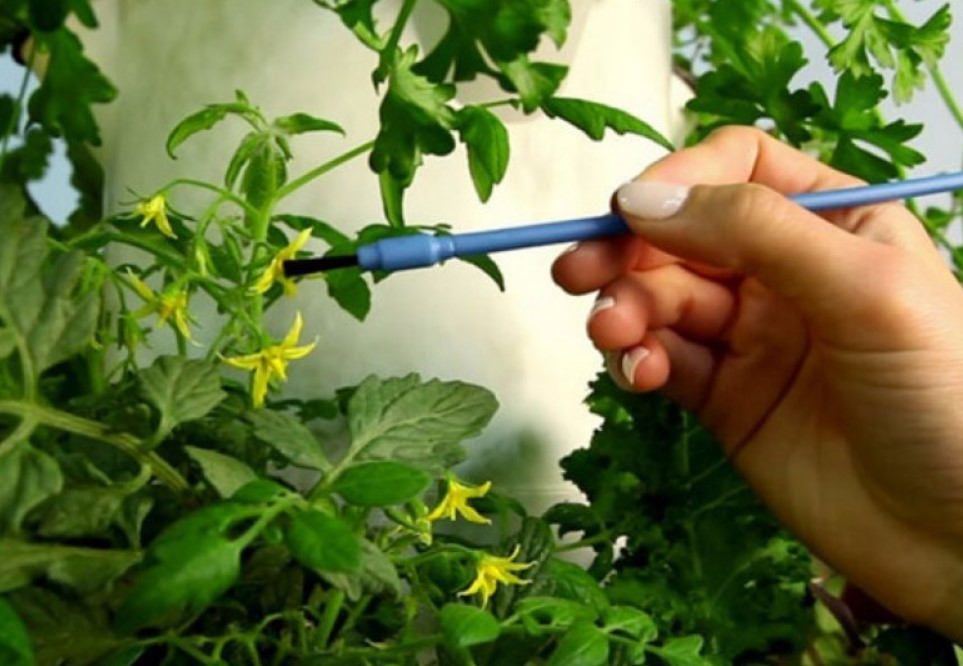
The principle of planting seeds is classic, but when growing a crop, it will be necessary to help the flowers pollinate in any way possible:
- Blow air onto flowering tomatoes with a fan from a distance of 1.5-2 m.
- Shake the branch a little or tap it with your finger.
- Transfer pollen with a brush.
About growing tomatoes at home Andon the balcony Read on our website.
Outdoor care
The most important maintenance procedure when growing tomatoes is watering. Watering should be done once a week until fruit begins to form. If the weather is cool and rainy, adjust the soil moisture level accordingly. In hot weather, increase the frequency of watering to several times a week.
To protect the roots from heat or cold, it is recommended to mulch the surface of the bed.
To increase yield and strengthen the plant's immunity, fertilize tomatoes every 2-3 weeks. To do this, dissolve 5 g of superphosphate, a cup of ash, and 2 kg of manure in 10 liters of water. Mix and water the tomatoes in the evening after the main watering.
Another important procedure is weeding the garden bed. Weeds not only compete with the crop for oxygen and nutrients but also attract insect pests. Therefore, it is necessary to periodically remove weeds and loosen the soil.
The Dubok tomato is tied up only at the stage of fruit formation, so that the branches do not break under their weight.
Greenhouse care
In a greenhouse, plants are watered regardless of weather conditions; the soil dries out fairly quickly. At least 5 liters of water are used per plant. This method is especially effective for tomatoes. drip irrigation, which allows maintaining the required level of soil moisture.
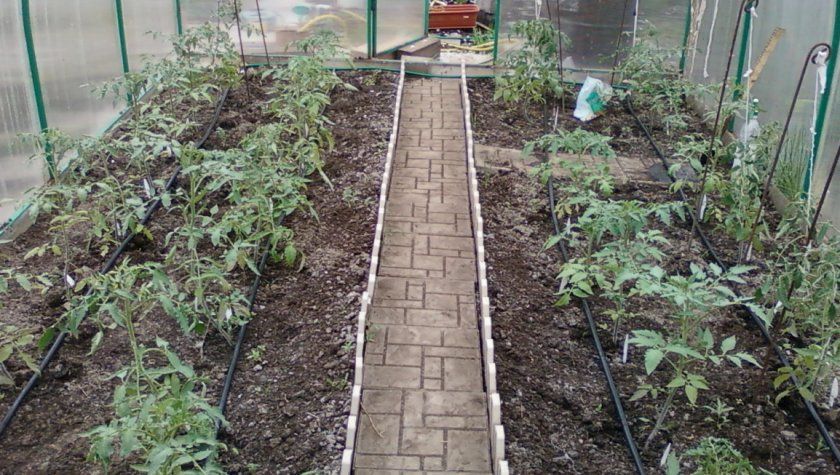
To prevent the plants from suffering from oxygen deficiency and high temperatures, the greenhouse is periodically ventilated.
How to grow tomatoes in a greenhouse in the articleAll about growing tomatoes in a greenhouse.
Disease and pest resistance of the tomato variety Dubok
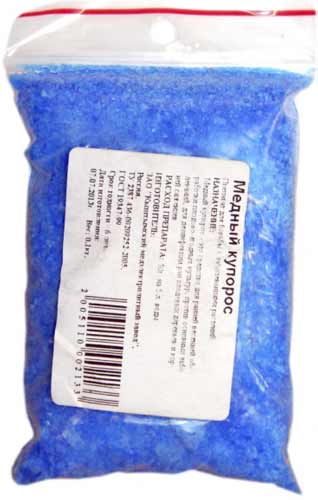
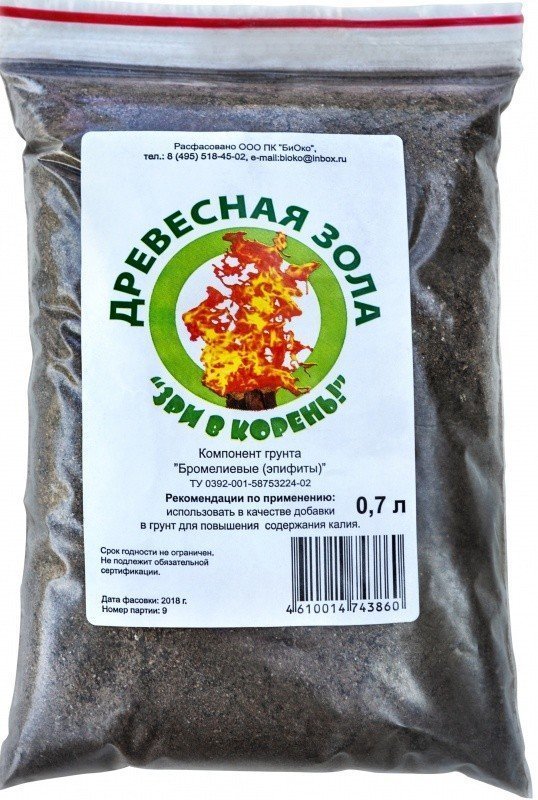
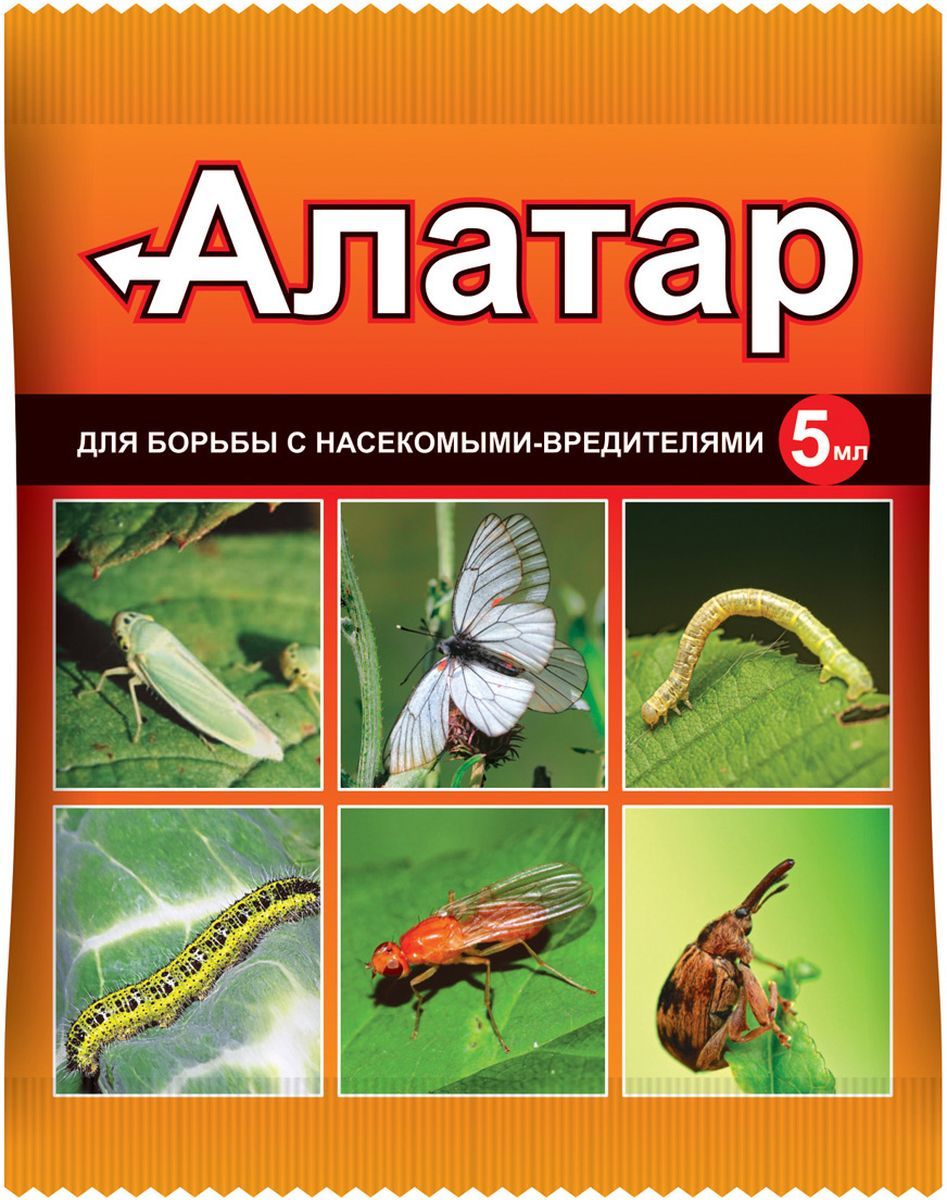
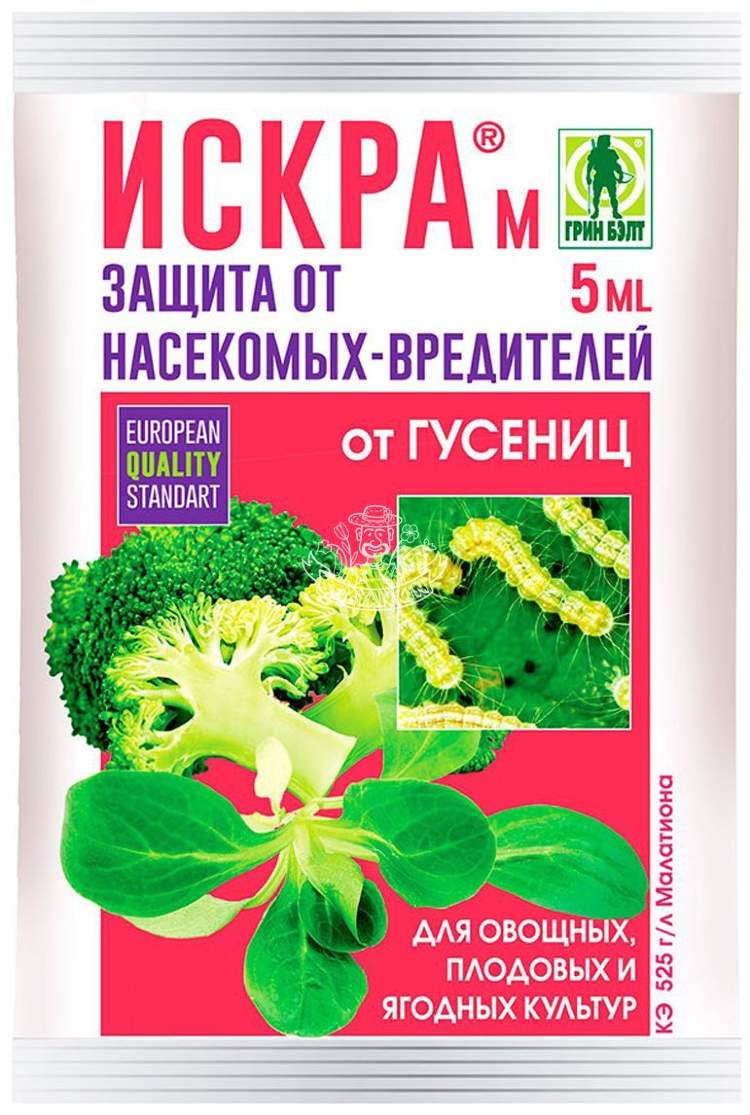
The Dubok tomato has a strong immune system, making it resistant to common diseases. However, the bushes are often attacked by aphids, slugs, or Colorado potato beetles. To prevent these, spray the plants with a copper sulfate solution, ash or garlic infusion, and sprinkle crushed eggshells or wood ash on the soil. Specialized pesticides, such as Altar, Komandor, or Iskra, can help combat large-scale pest infestations.
Harvesting, using and storing tomatoes of the Dubok (Dubrava) variety
Dubok (Dubrava) tomatoes ripen in an average of 90 days. The harvest season typically lasts from July to October.
After all the tomatoes have been picked, the bushes must be removed, the soil dug up and the bed sown with barley, mustard or other green manure.
Tomatoes can be used for salads, fresh eating, canning, pickling, making sauces and juices.
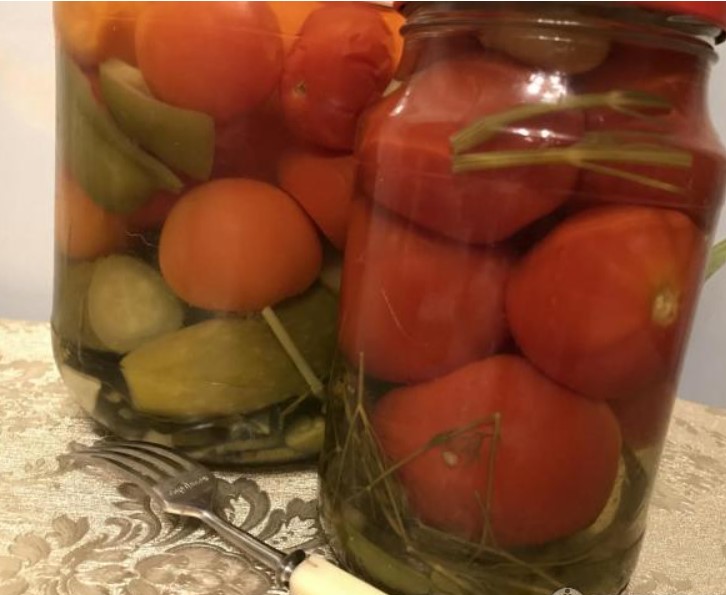
When storing, each tomato is carefully wrapped in paper and placed in boxes no more than three layers deep. In this form, they will last for about 1.5 months, and their strong skin allows for long-distance transportation.
Comparison of the tomato variety Dubok (Dubrava) with other varieties in the table
Please note! How can you easily convert centners/ha to kg/sq.m? Simply divide by 100! For example, the Abakansky Pink tomato yields 400 centners of marketable fruit per hectare. This equals 4 kg per square meter. It's that simple! Also, keep in mind that typically no more than 3-4 plants are planted per square meter. This way, you can calculate the yield per bush. In the case of the Abakansky Pink, it's about 1 kg.
| Variety | Ripening period (number of days from full germination to ripening)
Yield of commercial fruits |
Brief description | Fetus |
| Oak tree | 95 days
600-800 c/ha |
An early-ripening determinate variety for open ground and greenhouses. Requires staking and training. Suitable for salads (imparting a tart flavor), canning, and processing into tomato products. | Round, slightly ribbed, bright red, 50-100 g. Good taste. |
| Oak grove | 85-105 days
133-349 c/ha (Central region), 224-551 c/ha (Volga-Vyatka region), maximum 551 c/ha (Mari El Republic) |
An early-ripening, determinate variety for open ground. Suitable for salads, pickling, and processing into tomato products. | Round, red, smooth, 53-110 g. The taste is satisfactory and good. |
| Explosion | 93-100 days
410 c/ha |
An early-ripening determinate variety for open ground and greenhouses. Suitable for salads. Drought-resistant. | Round, slightly ribbed, medium density, red, 90 g. Good taste.. |
| Agatha Plus | 98-113 days
301-798 c/ha |
An early-to-mid-early determinate variety for open ground. Suitable for salads. | Round, smooth, medium density, red, 128-190 g.
The taste is good and excellent. |
| Abakan pink | 120 days or more
400 c/ha |
A late-ripening determinate variety for open ground and greenhouses. Requires staking and training. Suitable for salads and processing into tomato products. | Flat-round, slightly ribbed, medium density and pink in color, 200-500 g. Good taste. |
| Openwork | 105-110 days
610 c/ha |
An early-ripening, determinate variety for open ground and greenhouses. Requires staking and shaping. Suitable for salads. | Round, smooth, dense, fleshy, red, 220-250 g. Good taste. |
| Alyosha Popovich | 125-130 days
600-640 c/ha |
A mid-season indeterminate variety for open ground and greenhouses. Requires staking and training. Suitable for salads. Easy to transport. Resistant to adverse growing conditions. | Round, slightly ribbed, medium density, red, 150-200 g. Good taste. |
| Aphrodite F1 | 70-100 days depending on climatic conditions
800 c/ha |
An early-ripening determinate variety for open ground and greenhouses. Requires staking and shaping. Suitable for salads. | Round, smooth, medium density, red, 100-115 g. Good taste. |
| Siberian early ripening | 98-108 days
289-543 c/ha (open ground), 20-43% of the total yield ripens in 15 days of fruiting, 630-950 c/ha (greenhouse and under film), in the first month of fruiting 240-580 c/ha. |
An early-ripening, determinate, low-growing variety for open ground and greenhouses. Suitable for salads. | Round and flat-round, slightly ribbed, medium-sized and large, red, 62-114 g. The taste is satisfactory. |
| Big Momma | 85-95 days (greenhouse), about 100 days (open ground)
700-900 c/ha |
A mid-early determinate variety for open ground and greenhouses (greenhouses only, according to the register). Suitable for salads, canning, pickling, and juice. | Round, large, slightly ribbed, medium density, red, 200-250 g. Excellent taste. |
| Voyage F1 | 95-100 days
1400-1800 c/ha |
An early-ripening indeterminate variety for greenhouses. Suitable for salads. Transportable. | Round, smooth, dense, pink, 120-130 g. Good taste. |
| Kalinka-Malinka | 105-115 days
260 c/ha |
A mid-season, determinate, standard variety for open ground and under plastic shelters. Suitable for whole-fruit canning. | Round, smooth, dense, red, 52 g. Good taste. |
| Kostroma | 105-110 days
1350-1500 c/ha |
A mid-season determinate variety for greenhouses. Requires staking and training. Suitable for salads, whole-fruit canning, and processing into tomato products. | Flat-round, slightly ribbed, glossy, red or orange, 80-150 g. Good taste, sweet and sour. |
| Siberian Shan'gi | 100-110 days
The yield of commercial fruits in open ground was 5.6 kg/sq.m. |
A mid-season determinate variety for open ground and greenhouses. Suitable for salads. | Flat-round, medium density, slightly ribbed, raspberry, 157 g. Excellent taste. |
Gardeners' reviews of the Dubok tomato variety
An excellent variety, all the tomatoes are firm and tasty. The plant tolerates drought well, so it's safe to plant in a dacha where you don't get to visit every day.
Good afternoon, Otzovik guests!
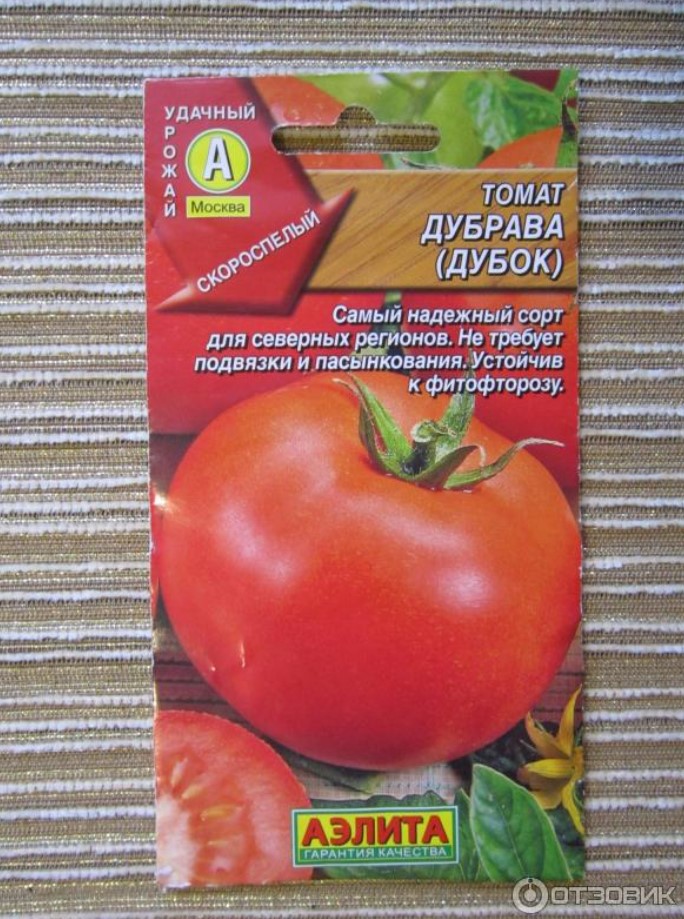
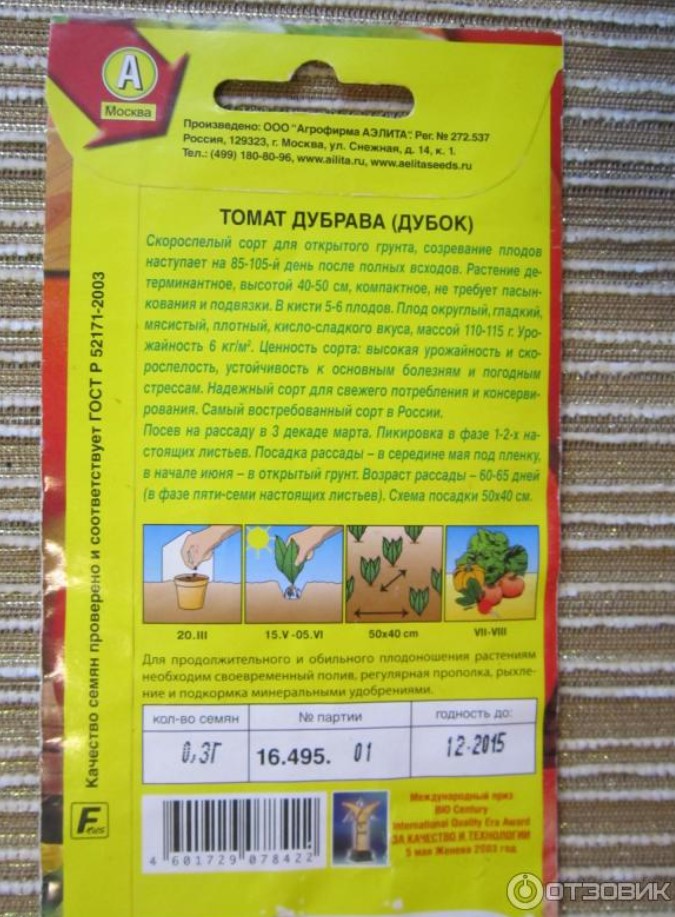
I think this is the last tomato variety I'm reviewing based on my experience growing it in 2018. The seeds are from Aelita, and the variety is called "Dubrava (Oak)".
I planted this tomato, called "Dubrava," for the first time this year. Twenty years ago, I planted tomatoes called "Dubok." Now it turns out they're the same variety. But remembering what I grew many years ago, "Dubok" was still slightly different from the current "Dubrava." Although the bushes were 40-50 cm tall, the fruits were smaller, about 50 grams. Here's a description of the "Dubrava (Dubok)" variety.
In general, it matches what I got. The bushes are not tall, 50 cm, sturdy, with small, wrinkled leaves. Although it is recommended not to remove side shoots, I still remove the lower side shoots, as with all low-growing varieties (like the "Shuttle" variety). Because late blight attacks quickly, I try to shape the bushes so that the leaves don't touch the ground. For the same reason, I don't let the bushes fall over; I always tie them to some kind of support. This variety didn't ripen early for me; I planted it outdoors late. In early August, I harvested all the tomatoes from the outdoor bushes. It's better to let them ripen indoors than have them turn black from late blight. The tomatoes are perfectly round and red. Mine weighed no more than 100 grams.
I didn't like the taste of them; they were just ordinary sweet-and-sour tomatoes. I've gotten out of the habit of eating them. I only plant varieties with sweet fruit without the acidity. Of the low-growing ones, I consider the "Nikola" variety from the "Sibirsky Sad" company and "Kapiya Rozovaya" to be sweet. The "Zagadka" and "Vishnya Zimnyaya" varieties from the Biotekhnika company are too sour for me. This variety didn't produce much for me either. And of course, it needed more care, which I didn't do.
In conclusion, I'll say that those who don't have greenhouses and plant tomatoes in open ground or under plastic can confidently plant this variety. It's generally a reliable variety for open ground. Those who have enjoyed this variety can grow it from their own seeds. You can harvest the seeds yourself, as this is a cultivar, not a hybrid. I'm giving the "Dubrava (Oak)" variety from Aelita a four-star rating. I'm deducting one star for its mediocre taste.
I'd like to tell you about another tomato variety that grows in our garden. The Dubok tomato is quite popular. It's convenient because it can be grown outdoors, and the plant is generally easy to grow, with low-growing, sturdy bushes.
The seedlings sprouted very well. I haven't had any problems with seeds lately, perhaps because I buy from specialty stores and trusted producers.
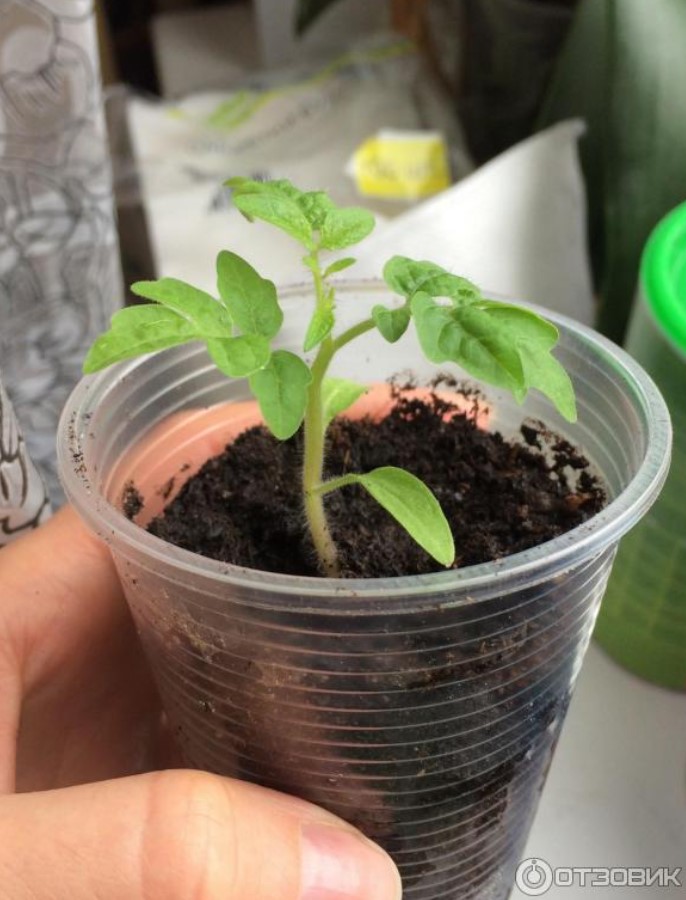
I like low-growing seedlings because they are easier to transport and can stay on the windowsill longer.
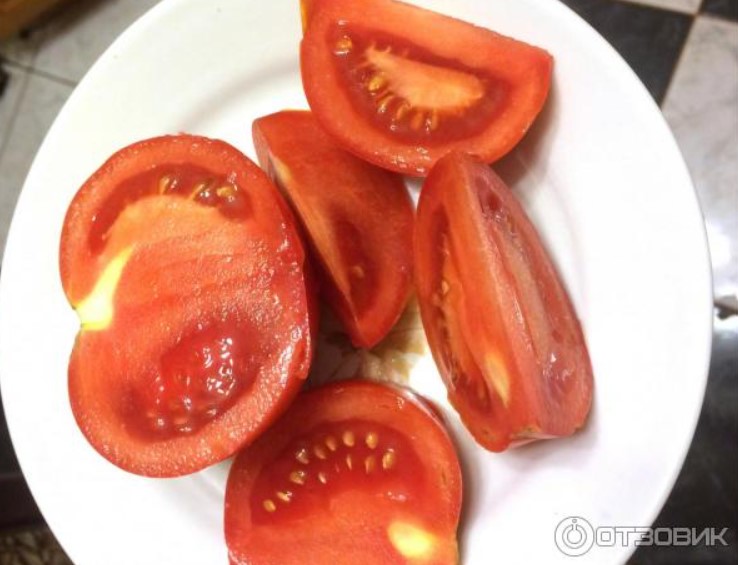
The fruits of this tomato are large and round. They're not very fleshy inside, containing juice and seeds. Overall, they're a typical classic tomato. They're perfect for preserves and salads. They also have a fairly ordinary flavor: slightly tart and firm. They can be stored for quite a long time, especially in a cool place.
I recommend it as a classic, unpretentious variety.
Hello!
We plant this tomato variety year after year; my grandmother used to plant them too. That was in the Tula region, not far from Kashira, but now we're in the north, near Klin. Previously, this variety was grown only in open ground, but this year we've been planting it in a greenhouse.The variety is not a hybrid, but we always buy ready-made seeds.
There are a lot of seeds in the package, the germination rate is good, well, almost 100%.
The seeds are clean and whole.
The seedlings give rapid growth.
When planted in the ground, it will only get sick minimally, unless it is very overgrown.
This year, the nights in May were cold, down to 0 degrees Celsius, and sometimes even lower, so we had to plant the seedlings and leave them for two months. This meant no one weeded the tomatoes, removed their side shoots, or sprayed them for fruit set or against late blight (by the way, none of this was necessary in previous years either). My sister watered them every other week or two.
Despite such wild conditions, there is a harvest.
The tomato ripens successfully on the bush, but if picked earlier, it will taste no different and will ripen quickly in a dark place.
Suitable for pickling.
I don't like the taste, but that doesn't count) the tomato isn't very fleshy.
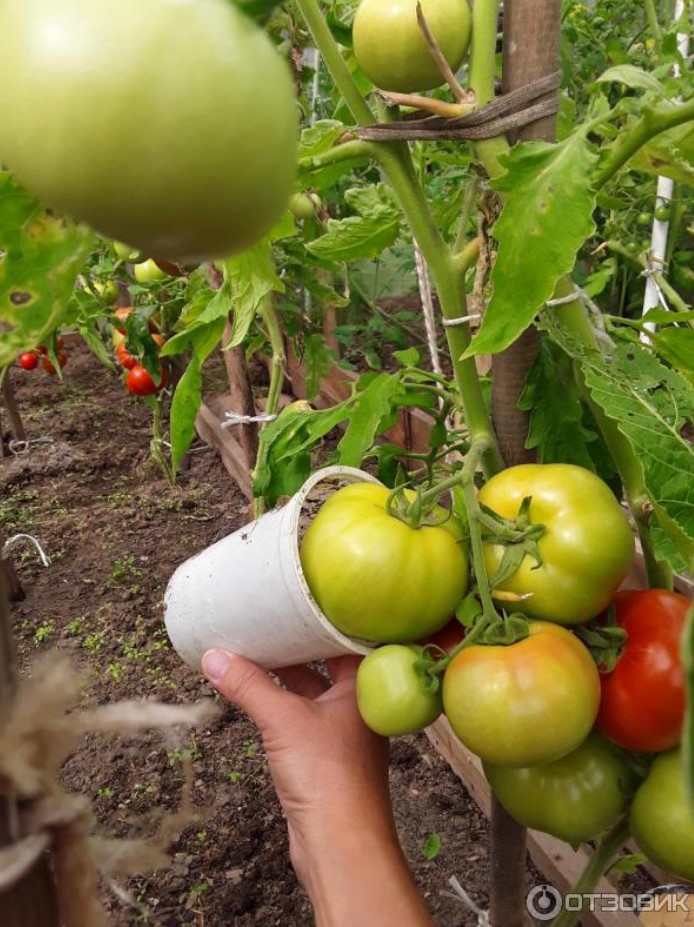
Quite large specimens grow in the greenhouse
For comparison, a large milk glass
This variety is often found at markets and stalls. It has been quite popular since Soviet times due to its rapid ripening, resilience, and relatively good storage quality.
For lovers of dense tomatoes, I can recommend the Novice variety.
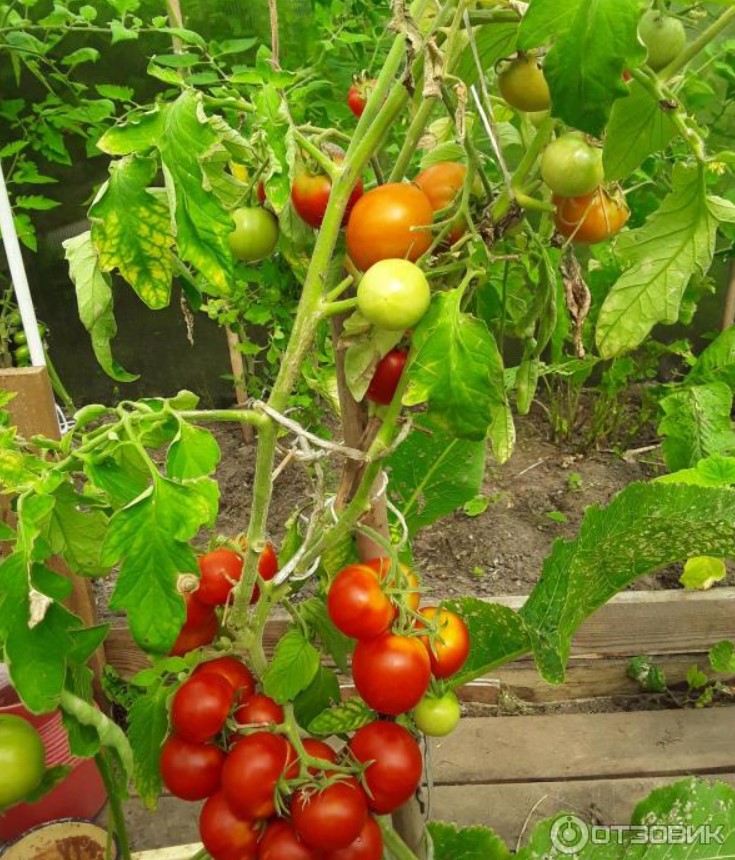
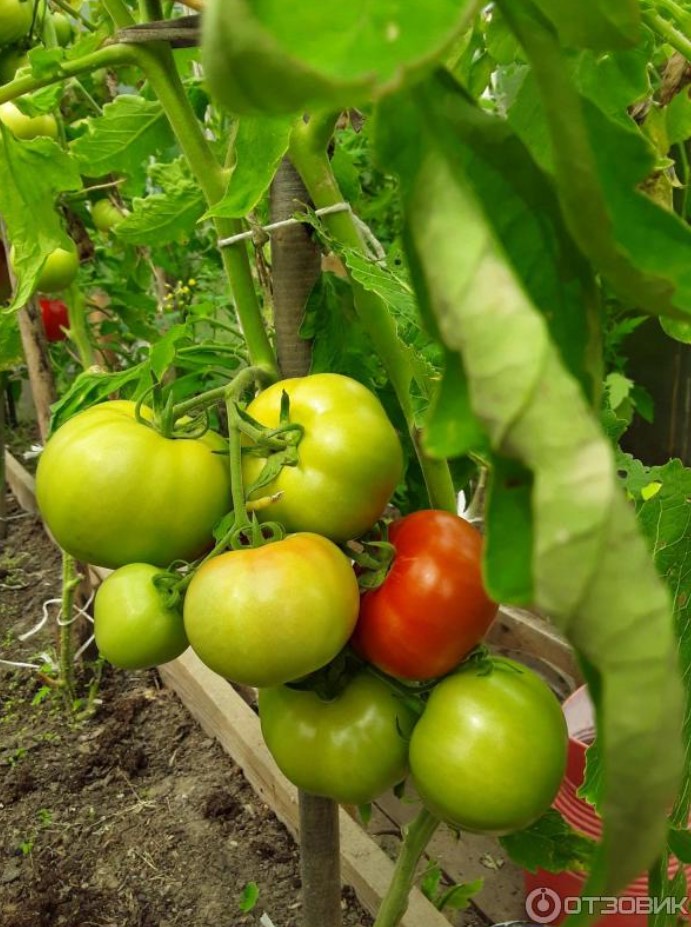
I once had an "Obok" (Dubok) variety. It wasn't a cherry tomato; the fruit weighed 90-130 grams—I figured it was from the package. I found it a bit tart compared to other varieties I was planting at the time.
Seeds from Aelita. Soaked today... According to the label, Dubok is the most reliable variety for northern regions. It doesn't require staking or pinching. It's resistant to late blight. It's an early-ripening variety, with 85-105 days to fruit ripening. The plant is determinate, 40-50 cm tall, and compact. There are 5-6 fruits per cluster. The fruit is round, smooth, fleshy, and dense, with a sweet and sour taste. It weighs 110-115 g. Yields 6 kg per square meter. Suitable for salads and canning.
A mediocre variety. Didn't impress with either yield or flavor. But it doesn't really require pinching. It's quite short, reaching 50-70 cm... Its resistance to late blight is a huge plus.
Photo of a Dubok tomato in a pot.
I transplanted oak tomatoes into open ground.