The Red Sonya potato variety is widely used for planting in home gardens due to its high yield and relative ease of cultivation.
Content
- 1 Table with characteristics of the Red Sonya potato variety
- 2 The origin of the Red Sonya potato variety
- 3 Description of the Red Sonya potato variety
- 4 Nutrients and nutritional value
- 5 Advantages and disadvantages of the Red Sonya potato variety
- 6 Planting Features of the Red Sonya Potato Variety
- 7 Caring for the Red Sonya potato variety
- 8 Protecting the Red Sonya potato variety from diseases and pests
- 9 Harvesting and storing the Red Sonya potato variety
- 10 Comparison of the Red Sonya potato variety with other varieties in the table
- 11 Top.tomathouse.com's tips on growing the Red Sonya potato variety
- 12 Reviews of the Red Sonya potato variety
Table with characteristics of the Red Sonya potato variety
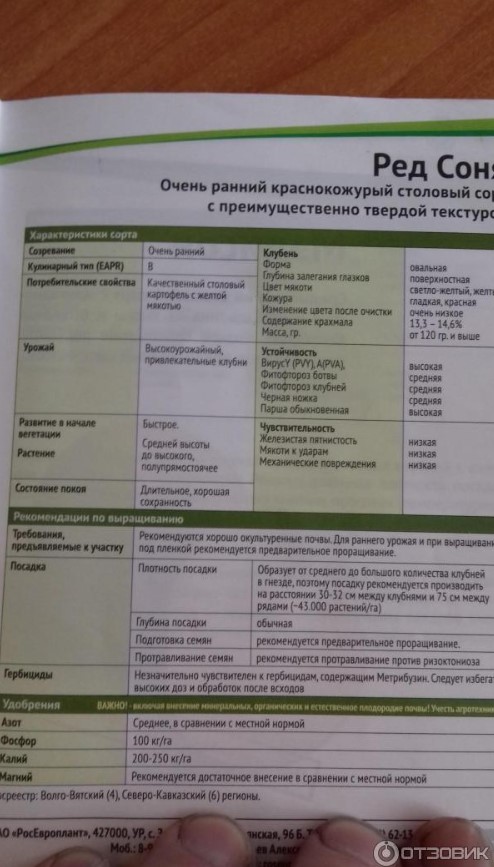
| Characteristic | An early potato variety with red-pink tubers. |
| General information | A very early potato variety, distinguished by strong immunity and reddish-pink tubers. |
| Ripening time | 50-65 days |
| Productivity | 174-340 c/ha |
| Marketability | 82-97% |
| Shelf life | 93% |
| Starch concentration | 13.3-14.6% |
| Color of pulp | Yellow |
| Peel color | Red |
| Weight of commercial tubers | 78-122 BC |
| Number of tubers per bush, pcs. | 6-10 pcs. |
| Taste characteristics | Pleasant taste, boils down slowly |
| Class and purpose in cooking | Table purpose, class B |
| Suitable regions for growing | North Caucasian, Volga-Vyatka |
| Disease resistance | Good resistance to major potato diseases. If growing conditions are not met, it may be susceptible to the virus (PLRV) Y, late blight. |
| Growing specifics | Prefers light soil with neutral acidity. |
| 2015 | |
| Country of origin | Germany |
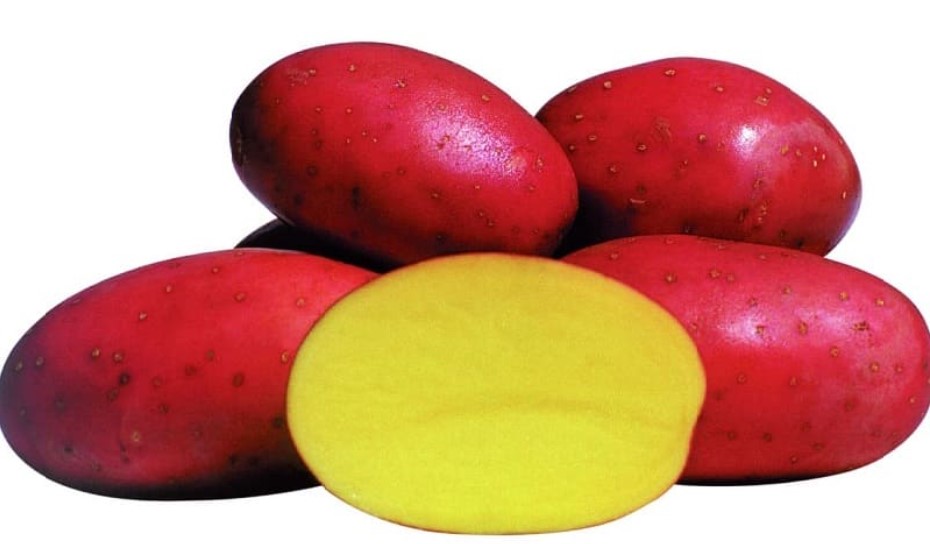
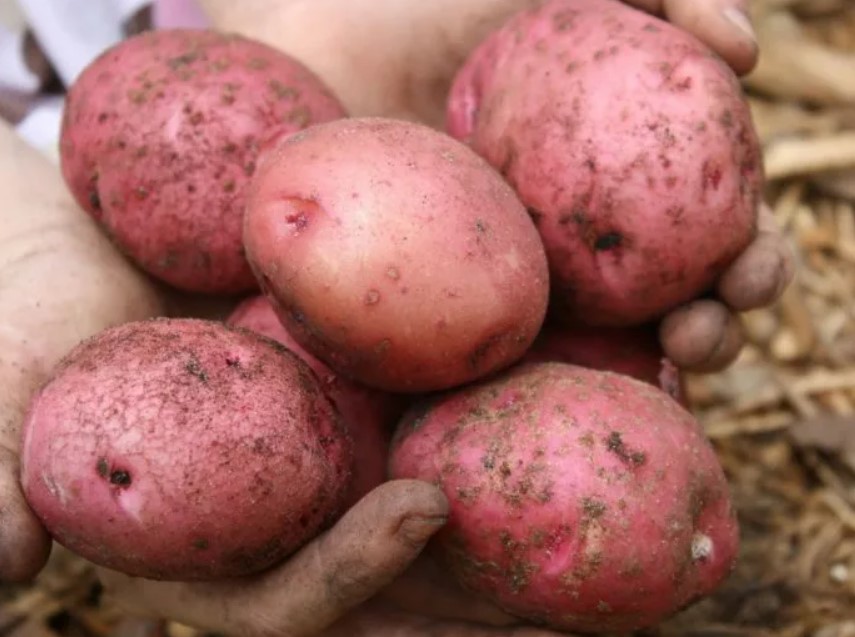
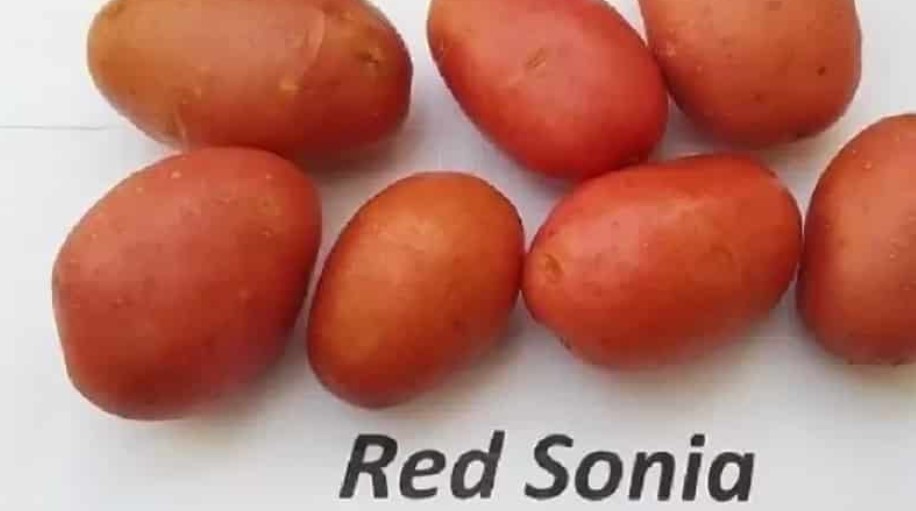
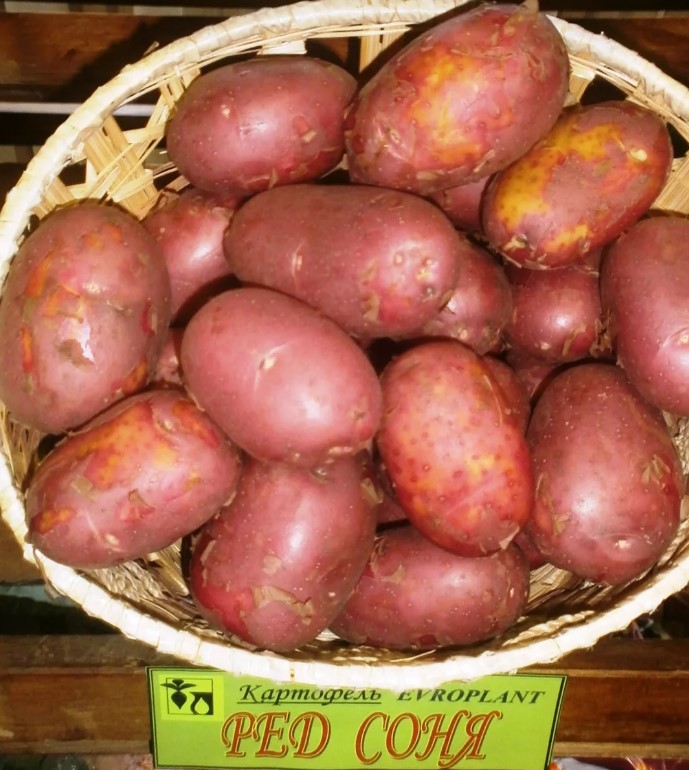
Photo gallery of the Red Sonya potato variety
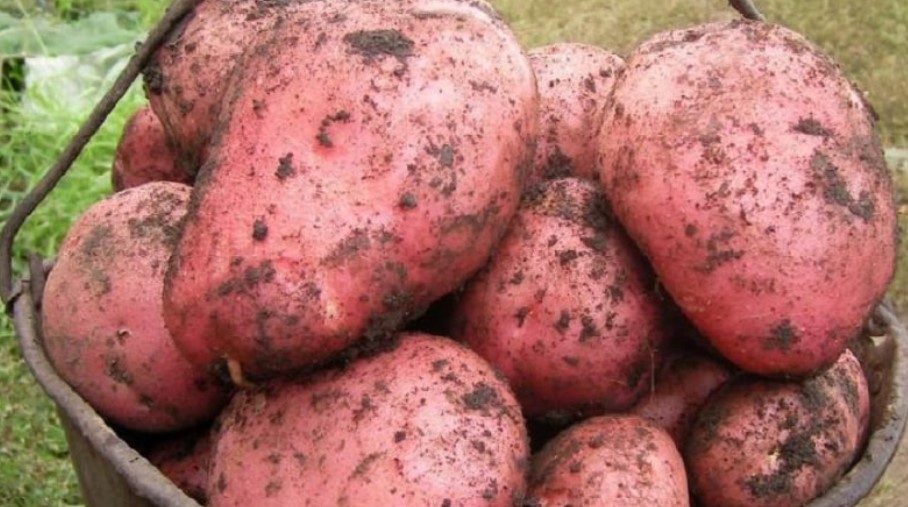
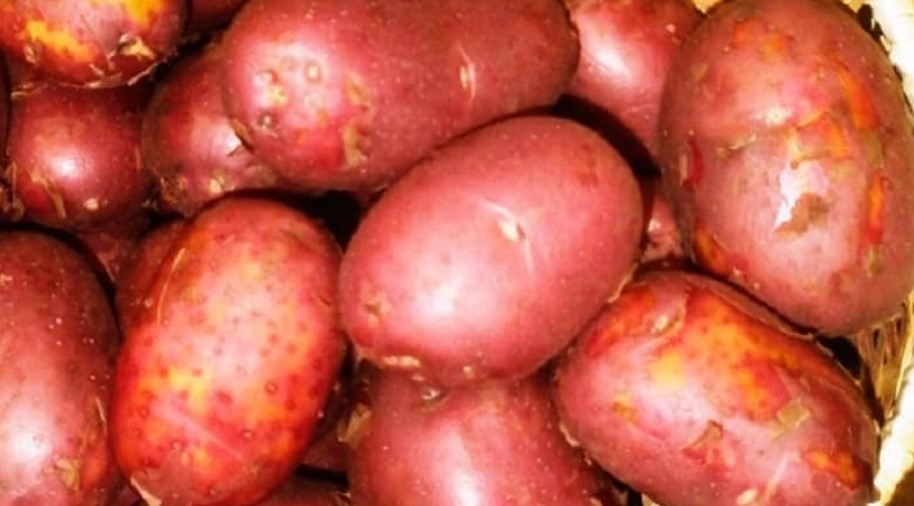
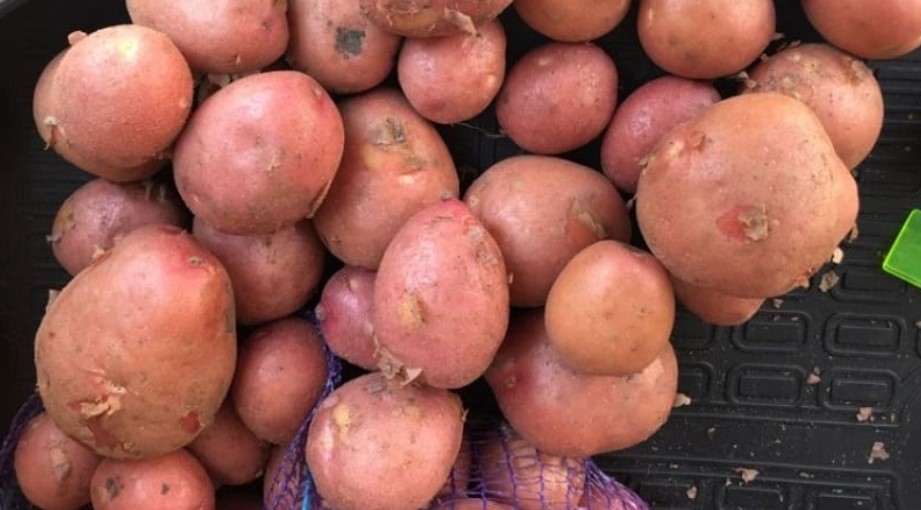
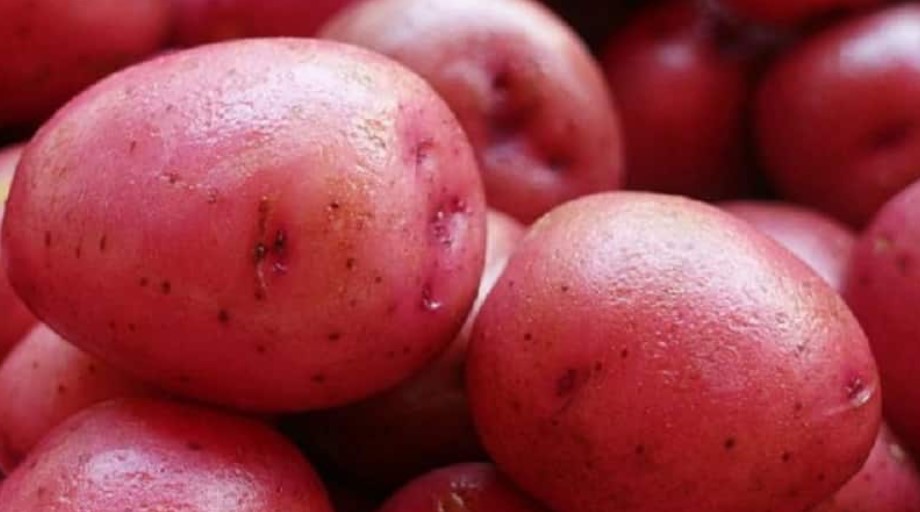
The origin of the Red Sonya potato variety
The Red Sonya variety was developed by German breeders in Germany. It began to be used in our country several decades ago, but was only added to the register in 2015.
Description of the Red Sonya potato variety
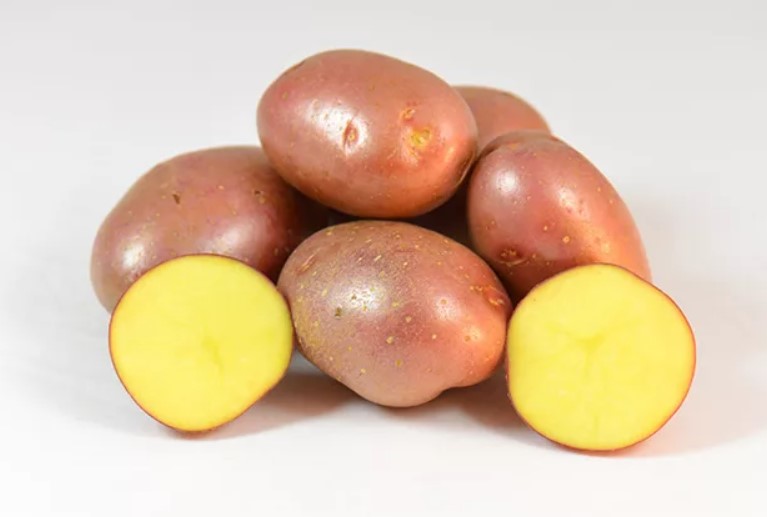
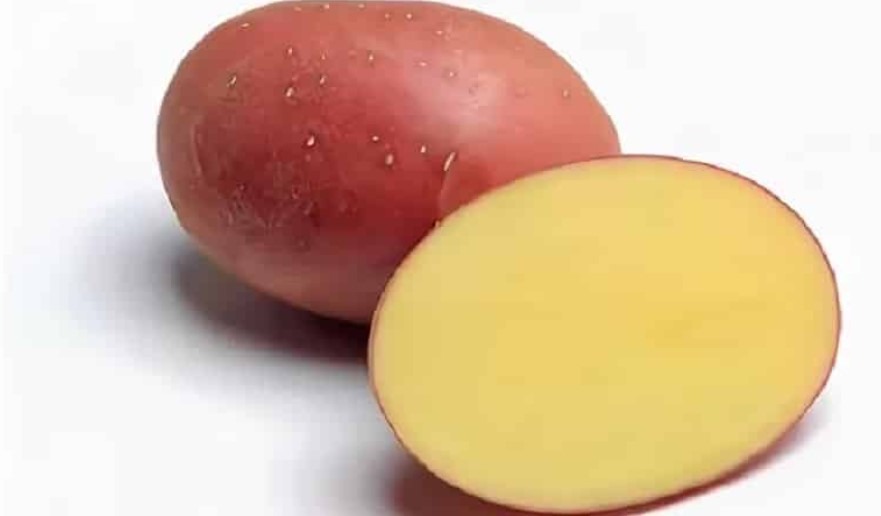
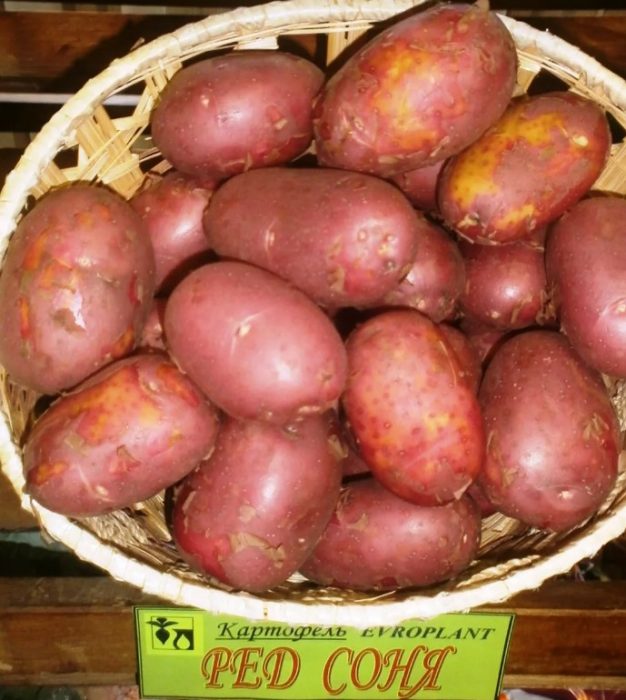
The potato got its name due to the unusual reddish tint of the skin of the tubers.
Bushes
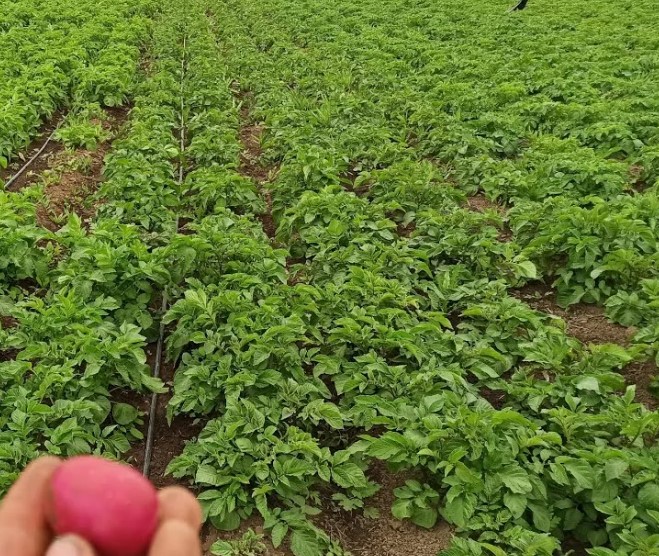
Bushes with erect shoots up to 70 cm tall. Leaves are medium to large, with medium foliage. Each bush produces 6 to 10 potatoes.
Tubers
The tubers are oval-shaped, with smooth, red skin. They weigh from 78 to 122 g, with some specimens reaching 200 g. The flesh is yellow, softens slightly, and has shallow eyes on the surface.
Nutrients and nutritional value
Potatoes contain 13.3-14.6% starch. They also contain up to 1% ash and many minerals: sodium, phosphorus, cobalt, potassium, magnesium, zinc, and others.
Productivity, ripening time
The Red Sonya potato is considered an ultra-early variety because the first harvest can begin within 50 days of germination. The cultivar claims full maturity occurs within 65 days.
The yield per hectare ranges from 174 to 340 centners. Each bush, on average, produces 10 potatoes.
Resistance to diseases and pests
| Name | Degree of stability |
| Virus (PVY) Y | High |
| Virus (PLRV) L | Moderate |
| Leaf curling | High |
| Cancer | High |
| Golden nematode | High |
| Wrinkled mosaic | High |
| Leaf blight | Moderate |
| Tuber blight | Low |
| Striped mosaic | High |
| Common scab | Average |
| Blackleg | Average |
For which regions is the Red Sonya potato variety suitable?
The Red Sonya variety was initially zoned only for the North Caucasus and Volga-Vyatka regions. However, residents of other climate zones soon learned about this potato and began actively using it for planting. Under favorable weather conditions, it can be planted twice per season.
Advantages and disadvantages of the Red Sonya potato variety
The Red Sonya variety has both advantages and disadvantages. These are listed in the table below.
| Advantages | Flaws |
|
|
 Planting Features of the Red Sonya Potato Variety
An excellent potato harvest is sure to be achieved if you provide it with the right growing conditions.
Requirements for the landing site and its preparation
When choosing a location for Red Sonya potatoes, the first step is to consider crop rotation rules. It's important to remember that potatoes will not grow well in areas previously occupied by tomatoes or beets. Legumes, grains, and cucumbers are considered good predecessors.
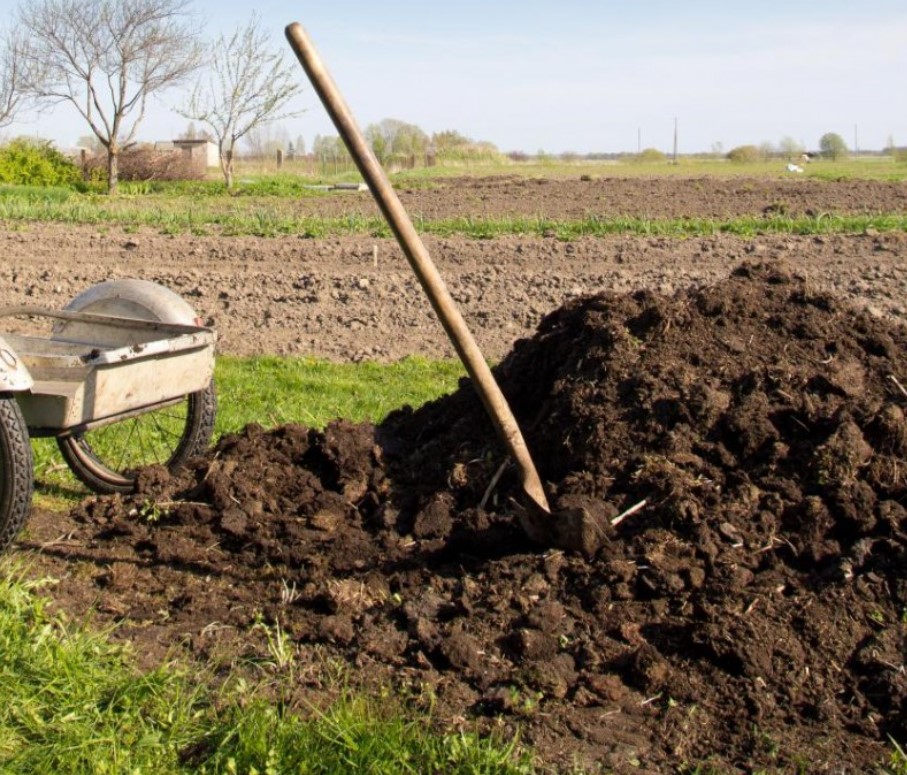
The plot is prepared in the fall, with plowing to a depth of 30 cm, along with organic fertilizers such as manure. In the spring, the soil is dug again, adding ash and compost.
The area should be well lit without stagnant moisture; potatoes will grow very poorly in waterlogged soil.
Selection and preparation of seed tubers
For planting, you need to select tubers of the same size, without traces of mechanical damage and without signs of rot.
After 25-40 days, the potatoes are harvested, sorted, and disinfected in a boric acid solution. They are then dried in a dark, well-ventilated area.
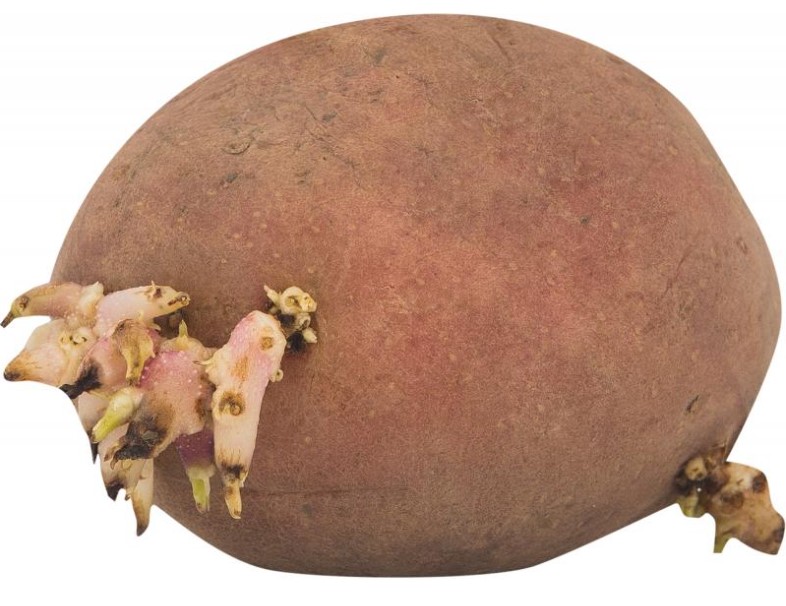
After this, the potatoes will need to be kept in a room with a temperature of 25 degrees for three days, after which they will be placed in boxes and placed in a light place, after being covered with gauze.
Germination should result in sprouts reaching 2 cm in height. If this does not occur, the tubers will need additional lighting.
Two days before planting, a hardening procedure is carried out: the boxes are covered with dark cloth and placed in a room with a temperature of 12 degrees.
Planting times and rules
You can start planting Red Sonya potatoes when the soil has warmed up to 9 degrees Celsius and there is no threat of night frosts.
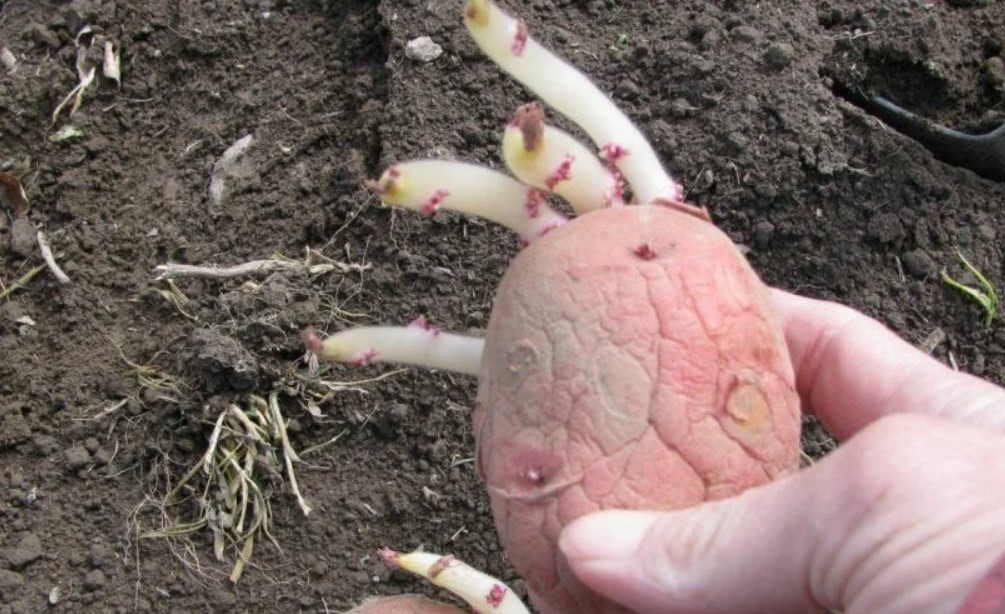
The specific time period will vary by region:
- Southern – first half of April.
- Central – beginning of May.
- Northern – second half of May-beginning of June.
- Belarus and Ukraine – mid-April.
Caring for the Red Sonya potato variety
The Red Sonya potato variety doesn't require nitrogen fertilizers and grows well without them. Care requirements will vary depending on the region and soil type.
Watering
After the first watering during planting, all subsequent waterings are adjusted according to weather conditions and soil quality. If it's hot outside and there's no precipitation, repeat watering can be done after 14 days. The next watering should be done when the potatoes are budding.
Top dressing
If you prepare your potatoes properly in the fall, there is no need to additionally fertilize the soil during potato growing.
Fertilizing with nitrogen fertilizers is strongly discouraged, as this will drain all the plant's energy into developing vegetative mass. Cow manure can be used when planting.
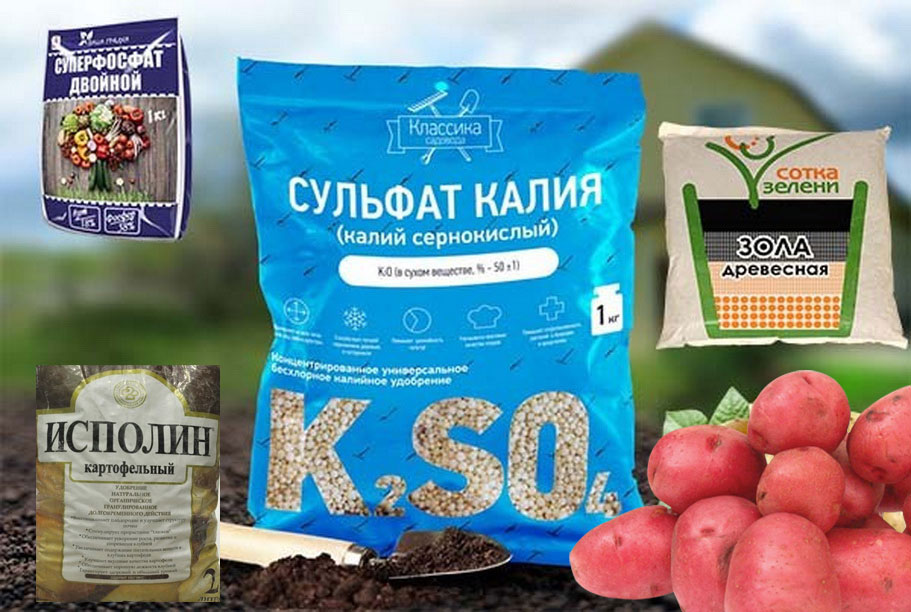
In poor soil, you can apply fertilizer 3 times per season:
- 14 days after planting.
- During the period of tuber formation.
- 3 weeks before harvest.
For these purposes, you can use a mixture of potassium fertilizers, superphosphates, and potassium sulfate. At the final stage, it is advisable to use complex fertilizers, which will help increase the shelf life of the tubers.
Loosening, weeding
The lighter the soil, the better the potato tubers will develop. Therefore, regular weeding and loosening of the soil is crucial. Weeds are removed as needed, either manually or mechanically.
Hilling
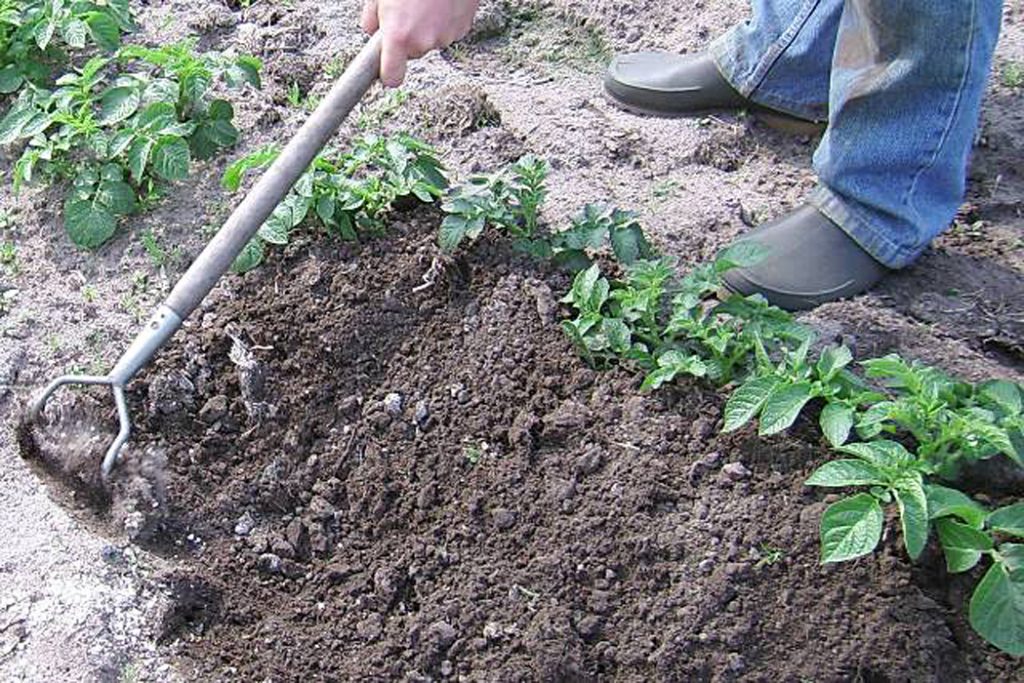
Hilling is carried out at least 3 times per season:
- When the shoots reach a height of 8-12 cm.
- 3 weeks after the first procedure.
- When the shoots reach a height of 25 cm.
Protecting the Red Sonya potato variety from diseases and pests
The table lists the main diseases and pests of Red Sonya potatoes.
| Disease, pest | Characteristic | Prevention and treatment |
| Phytophthora blight of tops
|
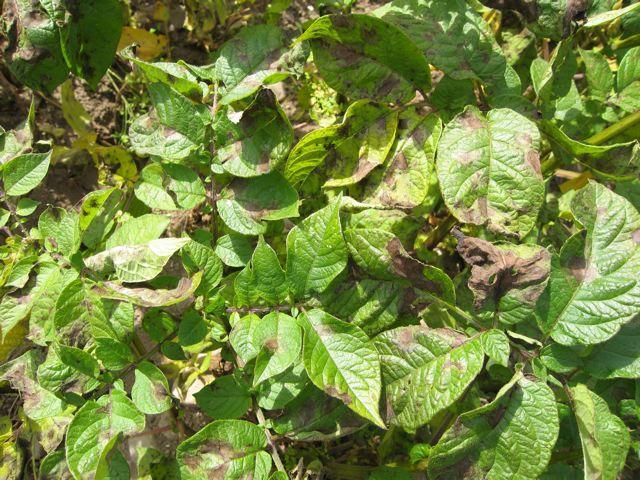
Leaves wilt, curl, and fall off. Brown spots appear on their surface. | Late blight prevention involves proper soil preparation, hilling, and treating the plantings with Acrobat or Ridomil Gold. If the disease has already appeared, it's best to destroy the bushes. |
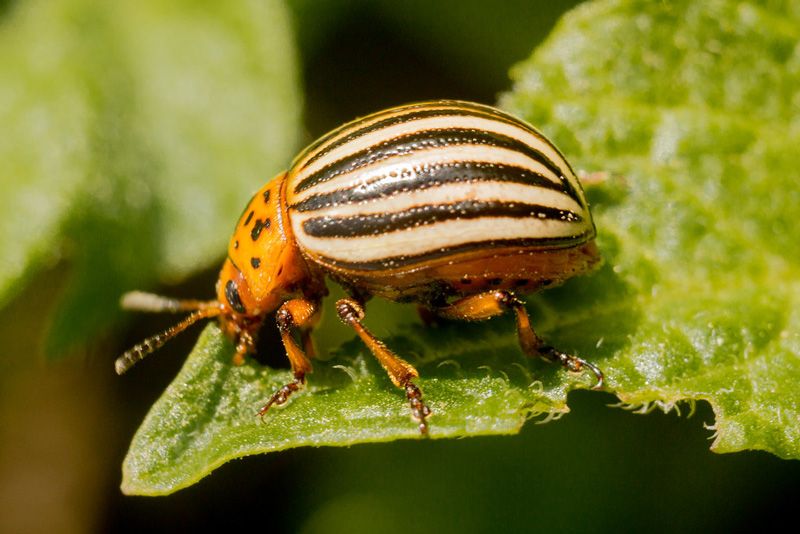
| Colorado beetle
|
On the back of the leaves you can see orange-colored clutches. | It's best to collect larvae and beetles by hand to avoid exposing the plantings to chemicals. For large plantings, you can spray with a urea solution (100 g per 10 liters of water). |
Harvesting and storing the Red Sonya potato variety
Experienced gardeners recommend cutting back the tops two weeks before harvesting, as this can cause the tubers' skin to harden and the eyes to dry out. It's best to dig up potatoes in dry, sunny weather to allow them to air-dry.
When to dig potatoes And How to make a potato digger yourself Read on our website.
All tubers must be sorted before being sent for storage, removing damaged or rotten tubers.
Red Sonya potatoes have excellent shelf life. Their dense skin reduces the risk of mechanical damage and allows for long-term storage. Under suitable conditions, they can last up to 8 months without losing quality. Once completely dry, they are placed in boxes or bags and stored in a dry room with a temperature of 2-4°C. Ideally, the room should have a humidity level of 70-80% and adequate ventilation.
Comparison of the Red Sonya potato variety with other varieties in the table
| Variety | Ripening period (number of days to maturity) | Starch (%) | Yield (c/ha) | Weight of tubers (g)
Number of tubers per bush Color of tuber, pulp |
Shelf life (%) |
| Red Sonya | Early ripening* | 13.3-14.6 | 174-340 | 78-122
6-10 red, yellow |
93 |
| Dolphin | Mid-season*** | 13.7-15.3 | 228-374 | 81-115
9-15 red, light yellow |
95 |
| Explosive | Early ripening* | 16-17 | 156-240 | 110-150
8-14 red, light yellow |
95 |
| Memphis | Mid-early** | 14.2-16.7 | 330-610 | 80-160
9-11 red, light yellow |
94 |
| Teddy bear | Early ripening* | 14.2-17.7 | 201-306, 417 | 112-126
7-11 reddish, creamy beige |
97 |
| Ilyinsky | Mid-early** | 15.7-18 | 176-346 | 55-160
8-13 red, white |
93 |
| Handsome | Mid-early** | 12.4-17.8 | 169-201 | 90-170
6-10 reddish, creamy |
97 |
| Alvara | Mid-early** | 13-15 | 295-540 | 90-110
8-14 reddish, light yellow |
90 |
| Nakra | Mid-season*** | 18-22 | 203-308 | 65-160
6-11 red-brown, pale yellow |
95 |
| Rosalind | Early ripening* | 12-17 | 203-223 | 60-115
10-16 reddish, yellow |
94 |
| Bellarosa | Ultra-early | 12-16 | 350-550 | 100-200
7-15 red, light yellow |
93-96 |
| Beauty | Mid-early** | 13.5-15.6 | 130-321 | 95-140
6-8 red, light yellow |
94 |
| Labella | Early ripening* | 12-15 | 176-342 | 78-102
13-16 red, yellowish |
94 |
| Sarpo of the world | Late-ripening***** | 14-17 | 350-360 | 75-140
6-11 reddish (pink), snow-white |
94 |
| Favorite | Mid-season*** | 12.6-16.4 | 420 | 101-136
6-12 reddish, creamy |
93 |
| Evolution (Evolution) | Mid-early** | 16-18.7 | 420-590 | 70-140
9-15 red, light yellow |
92 |
Ultra-early – 35-50 days.
*Early ripening – 50-65 days.
**Mid-early – 65-80 days.
***Mid-season – 80-95 days.
****Late ripening – 110 days or more.
Top.tomathouse.com's tips on growing the Red Sonya potato variety
When growing the Red Sonya potato variety, to ensure a good harvest, pay attention to the following fertilizers:
- phosphorus fertilizers – 1 kg per 100 square meters;
- potash - 2 kg per hundred square meters;
- magnesium should be used in higher doses compared to other varieties.
Reviews of the Red Sonya potato variety
An excellent potato variety with a pleasant flavor. It produces virtually no damage during harvesting, greatly increasing productivity, and it stores quite well.
I've only had this potato variety on my farm for one year. Red Sonya is one of the very early ripening varieties. We planted it in early May and dug it up in early September. The potato yield was very good. Each plant yielded 5-6 tubers on average, but they were large, with almost no small potatoes. Based on its characteristics, it can yield up to 45 tons per hectare, given proper planting, cultivation, and other conditions. The potato is very attractive, with an oblong shape, red skin, and yellow flesh.
It has small, shallow eyes, which makes it very convenient for peeling. Unfortunately, I can't post a photo of my potatoes because they arrived very dirty in storage due to harvesting in wet weather. But I'll add photos of them being planted and harvested (just to remember, remind me if anything happens.)
The flavor is very good. Some might find it a bit tough, but I find it excellent. You can't please everyone. Another thing I was impressed with was its shelf life. I'd give it a solid 9 out of 10. Farmers in my area are very happy with this variety. I can say it's somewhat reminiscent of Bellarosa. However, Red Sonya is slightly better in terms of yield and flavor. Stability, large size, and flavor are its hallmarks.
Greetings to all readers who have looked at my review.
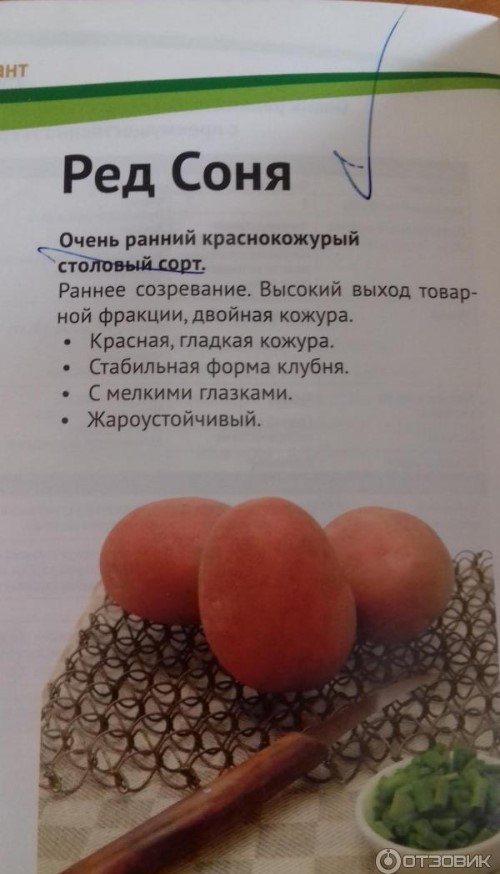
Today we will talk about the early ripening potato variety Rosevroplant "Red Sonya".
We used to plant regular potatoes, the seeds of which were given to us by relatives in the village. And we only plant 50 roots, just enough to eat the new potatoes.
This year we decided to buy some early potato varieties. My husband bought two. I'll write about one later, since we already picked the first one, but I didn't take any photos.
But we only tried the Red Sonya variety today.
We were late with the planting; we could have planted at the end of April, but we did it in mid-May. That's two months ago.
A distinctive feature of this variety is its vigorous growth and development. Our neighbors' regular potatoes are just beginning to bloom, but ours have already finished blooming, and the tops are starting to turn yellow.
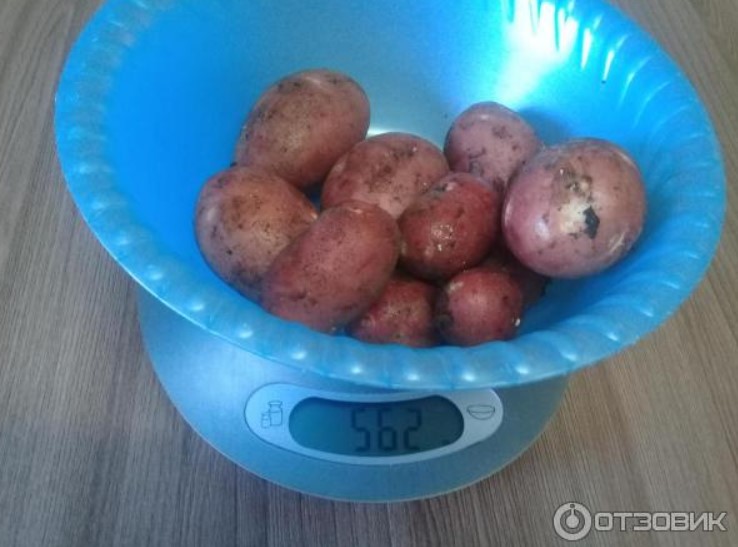
The potatoes aren't very large, rather medium. The yield per root is 562 grams. The weight is average, not very large, and there aren't many tubers, but they are smooth and free of any lumps. They're easy to peel.
The skin is already tough and thicker than that of new potatoes.
The skin is red and peels easily.
The taste is good, there are no extra odors.
It's also worth noting that spring was late and cold, with frosts after planting. The summer was hot with long periods without rain. The potato beds were watered a couple of times. No additional care was provided, and there was no Colorado potato beetle infestation.
Considering the yield, I'd give it a four, but a solid and well-deserved one.
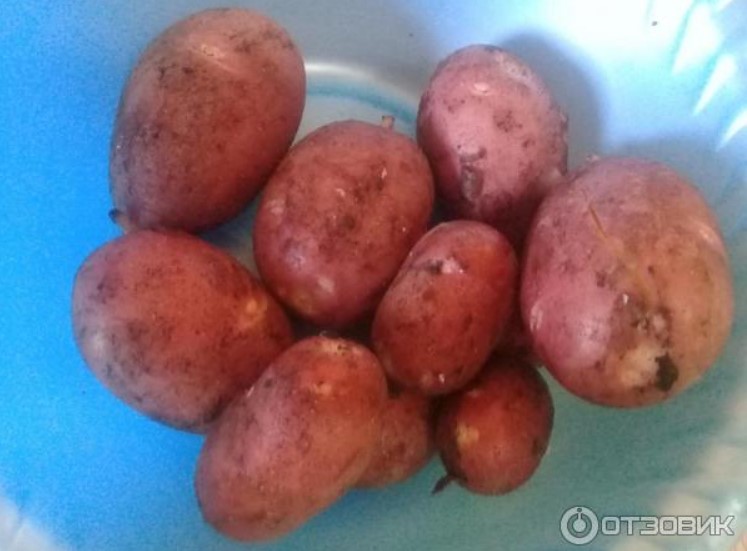
Hello to all readers of this review! I purchased this potato variety in 2020 from RusEuroPlant (I think that's what it's called). Price per kg was 50 rubles, in a 5 kg net. We don't plant a lot of potatoes, so we bought two nets. These are early potatoes, but we started digging them up at the end of August, just like regular potatoes. They're large. I didn't expect such a harvest. They all sprouted, they cook well, and aren't suitable for frying. For frying, you need to buy a different variety. The skin is thin, like any potato, and doesn't rot when stored properly. Overall, it's a good variety for breeding. Now I want to try other varieties, but mixing varieties isn't recommended. I really like this potato variety!
This year we planted the following varieties: Bellarosa, El Mundo, Estrella, Rosara, Red Sonya, Gala, and Skarb. My husband was great, he labeled them so we wouldn't get confused and drew a diagram (well, I'm obsessed with keeping everything we plant in order).
Rosara has disappointed me. Once again. It just doesn't want to grow in our loamy soil. It refuses to grow in both rainy summers and droughts. We dug up a little more than we collected. It's small. We're harvesting it.
I was amazed by Estrella. 2-3 plants equal a bucket. It's true, it won't suit everyone, as the crop mostly turned out "cobblestones." I thought the flavor would be so-so, but of the three different varieties, the family definitely chose Estrella as the best-tasting. (Others tested were El Mundo and Red Sonya.) We'll see how it stores.
El Mundo. Also a good harvest. But it's a mixed bag. Lots of large ones, and some small ones. Not every bush is exactly the same.
Red Sonya is good. Beautiful, with medium-sized tubers.
The treasure is traditionally fruitful. The tubers are medium to large. Small items are scarce.
Bellarosa and Gala also yielded a good harvest. Not outstanding, but okay. There were almost no small defects.
All varieties have yellow or yellowish flesh.
It's a pity there are no photos, because the phone's battery died and it only works from a power outlet for now.
Mom also had a really big harvest this year. She planted Skarb and Meteor. She says Meteor yields a little more than Skarb. She complained that the cellar was filled to the brim with potatoes; who would eat all that?