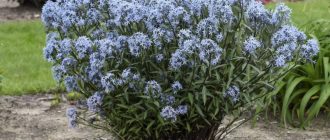
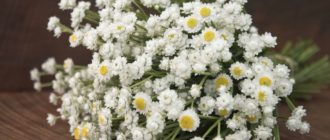
Thanks to their diversity and wide range of colors, wildflowers are used to decorate Moorish lawns, gardens, and country houses. These plants are accustomed to wild conditions and are therefore very easy to care for. This is another reason why they have earned the love of gardeners. They also possess healing properties and are used in cooking and cosmetology.
Content
- 1 A variety of meadow or wildflowers
- 2 Types of wildflowers, their descriptions, photos, and uses
- 2.1 Oregano
- 2.2 St. John's wort
- 2.3 Red clover
- 2.4 Chamomile
- 2.5 Goose onion
- 2.6 Elecampane
- 2.7 Sweet clover
- 2.8 Delphinium
- 2.9 Chicory
- 2.10 Aquilegia
- 2.11 Gentian
- 2.12 Knapweed
- 2.13 Aconite Dzungarian
- 2.14 Comfrey
- 2.15 Marshmallow
- 2.16 Valerian
- 2.17 Fireweed
- 2.18 Wood anemone
- 2.19 Wild onion
- 2.20 Pansies
- 2.21 Dandelion
- 2.22 Field poppy
- 2.23 Violet
- 2.24 Lavender
- 2.25 Lily of the valley
- 2.26 Buttercup
- 2.27 Snowdrop
- 2.28 Fescue
- 2.29 Bell
- 2.30 Flax
- 2.31 Iris
- 2.32 Tulip
- 2.33 Eschscholzia
- 2.34 Mint
- 3 Top.tomathouse.com recommends: meadow and wildflowers in the landscape
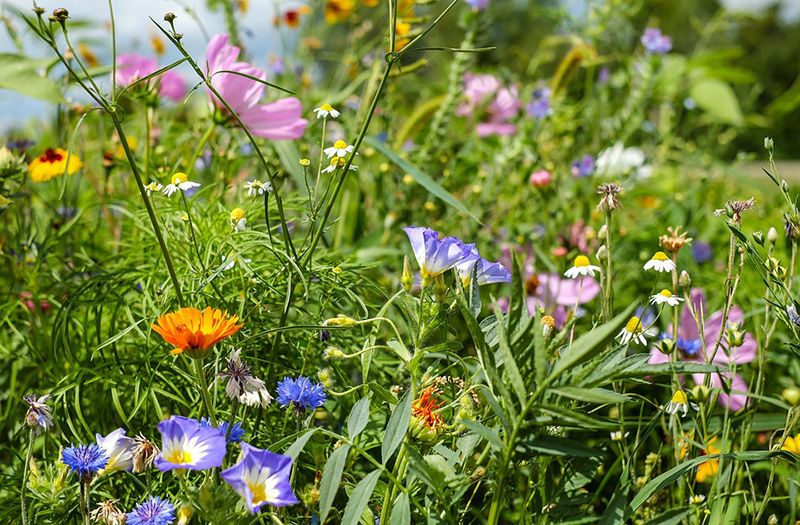
A variety of meadow or wildflowers
Flowers choose the most comfortable climate for their habitat. Therefore, each region has its own species.
Plants are available as perennials, biennials, and annuals. Propagation occurs by seed, pollination, and vegetative propagation.
They come in a wide range of colors: bright or pastel, two-tone, variegated, and dark. Sunny, dark lilac, blue, snow-white, pink, and scarlet shades predominate.
Types of wildflowers, their descriptions, photos, and uses
Wild plants are often used for medicinal purposes. All of them have contraindications and side effects, some of which are toxic. To avoid adverse effects, any alternative treatment method should be discussed with a doctor.
Oregano
It can grow in any climate. It is widespread in Eurasia and throughout Russia, including the Urals. It is a perennial plant, reaching 80 cm in height. It has tetrahedral shoots, the upper part of which is reddish. The leaves are oblong and arranged opposite each other.
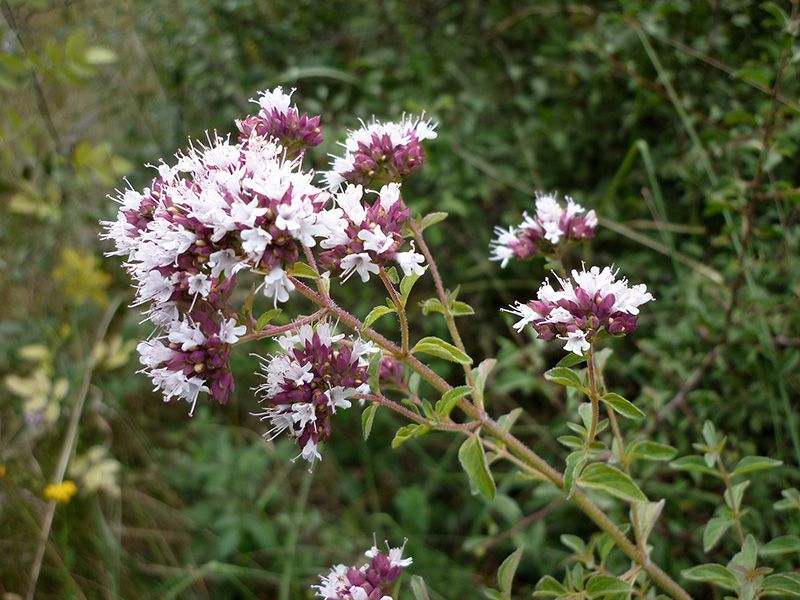
Flowers/When They Appear: Bright purple with a pinkish tint, gathered in clusters that exude a pleasant fragrance. July-August.
Dried leaves and flowers are used to prepare aqueous and alcoholic decoctions and tinctures. These contain essential oils, coumarins, organic acids, and phenol derivatives.
It is used as an antibacterial agent for disinfecting hospitals and maternity hospitals from Staphylococcus aureus.
Helps with:
- CNS disorders: insomnia, depression, depressed state, loss of strength, neuroses, seizures (including epileptic);
- Gastrointestinal diseases: reduces gas formation, improves the production of gastric juice in gastritis with low acidity, normalizes the flow of bile, relieves spasms, aids digestion;
- urolithiasis: has diuretic properties;
- severe pain syndrome and hyperthermia;
- gynecological diseases: bleeding, hormonal imbalances, menopause.
It has found use in cooking, imparting a piquant, refined flavor to dishes.
St. John's wort
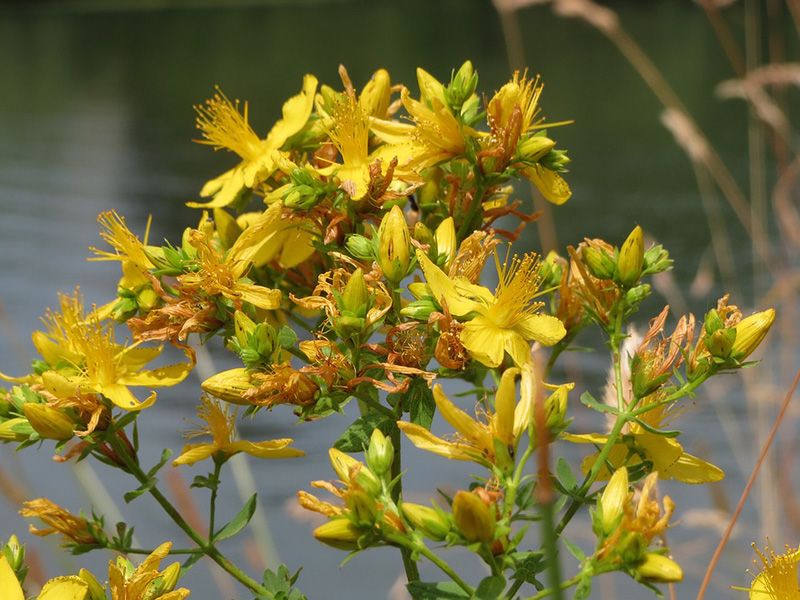
Up to 1 m. The stem is erect, branched, and dense. The leaves are simple and sessile. Flowers are collected in yellow inflorescences. They begin to form in July. Flowering can be observed for 1.5-2 months.
Effective for the treatment of:
- colds and coughs;
- urolithiasis and cystitis;
- cardiovascular pathologies;
- inflammation in the oral cavity;
- nerves, depression, stress;
- hematomas and bruises;
- burns.
Red clover
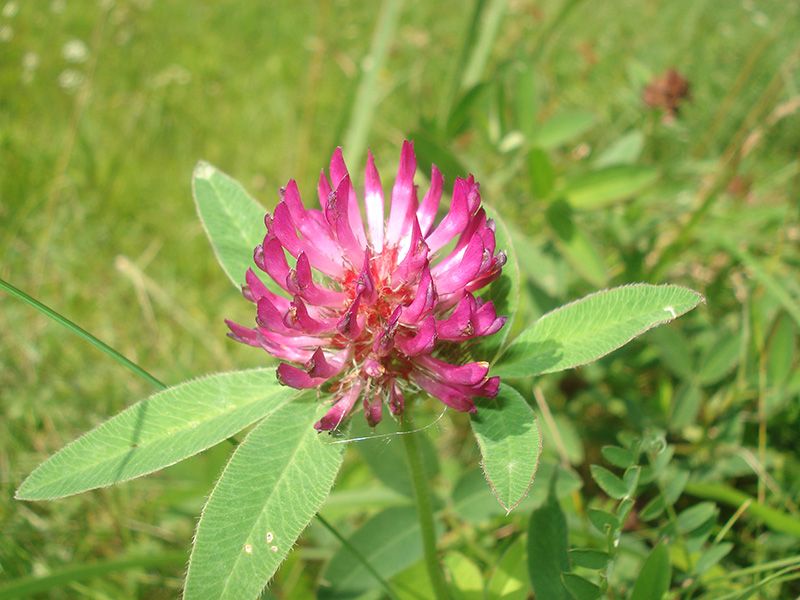
A perennial with a taproot and ovoid leaves. It reaches 50 cm. It thrives in lawns and nitrogen-poor soils. The buds are snow-white or pink. They bloom from May until frost.
Has the following properties:
- antiseptic and lymphogonic;
- diuretic and choleretic;
- diaphoretic and expectorant;
- antioxidant;
- anti-inflammatory and antiviral;
- blood purifying.
Effective for the treatment of:
- intestinal disorders, inflammation of the intestines and gall bladder;
- gout, rheumatoid arthritis;
- ovaries and fallopian tubes, sexually transmitted infections;
- CNS;
- muscle tone;
- nail and foot fungus;
- eczema, psoriasis, allergic rashes.
Chamomile
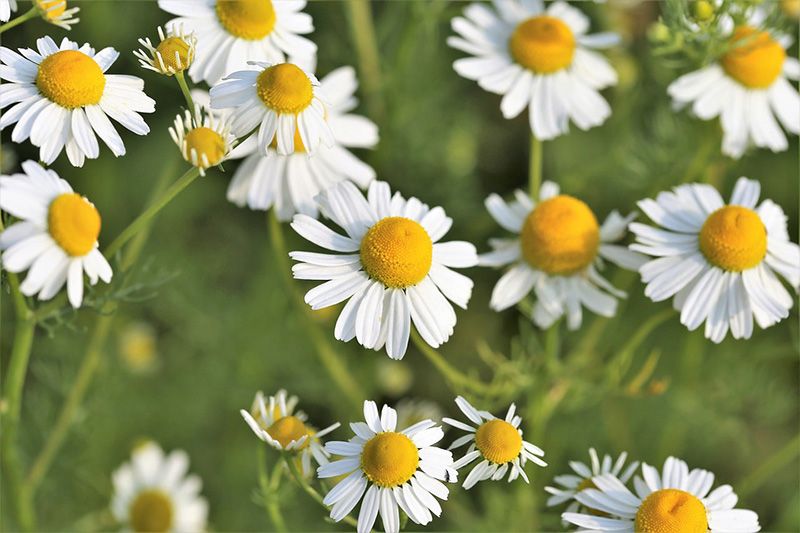
An annual herbaceous plant. Widely distributed across Eurasia and North America. Single flower heads are located at the ends of shoots. The inflorescence consists of snow-white ligulate petals and central, lemon-colored tubular petals. It blooms from May to August.
Chamomile produces essential oil. Its most valuable component is chamazulene. It has anti-inflammatory, sedative, and local anesthetic properties.
The extract is added to soap, creams, shampoos.
Did you know that there are beautiful flowers called chamomile, which you can read about in the articles:
Venidium (African Daisy): 38 photos, description, species and varieties, cultivation
Pyrethrum (Dalmatian Chamomile): Description, Planting, and Care
Venidium (African Daisy): 38 photos, description, species and varieties, cultivation
Goose onion
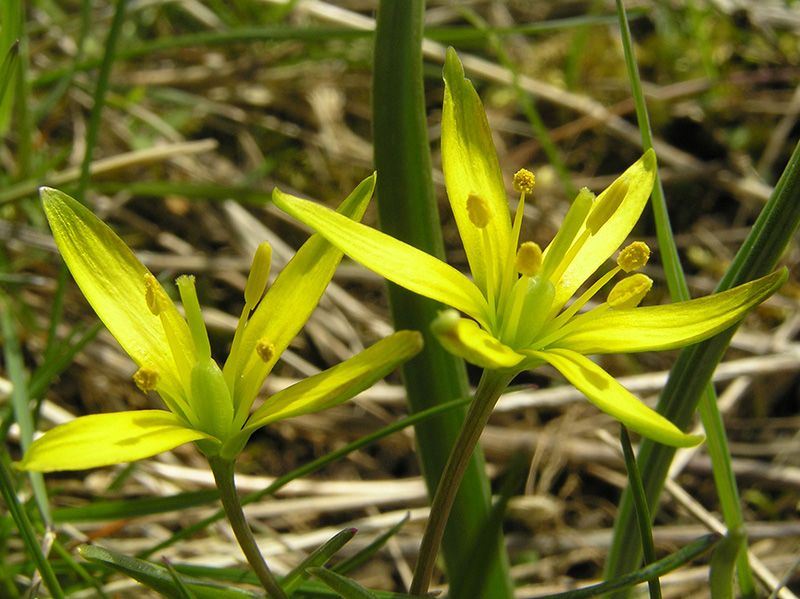
Low-growing, no more than 15 cm. The leaves are elongated, growing from the base. The flowers are bright yellow and honey-scented. They bloom from April to early June.
Recommended for spring vitamin deficiencies. Helps with epilepsy, bronchial asthma, and hepatitis. It has wound-healing and antiseptic properties.
Among the people Goose onion is also called yellow snowdrop.
Elecampane
Up to 1 m. Narrow, light green leaves. Buds, when they appear: red or canary-yellow, growing in clusters or singly. July-August.
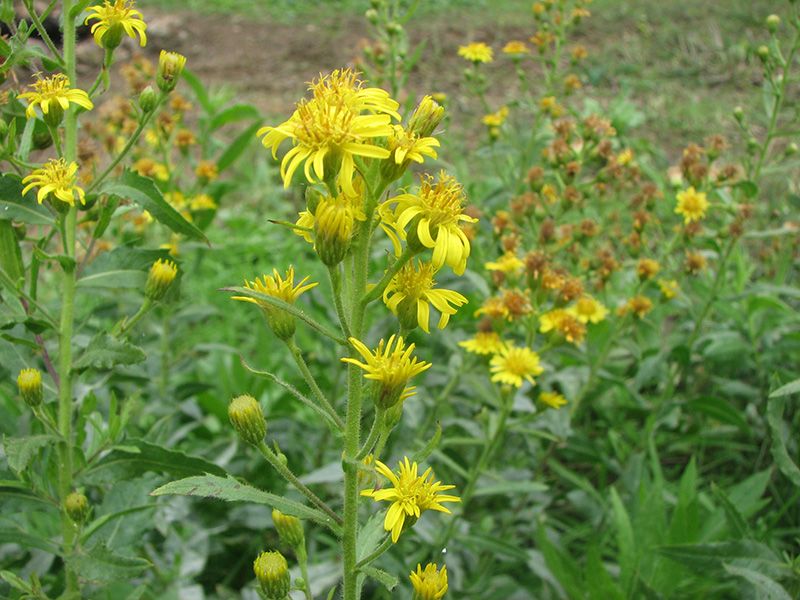
Contains: vitamins E, K, manganese, magnesium, calcium, potassium, iron.
It is used to treat: bronchitis, rheumatism, cough, festering wounds, scurvy, diseases of the digestive system, abscesses, benign tumors, scabies, asthma attacks, and exhaustion in weakened patients.
Used in cooking and the liquor industry. The rhizome has a coloring effect (producing a blue tint).
Sweet clover
Tall, up to 2 m. Three-fingered leaves are evenly distributed along the stem. Small flowers, canary yellow or white, appear in the second half of summer.
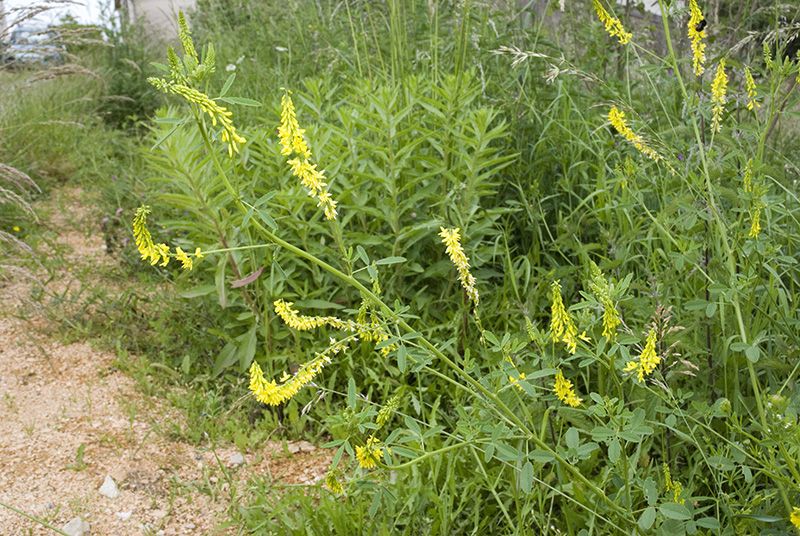
It has the following properties:
- treats wet cough;
- relieves inflammatory processes;
- relieves cramps;
- promotes rapid healing of wounds.
Delphinium
The bush grows up to 1.5 m. Narrow, pointed leaves are located at the base. The inflorescences are small and come in a variety of colors: lemon, snow-white, blue, sky-blue, lilac, and pink. They grow pyramidally on an elongated stem. They begin to form in June.
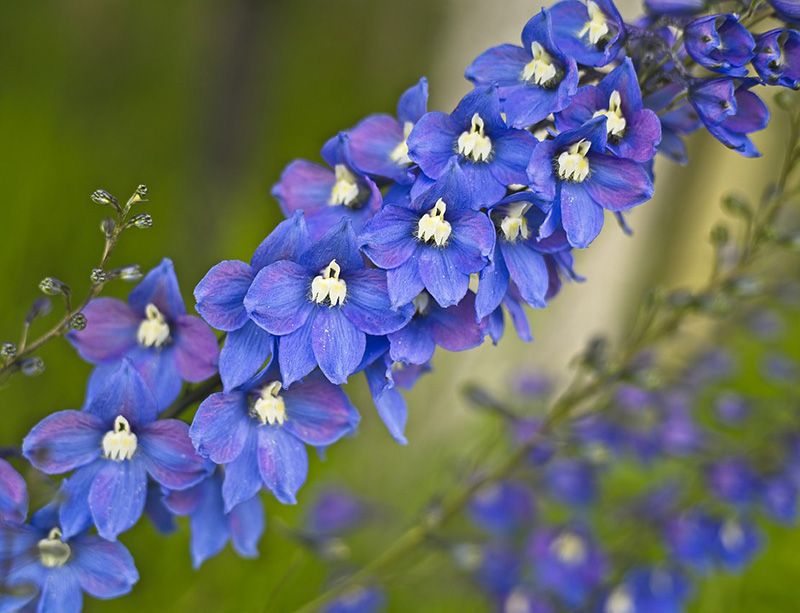
Soap is made from the flower. It also helps with:
- migraines;
- toothache;
- cystitis;
- conjunctivitis;
- pneumonia;
- pleurisy;
- skin infections;
- bone fractures.
It is used to block nerve endings and relax smooth muscles.
Oh, and one more thing delphinium very beautiful flower.
Chicory
With a strong, fleshy rhizome. The stem is highly branched, up to 1.2 m. The buds are bluish-blue, pinkish, and snow-white. They are located along the entire length of the shoots and at the top. After the flowers have set, the petals close. They bloom from the second ten days of summer until the first frost.
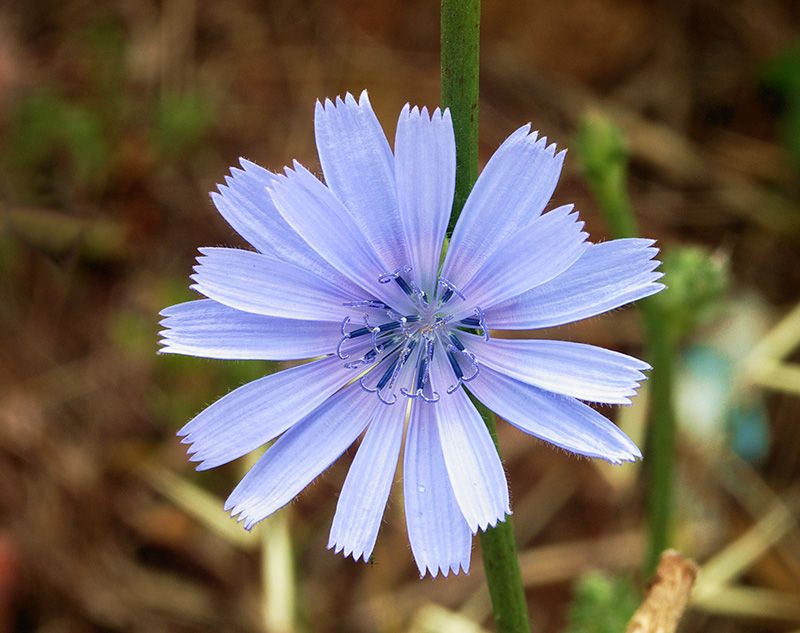
Treats:
- CNS pathologies;
- cardiovascular diseases;
- liver and kidney damage.
Aquilegia
Bushes up to 80 cm tall. A distinctive feature is frost resistance. Large inflorescences of various shades on elongated peduncles. Flowering can be observed in June-July.
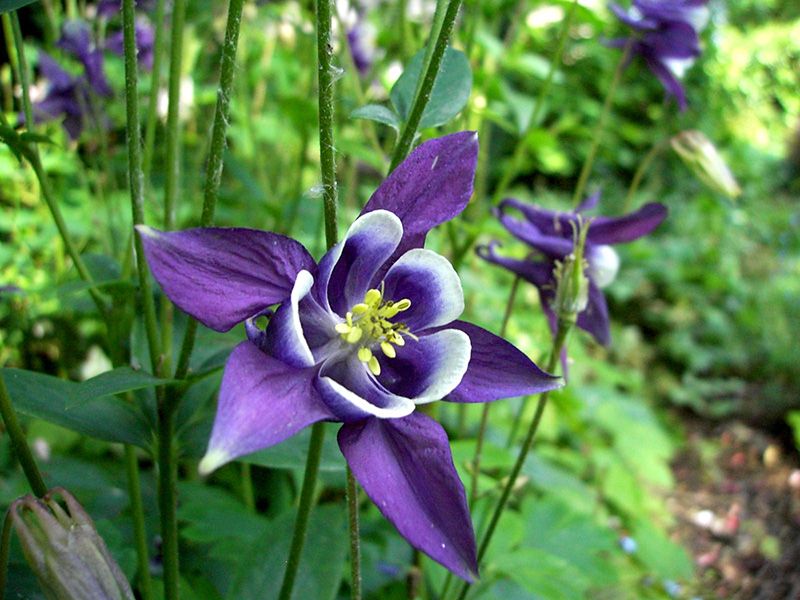
Helps with:
- pneumonia;
- acute respiratory diseases;
- skin rash;
- wounds and burns;
- scurvy;
- headaches;
- stomach cramps.
Aquilegia In the garden, how to plant and grow, read on the website Top.tomathouse.com.
Gentian
A subshrub with branches at the base and a herbaceous top. Grows up to 1.5 m. The buds are bluish, purple, or light blue. Blooms from spring to fall.
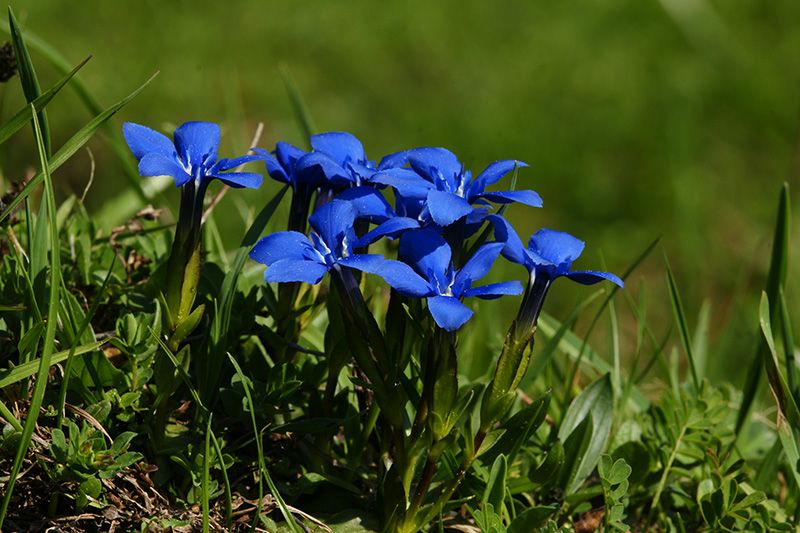
Used for therapy:
- stomach upset;
- gout;
- pathologies of the visual organs;
- anemia;
- diathesis;
- heart failure.
In the garden gentian Often used in alpine gardens.
Knapweed
Up to 100 cm tall, with elongated, pale blue leaves. Flowers are collected in blue heads. They begin to form in July.
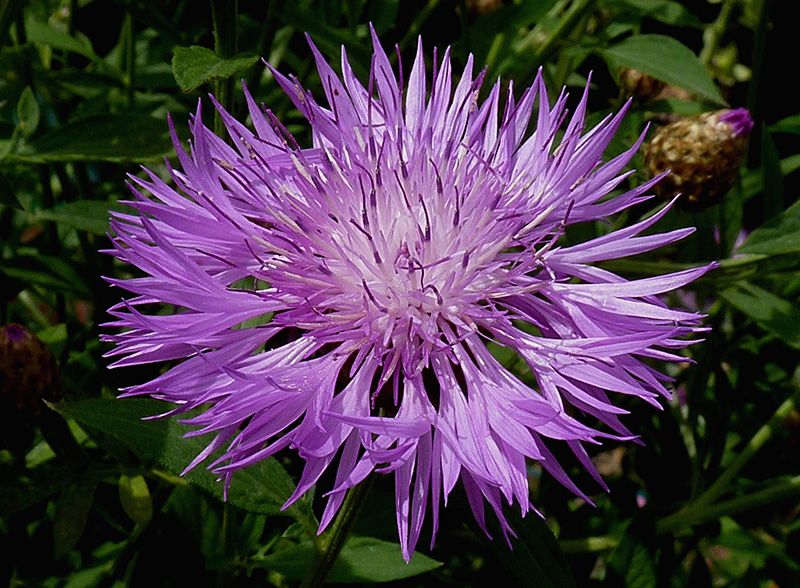
Cornflower helps with:
- damage to the kidneys and urinary tract;
- cardiovascular diseases;
- eye problems;
- female diseases;
- pain in the joints and gastrointestinal tract.
Read the article about growing cornflowers in the garden.Cornflower: types, cultivation, benefits
Aconite Dzungarian
The bush grows up to 2 m. The leaves are rounded, dissected into 5 lobes. The buds are large, dark purple, and five-fingered. They bloom from the second month of summer until autumn.
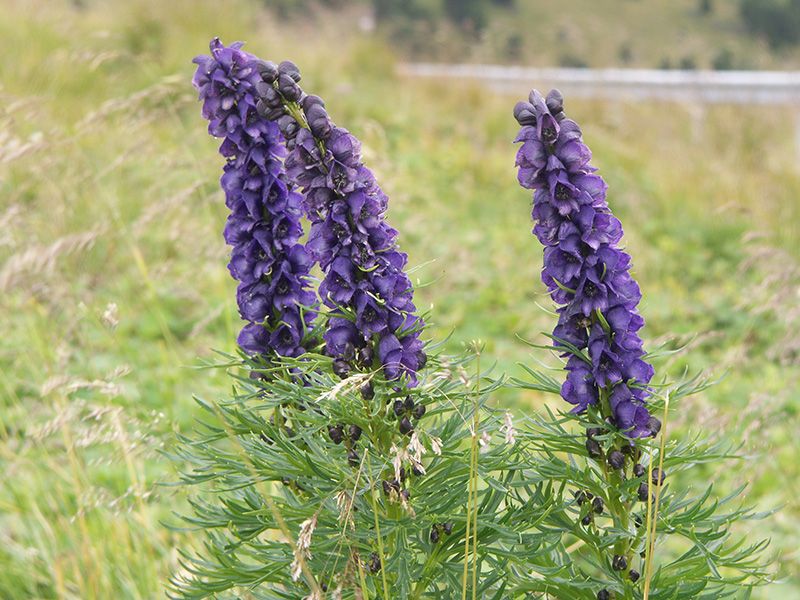
Treats:
- anemia;
- problems with reproductive function;
- diabetes mellitus.
You know that aconite It's a poisonous plant, also called a wrestler. Should it be grown and used with caution?
Comfrey
Up to 0.9 m tall, with a stiff, rough above-ground part. Flowers are violet with a purple tint. Flowering occurs from late May to September.
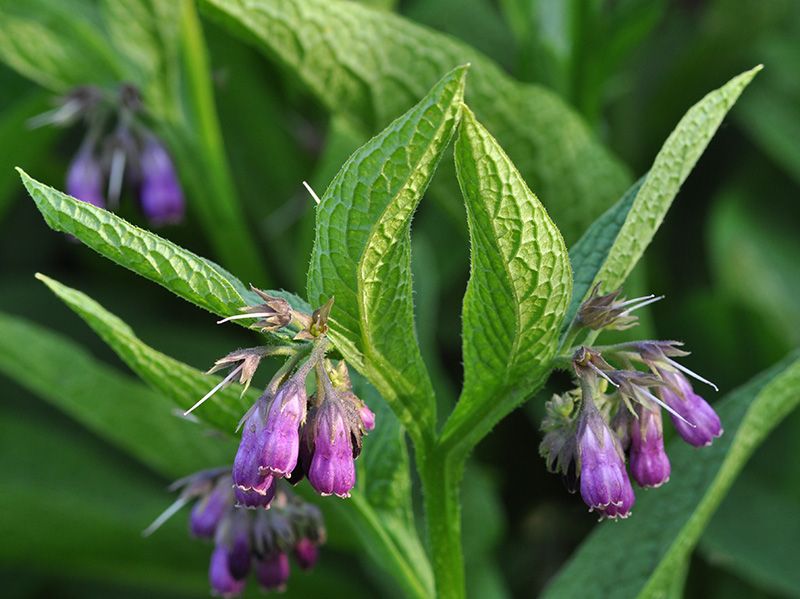
Used for:
- relief of inflammation;
- cessation of bleeding;
- therapy of tumors and ulcerative lesions;
- alleviation of symptoms in fractures and dislocations;
- preventing suppuration.
Marshmallow
Medium-sized (up to 50 cm). Emerald, oblong leaves are located along the entire stem. They are larger at the base, gradually becoming smaller towards the top. The buds are solitary, pale pink, up to 10 cm. They bloom from June to July.
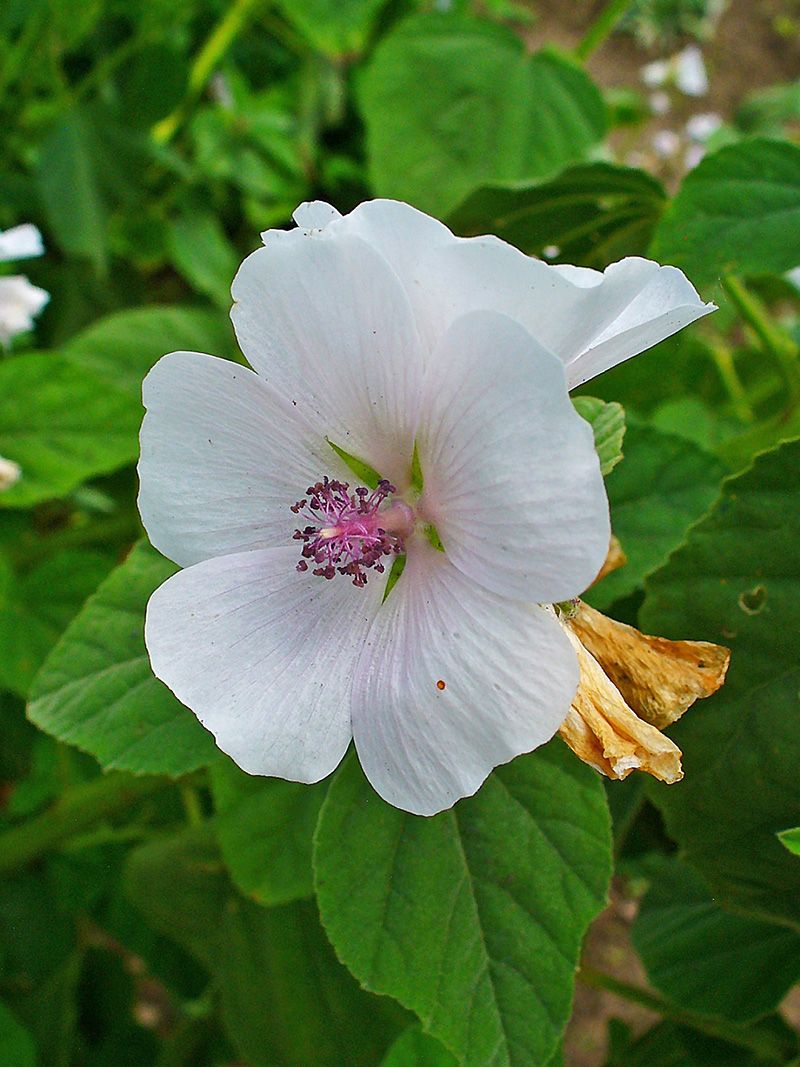
In alternative medicine it is used to treat:
- gastric ulcer and duodenal ulcer;
- cough.
Recommended for strengthening the immune system.
Valerian
Up to 1.5 m tall. The foliage is borne on elongated petioles. The flowers are collected in fragrant, umbel-shaped inflorescences. Flowering can be observed from April to August.
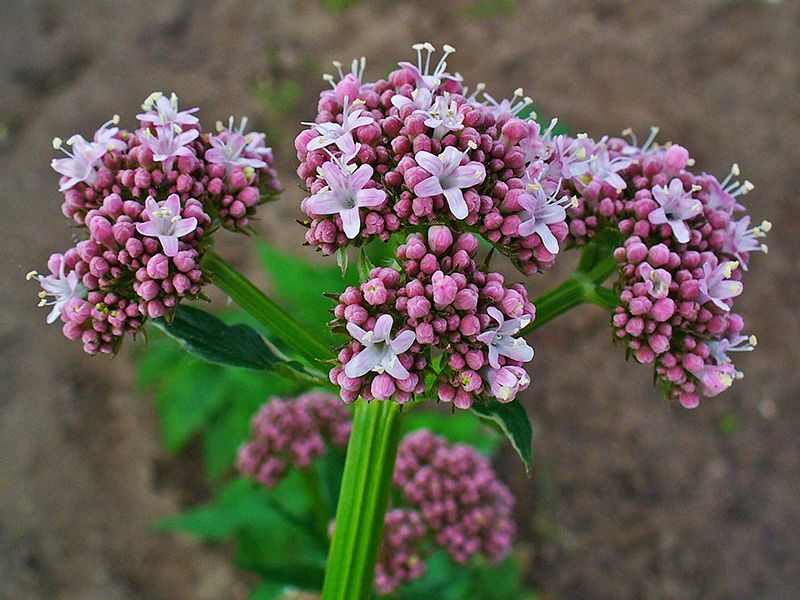
The herb is used to make medicinal preparations for:
- pressure;
- angina pectoris;
- migraines;
- thyroid disorders;
- cholelithiasis;
- problems in the urinary tract.
Valerian has a sedative effect and also helps women during menopause.
Fireweed
A perennial herbaceous plant. The stem is erect and unbranched. It reaches 2 m. The leaves are elongated, on short petioles. The buds are bright pink or purple, with petals that open wide. Flowering occurs from mid-June to the second half of August.
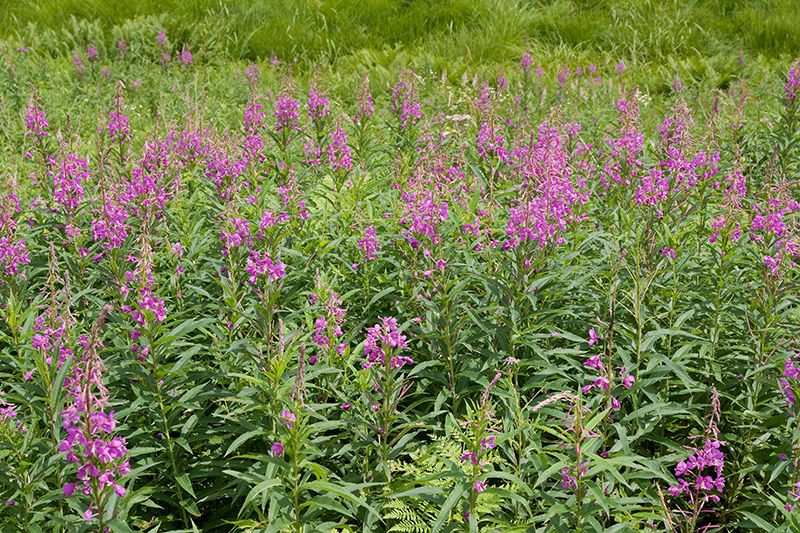
The composition includes: tannins, tannin, flavonoids, sugar, coumarin, ascorbic acid, manganese, essential oil, etc.
It has a sedative and anti-inflammatory effect. It has an enveloping, hemostatic, and laxative effect.
Wood anemone
Up to 40 cm tall. Stem with dense, long pubescence. Leaves are rounded-cordate. Inflorescences are terminal, solitary, borne on long, felted peduncles. They consist of 5 petals. Pure white above, slightly purple below. Flowering begins in late spring.
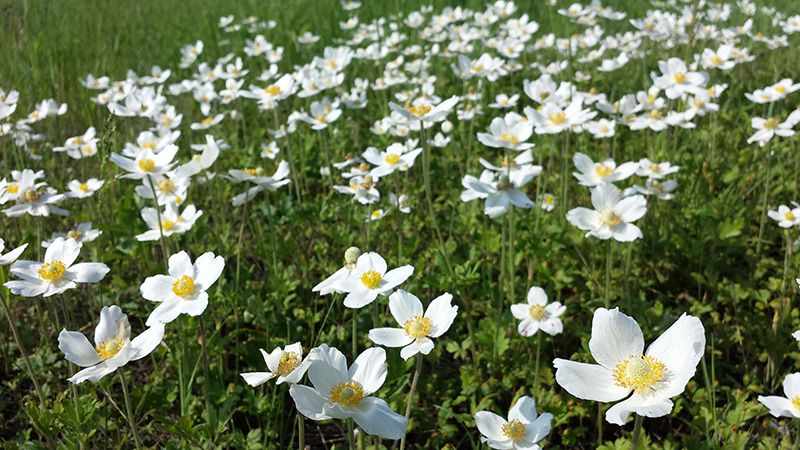
In folk medicine, only the above-ground part is used. The root contains toxins and alkaloids. It is used for:
- toothache and headache;
- whooping cough as an expectorant;
- colds with severe cough, bronchitis, tracheitis;
- problems with kidneys, urination;
- convulsions.
Reduces swelling, effective for the prevention of reproductive dysfunction, blindness and deafness.
Wild onion
A herbaceous perennial, 60-70 cm tall. Covered with snow, it can withstand temperatures down to -45°C. The bulb is narrowly linear. The leaves are emerald and fleshy, covered with a light waxy coating.
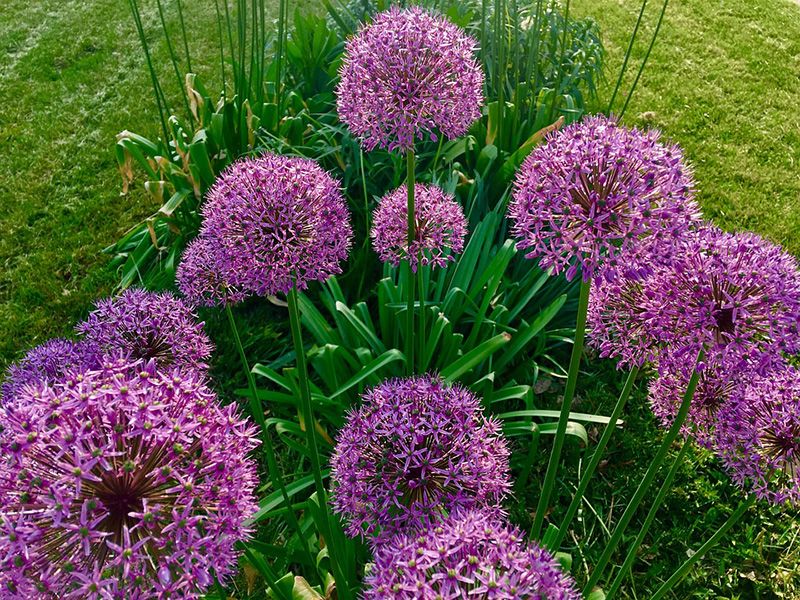
From July to August, it blooms with star-shaped, snow-white flowers with a lilac central vein on each petal. They are gathered in spherical inflorescences of 100-150.
It has the following beneficial properties:
- improves appetite and gastrointestinal function;
- relieves colds, rheumatism, purulent wounds, intestinal infections;
- has antiscorbutic and tonic properties;
- prevents the formation of cholesterol plaques;
- lowers blood pressure;
- helps with ringworm and warts;
- improves metabolic processes;
- has a bactericidal effect;
- adds a piquant flavor to various dishes.
Pansies
A biennial or annual herbaceous plant. The shoots are hollow, triangular, slender, and highly branched. The buds are located on long peduncles in the leaf axils. The petals are variegated and multicolored. It blooms from early May to late September.
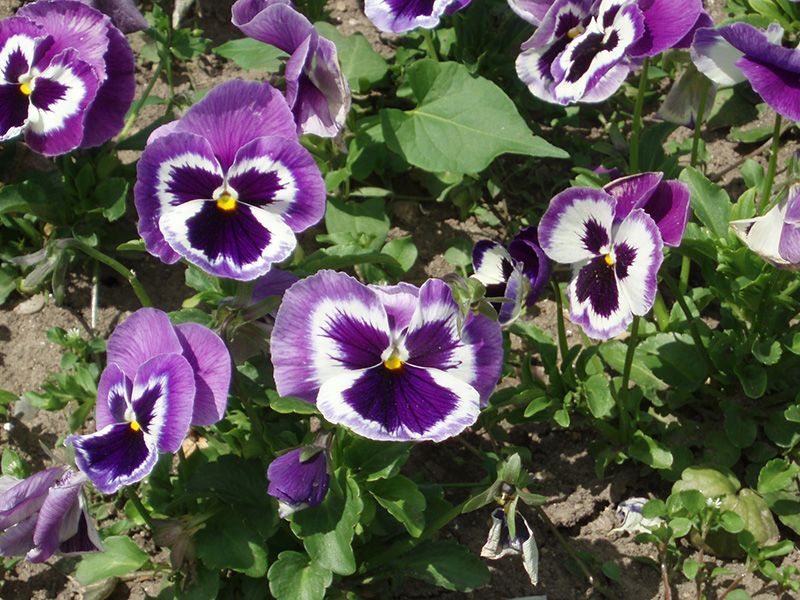
Pansies help with:
- neuroses, sleep disorders;
- tachycardia;
- inflammatory processes in the respiratory tract;
- pathologies of the genitourinary system;
- joint diseases;
- dermatological problems: boils, acne.
Pansiesin flower beds.
Dandelion
It grows everywhere, even in cracks in the pavement. The slender, upright stem contains a milky sap that leaks out when a shoot is broken. The flowers are yellow, tubular, and clustered in a single, rounded inflorescence. The petals open in the sun and close in cloudy weather. After ripening, they become white, translucent, and rounded. They begin to form in early May.
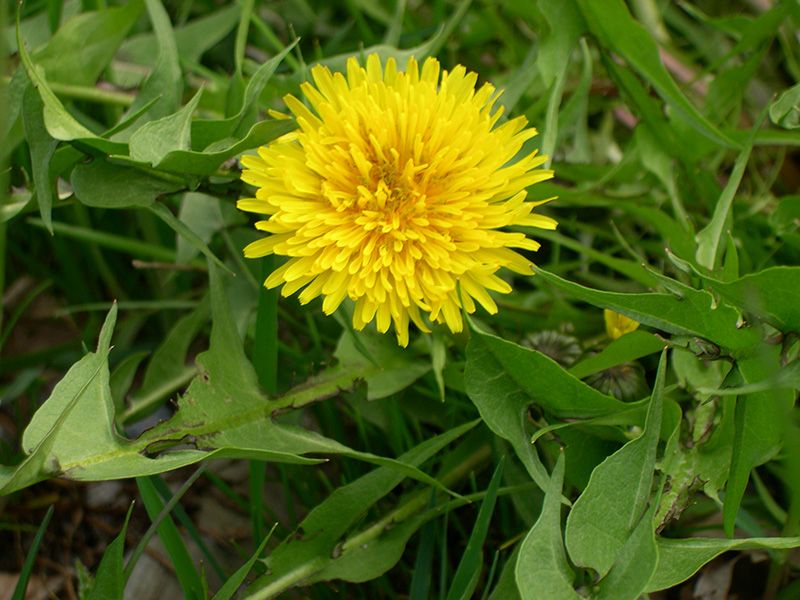
Dandelion:
- eliminates pain and swelling from bee stings;
- helps with colds;
- heals skin damage;
- relieves anemia;
- alleviates the symptoms of tuberculosis;
- eliminates cholesterol plaques;
- treats eczema;
- improves the functioning of the digestive organs, promotes the production of gastric juice, improves appetite;
- removes acne and papillomas;
- whitens skin, hides pigmentation and freckles.
Field poppy
This annual plant is very fragile; the petals can fall off if the wind blows. The buds are a rich scarlet color, resembling tongues of flame. They appear in the last month of spring.
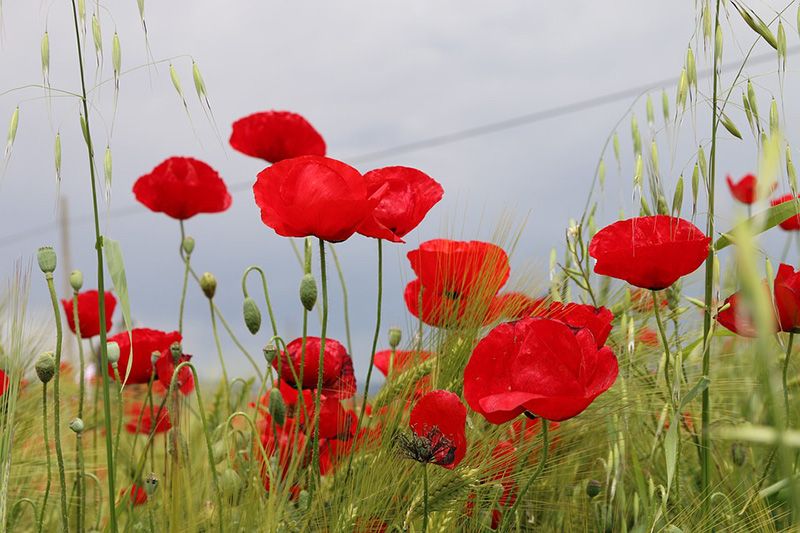
Used for:
- insomnia, sleep disorders;
- severe pain of any nature;
- panic attacks, excessive irritability and anxiety;
- hemorrhoids;
- tachycardia;
- urinary incontinence.
And also for:
- clearing the bronchi and lungs, fighting coughs, facilitating breathing;
- prevention of myopia and hyperopia;
- preventing the spread of cancer cells, stimulating the body to fight them;
- weight loss (blocks appetite, normalizes metabolism).
Poppy beautiful flower and is used in landscape.
Violet
The genus includes 500-700 species. The plant is annual or perennial. The flowers are velvety or simple, with five petals. A variety of shades, shapes, aromasFlowering is year-round, depending on the variety.
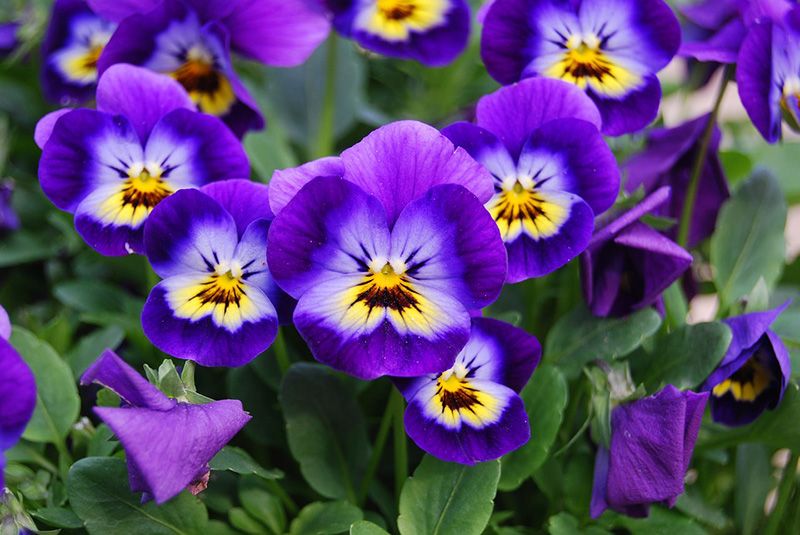
It has the following properties: anti-inflammatory, antiseptic, expectorant, antispasmodic, diuretic, choleretic, wound healing, sedative, antimicrobial, diaphoretic, antipruritic.
Lavender
A perennial evergreen shrub. It grows wild on the Mediterranean coast, in the Canary Islands, and in India. It has a rich, persistent scent. Flowers are light gray, blue, and dark purple. Blooms from July to August.
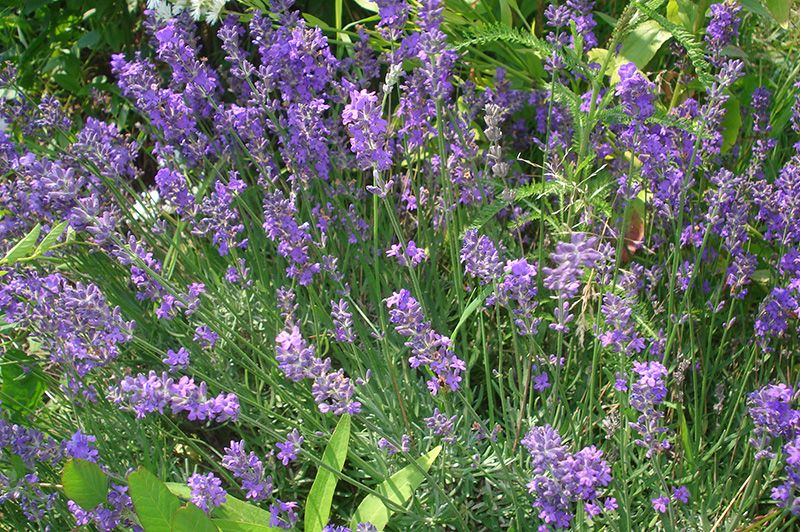
Lavender helps with:
- cold;
- burns and bruises;
- incontinence.
It has sedative, antiseptic and antispasmodic effects.
It is used in perfumery and cosmetics, soap making, and cooking. It is also added to tea and other beverages.
Lily of the valley
A perennial. Unfussy and hardy. The genus includes four varieties, but only one is cultivated. It can be grown in a pot or outdoors. The snow-white perianths consist of six slightly recurved teeth, an equal number of stamens, and a pistil. Flower buds open from late May to June.
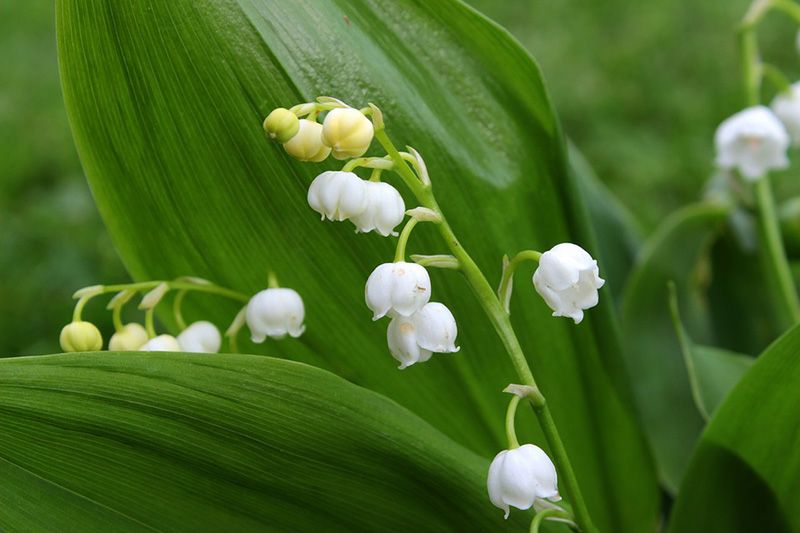
Lily of the valley used for:
- treatment of cardiac neuroses, heart failure, endocarditis, arrhythmia;
- strengthening the body during pregnancy;
- improving memory and developing intelligence.
Buttercup
A perennial herbaceous plant up to 0.5 m in height. The rhizome is shortened, with numerous shoots collected in a bunch. The flowers are buttercup Golden-lemon on elongated peduncles. Bloom from May to autumn.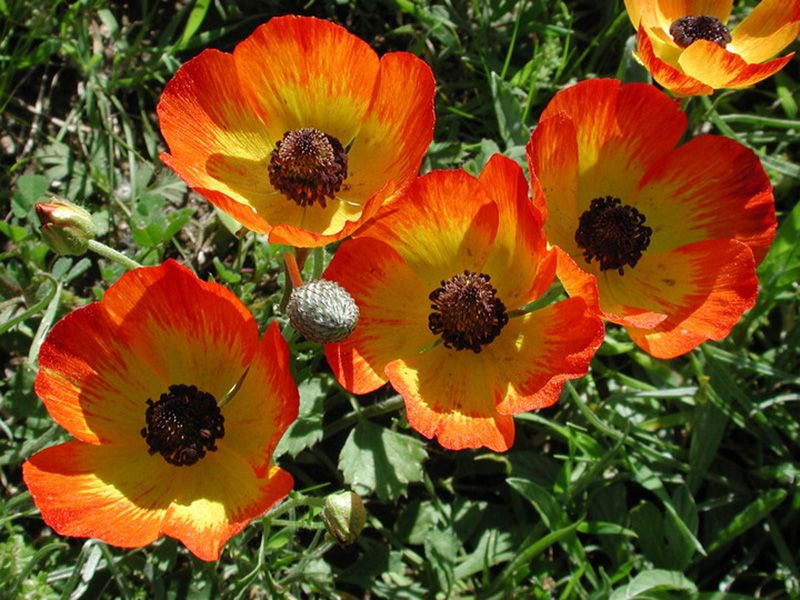
This is a poisonous flower, but when consumed in small quantities it has medicinal effects:
- relieves pain in joints;
- helps to open boils and carbuncles;
- relieves stomach cramps;
- eliminates migraines;
- stimulates the central nervous system;
- increases hemoglobin;
- treats tuberculosis of the skin;
- kills bacteria and fungi.
Snowdrop
A bulbous perennial with a short growing season. Leaves are light green with a yellowish tint or dark emerald. Flowers snowdrops Fragile, snow-white. Flowering period: February-April.
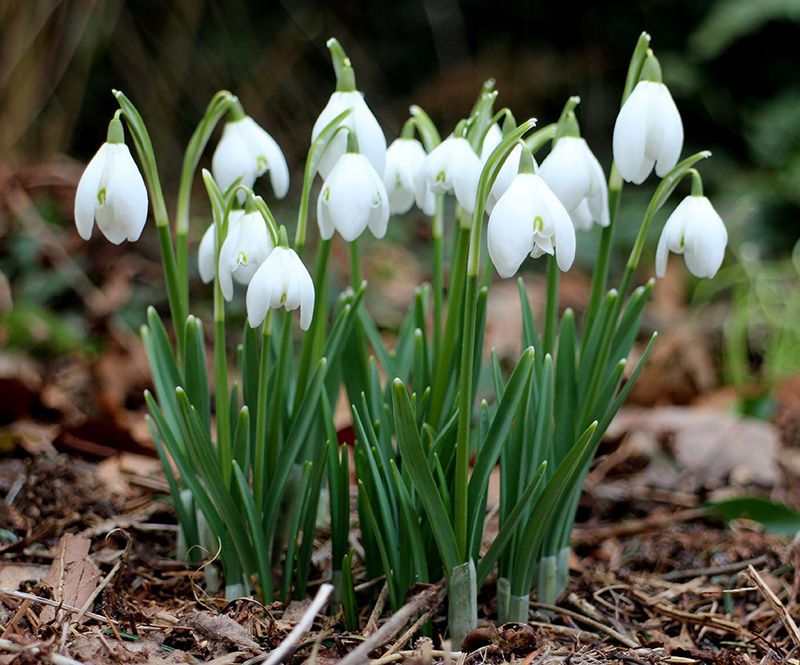
Used to alleviate the clinical picture:
- diseases of the nervous system;
- joint inflammation;
- muscle pathologies;
- boils, fungal infections.
Fescue
A perennial, loosely tufted grass. It can be emerald, glaucous, light green, or brown. It grows to 20-140 cm. The genus includes over 150 species. Flower buds are borne on spikelets. Colors vary depending on the variety. A summer plant.
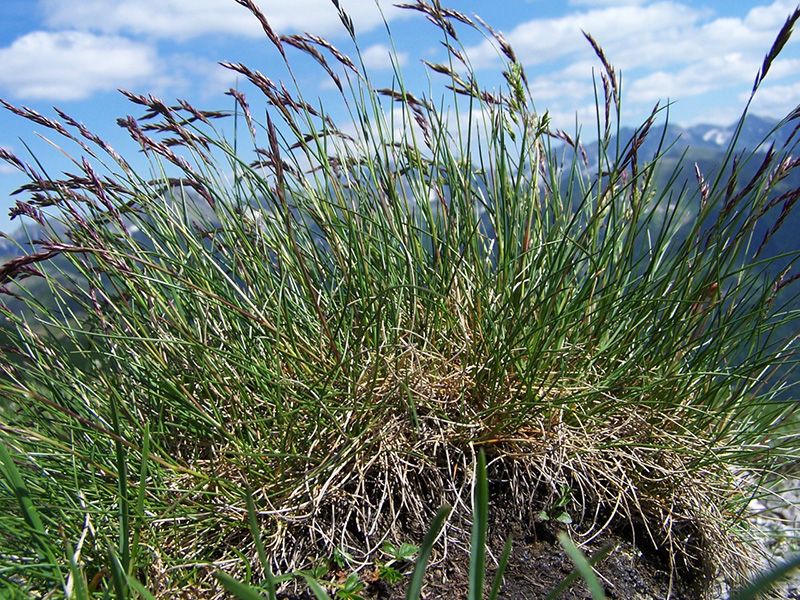
Fescue It is commonly used for landscaping lawns. Therefore, its composition has not been fully studied. It has been found that the plant contains starch, lysine, fiber, sugar, essential oil, calcium, iodine, potassium, fluorine, phosphorus, sulfur, sodium, manganese, magnesium, cobalt, zinc, and iron.
Thanks to this composition, fescue is used to treat:
- diseases of the bladder and kidneys;
- wounds, burns, cuts;
- rashes and redness on the skin;
- caries.
Helps the body resist pathogenic microorganisms and strengthens the immune system.
It's used as a green fertilizer. Gardeners have noticed that plots with fescue are free of mole crickets, slugs, onion flies, carrot flies, and other insect pests, and weeds grow less effectively.
You can read a lot about lawns and lawn care on our website. You were looking for lawn - (top.tomathouse.com)
Bell
It can be perennial, annual, or biennial. The stem is erect and bare. It can be lightly pubescent or creeping. The small leaves are purple-glaucous. The lower ones are petiolate, the upper ones are sessile. The flowers are bell Blue, small in size. Can be observed from early summer until frost.
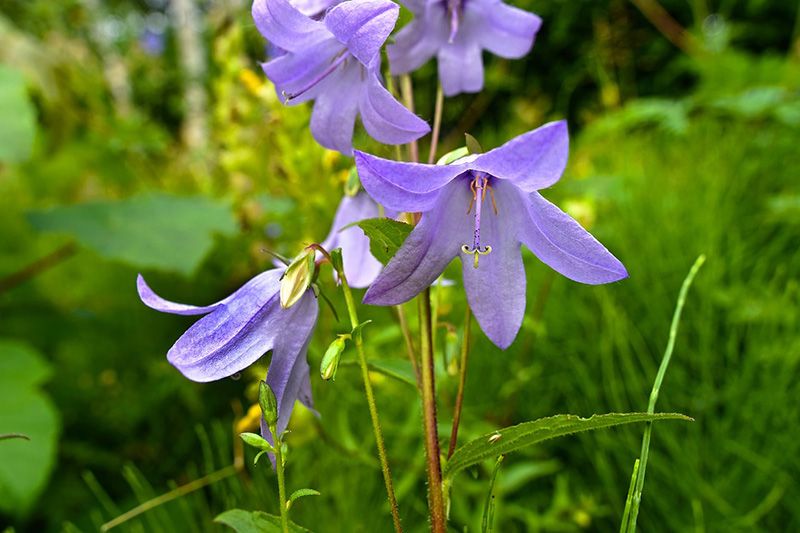
It's primarily used for decoration. However, the flower also has medicinal properties:
- anti-inflammatory;
- antimicrobial;
- calming;
- painkiller.
Bellflower can be used to treat: fever, cough, migraine, uterine hemorrhage, severe pain during menstruation, sore throat, wounds from animal bites, skin lesions, stomatitis, lichen, epilepsy.
Flax
The genus includes about 100 species. This annual grows up to 0.6 m tall. The buds are sky-blue, blue, beige, and, rarely, pinkish. They are gathered in false umbels. They bloom from June to August.
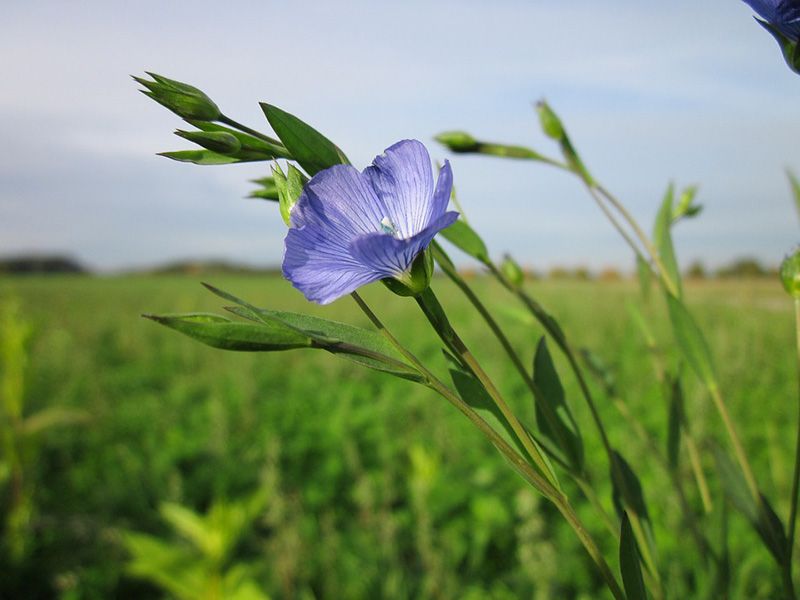
Used in textile production. flax They make fabric for towels, tablecloths, and clothing. It is used in cosmetology as a rejuvenating agent and in folk medicine to treat hypertension and atherosclerosis.
It is also used in cooking, as the oil and fibers are enriched with beneficial organic substances and vitamins.
Iris
With an erect stem and flat, green leaves. Buds iris Large, variegated, and in various shades. Single, they emit a pleasant aroma. Flowering: May to mid-June.
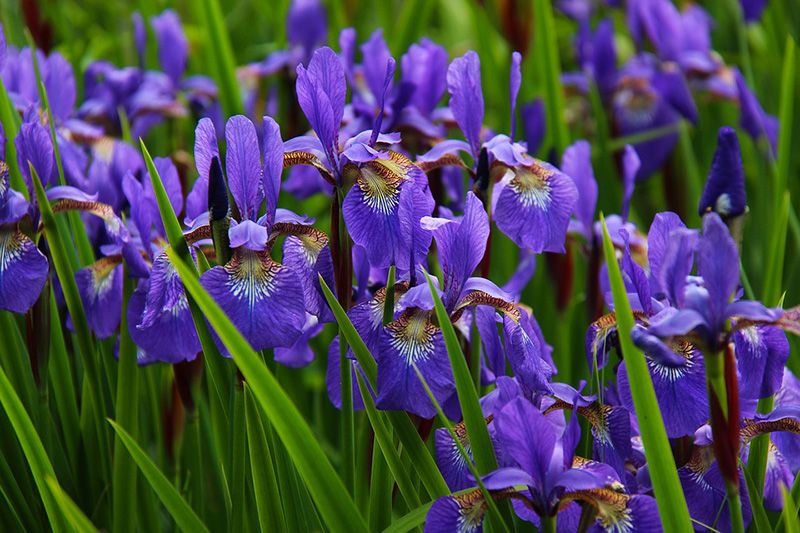
Used to create confectionery products. Irises decorate summer cottages, squares, parks, etc. Treats: cough, constipation, neuroses, stress, migraines, dense tumors, colic, tonsillitis, pneumonia.
In cosmetology, it is used to remove freckles and acne. It prevents the appearance of wrinkles and dandruff.
Tulip
An ornamental bulbous plant. Broadly lanceolate leaves. Flower buds come in a variety of colors and shapes.
U tulips There are many beautiful species and varieties.
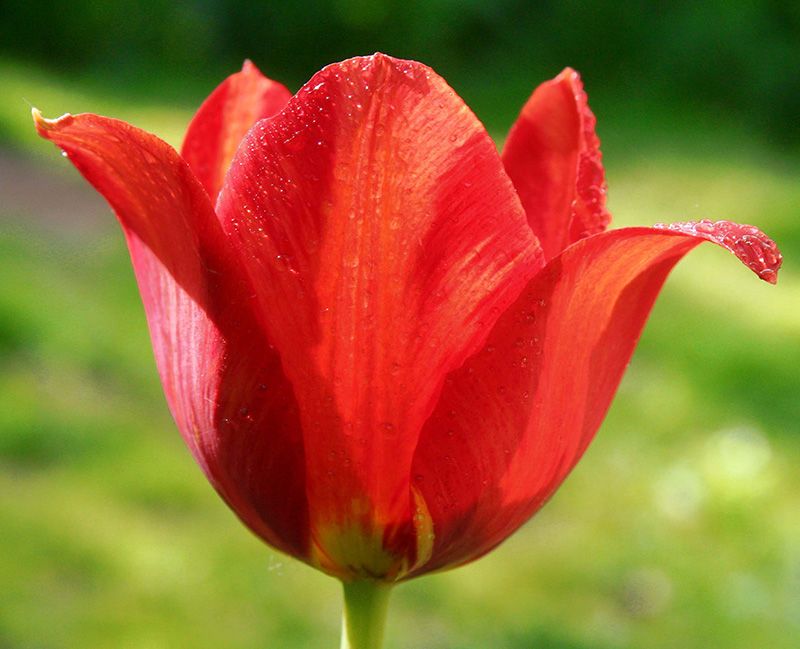
It's not used in traditional medicine because many varieties are poisonous. However, it is used in folk remedies. It helps with:
- inflammatory processes of the oral cavity and nasopharynx;
- abscesses;
- skin lesions;
- rheumatism;
- gastrointestinal problems;
- diarrhea;
- poisonings of various pathogenesis;
- benign and malignant tumors.
The flowers are used to make desserts, hot dishes, vitamin-rich salads, liqueurs, and syrups. The bulbs are also edible. They resemble potatoes but have a richer flavor. Before using them in cooking, make sure the variety is non-poisonous.
In cosmetology, masks, creams, and tonics are made from it.
You know that Tulips can be grown at home even by New Year?
Eschscholzia
A herbaceous perennial or annual. The leaves are lacy, bluish-gray with a waxy coating. They resemble wormwood.
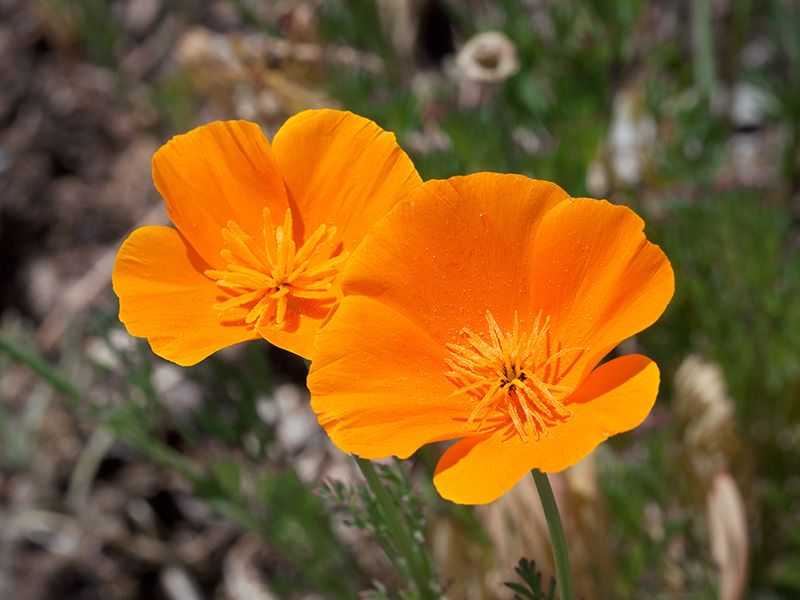
Eschscholzia They grow in large numbers on a single shoot, but live for only three days. They are single or double. They resemble poppies and come in a variety of colors: scarlet, white, yellow, and orange. They bloom from June to October.
In medicine, it is used to prepare medicinal preparations. It has sedative, antispasmodic, and analgesic properties. It is included in medications to improve sleep and relieve nervous tension. In Russia, it is used to make sedative dietary supplements.
Mint
A herbaceous honey plant with simple stems and bright green blades resembling nettle leaves. The flowers are small, bisexual or pistillate, and light lilac. Flowering: June–September.
Used in cooking to impart a special aroma.
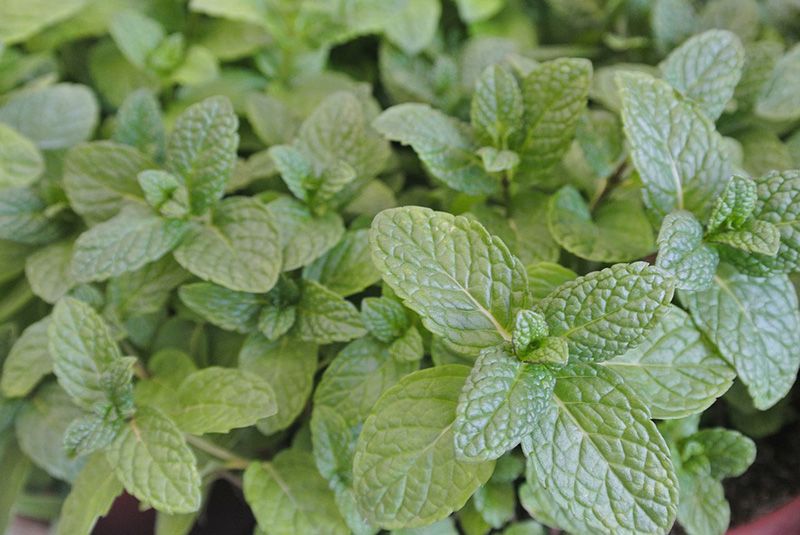
Menthol, which is part of the composition, is effective for:
- varicose veins;
- cellulite;
- radiculitis.
Mint is considered a feminine herb because it:
- reduces the level of male hormones;
- relieves pain and improves condition during menstruation;
- helps with menopause.
It's used to make creams, masks for problem skin, and shampoos for oily hair. It's also used for oral care, including chewing gum, toothpaste, and mouthwash.
It can be grown mint in the room.
Top.tomathouse.com recommends: meadow and wildflowers in the landscape
Plants are used to decorate outdoor spaces in a natural style. This design involves elements that blend unobtrusively into the surrounding environment.
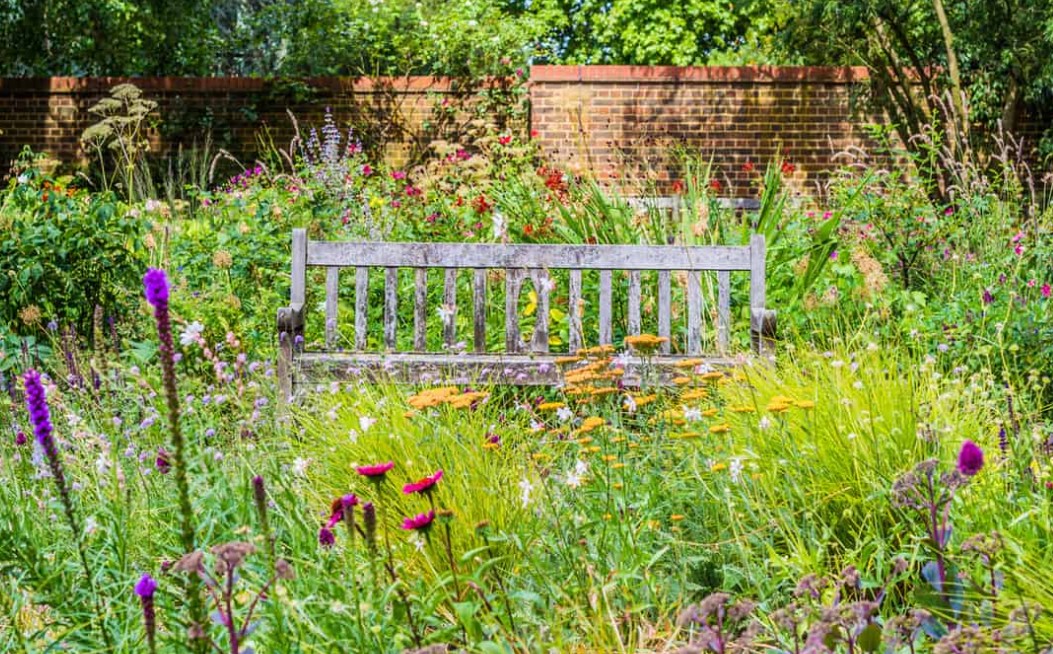
A flowerbed with wildflowers and meadow flowers should look as natural as possible. Plaster and plastic sculptures and iron benches would be out of place in such a landscape. The garden should be decorated with wood, stone, ceramic, and clay items.