When choosing any crop, you shouldn't rely solely on yield and taste. You also need to consider the soil and weather conditions, as well as the harvest time. Potatoes are no exception. The Moscow region is considered unsuitable for growing potatoes, being considered a risky farming zone. Therefore, it's important to carefully select the variety and consult with experienced gardeners. Let's look at potato varieties suitable for the Moscow region.
Content
- 1 Selecting potato varieties for the Moscow region
- 2 Super-early and early potato varieties for the Moscow region
- 3 Mid-early and mid-season varieties for the Moscow region
- 4 Mid-late and late varieties for the Moscow region
- 5 The highest-yielding varieties for the Moscow region
- 6 The most delicious varieties for the Moscow region
- 7 Purple potato varieties for the Moscow region
Selecting potato varieties for the Moscow region
When choosing seed potatoes in Moscow and the Moscow region, you need to focus on several factors.
Nature of the Moscow region
It's important to select varieties suitable for cultivation in a specific region or area. For Moscow and the Moscow region, varieties that ripen from May to the second ten days of September are suitable.
When growing potatoes, it's important to consider that over 15% of agricultural land in the Moscow region is subject to erosion. Furthermore, high precipitation can leach up to 600 kg of useful elements (zinc, cobalt, manganese, and others). This is especially true for sandy loam, sandy clay, and loamy soils. Therefore, when growing potatoes, it's essential to fertilize them to compensate for the lack of useful elements.
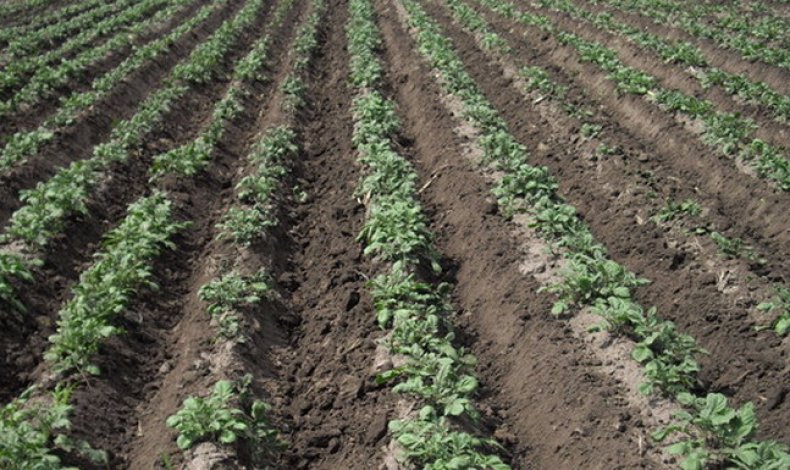
Soil characteristics in the Moscow region, its identification, and preparation for planting potatoes
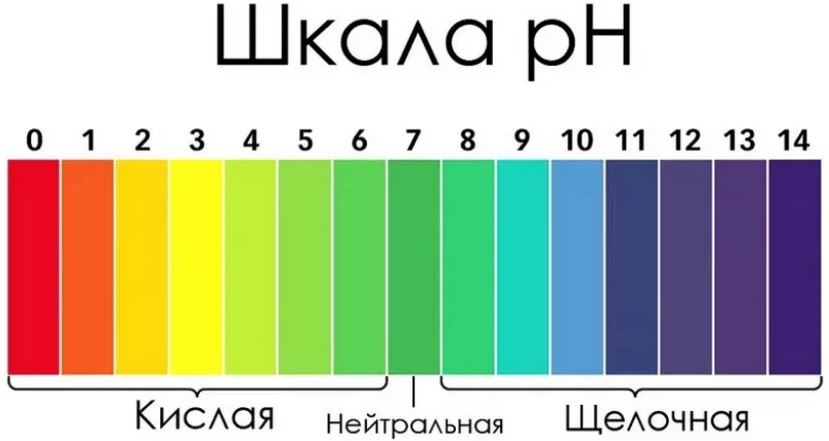
The crop thrives in soils with low to neutral pH, but not so well in highly acidic soils. However, in the Moscow region, soils are predominantly slightly alkaline.
To determine the soil's acidity, you can purchase litmus paper at the store. Collect a small amount of soil from different parts of the plot, add water (1:3), stir, and let it sit for a while. Then, dip the paper into the water. If it turns red, the soil is highly acidic. Orange indicates medium acidity, yellowish-orange indicates mild acidity, and yellowish-green indicates neutral acidity.
When determining acidity, you can also use the wild plants that grow on the site as a guide:
- sour - horsetail, buttercup, milkweed, moss;
- slightly acidic - coltsfoot, wheatgrass, clover, chamomile;
- neutral - nettle, dandelion, burdock;
- slightly alkaline - quinoa, mustard.
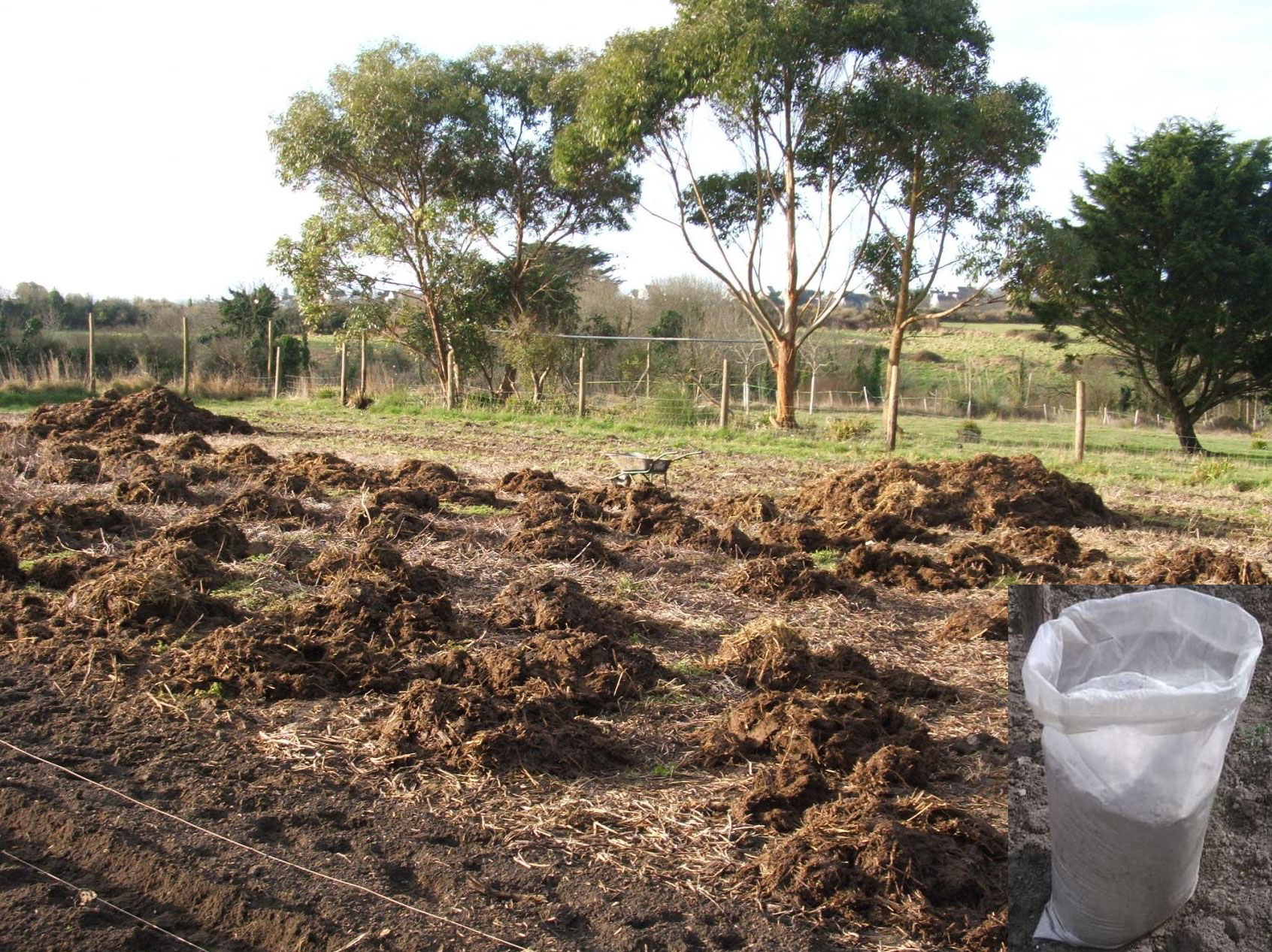
To ensure that potatoes grow well in your garden, you need to dig the soil in the fall and add certain fertilizers:
- acidic - dolomite or limestone flour, lime, wood ash;
- slightly acidic - peat, humus;
- neutral - humus, compost;
- slightly alkaline - manure.
The most common soil types in Moscow and the Moscow region are sod-podzolic, gray forest marshy soil, and chernozem. Below is a detailed description of each type, along with recommendations for improving soil composition.
|
View/ Where it is found (Moscow region regions) Characteristic |
Application of manure and compost/
Annual use of mineral fertilizers/ Liming |
Soil drainage and structuring |
|
Sod-podzolic. They are found mainly in the southern part. They contain a lot of humus and beneficial elements. They are characterized by high fertility, a lumpy-powdery structure, and slightly increased acidity. |
3-4 kg per square meter once every 3-4 years (it is depleted when growing crops). Superphosphate, potassium sulfate, urea in the amount of 15, 20 and 15 g per 1 sq. m. 0.4-0.5 kg per 1 sq. m once every 6-8 years. |
— |
|
Gray forest. Found in the south and southwest. Good structure and low acidity. |
Everything is the same as for sod-podzolic soil. Liming is carried out in the amount of 0.3-0.4 kg per 1 sq. m. |
— |
|
Black soil. Present in the far south. High humus content, neutral acidity and good yield. |
2-3 kg per 1 sq. m once every 2-3 years (the soil becomes depleted and loses structure). As with the first two types. There is no need for liming. |
— |
|
Marshy. Found in the north and east. Despite containing many nutrients, they have low fertility. This is due to the poor soil structure, limited air circulation, and inaccessible nutrients. |
10-15 kg per 1 sq. m once every 2-3 years. Superphosphate, potassium sulfate, urea, copper sulfate in the amount of 15, 20, 15 and 6 g per 1 sq. m. 0.6-0.7 kg per 1 sq. m once every 4-5 years. |
Deep drainage channels and digging with the addition of 25-50 kg of sand per 1 sq. m are required to make the soil more fertile. |
Other criteria for selecting potato varieties for the Moscow region
According to the harvest time, potatoes are divided into:
- Ultra-early – 35-50 days.
- Early maturing – 50-65 days.
- Mid-early – 65-80 days.
- Mid-season – 80-95 days.
- Mid-late – 95-110 (115) days.
- Late-ripening – 110 days or more.
In the Moscow region, you can plant super-early (ultra-early), early (early-ripening), mid-season (mid-early, mid-ripening) and mid-late varieties.
It's best to avoid late-season varieties, although there are several recommended for the Central Regions, which we'll discuss below. The main thing to keep in mind is that most early-season varieties are not suitable for long-term storage, while the latter variety must be harvested before frost sets in.
It is optimal to plant all types of varieties at once to ensure a harvest for the year.
When choosing potatoes, you should also pay attention to their starch content. It can be low, medium, or high. Potatoes with a low starch content are especially good in salads, soups, and boiled in their skins, but they are not suitable for mashing. They should also be avoided for frying and baking. Medium-starch varieties are considered versatile; they are suitable for everything from boiling, frying, baking, and soups, but they are best baked. For salads, it's best to choose salad varieties with a low starch content. A high starch content (over 20%) means a low moisture content, so these varieties are good for frying, deep-frying, and especially for purées, including cream soups. Because they are very crumbly, they absorb all the water and fall apart when cooked.
You can also pay attention to the cooking type they belong to. For example: A is a potato that doesn't boil over at all, B is a versatile potato, C is a potato that cooks well and quickly, and D is a potato that falls apart when cooked. Therefore, if you want good mashed potatoes, you should choose varieties like BC, C, CD, and D.
Read more about crumbly varieties in the article TOP 17 crumbly potato varieties with white and yellow flesh.
Both foreign and domestic varieties can be grown. However, experienced breeders recommend the latter option. Russian varieties are considered better adapted to the Moscow region, while European varieties are considered to have better storage properties.
Read the article to learn about the best varieties of seed potatoes. Top 103 Seed Potato Varieties and How to Choose Them: Descriptions and 623 Photos.
Please note! You cannot replant seeds collected from your own plot year after year. They will accumulate various infections. Planting material should be renewed every 4-5 years. This can be purchased from an agricultural company or research institute.
It's also worth paying attention to the variety's regionalization for the Central region and its resistance to diseases and pests. Due to precipitation, constant dampness, and cold weather, the crop is susceptible to various fungi and viruses. Pests that can attack include the Colorado potato beetle, wireworm, nematode, and mole cricket. It's recommended to purchase varieties that are resistant to infections and pests.
Super-early and early potato varieties
Early varieties for the Moscow region allow you to have new potatoes on the table as early as June or July, provide the opportunity for a second planting, and can be stored in good cellars until spring. They can be harvested as early as 45 days after the first shoots emerge. A second harvest can be done 10-15 days later. The yield is typically lower during the first harvest. With subsequent harvests, the yield is 1.5-2 times higher. Let's look at the best-yielding varieties with photos for open ground and greenhouses.
Artemis
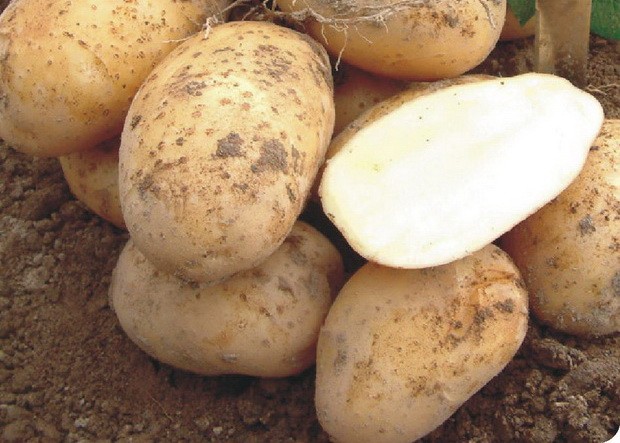
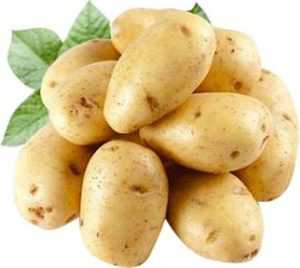
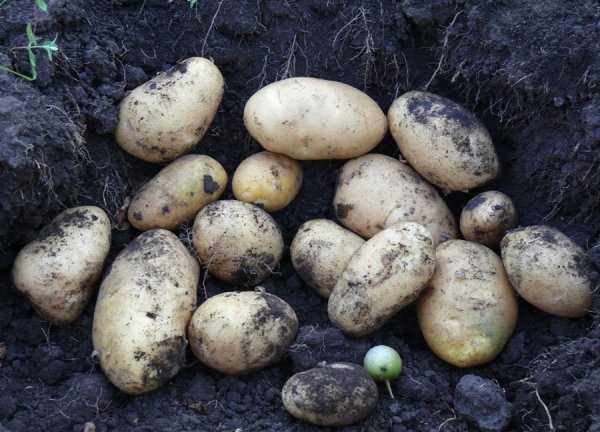
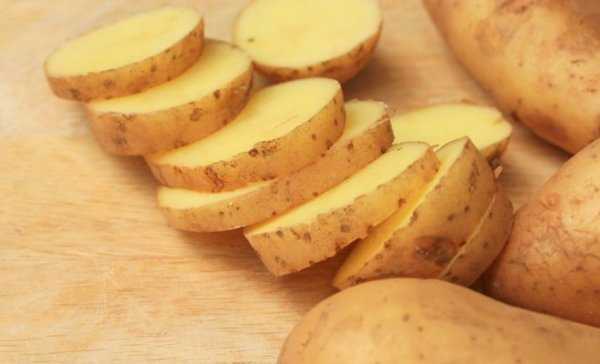
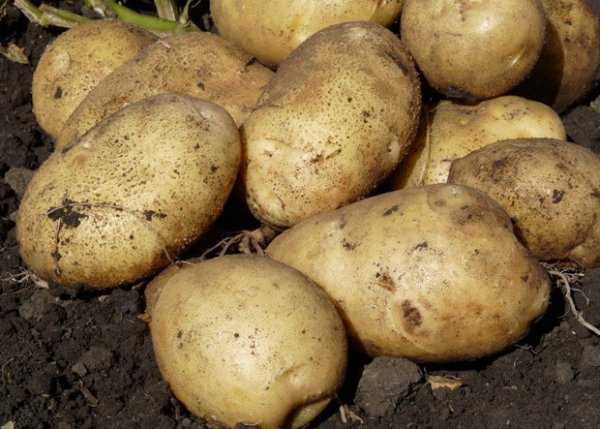
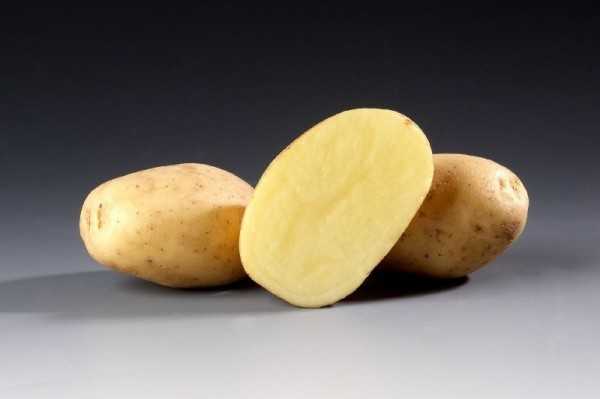
The first harvest yields 12-24 t/ha. The second harvest yields 19-37 t/ha. The maximum recorded yield is 58 t/ha. Artemis forms medium-sized bushes. The leaves range in color from light green to emerald. The corrugations around the perimeter are subtle. The inflorescences have snow-white petals. The tubers are oval with insignificant stem germination points (eyes). The outside is bright sandy. The inside is creamy.
Specifications:
- tuber weight - 92-144 g;
- starch content - 11-15%;
- marketability - 87-98%;
- shelf life - 93%.
Resistant to Synchytrium endobioticum (cancer pathogen) and roundworms (nematodes). Susceptible to stem blight.
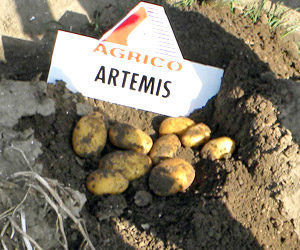
Photo gallery of the Artemis potato variety:
Ivory Russet
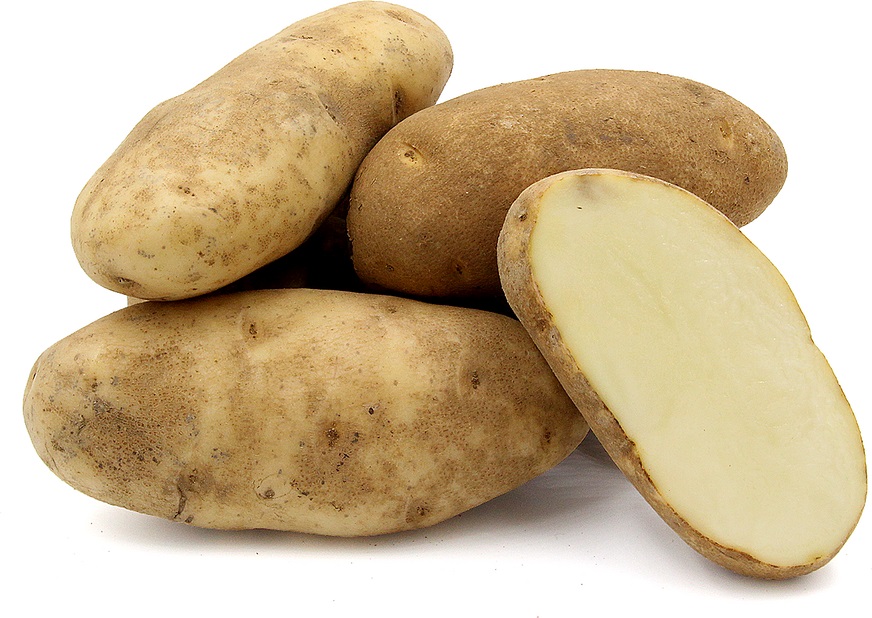
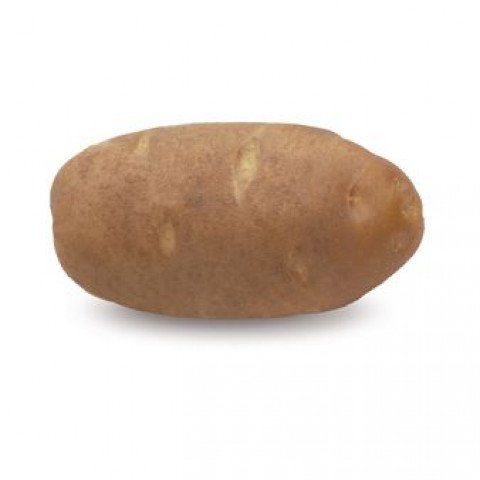
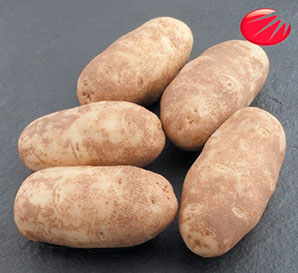
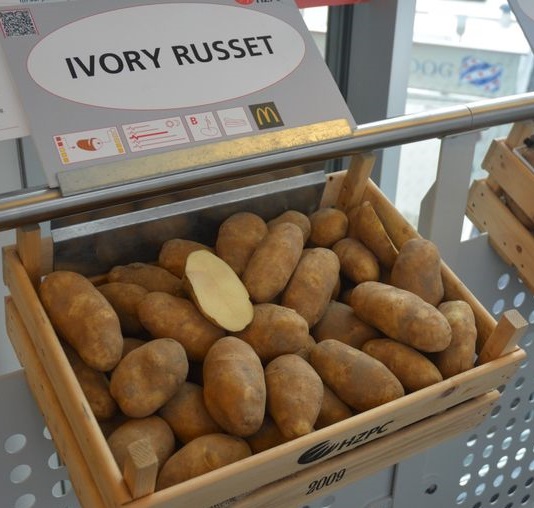
Universal use. The first harvest yields 6-12 t/ha, and the second – 15-20 c/ha. The bushes are medium to tall with straight shoots. The leaves are emerald. The anthocyanin coloration is strong. The tubers are elongated, with small germination points. The skin is sandy, the flesh is snow-white.
Specifications:
- weight - 82-181 g;
- starch content - 16-18%;
- marketability - 73-96%;
- shelf life - 93%.
Shows resistance to canker and roundworms. Moderately resistant to late blight.
Photo gallery of the Ivory Russet potato variety:
Bellarosa
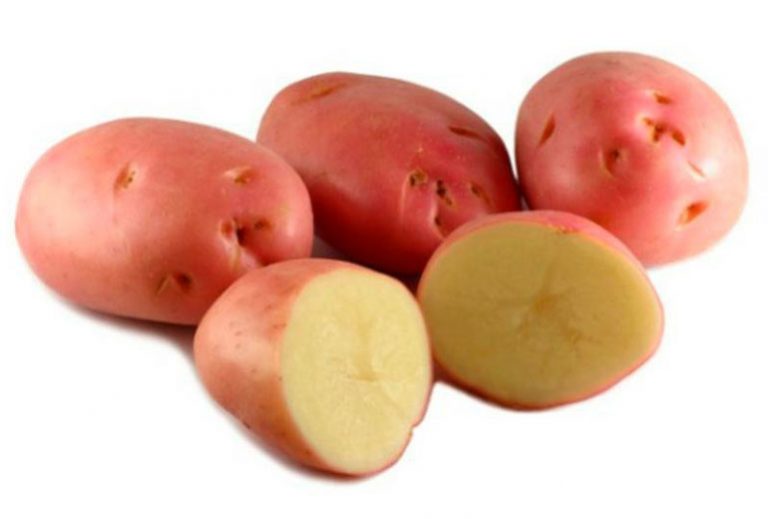
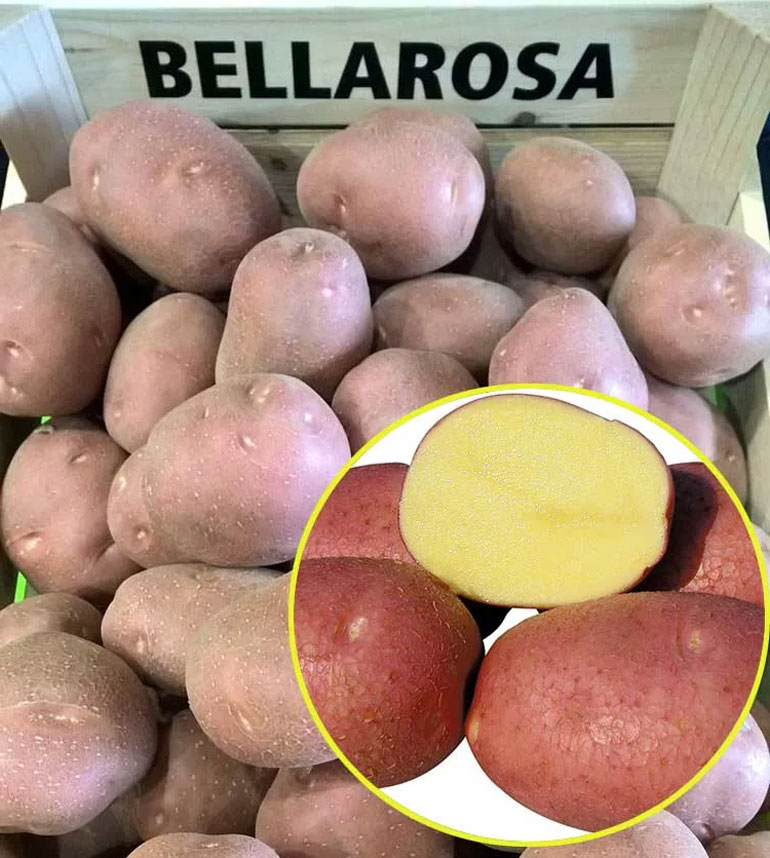
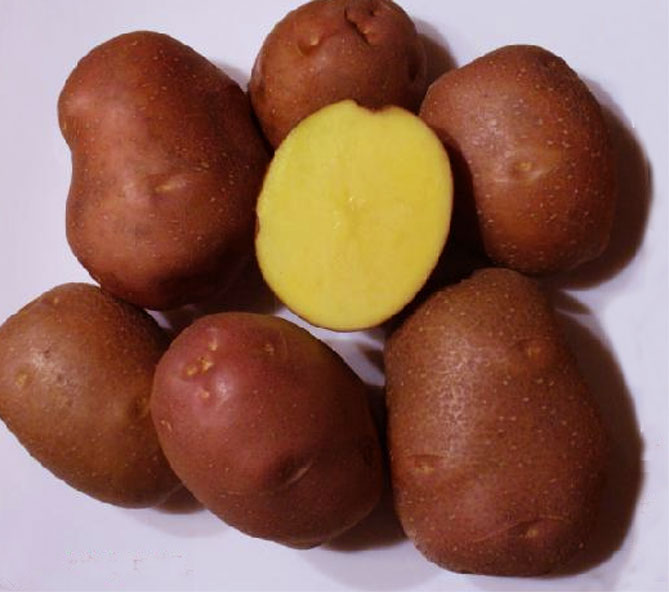
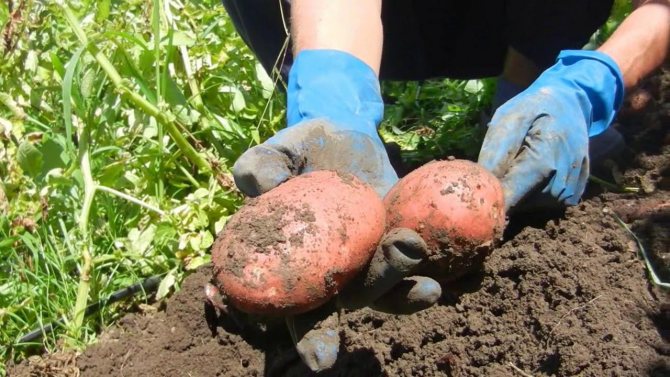
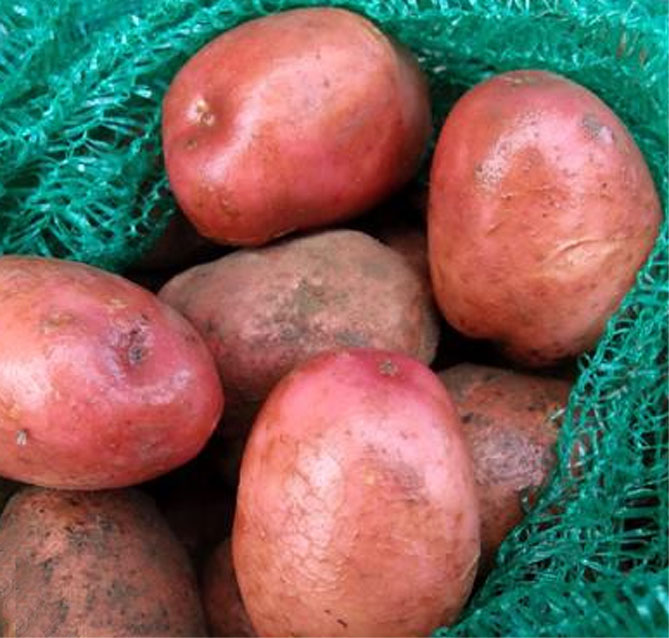
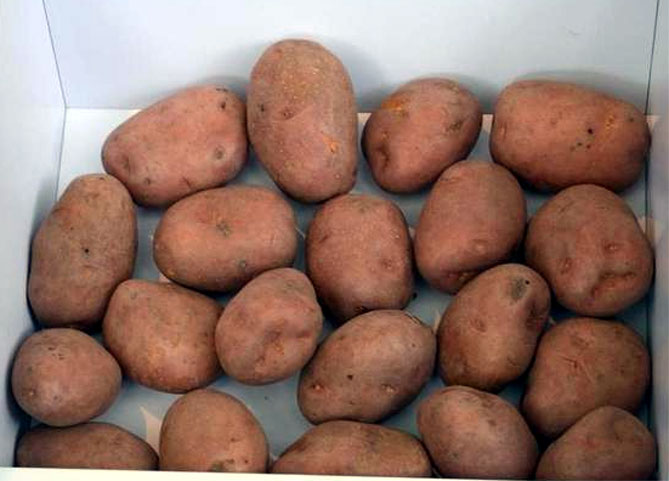
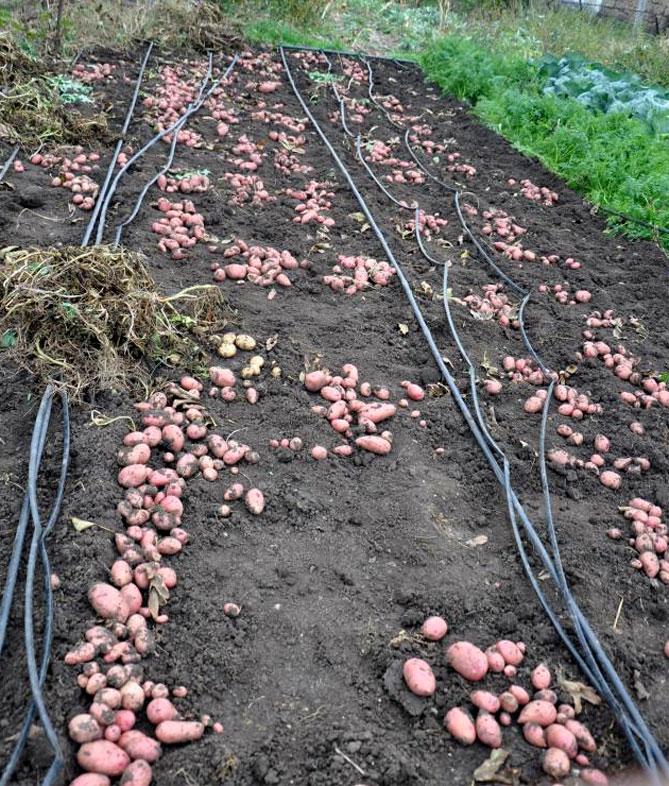
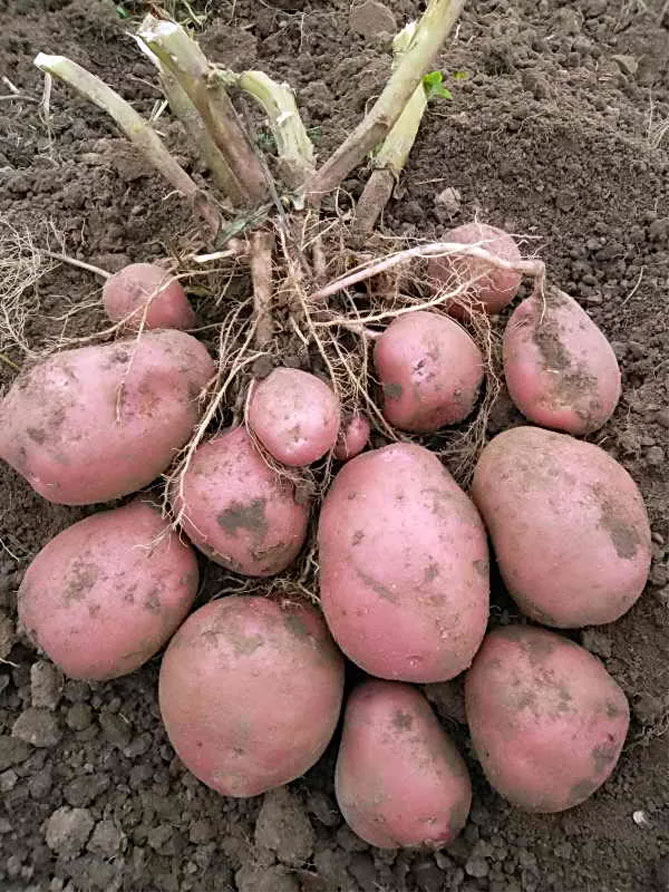
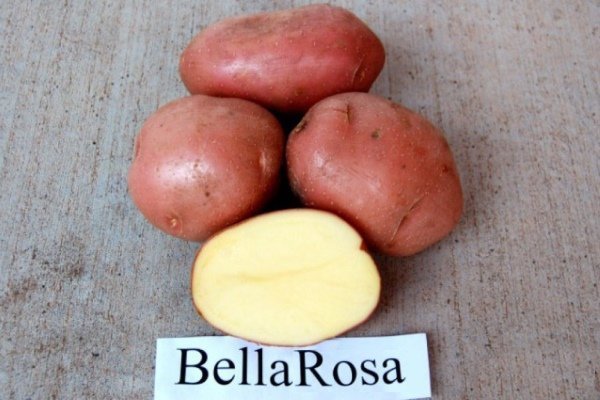
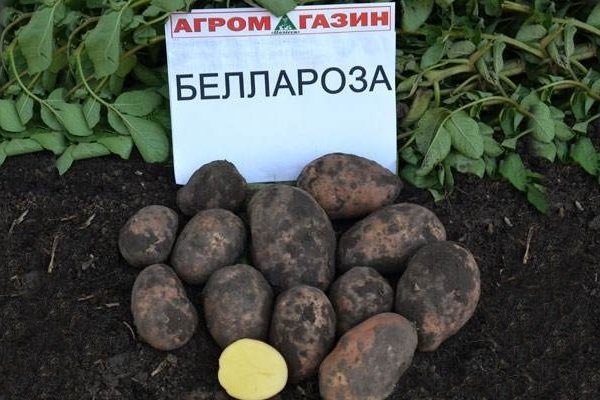
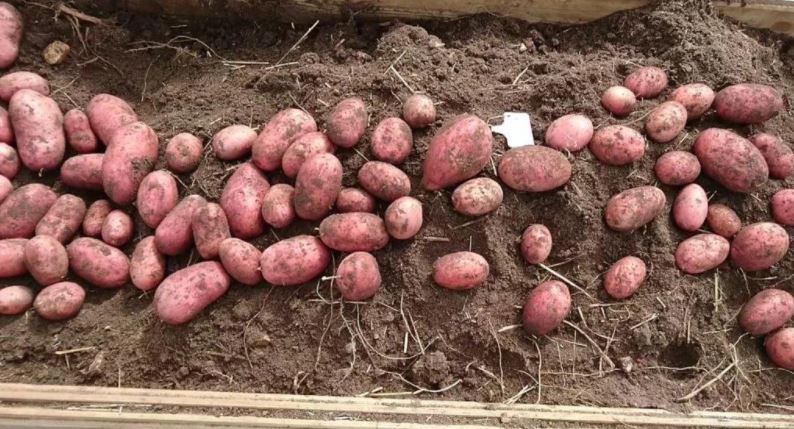
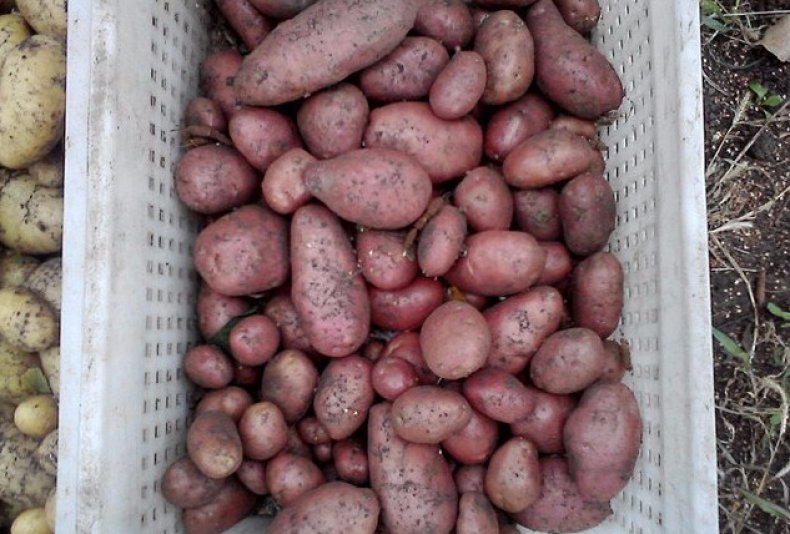
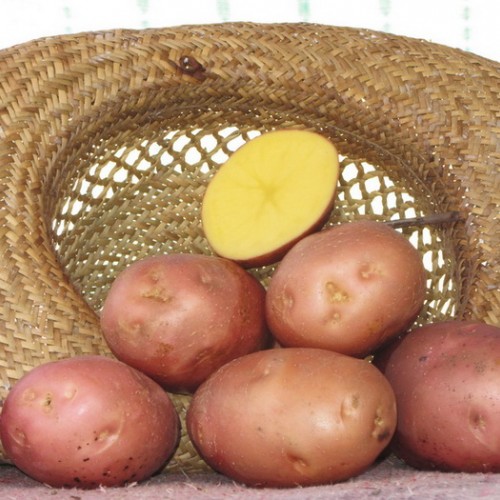
An ultra-early variety bred in Germany. Yields up to 38.5 tons/ha. Registered in 2006. The tubers have an uneven, round shape, making them susceptible to accidental damage during harvesting and transportation. The potatoes are red on the outside and yellowish on the inside. The growing points are pink and numerous.
Specifications:
- weight - 117-207 g;
- starch content - 12-15%;
- marketability - 82-99%;
- shelf life - 93%.
Resistant to Synchytrium endobioticum, roundworms and viruses.
Read more about the variety in the article Bellarosa Potato: Variety Characteristics, Reviews, and Comparison.
Photo gallery of the Bellarosa potato variety:
Vega
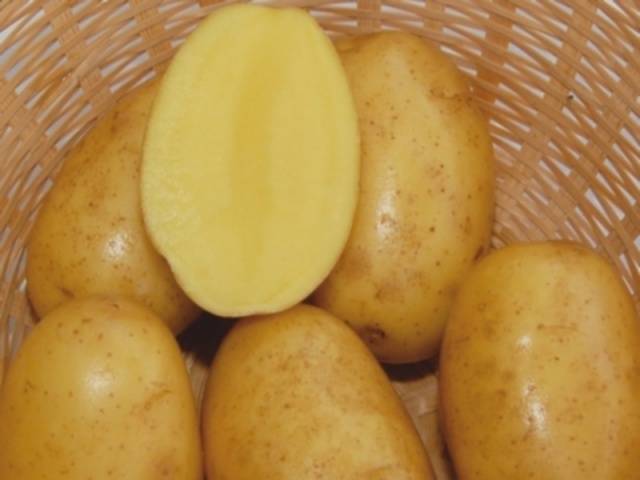
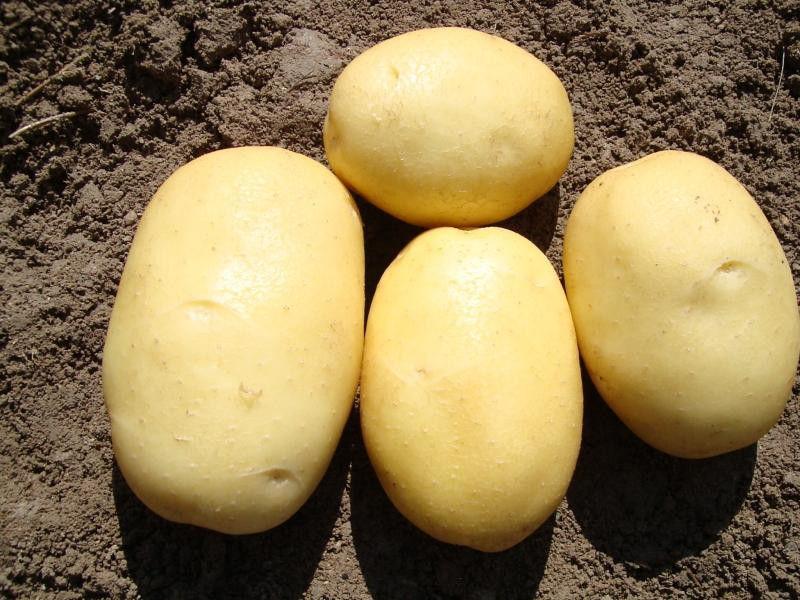
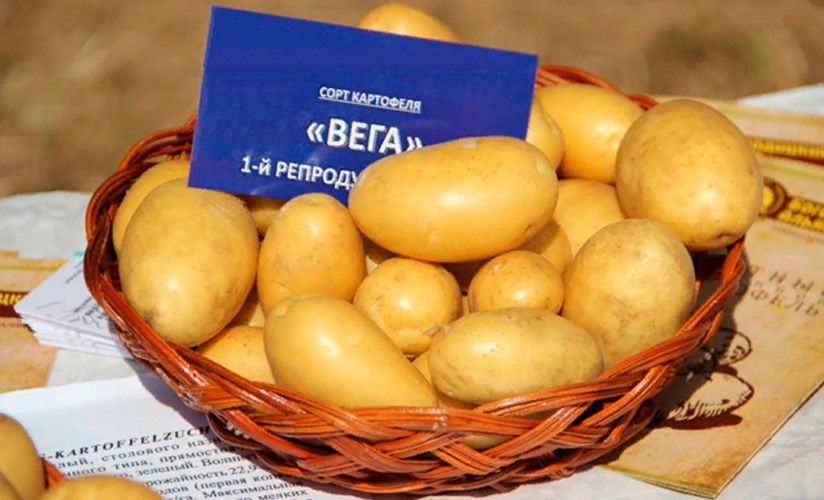
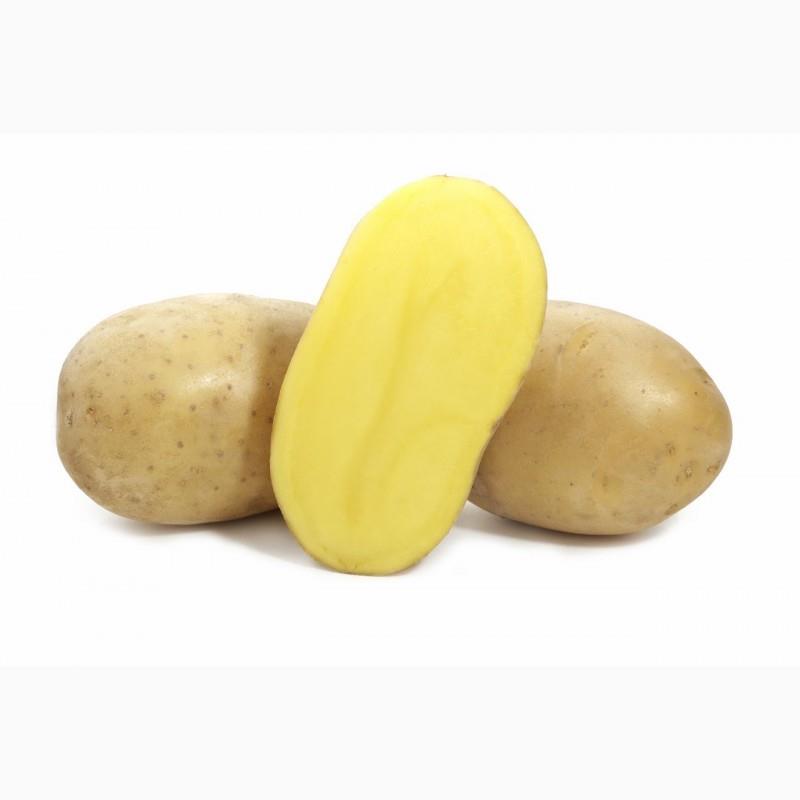
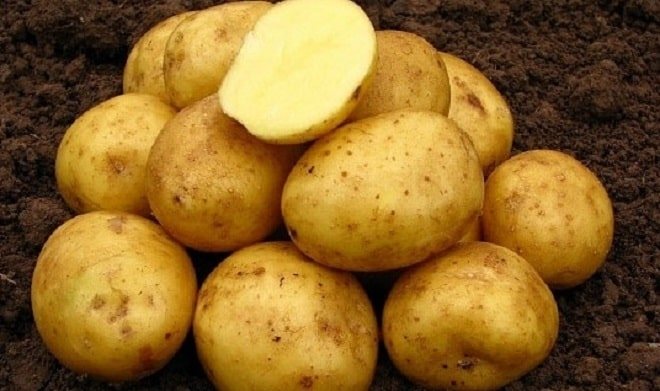
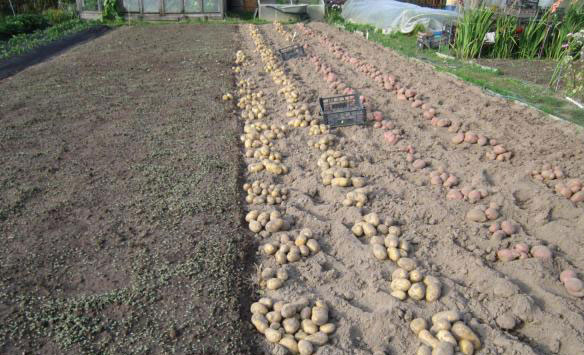
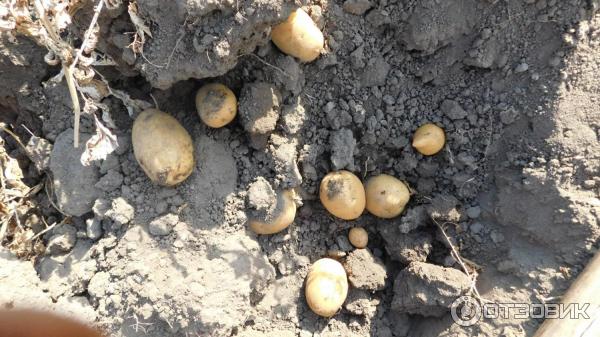
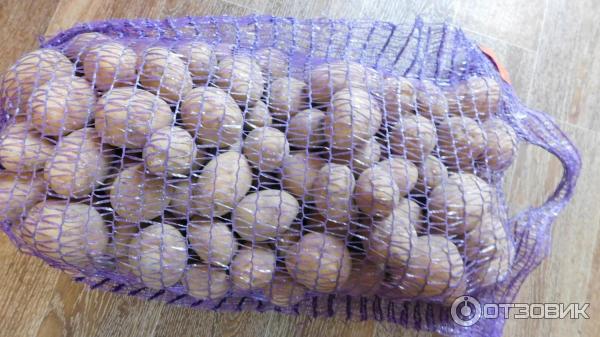
German selection. Included in the register in 2013. Yields up to 48.4 t/ha. Requires fertile soil. Avoid overwatering. Oval tubers have small growth points. The skin is sandy, the flesh is darker.
Specifications:
- weight - 87-120 g;
- starch content - 10-16%;
- marketability - 87-95%;
- shelf life - 99%.
Not affected by roundworms, late blight, Synchytrium endobioticum.
Read more about the variety in the article Vega potato variety: description, comparison with others, photos, reviews.
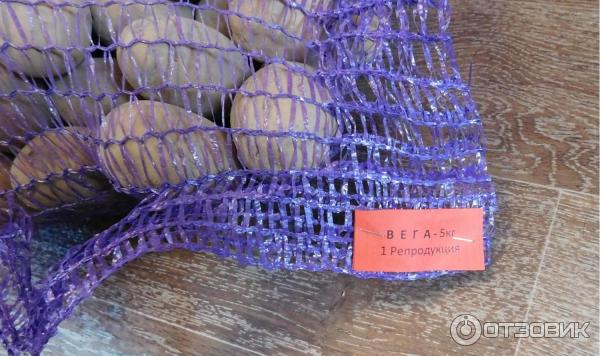
Photo gallery of the Vega potato variety:
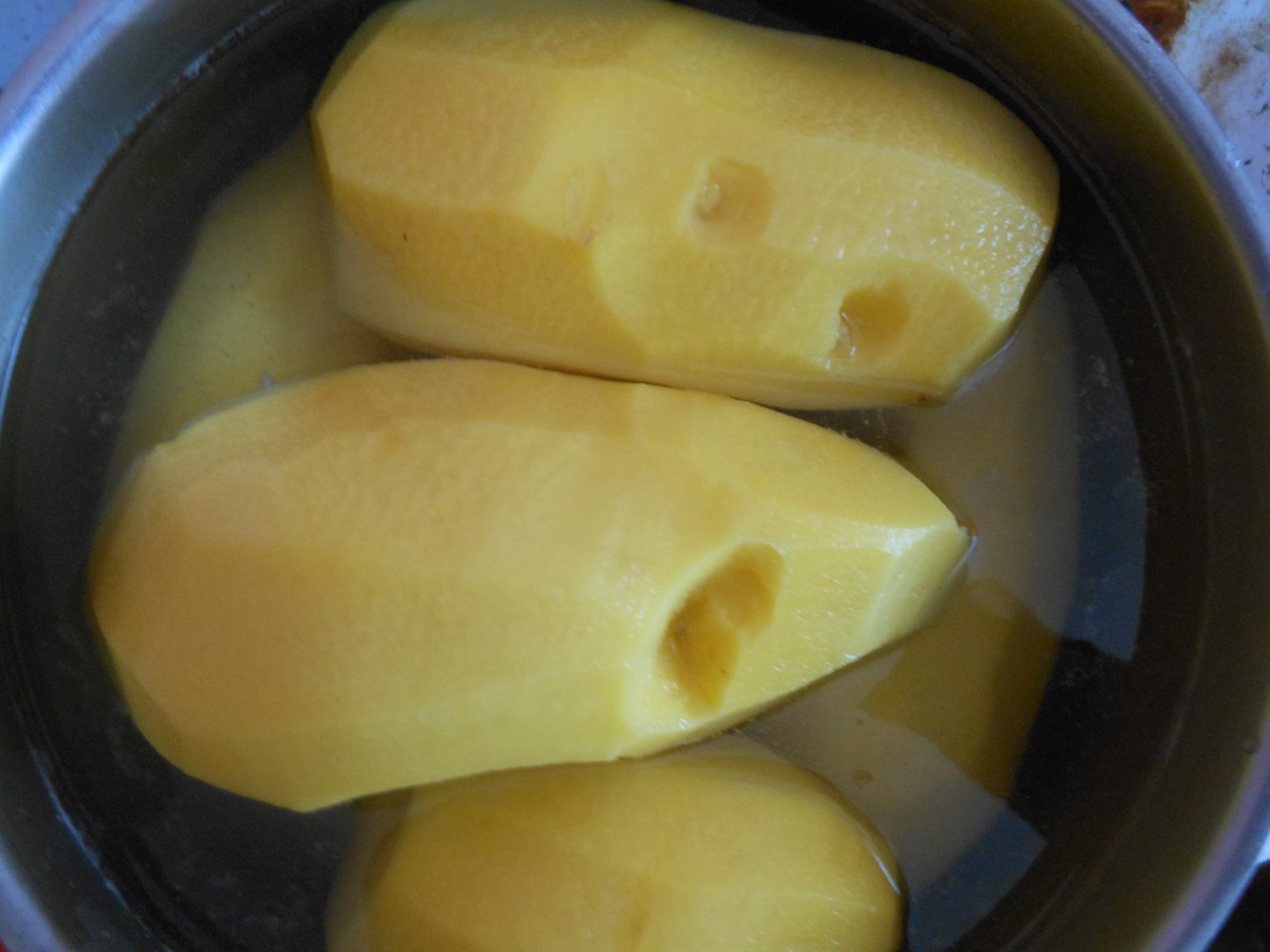
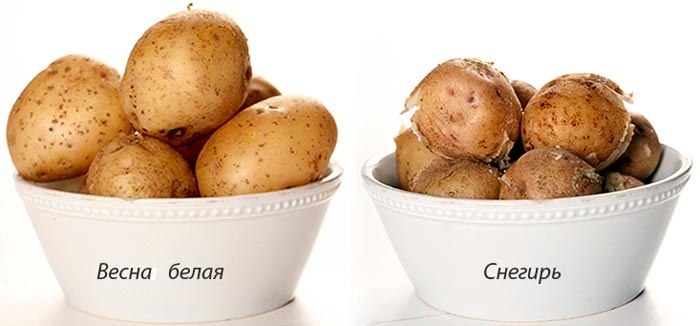
White Spring
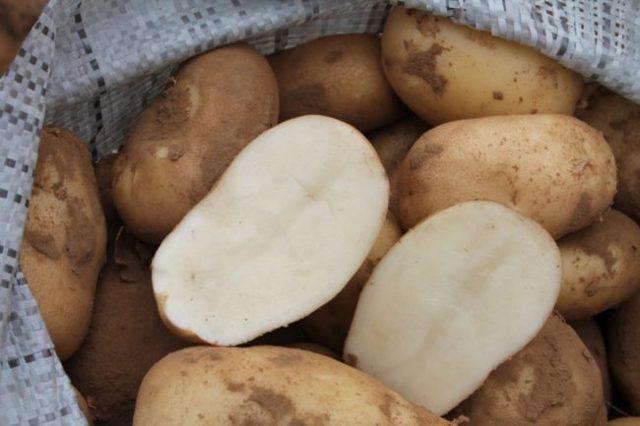
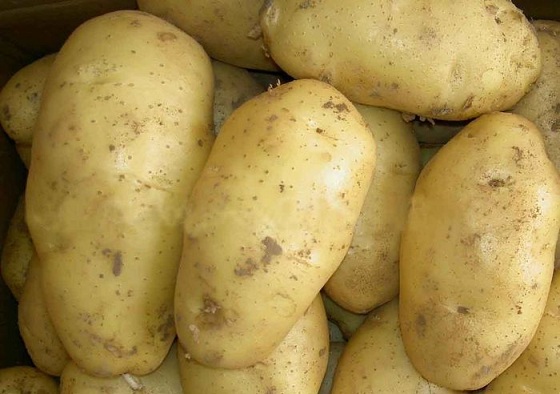
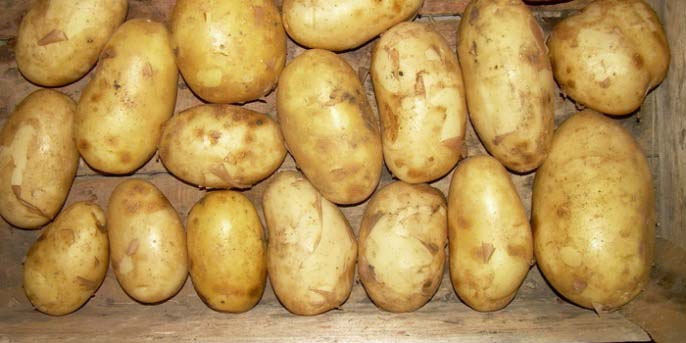
Universal use. Yields 27-36 tons of root vegetables per hectare. Forms upright bushes. The leaf blades are large, deeply dissected, and light green. Flowering is short-lived. The roots are oval, with small but numerous germination points. The skin is meshed. The flesh is snow-white.
Specifications:
- weight - 100-180 g;
- starch content - 11-15%;
- marketability - 85-93%;
- shelf life - 97%.
Resistant to cancer pathogens and soft bacterial rot.
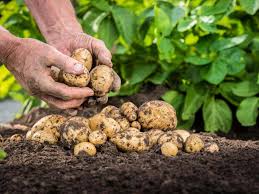
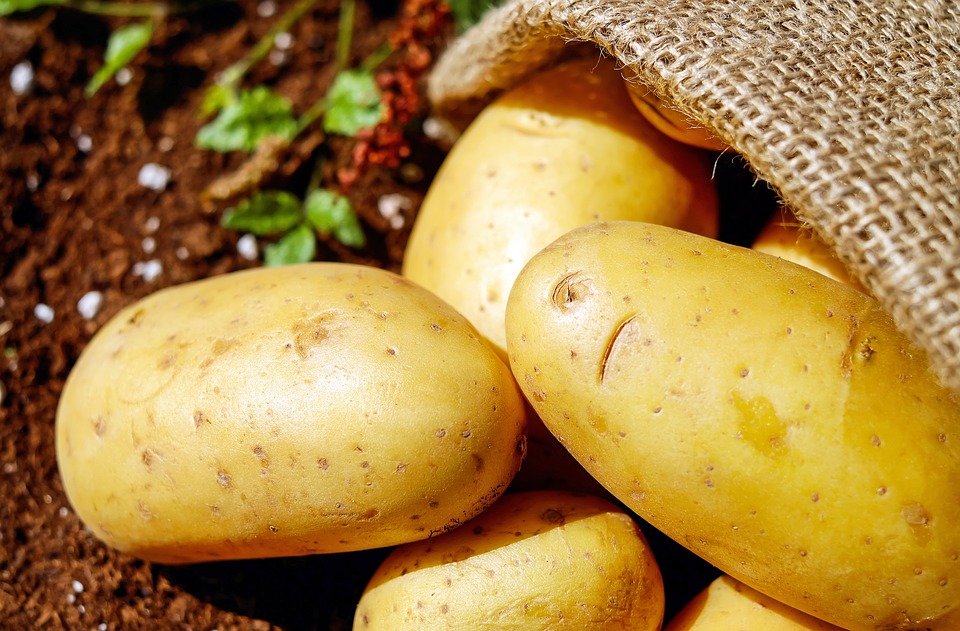
Photo gallery of the potato variety Vesna Belaya:
Vineta (Veneta)
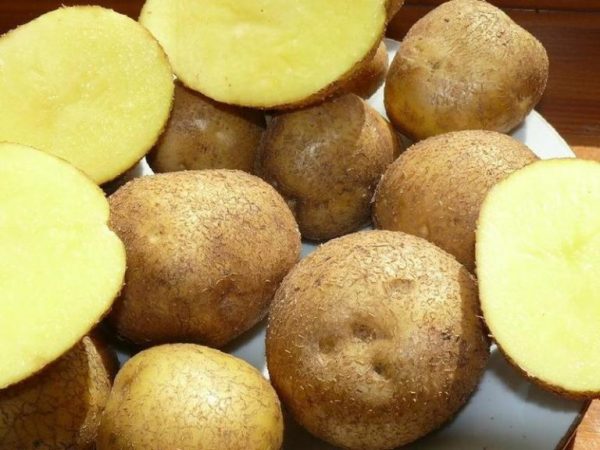
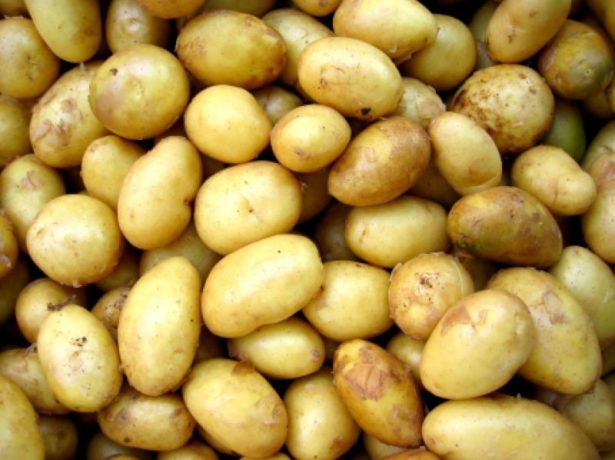
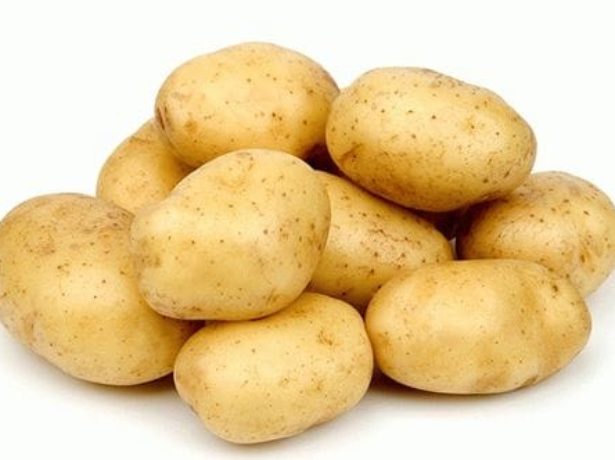
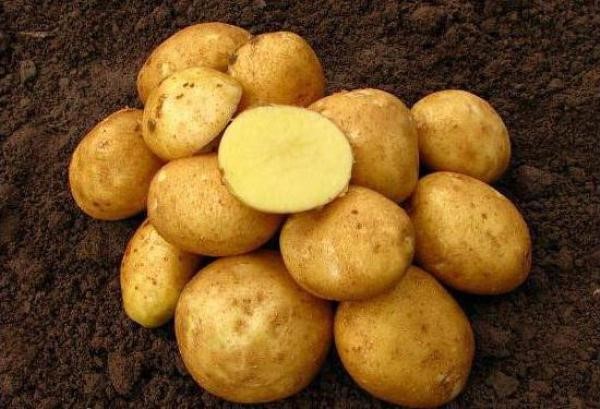
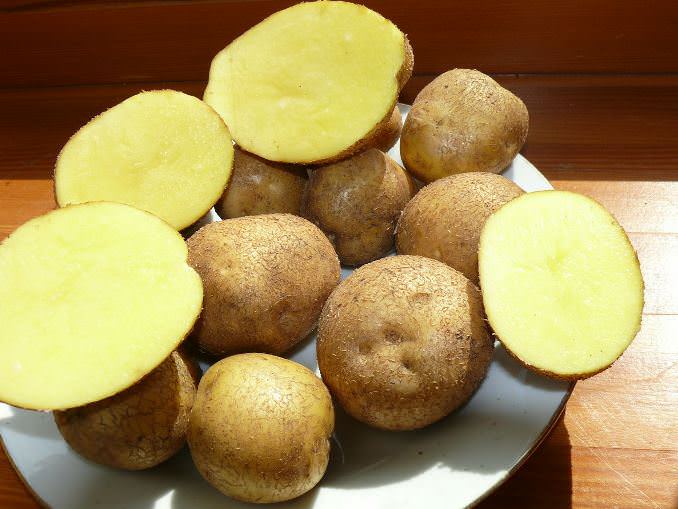
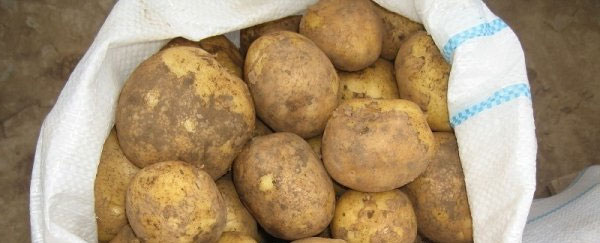
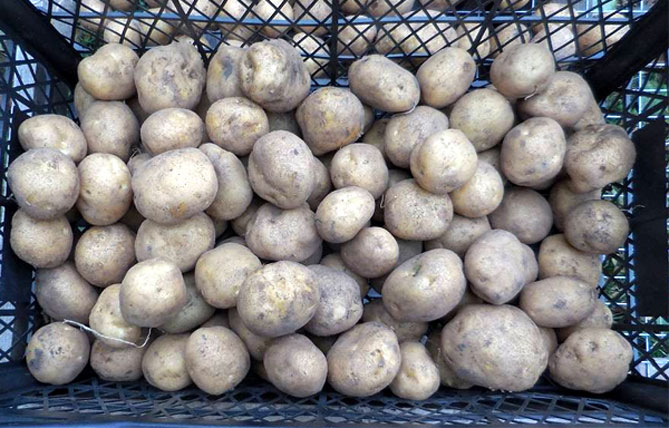
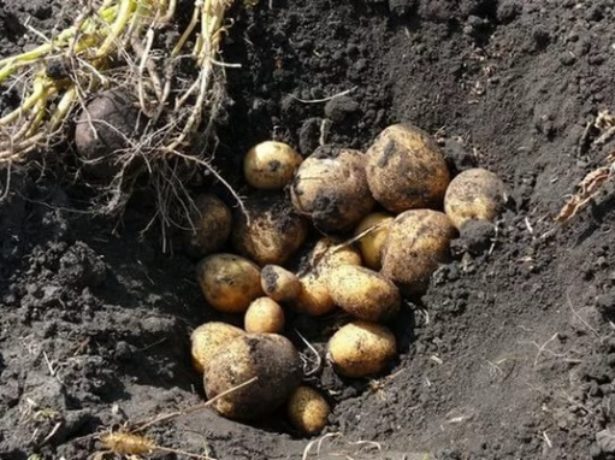
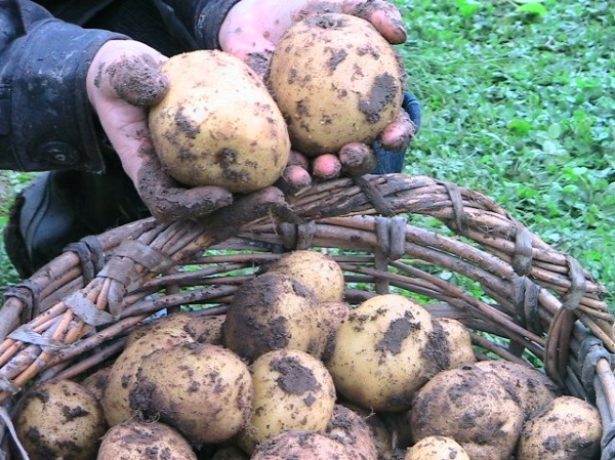
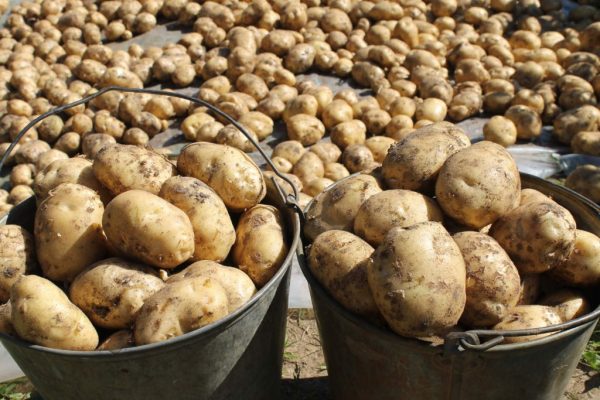
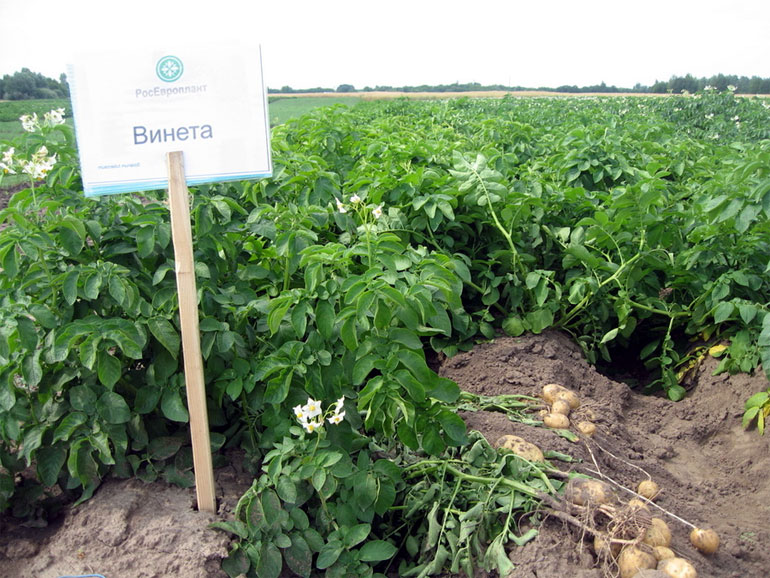
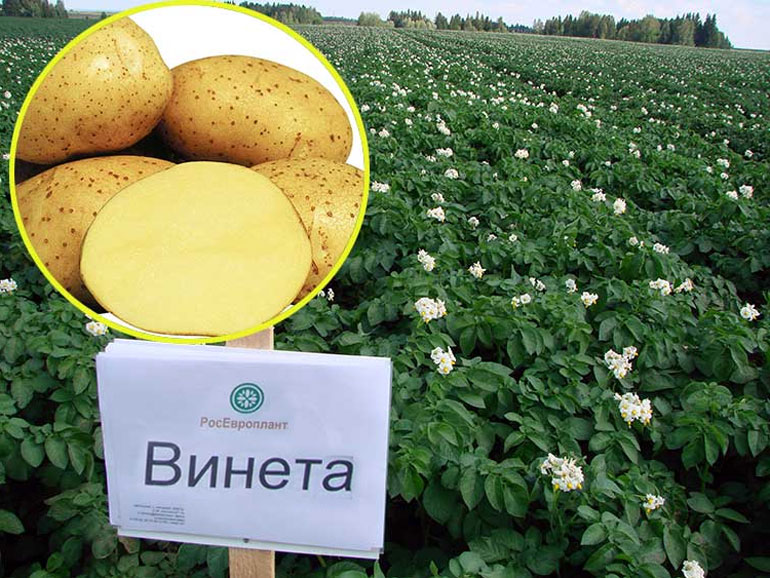
Bred in Germany, this variety was registered in 2001. It yields 160-228 centners per hectare. It does not require daily watering of the trunk area. The tubers are round, bright sand-colored on the outside and lighter on the inside. Their excellent flavor is noted.
Specifications:
- weight - 67-95 g;
- starch content - 12-15%;
- marketability - 87-97%
- shelf life - 87%.
Late blight poses a threat.
Photo gallery of the Vineta potato variety:
More about the Veneta (Vineta) potato variety on our website.
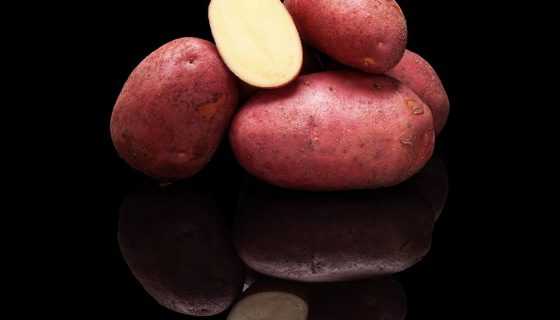
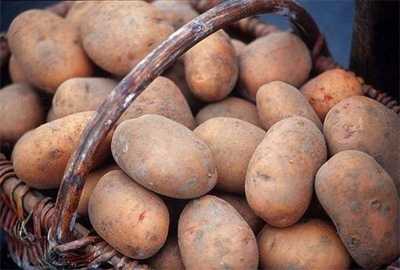
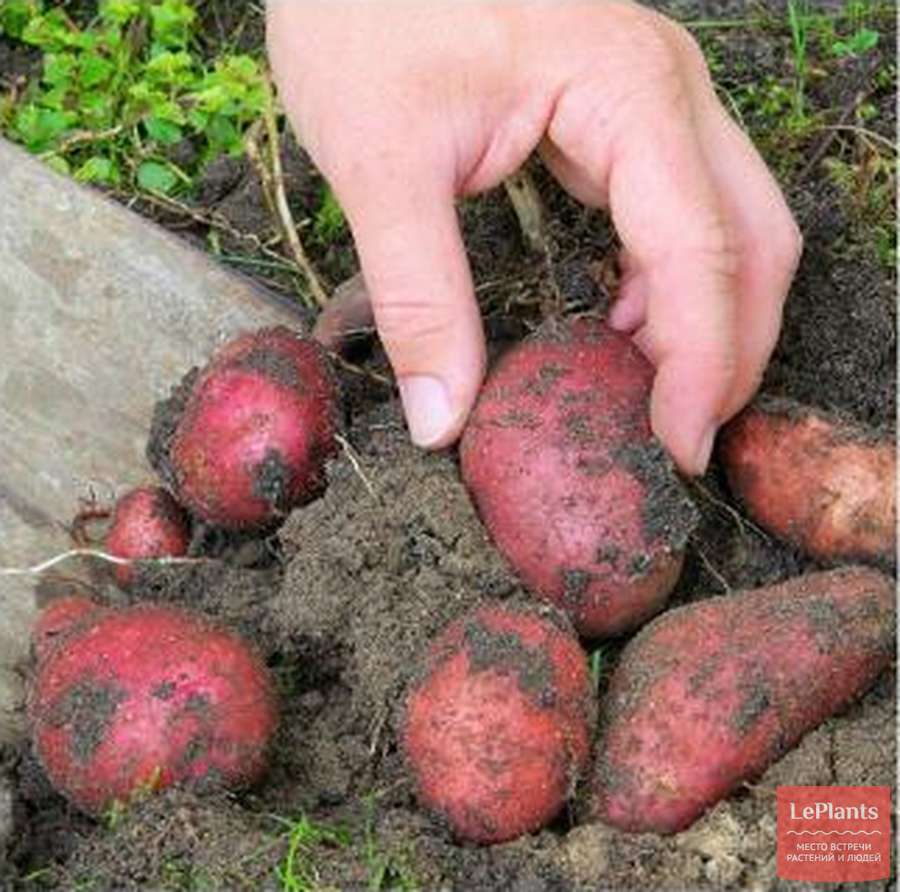
Detskoselsky
Universal use. One hectare yields 33-45 tons of potatoes. It forms tall, leafy bushes. Flowering is short-lived. The tubers are flat-oval, with small dots. The outside is crimson. The inside is snow-white.
Specifications:
- weight - 110-120 g;
- starch content - 15-18%;
- marketability - 88-92%;
- Keeping quality is good.
Cancer resistant.
Photo gallery of the Detskoselsky potato variety:
If you are interested in this variety, read the article.Detskoselsky potato variety: description in a table, photo, comparison with others, reviews, cultivation.
Early Zhukovsky
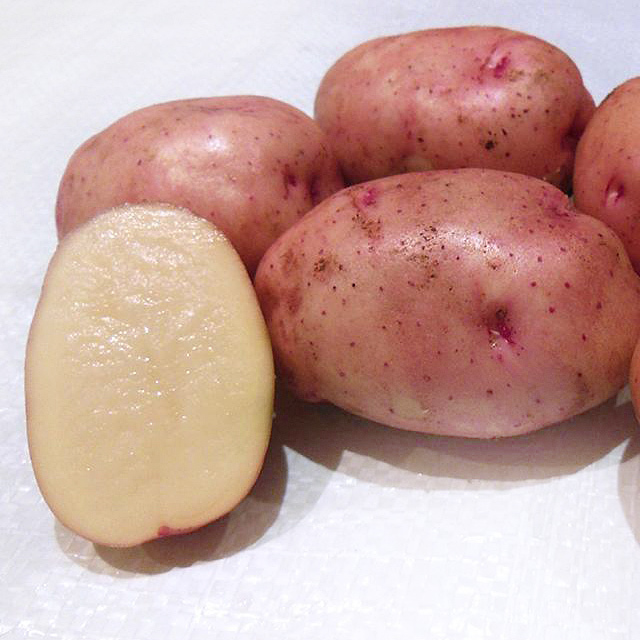
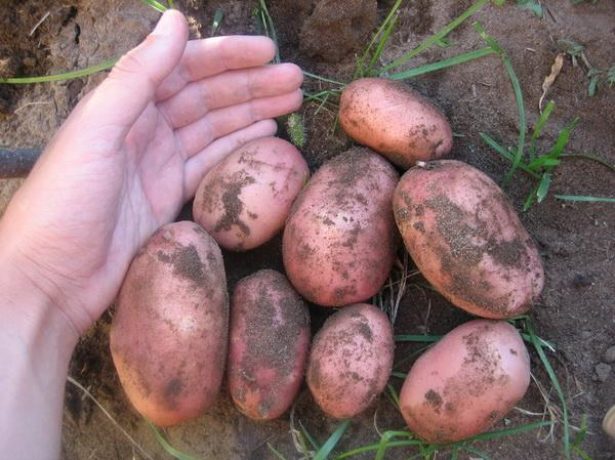
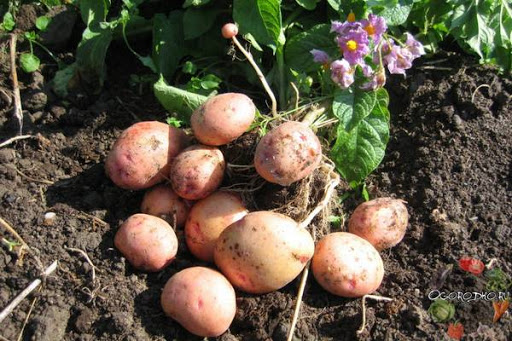
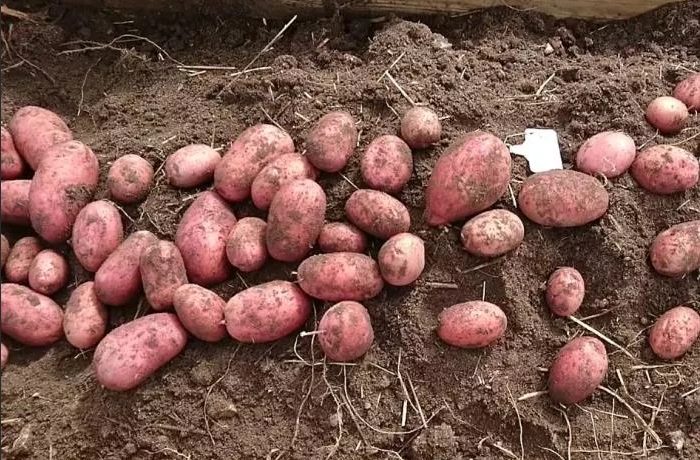
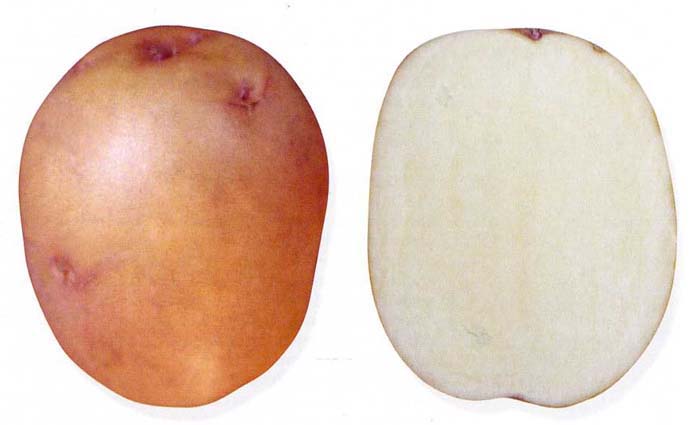
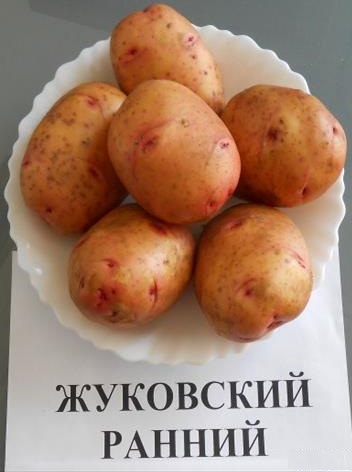
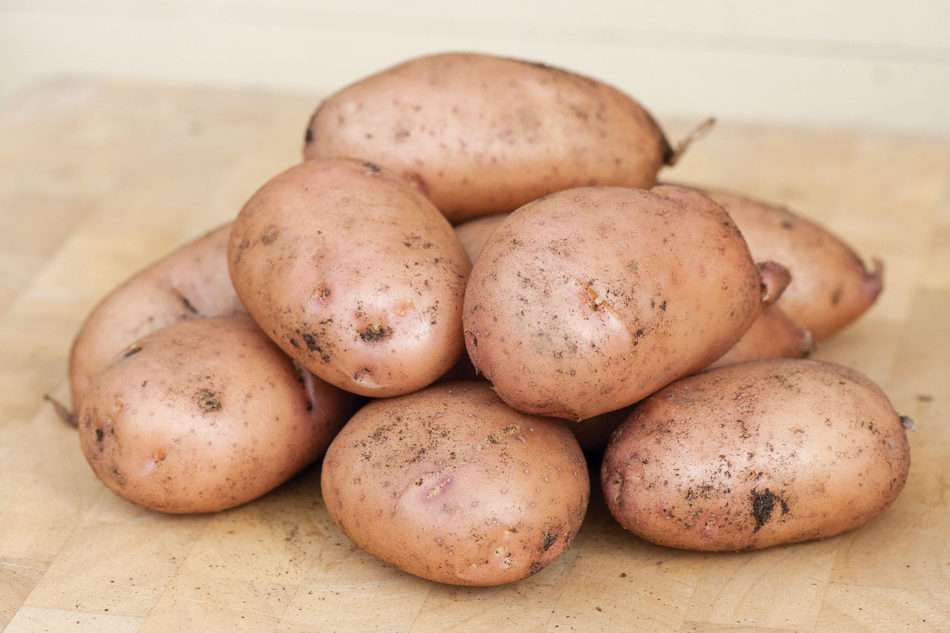
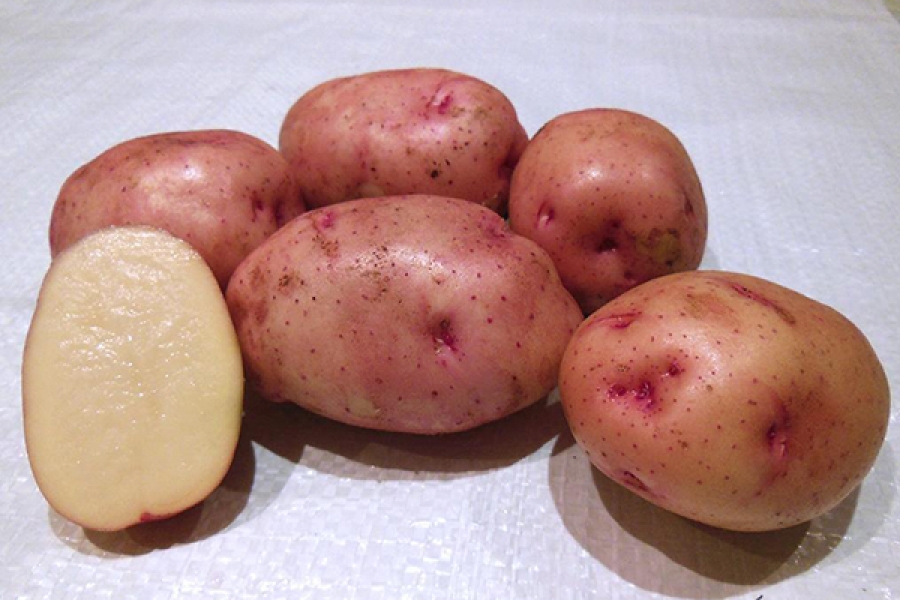
A table variety with a yield of 40-45 c/ha. It doesn't require special care, but yields will be higher if standard agricultural practices are followed. The leaves are small, light green, and glossy. Flowering is not very profuse. The tubers are oval-round, with small reddish germination points. The skin is pinkish, and the edible part is snow-white.
Specifications:
- weight - 100-120 g;
- starch content - 10-12%;
- marketability - 90-92%;
- shelf life - 92-96%.
Resistant to Synchytrium endobioticum and roundworms.
Photo gallery of the Zhukovsky Early potato variety:
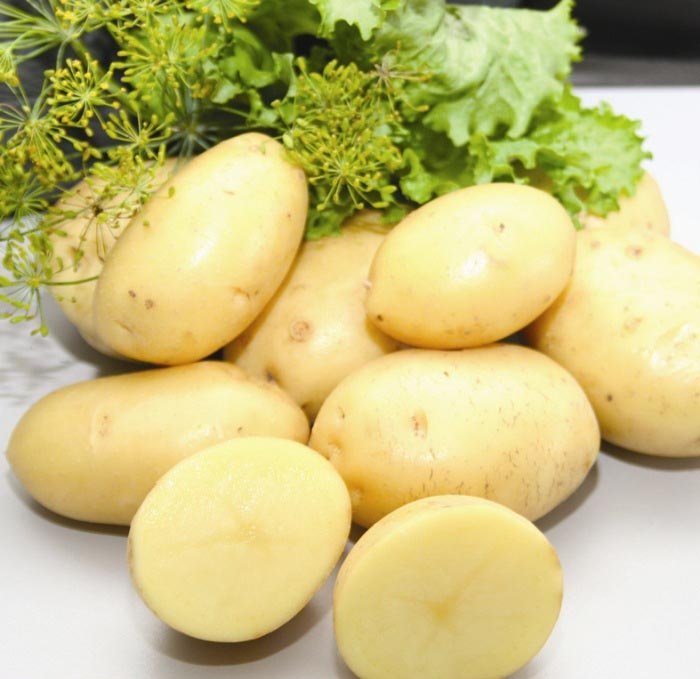
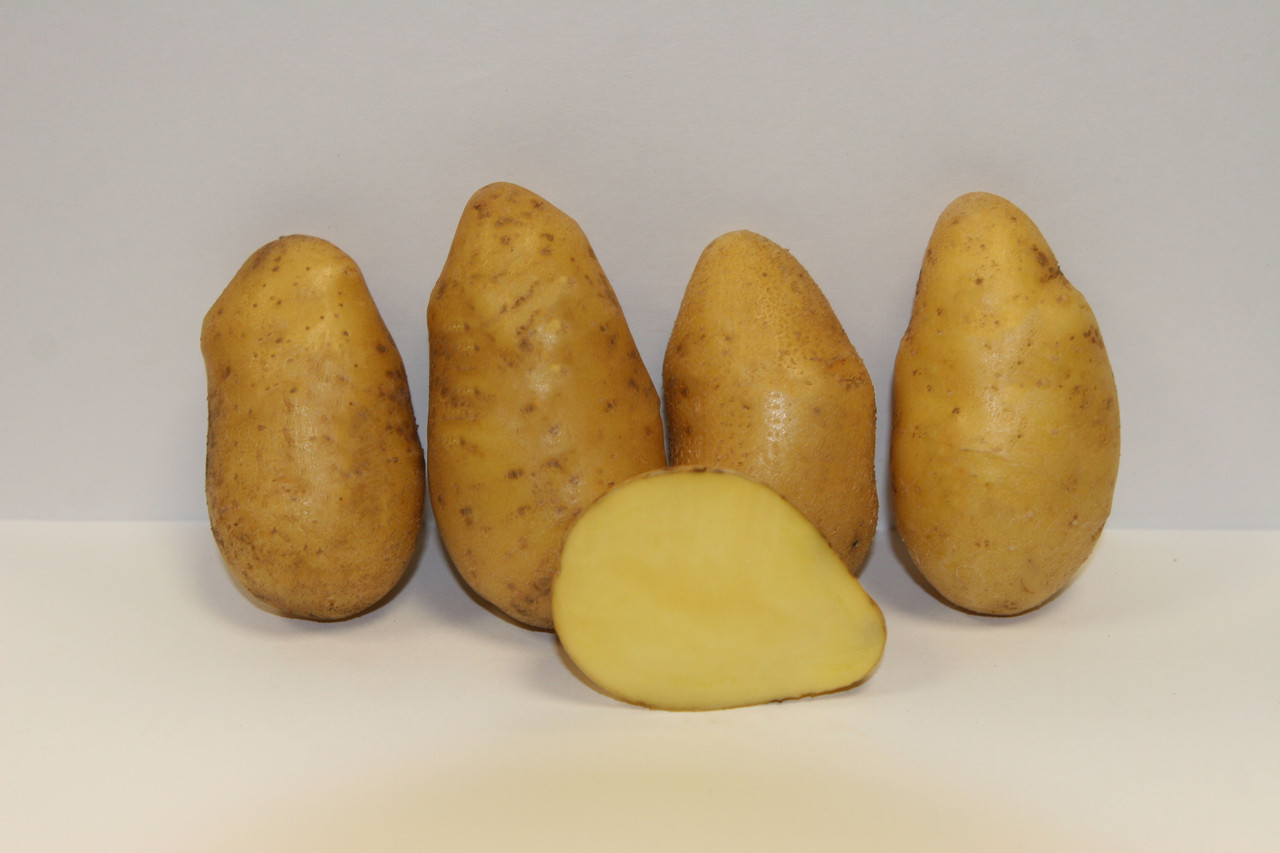
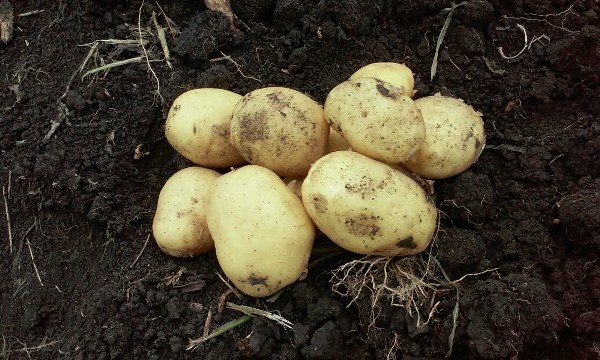
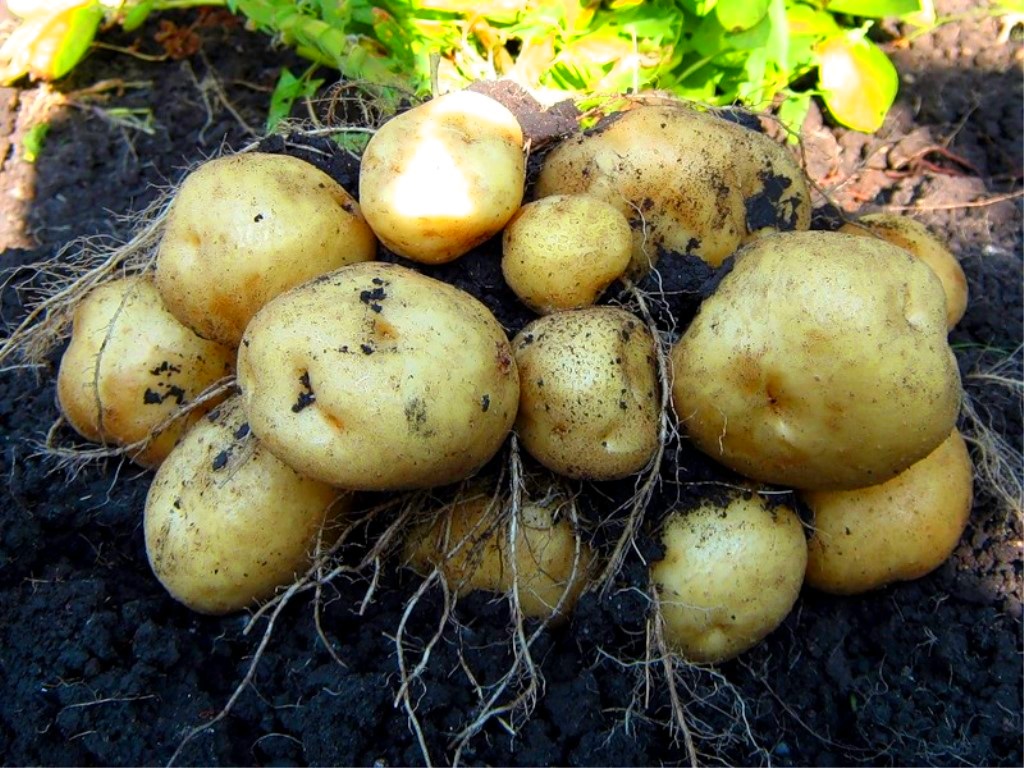
Impala
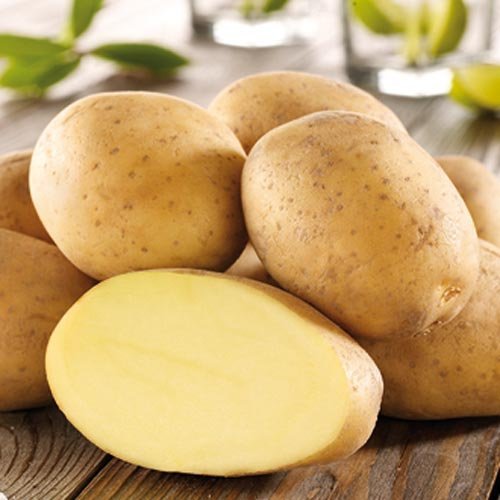
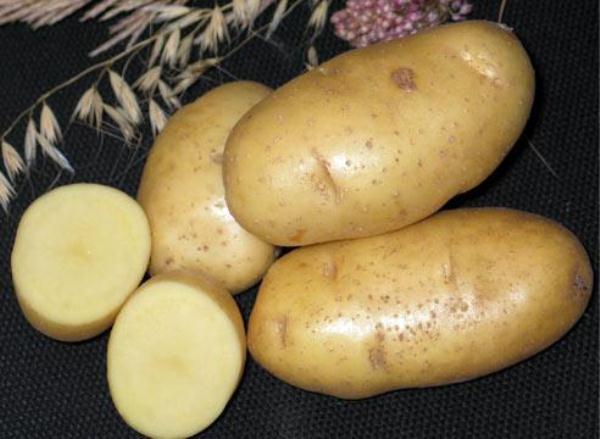
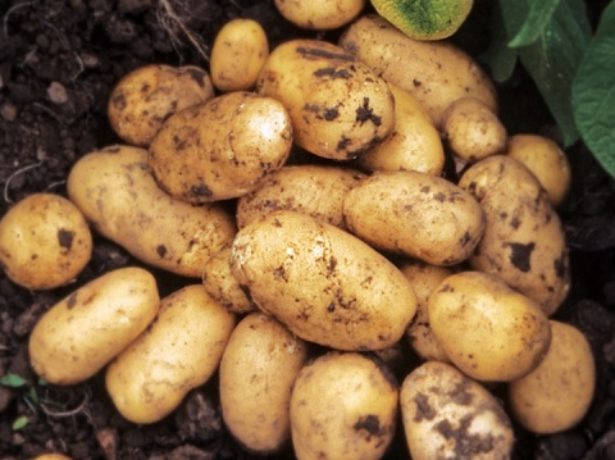
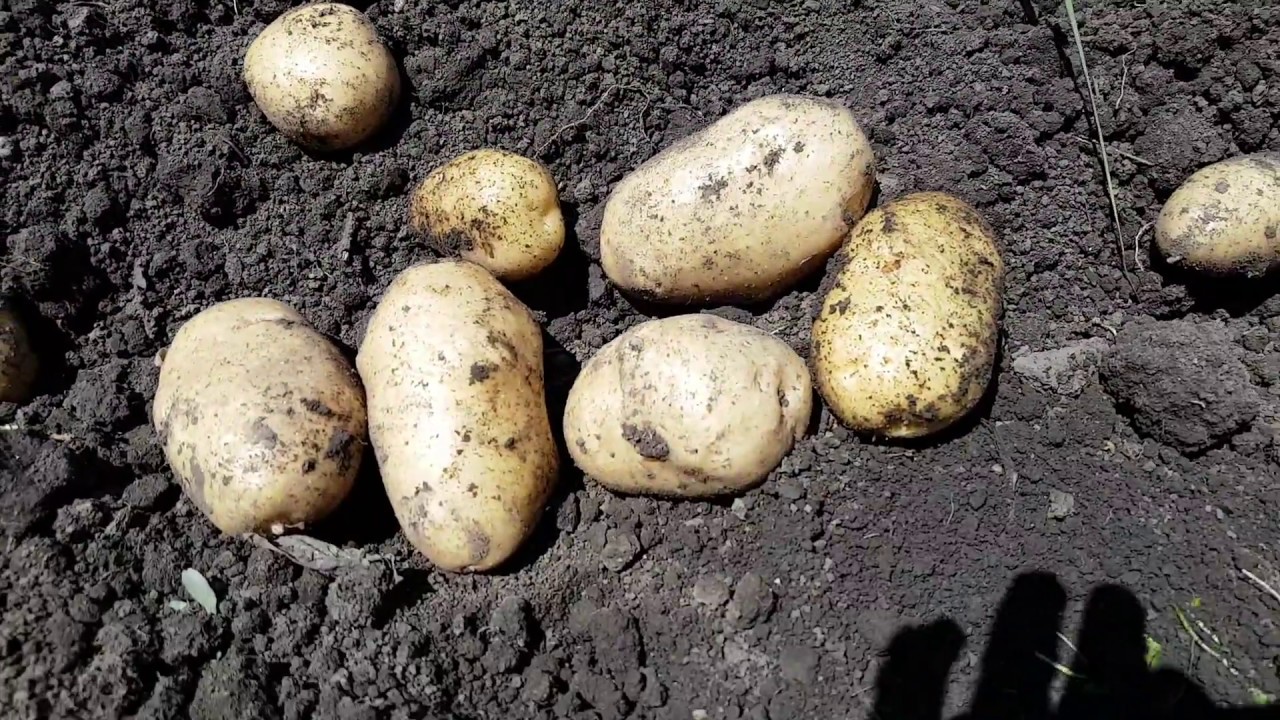
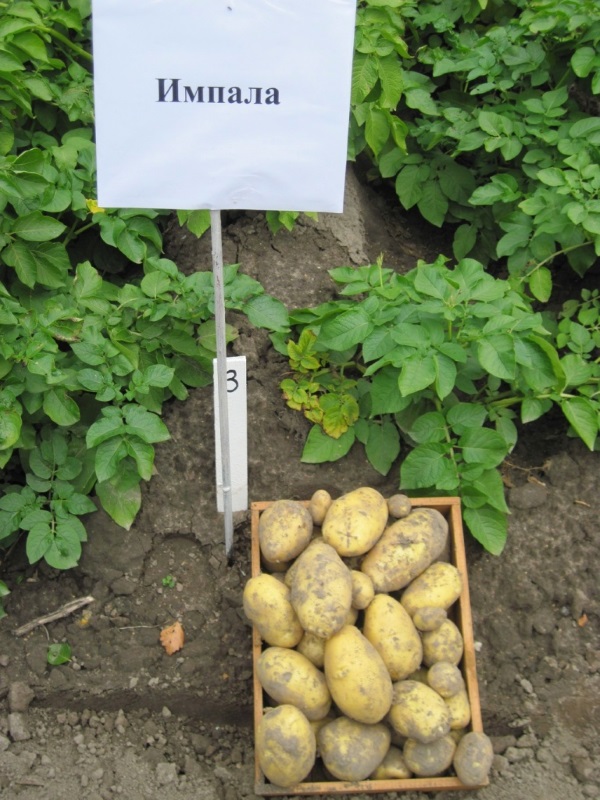
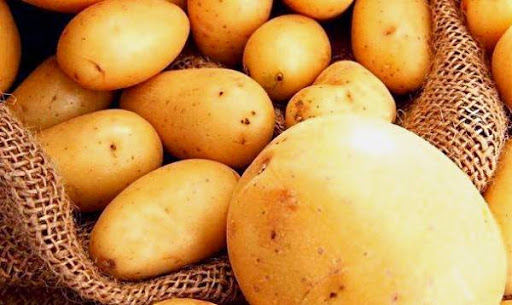
A Dutch development. Suitable for garden plots and farms. Registered in 1995. Yields up to 36.7 tons per hectare. Not sensitive to weather. Tubers are oval-round, crimson on the outside and light-colored on the inside. Germination points are insignificant.
Specifications:
- weight - 88-150 g;
- starch content - 10-14%;
- marketability - 89-94%;
- shelf life - 90%.
Resistant to cancer, roundworms, scab, and viruses. It does not tolerate lack of moisture. With proper agricultural practices, it can yield two crops during the growing season.
Read more about the variety in the article Impala potato variety: characteristics in a table, reviews, photos.
Photo gallery of the Impala potato variety:
Kaluga
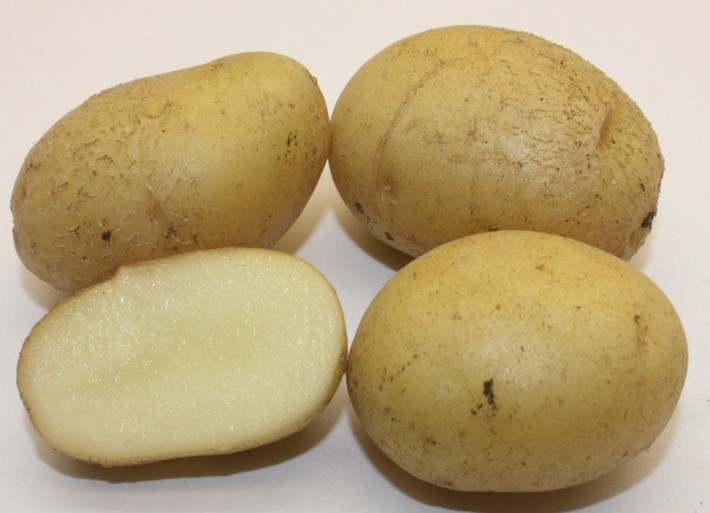
An early variety for culinary use. The first harvest yields 7.5-18 t/ha, and the second harvest yields 11.6-38.2 t/ha. The bushes are medium-sized. The leaf blades are large, intermediate, and green in color. The edges are moderately corrugated. The tubers are described as oval with small germination points. They are sand-colored inside and out.
Specifications:
- weight - 98-125 g;
- starch content - 13-15%;
- marketability - 79-98%;
- shelf life - 94%.
Immune to Synchytrium endobioticum.
Photo of the Kaluga potato variety:
Kamensky
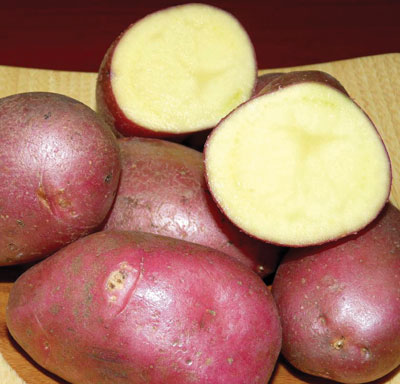
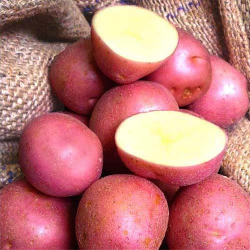
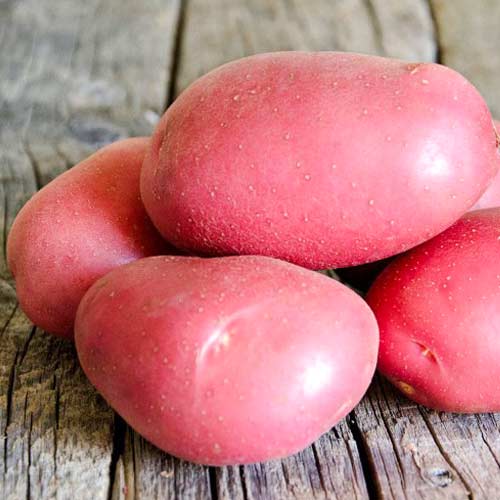
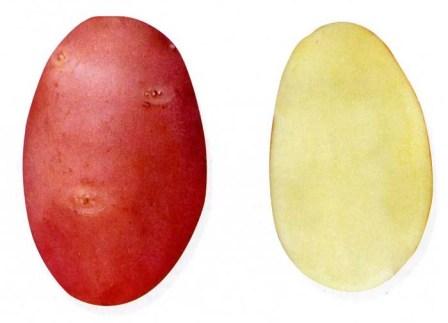
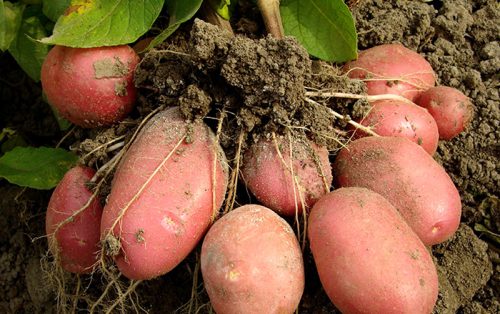
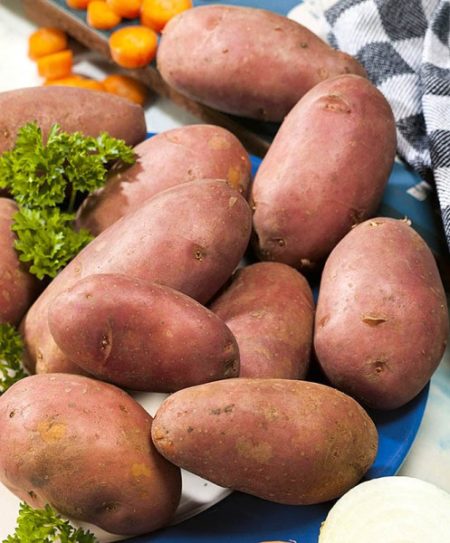
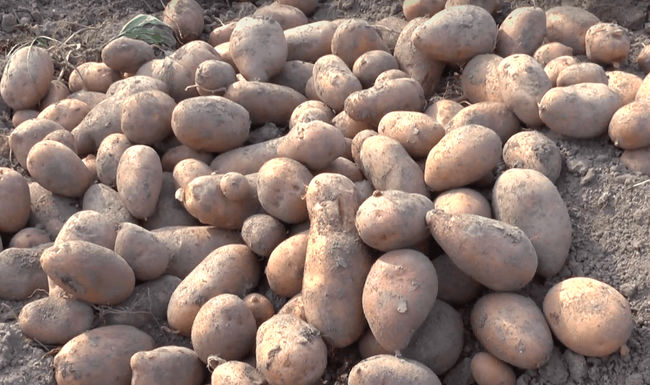
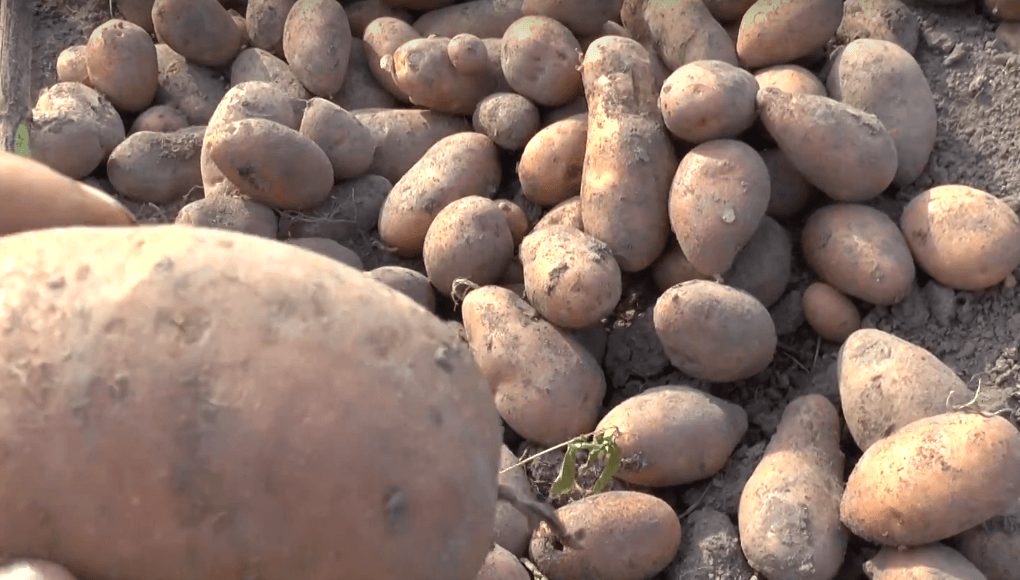
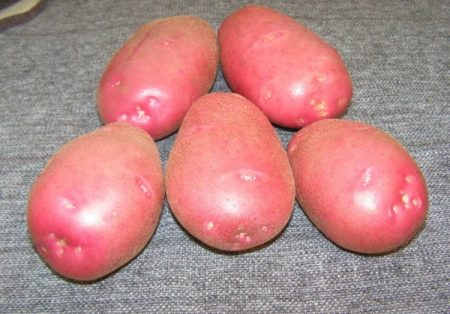
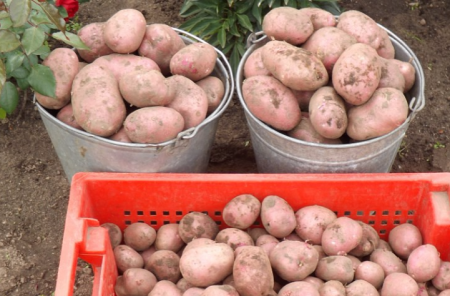
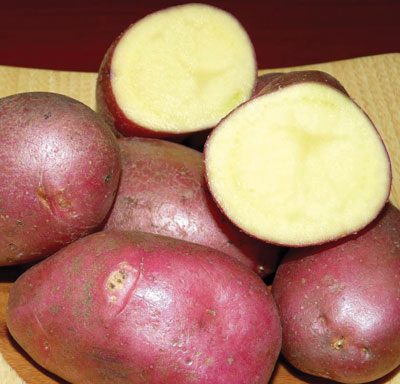
Developed by domestic breeders, it belongs to culinary type B and exhibits drought tolerance. The tubers are perfectly aligned and oval. Crimson on the outside and a delicate sandy texture on the inside.
Specifications:
- weight - 96-108 g;
- starch content - 12-16%;
- marketability - 85-94%;
- shelf life - 97%.
Resistant to many diseases, including Colorado potato beetles (which is typical for a small number of species), but susceptible to roundworms.
Photo gallery of the Kamensky potato variety:
Colombo (Colomba)
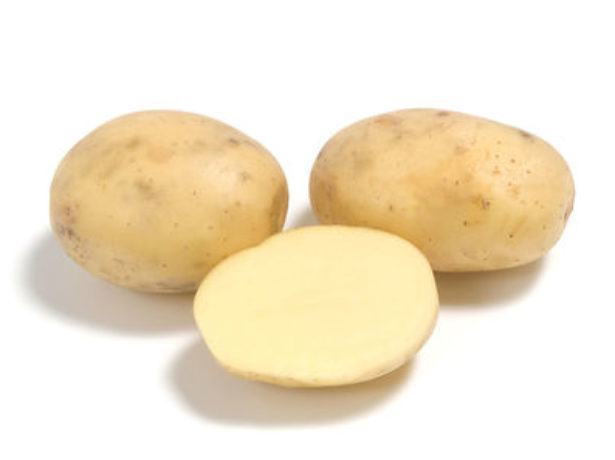
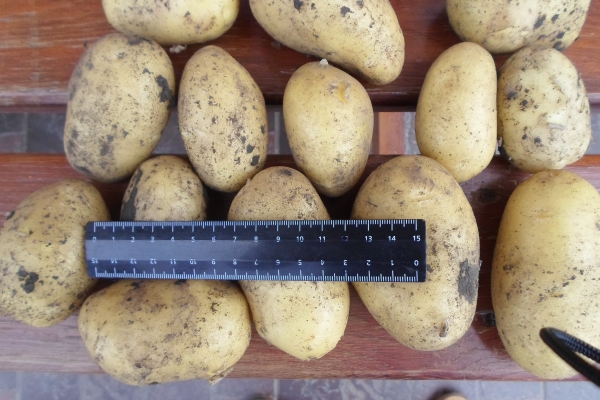
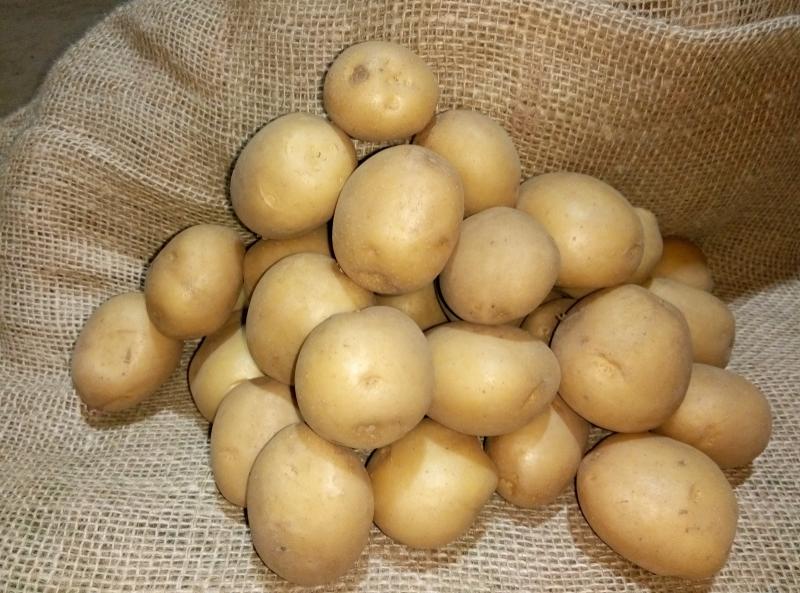
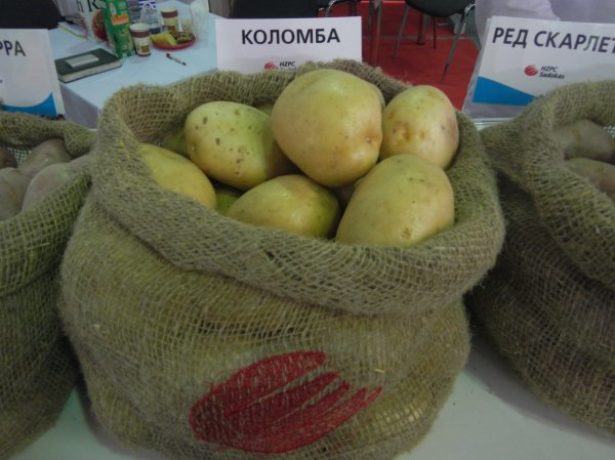
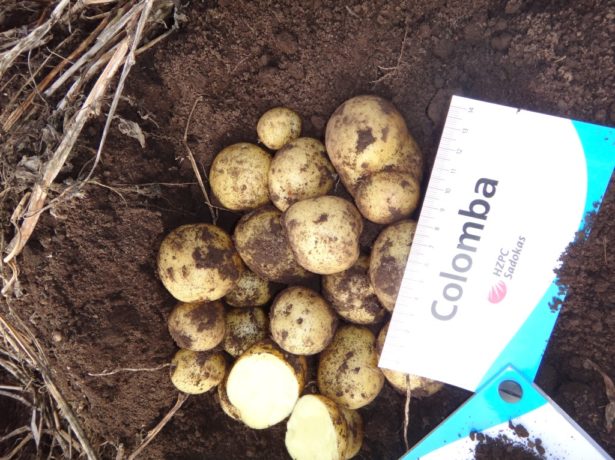
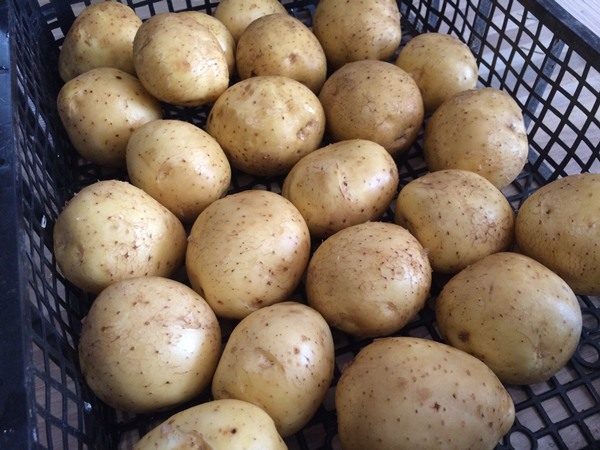
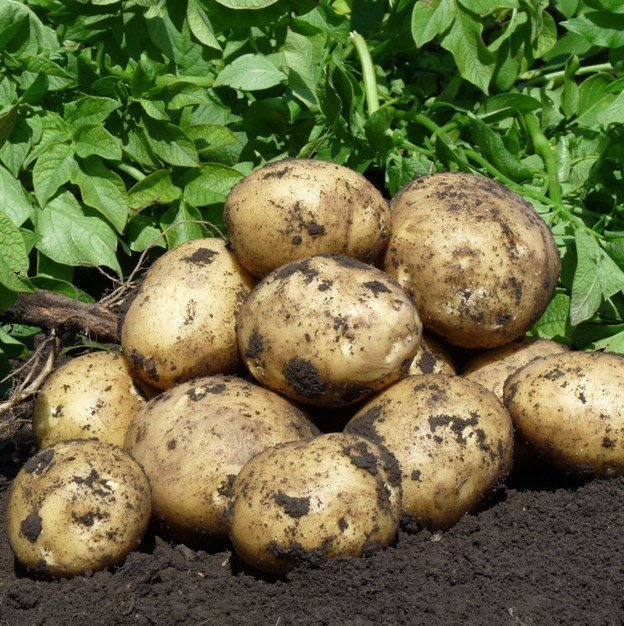
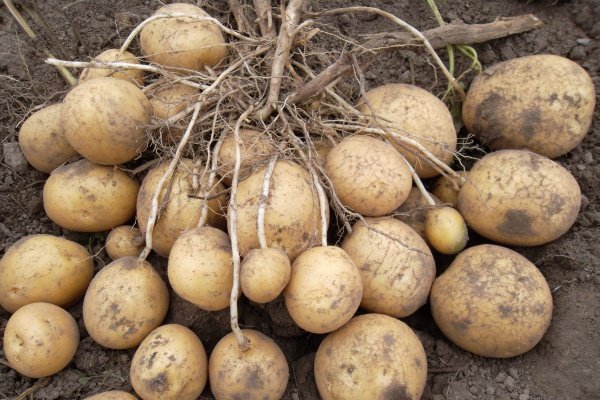
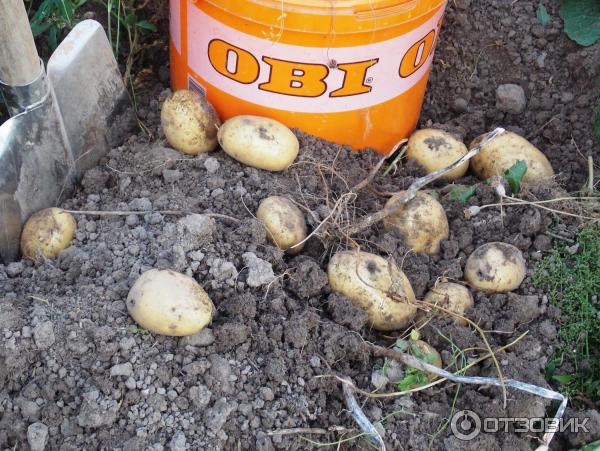
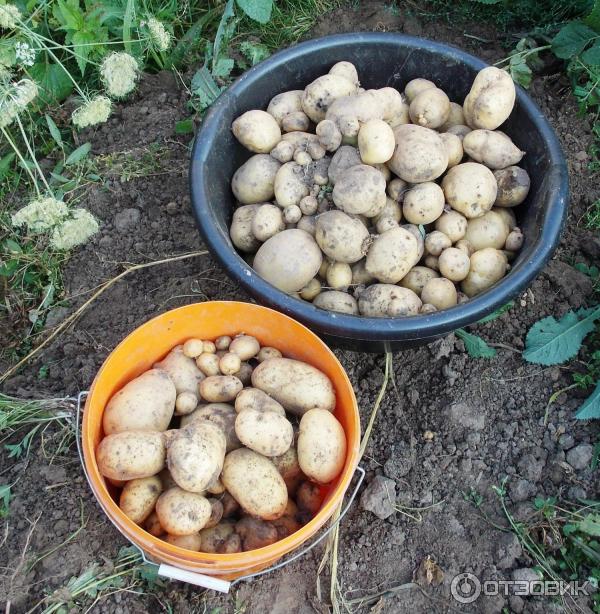
A super-early variety for varietal use, suitable for cooking and other processing. The first harvest yields 11.1-34.5 t/ha. The second harvest yields 24.4-36.4 t/ha. The leaves are light green. The tubers are round, with small germination points. They are bright sand-colored inside and out.
Specifications:
- weight - 82-126 g;
- starch content - 11-15%;
- marketability - 81-98%;
- shelf life - 95%.
Resistant to Synchytrium endobioticum, roundworms, and late blight.
Read more about the variety in the article Colombo Potato: variety description, comparison, photos, reviews.
Photo gallery of the Colomba potato variety:
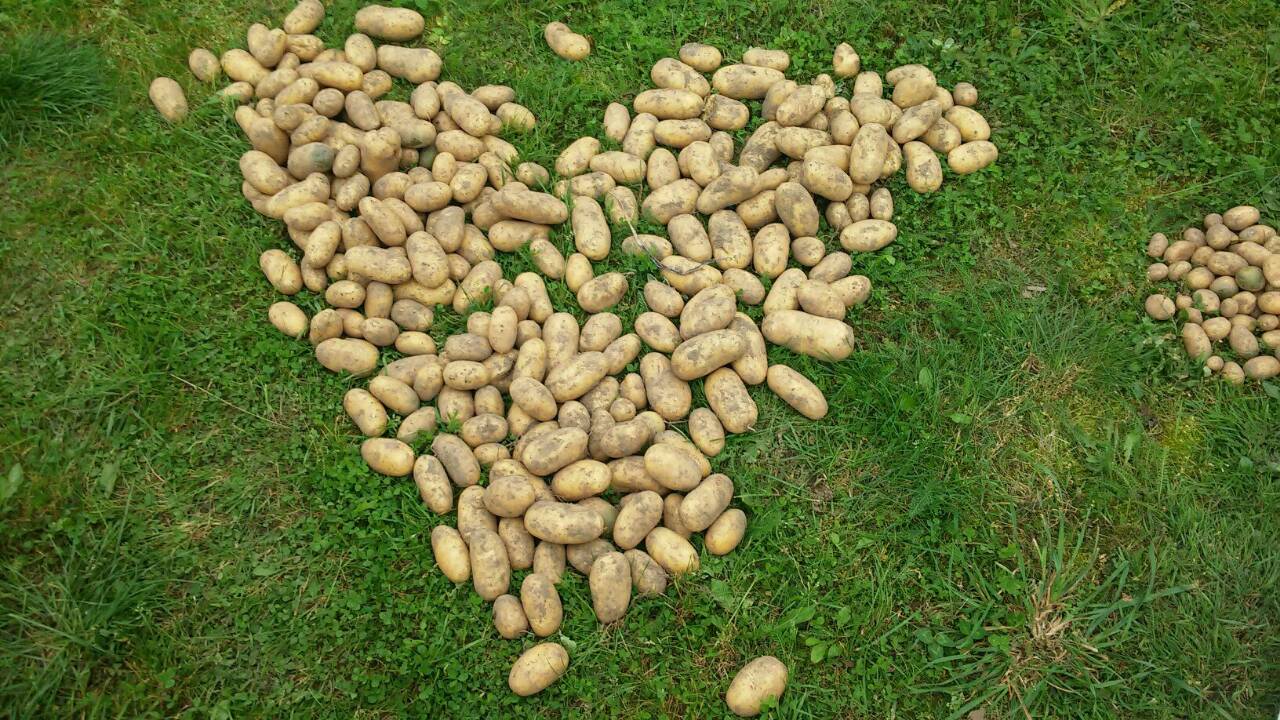
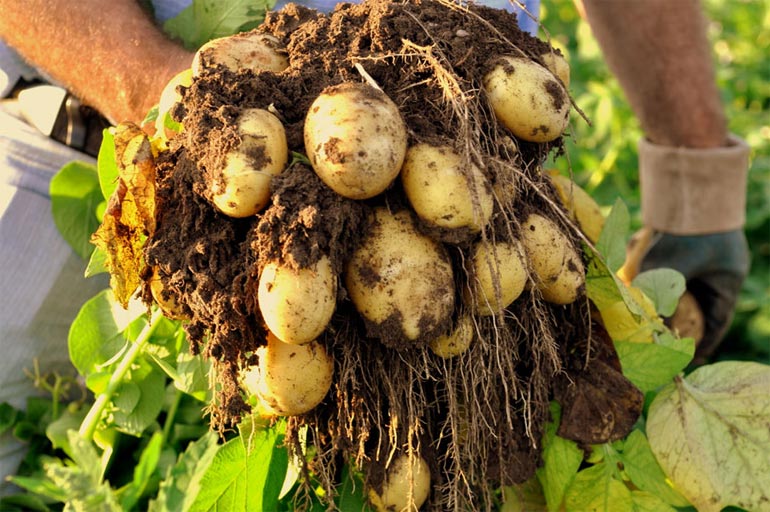
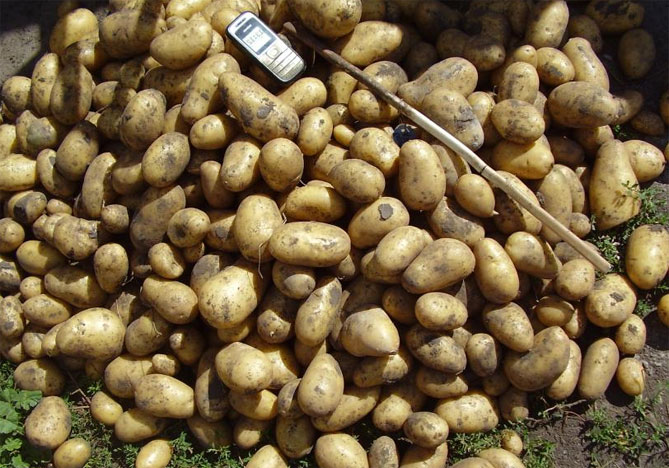
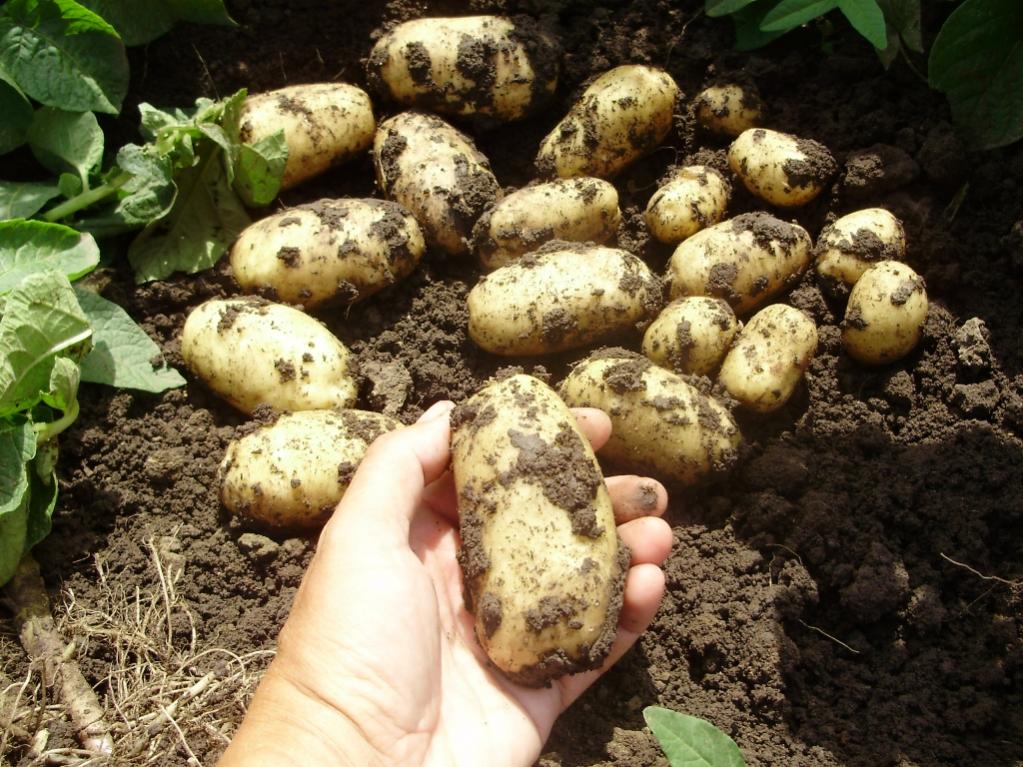
Queen Anne
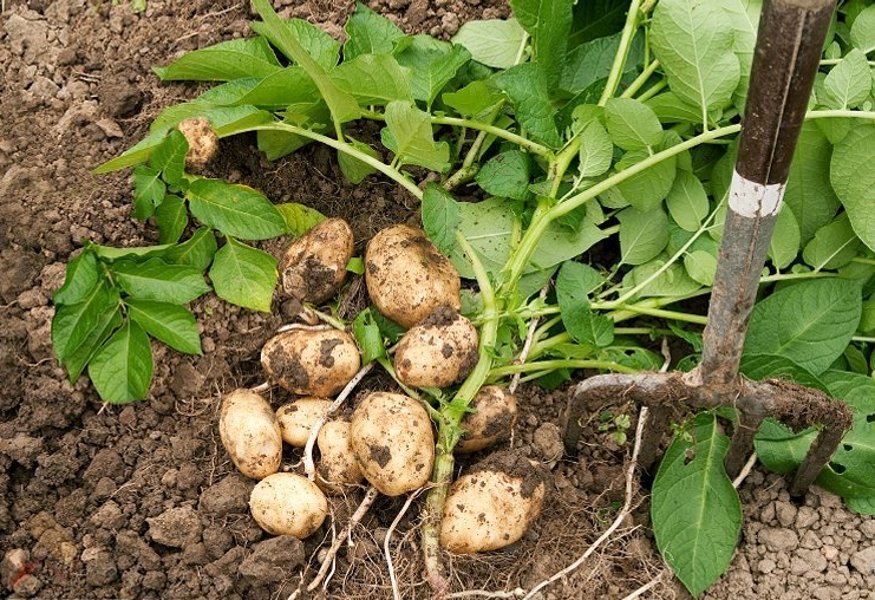
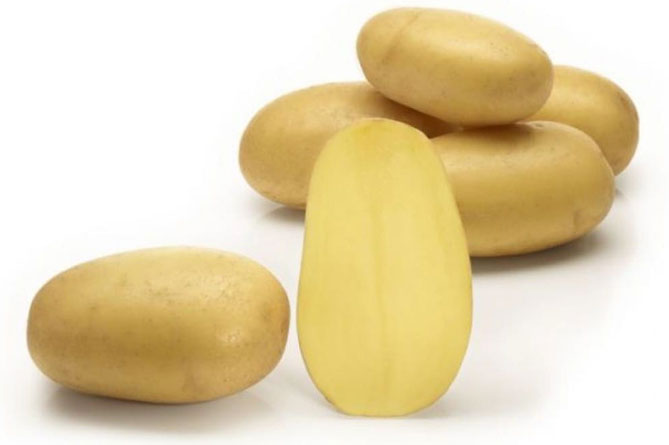
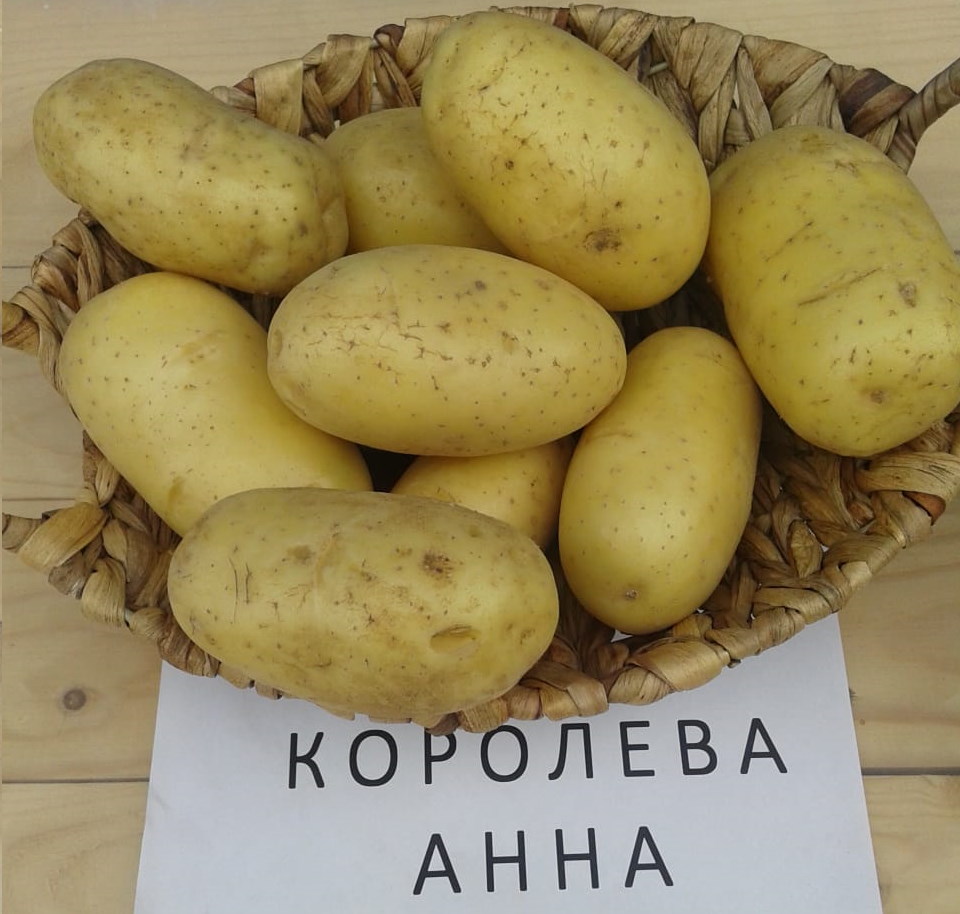
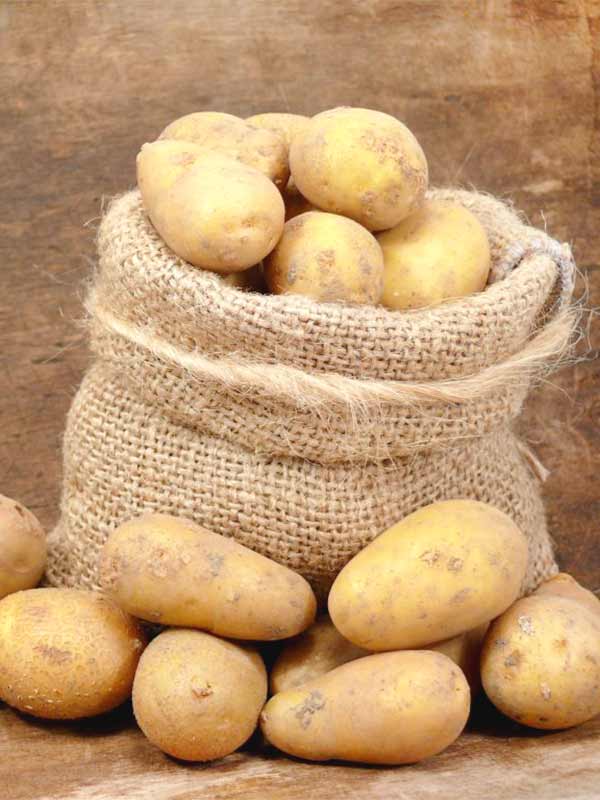
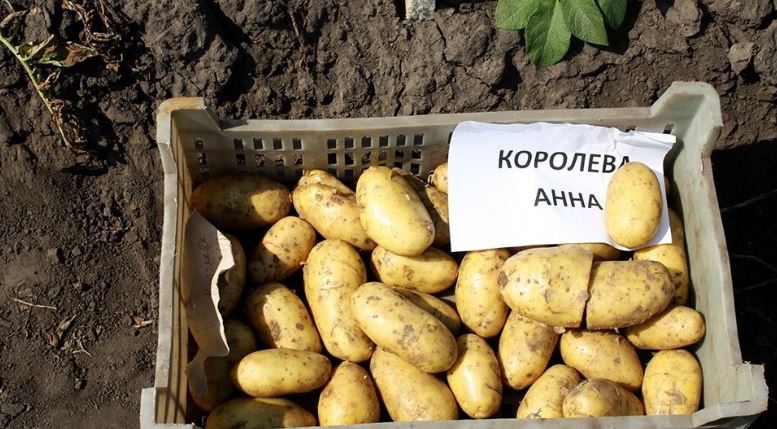
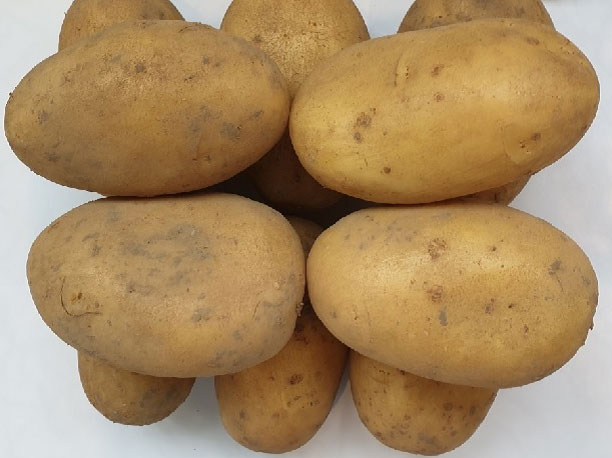
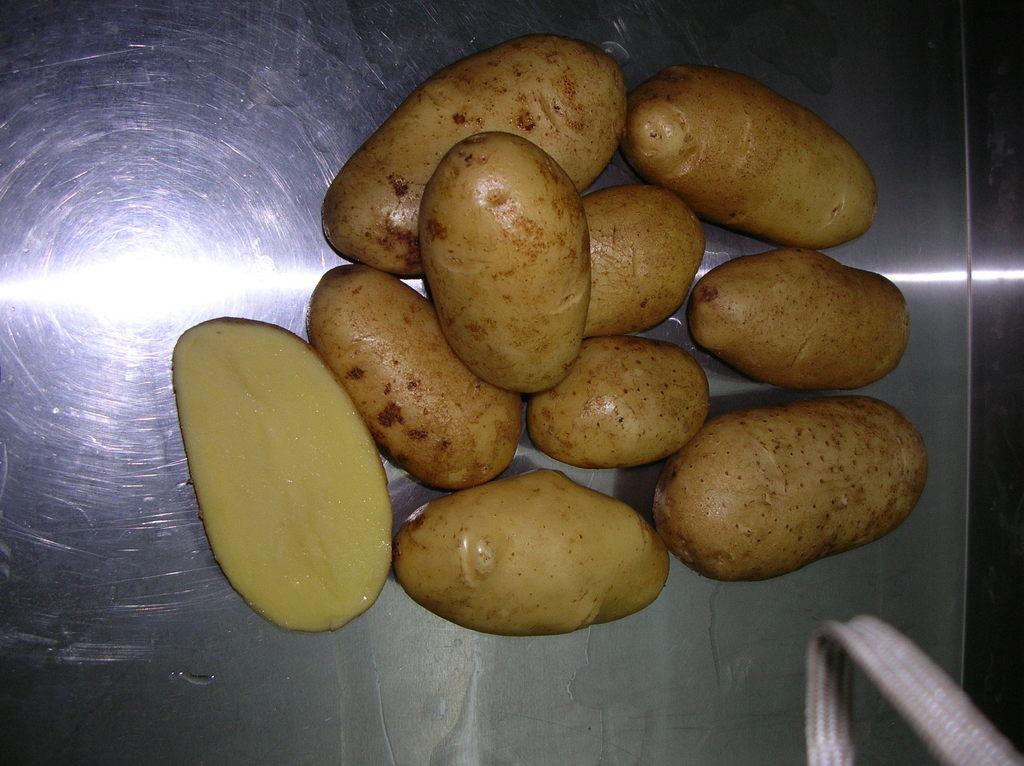
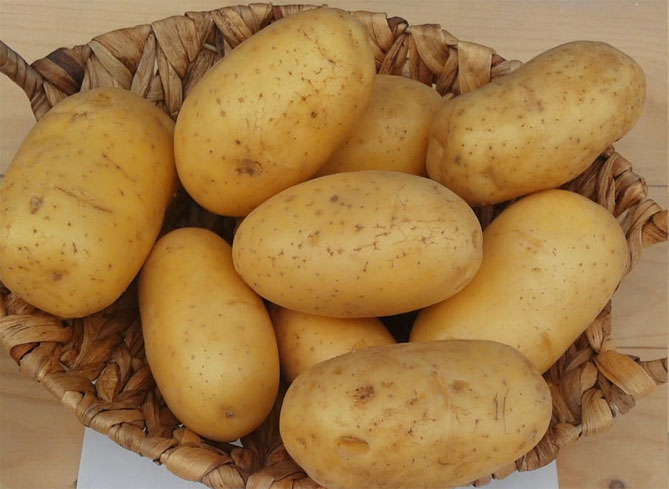
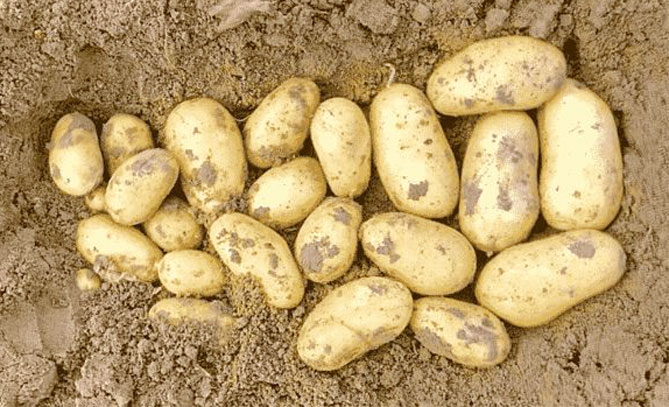
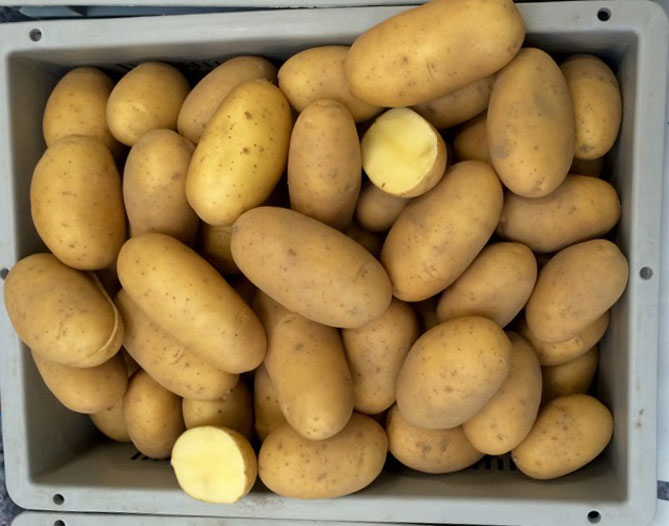
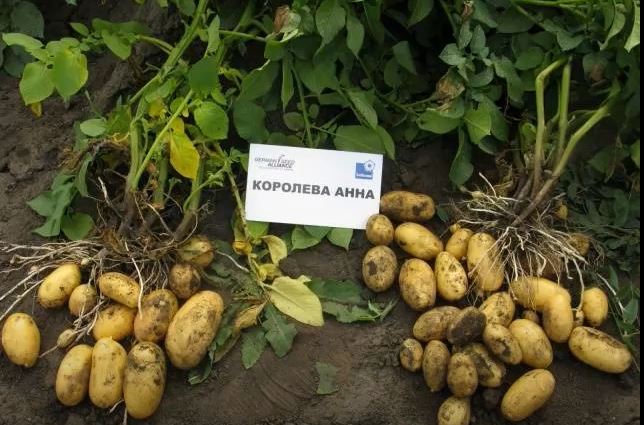
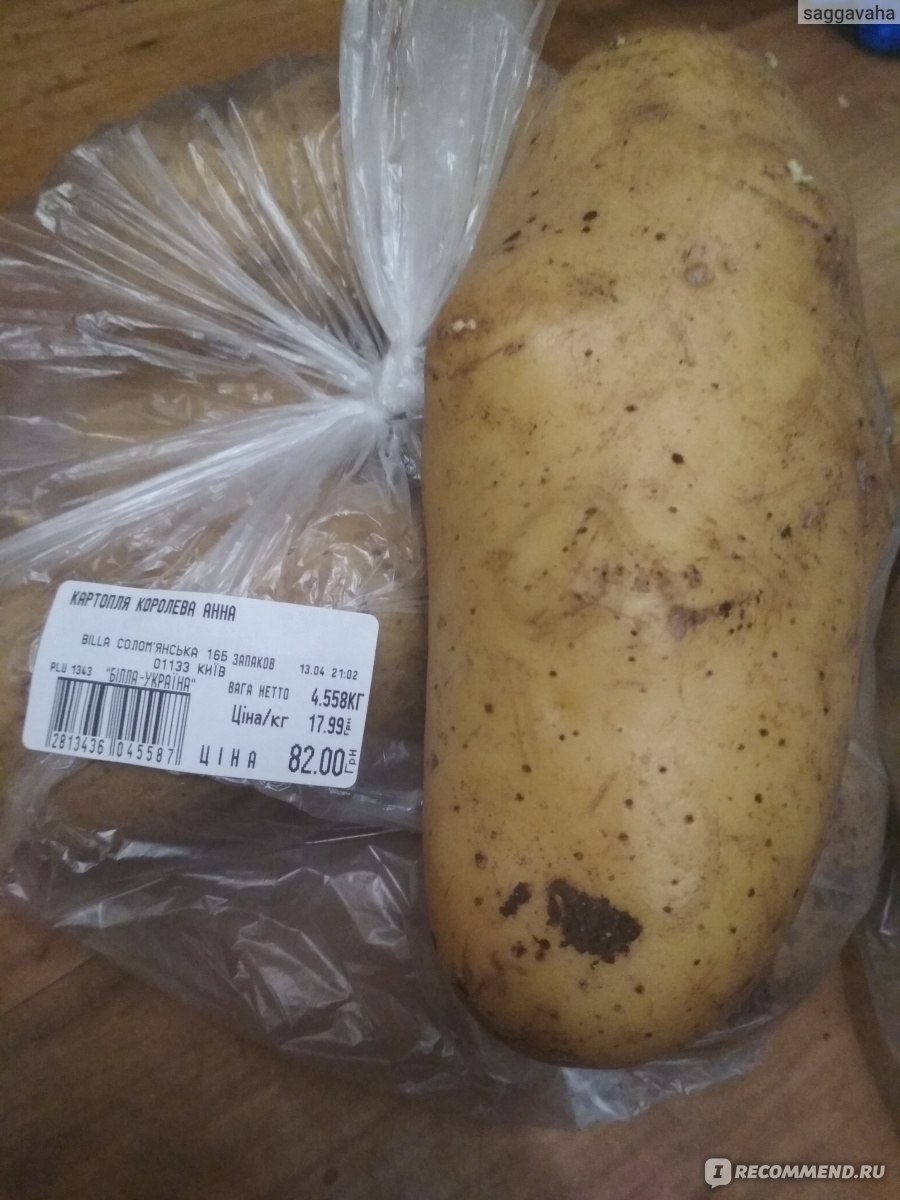
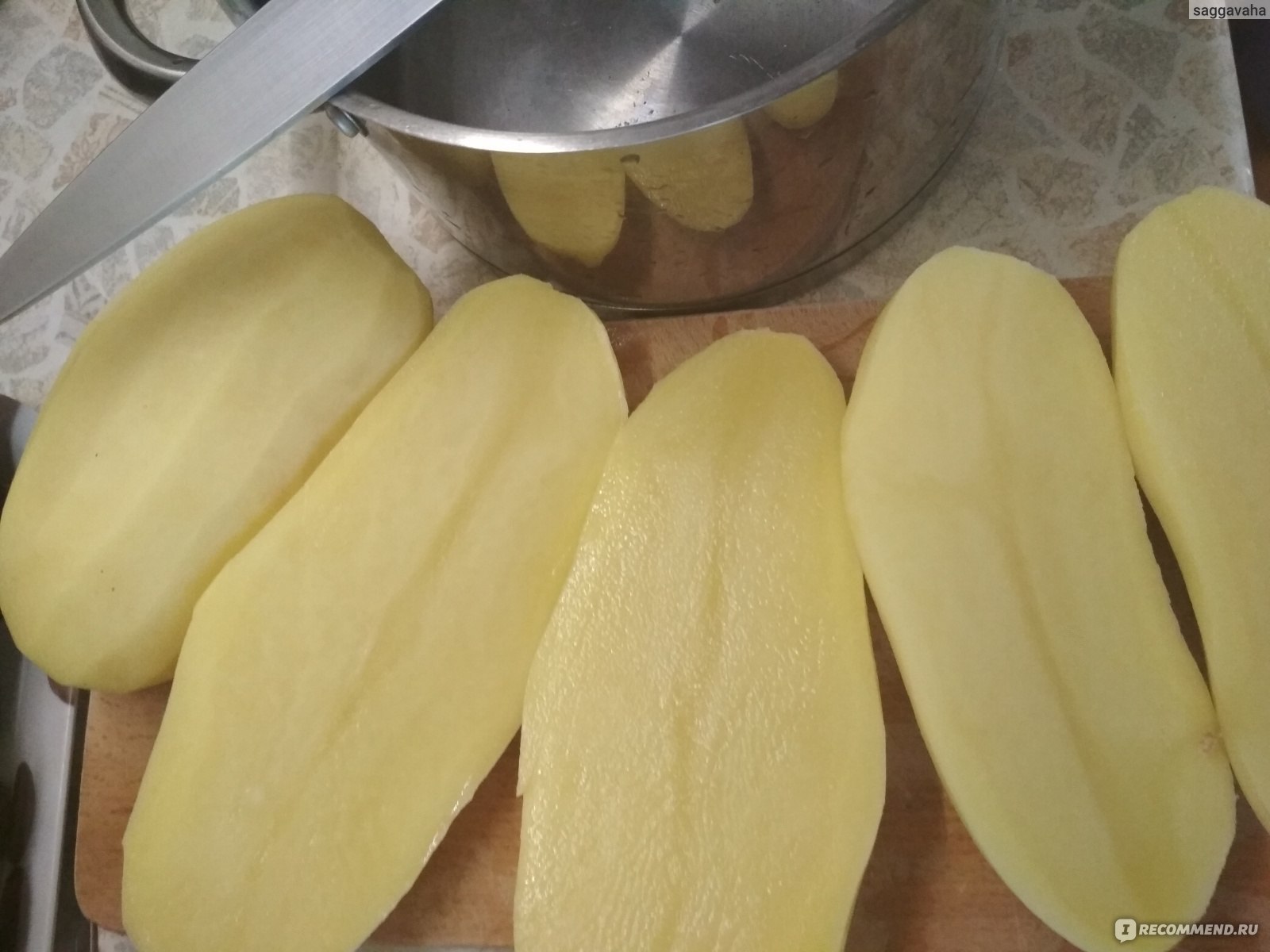
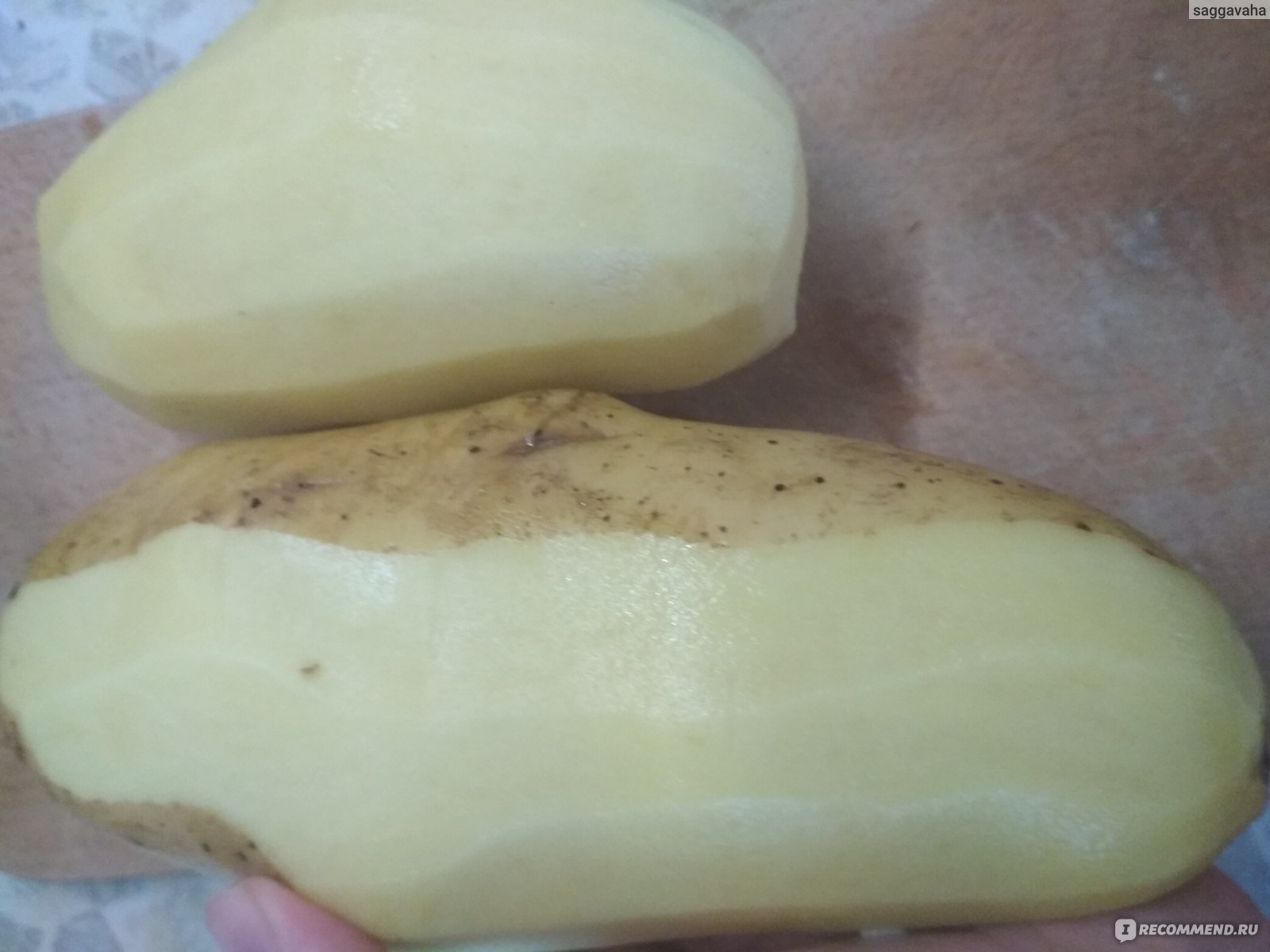
Suitable for culinary purposes. Yields range from 11.3 to 30.4 t/ha (the maximum yield, 49.5 t/ha, was recorded in Mordovia). The bushes are not very tall. Anthocyanin coloration is absent or weak. The tubers are elongated-oval, with small stem growth points. The inside and outside are sand-colored.
Specifications:
- weight - 84-137 g;
- starch content - 13-14%;
- marketability - 82-96%;
- shelf life - 93%.
Resistant to Synchytrium endobioticum, roundworms, mosaic, leaf curl.
Read more about the variety in the article Queen Anne Potato: Variety Description, Comparison, and Reviews
Photo gallery of the Queen Anne potato variety:
Merchant
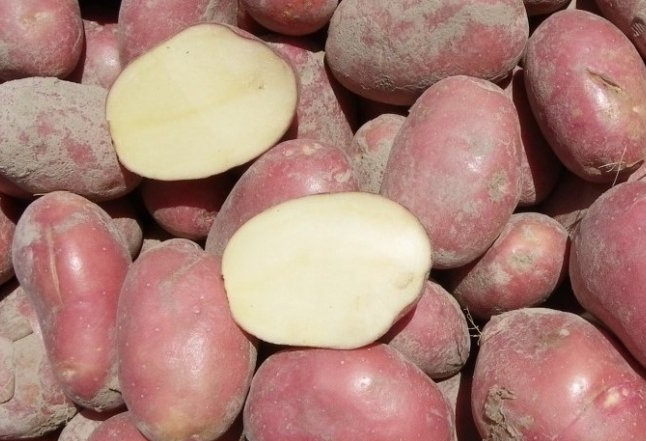
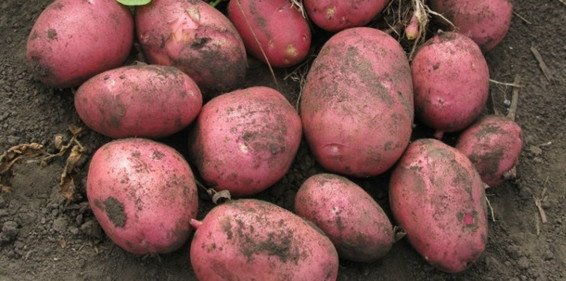
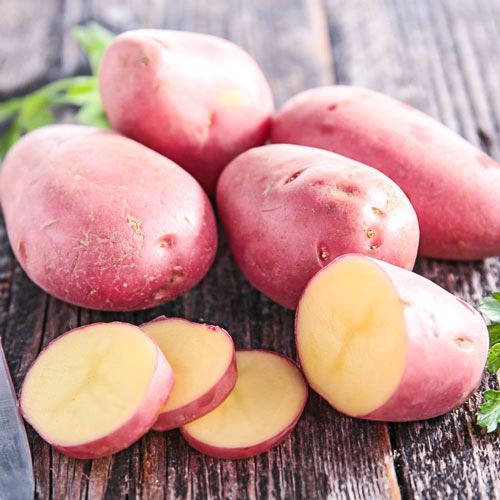
Culinary grade. Yields 17.5-30.2 t/ha. Developed specifically for the Moscow region. The foliage is light green, with small blades. The corolla has a pronounced anthocyanin color. The tubers are oval, with medium-sized germination points. The skin is reddish, and the flesh is sandy and tasty.
Specifications:
- weight - 109-121 g;
- starch content - 12-16%;
- marketability - 83-96%;
- shelf life - 95%.
Has immunity to cancer.
Photo gallery of the Kupets potato variety:
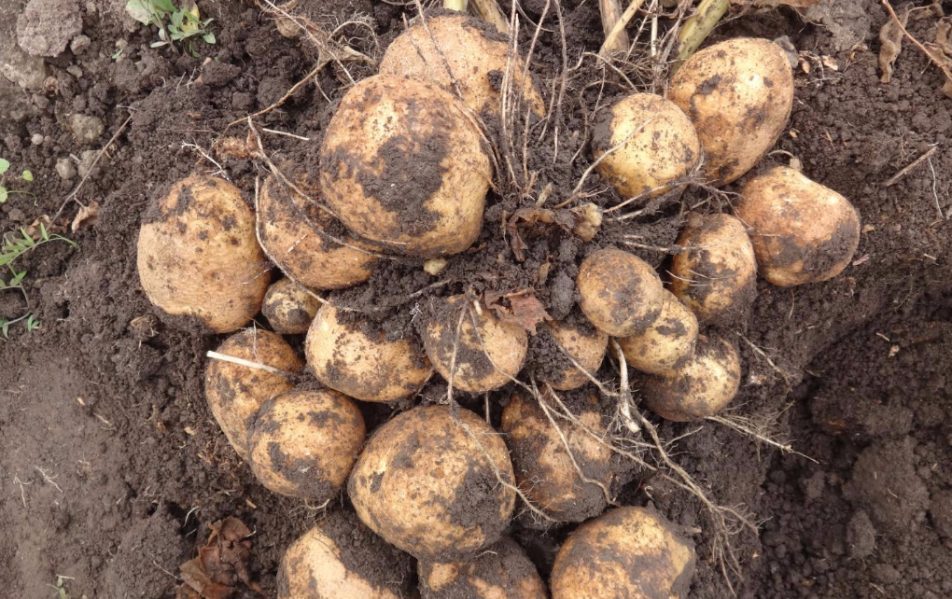
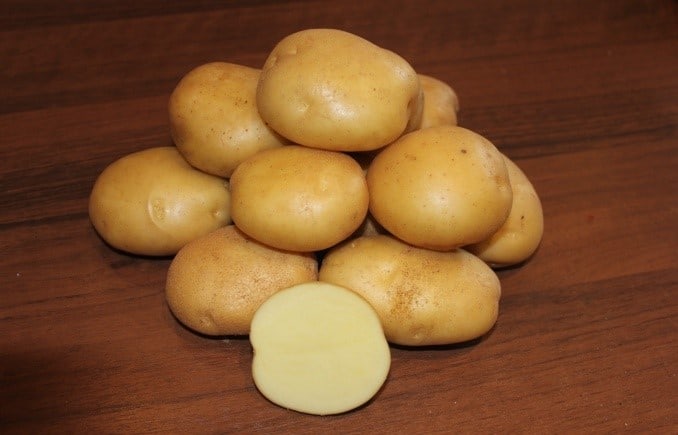
Meteor
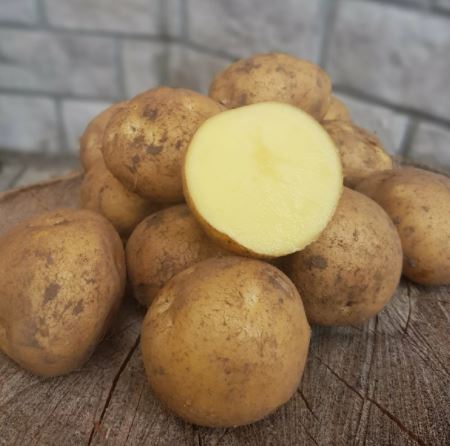
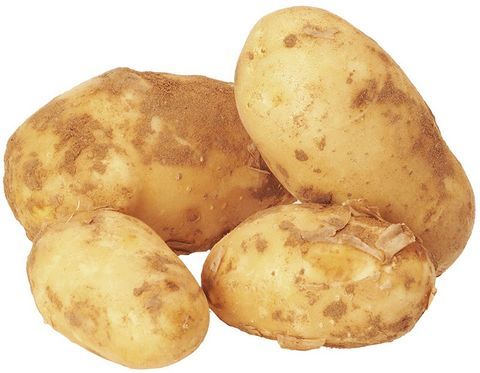
Table potatoes. The first harvest yields 17.5-21.3 t/ha, the second – 22.9-32.2 c/ha. The leaves are medium-sized and emerald green. The anthocyanin coloration is weak or absent. The tubers are oval, with medium-sized germination points. The outside is bright sandy, the inside creamy.
Specifications:
- weight - 102-147 g;
- starch content - 12-15%;
- marketability - 88-98%;
- shelf life - 95%.
Resistant to Synchytrium endobioticum, roundworms.
Read more about the variety in the article Meteor Potato Variety: Description and comparison with others in the table, planting and care, reviews.
Photo gallery of the Meteor potato variety:
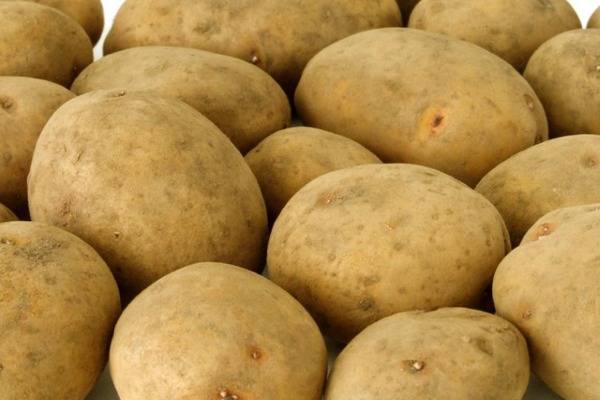
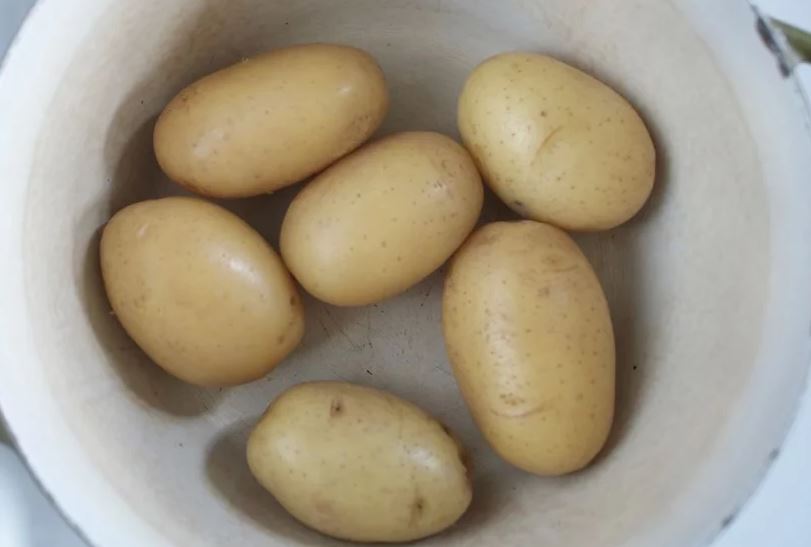
Molly
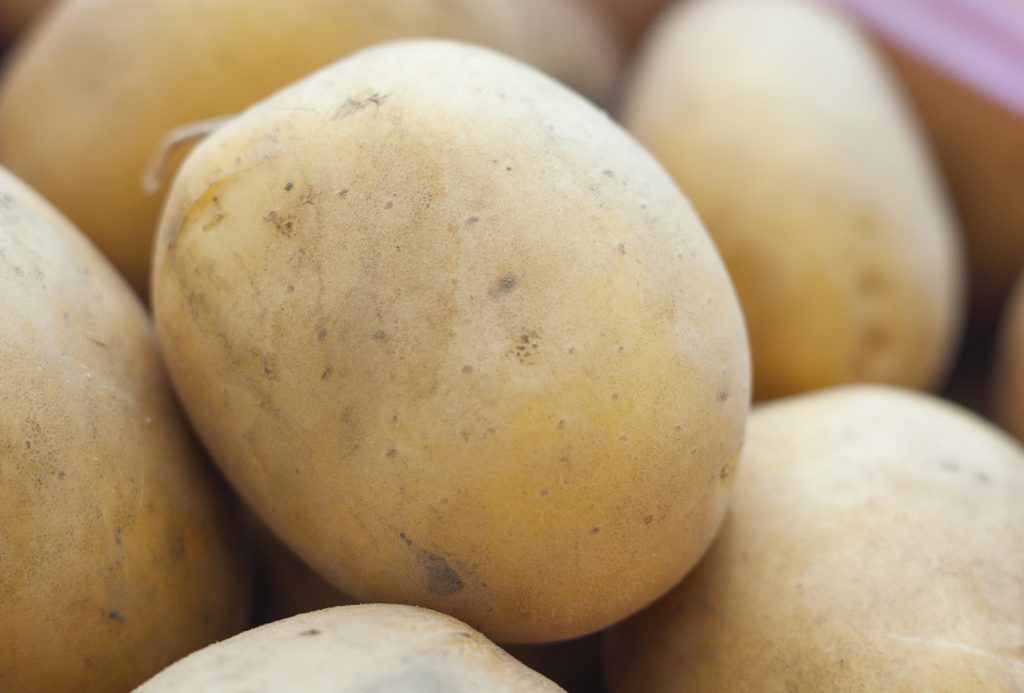
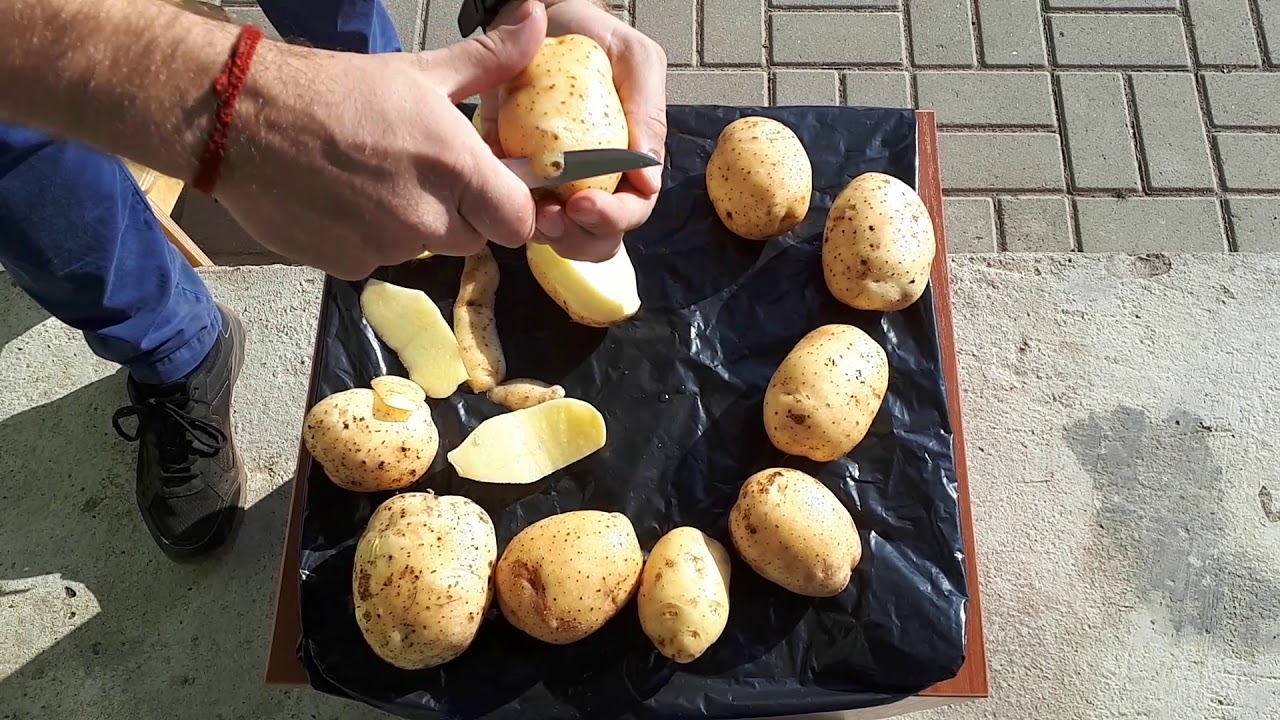
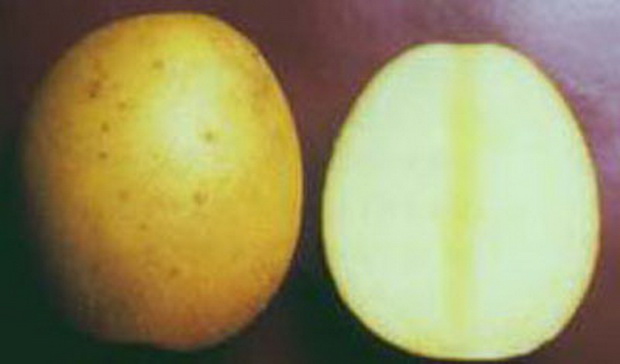
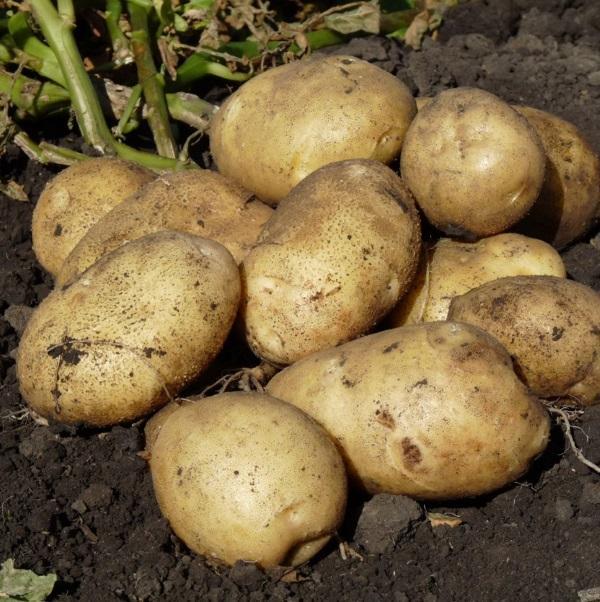
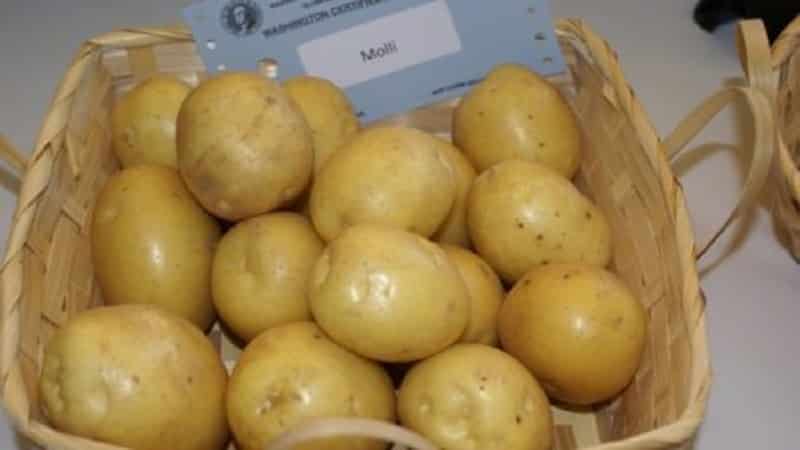
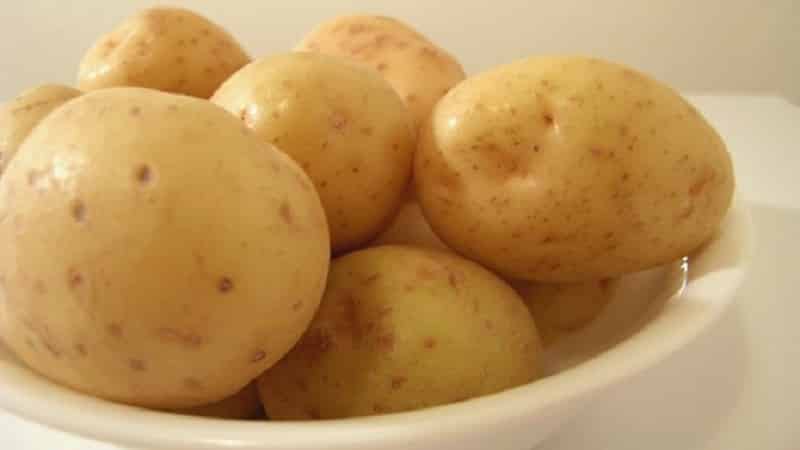
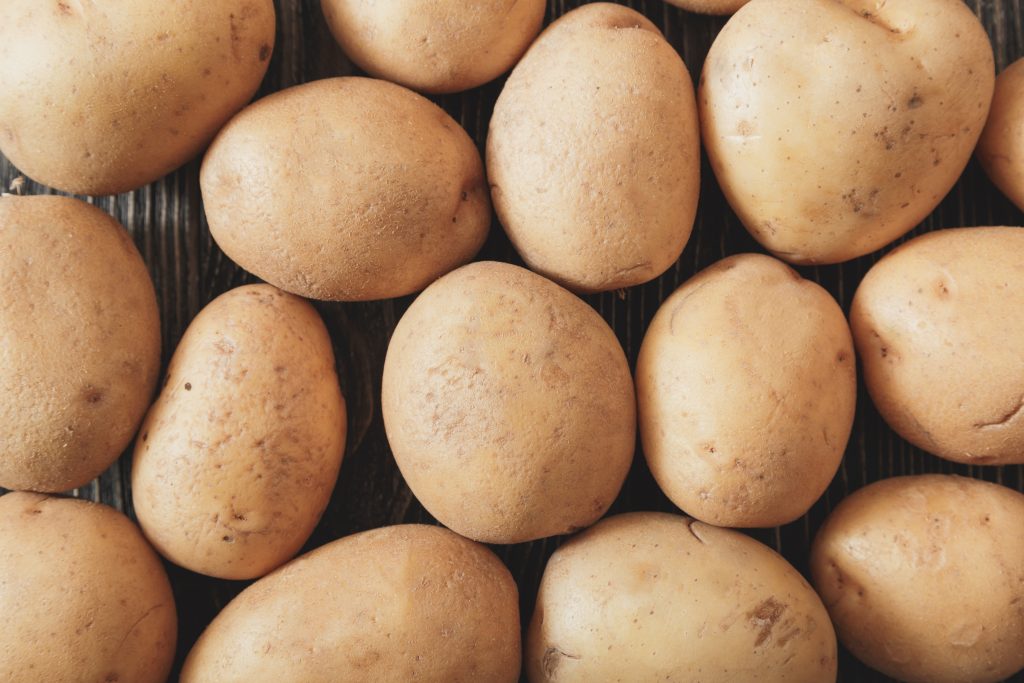
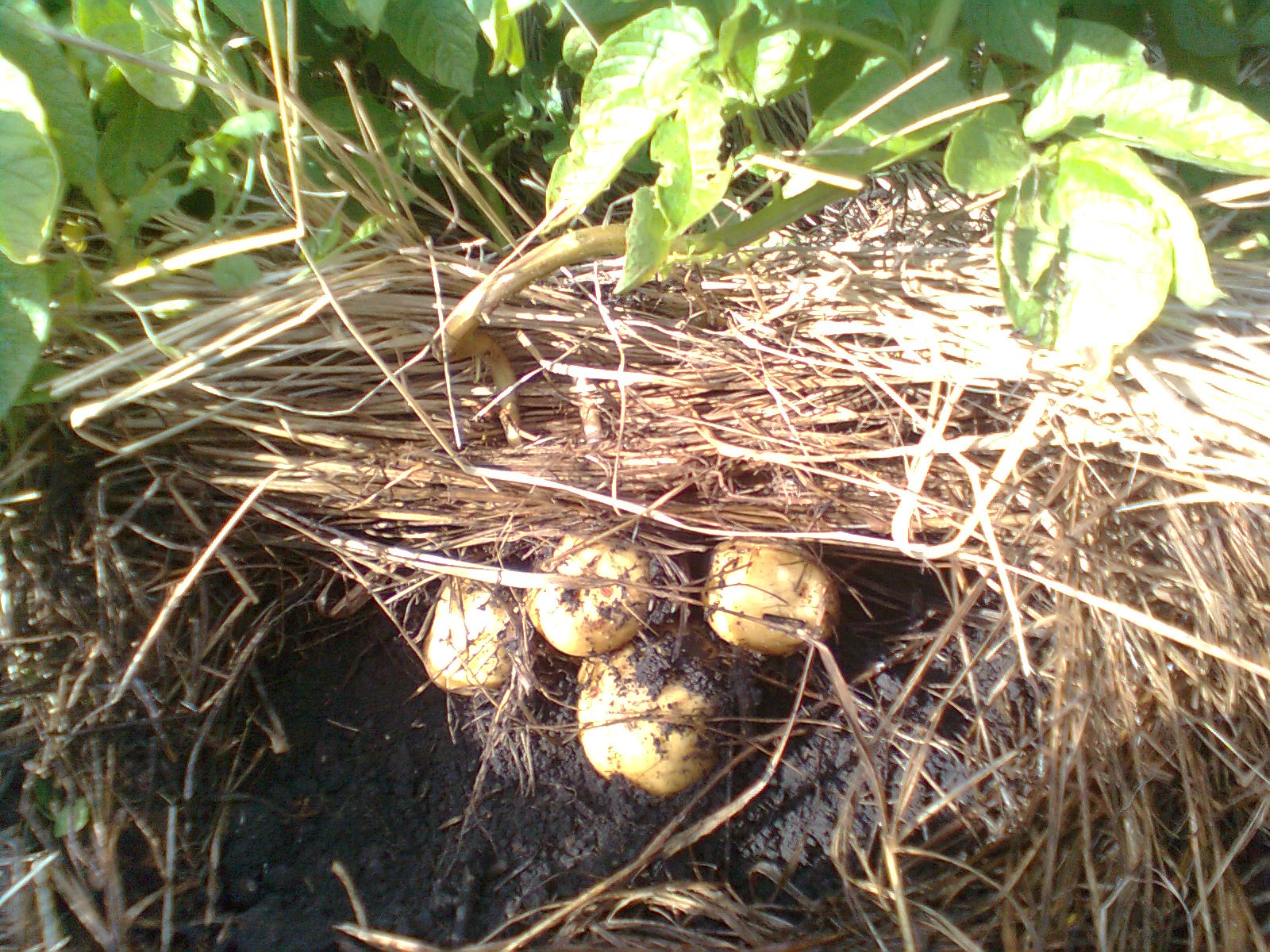
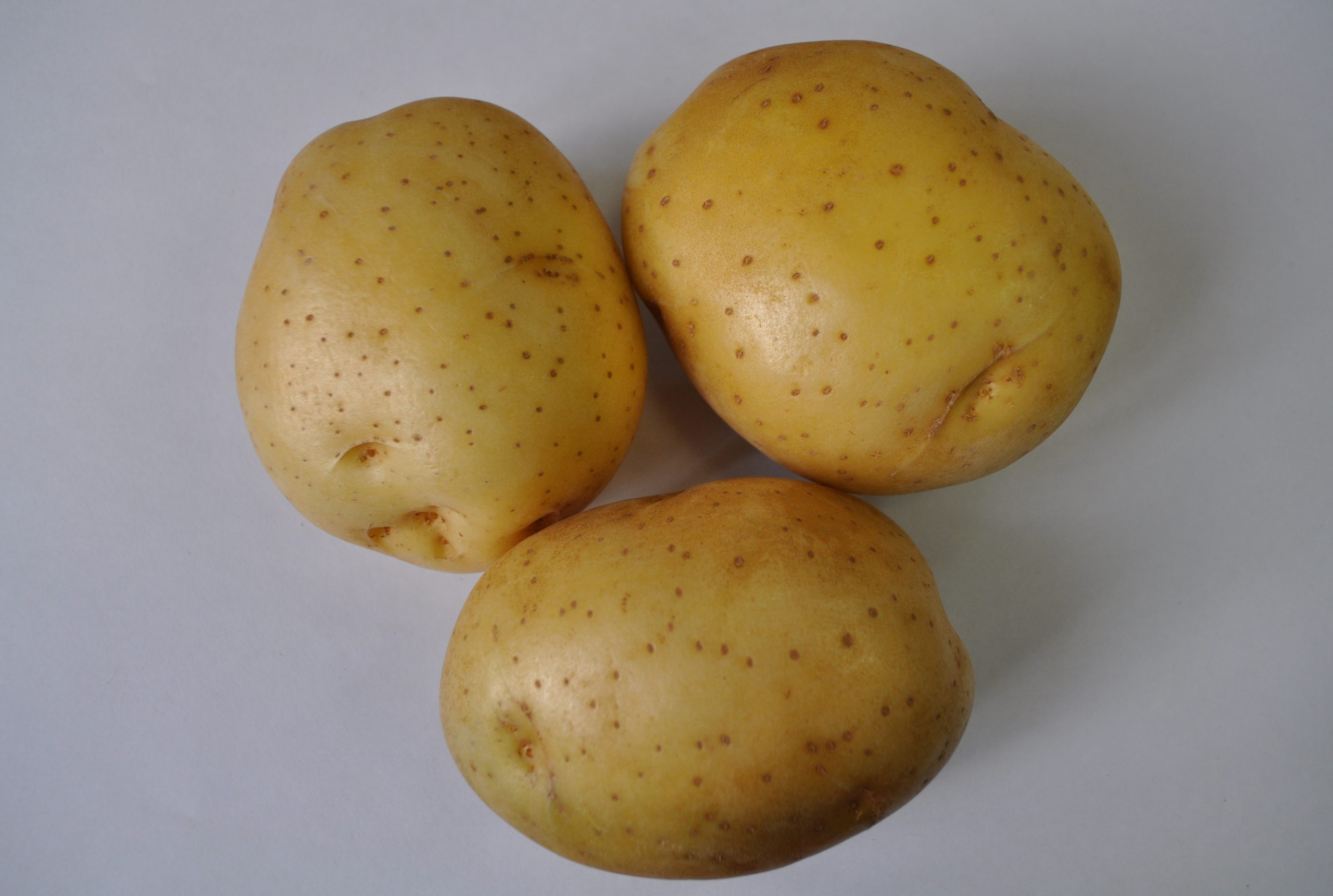
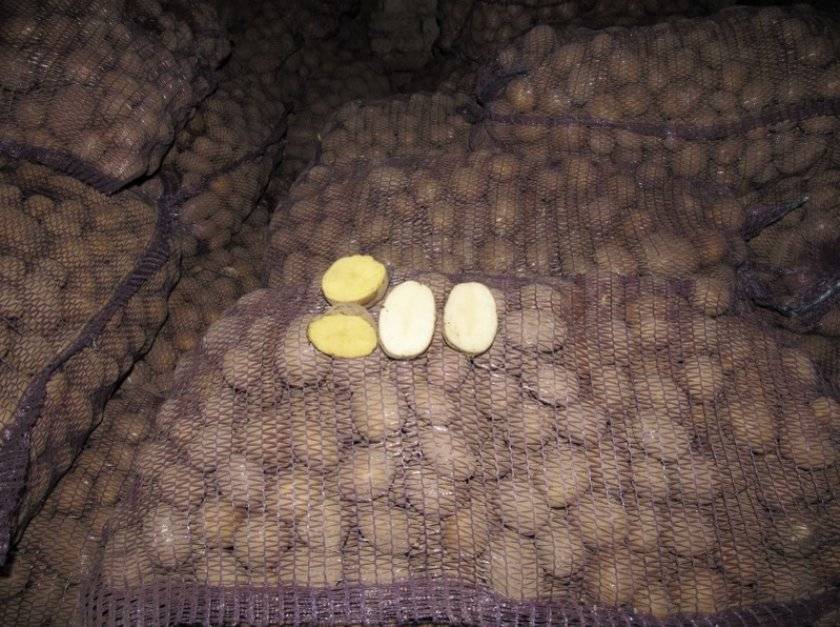
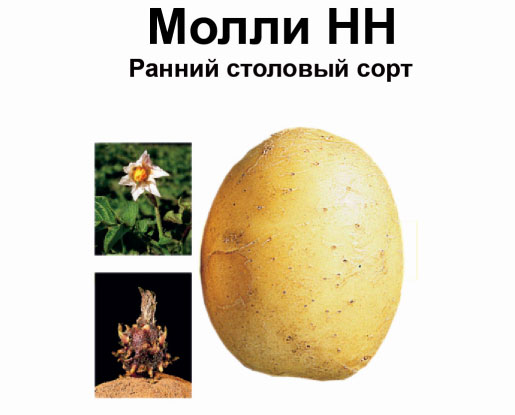
Table variety. Yields 17.1-30 t/ha. It tolerates drought well but may die at low temperatures. The bushes are semi-erect or spreading. The fronds are slightly corrugated around the perimeter. The flowers are snow-white. The potatoes are round, with small to medium-sized germination points. They are sandy inside and out.
Specifications:
- weight - 98-142 g;
- starch content - 11-13%;
- marketability - 80-92%;
- shelf life - 82%.
Immune to Synchytrium endobioticum and roundworms.
Read more about the variety in the article Molly potato variety: characteristics in a table and comparison, reviews.
Photo gallery of the Molly potato variety:
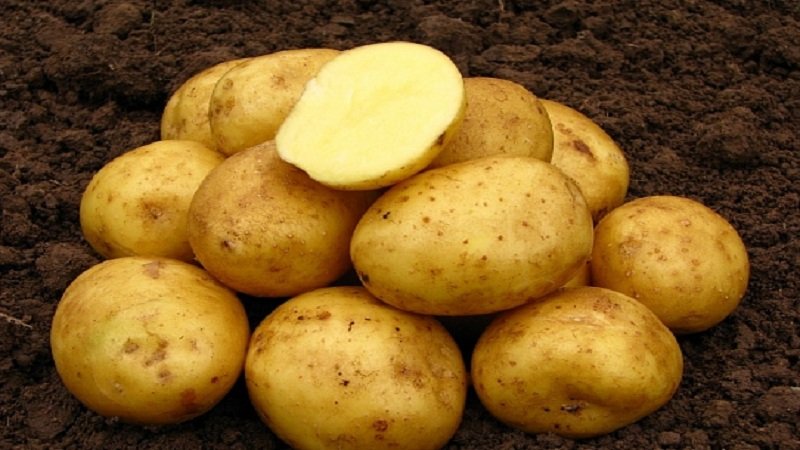
Nandina
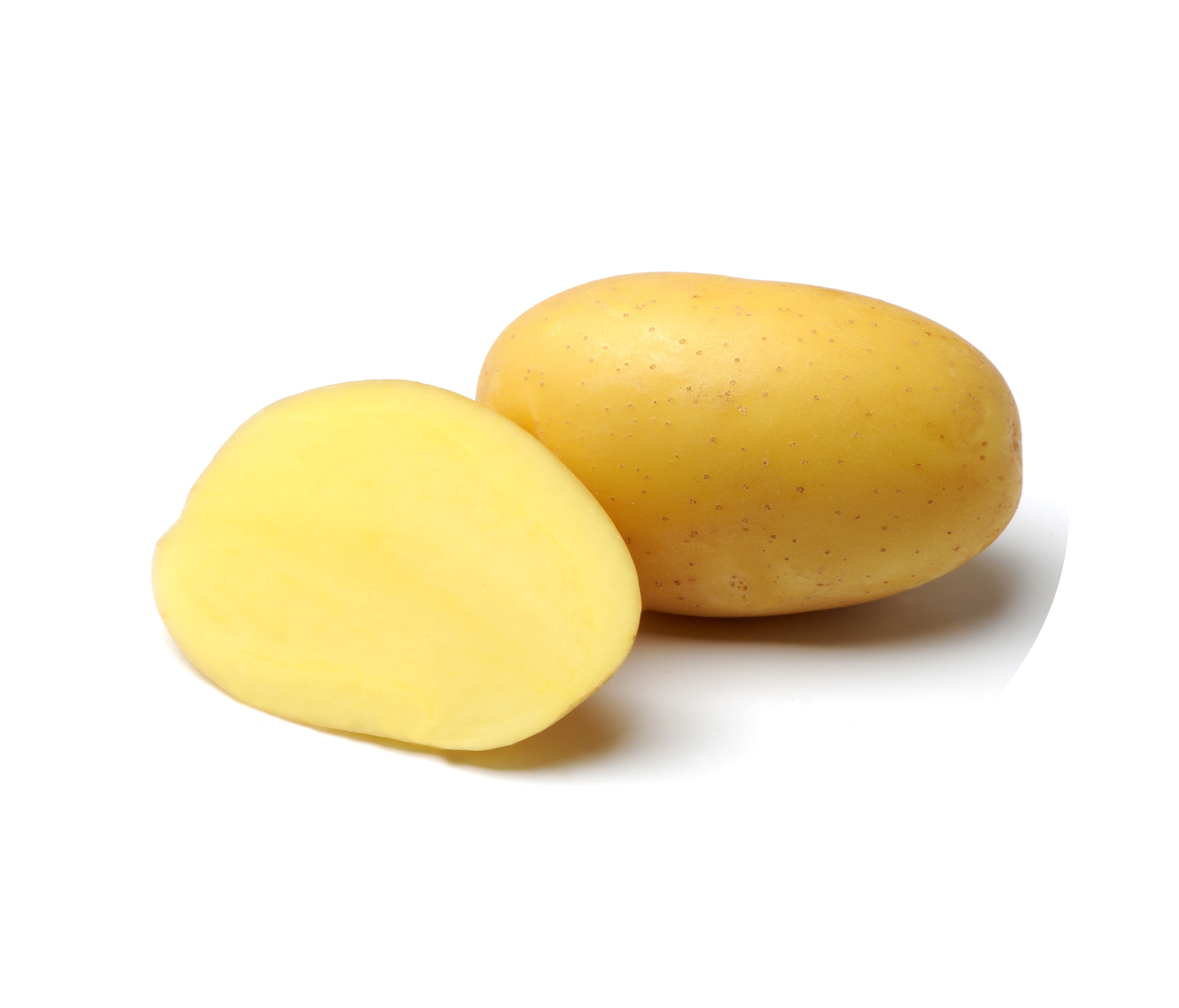
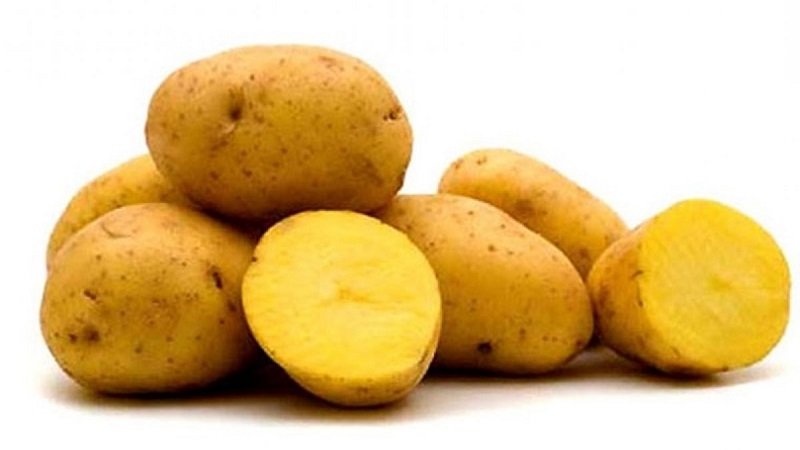
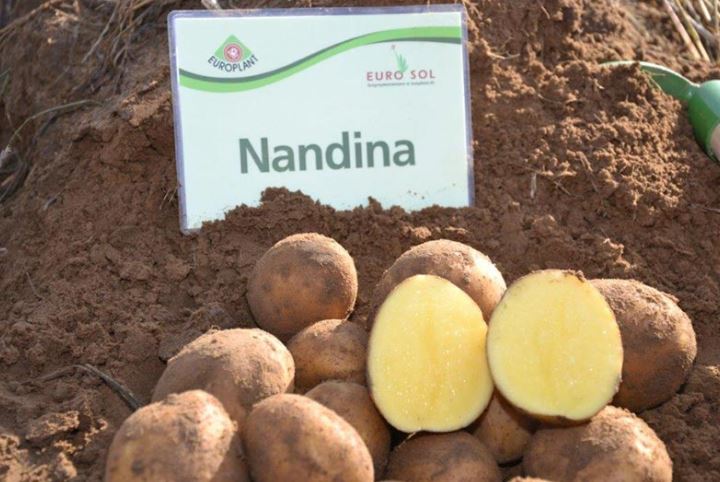
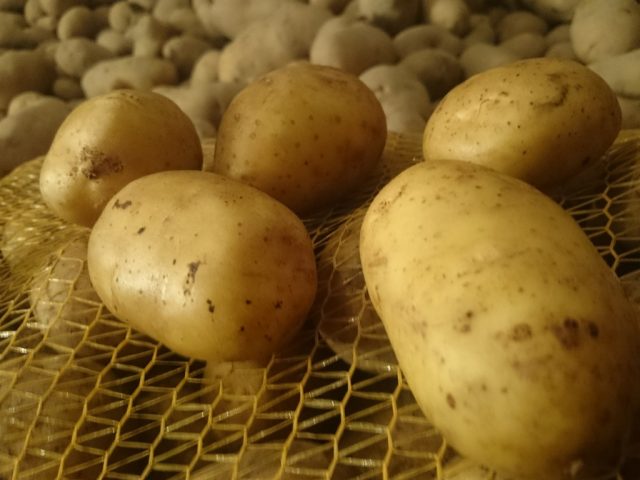
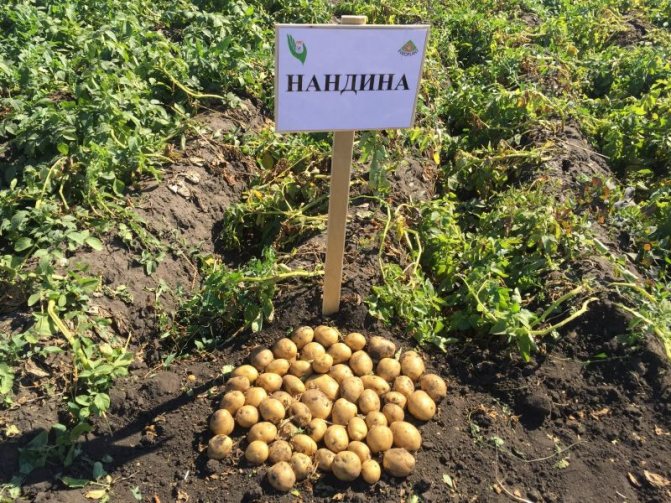
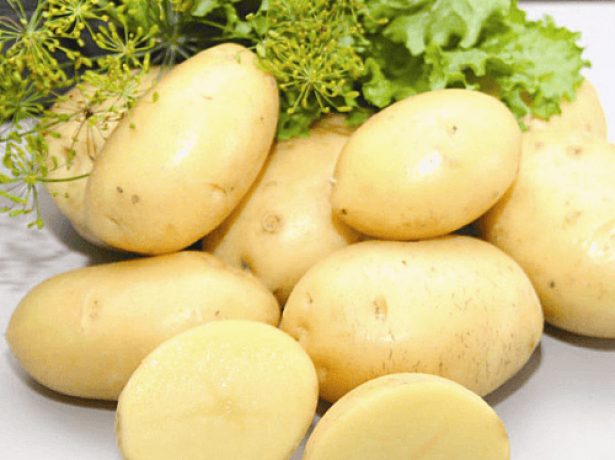
A super-early table variety. High-yielding, yielding 146-322 centners of potatoes per hectare. Medium-sized bushes with light green or emerald-colored foliage. The anthocyanin coloration of the inner corolla is weak to medium. The potatoes are round, with small to medium germination points. They are sand-colored inside and out.
Specifications:
- weight - 72-132 g;
- starch content - 12-15%;
- marketability - 77-93%;
- shelf life - 93%.
Resistant to mosaic, leaf curl, Synchytrium endobioticum, roundworms.
Interested Nandina potato variety?
Photo gallery of the Nandina potato variety:
Rosara
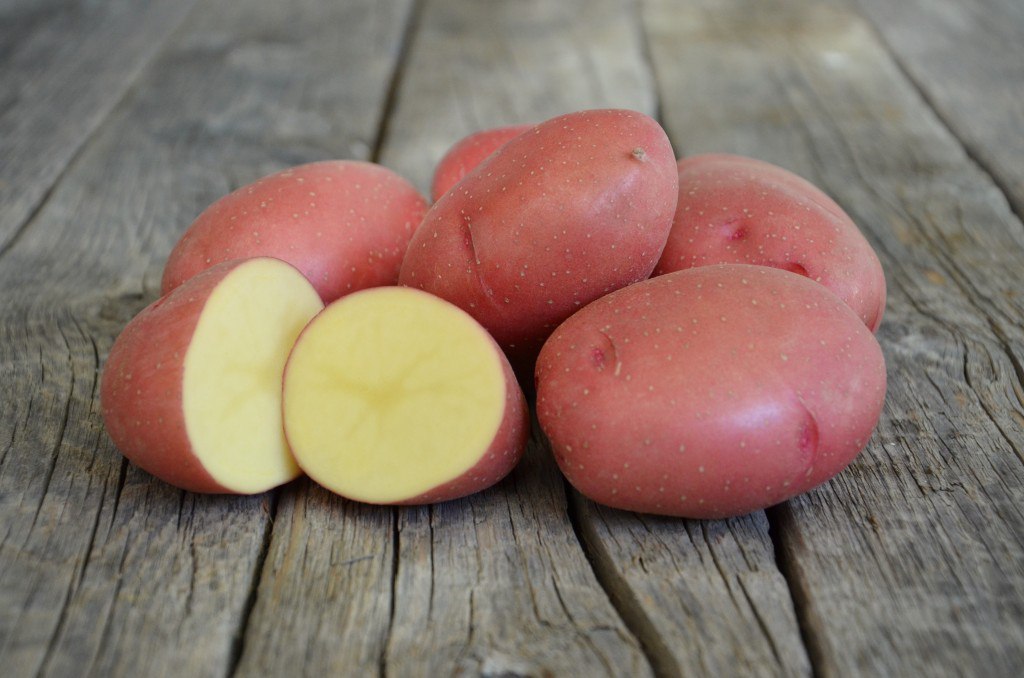
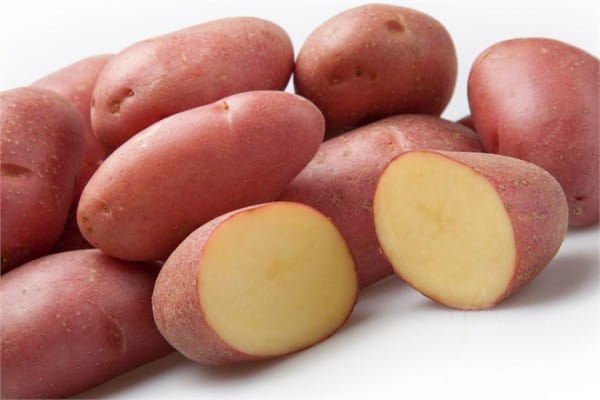
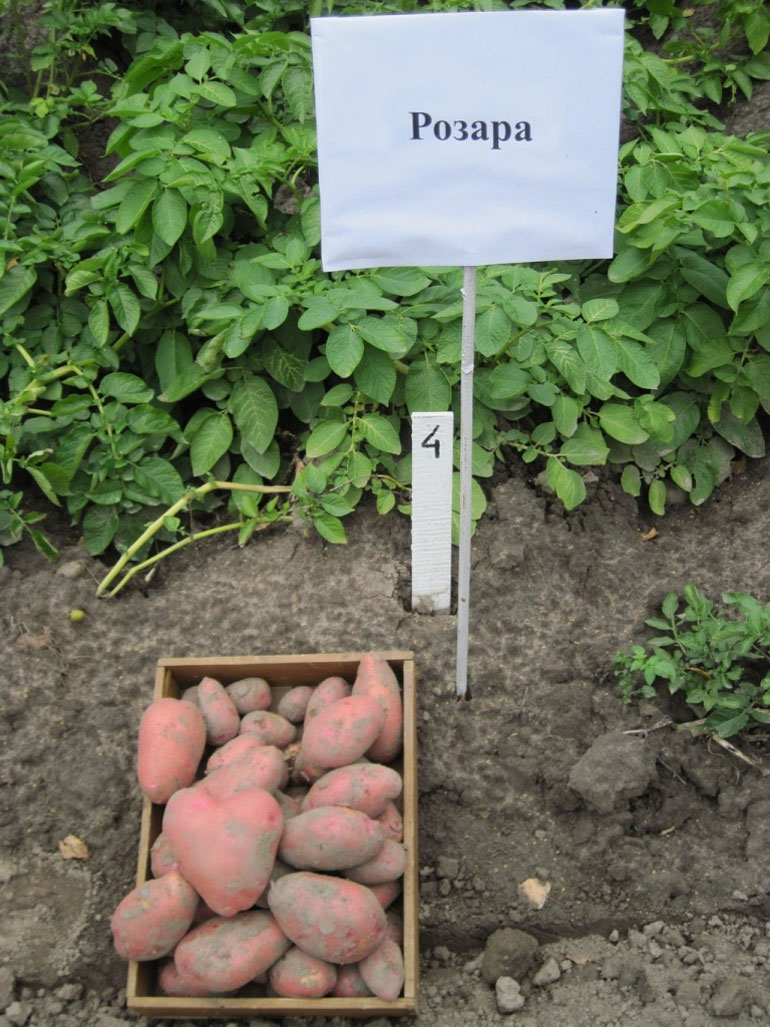
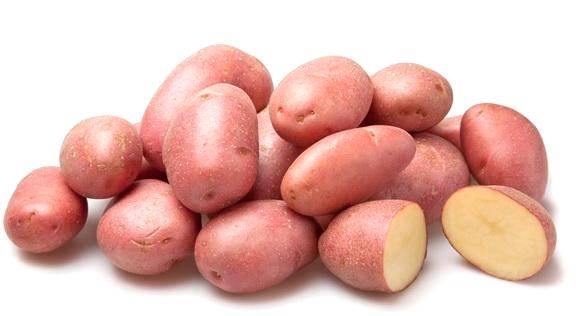
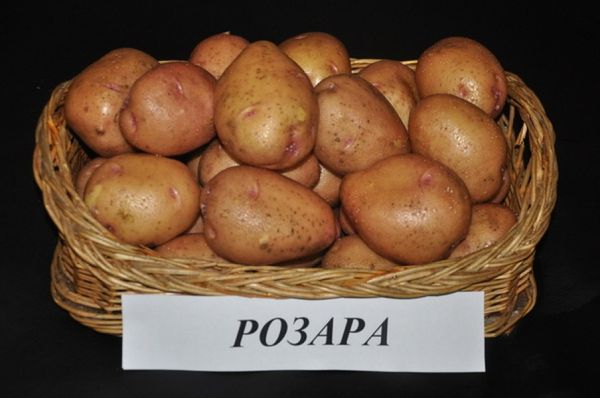
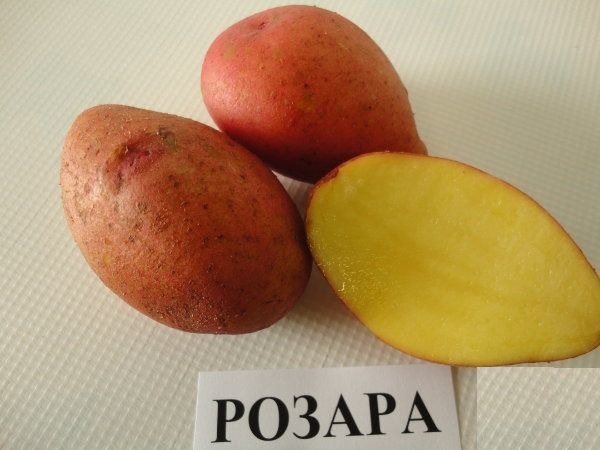
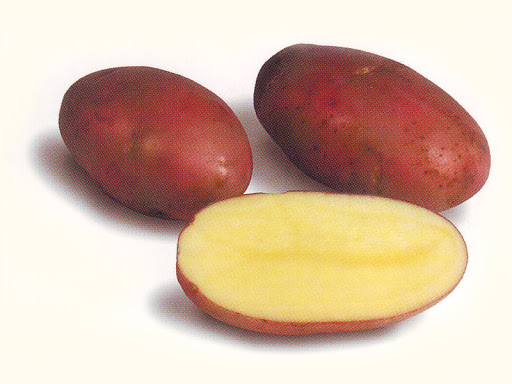
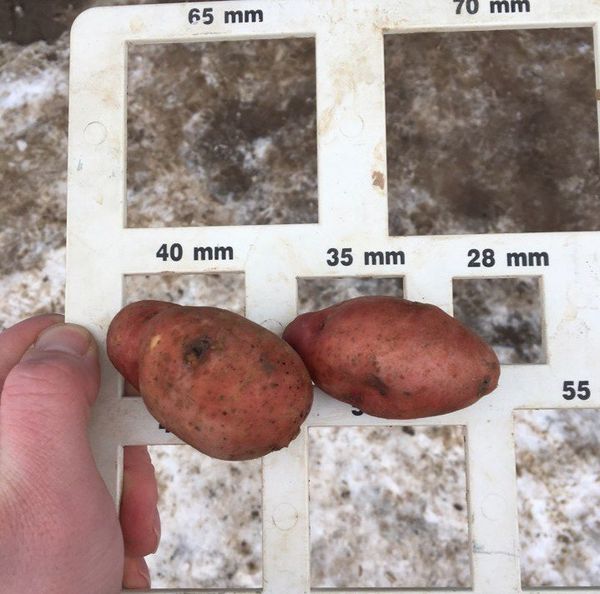
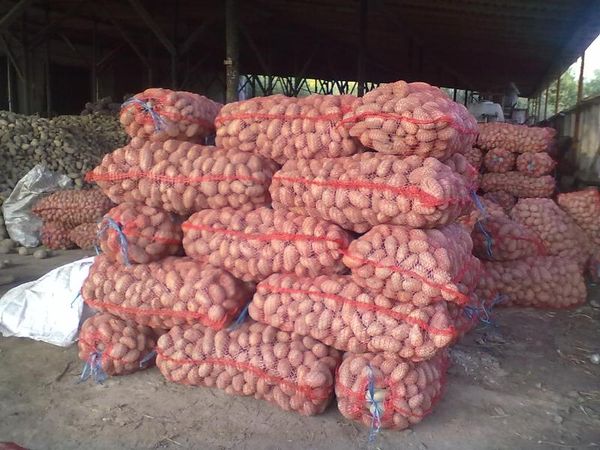
Table potato. Yields stable, 20.2-31 t/ha. It tolerates inclement weather well, making it suitable not only for the Moscow region but even for the Urals. The bushes are semi-spreading. Flowering is short, and the corollas are reddish-purple. The potatoes are oblong-oval, reddish on the outside and sandy on the inside.
Specifications:
- weight - 81-115 g;
- starch content - 12-15%;
- marketability - 91-99%;
- Storage quality: average.
Roundworms and Synchytrium endobioticum are not dangerous.
Photo gallery of the Rosara potato variety:
Luck
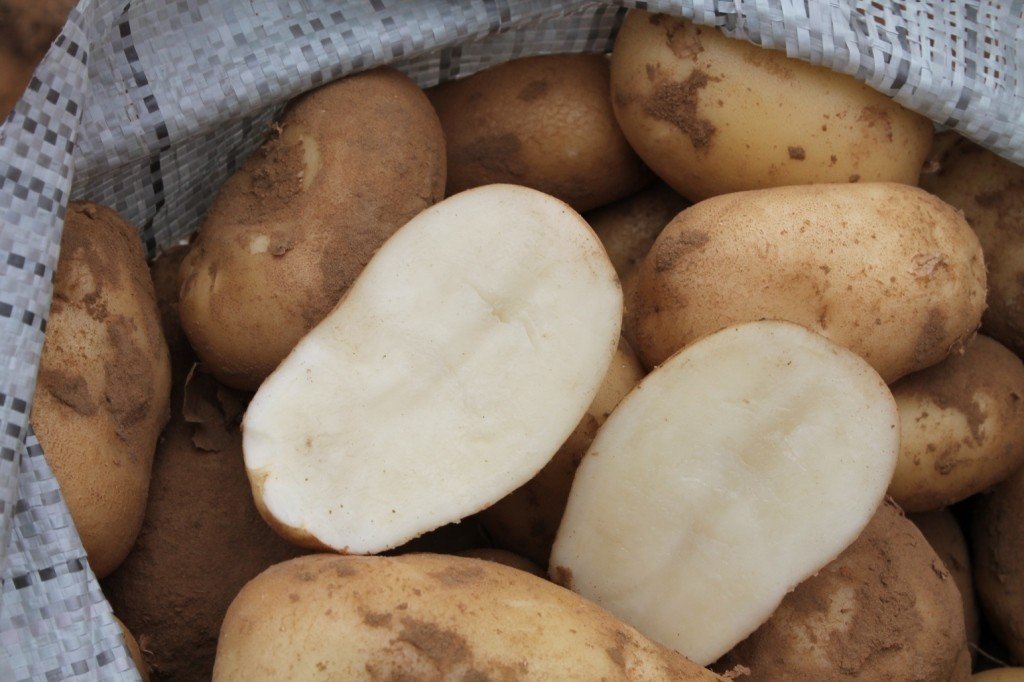
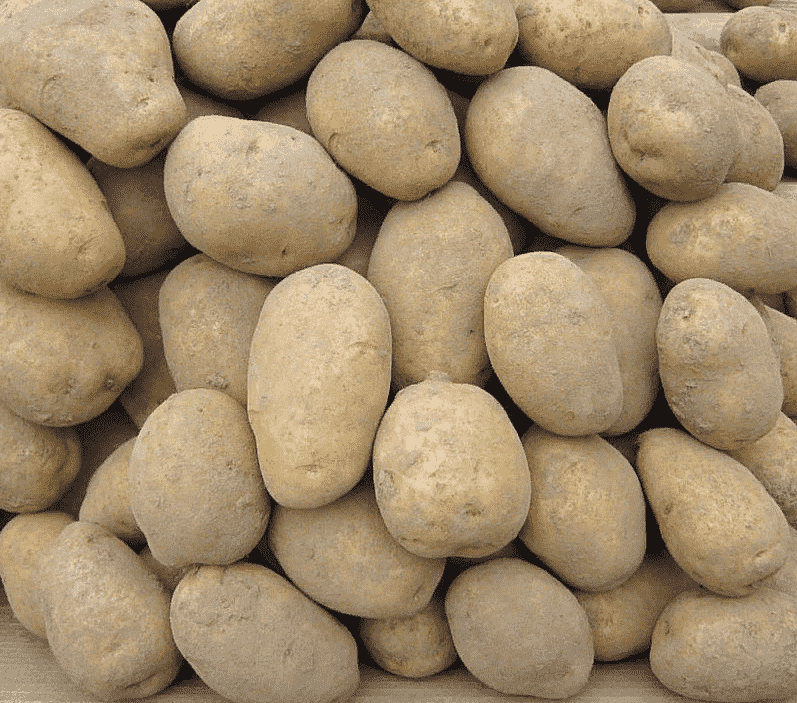
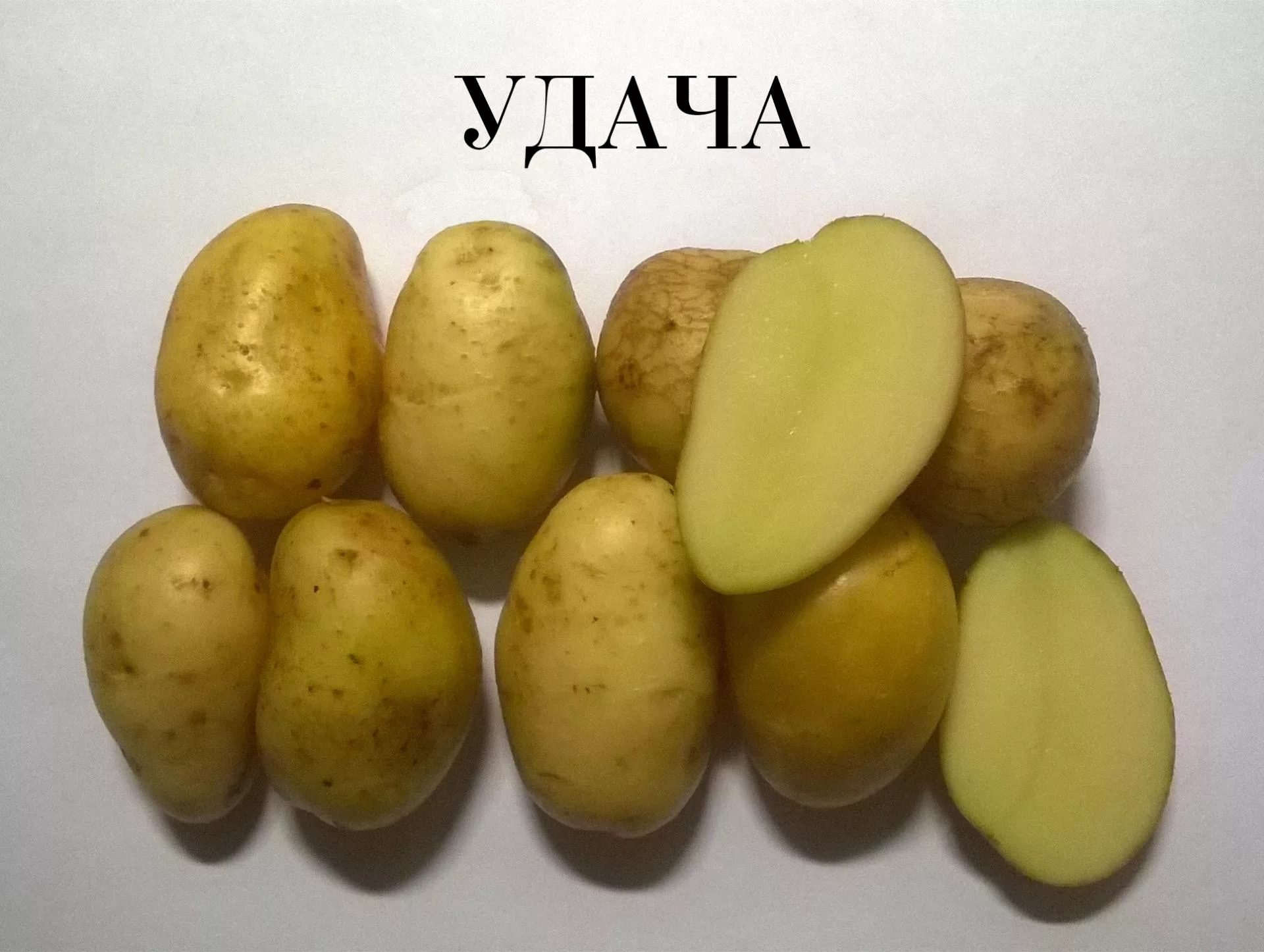
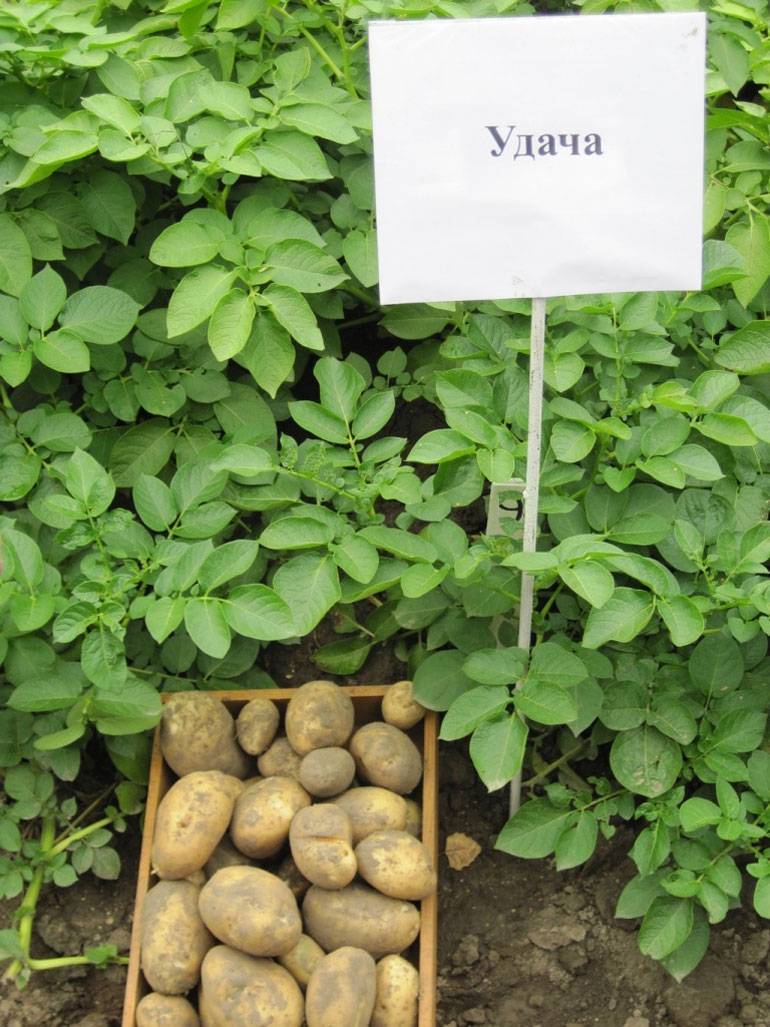
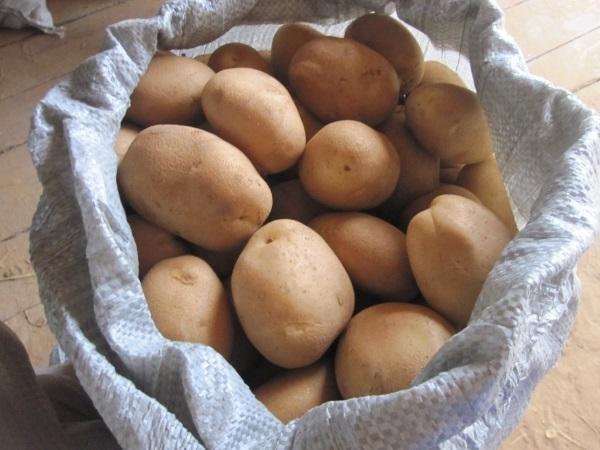
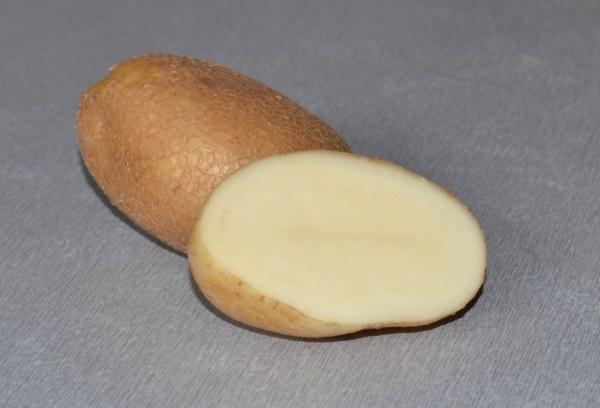
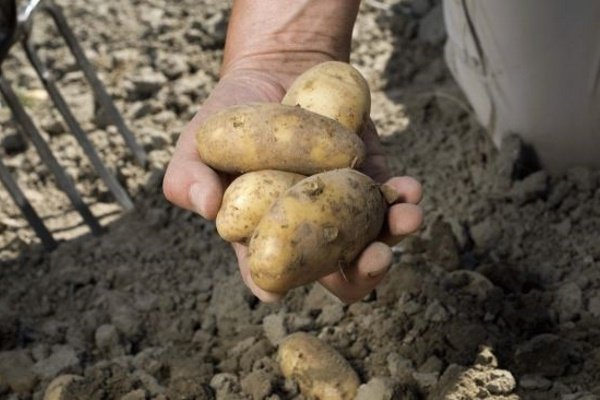
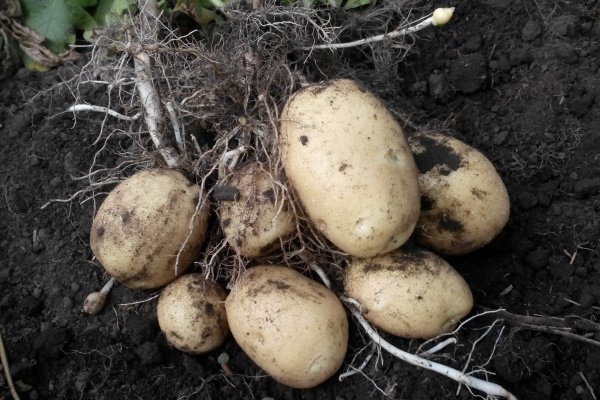
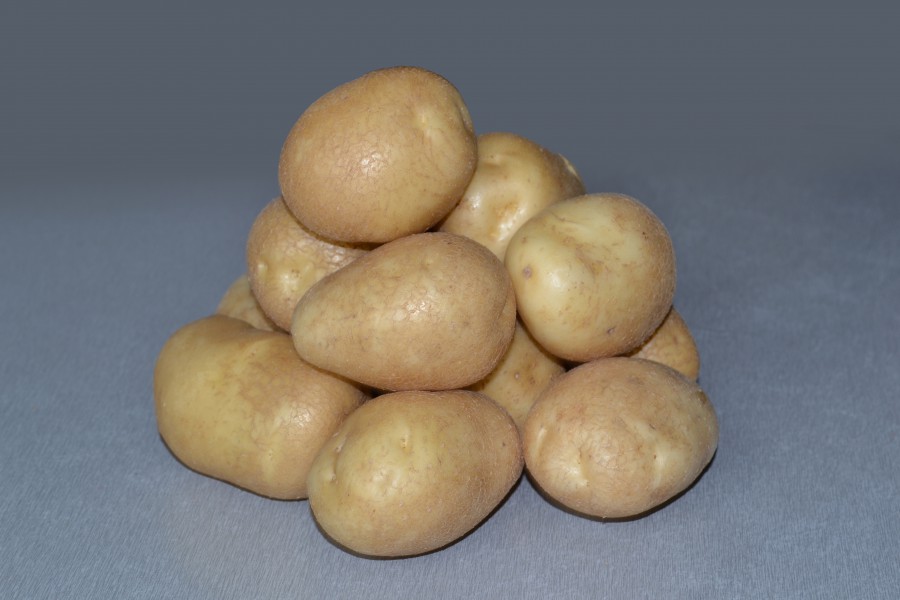
Yields 30-50 t/ha. It was bred in Russia quite a long time ago, being registered back in 1994. The bushes are medium-sized, no more than 0.4 m, and densely foliated. The leaves are emerald. The inflorescences are white. The tubers have a sandy skin and white flesh. The growing points are shallow.
Specifications:
- weight - 120-250 g;
- starch content - 12-15%;
- marketability - 96%;
- Storage quality: average.
Shows moderate resistance to tuber blight.
Read more about the variety in the article Potato variety Udacha: photo, characteristics, comparison, reviews.
Photo gallery of the potato variety Udacha:
Charoite
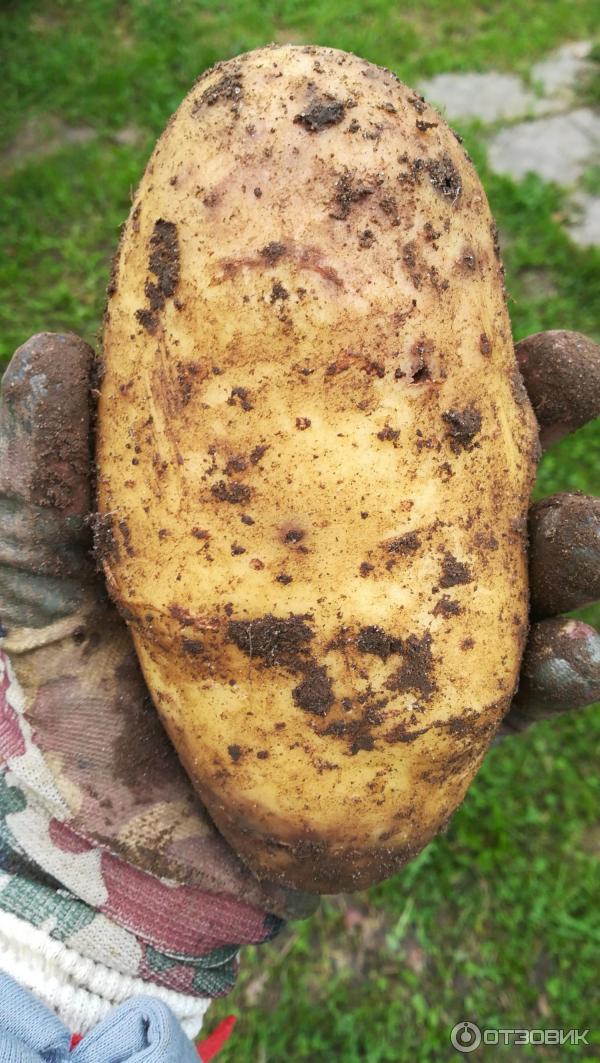
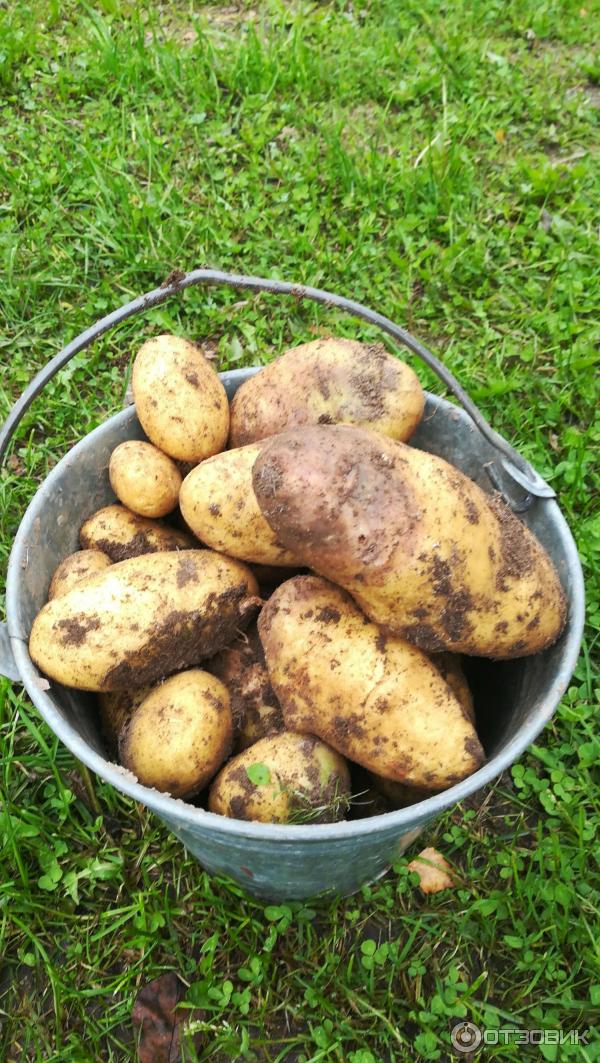
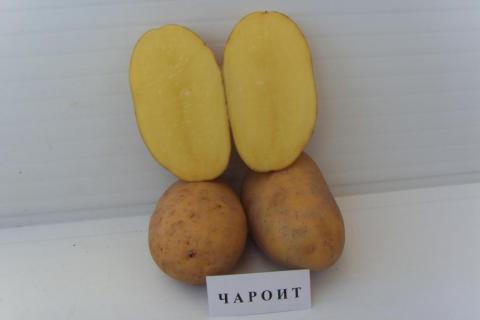
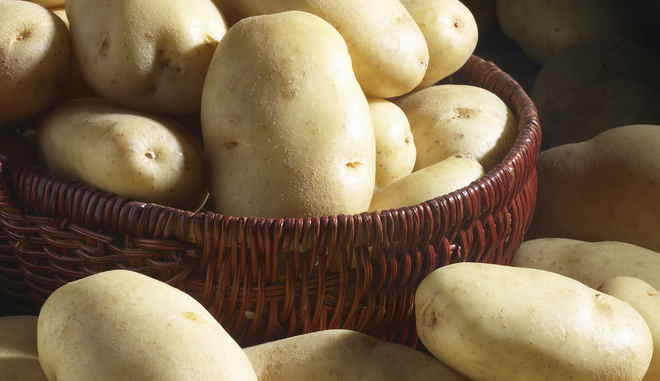
A super-early variety. Yields 22.8-32.1 t/ha. This allows for two potato harvests during the growing season. However, it should be noted that this crop thrives only in fertile soil. The bushes are low and semi-erect. The foliage is large and green, with a distinct corrugation around the perimeter. The corollas are large, with medium to pronounced anthocyanin coloration. The potatoes are oval, with small germination points. The skin and flesh are sandy.
Specifications:
- weight - 100-143 g;
- starch content - 14-17%;
- marketability - 82-98%;
- shelf life - 96%.
Very rarely affected by Synchytrium endobioticum and roundworms.
You can find out on our website About the Charoite potato variety, how to plant and care for it, and what gardeners who have grown it say.
Photo gallery of the potato variety Charoit:
Mid-early and mid-season varieties for the Moscow region
They ripen before the weather in the Moscow region steadily worsens. The ripening period is 90-110 days.
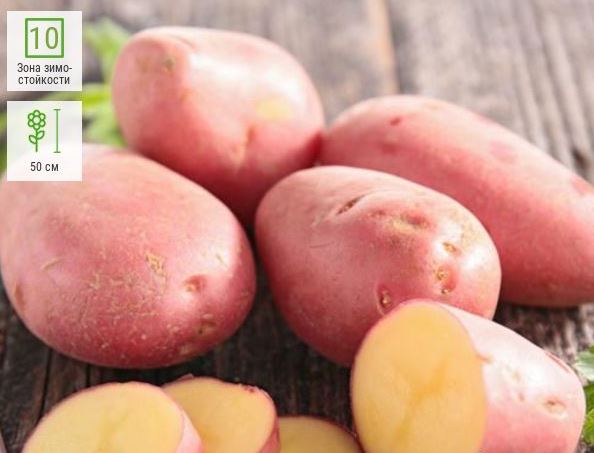
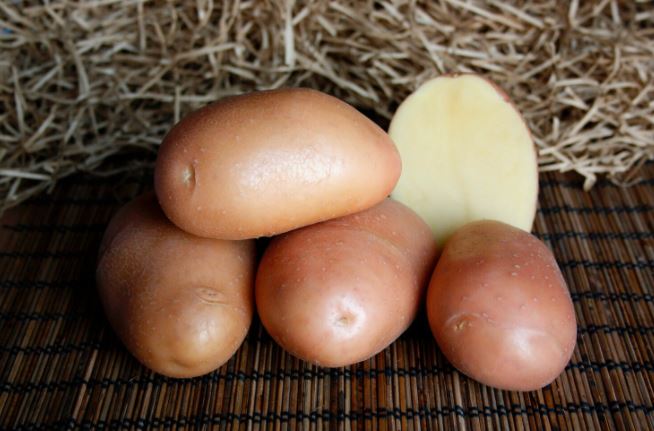
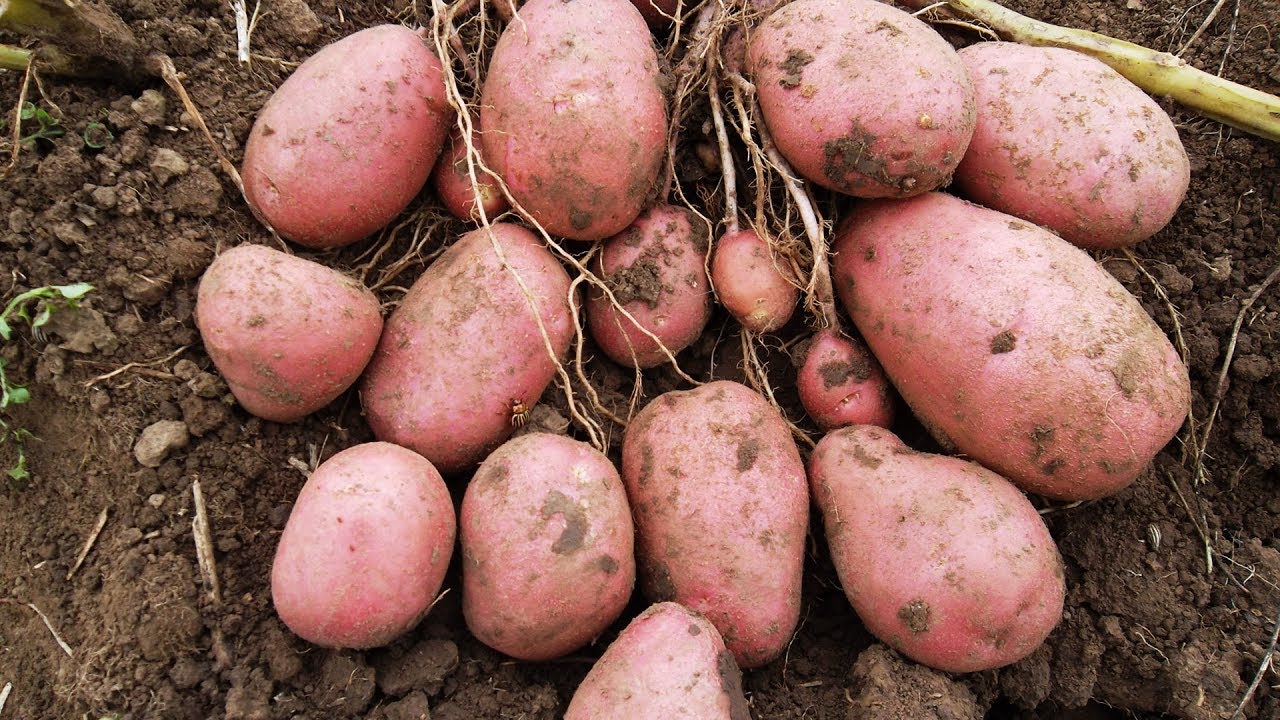
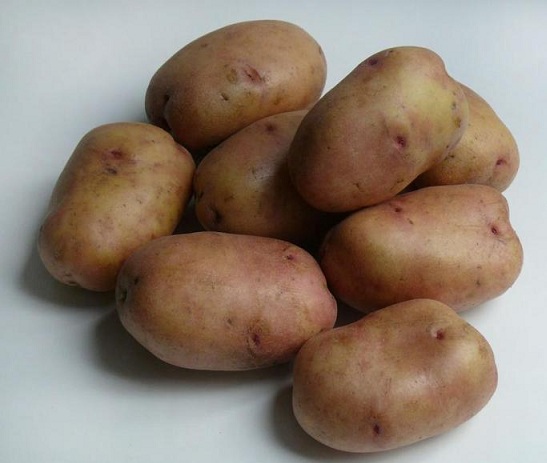
Openwork
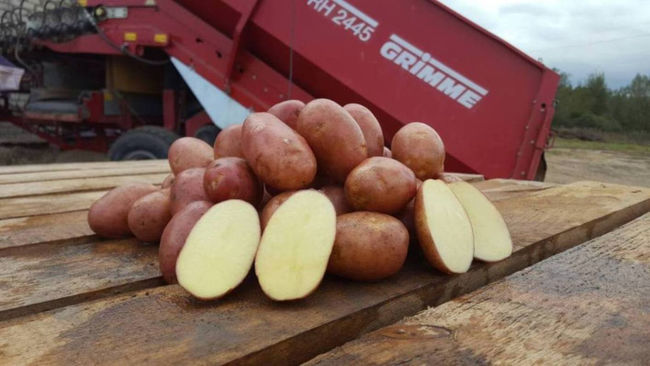
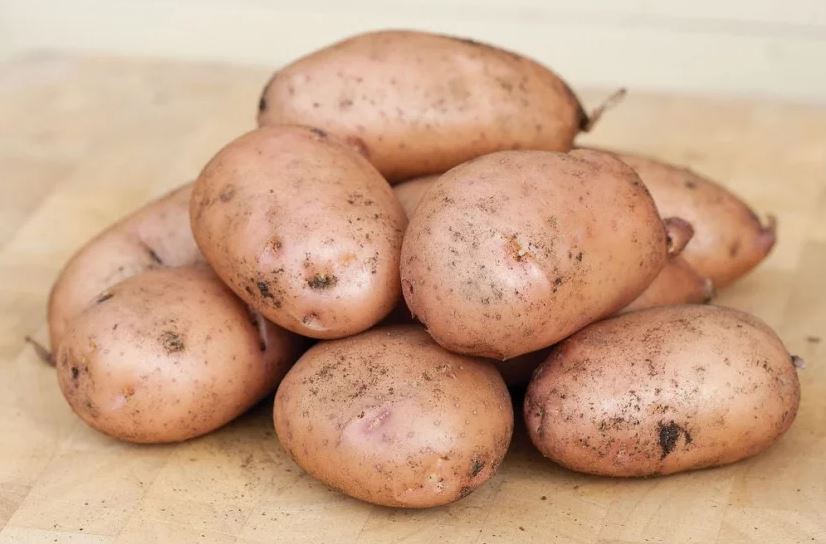
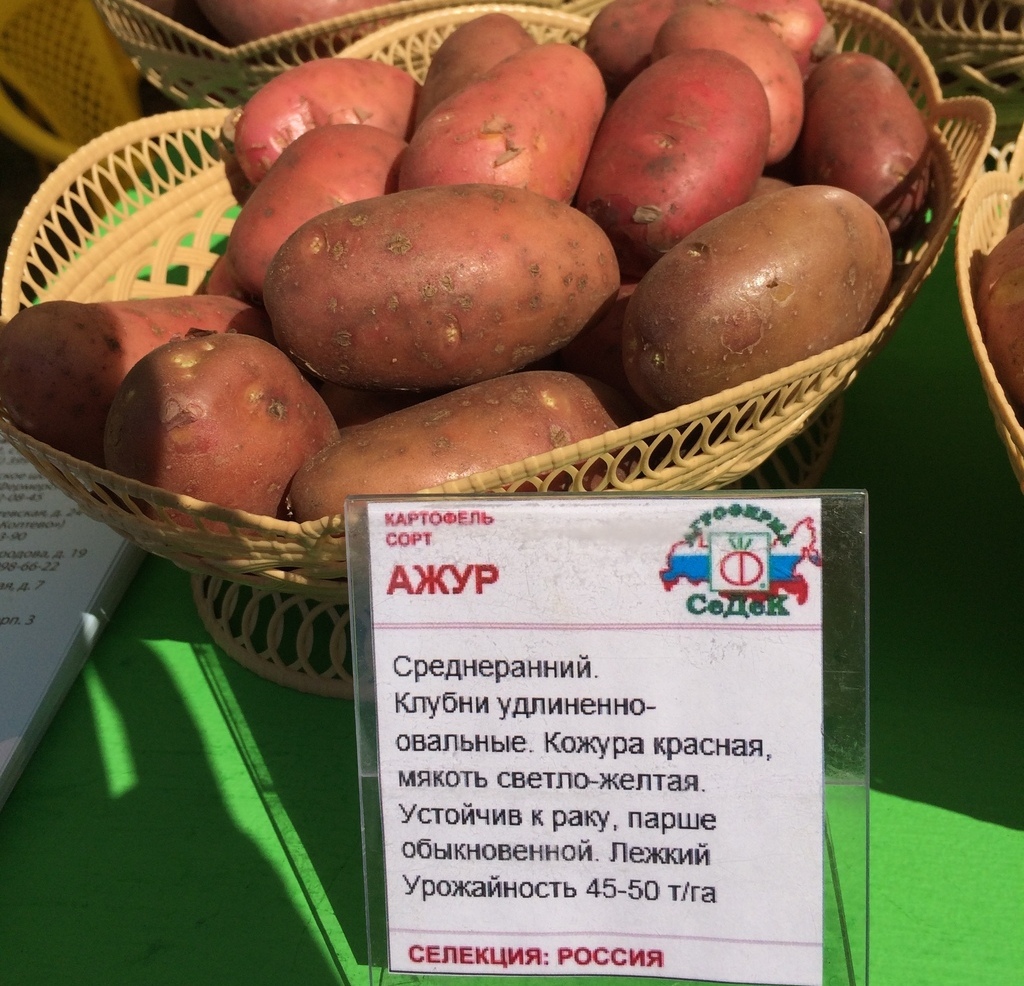
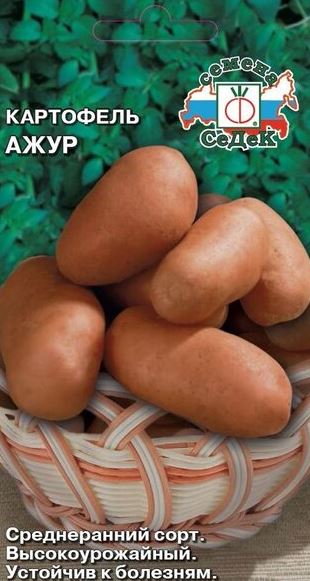
Developed by domestic breeders. Belongs to the culinary type. AOne hectare of land can yield up to 44.3 tons. Azhur was added to the register in 2017. It tolerates drought well but is sensitive to mechanical damage. The tubers are elongated and oval. Crimson on the outside and sandy on the inside. The shoot growth points (eyes) are shallow.
Specifications:
- weight - 98-135 g;
- starch content - 13-16%;
- marketability - 78-98%;
- shelf life - 94%.
There is no need to worry about the crop being infected with Synchytrium endobioticum, leaf curl or striped mosaic.
Photo gallery of the Ajour potato variety:
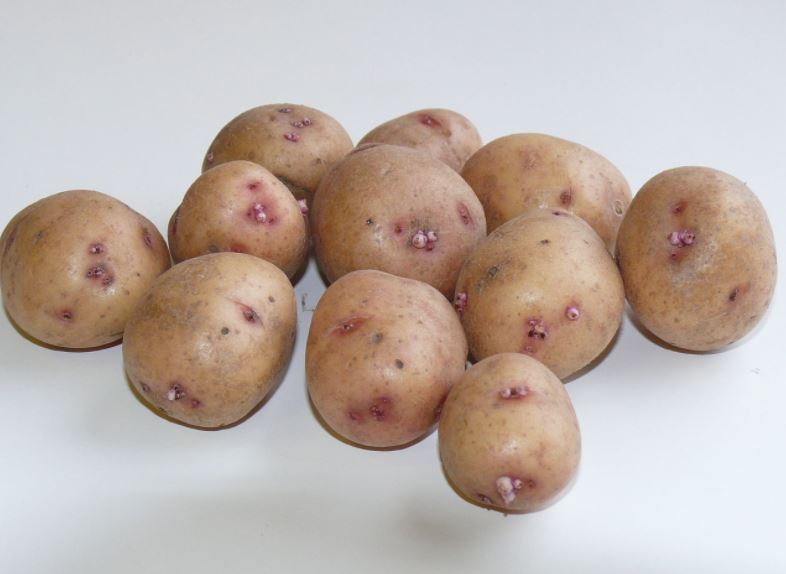
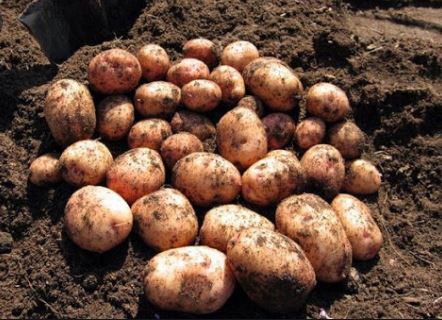
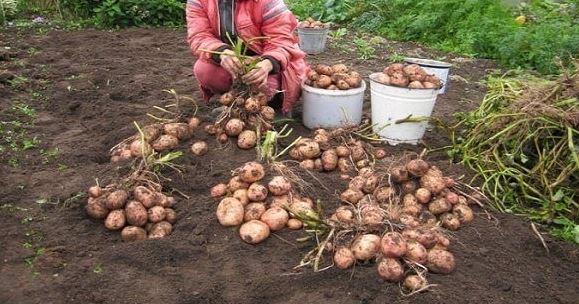
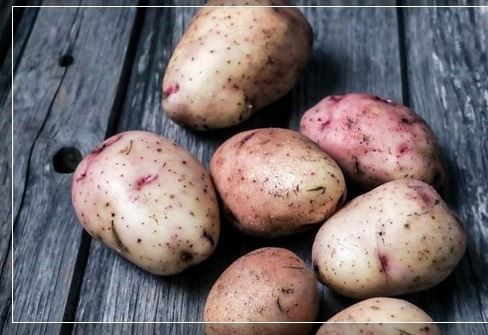
Aurora
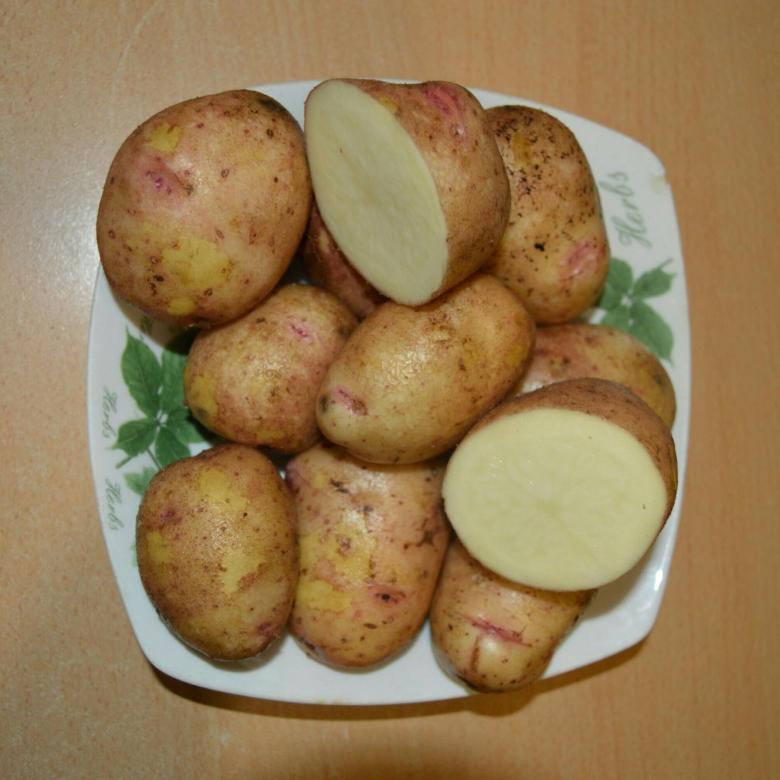
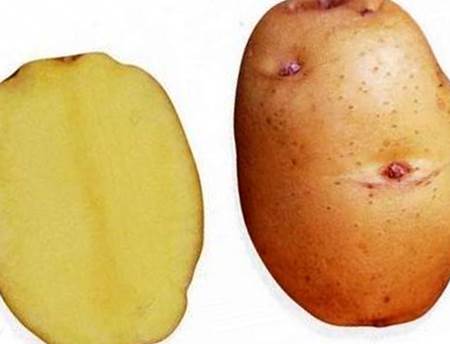
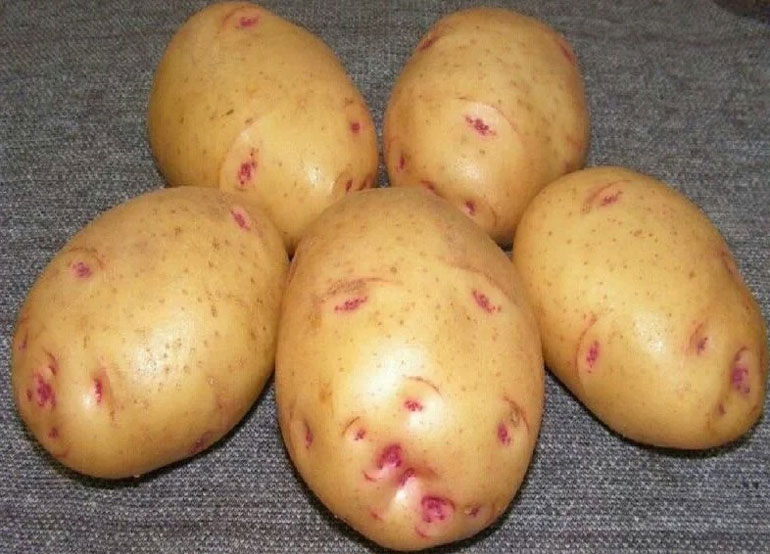
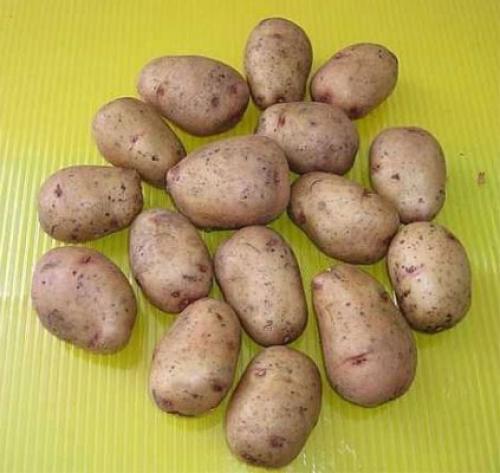
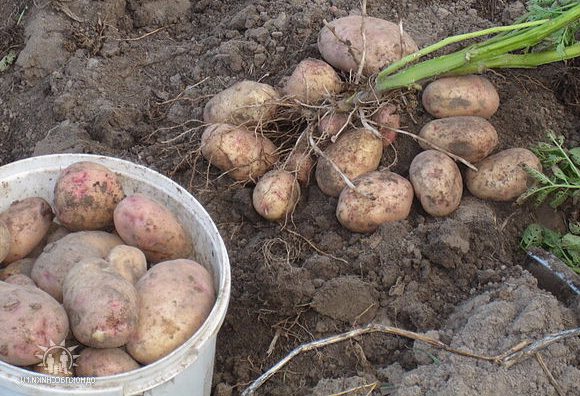
Developed in the Leningrad Region, but perfectly suited for Moscow, the variety yields up to 416 centners per hectare. It's easy to grow and requires standard care. The bushes are low, with light green foliage. Flowering is short. The tubers have reddish-yellow skin and sandy flesh. Germination points are few and shallow.
Specifications:
- weight - 93-128 g;
- starch content - 13-17%;
- marketability - 80-93%;
- shelf life - 94%.
Resistant to Synchytrium endobioticum and roundworms.
Photo gallery of the Aurora potato variety:
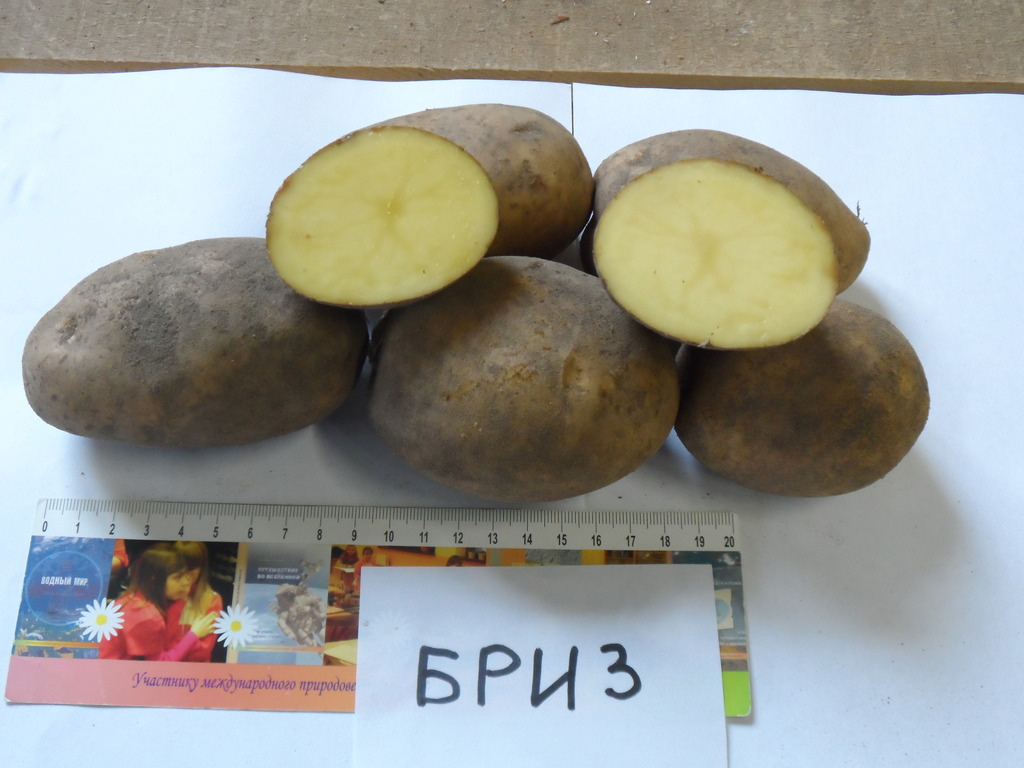
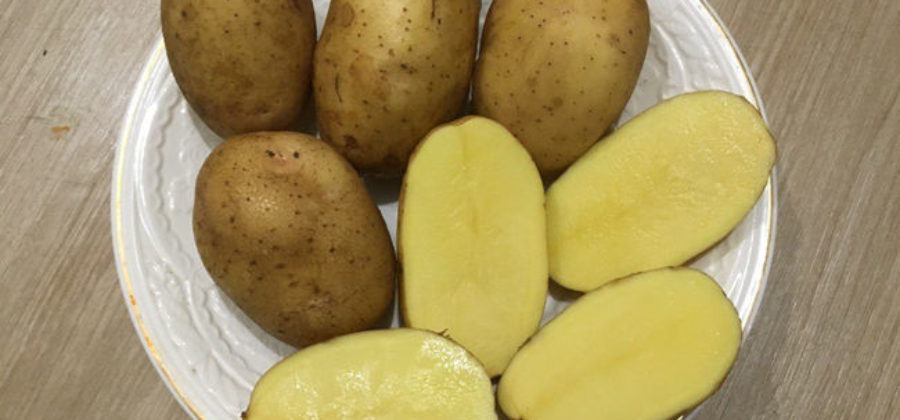
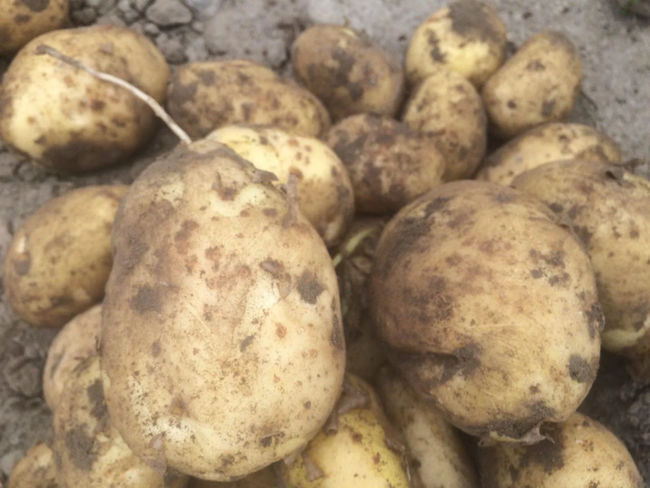
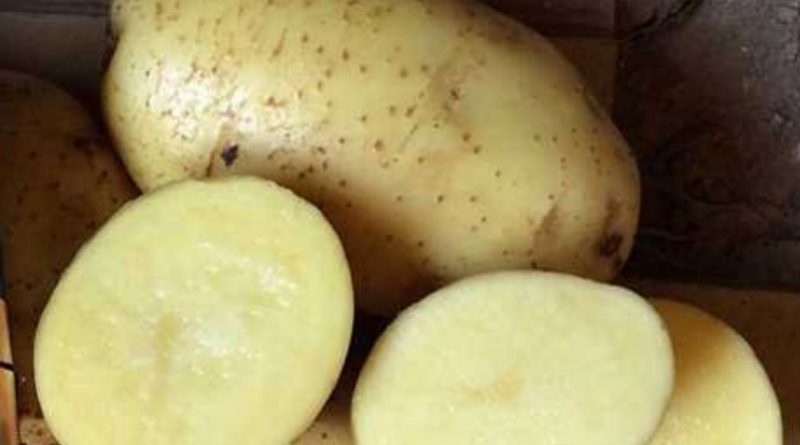
Breeze
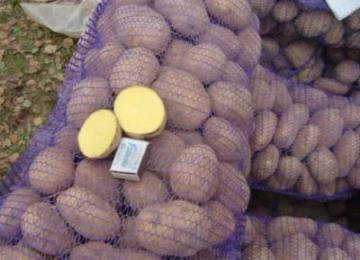
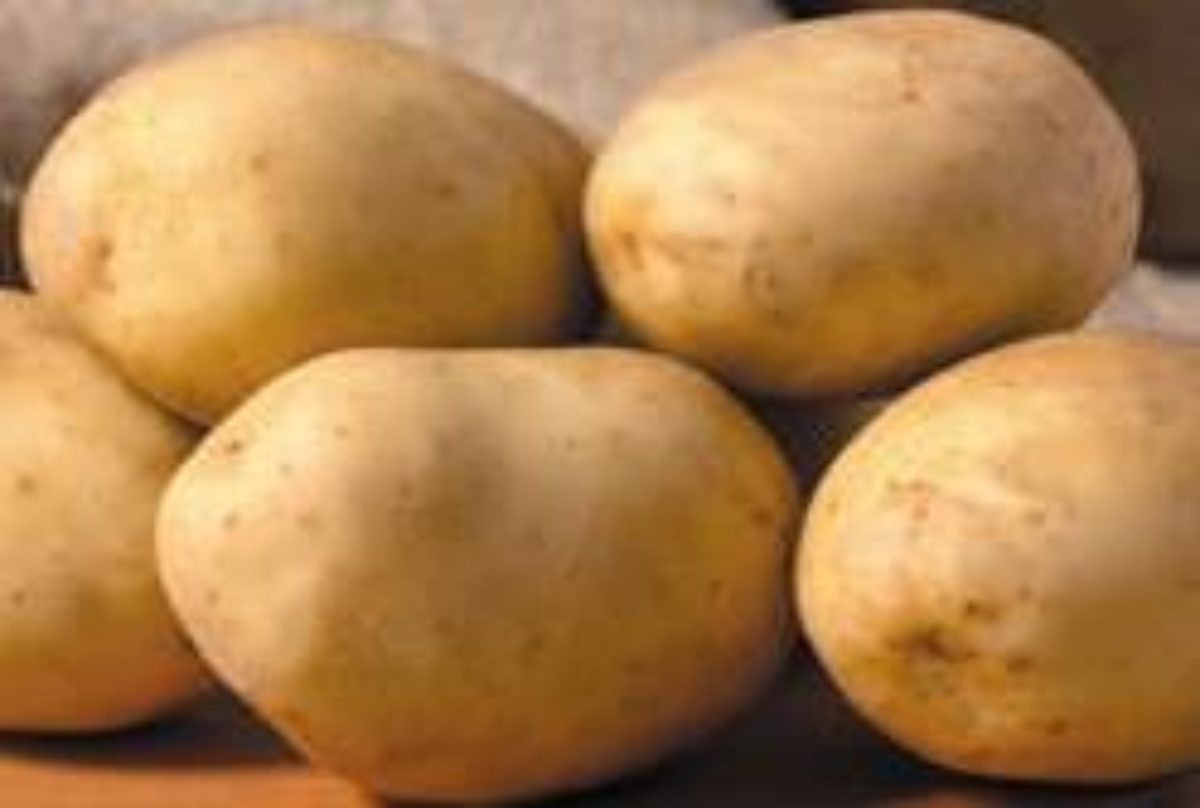
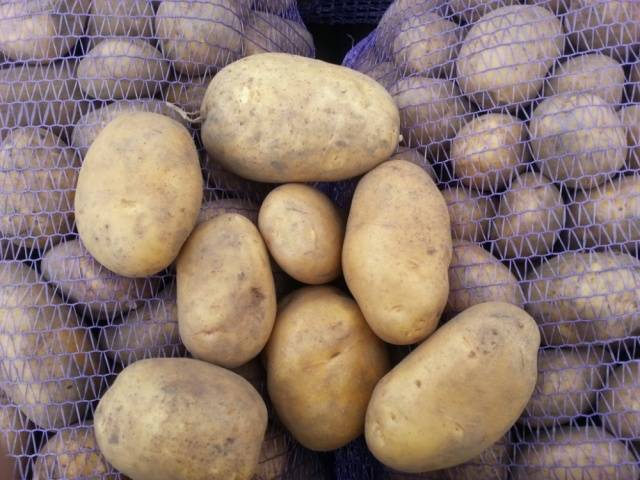
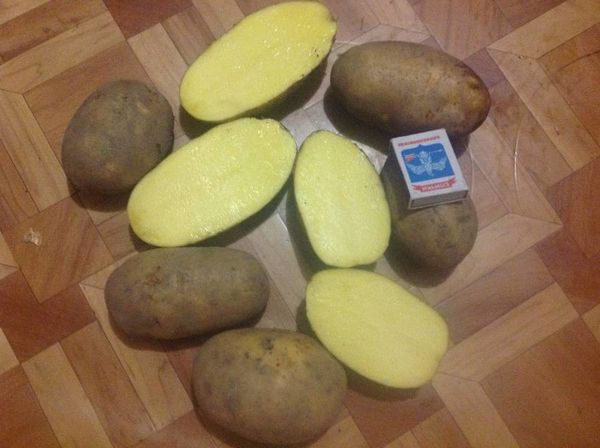
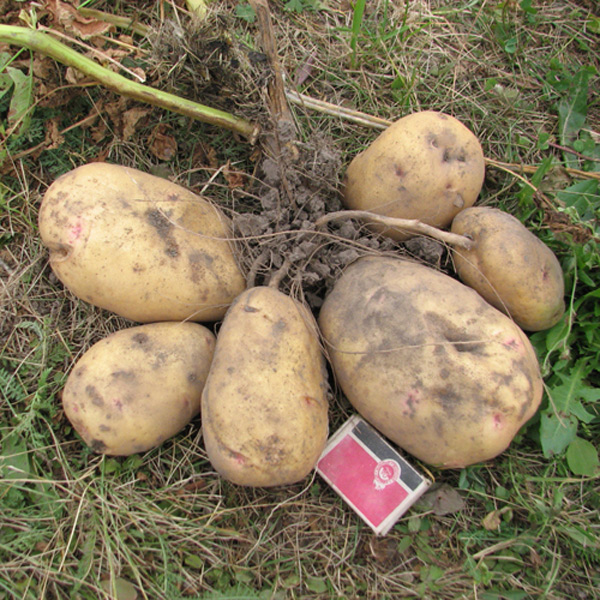
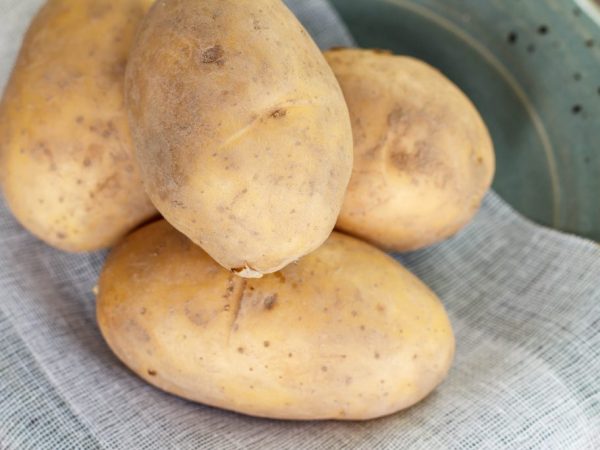
A Belarusian potato, registered in 2009. Yields 16-39.5 tons/ha. Belongs to culinary class B, meaning the core is fairly watery and moderately dense, making it ideal for first courses. The potatoes are oval. Their dense skin makes them resistant to mechanical damage. They are sand-colored inside and out. The stems have medium germination points.
Specifications:
- weight—97-154 g;
- starch content - 10-15%;
- marketability - 83-98%;
- shelf life - 97%.
Susceptible to attack by roundworms.
Read more about the variety in the article Potato variety Breeze: description in table, photo, reviews, comparison.
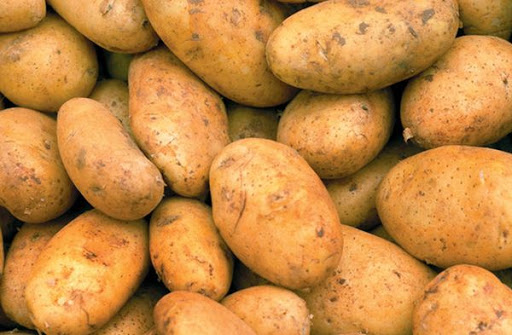
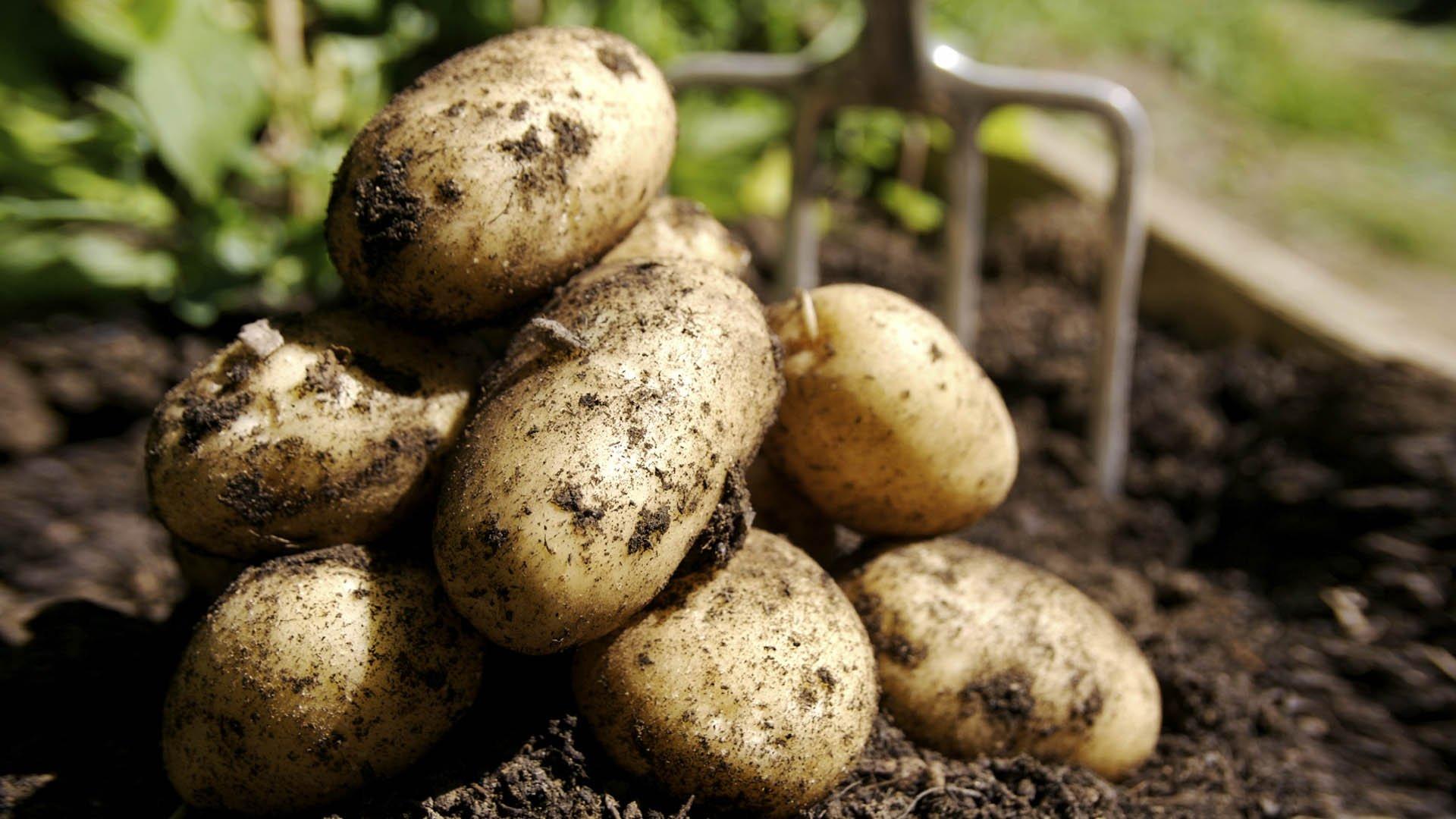
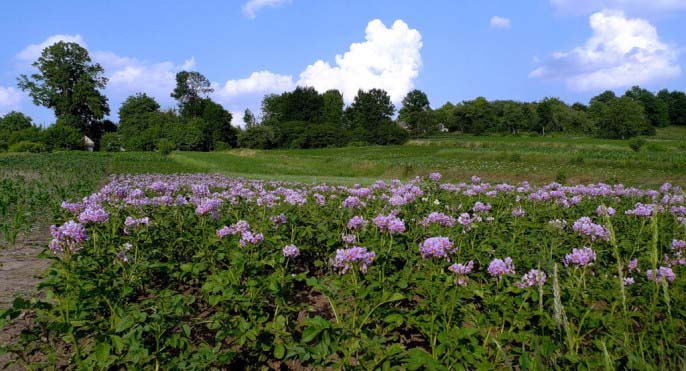
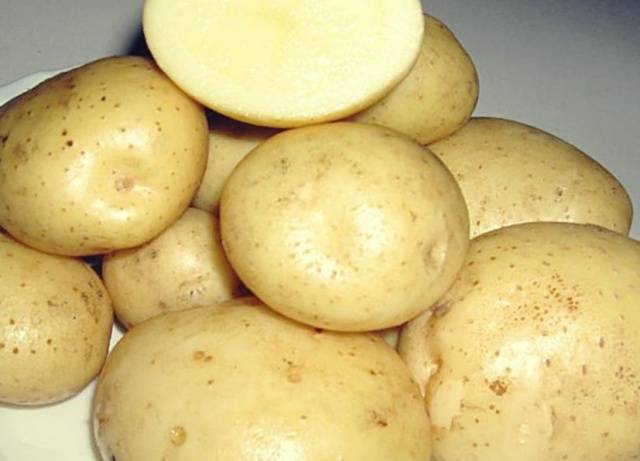
Photo gallery of the Breeze potato variety:
Giant
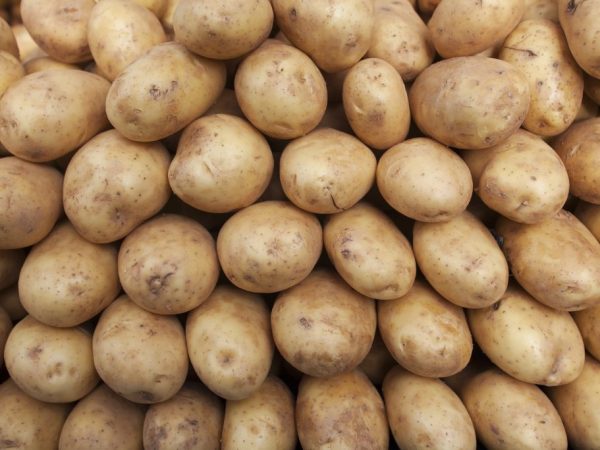
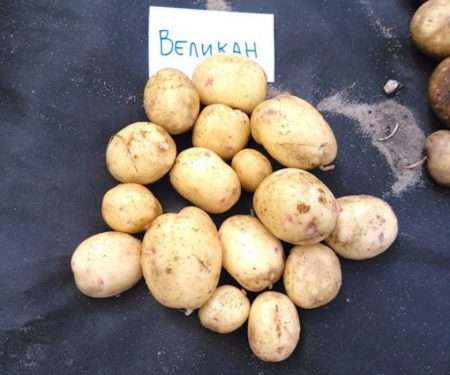
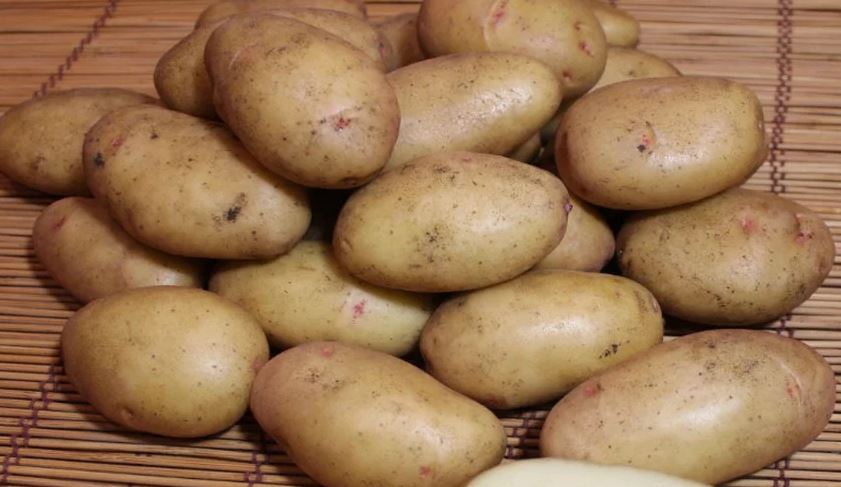
Recommended for mashed potatoes. Yields range from 290 to 424 centners per hectare (the maximum yield of 613 centners per hectare was recorded in the Nizhny Novgorod region). The bushes are upright. The fronds are large and emerald green. The potatoes are round, with buds for medium-sized stems. The skin is a soft beige, and the flesh is sandy.
Specifications:
- weight - 104-143 g;
- starch content - 15-19%;
- marketability - 87-98%;
- shelf life - 97%.
Resistant to Synchytrium endobioticum, moderately resistant to late blight, leaf curl, and mosaic. Susceptible to attack by roundworms.
Read more about the variety in the article Velikan potato variety: characteristics and comparison, reviews.
Photo gallery of the Velikan potato variety:
Gala
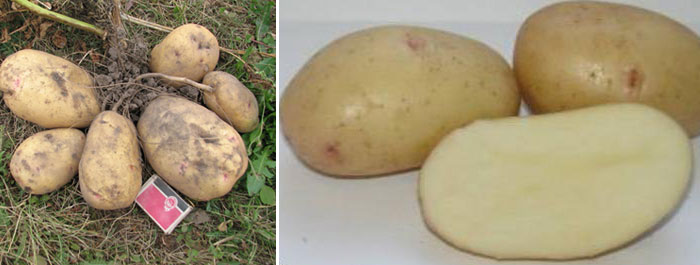
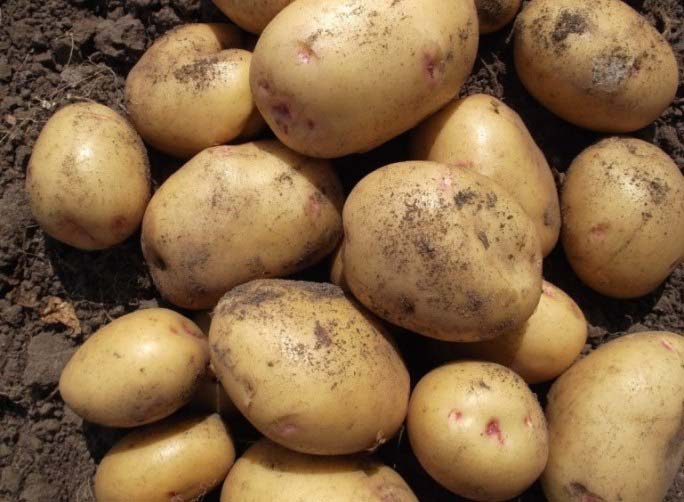
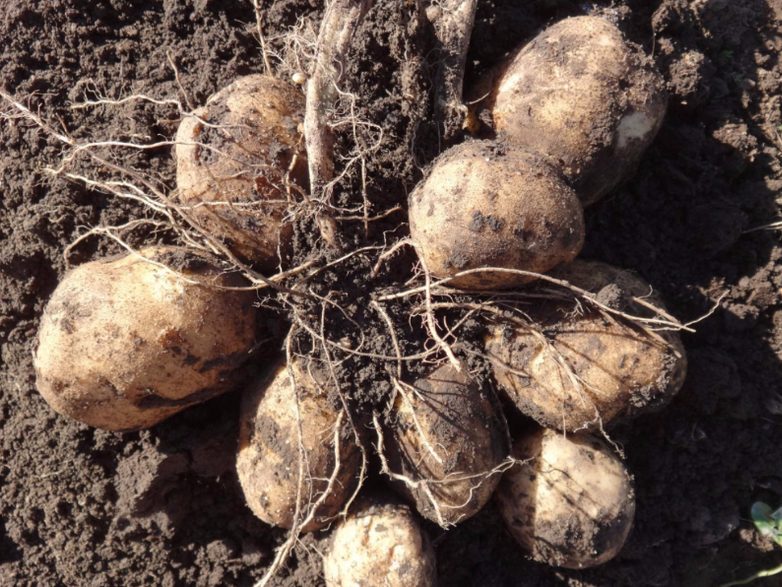
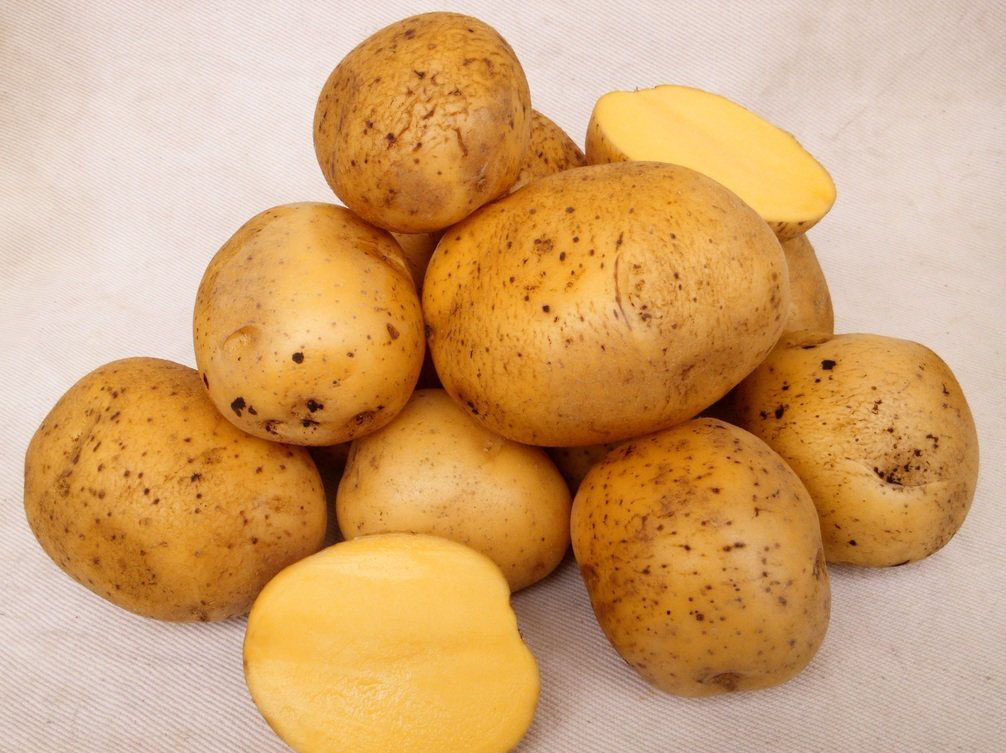
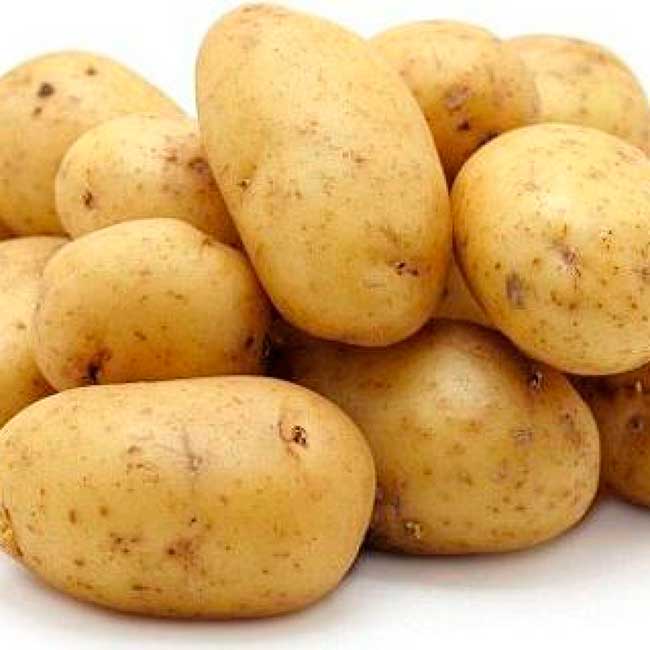
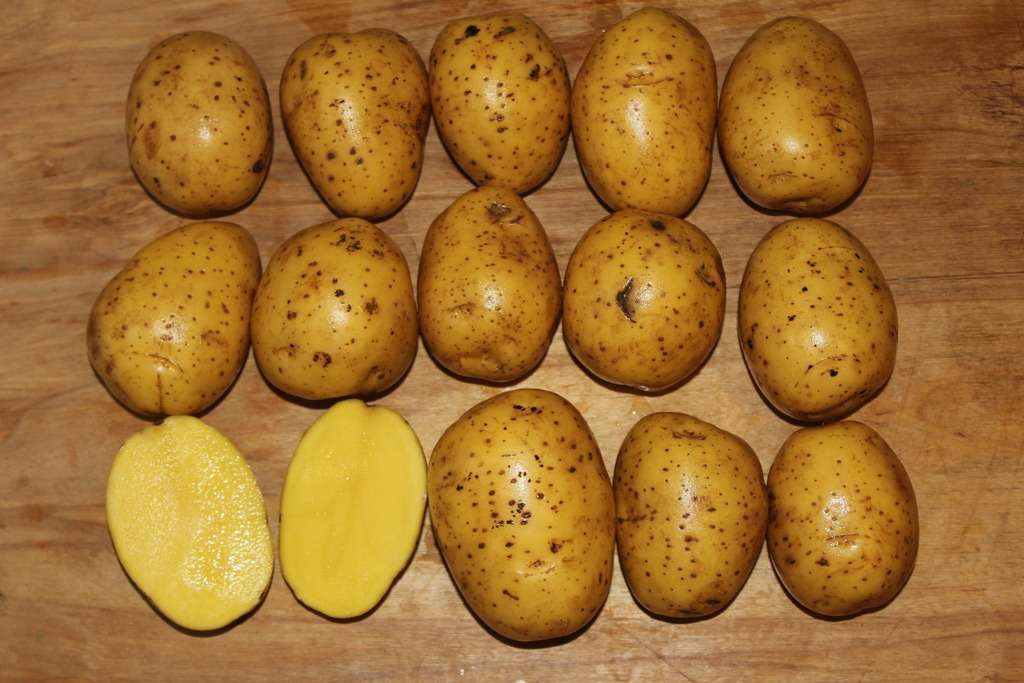
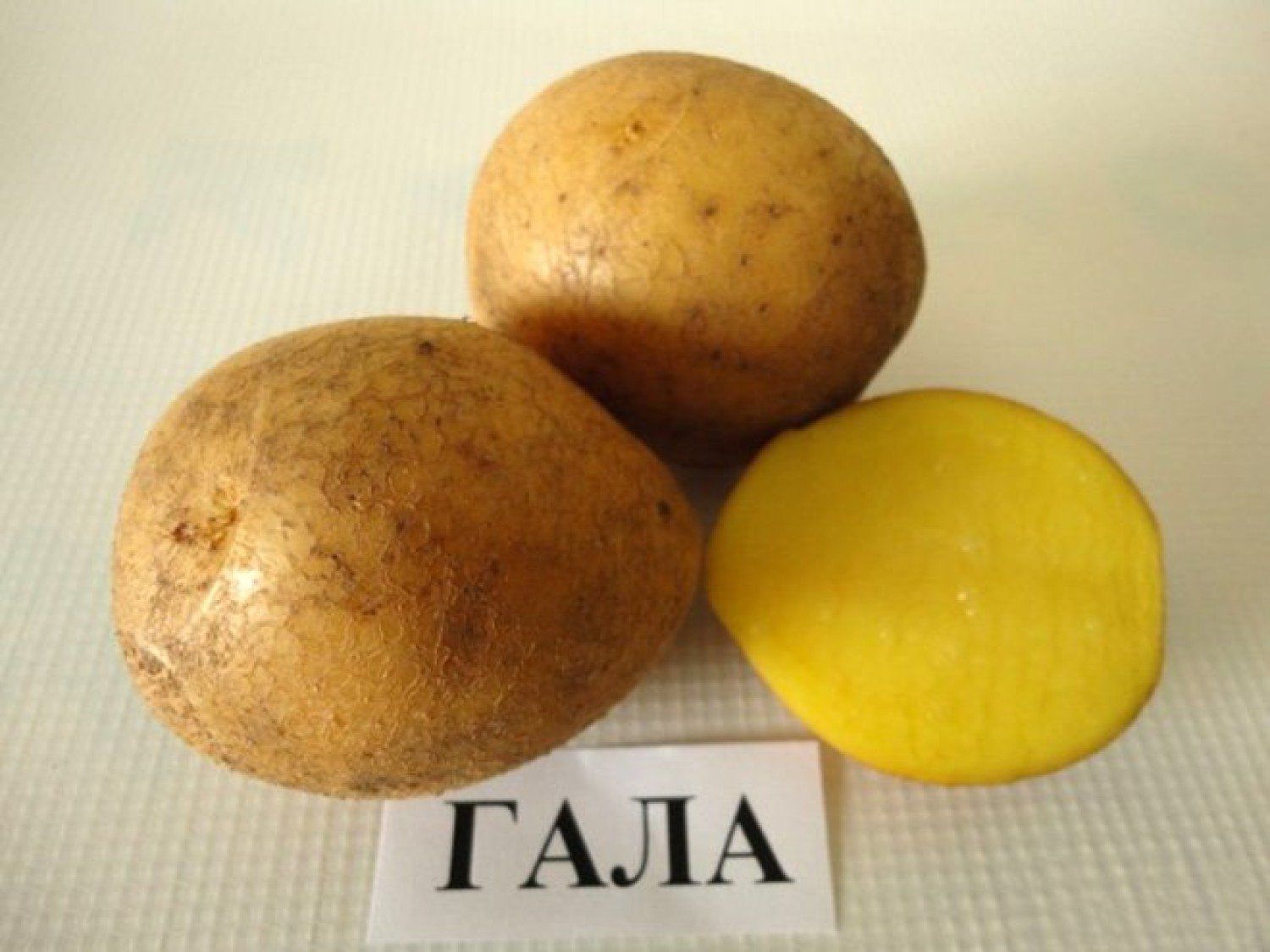
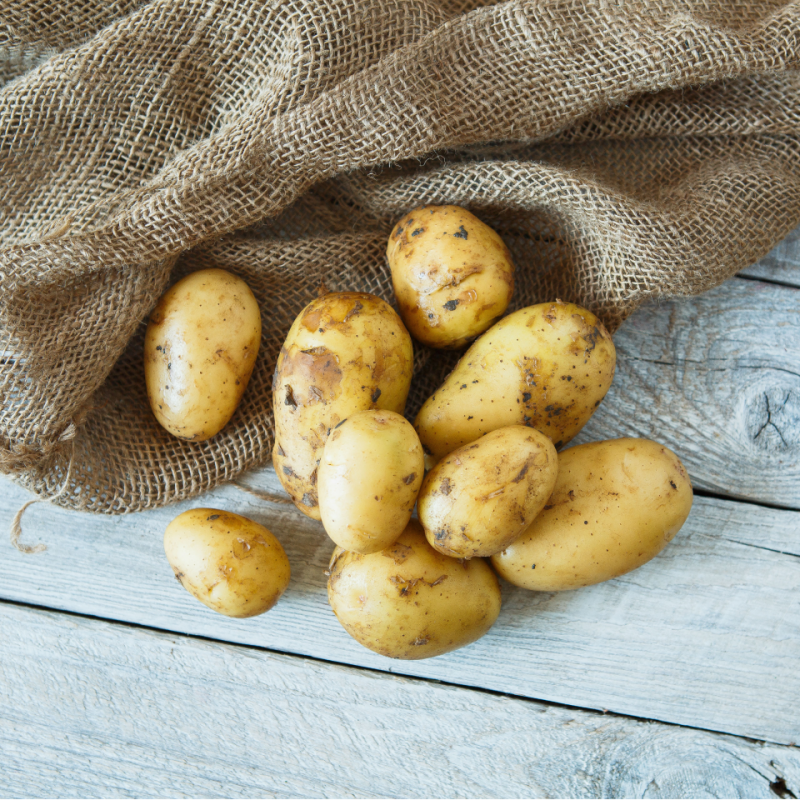
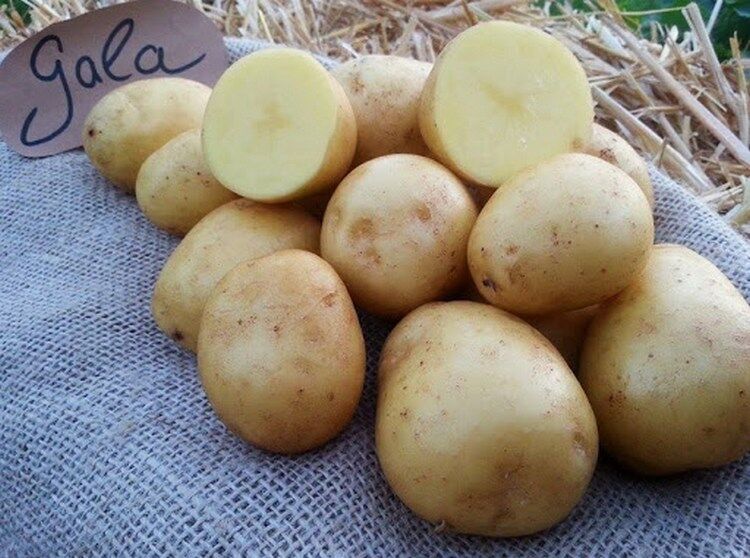
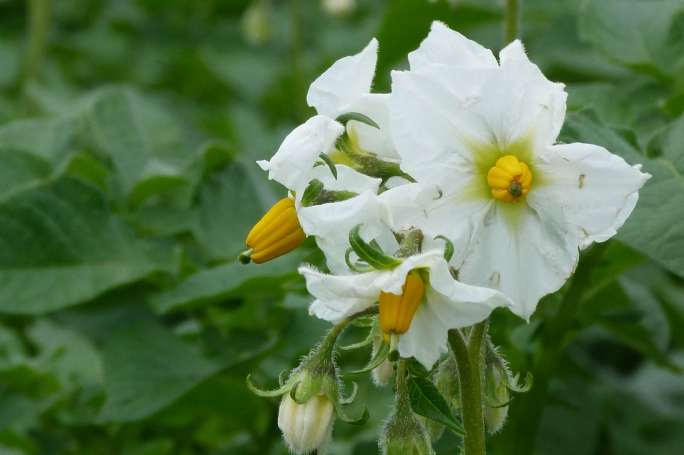
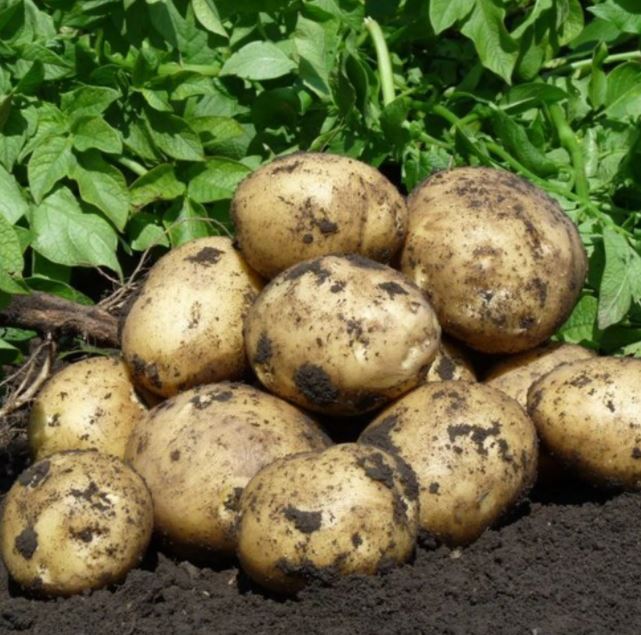
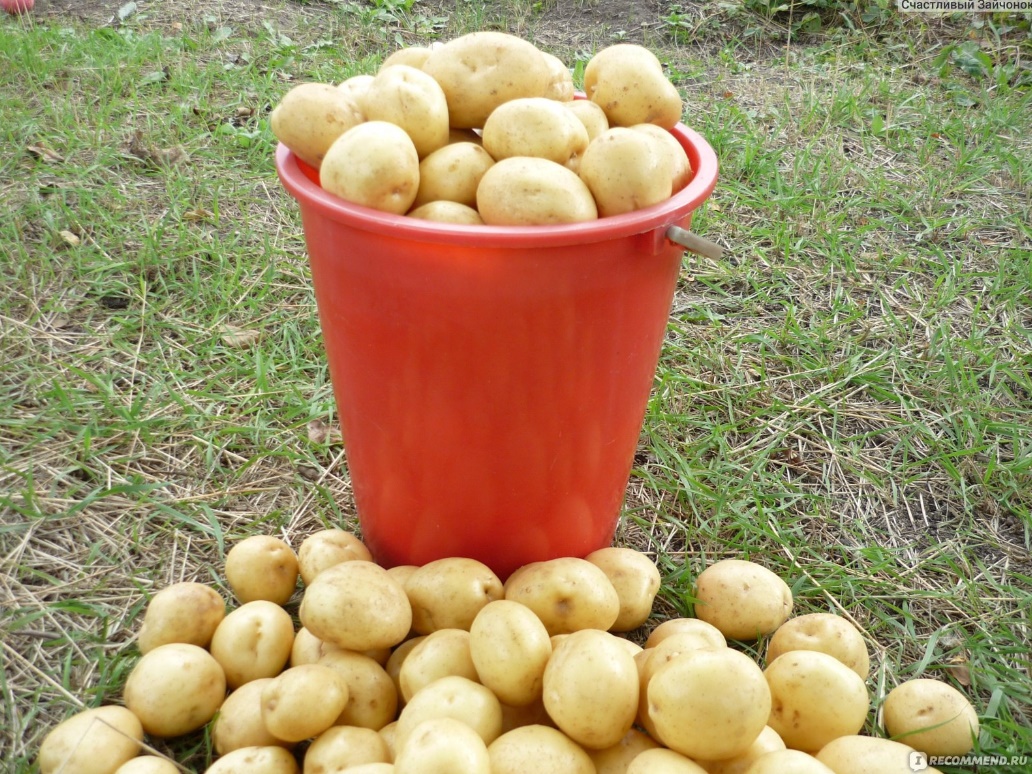
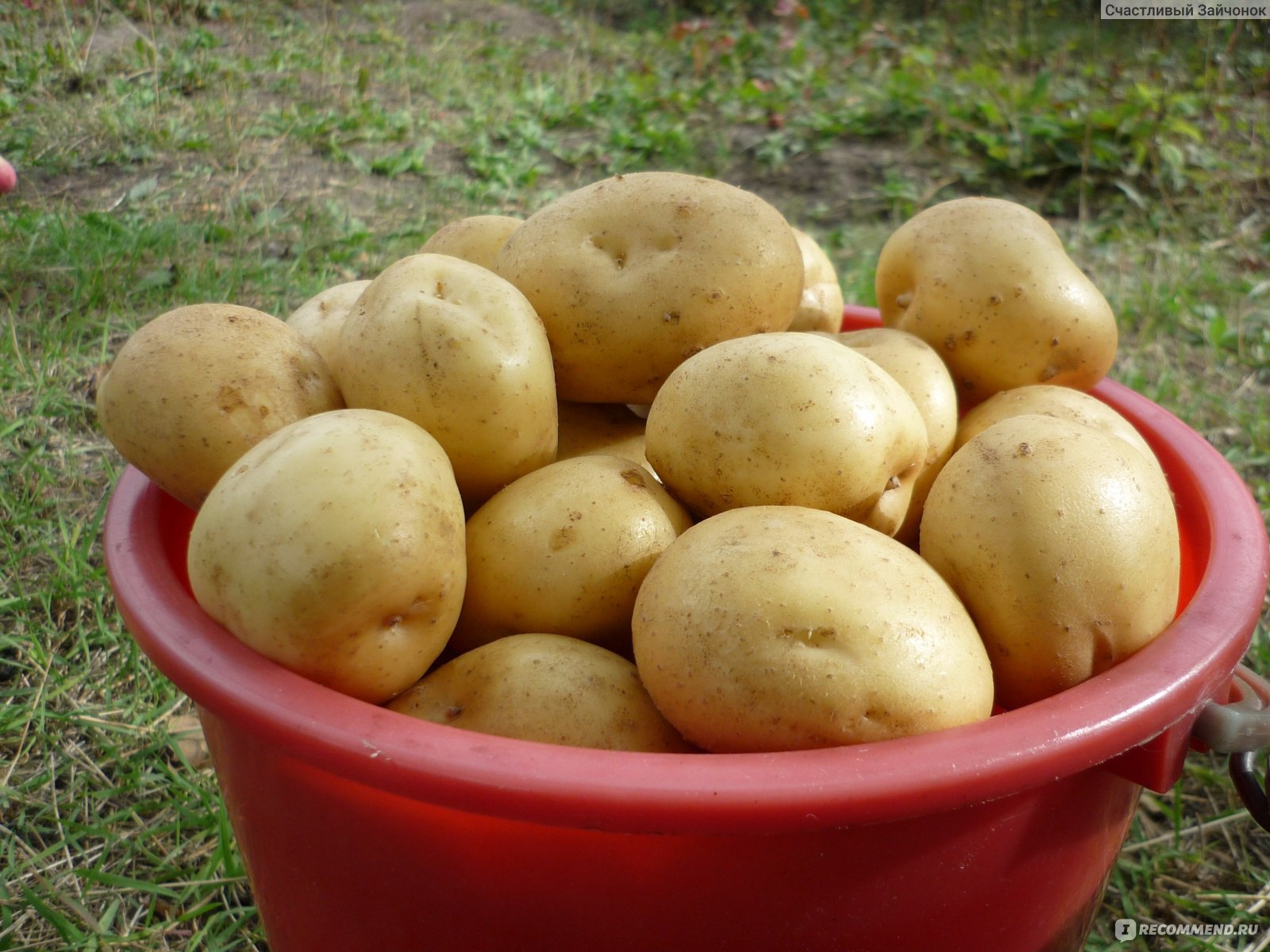
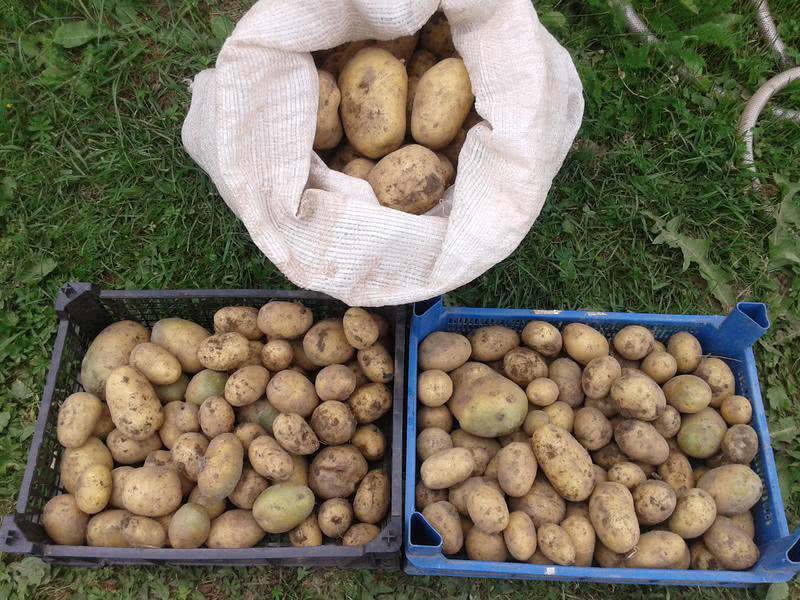
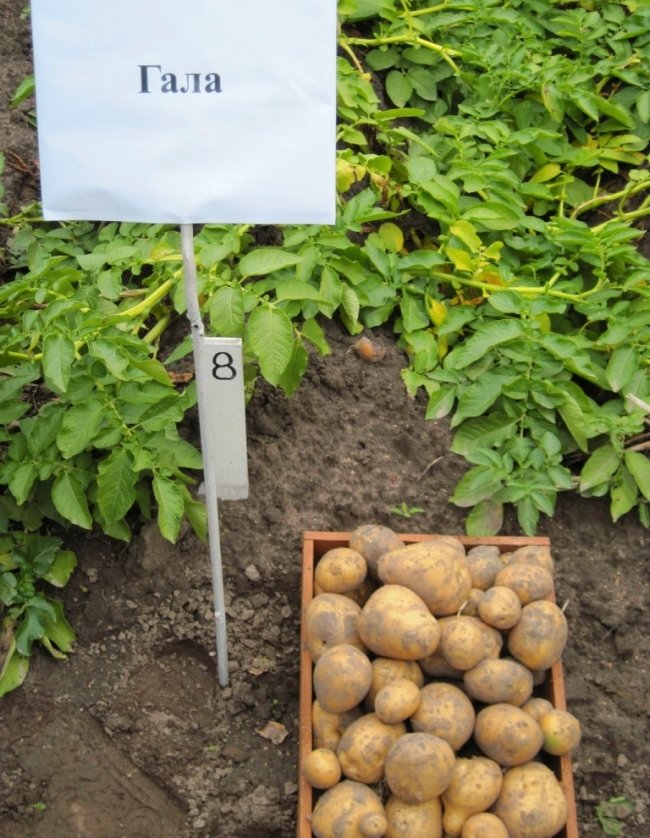
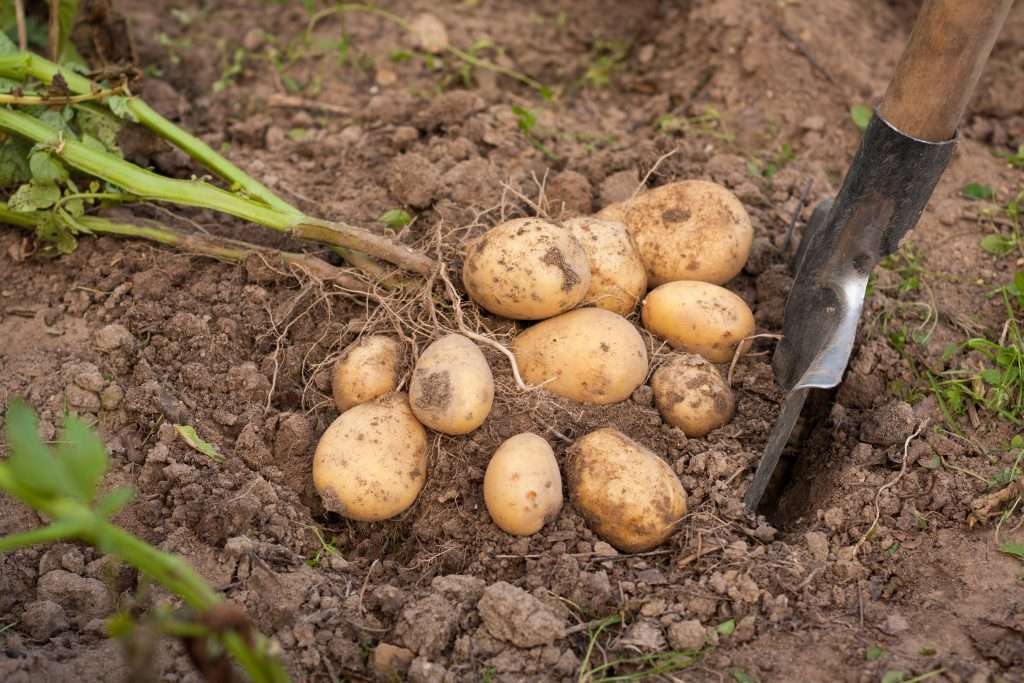
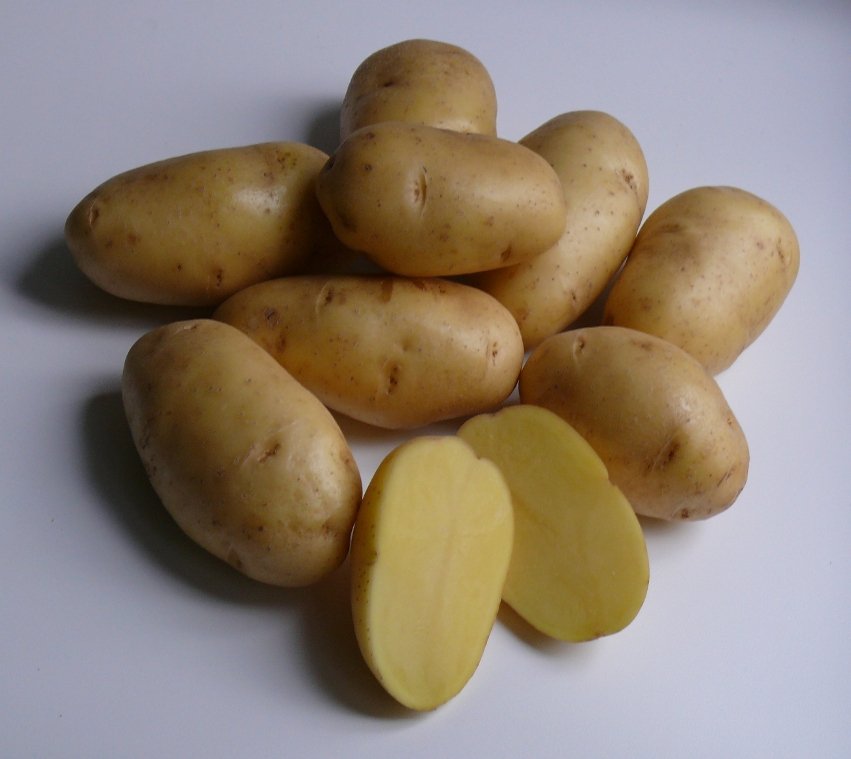
A table potato variety. Yields of 216-263 c/ha (up to 390 c/ha) have been recorded in the Volgograd region. The bushes are upright. The fronds have slight to moderate corrugation around the perimeter. The corollas are small and snow-white. The tubers are oval, with small stem growth points. The skin is smooth and creamy. The flesh of this new seed potato variety is dark yellow.
Specifications:
- weight - 71-122 g;
- starch content - 10-13%;
- marketability - 71-94%;
- shelf life - 89%.
Resistant to Synchytrium endobioticum and roundworms.
Read more about the variety in the article Gala Potato: characteristics and comparison of the variety with others in tables, reviews.
Photo gallery of the Gala potato variety:
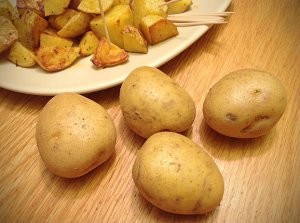
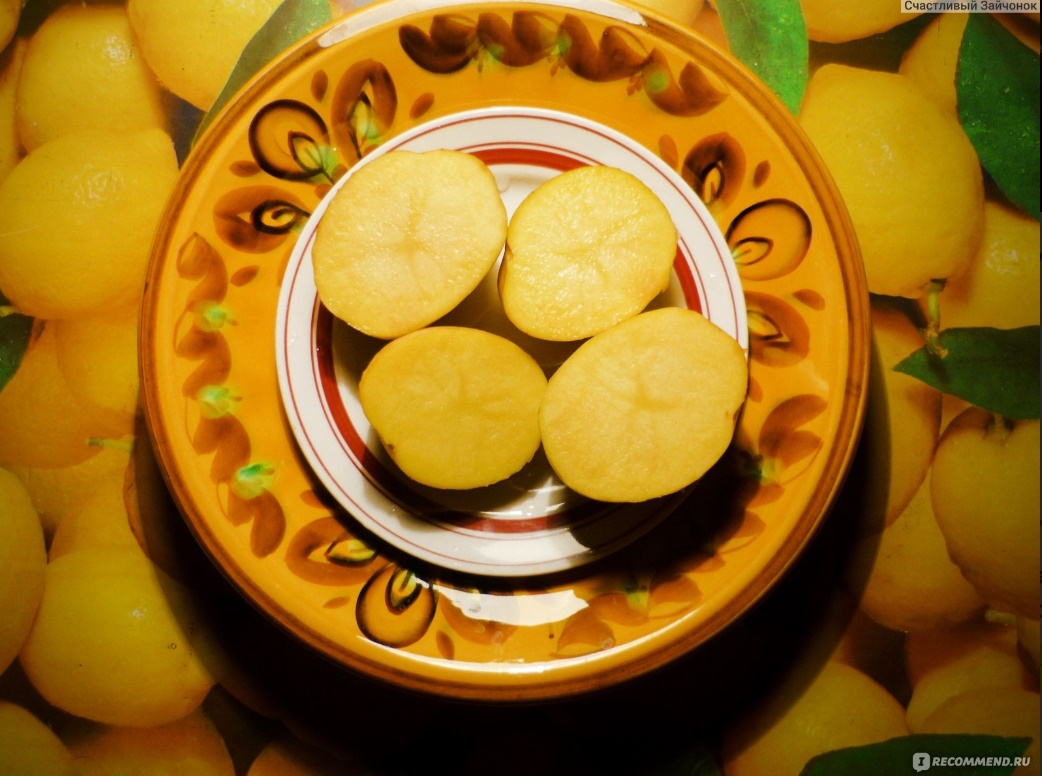
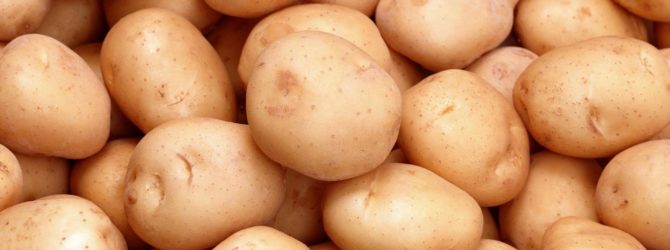
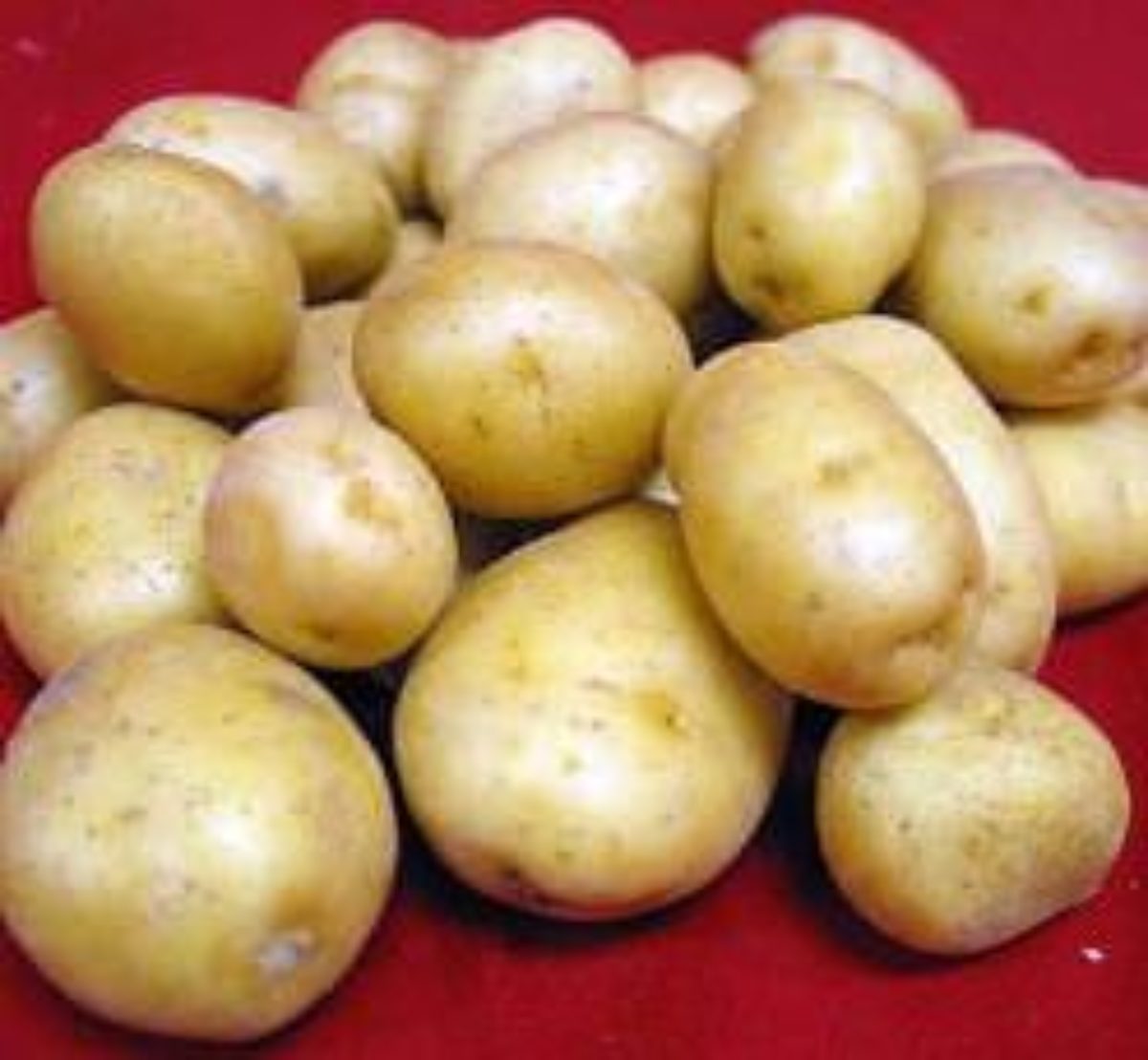
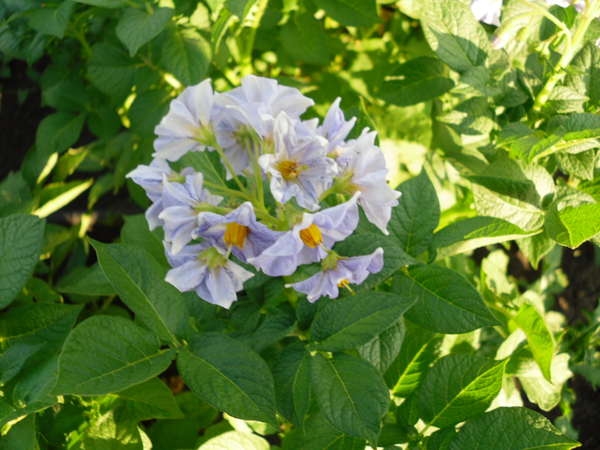
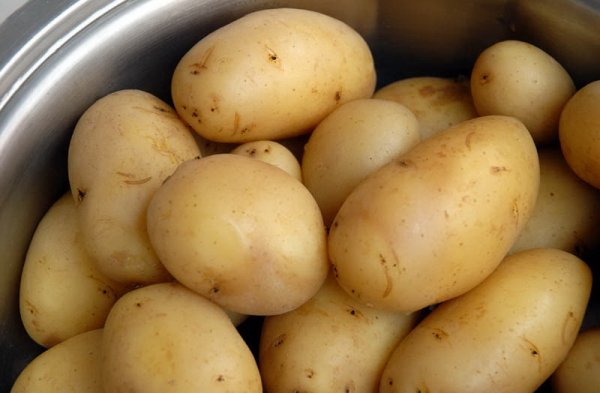
Blue
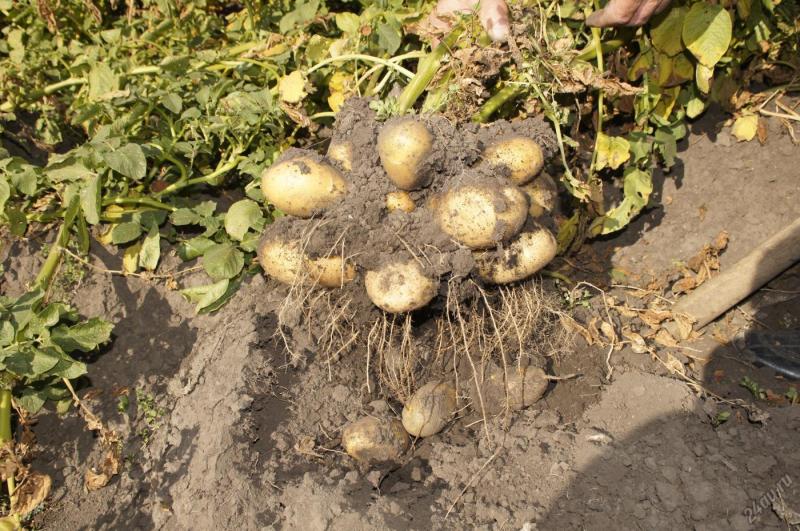
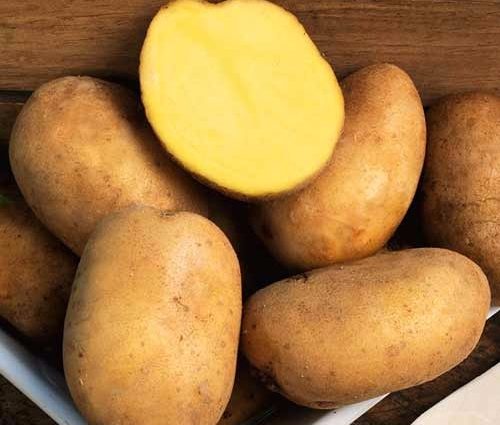
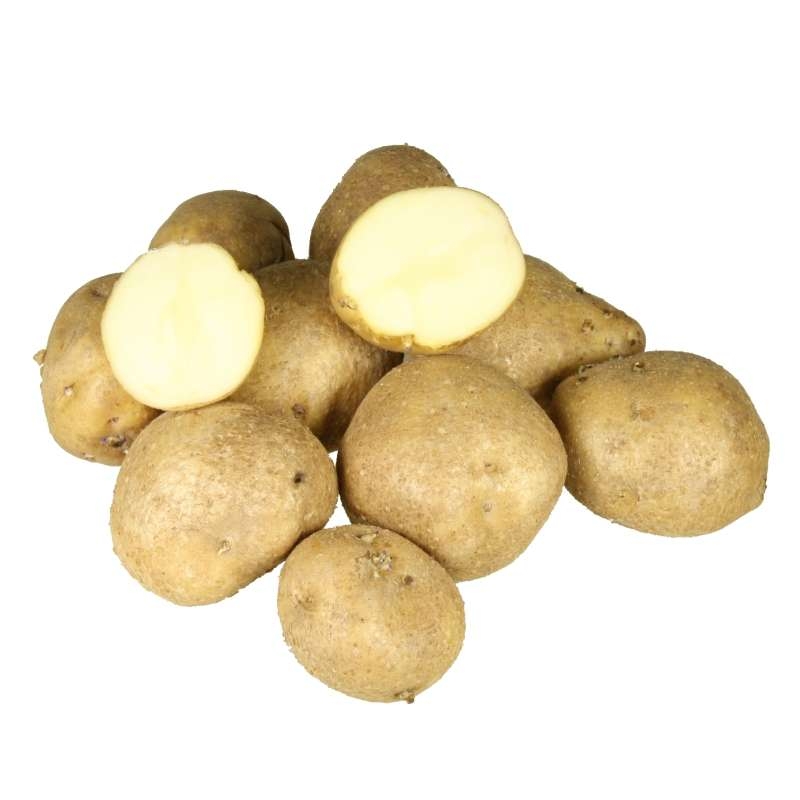
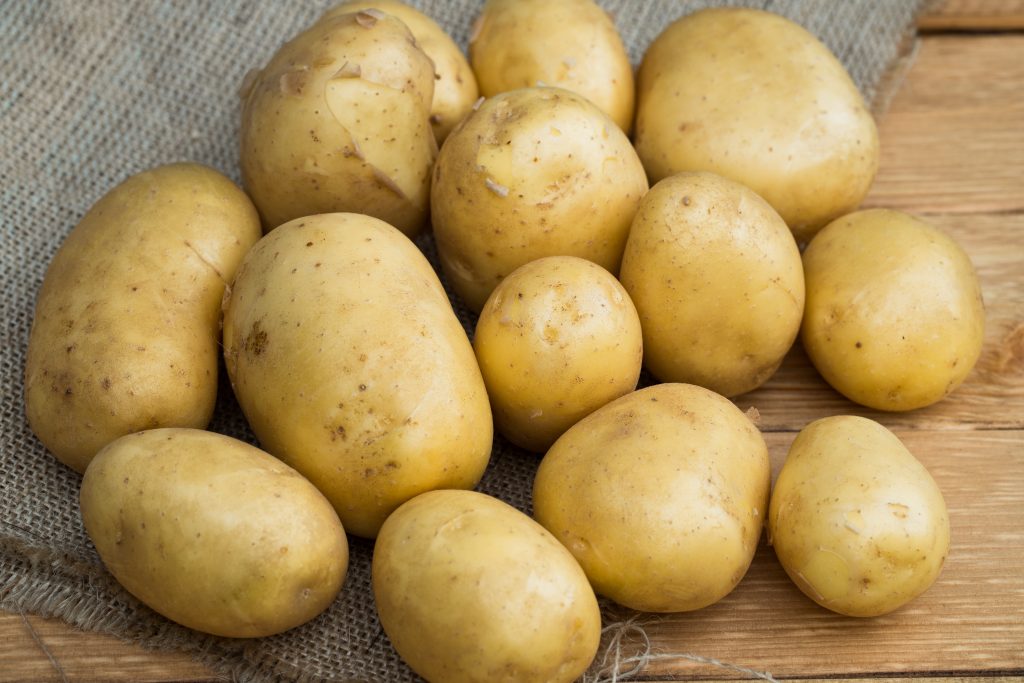
A mid-season table variety. Yields 40-50 t/ha. Contains many nutrients and is suitable for dietary dishes. The bushes are medium-sized. The leaves are small, glossy, and emerald-colored. The skin is light sandy. The flesh is creamy.
Specifications:
- weight - 90-110 g;
- starch content - 17-19%;
- marketability - 91-95%;
- Storage quality: average.
Resistant to Synchytrium endobioticum and roundworms.
Read more about the variety in the articleGolubizna potato variety: description, characteristics, and comparison tables + 25 photos, reviews.
Photo gallery of the Golubizna potato variety:
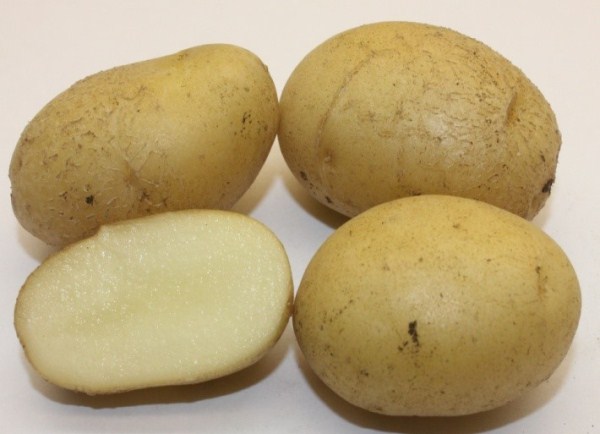
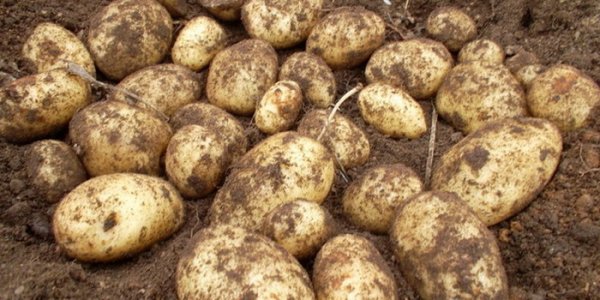
Jelly
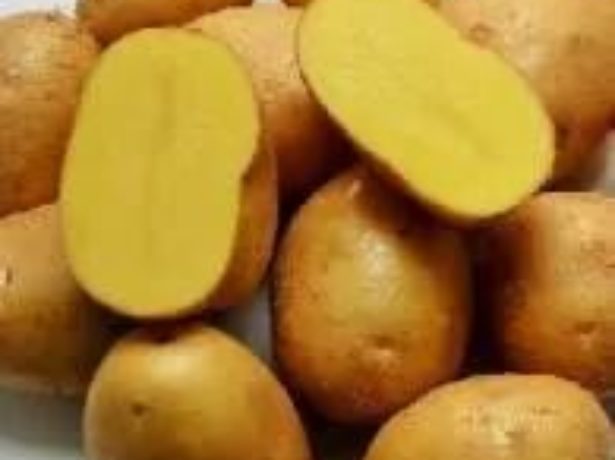
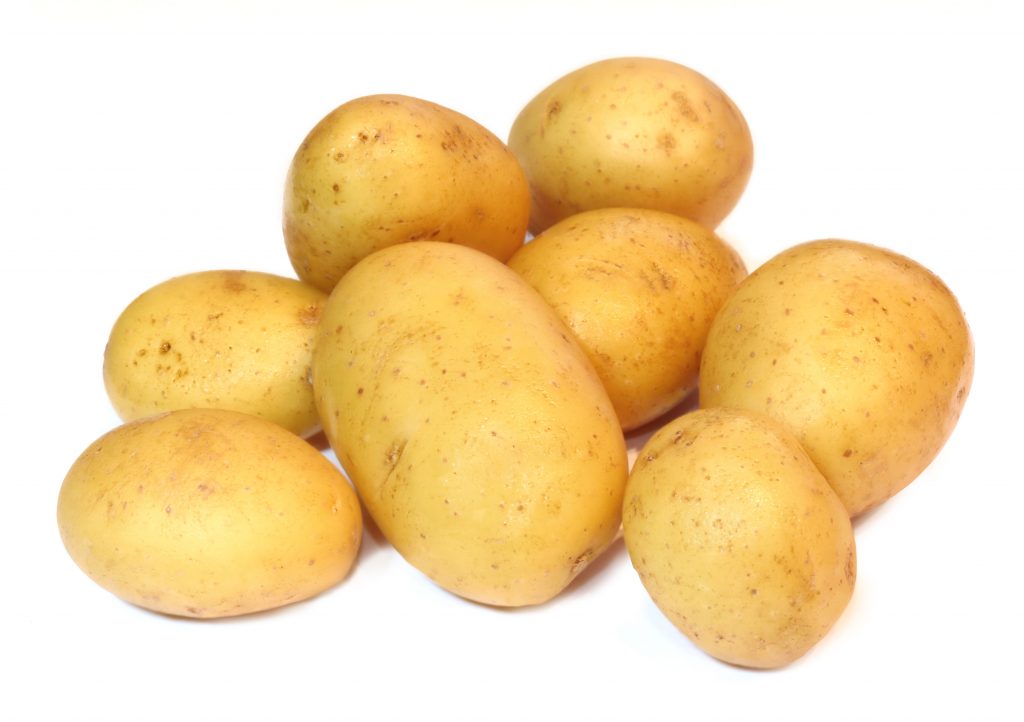
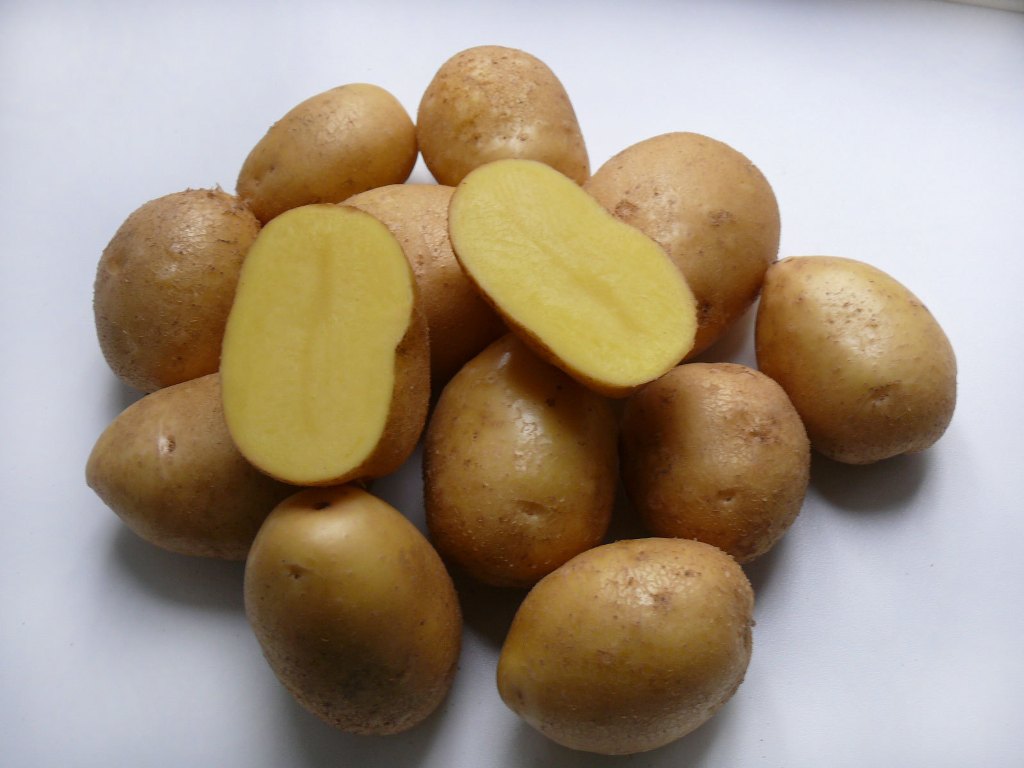
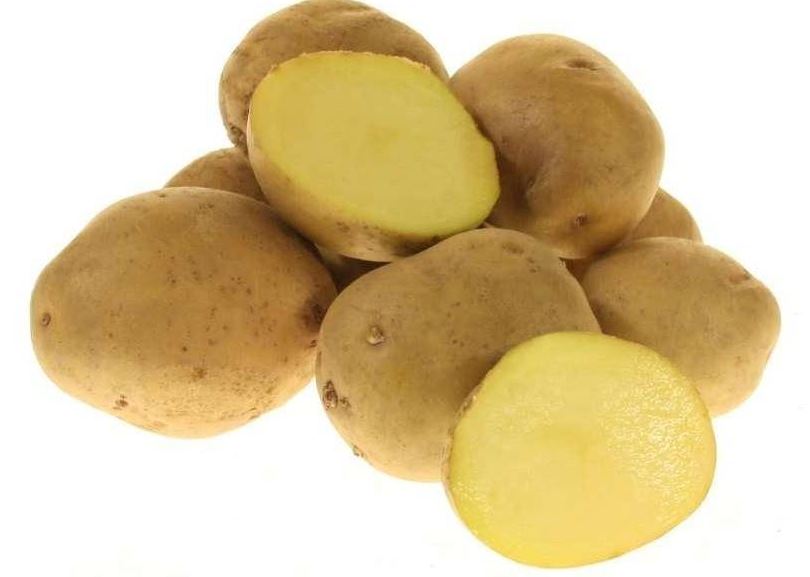
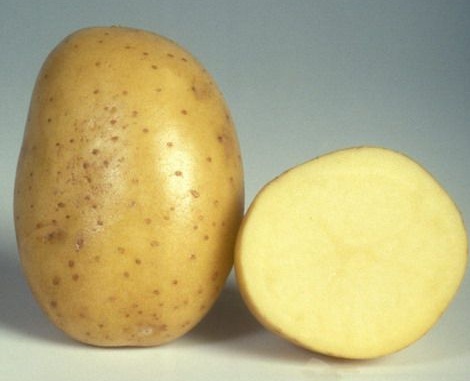
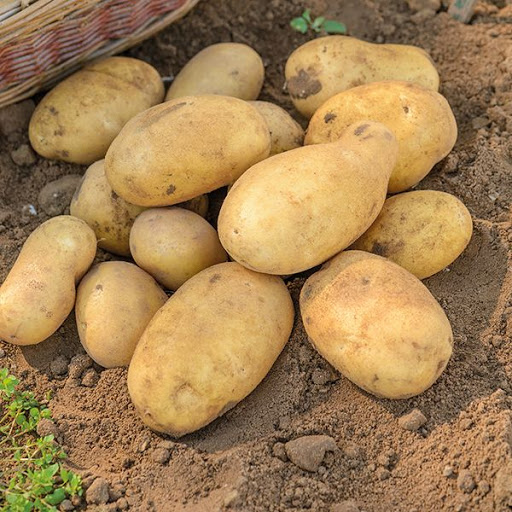
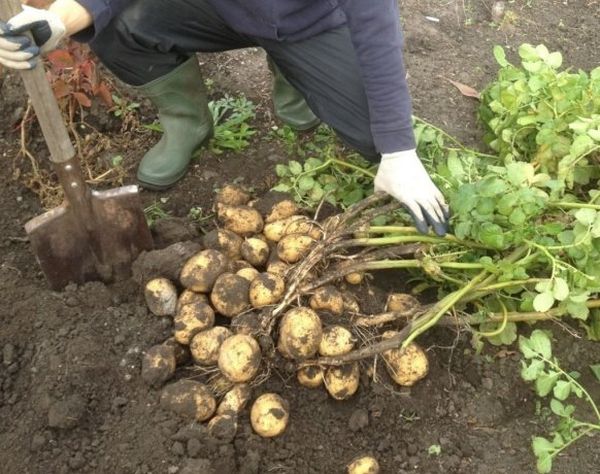
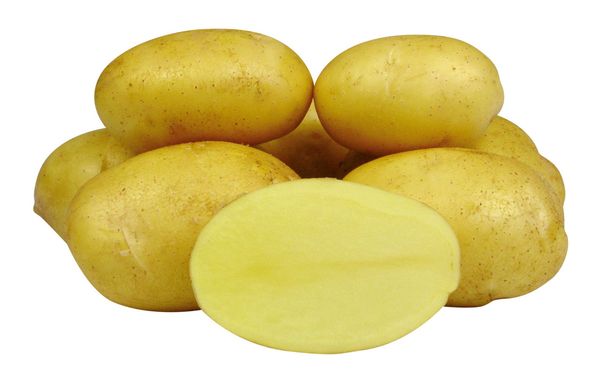
Table potato. Yields 156-292 c/ha (up to 335 c/ha). Jelly was bred in 2005 in Holland and was immediately added to the Russian register. Bushes are semi-erect or spreading. Leaves are medium to large, a rich grassy color. Inflorescences are snow-white. Tubers are oval with small dots. The skin is smooth or slightly rough, yellowish. The flesh is dark sandy.
Specifications:
- weight - 84-135 g;
- starch content - 13-17%;
- marketability - 88-97%;
- shelf life - 86%.
Resistant to Synchytrium endobioticum and roundworms.
Photo gallery of the Jelly potato variety:
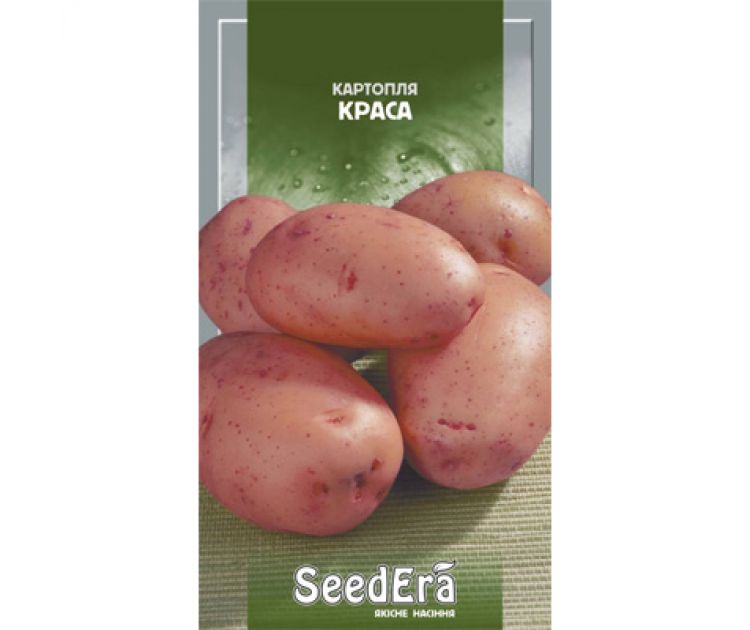
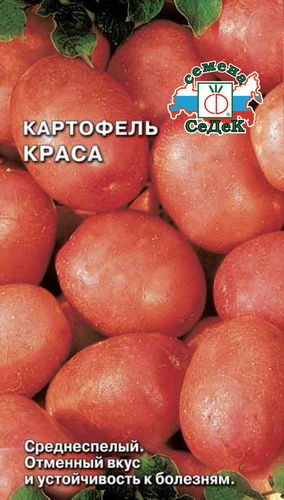
Beauty
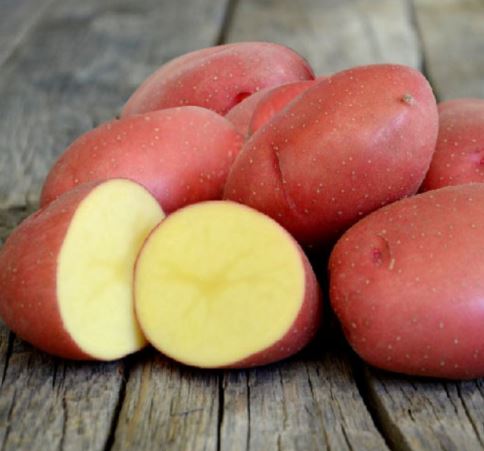
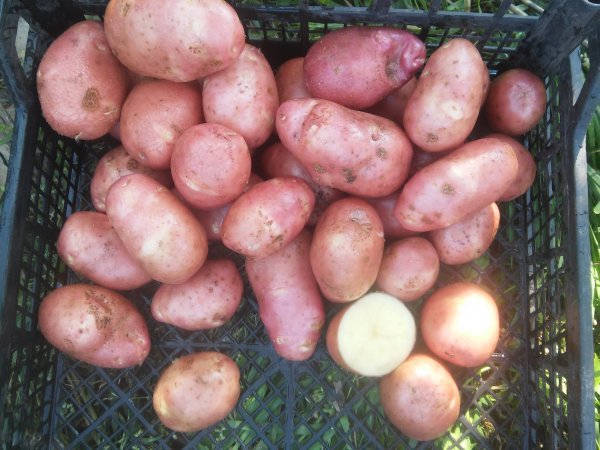
Table variety. Yields 130-321 centners per hectare. It adapts to adverse weather and poor soil. Bushes are medium to tall, semi-erect. Leaf blades are large and emerald. Tubers are oval, with small germination points. The skin is reddish, and the flesh is sandy.
Specifications:
- weight - 95-140 g;
- starch content - 13-15%;
- marketability - 79-99%;
- shelf life - 94%.
Resistant to Synchytrium endobioticum, roundworms, leaf curl, mosaic.
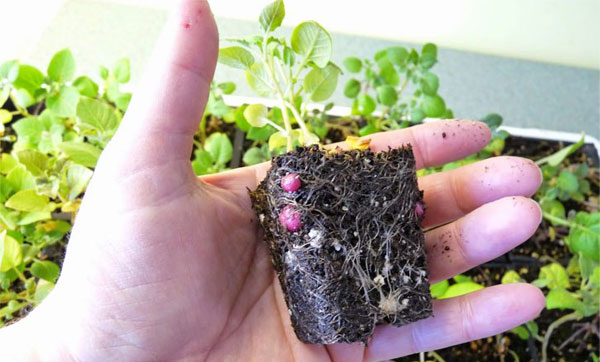
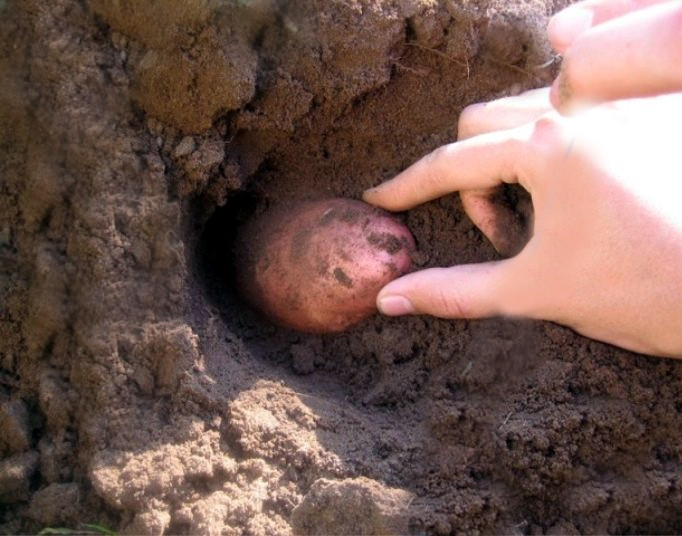
Photo gallery of the Krasa potato variety:
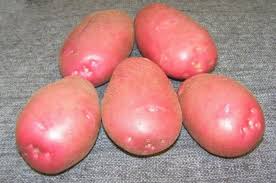
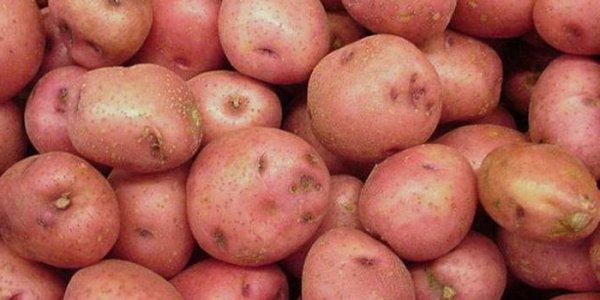
Ah, you know that There are varieties of potatoes: Krasa and Krasa Meshchera.?
Ilyinsky
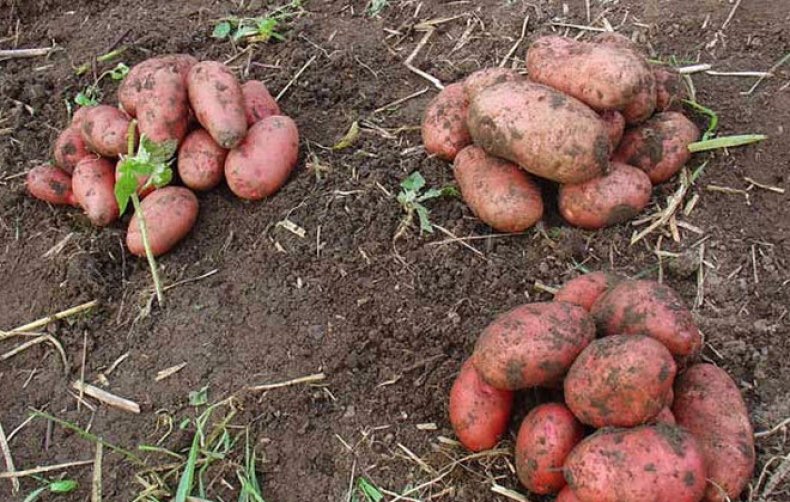
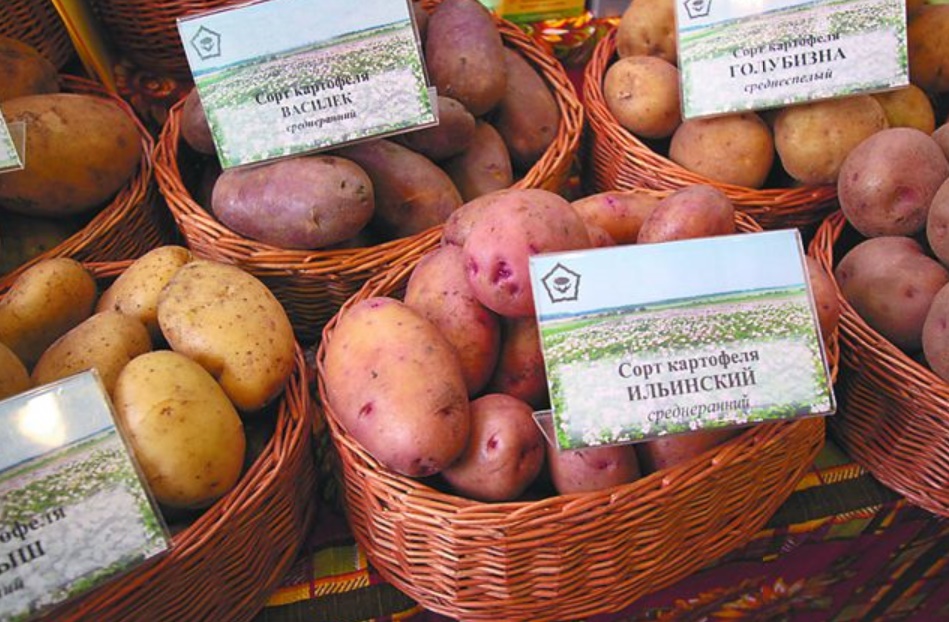
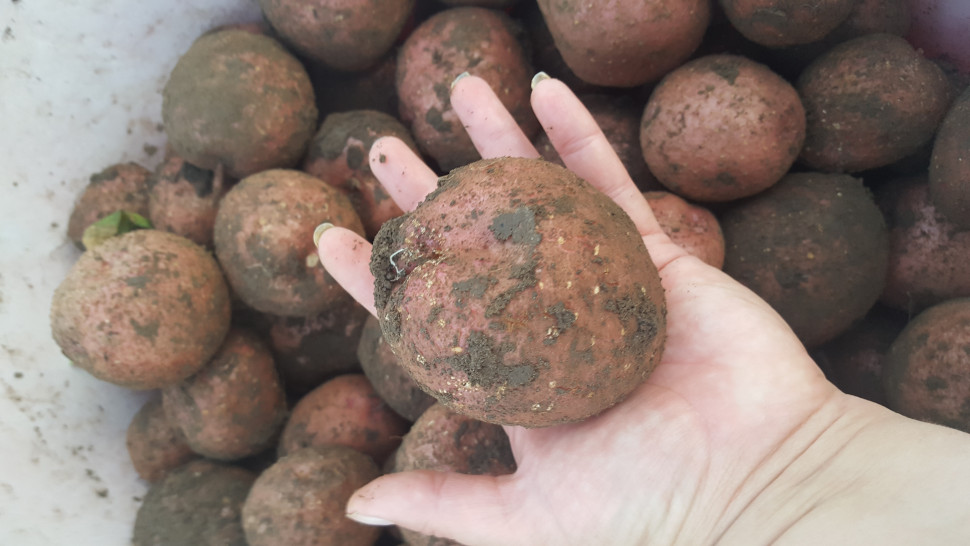
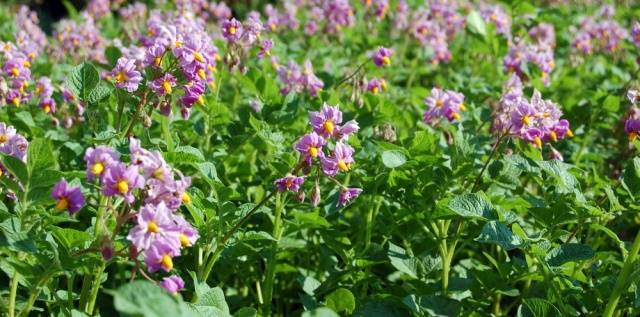
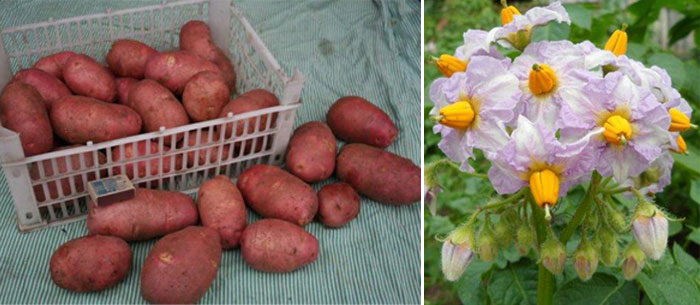
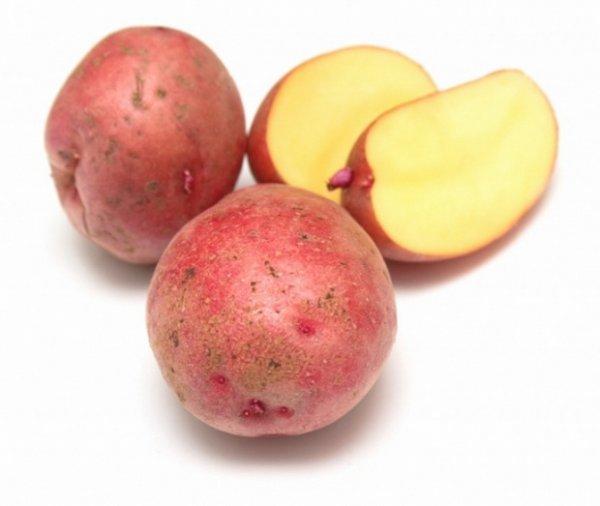
For culinary purposes. Yields 176-346 centners per hectare. Excellent tolerance to prolonged periods of dry weather. Bushes with semi-erect shoots. Medium-sized leaves, slightly wavy or smooth at the edges. Reddish-purple corollas. Oval potatoes, red on the outside, white on the inside.
Specifications:
- weight - 54-158 g;
- starch content - 15-18%;
- marketability - 87-99%;
- shelf life - 93%.
Good resistance to Synchytrium endobioticum.
Read more about the variety in the article Ilyinsky potato variety: photo, characteristics, comparison table, reviews.
Photo gallery of the Ilyinsky potato variety:
Lugovskoy
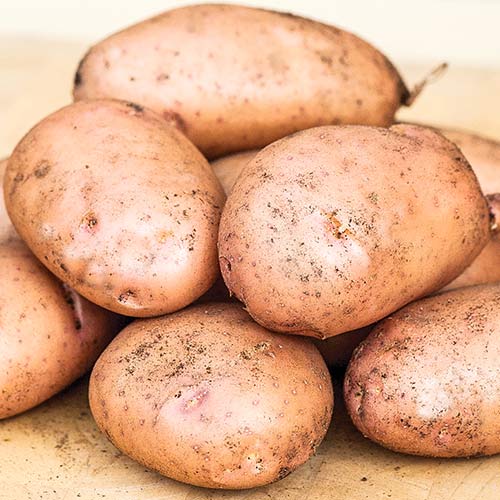
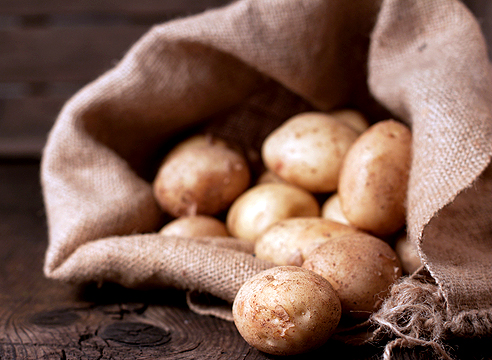
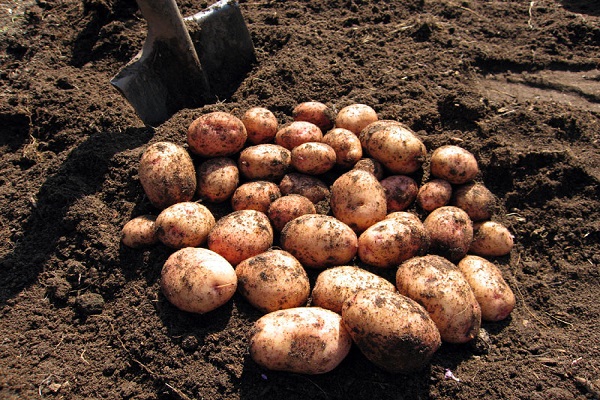
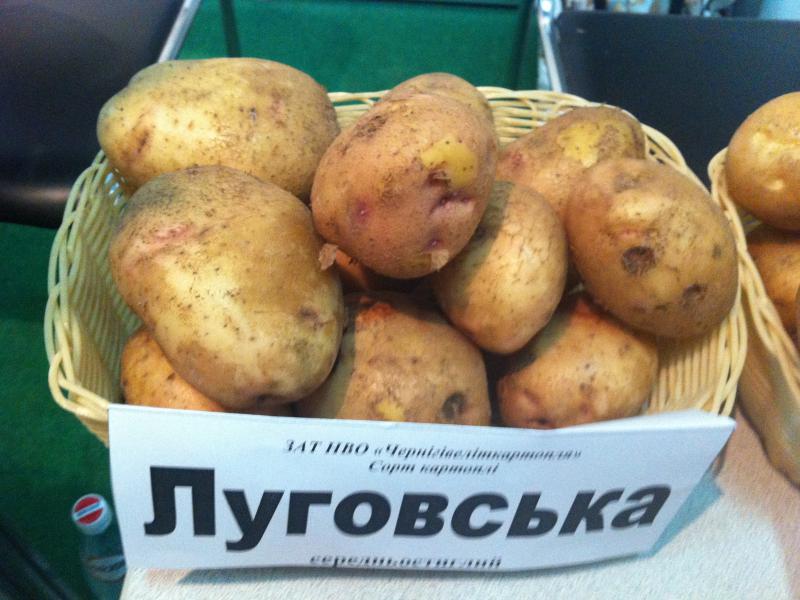
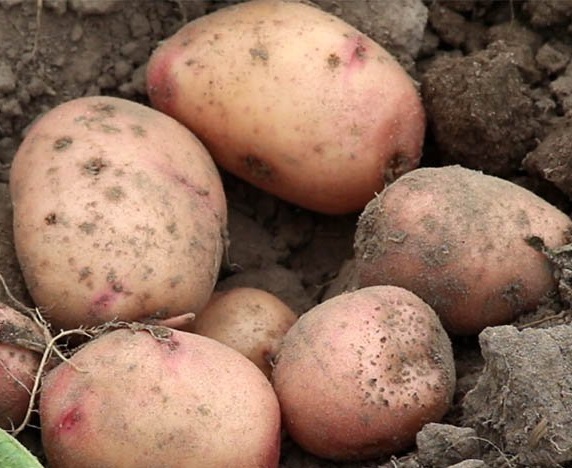
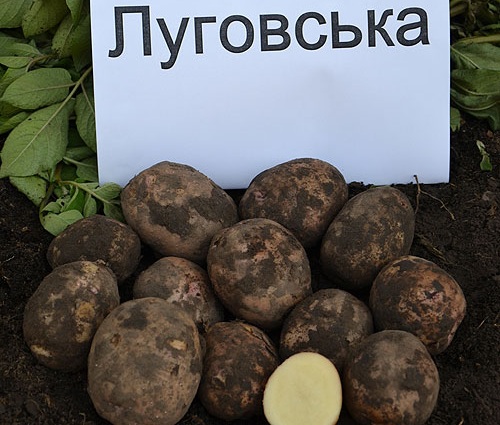
Used for making mashed potatoes and starch. Yields up to 514 centners per hectare. Developed by Ukrainian breeders based on the Sineglazka variety. Bushes with upright shoots. Flowering is short, and the inflorescences are white. Oval tubers with few small germination points. Pinkish skin, white flesh. Contains high amounts of amino acids, carotenoids, protein, and vitamins B and C.
Specifications:
- weight - 85-125 g;
- starch content - 12-19%;
- marketability - high;
- shelf life - 97%.
Resistant to Synchytrium endobioticum.
More about the variety in the articleTwo potato varieties: Lugovskoy and Lugovskoy Plus: 19 photos, descriptions, tables, reviews
Photo gallery of the Lugovskoy potato variety:
Favorite
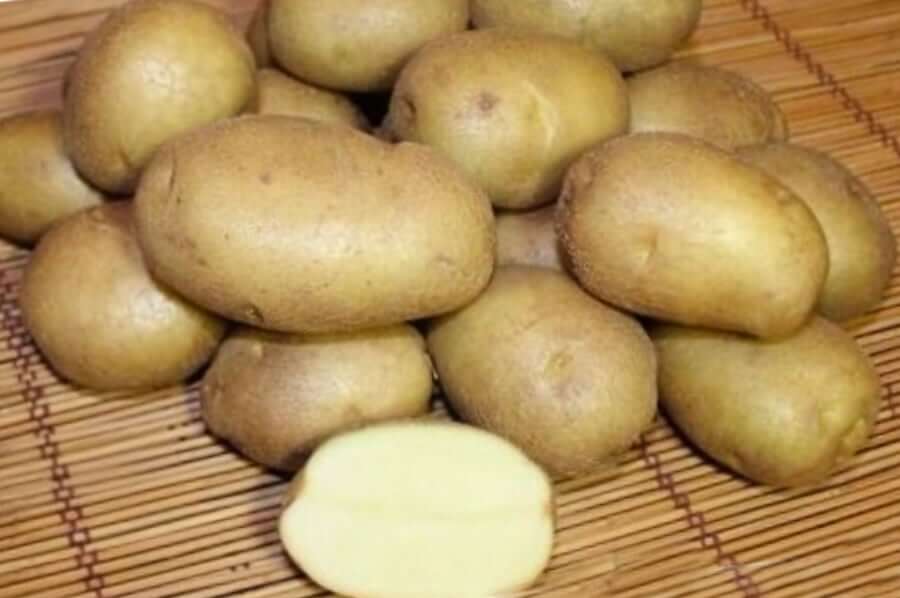
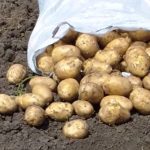
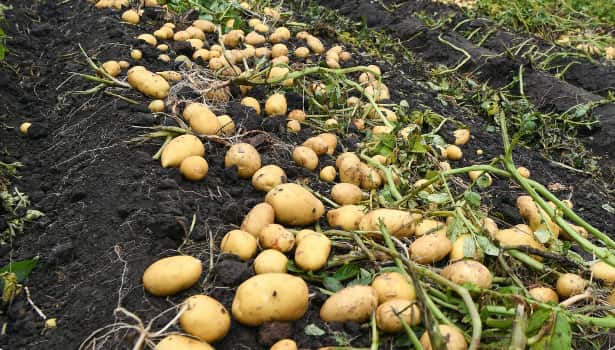
Culinary use. Yields range from 250 to 400 centners per hectare. This yield is stable, unaffected by weather or soil type. Bushes have sparse, weakly branched stems. Leaf blades are green, slightly pubescent, matte, and sparsely veined. Flowering is short-lived. Tubers are oval with a blunt tip and a faint trace of the stolon. The skin is light sandy, with small, few, uncolored eyes. The flesh is snow-white.
Specifications:
- weight - 90-125 g;
- starch content - 11-15%;
- marketability - 90%;
- Storage quality: average.
Resistant to late blight, scab, and rhizoctonia. It is also rarely affected by viruses. Susceptible to ring rot and roundworm attack.
Photo gallery of the Lyubimets potato variety:
Memphis
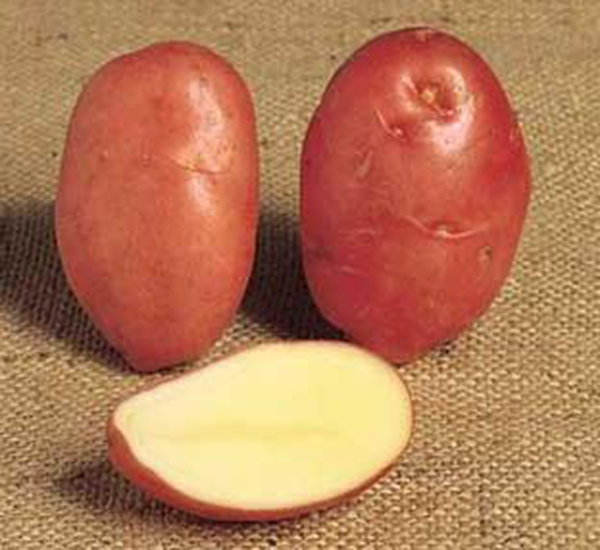
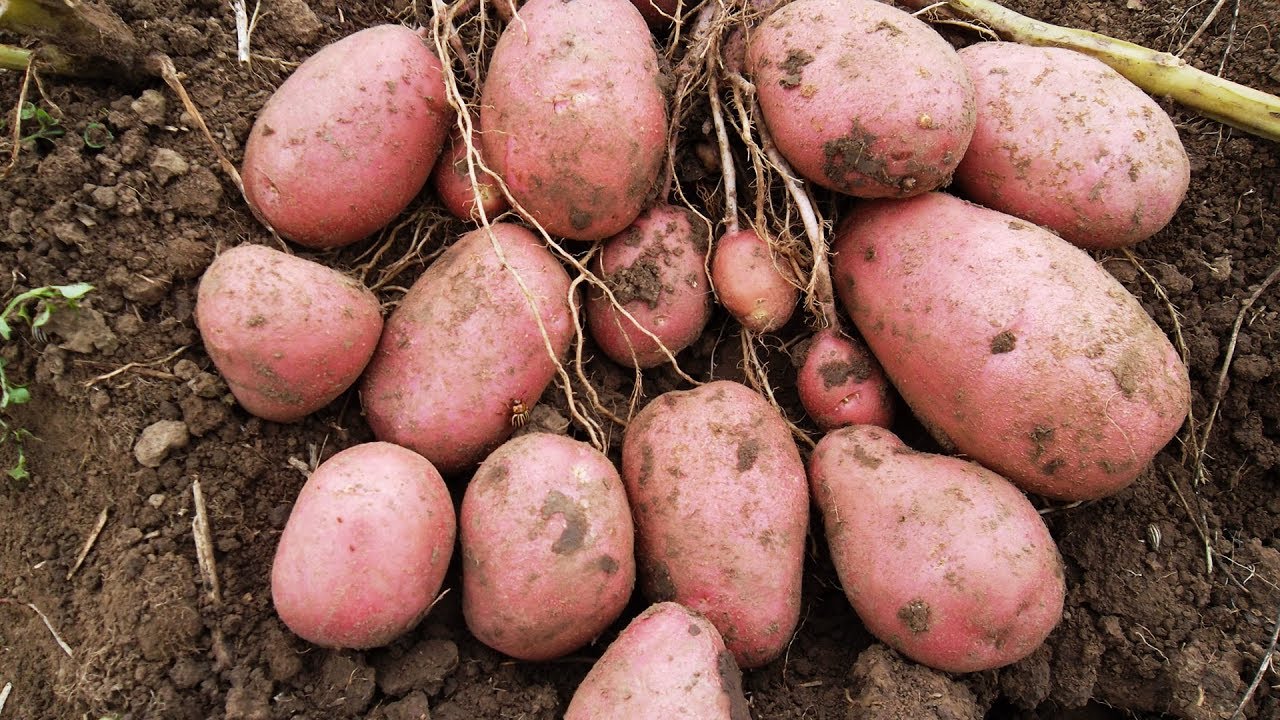
Table variety. Yields 180-382 c/ha (up to 400 c/ha in the Ivanovo region). With semi-erect stems, it produces medium to tall bushes. The leaves are large and emerald green. The potatoes are oval. The skin is red, with small germination points, and the interior is sandy.
Specifications:
- weight - 82-160 g;
- starch content - 14-16%;
- marketability - 84-96%;
- shelf life - 95%.
Shows resistance to Synchytrium endobioticum, roundworms.
Read more about the variety in the article Memphis Potato: variety description, comparison table with others, planting and care.
Photo gallery of the Memphis potato variety:
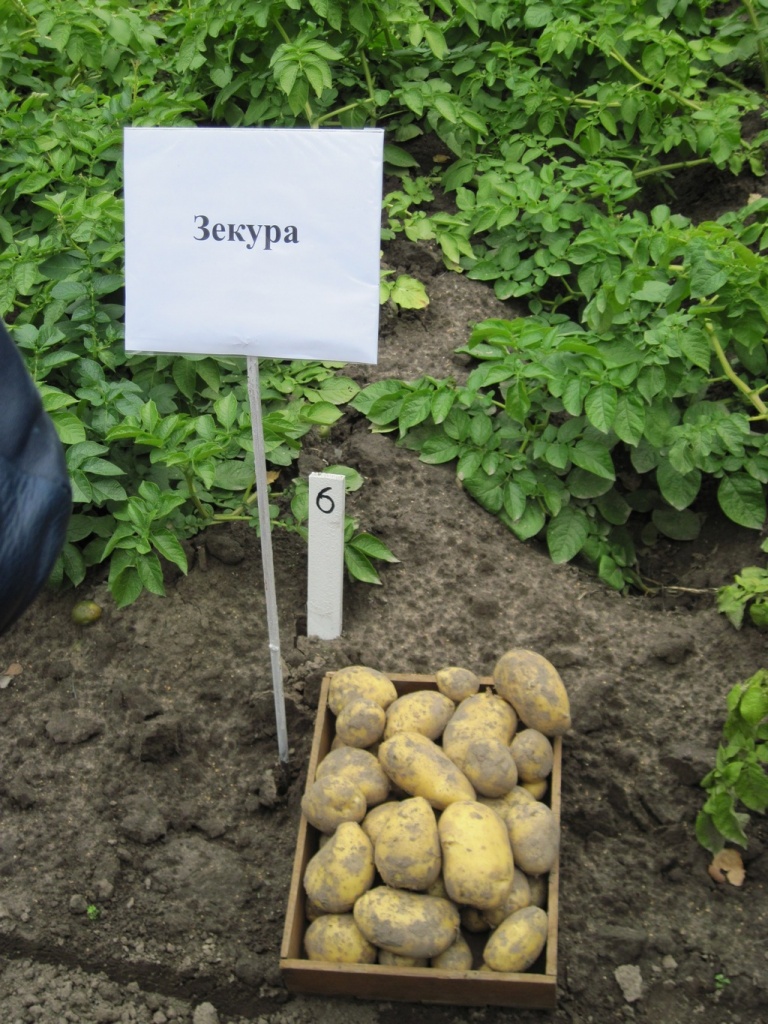
Zekura
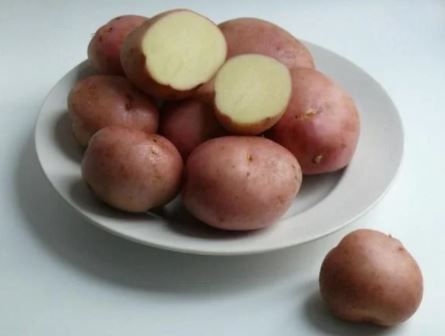
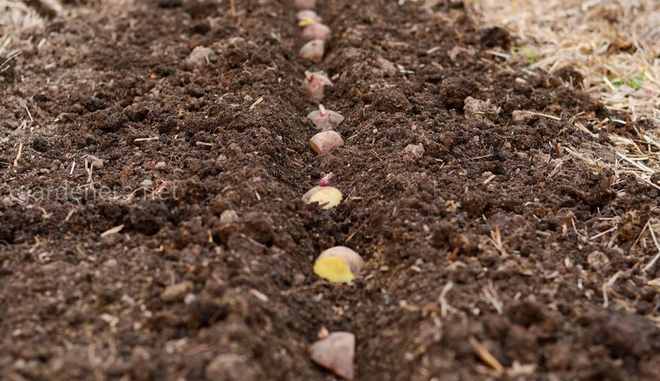
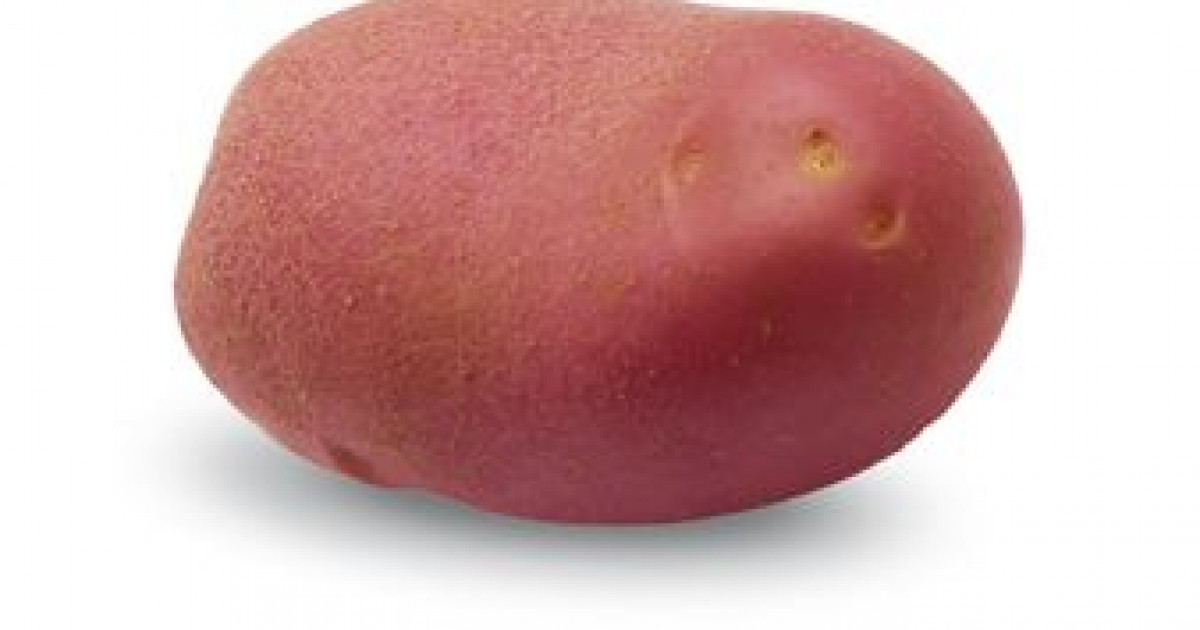
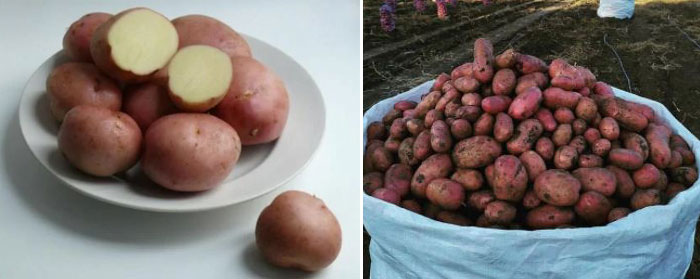
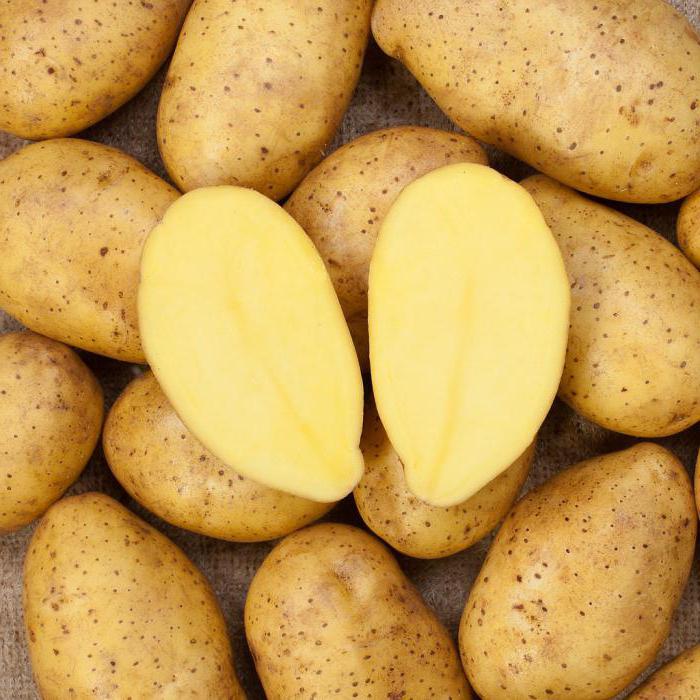
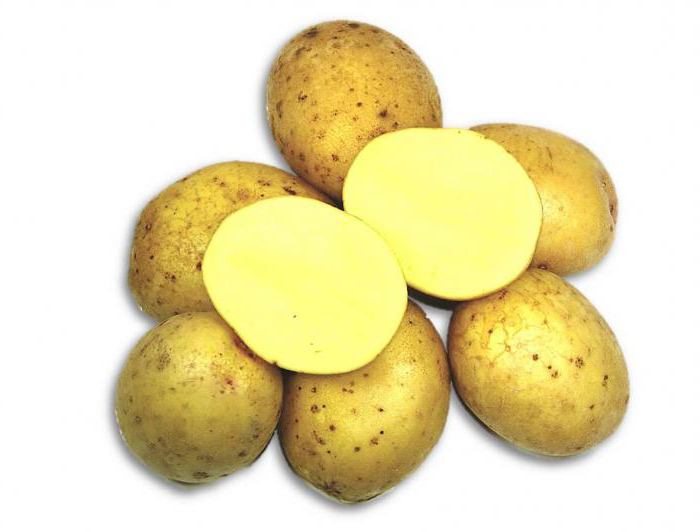
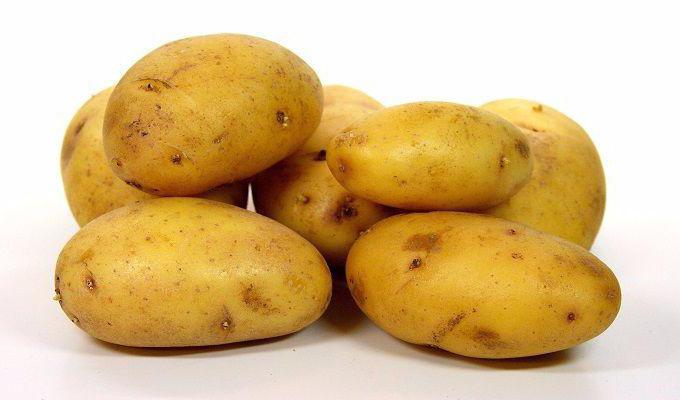
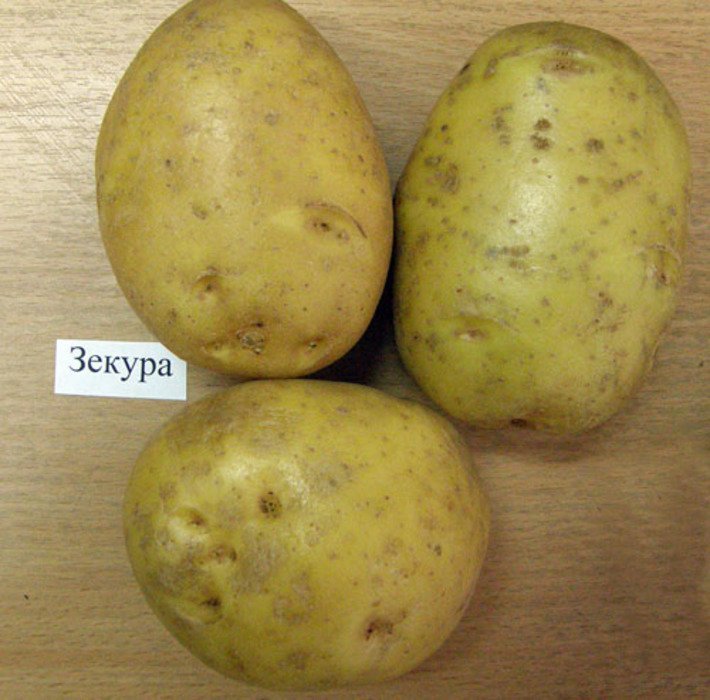
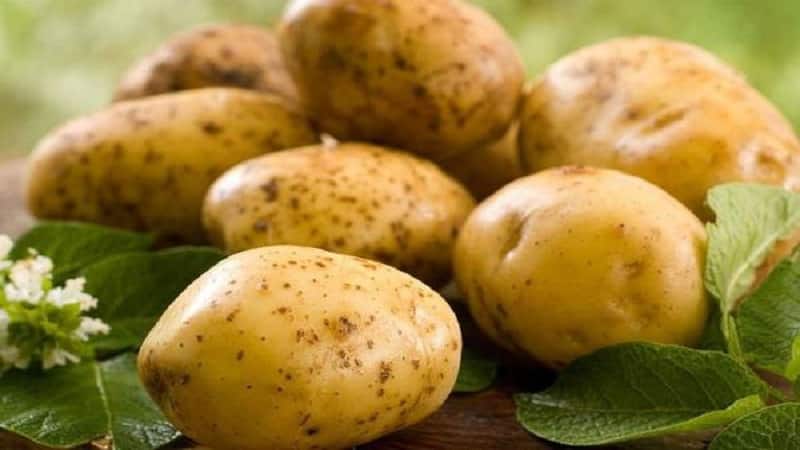
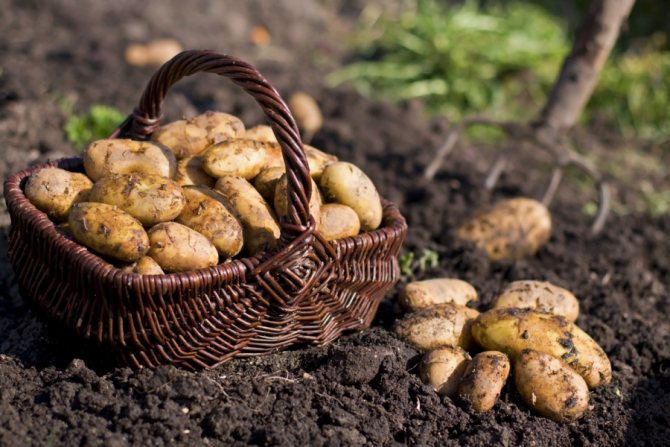
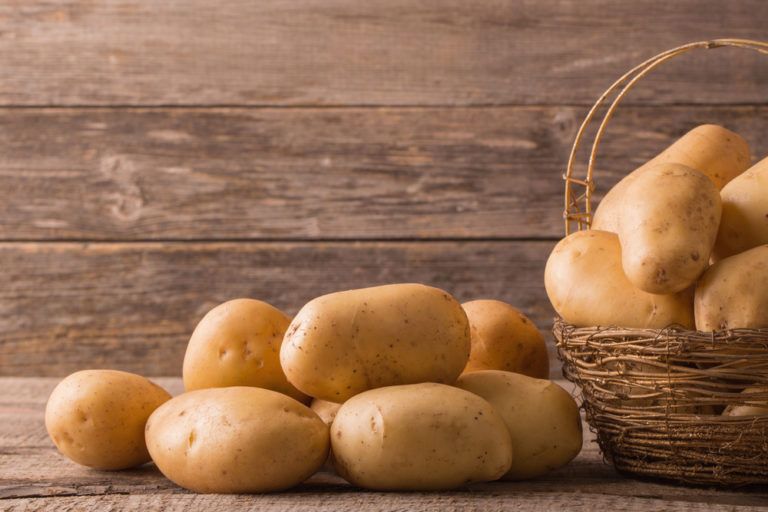
A German development, classified as culinary type B. One hectare can yield up to 36.5 tons of potatoes. The tubers are oblong, with shallow germination points. They are sandy on the outside and inside.
Specifications:
- weight - 59-150 g;
- starch content - 13-18%;
- marketability - 79-96%;
- shelf life - 98%.
Resistant to most dangerous crop diseases. To prevent insect attacks, timely prevention is necessary.
Read more about the variety in the article Potato variety Zekura: characteristics and comparison with others in tables, reviews.
Photo gallery of the Zekura potato variety:
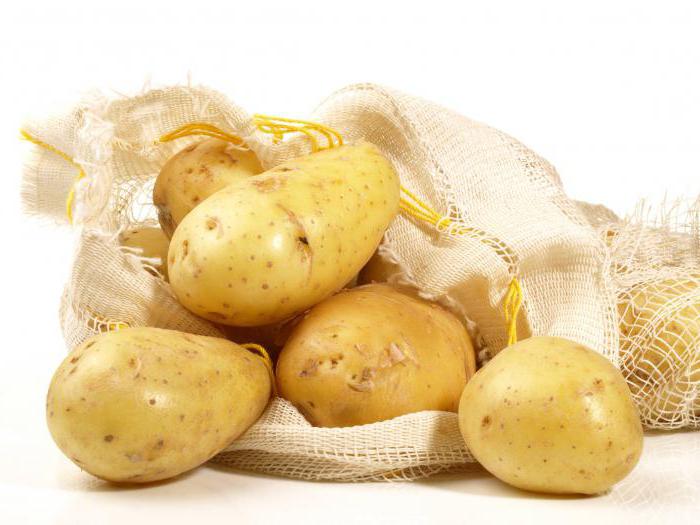
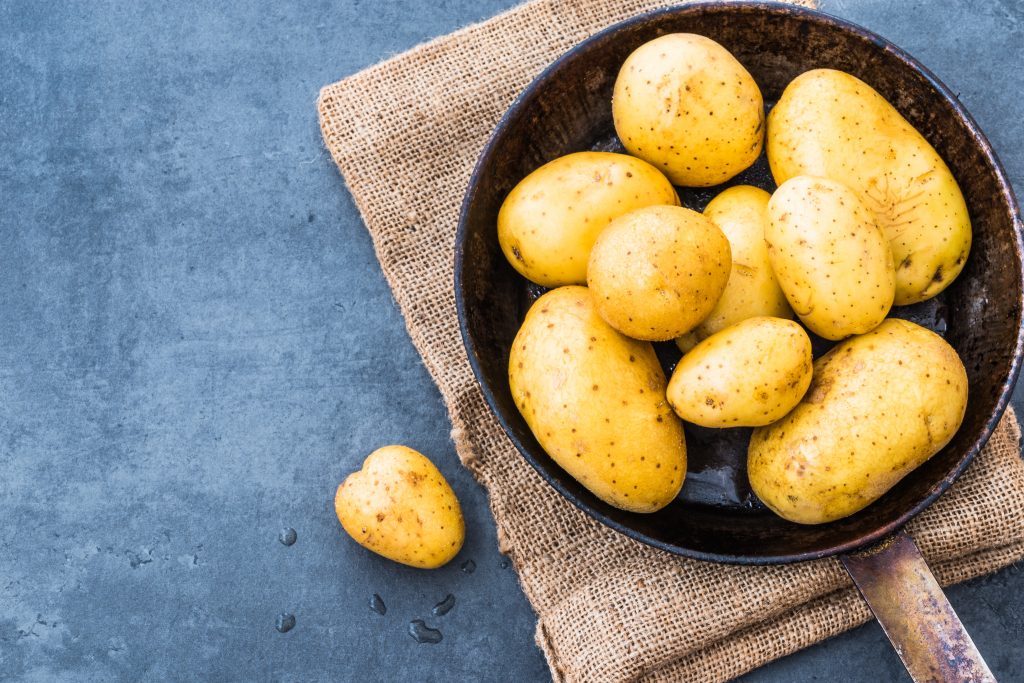
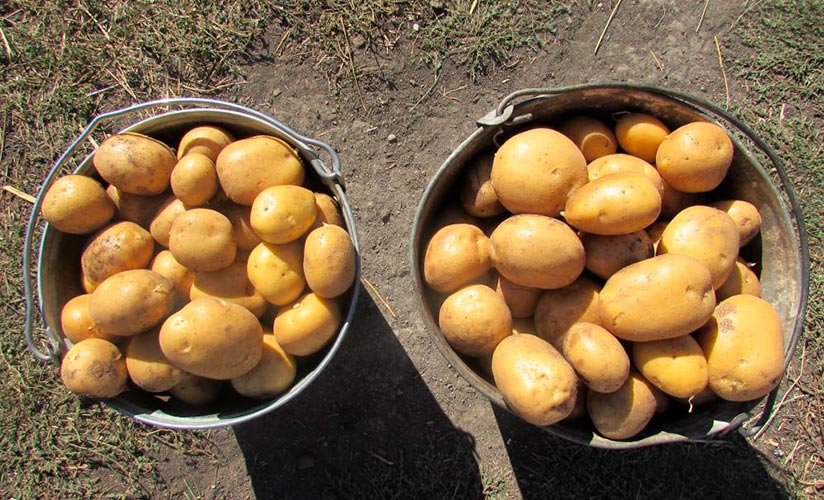
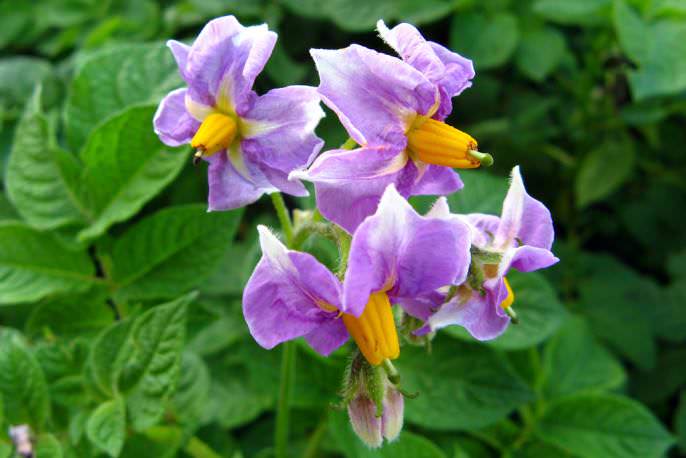
Nevsky
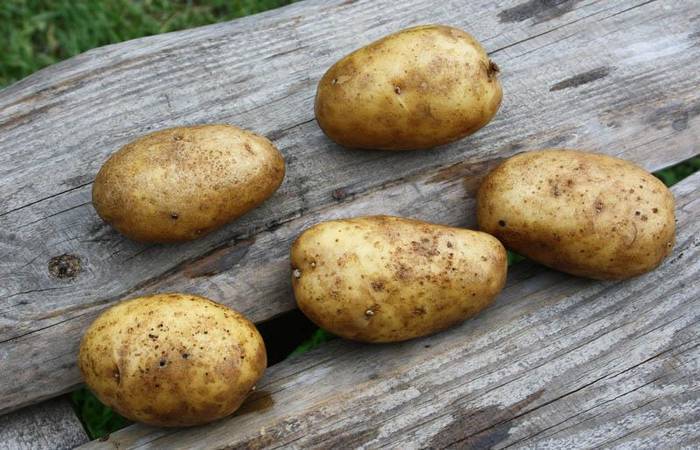
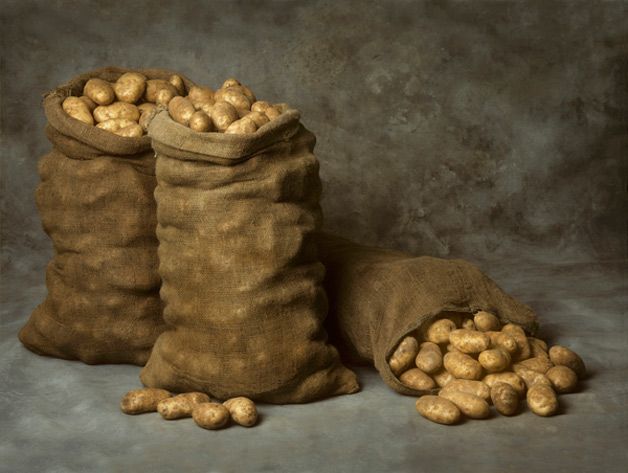
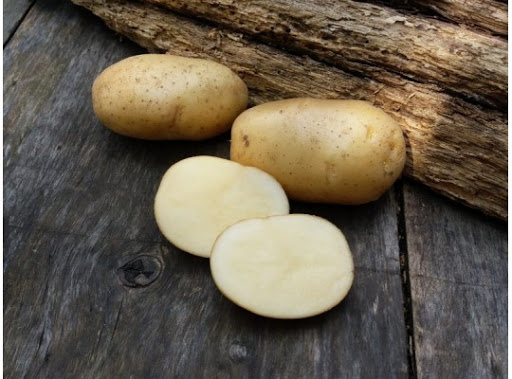
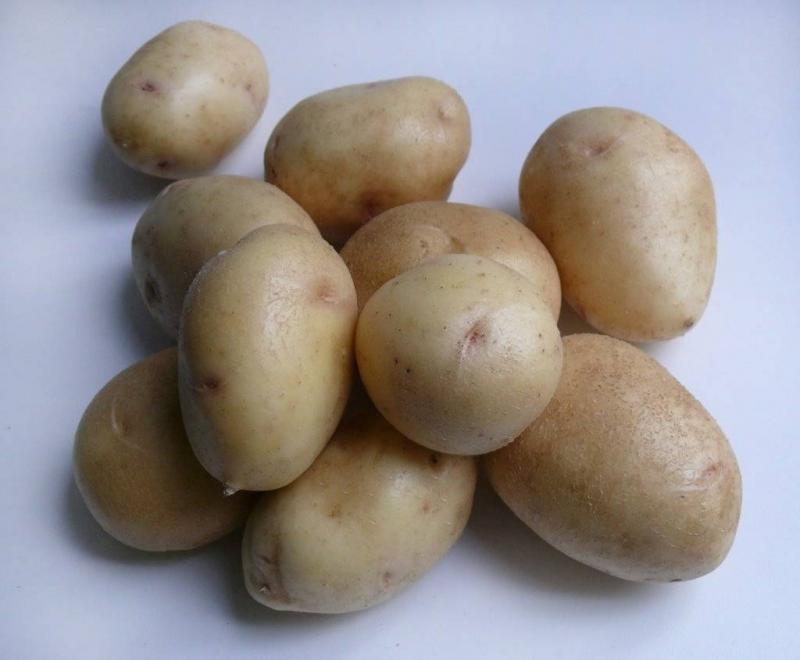
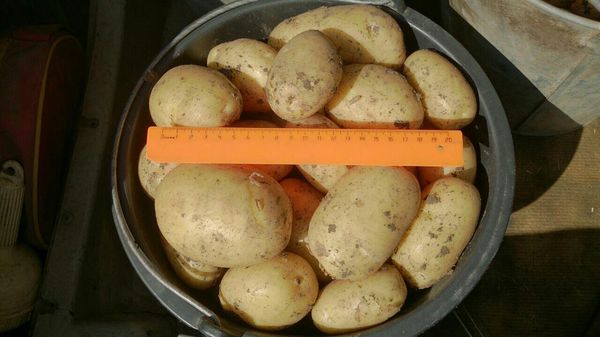
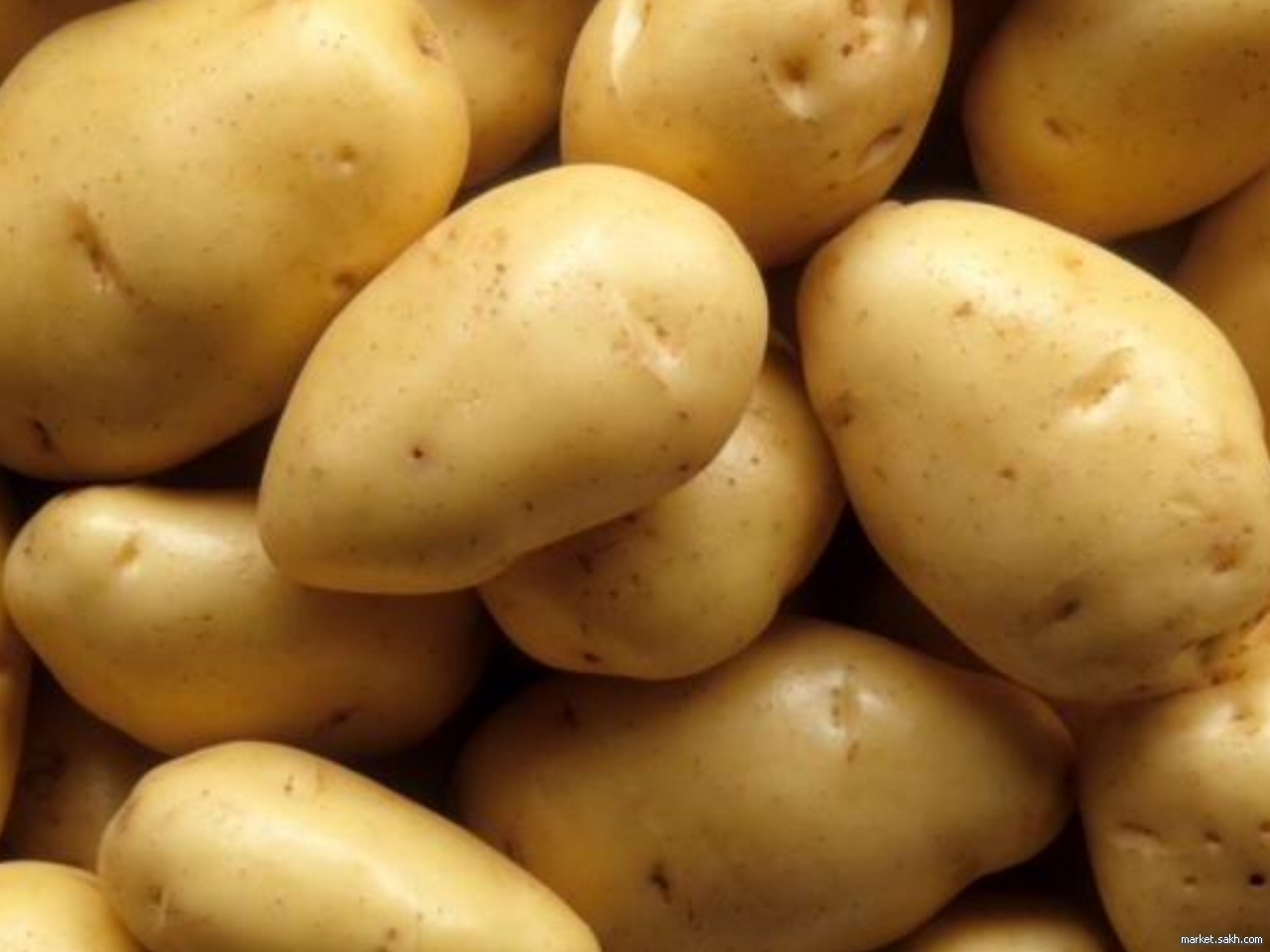
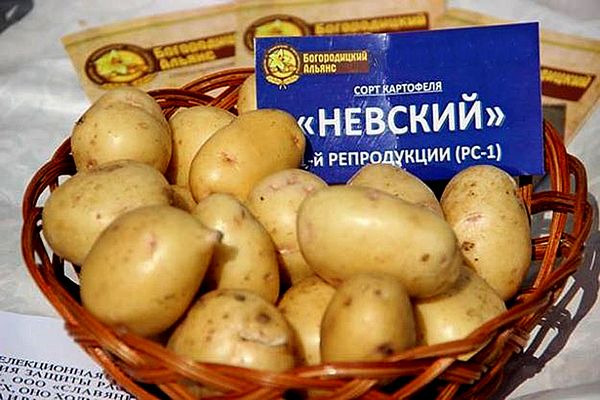
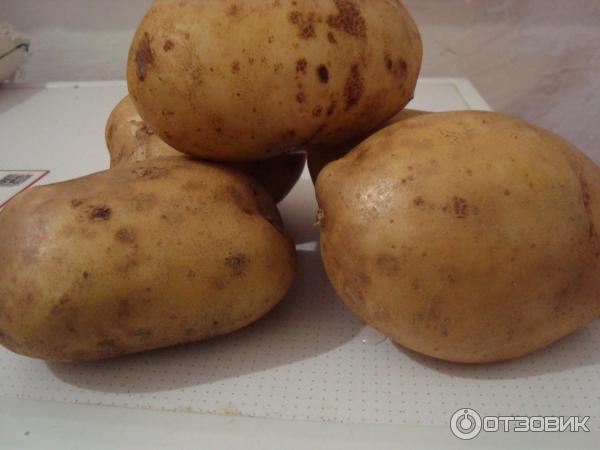
Intended for table consumption. Yields 39-50 t/ha. Bushes with semi-erect stems. Leaves are light green, slightly corrugated around the perimeter. During flowering, snow-white inflorescences form. Tubers have beige skin and white flesh. Germination points are small and pinkish.
Specifications:
- weight - 90-130 g;
- starch content - 10-12%;
- marketability - 90-95%;
- shelf life - 92-95%.
Shows resistance to Synchytrium endobioticum and rhizoctonia. Susceptible to attack by roundworms.
Read more about the variety in the article Nevsky potato variety: description in the table, reviews, photos, comparison.
Photo gallery of the Nevsky potato variety:
Prime
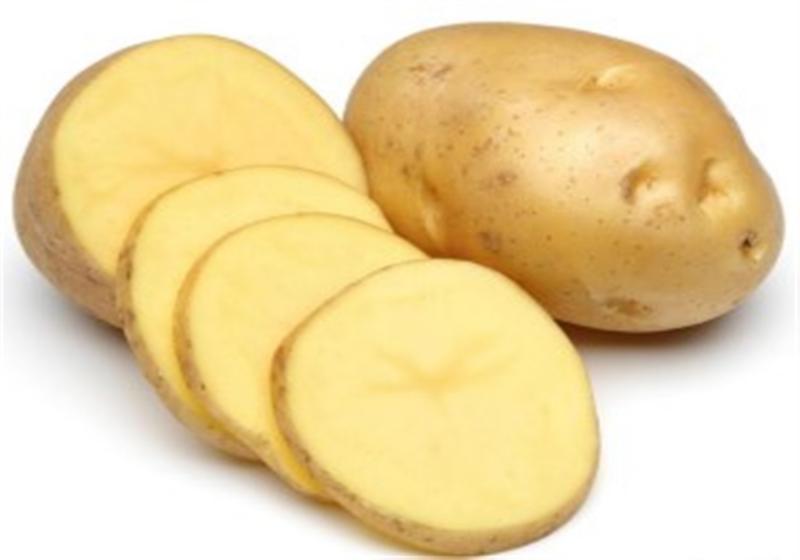
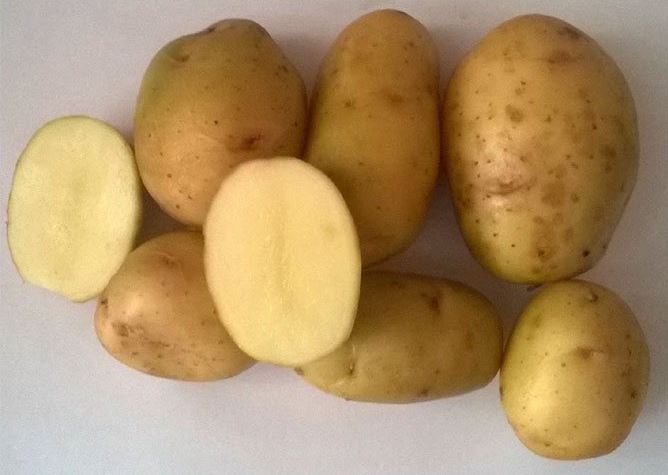
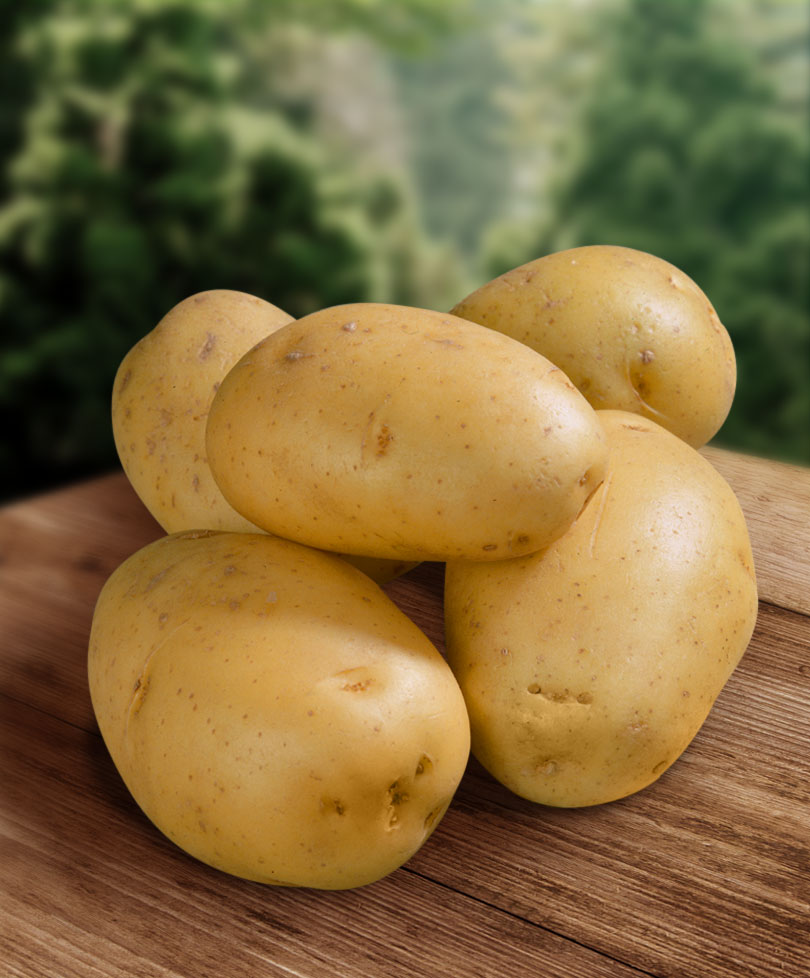
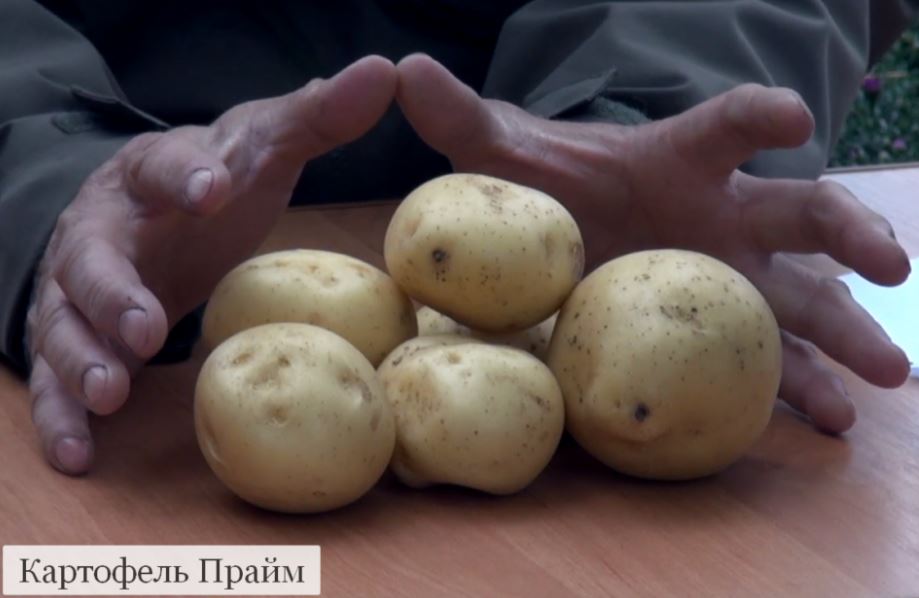
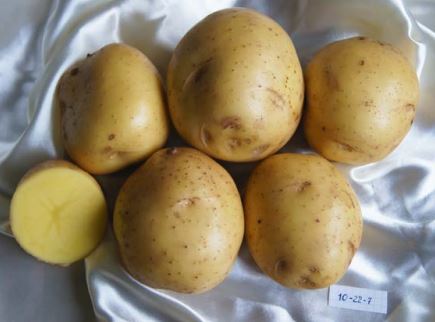
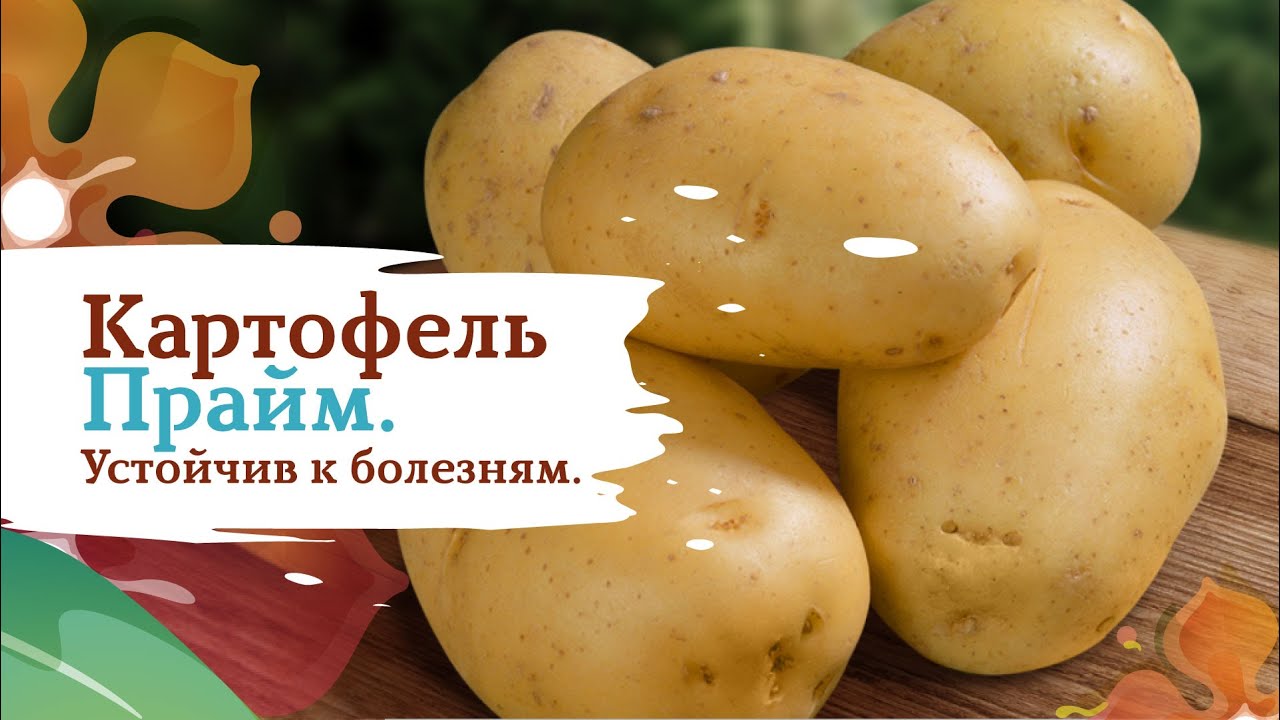
A table variety. Yields 170-341 c/ha. The highest yield recorded in the Bryansk region (415 c/ha). The bushes are tall and intermediate. The leaves are emerald. Anthocyanin coloration is either absent or weak. The tubers are round, with small stem growth points. The skin and flesh are sandy.
Specifications:
- weight - 92-148 g;
- starch content - 11-13%;
- marketability - 84-97%;
- shelf life - 96%.
Resistant to Synchytrium endobioticum, mosaic and roundworms.
Read more about the variety in the article New potato variety Prime: characteristics, comparison tables, reviews.
Photo gallery of the Prime potato variety:
Sante
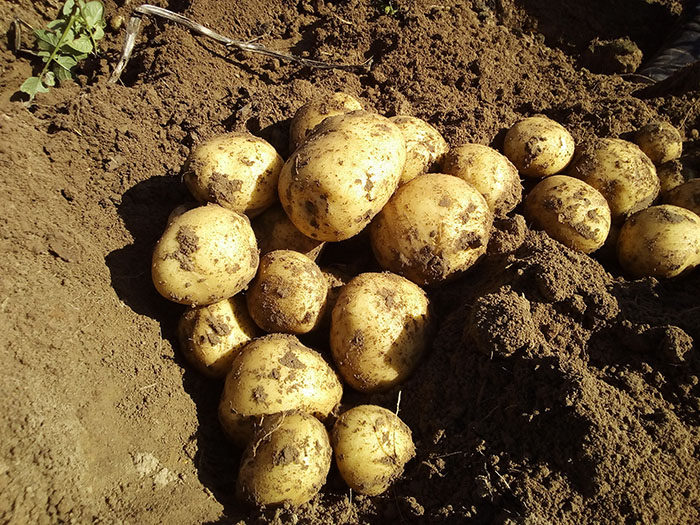
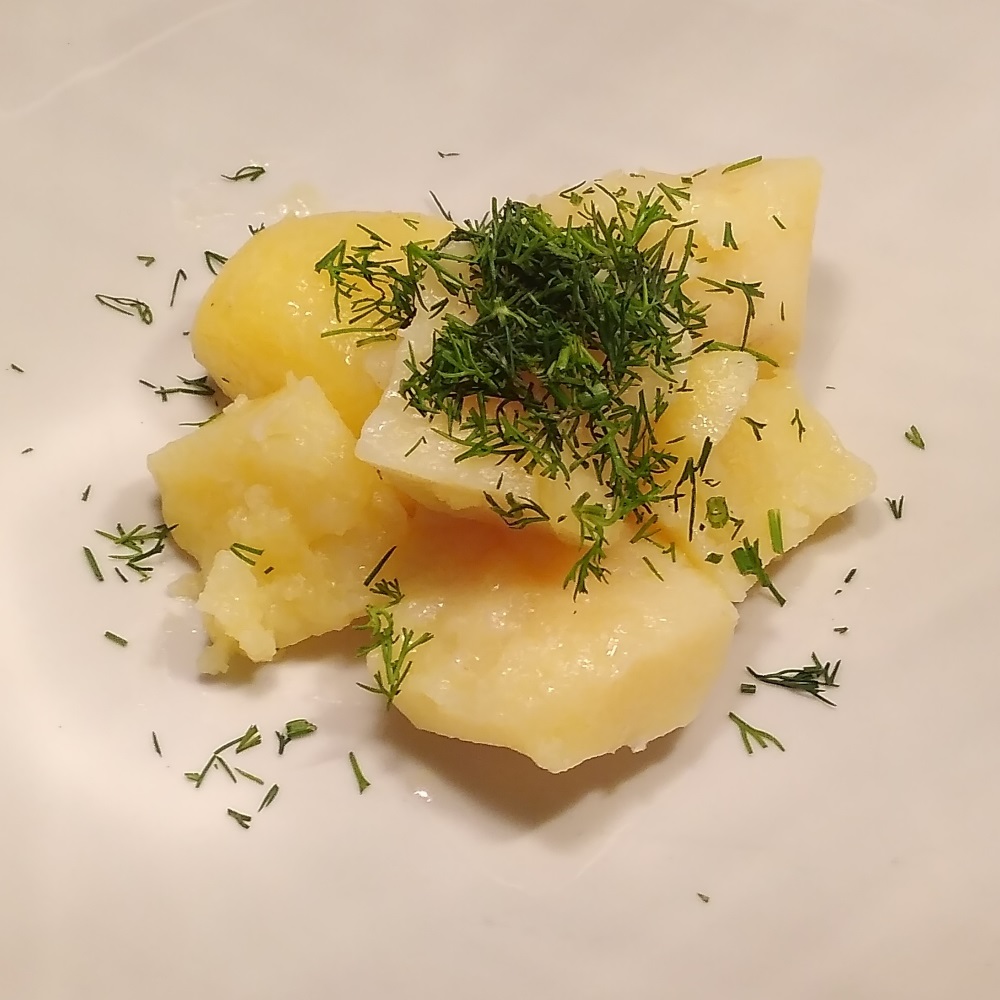
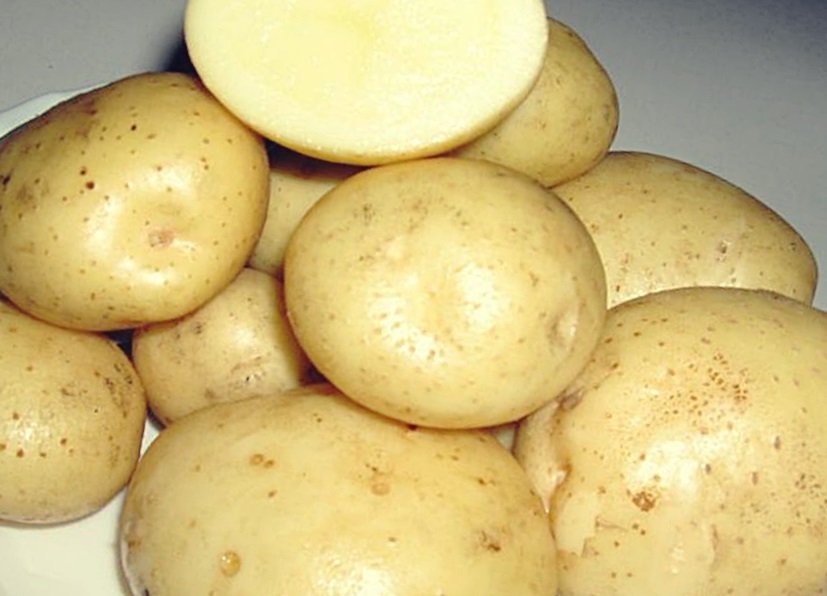
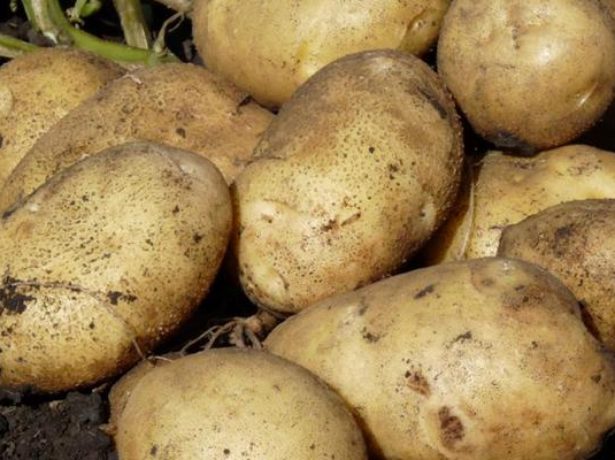
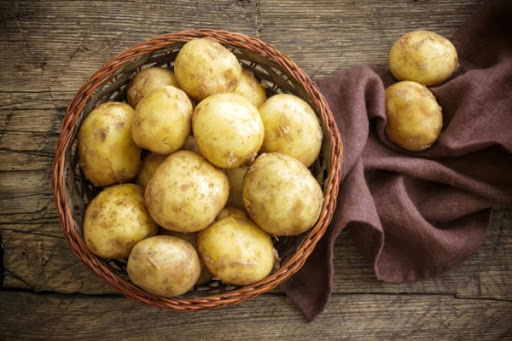
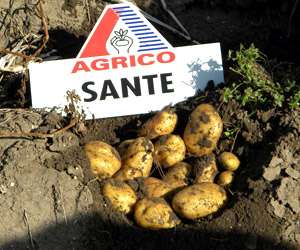
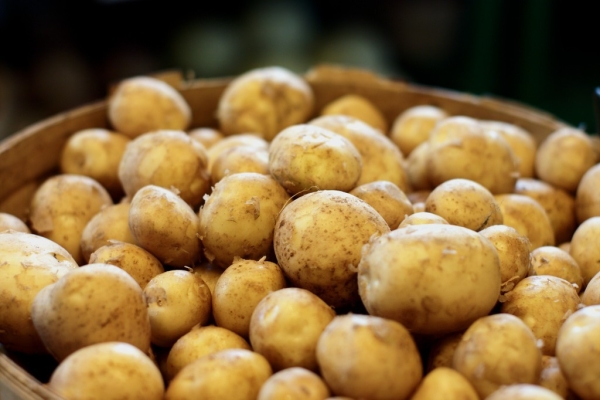
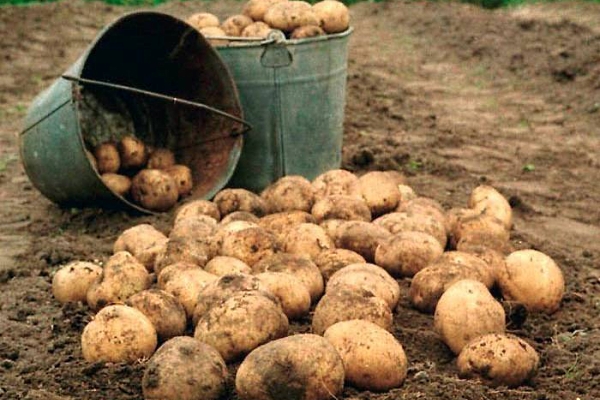
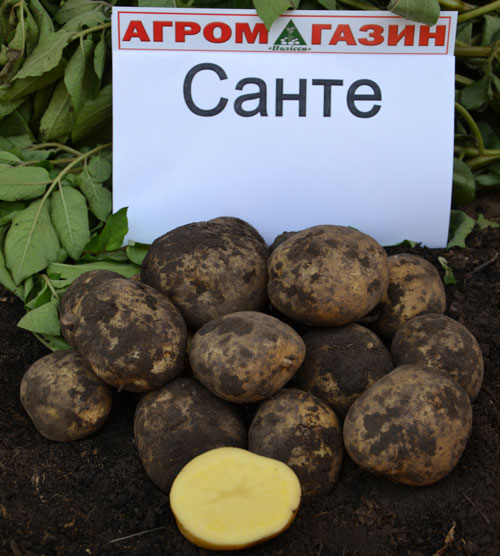
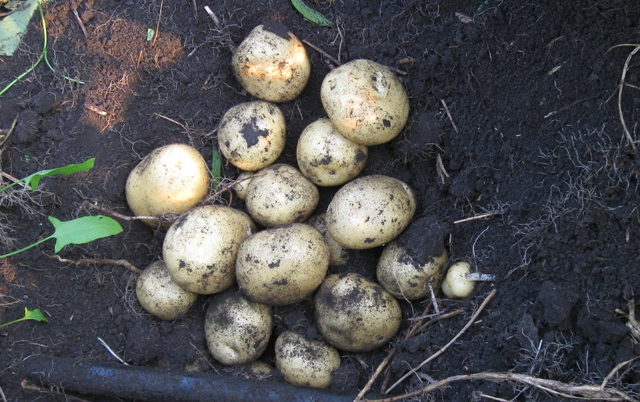
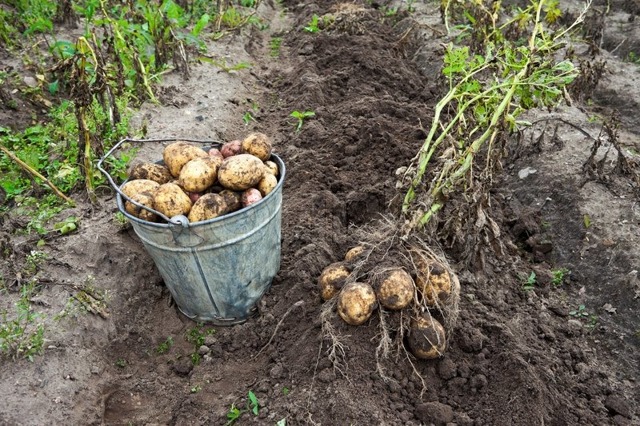
A mid-early, all-purpose variety. Yields 24-57 t/ha. It has upright stems and produces snow-white inflorescences. Oval tubers. The skin and flesh are sandy, with insignificant germination points.
Specifications:
- tuber - 90-120 g;
- starch content - 10-14%;
- marketability - high;
- shelf life - 92%.
Immunity to Synchytrium endobioticum, roundworms, late blight, viruses.
Photo gallery of the Sante potato variety:
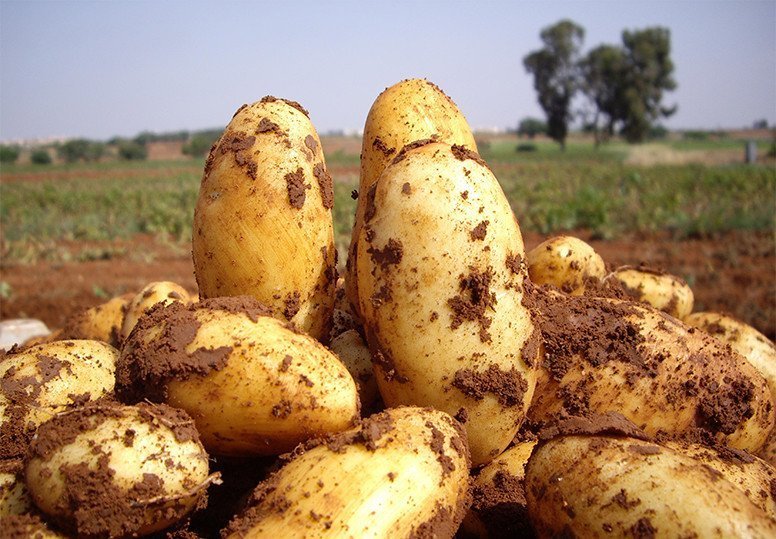
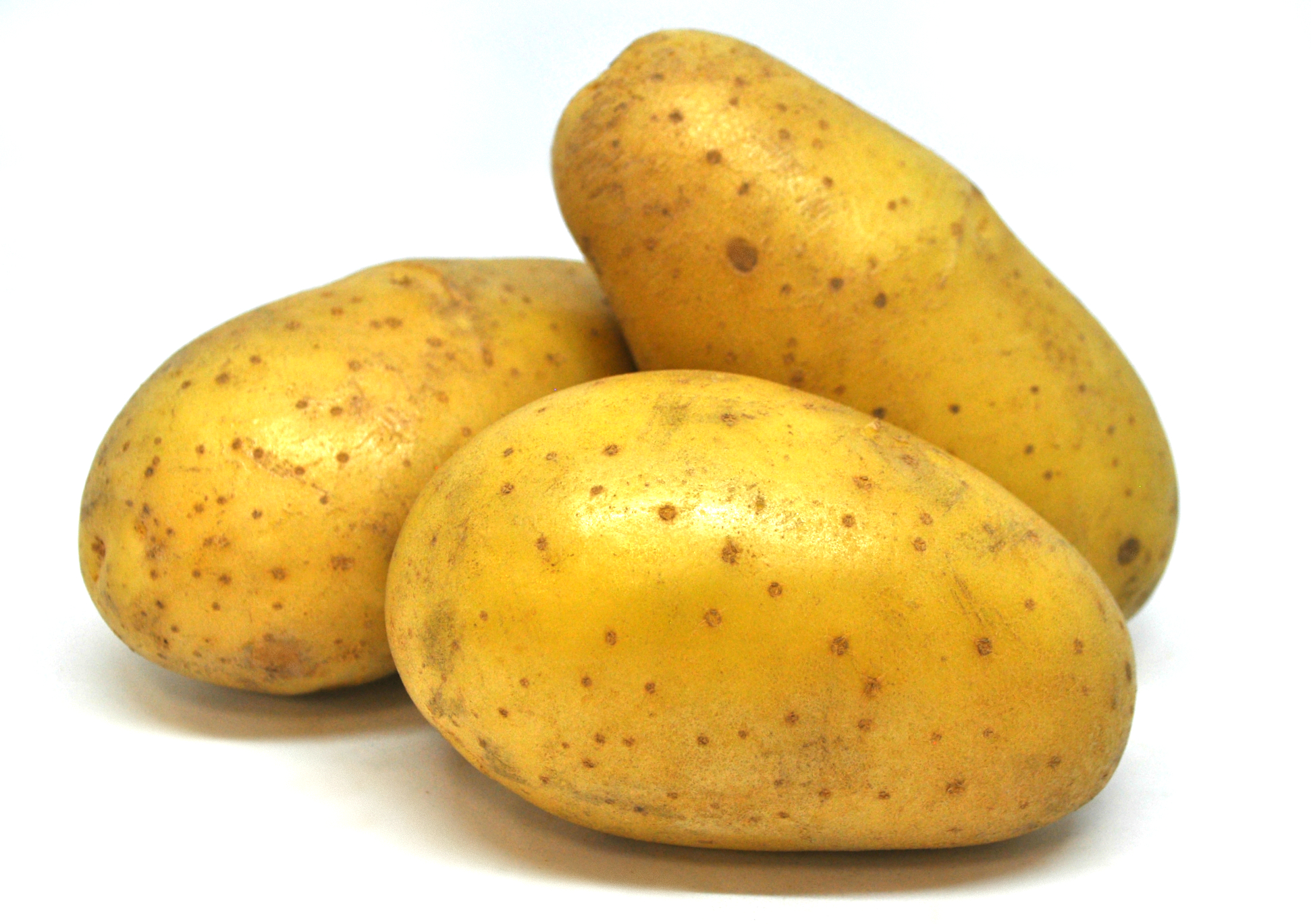
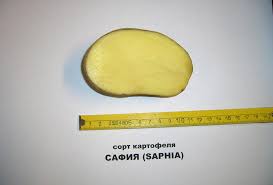
Safiya
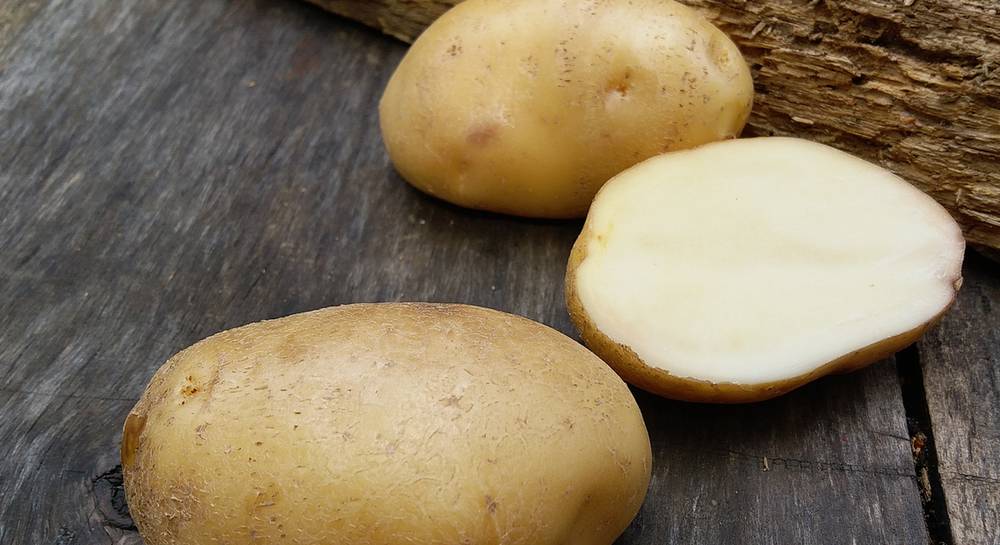
General-purpose variety. Yields range from 198 to 398 centners per hectare, with a maximum of 416 centners per hectare recorded in the Mari Republic. Bushes are semi-erect or erect. Leaves are intermediate, light green. Potatoes are oval, with small germination points. The skin and flesh are sandy.
Specifications:
- weight - 92-115 g;
- starch content - 10-13%;
- marketability - 80-98%;
- shelf life - 97%.
Shows resistance to roundworms and Synchytrium endobioticum, mosaic.
Photo gallery of the Safiya potato variety:
Blue-eyed
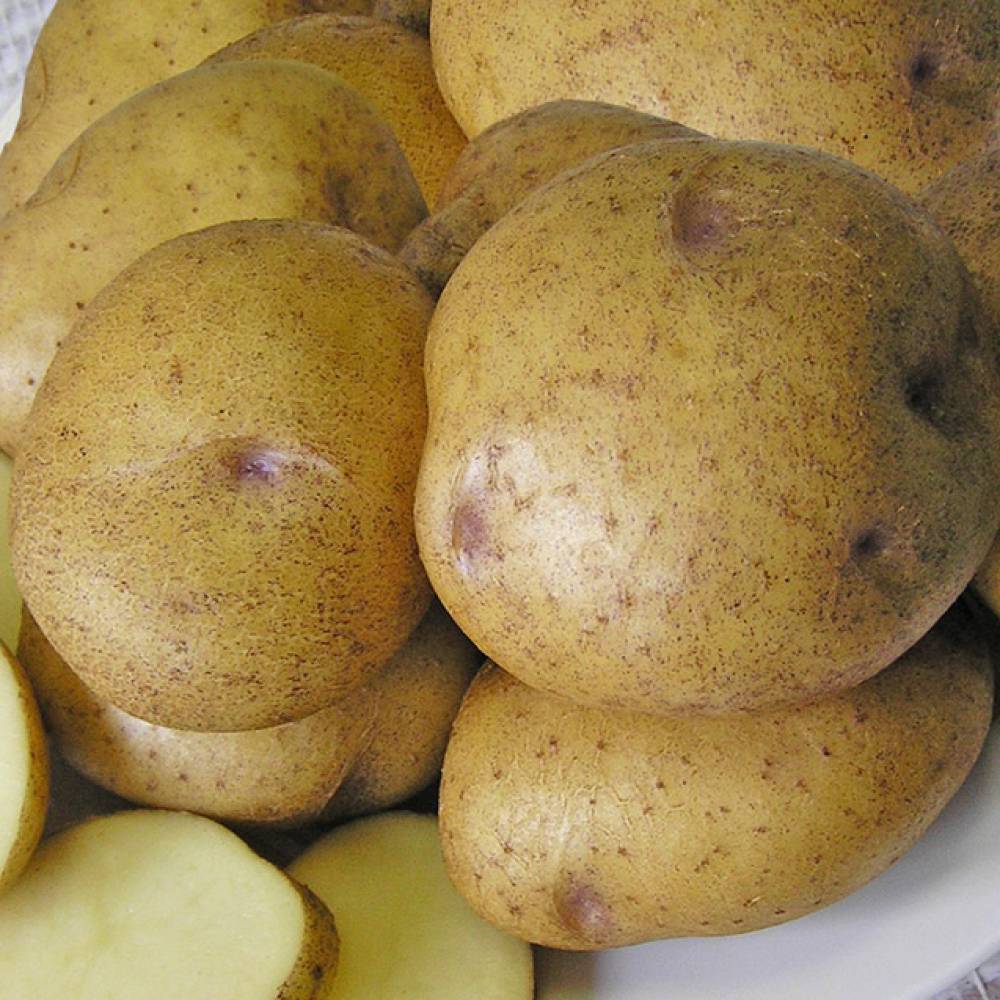
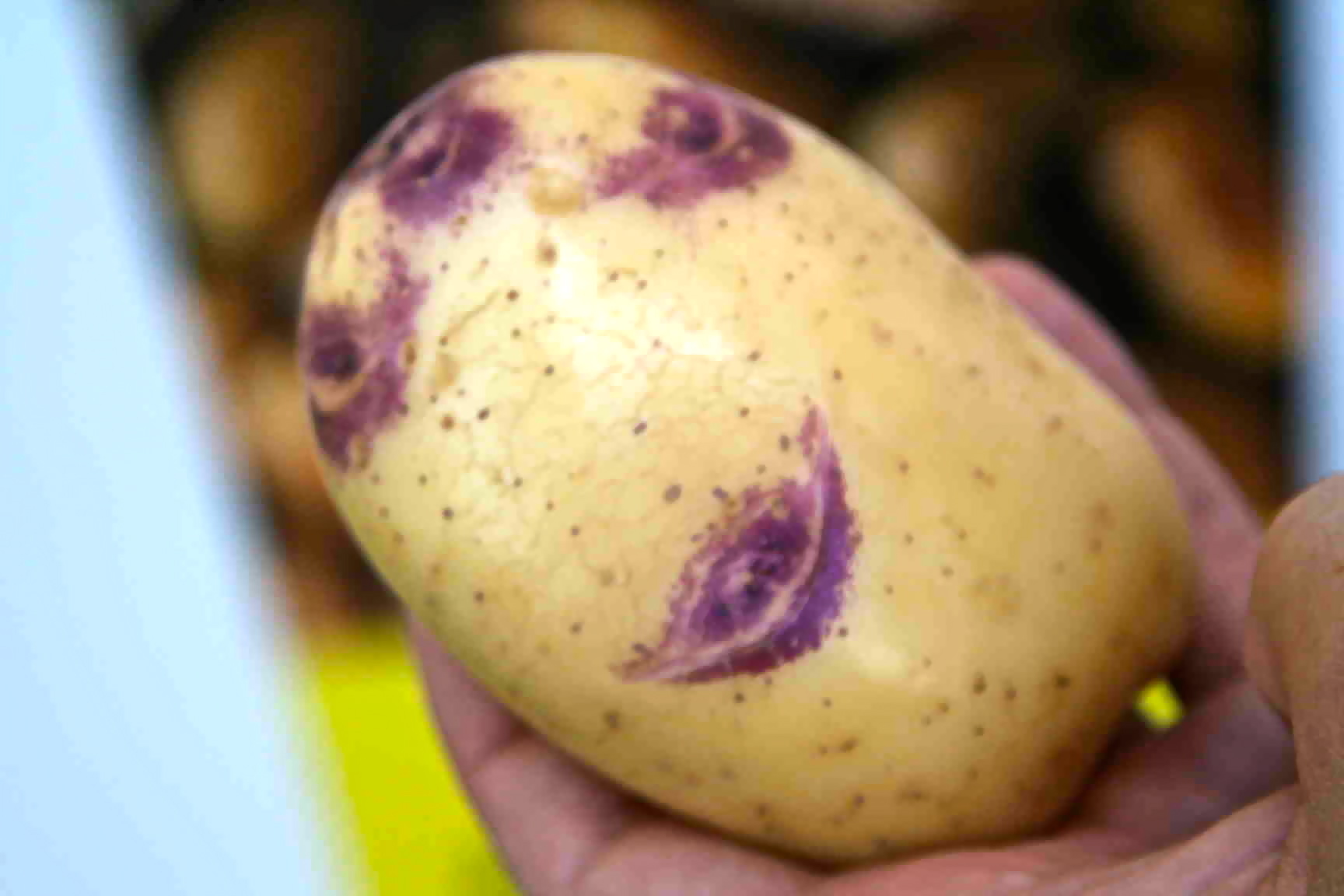
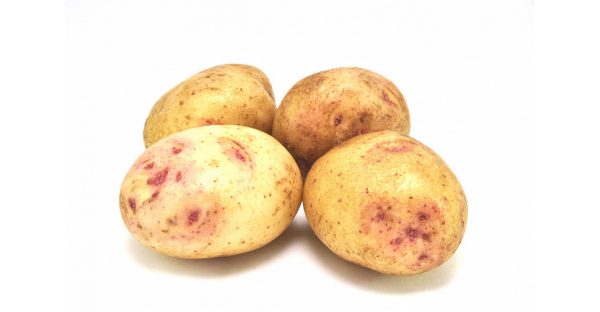
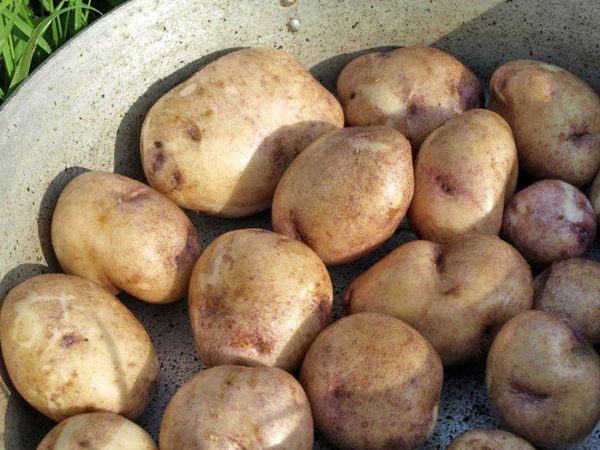
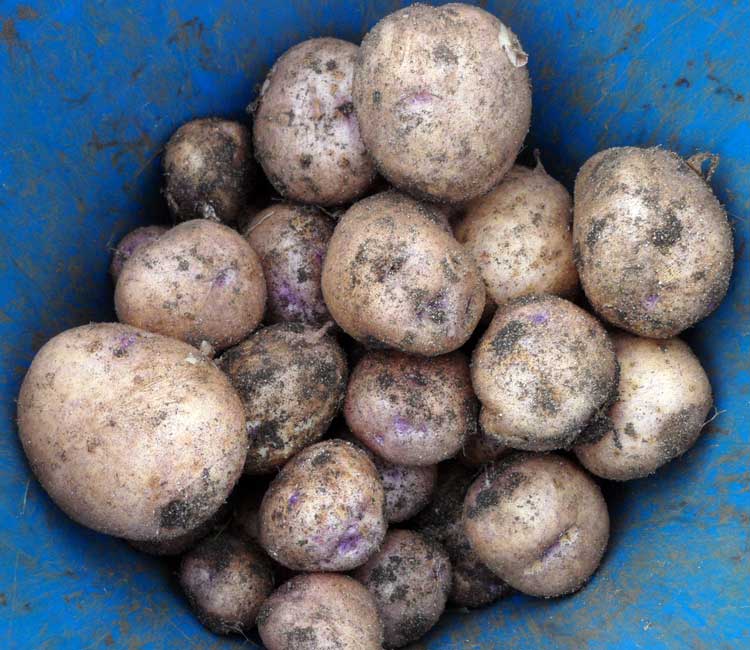
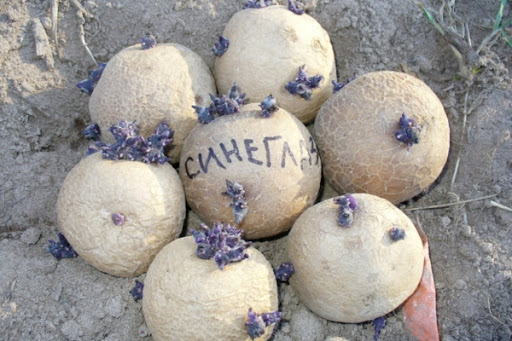
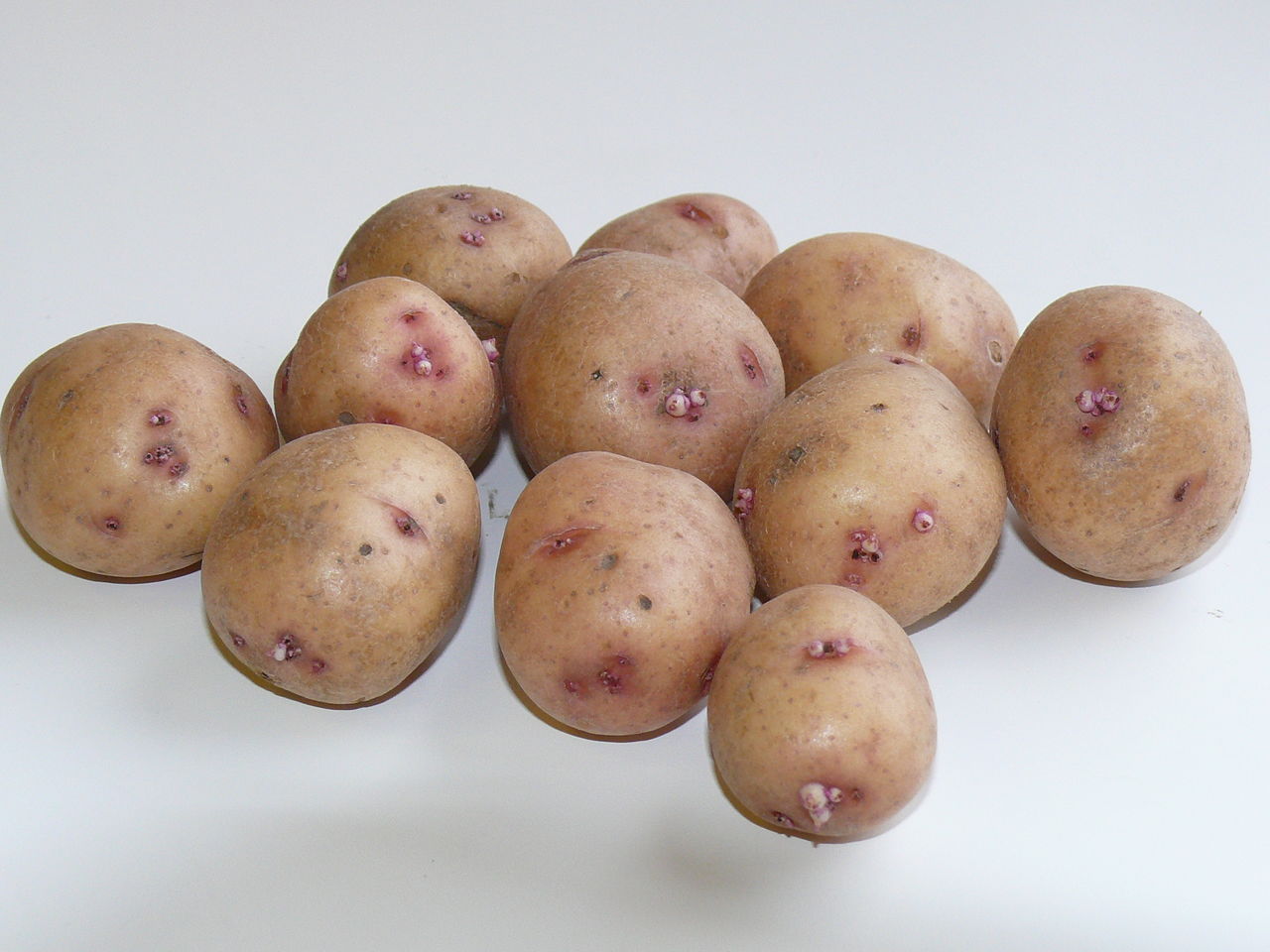
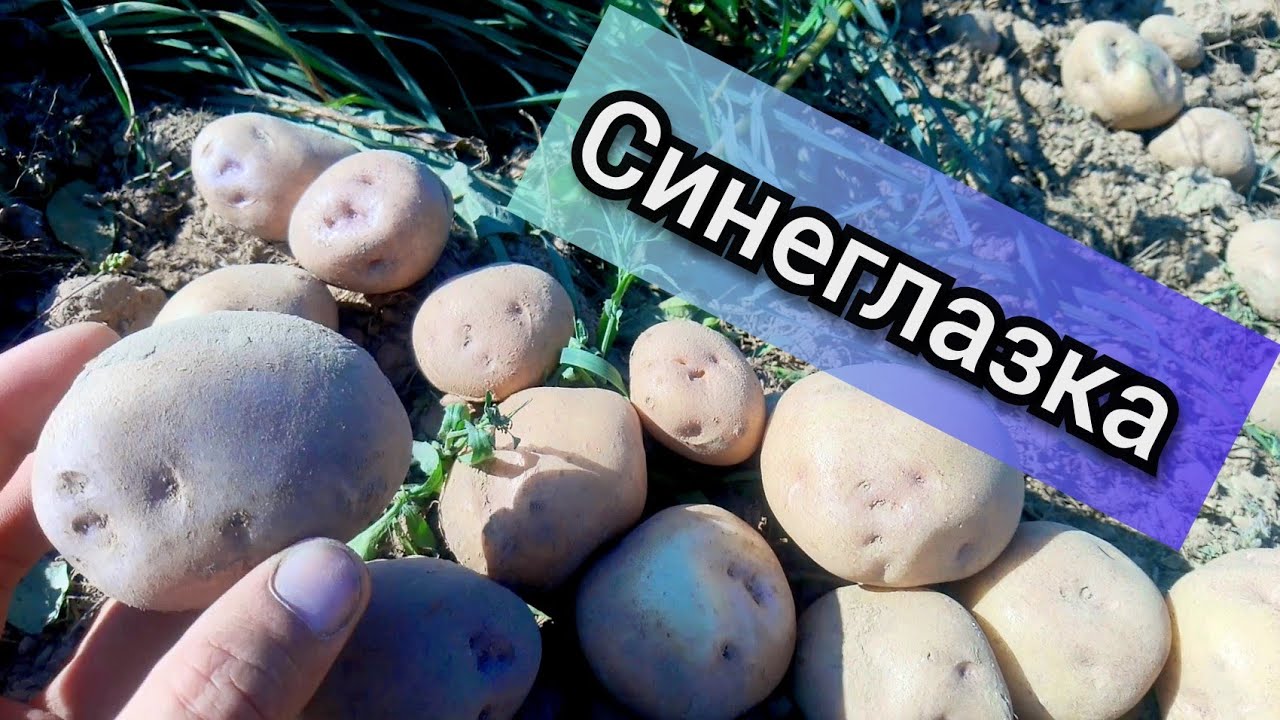
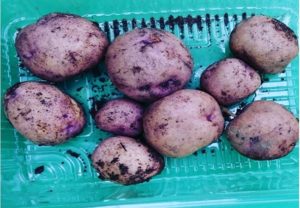
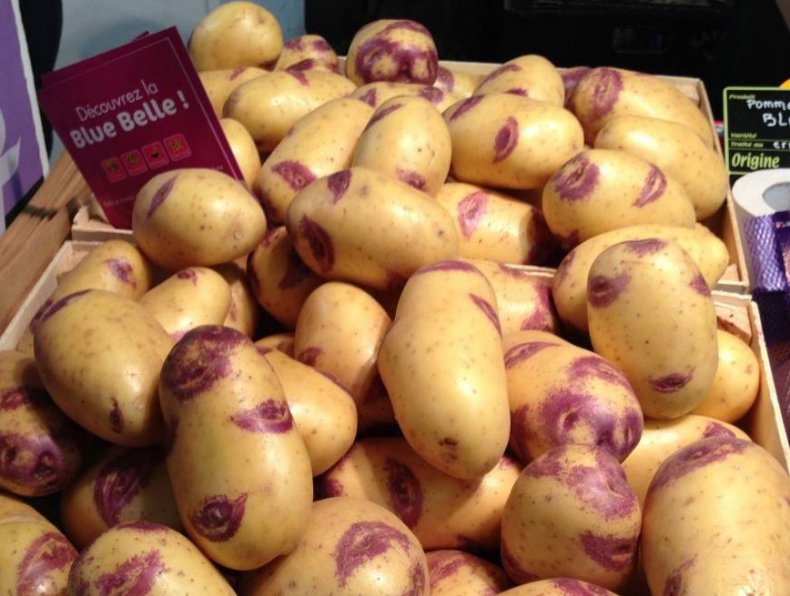
A table variety. 120-293 centners of yield can be harvested from one hectare. It was bred by Belarusian agronomists back in 1997, but it was not included in the register until five years later. The bushes are tall, intermediate, and spreading. The leaf blades are medium to large, light green. The anthocyanin coloration of the corollas is pronounced. The tubers are round, with small germination points. The skin is blue in parts (hence the name), and the interior is white.
Specifications:
- weight - 70-195 g;
- starch content - 11-14%;
- marketability - 75-88%;
- shelf life - 93%.
Synchytrium endobioticum is not susceptible to development, but roundworm may begin its life activity.
Read about two varieties Sineglazka and Sineglazka 2016 on the website Top.tomathouse.com.
Photo gallery of the Sineglazka potato variety:
Treasures
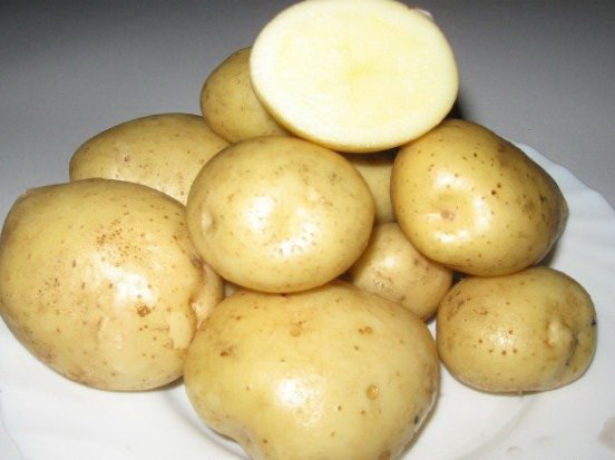
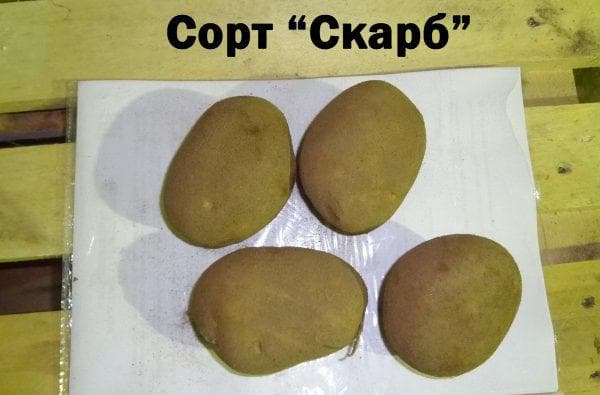
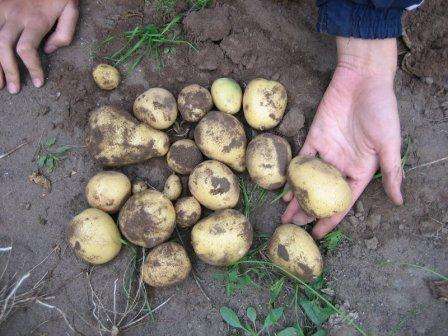
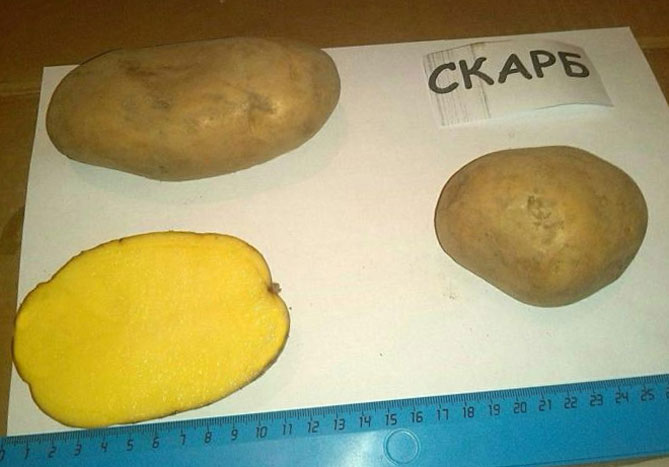
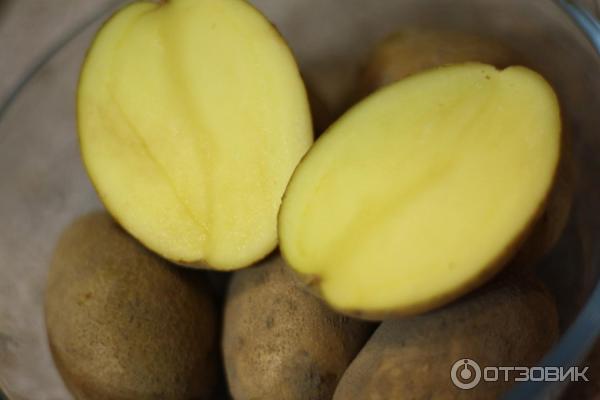
A table potato with a yield of 253-411 c/ha. It forms semi-erect bushes of intermediate type. The leaves are emerald green, and the inflorescences are oval, with small growing points. The insides and skin are sandy.
Specifications:
- weight - 94-138 g;
- starch content - 10-17%;
- marketability - 84-99%;
- shelf life - 88-99%.
Immune to Synchytrium endobioticum, roundworms, and mosaic. Susceptible to late blight.
Read more about the variety in the article Skarb potato variety: description in table, reviews, photos.
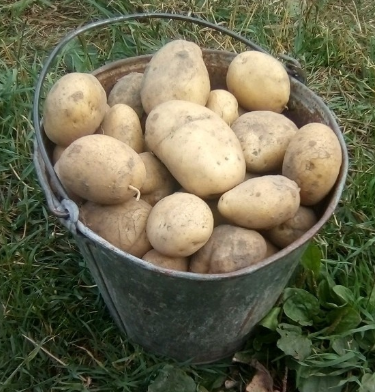
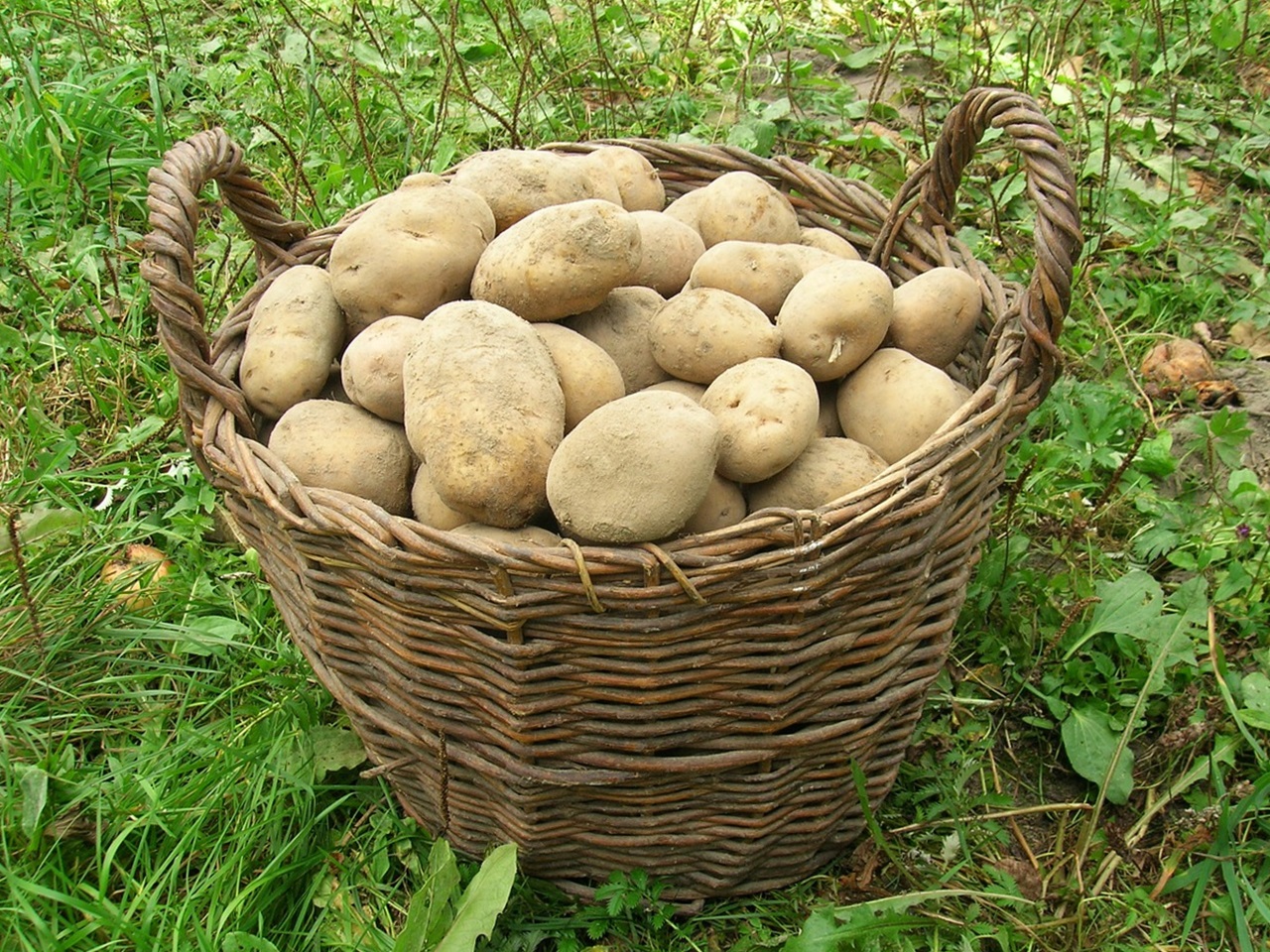
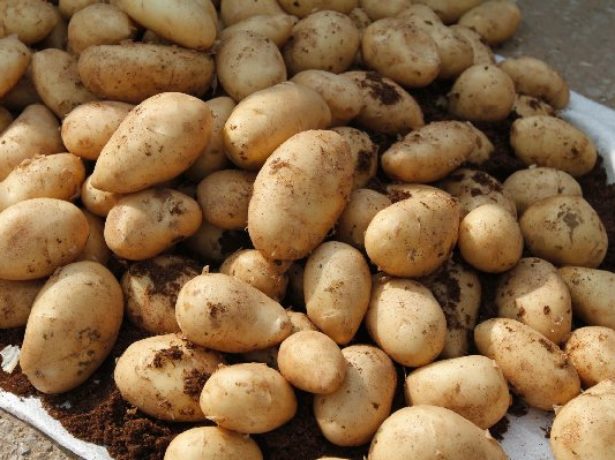
Photo gallery of the potato variety Skarb:
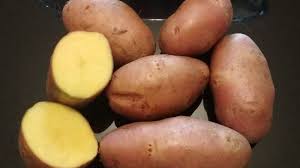
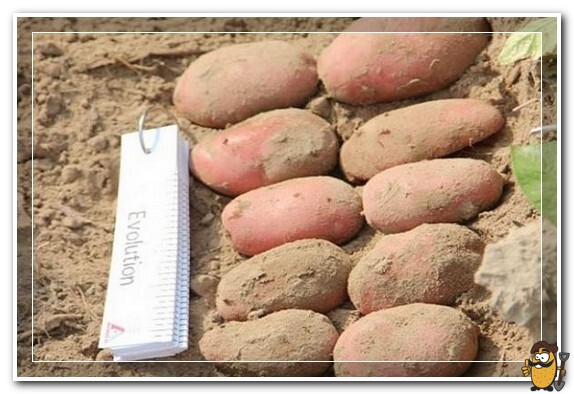
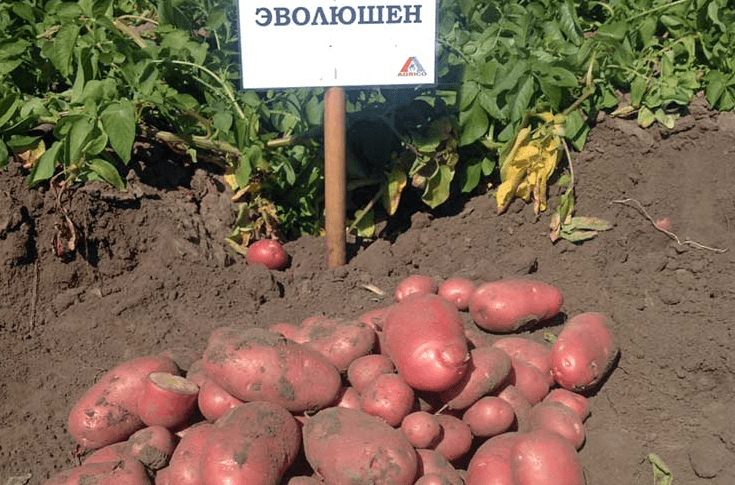
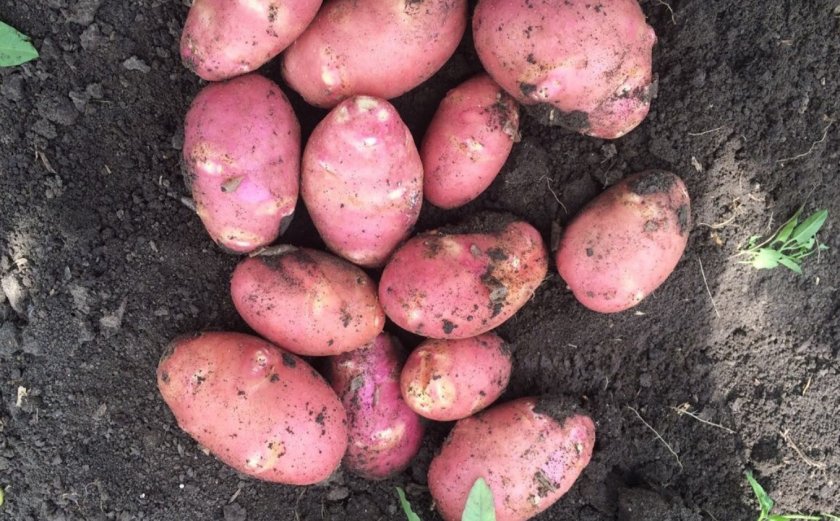
Evolution
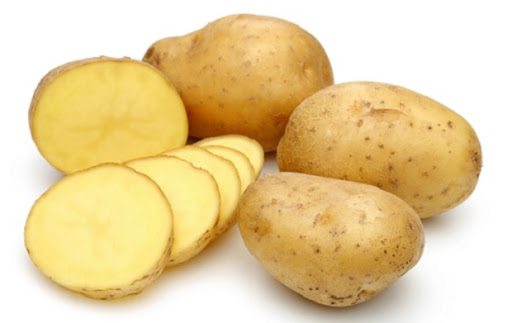
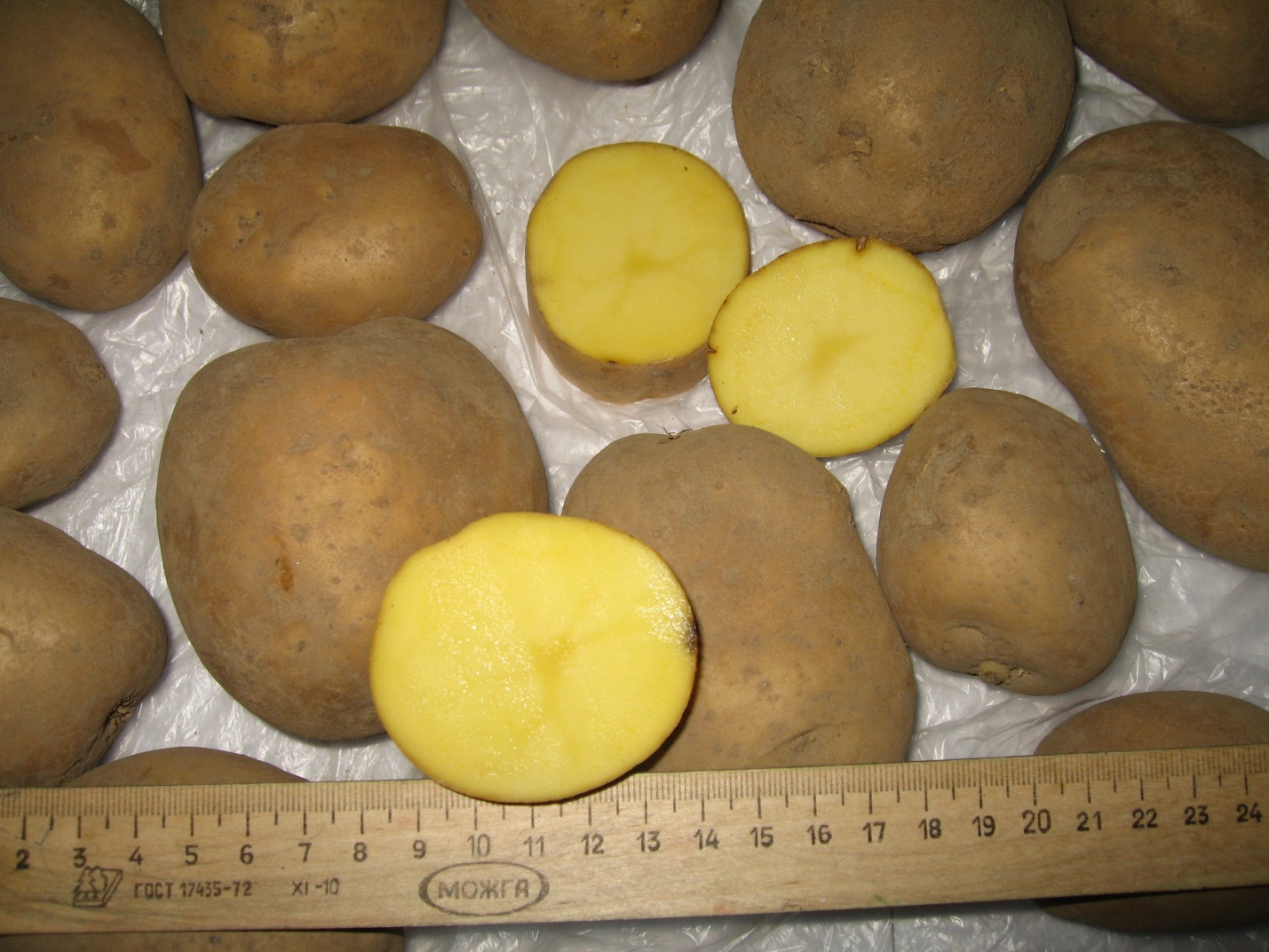
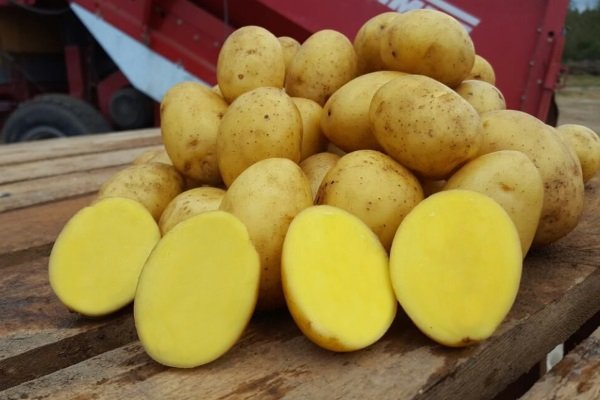
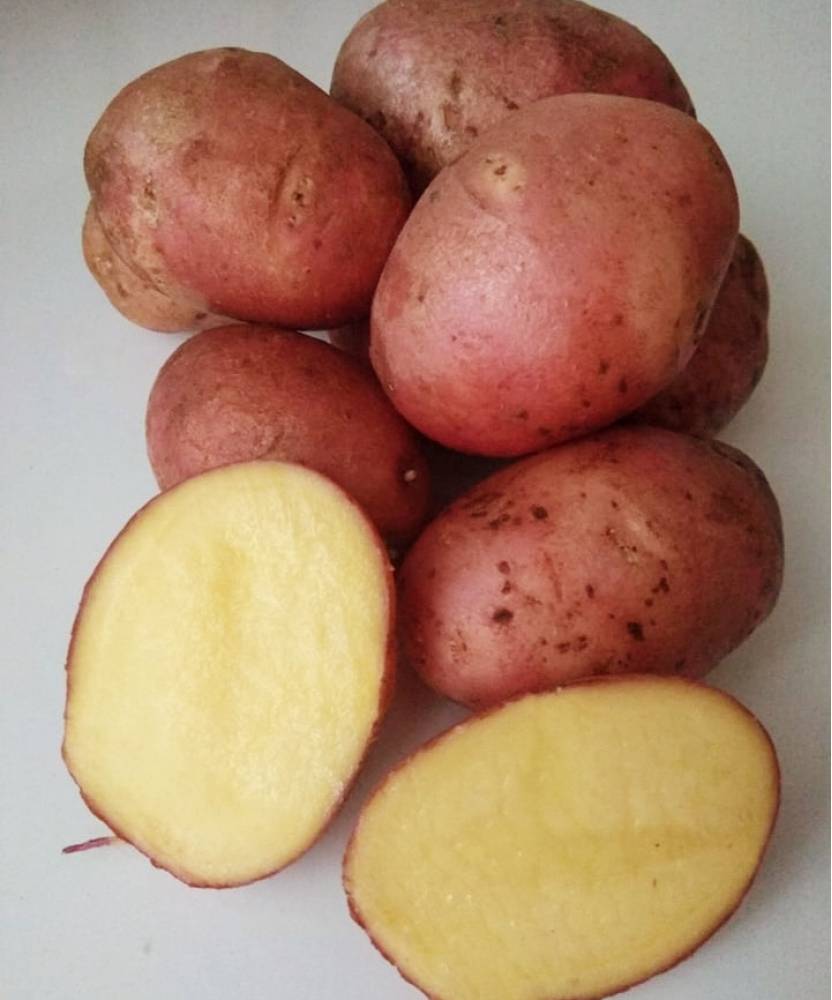
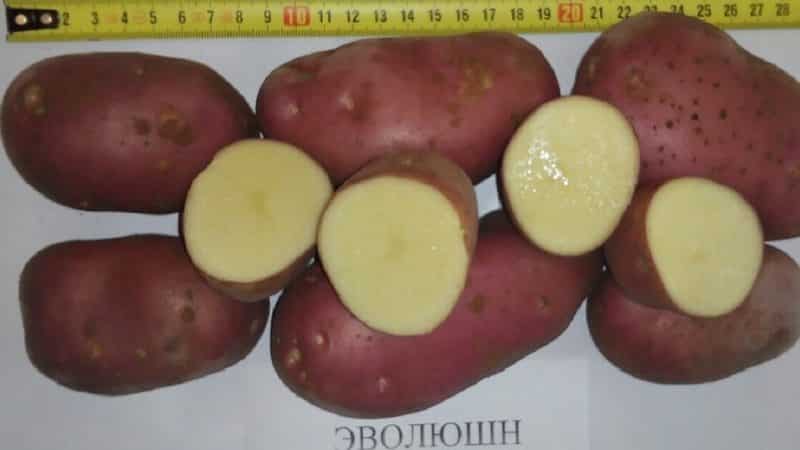
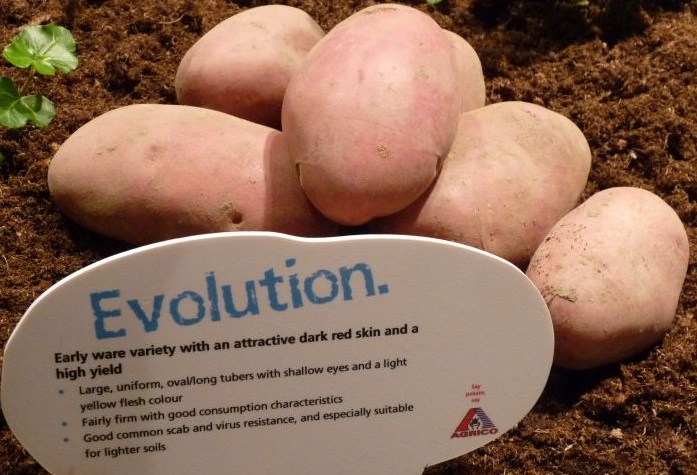
A mid-early variety for table use. Yields range from 241 to 421 centners per hectare. The maximum yield, 548 centners per hectare, has been recorded in the Volgograd Region. Bushes are medium-sized or tall, semi-erect or spreading. Leaves are light green or emerald. Tubers are oval, with small growth points on the shoots. The skin is raspberry-colored, and the flesh is soft and sandy.
Specifications:
- weight - 94-138 g;
- starch content - 10-17%;
- marketability - 84-99%;
- shelf life - 88-99%.
Resistant to roundworms, Synchytrium endobioticum and rugose mosaic.
You will find out about Evolution in the articleEvolution potato variety: photo, characteristics in a table, cultivation, reviews
Photo gallery of the Evolution potato variety:
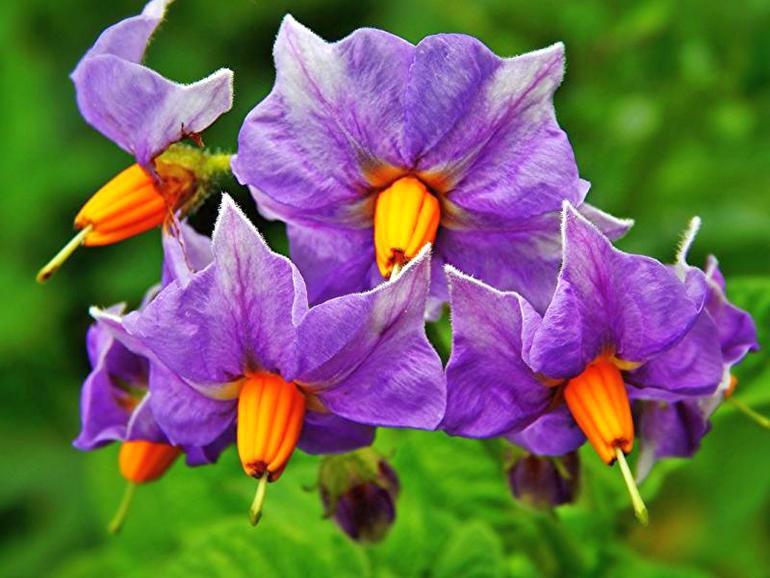
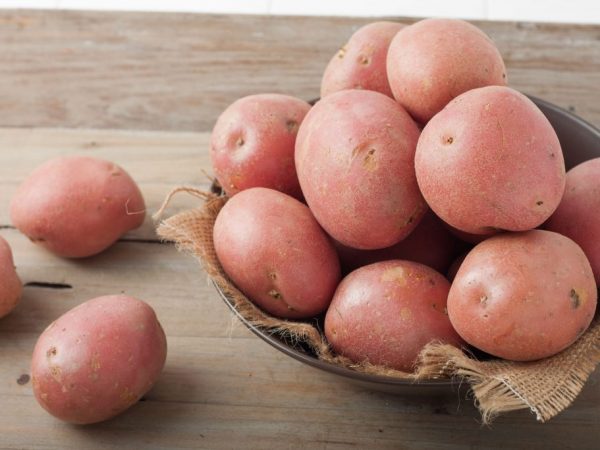
Excellence
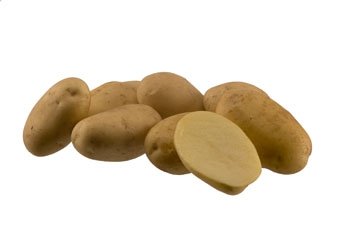
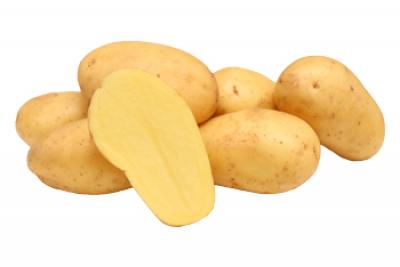
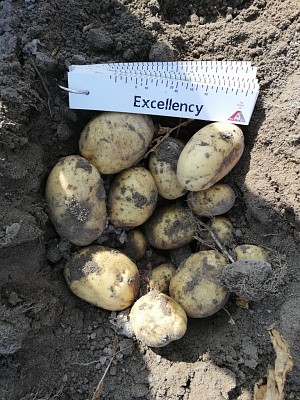
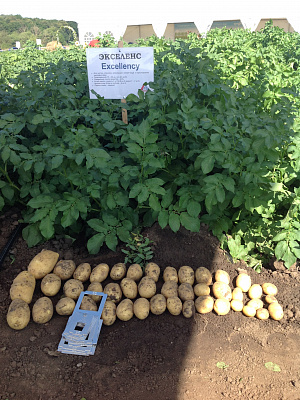
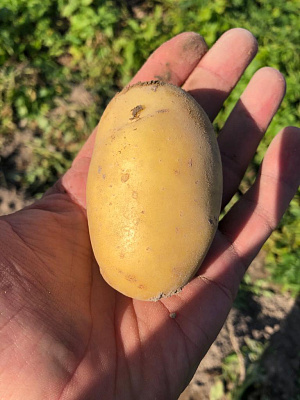
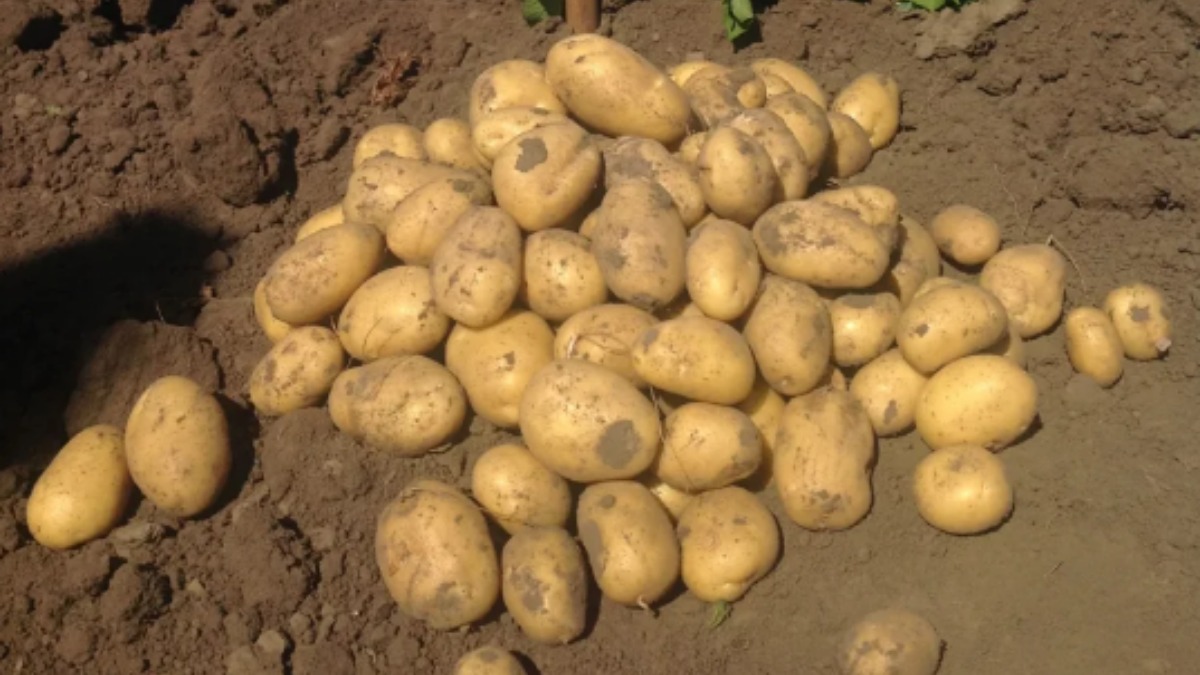
Table variety. High yield, 174-455 c/ha. Bushes are low, semi-erect, and of intermediate height. Large, light green gills. Anthocyanin coloration is absent or weak. Tubers are oval, with small to medium-sized growth points. The interior and exterior are sandy.
Specifications:
- weight - 96-120 g;
- starch content - 12-15%;
- marketability - 88-97%;
- shelf life - 95%.
Resistant to rugose mosaic, Synchytrium endobioticum, roundworms.
Photo gallery of the Excellence potato variety:
Mid-late and late varieties for the Moscow region
These are the best varieties for storage. At temperatures of 2 to 4°C, the tubers can be stored until the following season. However, it's important to keep in mind that the crop must ripen before frost sets in. This can take 110-140 days.
Vesnyanka
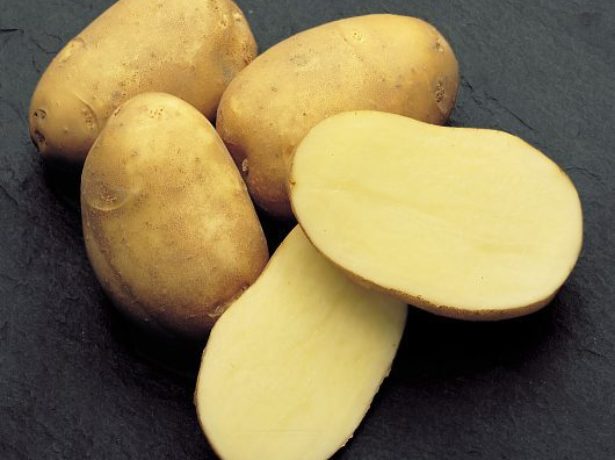
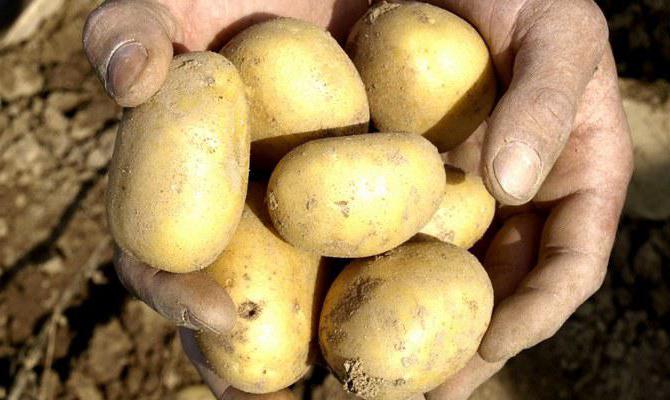
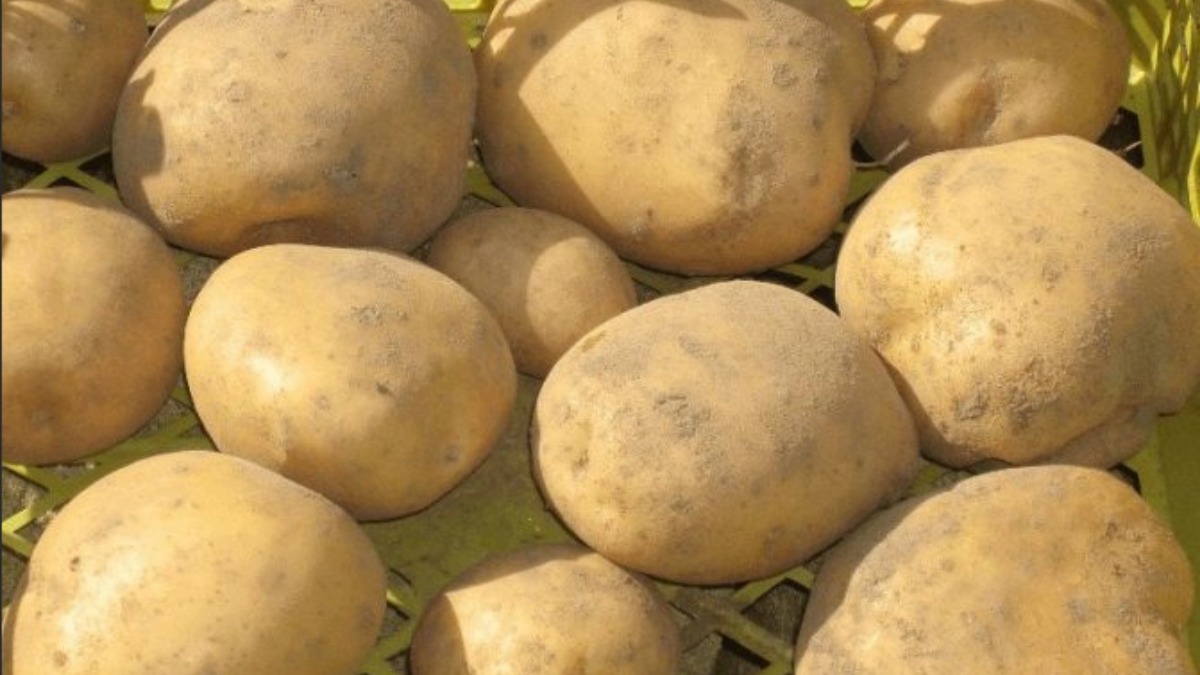
Yields range from 235 to 328 centners per hectare. The highest yield is 368 centners per hectare (Ivanovo Region). Upright bushes with light green leaves slightly corrugated around the perimeter. Small, red inflorescences. Round tubers with small growth points. The skin is smooth and sandy, and the flesh is creamy.
Specifications:
- weight - 93-127 g;
- starch content - 12-19%;
- marketability - 91-96%;
- shelf life - 94%.
Shows resistance to Synchytrium endobioticum, roundworms.
Photo gallery of Vesnyanka potato variety:
Lorkh
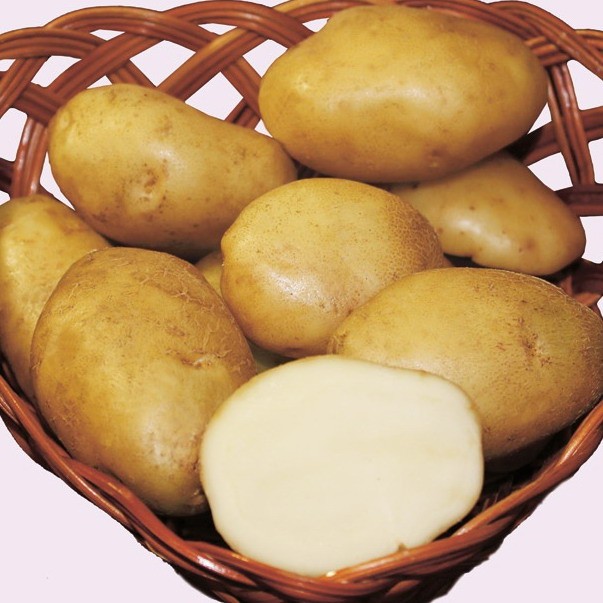
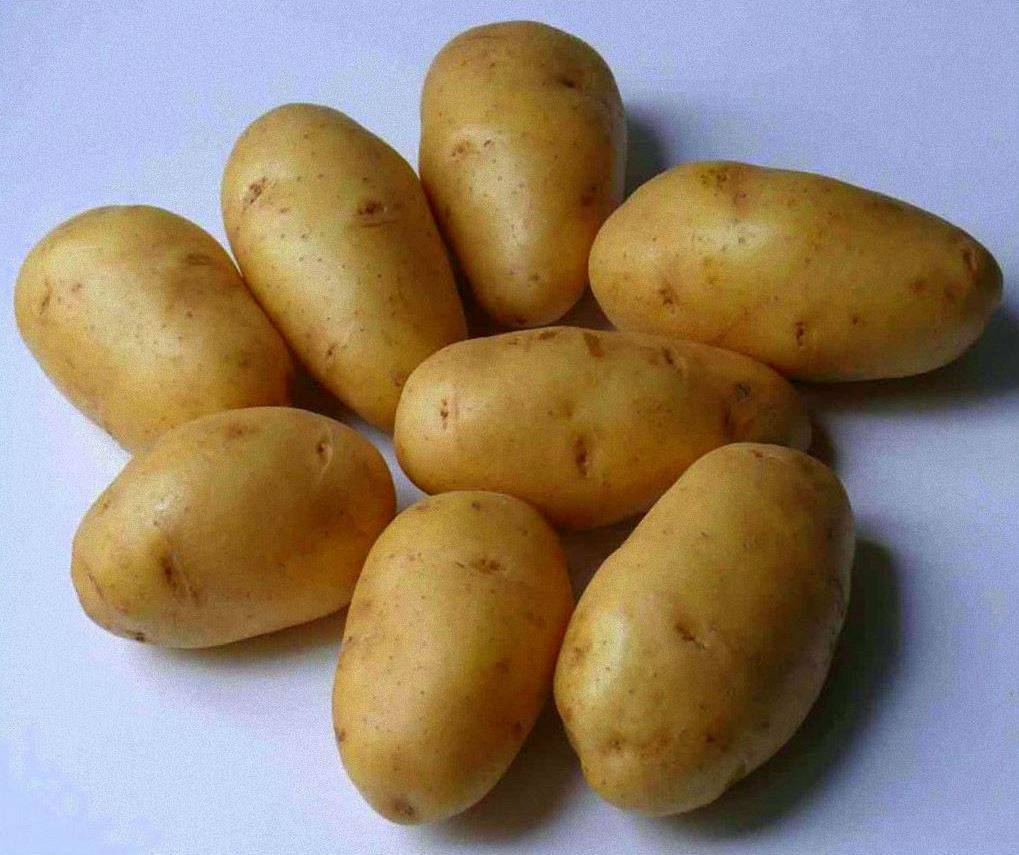
A mid-late variety for table use. One hectare can yield 250-350 centners. It forms tall bushes with light green leaves. It is distinguished by abundant and long flowering, with reddish-purple inflorescences. The tubers are round, with small germination points. The skin is light beige, the flesh is white.
Specifications:
- weight - 90-120 g;
- starch content - 15-20%;
- marketability - 88-92%;
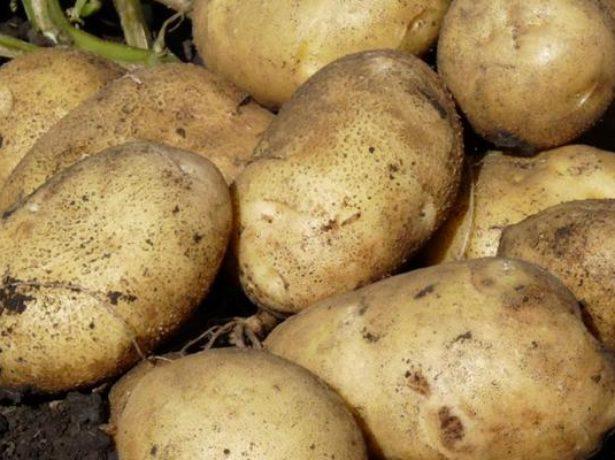
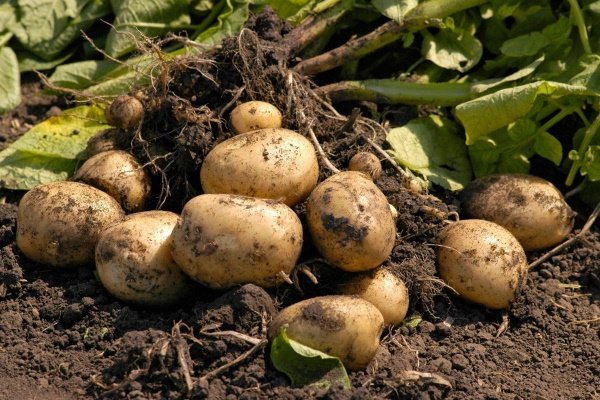
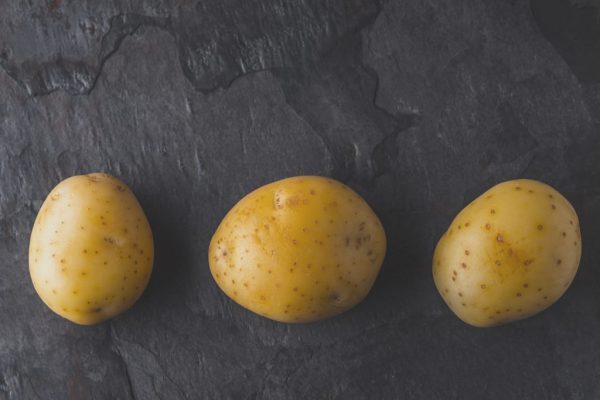
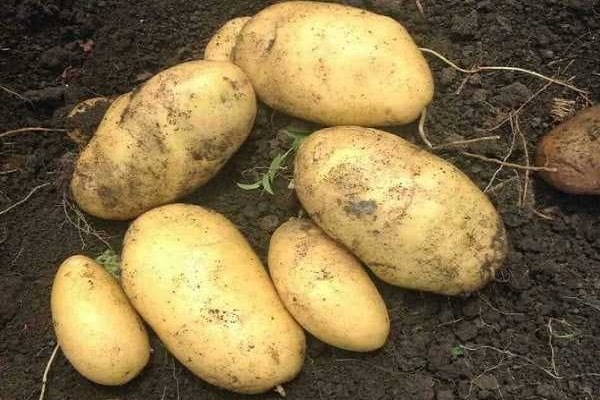
- shelf life - 88-92%.
The disadvantage of Lorkh is that it has a weak immune system.
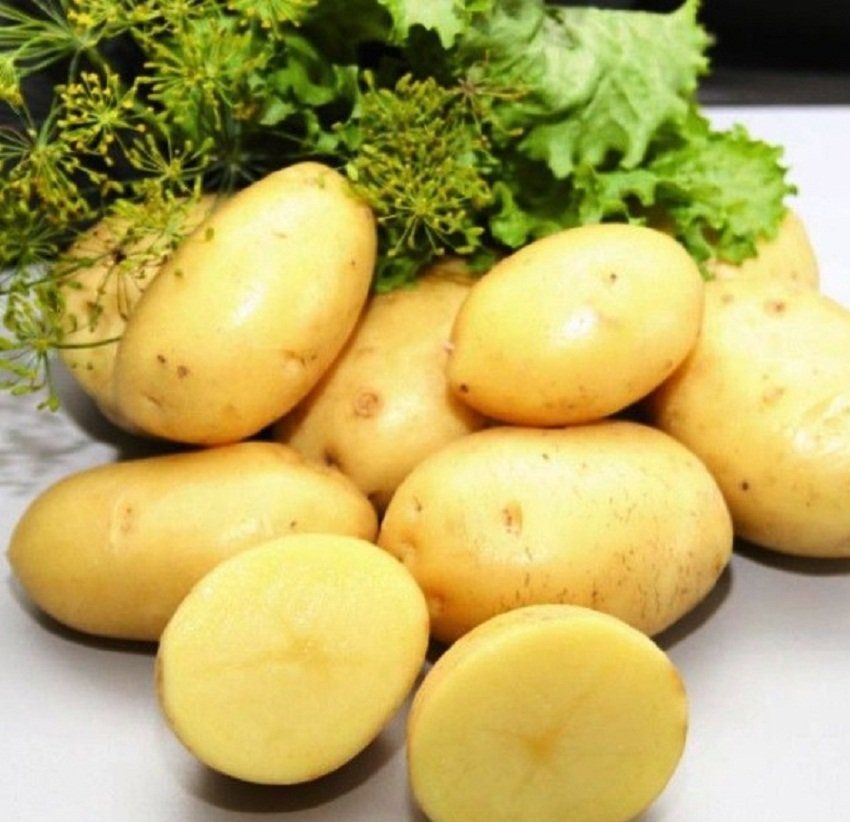
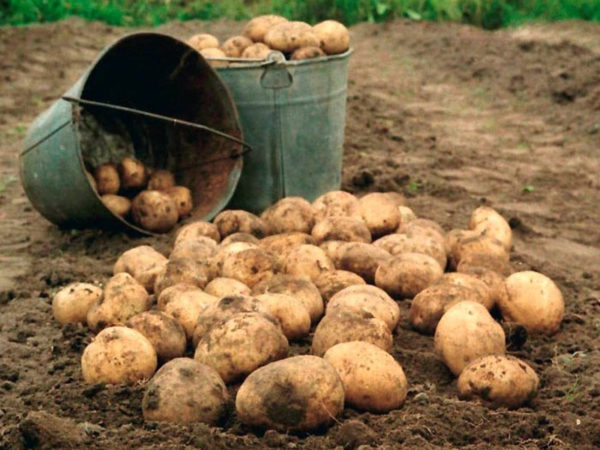
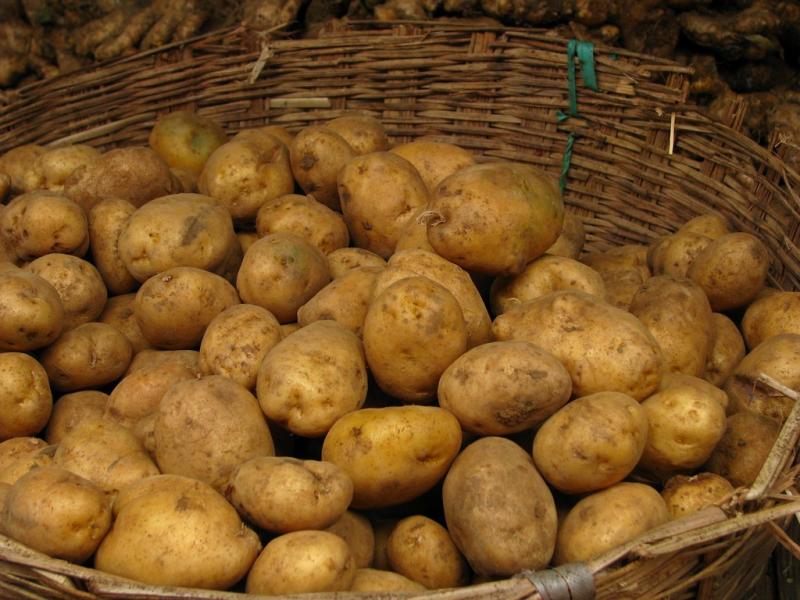
Photo gallery of the Lorkh potato variety:
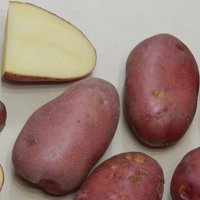
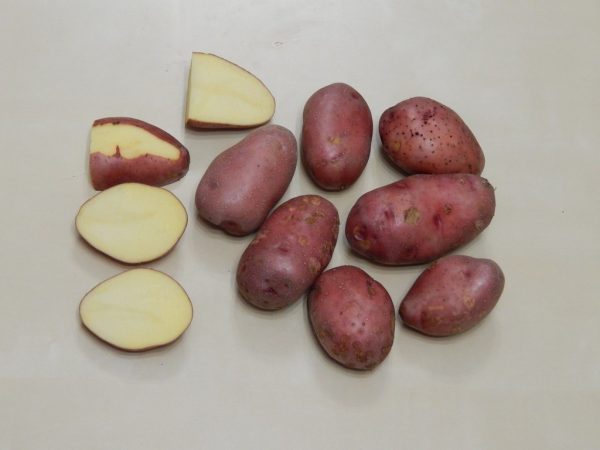
Crane
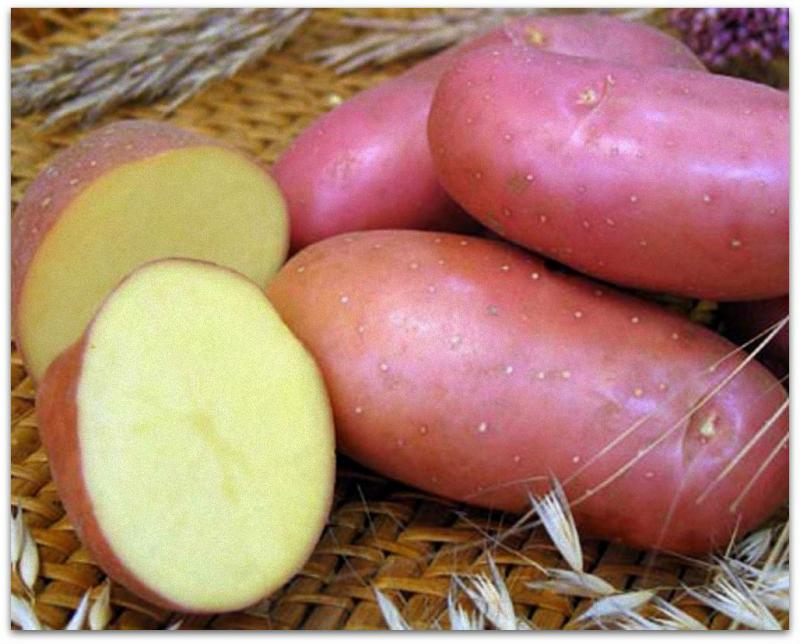
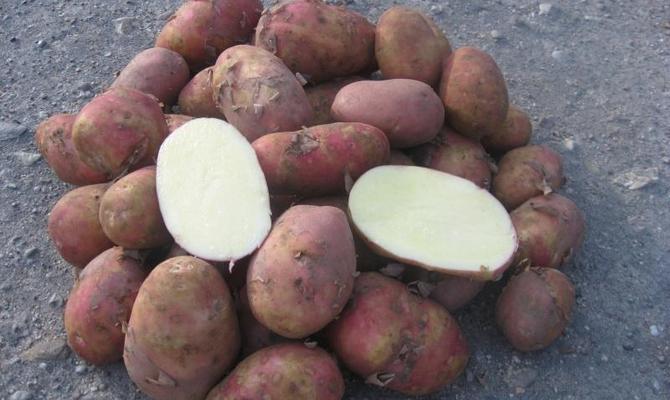
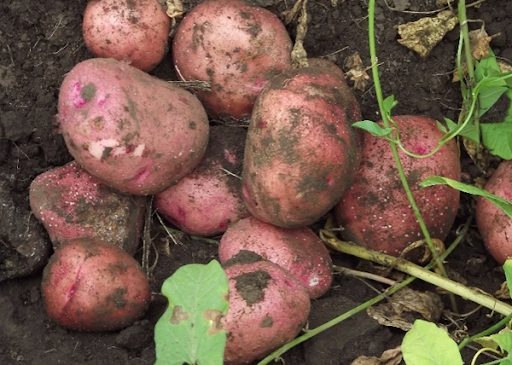
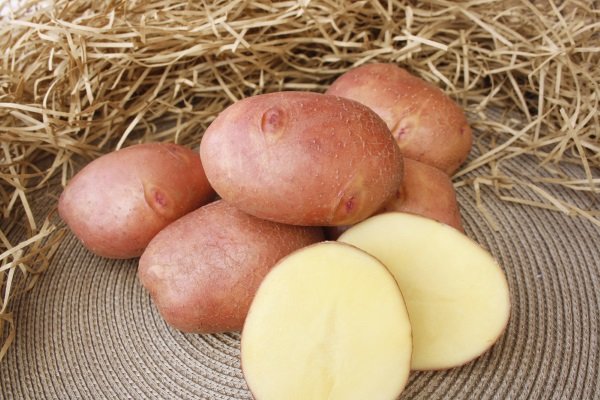
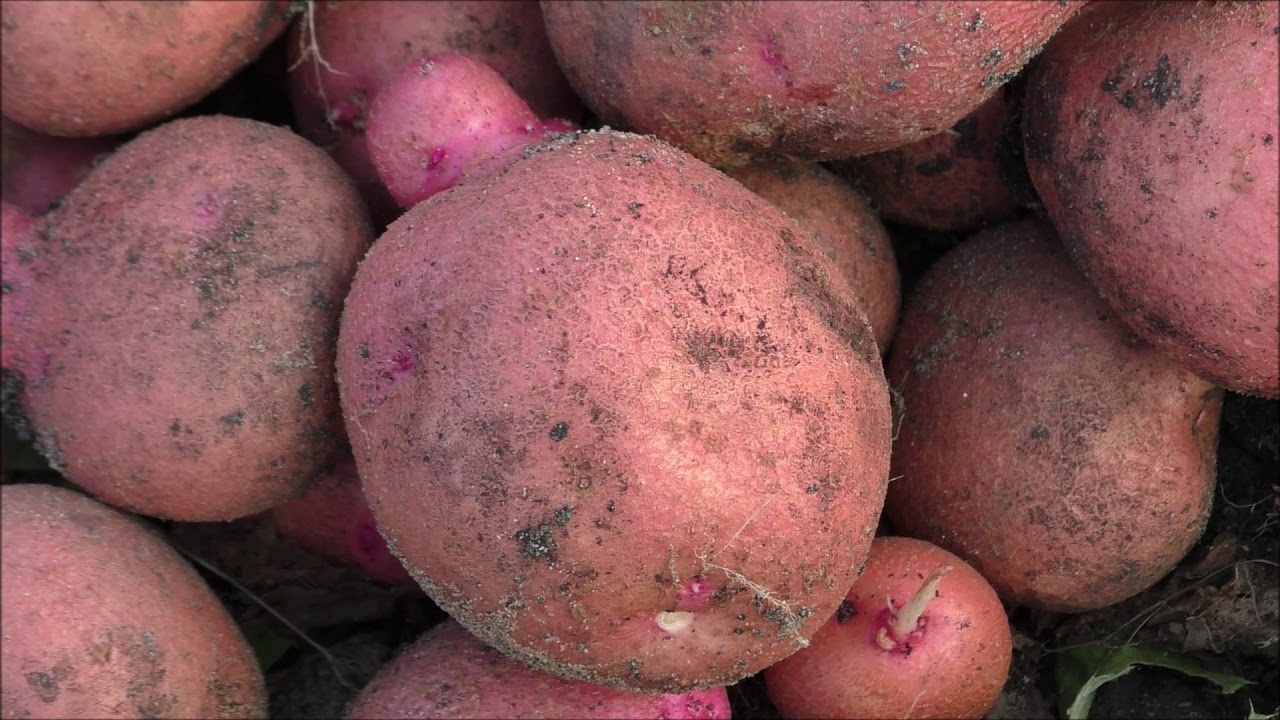
A mid-late variety for table use and potato chip production. Yields 17.7-24.2 t/ha. Bushes are low, semi-erect. The leaves are small, slightly corrugated around the perimeter, and emerald in color. The potatoes are oval-round, with small germination points. The skin is raspberry-colored, slightly rough, and the flesh is sandy.
Specifications:
- weight - 89-139 g;
- starch content - 14-19%;
- marketability - 83-96%;
- shelf life - 93%.
Resistant to roundworms and Synchytrium endobioticum.
Photo gallery of the Zhuravinka potato variety:
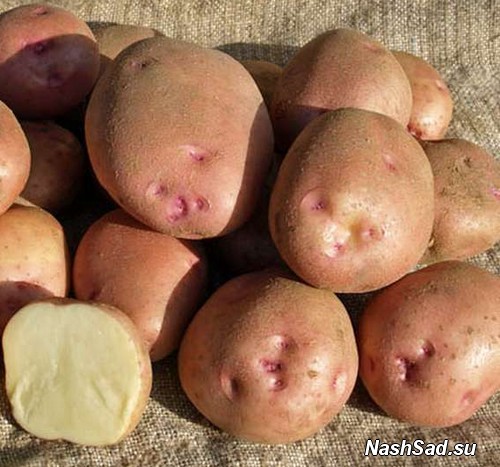
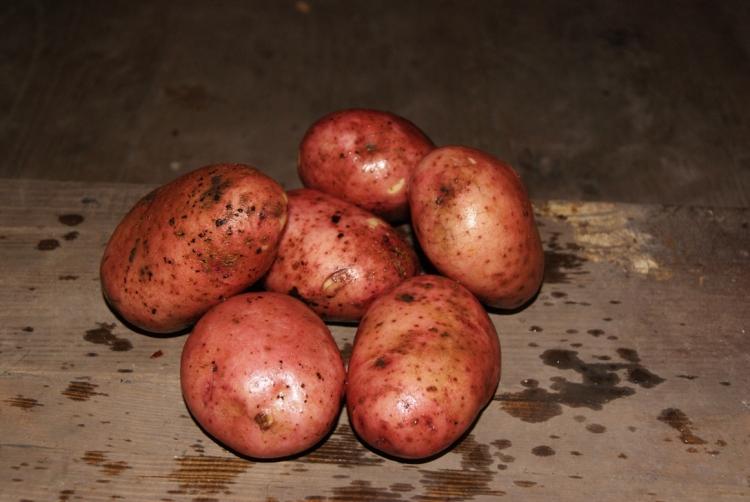
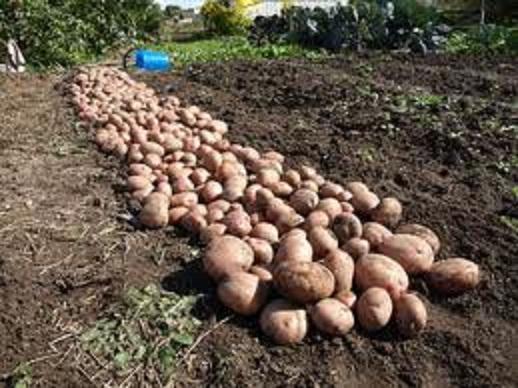
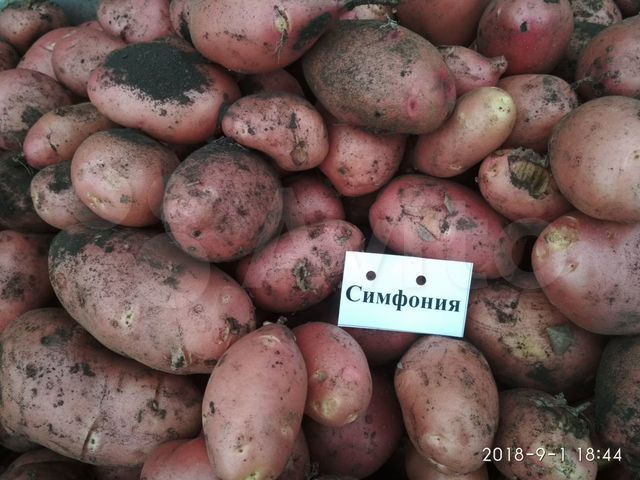
Symphony
A mid-late variety for table use. Yields 20-46 tons per hectare. Bushes have upright shoots. A nest can contain 8-11 roots. Potatoes are oval-shaped, with small germination points. The skin is red, and the interior is white.
Specifications:
- weight - 70-140 g;
- starch content - 13-19%;
- marketability - 81-92%;
- shelf life - 95%.
Shows good resistance to Synchytrium endobioticum and roundworms.
Photo gallery of the Symphony potato variety:
The highest-yielding varieties for the Moscow region
To grow a large amount of potatoes, it's not enough to simply choose a high-yielding variety. It's also important to ensure it's suited to the specific region and soil. Furthermore, it's crucial to strictly adhere to agricultural practices and promptly treat for diseases and pests. Let's look at the most productive varieties for the Moscow region (according to expert reviews).
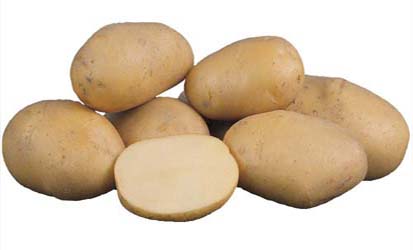
Bryansk Early
An early-ripening variety for table use. Suitable for clay, loam, sandy loam, and chernozem soils. Yields 30-47 tons per hectare. The bushes are low-growing, spreading, with numerous but weakly branched stems. The leaves are large, slightly dissected, and emerald in color. The tubers are rounded, with small growing points. The skin is sandy, and the flesh is white.
Specifications:
- weight - 84-108 g;
- starch content - 12-18%;
- marketability - 90-93%;
- Keeping quality is good.
Not susceptible to Synchytrium endobioticum.
Photo gallery of the Bryansk Early potato variety:
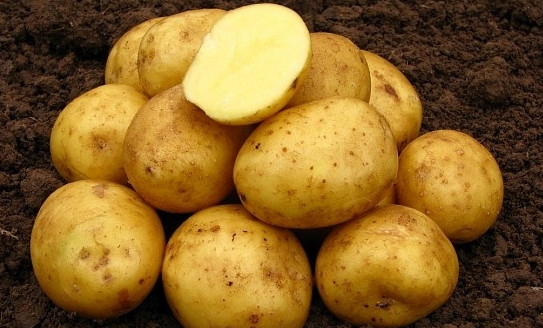
Herald
A mid-season, all-purpose variety. Yields range from 157 to 307 centners per hectare. The bushes are tall and heavily branched. The leaves are large, deeply dissected, emerald-green, with distinct veins. Flowering is abundant. The tubers are round. The skin is meshed, rough, and creamy in color. The flesh is snow-white. The eyes are numerous and shallow.
Specifications:
- weight - 48-140 g;
- starch content - 11-18%;
- marketability - 77-93%;
- Keeping quality is good.
Resistant to Synchytrium endobioticum, shows average resistance to viruses.
Photo gallery of the Vestnik potato variety:
Volare
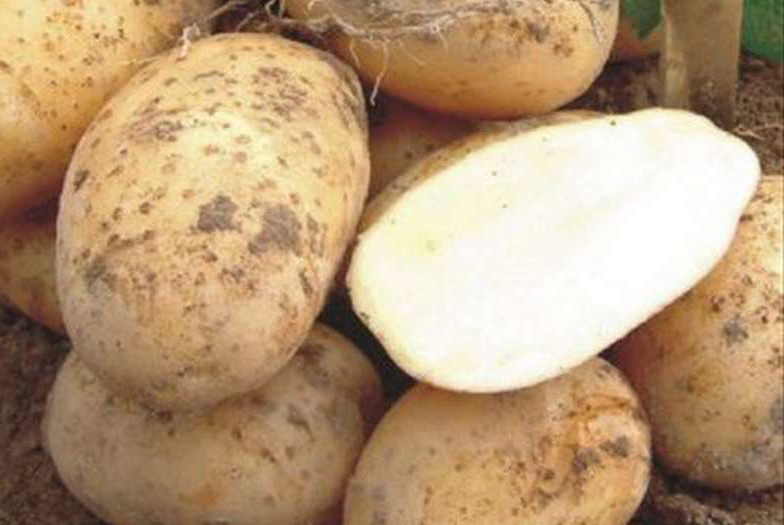
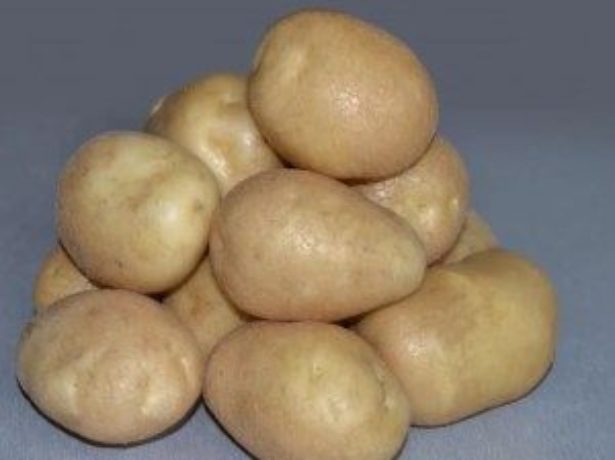
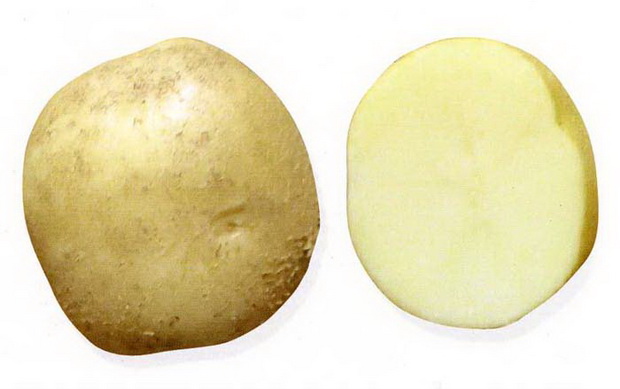
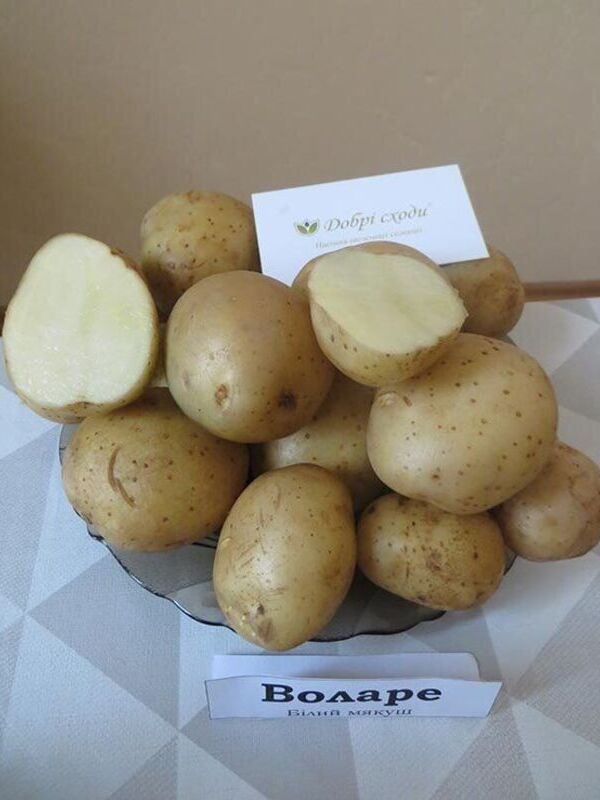
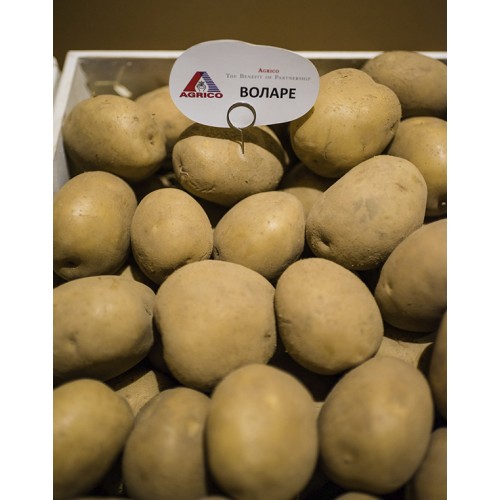
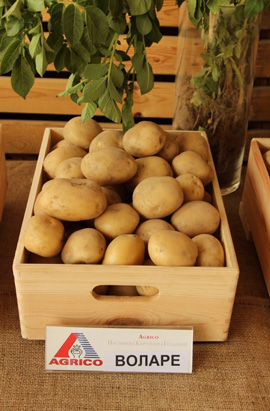
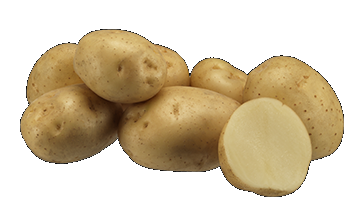
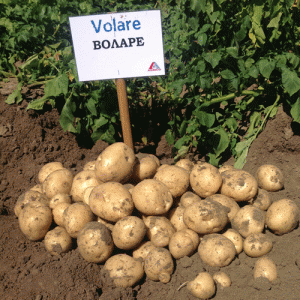
A mid-late, all-purpose variety. Yields 248-437 c/ha, with a maximum yield of 562 c/ha (Volgograd Region). Bushes are low- to medium-sized, with semi-erect stems and green or emerald leaves. Large corollas with intense anthocyanin coloration on the underside. Oval tubers with small to medium-sized growth points. The skin is yellow, and the flesh is snow-white.
Specifications:
- weight - 92-192 g;
- starch content - 10-13%;
- marketability - 80-96%;
- shelf life - 95%.
Resistant to roundworms, mosaics, Synchytrium endobioticum.
Photo gallery of the Volare potato variety:
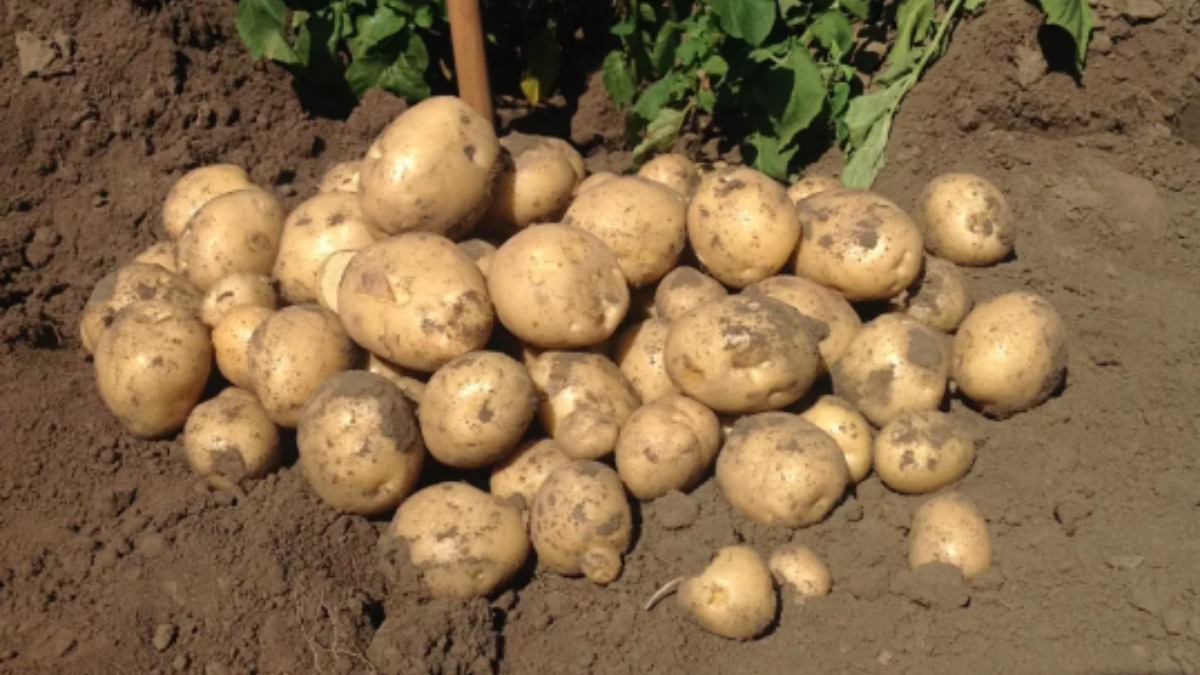
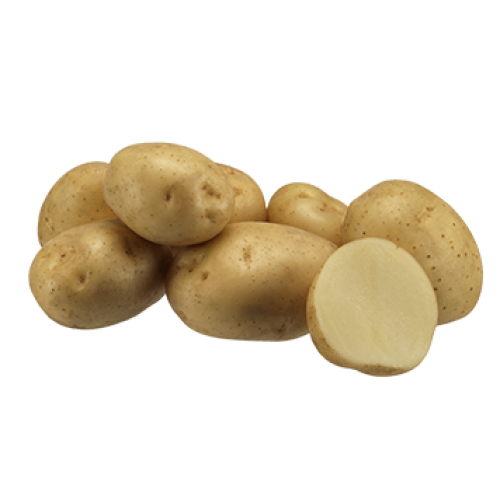
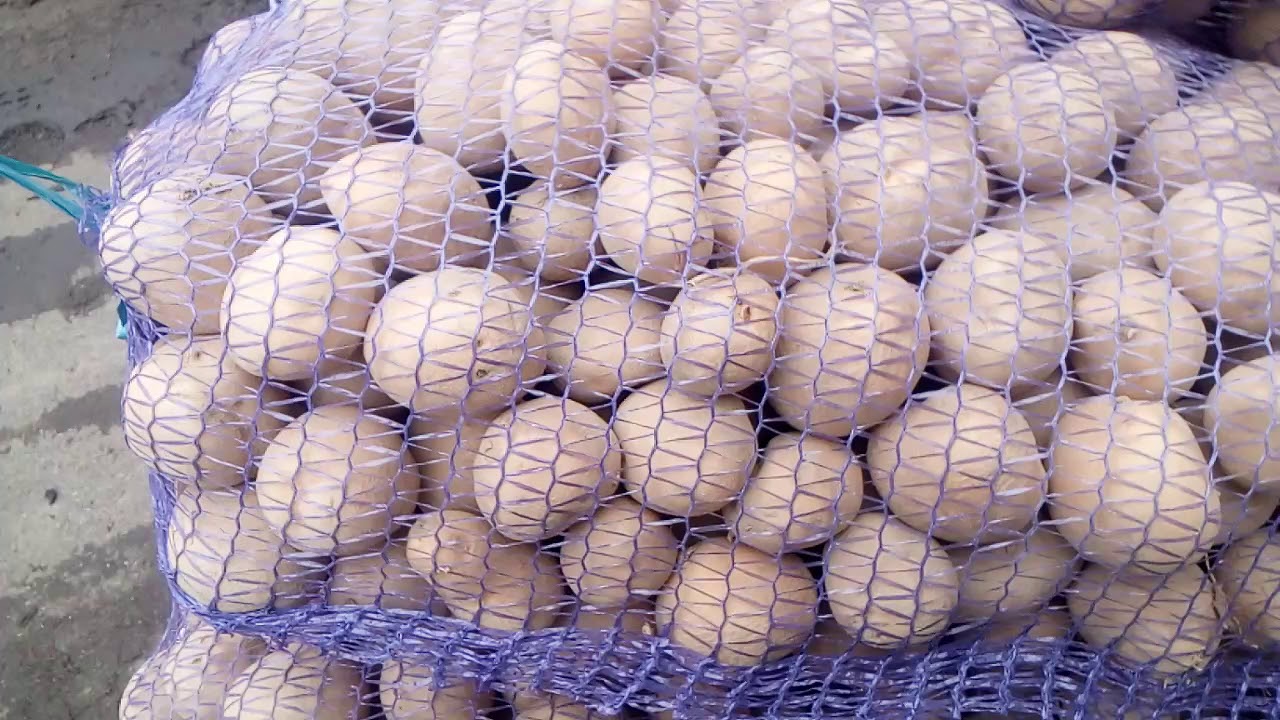
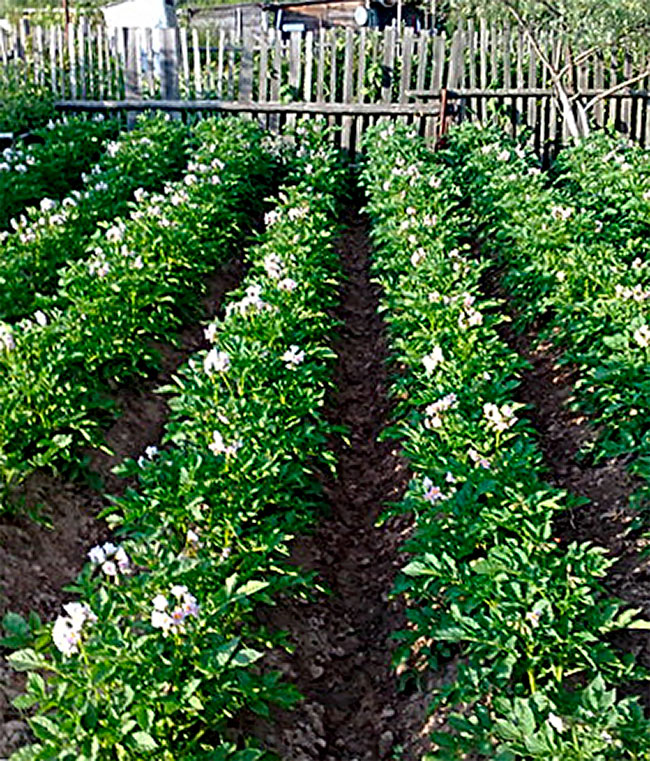
Volat
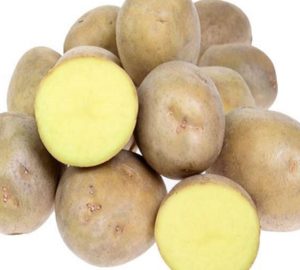
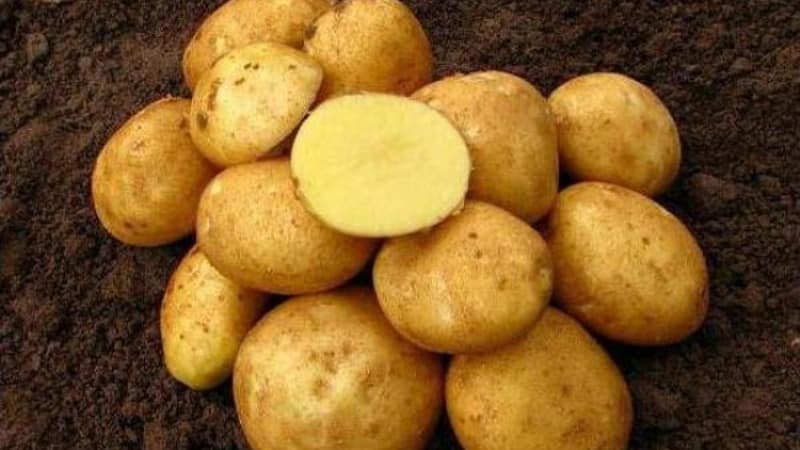
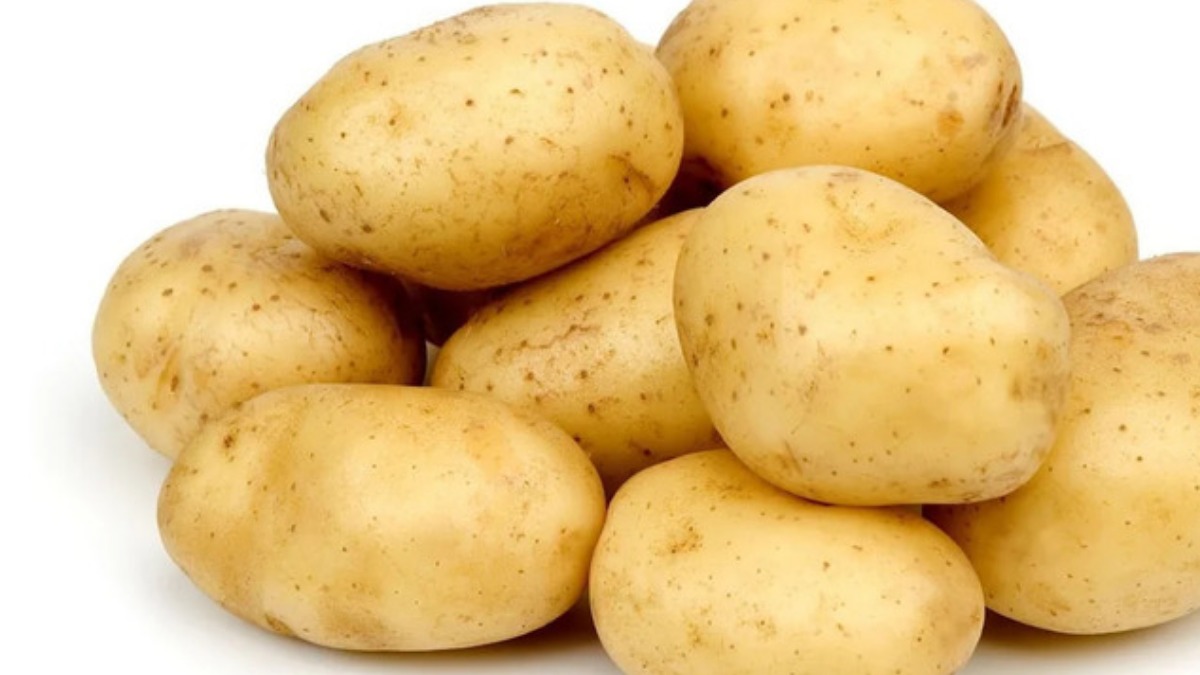
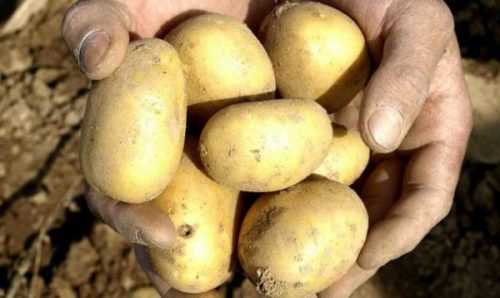
Table variety. Yield: 210-530 c/ha. Maximum: 678 c/ha. Upright stems. Green leaves with slight corrugation around the perimeter. Oval tubers with small germination points. Sand-colored inside and outside.
Specifications:
- weight - 108-146 g;
- starch content - 14-14.8%;
- marketability - 79-96%;
- shelf life - 95%.
Immunity to Synchytrium endobioticum, roundworms, mosaics and leaf curl.
Photo gallery of the Volat potato variety:
Pennant
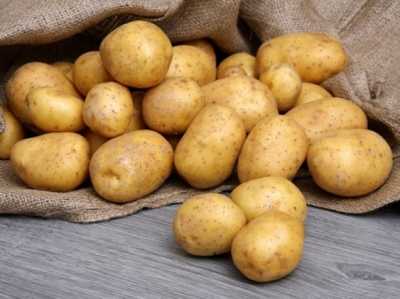
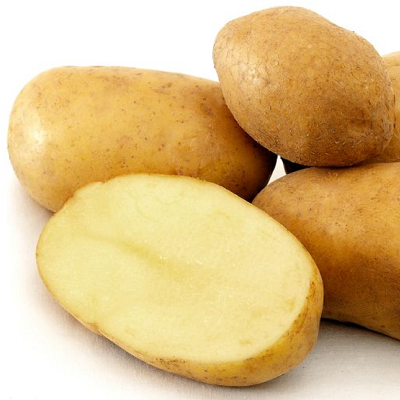
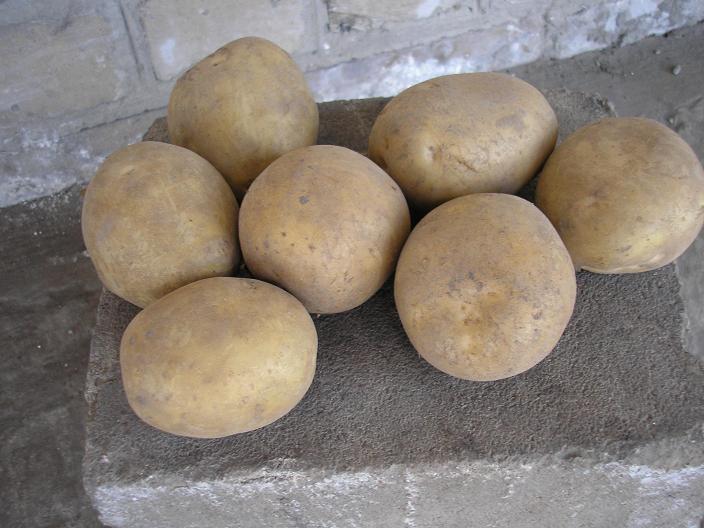
A mid-season, all-purpose potato. Yields 241-430 c/ha. Forms medium to tall bushes with semi-erect shoots. Light green foliage. Potatoes are round, with medium-sized eyes. They are sand-colored inside and out.
Specifications:
- weight - 96-140 g;
- starch content - 13-16%;
- marketability - 82-98%;
- shelf life - 93%.
Resistant to Synchytrium endobioticum and nematodes.
Photo gallery of the Vympel potato variety:
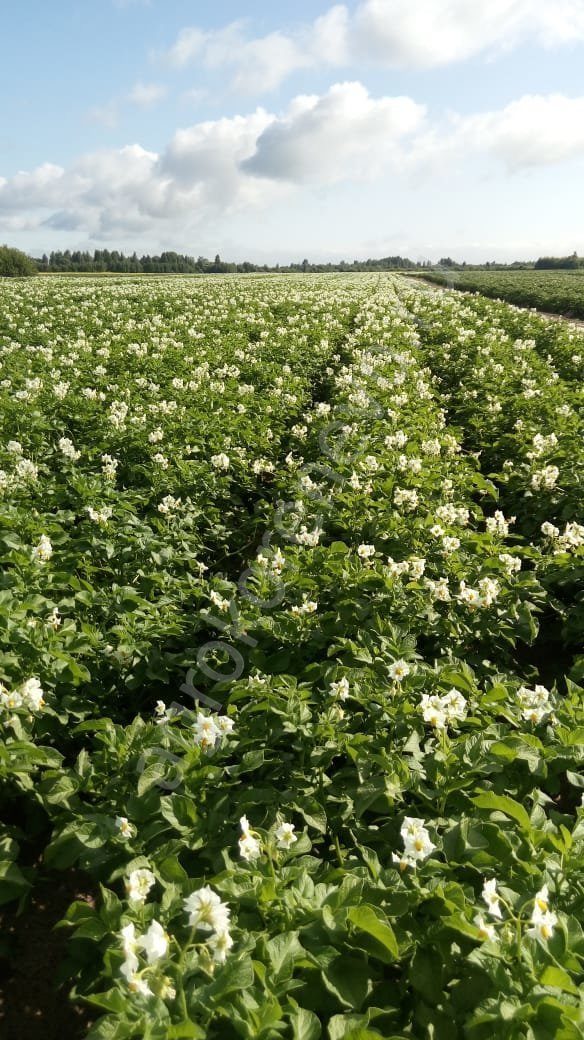
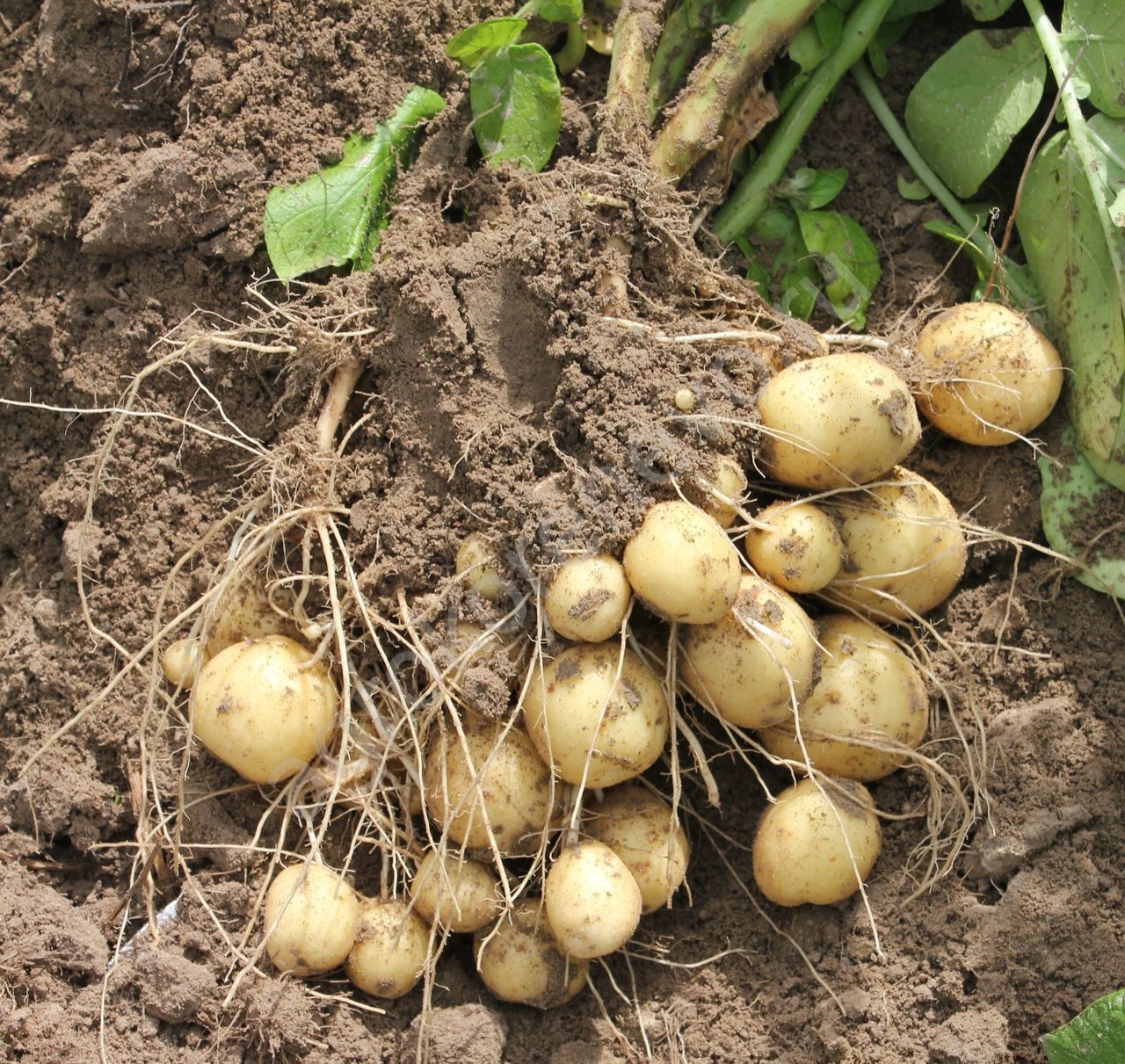
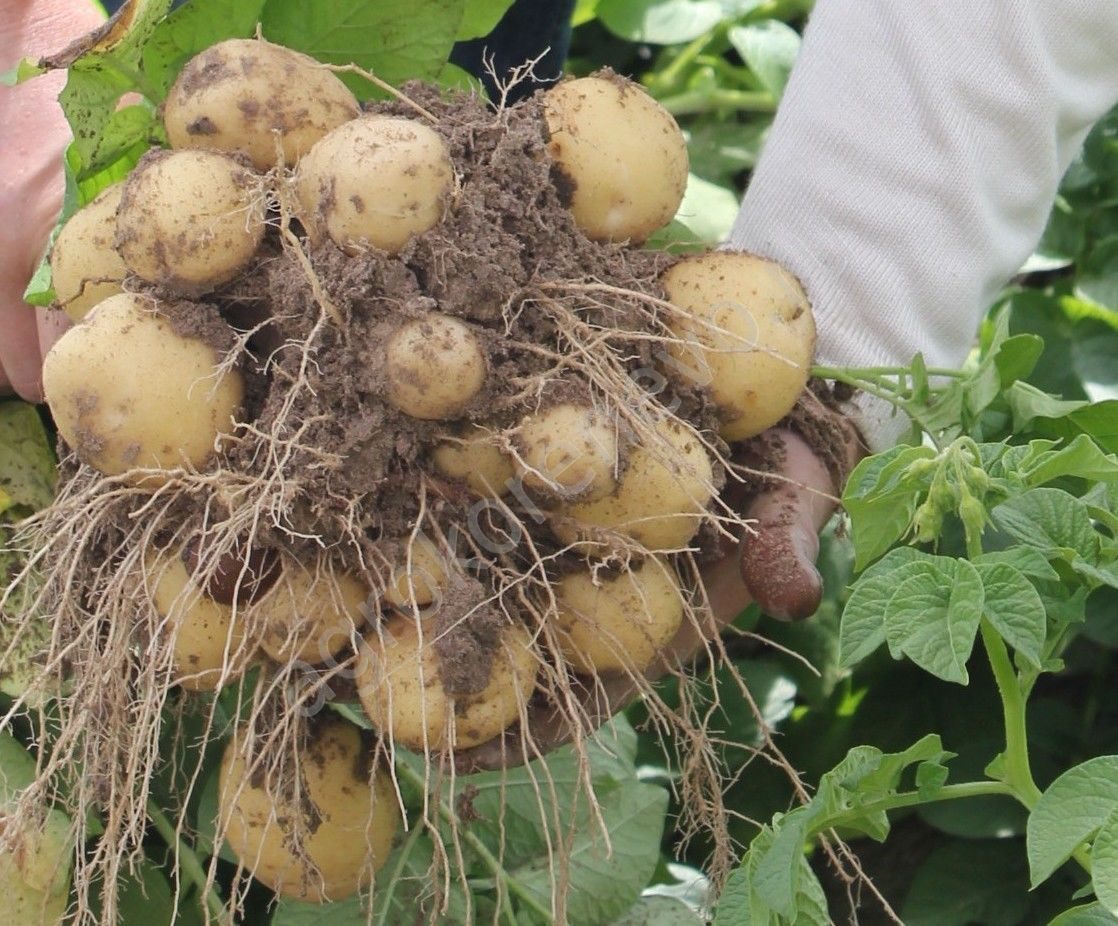
Grandee
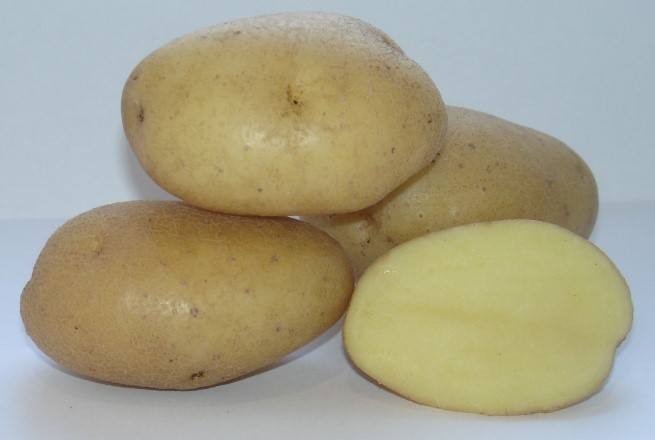
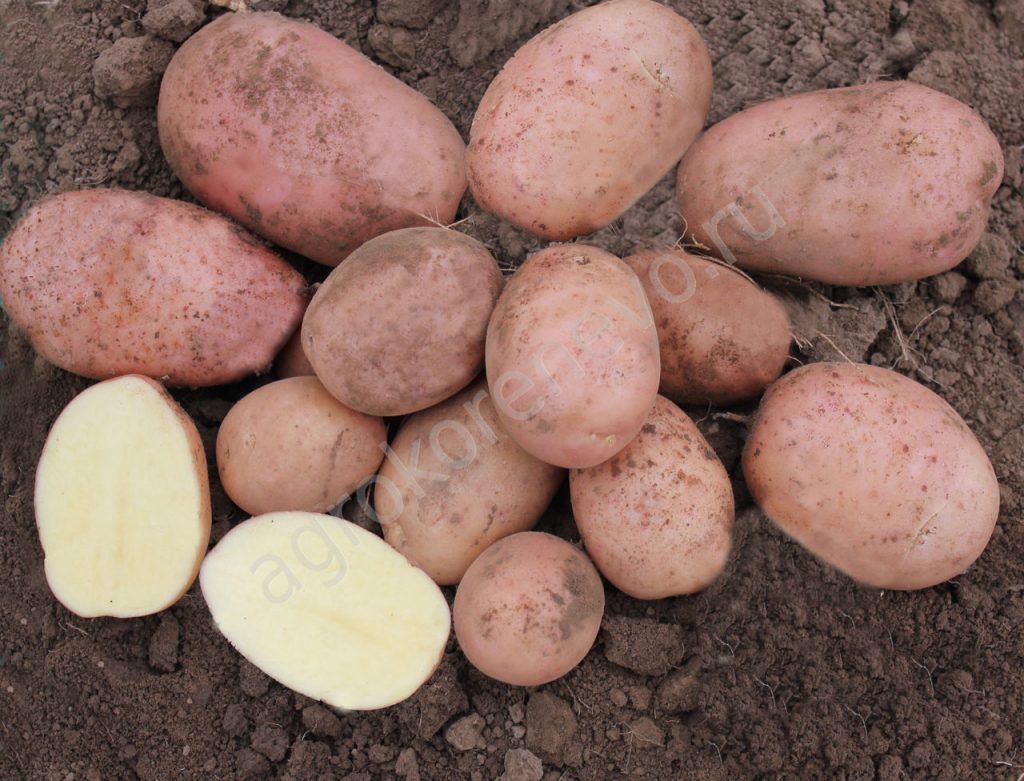
A mid-season, all-purpose variety. Yields range from 114-387 centners per hectare, with a maximum yield of 506 centners per hectare (Ivanovo Region). Tall plants with semi-erect stems. Leaves are light green or emerald. Corollas are medium-sized, with a mild anthocyanin coloration. Potatoes are oval, with small germination points. The skin is partially raspberry, and the flesh is sandy.
Specifications:
- weight - 92-104 g;
- starch content - 13-18%;
- marketability - 75-96%;
- shelf life - 93%.
Resistant to Synchytrium endobioticum, mosaic and roundworms.
Photo gallery of the Grand potato variety:
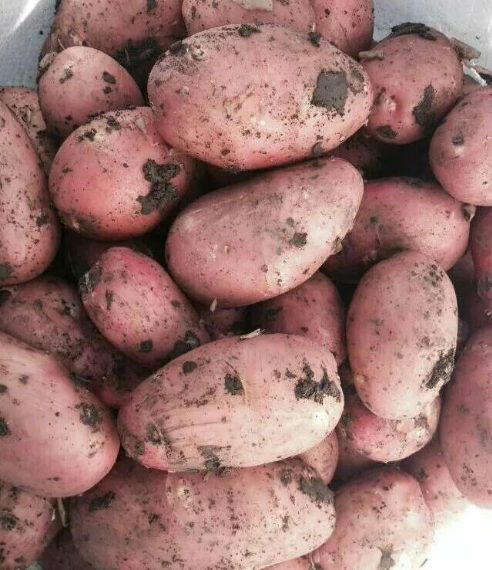
Dido
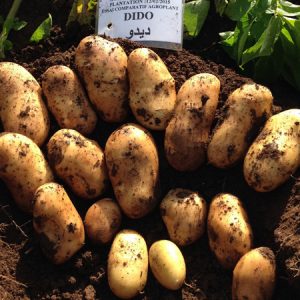
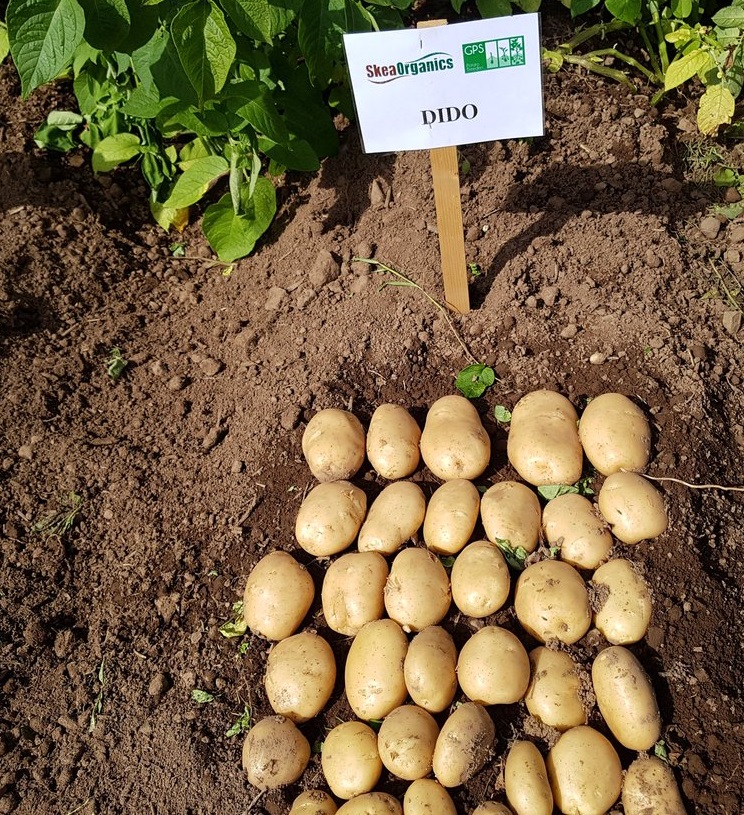
A mid-late variety used for French fries. Yields 235-457 c/ha (up to 488 c/ha). Bushes are medium-sized or tall, semi-erect, and of intermediate height. Large, light green foliage. Corollas are medium-sized, with a weak to moderate anthocyanin coloration on the inside. Tubers are round, with small to medium-sized germination points. The skin is sandy, and the inside of the potatoes are creamy.
Specifications:
- weight - 105-159 g;
- starch content - 15-17%;
- marketability - 85-96%;
- shelf life - 97%.
Roundworms do not develop, Synchytrium endobioticum does not develop, and leaf curl does not appear. Furthermore, Dido has moderate susceptibility to late blight.
Photo gallery of the Dido potato variety:
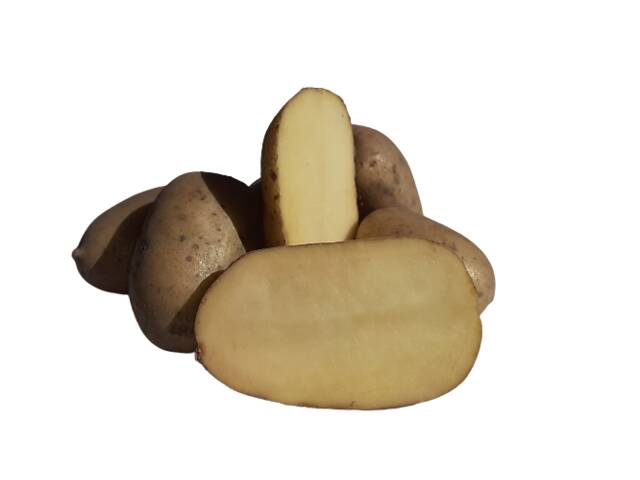
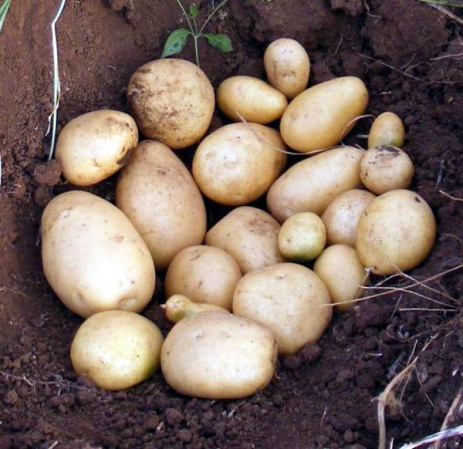
Merlot
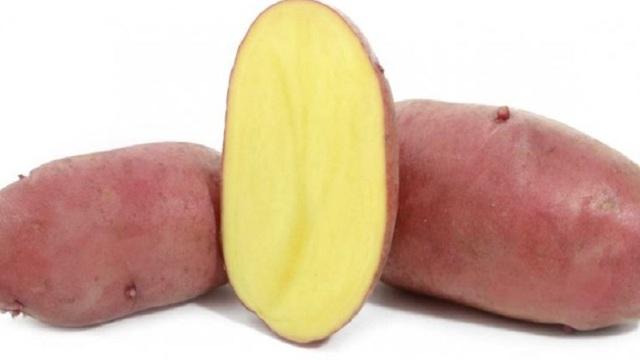
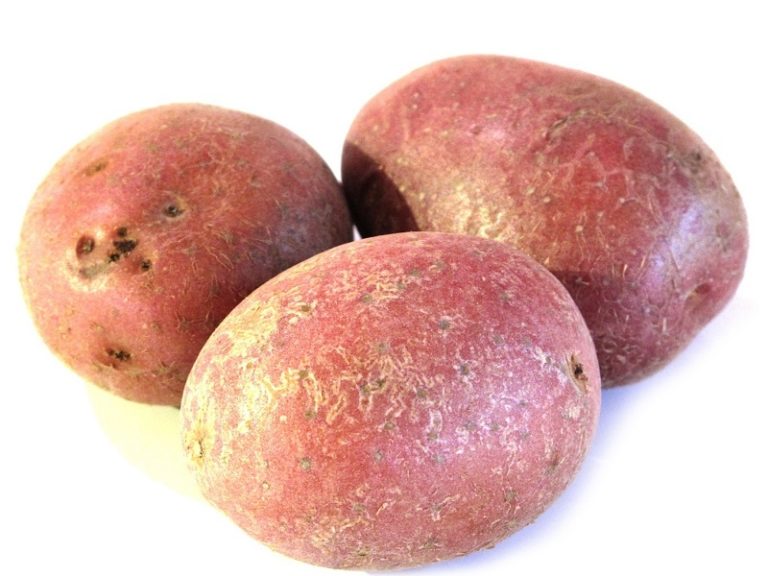
A late-ripening table potato. Yields 190-355 c/ha, with a maximum yield of 504 c/ha. It forms semi-erect bushes with small green leaves. The tubers are oval with red skin and dark sand-colored flesh.
Specifications:
- weight - 89-139 g;
- starch content - 15-16%;
- marketability - 84-96%;
- shelf life - 98%.
The bushes are not attacked by roundworms. They are not susceptible to Synchytrium endobioticum or leaf curl. Late blight rarely affects them.
Photo gallery of the Merlot potato variety:
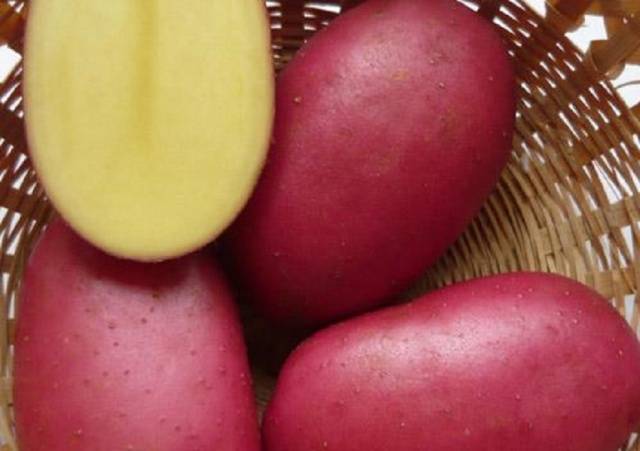
Rowanberry
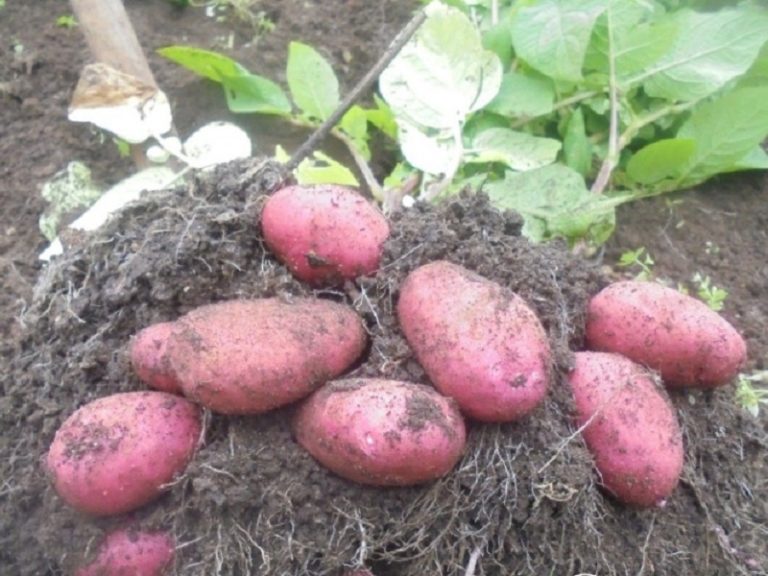
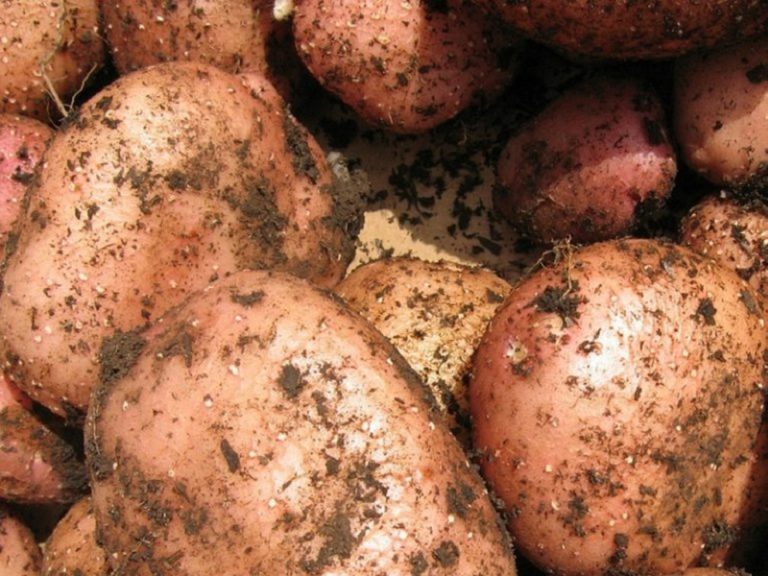
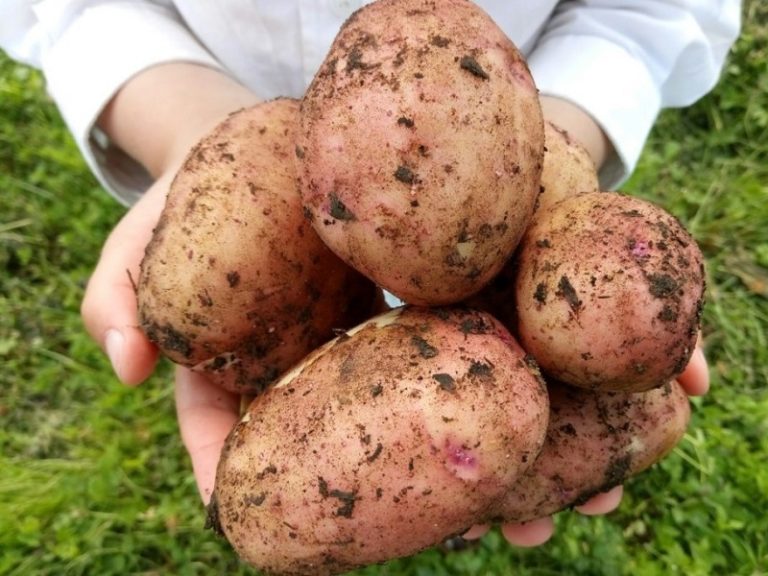
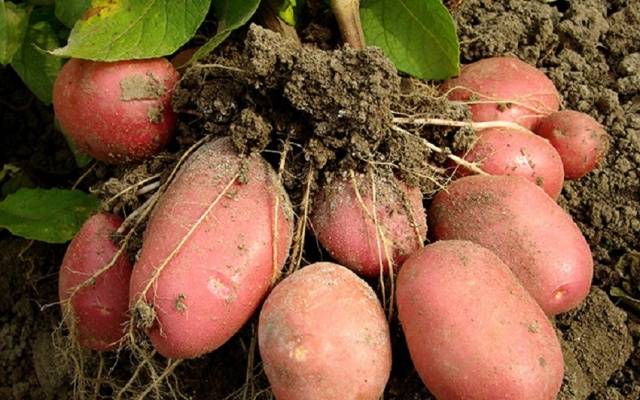
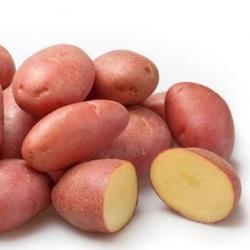
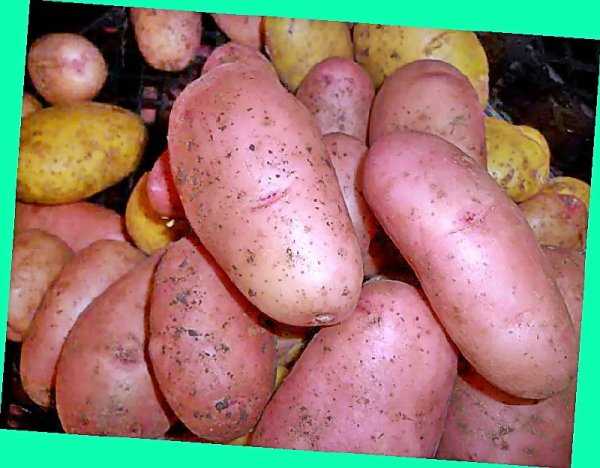
A mid-early, all-purpose variety. Commercial yields range from 220-234 centners per hectare, with a maximum of 386 centners per hectare (recorded specifically in the Moscow region). The bushes are medium to tall, with semi-erect shoots. The leaves are dark emerald, with a distinct but not overly wavy edge. The flowers are bluish-violet. The potatoes are oval, with virtually invisible eyes. The skin is smooth, raspberry-colored, and the flesh is creamy.
Specifications:
- weight - 92-133 g;
- starch content - 11-15%;
- marketability - 86-96%;
- shelf life - 90%.
Synchytrium endobioticum and roundworms are not found on Ryabinushka.
Photo gallery of potato variety Ryabinushka:
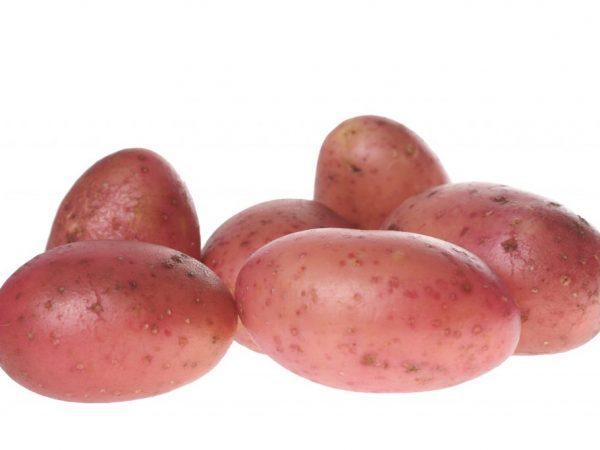
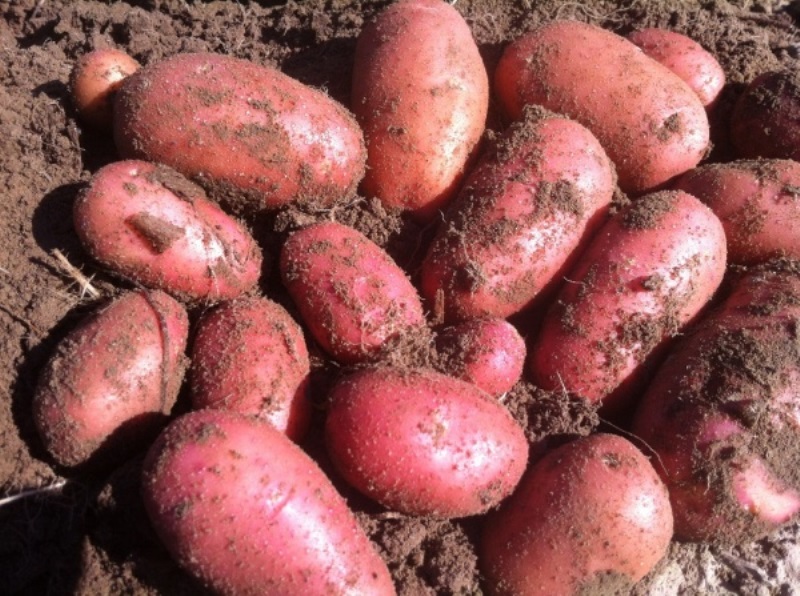
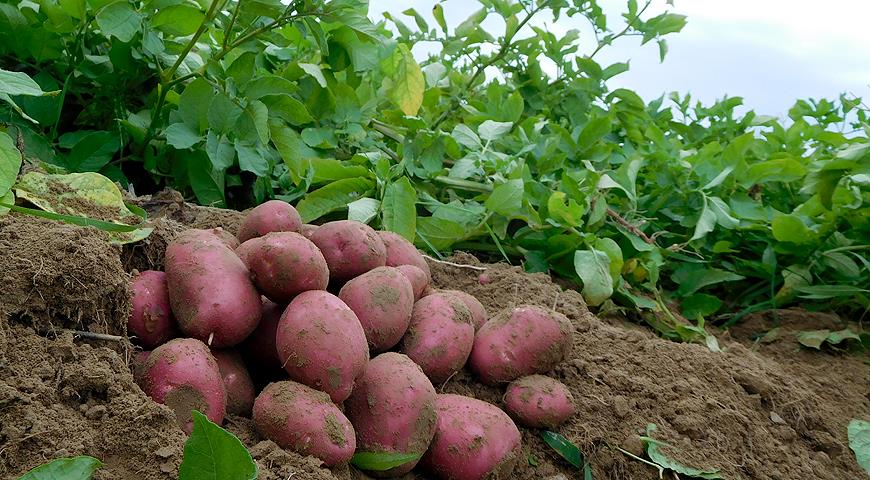
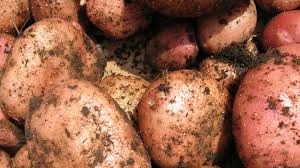
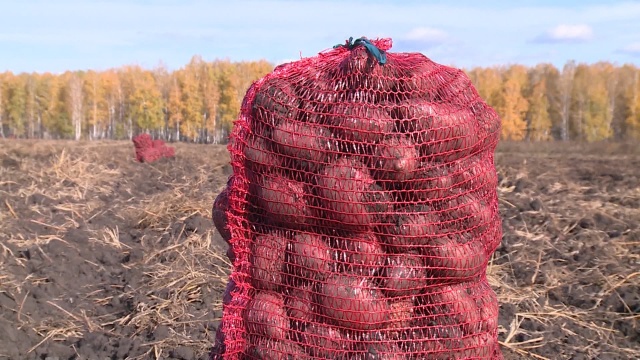
Evolution and Excellence
If you're choosing a variety based on yield, consider the mid-early Evolution and Excellence potatoes. Their characteristics have been outlined above.
The most delicious varieties for the Moscow region
Many people believe that the more starch a potato contains, the better, meaning it will taste better. However, this is not true. Flavor is determined not by starch content, but by fatty acid content. Early and mid-season varieties are considered the best in this regard.
Adretta
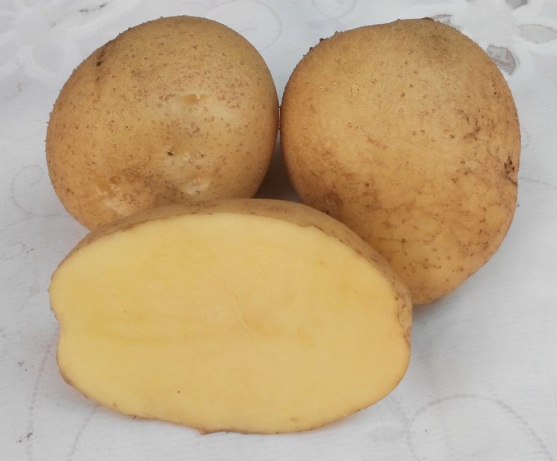
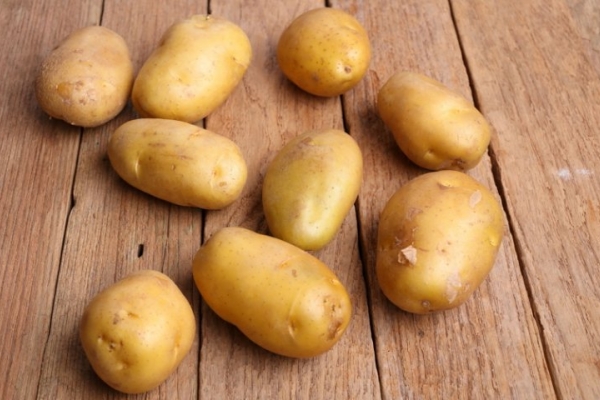
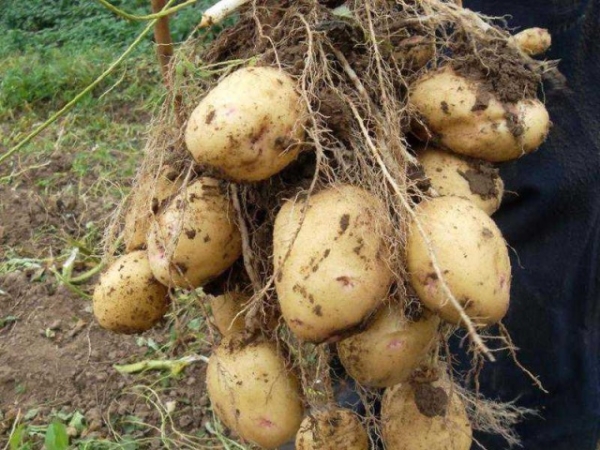
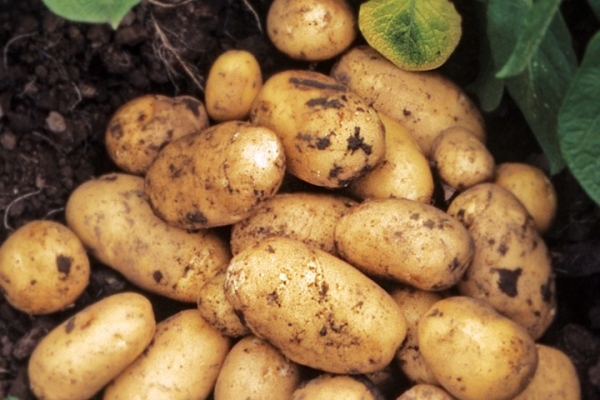
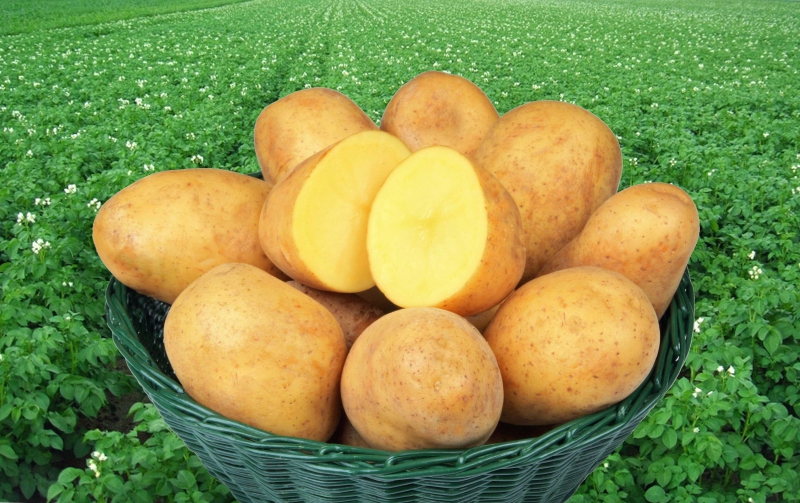
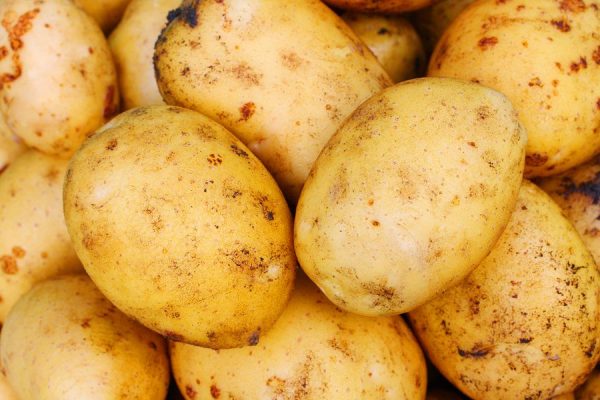
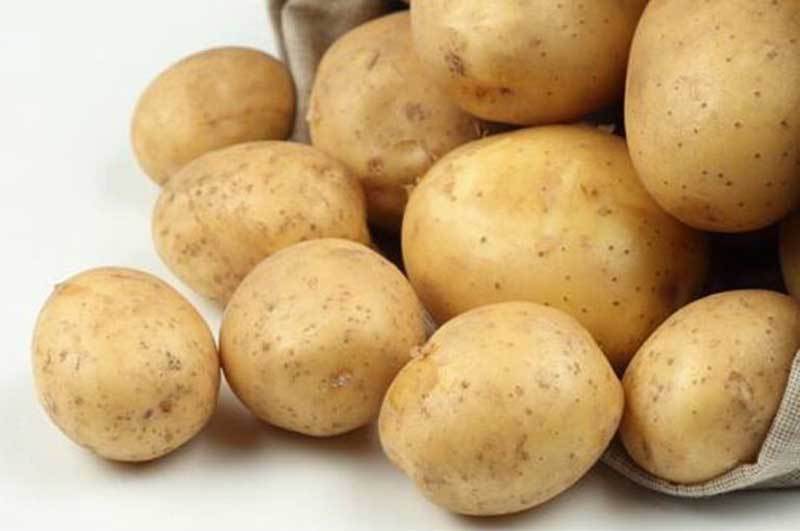
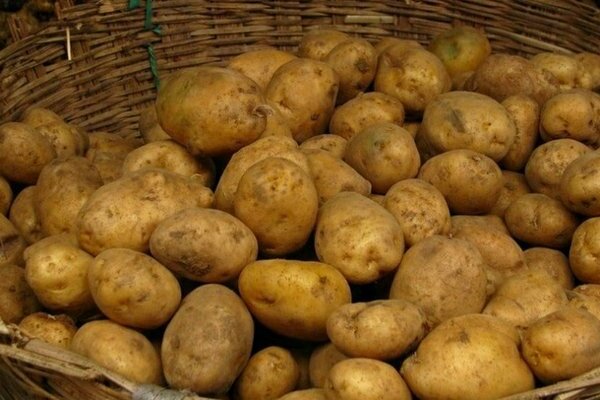
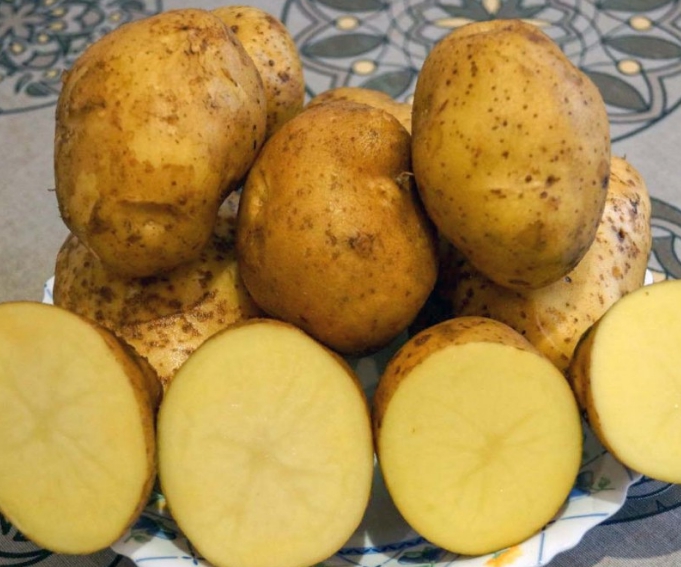
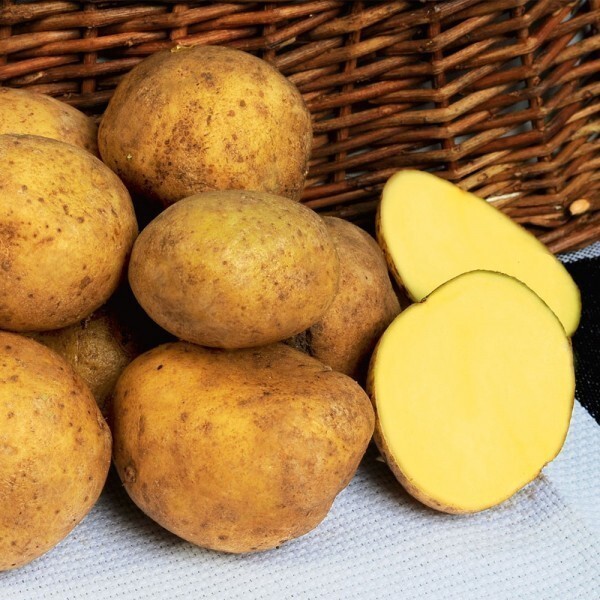
A mid-early table variety bred in Germany with a fairly high yield. The roots have an excellent flavor and are suitable for any cooking method.
The tubers are round. Small, shallow eyes are easily removed when peeling. The skin is sandy, and the flesh is slightly lighter. Starch content ranges from 13-18%. Resistant to many diseases, except scab, rhizoctonia, and late blight.
Photo gallery of the Adretta potato variety:
Aspia
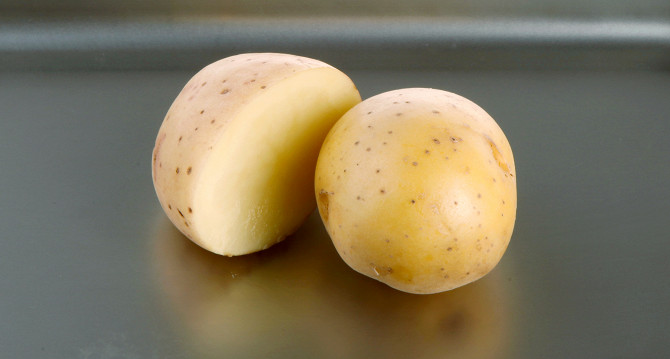
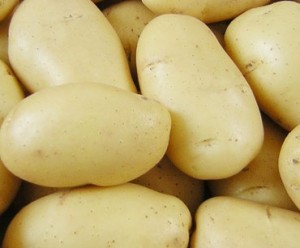
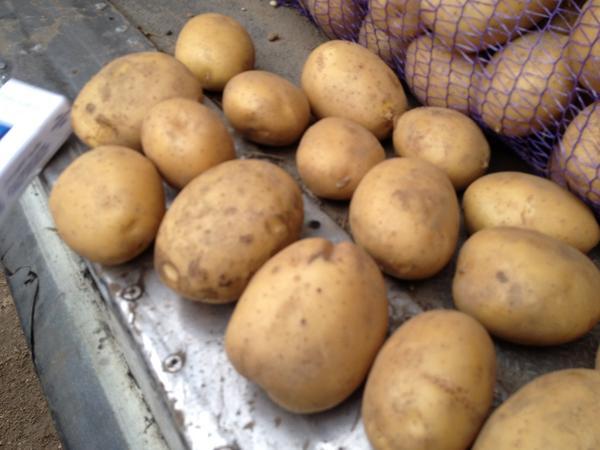
A mid-season potato recommended for table use only. Developed in our country, it was added to the register in 1995. Yields range from 380-440 centners per hectare (depending on agricultural practices and soil type). It has a good flavor. Starch content is 12-14%.
The skin is creamy, the flesh is sandy. The germination points are small and pinkish. It is resistant to Synchytrium endobioticum and nematodes. It is moderately susceptible to late blight.
Photo gallery of the Aspia potato variety:
Nocturne
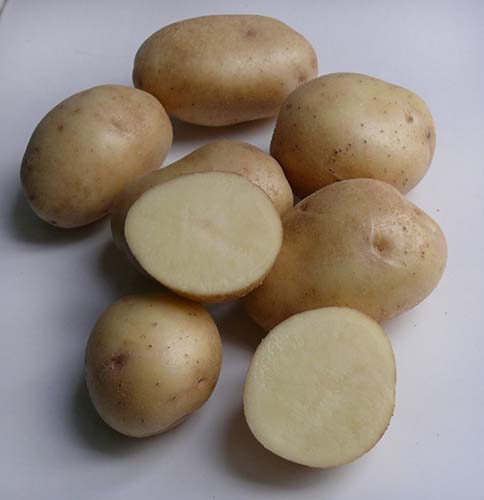
A mid-season, versatile variety. Suitable for baking, making entrees, mashed potatoes, and frying. Yields up to 366 c/ha. The potato has a good to excellent flavor.
The tubers are round, with barely noticeable eyes. The average weight is 94-126 g. Starch content is 14-17%. This variety can be grown in regions with a high risk of mosaic or canker. It is easy to care for.
Photo gallery of the Nocturne potato variety:
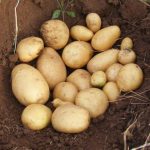
Blueness, Lorch, Blue-eyed
Farmers also note that the Golubizna, Lorkh, and Sineglazka varieties have excellent flavor. Their descriptions were provided earlier.
Purple potato varieties for the Moscow region
Let's take a closer look at a variety with an unusual purple color.
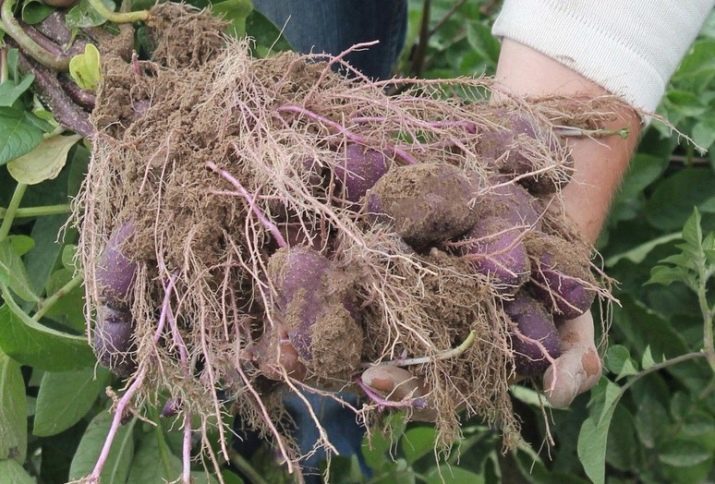
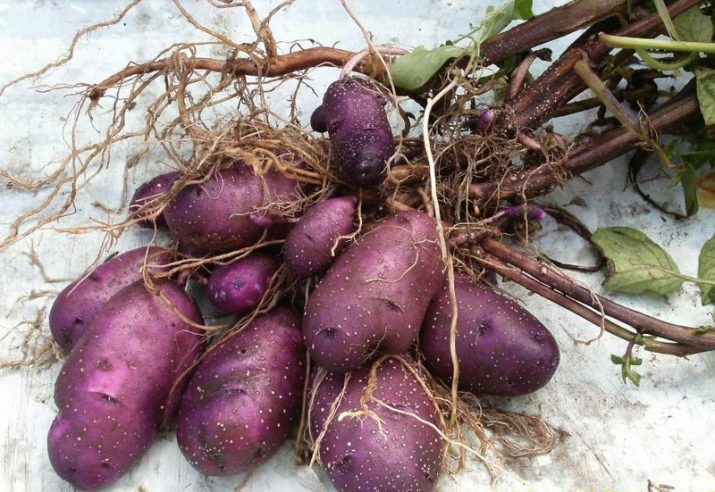
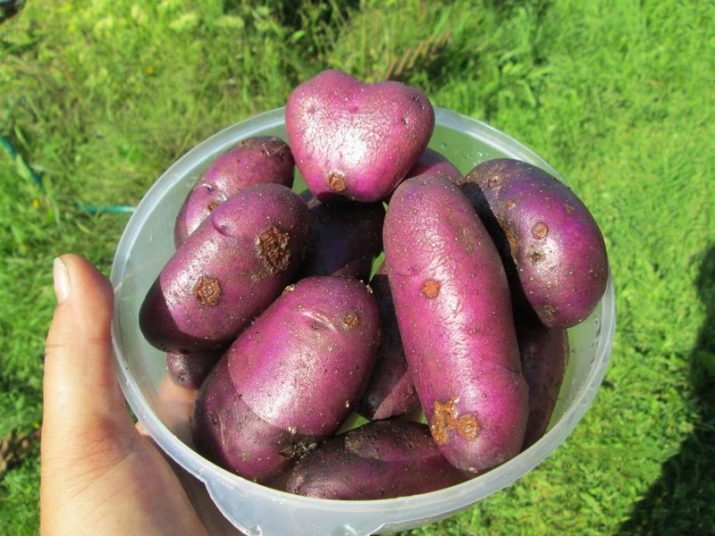
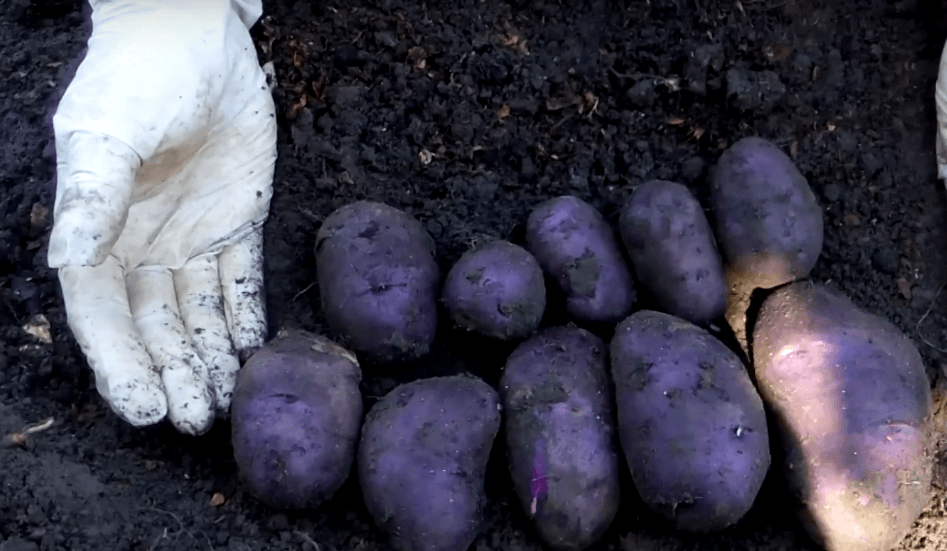
Knapweed
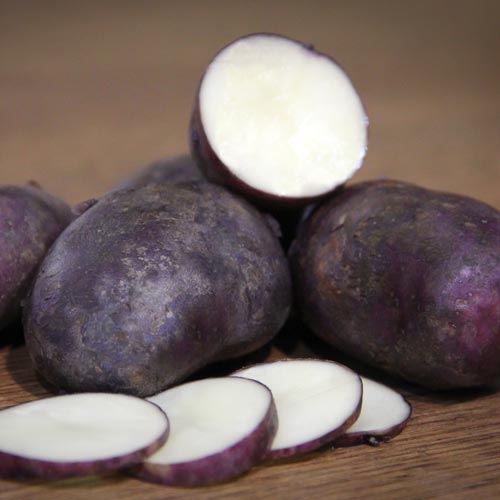
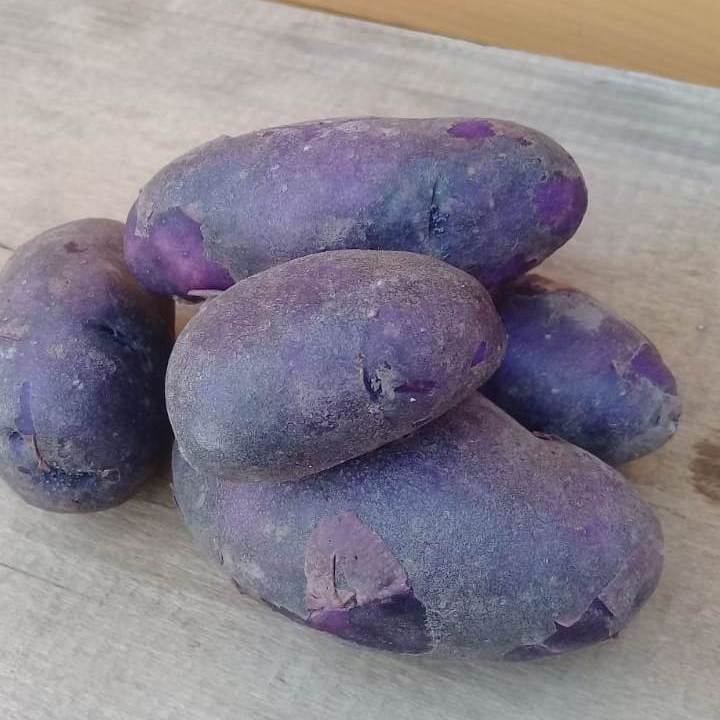
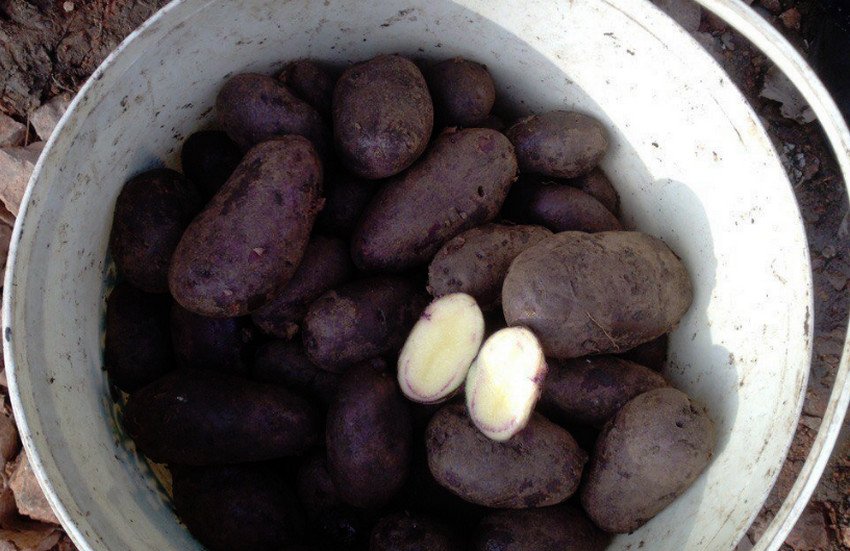
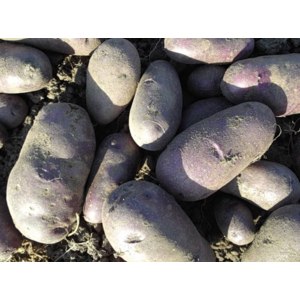
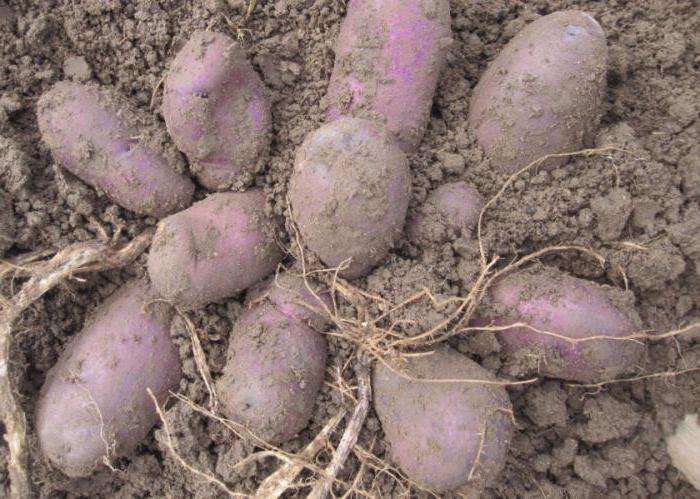
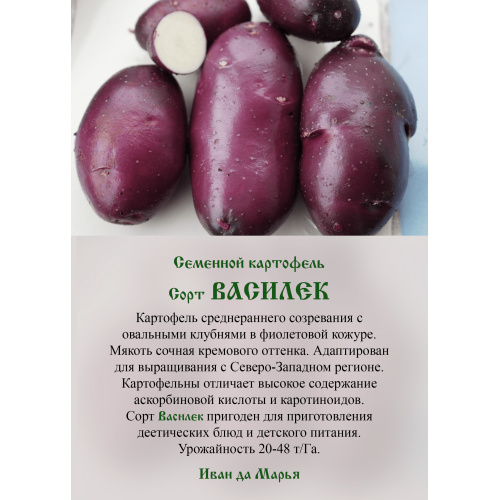
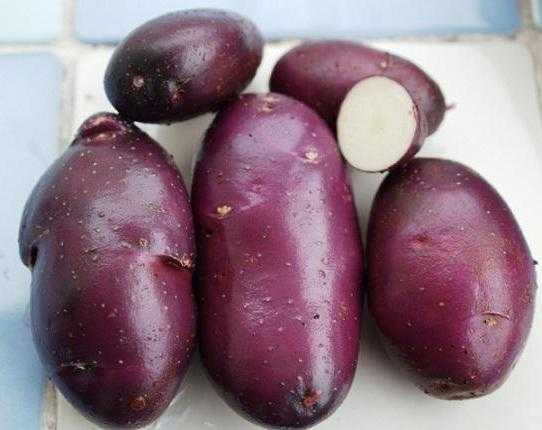
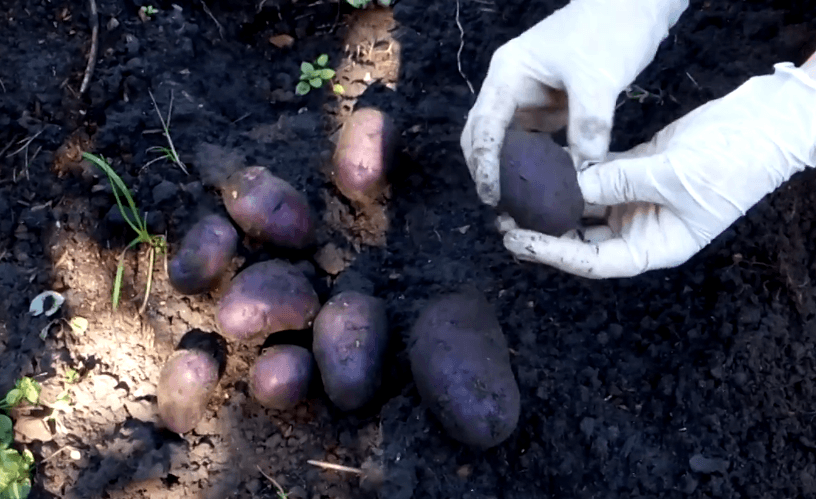
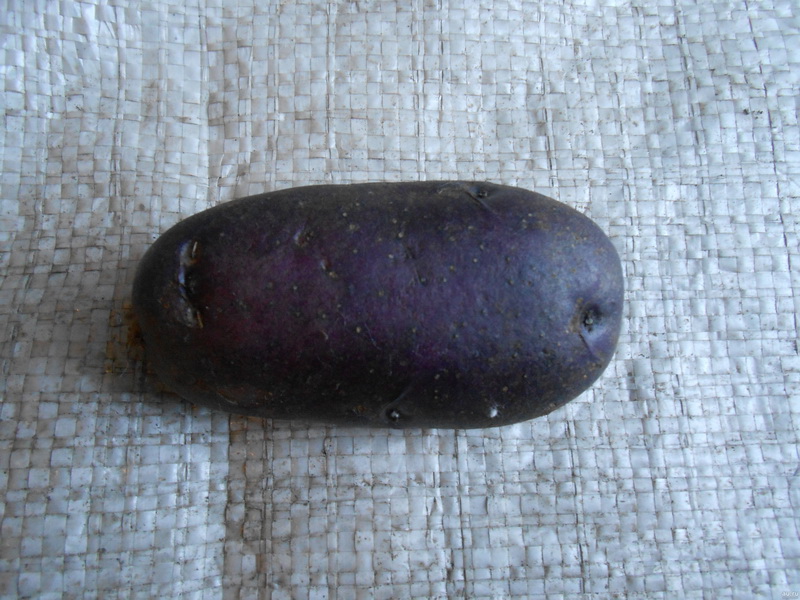
A mid-early variety, suitable for dietary and baby food. Yields 200-480 centners per hectare. The flavor is slightly different from regular potatoes. The flesh is more crumbly and loose in texture. Purple potatoes are considered rare in Russia; they can be purchased in large hypermarkets, but the price will be three to four times higher than regular tubers. These varieties are not only a delicacy and attractive on the table, but also rich in beneficial nutrients.
Specifications:
- weight - 80-120 g;
- starch content - 12-15%;
- marketability - 70-95%;
- shelf life - 96%;
Resistant to scab, Synchytrium endobioticum, and viruses, including mosaic. Its distinctive feature is its blue-violet skin. Germination points are small and superficial.
Photo gallery of the Vasilek potato variety:
There are a huge number of varieties available for cultivation in the Moscow region. Only those with the best characteristics are listed above. To ensure they truly meet these characteristics, it's important to select planting material responsibly. It's not recommended to buy from third parties; only from reputable producers.