November is the last month to prepare for winter in the garden. Frosts are just around the corner, and there's a lot to do and finish during this time. So, there's no time to rest in November.
Content
- 1 Favorable and unfavorable sowing days in November 2024
- 2 Favorable and unfavorable days for planting seedlings in November 2024
- 3 Favorable and unfavorable days for planting flowers in November 2024
- 4 Favorable and unfavorable days for various crop care tasks in November 2024
- 5 Lunar phases and days by zodiac sign in November 2024
- 6 Lunar calendar for gardeners and vegetable growers for November 2024 by date
- 6.1 1.11-3.11 (until 08:19)
- 6.2 3.11 (from 08:19) - 5.11 (until 18:17)
- 6.3 5.11 (from 18:17) - 7.11
- 6.4 8.11-10.11 (until 06:59)
- 6.5 10.11 (from 06:59 a.m.) - 12.11 (until 09:25 a.m.)
- 6.6 12.11 (from 09:25 a.m.) - 14.11 (until 09:58 a.m.)
- 6.7 14.11 (from 09.58 am) - 16.11 (until 10.08 am)
- 6.8 16.11 (from 10:08 a.m.) - 18.11 (until 11:50 a.m.)
- 6.9 11.18 (from 11:50 a.m.) -11.20 (until 16:49 p.m.)
- 6.10 20.11 (from 16:49) - 22.11
- 6.11 23.11-25.11 (until 14:19)
- 6.12 25.11 (from 14:19) - 27.11
- 6.13 28.11-30.11 (until 14:52)
- 6.14 30.11 (from 14:52) - 30.11 (until 24:00)
- 7 Gardening in November
- 8 Work of gardeners
- 9 Transplanting crops into containers for home growing
Favorable and unfavorable sowing days in November 2024
The table shows suitable and prohibited numbers for planting various crops.
Please note on highlighted dates, planting work on them must be started and completed at certain times (see below for days according to the signs of the Zodiac).
It is important to take into account regional characteristics, weather conditions, and the possibility of planting crops in greenhouses and indoor conditions.
| Vegetable crop | Auspicious dates | Prohibited dates |
|
Tomatoes |
2—7, 10—12, 28-30 |
1, 2, 8-10, 15, 16, 30 |
| Green | 2—3, 5-7, 10—14, 18—25, 28-30 | |
| Cucumbers |
2—5, 10—12, 17-18, 28-30 |
|
| Onions, garlic for greens |
2—7, 10—12, 12—14 (not for storage), 14, 18—20, 23-25, 28-30 |
|
| Garlic (winter planting) |
2—5, 18—20, 28-30 |
|
| Carrots, parsley, celery | 2—3, 5-7, 18—20, 23-25 (on greens), 28-30 | |
| Radish, radish |
Favorable and unfavorable days for planting seedlings in November 2024
The table below shows the favorable and recommended ones. after or before certain hours (see below), as well as unfavorable and prohibited dates for planting and transplanting various berry and fruit seedlings.
| Garden culture | Recommended days
(take weather conditions into account) |
Unfavorable, prohibited |
| Shrubs, including grapes | 2—7, 10—12, 14, 17-18 | 1, 2, 8-10, 12—14, 15, 16, 30 |
| Trees | 2—3, 5-7, 10—12, 14, 18—20, 25-27 | |
| Raspberries, blackberries, strawberries | 2—3, 5-7, 10—12, 14, 18—20, 23-27 |
Favorable and unfavorable days for planting flowers in November 2024
The table below shows favorable dates for classes with flowering and ornamental plants, days for planting undesirable, A Also favorable only for certain groups or at certain times (see below).
| Variety | Favorable | Unfavorable, prohibited |
| Clematis, climbing | 2—5, 10—12, 14, 17-18, 23-25 | 1, 2, 8-10, 12—14, 15, 16, 30 |
| Roses | 2—3, 5-7, 23-25, 28-30 | |
| With tubers and bulbs | 3—5 (cleaning), 5-7, 10—12, 18—20, 23-30 | |
| Annuals and perennials (sowing before winter) | 2—3, 3—5, 5-7, 10—12, 14, 17—18, 18—20, 23-25, 25-27, 28-30 | |
| Houseplants | 5-7, 10—12, 14, 17—18, 18—20, 23-25, 25-27, 28-30 |
Learn more about sowing, planting, and caring for flowers and ornamental plants in this article. Lunar calendar for the gardener for November 2024.
Favorable and unfavorable days for various crop care tasks in November 2024
| Works | Favorable days | Unfavorable and prohibited days |
| Transplantation, division of rhizomes, digging | 3—7, 10—12, 18—20, 23-27 | 1, 2, 3, 8-10, 12—14, 15, 16, 17-18, 28-30 |
| Pruning, cuttings | 5—10, 14, 17-20, 23-27 | 1, 2, 3—5, 10—14, 15, 16, 28-30 |
| Watering, loosening, fertilizing | 2—3, 5-7, 10—12 (with caution), 14 (without loosening), 18—20, 23-27, 28-30 | 1, 2, 3—5, 8-10, 12—14, 15, 16, 17-18, 20-22, 30 |
| Disease and pest control | 1-10, 12—14, 17-18, 20—25, 28-30 | 10—12, 18—20, 25-27, 30 |
| Lawn Mowing (South) | 2—14, 18—30 | — |
| Harvesting | 2—10, 12—14, 17-18, 20-22, 25—30 | 1, 2, 10—12, 15, 16, 18—20, 23-25, 30 |
| Blanks | 2—7, 12—14, 17-18, 20-22, 25—30 | 1, 2, 10—12, 15, 16, 18—20, 23-25, 30 |
| Covering works, snow retention works | 2—14, 17-30 | — |
Lunar phases and days by zodiac sign in November 2024
Conventional designations:
- «+" - good fertility;
- «+/-" - average fertility;
- «—" - low fertility;
- ◐ — Waxing moon;
- ◑ — Waning Moon;
- ● — New Moon;
- ○ — Full moon.
Moon phases in November 2024:
- ◑ — 1, 17-30.
- ● — 1 (15h 46m).
- ◐ — 2-15.
- ○ — 16 (00h 28m).
Days according to the Zodiac signs:
- ♏ Scorpio - 1-3 (until 08:19), 30 (from 14:52)-30 (until 24:00).
- ♐ Sagittarius — 3 (from 08:19)-5 (until 18:17).
- ♑ Capricorn - 5 (from 6 p.m. to 5 p.m.) - 7.
- ♒ Aquarius — 8-10 (until 06:59).
- ♓ Pisces — 10 (from 06:59)-12 (until 09:25).
- ♈ Aries - 12 (from 09:25)-14 (until 09:25).
- ♉ Taurus — 14 (from 09:25) - 16 (until 10:08).
- ♊ Gemini — 16 (from 10:08 a.m.) - 18 (until 11:50 a.m.).
- ♋ Cancer - 18 (from 11:50 a.m.)-20 (until 16:49 p.m.).
- ♌ Leo — 20 (from 16:49)-25 (until 14:19).
- ♍ Virgo — 25 (from 2:19 pm)-27.
- ♎ Libra — 28-30 (up to 14h 52m).
Lunar calendar for gardeners and vegetable growers for November 2024 by date
Below we will provide recommendations on what work can and cannot be carried out on certain dates in November.
1.11-3.11 (until 08:19)
♏ Scorpio, +, ●, Leaf Days
1.11 at 15:46 – Exact New Moon.
During the new moon, any planting and sowing work is prohibited; other work, except for fighting diseases and pests, is not recommended.
Disinfection of greenhouses, extermination of rodents and harmful insects using biological preparations.
The following work is possible only from 2.11 to 15:46.
Pruning, dividing tubers, and rooting are not recommended. Avoid weed control under the sign of Scorpio, as they will quickly grow back.
| For gardeners | For florists | For gardeners, general work |
NorthIf frost sets in, cover winter crops with compost, sawdust or humus. |
|
SouthSanitary pruning of grapes, pinning of tied branches to the ground, treatment with a 3% solution of Bordeaux mixture, covering with roofing felt. Fallen leaves are placed between the rows of grapes. NorthCovering strawberries and wild strawberries with spruce branches. Burying trunks. Tying up spreading shrubs and trees that are susceptible to snowfall. |
3.11 (from 08:19) - 5.11 (until 18:17)
♐ Sagittarius, +-, ◐, days of Fruition
Don't water or prune. Don't bother with houseplants.
| For gardeners | For florists | For gardeners, general work |
In the South:
|
In the South:
At this time, it is good to dig up bulbous and cormous plants, if this has not been done earlier, and put them into storage. |
|
5.11 (from 18:17) - 7.11
♑ Capricorn, +-, ◐, Root days
It is not advisable to loosen the soil near the root system.
| For gardeners | For florists | For gardeners, general work |
|
South: Planting shrubs, roses, tuberous plants, perennials. |
In the South: lawn care: weed control, dry grass removal, aeration, fertilizing. |
8.11-10.11 (until 06:59)
♒ Aquarius, —, ◐, Flower days.
It is not advisable to plant anything, water it or add nutrient mixtures.
| For gardeners | For florists | For gardeners, general work |
|
South: digging up bulbs for storage. |
|
10.11 (from 06:59 a.m.) - 12.11 (until 09:25 a.m.)
♓ Pisces, +, ◐, Leaf days.
It is not advisable to do pruning or treat with chemicals.
| For gardeners | For florists | For gardeners, general work |
|
South: Planting shrubs, roses, tuberous plants, perennials.
|
|
12.11 (from 09:25 a.m.) - 14.11 (until 09:58 a.m.)
♈ Aries, +-, ◐, days of Fruition.
It is forbidden to sow and plant, form, water and fertilize, transplant and to root.
| For gardeners | For florists | For gardeners, general work |
|
|
|
14.11 (from 09.58 am) - 16.11 (until 10.08 am)
♉ Taurus, +, ○, Root days
11/16 at 00:28 – Exact Full Moon.
The day before and after the Exact Full Moon, it is not recommended to sow, plant or transplant plants, soak seeds, prune, or fertilize.
Hilling, mulching, and checking the shelters of heat-loving crops. Tying up spreading shrubs and trees that are sensitive to snowfall. Disease and pest control.
To 15.11 (00:28) The following works are possible:
Do not replant or loosen the soil in the rhizome area.
| For gardeners | For florists | For gardeners, general work |
|
South:
|
|
16.11 (from 10:08 a.m.) - 18.11 (until 11:50 a.m.)
♊ Gemini, —, ◑, Flower days
It is not advisable to replant, water or fertilize.
We are starting work on touching the plants. from 11/17 (00:28):
| For gardeners | For florists | For gardeners, general work |
|
|
In the South:
|
11.18 (from 11:50 a.m.) -11.20 (until 16:49 p.m.)
♋ Cancer, +, ◑, Liszt days.
You cannot use chemical insecticides, you should not harvest or make preparations.
| For gardeners | For florists | For gardeners, general work |
|
In the South:
|
In the South: landing according to weather conditions. |
20.11 (from 16:49) - 22.11
♌ Leo, —, ◑, day of the Fruit.
It is not advisable to water or add nutrient mixtures.
| For gardeners | For florists | For gardeners, general work |
|
|
In the South:
|
23.11-25.11 (until 14:19)
♍ Virgo +-, ◑, Root days
It is not advisable to soak the seed material.
| For gardeners | For florists | For gardeners, general work |
|
|
If there is snow, add some to the tree trunk circles. |
25.11 (from 14:19) - 27.11
♎ Libra, +-, ◑, Flower days
You cannot use chemicals, and you should not water indoor plants.
| For gardeners | For florists | For gardeners, general work |
|
|
In the south: planting seedlings. |
28.11-30.11 (until 14:52)
♏ Scorpio, +, ◐, Leaf Days
It is forbidden to harvest root crops, carry out formative pruning, propagate, or freeze.
We carry out all work on sowing, planting, forcing, watering and fertilizing until 30.11 (09:21):
| For gardeners | For florists | For gardeners, general work |
|
|
|
30.11 (from 14:52) - 30.11 (until 24:00)
♐ Sagittarius, +-, ◐, days of Fruition
You cannot water, prune, or care for indoor flowers.
| For gardeners | For florists | For gardeners, general work |
|
|
|
Gardening in November
In November, special attention should be paid to young trees to ensure they survive the winter safely. It's also important to thoroughly clean and cultivate the soil.
Preparing trees for winter
Trees need to be watered before winter. The soil should be moistened to a depth of approximately 60-80 cm. Water several times, and you can combine this with fertilizing.
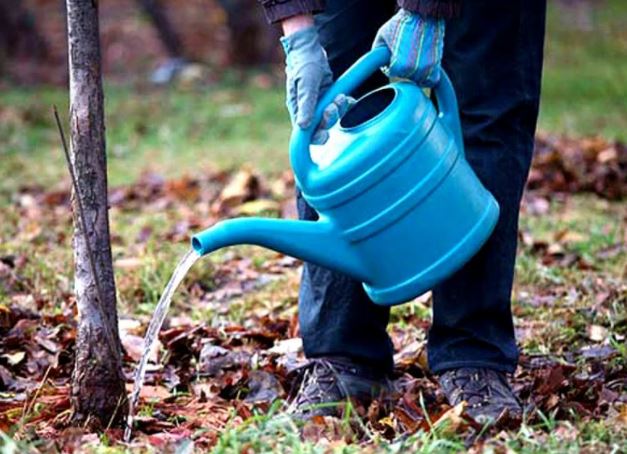
This procedure gives the following beneficial effect:
- Creates a water reserve, helping to avoid drying out at low temperatures.
- It prevents the soil from freezing too deeply. This ensures the root system remains intact even in severe frosts. This is especially important in winter, when snowfall is low.
- Destroys pests that overwinter in the soil.
- Allows you to reduce the amount of watering during the following growing season. It will be sufficient to only apply water after flowering, when the ovaries fall in June, a month before harvest, and after harvest.
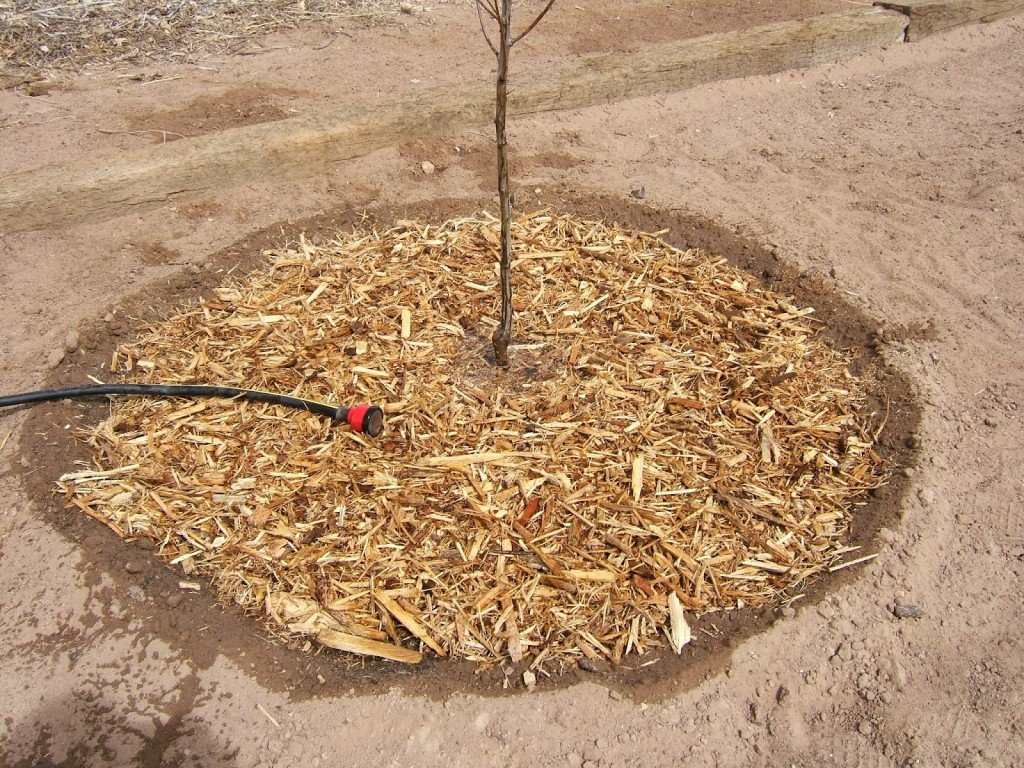
Please note! After watering, mulch the trunk areas of young trees with compost, manure, or fallen leaves. This will help retain moisture and nutrients in the soil and protect them from frost. This will help the seedlings establish better. Mulch should also be applied to the trunk areas of dwarf rootstocks and columnar specimens.
Trees and shrubs should be earthed up to a height of 25-30 cm. This will help prevent the root system from freezing and prevent the roots from becoming exposed when the soil settles. In the spring, after the snow melts, the earthen earth will need to be leveled.
Protect young trees with thin bark from rodents and cracking due to severe frosts. To do this, completely wrap the trunks with old opaque tights, kraft paper, or light-colored spunbond. Earth up the trees from below.
Carry out sanitary pruning of apple, pear, gooseberry, plum, and currant trees. Remove sections of bark affected by black canker. Treat the cut areas with garden pitch.
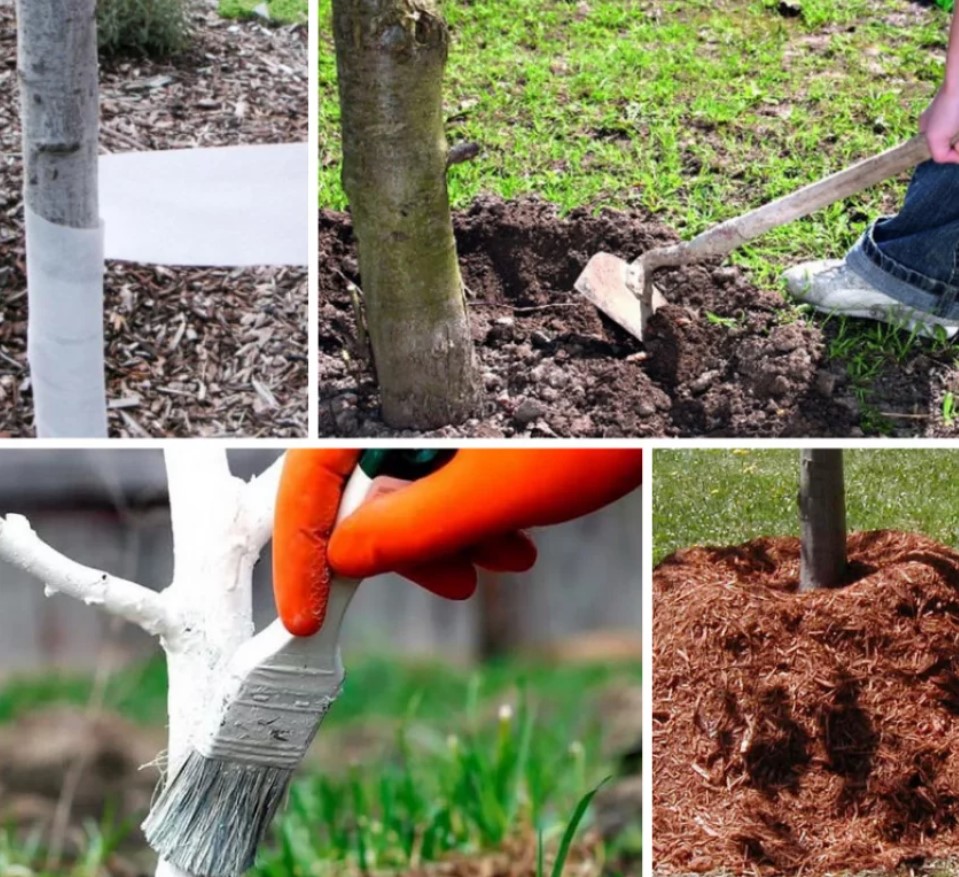
Apply a final insect treatment. Using a wide brush, coat the trunks and branches with a 5% copper sulfate solution (500 g per bucket of water). For lichen and moss control, you can prepare a solution of slaked lime and wood ash:
- Dissolve 150 g of the first component in a bucket of water.
- Add 0.5 kg of wood ash.
- Let it sit for 3 days, stirring the mixture occasionally.
- Apply to tree trunks using a wide brush.
- The lichens will turn red and fall off on their own.
Super remedy for mice and hares:
- Coat whitewashed tree trunks with a mixture of 2 half-liter bottles of vegetable oil, a glass of turpentine, 1.5 kg of grated laundry soap and 150 g of naphthalene.
- Spread the remaining fragrant liquid evenly around the plants.
The following remedies help against anthracnose, rust and moss:
- 5% urea solution (500 g per bucket of water) for fruit trees;
- 3% solution of ferrous sulfate (300 per 20 liters of liquid).
Strip bark from trunks and bases of skeletal branches. Treat with a 5% ferrous sulfate solution. If there is a lot of bark, mix clay with mullein and dilute with water. The mixture should have the consistency of sour cream.
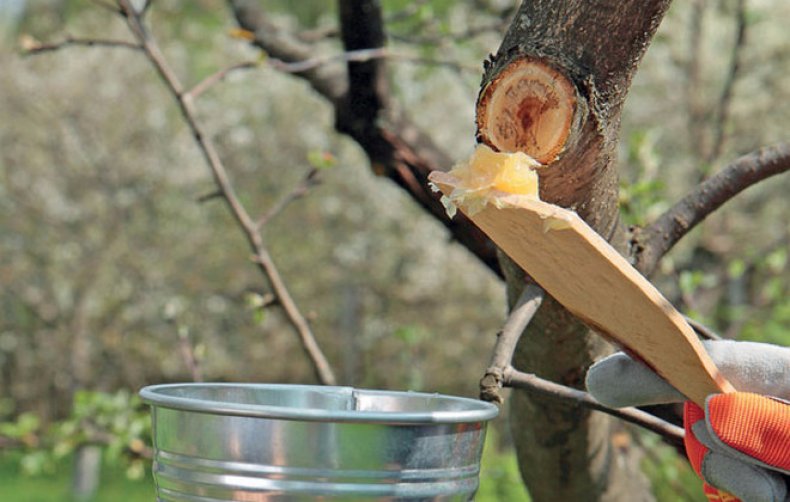
If there are wounds on the trunks, treat them. Clean them with a knife, seal them with garden pitch, and bandage them with burlap. If the wounds are shallow, you can skip the first and last steps. If a hollow appears, completely clear the area of bark down to a healthy spot. Treat with 5% ferrous sulfate (50 g per 1 liter of water). Seal the hole with a wooden plug and coat with oil paint. If the hole is too large, fill it with crushed stone and fill it with a cement mortar with sand (1:3).
Please note! If shoots are growing near the damaged area, they do not need to be removed. They will promote healing.
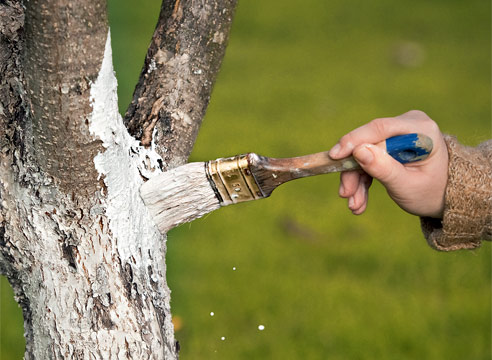
Finish whitewashing the trunks. For trees up to 4 years old, use 2.5 kg of lime, 1 kg of clay, 300 g of copper sulfate, or a specialized garden paint. Another whitewashing recipe: dilute 2-2.2 kg of freshly slaked lime in 10 liters of water, add 0.5 g of copper sulfate, previously dissolved in water, and 1-2 cups of milk.
Younger specimens can be treated with chalk or tied with non-woven material.
Collection of fallen and dried fruits
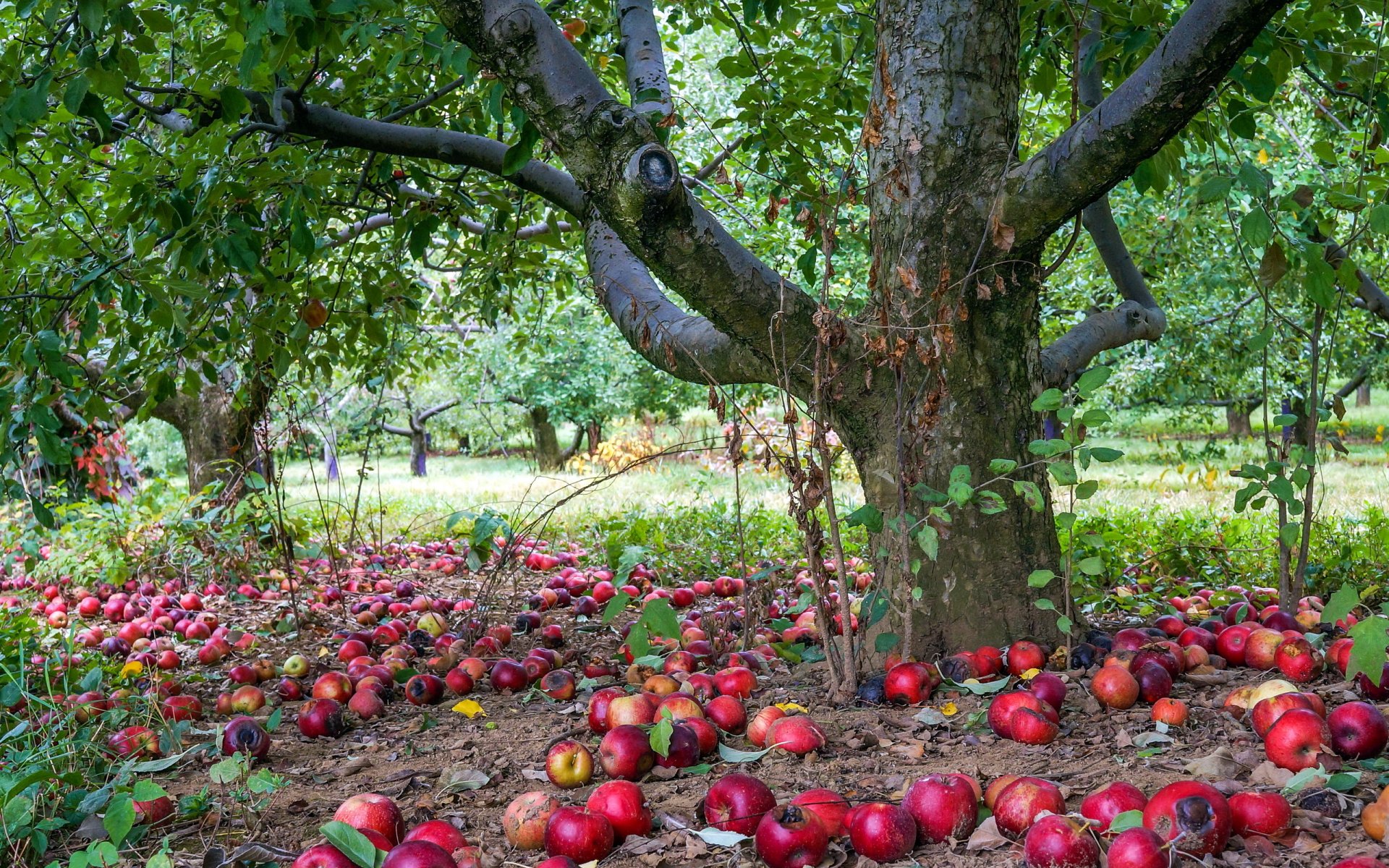
If this hasn't been done before, it's impossible to delay any longer. Such fruits harbor insect pests. If left over winter, the pest population will be overwhelming in the spring.
Important! Under no circumstances should such fruits be composted.
Soil cultivation
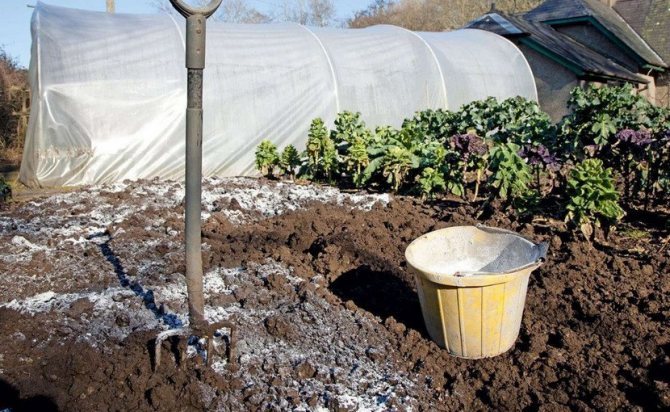
If the soil hasn't been dug previously, it should be done. If weeds growing in the area don't have seeds, there's no need to remove them. They will rot in the soil during digging, normalizing the natural soil formation process. This will improve moisture and air permeability. Plants will thrive in such soil. It's especially good if the area was previously grown as a green manure crop. When digging, the optimal green mass per square meter is 0.5-1 kg.
Along with the organic matter, apply nitrogen fertilizers. For example, 5-10 g of urea per square meter. This element is essential for plants, as the decomposition of organic matter causes the soil to lose a lot of nitrogen.
Caring for strawberries
At temperatures of -7 to -10°C, the strawberry root system can freeze if there is no snow. In snowy winters, the crop dies at -15°C. To prevent this, mulch the strawberries.
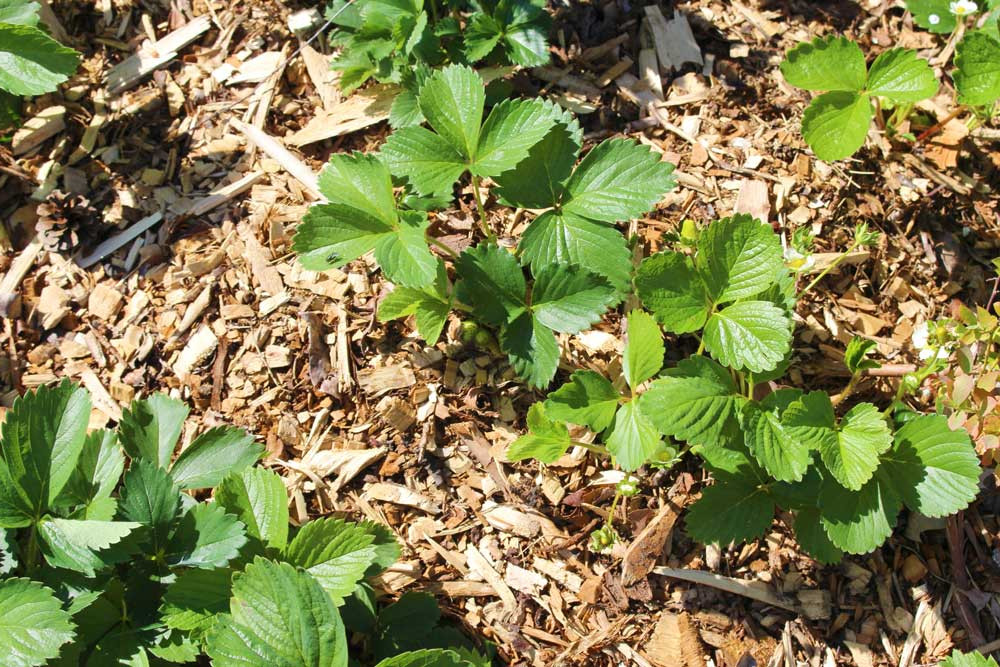
You can use humus, compost, peat, or fallen leaves. If a frosty winter is expected, this should be done right up to the top, meaning the bushes are completely covered.
Storing apples
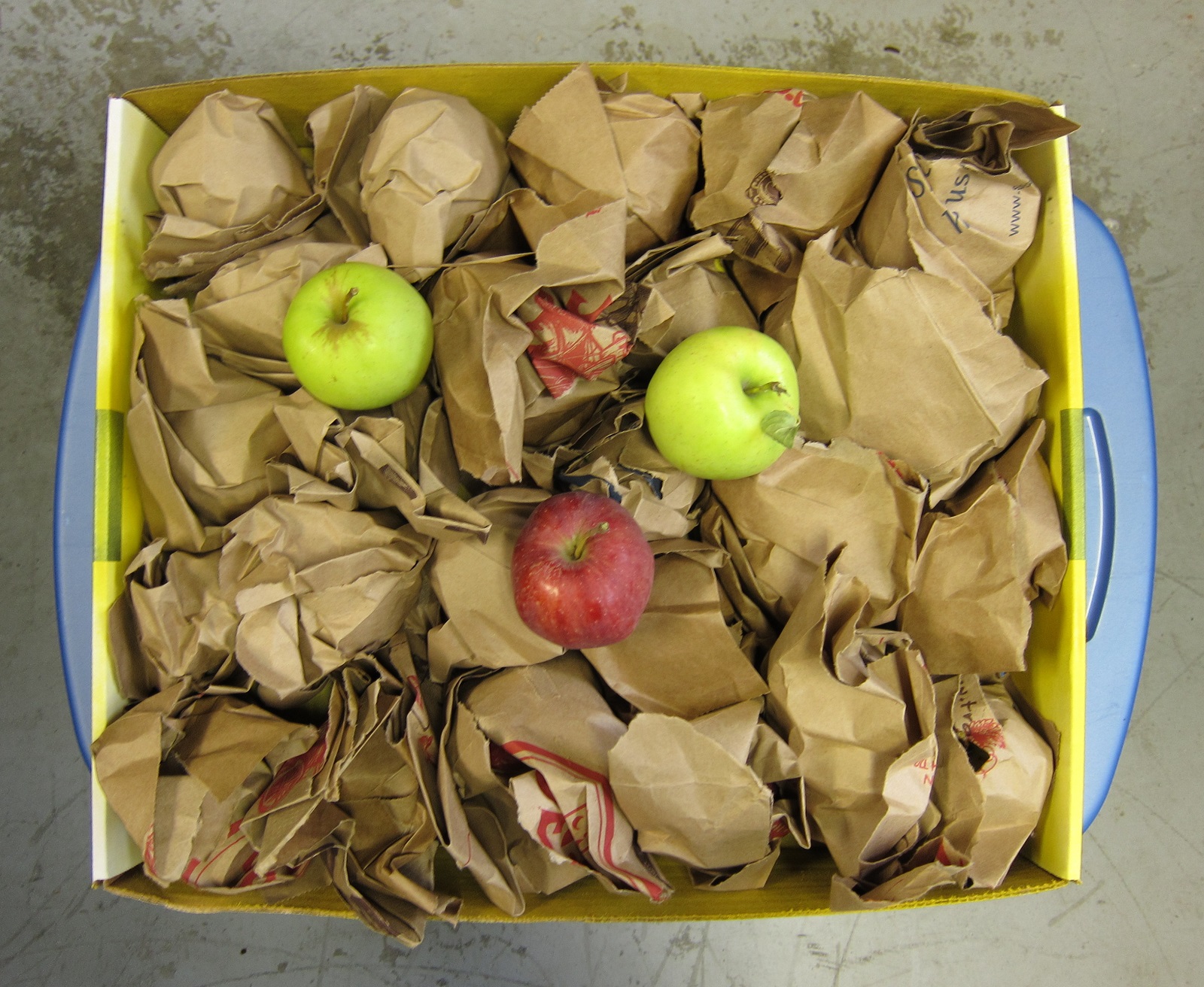
The room where the apples are stored should be ventilated periodically. It's best to do this at night, when the temperature drops. This will create a cooler environment and increase humidity.
Work of gardeners
November is an unpredictable month, so you need to quickly finish all work in the garden.
Sowing and planting
While the weather is warm, plant garlic before winter, if you haven't done so in the previous month. Mulch the bed to prevent the cloves' roots from freezing and give them time to sprout.
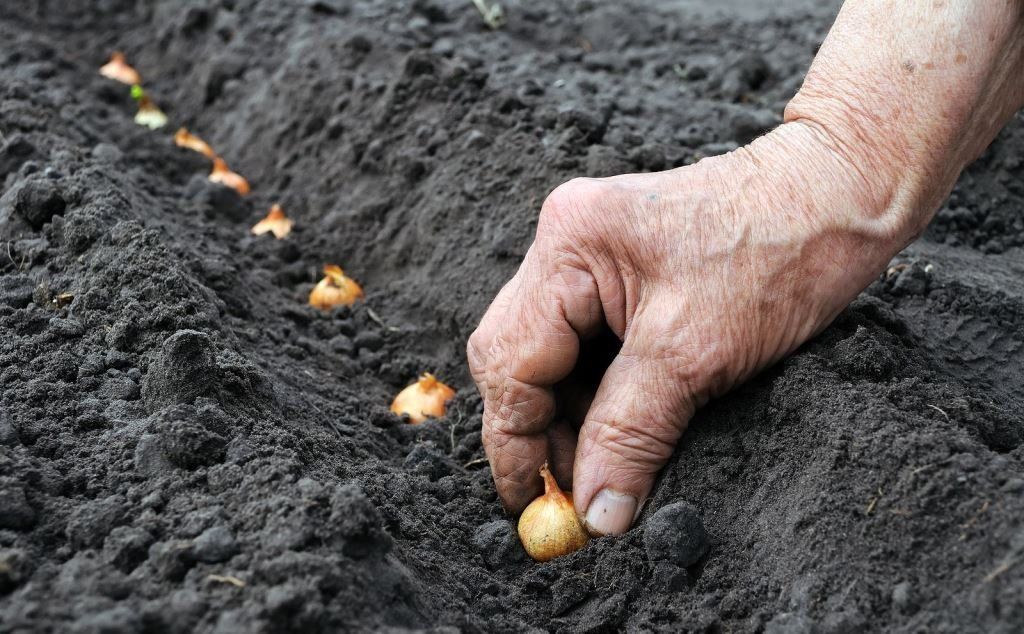
Don't delay winter planting of onions. This is especially true for those who purchased sets in early fall. Hot varieties, such as Stuttgarter Riesen, are best. Choose bulbs up to 1 cm in diameter for planting. Larger bulbs may freeze or produce too many bolts in the spring. The weather should be cool, allowing the soil to cool but not freeze. Ideally, the bed should be located on a level area that won't flood during thaws. Mulch the planted bulbs with compost or fallen leaves to prevent freezing. It's a good idea to lay spruce branches, which will retain more snow in the bed.
When daytime temperatures are just above 0 degrees Celsius and nighttime temperatures are just below 0 degrees Celsius, you can sow root vegetables, herbs, and greens (beets, carrots, spinach, sage, etc.). It is recommended to use varieties that do not tend to bolt.
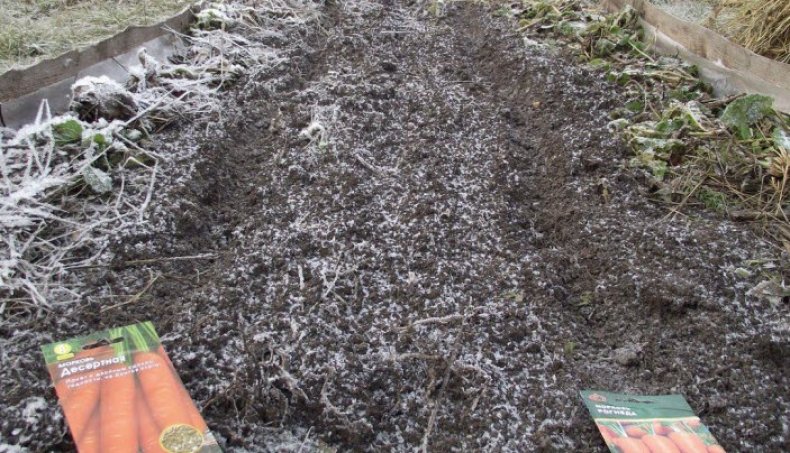
Please note! Parsnips are best planted when the soil begins to freeze. Cold treatment helps them develop well.
Seeds should be sown as deeply and closely together as possible. The furrows should be filled with soil prepared in advance and stored in a warm place, not frozen soil. Mulch the beds with compost and, if possible, fallen leaves.
Potatoes can be planted in November and harvested in May. Here's how:
- 10 days before stable daytime frosts, deeply plow 1-2 furrows.
- Place a layer of fresh manure (5-7 cm) on the bottom and cover it with straw on top.
- Place small potatoes at a distance of 20 cm from each other and cover with soil.
- Mulch everything with a layer of straw.
- In spring, when the threat of frost has passed, remove the cover.
Pruning, collection and storage
Prune away diseased and damaged leaves and stems of perennial onions, asparagus, rhubarb, sorrel, and lemon balm. Leave the thyme alone. Sprinkle the soil between rows with wood ash or potassium sulfate. Cover all perennials overwintering in the beds with compost or humus (4-5 cm layer).
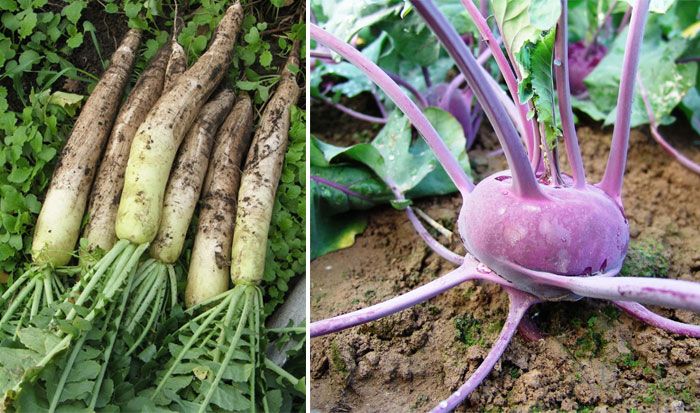
If you didn't manage to harvest the entire crop in October, you can try harvesting it in November. When digging up daikon and carrots, pay attention to the tops. If they've softened, trim them off. Dry the cut ends and use the harvest as soon as possible.
When harvesting white cabbage and Brussels sprouts, pay attention to the outer leaves. If they are firm, the heads are suitable for storage. They can be cut, dried in a draft, hung from the ceiling in a basement, or laid out on shelves. If not, chop the cabbage and ferment it. Cut the Brussels sprouts from the garden and freeze them. Other vegetables that survived under fallen leaves can also be harvested.
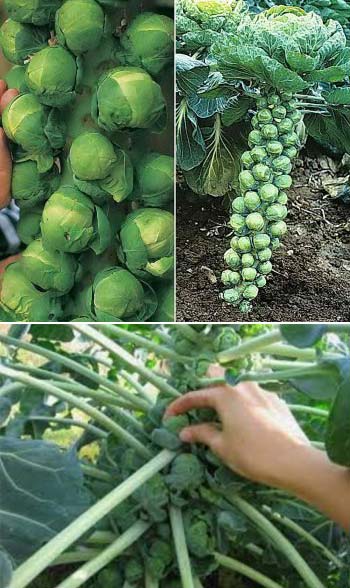
Please note: If your Brussels sprouts haven't produced a harvest yet, dig them up and grow them in the basement.
Cut the daikon, leaving only the stumps. Remove the greens and dry. Store in the basement in plastic bags or in boxes filled with sand.
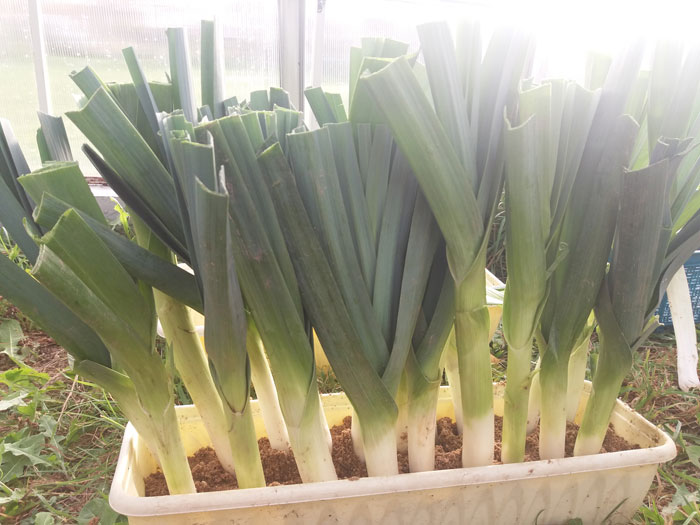
When harvesting leeks, remove any damaged or excessively dirty leaves. Trim the remaining leaves by two-thirds, and shorten the roots by half. Store leeks upright in a basement in boxes filled with sand. This can also be done on a glassed-in balcony in subzero temperatures.
Preparing soil for winter seedlings
Before the soil freezes, prepare a supply for winter seedlings and houseplants. Ideal options include humus, compost, turf, and leaf mold. Regular garden soil will also work, but it's best to avoid it from your garden beds. You can also prepare sand right away. Place wood ash in a plastic bag and tie it off.
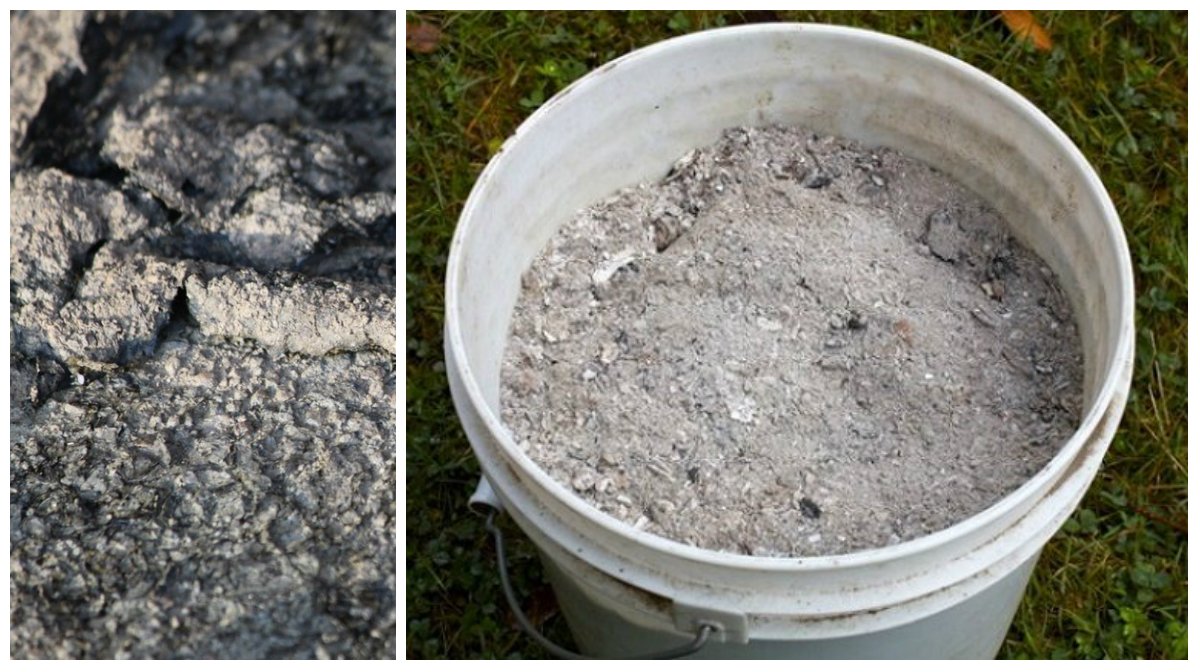 It should not become damp, otherwise it will lose its beneficial properties.
The prepared soil can be left in a shed or taken to a garage. There, it will freeze, eliminating the need for disinfection in the spring.
Transplanting crops into containers for home growing
The following can be transplanted indoors:
- roots of chard and sorrel;
- parsley roots;
- celery;
- Welsh garlic;
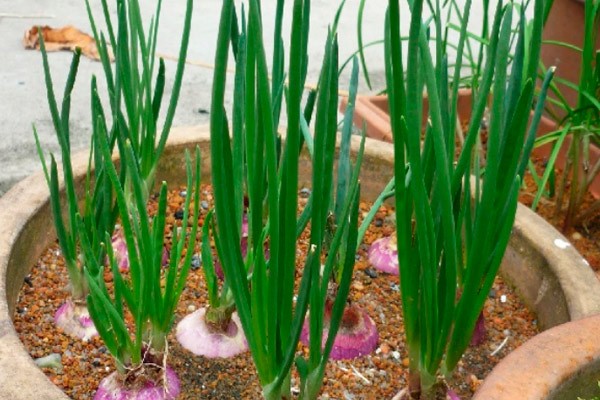
- bulbs of multi-tiered onions.
Prepare containers or identical pots for them in advance to make your mini-garden look attractive. Fill them with nutritious potting mix, first adding drainage to the bottom.
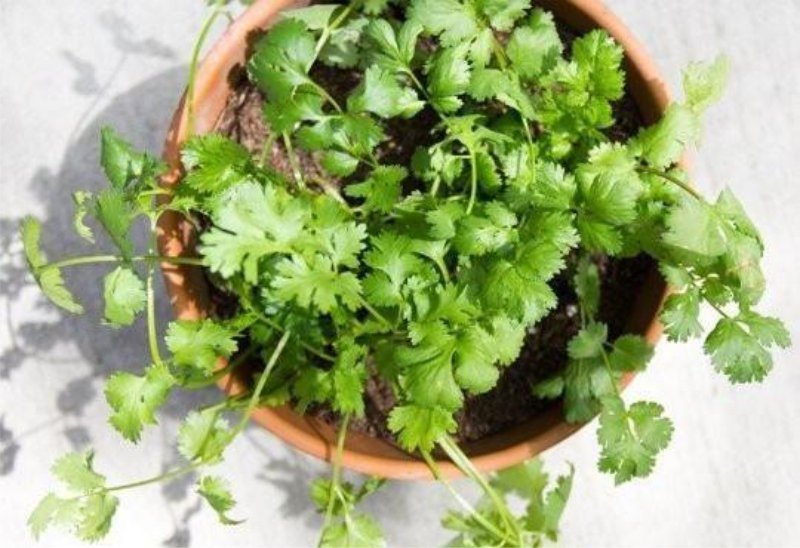
Please note! Before planting, onion bulbs need to be awakened. To do this, place them in warm water at 30–35°C. You can add 2 teaspoons of wood ash per liter.
After planting, moisten the forcing plants and place them in a dark place for a week. As soon as the first green shoots appear, move them to a warm, bright room. Since daylight hours are already short in November, it's advisable to place the plants under phytolamps.
As you can see, there's still plenty to do in the garden in November. A successful winter and the development of plants next season depend on how well you do it. Our Lunar Calendar will tell you exactly what you can do and when.